Article

Investor Sentiment and Trust in Sustainability Reports in Egypt: The Moderating Role of Financial Literacy

by
Hoda Essam Hassan Khaled
* and
Ghada Ahmed Nabil Ibrahim
Department of Accounting, Faculty of Business, Economics and Information Systems, Misr University for Science and Technology (MUST), Giza 11556, Egypt
*
Author to whom correspondence should be addressed.
Sustainability 2025, 17(24), 10903; https://doi.org/10.3390/su172410903
Submission received: 25 October 2025 / Revised: 27 November 2025 / Accepted: 3 December 2025 / Published: 5 December 2025
(This article belongs to the Section Economic and Business Aspects of Sustainability)

Abstract

This study investigates the relationship between investor sentiment (IS) and trust in sustainability reports (TSRs) in Egypt, which is an emerging market that has recently strengthened its sustainability disclosure practices. Drawing on behavioral finance and disclosure theory, this study also examines the moderating role of financial literacy (FL) in shaping this relationship. A quantitative, questionnaire-based survey was presented to 328 individual investors who are familiar with sustainability and ESG reporting. The data were analyzed using descriptive statistics, reliability tests, and both simple and hierarchical regression analysis. The results indicate that IS has a strong and significant positive effect on trust in sustainability reports, with market optimism and emotional influence emerging as the most influential dimensions. Furthermore, the hierarchical regression results reveal that FL significantly strengthens the relationship between IS and TSR, indicating that, within the present sample, more financially literate investors translate sentiment into more informed and rational trust judgments. These findings contribute to the accounting and sustainability reporting in the literature by demonstrating that trust in non-financial disclosures is not only shaped by reporting practices but is also heavily influenced by investor psychology and financial competence. This study highlights the importance of enhancing both disclosure quality and investor financial literacy to strengthen confidence in sustainability reporting in emerging markets.

1. Introduction

Over the past decade, sustainability reporting has evolved from a voluntary corporate communication practice into a strategic accountability mechanism through which organizations disclose their environmental, social, and governance (ESG) performance [1,2]. In an increasingly complex and uncertain global business environment, investors are no longer guided exclusively by traditional financial indicators. Instead, they increasingly rely on non-financial information, including corporate sustainability disclosures, to evaluate long-term value creation, risk exposure, ethical conduct, and resilience to environmental and social challenges [3,4]. As a result, sustainability reports have become an essential source of information for investors seeking responsible and transparent investment opportunities.
Despite the rapid expansion of sustainability reporting, significant concerns remain regarding the credibility, transparency, and reliability of the information provided. Although many companies adopt internationally recognized frameworks such as the Global Reporting Initiative (GRI) and align their practices with global initiatives such as the Sustainable Development Goals (SDGs), questions persist as to whether these disclosures reflect genuine sustainability performance or merely serve as symbolic tools aimed at enhancing corporate reputation [2,5]. Consequently, trust in sustainability reports has emerged as a critical issue within both the accounting and corporate reporting literature [6,7].
This concern is particularly relevant in emerging economies, such as Egypt. In recent years, Egypt has strengthened its sustainability disclosure practices, especially following the introduction of ESG-related reporting requirements by the Egyptian Exchange (EGX). These developments reflect a broader national commitment to sustainable development under Egypt Vision 2030. However, while reporting practices have improved, empirical evidence remains limited regarding how Egyptian investors perceive and trust sustainability disclosures, and which factors shape this trust [8,9].
Traditional financial theories largely assume that investors are rational decision-makers who objectively analyze available information and efficiently incorporate it into market prices. In contrast, behavioral finance research challenges this assumption, emphasizing that psychological and emotional factors—such as market optimism, risk appetite, herding behavior, and emotional influence—play a significant role in shaping investment decisions [10,11,12]. These behavioral elements, collectively referred to as investor sentiment (IS), often cause deviations from purely rational judgment and may influence how investors evaluate both financial and non-financial disclosures [13,14].
At the same time, financial literacy (FL) plays a central role in determining investors’ ability to interpret, analyze, and evaluate sustainability-related information. Investors with higher levels of financial knowledge are better equipped to assess the accuracy, completeness, and credibility of sustainability disclosures and to distinguish between substantive practices and symbolic reporting [15,16]. In contrast, investors with lower financial literacy are more likely to rely on heuristics, perceptions, and emotional reactions when forming judgments about the trustworthiness of corporate sustainability information [17,18]. Accordingly, FL may significantly influence the strength and direction of the relationship between investor sentiment and trust in sustainability reports.
From a theoretical perspective, this study is grounded in Stakeholder Theory, which emphasizes corporate accountability to a broad range of stakeholders [19]. Legitimacy Theory suggests that organizations use disclosure practices to align themselves with societal expectations [20] and Signaling Theory explains how firms communicate private information to reduce information asymmetry in capital markets [21]. In addition, insights from Behavioral Finance Theory highlight the role of psychological and cognitive biases in shaping how investors interpret and respond to corporate information [11,12]. Integrating these perspectives, the present study argues that trust in sustainability reporting is not determined solely by the content or quality of disclosure, but also by the behavioral and cognitive characteristics of the information user.
Although prior studies have examined sustainability reporting, investor sentiment, and financial literacy separately, there remains a noticeable gap in the literature regarding the combined effect of these factors on trust in sustainability disclosures, particularly within emerging markets [3,4]. Most existing research concentrates either on the impact of sustainability reporting on firm performance or on the psychological determinants of investment behavior, without explicitly linking these dimensions within the context of disclosure credibility and investor trust [2,9].
Therefore, the main objective of this study is to examine the relationship between investor sentiment and trust in sustainability reports in the Egyptian market, while also investigating the moderating role of financial literacy in shaping this relationship. By adopting a quantitative, questionnaire-based approach and integrating both behavioral finance and accounting disclosure theories, this study seeks to provide a more comprehensive understanding of how trust in sustainability information is formed among investors in an emerging market context.
The significance of this study is twofold. Theoretically, it extends accounting and disclosure literature by incorporating behavioral and cognitive determinants into the analysis of trust in non-financial reporting. Practically, it offers valuable insights for regulators, corporations, and policymakers by emphasizing the importance of both enhancing sustainability disclosure quality and improving the financial literacy of investors. Strengthening these two dimensions can foster greater confidence in sustainability reporting and promote more informed and sustainable investment decisions in emerging markets. Methodologically, the study also contributes by combining descriptive, regression, and hierarchical analysis to empirically verify the moderating effect of financial literacy in an emerging market context.
Accordingly, this study addresses the following research question:
How does investor sentiment influence trust in sustainability reports, and to what extent does financial literacy moderate this relationship in the Egyptian market?
To answer this question, the study develops a set of hypotheses and employs several statistical techniques, including regression and hierarchical regression analysis. The remainder of the paper is organized as follows: Section 2 presents the literature review and theoretical background; Section 3 develops the research hypotheses; Section 4 describes the methodology; Section 5 presents and discusses the results; Section 6 outlines the study’s limitations; and Section 7 concludes with implications and recommendations for future research.

2. Literature Review

2.1. Investor Sentiment

IS is consistently defined as irrational emotional fluctuations that cause asset prices to deviate from their fundamental values in the market [22] or “investors’ emotions or beliefs regarding individual stocks or the stock market” [23]. This contrasts with traditional finance theory, which assumes rational investor behavior and efficient markets where prices reflect all information [23].
The phenomenon known as “investor sentiment” occurs when illogical psychological swings lead asset prices to diverge from their underlying market values [24]. According to the “noise trading theory,” market prices deviate from their basic values mostly due to irrational investor behavior, with investor mood being a significant factor in this process [25]. High sentiment tends to make investors too optimistic, which raises asset values and makes stock prices overpriced; low sentiment makes investors unduly pessimistic, which makes prices cheap. There are many ways to measure IS. For example, recent studies utilize online investor comments as a proxy for sentiment [26]. Empirical evidence also suggests a reverse causal direction, whereby Negative IS motivates firms to improve their social responsibility performance [27], and Firms increase their socially responsible performance depending on IS [28].
Research on IS has developed along two main directions. The first examines sentiment as a market-wide psychological factor, often measured using proxies such as investor surveys, trading behavior, and media tone, and links it to price deviations, volatility, and mispricing [11,12]. The second focuses on individual behavioral characteristics, emphasizing the influence of emotions, heuristics, and cognitive biases on financial decision-making [10]. Moreover, studies suggest that media content and investor communications can serve as meaningful indicators of collective sentiment and may significantly influence investor reactions and market activity [29]. These findings highlight that investor behavior is not purely rational but is shaped by a dynamic interaction of psychological and informational factors.
Prior studies have demonstrated that IS can significantly influence market anomalies such as price momentum, bubbles, crashes, and excess volatility, particularly in periods of heightened uncertainty [12,13]. Other research has emphasized that online investor discussions, analyst reports, and media tone can serve as reliable indicators of sentiment and predictive signals of market movements [14,29]. Furthermore, sentiment has been shown to affect not only investment decisions but also trust formation, as emotionally driven investors may place greater or lesser confidence in corporate communication depending on perceived credibility and social validation [6,9]. These findings highlight the relevance of incorporating IS into research that examines trust in non-financial disclosures, such as sustainability and ESG reports. These psychological characteristics are directly linked to how many investors evaluate not only financial information, but also non-financial disclosures such as sustainability and CSR reports

2.2. Trust in Sustainability Reports

Despite the growing body of literature on sustainability reporting, few studies have examined how investor perceptions and psychological factors influence trust in such reports, particularly in emerging markets. Most prior research has focused on the impact of sustainability disclosure on financial performance, firm valuation, or corporate reputation, rather than on the behavioral mechanisms through which trust in such information is formed [3,4]. This gap highlights the need for further investigation into the role of IS and cognitive characteristics in shaping trust in sustainability reporting [6,9].
While sustainability reporting has expanded significantly across different regions and industries, scholars have raised concerns regarding the credibility, transparency, and comparability of the information provided. Several studies argue that the voluntary nature of many sustainability disclosures exposes them to risks of selective reporting and greenwashing, which may weaken investor confidence and reduce their perceived reliability [2,5].
Other researchers emphasize that external assurance, standardization, and adherence to recognized reporting frameworks play an essential role in strengthening trust in sustainability disclosures. The use of international standards such as the Global Reporting Initiative (GRI) and the integration of sustainability information with financial reporting have been found to positively influence investor perceptions of reliability and transparency [6,7]. These findings suggest that formal verification and consistency in reporting practices significantly enhance the credibility of sustainability reports.
In addition, recent studies have highlighted that trust in sustainability reporting is not determined solely by the technical quality of the report, but also by the perceptions, expectations, and prior beliefs of information users. Investors who perceive firms as ethically responsible, environmentally conscious, and socially accountable are more likely to trust their sustainability disclosures, even when objective information is limited. Conversely, skepticism toward corporate motives and concerns about opportunistic behavior can reduce the level of trust in reported sustainability information [1].
In addition, recent studies have emphasized the growing role of ESG regulation and corporate governance mechanisms in shaping corporate sustainability reporting practices. Regulatory initiatives such as the European Green Deal, the International Sustainability Standards Board (ISSB), and the increasing adoption of integrated reporting frameworks have intensified pressure on firms to enhance the transparency, credibility, and comparability of ESG disclosures. At the organizational level, stronger corporate governance structures—particularly board independence, audit committee effectiveness, and external assurance quality—have been associated with higher reporting reliability and enhanced stakeholder confidence. These developments suggest that trust in sustainability reporting is not exclusively shaped by individual perceptions, but also by the broader regulatory and governance environment in which firms operate, especially in emerging markets.

2.3. Financial Literacy

FL refers to the knowledge and understanding of basic financial concepts that enable individuals to make informed and effective financial decisions [15,30]. Prior research has consistently shown that individuals with higher levels of FL are more likely to engage in financial planning, participate in capital markets, and make rational investment decisions [15,16]. In contrast, investors with low FL tend to exhibit lower confidence, greater susceptibility to misinformation, and higher exposure to financially suboptimal decisions [17]. More recently, studies have highlighted the role of FL in shaping sustainable investment behavior, showing that financially literate investors are more capable of evaluating ESG information and integrating sustainability considerations into their investment decisions [31]. These findings suggest FL may play a critical moderating role in investor responses to non-financial disclosures, including sustainability reports.
FL plays a critical role in shaping how investors interpret and respond to information disclosed in sustainability reports. Investors with higher levels of financial knowledge are better equipped to analyze the accuracy, completeness, and credibility of non-financial disclosures, enabling them to distinguish between genuine sustainability practices and symbolic or misleading reporting [2,5,15]. Moreover, financially literate investors are less susceptible to emotional and cognitive biases when processing information, leading to more objective evaluations and higher-quality decision-making [17]. In this sense, FL acts as a moderating factor that influences the strength of the relationship between investor sentiment (IS) and trust in sustainability reports (TSR), as individuals with stronger financial knowledge rely more on critical analysis than on sentiment-driven judgments [18,32].
While IS may drive MO, RA, or HB, financially literate investors are more likely to evaluate such reports with greater objectivity, thereby reducing the risk of biased judgments based purely on emotions. Conversely, lower levels of FL may amplify the effect of sentiment, leading investors to rely more heavily on perceptions or social influence rather than critical analysis of reported sustainability information. This dynamic highlights the importance of FL in ensuring that investor TSR is grounded in informed evaluation rather than sentiment alone [33,34].
While existing studies confirm the importance of FL in investment performance, there remains limited empirical evidence on its moderating role in shaping investor trust toward sustainability disclosures, highlighting the need for further investigation. The marginal contribution of this paper lies in being among the first to empirically test the moderating role of FL in the relationship between IS and TSR within an emerging market context.
In summary, existing literature has largely examined investor sentiment, sustainability reporting, and financial literacy as separate constructs. However, there remains a lack of integrated empirical models that examine their combined effect on trust in sustainability disclosures, particularly in emerging markets. This gap provides the basis for the present study.

3. Hypothesis Development

3.1. Investor Sentiment and Trust in Sustainability Reports

In recent years, companies have encountered growing challenges due to external stakeholder pressures urging them to play a more active role in sustainable development. In response, many firms began showcasing their best practices through the adoption of new accountability tools. Notably, a significant number have voluntarily issued sustainability reports in line with leading international reporting standards to strengthen the legitimacy [20] of their operations. Previous studies indicate that sustainability reporting, particularly disclosures concerning ESG issues, can shape investors’ decisions. However, given that the reliability of such disclosures is frequently contested, it becomes essential to examine how investors interpret sustainability reports and incorporate them into their investment choices [8].
Given the challenges of applying efficient market theory to account for anomalies in financial markets, scholars have increasingly incorporated insights from individual and social psychology into finance research. These frameworks provide a basis for examining the behavioral determinants of asset pricing dynamics, highlighting how cognitive biases and interactive behaviors shape market outcomes. Consequently, psychological and social dimensions have become integral to the theoretical and empirical analysis of financial markets [35].
A study conducted by [36] highlights the influence of sustainability reporting on IS in the China Stock Exchange. Findings suggest that sustainability reporting has a positive influence on IS and that companies prioritizing transparent and responsible practices enhance their market standing and contribute significantly to sustainable and ethical investing. A recent experimental study by [37] investigated how CSR disclosures and CSR reputation influence investment decisions. The findings revealed that a strong CSR reputation and externally assured CSR disclosures enhance perceived trust, value-driven motives, and corporate social performance (CSP). In turn, positive perceptions of CSP increased both investment intentions and the amount invested. Importantly, the study demonstrated that CSP functions as a separate decision parameter beyond traditional corporate financial performance. These results reinforce the critical role of trust in CSR-related disclosures for shaping investor behavior. Prior research provides strong indirect evidence supporting the proposed sub-hypotheses. Ref. [38] showed that investors allocate more funds to sustainability-labeled products, indicating that optimism toward ESG initiatives enhances reliance on sustainability disclosures. Similarly, ref. [39] found that CSR activities improve stakeholder trust and market sentiment, further reinforcing the link between optimism and trust in reporting. Ref. [40] demonstrated that risk-tolerant investors are more inclined toward socially responsible investments, while [41] revealed that higher RA encourages the integration of ESG information into decision-making, suggesting that risk-seeking investors place greater trust in sustainability reporting. Ref. [42] provided foundational evidence that investors often follow peers under uncertainty, a pattern later observed by [43], who found that ESG adoption frequently results from peer influence, and by [44], who documented herding effects in the adoption of ESG practices across European markets. Ref. [42] suggested that herding can be either a rational or irrational form of investor behavior. Ref. [45] observed that emotional attachment to ethical values strengthens investor trust in ESG funds; ref. [46] found that positive CSR events enhance trust while negative ones erode trust, and [47] highlighted that feelings of pride and moral satisfaction explain why investors rely on sustainability-oriented funds. Collectively, these studies suggest that MO, RA, HB, and EI all contribute to shaping investors’ TSR.
Prior accounting research suggests that the trust in disclosures plays a central role in shaping stakeholders’ trust. Legitimacy Theory by [20] posits that companies use sustainability disclosures to demonstrate their alignment with societal expectations, while Signaling Theory by [21] indicates that investors interpret such disclosures as cues of accountability and risk management. However, IS—optimism, risk preference, social validation, and emotional influence—shapes how these signals are received. For instance, optimistic investors may view sustainability reports as reinforcing expectations of long-term growth, while risk-seeking investors may interpret such disclosures as assurance for venturing into uncertain investments. Herding behavior, as explained in behavioral finance, also aligns with disclosure theory: investors may trust reports not only because of their content but because they are widely accepted within the investment community. Finally, emotional influence—such as reactions to CSR activities—links directly to stakeholder accountability, as positive emotional responses enhance perceptions of ethical standards. Based on the above reasoning, the following hypothesis is proposed:
H1: 
IS has a significant positive effect on TSR.
H1a: 
MO has a significant positive effect on TSR.
H1b: 
RA has a significant positive effect on TSR.
H1c: 
HB has a significant positive effect on TSR.
H1d: 
EI has a significant positive effect on TSR.

3.2. Investor Sentiment and Trust in Sustainability Reports: The Moderating Effect of Financial Literacy

FL determines how investors interpret and validate sustainability disclosures. According to Disclosure Theory, informed users are more likely to evaluate disclosure quality based on accuracy, comparability, and assurance. Investors with high FL can critically assess whether sustainability information genuinely reflects corporate accountability, thereby reducing the risk of being misled by symbolic or selective reporting. In contrast, low FL may amplify reliance on sentiment, making trust dependent on perception rather than analysis. By moderating the IS–TSR relationship, FL introduces a unique contribution to accounting research: it highlights the role of user competence in shaping the effectiveness of non-financial disclosures.
Extensive research underscores the importance of both basic FL (understanding of fundamental financial and economic principles) and advanced FL (understanding of financial markets) in guiding financial decisions and stock market participation [15,16,48]. Recently, sustainable investments that integrate ESG dimensions have gained relevance and have come to play a central role in achieving the United Nations’ Sustainable Development Goals and the Paris Agreement [38,49,50,51] surveyed more than 16,000 individuals across eight countries to examine preferences for sustainable investing, ownership of ESG-related financial products, and levels of FL, investment sophistication, and familiarity with ESG concepts. The results indicate that while sustainable investing is particularly appealing among younger generations, actual participation through ESG investment ownership remains limited in most contexts. A key finding is that many investors are unaware of the sustainability characteristics of their portfolios and cite insufficient knowledge, limited experience, and lack of transparency as primary obstacles to ESG investing. Furthermore, the assessment revealed that both general FL and ESG-specific knowledge are inadequate for most respondents, constraining their ability to make well-informed investment decisions in this area.
Despite the increasing relevance of sustainable finance, research that explicitly examines the link between IS and TSR, and the moderating role of FL, remains scarce. While existing studies have explored these elements in isolation, there is little empirical evidence integrating them into a single framework. This study seeks to fill this gap by investigating how IS shapes TSR and how FL moderates this relationship, thereby offering new insights into ESG-oriented investment decision-making.
Based on the above reasoning, the following hypothesis is proposed:
H2: 
FL moderates the relationship between IS and TSR, such that the relationship is stronger at higher levels of FL
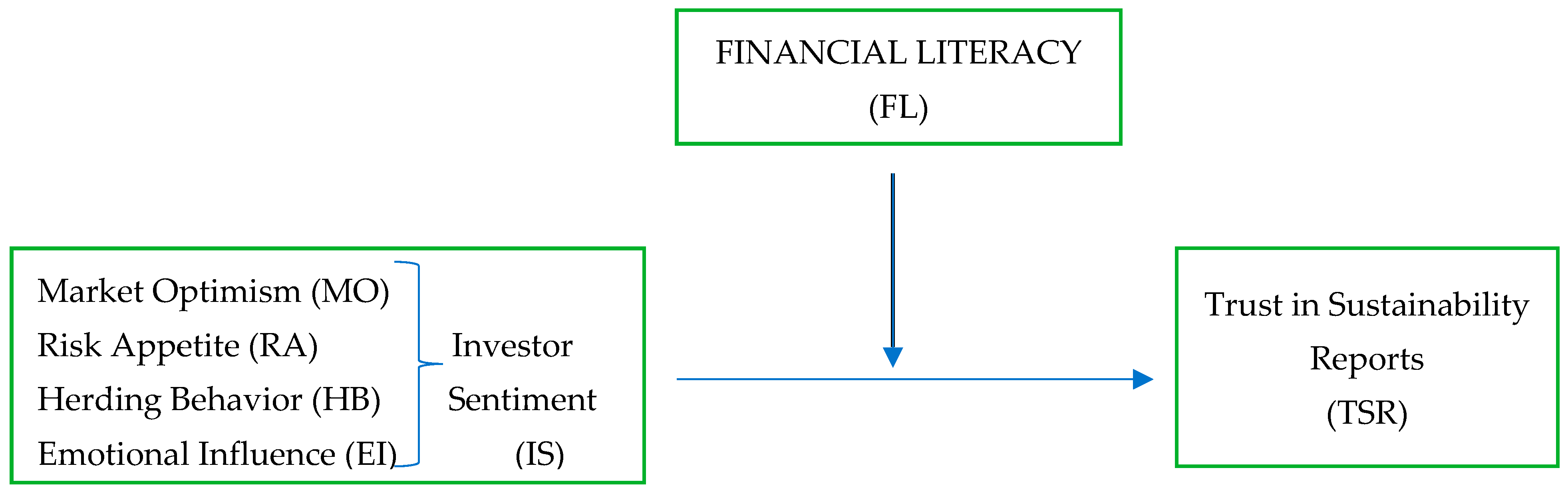
Figure 1 illustrates the conceptual research framework of the study. IS, represented by four dimensions (market optimism, risk appetite, herding behavior, and emotional influence), is proposed to have a direct impact on trust in sustainability reports. In addition, FL is introduced as a moderating variable that strengthens or weakens the relationship between IS and trust.

4. Methodology

4.1. Research Population and Sample

The target population consists of individual investors in Egypt who are familiar with sustainability or ESG reports. A non-probability purposive sampling technique is used to ensure participants have investment experience and exposure to non-financial disclosures. Respondents were selected based on the following criteria: (1) active or recent participation in stock market investments; (2) basic awareness of sustainability or corporate social responsibility reporting; and (3) minimum investment experience of one year. The questionnaire was distributed electronically through investment-related online platforms, professional networks, and social media groups that target individual investors in Egypt. To minimize duplication and response bias, each participant was allowed to complete the survey only once, and incomplete responses were excluded from the final dataset. After data screening, a total of 328 valid responses were retained for analysis. This sample size exceeds the minimum recommended for regression-based studies (N > 200), ensuring adequate statistical power.
The research sample consisted of 328 respondents with diverse demographic and investment backgrounds. In terms of age, the largest segment (31.7%) fell within the 30–45 years range, followed by 29.3% aged 46–60 years. Males represented the majority of the sample (61.6%), while females accounted for 38.4%. Regarding education, most participants hold a bachelor’s degree (57.9%), with 26.5% having a master’s degree or PhD. In terms of investment experience, nearly half of the respondents (47.8%) had over five years of experience, and 35.1% had between three and five years. Finally, the majority of participants reported an average annual investment ranging from EGP 50,000 to 500,000 (41.5%), while 35.3% invested less than EGP 50,000 annually. Although the sample size is statistically adequate for regression analysis, the use of purposive non-probability sampling may limit the generalizability of results beyond the Egyptian market context. This limitation is further discussed in Section 6.

4.2. Research Instrument and Measures

Since this study is based on questionnaire data, reliability and validity testing were conducted to ensure the consistency and accuracy of the measurement instrument. Internal consistency was assessed using Cronbach’s Alpha, while construct validity was verified using Pearson correlation coefficients (PCCs) between each item and its respective dimension. All constructs achieved values above the minimum acceptable threshold of 0.70, confirming that the research instrument was both reliable and valid for empirical analysis.
The questionnaire used in this study was structured into four main sections, each designed to measure key constructs related to the research objectives. The first section collected basic background information from respondents, including age, gender, education level, occupation, investment experience, and average monthly investment. The second section measured the independent variable, IS, through four subdimensions: MO, RA, HB, and EI. These dimensions reflect psychological and behavioral tendencies that influence investment decision-making. The third section assessed the dependent variable: TSR. The fourth section measured the moderating variable, FL. It evaluated respondents’ self-assessed knowledge and confidence in interpreting financial statements, understanding investment concepts, and evaluating both financial and sustainability performance. The items were designed to capture both basic and advanced FL, as well as familiarity with sustainability-integrated financial analysis. Respondents indicated their level of agreement with various statements on a 5-point Likert scale (1 = Strongly Disagree to 5 = Strongly Agree). To avoid loss of meaning due to translation from English to Arabic, the researcher conducted a dual translation process whose results confirmed no linguistic deviations.
Measurement design is grounded in both behavioral finance and accounting disclosure literature. The inclusion of IS dimensions (MO, RA, HB, and EI) reflects established findings that optimism, risk preference, social influence, and emotions shape investment decisions. Importantly, this study extends these constructs into the accounting domain by linking them to trust in sustainability reporting. The dependent variable, TSR, is operationalized in line with prior accounting studies emphasizing disclosure accuracy, comparability, and trust. The moderating variable, FL, captures both basic financial skills (e.g., interpreting statements) and sustainability-specific literacy (e.g., integrating ESG into analysis), reflecting the critical role of user sophistication in evaluating disclosures. Together, these measures provide a comprehensive framework that situates behavioral variables within an accounting disclosure context, addressing a gap in prior literature.

4.3. Analysis and Results

The statistical measures for the descriptive sample characteristics include the Arithmetic mean (AM), the Standard deviation (SD), Relative importance (RI) and ranking based on measures of the five-point Likert scale used for this research. Cronbach Alpha Coefficient (CAC) for measuring stability of the independent variable (IS), moderating variable (FL) and the dependent variable (TSR) was used. The CAC values of all dimensions are greater than 0.70 which means a high degree of internal stability for the questionnaire. The CAC for the total sample reached (0.856), which indicates a high degree of internal consistency of the study instrument, which reflected its impact on Validity, estimated as the square root of reliability, as it reached 0.925. The value of CAC for Variable (IS) X is (0.820), and ranges between (0.802, 0.836) for its dimensions. It is (0.832) for the moderator variable (FL) and is (0.843) for the dependent variable Y (TSR), as shown in Table 1:
The internal consistency is calculated using PCC to measure the relationship between each statement and the overall degree of consistency with the total of its dimensions. The correlation coefficients are computed for each of the dimensions with the total score of that dimension, at a level of significance less than 0.01, where the first column reflects the dimensions, and the second column is the correlation coefficient for each dimension. Correlation coefficients are between 0.692 and 0.857, indicating the validity and consistency of the study tool, which is illustrated in Table 2.
Table 3 shows that the PCCs computed for each of the statements of the dependent variable (TSR) with the total score of that variable, at a level of significance less than 0.01 are between 0.535 and 0.831, which indicates the validity and consistency for the study tool.
Table 4 shows that PCC is computed for each of the statements of the moderating variable (FL) with the total score of that Variable, at a level of significance less than 0.01. Correlation coefficients are between 0.504 and 0.864, indicating the validity and consistency of the study tool.
The descriptive statistics of IS, shown in Table 5, indicate that respondents generally reported a moderate-to-high level of sentiment toward the Egyptian stock market (overall mean = 3.40; 68%). Among its four dimensions, MO recorded the highest score (M = 3.66; 73.2%), reflecting a strong belief that the stock market will rise in the near future and that sustainability-conscious companies will outperform in the long run. EI followed (M = 3.42; 68.4%), with investors showing particular sensitivity to negative sustainability news and confidence in firms with strong sustainability performance. HB (M = 3.30; 66%) also played a role, as investors tended to feel more secure when others were buying the same stock and frequently sought advice from peers or forums, although blind imitation was less common. RA ranked lowest (M = 3.24; 64.8%), suggesting moderate risk tolerance; while investors expressed patience in holding stocks after price drops, they were less inclined toward speculative or highly volatile investments. Overall, these findings suggest that IS among the surveyed Egyptian investors appears to be shaped most strongly by optimism and emotional reactions to sustainability issues, while risk-taking remains more cautious and social influences provide reassurance rather than direct imitation.
The descriptive statistics of the dependent variable, TSR, shown in Table 6 indicate an overall tendency toward agreement, with a mean score of 3.81 and relative importance of 76.2%, reflecting a generally positive perception among respondents. The highest levels of agreement were associated with statements emphasizing standardization and assurance, particularly the preference for reports prepared according to recognized frameworks such as GRI or SASB (M = 4.62; 92.4%) and trust in reports verified by independent auditors or consultants (M = 4.56; 91.2%). Similarly, respondents strongly supported the importance of comparability across companies (M = 4.34; 86.8%) and highlighted that a lack of standardization reduces the usefulness of reports (M = 4.39; 87.8%). These results underscore that the majority of investors place a high value on formal assurance and adherence to international reporting standards when forming trust in sustainability disclosures.
In contrast, lower agreement was observed in items assessing the practical integration and perceived completeness of reports. For example, relatively fewer respondents agreed that companies present actual performance rather than selective outcomes (M = 3.13; 62.6%) or that sustainability reports are consistently used alongside financial statements in investment analysis (M = 3.10; 62%). The lowest-rated statement was related to disclosure of sustainability risks and their management (M = 3.08; 61.6%), suggesting that respondents remained cautious about the transparency and comprehensiveness of current reports.
The descriptive statistics of the moderating variable FL, shown in Table 7, indicate that respondents generally reported a high level of financial knowledge and confidence, with an overall mean of 4.06 and relative importance of 81.2%, reflecting strong agreement across most items. The highest agreement was recorded for “I feel confident making independent investment decisions based on financial information” (M = 4.67; 93.4%) and “I understand how to read and interpret income statements and balance sheets” (M = 4.59; 91.8%), highlighting investors’ competence in core financial decision-making and accounting skills. Similarly, respondents showed solid familiarity with investment concepts (M = 4.29; 85.8%) and a good understanding of how macroeconomic conditions affect investment returns (M = 3.87; 77.4%). In contrast, the lowest-rated item was “I can interpret sustainability reports and identify sustainability information that is financially relevant” (M = 3.22; 64.4%), suggesting a relative weakness in integrating sustainability-related data into financial analysis. This finding reveals that while general FL appears strong among the surveyed respondents, specialized literacy in sustainability-linked financial interpretation is less developed.
In this study, t-tests and F-tests were used to assess the statistical significance and overall validity of the regression models. The t-test was applied to determine whether each independent variable had a significant effect on the dependent variable by testing whether the estimated regression coefficients were statistically different from zero. Meanwhile, the F-test was used to evaluate the overall significance and goodness-of-fit of each regression model, indicating whether the set of independent variables jointly explained a significant proportion of the variation in trust in sustainability reports. These tests ensured the robustness and reliability of the statistical findings and supported the acceptance or rejection of the proposed hypotheses.
Table 8 presents the results of a simple linear regression analysis testing the effect of IS on TSR. The findings show a strong and statistically significant positive relationship (r = 0.766, p < 0.01). The regression model explains 58.6% of the variance in trust (R2 = 0.586), which indicates that IS is a substantial predictor of how much confidence respondents placed in sustainability disclosures. The regression coefficient (β = 0.805, t = 21.490, p < 0.01) confirms that higher levels of sentiment are associated with greater TSR. The F-test (F = 461.808, p < 0.01) further demonstrates the overall robustness and statistical quality of the model.
Table 8. Effect of the IS on TSR using simple Linear Regression.
Independent Variablesβt TestF TestrR2
ValueSig.ValueSig.
constant0.7345.0790.01 **461.8080.01 **0.76658.6%
Investor Sentiment0.80521.4900.01 **
** At a significance level of 0.01 or less.
Y = Constant + β x
TSR = 0.734 + 0.805 IS
Hence, we accept the statistical hypothesis “IS has a significant positive effect on TSR.
The simple regressions confirmed that each dimension of IS—MO, RA, HB, and EI—has a significant positive effect on TSR (Table 9, Table 10, Table 11 and Table 12).
Table 9. Effect of the MO on Trust in TSR using simple Linear.
Independent Variablesβt TestF TestrR2
ValueSig.ValueSig.
constant0.9248.0740.01 **297.2890.01 **0.69147.7%
Market Optimism 0.71817.2420.01 **
** At a significance level of 0.01 or less.
Hence,
y = β0 + β × 1
TSR = 0.924+ 0.718 MO
Table 10. Effect of the RA on TSR using simple Linear Regression.
Independent Variablesβt TestF TestrR2
ValueSig.ValueSig.
constant1.2905.5050.01 **109.6980.01 **0.50225.2%
Risk Appetite 0.49510.4740.01 **
** At a significance level of 0.01 or less.
Hence,
y = β0 + β × 2
TSR= 1.290 + 0.495 RA.
Table 11. Effect of the HB on TSR using simple Linear Regression.
Independent Variablesβt TestF TestrR2
ValueSig.ValueSig.
constant1.61711.0300.01**229.6960.01 **0.64341.3%
Herding behavior0.66515.1560.01**
** At a significance level of 0.01 or less.
Hence,
y = β0 + β × 3
TSR = 1.617+ 0.665 HB.
Table 12. Effect of the EI on TSR using simple Linear Regression.
Independent Variablesβt TestF TestrR2
ValueSig.ValueSig.
constant1.1388.6670.01 **143.9840.01 **0.55330.6%
Emotional Influence0.54811.9990.01 **
** At a significance level of 0.01 or less.
Hence,
y = β0 + β × 4
TSR = 1.138 + 0.548 EI
The multiple regression model (Table 13) provides the most comprehensive test, showing that all four dimensions together explain 53.6% of the variance in trust (R2 = 0.536, p < 0.01). MO (β = 0.279), HB (β = 0.269), and EI (β = 0.270) emerged as the strongest predictors, while RA, though significant (β = 0.174), had a relatively smaller effect. These results support Hypotheses H1a–H1d and highlight that investors’ optimism, social validation, and emotional reactions to sustainability issues are more influential in shaping TSR than risk tolerance alone.
Y = β0 + βx1+ βx2 + βx3 + βx4
TSR = 0.539 +0.279 MO +0.174 RA + 0.269 HB+ 0.270 EI
Table 14 presents the results of the hierarchical regression analysis examining the moderating role of FL in the relationship between IS and TSR. In Model 1, IS alone showed a strong and significant positive effect on trust (β = 0.805, r = 0.766, R2 = 58.6%, p < 0.01). Model 2 demonstrated that FL itself was a powerful predictor (β = 0.724, r = 0.869, R2 = 75.4%, p < 0.01). Crucially, Model 3, which introduced the interaction term (IS × FL), explained 78.2% of the variance in trust (R2 = 0.782, p < 0.01), significantly higher than either predictor alone. The interaction coefficient (β = 0.879, t = 34.195, p < 0.01) confirms that FL strengthens the positive impact of IS on trust.
Hence, we accept the hypothesis “Financial literacy moderates the relationship between investor sentiment and trust in Sustainability reports, such that the relationship is stronger at higher levels of financial literacy”.
The robustness of the findings is further supported by the strong internal consistency and validity indicators obtained from the data. All constructions demonstrated Cronbach’s alpha values above the acceptable threshold of 0.70, and PCC confirmed significant internal consistency at the 0.01 level. In addition, the use of both simple and hierarchical regression analysis strengthens the statistical substantiation of the proposed relationships by demonstrating consistency across multiple analytical techniques.
In order to explore potential heterogeneity within the sample, additional attention was given to differences in responses based on levels of FL. When comparing respondents with higher levels of FL to those with lower levels, the strength of the relationship between IS and trust in sustainability reports was noticeably stronger among highly literate investors. This finding is consistent with the idea that investor competence plays a significant role in shaping the interpretation of sustainability disclosures. Although a full-stage cluster analysis, similar to the method applied by [52] to identify regional heterogeneity, was not performed due to the individual-level nature of the data used in this study, the observed differences across FL levels provide initial evidence of heterogeneity in the IS–TSR relationship.
While the statistical results indicate strong and significant relationships between IS, FL, and TSR, these findings reflect general patterns observed within the studied sample of Egyptian investors and do not imply that all investors respond identically to sustainability disclosures.


5. Conclusions

The findings confirm that, within the context of this study, IS significantly influences trust in sustainability reports, but the key theoretical insight lies in the interaction with FL. While prior research has emphasized the quality of disclosures as the primary determinant of trust, this study demonstrates that trust is co-constructed by both disclosure quality and user psychology/competence. This dual perspective contributes to accounting theory by integrating behavioral finance into disclosure analysis, showing that the impact of sustainability reporting depends not only on what firms disclose but also on how investors interpret it.
Specifically, optimism and emotional influence were found to be stronger drivers of trust than risk appetite, underscoring the role of psychological framing in sustainability report evaluation. Herding behavior, in the sample studied, highlighted the social dimension of disclosure trust, consistent with legitimacy arguments that reporting practices lead to trust when broadly accepted. Most importantly, the moderating role of FL shows that accounting outcomes are not merely supply-driven but depend critically on user literacy, which is a factor often neglected in accounting theory. This finding has implications for regulators and educators: enhancing investor literacy can increase the effectiveness of sustainability disclosures in capital markets.
By linking investor psychology to disclosure trust, this study contributes to accounting knowledge by expanding the conceptual boundary of disclosure credibility research. It positions sustainability reporting not only as a technical communication tool but also as a socially and behaviorally mediated mechanism of accountability.
Regression analysis confirmed these descriptive insights: IS had a strong positive effect on trust, explaining nearly 59% of its variance, and each dimension of sentiment contributed significantly, with optimism, emotional reactions, and social influence emerging as more powerful drivers than risk tolerance. Most importantly, FL was shown to amplify this relationship; highly literate investors were more likely to convert their positive sentiment into trust in sustainability disclosures, raising explanatory power to 78%. These findings suggest that fostering both credible sustainability reporting practices and stronger FL among investors may contribute to deepening trust in sustainability information and ensuring it is effectively integrated into investment decisions.
In addition, the findings of this study should be viewed within the broader context of evolving ESG regulations and corporate governance practices. Stronger governance mechanisms, such as board independence, transparency policies, and effective internal controls, may further enhance the credibility of sustainability disclosures and reinforce investor trust. Likewise, clearer and more enforceable ESG regulatory frameworks at both national and international levels could reduce information asymmetry and improve the consistency and reliability of sustainability reporting. These institutional factors represent an important contextual layer that complements the behavioral perspective adopted in this study.

6. Limitations of the Study

Although this study provides important insights into the relationship between IS, FL, and TSR, several limitations should be acknowledged. First, the study relies on a non-probability purposive sampling technique and a sample size of 328 respondents, which may limit the generalizability of the findings to the broader population of investors in Egypt or other emerging markets.
Second, research design is cross-sectional in nature, capturing perceptions and attitudes at a single point in time. As investor sentiment and trust are dynamic constructs that may evolve with market conditions and regulatory changes, future research could adopt a longitudinal approach to examine how these relationships change over time.
Third, the study is based on self-reported questionnaire data, which may be subject to response bias or social desirability effects. Although reliability and validity measures were applied, subjective assessments cannot be eliminated.
Finally, the research is limited to the Egyptian context, which is characterized by specific cultural, regulatory, and economic conditions. As such, the findings may not be directly transferable to other markets without considering contextual differences. Future studies are encouraged to replicate the model in other emerging and developed economies to enhance external validity.
Furthermore, while the current sample size is adequate for statistical analysis, expanding the sample in future studies to include a wider range of investors from different regions, income levels, and professional backgrounds would further enhance the external validity and generalizability of the findings.

7. Recommendations

The findings of this research demonstrate that IS significantly shapes TSR, with MO, EI, and social validation exerting stronger effects than risk tolerance. In addition, FL was found to play a critical moderating role, strengthening the relationship between sentiment and trust. Based on these results, several targeted recommendations can be proposed.
First, regulators such as the Egyptian Exchange (EGX) and the Financial Regulatory Authority (FRA) should move towards enhancing the formal regulation of sustainability reporting by encouraging (and gradually mandating) the use of internationally recognized frameworks such as GRI, ISSB, and TCFD, as well as requiring external third-party assurance for sustainability reports. The study’s findings show that standardization and independent verification are among the strongest drivers of investor trust.
Second, companies should not only improve the technical quality of their sustainability disclosures, but also enhance their transparency and balance, clearly reporting both achievements and challenges. Given the strong role of emotional influence in shaping trust, avoiding overly promotional language and ensuring clarity, consistency, and comparability of information can help reduce biased perceptions and strengthen investor confidence.
Third, financial institutions, universities, and professional accounting bodies should invest in developing specialized sustainability-related FL programs. While general FL among respondents was relatively high, the ability to interpret sustainability information in a financially relevant way was more limited. Integrating ESG analysis, climate risk, and sustainability reporting into investment education and accounting curricula would significantly improve investors’ ability to evaluate non-financial disclosures.
Regarding future research, scholars are encouraged to extend this study across different national and institutional contexts and to incorporate additional variables such as corporate governance quality, ESG regulatory intensity, and cultural attitudes toward sustainability. Furthermore, future studies may employ clustering or segmentation techniques to classify investors or firms into more homogeneous groups (e.g., by region, sector, or governance strength) to explore potential heterogeneity in the relationship between IS and TSR.

Author Contributions

Conceptualization, H.E.H.K.; Methodology, G.A.N.I.; Validation, H.E.H.K.; Formal analysis, G.A.N.I.; Investigation, H.E.H.K.; Resources, H.E.H.K.; Data curation, G.A.N.I.; Writing—original draft, H.E.H.K.; Writing—review & editing, G.A.N.I.; Supervision, H.E.H.K. All authors have read and agreed to the published version of the manuscript.

Funding

This research received no external funding.

Institutional Review Board Statement

Ethical review and approval were waived for this study due to: According to the Research and Ethics Policy of Misr University for Science and Technology (MUST), ethical review and Institutional Review Board (IRB) approval are not required for studies that: 1. Do not involve medical or clinical experimentation, 2. Do not collect or process personally identifiable or sensitive data, and 3. Pose no physical, psychological, or legal risk to participants. Such studies are deemed to comply with institutional ethical standards when participants are informed about the study’s purpose, anonymity, and voluntary participation, and when informed consent is obtained. This policy is consistent with national and international ethical principles, including the Declaration of Helsinki (1975, revised in 2013). Accordingly, the study meets the ethical requirements for academic research at MUST and does not require prior approval from an IRB or ethics committee.

Informed Consent Statement

Informed consent was obtained from all subjects involved in the study.

Data Availability Statement

The data presented in this study are available on request from the corresponding author.

Conflicts of Interest

The authors declare no conflicts of interest.

Abbreviations

The following abbreviations are used in this manuscript:
ISInvestor Sentiment
TSRTrust in Sustainability Reports
FLFinancial Literacy
MOMarket Optimism
RARisk Appetite
HBHerding Behavior
EIEmotional Influence
CSRCorporate Social Responsibility
PCCPearson Correlation Coefficient

References

  1. Gray, R. Is accounting for sustainability actually accounting for sustainability and how would we know? An exploration of narratives of organizations and the planet. Account. Organ. Soc. 2010, 35, 47–62. [Google Scholar] [CrossRef]
  2. Cho, C.H.; Michelon, G.; Patten, D.M.; Roberts, R.W. CSR disclosure: The more things change, the more they stay the same? Account. Audit. Account. J. 2015, 28, 14–35. [Google Scholar] [CrossRef]
  3. Friede, G.; Busch, T.; Bassen, A. ESG and financial performance: Aggregated evidence from more than 2000 empirical studies. J. Sustain. Financ. Invest. 2015, 5, 210–223. [Google Scholar] [CrossRef]
  4. Fatemi, A.; Glaum, M.; Kaiser, S. ESG performance and firm value: The moderating role of disclosure. Glob. Financ. J. 2018, 38, 45–64. [Google Scholar] [CrossRef]
  5. Michelon, G.; Pilonato, S.; Ricceri, F. CSR reporting practices and the quality of disclosure: An empirical analysis. Crit. Perspect. Account. 2016, 33, 59–78. [Google Scholar] [CrossRef]
  6. Hodge, K.; Subramaniam, N.; Stewart, J. Assurance of Sustainability Reports: Impact on Report Users’ Confidence and Perceptions of Information Credibility. Aust. Account. Rev. 2009, 19, 178–194. [Google Scholar] [CrossRef]
  7. Peters, G.F.; Romi, A.M. The association between sustainability governance characteristics and the quality of assurance of sustainability reports. Audit. A J. Pract. Theory 2015, 34, 163–198. [Google Scholar] [CrossRef]
  8. Misiuda, M.; Lachmann, M. Investors’ perceptions of sustainability reporting—A review of the experimental literature. Sustainability 2022, 14, 16746. [Google Scholar] [CrossRef]
  9. Lins, K.; Servaes, H.; Tamayo, A. Social Capital, Trust, and Firm Performance: The Value of Corporate Social Responsibility during the Financial Crisis. J. Financ. 2017, 72, 1785–1824. [Google Scholar] [CrossRef]
  10. Kahneman, D.; Taversky, A. Prospect Theory: An Analysis of Decision under risk. Econometrica 1979, 47, 263–292. [Google Scholar] [CrossRef]
  11. Barberis, N.; Shleifer, A.; Vishny, R. A model of investor sentiment. J. Financ. Econ. 1998, 49, 307–343. [Google Scholar] [CrossRef]
  12. Baker, M.; Wurgler, J. Investor sentiment and the cross-section of stock returns. J. Financ. 2006, 61, 1645–1680. [Google Scholar] [CrossRef]
  13. Brown, G.W.; Cliff, M.T. Investor sentiment and the near-term stock market. J. Empir. Financ. 2004, 11, 1–27. [Google Scholar] [CrossRef]
  14. Da, Z.; Engelberg, J.; Gao, P. The sum of all FEARS: Investor sentiment and asset prices. Rev. Financ. Stud. 2015, 28, 1–32. [Google Scholar] [CrossRef]
  15. Lusardi, A.; Mitchell, O.S. The economic importance of financial literacy: Theory and evidence. J. Econ. Lit. 2014, 52, 5–44. [Google Scholar] [CrossRef]
  16. Van Rooij, M.; Lusardi, A.; Alessie, R. Financial literacy and stock market participation. J. Financ. Econ. 2011, 101, 449–472. [Google Scholar] [CrossRef]
  17. Aren, S.; Zengin, A.N. Influence of financial literacy and risk perception on choice of investment. Procedia Soc. Bus. Sci. 2016, 235, 656–663. [Google Scholar] [CrossRef]
  18. Lotfi, R.; El Murr, B. Financial literacy and financial behavior: Evidence from LEBANON. Bus. Econ. J. 2018, 9, 1–8. [Google Scholar] [CrossRef]
  19. Freeman, R.E. Strategic Management: A Stakeholder Approach; Pitman: Boston, MA, USA, 1984. [Google Scholar]
  20. Dowling, J.; Pfeffer, J. Organizational legitimacy: Social values and organizational behavior. Pac. Sociol. Rev. 1975, 18, 122–136. [Google Scholar] [CrossRef]
  21. Spence, M. Job market signaling. Q. J. Econ. 1973, 87, 355–374. [Google Scholar] [CrossRef]
  22. Negi, P.; Kushwah, S.V.; Jaiswal, A.; Rekunenko, I. Investor sentiment, market volatility, and ESG index dynamics: An empirical analysis. Cogent Econ. Financ. 2025, 13, 1–18. [Google Scholar] [CrossRef]
  23. Aliahmadi, M. Investors’ emotions or beliefs regarding individual stocks or the stock market. J. Financ. Rep. Account. 2023, 21, 401–419. [Google Scholar] [CrossRef]
  24. Santi, C. Investor climate sentiment and financial markets. Int. Rev. Financ. Anal. 2023, 86, 1–18. [Google Scholar] [CrossRef]
  25. Fu, J.; Wu, X.; Liu, Y.; Chen, R. Firm-specific investor sentiment and stock price crash risk. Financ. Res. Lett. 2021, 46, 1–8. [Google Scholar] [CrossRef]
  26. Qi, Y.; Li, H.; Liu, N.; Hao, X.; Guan, Q. Transmission characteristics of investor sentiment for energy stocks from the perspective of a complex network. J. Stat. Mech. Theory Exp. 2018, 7, 1–20. [Google Scholar] [CrossRef]
  27. Cheong, C.; Sinnakkannu, J.; Ramasamy, S. Reactive or Proactive? Investor Sentiment as a Driver of Corporate Social Responsibility. Res. Int. Bus. Financ. 2017, 42, 572–582. [Google Scholar] [CrossRef]
  28. Vuong, N.; Suzuki, Y. The Motivating Role of Sentiment in ESG Performance: Evidence from Japanese Companies. East Asian Econ. Rev. 2021, 25, 125–150. [Google Scholar] [CrossRef]
  29. Tetlock, P. Giving content to investor sentiment The role of media in the stock market. J. Financ. 2007, 62, 1139–1168. [Google Scholar] [CrossRef]
  30. Atkinson, A.; Messy, F. Measuring Financial Literacy: Results of the OECD/International Network on Financial Education (INFE) Pilot Study. OECD Work. Pap. Financ. Insur. Priv. Pensions 2012, 15, 1–73. [Google Scholar] [CrossRef]
  31. Senaya, G. Financial literacy and its role in promoting sustainable investment. World J. Adv. Res. Rev. 2024, 24, 212–232. [Google Scholar] [CrossRef]
  32. Adel, B.; Ramadan, M.; Mohsen, D. Measuring The Impact of Financial Literacy on Investment Decisions: The Moderating Role of Investor’s Gender Empirical Study on Generation Z1. J. Alex. Univ. Adm. Sci. 2025, 62, 63–81. [Google Scholar] [CrossRef]
  33. Naidoo, T.; Moores-Pitt, P.; Muzindutsi, P. The effect of investor sentiment on stock market liquidity under changing market conditions: Evidence from South Africa. Cogent Econ. Financ. 2025, 13, 1–22. [Google Scholar] [CrossRef]
  34. Hui, E.; Zheng, X.; Wang, H. Investor sentiment and risk appetite of real estate security market. Appl. Econ. 2012, 45, 2801–2807. [Google Scholar] [CrossRef]
  35. Hudson, Y. Investor Sentiment and Herding: An Empirical Study of UK Investor Sentiment and Herding Behavior. Ph.D. Thesis, Loughborough University, Loughborough, UK, 2015. [Google Scholar]
  36. Abideen, Z.; Fuling, H. Sustainability reporting and investor sentiment: A sustainable development approach to Chinese-listed firms. J. Clean. Prod. 2024, 466, 1–13. [Google Scholar] [CrossRef]
  37. Ernst, C.A.; Kunz, J.; Fischer, T.M. Investors’ reactions to CSR reputation and disclosure assurance: An experimental analysis. J. Manag. Gov, 2025; Online First. [Google Scholar] [CrossRef]
  38. Hartzmark, S.M.; Sussman, A.B. Do investors value sustainability? A natural experiment examining ranking and fund flows. J. Financ. 2019, 74, 2789–2837. [Google Scholar] [CrossRef]
  39. Deng, X.; Kang, J.K.; Low, B.S. Corporate social responsibility and stakeholder value maximization: Evidence from mergers. J. Financ. Econ. 2013, 110, 87–109. [Google Scholar] [CrossRef]
  40. Statman, M.; Glushkov, D. The wages of social responsibility. Financ. Anal. J. 2009, 65, 33–46. [Google Scholar] [CrossRef]
  41. Sachdeva, M.; Singla, A. Influence of green risk attitude on green investment: Moderating role of financial anxiety. Eur. Econ. Lett. 2025, 15, 4148–4159. [Google Scholar] [CrossRef]
  42. Bikhchandani, S.; Sharma, S. Herd behavior in financial markets. IMF Staff Pap. 2001, 47, 279–310. [Google Scholar] [CrossRef]
  43. Widyawati, L. A systematic literature review of socially responsible investment and environmental, social, and governance metrics. J. Sustain. Financ. Invest. 2020, 10, 213–238. [Google Scholar] [CrossRef]
  44. Gavrilakis, N.; Floros, C. ESG performance, herding behavior, and stock market returns: Evidence from Europe. Oper. Res. Int. 2023, 23, 1–21. [Google Scholar] [CrossRef]
  45. Nofsinger, J.R.; Varma, A. Socially responsible funds and market crises. J. Bank. Financ. 2014, 48, 180–193. [Google Scholar] [CrossRef]
  46. Krüger, P. Corporate goodness and shareholder wealth. Q. J. Econ. 2015, 130, 1–48. [Google Scholar] [CrossRef]
  47. Bollen, N.P.B. Mutual fund attributes and investor behavior. J. Financ. Quant. Anal. 2007, 42, 683–708. [Google Scholar] [CrossRef]
  48. Almenberg, J.; Dreber, A. Gender, stock market participation, and financial literacy. Econ. Lett. 2015, 137, 140–142. [Google Scholar] [CrossRef]
  49. Bauer, R.; Eberhardt, I.; Smeets, P. A fistful of dollars: Financial incentives, peer information, and retirement savings. Rev. Financ. Stud. 2022, 35, 2981–3020. [Google Scholar] [CrossRef]
  50. Eurosif. European SRI Study 2018; European Sustainable Investment Forum: Brussels, Belgium, 2018; Available online: https://www.eurosif.org/wp-content/uploads/2021/10/European-SRI-2018-Study.pdf (accessed on 19 October 2025).
  51. Fernandez, P.; Garcia de la Garza, D.; Fernández Acín, J. Survey: Market Risk Premium and Risk-Free Rate Used for 80 Countries in 2023. SSRN 2023. Available online: https://ssrn.com/abstract=4407839 (accessed on 19 October 2025).
  52. Wen, Y.; Xu, Y. Statistical monitoring of economic growth momentum transformation: Empirical study of Chinese provinces. Aims Math. 2023, 8, 24825–24847. [Google Scholar] [CrossRef]
Figure 1. Conceptual Research Framework.
Sustainability 17 10903 g001
Table 1. Reliability and Validity of Study Variables.
VariablesStatementsReliabilityValidity
1—Market Optimism40.8280.909
2—Risk Appetite50.8100.900
3—Herding behavior50.8360.914
4—Emotional Influence50.8020.895
Overall Independent (Investor sentiment)190.8200.905
Dependent (Trust in Sustainability reports)180.8430.918
Moderating (Financial Literacy)70.8320.912
Total: Exploring the Moderating Role of Financial Literacy in the Relationship Between Investor Sentiment and Trust in Sustainability Reports440.8560.925
Table 2. Internal consistency using the PCC for the dimensions of the independent variable IS.
NDimensionsPCCSig.
1Market Optimism0.740 *Less than 0.01
2Risk Appetite0.824 *Less than 0.01
3Herding behavior0.692 *Less than 0.01
4Emotional Influence0.857 *Less than 0.01
* At a significance level of 0.01 or less.
Table 3. Internal consistency using the PCC for the dependent variable “Trust in Sustainability reports”.
StatementsPCCSig.
The information in sustainability reports is accurate and free from manipulation.0.639 *Less than 0.01
Companies present actual performance, not just selective positive outcomes.0.722 *Less than 0.01
I believe Sustainability reports reflect the company’s real impact on the environment and society0.734 *Less than 0.01
Sustainability reports help me evaluate the long-term viability of a company. 0.786 *Less than 0.01
I use sustainability reports alongside financial statements in investment analysis.0.808 *Less than 0.01
Sustainability information is essential for assessing a company’s future risk and return.0.750 *Less than 0.01
Companies that issue sustainability reports are more socially responsible.0.738 *Less than 0.01
Firms that consistently issue sustainability reports are more trustworthy.0.541 *Less than 0.01
I perceive sustainability reporting firms to have higher ethical standards.0.730 *Less than 0.01
Sustainability reports cover both successes and failures in environmental/social efforts0.690 *Less than 0.01
Companies disclose relevant sustainability risks and how they are managed.0.535 *Less than 0.01
Sustainability reports are not just marketing tools; they reflect real commitment.0.831 *Less than 0.01
I trust sustainability reports more when verified by independent auditors or consultants.0.776 *Less than 0.01
Assurance from a credible third party adds value to sustainability reporting.0.564 *Less than 0.01
I check whether sustainability reports are externally assured before trusting them0.788 *Less than 0.01
I prefer sustainability reports prepared according to recognized frameworks (e.g., GRI, SASB).0.791 *Less than 0.01
Sustainability reports should be comparable across companies in the same industry. 0.655 *Less than 0.01
Lack of standardization reduces the usefulness of sustainability reports0.697 *Less than 0.01
* At a significance level of 0.01 or less.
Table 4. Internal consistency using PCC for the moderating variable (Financial Literacy).
StatementsPCCSig.
I understand how to read and interpret income statements and balance sheets. 0.798 *Less than 0.01
I am familiar with basic investment concepts such as risk, return, and diversification.0.734 *Less than 0.01
I know how to evaluate a company’s financial performance using financial ratios.0.864 *Less than 0.01
I feel confident making independent investment decisions based on financial information.0.841 *Less than 0.01
I understand how inflation, interest rates, and economic conditions impact investment returns.0.823 *Less than 0.01
I understand how sustainability factors can impact a company’s financial performance.0.733 *Less than 0.01
I can interpret sustainability reports and identify sustainability information that is financially relevant.0.504 *Less than 0.01
* At a significance level of 0.01 or less.
Table 5. (Mean, Std. Deviation, Relative importance and rank) about the variable IS.
PhrasesMeanStd. DeviationRelative Importance%Rank
1—Market optimism
1I expect the Egyptian stock market to rise in the next 6 months. 4.090.6981.81
2Current market conditions are favorable for investment. 3.340.7866.83
3I am confident in the long-term performance of EGX. 3.300.74664
4I believe sustainability-conscious companies will outperform others in the long term.3.930.7078.62
Mean Average3.660.4773.2%-
2—Risk appetite
5I am willing to invest in high-risk, high-return stocks. 3.300.86662
6I prefer stocks with high volatility if they offer the chance for higher returns.3.250.77653
7I am comfortable investing in new or unproven companies with potential growth.3.230.7164.64
8I often consider speculative investments as part of my portfolio.2.490.9549.85
9I would continue holding a stock even if its price dropped significantly, expecting it to rebound3.940.5578.81
Mean Average3.240.5264.8%-
3—Herding behavior
10I tend to follow the investment decisions of other investors. 2.400.88485
11I feel more secure when many investors are buying the same stock I am considering.3.900.57781
12I often seek investment advice from friends or online forums before making decisions.3.890.5977.82
13I feel uncomfortable holding a stock that most investors are avoiding.3.170.6263.44
14I am more likely to invest in a company if I see it trending or widely discussed on social media3.180.7863.63
Mean Average3.300.4866%-
4—Emotional influence
15I feel confident when investing in companies with strong sustainability performance.3.840.6776.82
16I consider sustainability factors before making investment decisions3.110.6862.24
17Negative news about sustainability issues (e.g., pollution, labor abuse) affects my investment decisions.3.910.6278.21
18I follow sustainability trends and news regularly.3.150.76633
19My sentiment towards stock is influenced by the company’s sustainability reputation3.040.6360.85
Mean Average3.420.4568.4%-
Mean Average
(INVESTOR SENTIMENT)
3.400.4168%-
Table 6. Descriptive Statistics (Mean, Std. Deviation, Relative importance and rank) about the variable (TSR).
PhrasesMeanStd. DeviationRelative Importance%Rank
20The information in sustainability reports is accurate and free from manipulation.3.180.7263.614
21Companies present actual performance, not just selective positive outcomes.3.130.6862.616
22I believe Sustainability reports reflect the company’s real impact on the environment and society3.920.6978.47
23Sustainability reports help me evaluate the long-term viability of a company. 3.860.6177.210
24I use sustainability reports alongside financial statements in investment analysis.3.100.646217
25Sustainability information is essential for assessing a company’s future risk and return.3.800.727613
26Companies that issue sustainability reports are more socially responsible.3.870.5977.49
27Firms that consistently issue sustainability reports are more trustworthy.3.150.6663.015
28I perceive sustainability reporting firms to have higher ethical standards.3.910.6878.28
29Sustainability reports cover both successes and failures in environmental/social efforts3.850.677711
30Companies disclose relevant sustainability risks and how they are managed.3.080.6561.618
31Sustainability reports are not just marketing tools; they reflect real commitment.3.960.7079.26
32I trust sustainability reports more when verified by independent auditors or consultants.4.560.8791.22
33Assurance from a credible third party adds value to sustainability reporting.4.141.1582.85
34I check whether sustainability reports are externally assured before trusting them3.830.6476.612
35I prefer sustainability reports prepared according to recognized frameworks (e.g., GRI, SASB).4.620.8892.41
36Sustainability reports should be comparable across companies in the same industry. 4.341.0686.84
37Lack of standardization reduces the usefulness of sustainability reports4.390.9787.83
Mean Average (TSR)3.810.4976.2%-
Table 7. Descriptive Statistical (Mean, Std. Deviation, Relative importance and rank) about variable (FL).
NPhrasesMeanStd. DeviationRelative Importance%Rank
38I understand how to read and interpret income statements and balance sheets. 4.590.8491.82
39I am familiar with basic investment concepts such as risk, return, and diversification.4.291.0185.83
40I know how to evaluate a company’s financial performance using financial ratios.3.840.5876.86
41I feel confident making independent investment decisions based on financial information.4.670.8193.41
42I understand how inflation, interest rates, and economic conditions impact investment returns.3.870.5877.45
43I understand how sustainability factors can impact a company’s financial performance.3.980.7279.64
44I can interpret sustainability reports and identify sustainability information that is financially relevant.3.220.7164.47
Mean Average (FINANCIAL LITERACY) 4.060.5681.2%-
Table 13. Effect of IS Dimensions on TSR using Multiple Regression Model.
Independent Variablesβt TestF TestrR2
ValueSig.ValueSig.
constant0.2392.4880.01 **386.1390.01 **0.76053.6%
1—Market optimism0.2796.0010.01 **
2—Risk appetite0.1745.1330.01 **
3—Herding behavior0.2695.5590.01 **
4—Emotional influence0.2705.3490.01 **
** At a significance level of 0.01 or less.
Table 14. The effect of FL on the relationship between IS and TSR using the Hierarchical Regression Model.
Model
y
VariablesRegression Coefficientst-TestrR2F-Test
ValueS.EtSig.FSig.
Model 1Constant0.7340.0455.0790.01*0.76658.6%461.8080.01 *
Investor sentiment0.8050.04221.4900.01 *
Model 2Constant0.8810.0949.4050.01 *0.86975.4%1001.770.01 *
Financial Literacy0.7240.02331.6510.01 *
Model 3 Constant1.6380.06511.2240.01 *0.88478.2%1169.330.01 *
Investor sentiment × Financial Literacy (X × M)0.8790.05534.1950.01 *
* Significance level of 0.01 or less.
Disclaimer/Publisher’s Note: The statements, opinions and data contained in all publications are solely those of the individual author(s) and contributor(s) and not of MDPI and/or the editor(s). MDPI and/or the editor(s) disclaim responsibility for any injury to people or property resulting from any ideas, methods, instructions or products referred to in the content.