1. Introduction
The New Zealand government has committed to achieving net-zero greenhouse gas emissions by 2050 (other than for biogenic methane) under its Climate Change Response Act. To enable this path, a concerted cross-ministerial effort is focusing on decarbonising industrial process heat, supported by funding mechanisms such as the Government’s Investment in Decarbonising Industry Fund (Energy Efficiency and Conservation Authority. GIDI Process Heat Contestable Fund). Regarded as a promising solution, green hydrogen produced by electrolysis using renewable electricity is considered one of the most feasible technologies that could help reduce New Zealand’s greenhouse gas emissions [
1].
Globally, hydrogen production remains dominated by fossil fuels, with low-carbon hydrogen—green (produced through electrolysis), blue (utilising carbon capture and storage), or biomass-based—accounting for less than 1% of total output [
2]. Most hydrogen is consumed in industrial applications, such as oil refining, ammonia production, and methanol production [
3,
4]. To reduce emissions, green hydrogen offers a viable alternative to replace fossil-based hydrogen, particularly in energy-intensive industries such as steelmaking and fertiliser production [
2,
4,
5]. Recent reports from the International Energy Agency’s Global Hydrogen Review 2024 and the U.S. Department of Energy’s Industrial Decarbonization Roadmap highlight the accelerating growth of low-emission hydrogen projects and the increasing role of green hydrogen in hard-to-abate sectors [
4,
5].
In parallel, several countries have positioned hydrogen as a key enabler of their clean energy transitions. The United Kingdom and Australia are exploring the integration of hydrogen into gas networks and heating systems [
6,
7], while Germany and the United States have scaled up their national strategies to support production, infrastructure, and deployment [
8,
9,
10,
11,
12]. These initiatives highlight the global momentum behind hydrogen development but also reveal the challenges of scaling up technologies, attracting investment, and ensuring policy coherence to achieve long-term decarbonisation goals [
10,
11,
12].
From a sustainability perspective, the transition to green hydrogen represents not only a technological shift but also a systemic change toward cleaner production, resource efficiency, and long-term resilience. Its adoption aligns with national and global sustainability objectives by addressing emissions reduction, energy security, and innovation in industrial energy use [
13,
14,
15,
16].
Across New Zealand, interest in green hydrogen technologies has grown in recent years. Projects such as Hiringa Energy’s hydrogen refuelling network for heavy transport, the Ballance Agri-Nutrients partnership for fertiliser production, and the Southern Green Hydrogen Project in Southland demonstrate both domestic and export potential. However, despite this momentum, the role of hydrogen as a zero-carbon fuel in the industrial sector remains relatively underexplored.
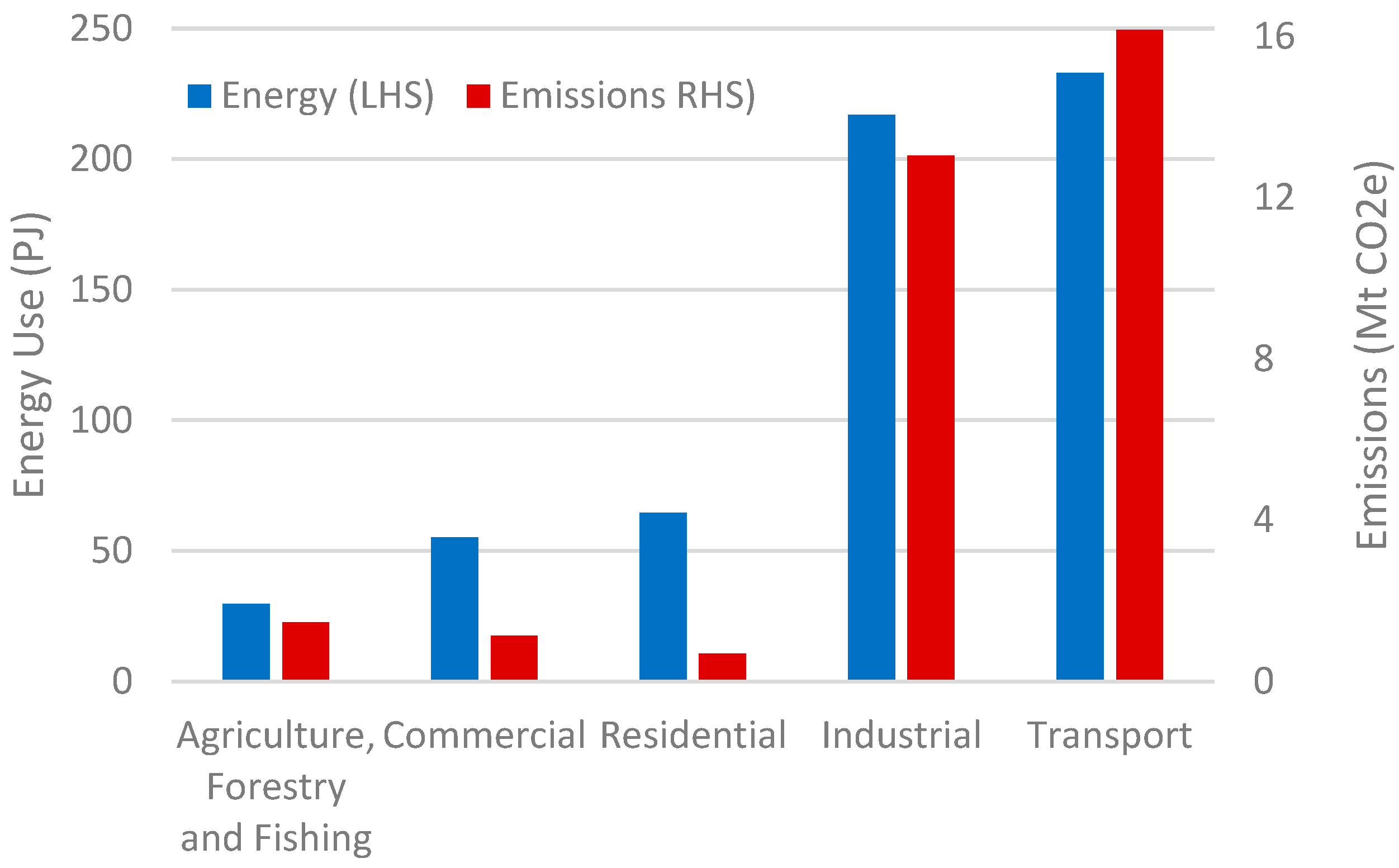
In New Zealand, the industrial sector is the second-largest energy user, surpassed only by the transport sector. It also ranks as the second-largest contributor to energy-related emissions (see
Figure 1).
Figure 1 summarises sectoral final-energy use and energy-related emissions in 2019, showing that industry is second only to transport on both metrics, which motivates our focus on industrial heat decarbonization in the scenarios that follow.
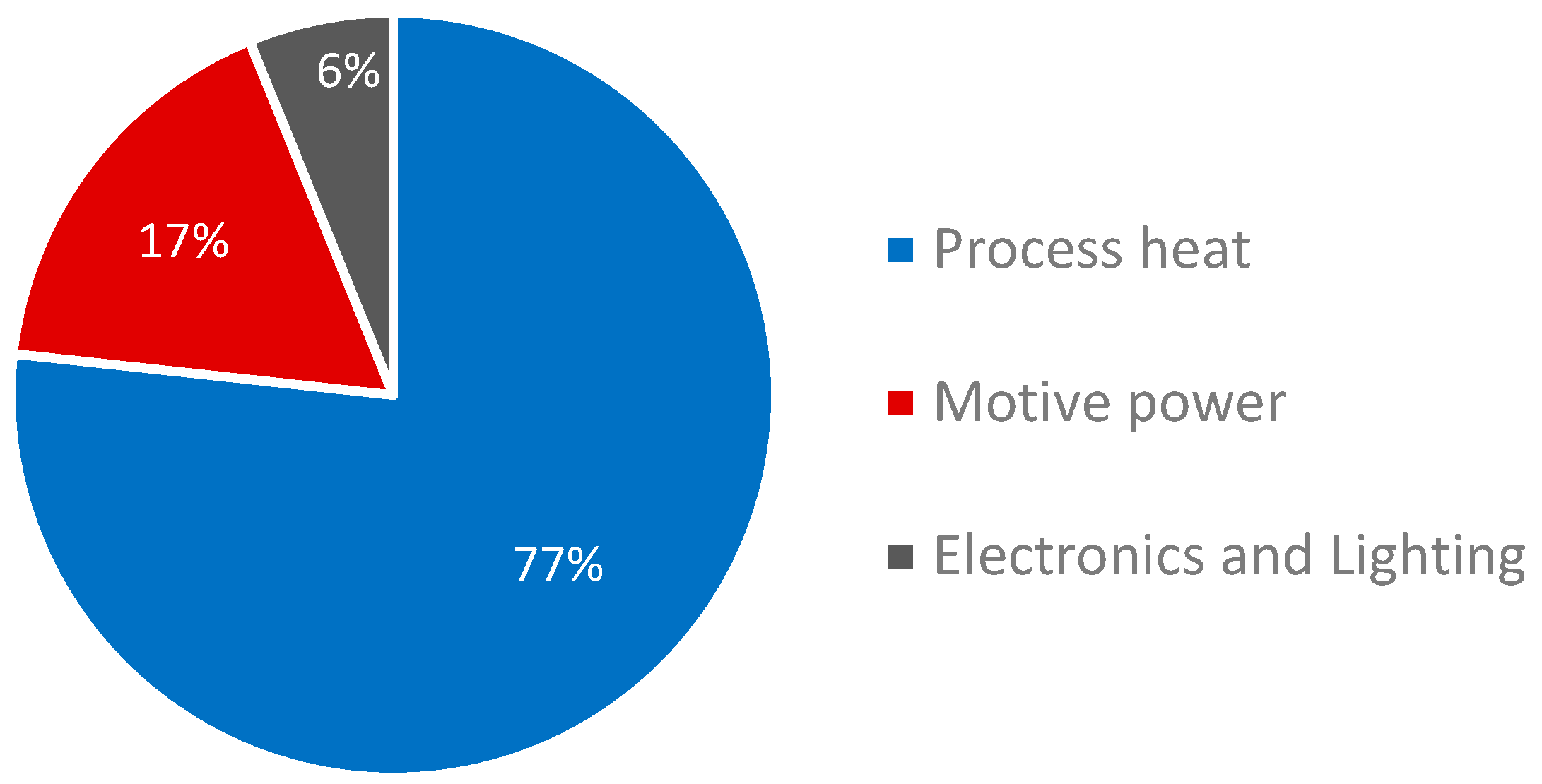
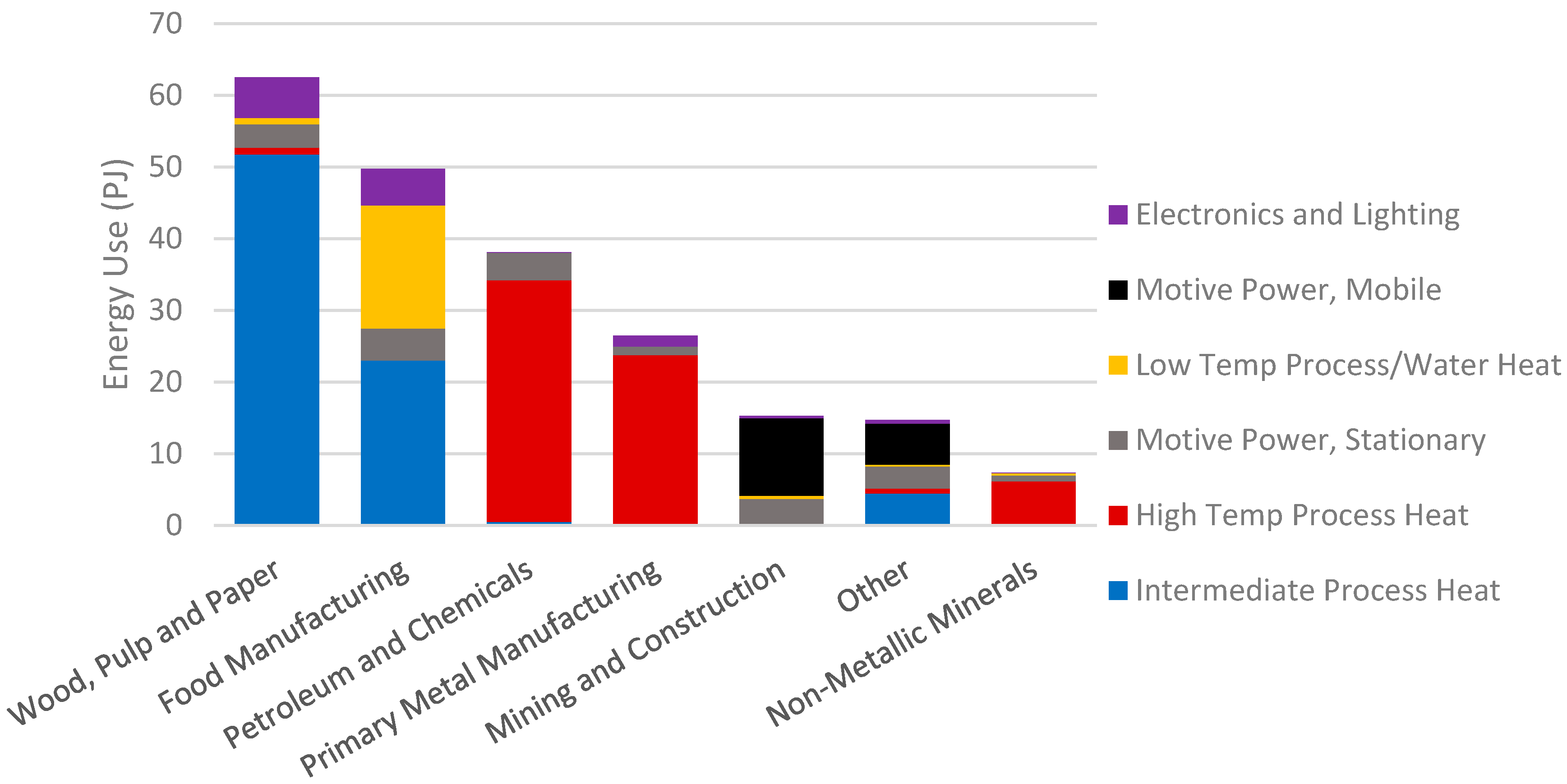
Notably, process heat, in its various types, accounts for over three-quarters of industrial energy use. The remaining energy use is split between motive power and a combination of electronics and lighting (as depicted in
Figure 2).
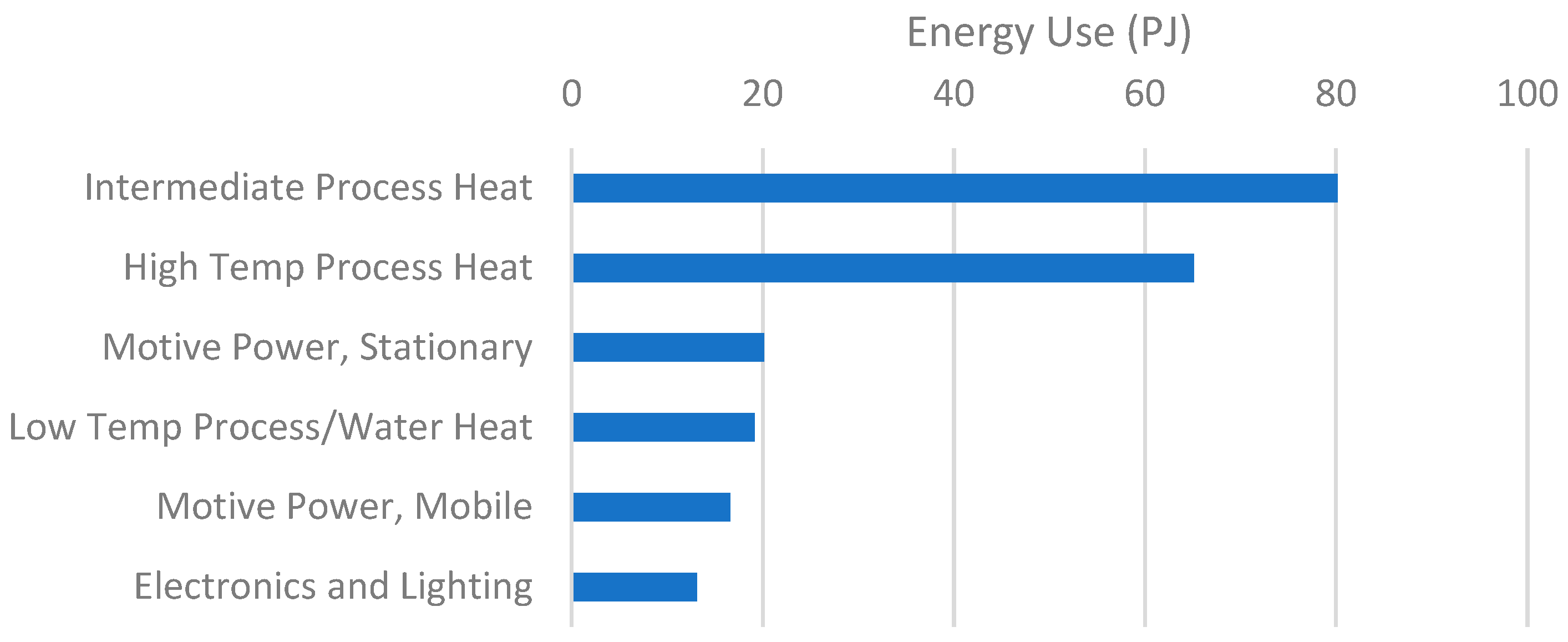
Figure 2 decomposes industrial energy use by end-use category, underscoring why our modelling disaggregates heat by temperature band (low, intermediate, high) and delivery mode (indirect/direct). Process heat dominates the industrial energy balance and, therefore, the decarbonization challenge modelled in
Section 4.
This study, therefore, aims to examine, using a clearly defined modelling mechanism, how hydrogen could contribute to the least-cost decarbonisation of industrial process heat within a broader energy-system context. Specifically, the objectives are to (i) identify current industrial heat use patterns, (ii) evaluate hydrogen’s cost-competitiveness relative to other low-carbon options, and (iii) assess future scenarios under varying cost and efficiency assumptions.
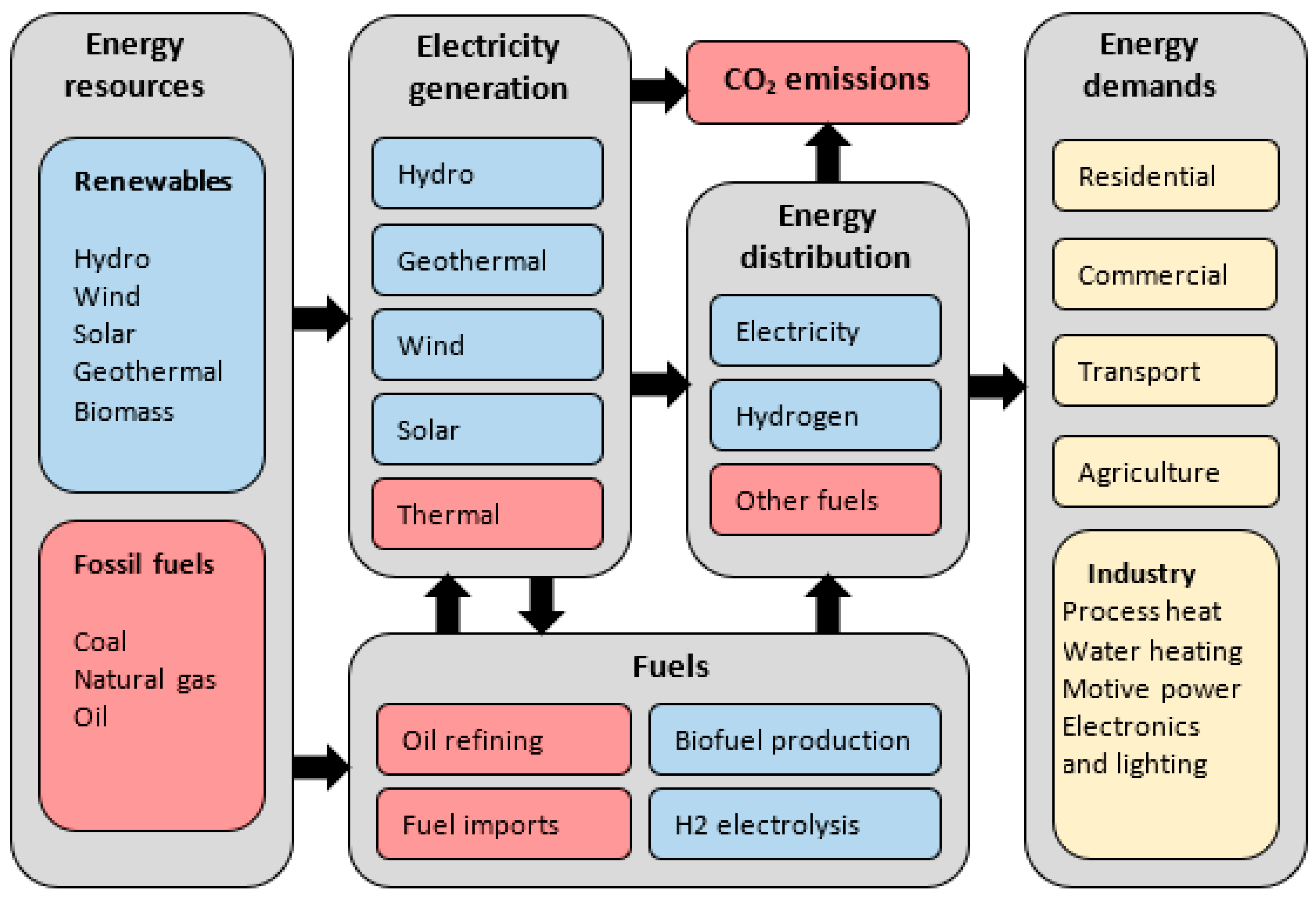
To achieve this, we develop a bottom-up, least-cost energy-system model based on the integrated MARKAL-EFOM system (TIMES) to assess opportunities for decarbonising industrial process heat through the use of green hydrogen. The Energy End-Use Database (EEUD) provided by the Energy Efficiency and Conservation Authority (EECA) is used to identify the existing composition of industrial process heat based on fuel type, sector, and other relevant factors. Hydrogen technologies that can provide the same energy services are investigated and assessed against other ‘green’ alternatives in the framework of the TIMES model. Hydrogen uptake is further tested under various price and efficiency scenarios. From an energy system perspective, the decarbonisation of industrial process heat must balance environmental objectives with cost efficiency and energy security. Cost optimisation, therefore, plays a pivotal role in identifying feasible pathways that achieve emissions reductions without compromising industrial competitiveness. In this context, hydrogen is analysed not as an isolated technology but as one component within a broader optimisation framework that compares its economic performance with other low-carbon alternatives such as electrification and biomass. This approach enables us to assess hydrogen’s potential contribution to the least-cost industrial heat supply under various future cost and efficiency conditions. It is important to note that the purpose of this study is not to claim that hydrogen is currently the least-cost option for industrial process heat. Rather, the analysis adopts a scenario-based approach using the TIMES optimisation framework to identify under what future cost and efficiency conditions hydrogen could become part of a least-cost decarbonisation pathway. By incorporating a range of techno-economic assumptions to 2050, the model captures possible trajectories of technology learning, cost decline, and policy support that may influence the competitiveness of hydrogen relative to other low-carbon alternatives.
This study contributes to the literature by evaluating the competitiveness of green hydrogen under a range of techno-economic conditions specific to New Zealand’s industrial landscape. Using a TIMES-based framework, we identify the least-cost pathways for decarbonising process heat to 2050 and explore scenarios under which hydrogen could emerge as a preferred option. The findings offer empirical insights to inform policymakers in supporting industrial decarbonization strategies and advancing sustainability goals.
The paper is organised as follows: the subsequent section breaks down current energy use patterns in New Zealand’s industrial sector.
Section 3 examines the options for decarbonising process heat, highlighting specific use cases.
Section 4 describes the modelling framework, while the results are presented and discussed in
Section 5. Finally,
Section 6 wraps up the discussion, drawing conclusions and shedding light on potential policy implications.
5. Results and Discussion
Table 7 presents the main results of the model estimations. Of the eight scenarios estimated, six showed no hydrogen uptake for providing industrial process heat. Given that all other assumptions, parameters and alternative technologies remained constant in the estimation, these six scenarios gave identical results. The LCOH sensitivity presented above confirms that hydrogen becomes cost-competitive only under rapid technological progress and favourable electricity prices, explaining why uptake appears exclusively in the high-temperature direct-heat scenarios, whereas direct electrification remains the least-cost pathway for low- and intermediate-temperature applications.
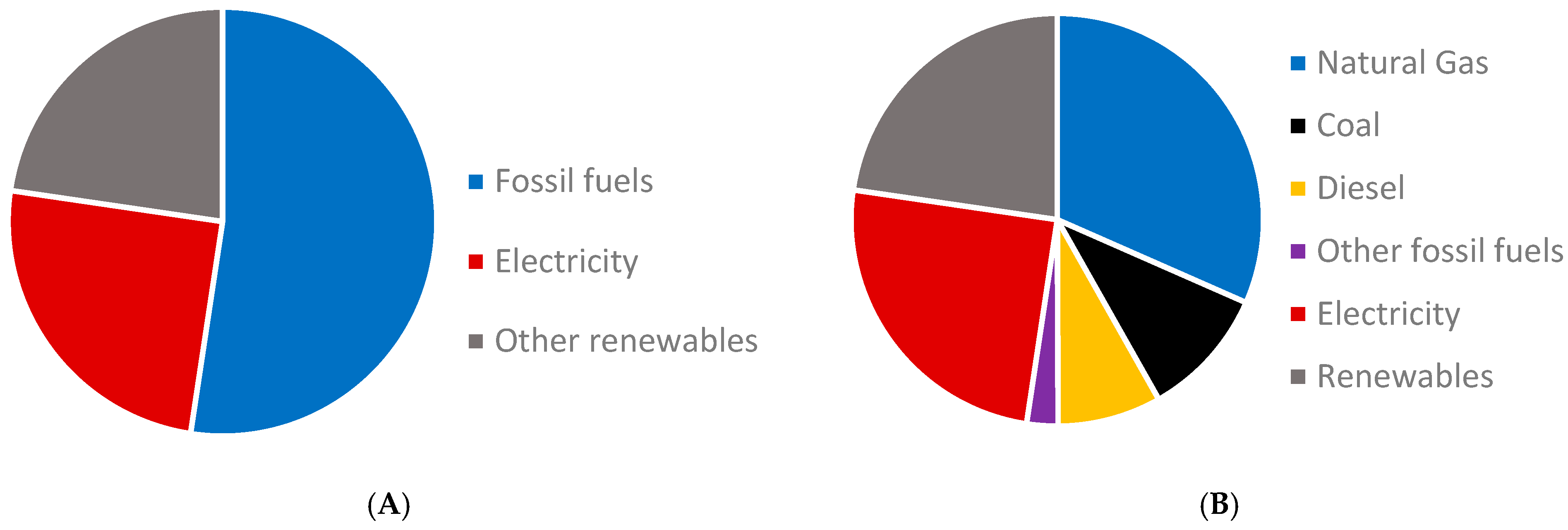
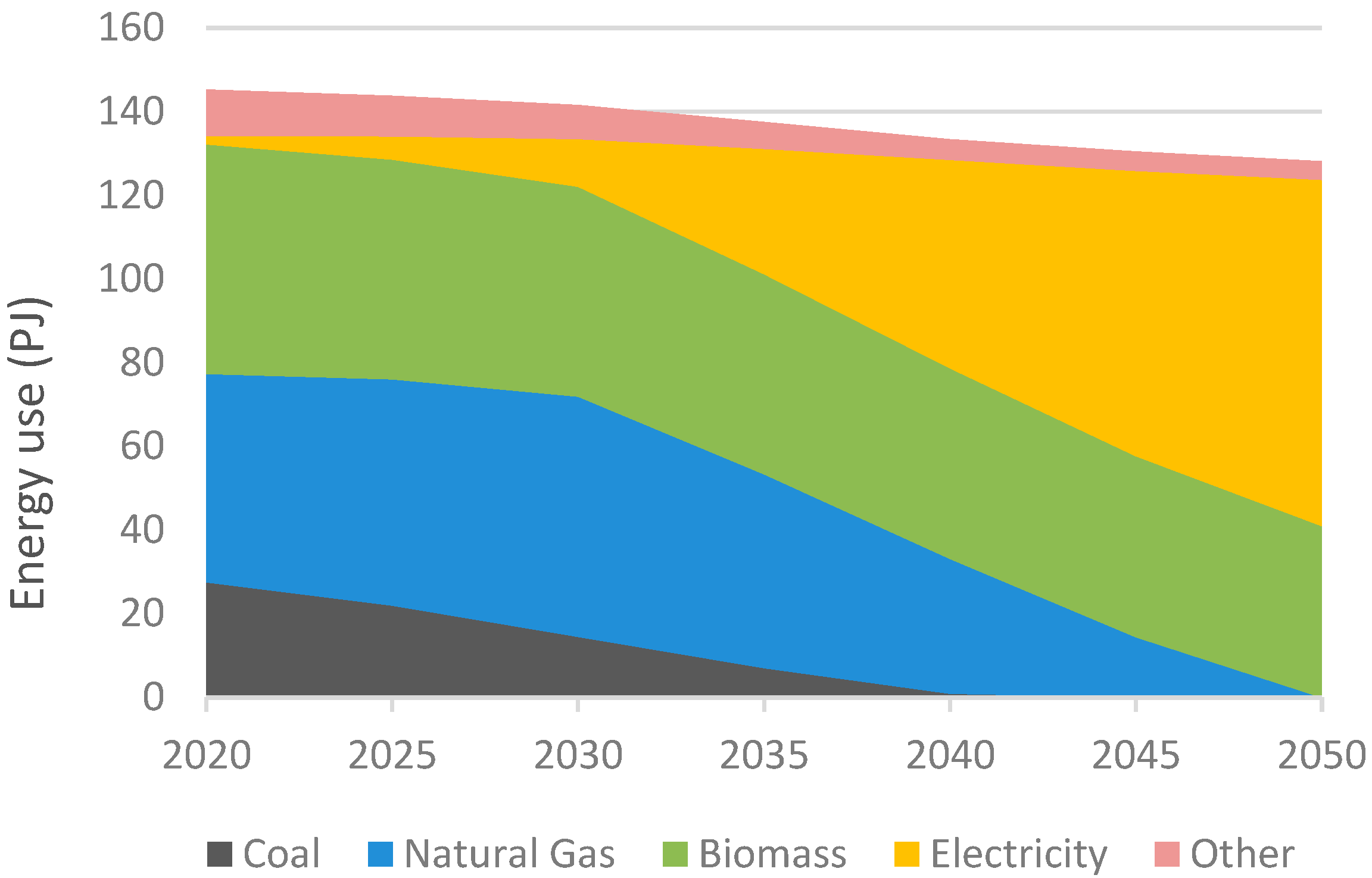
Figure 7 shows the fuel sources for industrial process heat in the six scenarios where hydrogen is not adopted. In these cases, the main driver of decarbonisation is electrification, leading to the complete phase-out of coal by 2040, followed by natural gas by 2050. This outcome reflects a highly plausible near-term pathway for New Zealand, as electrification technologies for low- and medium-temperature heat are commercially available and align with existing decarbonization programmes led by the Energy Efficiency and Conservation Authority (EECA).
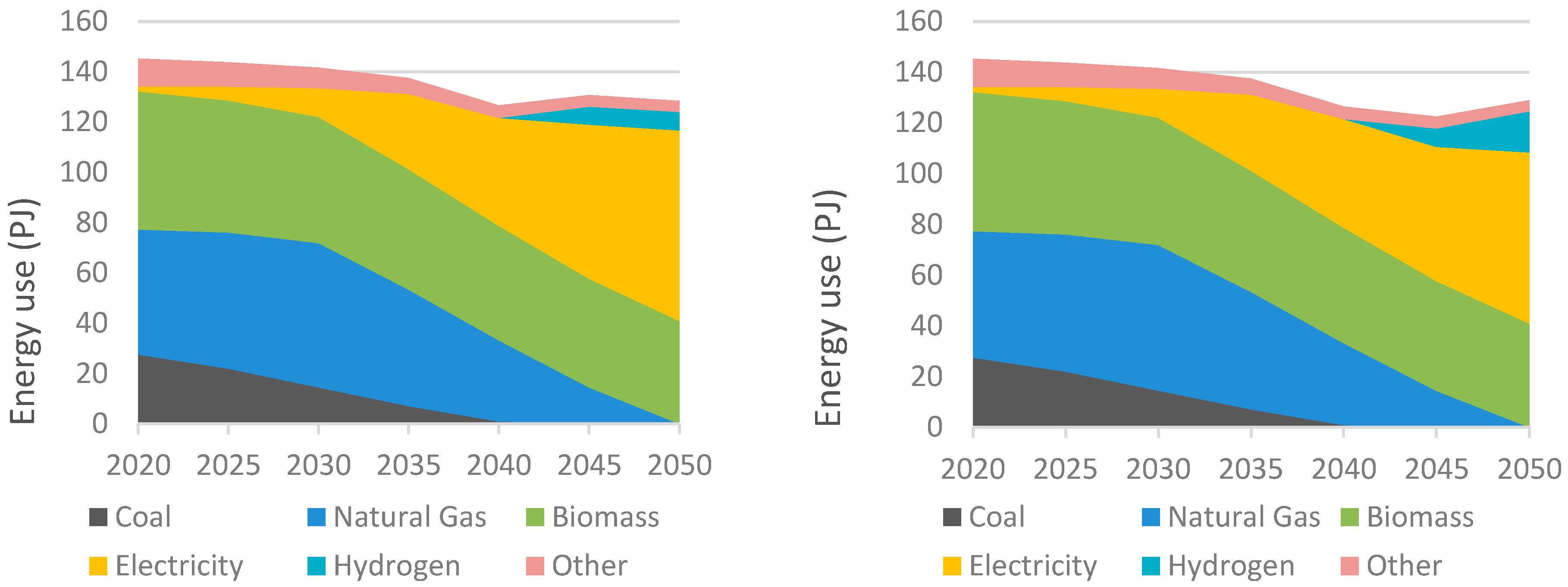
The two scenarios that result in the use of hydrogen technologies for providing industrial heat are (1) the rapid development for all the electrolyser costs, efficiencies, and the cost of end-use technologies (scenario 8); and (2) the ‘rapid development’ in capital costs for electrolysers and hydrogen demand technologies, with steady progress on electrolyser efficiency improvements (scenario 6). In scenario 8, with the most favourable assumptions for hydrogen technologies, hydrogen is projected to supply 12.4% of energy for industrial heat by 2050, and 5.7% in scenario 6 (see
Table A6). In both cases, hydrogen is used to provide high-temperature process heat via a hydrogen burner or furnace, beginning from 2040 as the relative cost of hydrogen technology falls. However, for lower-temperature applications, hydrogen is not a cost-effective solution.
Figure 8 presents the fuel breakdown of industrial heat in these scenarios. Across the eight combinations, this pattern behaves like a threshold sensitivity: hydrogen appears only when rapid electrolyser CAPEX reductions (≤NZD 343 kW
−1 by 2035 and ≤NZD 299 kW
−1 by 2050) coincide with faster cost declines in hydrogen end-use equipment (Scenarios 6 and 8); otherwise, electrification fully dominates process-heat decarbonisation by 2050. While the profiles are similar, a higher electrolyser efficiency in the latter part of the period (2045–2050) results in higher hydrogen take-up. Nevertheless, these hydrogen-adoption scenarios should be viewed as exploratory rather than predictive. The feasibility of achieving rapid cost reductions and efficiency gains depends on the global supply chain’s maturity, domestic renewable electricity expansion, and supportive policy frameworks. Without strong incentives or infrastructure investment, such rapid technological progress may be difficult to realise within the given timeframe.
The results highlight two distinct decarbonisation pathways. In the first, electrification dominates as the least-cost and most immediately deployable option, relying on technologies already demonstrated in New Zealand’s food-processing and manufacturing sectors. In the second, hydrogen plays a complementary but delayed role, entering primarily in hard-to-electrify, high-temperature industries such as non-metallic minerals, steel, and chemicals. The feasibility of this pathway hinges on parallel progress in renewable generation, hydrogen distribution networks, and storage solutions.
It is worth noting that even in the scenarios with hydrogen use, there is a significant increase in the electrification of industrial heat. This result aligns with findings from other international studies. For instance, [
37] observed that in Europe, up to 78% of industrial heat could be electrified using existing technologies, rising to 99% when considering technologies under development. In contrast, hydrogen technologies are generally much less developed. Similarly, a 2018 report by the think tank Beyond Zero Emissions advocated for electrifying industrial heat in Australia, highlighting that agreements for the long-term supply of renewable electricity are already in place (M. Lord. Electrifying Industry. Beyond Zero Emissions, Melbourne, 2018). This international evidence reinforces that industrial electrification is a realistic and cost-efficient first step, whereas hydrogen is more likely to occupy niche applications until capital costs decline and supply chain maturity improves.
Compared to direct electrification, hydrogen technologies face energy inefficiencies at each stage of production and consumption. Depending on the production, storage, transport, and end-use technologies, the ‘round-trip’ efficiency has been estimated to range from 18 to 62 percent of the initial electricity input. This efficiency gap challenges the competitiveness of green hydrogen against electrification, especially in scenarios where direct electrification is feasible [
38,
39]. These conversion losses imply that large-scale hydrogen adoption would require substantial additional renewable capacity and grid upgrades, raising questions about system-level feasibility under New Zealand’s resource and spatial constraints. Across the eight combinations in
Table A5, hydrogen appears only when electrolyser CAPEX follows the rapid trajectory (≤NZD 343/kW by 2035; ≤NZD 299/kW by 2050) and hydrogen end-use technologies reach cost parity by ~2030 (the “rapid development” end-use trajectory in A4). Under these conditions, hydrogen supplies 5.7% (Scenario 6) to 12.4% (Scenario 8) of industrial heat in 2050, exclusively in high-temperature direct-heat uses (
Table 7;
Figure 8). With all other assumptions held constant, any intermediate parameter values that lie between the “steady progress” and “rapid development” bookends in A3–A4 would yield outcomes bounded by this envelope—i.e., either no uptake (as in Scenarios 1–5, 7) or ≤12.4% uptake limited to high-temperature applications. This threshold (or “switching-value”) behaviour is expected in least-cost linear optimisation and explains why adding several intermediate scenarios would not change the qualitative policy message that widespread electrification dominates, with targeted hydrogen only when costs cross parity for high-temperature heat. See
Table A3,
Table A4,
Table A6 and
Table A7 for the associated parameter values and fuel breakdowns.
Although NZIES co-optimises all energy carriers, it adds little new biomass for process heat by 2050—biomass-boiler output falls from 43.8 PJ in 2020 to 32.8 PJ in 2050 across all scenarios (
Table A7). This contrasts with current practice and survey evidence that many heat users plan coal-to-biomass switching [
30].
To facilitate interpretation of the integrated energy-system outcomes,
Section 5.1 highlights biomass separately, as it represents both the largest existing renewable fuel for process heat and a key policy focus for coal-to-biomass switching in New Zealand.
5.1. Biomass Within the Integrated Energy System
Biomass occupies a distinctive position in New Zealand’s integrated energy system. Empirically, it already supplies a major share of process heat, especially in the wood, pulp, and paper industries, and many firms plan near-term coal-to-biomass conversions according to recent EECA/DETA Consulting surveys. However, in the NZIES simulations, biomass use declines from 43.8 PJ in 2020 to 32.8 PJ in 2050 across scenarios (
Table A7). Understanding this apparent contradiction is essential for interpreting the optimisation outcomes and for designing effective decarbonisation policies. Interestingly, the NZIES estimations show minimal adoption of biomass as a low-carbon heat technology. This result contrasts with a recent survey conducted by EECA and DETA Consulting, which revealed that many heat users intend to decarbonise their operations by switching from coal to biomass (Energy Efficiency and Conservation Authority. Decarbonising Industrial Process Heat Webinar—Presentation slides). There are several possible explanations for this difference. An important assumption in TIMES models is that of perfect knowledge and foresight, which entails taking a system-wide view over all time horizons. Biomass technologies, while offering lower fuel costs, tend to have higher capital and fixed costs. This means that even if an individual firm is inclined to switch to biomass, it might overlook the demand from other enterprises and sectors within the economy. In NZIES, the capital cost is spread over the technology’s economic lifetime, typically 15 years. It is worth noting that firms in New Zealand tend to continue using old equipment beyond its expected lifespan, which can mitigate the impact of the initial capital outlay. Another possibility is that biomass boilers are now available and operate similarly to coal boilers, so firms may be more familiar with the technology. Moreover, limited domestic biomass supply and competing land-use priorities further constrain large-scale deployment, reducing the realism of high-biomass scenarios in the New Zealand context.
In the same survey, firms expressed a current reluctance towards electrification. They cited concerns over higher distribution costs and greater uncertainty about electricity prices, especially at peak times. Another significant concern is the potential for electricity outages, which can pose challenges for starting or stopping processes. The forward-looking TIMES model accounts for this by building additional generation capacity. However, real-world firms may have a different view on future capacity or be more risk averse. This divergence underscores the importance of complementing model-based results with behavioural and institutional insights when assessing the feasibility of industrial transitions.
5.2. Other Sectors in the Economy
In this analysis, the energy composition and demand of the other economic sectors are assumed to remain constant. A significant increase in the electrification of transportation is assumed (which is considered in future generation capacity projections), as well as increased electrification and biofuel adoption in the agricultural, commercial, and residential sectors. One area not modelled in detail is large-scale energy storage, such as addressing inter-seasonal or dry-year risks to hydro generation. As hydrogen’s role expands, these cross-sectoral interactions will become increasingly relevant, particularly for balancing seasonal demand and integrating variable renewable generation. The government-funded NZ Battery Project is exploring options to resolve New Zealand’s dry-year challenges and promote the decarbonisation of the broader energy system, including the Lake Onslow pumped hydro scheme (Ministry of Business, Innovation & Employment. NZ Battery Project).
6. Conclusions
This study examines the energy consumption patterns in New Zealand’s industrial sector. Utilising a TIMES-based model, we examine the viability of hydrogen as a fuel for industrial process heat. Under prevailing realistic assumptions, hydrogen does not emerge as the most cost-effective option. However, if hydrogen technologies rapidly develop and become more cost-competitive relative to alternatives, such as electrification, our results show a discernible shift towards hydrogen for supplying high-temperature process heat. Specifically, the contrast between the “rapid development” and “baseline” scenarios illustrates two distinct hydrogen pathways: (1) a limited-adoption pathway dominated by electrification through 2050, and (2) an accelerated-adoption pathway where hydrogen penetrates high-temperature segments after 2040. This finding is pertinent for policymakers aiming to prioritise the decarbonization of industrial process heat in hard-to-abate areas, such as steel manufacturing. However, the feasibility of this transition extends beyond techno-economic optimisation and hinges on institutional, infrastructural, and behavioural factors.
From an implementation perspective, several barriers could limit the uptake of either pathway. Industrial electrification at scale relies on timely grid reinforcement, sufficient local network capacity, and affordable access to renewable energy. Conversely, the expansion of hydrogen use requires substantial investment in production, storage, and distribution infrastructure, as well as the establishment of safety standards and certification schemes. Both pathways face challenges in securing skilled labour, financing long-lived assets under policy uncertainty, and aligning decarbonisation timelines with firms’ capital-replacement cycles. If these enabling conditions are delayed, the transition could lock industry into second-best outcomes such as extended reliance on fossil fuels, partial fuel switching to biomass or imported hydrogen derivatives, or fragmented pilot projects that fail to achieve system-wide scale economies.
These insights highlight that policy design should go beyond technology prioritisation. Effective decarbonisation of industrial heat will require integrated planning of electricity and gas networks, targeted infrastructure co-funding, risk-sharing mechanisms to de-risk first movers, and regulatory clarity on carbon pricing trajectories. Support for hydrogen should focus on high-temperature, hard-to-electrify processes while concurrently addressing potential misalignments between hydrogen production and demand centres.
More broadly, these findings also reinforce the sustainability goals of achieving low-carbon industrial transformation. By identifying feasible pathways for reducing process heat emissions, the study demonstrates how emerging technologies such as green hydrogen can contribute to cleaner production, energy security, and long-term environmental resilience. The results provide evidence-based insights that support sustainable policy development and informed investment decisions, aiming to balance economic growth with emissions reduction.
Like all models, the TIMES framework has both advantages and disadvantages. Rooted in cost minimisation, TIMES models tend to select one type of technology to supply a given energy service, unless explicitly constrained, such as by setting limits on maximum capacity or the proportion of a technology or fuel. In actual applications, a combination of solutions may be adopted, depending on site-specific needs and conditions. Moreover, the inherent benefits of maintaining diverse energy sources for system security are not explicitly captured in the model. Importantly, the model outcomes should be interpreted as indicative of relative system costs rather than prescriptive forecasts. Their policy value lies in identifying trade-offs and priority areas where government intervention could accelerate economically viable decarbonisation.
In addition, the results depend on the accurate characterisation of available technologies. There is considerable uncertainty surrounding the development of fast-growing hydrogen technologies, particularly in terms of cost, readiness, and technical performance. Some of this uncertainty is captured by running the various scenarios, but there are still gaps. For example, in the NZIES specification, there is limited development of geothermal direct-use technologies. While this is unlikely to affect the results of the analysis, as geothermal energy supplies low- and intermediate-temperature heat (which is not favoured for hydrogen in any case). Still, it is an example of what could be considered a complete survey of industrial heat outside hydrogen.
When modelling the electricity sector, NZIES allows for flows between the North and South Islands, constrained by the capacity of the HVDC link. However, within each island, transmission capacity remains unconstrained. An average cost associated with new electricity investment partially captures the cost of new transmission. However, large industrial users may incur extra capital costs for transmission capacity depending on location, existing infrastructure, and the location of new generation plants.
There are many directions for the future development of the NZIES model, depending on the topic of interest. For example, it is feasible to delve deeper into the industrial sector to provide a more detailed breakdown of end uses. The non-metallic minerals sub-sector could be further divided into cement and clinker production, glass manufacturing, and lime production. While each of these categories relies on direct high-temperature heat, the specific type of heat requirements varies and necessitates different technological solutions. This level of detail would require new data sources beyond the EEUD. Within the parameter envelope tested (
Table A3 and
Table A4), system outcomes range from 0% to 12.4% hydrogen in 2050, confined to high-temperature process heat (
Table 7). Future work will replace the current bookend design with a parametric sweep or Monte Carlo sampling once validated techno-economic ranges for storage, distribution, and site-level constraints become available. However, we do not expect the qualitative ranking—electrification first, followed by hydrogen for hard-to-electrify high-temperature uses—to change. Notably, the EECA is currently developing a heat demand database, only available for Canterbury and Southland, which provides a more detailed perspective (Energy Efficiency and Conservation Authority. Regional Heat Demand Database). It would also be helpful to include more detailed end-uses for other economic sectors, such as residential and commercial energy use.
To enhance the modelling of hydrogen use, the logical progression would be to include a more comprehensive categorisation of storage and distribution technologies. While hydrogen technologies are still rapidly developing, their commercial use remains limited, making it challenging to obtain accurate techno-economic data. In particular, relative costs are crucial parameters in TIMES models and can significantly impact the results. Another modelling option is to include major non-energy uses of hydrogen, such as a chemical reductant or feedstock, to facilitate more accurate emissions accounting. Lastly, despite this study being centred on New Zealand, its implications resonate on a global scale. As a case study, New Zealand’s exploration of the hydrogen economy offers valuable insights to the global community on the development of this emerging energy source. In an era where the global focus is shifting towards combating climate change and embracing sustainable energy solutions, understanding the potential of emerging technologies such as hydrogen is essential. This study contributes to this global discourse by shedding light on the potential role of hydrogen in decarbonisation and the challenges that lie ahead.





 ,
, _Sheng.png)