Article

Tourist Adaptation to Environmental Change: Evidence from Gangshika Glacier for Sustainable Tourism

1
College of Earth and Environmental Sciences, Lanzhou University, Lanzhou 730030, China
2
Center for Glacier and Desert Research, Lanzhou University, Lanzhou 730030, China
3
Tourism School, Lanzhou University of Arts and Science, Lanzhou 730030, China
*
Author to whom correspondence should be addressed.
Sustainability 2025, 17(23), 10808; https://doi.org/10.3390/su172310808
Submission received: 19 September 2025 / Revised: 13 November 2025 / Accepted: 27 November 2025 / Published: 2 December 2025

Abstract

Global warming has accelerated glacier retreat worldwide, intensifying the vulnerability of ecosystem services and posing challenges to the sustainability of glacier-based tourism. Understanding how environmental changes influence tourist behavior is essential for balancing ecological conservation with tourism development. This study examines the Gangshika Glacier in the Lenglongling region of the eastern Qilian Mountains, China. By integrating Revealed Preference (RP) and Stated Preference (SP) data within a Travel Cost–Contingent Behavior (TC-CB) model, we assess the recreational value of glacier tourism and simulate tourist responses under alternative environmental scenarios. The findings indicate that the total annual recreational value of the site is approximately 6.52 billion CNY, with a per-visit consumer surplus (CS) of 1.16 × 10⁴ CNY. Moreover, environmental degradation exerts a statistically significant negative effect on visitation frequency (p < 0.01). Beyond quantifying economic value, the study highlights the broader implications for ecotourism management, emphasizing the need for dynamic environmental monitoring, low-impact infrastructure, and local community engagement. These results provide actionable insights into how glacier destinations can enhance resilience and contribute to sustainable development under climate change.

1. Introduction

Glaciers, formed through the intricate interaction between climate and topography [1], are predominantly distributed in high-latitude or high-altitude regions far from human settlements [2]. Owing to their unique geomorphological features and ecological significance, glacier tourism has rapidly emerged as a distinctive and expanding form of nature-based tourism worldwide [3,4,5]. Glacier tourism primarily encompasses activities such as sightseeing, hiking, and skiing [6]. Today, renowned glacier tourism destinations not only offer visitors an integrated experience that combines natural, cultural, and ecological elements [7], at the same time, they also generate substantial economic benefits for local governments and surrounding communities [8,9]. These economic contributions manifest in two major ways. On the one hand, glacier tourism significantly enhances local fiscal revenues [9]. For instance, the annual revenue from glacier tourism exceeds USD 81 million in New Zealand [10], and more than USD 69 million at China’s Yulong Snow Mountain [6,7]. On the other hand, glacier tourism stimulates employment, improves transportation infrastructure, and promotes the development of tourism-related services and facilities [8,11], thereby creating a pronounced economic multiplier effect [11]. However, global warming has triggered significant glacier retreat, reductions in glacier terminus area [12,13], snowline ascent [14,15], and declines in surface albedo [16,17], collectively reshaping both the visual landscape and the accessibility of glacier environments. In response, tourists exhibit adaptive behaviors, adjusting travel frequency, shifting toward substitute destinations, shortening their length of stay, or increasing one-time expenditures driven by a sense of “last-chance tourism” [18,19]. Fundamentally, tourism resources constitute the foundation for the formation and maintenance of environmental quality [20].
The non-market valuation of tourism resources encompasses both the Revealed Preference (RP) and Stated Preference (SP) approaches. The RP approach estimates recreational value based on observed behavioral data [21], offering high external validity [21,22]. However, because it relies on historical data and assumes constant environmental quality, it shows limited responsiveness to behavioral elasticity under environmental changes, such as glacier retreat, making extrapolation to future policy or ecological scenarios difficult [23,24]. The SP approach, by contrast, constructs hypothetical scenarios (e.g., changes in glacier area or environmental conditions of the scenic area resulting from policy interventions) to elicit respondents’ willingness to pay or accept compensation [24]. This approach enables prediction of behavioral responses to policy or ecological changes that have not yet occurred [25], though it remains subject to hypothetical and strategic biases, thus requiring model calibration and validity testing to ensure reliability [20,26].
The Travel Cost Method (TCM) is a classical approach within the RP framework, widely applied to estimate the recreational value of natural landscapes and ecosystem services [27,28]. By examining the relationship between tourists’ travel costs and visitation frequency, TCM derives visitors’ willingness to pay (WTP) and consumer surplus (CS) [22,29]. Its principal strength lies in its reliance on actual behavioral data, enabling a realistic reflection of tourists’ preferences under budgetary and time constraints [21,30]. However, TCM generally assumes constant environmental quality and treats travel cost as a proxy for price. In the context of glacier tourism, where environmental conditions are highly dynamic, such as glacier retreat, snowline ascent, or eco-environmental degradation, TCM faces difficulty in capturing how these variations influence tourist utility [16,22]. Consequently, the influence of environmental attributes on visitor behavior tends to be underestimated, leading to weakened explanatory and predictive power, and limiting the method’s applicability to future environmental scenarios [31].
The Contingent Valuation Method (CVM) is one of the most widely used approaches within the Stated Preference (SP) framework and serves as the representative SP method emphasized in this study [32,33,34]. CVM directly asks respondents, through carefully designed questionnaires under hypothetical scenarios, about their WTP or willingness to accept (WTA) compensation, thereby monetizing the value of environmental quality changes [24]. Because it can simulate environmental changes that have not yet occurred or cannot be captured through short-term behavioral observations, such as variations in glacier area or waste generation within scenic sites, CVM has been widely applied in predictive and policy-oriented environmental valuation studies [25]. However, respondents’ stated preferences may not always align with their actual behavior, and CVM outcomes may be affected by hypothetical bias, strategic bias, and information asymmetry [20,25,26].
In the field of glacier tourism value assessment, Welling et al. (2015) and Feuillet (2011) conducted systematic reviews of global glacier tourism and developed an integrated assessment framework encompassing aesthetic, educational, cultural, ecological, and economic dimensions of value [5,35]. Wang et al. (2020) applied TCM to estimate the recreational value of glacier tourism resources at Yulong Snow Mountain [9]. Stewart et al. (2018) found that, despite a 30-year reduction in glacier area, tourists’ willingness to visit remains high, reflecting a “last-chance” motivation that sustains demand even as glacial landscapes diminish. [36] Although these studies have deepened understanding of the economic valuation of glacier landscapes and the environmental impacts of climate change, research remains limited on how tourists adjust their behaviors and decisions to adapt to such environmental changes.
This study employs a Travel Cost-Contingent Behavior (TC-CB) hybrid model that incorporates environmental quality variables into the glacier tourism demand framework. The model is employed to evaluate the influence of environmental change on tourist behavior and to estimate the variations in visitor expenditures and consumer surplus across different environmental conditions [26]. This approach significantly enhances model robustness and predictive accuracy, effectively overcoming the limitations of single-source data in extrapolation and policy simulation [20,26,34]. Wei (2016) applied this method to demonstrate that environmental improvements at Dalian’s coastal bathing beaches significantly affected the price elasticity of tourism demand [20], while Duan (2022) used the integrated TC-CB framework to examine the mechanisms through which environmental quality influences tourist behavior [34]. However, applications of the TC-CB model in glacier tourism remain scarce, particularly under the extreme and dynamic environmental conditions characteristic of high-altitude regions.
Using the Gangshika Glacier in Qilian Mountains National Park as a case study, this research evaluates the economic value of glacier tourism and applies the TC-CB model to examine how environmental changes influence tourists’ travel behavior and consumer surplus. Specifically, the study seeks to answer two core questions:
(1)
How do environmental changes in glacier tourism affect tourists’ preferences and decision-making?
(2)
How does the economic value of glacier tourism evolve under different environmental change scenarios?
This study provides empirical evidence for understanding tourists’ adaptive mechanisms and offer scientific support for promoting the sustainable development and policy formulation of glacier tourism in high-altitude regions.

2. Materials and Methods

2.1. Description of the Study Area

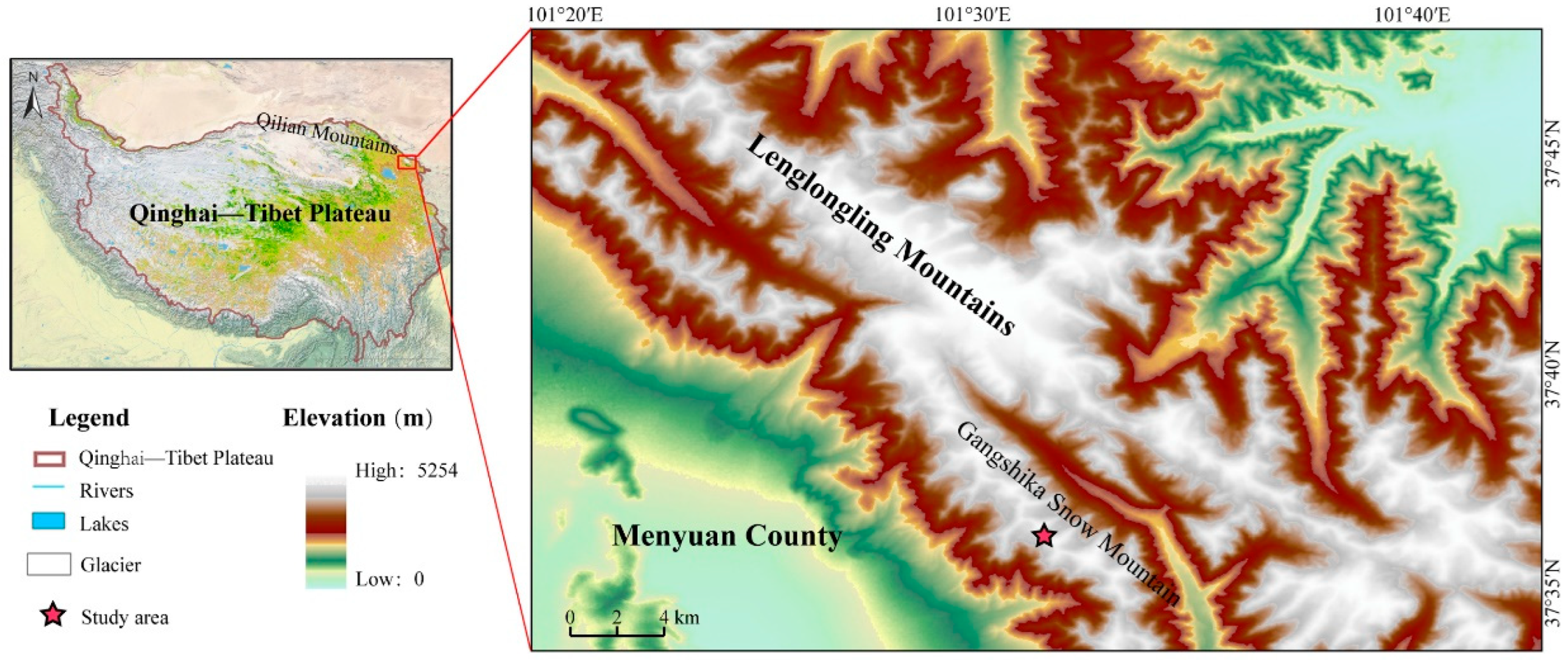
The Gangshika Glacier is located in Menyuan Hui Autonomous County, Haibei Tibetan Autonomous Prefecture, Qinghai Province, China (37°36′36″–37°42′00″ N, 101°22′12″–101°30′36″ E). Situated along the main ridge of the Lenglongling section in the eastern Qilian Mountains, it is a representative mountainous glacial landscape area on the northeastern margin of the Qinghai-Tibet Plateau (Figure 1), rich in both modern glaciers and relics of ancient glacial activity.
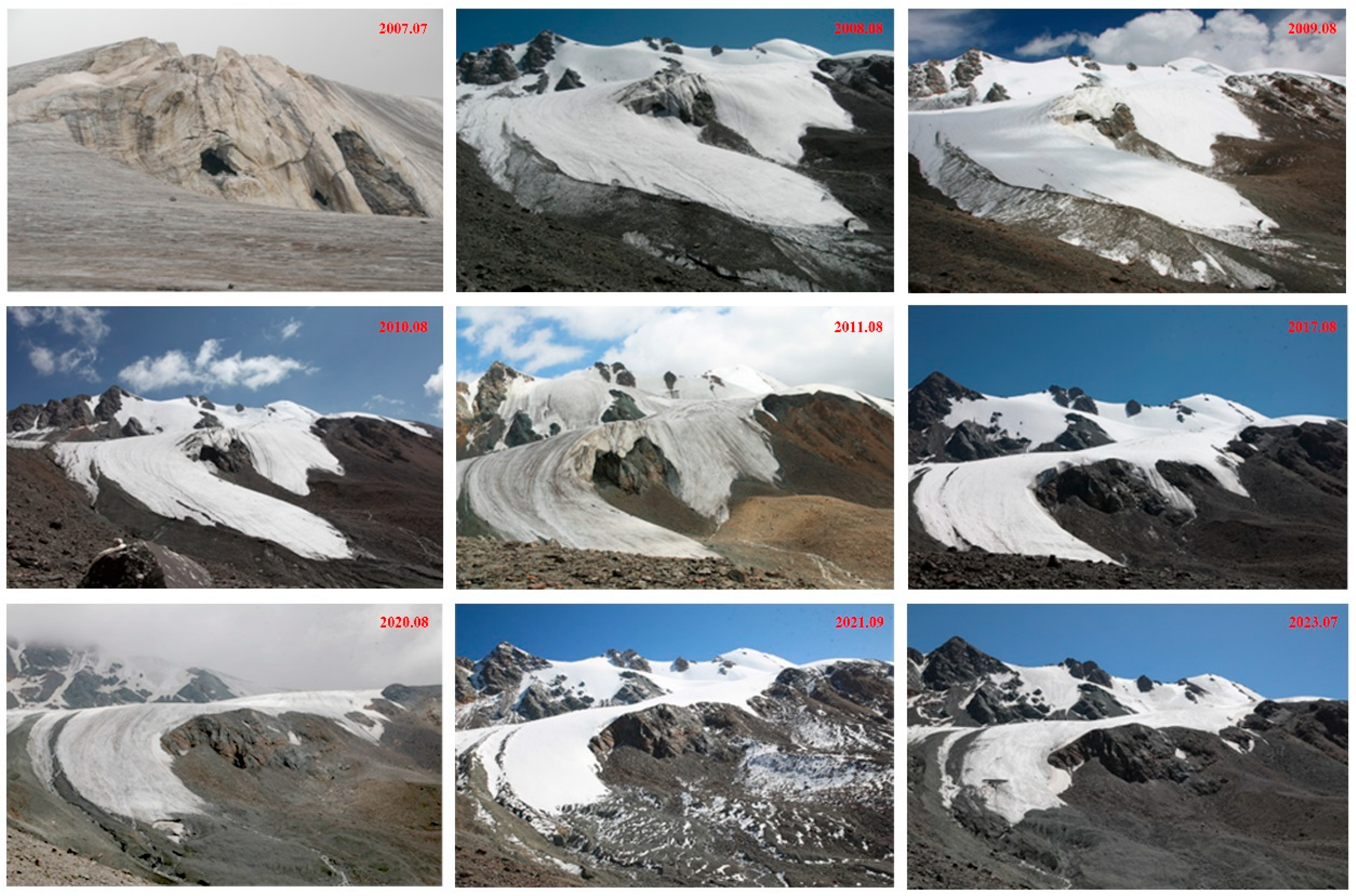
The contemporary snowline of Gangshika Glacier is approximately at 4700 m and exhibits significant aspect heterogeneity: glacier coverage on northwest-facing slopes is 18.3%, and on southeast-facing slopes is 15.7%, while coverage on other aspects is notably lower. Under conditions of climate warming, surface dust on glaciers and microbial communities accelerate radiation-induced glacier ablation, resulting in rapid glacier retreat. Since the Little Ice Age, the terminus of Gangshika Glacier has elevated by approximately 118 m and retreated horizontally by approximately 955 m. Between 2007 and 2024, the glacier terminus has risen 76 m vertically and retreated 311 m horizontally, with an average annual vertical rise of 4.5 m and horizontal retreat of 18 m (Figure 2).
The study area is part of the pilot zone of Qilian Mountains National Park and is the closest glacier tourism destination to a provincial capital city in China (approximately 164 km from Xining). Conveniently accessible via National Highway G227, it serves core cities such as Lanzhou and Zhangye, forming a plateau tourism economic circle characterized by snow mountains, flower fields, and pastoral areas. Covering an area of approximately 450 km2, the scenic area offers hiking trails from an altitude of 3810 m to 5254 m. Currently, three standardized climbing routes are available to meet varying experience levels: a basic route from Seven-color Waterfall (3810 m) to the Hut Base Camp (4350 m); an intermediate route extending from the Hut Base Camp to Gangshika Third Peak (5005 m); and an advanced route reaching the main peak (5254 m). According to statistics from the Menyuan County Bureau of Culture, Sports, Tourism and Broadcasting, the Gangshika Glacier Scenic Area received 562,000 person-visits in 2024. Within this total, 4040 visitors attempted snow-peak ascents, 2828 reached the summit (70% success rate), and 118,000 visited the base camp. These figures underscore the site’s representativeness and significance in glacier tourism at the eastern margin of the Tibetan Plateau.

2.2. Research Methods

2.2.1. Sample Size and Sampling Method

To establish a comprehensive database on tourist behavior and preferences in the Gangshika Glacier Scenic Area, a field-based questionnaire survey was implemented in two sequential stages.
In the first stage, after drafting the questionnaire, experts in tourism geography and survey methodology were invited to review the instrument. Their comments were used to refine item wording, logical flow, and content validity. A pilot test was then conducted with 30 randomly selected visitors to the Gangshika Glacier to ensure the questionnaire’s clarity and improve response accuracy [39]. The full questionnaire is provided in Appendix A.
In the second stage, the formal questionnaire was administered in respondents’ native language (Chinese) within a time and location sampling (TLS) framework, complemented by convenience and snowball sampling techniques [39,40,41]. Given the pronounced seasonality of glacier tourism, fieldwork was carried out during three peak periods, spring, summer, and autumn, to minimize seasonal bias [42]. Participation was entirely voluntary, and all responses were collected anonymously. Respondents were informed that their data would be used exclusively for academic research purposes.
The minimum required sample size (n) was estimated using Cochran’s formula for an infinite population [30,43].
n = z 2 p ( 1 p ) e 2
where “n” is the minimum required sample size, z = 1.96 corresponds to a 95% confidence level, p = 0.5 represents the assumed population proportion, and e = 0.05 denotes the allowable margin of error. The final target sample size was set higher than this theoretical minimum to ensure sufficient statistical power for subsequent analyses [30].

2.2.2. Travel Cost Composition and Parameter Settings

This study adjusted the structure of the TCM model by incorporating the multi-destination and regional characteristics of glacier tourism.
(1)
Composition of Total Travel Cost
In the TCM literature, the value of travel time is commonly set to one-third to one-half of the respondent’s wage rate [44,45,46], reflecting the higher opportunity cost of longer trips. Given the time-intensive nature of glacier tourism [47], this study follows Guo (2004) and Li (2021) and values time at 40% of the wage rate, computed as 0.40 × (annual income/annual working hours) [48,49]. To address biases in multi-destination trips (such as circular tours and city-cluster visits), respondents were directly asked, “Is the Gangshika Glacier your only destination for this trip?” Based on their responses, a cost allocation coefficient (c) was constructed by combining Cost Proportion (CP) and Decision Weight Proportion (DWP) [21]. This approach minimizes memory bias and emotional-driven distortions in cost allocation, thus enhancing valuation accuracy.
T C = F t i c k e t + F e n t e r t a i n m e n t + F a c c o m m o d a t i o n + 2 F t r a n s i t + C t i m e c
(2)
Calculation of Tourist Rate and Spatial Unit Division
Departure zones were delineated according to provincial/municipal administrative units, corresponding population data, and sampling weights. The tourist rate is defined as:
Q i = V i N i
where Vi is the estimated number of tourists, and Ni is the total population at the end of the year.
(3)
Demand Model Construction and Value Assessment
A Random Effects Negative Binomial Model was adopted to handle overdispersion in travel frequency data [50,51]:
P ( t i q | x i q ) = Γ ( t i q + α 1 ) Γ ( α 1 ) ( t i q + 1 ) α μ i q 1 + α μ i q t i q 1 1 + α μ i q α 1
where μ i q = e x p β X i q represents the expected number of trips, x i q includes covariates such as travel cost, income, and education level, and α denotes the overdispersion parameter.
The CS and Total Tourism Value (TV) were estimated by integrating the demand function.

2.2.3. TC-CB Model Construction

Construction of the TC-CB Model:
(1)
Travel Willingness Index and Visit Frequency Prediction
Based on field survey data, the Travel Willingness Index (TWI) was developed by scoring the direction and magnitude of indicator changes under different environmental scenarios (D1 scenario, D2 scenario). Annual visit frequency was subsequently predicted using this index.
TWI q = j = 1 n ω j × S j q λ q = exp ( TWI q )
Under scenarios of environmental quality change, the TC-CB model incorporates an interaction term between environmental quality and travel cost to capture variations in tourists’ cost sensitivity across different environmental conditions. The specific model specification is as follows:
λ q i   = e x p { β 0 + β T C , D 1   ( T C i q   × D 1 q   ) + β T C , D 2   ( T C i q   × D 2 q   ) + β E Q I   D 1 q   + k   β k   X k , i q   }
where is trips/year for individual ἱ under scenario q; T C i q is total travel cost per trip (CNY); D 1 q , D 2 q are mutually exclusive scenario dummies; E Q I i is the composite environmental-quality index (unit-free); X k , i q are controls (Income, Age, Edu, Gen, Peo). Coefficients on TC and interactions are in CNY−1.
(2)
Model Estimation Method and Robustness Handling
This study estimates a cluster-robust Poisson baseline and a random-effects negative binomial (RE-NB) model [52,53,54,55].
Poisson baseline (cluster-robust):
T i q | x i q ~ P o i s s o n ( λ i ) q , λ i q = e x p x i q T β
RE-NB distribution and variance:
T i q | λ i , q α ~ N B ( λ i , q α ) , [ E ( T i q | x i q   ) , V a r ( T i q | x i q   ) ] = ( λ i q   , λ i q + α λ i q 2 )
Random effects (log-link):
λ i q = e x p x i q T β + μ i , μ i ~ N 0 ,   σ 2
Structural equation (scenario-specific slopes):
I n ( λ q i   ) = β 0 + β T C , D 1 (   T C i q × D 1 q   ) + β T C , D 2 (   T C i q   × D 2 q   ) + β E Q I × D 1 q   + k β k k X k , i q + μ i
where T i q is the annual number of trips made by individual i under scenario q ; λἱq is the expected number of trips (mean of T i q ); x i q is the covariate vector and β the corresponding coefficient vector; TCἱq is total travel cost per trip (CNY), including out-of-pocket expenses and time cost; D1q and D2q are mutually exclusive and exhaustive scenario dummies; EQI is the composite environmental-quality index; X k , i q are controls (Income, Age, Edu, Gen, Peo); μ i ~ N 0 ,   σ 2 is the respondent-level random intercept; α > 0 is the over-dispersion parameter of the RE-NB model.
Units: coefficients on TC and on interaction terms involving TC are in CNY−1; other coefficients are dimensionless. The Poisson baseline is estimated with respondent-clustered standard errors; the RE-NB is estimated by maximum likelihood with AIC and log pseudo-likelihood (log PL) reported.
(3)
CS Estimation
Changes in CS under environmental scenarios are calculated as:
C S = λ ± λ β T C  
where λ± is the predicted mean visit frequency under the D1 or D2 scenario, and λ* the mean frequency under the current condition. With TC measured in CNY and βTC in CNY−1, ΔCS is in CNY per visit; the annual TV is obtained by aggregating ΔCS over all person-visits (Nvisits = 562,000 for 2024).

2.3. Ethical Considerations

This research was conducted in the fields of social science, environmental economics, and geographical tourism, using anonymous and voluntary questionnaire data. No personal identifying information (such as names, contact details, or ID numbers) was collected, recorded, or disclosed. All responses were analyzed in aggregated statistical form, ensuring complete anonymity and confidentiality.
The study involved no experimental manipulation, intervention, or risk to participants and thus qualifies as low-risk, non-interventional social science research. According to the Measures for the Ethical Review of Science and Technology Activities (Trial) issued by the Ministry of Education of the People’s Republic of China and other ministries in September 2023 (effective December 2023), only high-risk research in life sciences, biomedical fields, or autonomous systems requires ethical review [56]. Therefore, this study did not require formal ethical approval.

3. Results

3.1. Questionnaire Survey

A field-based questionnaire survey was conducted between October 2023 and October 2024 at several high-traffic visitor sites, including the main viewing platform and the Seven-Color Waterfall area, to capture both temporal and spatial heterogeneity in tourist flows. Given the pronounced seasonality of glacier tourism, fieldwork was carried out during three main peak periods, spring (April–May), summer (July–August), and autumn (October), to minimize seasonal bias. To reduce the overrepresentation of specific groups such as organized tour members, mountaineers, and local residents, no more than two questionnaires were collected from the same tour group during on-site surveys. Each questionnaire was completed independently on site and immediately checked by the investigators to ensure accuracy and internal consistency.
In 2024, the Gangshika Glacier Scenic Area received approximately 562,000 person-visits. According to Equation (1), the theoretical minimum sample size was calculated as n = 385. To account for possible non-responses and invalid questionnaires, the final sample size was designed to exceed this value. This ensured sufficient statistical power for the subsequent TC-CB model regression analysis [43].A total of 930 questionnaires were distributed, of which 926 were valid. Four questionnaires were excluded because of missing answers or obvious logical inconsistencies. The effective sample size (926 > 385) met the minimum statistical requirement. The response rate reached 99.57%, and the sampling error was within ±3.2% at a 95% confidence level [43]. The 2024 sampling fraction is 926/562,000 ≈ 0.165%; sample statistics refer to visitors surveyed on site, whereas TV is aggregated over all person-visits in 2024.
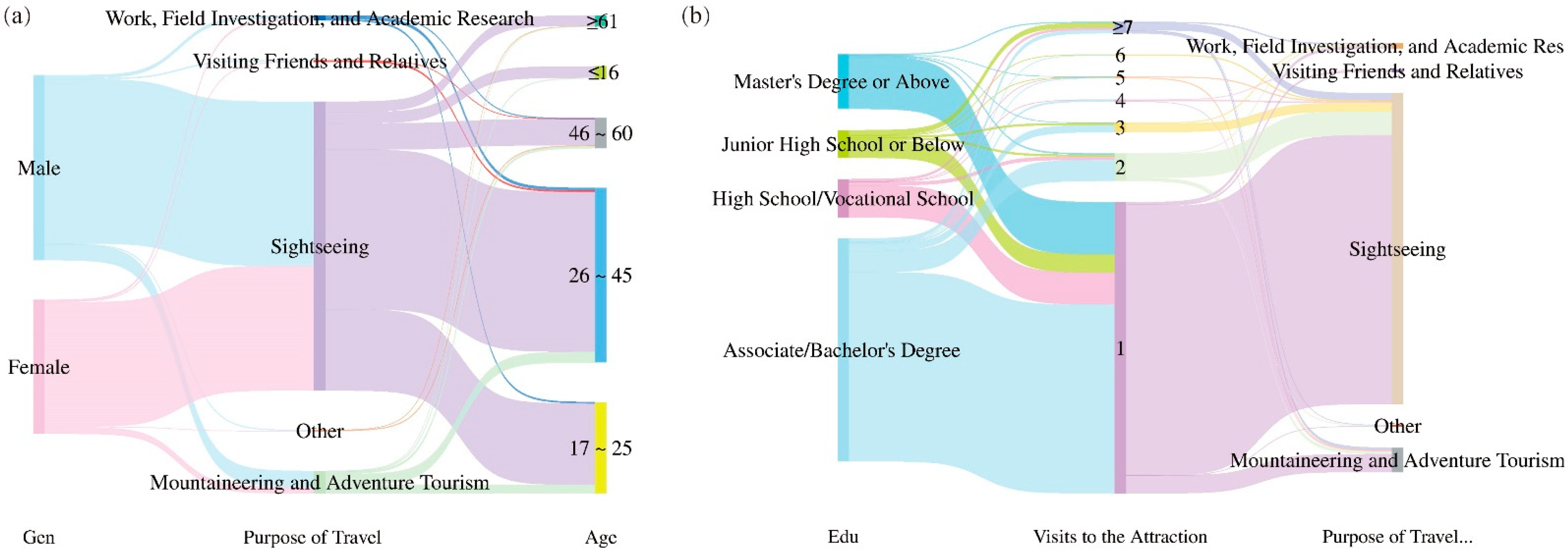
From a demographic perspective, the proportion of male visitors at the Gangshika Glacier exceeds that of females (57.99% vs. 42.01%). While “sightseeing” is the dominant travel purpose for both genders, it accounts for a relatively higher share among female visitors. In contrast, male tourists demonstrate a greater inclination toward high-intensity, outdoor-oriented climbing and adventure activities (Figure 3a), suggesting a structural gender difference in preferences for glacier-based ecotourism experiences. Consistent with this, the thickest flows in Figure 3a are directed to sightseeing, indicating it is the prevailing stated purpose. In terms of age distribution (Table 1), the majority of visitors fall within the 17~45 age range, comprising 83.26% of the sample. This indicates that glacier tourism is predominantly driven by the youth and middle-aged groups. Specifically, visitors aged 26~45 are more concentrated in “sightseeing” and “work/research” travel purposes, while those aged 17~25 participate more actively in climbing and adventure tourism, reflecting younger tourists’ preferences for novelty and excitement (Figure 3a). Regarding educational attainment (Table 1), 71.3% of visitors held a college degree or above. Visitors with associate or bachelor’s degrees account for the largest share and are primarily represented among first-time visitors, indicating a mass tourism pattern. Those with a master’s degree or above are more likely to make three or more annual visits and tend to be engaged in “work/research” tourism purposes (Figure 3b). Additionally, 84.88% of visitors were on their first visit to the Gangshika Glacier, indicating that the site is still in the early stage of its tourism lifecycle [57].
Based on the valid sample data, the average annual number of visits to the Gangshika Glacier is 1.91, with a standard deviation of 4.39, showing a distinctly right-skewed distribution. Most visitors reported a single visit per year, while a minority exhibited high-frequency visitation behavior (e.g., ≥7 times), contributing to the extended right tail of the distribution and indicating the presence of a small group of “frequent visitors”. The results indicate that current visitors are predominantly first-time or occasional travelers. The scenic area has initially developed a stable return visitor base, suggesting sustained appeal to certain segments of the tourist population.
Key socio-economic covariates were operationalized as binary variables. Gender used female as the reference 0 versus male 1. The original four-tier education variable was analyzed via a one-way ANOVA with Bonferroni correction identified a single significant threshold (p < 0.001) between educational tiers. Based on this finding, education was dichotomized (0: junior high and below; 1: high school and above) to preserve this key distinction in a parsimonious manner(Table 2).
Descriptive statistics (Table 3) indicate that the annual number of visits exhibits pronounced overdispersion, and both actual travel expenditure and time cost are right-skewed, the latter reflecting substantial heterogeneity in visitor spending. Because the on-site survey design excluded zero-trip respondents and the substitute-site indicator is constant across the sample, this variable is omitted from subsequent analyses to avoid multicollinearity.

3.2. Model Estimation Results

3.2.1. Results of the TCM

Based on the calculation of tourist rates and the delineation of spatial units as described in the methodology, the departure regions for the Gangshika Glacier were divided into 33 tourism zones. To evaluate actual travel behavior and the economic value of glacier tourism, this study used RP data and applied Poisson regression and NB models to fit the annual visit frequency of tourists. The performance of the models was compared in terms of over-dispersion and goodness-of-fit (Table 4). Results show that the Pearson chi-square/degrees of freedom (χ2/df) value of the Poisson model is 3.2, significantly exceeding the theoretical threshold (>1.5), indicating serious over-dispersion and substantial bias in coefficient estimation. In contrast, the NB model yields a χ2/df of 1.83 and lower AIC (1189.3) and BIC values. Moreover, the standard deviation of residuals is also lower in the NB model (0.48 vs. 0.56), indicating it better captures the high-variance structure of the sample and is more appropriate for modeling tourist visit behavior.
Based on the comparative analysis, a Negative Binomial regression model was constructed to estimate the relationship between travel rate and consumer expenditure for the Gangshika Glacier.
λ ( C ) = e x p ( 2.458 8.6 × 10 5 C )
The model reveals a significant negative correlation between travel cost and visitation rate (p < 0.01). The explanatory power of the model (pseudo-R2 = 0.208) indicates that, confirms that the Negative Binomial model effectively corrects for over-dispersion (Pearson χ2/df = 1.83), reducing residual fluctuations. Based on the median WTP value (see Table 2), An additional cost was incrementally set at 50 CNY per level, up to the threshold where demand dropped to zero. The relationship between the additional cost and the number of tourist visits was then modeled.
C ( k ) = C + 50 k ,   k = 0,1 , , K
λ ( k ) = e x p ( 2.458 8.6 × 10 5 C ( k ) )
The regression coefficients show a significant negative correlation between the TC variable and annual visit frequency (p < 0.01), which aligns with the rational consumption hypothesis. Based on this model, a minimum cost increment of 50 CNY was set, and the demand curve was constructed using the integration method. By fitting the “cost–visitation” relationship, the critical demand threshold was determined to be 2.86 × 10⁴ CNY.
Accordingly, the per-visit CS is estimated at 1.16 × 10⁴ CNY, and the annual total TV, aggregated by visits with Nvisits = 562,000 in 2024, is 6.52 billion CNY, demonstrating the Gangshika Glacier’s considerable non-market value as a natural tourism resource.

3.2.2. Tourist WTP and Environmental Preferences

This study included a stated WTP question in the survey, asking respondents about their one-time supportive payment intention (e.g., environmental maintenance fees) for the protection of the glacier tourism environment. The results (Table 5) show a high payment rate of 83.91% (p < 0.001), indicating strong statistical support. Furthermore, the motivations behind payment exhibit structural differentiation: existence value (62.11%) > heritage value (30.02%) > option value (7.87%). The average WTP was 40 CNY, with a median of 50 CNY. These values are considered reasonable and show a left-skewed distribution, suggesting internal validity of the WTP responses.
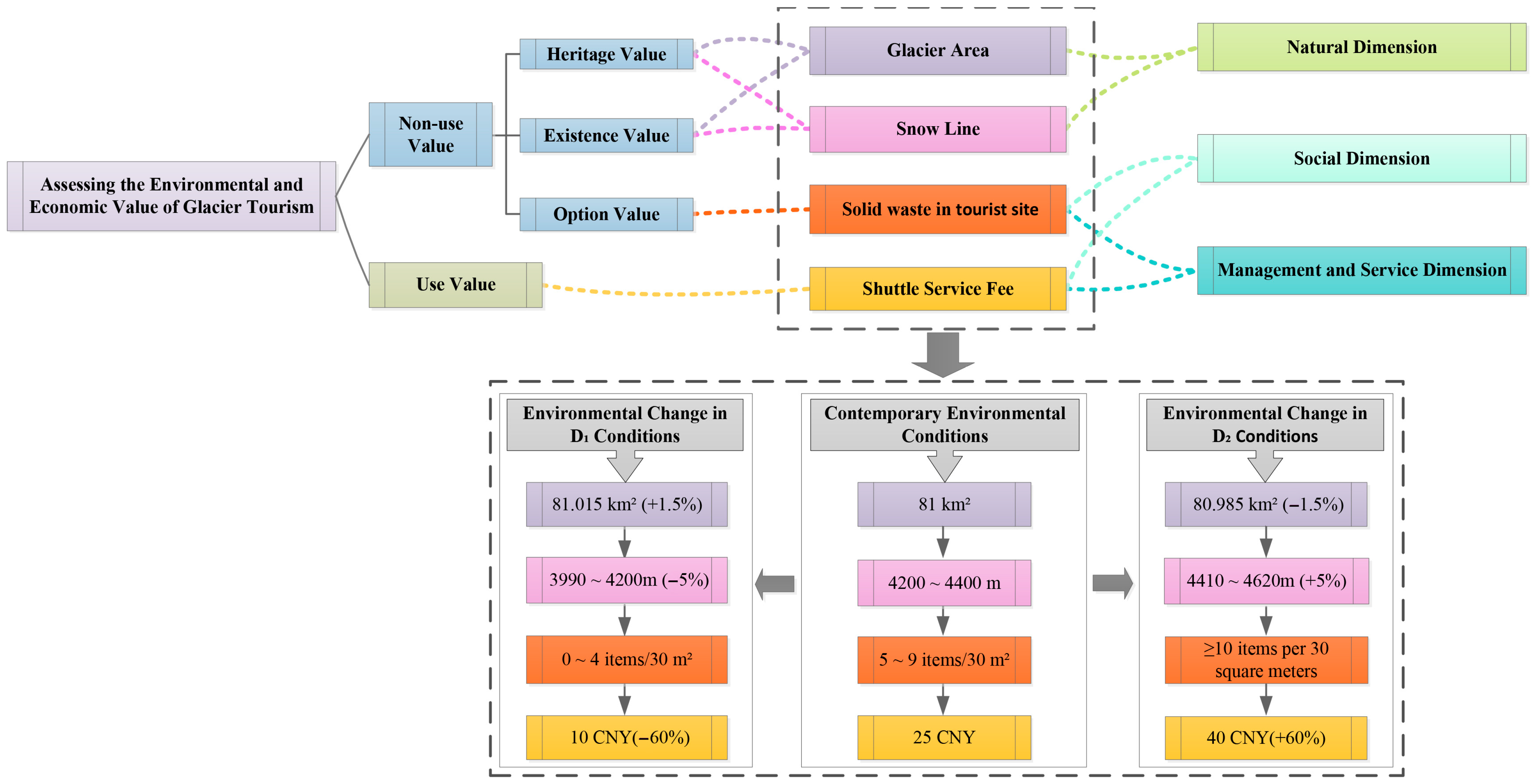
During the selection of environmental attributes, the study followed three key principles: data availability, measurability of indicators, and objectivity of evaluation, to systematically compare and screen candidate variables, thereby ensuring scientific rigor and robustness in the evaluation outcomes. At the same time, a combination of methods, including interviews with scenic area managers, tourist questionnaire surveys, and literature analysis, was employed to construct a multi-level attribute indicator system reflecting the environmental characteristics of glacier tourism. Under two hypothetical environmental change scenarios (D1/D2), the model simulated tourist visitation frequency over the next year. As illustrated in Figure 4, candidate environmental attributes were collected from three main dimensions: natural (e.g., glacier area, snowline altitude), social (e.g., transportation accessibility, level of civility), and managerial (e.g., sanitation, service attitude, facility completeness). Additionally, the economic value of the glacier tourism environment was considered across both Use Value and Non-use Value dimensions, incorporating Option Value, Heritage Value, and Existence Value [29,58]. Subsequently, an indicator selection evaluation matrix and importance–performance analysis were applied to screen environmental attributes [59] To ensure respondents clearly understood the implications of D1/D2 environmental change scenarios, field investigations were conducted, integrating tourists’ perceptual perspectives and the current conditions of the scenic area. Four key attributes were ultimately selected as influencing factors of tourism demand: Glacier Area (Existence Value, Heritage Value), Snow Line (Existence Value, Heritage Value), Solid Waste in Tourist Site (Option Value), and Shuttle Service Fee (Use Value/Cost Factor). The contemporary environmental conditions and hypothetical changes under the D1 and D2 scenarios are presented in Figure 4.
RP and SP data were integrated using a mixed panel data model to quantify the marginal impact of environmental quality changes on tourism value [50,59]. The SP data were configured to reflect D1 and D2 environmental change scenarios. Based on the statistical analysis of tourists’ payment motivations from the survey, cost factors were designated as a separate attribute level, with the corresponding weights assigned as shown in Table 6.
To further quantify the impact of changes in environmental attributes on tourist visitation behavior, a simulation was conducted using the designed scoring weights and evaluation criteria under two scenarios (D1/D2). Results indicate that under the D1 scenario, the predicted average annual visitation frequency increases to 2.29 trips per person, whereas under the D2 scenario, it declines to 1.56 trips. Compared to the current baseline of 1.91 visits, this demonstrates a clearly elastic response to environmental change.

3.2.3. TC-CB Model Estimation Results

The TC-CB model estimation yielded robust regression results for environmental change Scenarios D1 and D2 (Table 7 and Table 8). These results not only provide strong evidence for a “cost suppression effect” but also elucidate the moderating role of environmental changes on tourist behavior. Across all model specifications, the travel cost variable (TCD1, TCD2) is negatively signed and statistically significant, confirming that increased travel expenses substantially suppress recreational demand. In the RE-NB model, the absolute value of the travel cost coefficient under Scenario D2 increases relative to Scenario D1 (−2.0 × 10⁻⁴ vs. −1.62 × 10⁻⁴, p < 0.05). The results indicate that cost sensitivity varies with environmental conditions, confirming the presence of the “own-price effect” in tourism demand. In both Scenarios D1 and D2, the interaction terms between environmental quality and travel cost (EQI × TCD1, EQI × TCD2) are negative and statistically significant in the Pooled-NB and RE-NB models. This indicates an adaptive behavioral response among visitors: when environmental quality improves, tourists are willing to bear higher travel costs, reflecting a positive WTP for glacier environmental quality. Conversely, under deteriorating environmental conditions, the inhibitory effect of travel cost on visitation becomes more pronounced, suggesting that tourists exhibit heightened sensitivity to travel expenses.
In terms of socio-economic variables, the core factors such as income, age, and gender maintain consistent coefficient signs across both scenarios. The age coefficient is positive and statistically significant (β ≈ 0.006~0.007, p < 0.1). Combined with the age distribution of respondents shown in Table 1, this suggests that middle-aged tourists tend to exhibit higher trip frequencies. Education shows a significant negative effect (β ≈ −0.96~−0.97, p < 0.001), indicating that visitors with higher educational attainment tend to have a lower willingness for repeat visitation. The gender coefficient remains consistently positive, suggesting that male respondents generally exhibit higher visitation frequencies. In Table 7 and Table 8, the Peo variable is not statistically significant in most model specifications, indicating that group size has a limited effect on visitation demand.
With respect to model performance, the Revealed-NB specification is estimated on revealed-preference (RP) data only; consequently, the simulated environmental-quality–cost interactions (EQI × TCD1, EQI × TCD2) are not estimable and therefore appear as missing in Table 7 and Table 8. The comparison of model goodness-of-fit indicates the following ranking: RE-NB > Pooled-NB > SP-NB > Revealed NB, The results confirm that simultaneously accounting for individual heterogeneity and environmental interaction effects significantly enhances both the explanatory accuracy and theoretical consistency of the model. The RE-NB model demonstrated the best goodness-of-fit under both environmental scenarios (AIC = 6909.41 for D1 and 6359.53 for D2), indicating that the incorporation of random effects not only effectively addresses over-dispersion but also substantially enhances the model’s explanatory power. This finding is consistent with the approach adopted by Wei (2016) and Duan (2022), who widely employed random-effects negative binomial models to address unobserved heterogeneity [5].
According to the model results, the consumer surplus under the D1 scenario was estimated at 1.41 × 10⁴ CNY, representing an increase of approximately 0.63 × 10⁴ CNY compared to 0.78 × 10⁴ CNY under the D2 scenario, an 80.8% rise (Table 9). The improvement in environmental quality not only enhanced tourists’ willingness to travel but also significantly increased their perceived experience value.

4. Discussion

Based on field survey data, this study employs the TC–CB model to empirically analyze the interaction mechanism between environmental quality and travel cost at the Gangshika Glacier. The results reveal the behavioral response mechanisms of tourists under environmental change, providing empirical evidence and decision-making insights for the sustainable development and scientific management of glacier ecotourism.

4.1. Significance of Findings

The Gangshika Glacier generates substantial recreational value (TV and per-visit CS reported in Section 3.2.1), underscoring its importance as a high-value glacier destination. Beyond the magnitude of benefits, the pattern of behavioral responses is more informative for management: higher environmental quality shifts the demand curve outward and weakens price sensitivity (i.e., TCD1 = −1.62 × 10⁻⁴ vs. TCD2 = −2.00 × 10⁻⁴ CNY−1; both p < 0.05; see Table 7 and Table 8). Consistent with this shift, the predicted visit frequency and per-visit welfare are both higher under D1 than under D2 (Table 9), indicating that environmental quality functions as a valued attribute of the recreation experience.
These results align with the TC-CB framework: improvements in environmental quality raise the expected visitation rate while increasing the consumer surplus associated with each trip, thereby amplifying aggregate welfare when aggregated over person-visits. The findings therefore support policies that integrate ecological conservation with tourism operations, such as demand management linked to environmental thresholds, eco-compensation funded by tourism revenues, and targeted product design that maintains high-quality visitor experiences.

4.2. Contributions and Methodological Value

This study empirically validates the applicability of the TC-CB hybrid model for assessing the value of glacier-based ecotourism in high-altitude regions. By incorporating a multi-destination travel cost allocation coefficient, combining cost proportion (CP) and decision weight (DWP), the study effectively corrects potential valuation biases in traditional approaches. Furthermore, the model incorporates an “Environmental Quality × Travel Cost” interaction design, which resolves the multicollinearity issues arising from multiple socio-economic dummy variables and composite weighting schemes in the survey data. It also empirically reveals the intrinsic mechanism underlying the “environmental change, price elasticity, and behavioral adaptation” theoretical pathway.

4.3. Methodological Innovation

This study introduces an “Environmental Quality × Travel Cost” interaction term within the TC–CB framework to quantitatively simulate tourist behavioral responses under different environmental scenarios. This approach effectively addresses multicollinearity issues and provides a replicable modeling framework for exploring the dynamic relationships among environmental attributes, tourist behavior, and economic value. This provides a replicable modeling framework for understanding the causal mechanisms linking environmental attributes, tourist behavior, and economic value, furthermore offering empirical support for glacier ecosystem management and sustainable tourism policy development.

4.4. Policy Recommendations

This study has implications at practical, policy, and theoretical levels:
  • Implementing Differential Pricing and Visitor Capacity Regulation Strategies.
In the RE-NB model, the absolute value of the travel cost coefficient under Scenario D2 increases relative to Scenario D1 (−2.0 × 10⁻⁴ vs. −1.62 × 10⁻⁴, p < 0.05). The travel cost variable in the demand function shows a significant negative correlation, indicating that increasing travel expenses can effectively suppress visitation frequency. Based on the theory of price elasticity, managers can establish a dynamic pricing mechanism: moderately increasing ticket prices during peak seasons or when environmental quality is high to regulate visitor flows and generate funds for ecological conservation, while offering price discounts during off-peak periods or phases of environmental degradation to maintain a stable visitor base. This approach should be synergistically integrated with a quota-based reservation system grounded in ecological carrying capacity assessments. By applying a dual-leverage mechanism that combines price modulation and visitor flow regulation, this integrated framework can effectively balance conservation objectives and economic returns, thereby promoting the coordinated advancement of ecological sustainability and tourism revenue.
  • Strengthening Environmental Quality Maintenance and Climate Adaptation Capacity.
Under Scenario D1, the average annual number of visits per person was 2.29, representing a 46.8% increase compared with 1.56 under Scenario D2. The findings indicate that environmental conditions directly affect tourist demand. The interaction effect between environmental quality and travel cost further indicates that tourists are willing to pay a premium for higher environmental quality, whereas environmental degradation increases their price sensitivity. Glacier scenic areas should enhance investment in environmental monitoring and protection by establishing dynamic assessment systems that quantify ecological disturbances through temporal analysis of visitor trampling intensity and vegetation recovery patterns. In ecologically sensitive tourism zones, ecological disturbance thresholds should be established, buffer zones delineated, and waste management and sanitation facilities improved. Such preventive interventions can help avert environmental degradation from falling below the critical threshold of tourists’ willingness to pay. At the same time, it provides a reference case and managerial insights for glacier tourism development under the national park system.
  • Establishing an Ecological Compensation Mechanism and Community Co-Governance System.
The study shows that tourists have a high willingness to pay for glacier tourism experiences (with a per-visit consumer surplus of about 1.16 × 10⁴ CNY), providing a basis for designing ticket revenue-sharing mechanisms and ecological compensation schemes. Tourist behavior varies across socio-demographic groups: middle-aged visitors exhibit higher travel frequency (β ≈ 0.006~0.007, p < 0.1), whereas highly educated tourists show a lower revisit rate (β ≈ −0.96~−0.97, p < 0.001). It is recommended to develop targeted marketing and product strategies for different visitor segments. For example, developing glacier science education programs and establishing glacier eco-tourism demonstration sites targeting visitors with high school education or above can help enhance their participation and foster greater destination loyalty. Building on the principles of ecosystem integrity and nature-based regulation, a sustainable development pathway for glacier tourism should be established—characterized by strict protection, ecological conservation, recreational interpretation, and community co-management—to promote the harmonious integration of ecological benefits and community development.

4.5. Limitations and Future Work

  • Sample representativeness and data coverage.
This study focused on the Gangshika Glacier as a representative case. Although the data were collected across multiple seasons, the limited sample coverage from certain provinces may introduce regional bias, potentially leading to an underestimation of visitors’ WTP.
Future research should expand both the geographical and temporal scope through multi-site and longitudinal data collection, enabling a more comprehensive understanding of tourists’ adaptive behaviours over time and improving the representativeness and robustness of welfare estimates.
  • Limitations of SP data and model assumptions.
Although the integration of RP and SP data enhances the model’s predictive capability, SP data may still be affected by hypothetical and strategic biases, meaning that respondents might overestimate or underestimate their intended behaviors. The TC-CB model is built upon the assumption of rational decision-making under conditions of complete information, which limits its ability to fully capture tourists’ adaptive decision-making and heuristic behavior under environmental uncertainty, thereby constraining the model’s explanatory capacity for complex behavioral dynamics.
Future research could incorporate ex-post validation surveys to narrow the gap between stated and actual behaviors, and introduce psychological variables related to risk perception to provide a more comprehensive explanation of behavioral adaptation mechanisms under changing glacier environments.
  • Limitations in Model Structure and Variable Expansion.
This study primarily focused on the interrelationships among environmental change, travel cost, and tourists’ socio-economic characteristics, without incorporating soft variables such as environmental risk perception, emotional attachment, or value orientation. This constraint potentially limits deeper interpretation of tourist decision-making processes. Future research ought to incorporate interdisciplinary approaches to further advance the theoretical framework of behavioral responses in glacier-based tourism.

5. Conclusions

Based on revealed preference (RP) and stated preference (SP) data, this study employed the TC-CB model to quantify the tourism economic value of Gangshika Glacier and to evaluate tourist behavioral responses under different environmental scenarios. The main conclusions are as follows:
The total annual tourism value of Gangshika Glacier was estimated at approximately 6.52 billion CNY, with a per-visit CS of 1.16 × 10⁴ CNY, indicating the high recreational value of glacier resources. Under Scenario D1, the average annual visitation frequency is 2.29 trips compared with 1.56 trips under Scenario D2 (a 46.8% increase), and the corresponding per-visit CS values are 1.41 × 10⁴ CNY and 0.78 × 10⁴ CNY, respectively, confirming that environmental changes have a significant impact on tourists’ willingness to visit and their perceived economic value.
In the RE-NB model, the coefficients for TCD1 and TCD2 were −1.62 × 10⁻⁴ (p < 0.05) and −2 × 10⁻⁴ (p < 0.05), respectively, both significantly at the 5% level. This indicates that under scenario D1, an increase of 1 CNY in travel cost reduces the average annual visitation frequency by approximately 0.016%, while under scenario D2, the reduction is about 0.02% per 1 CNY increase. These results confirm the applicability of the “price elasticity” principle in glacier tourism and provide quantitative evidence for visitor flow management and ecological carrying capacity regulation based on differentiated pricing strategies.
Based on the quantitative results, it is recommended that Gangshika Glacier and similar high-altitude glacier tourism areas implement a “remote sensing and field survey” framework to dynamically assess multi-scale environmental carrying capacity. Additionally, visitor flow should be managed through quota-based reservations, the development of green infrastructure and eco-tourism products should be promoted, and an ecological compensation fund should be established to support glacier conservation while fostering community participation in tourism revenue sharing.
This study provides quantitative evidence of the economic value of glacier tourism and tourist behavioral responses, offering a practical and transferable analytical framework to inform high-altitude glacier eco-tourism planning, management, and the development of sustainable policies.

Author Contributions

Conceptualization, R.L. and N.W.; methodology, R.L.; software, R.L.; validation, R.L. and N.W.; formal analysis, R.L.; investigation, R.L., Y.W. (Yixin Wang), L.Z., Y.W. (Yuchen Wang), D.Y., J.L., X.Z. and Y.J.; resources, Y.W. (Yixin Wang). and N.W.; data curation, R.L.; writing—original draft preparation, R.L.; writing—review and editing, R.L.; visualization, R.L.; supervision, N.W.; project administration, N.W.; funding acquisition, N.W.; photography, L.Z. and N.W. All authors have read and agreed to the published version of the manuscript.

Funding

This research was funded by the National Natural Science Foundation of China (Grant No. 42271131).

Institutional Review Board Statement

Ethical review and approval were waived for this study because it involves minimal risk, no intervention, and anonymous survey data, consistent with national guidelines issued in September 2023 (effective December 2023).

Informed Consent Statement

Informed consent was obtained from all subjects involved in the study; participation was voluntary and anonymous.

Data Availability Statement

The digital elevation data used in this study were obtained from the NASA Land Processes Distributed Active Archive Center (LP DAAC) (NASADEM Merged DEM Global 1 arc second V001). Glacier boundary data were pro-vided by the National Tibetan Plateau/Third Pole Environment Data Center (The Second Glacier Inventory of China, Version 1.0, 2006–2011). All datasets are publicly available at https://lpdaac.usgs.gov (accessed on 15 October 2024) and http://data.tpdc.ac.cn (accessed on 15 October 2024).

Conflicts of Interest

The authors declare no conflicts of interest.

Abbreviations

The following abbreviations are used in this manuscript:
TC-CBTravel Cost-Contingent Behavior model
RPRevealed Preferences
SPStated Preferences
TCMTravel Cost Method
WTPvisitors’ Willingness To Pay
CSConsumer Surplus
CVMContingent Valuation Method
CPCost Proportion
DWPDecision Weight Proportion
TVthe Total annual tourism Value
TWITravel Willingness Index

Appendix A

Gangshika Glacier Tourism Visitor Questionnaire
Dear Madam/Sir,
Hello! We are currently conducting research on the sustainable development of glacier tourism and would appreciate a few minutes of your time to complete this questionnaire. All responses will be collected anonymously and used solely for academic purposes. Please provide answers based on your true circumstances. Thank you for your support and assistance!
1. Place of Departure for This Trip:______ Province (Autonomous Region/Municipality) ______ City ______ District/County
2. Number of Travel Companions:______ people. Accompanying individuals include:
□Alone □With family members □With friends □With tour group members
□With classmates □With partner (significant other) □With colleagues □With travel buddies
3. Purpose of This Trip: (Multiple Choice)
□Sightseeing (Leisure Vacation) □Mountaineering Expedition (Special Interest Tourism) □Religious Pilgrimage □Visiting Relatives or Friends □Academic Research or Field Investigation □Meetings for team building □Other (Please specify: ______)
4. Which attractions or towns have you visited or do you plan to visit on this trip? For each destination, please indicate your duration of stay and the admission (ticket) fee.
5. What is your mode of travel for this trip?
□Self-drive tour/Road trip □Independent travel/Backpacking □Other (Please specify: ______)
□Group tour/Package tour [Participants in package tours: The fee paid to the travel agency was ______ CNY/person, and the total travel time was ______]
□Company-organized trip [Participants in package tours: The fee paid to the travel agency was ______ CNY/person, and the total travel time was ______]
6. Breakdown of Your Expenditures at this Glacier and Its Vicinity:
(1) Shopping: □0 CNY/person □Under 100 CNY/person □100–200 CNY/person □200–300 CNY/person □300–400 CNY/person □400–500 CNY/person □500–600 CNY/person □600–700 CNY/person □700–800 CNY/person □Other (Please specify): ______
(2) Dining: □0 CNY/person □Under 100 CNY/person □100–200 CNY/person □200–300 CNY/person □300–400 CNY/person □400–500 CNY/person □500–600 CNY/person □600–700 CNY/person □700–800 CNY/person □Other (Please specify): ______
(3) Accommodation: □0 CNY/person □Under 100 CNY/person □100–200 CNY/person □200–300 CNY/person □300–400 CNY/person □400–500 CNY/person □500–600 CNY/person □600–700 CNY/person □700–800 CNY/person □Other (Please specify): ______
(4) Entertainment: □0 CNY/person □Under 100 CNY/person □100–200 CNY/person □200–300 CNY/person □300–400 CNY/person □400–500 CNY/person □500–600 CNY/person □600–700 CNY/person □700–800 CNY/person □Other (Please specify): ______
Transportation from Your Place of Departure to the First Stop
① Your primary mode of transportation:
□Airplane/By Air    □Train/High-Speed Rail (HSR)    □Motorcycle    □On Foot
□Self-drive Car (including rented car for self-driving)    □Coach/Long-Distance Bus
□Public Transportation at the Destination    □Other (Please specify): ________
② Total travel time spent on the road:
□Within 30 min    □0.5–2 h    □2–4 h    □4–6 h    □6–8 h
□Other (Please specify): ________
③ One-way transportation cost per person (CNY):
□0–100 CNY/person (inclusive)        □100–200 CNY/person (inclusive)
□200–300 CNY/person (inclusive)    □300–400 CNY/person (inclusive)
□400–500 CNY/person (inclusive)    □500–600 CNY/person (inclusive)
□600–700 CNY/person (inclusive)    □700–800 CNY/person (inclusive)
□Other (Please specify): ________
From your previous stop to this scenic area/attraction.
① Your primary mode of transportation:
□Airplane/By Air    □Train/High-Speed Rail (HSR)    □Motorcycle    □On Foot
□Self-drive Car (including rented car for self-driving)    □Coach/Long-Distance Bus
□Public Transportation at the Destination    □Other (Please specify): ________
② Total travel time spent on the road:
□Within 30 min    □0.5–2 h    □2–4 h    □4–6 h    □6–8 h
□Other (Please specify): ________
③ One-way transportation cost per person (CNY):
□0–100 CNY/person (inclusive)        □100–200 CNY/person (inclusive)
□200–300 CNY/person (inclusive)    □300–400 CNY/person (inclusive)
□400–500 CNY/person (inclusive)    □500–600 CNY/person (inclusive)
□600–700 CNY/person (inclusive)    □700–800 CNY/person (inclusive)
□Other (Please specify): ________
7. What are your sources of information about this glacier tourism destination? (Multiple choices)
□Print advertisements in newspapers/magazines or publications
□Word-of-mouth recommendations from family, friends, colleagues, etc.
□Travel agencies or tour operators
□Films or television programs
□Government promotional campaigns
□Social media or short-video platforms (e.g., WeChat, Douyin, Xiaohongshu)
□Other (Please specify: __________)
8. Demographic Information
Gender□male     □female
Age□≤16    □17–25    □26–45    □46–60    □≥61
Education Level□Junior secondary school or below   □Senior secondary school/vocational secondary education   □College diploma or bachelor’s degree   □Postgraduate degree or above
Occupation□Student   □Manual worker/Skilled labourer   □Farmer or herdsman (agricultural and pastoral worker)   □Military or police personnel   □Civil servant/Government official   □Teacher and professional/technical staff   □Employee in enterprise or public institution   □Self-employed individual (private business owner)   □Healthcare practitioner   □Service industry worker   □Retired person/Pensioner   □Other
Monthlv lncome (CNY)□≤3000 □3000~5000 (inclusive) □5000~8000 (inclusive) □8000~10,000 (inclusive) □10,000~20,000 (inclusive) □20,000~30,000 (inclusive) □30,000~50,000 (inclusive) □40,000~50,000 (inclusive)  □>50,000
9. This is your ______ visit to this glacier this year. How likely are you to revisit this glacier in the future?
□Very high □High □Neutral □Low □Uncertain □Will not revisit
10. Which factors would reduce your likelihood of revisiting this glacier destination? (e.g., reduction in glacier extent, inadequate infrastructure, limited transport accessibility)
11. In your opinion, are there any alternative destinations that could substitute for this glacier destination on this trip?
□Yes □No
12. Overall, how satisfied are you with this glacier tourism experience?
□Very Satisfied □Satisfied □Neutral □Somewhat Dissatisfied □Dissatisfied
13. Are you willing to pay a certain fee for the protection of the tourism resources in this scenic area?
□Yes □No
(1) If yes, how much are you willing to pay per year (CNY)? __________
Your motivation for payment is (Multiple choices):
□To be able to revisit this place for tourism in the future.
□To preserve the resources for future generations.
□Not wanting the beautiful natural landscape of the glacier and its valuable cultural heritage to disappear.
□Other reasons (Please specify: __________)
(2) If not, what is your primary reason (Single choice)?
□Limited income, inability to pay.
□Concern that the paid fees may not actually be used for protection.
□Believe the protection costs should be covered by the government or tourism enterprises.
□The admission ticket price is already high and should include protection costs.
□I live far from the glacier area and have no interest in its protection.
□Other reasons (Please specify: __________)
We sincerely appreciate your agreement to complete this questionnaire and your generous support for our current research initiative focused on promoting the sustainable development of glacier tourism!
Note on Questionnaire Language
The questionnaire used in the field survey was administered in Chinese, the native language of the respondents. The original English version included below is the approved and back-translated version, provided for reference and international readability.

References

  1. Pedersen, V.K.; Egholm, D.L. Glaciations in Response to Climate Variations Preconditioned by Evolving Topography. Nature 2013, 493, 206–210. [Google Scholar] [CrossRef] [PubMed]
  2. Qin, D.; Yao, T.; Ding, Y.; Ren, J. Introduction to Cryospheric Science; Science Press: Beijing, China, 2018; ISBN 978-7-03-058622-3. (In Chinese) [Google Scholar]
  3. Wang, S.; Jiao, S.; Niu, H. Development patterns and countermeasures of glacier tourism resources in China. J. Nat. Resour. 2012, 27, 1276–1285. (In Chinese) [Google Scholar]
  4. Liu, L.; Zhong, L.; Yu, H. Progress of glacier tourism research and implications. Prog. Geogr. 2019, 38, 533–545. [Google Scholar] [CrossRef]
  5. Welling, J.T.; Árnason, Þ.; Ólafsdottír, R. Glacier Tourism: A Scoping Review. Tour. Geogr. 2015, 17, 635–662. [Google Scholar] [CrossRef]
  6. Yuan, L.; Wang, S. Recreational Value of Glacier Tourism Resources: A Travel Cost Analysis for Yulong Snow Mountain. J. Mt. Sci. 2018, 15, 1446–1459. [Google Scholar] [CrossRef]
  7. Wang, S.; Xie, J.; Zhou, L. China’s Glacier Tourism: Potential Evaluation and Spatial Planning. J. Destin. Mark. Manag. 2020, 18, 100506. [Google Scholar] [CrossRef]
  8. U.S. National Park Service. Tourism to Glacier National Park Contributes $548 M to Local Economy; News Release, 23 August 2023. Available online: https://www.nps.gov/glac/learn/news/tourism-to-glacier-national-park-contributes-548m-to-local-economy.htm (accessed on 5 February 2024).
  9. Wang, S.; Che, Y.; Pang, H.; Du, J.; Zhang, Z. Accelerated Changes of Glaciers in the Yulong Snow Mountain, Southeast Qinghai-Tibetan Plateau. Reg. Environ. Change 2020, 20, 38. [Google Scholar] [CrossRef]
  10. Purdie, H. Glacier Retreat and Tourism: Insights from New Zealand. Mt. Res. Dev. 2013, 33, 463–472. [Google Scholar] [CrossRef]
  11. Yang, J.; Tang, F.; Guo, X.; Chen, H. Development modes and system establishments of ice and snow tourism in China. J. Glaciol. Geocryol. 2023, 45, 1923–1939. (In Chinese) [Google Scholar]
  12. Hugonnet, R.; McNabb, R.; Berthier, E.; Menounos, B.; Nuth, C.; Girod, L.; Farinotti, D.; Huss, M.; Dussaillant, I.; Brun, F.; et al. Accelerated Global Glacier Mass Loss in the Early Twenty-First Century. Nature 2021, 592, 726–731. [Google Scholar] [CrossRef]
  13. Zemp, M.; Jakob, L.; Dussaillant, I.; Nussbaumer, S.U.; Gourmelen, N.; Dubber, S.; Geruo, A.; Abdullahi, S.; Andreassen, L.M.; Berthier, E.; et al. Community Estimate of Global Glacier Mass Changes from 2000 to 2023. Nature 2025, 639, 382–388. [Google Scholar] [CrossRef] [PubMed]
  14. MacFee, M.; Carrivick, J.L.; Quincey, D.J. Rising Snowline Altitudes across Southern Hemisphere Glaciers from 2000 to 2023. Sci. Rep. 2025, 15, 35683. [Google Scholar] [CrossRef]
  15. Maltagliati, L. The Wild Dance of Snow-Lines. Nat. Astron. 2020, 4, 554. [Google Scholar] [CrossRef]
  16. Williamson, S.N.; Marshall, S.J.; Menounos, B. Temperature Mediated Albedo Decline Portends Acceleration of North American Glacier Mass Loss. Commun. Earth Environ. 2025, 6, 555. [Google Scholar] [CrossRef]
  17. Tang, S.; Vlug, A.; Piao, S.; Li, F.; Wang, T.; Krinner, G.; Li, L.Z.X.; Wang, X.; Wu, G.; Li, Y.; et al. Regional and Tele-Connected Impacts of the Tibetan Plateau Surface Darkening. Nat. Commun. 2023, 14, 32. [Google Scholar] [CrossRef]
  18. Varnajot, A.; Salim, E. The Hauntology of Climate Change: Glacier Retreat and Dark Tourism. Tour. Geogr. 2025, 27, 102–119. [Google Scholar] [CrossRef]
  19. Su, B.; Xiao, C.; Chen, D.; Qin, D.; Ding, Y. Cryosphere Services and Human Well-Being. Sustainability 2019, 11, 4365. [Google Scholar] [CrossRef]
  20. Wei, J.; Wang, E. Travel demand model estimation and its application based on the combined stated and revealed preference methods. Oper. Res. Manag. Sci. 2016, 25, 270–277. (In Chinese) [Google Scholar]
  21. Bateman, I.J. Valuing Preferences for Non-Market Goods and Resources. In Sustainable Resource Use and Economic Dynamics; The Economics of Non-Market Goods and Resources; Springer: Dordrecht, The Netherlands, 2007; ISBN 1571-487X. [Google Scholar]
  22. Freeman, A.M., III; Joseph, A.H.; Kling, C.L. The Measurement of Environmental and Resource Values: Theory and Methods, 3rd ed.; Routledge: New York, NY, USA, 2014; ISBN 978-1-315-78091-7. [Google Scholar]
  23. Hanemann, W.M. Valuing the Environment Through Contingent Valuation. J. Econ. Perspect. 1994, 8, 19–43. [Google Scholar] [CrossRef]
  24. Whitehead, J.C.; Pattanayak, S.K.; Van Houtven, G.L.; Gelso, B.R. Combining Revealed and Stated Preference Data to Estimate the Nonmarket Value of Ecological Services: An Assessment of the State of the Science. J. Econ. Surv. 2008, 22, 872–908. [Google Scholar] [CrossRef]
  25. Johnston, R.J. Is Hypothetical Bias Universal? Validating Contingent Valuation Responses Using a Binding Public Referendum. J. Environ. Econ. Manag. 2006, 52, 469–481. [Google Scholar] [CrossRef]
  26. Rosenberger, R.S.; Loomis, J.B. The Value of Ranch Open Space to Tourists: Combining Observed and Contingent Behavior Data. Growth Change 1999, 30, 366–383. [Google Scholar] [CrossRef]
  27. Alessandro, P.; De Meo, I.; Grilli, G.; Notaro, S. Valuing Nature-Based Recreation in Forest Areas in Italy: An Application of Travel Cost Method (TCM). J. Leis. Res. 2023, 54, 26–45. [Google Scholar] [CrossRef]
  28. Prochazka, P.; Abrham, J. Evaluation of Environmental Assets Value on Borneo Using the Travel Cost Method. BioResources 2024, 19, 5811–5824. [Google Scholar] [CrossRef]
  29. Haab, T.C.; McConnell, K.E. Valuing Environmental and Natural Resources: The Econometrics of Non-Market Valuation; Edward Elgar Publishing: Cheltenham, UK, 2002; ISBN 978-1-84376-543-1. [Google Scholar]
  30. Wubalem, A.; Woldeamanuel, T.; Nigussie, Z. Economic Valuation of Lake Tana: A Recreational Use Value Estimation through the Travel Cost Method. Sustainability 2023, 15, 6468. [Google Scholar] [CrossRef]
  31. He, J.; Dupras, J.; Poder, T.G. The Value of Wetlands in Quebec: A Comparison between Contingent Valuation and Choice Experiment. J. Environ. Econ. Policy 2017, 6, 51–78. [Google Scholar] [CrossRef]
  32. Venkatachalam, L. The Contingent Valuation Method: A Review. Environ. Impact Assess. Rev. 2004, 24, 89–124. [Google Scholar] [CrossRef]
  33. Jiang, S.; Cao, M.; Tang, C.; Ma, Q.; Cao, Y.; Xue, J. Non-use value assessment of the Chongming Dongtan wetland based on the contingent valuation method. J. Nanjing For. Univ. (Nat. Sci. Ed.) 2017, 41, 21–27. (In Chinese) [Google Scholar]
  34. Duan, Z.; Wang, E.; Qiu, Y. The Impact of Environmental Quality Changes on Tourists’ Welfare: Based on Travel Cost and Contingent Behavior Data. Ecol. Econ. 2022, 38, 123–129. (In Chinese) [Google Scholar]
  35. Feuillet, T.; Sourp, E. Geomorphological Heritage of the Pyrenees National Park (France): Assessment, Clustering, and Promotion of Geomorphosites. Geoheritage 2011, 3, 151–162. [Google Scholar] [CrossRef]
  36. Stewart, E.J.; Wilson, J.; Espiner, S.; Purdie, H.; Lemieux, C.; Dawson, J. Implications of Climate Change for Glacier Tourism. Tour. Geogr. 2016, 18, 377–398. [Google Scholar] [CrossRef]
  37. NASA Jet Propulsion Laboratory (JPL). NASADEM Merged DEM Global 1 Arc Second V001 [Data Set]; NASA EOSDIS Land Processes DAAC: Sioux Falls, SD, USA, 2020. [Google Scholar] [CrossRef]
  38. Liu, S.; Guo, W.; Xu, J. The Second Glacier Inventory Dataset of China (Version 1.0) (2006-2011) [Data Set]; National Tibetan Plateau Data Center: Beijing, China, 2012. [Google Scholar] [CrossRef]
  39. Qiao, G.; Yang, Y.; Xu, S.; Song, H. Happy without accompaniment? A study of the effect of inter-generational support on psychological well-being of offspring and relatives in filial tourism. Tour. Sci. 2025, 1–23. (In Chinese) [Google Scholar] [CrossRef]
  40. Li, Y.; Han, Q. Scale Development of Tourists’ Time Perception and Its Impact on Pro-Environmental Behavior. Tour. Trib. 2025, 1–20. (In Chinese) [Google Scholar] [CrossRef]
  41. Ma, Y. The Influence Mechanism of Social Contact on Latent Conflicts in Tourist Destinations: A Comparative Analysis Based on Multi-Stakeholder Perceptions. Master’s Thesis, Yangzhou University, Yangzhou, China, 2025. (In Chinese). [Google Scholar]
  42. Leggett, C.G. Sampling Strategies for On-Site Recreation Counts. J. Surv. Stat. Methodol. 2017, 5, 326–349. [Google Scholar] [CrossRef]
  43. Madow, W.G. Elementary Sampling Theory. Technometrics 1968, 10, 621–622. [Google Scholar] [CrossRef]
  44. Fezzi, C.; Bateman, I.J.; Ferrini, S. Using Revealed Preferences to Estimate the Value of Travel Time to Recreation Sites. J. Environ. Econ. Manag. 2014, 67, 58–70. [Google Scholar] [CrossRef]
  45. Cesario, F.J. Value of Time in Recreation Benefit Studies. Land Econ. 1976, 52, 32–41. [Google Scholar] [CrossRef]
  46. English, E.; Von Haefen, R.H.; Herriges, J.; Leggett, C.; Lupi, F.; McConnell, K.; Welsh, M.; Domanski, A.; Meade, N. Estimating the Value of Lost Recreation Days from the Deepwater Horizon Oil Spill. J. Environ. Econ. Manag. 2018, 91, 26–45. [Google Scholar] [CrossRef]
  47. Tang, F.; Yang, J.; Wang, Y.; Ge, Q. Analysis of the Image of Global Glacier Tourism Destinations from the Perspective of Tourists. Land 2022, 11, 1853. [Google Scholar] [CrossRef]
  48. Guo, J.; Wang, N. Tourism resource valuation: A case study of Dunhuang. J. Nat. Resour. 2004, 19, 811–817. (In Chinese) [Google Scholar]
  49. Li, H.; Zhao, T.; Xiang, C. Evaluation on the economic value of ancient city tourist attractions based onTCM-CVM integrated model: A case of Langzhong Ancient City. J. Arid Land Resour. Environ. 2021, 35, 196–201. (In Chinese) [Google Scholar] [CrossRef]
  50. Hynes, S.; Greene, W. Preference Heterogeneity in Contingent Behaviour Travel Cost Models with On-Site Samples: A Random Parameter vs. a Latent Class Approach. J. Agric. Econ. 2016, 67, 348–367. [Google Scholar] [CrossRef]
  51. Butler, R.W. The Concept of a Tourist Area Cycle of Evolution: Implications for Management of Resources. Can. Geogr. 1980, 24, 5–12. [Google Scholar] [CrossRef]
  52. Cameron, A.C.; Trivedi, P.K. Regression Analysis of Count Data, 2nd ed.; Econometric Society Monographs; Cambridge University Press: Cambridge, UK, 2013; ISBN 978-1-107-01416-9. [Google Scholar]
  53. Hilbe, J.M. Negative Binomial Regression, 2nd ed.; Cambridge University Press: Cambridge, UK, 2011; ISBN 978-0-521-19815-8. [Google Scholar]
  54. McCullagh, P. Generalized Linear Models, 2nd ed.; Routledge: New York, NY, USA, 2019; ISBN 978-0-203-75373-6. [Google Scholar]
  55. Winkelmann, R. (Ed.) Poisson Regression. In Econometric Analysis of Count Data; Springer: Berlin/Heidelberg, Germany, 2008; pp. 63–126. ISBN 978-3-540-78389-3. [Google Scholar]
  56. Ministry of Science and Technology of the People’s Republic of China. Notice on the Issuance of the “Measures for the Ethical Review of Science and Technology (Trial Implementation)”; Ministry of Science and Technology of the People’s Republic of China: Beijing, China, 2023. (In Chinese)
  57. Chen, F.; Zhang, J. Analysis on capitalization accounting of travel value: A case study of Jiuzhaigou scenic spot. J. Nanjing Univ. (Nat. Sci.) 2001, 37, 296–303. (In Chinese) [Google Scholar]
  58. Frauman, E.; Banks, S. Gateway Community Resident Perceptions of Tourism Development: Incorporating Importance-Performance Analysis into a Limits of Acceptable Change Framework. Tour. Manag. 2011, 32, 128–140. [Google Scholar] [CrossRef]
  59. Jeon, Y.; Herriges, J.A. Convergent Validity of Contingent Behavior Responses in Models of Recreation Demand. Environ. Resour. Econ. 2010, 45, 223–250. [Google Scholar] [CrossRef]
Figure 1. Location map of the Gangshika Glacier region. The right panel presents the digital elevation model (DEM) [37] and the glacier outlines from the Second Glacier Inventory of China [38].
Sustainability 17 10808 g001
Figure 2. Retreat of Gangshika Glacier, 2007~2023. Note: Photo source: research team.
Sustainability 17 10808 g002
Figure 3. Associations between respondents’ socioeconomic attributes and tourism behavior at the Gangshika Glacier (Sankey diagrams) (a) Gender–Travel Purpose–Age linkage; (b) Education Level–Annual Visit Frequency–Travel Purpose linkage. Notes: Node width denotes each category’s share in the sample (N = 926); link thickness indicates the magnitude (proportion) of respondents flowing between categories.
Sustainability 17 10808 g003
Figure 4. Structural Diagram of Glacier Tourism Resources and Environmental Attributes under Simulated Scenarios in the Study Area.
Sustainability 17 10808 g004
Table 1. Socioeconomic characteristics of respondents at the Gangshika Glacier.
Tourist CharacteristicsDescriptionFrequency (n)Percentage (%)
Gendermale53757.99
female38942.01
Age≤16353.78
17~2526528.62
26~4550654.64
46~60879.40
≥61333.56
Monthlv lncome (CNY)≤300021423.11
3000~5000 (inclusive)16517.82
5000~8000 (inclusive)21923.65
8000~10,000 (inclusive)11212.10
10,000~20,000 (inclusive)14315.44
20,000~30,000 (inclusive)475.08
30,000~40,000 (inclusive)151.62
40,000~50,000 (inclusive)60.65
>50,00050.54
Education LevelJunior secondary school or below747.99
Senior secondary school/vocational secondary education10311.12
College diploma or bachelor’s degree60164.90
Postgraduate degree or above14815.98
OccupationStudent18620.09
Manual worker/Skilled labourer171.84
Farmer or herdsman (agricultural and pastoral worker)181.94
Military or police personnel111.19
Civil servant/Government official384.10
Teacher and professional/technical staff10411.23
Employee in enterprise or public institution30733.15
Self-employed individual (private business owner)657.02
Healthcare practitioner283.02
Service industry worker262.81
Retired person/Pensioner394.21
Other879.40
Table 2. Bonferroni-Adjusted Pairwise Comparisons of Annual Visit Frequency by Education Level.
ContrastMean DifferenceSEp-Value95% CI
[Lower, Upper]
Interpretation
A vs. B2.8220.651<0.001[1.10, 4.54]Significant
A vs. C3.7810.526<0.001[2.39, 5.17]Significant
A vs. D3.8450.608<0.001[2.24, 5.45]Significant
B vs. C0.9600.4560.213[−0.24, 2.16]Not significant
B vs. D1.0230.5480.374[−0.43, 2.47]Not significant
C vs. D0.0630.3921.000[−0.97, 1.10]Not significant
Notes. A = Junior secondary school or below; B = Senior secondary school/vocational secondary education; C = College diploma or bachelor’s degree; D = Postgraduate degree or above. Pairwise comparisons are based on a one-way ANOVA with Bonferroni adjustment (two-sided).
Table 3. Glacier Tourism Survey: Descriptive Statistics for Variables (N = 926).
VariableTypeMinMaxMean
Actual expenses
(CNY)
Continuous124.708855.451105.13
Time Cost
(CNY)
Continuous7.0018,467.87267.15
Combined/total travel cost
(CNY)
Continuous144.1326711.541357.28
IncomeContinuous2900.0080,000.009070.09
AgeContinuous16.0065.0033.28
PeoContinuous1.00120.004.69
GenDummy0.001.000.58
EduDummy0.001.000.92
HrsContinuous0.25735.007.17
Visits to the Attraction
(annual visit count)
Continuous1.0030.001.91
Note. Gen: female = 0, male = 1. Edu: junior middle school or below = 0; senior high school or above = 1. Substitute: availability of a substitute attraction (no = 0, yes = 1). Hrs: hours. “Visits to the Attraction”: annual visit count.
Table 4. Comparison between Poisson and Negative Binomial Models.
IndicatorPoisson RegressionNegative Binomial RegressionModel Evaluation Criteria
Coefficient Estimates−12.1 × 10⁻⁵−8.6 × 10⁻⁵NB model coefficients are more stable (lower standard errors)
Overdispersion Testχ2/df = 3.2χ2/df = 1.830NB model resolves over-dispersion (threshold > 1.5)
Residual Std. Deviation0.560.48NB model provides a better fit with smaller residual fluctuations
AIC/BIC1245.71189.3NB model has lower information criteria (indicating a more parsimonious model)
p-valuep < 0.05p < 0.01NB model demonstrates greater coefficient significance
pseudo-R20.1210.208
Table 5. Tourist Payment Rate and WTP at the Gangshika Glacier.
Payment RateWillingUnwilling
83.91%16.09%
Payment MotivationExistenceHeritageOption Value
62.11%30.02%7.87%
WTPMean (CNY)Median (CNY)
4050
Table 6. Hierarchical Model of Environmental Change Scenarios for the Gangshika Glacier.
Indicator DimensionGlacier AreaSnowline ElevationSolid Waste in Tourist SiteShuttle Service Fee
Weight0.40.250.250.1
Table 7. Regression Results under Environmental Change Scenario D1.
VariableSP-NBPooled-NBRE-NBRevealed-NB
CoefficientpCoefficientpCoefficientpCoefficientp
Intercept1.162 ***0.0001.083 ***0.0001.017 ***0.0000.925 ***0.000
Income−0.600 × 10−50.161−6.393 × 10−60.161−6.352 × 10⁻⁶ **0.005−6.309 × 10⁻⁶ **0.006
Age0.006 *0.0740.006 *0.0740.006 **0.0160.006 **0.015
Peo−0.0050.500−0.0050.500−0.0060.468−0.0060.468
Gen0.606 ***0.0000.606 ***0.0000.608 ***0.0010.609 ***0.001
Edu−0.961 ***0.000−0.961 ***0.000−0.961 ***0.000−0.961 ***0.000
TCD1−1.270 × 10⁻⁴ **0.006−1.183 × 10⁻⁴ **0.006−1.624 × 10⁻⁴ **0.020−1.384 × 10−40.115
EQI × TCD1−3.600 × 10⁻⁵ **0.006−4.732 × 10⁻⁵ **0.006−3.443 × 10−60.596--
AIC3591.8193591.8196909.4103327.590
Log PL−1788.910−1788.910−3445.710−1656.800
p-value0.0000.0000.0000.000
Note: TC is measured in CNY per trip; coefficients on TC and on interactions (EQI × TCD1) are in CNY−1. SP-NB and RP-NB estimated on N = 926 observations; Pooled-NB and RE-NB estimated on N = 1852 (person-year pairs, G = 926 individuals × 2 scenarios). AIC and Log PL values are reported on the full stacked dataset for comparability. *** p < 0.010, ** p < 0.050, * p < 0.100. All coefficients are estimated using negative binomial models; RE-NB accounts for random individual effects.
Table 8. Regression Results under Environmental Change Scenario D2.
VariableSP-NBPooled-NBRE-NBRevealed-NB
CoefficientpCoefficientpCoefficientpCoefficientp
Intercept0.680 ***0.0000.785 ***0.0000.809 ***0.0000.925 ***0.000
Income−4.261 × 10−60.403−4.000 × 10−60.403−5.074 ×10−60.142−6.309 × 10⁻⁶ **0.006
Age0.007 *0.0780.007 *0.0770.006 **0.0120.006 **0.015
Peo−0.0070.454−0.0070.454−0.0060.452−0.0060.468
Gen0.616 ***0.0000.616 ***0.0000.613 ***0.0000.609 ***0.001
Edu−0.968 ***0.000−0.968 ***0.000−0.964 ***0.000−0.961 ***0.000
TCD2−5.359 ×10−5 *0.082−6.200 × 10−5 *0.083−2.001 × 10⁻⁴ **0.019−1.384 × 10−40.115
EQI × TCD2−2.143 ×10−5 *0.083−4.000 ×10−60.126−1.956 × 10−40.096--
AIC3041.8403041.8406359.5323327.590
Log PL−1513.920−1513.920−3170.766−1656.800
p-value0.0000.0000.0000.000
Note: TC is measured in CNY per trip; coefficients on TC and on interactions (EQI × TCD2) are in CNY−1. SP-NB and RP-NB estimated on N = 926 observations; Pooled-NB and RE-NB estimated on N = 1852 (person-year pairs, G = 926 individuals × 2 scenarios). AIC and Log PL values are reported on the full stacked dataset for comparability. *** p < 0.010, ** p < 0.050, * p < 0.100. All coefficients are estimated using negative binomial models; RE-NB accounts for random individual effects.
Table 9. Simulated Results of Annual Visit Frequency and Consumer Surplus under Different Environmental Scenarios of Gangshika Glacier.
ScenarioAnnual Visit Frequency
(Visits/Year)
CS
(104 CNY/Visit)
Observed1.911.16
TC-CB model Scenario D12.291.41
TC-CB model Scenario D21.560.78
Note: Results are derived from field survey and TC-CB model estimations; D1 represents high environmental quality, while D2 represents low environmental quality. CS is measured per visit; amounts are expressed in 104 CNY.
Disclaimer/Publisher’s Note: The statements, opinions and data contained in all publications are solely those of the individual author(s) and contributor(s) and not of MDPI and/or the editor(s). MDPI and/or the editor(s) disclaim responsibility for any injury to people or property resulting from any ideas, methods, instructions or products referred to in the content.