Dynamic Regulation and Renewable Integration for Low-Carbon District Heating Networks



Abstract
1. Introduction
- (i)
- To analyze the limitations of static regulation and demonstrate the benefits of dynamic control in heating networks;
- (ii)
- To evaluate the combined role of hydraulic optimization and advanced control in improving efficiency, performance, and emission reduction;
- (iii)
- To discuss the sustainability and policy implications of these measures in the context of Sustainable Development Goal 7 (Affordable and Clean Energy) and Goal 13 (Climate Action) [20].
1.1. Overview of Knowledge
1.1.1. Static Versus Dynamic Regulation
1.1.2. Advanced Control Strategies: MPC and DVSP
1.1.3. Hydraulic Optimization
1.1.4. Thermal Separation and Storage
1.1.5. Integration of Renewable Energy Sources
2. Materials and Methods
2.1. Case Study System
2.2. Parameters and Indicators
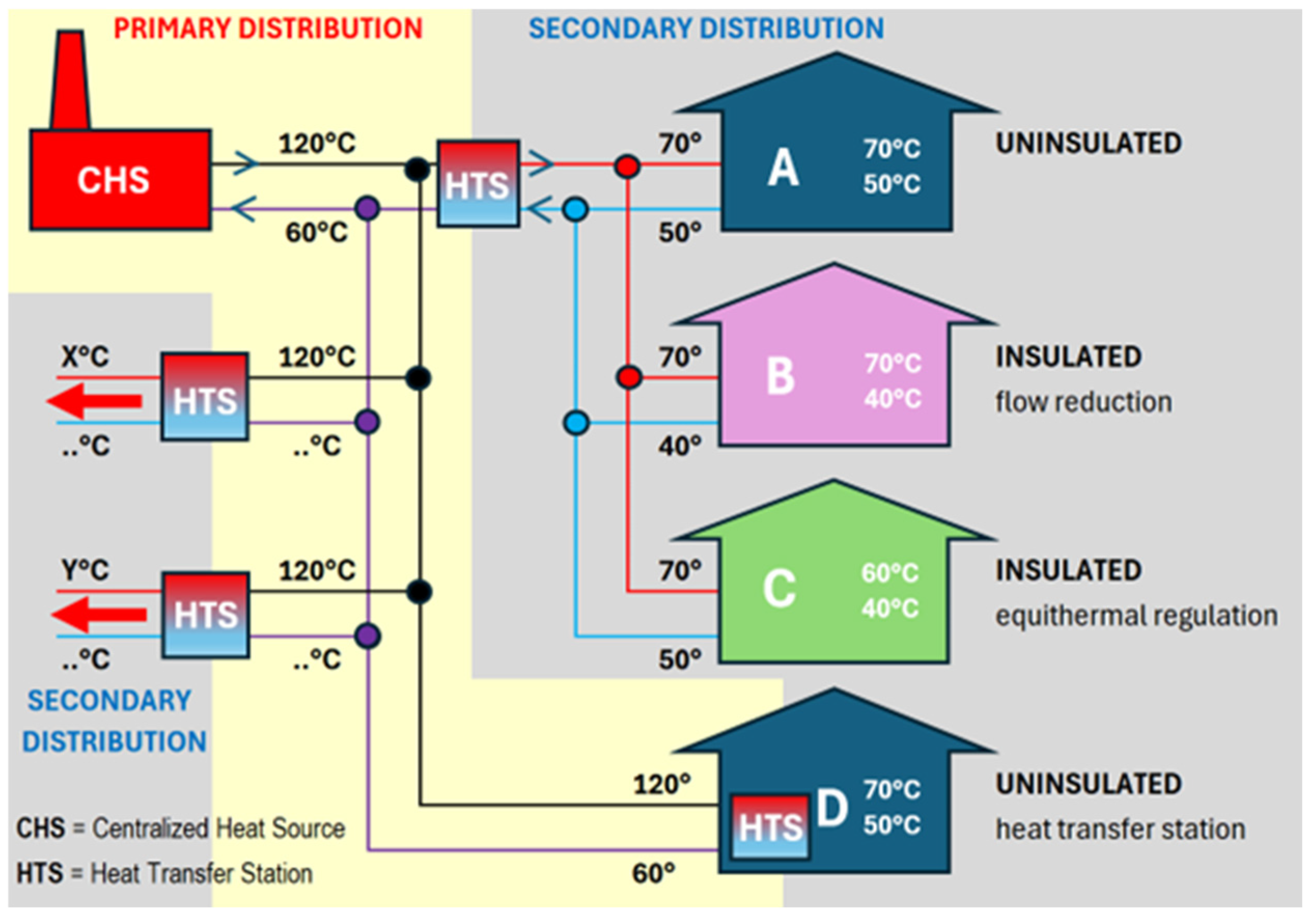
- 70/50 °C (high-temperature—non-insulated buildings)—representative of legacy heating systems with elevated distribution losses.
- (i)
- ΔT stability, as an indicator of hydraulic balance and exergy efficiency;
- (ii)
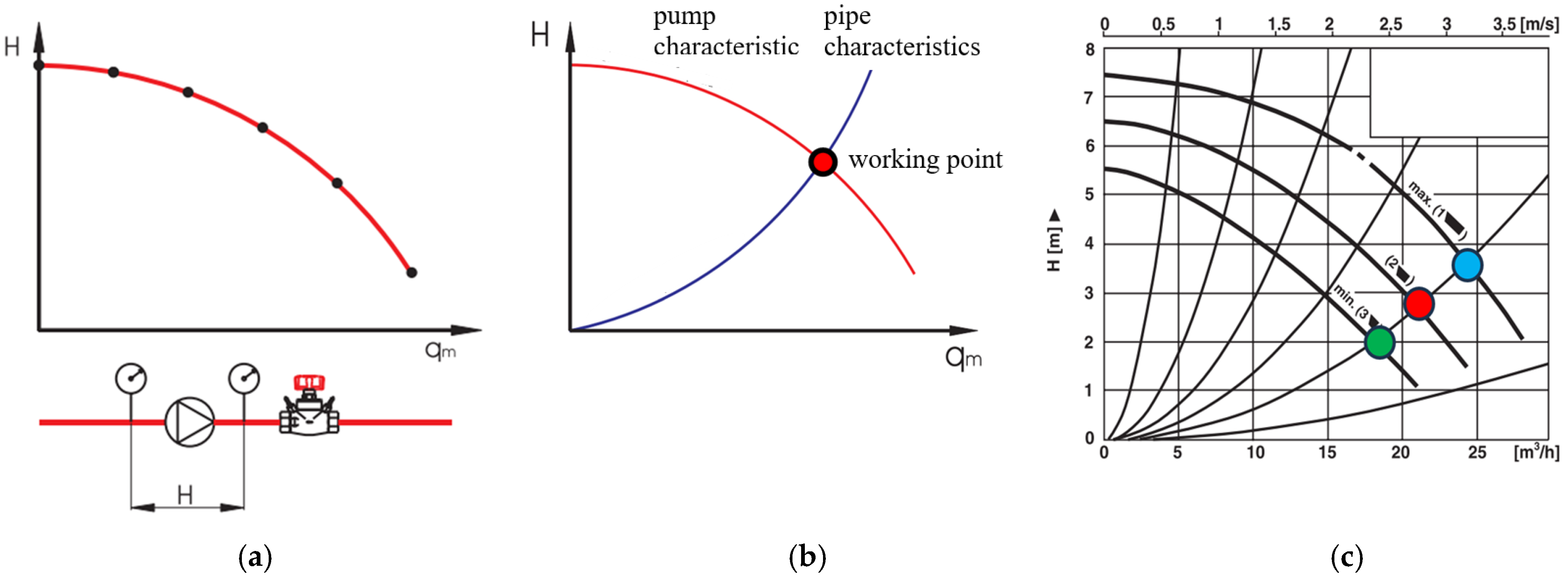
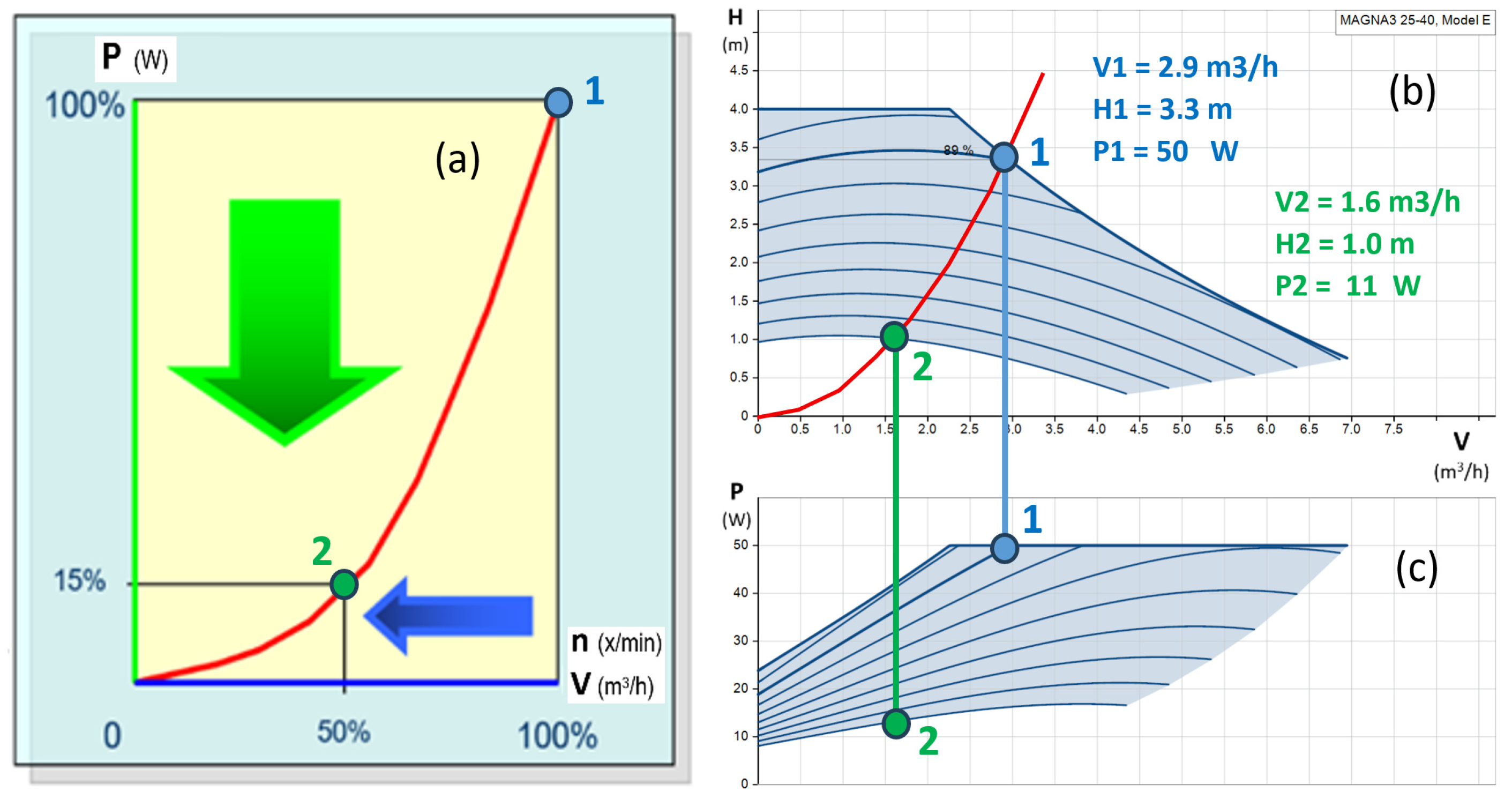
- pumping electricity consumption derived from pump and system curves;
- (iii)
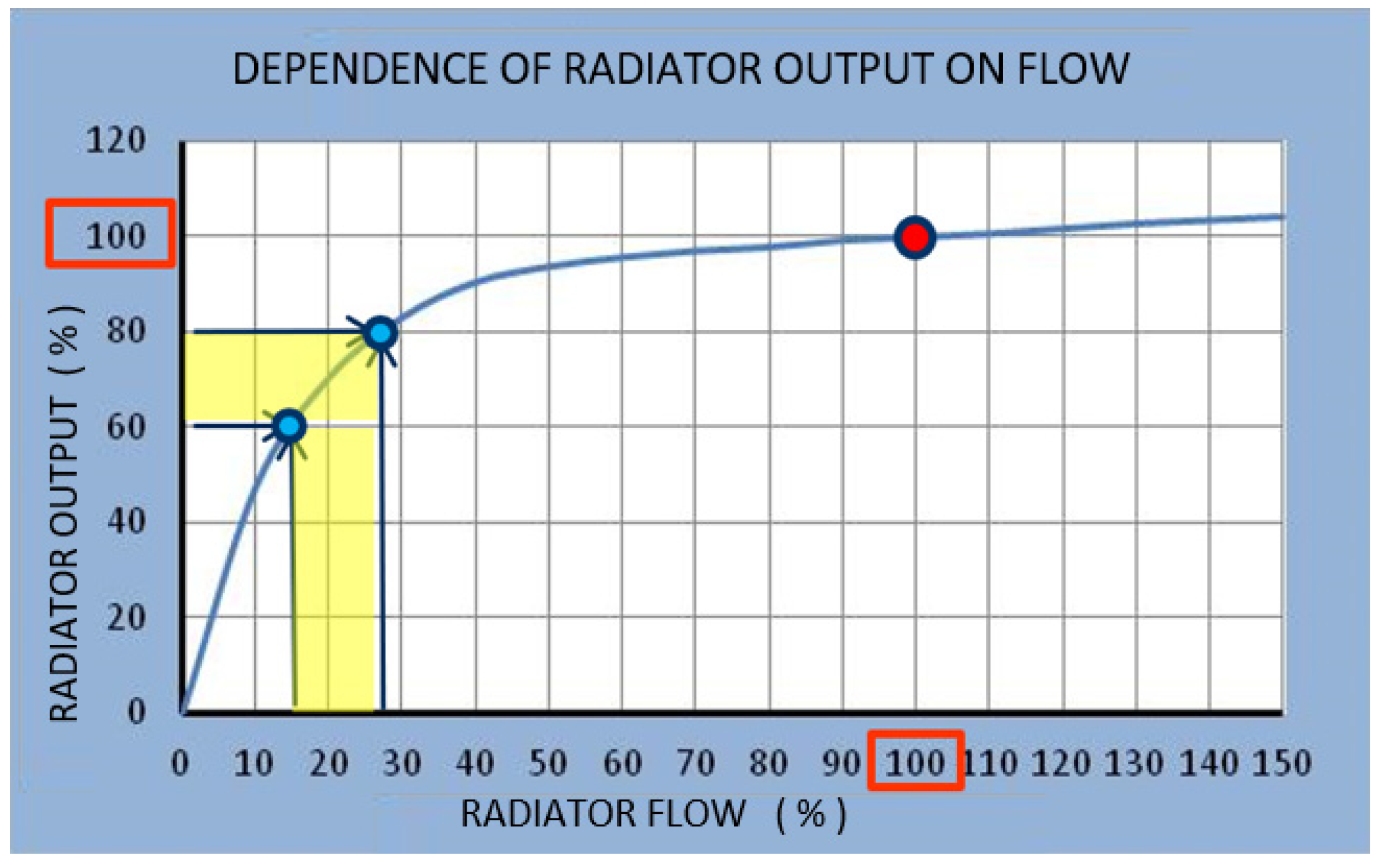
- heat-delivery efficiency as the ratio of useful to supplied heat;
- (iv)
- CO2 reduction potential, quantified for renewable integration scenarios.
2.3. Control Strategies
2.4. Simulation Framework
- Steady-state analysis of hydraulic balance under static and dynamic control.
- Parametric variation in ΔT (5–25 K) to evaluate impacts on pump electricity and thermal efficiency.
- Scenario testing across three temperature regimes (70/50 °C, 65/55 °C, 40/30 °C).
3. Results
3.1. Static Regulation
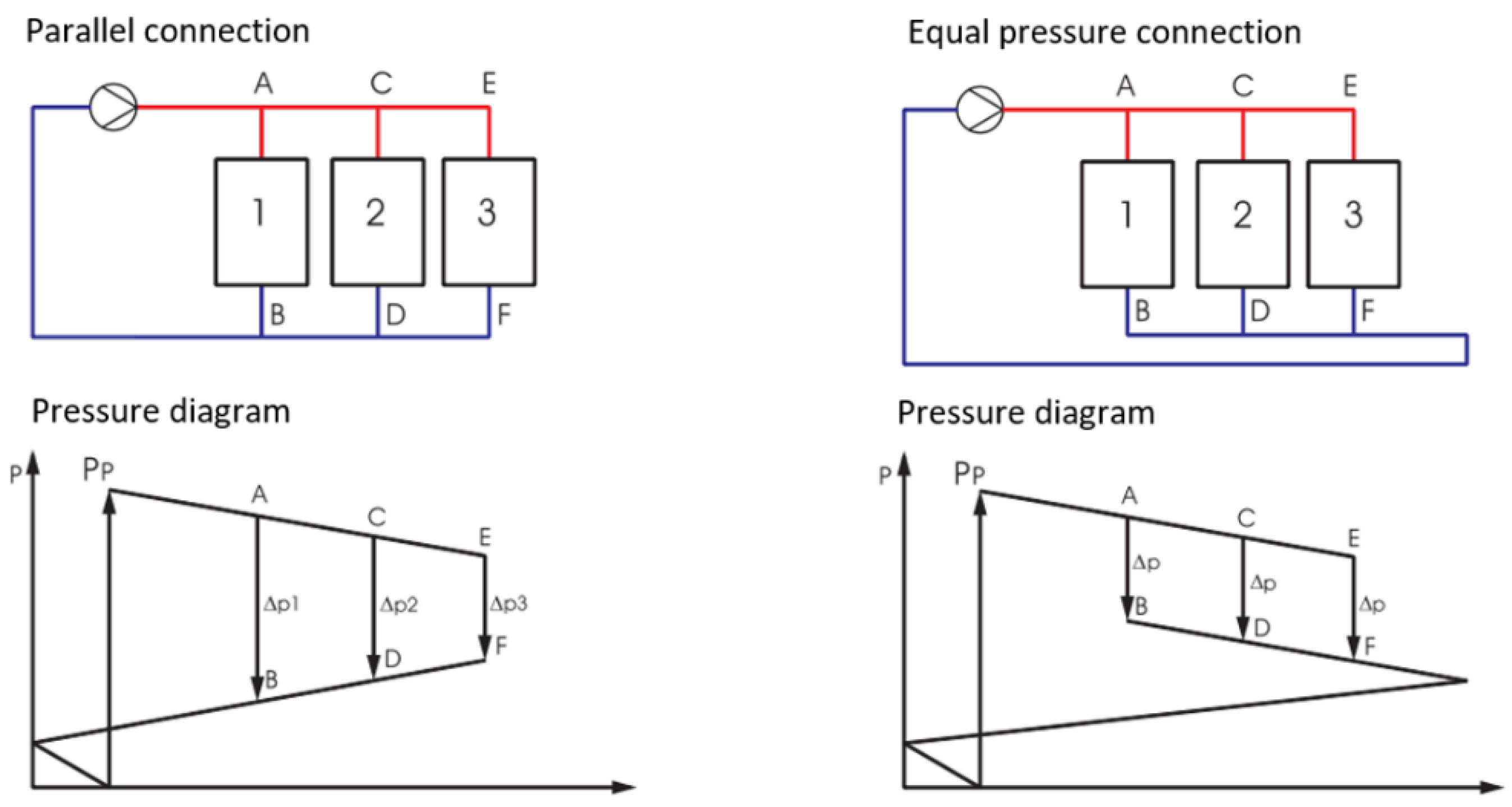
- Hydraulic balancing of the system
- -
- Are intended to ensure a uniform water flow through all branches and heating elements.
- -
- Balancing valves and presettable radiator valves are used. During the design process, it is necessary to maintain valve authority between 0.3 and 0.7.
- Each heating element requires a specific flow rate according to its thermal load.
- The flow rate is set based on calculations and manufacturer valve tables.
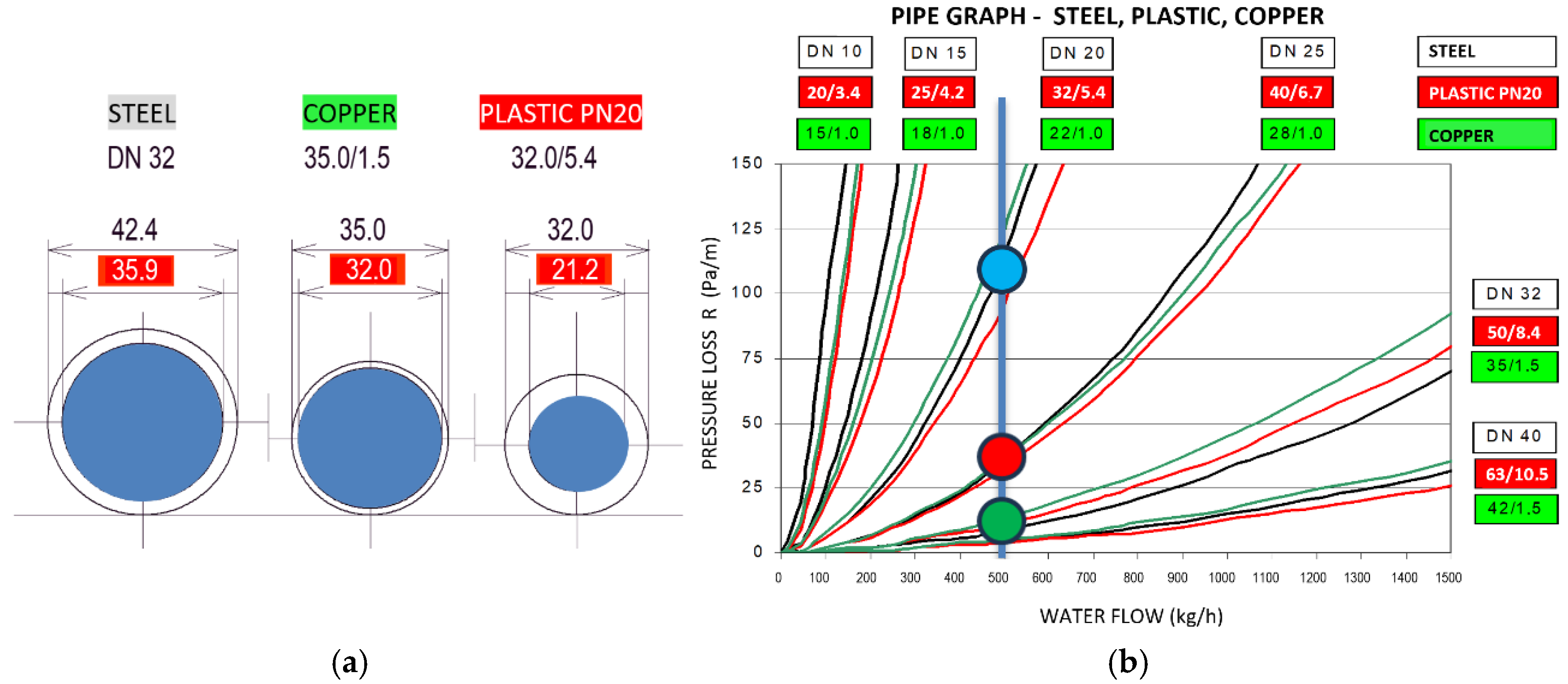
- The pipes must be properly dimensioned to avoid excessive pressure losses or noise.
- Pumps should be designed for optimal performance to ensure proper circulation.
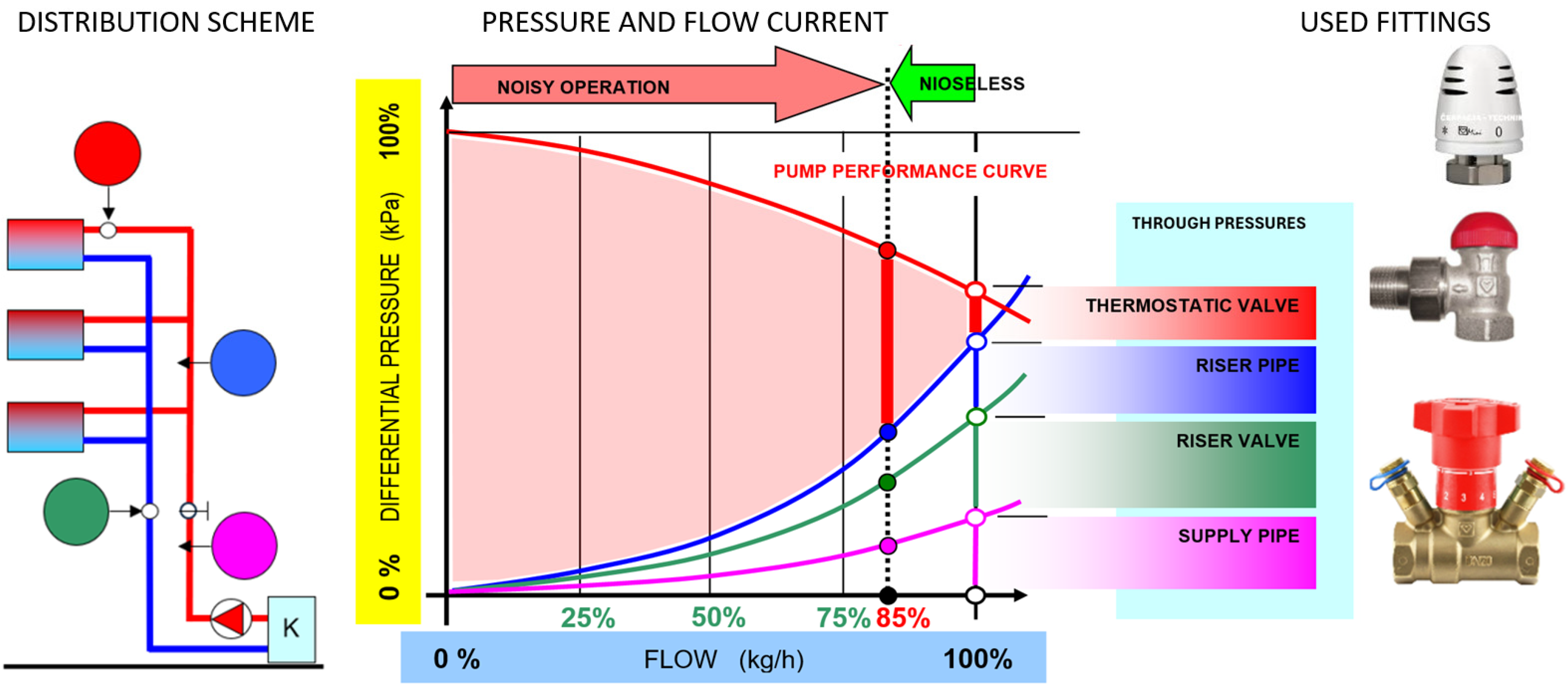
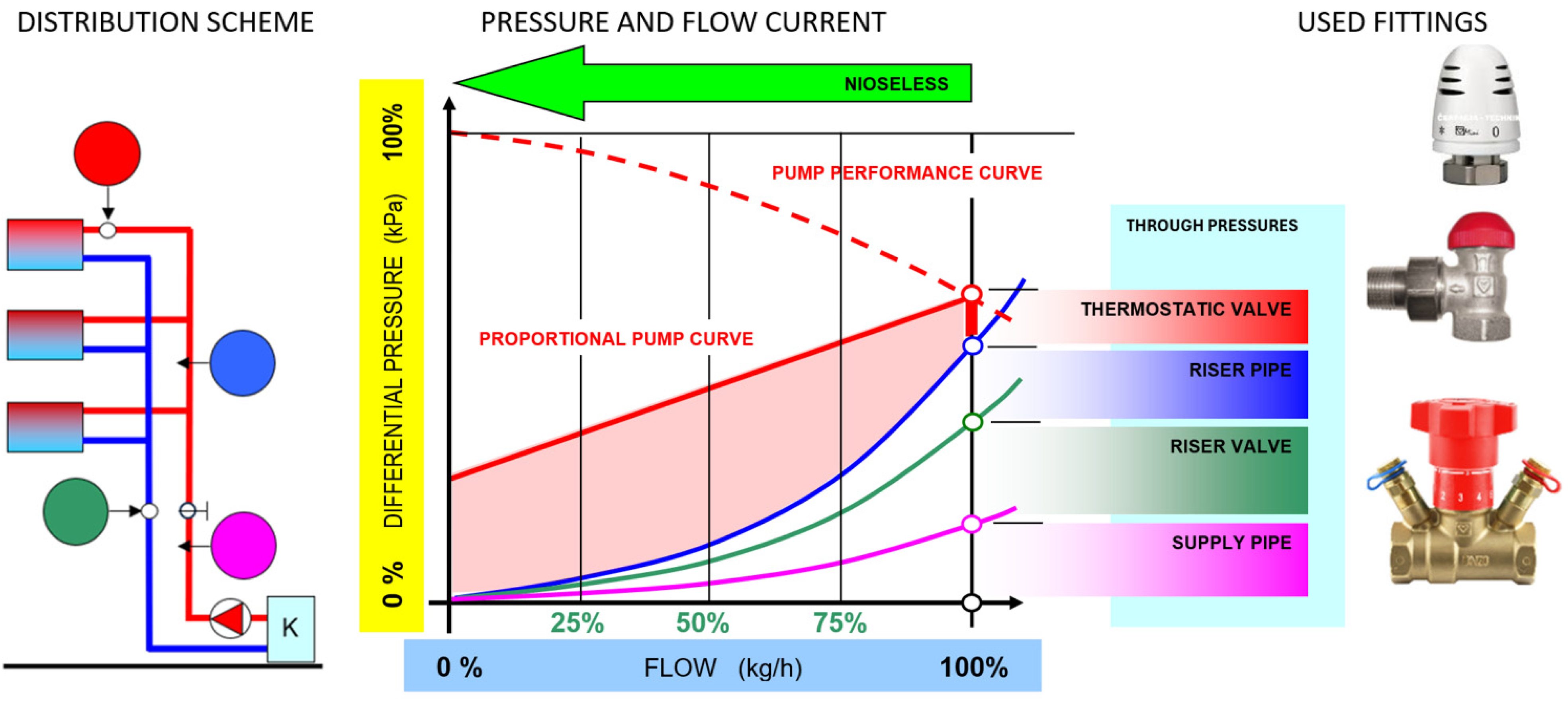
- Thermostatic valves are adjusted according to the required output of the heating element and the available pressure before the terminal unit.
- Static balancing valves are set to ensure hydraulic balance between branches/risers and to relieve thermostatic valves in their operation.
- Simplicity and reliability; it is easy to install and set up, with fewer electronic components that could fail.
- Lower investment costs compared to dynamic or intelligent control systems.
- Stable operation if parameters are properly adjusted and the system operates within a narrow working range.
- Lack of flexibility; it cannot adapt to significant changes in external conditions.
- Lower energy efficiency; potential occurrence of overheated or underheated zones.
- Requires manual adjustment when conditions change.
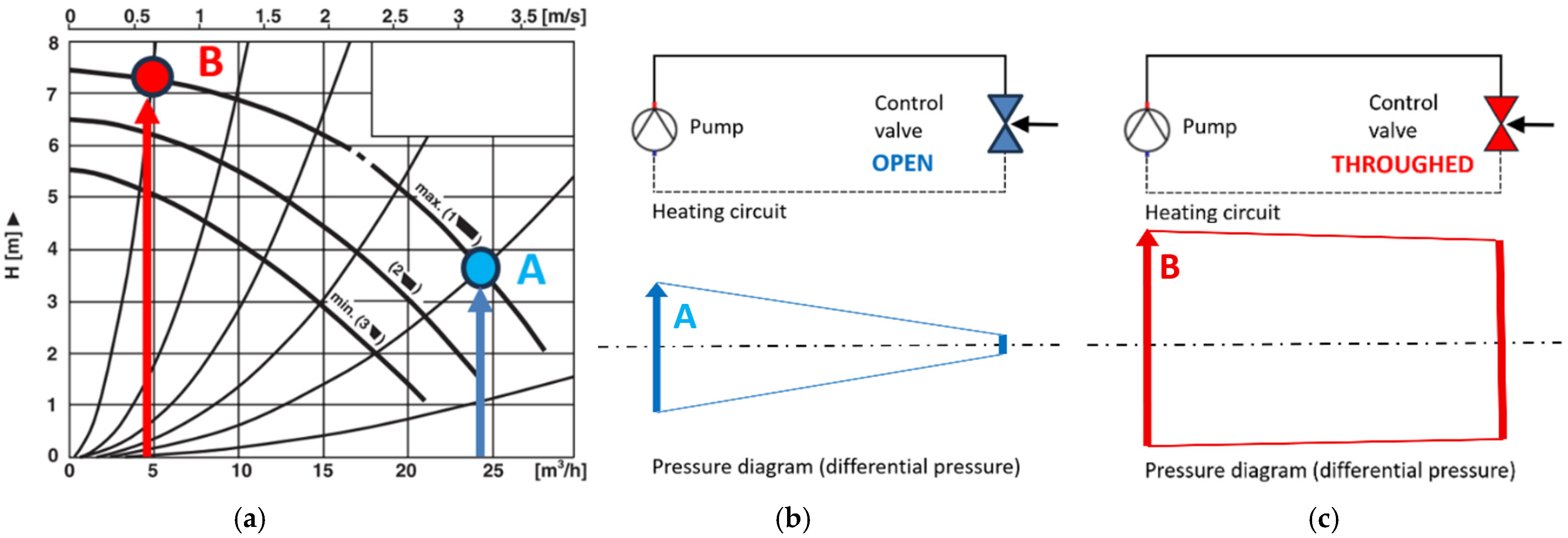
- When using a pump without a frequency converter, throttling results in wasted pumping energy.
3.2. Dynamic Regulation
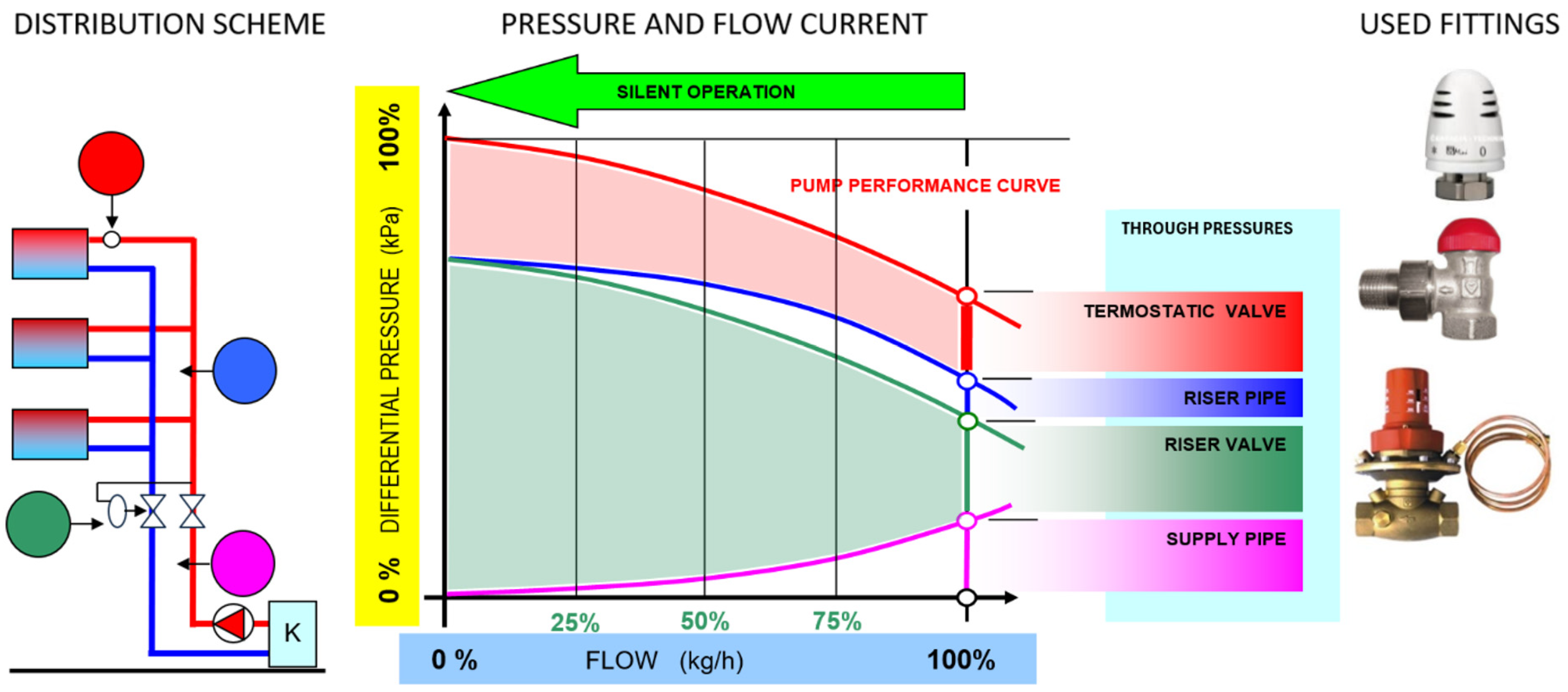
3.2.1. Dynamic Control Using Differential Pressure Regulators
3.2.2. Dynamic Control Using a Variable-Frequency-Drive Pump
- Energy efficiency: the system optimizes energy consumption by delivering only as much heat as is needed.
- Higher thermal comfort: the system adapts to outdoor temperature, indoor conditions, and user preferences.
- Automatic adaptation: it responds to temperature changes in real time, reducing temperature fluctuations.
- Higher investment costs.
- More complex installation and configuration.
- Possibility of technical failures.
- Dependence on electricity.
- Security risks associated with intelligent control.
- Need for maintenance and software updates.
- Complexity for less technically skilled users.
- When using a pump without a frequency converter, throttling leads to wasted pumping energy.
3.3. The Effect of Operating Temperature Regimes
3.4. When Problems Occur in the Hydraulics of Building Heating Systems
- -
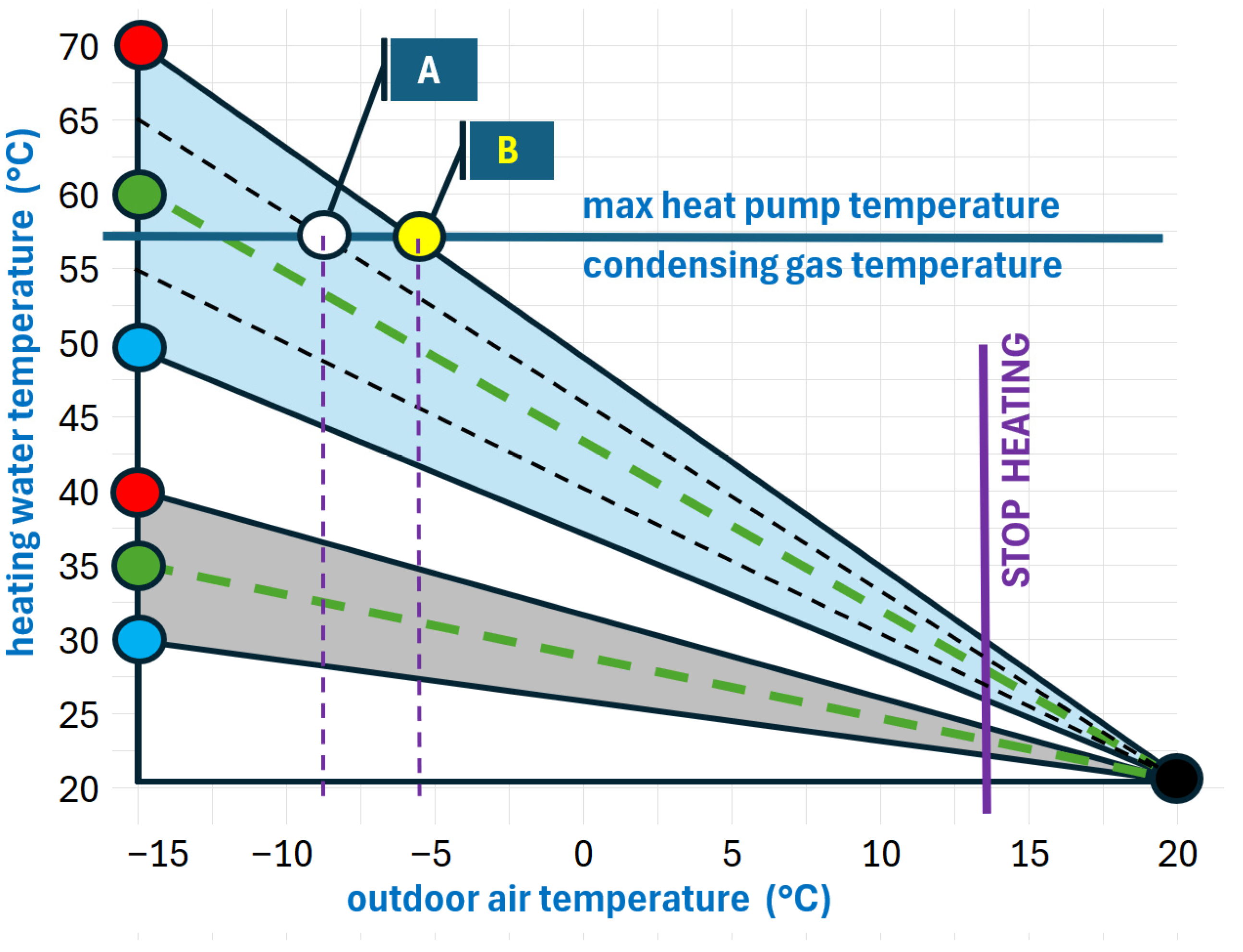
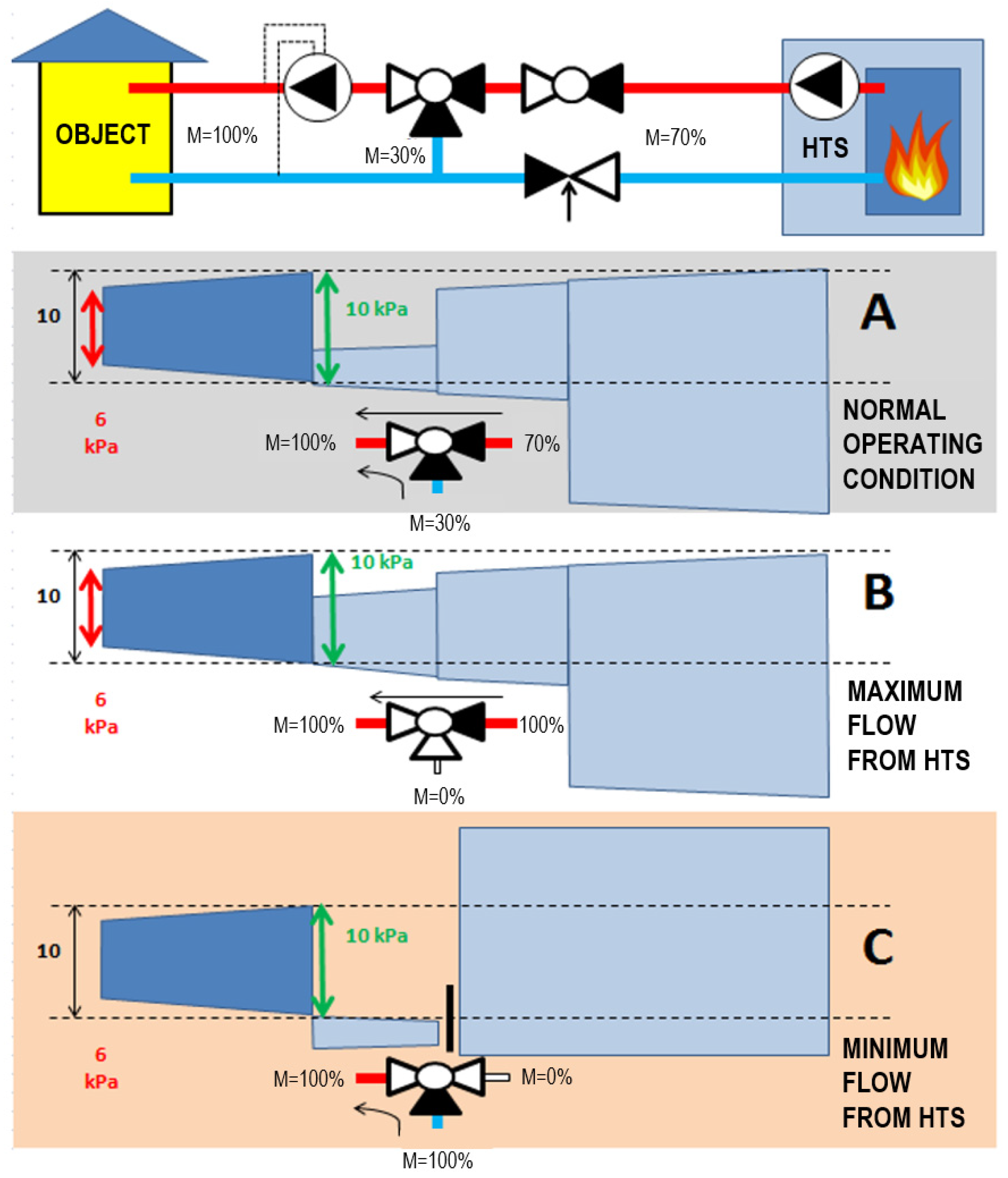
- “A”—normal operation,
- -
- “B”—extreme mode with maximum heat demand from the HTS,
- -
- “C”—mode without heat extraction from the HTS.
3.5. Thermal–Hydraulic Separation and Storage
- -
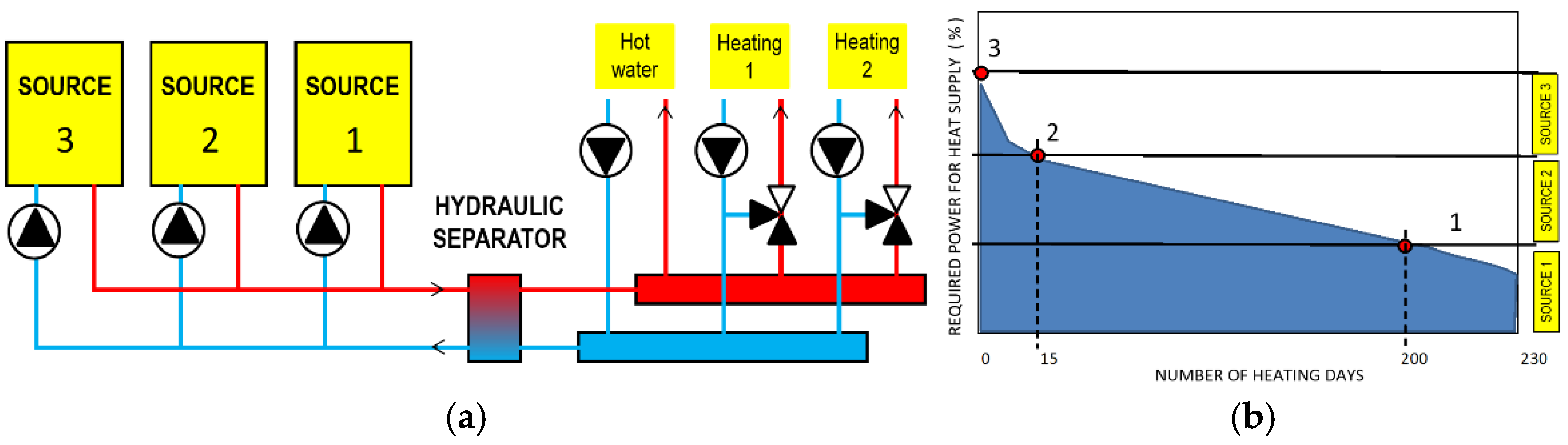
- Operation of the heat source with 1 boiler = approx. 30 days;
- -
- Operation of the heat source with 2 boilers = approx. 185 days;
- -
- Operation of the heat source with 3 boilers = approx. 15 days.
3.6. Energy and Emissions Reduction Potential
4. Discussion
4.1. Comparison with Previous Studies
4.2. Practical Implications and Policy Relevance
4.3. Limitations and Future Research
4.4. Policy and Sustainability Implications
5. Conclusions
- To compare static and dynamic control of heating systems in multiple variants and identify their operational advantages and limitations;
- To analyze the impact of temperature differences on network hydraulics, pumping energy, and the potential for integrating renewable energy sources;
- To examine weather-compensated control methods for multi-source systems and their connection to district heating networks.
Author Contributions
Funding
Institutional Review Board Statement
Informed Consent Statement
Data Availability Statement
Conflicts of Interest
Abbreviations
| CEE | Central and Eastern Europe |
| CHS | Centralized Heat Supply |
| CO2 | Carbon Dioxide |
| CRediT | Contributor Roles Taxonomy |
| ΔT | Temperature Differential (Supply–Return) |
| DHS | District Heating System(s) |
| DVSP | Distributed Variable-Speed Pump(s) |
| EU | European Union |
| HTS | Heat Transfer Station |
| HS | Hydraulic Separator |
| MPC | Model Predictive Control |
| RES | Renewable Energy Sources |
| SDG | Sustainable Development Goal |
| TRV | Thermostatic Radiator Valve |
| VFD | Variable-Frequency Drive |
| 4GDH | Fourth-Generation District Heating |
References
- Euroheat & Power. District Heating and Cooling in Europe 2022. Available online: https://www.euroheat.org (accessed on 1 September 2025).
- United Nations. Paris Agreement; United Nations Framework Convention on Climate Change (UNFCCC): Paris, France, 2015; Available online: https://unfccc.int/process-and-meetings/the-paris-agreement/the-paris-agreement (accessed on 4 November 2025).
- European Commission. Directive (EU) 2023/1791 of the European Parliament and of the Council on Energy Efficiency. Off. J. Eur. Union 2023, L 231, 1–111.
- European Commission. The European Green Deal. COM(2019) 640 Final. Brussels. 2019. Available online: https://eur-lex.europa.eu/legal-content/EN/TXT/?uri=CELEX:52019DC0640 (accessed on 22 August 2025).
- Lund, H.; Werner, S.; Wiltshire, R.; Svendsen, S.; Thorsen, J.E.; Hvelplund, F.; Mathiesen, B.V. 4th Generation District Heating (4GDH): Integrating Smart Thermal Grids into Future Sustainable Energy Systems. Energy 2014, 68, 1–11. [Google Scholar] [CrossRef]
- Werner, S. International Review of District Heating and Cooling. Energy 2017, 137, 617–631. [Google Scholar] [CrossRef]
- Connolly, D.; Lund, H.; Mathiesen, B.V.; Werner, S.; Möller, B.; Persson, U.; Boermans, T.; Trier, D.; Østergaard, P.A.; Nielsen, S. Heat Roadmap Europe: Combining District Heating with Heat Savings to Decarbonise the EU Energy System. Energy Policy 2014, 65, 475–489. [Google Scholar] [CrossRef]
- Persson, U.; Wiechers, E.; Möller, B.; Werner, S. Heat Roadmap Europe: Heat Distribution Costs. Energy 2019, 176, 604–622. [Google Scholar] [CrossRef]
- Averfalk, H.; Werner, S. Economic Benefits of Fourth Generation District Heating. Energy 2020, 193, 116727. [Google Scholar] [CrossRef]
- Sarbu, I.; Mirza, M.; Muntean, D. Integration of Renewable Energy Sources into Low-Temperature District Heating Systems: A Review. Energies 2022, 15, 6523. [Google Scholar] [CrossRef]
- Lund, H.; Østergaard, P.A.; Chang, M.; Werner, S.; Svendsen, S.; Sorknæs, P.; Thorsen, J.E.; Hvelplund, F.; Mortensen, B.O.G.; Mathiesen, B.V.; et al. The Status of 4th Generation District Heating: Research and Results. Energy 2018, 164, 147–159. [Google Scholar] [CrossRef]
- Housh, M.; Salomons, E. Energy-Efficient Local Control Strategies for Pumping Stations with Variable-Speed Pumps: A Practical Model-Based Approach. J. Clean. Prod. 2025, 498, 145131. [Google Scholar] [CrossRef]
- Gu, J.; Wang, J.; Qi, C.; Yu, X.; Sundén, B. Analysis of a Hybrid Control Scheme in the District Heating System with Distributed Variable Speed Pumps. Sustain. Cities Soc. 2019, 48, 101591. [Google Scholar] [CrossRef]
- Lie-Jensen, F.; Aannø, A.; Aleksandrova, E.; Westli, A.; Nielsen, M.; Komulainen, T. Model Predictive Control of District Heating System. In Proceedings of the 59th Conference on Simulation and Modelling (SIMS 59), Oslo, Norway, 26–28 September 2018; Linköping Electronic Conference Proceedings. Oslo Metropolitan University: Oslo, Norway, 2018; Volume 153, pp. 43–50. [Google Scholar] [CrossRef]
- Piller, M.; Toneatti, L. Thermal–Hydraulic Separators Unveiled. Case Stud. Therm. Eng. 2022, 38, 102364. [Google Scholar] [CrossRef]
- Friedrich, P.; Kuroptev, K.; Huynh, T.; Niessen, S. Stability Analysis and Mitigation of Thermo-Hydraulic Oscillations in Multi-Supplier District Heating Systems. Energies 2025, 18, 1126. [Google Scholar] [CrossRef]
- Jeandaux, C.; Videau, J.-B.; Prieur-Vernat, A. Life Cycle Assessment of District Heating Systems in Europe: Case Study and Recommendations. Sustainability 2021, 13, 11256. [Google Scholar] [CrossRef]
- Rosén, T.; Ödlund, L. Active Management of Heat Customers Towards Lower District Heating Return Water Temperature. Energies 2019, 12, 1863. [Google Scholar] [CrossRef]
- Rosen, M.A. Chapter 4—Exergy analysis. In Design and Performance Optimization of Renewable Energy Systems; Rosen, M.A., El Assad, M., El Haj Assad, M., Eds.; Academic Press: San Diego, CA, USA, 2021; pp. 43–60. [Google Scholar] [CrossRef]
- United Nations. Transforming Our World: The 2030 Agenda for Sustainable Development; United Nations: New York, NY, USA, 2015; Available online: https://sdgs.un.org/goals (accessed on 4 November 2025).
- Zhang, L.; Gudmundsson, O.; Thorsen, J.E.; Li, H.; Svendsen, S. Method for Reducing Excess Heat Supply in Typical Chinese District Heating Systems by Achieving Hydraulic Balance and Improving Indoor Temperature Control at the Building Level. Energy 2016, 107, 431–442. [Google Scholar] [CrossRef]
- Ashfaq, A.; Ianakiev, A. Investigation of Hydraulic Imbalance for Converting Existing Boiler-Based Buildings to Low-Temperature District Heating. Energy 2018, 160, 200–212. [Google Scholar] [CrossRef]
- Sartor, K.; Dewalef, P. Experimental Validation of Heat Transport Modelling in District Heating Networks. Energy 2017, 137, 961–968. [Google Scholar] [CrossRef]
- Jansen, J.; Jorissen, F.; Helsen, L. Optimal control of a fourth generation district heating network using an integrated non-linear model predictive controller. Appl. Therm. Eng. 2023, 223, 120030. [Google Scholar] [CrossRef]
- Frison, L.; Kollmar, M.; Oliva, A.; Bürger, A.; Diehl, M. Model predictive control of bidirectional heat transfer in prosumer-based solar district heating networks. Appl. Energy 2024, 358, 122617. [Google Scholar] [CrossRef]
- Wei, Z.; Tien, P.W.; Calautit, J.; Darkwa, J.; Worall, M.; Boukhanouf, R. Investigation of a model predictive control (MPC) strategy for seasonal thermochemical energy storage systems in district heating networks. Appl. Energy 2024, 376 Pt A, 124164. [Google Scholar] [CrossRef]
- Quaggiotto, D.; Vivian, J.; Zarrella, A. Management of a district heating network using model predictive control with and without thermal storage. Optim. Eng. 2021, 22, 1897–1919. [Google Scholar] [CrossRef]
- Wang, H.; Wang, H.; Zhou, H.; Zhu, T. Optimization modeling for smart operation of multi-source district heating with distributed variable-speed pumps. Energy 2017, 138, 1247–1262. [Google Scholar] [CrossRef]
- Dalla Rosa, A.; Christensen, J.E. Low-Energy District Heating in Energy-Efficient Building Areas. Energy 2011, 36, 6890–6899. [Google Scholar] [CrossRef]
- Gadd, H.; Werner, S. Achieving low return temperatures from district heating substations. Appl. Energy 2014, 136, 59–67. [Google Scholar] [CrossRef]
- Yang, X.; Li, H.; Svendsen, S. Decentralized substations for low-temperature district heating with no Legionella risk, and low return temperatures. Energy 2016, 110, 65–74. [Google Scholar] [CrossRef]
- Yang, X.; Li, H.; Svendsen, S. Evaluations of different domestic hot water preparing methods with ultra-low-temperature district heating. Energy 2016, 109, 248–259. [Google Scholar] [CrossRef]
- Buffa, S.; Cozzini, M.; D’Antoni, M.; Baratieri, M.; Fedrizzi, R. 5th Generation District Heating and Cooling Systems: A Review of Existing Cases in Europe. Renew. Sustain. Energy Rev. 2019, 104, 504–522. [Google Scholar] [CrossRef]
- Boesten, S.; Ivens, W.; Dekker, S.C.; Eijdems, H. 5GDHC Systems as a Solution for Renewable Urban Thermal Energy Supply. Adv. Geosci. 2019, 49, 129–136. [Google Scholar] [CrossRef]
- Dang, L.M.; Nguyen, L.Q.; Nam, J.; Nguyen, T.N.; Lee, S.; Song, H.-K.; Moon, H. Fifth Generation District Heating and Cooling: A Comprehensive Survey. Energy Rep. 2024, 11, 1723–1741. [Google Scholar] [CrossRef]
- STN EN 12828:2013; Vykurovacie Systémy v Budovách—Navrhovanie Vodných Vykurovacích Systémov (Heating Systems in Buildings—Design for Water-Based Heating Systems). Slovenský Ústav Technickej Normalizácie: Bratislava, Slovakia, 2013.
- EN ISO 52000-1:2017; Energy Performance of Buildings—Overarching EPB Assessment—Part 1: General Framework and Procedures. ISO: Geneva, Switzerland; CEN: Brussels, Belgium, 2017.
- EN 15316-3:2017; Energy Performance of Buildings—Distribution Systems (Space Heating/Cooling, Domestic Hot Water). CEN: Brussels, Belgium, 2017.
- STN EN 14336:2005; Vykurovacie Systémy v Budovách—Skúšanie Vykurovacích Systémov (Heating Systems in Buildings—Installation and Commissioning of Water-Based Heating Systems). Slovenský Ústav Technickej Normalizácie: Bratislava, Slovakia, 2005.
- Dalla Rosa, A.; Li, H.; Svendsen, S. Method for optimal design of pipes for low-energy district heating, with focus on heat losses. Energy 2011, 36, 2407–2418. [Google Scholar] [CrossRef]
- European Commission, Joint Research Centre. PVGIS Solar Radiation Database. Available online: https://re.jrc.ec.europa.eu/pvg_tools/en/ (accessed on 1 September 2025).
- Słyś, D.; Stec, A.; Bednarz, K.; Ogarek, P.; Zeleňáková, M. Managing and Optimizing Hybrid Distributed Energy Systems: A Bibliometric Mapping of Current Knowledge and Strategies. Energies 2025, 18, 2497. [Google Scholar] [CrossRef]
- Mučková, V.; Kalús, D.; Koudelková, D.; Kurčová, M.; Straková, Z.; Sokol, M.; Ingeli, R.; Šťastný, P. Analysis of the Dynamic Thermal Barrier in Building Envelopes. Coatings 2023, 13, 648. [Google Scholar] [CrossRef]
- Lis, A. Renewable energy sources and rationalisation of energy consumption in buildings as a way to reduce environmental pollution. Vytap. Vetr. Instal. 2020, 29, 332–339. [Google Scholar]
- Voznyak, O.; Spodyniuk, N.; Antypov, I.; Dudkiewicz, E.; Kasynets, M.; Savchenko, O.; Tarasenko, S. Efficiency Improvement of Eco-Friendly Solar Heat Supply System as a Building Coating. Sustainability 2023, 15, 2831. [Google Scholar] [CrossRef]
- Schojda, D.; Scheipers, J.; Roes, J.; Hoster, H. Modelling and Transient Simulation of District Heating Networks Based on a Control Theory Approach. Energies 2025, 18, 658. [Google Scholar] [CrossRef]
- Chicherin, S. Conversion to Variable Flow Rate—Advanced Control of a District Heating System with a Focus on Operational Data. Energies 2025, 18, 2772. [Google Scholar] [CrossRef]
- Kuś, J.; Kowalski, K.; Grochowalski, A. Validation Strategies for District Heating Network Models. Energies 2025, 18, 5012. [Google Scholar] [CrossRef]
- Fernandes, J.; Remédios, S.; Gérard, F.; Bačan, A.; Stroleny, M.; Drosou, V.; Christodoulaki, R. The Decarbonisation of Heating and Cooling Following EU Directives. Energies 2025, 18, 3432. [Google Scholar] [CrossRef]
- Kampik, M.; Konopka, K.; Gonscz, D.; Domański, W. Directions of the Energy Transition in District Heating: Case Study of Poland. Energies 2025, 18, 3771. [Google Scholar] [CrossRef]



| OBJECTS | PRIMARY | SECONDARY | OBJECT | HYDRAULIC | EQUITHERMAL | HEATING CHARACTERISTICS AND OBJECT REGULATIONS | ||||
|---|---|---|---|---|---|---|---|---|---|---|
| Labeling | Insultation | T1 °C | T2 °C | T1 °C | T2 °C | T1 °C | T2 °C | OVERREGULATION | REGULATION | |
| A | 70 | 50 | 70 | 50 | MOST UNFAVORABLE object determining parameters HTS | |||||
| B | Yes | 70 | 40 | 70 | 40 | Yes | HYDRAULIC REGULATION BY FLOW REDUCTION | |||
| C | Yes | 70 | 50 | 60 | 40 | Yes | TEMPERATURE REDUCTION WITH EQUITERMIC REGULATIONS | |||
| D | 120 | 60 | 70 | 50 | Yes | OWN EXCHANGER STATION own parameters | ||||
| Operating Regime | Regulation Type | Pump Energy Use | ΔT Stability | Delivery Efficiency | CO2 Reduction Potential |
|---|---|---|---|---|---|
| 70/50 °C | Static | 100% (baseline) | 5–8 K fluctuation | ~82% | – |
| Dynamic | −20 to −25% | ±2 K | ~88–89% (+6–7%) | up to 15% | |
| 65/55 °C | Static | 100% (baseline) | 5–7 K fluctuation | ~84% | – |
| Dynamic | −25 to −30% | ±2 K | ~90–91% (+7–8%) | up to 25% | |
| 40/30 °C | Static | 100% (baseline) | 4–6 K fluctuation | ~86% | – |
| Dynamic | −30 to −38% | ±1–2 K | ~96–97% (+10–11%) | up to 77% |
Disclaimer/Publisher’s Note: The statements, opinions and data contained in all publications are solely those of the individual author(s) and contributor(s) and not of MDPI and/or the editor(s). MDPI and/or the editor(s) disclaim responsibility for any injury to people or property resulting from any ideas, methods, instructions or products referred to in the content. |
© 2025 by the authors. Licensee MDPI, Basel, Switzerland. This article is an open access article distributed under the terms and conditions of the Creative Commons Attribution (CC BY) license (https://creativecommons.org/licenses/by/4.0/).
Share and Cite
Vranay, F.; Kaposztasova, D.; Vranayova, Z. Dynamic Regulation and Renewable Integration for Low-Carbon District Heating Networks. Sustainability 2025, 17, 10713. https://doi.org/10.3390/su172310713
Vranay F, Kaposztasova D, Vranayova Z. Dynamic Regulation and Renewable Integration for Low-Carbon District Heating Networks. Sustainability. 2025; 17(23):10713. https://doi.org/10.3390/su172310713
Chicago/Turabian StyleVranay, Frantisek, Daniela Kaposztasova, and Zuzana Vranayova. 2025. "Dynamic Regulation and Renewable Integration for Low-Carbon District Heating Networks" Sustainability 17, no. 23: 10713. https://doi.org/10.3390/su172310713
APA StyleVranay, F., Kaposztasova, D., & Vranayova, Z. (2025). Dynamic Regulation and Renewable Integration for Low-Carbon District Heating Networks. Sustainability, 17(23), 10713. https://doi.org/10.3390/su172310713