Article

Optimization of Start-Extraction Time for Coalbed Methane Well in Mining Area Using Fluid–Solid Coupling Numerical Simulation


1
Key Laboratory of Unconventional Natural Gas Evaluation and Development in Complex Tectonic Areas, Ministry of Natural Resources, Guiyang 550009, China
2
Guizhou Engineering Research Institute of Oil & Gas Exploration and Development, Guiyang 550009, China
3
School of Mineral Resource and Geoscience, China University of Mining and Technology, Xuzhou 221116, China
4
College of Information Science and Engineering, Ocean University of China, Qingdao 266100, China
5
Carbon Neutrality Institute, China University of Mining and Technology, Xuzhou 221008, China
6
Guizhou Coalbed Methane and Shale Gas Engineering Technology Research Center, Guiyang 550009, China
*
Author to whom correspondence should be addressed.
Sustainability 2025, 17(23), 10712; https://doi.org/10.3390/su172310712 (registering DOI)
Submission received: 30 October 2025 / Revised: 25 November 2025 / Accepted: 27 November 2025 / Published: 29 November 2025
(This article belongs to the Section Resources and Sustainable Utilization)

Abstract

Optimizing the start-extraction time for coalbed methane (CBM) wells in mining areas remains challenging. This is due to the limited understanding of mining-induced mechanical changes and fluid migration in protected seams, which restricts the development of clean fossil energy. To address this, a geological-engineering model is constructed to investigate the mining-induced zonal evolution of stress, strain, permeability, and gas migration in protected seams, with the goal of optimizing the start-extraction time. The results show that gas production is controlled by the mechanical properties and gas pressure of protected seams near the well. Initially, these seams experience prolonged elastic strain. Plastic compressive strain develops at close-distance protected seams only when the coalface advances to within 5 m of them. Subsequently, rapid stress relief and complex stress directions lead to continuous plastic shear and expansion strains. As the distance from the mining seam increases, the plastic strains delay and diminish, reverting to elastic strain. These transitions collectively characterize the dynamic development of five distinct permeability regimes. Within permeability-reduced zones, an enhanced gas pressure gradient mitigates production declines. As the start-extraction time is progressively delayed, post-initiation gas production manifests in four phases: gradual decline, slow rebound, rapid increase, and surge. The optimal start-extraction time aligns with the rapid increase phase, when the coalface reaches the well, shortening extraction by at least 5.75 days and reducing electricity consumption by more than 2.07 × 10⁴ kWh in the study area. This research provides practical solutions for methane emission reduction and sustainable CBM development in mining areas.

1. Introduction

In China, coal seams are typically abundant in methane, with approximately 90% of this methane adsorbed within the pore system [1,2,3]. Coal mining activities cause stress release in both the mining seam (known as the protective seam) and the adjacent coal seams (referred to as the protected seams) [4], thereby promoting the desorption and flow of methane from these coal seams [5,6,7]. Drilling coalbed methane (CBM) wells to extract this desorbed methane enables efficient CBM production and safe mining [8,9]. In the mining area of the Lianghuai and Jincheng Coal Fields in China, significant gas production is achieved through the successful placement and management of CBM wells [10,11,12].
From the perspective of deformation and damage, the overburden is divided into caving, fracture and subsidence zones [13,14]. Based on the stress state, it includes stress concentration, relief, and recovery zones [15,16,17]. During the mining process, the relative and absolute positions of these zones change dynamically, leading to the zonal evolution of permeability and methane flow in protected seams [18]. The development of the plastic zone significantly influences gas transport, and stress concentration areas pose a higher risk of gas outbursts [19]. Mining-induced fractures reduce the length of the protected seam underground boreholes in protected seams by 0.1161 m/t and shorten the extraction time by 13.5 days [20,21]. Additionally, the extraction from boreholes in protected seams could be 8.1 times higher than undisturbed state [22], with gas content potentially as low as 6 m3/t [23]. Current research primarily focuses on the CBM extraction using underground boreholes within mining disturbance zones. However, a notable gap remains in research on the application of CBM wells.
In coal mining areas, CBM well extraction efficiency is affected by the complicated strata movement and fluid migration [24,25]. Consequently, accurately determining the effective zone for CBM extraction becomes challenging [22,26]. Gas production undergoes a rapid surge as the coalface advances past the CBM well [27]. However, researchers do not know exactly when the high production begins. Premature extraction consumes more electricity without significantly increasing total gas production [28]. Delayed extraction leads to a surge in the gas pressure gradient within protected seams, triggering a speed-sensitive effect [29]. Therefore, there is a critical need to determine the optimal start-extraction time for CBM wells using multi-phase, multi-field coupled numerical simulations.
In this study, the 221015 Coalface of Shanjiaoshu Coal Mine serves as the simulation object. A geological-engineering model for CBM extraction of stress-relief gas in mining operations is established, providing a basis for analyzing the dynamic response characteristics of stress, strain, and permeability in protected seams, as well as the production performance of CBM wells. Additionally, the gas production mechanism is clarified, and the optimal start-extraction time is determined.

2. Modeling and Simulation Schemes

2.1. Geologic Background of the Study Area

The Shanjiaoshu Coal Mine is situated in the Liupanshui Coalfield, Guizhou Province, China (Figure 1). The coal-bearing strata exhibit dips ranging from 3° to 6°. The mine predominantly contains primary structural coal, with a series of workable seams (i.e., 1#, 3#, 4#, 6#, 8#, 9#, and 10#). These coal seams share similar tectonic-sedimentary background and physicochemical properties, with gas contents ranging from 9.84 and 14.56 m3/t. The non-coal strata consist of siltstone, muddy siltstone, and fine sandstone. The operational coalface at the Shanjiaoshu Coal Mine is No. 221015, which targets the 10# coal seam at a depth of 570 m and employs a mining height of 1.5 m. The coalface has a strike length of 800 m and a dip length of 200 m.

2.2. Governing Equations

2.2.1. Mechanical Constitutive Relationship of Coal

The governing equation of mechanical constitutive is stated as follows:
G u i , i j + G 1 2 v u j j i α f p j j , i α m p p m , i K ε b , i S δ i j + F i = 0
The instability of coal can be described by coupling Mohr–Coulomb criterion with Drucker–Prager criterion, which can be expressed as follows [30]:
F = sin φ 3 3 + sin 2 φ I l + 3 C cos φ 3 3 + sin 2 φ J 2
The strain-softening property of coal is stated as follows [19,31]:
C = C 0 C 0 C C γ p γ p , γ p p < γ p C r , γ p γ p
γ p = 2 / 3 ε l p ε l p + ε 2 p ε 2 p + ε 3 p ε 3 p

2.2.2. Gas Quantity Equation of Coal

In coal fractures, gas can be regarded as free state, and its quantity is stated as follows:
m f = ϕ f M R T p f
In coal matrix, the Langmuir model states that the gas mass is as follows:
m m = ϕ m M R T p m + V L p m P L + p m M V s t d ρ

2.2.3. Gas Transportation Equation of Coal

According to Fick diffusion law, the gas transportation involving the coal matrix and fractures is formulated as follows:
q m = D ϑ M C R T p m p f
The gas diffusion primarily drives mass variation in coal matrix. The equation of the gas conservation principle of the coal matrix is stated as follows:
m m t α + M τ R T p m p f = 0
Bring Equation (8) into Equation (6), and the gas diffusion equation is stated as follows:
p m t = p m p f τ V M p 0 P L + p m 2 ρ b R T V L p 0 + R T ϕ m P L + p m 2
The seepage of gas within fractures belongs to the Darcy flow, and the equation governing the conservation of gas quantity in these fractures is formulated as follows:
m f t Δ M R T p f k μ Δ p f = 1 ϕ f q m
Bring Equations (5) and (7) into Equation (10). Equation (10) is stated as follows:
ϕ f p f t + p f ϕ f t k μ p f Δ p f 1 ϕ f p m p f τ = 0

2.2.4. Evolution Model of Coal Porosity and Permeability

Permeability evolves in stages: Below the elastic peak, the coal undergoes elastic strain. Above this peak, it enters strain softening, during which fractures form, merge, and expand, causing a sudden increase in permeability. When strained further to residual levels, permeability experiences minimal change due to severe coal damage. The permeability is stated as follows [31]:
k = 1 + γ p γ p * ξ exp b σ ( Δ Θ ) k 0 , 0 γ p < γ p * ( 1 + ξ ) exp b σ ( Δ Θ ) k 0 , γ p γ p *
The volume stress is associated with the mean principal stress, gas pressure and adsorption-induced strain. Equation (13) can be further formulated as follows [32,33]:
k k 0 = 1 + γ p γ p * ξ exp 3 C f Δ σ ¯ α f Δ p f α m Δ p m + E 3 ( 1 2 v ) 1 f m Δ ε b S , 0 γ p γ p * ( 1 + ξ ) exp 3 C f Δ σ ¯ α f Δ p f α m Δ p m + E 3 ( 1 2 v ) 1 f m Δ ε b S , γ p > γ p *
Bring the equation of cube law into Equation (13), and the ϕf is stated as follows:
ϕ f ϕ f 0 = 1 + γ p γ p * ξ exp C f Δ σ ¯ α f Δ p f α m Δ p m + E 3 ( 1 2 v ) 1 f m Δ ε b S , 0 γ p γ p * ( 1 + ξ ) exp C f Δ σ ¯ α f Δ p f α m Δ p m + E 3 ( 1 2 v ) 1 f m Δ ε b S , γ p > γ p *

2.3. Geological-Engineering Model of the Study Area

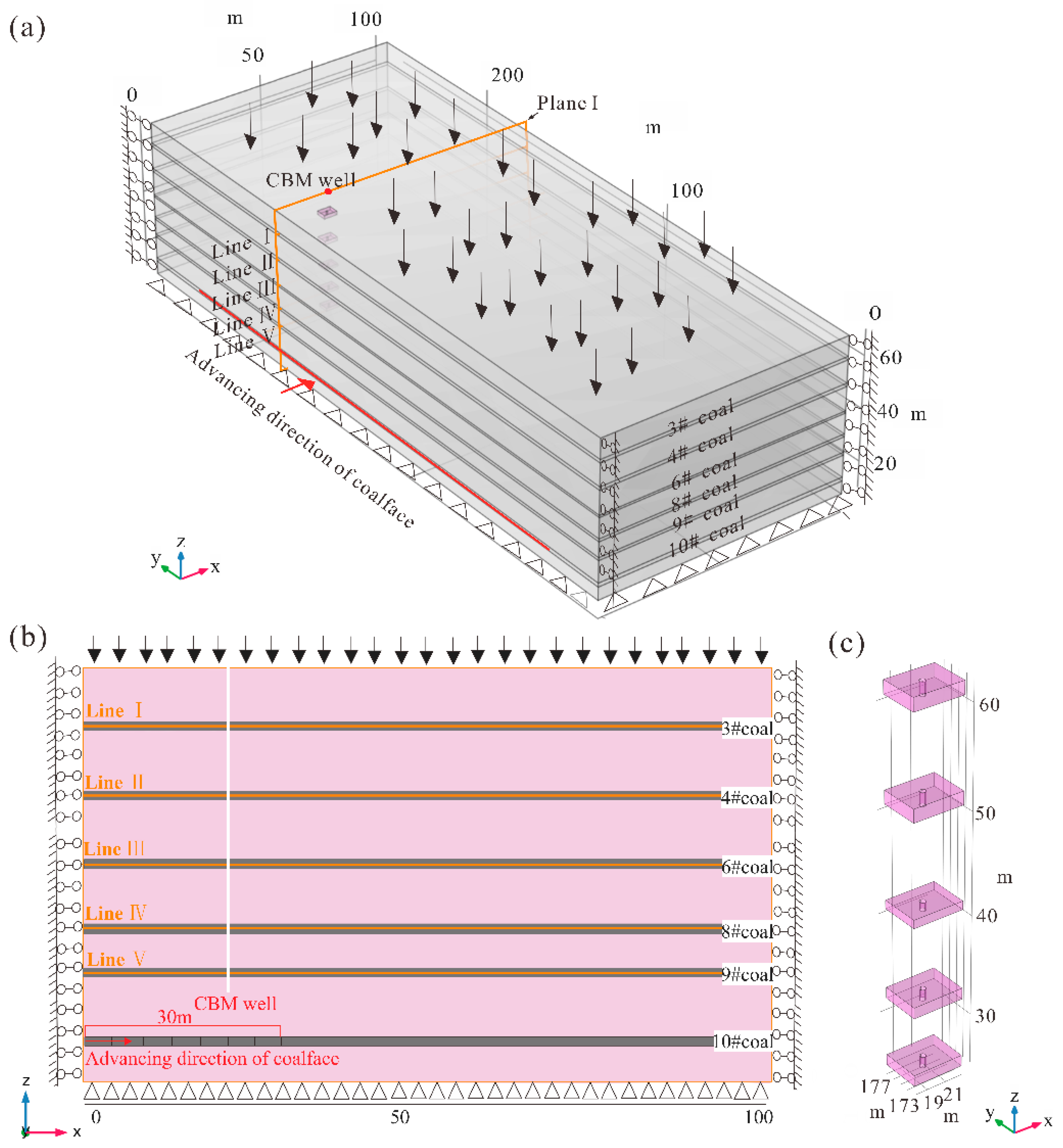
A geological-engineering model of the study region is constructed (Figure 2a) based on the geological background and governing equations. The model’s spatial dimensions are oriented along the strike (x-direction, 100 m), inclination (y-direction, 250 m), and vertical (z-direction, 60 m) axes of the coalface. The model ignores the strata dip and covers six coal seams (3#, 4#, 6#, 8#, 9#, and 10#) along with their roof and floor strata. The mining height of the 10# coal seam is 1.5 m, and excavation starts from x = 0 m. According to the parameters of the YP-5 well on the coalface, the cylindrical CBM well is configured with the centers of its top and bottom at (20, 175, 23) and (20, 175, 60), respectively, and a diameter of 0.3 m.
The model incorporates two types of porous solid media: coal and non-coal. The physical and mechanical properties of the coal seams are derived from the 10# coal seam, while those of the non-coal strata are derived from the sandstone at the roof of the 10# coal seam. The coal seams have a gas pressure of 1.5 MPa; the non-coal rocks are gas-free. Table 1 illustrates the specific parameters. The model imposes fixed displacement constraints on the bottom surface and rolling displacement constraints on the other surfaces. A constant vertical stress of 12.5 MPa, calculated based on real burial depth of 500 m, is applied to the top surface. One section and five measurement lines are set up within the model (Figure 2b). Given the limited effective extraction range of the well [28], a 25 m3 cube centered on the well, with a height (z-dimension) matching the coal seam thickness, is divided to demonstrate the results for the protected seams near the well.
The model is solved using the finite element software, COMSOL Multiphysics 6.2. The Solid Mechanics module solves the stress and strain fields of the geological-engineering model, providing the steady-state solution after coalface excavation. Since the governing equations for gas diffusion and seepage are time-dependent, the transient solution for CBM well gas production is obtained using the Partial Differential Equation (PDE) module. The simulation process comprises three steps: solving the in situ stress and strain fields, solving the stress and strain fields after mining a set distance, solving the gas diffusion and seepage fields during extraction. The simulations are based on four assumptions: (1) methane is the sole fluid present and is treated as an ideal gas; (2) the multiphysics field system is in thermal equilibrium; (3) the coal seams are regarded as homogeneous and isotropic media; (4) the mined seam, having undergone gas extraction, does not contribute to the gas production of the CBM well.

2.4. Model Validation

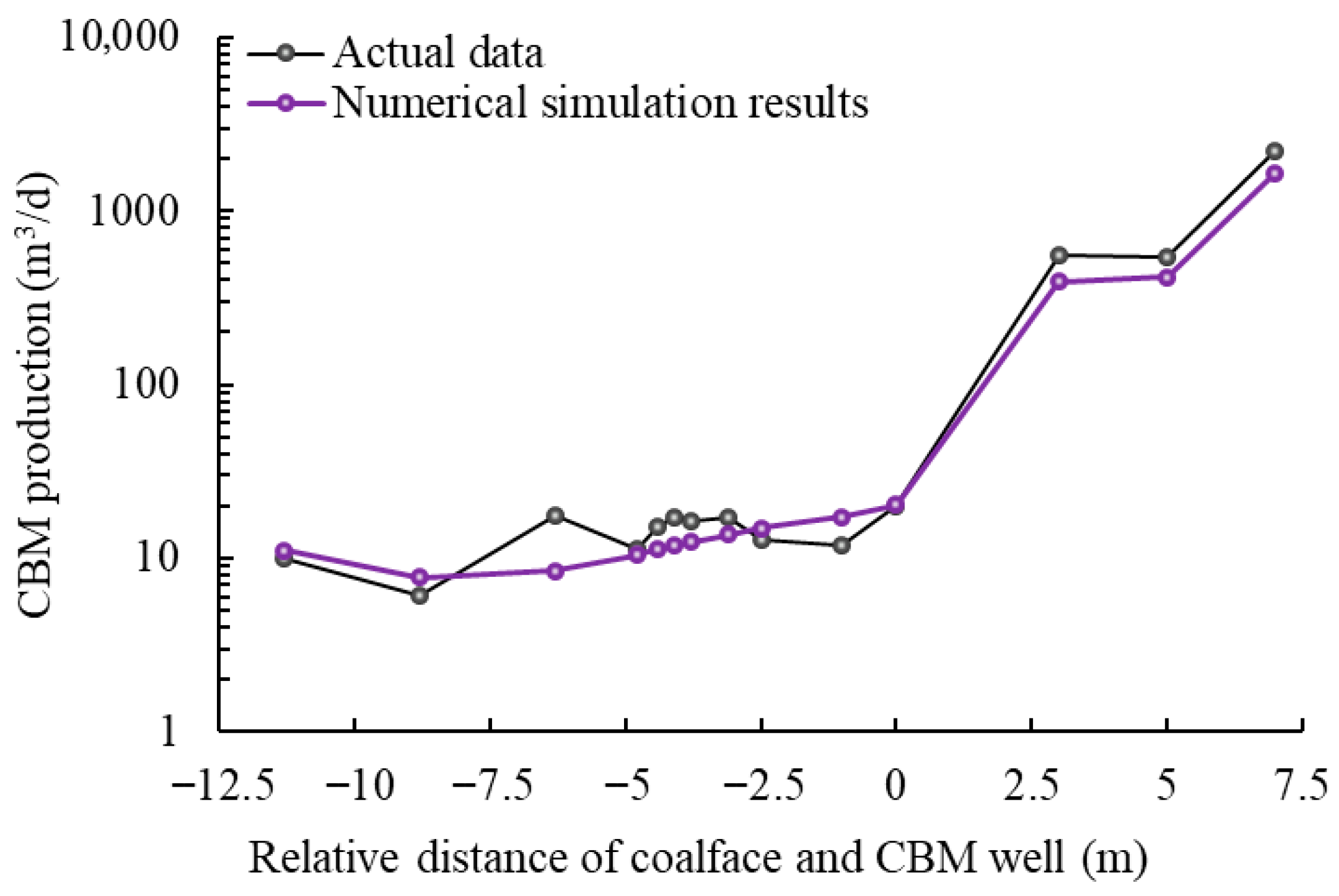
To validate the accuracy of the geological-engineering model, the gas production of YP-5 well is simulated based on the actual advance rate of 221015 Coalface and the start-extraction timing of the CBM well. Both the actual gas production data and the numerical simulation results have four gas production stages (Figure 3). Initially, production declined as the mining face advanced from 11.3 m ahead of the well to 8.8 m ahead. Subsequently, as the coalface moved from 8.8 m ahead to 3 m behind the well, gas production fluctuated from 10 to 30 m3, showing a rebound trend. Notably, production surged once the coalface reached 3 m behind the well. Further advancement to 5 m behind the well resulted in an additional increase in gas production. The relative absolute error of the gas production volume ranges from 7.18% to 30.08%, with an average error of 24.38%. Therefore, the model can reflect the phased changes in the actual gas production of YP-5 well.

2.5. Numerical Simulation Schemes

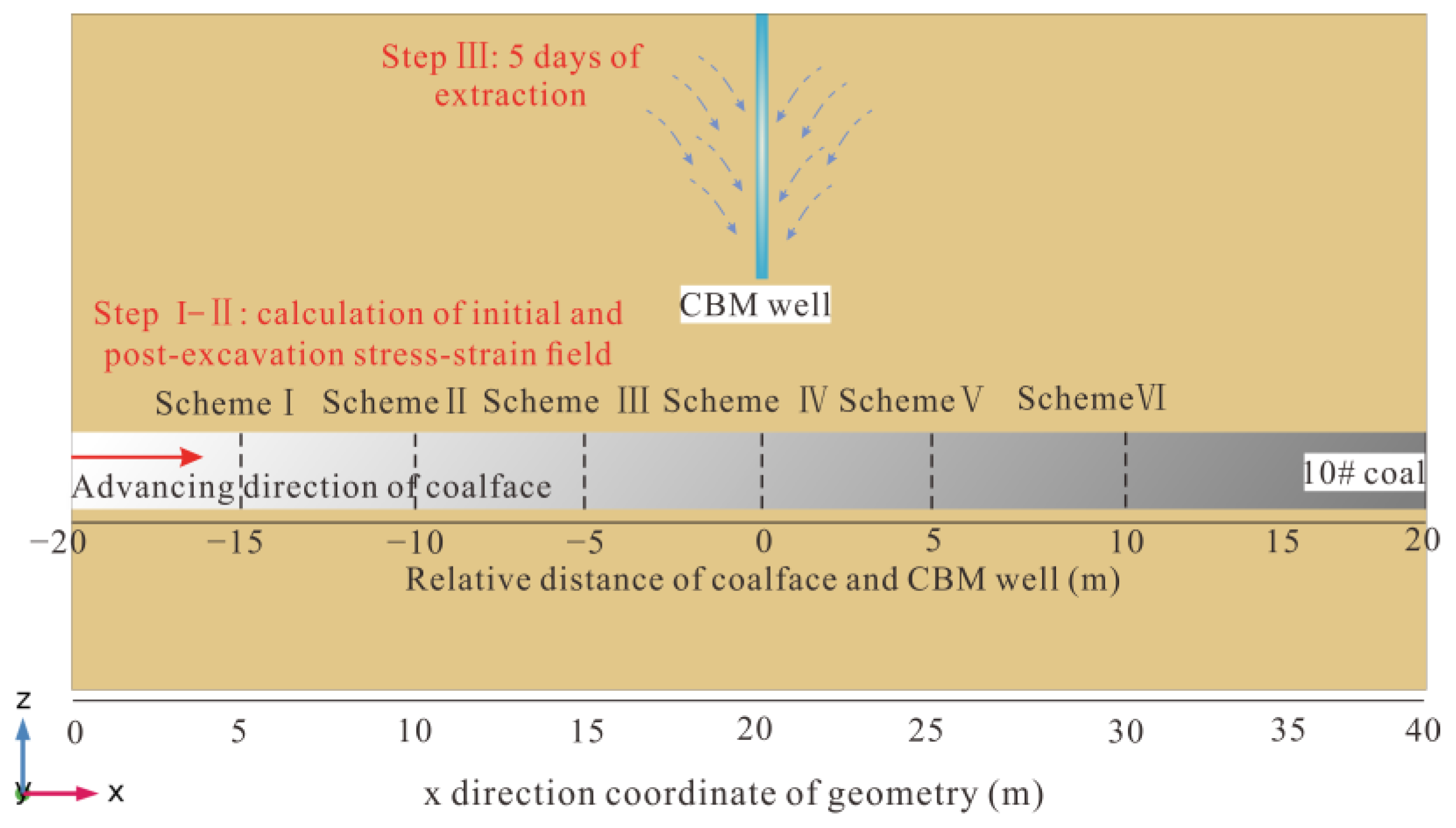
Six schemes (I–VI) simulate gas production initiated at different relative positions between the coalface and the CBM well (Figure 4): (1) extraction starting when the coalface 15 m ahead the well; (2) extraction starting when the coalface 10 m ahead the well; (3) extraction starting when the coalface 5 m ahead the well; (4) extraction starting when the coalface reaches the well; (5) extraction starting when the coalface 5 m behind the well; (6) extraction starting when the coalface 10 m behind the well. The extraction duration is 5 days with no mining in this duration. The cumulative gas production during this period is designated as the Baseline Cumulative Gas Production (BCGP).

3. Results

3.1. Mining Influence on Stress of Protected Seams

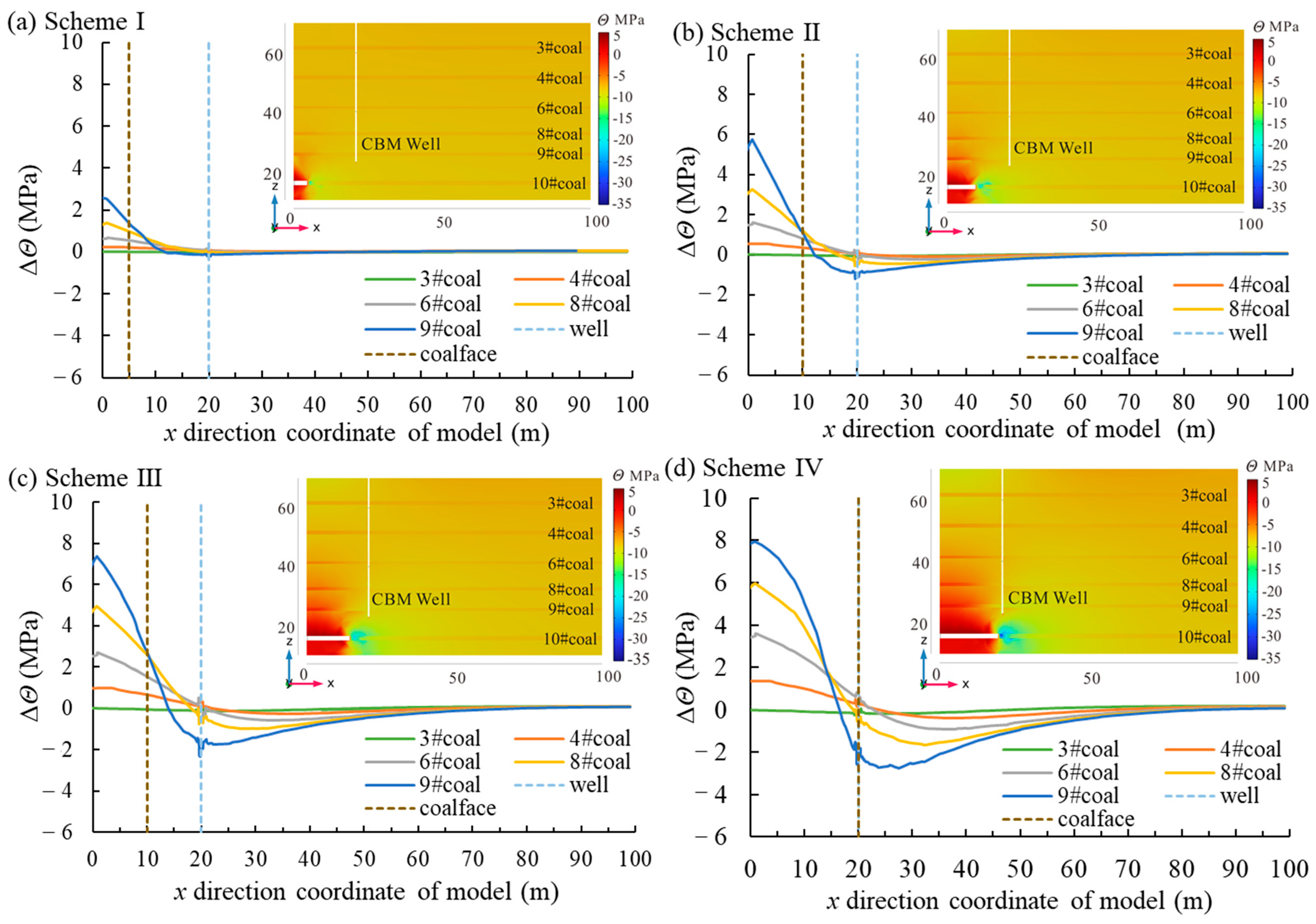
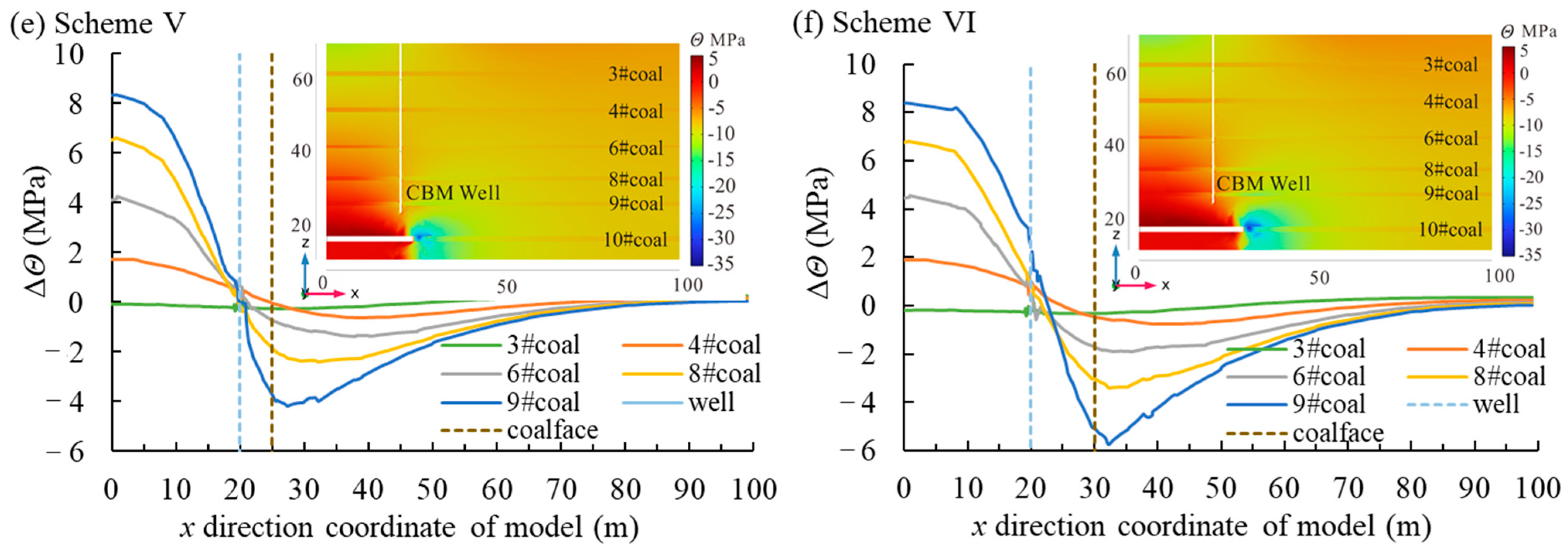
Stress fluctuations in the protected coal seam caused by mining activities are affected by the burial depth of the coal-bearing strata and lithology. In this model, the coal seam is set as a homogeneous rock stratum consistent with the geological background, with the burial depth and mining process mainly considered for their impacts on gas production. Mining activities induce stress concentration (negative value) in the mining seam directly ahead of the coalface in protected seams overlying the frontal areas. Simultaneously, stress relief (positive value) occurs in protected seams above the goaf (Figure 5). The stress state of the protected coal seam is closely related to the mining progress and the distance between the protected coal seam and the coalface. As the coalface advances, the areas of stress concentration and stress relief in the protected coal seam expand significantly, and the variation in volumetric stress significantly increases. As the distance to the coalface decreases, stress changes in protected seams intensify. The 9# coal seam (the closest to the coalface) experiencing the most significant pressure relief when the face advances 10 m past the well. At this position, its volumetric stress decreases by 5.89 MPa. Furthermore, the 3# coal seam appears in all figures to ensure a comprehensive presentation of the simulation results, it is not analyzed in detail due to minimal mining-induced effects.
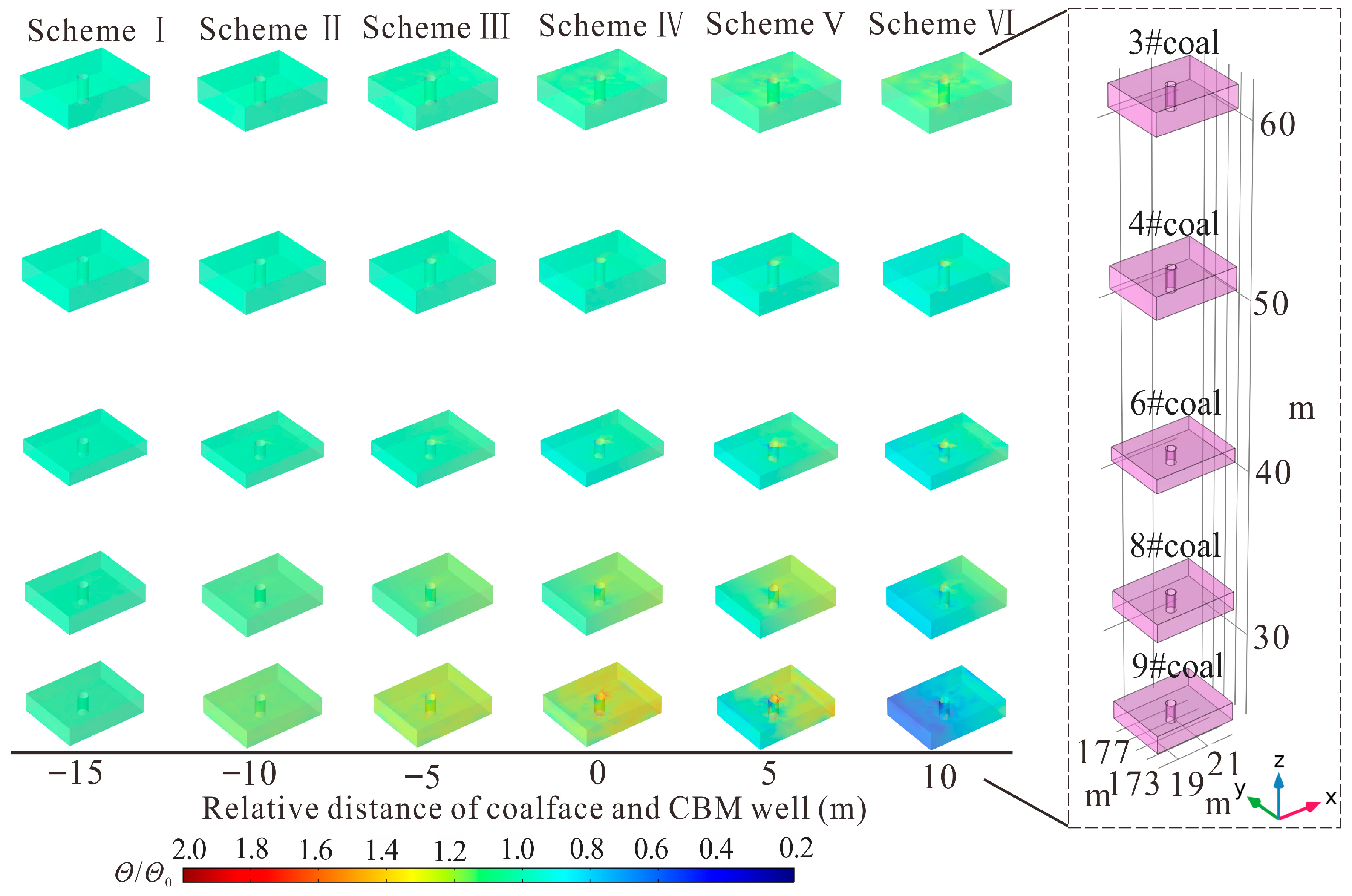
Locally (Figure 6), by the time the coalface reaches the well location, the 4# and 6# coal seams exhibit stress relief. As the coalface advances to 5 m behind the well, the 8# and 9# coal seams also gradually enter stress relief state, achieving a stress relief degree comparable to that of the 4# and 6# coal seams at this stage. Notably, when the coalface moves to 5 m behind the well, stress relief in the 9# coal seam significantly exceeds that in other seams. This indicates that the time when each protected coal seam enters the stress relief state is not positively correlated with the degree of stress relief. The coal seam adjacent to the coalface ultimately achieves a significantly higher degree of stress relief than other seams, despite a later onset of the relief process. This behavior indicates that the strain type in this seam undergoes complex changes.

3.2. Mining Influence on Strain of Protected Seams

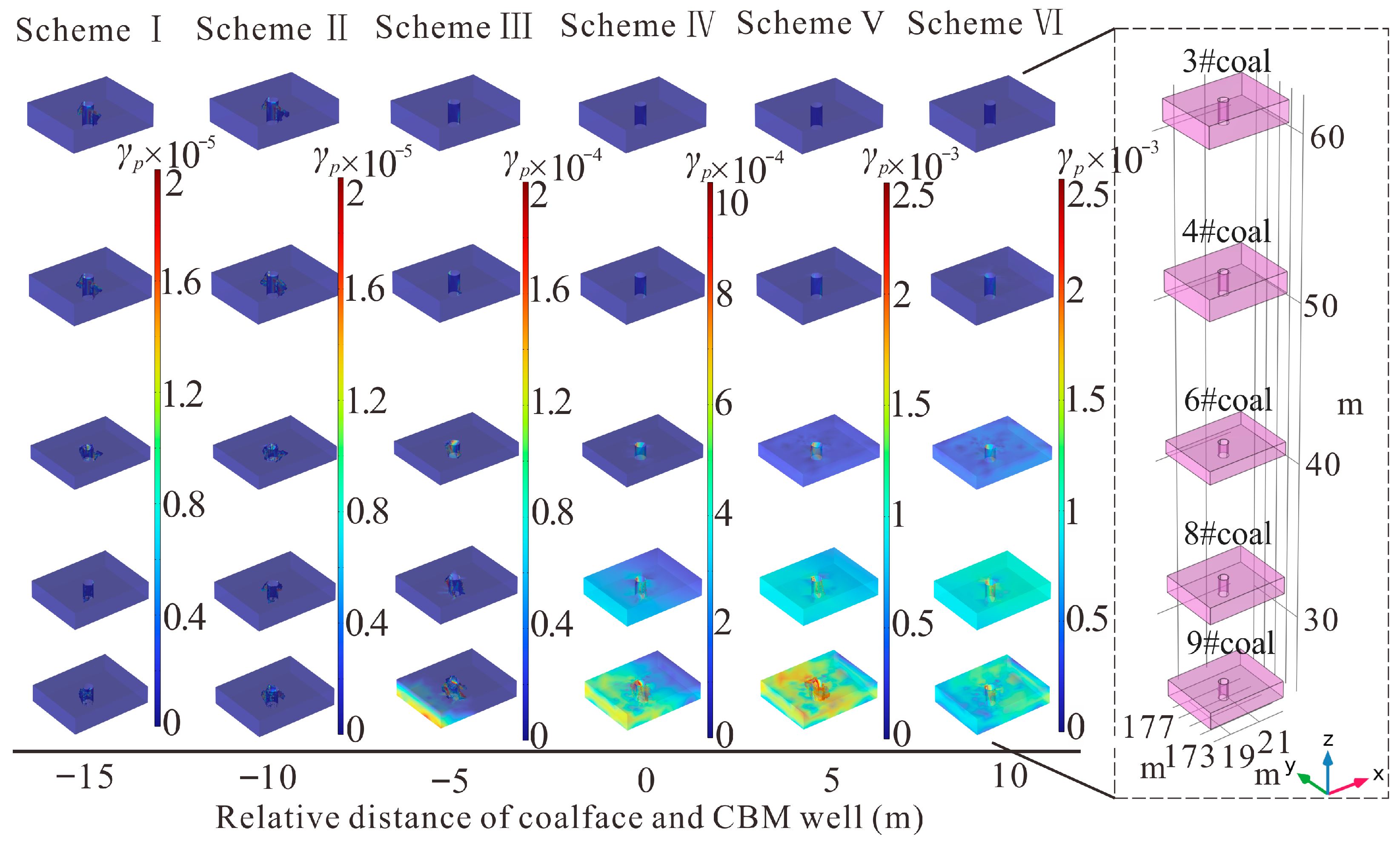
As the coalface advances, the protected seams experience asynchronous development of plastic strain volume (Figure 7). Specifically, extensive plastic strain zones form in the 9#, 8#, 6#, and 4# coal seams when the mining face reaches positions 10 m ahead of the well, 5 m ahead of the well, at the well location, and 10 m behind the well, respectively. This indicates that the closer a protected seam is to the coalface, the earlier it enters the plastic strain stage. As the distance from the coalface increases, the protected seams are gradually less affected by mining activities and no longer generate plastic strain.
From a local perspective, the plastic strain magnitude of the protected seams near the well decreases gradually from bottom to top, which is consistent with the overall strain evolution of the protected seams (Figure 8). When the coalface reaches 10 m behind the well, plastic strain in the 9# coal seam decreases relative to its magnitude at 5 m behind. However, Figure 5e,f demonstrates the concurrent enhancement of stress relief in the 9# coal seam. This suggests that changes in stress direction potentially alter plastic strain development mechanisms, ultimately reducing equivalent plastic strain.

3.3. Mining Influence on Permeability of Protected Seams

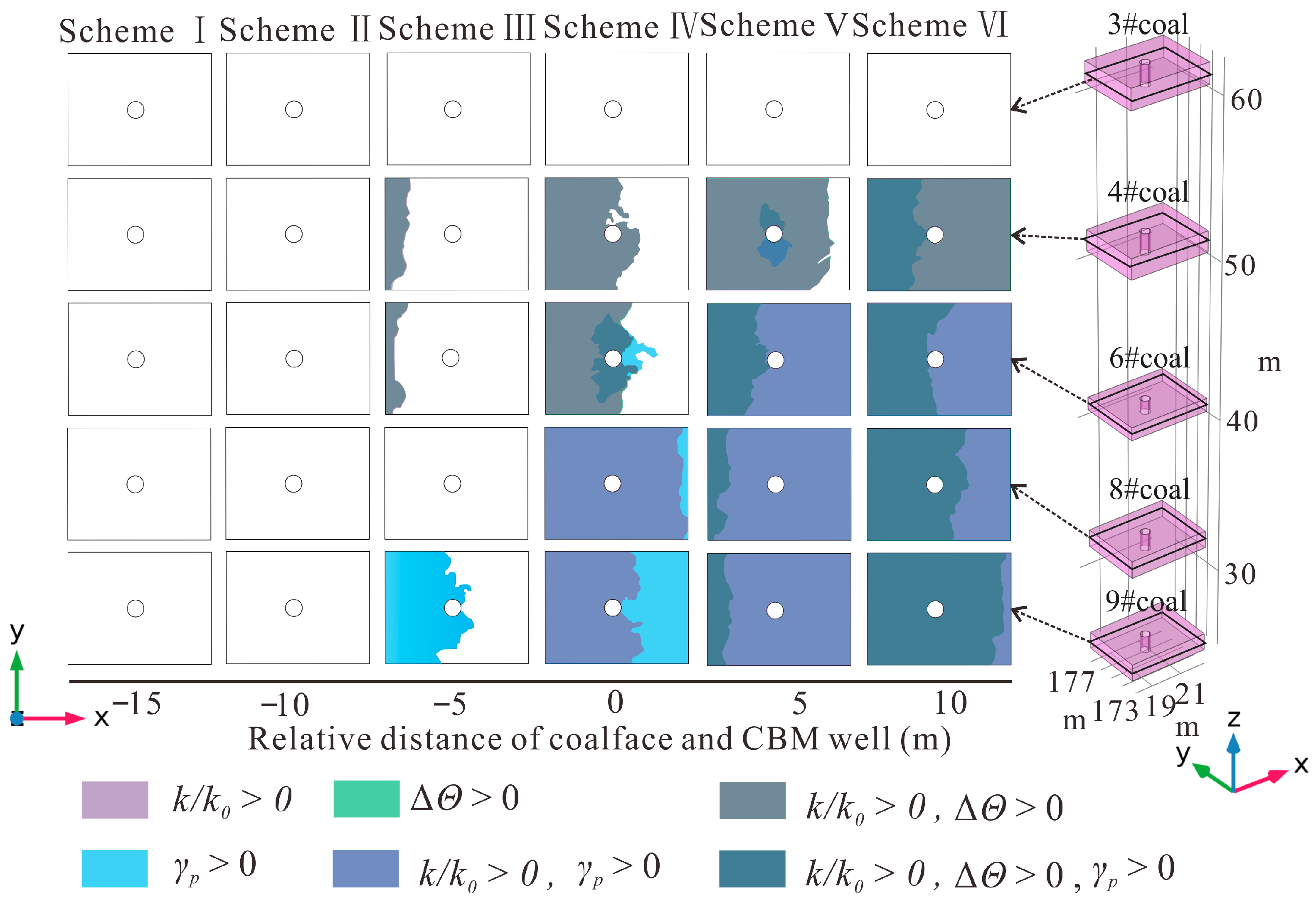
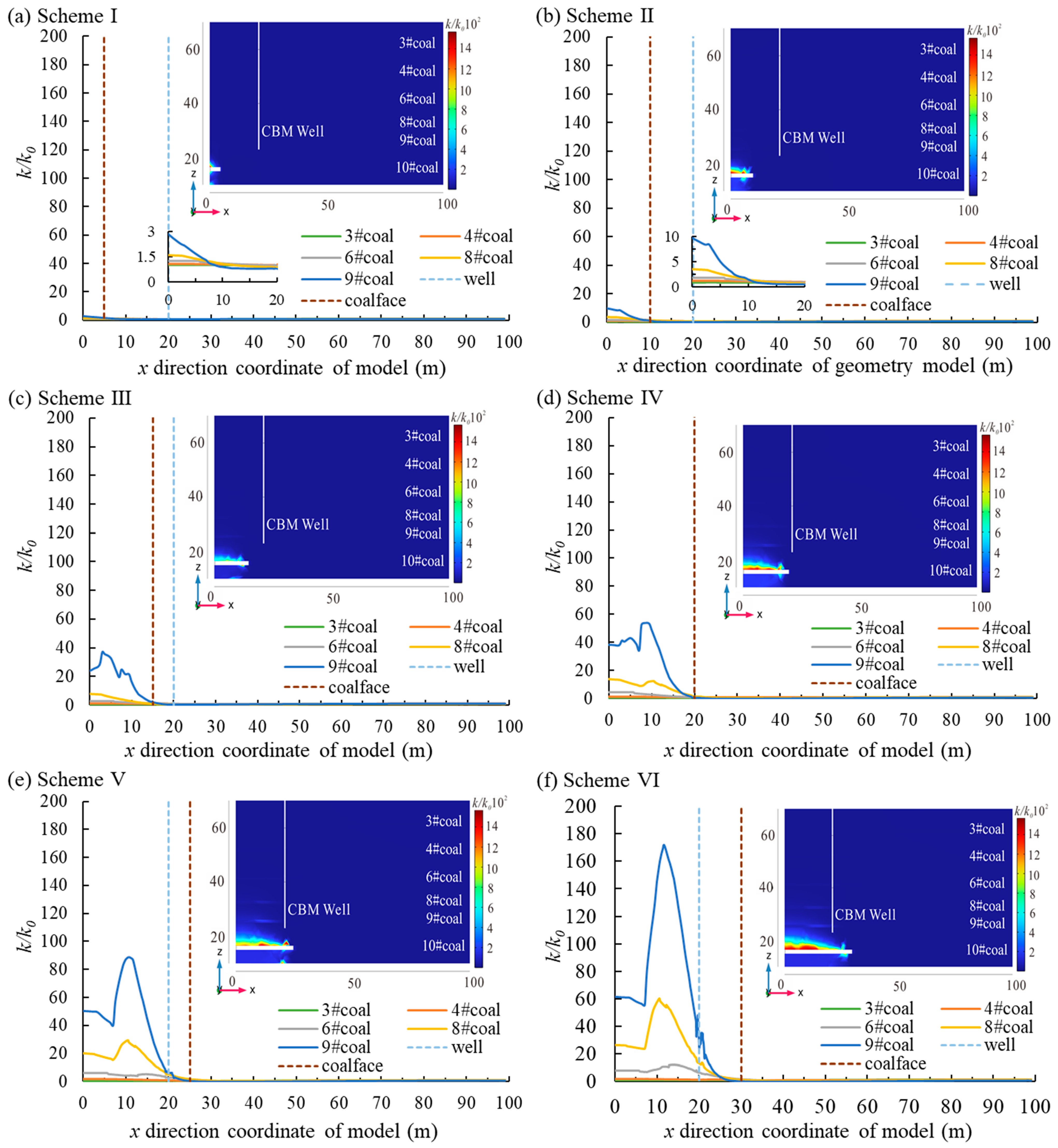
The permeability zoning of the protected seams aligns with both the stress and plasticity zoning. As the coalface advances, the permeability-variation zones expand (Figure 9). Concurrently, the maximum permeability coefficient (k/k0) increases gradually while the minimum decreases steadily. The extreme values manifest in the 9# coal seam when the coalface advances 10 m past the well, attaining 171.68 and 0.068, respectively. This indicates that the farther the coalface advances, the stronger the gas transmission capacity of the protected layer that is closer to the coalface.
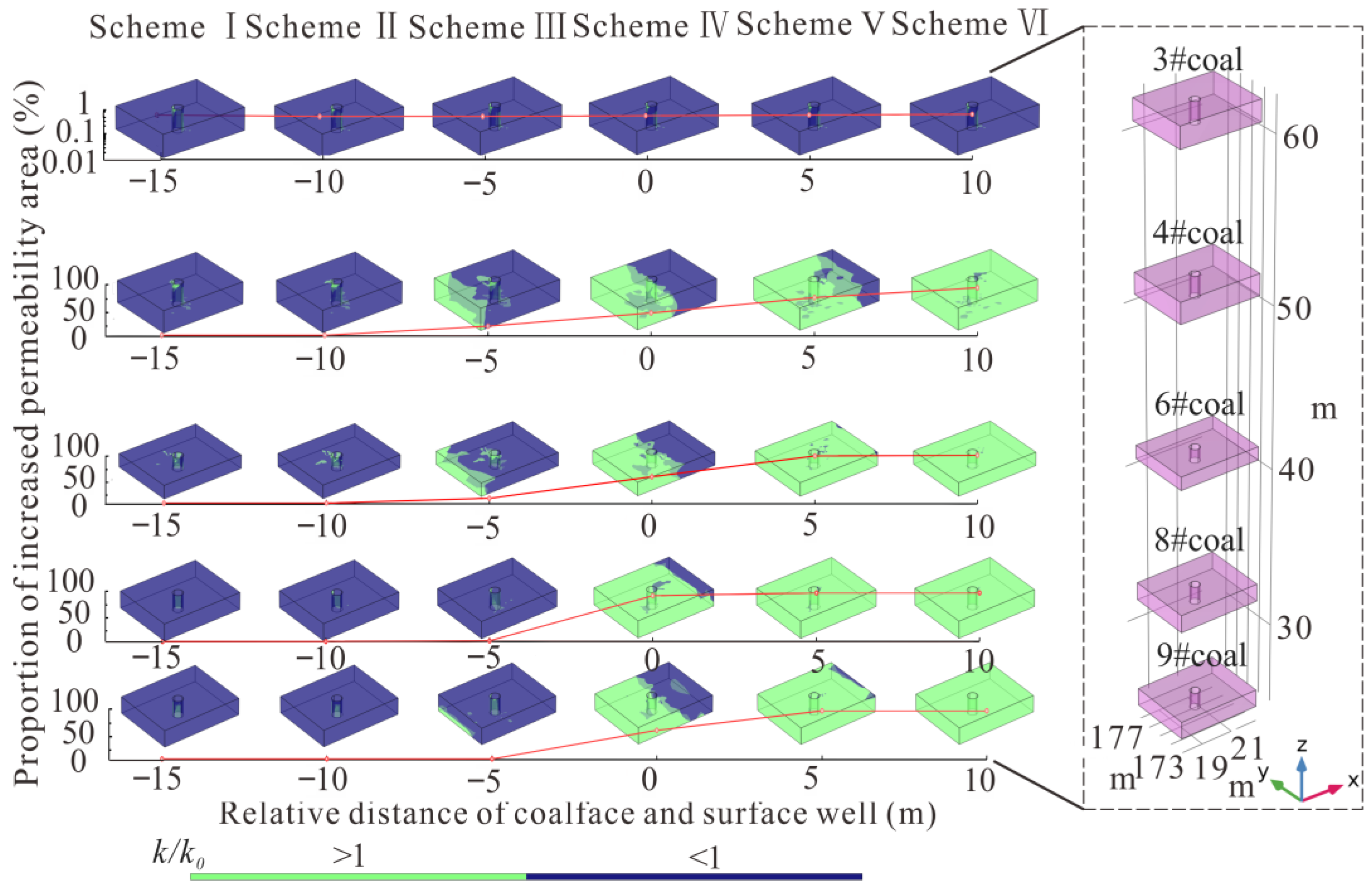
Locally (Figure 10), when the coalface is 15 m and then 10 m ahead of the well, the protected seams exhibit permeability reduction due to elastic compression. As the mining face advances to 5 m ahead of the well, the 4# and 6# coal seams return to near-initial stress states without significant plastic strain; their permeability increases due to elastic swelling. Meanwhile, the 9# seam undergoes plastic compression with lower permeability. When the mining face advances to 5 m behind the well, the 4#, 6#, 8#, and 9# coal seams show increased permeability, with the 8# and 9# seams exhibiting significant plastic strain. At 10 m behind the well, observations show weakened plastic deformation in the 9# coal seam but increased permeability, suggesting a shift in plastic strain type. During the mining, plastic shear strain and plastic expansion strain enhance permeability, with expansion strain having greater impact [34]. Therefore, as the coalface advances from 5 to 10 m behind the well, the 9# coal seam transitions from plastic shear to expansion strain, temporarily reducing the plastic strain magnitude. Consequently, the stress–strain permeability evolution in the 9# coal seam exhibits the most complex behavior.
In summary, protected seams experience stress relief and concentration, exhibiting five distinct strain states: elastic compression strain, elastic swell strain, plastic compressive strain, plastic shear strain, and plastic expansion strain. Permeability evolution under stress–strain control demonstrates zonal characteristics. Coupled with heterogeneous gas pressure distribution, this results in complex changes in gas production.

3.4. Mining Influence on CBM Well Production

This paper integrates classification methods for protected seams based on both distance [35] and stress–strain state [36]. Seams located within 20 m of the 10# coal seam and highly influenced by mining are classified as close-distance seams. The 4# and 6# coal seams, experiencing lesser mining impact, are categorized as medium-distance seams. The 3# coal seam, with negligible mining impact, is classified as a distant seam.
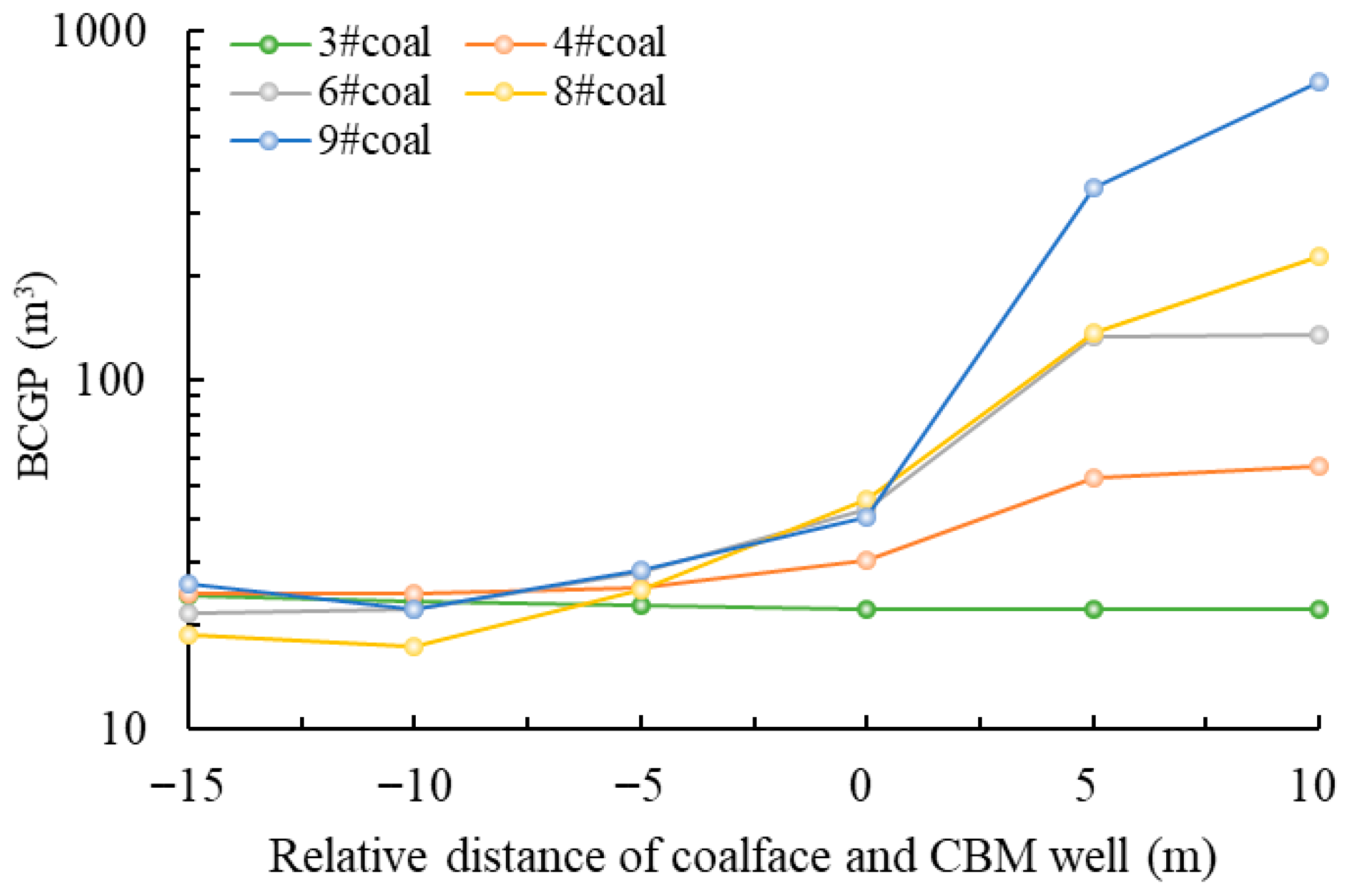
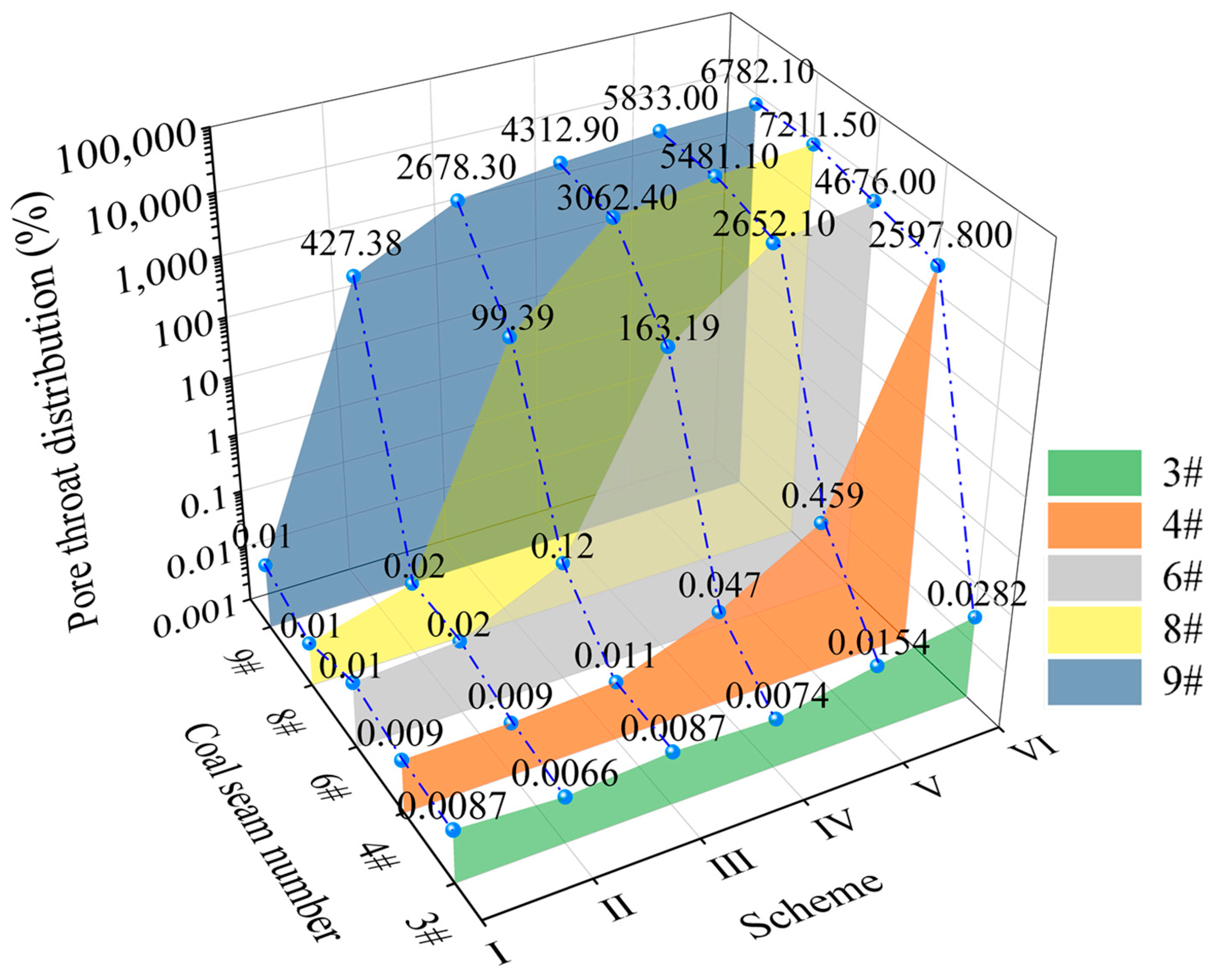
When the coalface advances to 10 m ahead of the well, gas production from medium-distance protected seams increases, with the 4# coal seam showing the highest output (Figure 11). Notably, the 4# and 6# coal seams near the well exhibit predominantly reduced permeability during this phase. A similar phenomenon occurs in the 8# and 9# coal seams as the face advances from 10 m to 5 m ahead of the well. These observations demonstrate that a higher-pressure gradient can enhance production.
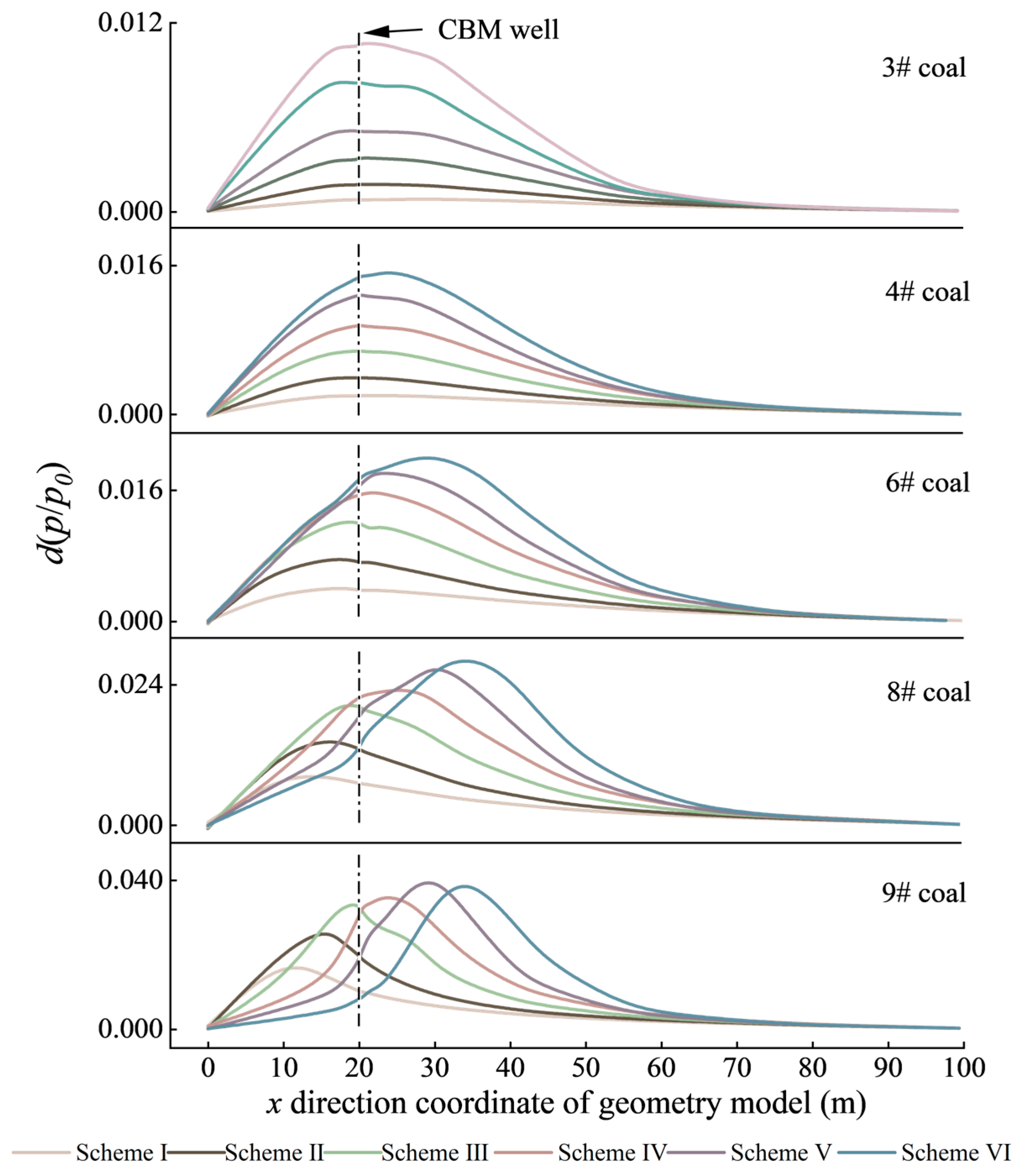
Gas production increases as permeability near the well increases, but higher permeability is not always necessary (Figure 12). An elevated pressure gradient at the well may enhance production. Specifically, when the mining face advances to 10 m ahead of the well, gas production from medium-distance protected seams increases, with the 4# coal seam showing the highest output. Notably, the 4# and 6# coal seams near the well exhibit predominantly reduced permeability during this phase. A similar phenomenon occurs in the 8# and 9# coal seams as the face advances from 10 m to 5 m ahead of the well. However, as revealed in Section 3.3, the 9# coal seam underwent plastic compression strain during the process, leading to a decrease in permeability. These observations demonstrate that gas production is governed by both permeability and gas pressure gradient around the well.

4. Discussion

4.1. Mining Influence on the Evolution Law of Physical Properties, Mechanical Properties and Gas Seepage Behavior of Protected Seams

The permeability of each protected seam shows asynchronous changes (Figure 13). When the coalface is far from the well, protected seams undergo elastic compression without significant changes in permeability. Increasing stress concentration leads to plastic compression and the generation of new compaction fractures in protected seams, resulting in a pronounced decrease in permeability. This effect predominantly occurs in close-distance protected seams. As the coalface approaches the well, anisotropic stress triggers plastic shear damage in close-distance seams. This strain is relatively short-lived and enhances permeability more significantly than elastic swelling strain. When the coalface passes the well, zones of permeability increase induced by plastic expansion form. In these zones, significant stress relief promotes fracture formation and expansion, which greatly enhances permeability. This mechanism operates in both medium-distance and close-distance protected seams. In summary, elastic swelling, plastic expansion, and plastic shear strain enhance permeability. The latter two involve numerous newly formed penetrating fractures, which significantly boost permeability.
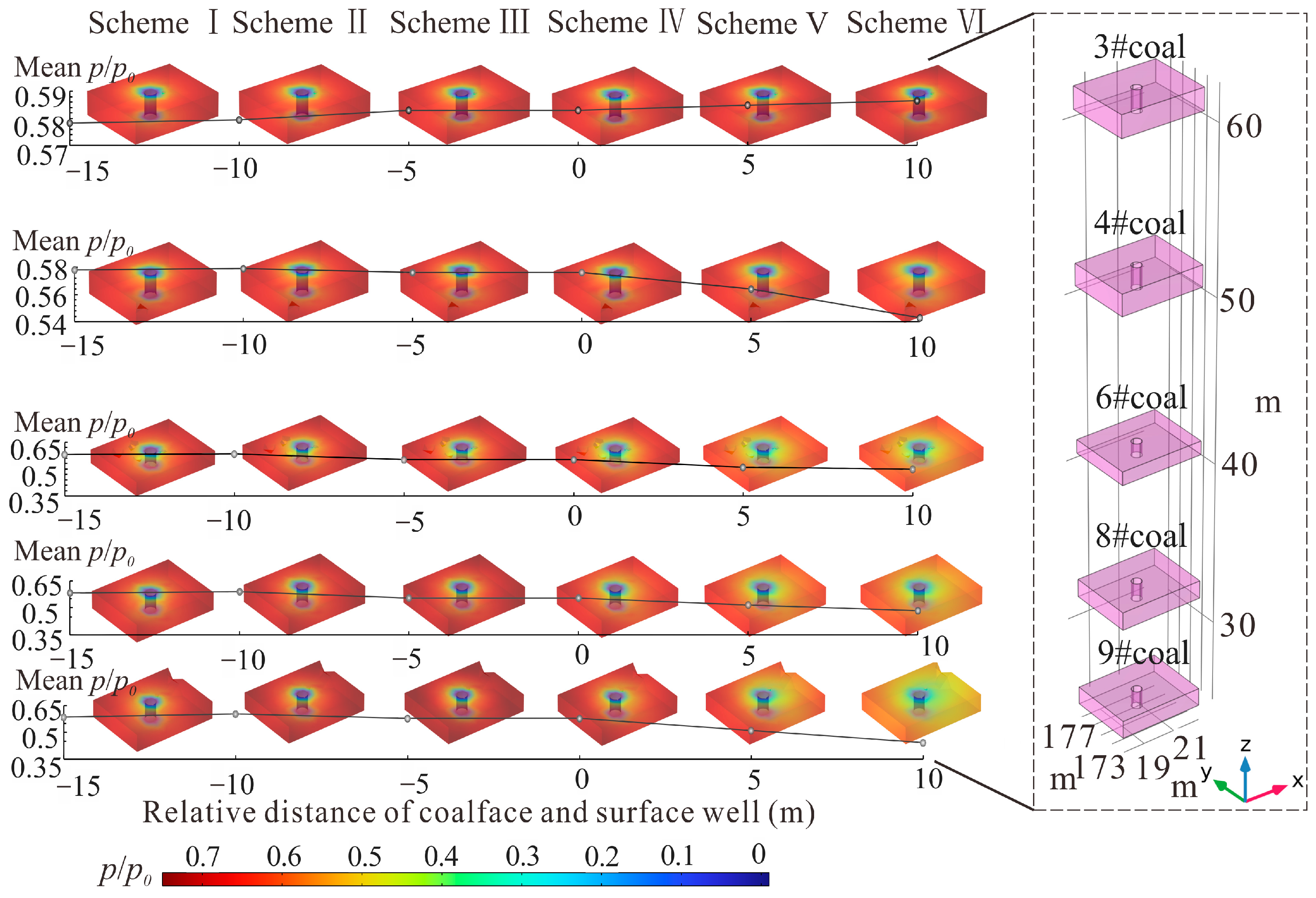
Mining activities stimulate desorption and diffusion of substantial CBM volumes from matrix to fractures. Driven by the pressure gradient, the gas migrates toward the wellhead. However, when the gas flows through permeability reduction zones, it encounters significant resistance. Consequently, actual gas production falls markedly below the desorption volume. Within these permeability reduction zones, localized gas accumulation forms, accompanied by an increase in the gas pressure gradient. Under conditions of an equivalent reduction in permeability, protected seams exhibiting a higher gas pressure gradient demonstrate higher gas production (Figure 14).

4.2. Control Mechanism of Permeability and Gas Pressure Gradient on CBM Well Production

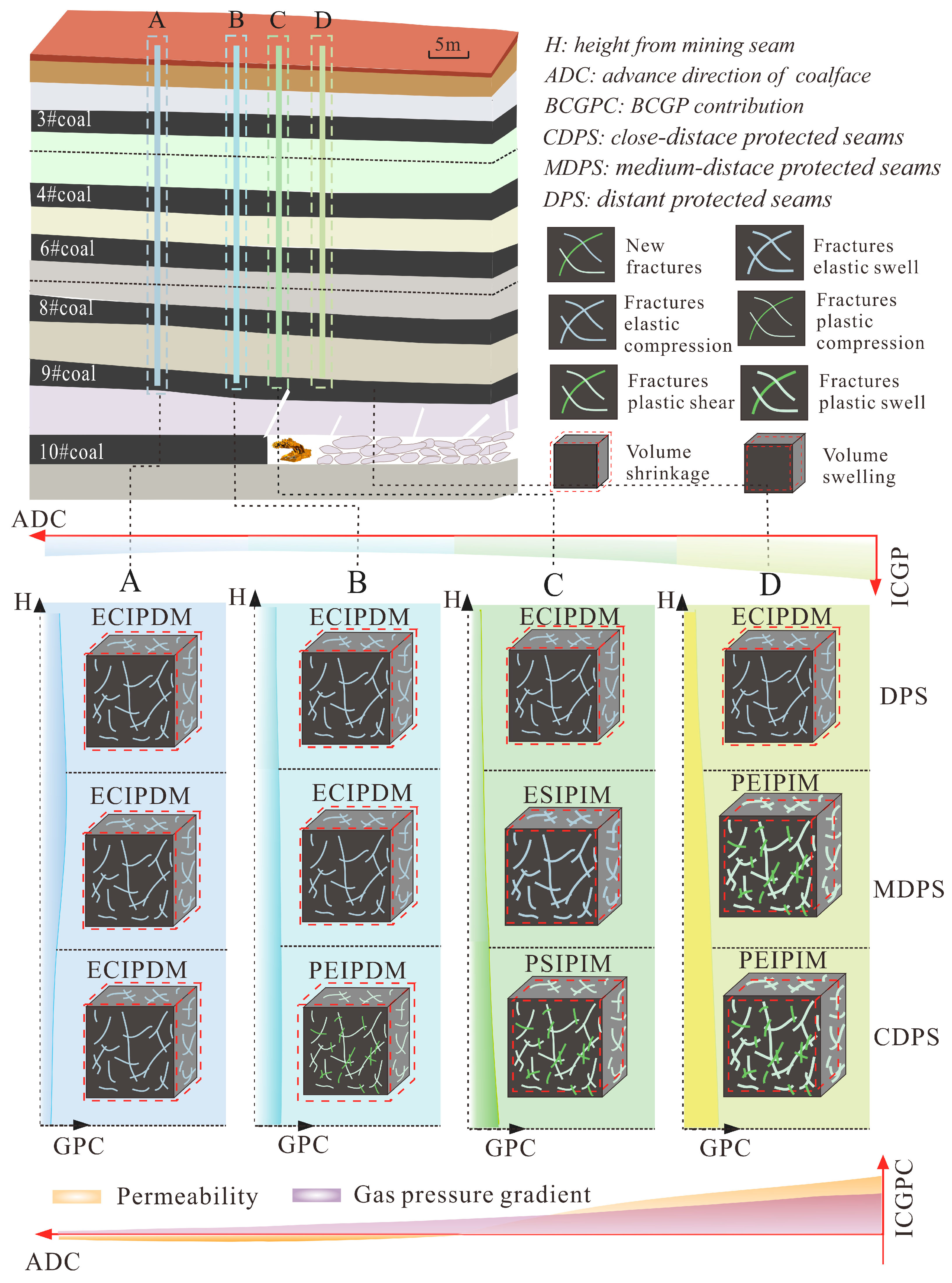
The gas production mechanism in mining area is shown in Figure 15. As the coalface moves, distant protected seams undergo only elastic compressive strain, medium-distance protected seams experience elastic compression, expansion, and plastic expansion, while close-distance protected seams go through elastic compression, plastic compression, shear, and expansion. There are five permeability models: elastic compression-induced permeability decrease model (ECIPDM), elastic swell-induced permeability increase model (ESIPIM), plastic compression-induced permeability decrease model (PCIPDM), plastic shear-induced permeability increase model (PSIPIM), and plastic expansion-induced permeability increase model (PEIPIM).
The zones of the five models and the undisturbed zone constitute the permeability zoning of protected seams. Based on the permeability evolution of close-distance protected seams, the gas production mechanism is classified into elastic compression-dominant, plastic compression-dominant, plastic shear-dominant, and plastic expansion-dominant [37]. These categories correspond to the coalface located 10–15 m and 0–10 m ahead of the well, and 0–5 m and 5–10 m behind the well, respectively. When permeability decreases around the well, an elevated pressure gradient partially offsets the inhibitory impact of permeability reduction, enhancing gas output. Conversely, permeability increases accompany pressure gradient reduction, making permeability the primary production control factor. Additionally, coalface ventilation further diminishes gas production potential.
Within tectonic coal development zones, notable mechanical strength disparities between coal seams and adjacent strata can induce interlayer separation during mining, activating fractures generated by plastic compression into seepage channels. This may lead to a direct transition from PCIPDM to PEIPIM, marking an abrupt shift in the gas production stage—from a gradual decrease to a rapid increase.
In the region under investigation, the lithological change within the coal-bearing strata occurs gradually, exhibiting a relatively slight difference in mechanical strength among the coal seams and the adjacent strata. This results in more pronounced PSIPIM and slow gas production rebound.

4.3. Reasonable Start-Extraction Time of CBM Well and Its Application Prospect

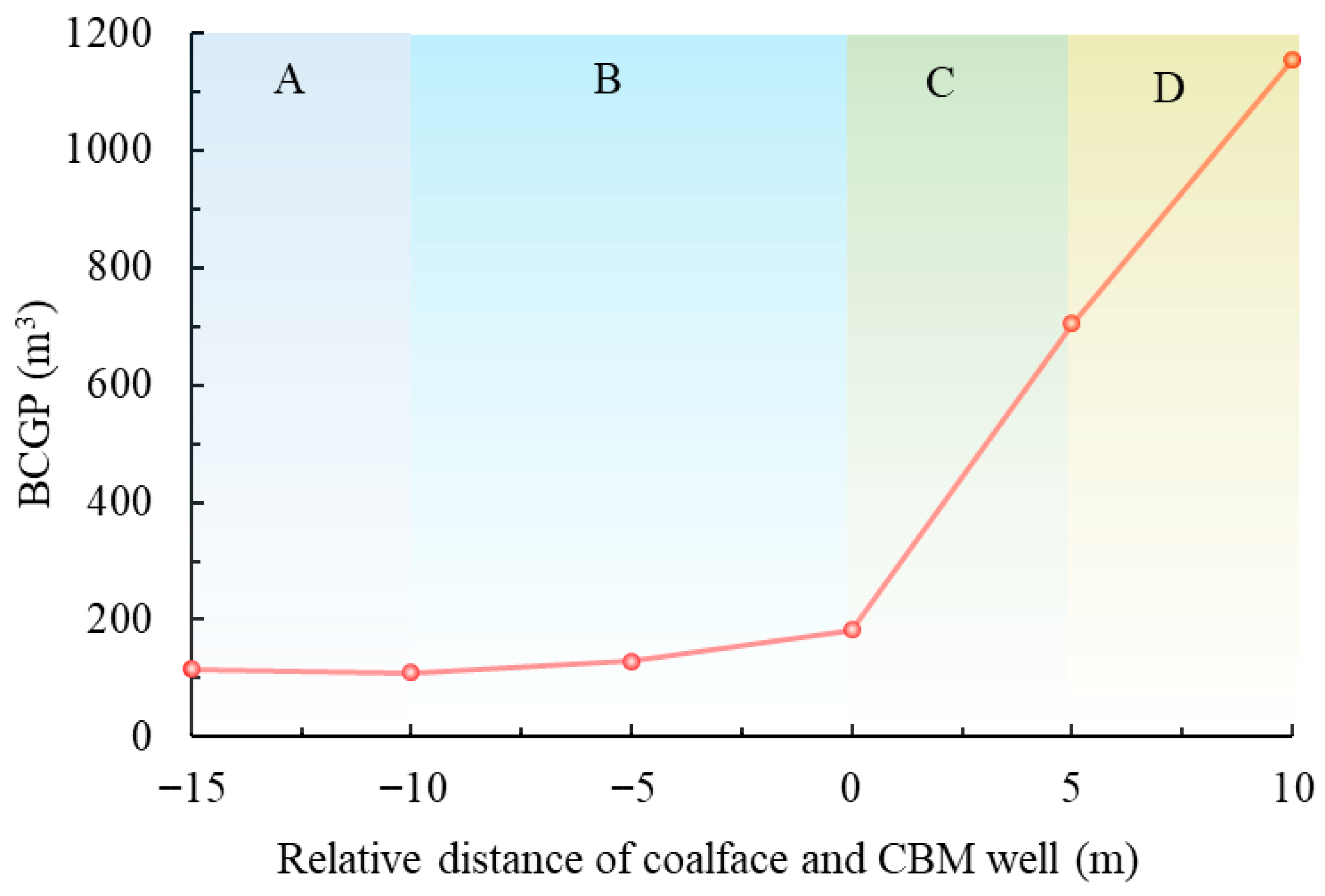
When not affected by mining activities, the CBM well remains in an undisturbed state and elastic compression for an extended duration, resulting in a sustained low level of gas production. Identifying the rapid transition period from low to high gas production in CBM wells is key to determining start-extraction timing. Thus, the BCGP of the CBM well at various relative positions with the coalface was counted. The BCGP experienced four distinct stages: a gradual decrease (when coalface is 10 to 15 m ahead of the well), a slow rebound (10 m ahead to the well location), a rapid increase (well location to 5 m behind), and a further surge (5 to 10 m behind). These stages are denoted as A–D in Figure 16 and corresponded to the four permeability mechanisms (A–D) depicted in Figure 15.
Compared with the slow rebound stage, the protected coal seam in the rapid increase stage transforms from elastic strain to plastic strain. During this period, permeability increases significantly, and coalbed methane production surges accordingly, making it a more suitable period for CBM well extraction. Meanwhile, compared with the further surge stage, the gas production of the rapid increase stage is relatively lower, but the gas production at the end of this stage still exceeds 500 m3/d. For the low-permeability coal seams in Guizhou, this value reaches the lower limit of industrial gas flow, possessing significant economic value. Therefore, the optimal well extraction timing should align with the beginning of the rapid increase stage, specifically when the coalface advances to the well location.
The YP-5 well utilizes a ZW-52/75-G model drainage pump with a power rating of 75 kW. Given that the maximum advancing speed of the 221015 Coalface is 2.4 m/d, compared with the actual start-extraction (when the coalface is 13.8 m ahead of the well), the optimal start-extraction time (when the coalface reaches the well location) shortens the extraction duration by at least 5.75 days and reduces electricity consumption by at least 2.07 × 10⁴ kWh.
The CBM extraction model in mining area constructed in this study can accurately describe the coupled evolution of stress, strain, permeability, and gas migration in the protected coal seam affected by mining activities. It remains of great value for optimizing methane extraction, reducing emissions, and enhancing the sustainability of existing mining operations, especially in the context of declining economic feasibility of mining.
However, this study has not yet addressed the issue of how to integrate fracture characteristics into the model. In future research, it is necessary to combine physical experiments with the model, consider the propagation of mining-induced fractures, and further study the multi-field coupling mechanism of gas well production.

5. Conclusions

  • In mining areas, protected seams exhibit five permeability models under the combined influence of stress and strain. Distant protected seams develop only in the ECIPDM. Medium-distance protected seams successively exhibit the ECIPIM, ESIPDM, and PEIPIM. Close-distance protected seams evolve through the ECIPDM, PCIPDM, PSIPIM, and PEIPIM, with the latter two models primarily enhancing coal seam permeability and CBM production.
  • During coal mining activities, the significant desorption and migration of CBM occur in protected seams. In permeability decrease zones, gas migration is hindered, leading to an elevated gas pressure gradient. This phenomenon, in conjunction with only a minor permeability reduction, can result in enhanced gas production. Conversely, when permeability increases, it becomes the controlling factor for gas production.
  • Under the influence of permeability and the gas pressure gradient, the BCGP of the CBM well undergoes four types of variation: gradual decrease, slow rebound, rapid increase, and further surge. The onset of the rapid increase stage defines the optimal start-extraction time, which in the study area coincides with the coalface reaching the well location.
  • The optimal start-extraction time shortens the extraction duration by at least 5.75 days and reduces electricity consumption by at least 2.07·104 kWh in study area. Influenced by coal structure and mining parameters, the optimal start-extraction time for the CBM well varies across different regions.

Author Contributions

P.Z.: Writing—original draft, Writing—review and editing, Methodology, Formal analysis, Data curation, Conceptualization. A.X.: Writing—original draft, Visualization, Validation, Project administration, Funding acquisition, Investigation, Formal analysis. X.S.: Writing—original draft, Visualization, Validation, Formal analysis. X.Z.: Writing—original draft, Visualization, Investigation, Formal analysis. S.H.: Writing—original draft, Methodology, Formal analysis. J.D.: Writing—review and editing, Validation, Resources, Formal analysis. J.C.: Validation, Resources, Formal analysis. W.G.: Writing—review and editing, Visualization. Y.F.: Visualization, Formal analysis. All authors have read and agreed to the published version of the manuscript.

Funding

The project was supported by the Guizhou Provincial Geological Exploration Funding Project (52000024P0048BH101732); the Guizhou Provincial Basic Research Program (NO. QianKeHeJiChu-ZK [2024]YiBan688); the Guizhou Province Science and Technology Innovation Talent Team (NO. Qian Ke He Platform Talent-CXTD [2023]013) and the Open Fund Project of Key Laboratory of Unconventional Natural Gas Evaluation and Development in Complex Tectonic Areas, Ministry of Natural Resources (NRNG-202410).

Data Availability Statement

Data are available on request from the authors.

Conflicts of Interest

The authors declare that they have no known competing financial interests or personal relationships that could have appeared to influence the work reported in this article.

Nomenclature

GShear modulus, MPa
uiDisplacement along the i-direction, m
αmCoefficient of the pore effective stress, MPa
αfCoefficient of the fracture effective stress, MPa
pmGas pressure of coal matrix, MPa
pfGas pressure of coal fracture, MPa
δijKronecker delta coefficient
KBulk modulus, MPa
FiBody stress along the i-direction, MPa
CCohesion, MPa
φInternal friction angle, °
I1First invariant of the stress tensor
J2Second invariant associated with the deviatoric stress tensor
C0Initial cohesion, MPa
CrResidual cohesion, MPa
γpEquivalent plastic strain
γp*γp at the commence of the residual stage
ε 1 p , ε 2 p , ε 3 p Principal plastic strains
ϕfCoal fracture porosity
MHas molar mass, kg·mol−1
RUniversal gas constant, 8.314, J mol−1·K
TEnvironment temperature, K
ϕmCoal matrix porosity
VLLangmuir volume, m3
PLLangmuir pressure, MPa
VstdGas molar volume, 0.0224, m3/mol
ϑShape factor, m−2
DGas diffusion coefficient, m−2·s−1
μGas viscosity coefficient, MPa·s
k0Initial coal permeability
bσVolume stress coefficient
ΘVolume stress, MPa.
CfFracture compression coefficient, MPa−1
σ ¯ Mean principal stress, MPa
fmInternal expansion coefficient
ε b S Adsorption-induced strain.

References

  1. Cao, Z.; Zhang, S.; Xue, Y.; Wang, Z.; Du, F.; Li, Z.; Huang, C.; Wang, S.; Yu, Y.; Wang, W.; et al. Disaster-causing mechanism of spalling rock burst based on folding catastrophe model in coal mine. Rock Mech. Rock Eng. 2025, 58, 7591–7604. [Google Scholar] [CrossRef]
  2. Xie, H.; Sang, S.; Li, X.; Yan, Z.; Zhou, X.; Liu, S.; Han, S.; Cai, J. Competitive adsorption-penetration characteristics of multi-component gases in micro-nano pore of coal. Chem. Eng. J. 2025, 506, 159965. [Google Scholar] [CrossRef]
  3. Wilkins, A.; Qu, Q. A formalism to compute permeability changes in anisotropic fractured rocks due to arbitrary deformations. Int. J. Rock Mech. Min. Sci. 2023, 125, 104159. [Google Scholar] [CrossRef]
  4. Cao, Z.; Xiong, Y.; Xue, Y.; Du, F.; Li, Z.; Huang, C.; Wang, S.; Yu, Y.; Wang, W.; Zhai, M.; et al. Diffusion evolution rules of grouting slurry in mining-induced cracks in overlying strata. Rock Mech. Rock Eng. 2025, 58, 6493–6512. [Google Scholar] [CrossRef]
  5. Huang, Q.; Wu, B.; Cheng, W.; Lei, B.; Shi, H.; Chen, L. Investigation of permeability evolution in the lower slice during thick seam slicing mining and gas drainage: A case study from the Dahuangshan coalmine in China. J. Nat. Gas Sci. Eng. 2018, 52, 141–154. [Google Scholar] [CrossRef]
  6. Xin, C.; Wang, K.; Du, F.; Zhang, X.; Wang, G.; Liu, Y. Mechanical properties and permeability evolution of gas-bearing coal under phased variable speed loading and unloading. Arab. J. Geosci. 2018, 11, 746–758. [Google Scholar] [CrossRef]
  7. Chen, J.; Zhou, L.; Xia, B.; Su, X.; Shen, Z. Numerical Investigation of 3D Distribution of Mining-Induced Fractures in Response to Longwall Mining. Nat. Resour. Res. 2020, 30, 889–916. [Google Scholar] [CrossRef]
  8. Liu, Z.; Cheng, Y.; Liu, Q.; Jiang, J.; Li, W.; Zhang, K. Numerical assessment of CMM drainage in the remote unloaded coal body: Insights of geostress-relief gas migration and coal permeability. Nat. Resour. Res. 2017, 45, 487–501. [Google Scholar] [CrossRef]
  9. Fan, L.; Liu, S. Evaluation of permeability damage for stressed coal with cyclic loading: An experimental study. Int. J. Coal Geol. 2019, 216, 103338. [Google Scholar] [CrossRef]
  10. Liu, H.; Cheng, Y. The elimination of coal and gas outburst disasters by long distance lower protective seam mining combined with stress-relief gas extraction in the Huaibei coal mine area. Nat. Resour. Res. 2015, 27, 346–353. [Google Scholar] [CrossRef]
  11. Tong, X.; Wen, H.; Cheng, X.; Fan, S.; Ye, C.; Liu, M.; Wang, H.; Lin, J. Characteristics of Pressure Relief Gas Extraction in the Protected Layer by Surface Drilling in Huainan. Adv. Civ. Eng. 2021, 2021, 9966843. [Google Scholar] [CrossRef]
  12. Shang, Z.; Wang, H.; Cheng, Y.; Li, B.; Dong, J.; Liu, Q. Optimal selection of coal seam pressure-relief gas extraction technologies: A typical case of the Panyi Coal Mine, Huainan coalfield, China. Energy Sources Part A-Recovery Util. Environ. Eff. 2019, 44, 1105–1125. [Google Scholar] [CrossRef]
  13. Wang, S.; Li, X.; Wang, S. Separation and fracturing in overlying strata disturbed by longwall mining in a mineral deposit seam. Eng. Geol. 2017, 226, 257–266. [Google Scholar] [CrossRef]
  14. Eremin, M.; Esterhuizen, G.; Smolin, I. Numerical simulation of roof cavings in several Kuzbass mines using finite-difference continuum damage mechanics approach. Int. J. Coal Geol. 2020, 30, 157–166. [Google Scholar] [CrossRef]
  15. Guo, H.; Yuan, L.; Shen, B.; Qu, Q.; Xue, J. Mining-induced strata stress changes, fractures and gas flow dynamics in multi-seam longwall mining. Int. J. Rock Mech. Min. Sci. 2012, 54, 129–139. [Google Scholar] [CrossRef]
  16. Meng, Z.; Li, G.; Yang, Y. Study on key technology for surface extraction of coalbed methane in coal mine goaf from Sihe Wells Area, Jincheng. Coal Sci. Technol. 2021, 49, 240–247. [Google Scholar] [CrossRef]
  17. Cheng, H.; Zhao, H.; Ji, D.; Cui, L. Evolution of mining stress field and the control technology of stress relief gas in close distance coal seam. Energy Explor. Exploit. 2022, 40, 1573–1588. [Google Scholar] [CrossRef]
  18. Cheng, M.; Fu, X.; Kang, J.; Tian, Z.; Shen, Y. Experimental Study on the Change of the Pore-Fracture Structure in Mining-Disturbed Coal-Series Strata: An Implication for CBM Development in Abandoned Mines. Energy Fuels. 2020, 35, 1208–1218. [Google Scholar] [CrossRef]
  19. An, F.; Cheng, Y.; Wang, L.; Li, W. A numerical model for outburst including the effect of adsorbed gas on coal deformation and mechanical properties. Comput. Geotech. 2013, 54, 222–231. [Google Scholar] [CrossRef]
  20. Wang, K.; Wang, L.; Ju, Y.; Dong, H.; Zhao, W.; Du, C.; Guo, Y.; Lou, Z.; Gao, H. Numerical study on the mechanism of air leakage in drainage boreholes: A fully coupled gas-air flow model considering elastic-plastic deformation of coal and its validation. Process Saf. Environ. Protect. 2021, 158, 134–145. [Google Scholar] [CrossRef]
  21. Chang, X.; Tian, H. Technical scheme and application of pressure-relief gas extraction in multi-coal seam mining region. Int. J. Min. Sci. 2018, 28, 483–489. [Google Scholar] [CrossRef]
  22. Xi, J.; Wang, Z.; Chen, D.; Chen, J. Study on time–space characteristics of gas drainage in advanced self-pressure-relief area of the stope. Energy Sci. Eng. 2023, 11, 1311–1324. [Google Scholar] [CrossRef]
  23. Zhang, C.; Song, Z.; Bai, Q.; Zhang, L.; Chen, J. Intensive field measurements for characterizing the permeability and methane release with the treatment process of pressure-relief mining. Sci. Rep. 2022, 12, 14847. [Google Scholar] [CrossRef]
  24. Zou, Q.; Lin, B. Fluid–Solid Coupling Characteristics of Gas-Bearing Coal Subjected to Hydraulic Slotting: An Experimental Investigation. Energy Fuels 2018, 32, 1047–1060. [Google Scholar] [CrossRef]
  25. Liu, T.; Li, M.; Zou, Q.; Li, J.; Lin, M.; Lin, B. Crack instability in deep coal seam induced by the coupling of mining unloading and gas driving and transformation of failure mode. Int. J. Rock Mech. Min. Sci. 2023, 170, 105526. [Google Scholar] [CrossRef]
  26. Jin, K.; Cheng, Y.; Wang, W.; Liu, H.; Liu, Z.; Zhang, H. Evaluation of the remote lower protective seam mining for coal mine gas control: A typical case study from the Zhuxianzhuang Coal Mine, Huaibei Coalfield, China. Nat. Resour. Res. 2016, 33, 44–55. [Google Scholar] [CrossRef]
  27. Zhao, J. Study on Numerical Simulation and Application of Gob Coal Seam Gas Well Productivity in Longwall Working Face. Ph.D. Thesis, China Coal Research Institute, Xi’an, China, 2018. [Google Scholar] [CrossRef]
  28. Zhang, C.; Tu, S.; Yuan, Y.; Hao, D. Sensitivity analysis of longwall panel advancing rate on extraction of pressure relief gas. J. Min. Saf. Eng. 2017, 34, 1240–1248. [Google Scholar] [CrossRef]
  29. Wang, Z. Study on Drainage system and matching technology of surface well in goaf of test area in Pan Zhuang Mine Field. China Coalbed Methane. 2018, 15, 1–4+16. [Google Scholar]
  30. Drucker, D.; Prager, W.; Greenberg, H. Soil mechanics and plastic analysis or limit design. Q. Appl. Math. 1952, 9, 381–389. [Google Scholar] [CrossRef]
  31. Hao, C.; Cheng, Y.; Wang, L.; Liu, H.; Shang, Z. A novel technology for enhancing coalbed methane extraction: Hydraulic cavitating assisted fracturing. Nat. Resour. Res. 2019, 72, 103040. [Google Scholar] [CrossRef]
  32. Lu, S.; Wang, C.; Liu, Q.; Zhang, Y.; Liu, J.; Sa, Z.; Wang, L. Numerical assessment of the energy instability of gas outburst of deformed and normal coal combinations during mining. Process Saf. Environ. Protect. 2019, 132, 351–366. [Google Scholar] [CrossRef]
  33. Zhang, H.; Cheng, Y.; Liu, Q.; Yuan, L.; Dong, J.; Wang, L.; Qi, Y.; Wang, W. A novel in-seam borehole hydraulic flushing gas extraction technology in the heading face: Enhanced permeability mechanism, gas flow characteristics, and application. Nat. Resour. Res. 2017, 46, 498–514. [Google Scholar] [CrossRef]
  34. Liu, T.; Zhao, Y.; Lin, B. Evolution of mechanical behavior and its influence on coal permeability during dual unloading. J. China Coal Soc. 2021, 47, 2656–2667. [Google Scholar] [CrossRef]
  35. Cheng, Z. Study on Crack Evolution and Permeability Characteristic of Protective Coal Seam Mining in Close Coal Seams Group. Ph.D. Thesis, China University of Mining and Technology, Beijing, China, 2015. [Google Scholar]
  36. Cheng, Z.; Qi, Q.; Li, H.; Zhang, L.; Liu, X. Evolution of the superimposed mining induced stress-fissure field under extracting of close distance coal seam group. J. China Coal Soc. 2014, 41, 367–375. [Google Scholar] [CrossRef]
  37. Ding, Y.; Li, B.; Li, J.; Song, H.; Zeng, X. A Mini-Review on Coal Permeability under Combined Thermal and Mechanical Effects. Energ Fuels. 2025, 39, 21659–21676. [Google Scholar] [CrossRef]
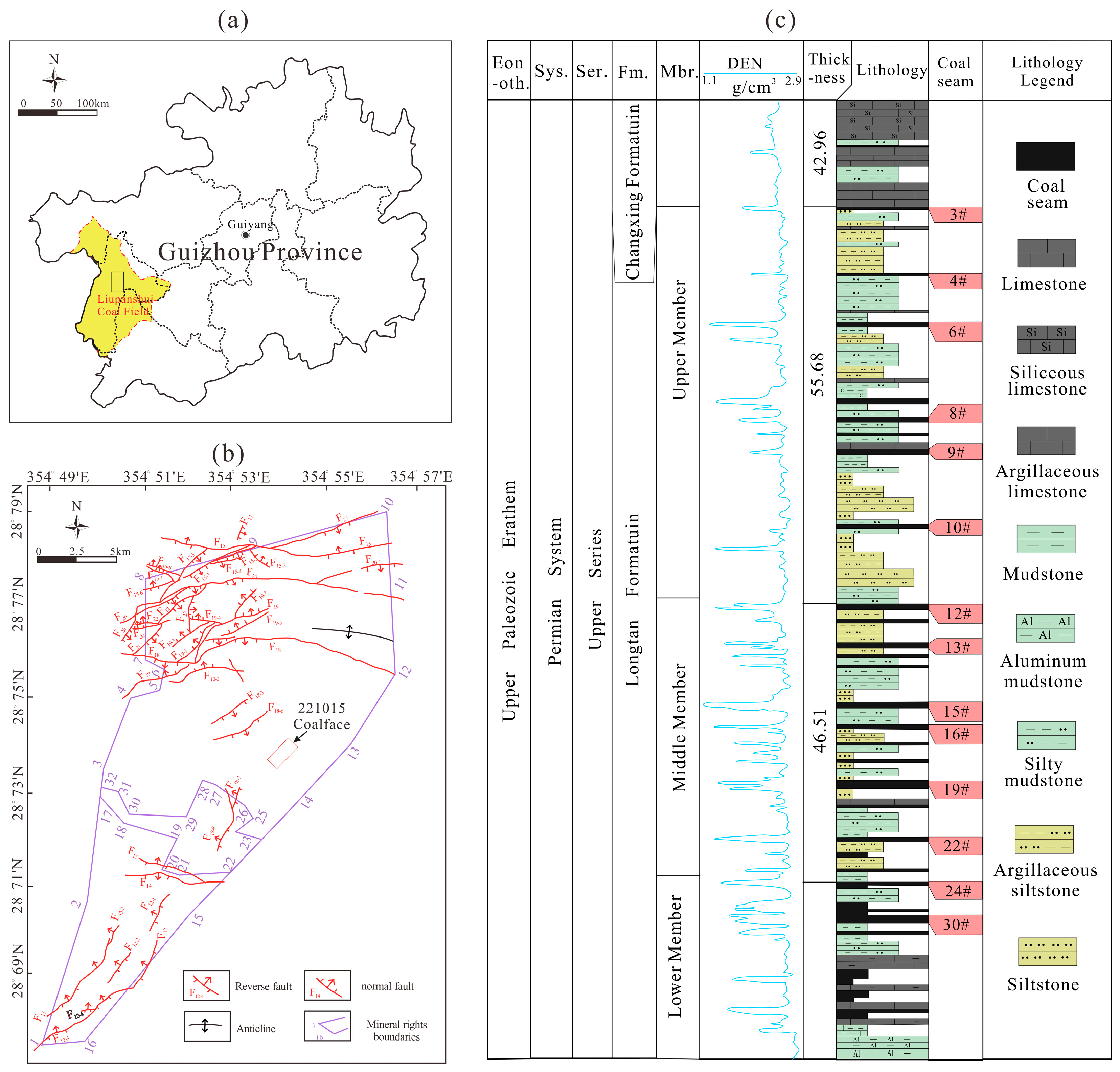
Figure 1. Location and coal measures strata sequence of the study area. (a) Location of the Liupanshui coalfield and Shanjiaoshu Coal Mine. (b) Geological structure map of Shanjiaoshu Coal Mine. (c) Coal Measures Stratigraphic Map of Shanjiaoshu Coal Mine.
Sustainability 17 10712 g001
Figure 2. Model and boundary conditions. (a) 3D model. (b) Section and measurement lines in model. (c) Cube centered on the well in model.
Sustainability 17 10712 g002
Figure 3. Actual daily gas production and simulated daily gas production.
Sustainability 17 10712 g003
Figure 4. Simulation scheme and process.
Sustainability 17 10712 g004
Figure 5. Volume stress variation (ΔΘ) of protected seams on Section and Lines I–V (Blue dashed lines represent surface wells, and brown dashed lines represent working faces).
Sustainability 17 10712 g005aSustainability 17 10712 g005b
Figure 6. Volume stress coefficient (Θ/Θ0) of protected seams near the well.
Sustainability 17 10712 g006
Figure 7. Equivalent plastic strain (γp) volume of protected seams.
Sustainability 17 10712 g007
Figure 8. Equivalent plastic strain (γp) of protected seams near the well.
Sustainability 17 10712 g008
Figure 9. Permeability coefficient (k/k0) of protected seams on Section and Lines I–V.
Sustainability 17 10712 g009
Figure 10. Permeability coefficient (k/k0) of protected seams near the well.
Sustainability 17 10712 g010
Figure 11. BCGP of protected seams.
Sustainability 17 10712 g011
Figure 12. Distribution of gas pressure gradient on Lines I–V.
Sustainability 17 10712 g012
Figure 13. Overlay results of stress, strain and permeability in the protected seams near the well.
Sustainability 17 10712 g013
Figure 14. Distribution of gas pressure coefficient (p/p0) of protected seams near the well.
Sustainability 17 10712 g014
Figure 15. Gas production mechanism controlled by permeability and gas pressure gradient.
Sustainability 17 10712 g015
Figure 16. BCGP of the CBM well at various relative positions to the coalface.
Sustainability 17 10712 g016
Table 1. Model parameters.
VariableParameterValue of Coal SeamsValue of Non-Coal Seams
ΡDensity14002500
EBulk modulus6402000
ΦInternal friction angle3832
C0Initial cohesion1.57.3
k0Initial permeability0.061
ϕmInitial fracture porosity0.0120.03
ϕfInitial pore porosity0.0490.1
CrResidual cohesion1.2
γp*Initial residual equivalent plastic strain0.01
VLLangmuir volume28
PLLangmuir volume2
CfFracture compressibility coefficient0.1412
ε m S Maximum sorption-induced strain0.012
fmInternal expansion coefficient0.1
ξIncrease coefficient of permeability100
Disclaimer/Publisher’s Note: The statements, opinions and data contained in all publications are solely those of the individual author(s) and contributor(s) and not of MDPI and/or the editor(s). MDPI and/or the editor(s) disclaim responsibility for any injury to people or property resulting from any ideas, methods, instructions or products referred to in the content.