Article

Performance Analysis of the Main Coffee-Producing Regions in Brazil: A Methodological Triangulation Based on Principal Component Analysis and Data Envelopment Analysis

by
Gustavo Alves de Melo
1,
Luiz Gonzaga de Castro Júnior
2,
Maria Gabriela Mendonça Peixoto
3,*,
Samuel Borges Barbosa
1,
Jaqueline Severino da Costa
2,
Maria Cristina Angélico Mendonça
2,
André Luiz Marques Serrano
3,
Lucas Oliveira Gomes Ferreira
4 and
Marcelo Carneiro Gonçaves
3
1
Institute of Exact Sciences and Technology, Federal University of Viçosa, Rio Paranaíba 38810-000, Brazil
2
Department of Agroindustrial Management, Federal University of Lavras, Lavras 37203-202, Brazil
3
Industrial Engineering Department, University of Brasilia (UNB), Brasilia 70910-900, Brazil
4
Department of Accounting and Actuarial Sciences, University of Brasilia (UNB), Brasilia 70910-900, Brazil
*
Author to whom correspondence should be addressed.
Sustainability 2025, 17(23), 10688; https://doi.org/10.3390/su172310688
Submission received: 3 April 2025 / Revised: 16 May 2025 / Accepted: 19 May 2025 / Published: 28 November 2025

Abstract

This study aimed to evaluate the performance of the main Arabica and Conilon coffee-producing regions in Brazil in the 2018–2019 and 2020–2021 harvest years, through the triangulation of the principal component analysis (PCA) and data envelopment analysis (DEA) techniques. To this end, the study followed a qualitative–quantitative approach, with descriptive character and inductive logic. The timeframe for this was 12 months to complete all methodological stages. Regarding efficiencies, six inefficient producers were identified for 2018–2019 and nine for 2020–2021. The results showed, in the 2018–2019 biennium, that production effectiveness is related to reductions in labor hiring and the creation of mechanisms to increase income on inefficient properties. On the other hand, in the 2020–2021 biennium, the intensive use of organic fertilizer and government credit were the most impactful aspects on the efficiency of properties. The contributions of this study were related to the identification of inefficient producers and, above all, the variables that most impact the performance of these sampling units so that they can reestablish their efficiencies. This study allowed for the generation of sustainable indicators to measure producers’ performance. For the agenda of future studies, it is suggested to replicate this study for other cultures and to expand the sample set.

Graphical Abstract

1. Introduction

In a recent context, research has advanced on issues related to increasing the performance of agro-industries [1,2,3,4], as a function of the growing demand for food in different regions of the world, which has generated discussions about yield in agribusiness [5].
In the context of coffee growing, the demand for coffee production in Brazil has grown in recent years, as has its commercialization on the international market [6,7]. Consumer interest in more sustainable production patterns is also a reality for the international coffee market [8]. However, the country has experienced fluctuations in yield in recent years due to climate issues and the economic and health crisis [9].
Therefore, measures to intensify the yield of agri-food systems must be taken [9]. It is also necessary that such measures include environmental preservation aspects [10]. In the case of coffee, the waste generated in its production represents 95% of the total product weight, with only 5% used for preparing the beverage [8]. Among the waste generated, coffee husk accounts for 30% of the fruit, in addition to having the highest nutritional value compared to the remaining 70% [11].
This study combines aspects of sustainable production and performance management to evaluate the main Arabica and Conilon coffee-producing regions in Brazil, according to the classification of the Center for Intelligence in Management and Markets (CIM/UFLA). This study seeks to answer the following questions: What are the most impactful variables on the performance of the main Arabica and Conilon coffee-producing regions in Brazil? What is the performance of these regions in terms of sustainable production?
Therefore, principal component analysis and data envelopment analysis were chosen due to their suitability for analyzing multidimensional and empirical datasets with sustainability indicators across economic, environmental, and social domains. Principal component analysis was applied to reduce dimensionality and multicollinearity, allowing for the creation of global performance indices with strong explanatory power [12,13,14,15,16,17]. Data envelopment analysis, as a non-parametric method, does not require a predefined functional form and is more appropriate than regression models for efficiency analysis [18]. Unlike ANN models, data envelopment analysis provides transparency and interpretability, which are important for guiding decision-making in agricultural settings [13]. Fuzzy MCDM methods, though relevant in subjective contexts, are less suitable for objective, quantitative datasets. Thus, the principal component analysis–data envelopment analysis combination offers a robust, interpretable, and data-driven approach to assess sustainable performance [19,20,21,22,23,24].
Finally, the general objective of this study was to evaluate the performance of the main Arabica and Conilon coffee-producing regions in Brazil in the 2018–2019 and 2020–2021 harvest seasons, through the triangulation of principal component analysis and data envelopment analysis. This study sought to contribute to increasing the productive efficiency of properties belonging to these regions by monitoring indicators in the Demographic, Socioeconomic, Agricultural, Certification, and Circular Economy dimensions.

2. Theoretical Background

2.1. Performance Management Applied to Agribusiness

Performance management has multiple connections with other important dimensions for achieving the efficiency of organizational processes, among them, the strategic, quality, and production dimensions [25]. To this end, many organizations carry out periodic strategic planning to update their goals and objectives to be achieved in each dimension, such as in Brown et al. [26]. Setting goals and objectives helps build a culture of continuous improvement in organizations to exponentially leverage their results [27].
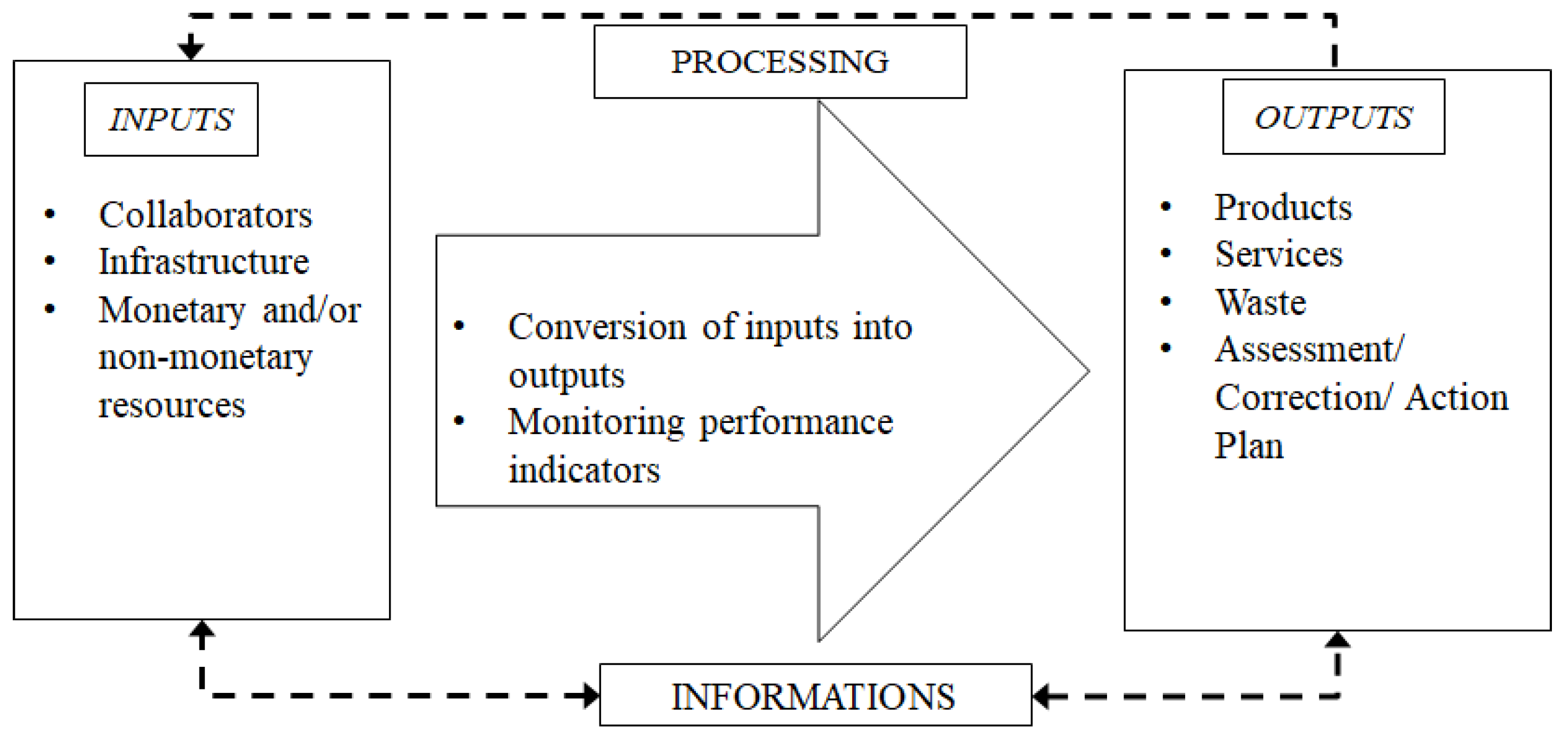
In this context, several sectors of the economy have benefited from these concepts and management practices, which help to increase their revenues and their representation in the global context [25]. Agribusiness is characterized as one of the most important sectors for the economy, with national and international prominence [9,28]. This is partly due to good management practices that have been developed in the sector through the application of organizational performance management concepts [9]. Figure 1 seeks to combine aspects of the production system with performance management practices through a systemic model of inputs, processing, and outputs that are common in different sectors, including agribusiness.
The model represented in Figure 1 reveals fundamental parts for the formation of an efficient production system. A priori, there is the consumption of monetary and non-monetary resources that, as process inputs, will go through the processing stage until the formation of final products and services. The processing stage occurs by pre-defining goals and objectives for each organizational dimension or department. Thus, there is a conversion of inputs into outputs and monitoring of performance indicators. According to Brown et al. [26], performance indicators represent measures that organizations use to measure their performance. Still, according to Brown et al. [26], there are different types of indicators distributed in the strategic, quality, capacity, and yield spheres.
In the final stage of generating outputs, in addition to the formation of final products and services, waste from the process is generated that can be reincorporated into the inputs of the production system based on a reverse logistics stage. For agribusiness, the possibility of reusing waste reflects positively on production, saving resources, in addition to contributing to the environment, as it is a sustainable measure [28,30]. At this stage, the entire process is also evaluated, where there is the possibility of identifying flaws and possible corrections. Furthermore, in some cases, it is common to develop action plans aimed at organizational goals and objectives. In this context, the information flow in both directions of the process is fundamental for implementing a culture of continuous improvement [25,30].
When it comes to performance indicators in the context of agribusiness, there is a predominance in the use of financial indicators [9,28]. However, for effective agricultural production to occur, a holistic view of the process is necessary, along with the consideration of other non-financial indicators. In this context, agricultural capacity, yield, and quality indicators have been incorporated into the analysis [9]. In addition, in the sustainable sphere, agribusiness has advanced in generating new energy sources, saving natural resources, as well as emitting smaller amounts of greenhouse gases [30].
Sustainability impacts the performance of agricultural properties, as this concept is based on economic, social, and environmental pillars [31,32]. Economic sustainability presupposes that financial planning is carried out for investments in sustainable actions [31]. With adequate planning, these projects can occur solidly, without the possibility of interruptions due to a lack of resources. Furthermore, social sustainability encompasses a concern for employees and society impacted by agricultural properties to bring quality of life and improvements in education, health, and leisure, among others [32]. Environmental sustainability, on the other hand, corresponds to the preservation of biodiversity, directing efforts towards saving natural resources and minimizing environmental impacts [31,33].
The influence of sustainable practices in the marketing of products of agricultural origin is accentuated [2]. The recent scenario marked by undesirable climate events has negatively impacted food production, which emphasizes the importance of sustainable actions for the recovery of degraded areas and food production [32]. However, large-scale production still resists elementary production habits based on the use of agrochemicals to increase yield and control the action of pests [2,31].
The quality perceived in food production can be expressed using certifications in different production sectors [34,35]. Certifications represent a promising path for managing the performance of agricultural properties, since employee training reflects the level of knowledge and investments that have been made to develop and achieve better results [35]. It is worth remembering the multiplicity of certifications that exist within the scope of agribusiness, with emphasis on quality and sustainability [34].
Production capacity and distribution logistics include other important dimensions that make up the debate about performance management in agribusiness [36,37]. Therefore, performance indicators are necessary to guide decisions about adjustments in a production capacity [38]. Distribution logistics address important decisions about choosing appropriate modals and input suppliers to reduce resource expenses and increase property profits [36,37].

2.2. Data Envelopment Analysis

Data envelopment analysis involves the use of non-parametric mathematical models that help measure the performance of organizations called decision making units (DMUs) [39]. According to Ferreira et al. [40], DMUs are considered productive units that make decisions in different areas of knowledge. Thus, the non-parametric approach is used for multiple inputs and products, from which efficient production frontiers are generated for each unit analyzed, based on the principles of linear programming [40]. Efficiency is then calculated based on the distance between each DMU and the estimated efficiency frontier [41].
According to Ferreira et al. [40], when using data envelopment analysis, concepts such as yield and technical efficiency in organizations must be elucidated. Yield corresponds to how resources will be used for production, so that inputs are consciously consumed. However, there may be gaps in inputs, which signal their shortage or excess [40]. Thus, the concept of technical efficiency emerges, comparing the current with the most appropriate yield, according to the stipulated efficiency frontier [41]. The concept of technical efficiency is aimed at eliminating slack, while the conscious consumption of inputs is related to the technology adopted and the production process, for example [39,40].
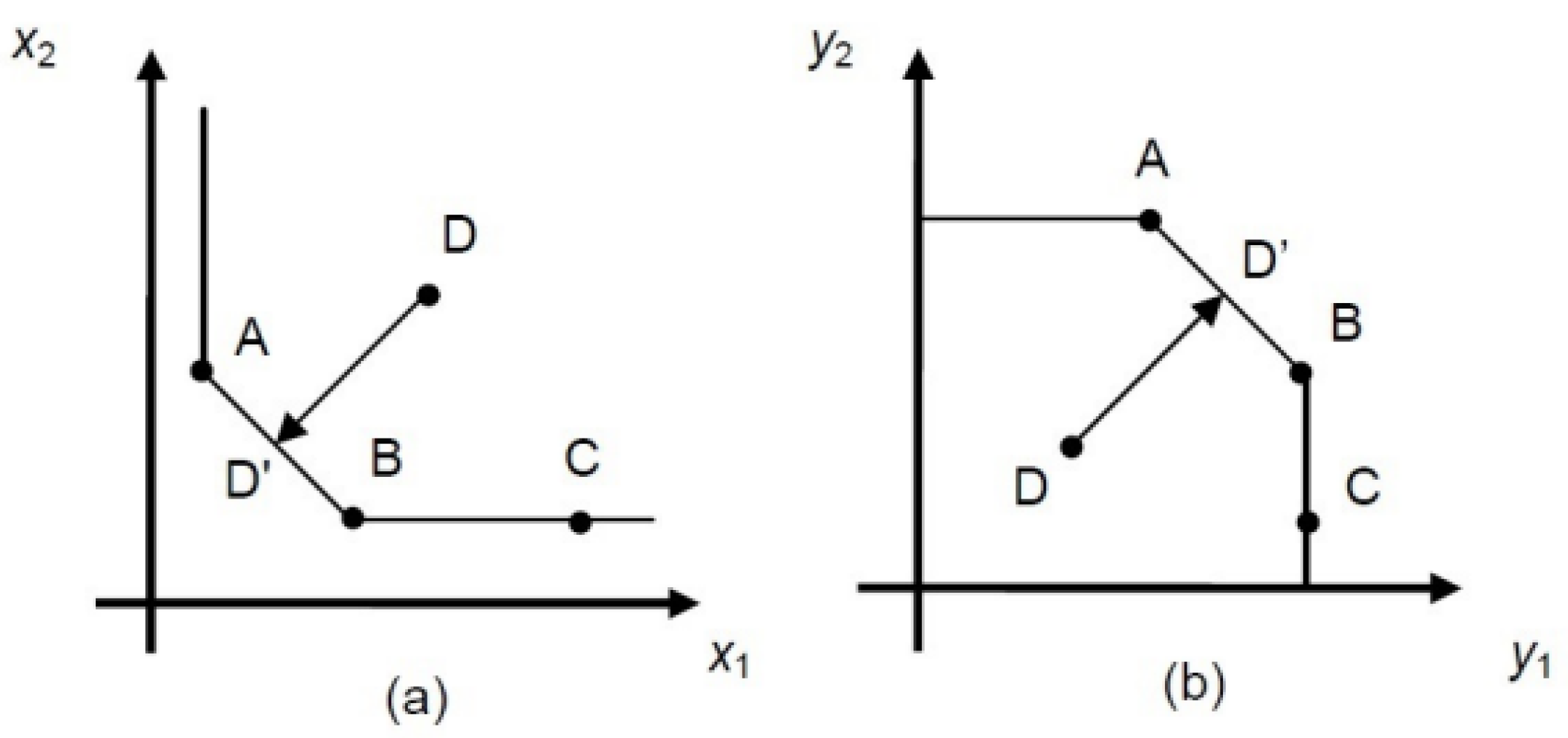
On the other hand, effectiveness is related to achieving goals and objectives, without an active concern with input expenditure [40,41]. It is worth highlighting the existence of two types of efficiency models for data envelopment analysis, which are the input-oriented model and the product-oriented model, as represented in Figure 2.
As shown in Figure 2a, for the input-oriented efficiency model, the objective is to reduce input while maintaining a constant output level. Consequently, considering x1 and x2 as inputs, DMUs A, B, and C are considered efficient once they are located on the efficient frontier. However, DMU D must reduce its input expenditure to reach the efficiency of the frontier (point D’). In the case of DMU C, although it is considered efficient, there is the possibility of this unit reducing its consumption of input x1, keeping the consumption of input x2 constant until it equals DMU B in terms of efficiency.
In Figure 2b, in the product-oriented efficiency model, the objective is to increase the production level while maintaining constant input consumption. Therefore, DMUs A, B, and C are also considered efficient. DMU C can increase the product y2 by keeping y1 constant to match DMU B, and DMU D must increase products y1 and y2 until reaching the efficiency frontier (point D’). In both situations, DMU C is efficient, but has slack, i.e., after optimizing input consumption or adjusting the production level, this DMU can become more efficient.
Regarding returns to scale, traditional data envelopment analysis models can present the following two classifications: CCR (developed by Charnes, Cooper, and Rhodes), with constant returns to scale, and BCC (developed by Bankers, Charnes, and Cooper), with variable returns to scale [40]. In this context, the CCR model admits that increases in inputs will result in proportional increases in outputs. The BCC model does not admit this proportionality between inputs and products, allowing maximum yield to vary along its frontier [40].
To this end, both models present input- and output-oriented formulations. According to Ferreira et al. [40], the input-oriented CCR model is described by (1) as follows:
M a x i m i z e   E f o = j = 1 m μ j y j 0    
and is subject to the following:
i = 1 r v i x i 0 = 1
j = 1 m μ j y j k i = 1 r v i x i k 0
μ j , v i 0 ,     i ,   j  
According to Equation (1) and restrictions (2), (3), and (4), values for the decision variables μ_j 〖e v〗i are estimated to maximize the efficiency of the DMU. In the case of the product-oriented CCR model, it is described by Ferreira et al. [40] in (5) as follows:
M i n i m i z e   E f o = i = 1 r v i x i 0
and is subject to the following:
j = 1 s μ j y j 0 = 1  
j = 1 s μ j y j k i = 1 r v i x i k 0 ,     k  
μ j , v i 0 ,     i ,   j    
In this case, the model represented by the objective function (5) and its restrictions (6), (7), and (8) allows the maximum quantity of product that can be produced to be estimated while keeping inputs constant. However, the choice of model orientation does not have much impact on the technical efficiency value, which depends on the objective to be achieved with the analysis (reducing inputs or increasing production). Moreover, both input- or output-oriented models can be decomposed into allocative and economic techniques, with the consideration of the value of final products [40].
According to Ferreira et al. [40], the input-oriented BCC model is a model compatible with the input-oriented CCR model plus the scale factor μ_0, as represented in (9)–(12). Thus, the BCC model generalizes the CCR model, considering the occurrence of constant, increasing, and decreasing returns to scale [40].
M a x i m i z e   E f o = j = 1 m μ j y j 0 + μ 0                     ( μ , v )  
This is subject to the following:
i = 1 r v i x i 0 = 1  
j = 1 m μ j y j k i = 1 r v i x i k + μ 0 0 ,     k
μ j , v i 0   ( ε ) ,     i ,   j
According to [39], inputs have positive prices and relative scarcity, which induce organizations to operate with technical efficiency, reducing costs, saving inputs, and maximizing the production limit according to the existing set of restrictions. Finally, the product-oriented BCC model is described by Ferreira et al. [40] in (13) as follows:
M i n i m i z e   E f o = i = 1 r v i x i 0 + v 0                                   ( μ , v )  
and is subject to the following:
j = 1 s μ j y j 0 = 1
j = 1 s μ j y j k i = 1 r v i x i k + v 0 0 ,     k
μ j , v i 0   ( ε ) ,     i ,   j  
According to [39,41], data envelopment analysis models differ from strictly economic models, since there is no need to convert all inputs and outputs into monetary units. Furthermore, the efficiency indices estimated by the technique are based on real data, which allows the study of outliers (units of asymmetric behavior) as possible benchmarks for other less efficient DMUs [40].
Thus, data envelopment analysis is a widely used non-parametric method used for evaluating the relative efficiency of decision making units (DMUs) when multiple inputs and outputs are involved. In recent years, several high-quality studies have expanded its applications and methodological formulations. For instance, [43] proposed a modified slacks-based measure (SBM) that improves discrimination among efficient units and addresses input–output slacks more precisely in production systems. The research in [44] employed data envelopment analysis combined with a multiregional input–output model to evaluate and predict the efficiency of the water–energy–carbon nexus across Chinese regions, demonstrating its applicability to complex sustainability scenarios. Similarly, [45] applied data envelopment analysis to compare environmental efficiency across European countries, highlighting the method’s capacity to benchmark sustainability performance at a national level. These advances support the methodological robustness and practical relevance of data envelopment analysis in sustainability assessments, validating its use in this study to analyze the performance of coffee-producing regions in Brazil.

3. Materials and Methods

This research has an empirical nature, with a descriptive character, inductive logic, and a qualitative–quantitative approach. The selection of variables and performance analysis occurred, respectively, through the methodological triangulation of principal component analysis and data envelopment analysis. For this purpose, the research sample consisted of 33 coffee producers in Brazil’s 12 main producing regions participating in the CIM/UFLA Campo Futuro project. The selection criterion adopted for producers was the choice of individuals who demonstrated the greatest commitment to the Campo Futuro project through their participation in project meetings. Campo Futuro is a project carried out by the Brazilian Confederation of Agriculture and Livestock (CNA) and the National Rural Learning Service (SENAR). The project, aimed at rural producers, is implemented in partnership with the following universities and research centers: Cepea Esalq/USP; CIM/UFLA; Labor Rural/UFV; and Pecege, which focuses on improving farm management through data-driven methodologies.
To ensure methodological rigor, we prioritized regions where producers demonstrated consistent engagement in Campo Futuro meetings, reflecting their commitment to adopting the best practices. This criterion aligns with prior studies [46,47,48,49,50], which highlight these areas as benchmarks for productivity and sustainability in Brazilian coffee farming. Additionally, the selected regions—Minas Gerais, Espírito Santo, São Paulo, and Bahia—collectively account for 85% of national Arabica and Conilon production [51], reinforcing their representativeness for this analysis.
By integrating Campo Futuro’s structured data with established academic references, this approach strengthens the validity of our regional selection and ensures alignment with broader agronomic research.
To strengthen the discussion of our methodological framework and its reliability, Table 1 presents a comparative overview of recent studies that have applied similar or alternative methods for performance evaluation in agribusiness and sustainability. This comparison highlights the methodological structure, scalability, and core contributions of each approach, reinforcing the advantages of the proposed principal component analysis–data envelopment analysis hybrid method.
According to the data envelopment analysis, the research sample must include a number three times greater than the number of variables selected [18]; thus, five variables were selected to comprise the analysis for the 2018–2019 harvest season, and six were chosen for the 2020–2021 harvest season. Data collection occurred through the application of a semi-structured questionnaire to coffee producers in these regions (Table 2).
The analysis variables were related to the five performance dimensions, namely, “Demographic”, “Socio-economic”, “Agricultural”, “Certification”, and “Circular Economy”, as represented in Table 2. Therefore, the set of variables considered for analysis consisted of 19 outputs and 15 inputs, a total of 34 variables (Table 3).
Inputs: Qtd_H (number of men %); Qtd_M (number of women %); ID (average age of producers (men and women)); TE_prop (time of existence of the property, in years); Ac_prop (number of work accidents occurring per year, in units); Qtd_cafeDesp (amount of coffee wasted in commercialization, including harvest, transportation, handling, and sale, in percentage); Tam_prop (total size of the property, in hectares); Area_cafe (total land area available for cultivation, in hectares); COEmedio_sc (average production cost, (COE) in a year, in Reais); Cred_financ (amount financed in the year by public and private banks and credit unions, in Reais); Area_degrad (percentage of degraded areas used for planting); Agua_cons (volume of water consumed, liters per month); Combust_cons (amount spent per month on fuel, including gas and diesel, in liters/month); Energ_eletric (amount spent on electricity in a year, in Reais); QtdInsum_prod (amount of inputs used per bag produced, in Reais).
Outputs: Esc_med (education level of producers, average in years); Qtd_M_Gest (number of women in property management, in %); Rend_prop (annual property income per harvest, in Reais); Texp_prod (producer experience, in years); Rend_tec (annual income spent on investment in technology, in percentage); Capac_func (number of training courses taken by producers/employees per year, in units); Sacas_prod (volume of coffee produced in a year, in bags); Pmedio_sc (average value of a coffee bag in a year, in Reais); Capac_prod (property production capacity, in bags/hectare/year); Area_preserv (percentage of preserved areas (virgin forest) on the property); Agua_trat (volume of water treated on the property, liters per month); Certif_prop (number of certifications obtained by the property, in units); Agua_reapr (volume of water reused on the property, liters per year); Energ_prod (percentage of energy produced on the property itself in the year); Area_irrig (percentage of irrigated area on the property); Resid_trat (amount of solid waste treated, kg/year); AdOrgan_prod (amount of organic fertilizer produced, kg/year); Energ_renov (amount invested in renewable energy in a year, in Reais); PropAd_OrgQuim (proportion of organic/chemical fertilizer used).
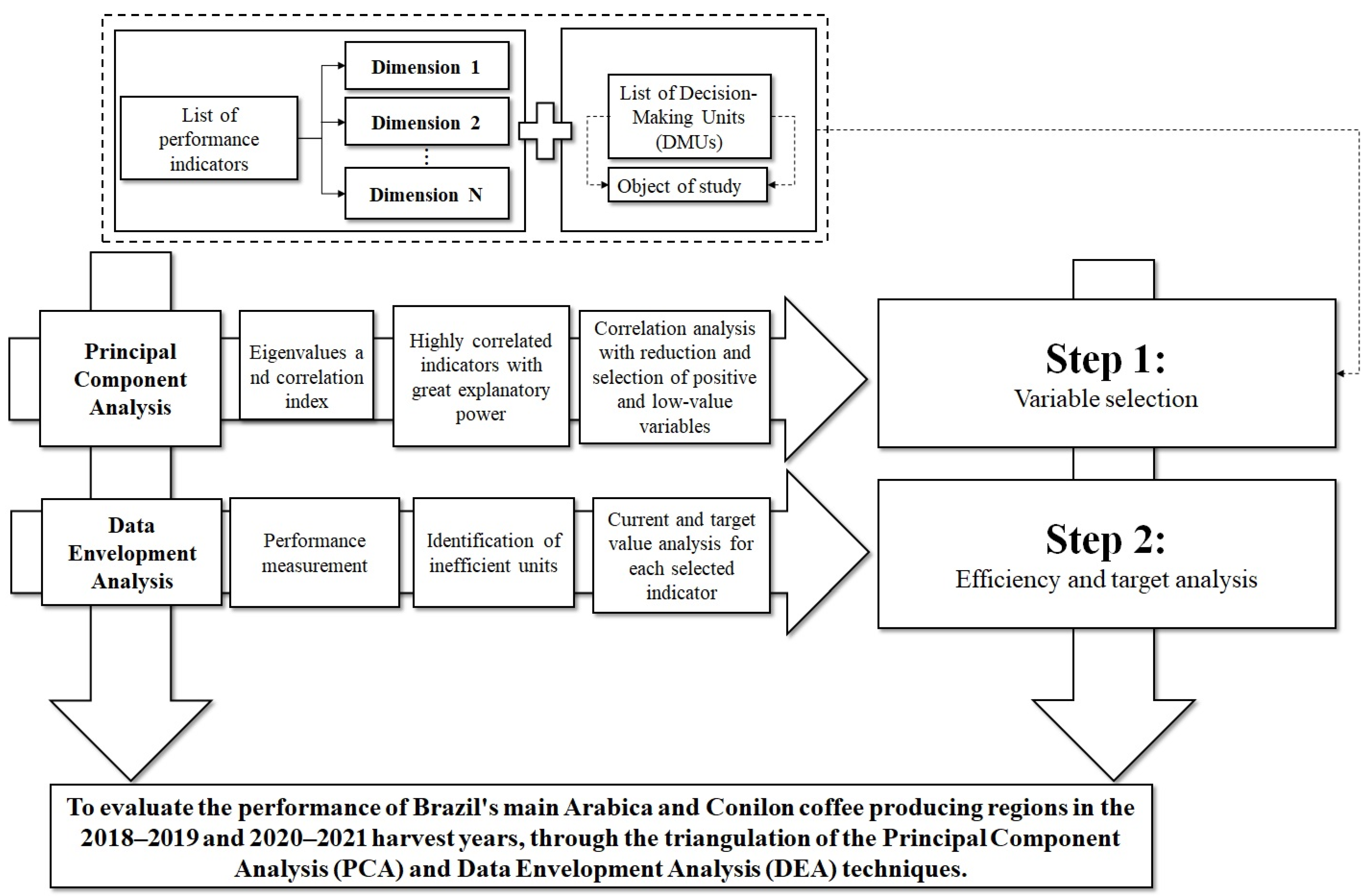
It is worth mentioning that the study covered 12 months, corresponding to the data collection period. According to the proposed objective, to measure the performance of these producing regions, the study is empirically structured in two stages, by the guidelines of Peixoto [52] and the model of Peixoto et al. [53,54,55], as shown in the following (Figure 3):
(1)
First stage: application of principal component analysis and proposition of global performance indices for managing coffee-producing regions with support from the software R-Project 4.2.1 and Rstudio version 2022.07.2+576.
(2)
Second stage: application of data envelopment analysis using the PIM-DEA 3.1 software.
Regarding principal component analysis, within the scope of the defined stages, Equation (17) presents its algebraic representation [12,13], reinforcing its appeal as a mathematical formulation, based on the contributions of [14], considering the defined research stages, aimed at applying the techniques. Therefore, we have Yi = 1, 2, …, p, referring to the eigenvectors (e = 1, 2, …, p), as well as X to the original variables (X = 1, 2, …, p); the number of variables must meet the criterion of being less than or equal to the number of principal components, so that Yi corresponds to the principal component [15,16], as shown in the following:
Yi = ei1×1 + ei2X2 + … + eipXp
To ensure comparability across regions with diverse socio-economic and operational characteristics, all input and output variables were normalized using min–max scaling prior to the data envelopment analysis application. This standardization process ensures that variables measured on different scales (e.g., hectares, liters, currency) are transformed to a common range [0, 1], preserving relative differences while eliminating scale bias. In addition, the principal component analysis stage helped reduce dimensionality and mitigate potential collinearity among variables, increasing the robustness of the input–output structure. The regional differences in farming systems (manual vs. mechanized) were indirectly captured through variables such as labor composition, fuel consumption, and production capacity. These procedures are aligned with the best practices in the performance benchmarking literature [18,40].
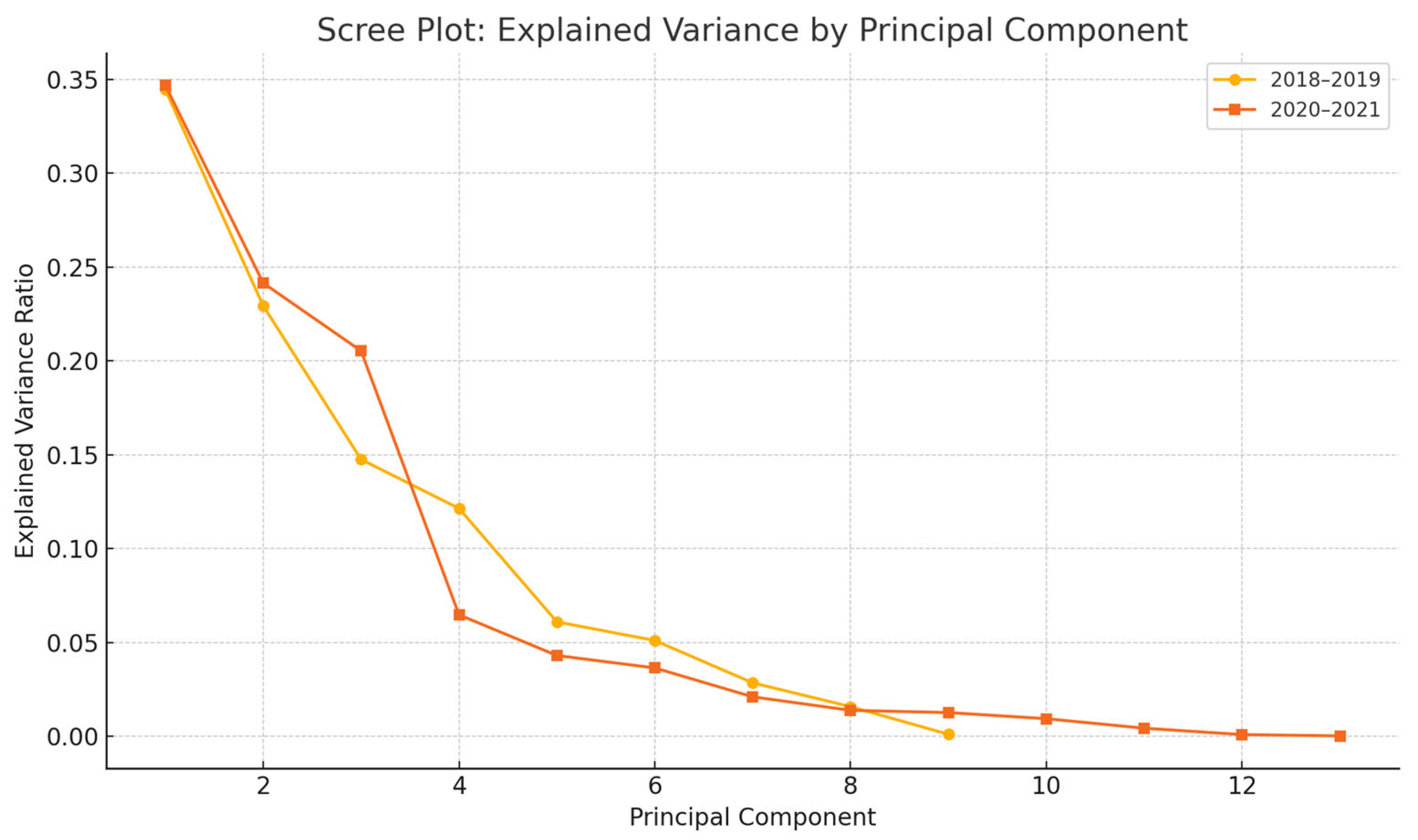
It is worth remembering that the variables with the largest eigenvectors and, therefore, the highest correlation indices, which, in module, were about the first three principal components (CP1, CP2, and CP3), were selected. The adoption of these variables is justified, since components I, II, and III account together for the highest percentage of the total variance [17], thus presenting greater explanatory power, with greater relevance for this project, as shown in Figure 4.
The data envelopment analysis technique was adopted for the second stage. In this study, the variable returns-to-scale BCC model was used, which means that inputs increase or decrease in a different proportion than outputs, with respect to the size of the units analyzed. This means that reductions or increases in inputs do not generate changes in the same proportion in outputs. Furthermore, the BCC model serves to distinguish between technical and scale inefficiency, estimating pure technical efficiency at a given operation scale, identifying whether increasing, decreasing, or constant scale gains are present. This model admits that maximum yield varies as a function of the production scale. Its mathematical formulation is presented in the following Equation (6), adapted from Cooper et al. [18]:
M i n i m i z e i = 1 r v i x i 0 v 0                               ( μ , v )
and is subject to the following:
j = 1 s μ j y j 0 = 1
j = 1 s μ j y j k i = 1 r v i x i k + v 0 0 ,     k
μ j , v i > 0   ( ε ) ,     i ,   j  
where v0 means no signal restriction.
The choice of the BCC (Banker, Charnes, and Cooper) model in the data envelopment analysis framework was motivated by the need to account for variable returns to scale, since the analyzed agricultural units differ in size, mechanization level, and production structure. The BCC model enables the separation of pure technical efficiency from scale efficiency, which is particularly relevant in contexts such as family farming and heterogeneous agricultural systems, as found in Brazil’s coffee-producing regions. Moreover, the use of an output-oriented approach aligns with the study’s goal of maximizing desirable outcomes, such as income, sustainable practices, and production capacity. Although more recent data envelopment analysis approaches exist, the BCC model remains widely validated and recommended in the literature for studies involving moderate sample sizes and real-world data, due to its robustness, interpretability, and practical relevance for decision makers in the field.
Since data envelopment analysis allows the adaptation of analyses according to the particularities of the studied scenario, through input or output orientation options, it was determined that the model is output-oriented. This fact is justified, since it is based on maximizing the output resulting from CSAs, going beyond the perspective of reducing consumed inputs.

4. Results

4.1. Selection and Classification of Variables into Inputs and Outputs to Evaluate the Performance of the Main Coffee-Producing Regions in Brazil Based on Principal Component Analysis

The selection of variables was performed for the 2018–2019 and 2020–2021 harvest seasons using principal component analysis. This technique allowed for the identification of the most representative variables with strong correlations to the principal components (PC1, PC2, and PC3), facilitating the construction of global performance indices for each dimension analyzed (Demographic, Socioeconomic, Agricultural, Certification, and Circular Economy). The selected variables were then classified as either inputs or outputs, respecting the methodological requirements for the subsequent application of data envelopment analysis.
Based on principal component analysis, the variables were selected for the harvest seasons 2018–2019 and 2020–2021. Five original variables were selected for the 2018–2019 harvest season. Tam_prop and Area_cafe showed correlation coefficients of 0.81 and 0.60, respectively, which were the inputs selected for the agricultural dimension. The variables Agua_cons (“Circular Economy” dimension), Rend_prop (“Socioeconomic” dimension), and Qty_M (“Demographic” dimension) had correlation coefficients of 0.88, 0.81, and 0.94, respectively. The absence of the “Certification” dimension is observed, due to the low score achieved by the only variable belonging to this dimension.
A correlation analysis between the variables selected for the 2018–2019 harvest season was carried out according to Table 4. Low correlation values between the variables were prioritized, with the five original variables being maintained, as they presented correlations lower than 0.76.
The highest correlation occurred between the input Area_cafe and the output Rend_prop, in the order of 75.7%, a fact that favors the application of data envelopment analysis. The original variables Qtd_M, Tam_prop, Agua_cons, Area_cafe, and Rend_prop were selected for the next stage of the data envelopment analysis application. The original variables Qtd_M, Tam_prop, Agua_cons, and Area_cafe were classified as inputs, while the variable Rend_prop included the only output of this analysis. In addition, among the inputs with the highest and lowest correlation coefficients, Qtd_M and Area_cafe, respectively, deserve to be highlighted. For PC1, the original variable Agua_cons showed the highest numerical value for the correlation.
Similarly, for the analysis of the 2020–2021 harvest season, six original variables were obtained, with the variables Rend_tec, Cred_financ, and Area_cafe belonging to the “Agricultural” dimension with correlation coefficients of 0.73, 0.62, and 0.89, respectively. For the “Socioeconomic” dimension, the variable Rend_prop was considered with a correlation of 0.94. For the “Circular Economy” dimension, the variables QtdInsum_prod and AdOrgan_prod were considered, with correlations of −0.61 and 0.81. In this case, the “Demographic” and “Certification” dimensions were absent, since their variables did not present sufficiently high correlations for the three principal components addressed. Consequently, three dimensions were considered for the analysis of the 2020–2021 harvest season from the perspective of data envelopment analysis.
Subsequently, an analysis of the correlations between the variables themselves was developed for the 2020–2021 harvest season to reduce the volume of inputs and outputs covered, as shown in Table 5. In this context, six variables with correlations lower than 83% were selected.
The input Area_cafe showed a strong correlation with the output Rend_prop again, in the order of 82%. Therefore, the original variables Area_cafe, Cred_financ, AdOrgan_prod, QtdInsum_prod, Rend_prop, and Rend_tec were selected. In this context, global performance indices were defined based on the analysis of correlations and eigenvectors of the selected original variables and their respective components (PC1, PC2, and PC3). Table 6 represents the global performance indices generated from the variables highly correlated with PC1, PC2, and PC3, considering the 2018–2019 harvest season.
According to Table 6, based on the values recorded by the eigenvectors and correlations of the original selected variables, it was possible to create four performance indices for the analysis of the 2018–2019 harvest season. An index was then developed for the Qtd_M, which was highly correlated to PC2, one for the inputs selected for PC1 (Water_cons and Tam_prop), one for the input Area_cafe, which was most correlated to PC3, and one for the only output considered in this analysis (Rend_prop), belonging to PC1.
For 2020–2021, the analyses were replicated so that six global performance indices were obtained from variables highly correlated with PC1, PC2, and PC3, as represented in Table 7.
As shown in Table 5, a performance index was created for each variable addressed. This is justified, as an input and output were included in each performance dimension, which made it unfeasible to combine these original variables to generate the indices to respect the requirements for applying data envelopment analysis, that is, the output-oriented BCC model.

4.2. Application of Data Envelopment Analysis for Efficiency Assessment

Data envelopment analysis is a widely used non-parametric method for evaluating the relative efficiency of decision making units (DMUs) when multiple inputs and outputs are involved. In this study, an output-oriented BCC model was applied to measure pure technical efficiency among coffee producers. The model’s flexibility enabled the separation of scale efficiency from technical efficiency, which is particularly relevant in heterogeneous production systems such as those found in Brazil’s coffee-producing regions.
Efficiency analysis from the perspective of Banker and Chang’s super-efficiency model (Banker, Chang, and Zheng, 2017) allowed for the identification of sampling units with false efficiencies (outliers), that is, those that exceeded the limit stipulated for the 120% efficiency frontier. Therefore, only producers 1, 5, 6, 7, 8, 9, 12, 13, 14, 16, 17, 18, 19, 20, 23, 26, 27, 28, 29, 32, and 33 were considered for the efficiency analysis of the 2018-2019 harvest season, and producers 2, 3, 4, 10, 11, 15, 21, 22, 24, 25, 30, and 31 were eliminated; together, they represent 12 of the 33 sampling units initially considered, or 36.3%.
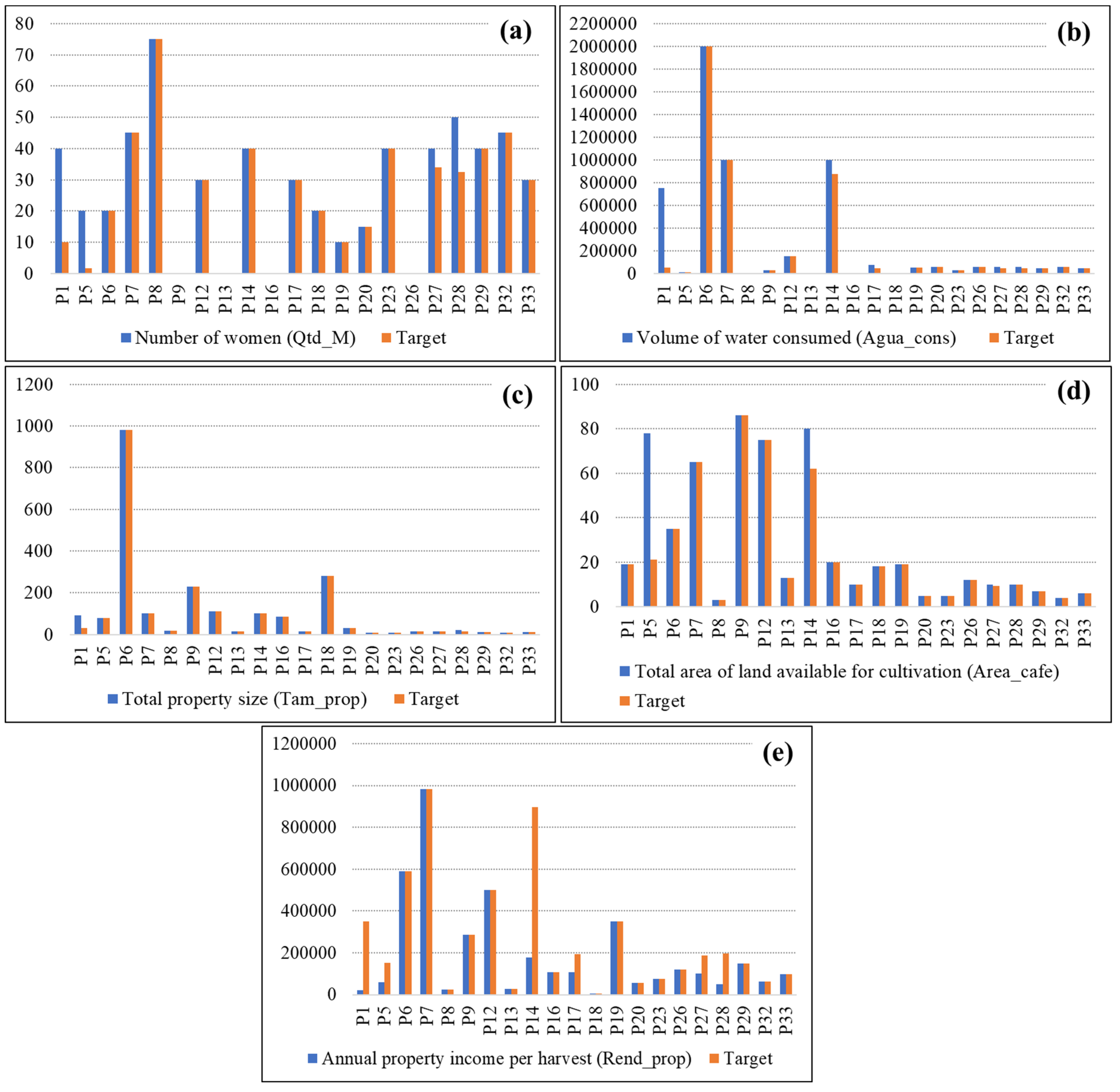
This analysis allowed for the identification of inefficient sampling units, specifically, six producers in the 2018–2019 harvest season and nine producers in the 2020–2021 harvest season. Although the original variables analyzed in these two years do not coincide, it is worth highlighting the drop in general efficiency when moving from one harvest season to the next, as a function of climatic, economic, and public health aspects. At this stage of the study, the synthesis of targets for inputs and outputs in these units is emphasized as a way of guiding these units towards reestablishing their efficiencies. Figure 5a–e presents in detail the targets for each sampling unit for the variables covered in the 2018–2019 harvest season.
Figure 5a corresponds to the variable number of women (Qtd_M) of the “Demographic” dimension, which was highly correlated with PC2. Thus, it was possible to develop the Labor Performance Index. Hiring labor is an important step in ensuring property efficiency, since the incorporation of the manual cultivation system favors the achievement of a higher level of product quality and, above all, an increase in annual revenue, as quality is directly associated with better product prices.
Only 4 of the 21 inliers did not present values coinciding with the targets presented for the variable Qtd_M. It is recommended that around 81% of these inliers keep their values constant in this variable (Qtd_M) to maintain efficiency in this input. In the case of inefficient producers, they corresponded to inliers 1, 5, 27, and 28. In these cases, it is suggested that there are reductions in the number of women in the order of 75%, 91.4%, 15%, and 35%, respectively. This fact contradicts the principles of gender equality for production activities in coffee production, since there was a predominance of men in various activities in these sampling units. However, from the perspective of reducing labor costs, these measures become relevant to achieving better efficiency scores.
The global performance index formed by the inputs total property size and volume of consumed water corresponded to the Performance Index in the preservation of water resources, as shown in Figure 4b,c. These inputs were more correlated to PC1 and belong to the “Agricultural” and “Circular Economy” dimensions, respectively. Property size is a variable that, in isolation, does not reflect the situation of a producer in terms of the overall efficiency achieved, making it necessary to monitor other indicators, such as production capacity, area destined for coffee cultivation, property income, effective operating costs, among others.
Productors 1 and 28 did not achieve the efficiency required for the Tam_prop input, and it was recommended to reduce this number by 67.4% and 25% of their territorial volumes, respectively. This measure makes it possible to increase environmental preservation areas, reestablish virgin forests in degraded areas, as well as conserve water resources in these areas and existing fauna. Moreover, it leads to the reduction in productive land maintenance costs and benefits the creation of a more efficient organizational culture focused on increasing yield, since this aspect is not directly linked to the size of each property.
The variable volume of consumed water contributes to the results of this study by addressing one important dimension for the field of sustainable development from the perspective of the “Circular Economy” dimension. The conscious consumption of water resources through the reduction in waste, treatment, and reuse by producers guarantees better operating conditions for the property during drought periods.
According to Figure 5b, producers 1, 14, 17, 27, and 28 were inefficient regarding the performance of this input (Agua_cons). Therefore, it is recommended to reduce this consumption by 93.3%, 12.4%, 36.6%, 23.3%, and 22.9%, respectively, as a strategy for reaching the efficiency frontier in these sampling units. It is interesting to highlight producer 1, who achieved the highest percentage of the suggested reduction in this input and, above all, was the most inefficient sampling unit of the 21 units considered. This indicates the possible relationship and contribution of this input (Agua_cons) with the continuous improvement of the pure technical efficiency of these producers. It is emphasized that the satisfactory performance of this index supports the consideration of measures to preserve and reduce the consumption of water resources in these units.
However, reducing these numbers is a difficult measure to implement by some of these producers due to their dependence on irrigation systems. At this moment, the occurrence of a migration of producers to automated irrigation models at the end of this harvest season is accentuated, even though the longest drought observed was recorded in the next harvest season (2020–2021). This reveals the concern of these inliers regarding the guarantee of their plantations to minimize the expected impacts related to climate change. Finally, water reuse and treatment practices are still almost non-existent among the majority of sampling units, indicating a gap to be explored.
The index related to the input “Total land area available for cultivation” made it possible to create the Performance Index in the geographical distribution of production, as represented in Figure 4d. It is expected that this index will favor the discussion on leveraging the performance of inefficient producers regarding the areas used on their properties for planting coffee. This is the only variable that was highly correlated with PC3, belonging to the “Agricultural” dimension.
Initially, this index also favored secondary analyses relating to the productive capacity of the sampling unit compared with the values achieved in the variable Tam_prop. It can be observed that there were only four inefficient producers in this input, namely, producers 5, 14, 17, and 27, so that they must reduce these areas by 73.1%, 22.4%, 0.2%, and 6%, respectively, to achieve efficiency. These inefficient producers for the variable Area_cafe presented values coinciding with the targets for the variable Tam_prop. This reveals a reduced current production capacity for these sampling units, which results in a greater volume of production costs. Therefore, a reduction in the number of Area_cafe would mean an increase in this productive capacity, since the level of resources applied to production would be maintained.
Regarding the only output considered in this analysis, the variable Rend_prop, made it possible to generate the Economic Performance Index based on property gross income, as shown in Figure 5e. In addition, it was a variable belonging to the “Socioeconomic” dimension, which was highly correlated with PC1. Consequently, the consideration of a strictly economic variable strongly contributes to understanding the production reality of each sampling unit.
Based on the values presented in Figure 5e, the inefficient producers in terms of performance in the output Rend_prop were inliers 1, 5, 14, 17, 27, and 28. It is suggested that they create internal conditions on the property to increase their income in the order of 1490.9%, 150.3%, 407.2%, 82.1%, 85.1%, and 296%, to reach the efficiency frontier. In the case of sampling units 1, 14, and 28, they obtained the largest gaps between the actual and target values, indicating greater inefficiency in this output. However, it must be considered that a producer’s gross income is linked to the productive capacity of their property, which depends on the variable Area_cafe, for example, among other resources, and the price paid to the producer, which is influenced by factors external to production, such as economic and environmental variables and crisis scenarios, among others.
Therefore, the ideal configuration for efficiency in this index corresponds to maximizing the income of each sampling unit, so that the generation of greater income brings conditions for the structural and productive improvement of these inliers. Furthermore, the relationship between this output and its targets is inverse to the inputs, given the methodology of the output-oriented BCC model. In other words, at this moment, we seek to maximize output where the targets present a higher value.
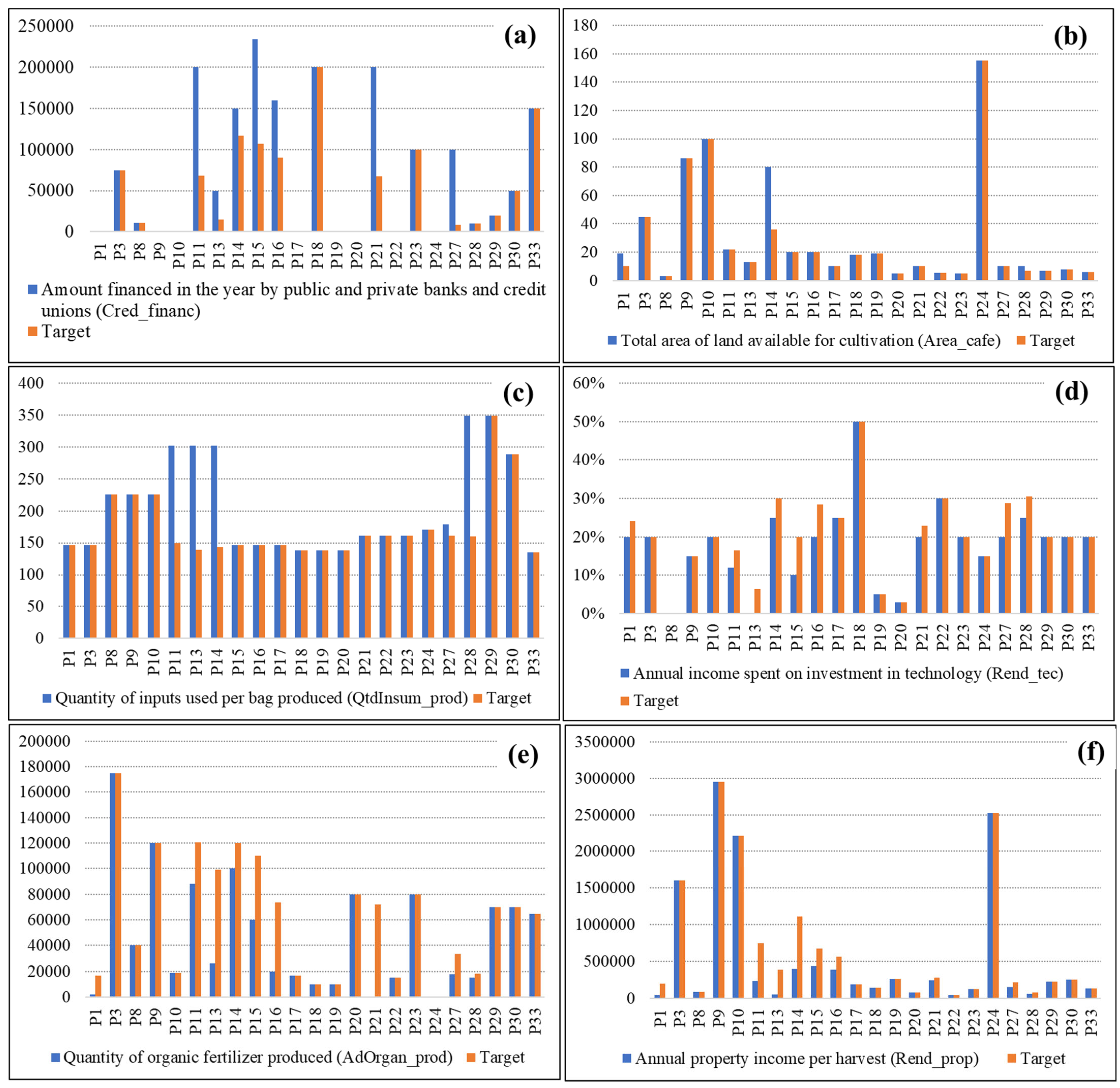
Similarly, Figure 6a–f presents in detail the targets for each sampling unit for the variables covered in the 2020–2021 harvest season. The performance index resulting from the input “Amount financed in a year by public, private banks and credit cooperatives” made it possible to create the Performance Index regarding dependence on financial agents, as shown in Figure 6a. This index aids in understanding the economic crisis scenario experienced by producers this harvest season, where credit support was essential for some producers to maintain activities on their properties. In addition, this input represents a variable highly correlated to PC3 and belongs to the “Agricultural” dimension.
Therefore, producers 11, 13, 14, 15, 16, 21, and 27 did not reach the values stipulated by the targets for the input Cred_financ, being considered inefficient in this aspect. It is recommended that a reduction in the volume of financed credit be carried out by 65.9%, 70%, 22.2%, 54.1%, 43.8%, 66.4%, and 91.3%, respectively, in these inliers, to reach the efficiency frontier. Furthermore, among the inefficient sampling units, producers 13, 21, and 27 stand out, with the largest reductions to be made for this input. However, even with the large contributions made by these sampling units, they still maintained low production capacities and reduced economic returns.
On the other hand, 70% of these inliers were efficient in terms of the value obtained in input Cred_financ, with emphasis on sampling unit 18, which presented the highest value, and units 1, 9, 10, 17, 19, 20, 22, and 24, which did not use credit during the analysis period. The acquisition of credit can mean an increase in costs and indebtedness for producers, especially in times of climate and economic crises, as seen in this harvest season. The acquisition of this credit has been practiced as an investment strategy in technologies and production systems by some producers. However, they still represent shallow and inefficient initiatives, as observed in inliers 13, 15, and 21.
From the variable “Total area of land available for cultivation”, which showed a high correlation with PC1 and represents an input in the “Agricultural” dimension, the Performance Index in the geographical distribution of production was developed, as shown in Figure 6b. This variable and the output Rend_prop were the only variables addressed in both the 2018–2019 and 2020–2021 harvest seasons.
According to the data discussed in Figure 6b, only producers 1, 14, and 28 showed inefficiency related to the variable Area_cafe. Therefore, to become efficient, it is suggested to reduce this number in each unit in the order of 45.4%, 55%, and 31%, respectively. Producer 14 stood out for presenting the greatest need for reduction, a fact that can be justified by their low production capacity and high input costs. On the other hand, 87% of these inliers were successful in this input, reaching the stipulated targets. It is considered that the best configuration of this index refers to properties with high production capacity scores and low costs involved in production.
It is noteworthy that the majority of efficient sampling units (69.5%) in this input present reduced values, below 40 hectares. However, there were still efficient producers, such as inliers 9, 10, and 24, with higher levels for the same number, which were above 80 hectares cultivated. In these cases, these are sampling units focused on the continuous improvement of their production through investments in sustainable technology and cultivation systems and the use of an appropriate proportion of organic and chemical fertilizers.
In this opportunity, the alignment of resource consumption and the area used for cultivation is extremely important for maintaining good levels of production capacity and reducing costs on the property. In the case of inefficient inliers, they presented high values for variables related to the volume of water and fossil fuels consumed. However, the fact that they also had reduced production capacities does not justify the high consumption of other resources, representing a production bottleneck to be corrected mainly in sampling units 1, 14, and 28.
Based on the variable “Quantity of inputs used per bag produced”, it was possible to create the Performance Index in reducing chemical inputs, according to Figure 6c. This index collaborates to mitigate the impacts of cultivation methodologies based on the use of agrochemicals, encouraging their minimization and replacement with sustainable forms of management. The variable QtdInsum_prod included the “Agricultural” performance dimension and showed a high correlation with PC2.
The analysis of Figure 6c indicates that only inliers 11, 13, 14, 27, and 28 were inefficient regarding the values obtained for the variable QtdInsum_prod. It is then suggested that reductions be made in these sampling units for this number in the order of 50.3%, 53.7%, 52.4%, 9.9%, and 54.2%, respectively. The excessive use of chemical inputs represents a significant portion of the costs involved in production, especially for this harvest season (2020–2021), in which consecutive increases in fertilizer prices were recorded. A favorable scenario for this index is the achievement of minimum levels for QtdInsum_prod to strengthen the sustainable dynamics of coffee production in Brazil, encouraging the search for new agroecological alternatives to supplement the terrestrial substrate.
Approximately 78.3% of these inliers were efficient for the variable considered (QtdInsum_prod). Around 72% of these producers spent less than BRL 170.00/bag produced on inputs. Considering the dynamics of prices paid to producers, these units presented higher net margins than the others. An increase in the proportion of organic fertilizer/chemical fertilizer used on the property was observed between 2018–2019 and 2020–2021 for most of the inliers considered.
The output “Annual income spent on investment in technology” served as the basis for the development of the Innovation Performance Index for the insertion of sustainable production models, as shown in Figure 6d. It is considered that this is a variable belonging to the “Agricultural” dimension, which was highly correlated to PC2, but the objective now is to maximize it according to the output-oriented BCC model. Thus, as shown in Figure 6d, producers 1, 11, 14, 15, 16, 21, 27, and 28 were inefficient regarding the output Rend_tec, and in these cases, it is recommended to increase investments in this segment in the order of 20.8%, 36.8%, 20%, 100%, 42.2%, 14.6%, 43.9%, and 22.4%, respectively. It is understood that the ideal scenario for this index is reflected by high percentages of gross income invested exclusively in technologies within the scope of sustainable production.
Furthermore, there was a predominance of these inliers in the establishment of technologies related to the production of clean energy. This fact is related to the variables linked to the consumption of fossil fuels and the electricity consumption of properties. This is justified, as the production of clean energy means an alternative to reducing costs for producers, basically requiring an initial investment for its setting, with the possibility of storing energy for future use. In regard to efficient producers, in this aspect, they represented 65.2% of the sample units considered. Moreover, considering the target values for inefficient units, it can be inferred that producers have constantly made efforts to incorporate good production practices, especially those aimed at the circular economy and sustainability.
The study of the output “Quantity of organic fertilizer produced” showed that it was highly correlated to PC3 and belonged to the “Circular Economy” dimension, which made it possible to create the Performance Index in the reinsertion of waste generated in production, as shown in Figure 4e. This index is of great importance in analyzing units regarding their commitment to sustainable production standards.
Based on Figure 6e, inliers 1, 11, 13, 14, 15, 16, 21, 27, and 28 were inefficient for AdOrgan_prod. Therefore, it is suggested that these inliers increase the value of this variable in the order of 14,704.77, 32,375, 73,000, 20,000, 49,872.21, 53,690.79, 72,309.94, 15,617.64, and 3365.48 kg, respectively, to achieve the efficiency related to this output. This period highlights an opportunity for these producers to be able to establish efficiency in their properties. In some cases, it was observed that producers ended up resorting to purchasing organic material from third parties to fulfill their commitments with their plantings this harvest season. This is because there were production losses in some regions affected by undesirable weather events. However, it was still a high cost–benefit measure.
Regarding efficient producers, namely, inliers 3, 8, 9, 10, 17, 18, 19, 20, 22, 23, 24, 29, 30, and 33, representing around 61% of the sampling units, have an organic fertilizer consumption of up to 175,000 kg on their properties. On the other hand, producer 24 was efficient, even though they did not use organic fertilizers in their production. This is because it is a sampling unit with a planted area greater than the average of the inliers considered, besides the use of chemical inputs in the appropriate amount and time, yielding high revenue for the producer. Furthermore, this unit considers the use of renewable energy and the treatment of waste generated throughout production, which characterizes the sustainable initiatives in this inlier.
Finally, the output “Annual property income per harvest”, which was highly correlated to PC1 and belonged to the “Socioeconomic” dimension, allowed for the development of the Economic Performance Index based on the property gross income, as shown in Figure 6f. Thus, the aim is to generate economic information about the performance of the sampling units analyzed.
Given what is shown in Figure 6f, the inefficient sampling units included producers 1, 11, 13, 14, 15, 16, 21, 27, and 28, and activities are recommended to increase their income on these properties in the order of 332.7%, 211.7%, 591.9%; 180.6%, 53.3%, 42.2%, 14.6%, 43.9%, and 25.6%. Furthermore, around 61% of these producers were efficient in terms of performance in the variable Rend_prop, showing the effort made by the majority of these producers to achieve satisfactory prices and high production capacity.
For this index, the scenario of maximizing the revenue and production capacity of each sampling unit stands out as the best existing configuration. Sampling units 9 and 24 had the highest values for this output. However, they were inliers with a larger planted area, were equipped with irrigation systems, and were characterized by the incorporation of a reduced proportion of organic/chemical fertilizers. In the case of producer 9, the fact that the coffee produced has certification stands out, which raises the commercialization standard of the product on the national and international markets.
In this context, increases in coffee prices were recorded for the previous harvest season for the 12 producing regions in the order of 56% for Cacoal-RO, 58% in Itabela-BA, 81% in Capelinha-MG, 80% in Franca-SP, 106% in Guaxupé-MG, 76% in Manhumirim-MG, 87% in Caconde-SP, 88% in Santa Rita do Sapucaí-MG, 63% in Londrina-PR, 66% in Poço Fundo-MG, and 63% in Brejetuba-ES. Given this, the highest percentage increases occurred in municipalities in the Southeast region, specifically in the states of São Paulo and Minas Gerais, which hold the majority of the country’s coffee production volume. Coincidentally, these two states were the most affected by climate-related issues, with production losses, producer debt, and workforce reduction.
Although the efficiency results derived from the data envelopment analysis model included recommendations, such as reducing the number of female workers in certain production units, it is essential to interpret these outputs within a broader ethical and developmental context. Such numerical targets should not be viewed as prescriptive actions but rather as indicators of structural inefficiencies that may reflect disparities in labor organization or resource allocation. This study does not support any reduction in women’s participation in agricultural activities. Instead, it recognizes the importance of fostering inclusive and equitable labor strategies aligned with the United Nations Sustainable Development Goals, particularly SDG 5 (Gender Equality). Therefore, the interpretation of efficiency results must be guided by ethical principles, reinforcing the role of women in sustainable agribusiness and promoting strategies that improve performance while upholding social responsibility and equity.
The performance indices developed in this study serve both operational and strategic purposes. At the farm level, these indices help producers identify specific areas for improvement—such as optimizing water use, enhancing income generation, or increasing the use of organic fertilizers—enabling more informed resource allocation. Because the indices are based on objective variables and normalized data, they can be easily integrated into farm management practices and training programs. At the policy level, the indices allow for regional benchmarking and the identification of systemic inefficiencies, supporting targeted public interventions and incentive programs. Therefore, the indices are not merely analytical tools but are practical instruments for continuous performance improvement across scales. This study is relevant to major players in the global coffee industry. Price fluctuations or changes in international demand can impact both Brazil and other coffee-producing countries. Additionally, droughts and pests are global challenges faced by the sector. Finally, pressure for sustainable practices affects all producers.


5. Conclusions

This study achieved its objective by addressing the performance management of the main Brazilian coffee-producing regions in the 2018–2019 and 2020–2021 harvest seasons. Regarding the 2018–2019 harvest, some observations could be made. A priori, it was a year characterized by the search for alternatives to increase property income due to the reduced prices paid to producers. Moreover, the use of inputs such as fertilizers, correctives, and pesticides was present to guarantee greater yield in these areas. Furthermore, a superiority in the production capacity of almost half of the sampling units analyzed is highlighted in comparison to the 2020–2021 harvest. In addition, the predominance of the manual cultivation system was observed in both harvest seasons.
However, regarding the 2020–2021 harvest season, it was characterized by the greater insertion of sustainable production practices, based on the increase in investments in technologies aimed at this purpose. It was a year in which producers intensified the use of organic fertilizers as an economically viable alternative, since the increase in inputs was one of the consequences of the economic and health crises experienced by producers during this period. It is worth remembering the importance of financial support from some public and private institutions in granting credit to these producers. This fact guaranteed the maintenance of the activities of some inliers that showed production losses as a function of the occurrence of undesirable weather events, for example. In general, it was a year marked by high revenues but high effective operating costs, resulting in a smaller number of efficient DMUs than the previous harvest season.
The contributions of this study are related to the identification of inefficient producers and, above all, the variables that most impact the performance of these sampling units so that they can reestablish their efficiency. This analysis identified some gaps in the inputs and outputs considered for each inlier covered in the two years of analysis. Furthermore, the study allowed for the generation of sustainable indicators to measure producers’ performance.
This study has several limitations that should be acknowledged. First, the dataset is limited to 33 coffee producers from selected regions in Brazil and covers only two harvest periods (2018–2019 and 2020–2021), which may restrict the generalizability of the findings. Second, the use of cross-sectional data does not capture dynamic changes in efficiency or sustainability performance over time. Third, the analysis depends on self-reported and survey-based data, which may be subject to recall bias or variability in measurement accuracy. Fourth, while the principal component analysis–data envelopment analysis hybrid method allows for objective benchmarking, it is sensitive to variable selection and may not fully capture contextual qualitative factors (e.g., institutional support, farmer knowledge, or market access). Lastly, the exclusive use of the BCC output-oriented model may overlook potential insights obtainable from alternative data envelopment analysis formulations or other frontier-based models. These limitations suggest avenues for future research, including longitudinal analysis, the inclusion of additional variables and regions, and the adoption of alternative efficiency models. To propose an agenda for future studies, the following recommendations are suggested: this study should be replicated in other agribusiness sectors, the sample set should be expanded, new methodological techniques should be combined and applied, and a more detailed study on the efficiency of each producing region should be conducted, with the presentation of benchmarking. These alternative studies are relevant, as they bring a practical bias for the day-to-day lives of producers to contribute to decision making processes towards the continuous improvement of their income, productive capacity, and cost reduction.
Additionally, based on the findings of this study, we propose a generalizable replication framework for applying the principal component analysis–data envelopment analysis hybrid method to other crops or agribusiness sectors. First, researchers should ensure access to a comprehensive dataset combining technical, economic, and sustainability related variables. Second, principal component analysis should be used to reduce dimensionality and identify the most relevant indicators, facilitating interpretability and avoiding multicollinearity. Third, data envelopment analysis can then be applied using an output-oriented BCC model to measure pure technical efficiency, adapted to the scale of each production system. Lessons learned from this study highlight the importance of integrating both quantitative rigor and contextual knowledge—such as farming system type, regional constraints, and sustainability goals—to generate meaningful performance benchmarks. This framework supports the development of targeted strategies for continuous improvement across diverse agricultural contexts.

Author Contributions

Conceptualization, G.A.d.M., L.G.d.C.J. and M.G.M.P.; methodology, G.A.d.M., M.G.M.P. and S.B.B.; software, J.S.d.C., G.A.d.M. and M.G.M.P.; validation, L.G.d.C.J., G.A.d.M. and M.G.M.P.; formal analysis, G.A.d.M. and M.C.A.M.; investigation, A.L.M.S.; resources, L.G.d.C.J.; data curation, L.G.d.C.J. and M.C.G.; writing—original draft preparation, G.A.d.M.; writing—review and editing, L.G.d.C.J., M.G.M.P. and M.C.G.; visualization, L.O.G.F.; supervision, M.C.A.M. and J.S.d.C. All authors have read and agreed to the published version of the manuscript.

Funding

This research received no external funding.

Institutional Review Board Statement

Not applicable.

Informed Consent Statement

Not applicable.

Data Availability Statement

The raw data supporting the conclusions of this article will be made available by the authors on request.

Acknowledgments

The authors would like to thank the Federal University of Lavras (UFLA) and the University of Brasilia (UnB) for their support in the development of this research. We are also thankful to the Federal District Research Support Foundation (FapDF) for research funding.

Conflicts of Interest

The authors declare no conflict of interest.

References

  1. La Scalia, G.; Saeli, M.; Miglietta, P.P.; Micale, R. Coffee biowaste valorization within circular economy: An evaluation method of spent coffee grounds potentials for mortar production. Int. J. Life Cycle Assess. 2021, 26, 1805–1815. [Google Scholar] [CrossRef]
  2. Duan, S.X.; Wibowo, S.; Chong, J. A multicriteria analysis approach for evaluating the performance of agriculture decision support systems for sustainable agribusiness. Mathematics 2021, 9, 884. [Google Scholar] [CrossRef]
  3. Riaño-Calderón, N.; Riaño-Luna, C.; Muñoz-Peña, F. Proposal of a model to determine the sustainability and profitability of the differentiated coffee production chain. Lat. Am. J. Appl. Eng. 2021, 6, 59–66. [Google Scholar] [CrossRef]
  4. Jiménez-Ortega, A.D.; Aguilar Ibarra, A.; Galeana-Pizaña, J.M.; Núñez, J.M. Changes over time matter: A cycle of participatory sustainability assessment of organic coffee in Chiapas, Mexico. Sustainability 2022, 14, 2012. [Google Scholar] [CrossRef]
  5. Food and Agriculture Organization of the United Nations—FAO (Brazil). FAO in Brazil. 2022. Available online: http://www.fao.org/brasil/ (accessed on 22 December 2022).
  6. Volsi, B.; Telles, T.S.; Caldarelli, C.E.; Camara, M.R.G.D. The dynamics of coffee production in Brazil. PLoS ONE 2019, 14, e021974. [Google Scholar] [CrossRef]
  7. Sebrae—Brazilian Ssupport Service for Micro and Small Enterprises (Brazil). Find Out About the Coffee Certification Catego-ries. 2020. Available online: https://www.sebrae.com.br/sites/PortalSebrae/artigos/conheca-as-categorias-de-certificacao-do-cafe,611b9e665b182410VgnVCM100000b272010aRCRD (accessed on 22 December 2020).
  8. Expocaccer (Brazil)—Cerrado Coffee Farmers Cooperative. Region of Cerrado Mineiro. 2020. Available online: https://expocacer.com.br/institucional/regiao-do-cerrado-mineiro/ (accessed on 22 December 2020).
  9. Brazilian Agriculture and Livestock Confederation—CNA. Panorama do Agro—Week May 16 to 20, 2022. 2022. Available online: https://www.CNAbrasil.org.br/boletins/panorama-2022-05-21 (accessed on 24 May 2022).
  10. van Keulen, M.; Kirchherr, J. The implementation of the Circular Economy: Barriers and enablers in the coffee value chain. J. Clean. Prod. 2021, 281, 125033. [Google Scholar] [CrossRef]
  11. Seapa—State Secretariat for Agriculture, Livestock and Supply (Brazil). Demand for Differentiated Coffees Grows and Should Favor Exports in 2020. 2020. Available online: http://www.agricultura.mg.gov.br/index.php/component/gmg/story/3650-demanda-por-cafes-diferenciados-cresce-e-deve-favorecer-exportacoes-em-2020 (accessed on 22 December 2020).
  12. Johnson, R.A.; Wichern, D.V. Applied Multivariate Statistical Analysis, 6th ed.; Prentice Hall: Upper Saddle River, NJ, USA, 2007. [Google Scholar]
  13. Ferreira, D.F. Multivariate Statistics; Editora UFLA: Lavras, Brazil, 2011. [Google Scholar]
  14. Tadayon, F.; Liu, M.C. Principal component analysis: A tool for assembly management. Comput. Ind. Eng. 1993, 25, 77–80. [Google Scholar] [CrossRef]
  15. Sharma, N.; Sharma, P.; Irwin, D.; Shenoy, P. Predicting solar generation from weather forecasts using machine learning. In Proceedings of the 2011 IEEE International Conference on Smart Grid Communications (SmartGridComm), Brussels, Belgium, 17–20 October 2011; pp. 528–533. [Google Scholar]
  16. Sinha, S.; Bardhan, P.; Pramanick, S.; Jagatramka, A.; Kole, D.K.; Chakraborty, A. Digital video watermarking using discrete wavelet transform and principal component analysis. Int. J. Wisdom Based Comput. 2011, 1, 7–12. [Google Scholar]
  17. Granato, D.; Santos, J.S.; Escher, G.B.; Ferreira, B.L.; Maggio, R.M. Use of principal component analysis (PCA) and hierarchical cluster analysis (HCA) for multivariate association between bioactive compounds and functional properties in foods: A critical perspective. Trends Food Sci. Technol. 2018, 72, 83–90. [Google Scholar] [CrossRef]
  18. Cooper, W.W.; Seiford, L.M.; Zhu, J. Data envelopment analysis: History, models, and interpretations. In Handbook on Data Envelopment Analysis; Springer: New York, NY, USA, 2011; pp. 1–39. [Google Scholar]
  19. Peixoto, M.G.M.; de Melo, G.A.; Mendonça, M.C.A.; Musetti, M.A.; Serrano, A.L.M.; Ferreira, L.O.G.; Neumann, C. Perfor-mance measurement of Brazil Federal University hospitals through principal component analysis: A public health care services’ panorama. Int. J. Organ. Anal. 2024. [Google Scholar] [CrossRef]
  20. de Melo, G.A.; Peixoto, M.G.M.; Mendonça, M.C.A.; Musetti, M.A.; Serrano, A.L.M.; Ferreira, L.O.G. Performance measure-ment of Brazilian federal university hospitals: An overview of the public health care services through principal component analysis. J. Health Organ. Manag. 2024, 38, 351–371. [Google Scholar] [CrossRef] [PubMed]
  21. Peixoto, M.G.M.; Mendonça, M.C.A.; de Castro, C.C.; de Castro Júnior, L.G.; de Melo, G.A.; Batalha, M.O. Evaluation of the operational efficiency of southeast intermodal terminals in the grain logistics chain using data envelopment analysis. Manag. Decis. Econ. 2022, 43, 3044–3058. [Google Scholar] [CrossRef]
  22. de Melo, G.A.; Peixoto, M.G.M.; Barbosa, S.B.; Alves, A.J.S.; Souza, A.C.L.; Mendonça, M.C.A.; Neumann, C. Generating insights to improve the performance of communities supported agriculture: An analysis focused on female participation, governance structure and volume of food distributed. Environ. Dev. Sustain. 2024, 36, 1–19. [Google Scholar] [CrossRef]
  23. de Melo, G.A.; Peixoto, M.G.M.; Barbosa, S.B.; Mendonça, M.C.A.; Nogueira, T.H.; Guerra, J.B.S.O.D.A.; Ferreira, L.O.G. Fuel flow logistics: An empirical analysis of performance in a network of gas stations using principal component analysis and data envelopment analysis. J. Adv. Manag. Res. 2024, 21, 605–626. [Google Scholar] [CrossRef]
  24. Banker, R.D.; Chang, H.; Zheng, Z. On the use of super-efficiency procedures for ranking efficient units and identifying outliers. Ann. Oper. Res. 2017, 250, 21–35. [Google Scholar] [CrossRef]
  25. Tseng, S.T.; Levy, P.E. A multilevel leadership process framework of performance management. Hum. Resour. Manag. Rev. 2019, 29, 100668. [Google Scholar] [CrossRef]
  26. Brown, T.C.; O’Kane, P.; Mazumdar, B.; McCracken, M. Performance management: A scoping review of the literature and an agenda for future research. Hum. Resour. Dev. Rev. 2019, 18, 47–82. [Google Scholar] [CrossRef]
  27. Franco-Santos, M.; Otley, D. Reviewing and theorizing the unintended consequences of performance management systems. Int. J. Manag. Rev. 2018, 20, 696–730. [Google Scholar] [CrossRef]
  28. Ministry of Agriculture, Livestock and Supply—MAPA (Brazil). Agricultural Inputs. 2020. Available online: https://www.gov.br/agricultura/pt-br/assuntos/insumos-agropecuarios/insumos-agricolas (accessed on 22 December 2020).
  29. Gonçalves, M.C.; Machado, T.R.; Benitez Nara, E.O.; Palheta Dias, I.C.; Vianna Vaz, L. Integrating Machine Learning for Predicting Future Automobile Prices: A Practical Solution for Enhanced Decision-Making in the Automotive Industry. In Lecture Notes in Computer Science; Springer: Berlin/Heidelberg, Germany, 2023; Volume 14316, pp. 91–103. [Google Scholar] [CrossRef]
  30. Mariyono, J. Improvement of economic and sustainability performance of agribusiness management using ecological tech-nologies in Indonesia. Int. J. Product. Perform. Manag. 2020, 69, 989–1008. [Google Scholar] [CrossRef]
  31. Nigri, G.; Del Baldo, M. Sustainability reporting and performance measurement systems: How do small-and medium-sized benefit corporations manage integration? Sustainability 2018, 10, 4499. [Google Scholar] [CrossRef]
  32. Gachuhi, L.; Awuor, E. Strategic Management Practices and Sustainability of SME’s Agribusiness in Kenya: A Survey of Githunguri Sub County. J. Agric. 2019, 3, 21–42. [Google Scholar]
  33. Savić, B.; Vasiljević, Z.; Milojević, I. Costing system as an instrument for enhancing environmental performance of entities in agribusiness. Ekon. Preduzeća 2020, 68, 294–303. [Google Scholar] [CrossRef]
  34. Tey, Y.S.; Brindal, M.; Darham, S.; Sidique, S.F.A.; Djama, M. Early mover advantage in Roundtable on Sustainable Palm Oil certification: A panel evidence of plantation companies. J. Clean. Prod. 2020, 252, 119775. [Google Scholar] [CrossRef]
  35. Damke, L.I.; Gomes, C.M.; Kneipp, J.M.; Godoy, T.P.; Motke, F.D. Sustainable management practices and innovation capacity in family agribusinesses. Environ. Qual. Manag. 2021, 30, 5–20. [Google Scholar] [CrossRef]
  36. Elock Son, C.; Müller, J.; Djuatio, E. Logistic outsourcing risks management and performance under the mediation of customer service in agribusiness. Supply Chain Forum Int. J. 2019, 20, 280–298. [Google Scholar] [CrossRef]
  37. Callado, A.A.C.; Jack, L. Supply chain roles and performance measurement procedures: Evidence from Brazilian agribusiness companies. Supply Chain Forum Int. J. 2021, 22, 370–380. [Google Scholar] [CrossRef]
  38. Ribeiro, L.L.; Silva, S.F.; Pimenta, M.L. Cross-Functional Integration at Agribusiness Brazilian Organizations. Rev. Produção Desenvolv. 2020, 6, 1–18. [Google Scholar] [CrossRef]
  39. Peykani, P.; Mohammadi, E.; Emrouznejad, A.; Pishvaee, M.S.; Rostamy-Malkhalifeh, M. Fuzzy data envelopment analysis: An adjustable approach. Expert Syst. Appl. 2019, 136, 439–452. [Google Scholar] [CrossRef]
  40. Ferreira, C.M.C.; Gomes, A.P.; Viçosa, M.G. Introduction to Data Envelopment Analysis: Theory, Models and Applications; Editora UFV: Viçosa, Brazil, 2009. [Google Scholar]
  41. Kohl, S.; Schoenfelder, J.; Fügener, A.; Brunner, J.O. The use of Data Envelopment Analysis (DEA) in healthcare with a focus on hospitals. Health Care Manag. Sci. 2019, 22, 245–286. [Google Scholar] [CrossRef]
  42. Figueiredo, T.R.C. Análise da Eficiência dos Produtores de Leite da Região do Triângulo Mineiro e Alto Paranaíba; Instituto de Ciências Exatas e Aplicadas, Universidade Federal de Ouro Preto: João Monlevade, Brazil, 2019. [Google Scholar]
  43. Tone, K.; Toloo, M.; Izadikhah, M. A modified slacks-based measure of efficiency in data envelopment analysis. Eur. J. Oper. Res. 2020, 287, 560–571. [Google Scholar] [CrossRef]
  44. Ren, X.; Zhang, Y.; Li, J.; Wang, L. Evaluation and prediction of water-energy-carbon nexus efficiency in China based on a new multiregional input-output perspective. J. Environ. Manag. 2023, 339, 117786. [Google Scholar] [CrossRef]
  45. Lozano, S.; Gutiérrez, E.; Moreno, P. Evaluating environmental performance using data envelopment analysis: The case of European countries. J. Clean. Prod. 2020, 244, 118680. [Google Scholar] [CrossRef]
  46. Dos Santos, D.G.; Coelho, C.C.D.S.; Ferreira, A.B.R.; Freitas-Silva, O. Brazilian coffee production and the future microbiome and mycotoxin profile considering the climate change scenario. Microorganisms 2021, 9, 858. [Google Scholar] [CrossRef] [PubMed]
  47. Manuel, M.N.B.; da Silva, A.C.; Lopes, G.S.; Ribeiro, L.P.D. One-class classification of special agroforestry Brazilian coffee using NIR spectrometry and chemometric tools. Food Chem. 2022, 366, 130480. [Google Scholar] [CrossRef]
  48. Sakamoto, H.; Bruschi, L.T.; Kulay, L.; Yamakami, A. Using the life cycle approach for multiobjective optimization in the context of the green supply chain: A case study of Brazilian coffee. Sustainability 2023, 15, 13987. [Google Scholar] [CrossRef]
  49. da Cruz Correia, P.F.; Mendes dos Reis, J.G.; Amorim, P.S.; Costa, J.S.D.; da Silva, M.T. Impacts of Brazilian Green Coffee Production and Its Logistical Corridors on the International Coffee Market. Logistics 2024, 8, 39. [Google Scholar] [CrossRef]
  50. Lorençone, J.A.; de Oliveira Aparecido, L.E.; Lorençone, P.A.; Torsoni, G.B.; de Lima, R.F.; da Silva Cabral de Moraes, J.R.; de Souza Rolim, G. Agricultural zoning of Coffea arabica in Brazil for current and future climate scenarios: Implications for the coffee industry. Environ. Dev. Sustain. 2025, 27, 4143–4166. [Google Scholar] [CrossRef]
  51. CONAB (Brazil). Boletim da Safra de Café. 2025. Available online: https://www.gov.br/conab/pt-br/atuacao/informacoes-agropecuarias/safras/safra-de-cafe/safra-de-cafe-1 (accessed on 16 May 2025).
  52. Peixoto, M.G.M. Análise Envoltória de Dados e Análise de Componentes Principais: Uma Proposta de Medição do Desempenho de Organizações Hospitalares sob a Perspectiva de Hospitais Universitários Federais do Brasil. Ph.D. Thesis, Universidade de São Paulo, São Paulo, Brazil, 2016. [Google Scholar]
  53. Peixoto, M.G.M.; Musetti, M.A.; de Mendonça, M.C.A. Performance management in hospital organizations from the perspec-tive of Principal Component Analysis and Data Envelopment Analysis: The case of Federal University Hospitals in Brazil. Comput. Ind. Eng. 2020, 150, 106873. [Google Scholar] [CrossRef]
  54. Bulut, M.S.; Ordu, M.; Der, O.; Basar, G. Sustainable thermoplastic material selection for hybrid vehicle battery packs in the automotive industry: A comparative multi-criteria decision-making approach. Polymers 2024, 16, 2768. [Google Scholar] [CrossRef]
  55. Yalçın, B.; Yüksel, A.; Aslantaş, K.; Der, O.; Ercetin, A. Optimization of micro-drilling of laminated aluminum composite panel (Al-PE) using Taguchi orthogonal array design. Materials 2023, 16, 4528. [Google Scholar] [CrossRef]
Figure 1. Systemic production model showing the relationship between inputs (collaborators, infrastructure, resources), processing (transformation and performance monitoring), and outputs (products, services, waste, and corrective plans). The cycle highlights the role of continuous information flow in process optimization and sustainable value creation. Source: Adapted from [29].
Sustainability 17 10688 g001
Figure 2. Schematic representation of the input-oriented (a) and output-oriented (b) efficiency models. Source: Adapted from [42].
Sustainability 17 10688 g002
Figure 3. Performance analysis framework of Arabica and Conilon coffee-producing regions in Brazil (2018–2019 and 2020–2021 harvest seasons).
Sustainability 17 10688 g003
Figure 4. Scree plot showing the proportion of variance explained by each principal component for the 2018–2019 and 2020–2021 harvest datasets.
Sustainability 17 10688 g004
Figure 5. Summary of targets for inputs and outputs selected for the 2018–2019 crop year.
Sustainability 17 10688 g005
Figure 6. Summary of targets for inputs and outputs selected for the 2020–2021 crop year.
Sustainability 17 10688 g006
Table 1. Comparative overview of recent studies on performance assessment methodologies in agribusiness and sustainability contexts.
StudySector/CaseMethodological ApproachDimensionality ReductionEfficiency AnalysisScalability/GeneralizabilityKey Contribution
This studyCoffee-producing regions in BrazilPCA + DEA (BCC, output-oriented)PCA (to reduce multicollinearity and select variables)DEA (to assess pure technical efficiency)High—applicable to other crops and sustainability indicatorsIntroduces a replicable PCA–DEA framework for sustainability benchmarking
Duan et al. [2]Agriculture decision support systemsMCDM (AHP-TOPSIS)Not appliedMCDM rankingModerate—dependent on expert judgmentMulticriteria ranking of agri-tech systems
Jiménez-Ortega et al. [4]Organic coffee farms (Mexico)Participatory sustainability assessmentNot appliedNot appliedLimited—qualitative and context-specificEmphasizes participatory stakeholder engagement
Riaño-Calderón [3]Differentiated coffee chainCustom sustainability–profitability modelNot appliedNot appliedModerate—adapted to coffee value chainModels trade-off between sustainability and profitability
La Scalia et al. [1]Circular economy in agroindustryLife cycle assessment (LCA)Not appliedNot appliedLow—LCA is process/product-specificEvaluates circularity and environmental impact
Table 2. Basic characteristics of producers.
ProducersSystem TypeStateRegionProducersSystem TypeStateRegion
Prod1manualRONorthProd18manualMGSoutheast
Prod2manualRONorthProd19manualMGSoutheast
Prod3manualRONorthProd20manualMGSoutheast
Prod4semi-mechanizedBANorth EastProd21manualSPSoutheast
Prod5semi-mechanizedBANorth EastProd22manualSPSoutheast
Prod6semi-mechanizedBANorth EastProd23manualSPSoutheast
Prod7semi-mechanizedBANorth EastProd24manualMGSoutheast
Prod8semi-mechanizedSPSoutheastProd25manualMGSoutheast
Prod9semi-mechanizedSPSoutheastProd26semi-mechanizedPRSouth
Prod10semi-mechanizedSPSoutheastProd27semi-mechanizedPRSouth
Prod11mechanizedSPSoutheastProd28manualMGSoutheast
Prod12mechanizedSPSoutheastProd29manualMGSoutheast
Prod13mechanizedSPSoutheastProd30manualMGSoutheast
Prod14mechanizedSPSoutheastProd31manualESSoutheast
Prod15manualSPSoutheastProd32manualESSoutheast
Prod16manualSPSoutheastProd33manualESSoutheast
Prod17manualSPSoutheast
Table 3. Performance indicators according to the addressed dimensions Demographic, Socioeconomic, Agricultural, Certification, and Circular Economy.
DimensionsIndicators
DemographicQty_H; Qty_M; ID; Esc_med; Qty_M_Management
SocioeconomicTE_prop; Rend_prop; Ac_prop;
AgriculturalTexp_prod; Qtd_cafeDesp; Rend_tec; Capac_employee; Size_prop; Area_cafe; Sacas_prod; medium_sc; COEmedio_sc; Capac_prod; Cred_finance; Area_degrad; Area_preserv; Water_cons; Water_treat; fuel_cons
Certificationcertif_prop
Circular economyWater_reapr; Energ_prod; Area_irrig; Resid_trat; AdOrgan_prod; Energ_renov; Energ_electric; QtdInsum_prod; PropAd_OrgQuim
Table 4. Correlation between the original variables selected for applying data envelopment analysis, considering the 2018–2019 harvest season.
Correlations 2018–2019Qtd_MTam_PropAREA_CAFEAgua_ConsRend_Prop
Qtd_M
Tam_prop−0.07496338
Area_cafe−0.030905460.34169134
Agua_cons0.181135250.738071730.30216667
Rend_prop0.031607200.282403440.757263350.3784356
Table 5. Correlation between the original variables selected for applying data envelopment analysis, considering the 2020–2021 harvest season.
Correlations 2020–2021Area_CafeCred_FinancAdOrgan_ProdQtdInsum_ProdRend_PropRend_Tec
Area_cafe
Cred_financ0.01489946
AdOrgan_prod0.50726421−0.007769122
QtdInsum_prod0.16731852−0.0202056960.164225104
Rend_prop0.82444948−0.1355287570.7241707080.12920278
Rend_tec0.214906540.5217887640.1883203340.236401110.00452241
Table 6. Global performance indices generated from variables highly correlated with PC1, PC2, and PC3, considering the 2018–2019 harvest season.
VariablesMain ComponentGlobal Performance Index
InputQty_MCP2Labor performance index
Inputwater _consCP1Performance index in the preservation of water resources
InputSize_prop
InputArea_cafeCP3Performance index in the geographical distribution of production
OutputRend_propCP1Economic performance index based on the property’s gross income
Table 7. Global performance indices generated from variables that were highly correlated with PC1, PC2, and PC3, considering the 2020–2021 harvest season.
VariablesMain ComponentOverall Performance Index
Inputcredit_finance CP3Performance index regarding dependence on financial agents
InputArea_cafeCP1Performance index in the geographical distribution of production
InputQtyInsum_prodCP2Performance index in the reduction of chemical inputs
Inputcredit_finance CP3Performance index regarding dependence on financial agents
OutputRend_tecCP2Innovation performance index for the insertion of sustainable production models
OutputAdOrgan_prodCP3Performance index in the reinsertion of waste generated in production
OutputRend_propCP1Economic performance index based on the property’s gross income
Disclaimer/Publisher’s Note: The statements, opinions and data contained in all publications are solely those of the individual author(s) and contributor(s) and not of MDPI and/or the editor(s). MDPI and/or the editor(s) disclaim responsibility for any injury to people or property resulting from any ideas, methods, instructions or products referred to in the content.