Article

Sustainable Pathways in International Student Recruitment: The Strategic Role of Peer Referrals and Agent Engagement in Northern Cyprus


by
Tarık Atan
1 and
Uğur Uysal Yorulmaz
2,*
1
Faculty of Economics and Administrative Sciences, Cyprus International University, 99258 Nicosia, Cyprus
2
Institute of Graduate Studies and Research, Cyprus International University, 99258 Nicosia, Cyprus
*
Author to whom correspondence should be addressed.
Sustainability 2025, 17(23), 10572; https://doi.org/10.3390/su172310572
Submission received: 11 September 2025 / Revised: 10 November 2025 / Accepted: 14 November 2025 / Published: 25 November 2025

Abstract

This study examines the key determinants influencing international students’ university choice decisions from the perspective of recruitment agents, an often overlooked yet critical intermediary in higher education marketing. Using a quantitative research design, data were collected using a structured questionnaire, which was administered to 474 prospective international students via participating recruitment agents’ networks. The survey measured the impact of Peer Referrals (PRs), University Image (UI), social life, Country Image (CI), and Financial Considerations (FC) on students’ Intention to Enroll (IE). Data were analyzed using Partial Least Squares Structural Equation Modelling (PLS-SEM) in SmartPLS 4.0. Results indicate that Peer Referrals (PR) exert the strongest influence on students’ Intention to Enroll (IE), followed by perceptions of social life (SL) and university image (UI). These findings underscore the dual role of recruitment agents as both relational trust-builders and data-informed marketers in shaping student choices. By focusing on recruitment agents’ perspectives rather than solely institutional or student viewpoints, this research addresses a critical literature gap pertaining to international higher education. Grounded in relationship marketing and data-driven marketing theories, this study offers actionable insights for higher education managers seeking to enhance recruitment strategies, particularly in emerging destinations, such as North Cyprus. The implications are especially relevant for institutions committed to sustainable internationalization practices, aligning with sustainability’s focus on advancing long-term, ethical and inclusive growth in global education. Importantly, this research is grounded in empirical evidence, which provides a data-driven contribution rather than a conceptual or theoretical discussion.

1. Introduction

The pursuit of sustainability in higher education extends beyond environmental concerns, which encompass social and economic dimensions, including equitable access, cultural diversity, and institutional resilience [1,2]. International student mobility plays a pivotal role in this broader sustainability agenda by fostering intercultural exchange, generating economic benefits for host communities and enhancing the global competitiveness of universities. Within this context, understanding how prospective international students choose their universities is essential for designing recruitment strategies that support sustainable institutional development. For this study, sustainability is conceptualized not only in environmental terms but also as financial accessibility, institutional resilience, and social equity. This multidimensional framing also aligns with the United Nations’ Sustainable Development Goals (particularly SDG 4 and SDG 17), which ensures that international student recruitment is analyzed within a holistic sustainability framework [2]. In addition, social and economic sustainability are also strengthened by partnerships with agents and alumni by diversifying student profiles, supporting equitable access through scholarships, and ensuring institutional resilience via stable enrollment flows.
Although extensive research has examined factors influencing student choice—such as academic reputation, program quality, location, and cost [3,4] one critical intermediary remains underexplored: recruitment agents. These agents not only facilitate student placement but also act as relationship managers, cultivating trust, providing culturally tailored advice, and shaping perceptions of universities [5,6]. Agents’ role has direct implications for the sustainability of higher education systems, as effective engagement with agents can also expand institutional reach, increase diversity, and improve long-term enrolment stability [6,7].
While some studies have acknowledged the role of peer networks and recommendations in shaping student choice [7,8] the relative weight of such factors compared to Financial Considerations (FC) and institutional image remains unclear—particularly from the perspective of recruitment agents [9]. This gap is notable given that agents’ professional insights are grounded in continuous interaction with both students and institutions, enabling them to identify nuanced decision-making patterns that may not emerge in student-only surveys [9,10].
To address this gap, the present study utilizes a quantitative research design using survey data from 474 prospective students (Appendix A.1 Survey Items). Findings are analyzed through the theoretical lenses of relationship marketing and data-driven marketing, which allows for an integrated understanding of trust-building, personalized engagement, and strategic communication in shaping choice decisions [11,12].
By focusing on North Cyprus, a rapidly growing yet under-researched international education destination, this study makes three contributions. First, it identifies the most influential factors, pull factors [6] affecting student choice from the underrepresented perspective of recruitment agents. Second, it integrates marketing theory with the sustainability agenda by framing recruitment practices as a driver of social and economic sustainability in higher education. Third, it provides actionable recommendations for university managers to strengthen sustainable international recruitment strategies [13], ensuring long-term resilience in an increasingly competitive global market [14,15].

2. Literature Review and Hypotheses Development

2.1. Recruitment Agents and Sustainable Higher Education

Recruitment agents serve as professional intermediaries between higher education institutions (HEIs) and prospective students, providing targeted information, application guidance, and support throughout the enrollment process [16,17]. Their importance extends beyond transactional student placement as they contribute to social sustainability by fostering cultural diversity, supporting equitable access to education, and sustaining institutional growth through a steady flow of international enrolments [2].
Although agents are used widely worldwide, research findings on their effectiveness remain mixed. Some studies indicate that agents are a leading source of information for students seeking to study abroad [14] and can positively influence enrolment decisions [15]. Others, however, find limited or no significant differences in satisfaction or decision outcomes between students who use agents and those who do not [16,17].
The Relationship Marketing perspective [4] frames agents as “relationship managers” who build trust, maintain ongoing engagement, and create mutual value for both students and institutions. Data-Driven Marketing [18] further explains how agents segment markets, identify high-potential student groups, and adapt their messages using market intelligence [3,4]. This dual framework underpins the conceptual model of the present study, in which agents’ influence is operationalized through five key determinants of university choice: Peer Referrals (PR), University Image (UI), Social Life (SL), Country Image (CI), and Financial Considerations (FC) [19,20,21].

2.2. Peer Referrals (PR)

Peer Referrals, which are defined as recommendations from friends, relatives, alumni, or current students, are among the most influential informal information sources in higher education decision-making [22,23,24]. Unlike formal promotional content, PRs carry credibility because they emerge from trusted relationships and lived experiences [25,26]. They often highlight personal stories pertaining to academic quality, campus culture, and life after graduation, which can shape both rational evaluations and emotional attachments to an institution [27,28].
From a relationship marketing standpoint [27,29], referrals operate through trust and interpersonal influence; however, from a data-driven perspective, referrals can be used as a strategical leverage by agents to reinforce institutional branding [6,7]. Recent studies highlight that peer influence significantly shapes international students’ perceptions and enrollment intentions, particularly in less familiar destinations [30,31]. Such findings reinforce the argument that referrals operate as a form of social proof, reducing uncertainty and strengthening trust in institutional promises. In this research model, PRs are expected to exert both direct and indirect effects on enrolment intention.
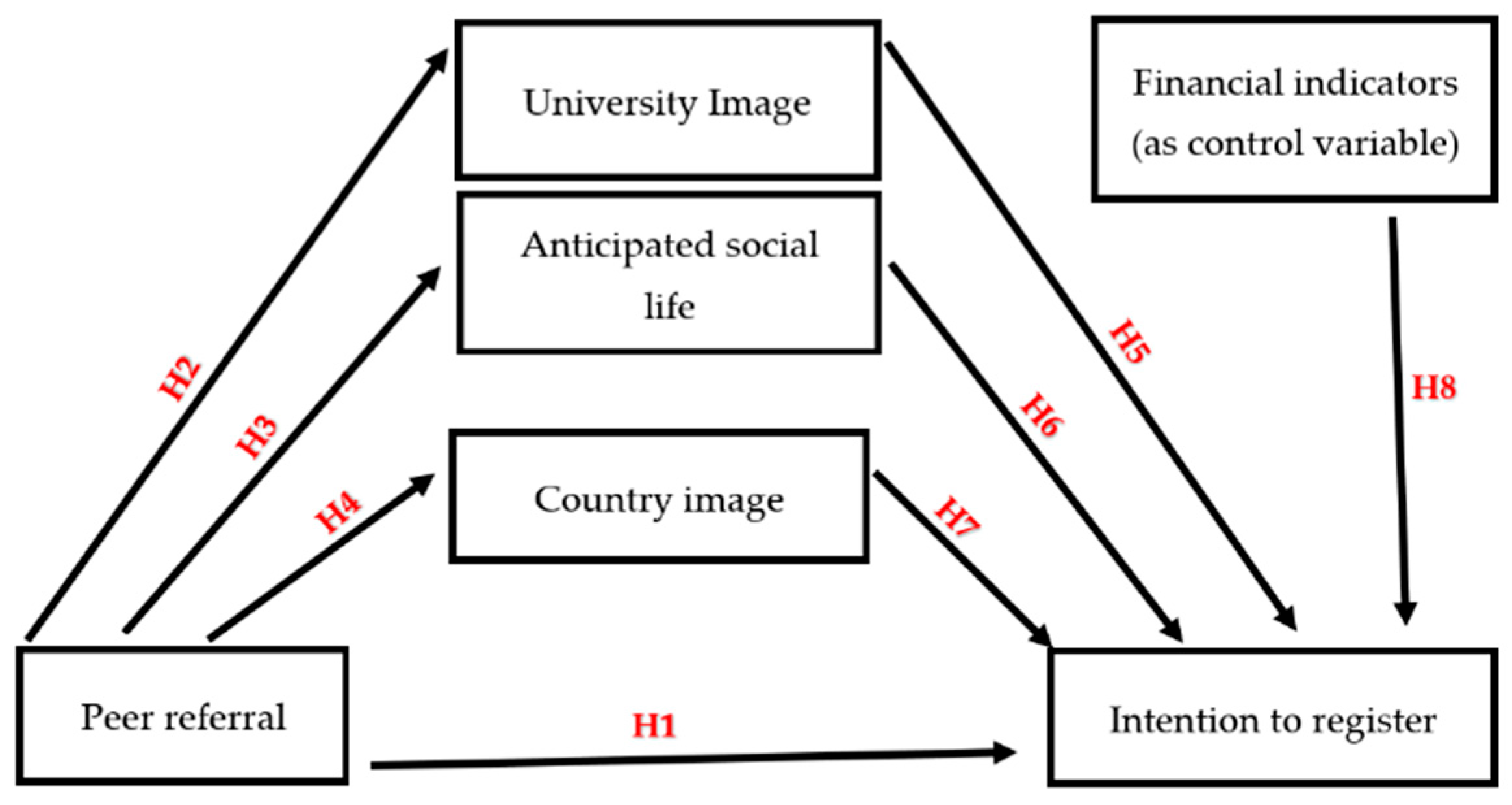
H1: 
Peer Referrals have a significant positive effect on students’ IE in a university.
H2: 
Peer Referrals have a significant positive effect on the perceived UI.
H3: 
Peer Referrals have a significant positive effect on SL at the university.
H4: 
Peer Referrals have a significant positive effect on the perceived CI of the host country.

2.3. University Image (UI)

The perceived UI reflects students’ assessments of an institution’s academic reputation, quality of faculty, research standing, and international rankings [32,33]. A favorable image reduces uncertainty, signals quality, and strengthens the student’s commitment to a choice. Beyond signaling academic quality, a favorable UI contributes to institutional resilience and sustainable competitiveness in global higher education markets [2]. Recruitment agents contribute to the shaping of this image by combining factual academic information with narratives that humanize and personalize the institution’s brand.
H5: 
University Image has a significant positive effect on students IE.
H9: 
University Image mediates the relationship between PR and IE.

2.4. Social Life (SL)

Beyond academic factors, students increasingly value an engaging and inclusive social environment when choosing a university. Social life encompasses extracurricular activities, cultural events, student organizations, and opportunities for community engagement [27]. For international students, these factors are critical to adaptation, well-being, and overall satisfaction. Agents can promote social life by sharing relatable stories and tailoring examples to students’ cultural backgrounds [34].
H6: 
Social Life has a significant positive effect on students’ IE.
H10: 
Social Life mediates the relationship between PRs and IE.

2.5. Country Image (CI)

Country Image (CI) refers to students’ perceptions of the host country’s safety, political stability, cultural richness, and economic opportunities [28]. While institutional reputation often outweighs destination image in importance, a positive perception of the host country can enhance a student’s willingness to enroll. Recruitment agents address this factor by offering reassurance, sharing success stories, and emphasizing benefits aligned with the student’s values and goals [10].
H7: 
Perceived Country Image has a significant positive effect on students’ IE.
H11: 
Perceived Country Image mediates the relationship between PRs and IE.

2.6. Financial Considerations (FC)

Financial Considerations (FC), such as tuition fees, scholarship opportunities, cost of living, and the ability to work part-time, are consistently among the strongest predictors of university choice [33,35]. Even when perceptions of academic and social factors are favorable, affordability can act as a decisive “gatekeeper” in the decision-making process. In the context of sustainability, affordability also relates to equitable access and the long-term viability of institutions.
H8: 
Financial Considerations have a significant positive effect on students’ IE.
Figure 1 Conceptual Research Model includes both direct effects (H1–H8) and mediation effects (H9–H11), in which UI, SL, and CI mediate the relationship between PRs and IE. Note: H9, H10, and H11 represent the hypothesized mediation effects that link PRs to IE through UI, SL, and CI.

3. Methodology

3.1. Collection of Data

This study utilized a quantitative research design to examine the relationships between PR, UI, SL, CI, FC, and students’ IE. Data were collected through a structured questionnaire distributed to prospective international students via recruitment agents’ networks.
The target population comprised students from multiple source countries in Asia, Africa, and the Middle East who were considering pursuing their higher education in North Cyprus. A total of 474 valid responses were obtained using a purposive sampling approach to ensure representation from diverse regions in 2024. The questionnaire was disseminated through verified recruitment agents’ online networks and was available in English, French, and Arabic. Back-translation procedures were applied to maintain linguistic accuracy. A total of 565 surveys were distributed; however, a total of 474 surveys were returned fully completed (Appendix A.1 Survey Items), yielding a response rate of 83.9%. Participation was voluntary, and all responses were kept anonymous.

3.2. Data Analysis Methods

Data analysis was conducted using Partial Least Squares Structural Equation Modelling (PLS-SEM) in SmartPLS 4.0. PLS-SEM was deemed appropriate given the complexity of the proposed model, the presence of multiple latent constructs, and the non-normal distribution of the dataset. The analytical procedure followed a two-stage approach. First, the measurement model was assessed by examining indicator reliability, internal consistency reliability (Cronbach’s alpha and composite reliability), convergent validity through average variance extracted (AVE), and discriminant validity using both the Fornell–Larcker criterion [36] and the Heterotrait–Monotrait ratio (HTMT). Second, the structural model was evaluated by testing collinearity (variance inflation factor, VIF), estimating path coefficients, and calculating effect sizes (f2), coefficients of determination (R2), and predictive relevance (Q2). Finally, a bootstrapping procedure with 5000 resamples was employed to test the statistical significance of the hypothesized relationships.

3.3. Measurement

All constructs were operationalized using previously validated measurement scales, which were carefully adapted to the context of international student recruitment in North Cyprus. A five-point Likert scale (1 = strongly disagree, 5 = strongly agree) was employed for all items. PRs were assessed with two items developed by Gupta (2016) [37], while UI was measured through seven items adopted from Sojkin et al. (2012) [34] and Fantauzzi et al. (2019) [38]. SL was captured with two items from Kethüda and Bilgin (2023) [39], and CI with four items from Cubillo et al. (2006) [32]. FCs were evaluated using six items from Walcott et al. (2018) [33]. Finally, IE was measured with three items adapted from Mountjoy and Hickman (2020) [9]. To ensure clarity and validity, a pilot test with 30 students was conducted, confirming face validity, content relevance, and internal consistency, after which minor adjustments in wording were implemented.

4. Results

4.1. Sample Profile

Participants in this study were from diverse geographical regions summarized in Table 1. While most participants were from Africa (35%), the remaining participants were from Eastern Europe (26%), the Middle East (16%), the European Union (7%), Asia (7%), and 9% from other regions. In terms of linguistic diversity, Turkish was the most frequently spoken language (29%), followed by Arabic (18%), French (17%), and English (15%). The age distribution shows that the largest group of participants was between the ages of 19–21 (41%), followed by 16–18 (26%), 22–24 (22%), and 25 and above (11%). Most of the respondents were enrolled in bachelor’s programs (80%), with smaller shares in graduate (16%) and associate programs (3%). Fifty-nine percent of the participants were male, and 41% were female. With regard to the reported monthly household income, 53% of participants reported 1000 USD or less, 19% reported 1000–1500 USD, and smaller proportions reported higher income brackets, with only 4% earning 5000 USD or more. This suggests that most respondents were from lower- to middle-income households.

4.2. Measurement Model, Validity and Reliability Analysis

Before analyzing the research model, validity and reliability analysis of the structures included in the study were conducted. Internal consistency was determined by examining Cronbach’s Alpha and composite reliability (CR). Validity, on the other hand, was established by evaluating both convergent and discriminant validity. To determine convergent validity, average variance (AVE) values explained by factor loadings were used. Factor loadings ≥0.70, Cronbach’s Alpha and composite reliability coefficients ≥0.70, and AVE values are expected to be ≥0.50 [40]. Measurement model results are presented in Table 2.
According to Hair et al. (2019) [40] factor loadings between 0.40 and 0.70 should be removed from the measurement model if the AVE or CR values of the variable to which they belong to are below the threshold value. Since the AVE and CR values of the variables to which the expressions belong were above the threshold value, the specified expressions were not removed from the measurement model. Although a few items exhibited factor loadings slightly below 0.70, they were retained since their associated constructs demonstrated satisfactory reliability and validity indices.

4.3. Discriminant Validity

When the cross-loading table presented in Table 3 was checked, it was determined that there were no overlapping items between the statements measuring the research variables. Table 3 provides the cross-loading values of the measurement items. Each construct’s items load is higher on their respective constructs compared to other constructs, which supports discriminant validity. No significant cross-loadings above the recommended threshold were observed, confirming that the items measured are distinct latent variables.
According to the Fornell and Larcker (1981) [36] criterion, the square root of the AVE values of the structures included in the research should be higher than the correlation coefficients between the structures included in the research. The values presented in Table 4 are consistent with this result. Table 4 shows the Fornell Larcker criterion results, where the square root of AVE values (diagonal elements) exceeded the inter-construct correlations (off-diagonal elements). This indicates adequate discriminant validity across all latent constructs.
According to Henseler et al. (2015) [41], the Heterotrait Monotrait Ratio (HTMT) criterion states that the ratio of the average of the correlations of the expressions of all variables in the research to the geometric averages of the correlations of the expressions of the same variables. It is stated that concepts close to each other should theoretically be below 0.90 and below 0.85 for distant concepts. All HTMT values were below the conservative threshold of 0.85 (for distinct constructs) and the more lenient threshold of 0.90 (for conceptually related constructs). These results further support discriminant validity and confirm that the constructs are empirically distinct. The HTMT coefficients are presented in Table 5.
Table 6 reports the collinearity diagnostics (variance inflation factor, VIF). All VIF values ranged between 1.13 and 1.66, which is well below the threshold of 5.0, suggesting that multicollinearity is not a concern in this study.
Table 7 summarizes the structural model results. PRs (β = 0.41, t = 7.86, p < 0.001) had a strong positive effect on students’ IE, followed by SL and UI with moderate positive effects. CI exhibited a weaker effect. FC showed the strongest effect (β = 0.56, t = 10.12, p < 0.001), confirming affordability as the decisive predictor. These results indicate that while relational and experiential factors influence student choice, financial accessibility remains the most critical determinant.
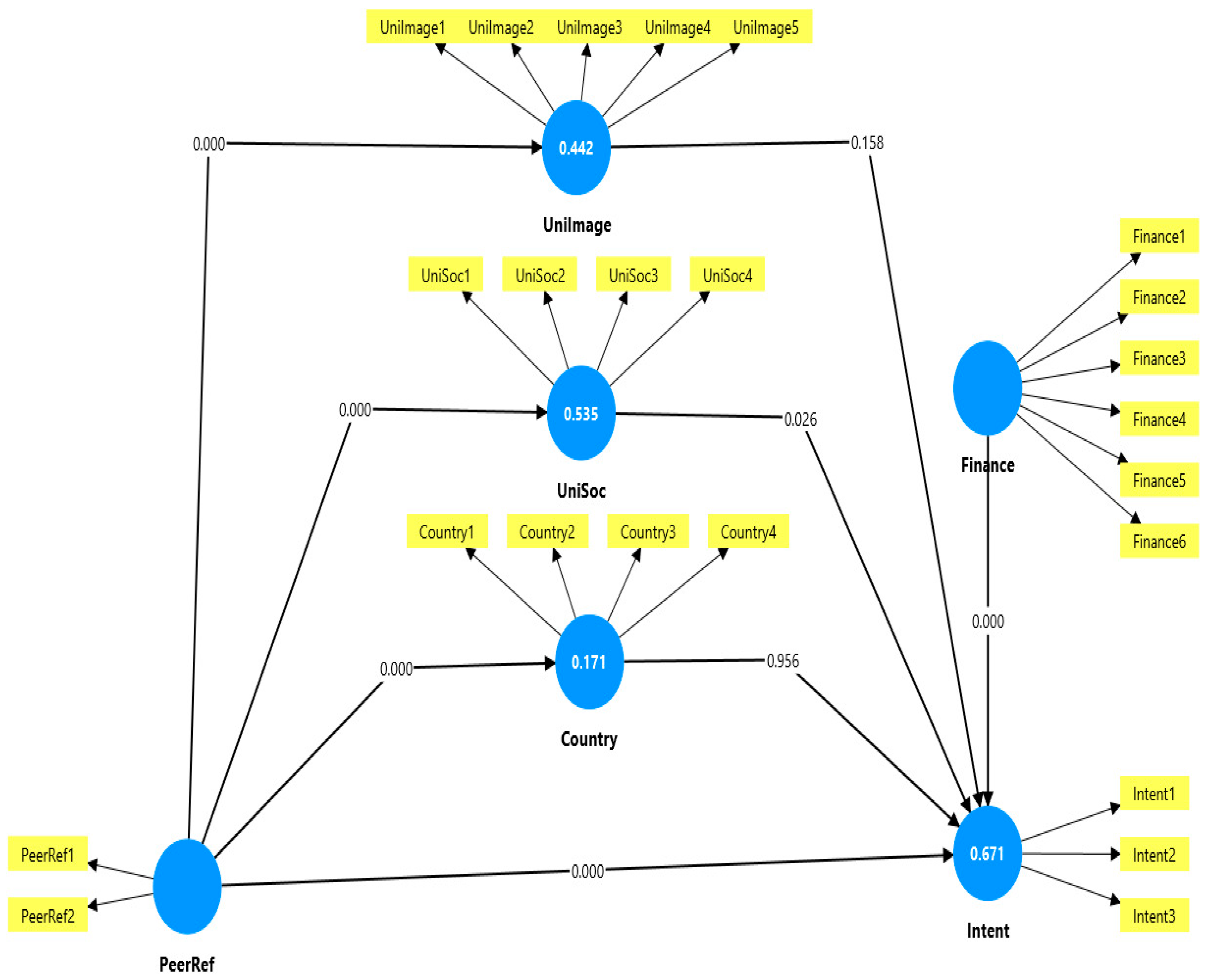
Figure 2 Full Structural Model Results reveals that PRs significantly and positively influence students’ IE, both directly and indirectly through UI and SL. FC emerged as the strongest predictor, confirming affordability as a decisive factor in university choice. While CI had a weaker impact, the overall model highlights that trust-based peer influence and financial accessibility jointly shape enrollment intentions, reflecting a balanced interplay between relational and economic determinants in sustainable student recruitment.
Table 8 Model Fit Indices presents the model fit statistics for both the saturated and estimated models. The Standardized Root Mean Square Residual (SRMR) values of 0.080 (saturated) and 0.112 (estimated) indicate an acceptable level of model fit, remaining within the recommended threshold of 0.10 for PLS-SEM models. The discrepancy values (d_ULS and d_G) are low and within acceptable limits, suggesting minimal differences between the observed and predicted correlation matrices. Although the Normed Fit Index (NFI) values (0.701 for the saturated and 0.662 for the estimated model) are slightly below the conventional benchmark of 0.90, such results are common in complex models with multiple constructs. Overall, the fit indices demonstrate that the proposed model adequately represents the empirical data and is suitable for further interpretation.
The mediation results are shown in Table 9, together with the f2 effect sizes, indicate that SL is the only meaningful mediator in the relationship between PRs and IE. The indirect path PR → SL → IE is significant (β = 0.093, p = 0.026), and this finding is reinforced by the very large effect size of PR on SL (f2 = 1.152). This shows that peer referrals strongly shape students’ perceptions of social life, and this perception meaningfully increases their enrollment intentions.
In contrast, although PR has large or moderate effects on UI (f2 = 0.793) and CI (f2 = 0.206), these constructs do not mediate the PR–IE relationship because their indirect effects are statistically non-significant (p > 0.05). This indicates that academic and country-level perceptions do not translate into higher enrollment intentions.
Overall, integrating both mediation and f2 results demonstrates that the social dimension is the primary mechanism through which peer referrals influence students’ enrollment decisions, while academic and country perceptions remain statistically irrelevant as mediators despite their high explained variance.
As shown in Table 10, the majority of the predictors yield smaller prediction errors compared to LM, which indicates a medium predictive power [41,42].

5. Discussion

This general finding is supported by the hypothesis tests conducted in this study. To provide clarity, each hypothesis (H1–H11) is discussed in relation to the empirical evidence and prior scholarship below. The results of this study confirm that recruitment agents play a strategic and multifaceted role in influencing international students’ university choice decisions. Consistent with the relationship marketing framework [4], agents operate as relationship managers, focusing on long-term trust, loyalty, and commitment rather than merely facilitating transactional enrolments. By personalizing communication and tailoring messages to students’ cultural and socio-economic contexts, agents strengthen prospective students’ emotional attachment to an institution [41,43].
One of the most salient findings is the pronounced effect of PR on IE. H1 was supported, showing that PR had a significant positive effect on students’ IE (β = …, p < …). Similarly, H2 and H3 were also validated, indicating that PR positively shapes perceptions of UI and SL, respectively. H4 was also confirmed, demonstrating that PR contributes to a more favorable CI. Collectively, these results highlight the central role of peer influence in international student decision-making, which is consistent with previous findings [6,26].
However, when FCs were introduced into the decision-making model, they became the dominant predictor, often outweighing positive perceptions formed through peer influence or social life [33,35]. This finding reflects the reality that affordability, scholarship availability, and return on investment remain as critical considerations to prospective students, especially in price-sensitive markets [44]. H8 was strongly supported, as FCs emerged as the most decisive predictor of IE. This finding underscore affordability as a critical sustainability factor in higher education, especially in emerging destinations like North Cyprus, where students are highly price-sensitive [45]. However, this finding contradicts findings from studies in more established destinations such as China and Australia, where institutional reputation and program quality outweigh affordability [5,10,46]. These contextual differences underscore the necessity of tailoring recruitment strategies to regional market dynamics. H7 was supported, confirming that CI, which was weaker than FC, positively influenced IE. In addition, H11 provided evidence that CI mediated the relationship between PR and IE, which suggests that positive peer influence strengthens perceptions of the host country, which in turn indirectly shapes enrollment decisions.
This study also revealed a significant gap in alumni relations among universities in North Cyprus. Although not directly hypothesized, this finding extends the theoretical contribution of the study by emphasizing the important and overlooked role of alumni networks as a sustainability mechanism in international student recruitment, which complements the hypothesized constructs. Despite the extensive literature highlighting alumni as powerful brand ambassadors and recruitment channels, most institutions in the region lack structured alumni engagement strategies. Alumni who retain strong emotional connections to their alma mater can contribute to recruitment efforts, enhance institutional prestige, and foster a sustainable culture of loyalty [45,47].
The findings highlight that PR’s impact is mainly channeled toward IE through SL perceptions. While PR shapes both SL and University Image strongly, only SL acts as a meaningful mediator, which means the social expectations arising from peers are more decisive in making enrollment choices than academic or country-related impressions. This interpretation is further supported by the very large effect size emanating from PR to SL, confirming the dominance of socially oriented mechanisms in driving behavioral intentions. These findings suggest that students respond more strongly to cues about community, belonging, and peer integration than to institutional characteristics when evaluating their enrollment choices.
The model’s out-of-sample predictive ability was assessed using PLS-predict analysis. Positive Q2 predict values were obtained for all indices, indicating that the model offers significant predictive significance. The PLS model provides better predictive accuracy because the PLS-SEM RMSE values for most indicators were lower than those of the linear benchmark model (LM). According to Shmueli et al. (2019) [43], these findings confirm the robustness of the structural correlations found in the study by showing that the model reaches medium predictive power.
From a sustainability in education perspective, strong alumni networks and active student engagement tend to contribute to long-term institutional resilience [47]. It should be noted that while alumni relations and SDG-related practices were not directly tested as variables in the model, they emerged as important policy implications. Future research should operationalize these dimensions by measuring scholarships for vulnerable groups or institutional partnerships with local communities. Embedding sustainability into institutional identity, through environmental policies, community partnerships, and social responsibility initiatives, allows for alignment with the United Nations Sustainable Development Goals (SDGs), particularly SDG 4: Quality Education and SDG 17: Partnerships for the Goals [48]. These results demonstrate that agent and alumni engagement mechanisms support SDG 4 (quality education through equitable access) and SDG 17 (partnerships for institutional resilience) by translating social capital into sustainable recruitment outcomes. These practices not only enhance the attractiveness of institutions to globally conscious students but also position them competitively in the evolving landscape of international higher education [49].

6. Conclusions

This study provides robust empirical evidence on the pivotal role of recruitment agents in shaping international students’ university choice decisions. The findings reveal that PRs, perceptions of social life, and institutional image significantly influence students’ enrollment intentions, while FCs emerge as the most decisive factor when introduced into the model. These results are consistent with previous research, highlighting the weight of affordability and return on investment in student decision-making [44], yet the results also extend the literature by demonstrating that trust-based networks and peer recommendations exert stronger influence than institutional reputation alone in emerging destinations such as North Cyprus. This contrasts with findings from more established countries such as China and Australia, where academic prestige and university branding dominate choice decisions [5,10].
Theoretically, this research advances the literature by integrating relationship marketing and data-driven marketing perspectives, showing how agents function simultaneously as trust-builders and informed marketers. By doing so, it contributes to bridging a gap in the higher education marketing literature, which has often focused on institutional branding or student perceptions alone. Furthermore, the results underscore the need to conceptualize sustainability in international recruitment beyond environmental dimensions, emphasizing financial accessibility, institutional resilience, and social equity [2,50].
According to the study’s findings, PR mostly influences IE via the social pathway, with SL emerging as the only significant mediator. PR has a significant impact on academic image, but this approach does not increase enrollment intentions. The size of the impacts indicates that while financial support plays a role as an independent predictor, socially motivated views play a major role in students’ decision-making processes. In general, measures that improve and express the social aspects of campus life should be given top priority by universities looking to improve enrollment results.
From a managerial and policy perspective, findings suggest several strategic directions for higher education institutions in emerging destinations [51]. Universities should institutionalize long-term partnerships with recruitment agents, provide them with structured resources such as alumni testimonials and scholarship schemes, and embed sustainability initiatives into the institutional brand to appeal to globally conscious students [51,52]. The study also highlights the untapped potential of alumni engagement as a channel for sustainable recruitment, reinforcing prior work on the importance of alumni as brand ambassadors [53]. By balancing academic quality, vibrant social experiences, and financial accessibility, universities can strengthen their competitiveness in an increasingly globalized education market.

7. Limitations/Future Research

The research focused on prospective students recruited through agents in North Cyprus, which may limit the generalizability of findings to other contexts. Future studies could employ longitudinal designs to track actual enrollment behaviors, expand the scope to include other emerging destinations, or explore the digitalization of agent-student interactions. Despite these limitations, the study provides actionable insights for both scholars and practitioners, offering a framework for sustainable and inclusive international recruitment strategies that align with the United Nations’ Sustainable Development Goals.
This study has several limitations. First, the sample was restricted to prospective students targeting institutions in North Cyprus, which may limit the generalizability of the findings. Second, reliance on agent-mediated recruitment channels may introduce self-selection bias. Third, the cross-sectional design does not allow causal inferences. Future research should therefore employ longitudinal designs, compare across multiple host countries, and include indicators capturing sustainable practices such as scholarships, diversity initiatives, and community partnerships.

Author Contributions

Contributions, conceptualization, and design were jointly performed by T.A. and U.U.Y. Data acquisition was performed by U.U.Y. Analysis and interpretations were jointly performed by T.A. and U.U.Y. All authors have read and agreed to the published version of the manuscript.

Funding

This research received no external funding.

Institutional Review Board Statement

The study was conducted in accordance with the Declaration of Helsinki, and the research protocol was approved by the Ethics Committee of Cyprus International University (Approval No: EKK25-26/02/02).

Informed Consent Statement

Informed consent was obtained from all subjects involved in the study.

Data Availability Statement

The data presented in this study are available on request from the corresponding author.

Acknowledgments

The authors have reviewed and edited the output and take full responsibility for the content of this publication.

Conflicts of Interest

The authors declare no conflicts of interest.

Appendix A

Appendix A.1. Survey Items

QUESTIONNAIRE
Dear Participant,
Please take a few minutes to read the following information on this research carefully before you agree to participate. If you have any questions regarding the study at any time, please do not hesitate to ask the researcher, who will be happy to provide more information. This research is being conducted by Uğur Uysal YORULMAZ, a doctoral candidate at Cyprus International University (Student ID: 21909647), in compliance with the ethical guidelines established by Cyprus International University. The study aims to investigate the factors affecting the marketing of multicultural interactions, differences in higher education. The focus is on understanding these dynamics within organizational contexts to contribute to both academic knowledge and practical applications. There is no purpose beyond this academic research.
There are no right and wrong answers; only your personal opinions are requested. You are not obliged to participate in this research and are free to refuse to participate. You may also withdraw from the study at any point without giving any reason. In this case, all of your responses will be discounted and omitted from the research. If you agree to participate in and complete the study, all responses and questions will be treated confidentially. None of the answers given will be traceable to the specific respondent. Completion of this questionnaire will be accepted as proof of your voluntary consent.
SECTION A: DEMOGRAPHICS
The following information is needed for classification and comparison purposes only. Please indicate the classifications which best describe you by checking the appropriate space.
A1Your gender:           ❑    Male         ❑    Female
A2Your age:
A3Which academic program you involved:   ❑   Associate degree   ❑   Bachelor degree
            ❑   Master Degree   ❑   PhD Degree   ❑   English Foundation
A4Your monthly house hold income in terms of USA Dollar:
❑   1000 or less   ❑   1000–1500   ❑   1500–2000   ❑  2000–2500   ❑  2500–3000
❑   3000–3500      ❑   3500–4000   ❑   4000–4500   ❑   5000 or more
A5Your Faculty:
Sustainability 17 10572 i001   FACULTY OF ARCHITECTURE, DESIGN and FINE ARTS
Sustainability 17 10572 i001   FACULTY OF BUSINESS AND ECONOMICS
Sustainability 17 10572 i001   FACULTY OF COMMUNICATION
Sustainability 17 10572 i001   FACULTY OF EDUCATION
Sustainability 17 10572 i001   FACULTY OF ENGINEERING
Sustainability 17 10572 i001   FACULTY OF POLITICAL SCIENCES
Sustainability 17 10572 i001   FACULTY OF PHARMACY
Sustainability 17 10572 i001   FACULTY OF HUMANITIES
Sustainability 17 10572 i001   FACULTY OF HEALTH SCIENCES
Sustainability 17 10572 i001   MARINE SCHOOL
Sustainability 17 10572 i001   FACULTY OF LAW
Sustainability 17 10572 i001   SCHOOL OF PERFORMING ARTS
  
A6Your nationality:Sustainability 17 10572 i001   SCHOOL OF NURSING
Sustainability 17 10572 i001   SCHOOL OF MEDICINE
Sustainability 17 10572 i001   SCHOOL OF APPLIED SCIENCES
Sustainability 17 10572 i001   GRADUATE SCHOOL OF SOCIAL and APPLIED SCIENCES
Sustainability 17 10572 i001   GRADUATE SCHOOL OF SCIENCE and TECHNOLOGY
Sustainability 17 10572 i001   SCHOOL OF AVIATION
Sustainability 17 10572 i001   SCHOOL OF HEALTH
Sustainability 17 10572 i001   SCHOOL OF SPORTS
Sustainability 17 10572 i001   VOCATIONAL SCHOOL
 
 
❑   Turkish❑   Belarusian
❑   North Cyprus❑   Kazakh
❑   Azerbaijani
❑   Nigerian❑   Turkmenistan
❑   Congolese❑   Kyrgyz
❑   Zimbabwe❑   Ukrainian
❑   Cameroonian❑   Russian
❑   Kenyan❑   Turkmenistan
  
❑   Jordanian❑   Pakistani
❑   Iranian❑   Indian
❑   Iraqi❑   USA
❑   Syrian
❑   Libyan❑   Other………………
❑   Moroccan
❑   Palestinian
❑   Egyptian
SECTION B: Please rate the importance of the following criteria for selecting a study abroad program.
On a scale of 1–5 where 1 is not at all and 5 is definitely
B1  Geographic location of university is important. Sustainability 17 10572 i002
1

2
Sustainability 17 10572 i003
3

4
Sustainability 17 10572 i004
5
B2  Living costs are important.Sustainability 17 10572 i002
1

2
Sustainability 17 10572 i003
3

4
Sustainability 17 10572 i004
5
B3  Climate and environment are important. Sustainability 17 10572 i002
1

2
Sustainability 17 10572 i003
3

4
Sustainability 17 10572 i004
5
B4  Country’s culture, society understandings Sustainability 17 10572 i002
1

2
Sustainability 17 10572 i003
3

4
Sustainability 17 10572 i004
5
B5  Country must be safe and secure.Sustainability 17 10572 i002
1

2
Sustainability 17 10572 i003
3

4
Sustainability 17 10572 i004
5
B6  Tuition FeesSustainability 17 10572 i002
1

2
Sustainability 17 10572 i003
3

4
Sustainability 17 10572 i004
5
B7  Scholarship opportunitiesSustainability 17 10572 i002
1

2
Sustainability 17 10572 i003
3

4
Sustainability 17 10572 i004
5
B8  Internationally recognized diplomaSustainability 17 10572 i002
1

2
Sustainability 17 10572 i003
3

4
Sustainability 17 10572 i004
5
B9  Nondiscrimination policiesSustainability 17 10572 i002
1

2
Sustainability 17 10572 i003
3

4
Sustainability 17 10572 i004
5
B10  Academic programs instructed in EnglishSustainability 17 10572 i002
1

2
Sustainability 17 10572 i003
3

4
Sustainability 17 10572 i004
5
SECTION C: How Did You Hear About University
The following information is needed for classification and comparison purposes only. Please indicate the classifications which best described that where you heard about university.
Please tick one of them:
❑   Official web site
❑   Social media (Facebook, LinkedIn, Myspace, Twitter, Wikipedia, YouTube)
❑   Blogs, chats or discussion boards
❑   Search engines (google, yahoo…)
 
❑   Newspaper- magazines
❑   TV, Radio
❑   Leaflets and brochures
❑   Outdoor advertising (posters, banners)
 
❑   Fairs
❑   School visits
❑   On Spot Admission
❑   Scholarship exam
❑   Local Universities, Collages
❑   Agency
 
❑   Relatives
❑   Friends
❑   Graduates
SECTION D: Your Decision-Making Process When Selecting a University
On a scale of 1–5 where 1 is not at all and 5 is definitely
D1  Faculty and staff numbers and their level of education.Sustainability 17 10572 i002
1

2
Sustainability 17 10572 i003
3

4
Sustainability 17 10572 i004
5
D2  Scholarship and financial availabilitySustainability 17 10572 i002
1

2
Sustainability 17 10572 i003
3

4
Sustainability 17 10572 i004
5
D3  Student services, student life support structuresSustainability 17 10572 i002
1

2
Sustainability 17 10572 i003
3

4
Sustainability 17 10572 i004
5
D4  Instructional technology, use of technology in the classroomSustainability 17 10572 i002
1

2
Sustainability 17 10572 i003
3

4
Sustainability 17 10572 i004
5
D5  Collaboration and partnerships with other universities or international campusesSustainability 17 10572 i002
1

2
Sustainability 17 10572 i003
3

4
Sustainability 17 10572 i004
5
D6  Leadership development for studentsSustainability 17 10572 i002
1

2
Sustainability 17 10572 i003
3

4
Sustainability 17 10572 i004
5
D7  Worldwide accepted diplomaSustainability 17 10572 i002
1

2
Sustainability 17 10572 i003
3

4
Sustainability 17 10572 i004
5
D8  International academic staff and student profileSustainability 17 10572 i002
1

2
Sustainability 17 10572 i003
3

4
Sustainability 17 10572 i004
5
D9  Quick and fast admission processSustainability 17 10572 i002
1

2
Sustainability 17 10572 i003
3

4
Sustainability 17 10572 i004
5
D10  Variety of academic programs Sustainability 17 10572 i002
1

2
Sustainability 17 10572 i003
3

4
Sustainability 17 10572 i004
5
D11  Opportunity to work legally while studyingSustainability 17 10572 i002
1

2
Sustainability 17 10572 i003
3

4
Sustainability 17 10572 i004
5
D12  Course specifics and course contentSustainability 17 10572 i002
1

2
Sustainability 17 10572 i003
3

4
Sustainability 17 10572 i004
5
D13  Reputation of the UniversitySustainability 17 10572 i002
1

2
Sustainability 17 10572 i003
3

4
Sustainability 17 10572 i004
5
D14  Social reasons (university life)Sustainability 17 10572 i002
1

2
Sustainability 17 10572 i003
3

4
Sustainability 17 10572 i004
5
This concludes the questionnaire. Thank you very much for your time and valuable responses.

References

  1. Kim, D.; Kim, N.; Cho, J.; Shin, H. Optimizing the multistage university admission decision process. Inf. J. Appl. Anal. 2019, 49, 422–429. [Google Scholar] [CrossRef]
  2. Chen, Z.; Constantin, C.P. Sustainable Marketing Strategies for Incoming Students to Chinese Universities. Sustainability 2024, 16, 7708. [Google Scholar] [CrossRef]
  3. Mazzarol, T.W.; Soutar, G.N. Australian educational institutions’ international markets. Int. J. Educ. Manag. 2008, 22, 229–238. [Google Scholar] [CrossRef]
  4. Parvatiyar, A.; Sheth, J.N. The Domain and Conceptual Foundations of Relationship Marketing; SAGE Publications, Inc.: Thousand Oaks, CA, USA, 2000. [Google Scholar] [CrossRef]
  5. Feng, S.; Horta, H. Brokers of international student mobility: The roles and processes of education agents in China. Eur. J. Educ. 2021, 56, 248–264. [Google Scholar] [CrossRef]
  6. Nikou, S.; Luukkonen, M. The push-pull factor model and its implications for the retention of international students in the host country. High. Educ. Ski. Work-Based Learn. 2024, 14, 76–94. [Google Scholar] [CrossRef]
  7. Tavares, O.; Aguiar, J.; Sin, C. Off the beaten track: Portugal’s strategies for attracting international students. Policy Futures Educ. 2025, 23, 604–620. [Google Scholar] [CrossRef]
  8. Fletcher, J.M. Social interactions and college enrollment: A combined school fixed effects/instrumental variables approach. Soc. Sci. Res. 2015, 52, 494–507. [Google Scholar] [CrossRef]
  9. Mountjoy, J.; Hickman, B. The Returns to College(s): Estimating Value-Added and Match Effects in Higher Education. 2020. Available online: https://EconPapers.repec.org/RePEc:bfi:wpaper:2020-08 (accessed on 10 September 2025).
  10. Zhou, L.; Alam, G.M.; Rasdi, R.M. Marketing Strategies for Internationalization in China’s Higher Education: An Ally or Barrier for Sustainable Development? Sustainability 2024, 16, 395. [Google Scholar] [CrossRef]
  11. Xu, H.; Miller, T. International Recruitment in Canadian Higher Education: Factors Influencing Students’ Perceptions and Experiences with Education Agents. Comp. Int. Educ. 2021, 49, 12–14. [Google Scholar] [CrossRef]
  12. Hulme, M.; Thomson, A.; Hulme, R.; Doughty, G. Trading places: The role of agents in international student recruitment from Africa. J. Furth. High. Educ. 2014, 38, 674–689. [Google Scholar] [CrossRef]
  13. Nikula, P.-T.; Kivistö, J. Hiring Education Agents for International Student Recruitment: Perspectives from Agency Theory. High. Educ. Policy 2018, 31, 535–557. [Google Scholar] [CrossRef]
  14. Choudaha, R.; Kono, Y. Research Report Beyond More of the Same: The Top Four Emerging Markets for International Student Recruitment. World Education News & Reviews. 2012. Available online: https://www.researchgate.net/publication/255858615_Beyond_More_of_the_Same_The_Top_Four_Emerging_Markets_for_International_Student_Recruitment (accessed on 10 September 2025).
  15. Schulz, S.A.; Hagedorn, L.S.; Zhang, Y. The Use of Agents in Recruiting Chinese Undergraduates; Center for Enrollment Research, Policy, and Practice: Los Angeles, CA, USA, 2010. [Google Scholar]
  16. Chen, K.H. Pipelines of schooling: Pathways to the United States and rent-seeking practices by education agents. Int. J. Educ. Dev. 2023, 97, 102714. [Google Scholar] [CrossRef]
  17. Zhu, X.; Sharp, J.G. ‘Service quality’ and higher education: Investigating Chinese international student and academic perspectives at a UK university. J. Furth. High. Educ. 2022, 46, 1–19. [Google Scholar] [CrossRef]
  18. Kotler, P.; Keller, K. Marketing Management; Pearson Prentice Hall: Upper Saddle River, NJ, USA, 2006. [Google Scholar]
  19. Marginson, S.; Rhoades, G. Beyond national states, markets, and systems of higher education: A glonacal agency heuristic. High. Educ. 2002, 43, 281–309. [Google Scholar] [CrossRef]
  20. Altbach, P.G.; Reisberg, L. Global Trends and Future Uncertainties. Change Mag. High. Learn. 2018, 50, 63–67. [Google Scholar] [CrossRef]
  21. Bilas, K. International Student Recruitment the Good the Bad and the Ugly. Available online: https://www.academia.edu/32128883/International_Student_Recruitment_The_Good_the_Bad_and_the_Ugly (accessed on 10 September 2025).
  22. Nguyen, T.; Sun, Q.; Ganesh, G. Exploring the role of decision-making factors in international student marketing engagement. J. Mark. High. Educ. 2019, 29, 230–250. [Google Scholar] [CrossRef]
  23. Pistolesi, N. Enrolling at university and the social influence of peers. IZA J. Labor. Econ. 2022, 11, 20220001. [Google Scholar] [CrossRef]
  24. Boros, E.; Papasava, A. Referral Marketing in Online Higher Education: A Holistic Snapshot of Strategic Initiatives, Effectiveness and Opportunities in a leading International Organization. J. Mark. Commun. High. Educ. 2020, 1, 20–21. [Google Scholar] [CrossRef]
  25. Mishra, N.; Gupta, S.L. Factors and Influences Contributing to the College/University Selection: A Study of Private Higher Education Institutes (HEIs) in Oman. TEM J. 2021, 10, 908–915. [Google Scholar] [CrossRef]
  26. Harahap, D.A.; Amanah, D. Assessment in Choosing Higher Education: A Case of Indonesia. J. Int. Bus. Econ. Entrep. 2019, 4, 10–21. [Google Scholar] [CrossRef]
  27. Kethüda, Ö. Positioning strategies and rankings in the HE: Congruence and contradictions. J. Mark. High. Educ. 2023, 33, 97–123. [Google Scholar] [CrossRef]
  28. Omoruyi, T.; Rembielak, G. Relationship Marketing and Its Role in the Experience of International Students in the United Kingdom Higher Education Institutions. Acta Sci. Polonorum. Oeconomia 2019, 18, 69–76. [Google Scholar] [CrossRef]
  29. Tedja, B.; Al Musadieq, M.; Yulianto, E.; Kusumawati, A. Sustaining Success in B2B Partnerships: Exploring Intention to Continue the Relationship. Sustainability 2024, 16, 4211. [Google Scholar] [CrossRef]
  30. Zhu, Y.; Lu, H.; Wang, X.; Ma, W.; Xu, M. The relationship between perceived peer support and academic adjustment among higher vocational college students: The chain mediating effects of academic hope and professional identity. Front. Psychol. 2025, 16, 1534883. [Google Scholar] [CrossRef] [PubMed]
  31. Zhu, Y. Social media engagement and Chinese international student recruitment: Understanding how UK HEIs use Weibo and WeChat. J. Mark. High. Educ. 2019, 29, 173–190. [Google Scholar] [CrossRef]
  32. Cubillo, J.M.; Sánchez, J.; Cerviño, J. International students’ decision-making process. Int. J. Educ. Manag. 2006, 20, 101–115. [Google Scholar] [CrossRef]
  33. Walcott, R.L.; Corso, P.S.; Rodenbusch, S.E.; Dolan, E.L. Benefit–Cost Analysis of Undergraduate Education Programs: An Example Analysis of the Freshman Research Initiative. CBE—Life Sci. Educ. 2018, 17, rm1. [Google Scholar] [CrossRef]
  34. Sojkin, B.; Bartkowiak, P.; Skuza, A. Determinants of higher education choices and student satisfaction: The case of Poland. High. Educ. 2012, 63, 565–581. [Google Scholar] [CrossRef]
  35. Bataille, G.M. Partnerships to Accelerate Globalization on Campus. Change Mag. High. Learn. 2017, 49, 36–43. [Google Scholar] [CrossRef][Green Version]
  36. Fornell, C.; Larcker, D.F. Structural Equation Models with Unobservable Variables and Measurement Error: Algebra and Statistics. J. Mark. Res. 1981, 18, 382. [Google Scholar] [CrossRef]
  37. Gupta, P. Role of Referral Marketing in Higher Education with Special Reference to Private Sector. Int. J. Res.-Granthaalayah 2016, 4, 65–72. [Google Scholar] [CrossRef]
  38. Fantauzzi, C.; Frondizi, R.; Colasanti, N.; Fiorani, G. Creating Value in the Entrepreneurial University: Marketization and Merchandising Strategies. Adm. Sci. 2019, 9, 82. [Google Scholar] [CrossRef]
  39. Kethüda, Ö.; Bilgin, Y. The role of social media marketing activities in converting existing students into university advocates. J. Mark. High. Educ. 2023, 1–22. [Google Scholar] [CrossRef]
  40. Hair, J.F.; Risher, J.J.; Sarstedt, M.; Ringle, C.M. When to use and how to report the results of PLS-SEM. Eur. Bus. Rev. 2019, 31, 2–24. [Google Scholar] [CrossRef]
  41. Henseler, J.; Ringle, C.M.; Sarstedt, M. A new criterion for assessing discriminant validity in variance-based structural equation modeling. J. Acad. Mark. Sci. 2015, 43, 115–135. [Google Scholar] [CrossRef]
  42. Hair, J.F.; Hult, G.T.M.; Ringle, C.M.; Sarstedt, M.; Danks, N.P.; Ray, S. Partial Least Squares Structural Equation Modeling (PLS-SEM) Using R; Springer International Publishing: Cham, Switzerland, 2021. [Google Scholar] [CrossRef]
  43. Shmueli, G.; Sarstedt, M.; Hair, J.F.; Cheah, J.; Ting, H.; Vaithilingam, S.; Ringle, C.M. Predictive model assessment in PLS-SEM: Guidelines for using PLSpredict. Eur. J. Mark. 2019, 53, 2322–2347. [Google Scholar] [CrossRef]
  44. Bendapudi, N.; Berry, L.L. Customers’ motivations for maintaining relationships with service providers. J. Retail. 1997, 73, 15–37. [Google Scholar] [CrossRef]
  45. Bernal, G.L.; Abadía, L.K.; Álvarez-Arango, L.E.; De Witte, K. Financial aid uncertainty and low-income students’ higher education preferences. High. Educ. 2024, 87, 1845–1863. [Google Scholar] [CrossRef]
  46. Collet, T.; Paparas, Z.; Koopman, A.; Ramgovind, P. Institutional factors influencing post-graduate students’ loyalty to their university. J. Contemp. Manag. 2023, 20, 27–67. [Google Scholar] [CrossRef]
  47. Marjanović, B.; Križman Pavlović, D. Factors influencing the high school graduates’ decision to study abroad: Toward a theoretical model. Manag. J. Contemp. Manag. Issues 2018, 23, 221–241. [Google Scholar] [CrossRef]
  48. Zhang, H.; Huang, Z.; Green, B.C.; Qiu, S. Place attachment and attendees’ experiences of homecoming event. J. Sport Tour. 2018, 22, 227–246. [Google Scholar] [CrossRef]
  49. Cendon, E. Lifelong Learning at Universities: Future Perspectives for Teaching and Learning. J. New Approaches Educ. Res. 2018, 7, 81–87. [Google Scholar] [CrossRef]
  50. Ayvat, A.G.; Gunturkun, F. Analysis of the effect of a university’s integrated marketing communication activities on university choices using the decision tree technique. J. Mark. High. Educ. 2022, 35, 299–321. [Google Scholar] [CrossRef]
  51. Brandão, A.; Ramos, Á.S. ‘Your comments boost my value!’—The mediator role of emotional brand attachment between brand equity and social media engagement. J. Mark. High. Educ. 2023, 34, 1220–1249. [Google Scholar] [CrossRef]
  52. Shyiramunda, T.; van den Bersselaar, D. Local community development and higher education institutions: Moving from the triple helix to the quadruple helix model. Int. Rev. Educ. 2024, 70, 51–85. [Google Scholar] [CrossRef]
  53. Jumasseitova, A.K.; Potluri, R.M.; Smolyakova, E. Strategic Role of Alumni Associations of Kazakhstan Higher Educational Institutions in Achieving Sustainable Development Goals. Int. J. Asian Bus. Inf. Manag. 2024, 15, 1–21. [Google Scholar] [CrossRef]
Figure 1. Conceptual Research Model.
Sustainability 17 10572 g001
Figure 2. Full Structural Model Results.
Sustainability 17 10572 g002
Table 1. Demographic distribution.
Geographical LocationFrequencyPercentage
Africa16435%
Asia327%
Eastern Europe12426%
European Union357%
Middle East7516%
Other449%
Total474100%
Language SpokenFrequencyPercentage
Turkish13829%
English7315%
French7917%
Arabic8318%
Russian368%
Urdu112%
Farsi51%
Ukrainian61%
Other439%
Total474100%
Age GroupsFrequencyPercentage
16–1812526%
19–2119441%
22–2410222%
25 and above5311%
Total474100%
ProgramFrequencyPercentage
Associate163%
Bachelor38180%
Graduate7716%
Total474100%
GenderFrequencyPercentage
Male28059%
Female19441%
Total474100%
Monthly Income US DollarFrequencyPercentage
1000 or less25053%
1000–15008819%
1500–2000408%
2000–2500265%
2500–3000184%
3000–3500133%
3500–4000112%
4000–4500102%
5000 or more184%
Total474100%
Table 2. Results of the Measurement Model: Factor Loadings, Reliability, and Convergent Validity (Cronbach’s Alpha, CR, AVE.
Factor LoadingsCronbach’s AlphaCRAVE
Country Image (CI)Country10.7030.7050.7970.503
Country20.696
Country30.760
Country40.655
Financial Considerations (FC)Finance10.6780.8070.8610.509
Finance20.663
Finance30.699
Finance40.747
Finance50.727
Finance60.763
Intention to Enroll (IE)Intent10.8000.7540.8590.67
Intent20.846
Intent30.810
Peer Referrals (PR)PeerRef10.8870.7130.8750.777
PeerRef20.876
Academic Attractiveness of the UniversityUni Image 10.6310.7660.8390.512
Uni Image 20.705
Table 3. Cross Loadings of Measurement Items for Discriminant Validity Assessment.
FinanceIntentPeer RefUni ImageUni Soc
Finance10.6780.5270.4480.5640.485
Finance20.6630.5000.4540.5150.501
Finance30.6990.5300.5470.4820.572
Finance40.7470.6330.5730.4790.635
Finance50.7270.5850.5110.5020.555
Finance60.7630.5900.5980.5750.617
Intent10.6520.8000.5750.5010.585
Intent20.6900.8460.6080.5870.599
Intent30.5930.8100.5680.5080.568
PeerRef10.6540.6450.8870.6230.637
PeerRef20.6410.6120.8760.5480.653
UniImage10.4500.3480.3980.6310.389
UniImage 20.4130.3270.4270.7050.438
UniImage 30.4730.3790.3480.7060.476
UniImage 40.6000.5780.5810.7940.590
UniImage 50.6030.5950.5530.7330.498
UniSoc10.5850.4660.4740.5780.665
UniSoc20.6020.5810.5950.5320.799
UniSoc30.5640.5110.5200.4260.723
UniSoc40.5890.5460.5660.4800.764
Table 4. Fornell Larcker Criterion for Discriminant Validity: Square Root of AVE and Correlations between Constructs.
CountryFinanceIntentPeerRefUniImage
Country0.704
Finance0.5210.714
Intent0.4380.7890.819
PeerRef0.4130.7340.7130.882
UniImage0.4720.7260.6510.6650.736
Table 5. Heterotrait Monotrait (HTMT) Ratios of Constructs for Discriminant Validity.
FinanceIntentPeerRefUniImage
Finance
Intent0.807
PeerRef0.8640.872
UniImage0.8040.8140.867
Table 6. Collinearity Statistics.
VIF
Country11.366Finance51.626UniImage 21.536
Country21.376Finance61.661UniImage 31.523
Country31.272Intent11.443UniImage 41.571
Country41.134Intent21.609UniImage 51.34
Finance11.584Intent31.525
Finance21.543PeerRef11.444
Finance31.469PeerRef21.444
Finance41.661UniImage11.341
Table 7. Structural Model Results: Path Coefficients, Effect Sizes (f2), and Predictive Relevance (Q2).
Independent VariableDependent Variable (Intention to Enroll (IE))Effect SizeExplanation
Peer Referrals (PR)Intention to Enroll (IE)Strong (+)Peer Referrals (PR) have a strong positive effect on students’ Intention to Enroll (IE) (β = 0.41, t = 7.86, p < 0.001), indicating that trusted recommendations significantly shape decision-making.
Social Life (SL)Intention to Enroll (IE)Moderate (+)Campus vibrancy, cultural activities, and student community foster stronger enrollment intention.
University ImageIntention to Enroll (IE)Moderate (+)Academic reputation, quality of faculty, and institutional brand enhance trust and attractiveness.
Country Image (CI)Intention to Enroll (IE)Weak–Moderate (+)Safety, political stability, and cultural richness of the host country play a role, though less decisive.
Financial Considerations (FC)Intention to Enroll (IE)Very Strong (+, when included as control)Financial Considerations (FC) exhibit the strongest effect on Intention to Enroll (IE) (β = 0.56, t = 10.12, p < 0.001), confirming affordability as the decisive predictor in the decision-making process.
Table 8. Model Fit Indices.
Saturated ModelEstimated Model
SRMR0.0800.112
d_ULS1.9083.746
d_G0.5720.712
Chi-square1563.4031767.391
NFI0.7010.662
Table 9. Mediation Analysis Results.
Original Sample (O)Sample Mean (M)St. Dev. (STDEV)T Statistics (|O/STDEV|)p ValuesConf. Inter. Lo: 2.5%Cnf. Inter. Hi: 97.5%f-Square
Direct Effects
PeerRef -> UniImage0.6650.6660.03220.85300.5990.7260.793
PeerRef -> UniSoc0.7320.7320.02430.14400.6810.7761.152
PeerRef -> Country0.4130.4160.0498.50100.3180.5110.206
PeerRef -> Intent0.2260.2240.0544.1800.1180.330.059
UniImage -> Intent0.0740.0720.0521.4110.158−0.0310.1750.015
UniSoc -> Intent0.1280.1270.0572.2210.0260.0130.2380.007
Country -> Intent0.0020.0030.0380.0550.956−0.070.0790.000
Finance -> Intent0.4680.4730.0548.71500.3710.5790.184
Mediating Results
PeerRef -> UnImage -> Intent0.0490.0480.0351.3960.163−0.0210.118
PeerRef -> Country -> Intent0.0010.0010.0160.0540.957−0.030.033
PeerRef -> UniSoc -> Intent0.0930.0930.0422.2260.0260.0090.173
Total Effect
PeerRef -> Intent0.1430.1420.0443.2280.0010.0570.231
Table 10. PLS Predict Outputs.
Q2 PredictPLS-SEM_RMSELM_RMSE
Country10.0720.8671.061
Country20.0480.9781.156
Country30.0960.9541.125
Country40.0940.5820.764
UniImage 10.1540.7830.978
UniImage 20.1770.9501.176
UniImage 30.1020.9301.099
UniImage 40.3320.7580.924
UniImage 50.2990.8981.089
UniSoc10.2200.7740.872
UniSoc20.3510.8090.977
UniSoc30.2680.8571.032
UniSoc40.3170.8450.993
Intent10.4330.7410.917
Intent20.4850.6270.837
Intent30.3850.6840.931
Disclaimer/Publisher’s Note: The statements, opinions and data contained in all publications are solely those of the individual author(s) and contributor(s) and not of MDPI and/or the editor(s). MDPI and/or the editor(s) disclaim responsibility for any injury to people or property resulting from any ideas, methods, instructions or products referred to in the content.