Life Cycle Sustainable Design Optimization of Building Structural Components: A Hybrid Approach Incorporating Genetic Algorithm and Machine Learning


Abstract
1. Introduction
- (1)
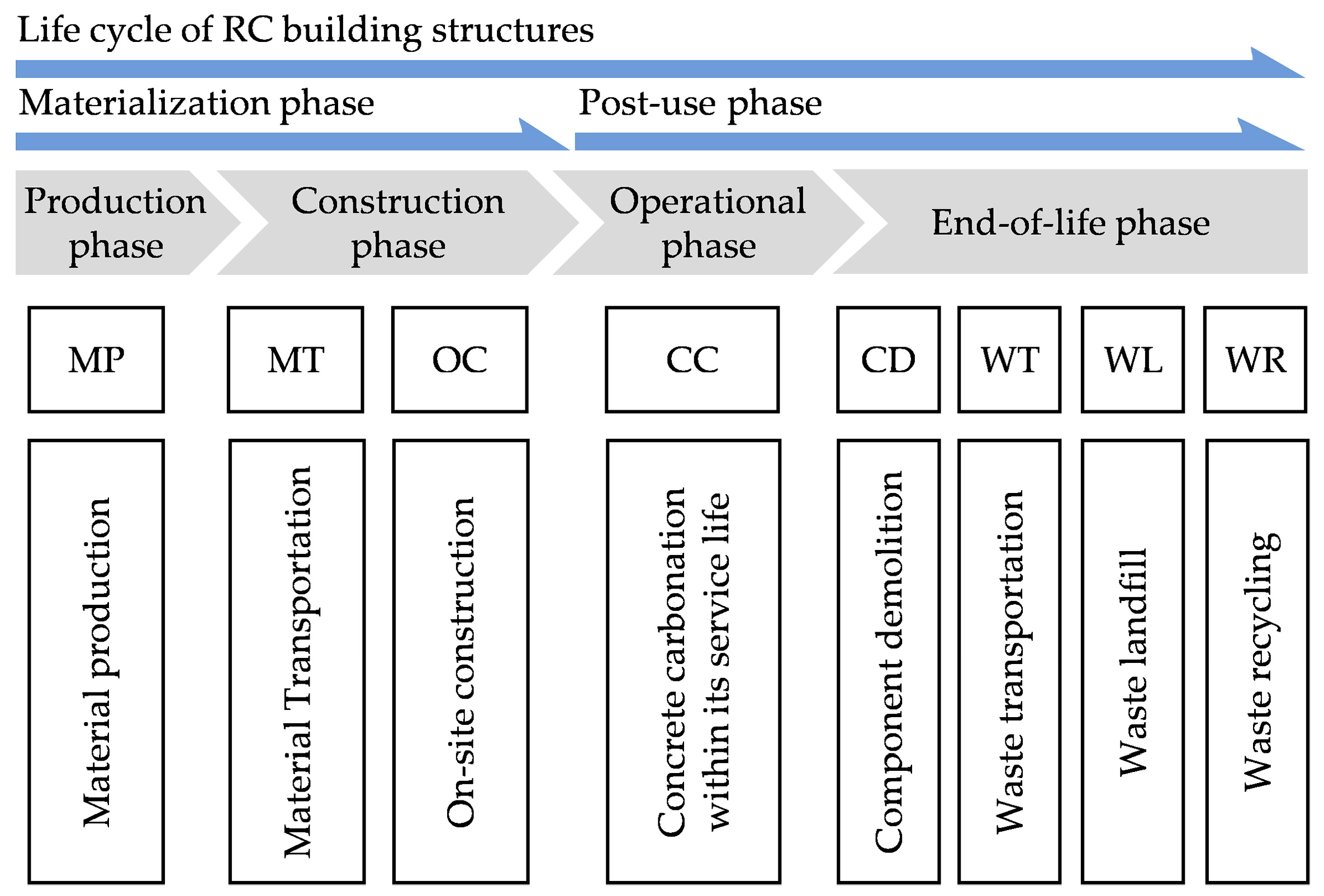
- A comprehensive life cycle system boundary is established when evaluating objective functions and structural performance in the optimization design.
- (2)
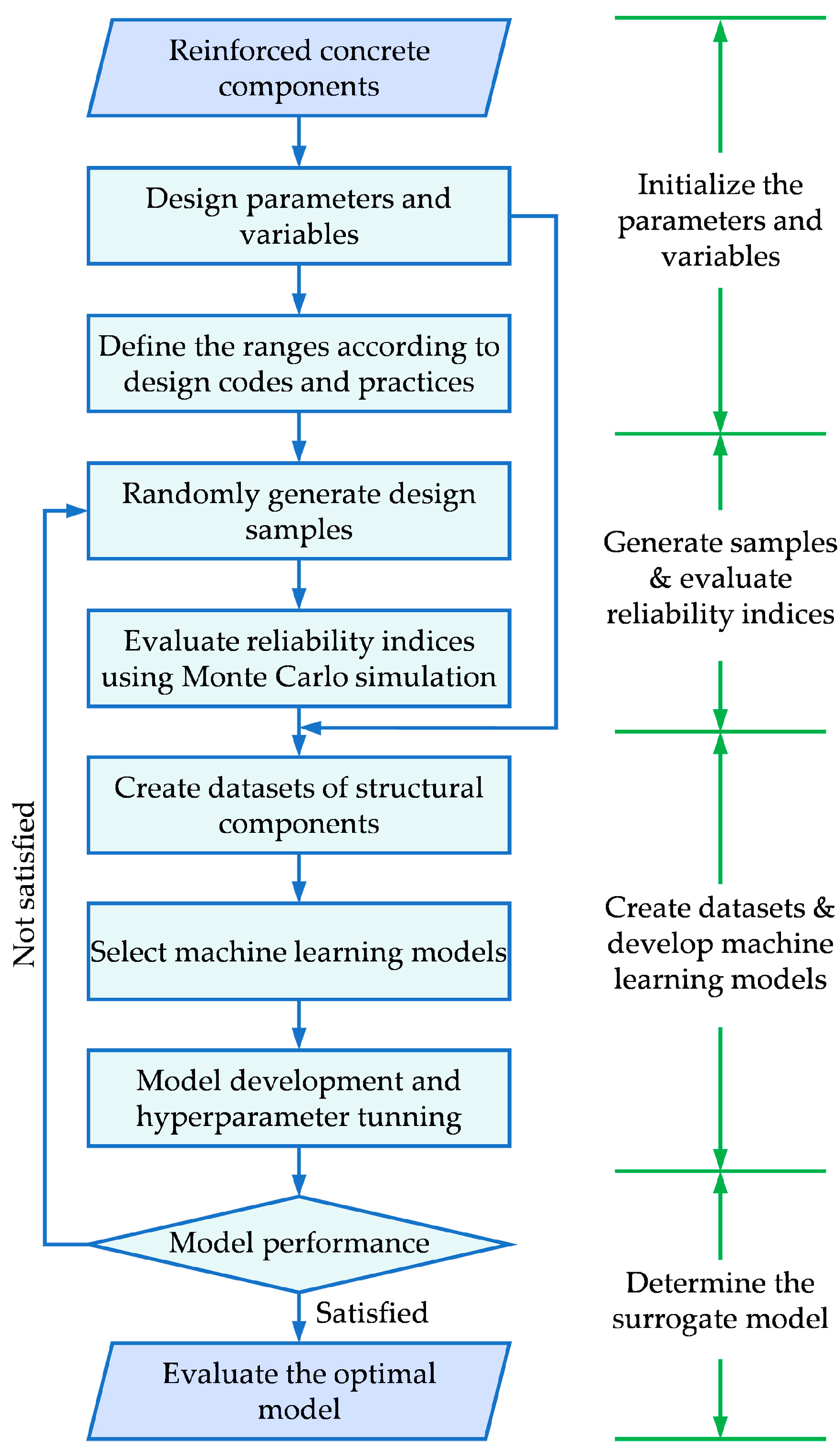
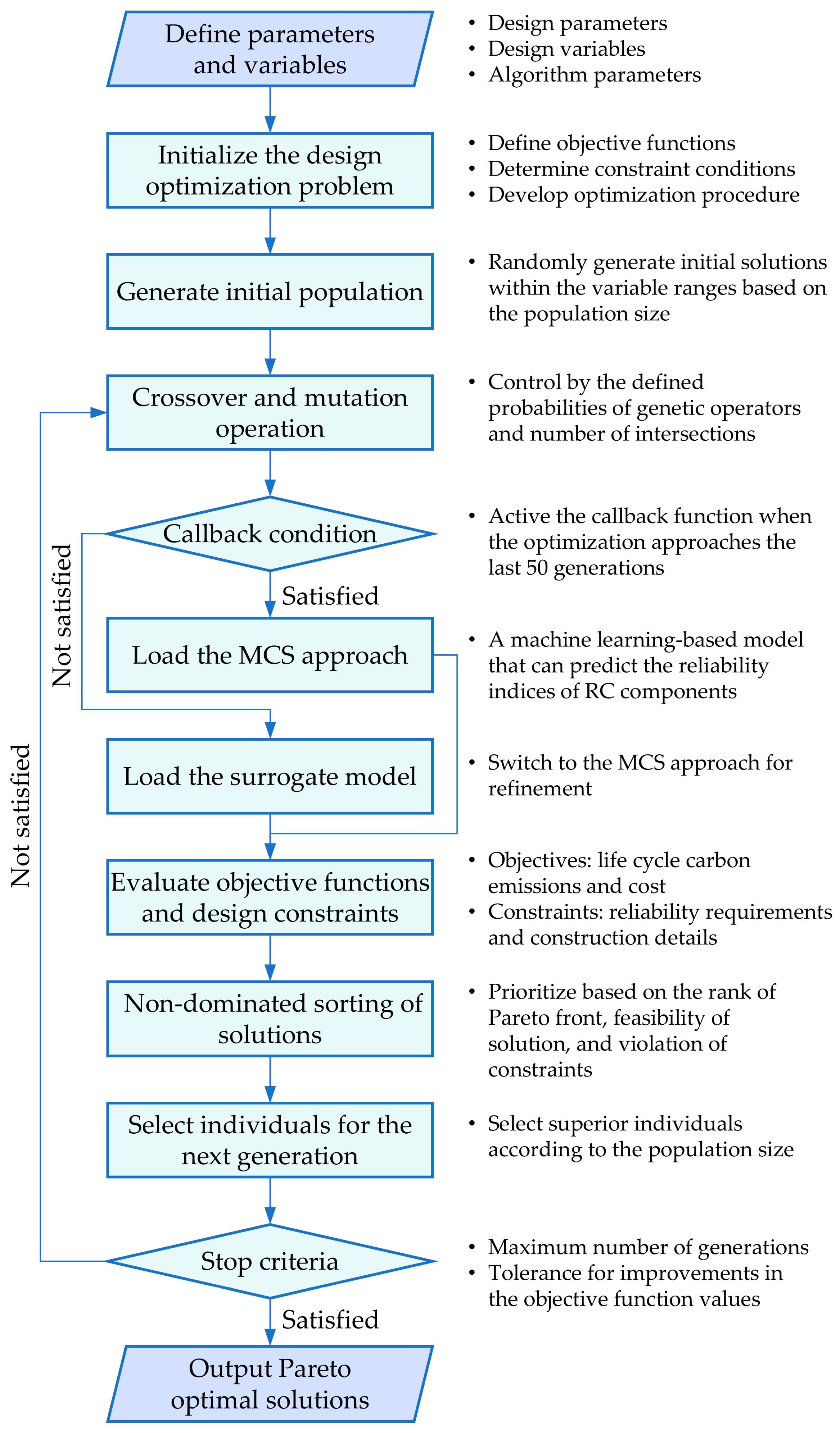
- A hybrid approach is proposed, of which an intelligent surrogate model is combined with a dual-objective genetic algorithm to significantly enhance the efficiency of life cycle sustainable design.
- (3)
- Structural deterioration and uncertainties in material properties and load effects are incorporated into the sustainable optimization, and design strategies were compared between typical and life cycle design methods.
2. Methodology
2.1. Research Scope
2.2. Carbon Emission Assessment
2.2.1. Materialization Phase
2.2.2. Operational Phase
2.2.3. End-of-Life Phase
2.3. Life Cycle Cost Assessment
2.4. Design Constraints
2.5. Structural Deterioration and Uncertain Parameters
2.6. Machine Learning-Based Surrogate Model
- (1)
- Preparing data and selected input features used for training models.
- (2)
- Splitting the data into training and testing sets, and standardizing the feature values.
- (3)
- Determining machine learning algorithms used for developing predictive models.
- (4)
- Tuning hyperparameters based on Bayesian optimization and cross-validation techniques.
- (5)
- Programming and training the models on the training set.
- (6)
- Assessing the model performance on the testing set.
- (7)
- Identifying the superior models according to the performance metrics.
2.7. Hybrid Optimization Method
3. Case Study
3.1. Basic Information
3.2. Parameter Setting
4. Results and Discussion
4.1. Performance of the Surrogate Model
4.2. Results of the Optimization Design
4.3. Parametric Analysis
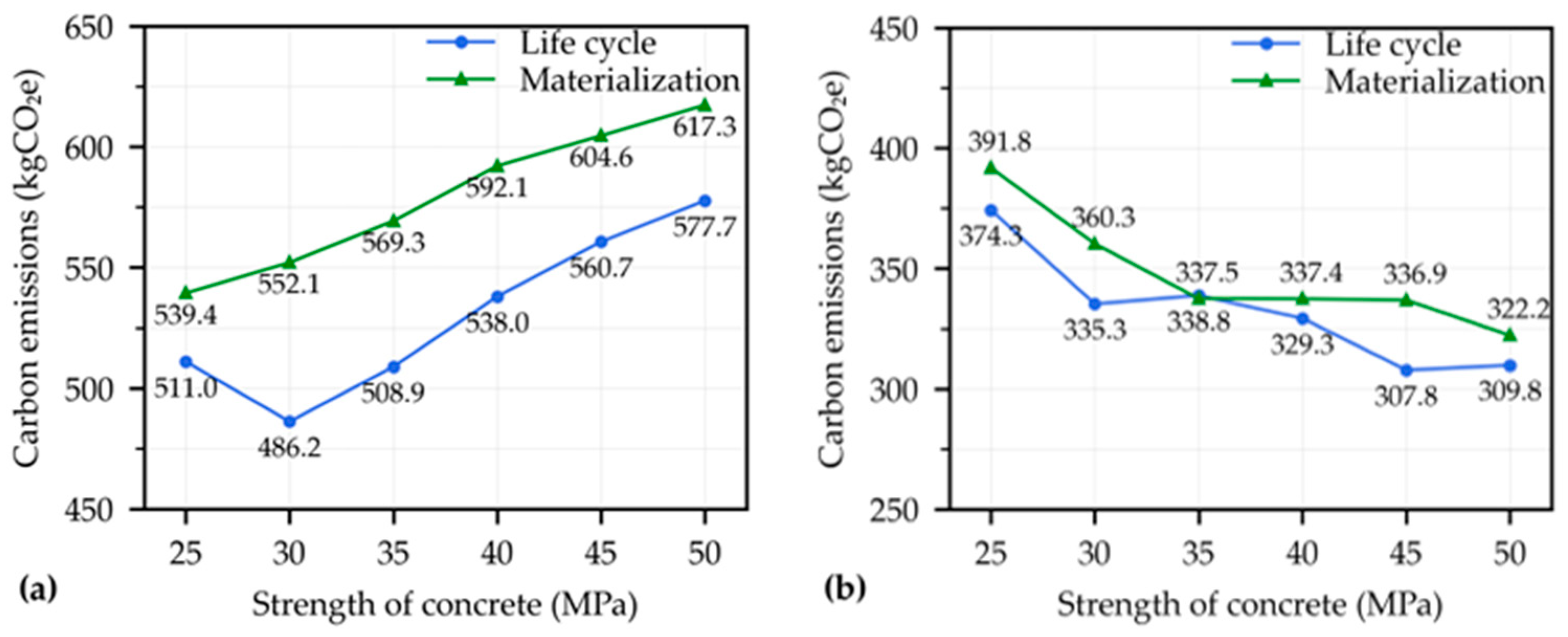
4.3.1. Concrete Strength
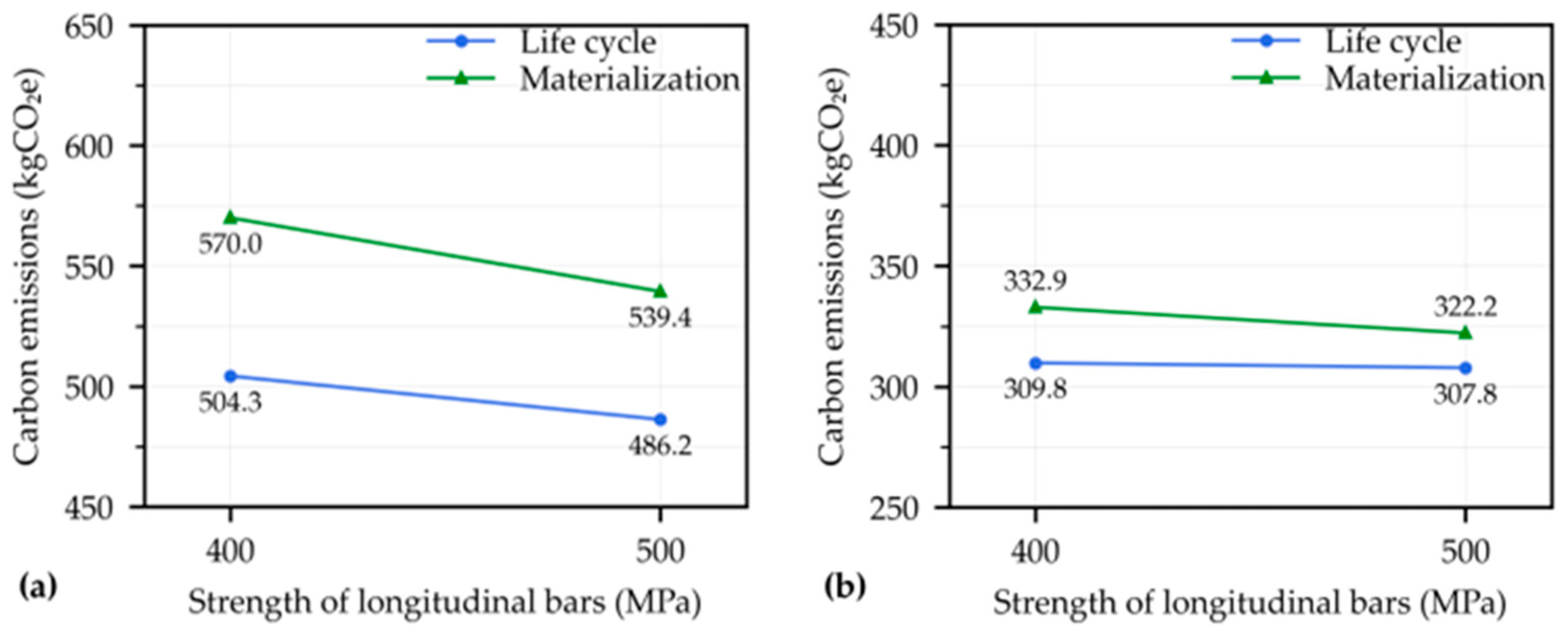
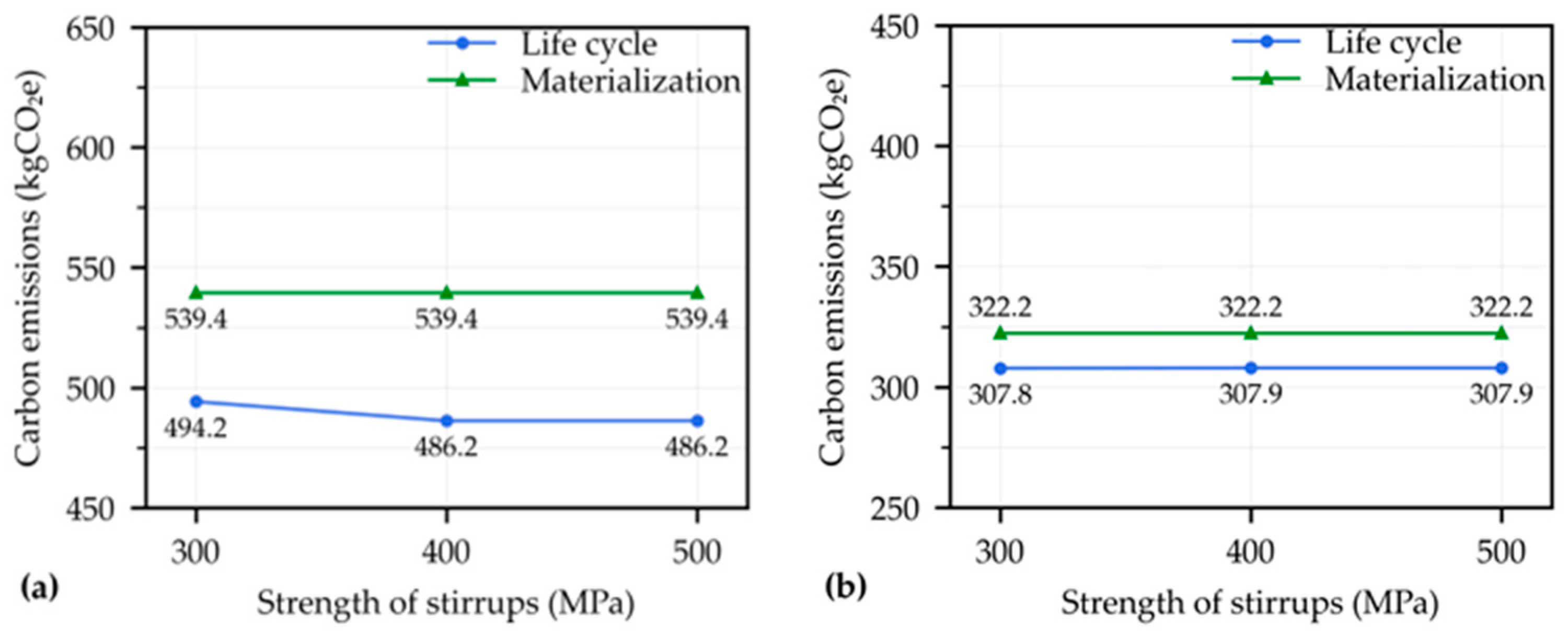
4.3.2. Reinforcement Strength
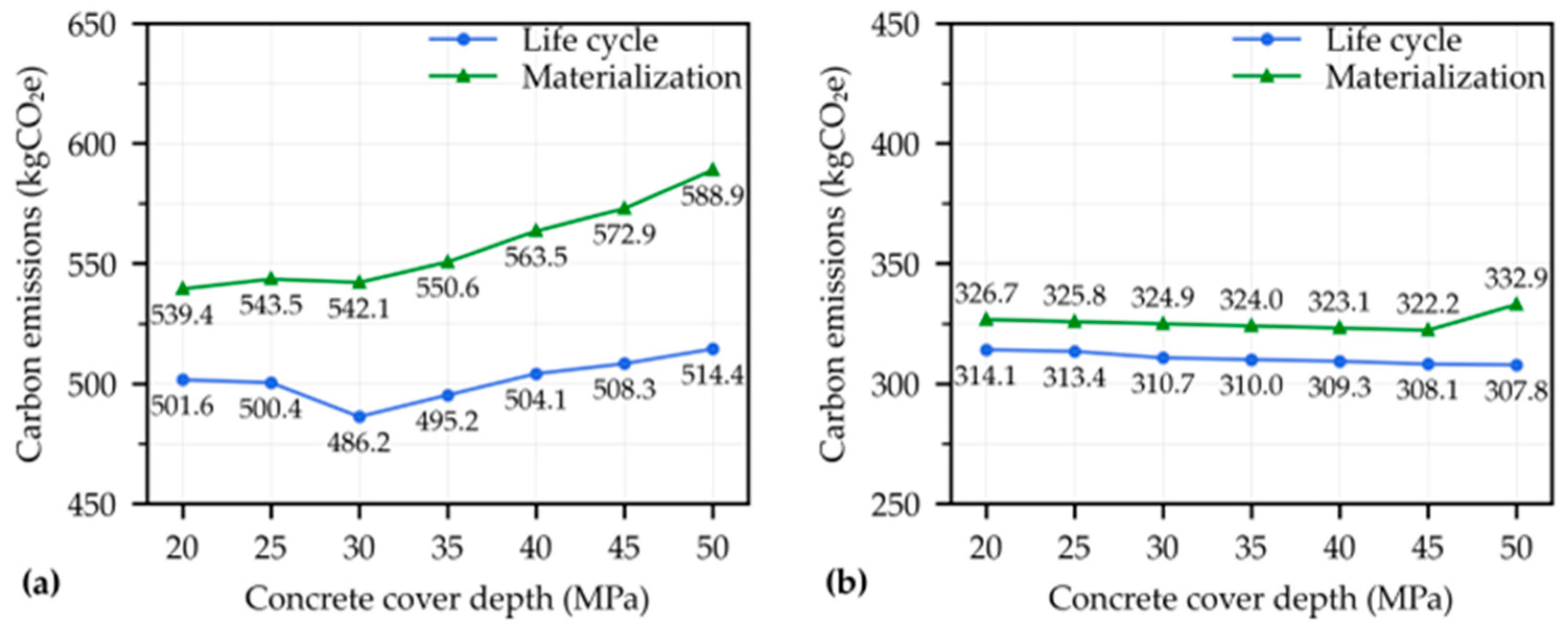
4.3.3. Concrete Cover Depth
4.3.4. Comparison with Previous Studies
5. Conclusions
- (1)
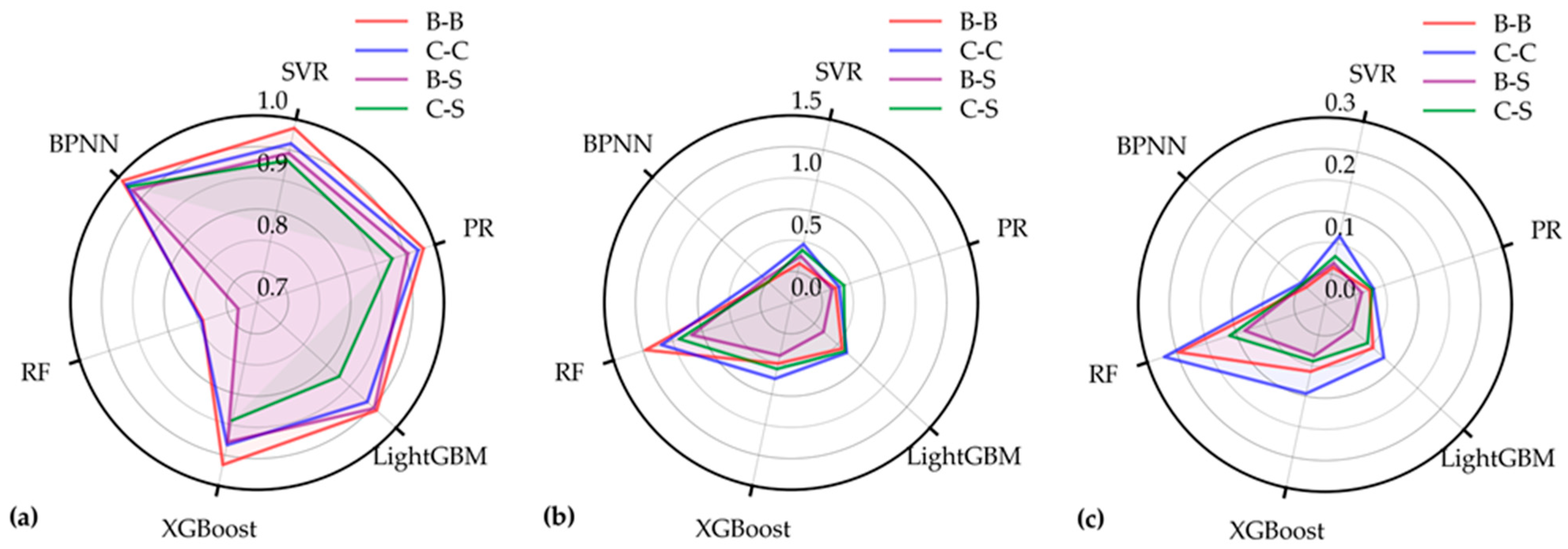
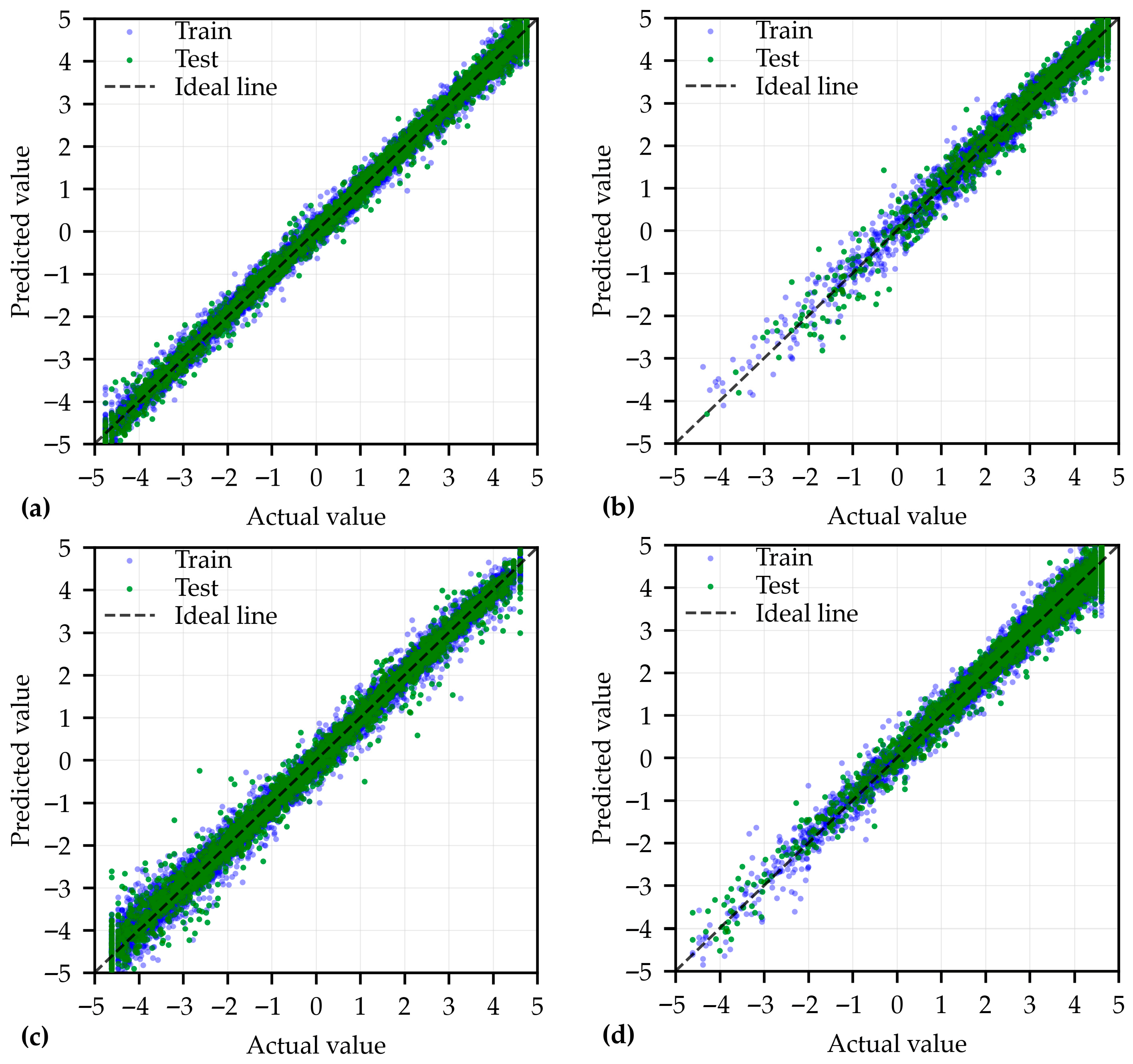
- The proposed machine learning models demonstrated high accuracy in predicting reliability indices, with R2 values exceeding 0.95 and MAPEs below 6% on the testing sets. The incorporation of machine learning models reduced the algorithm’s runtime by approximately 2/3 compared to the conventional MCS approach, enabling more efficient life cycle design optimization.
- (2)
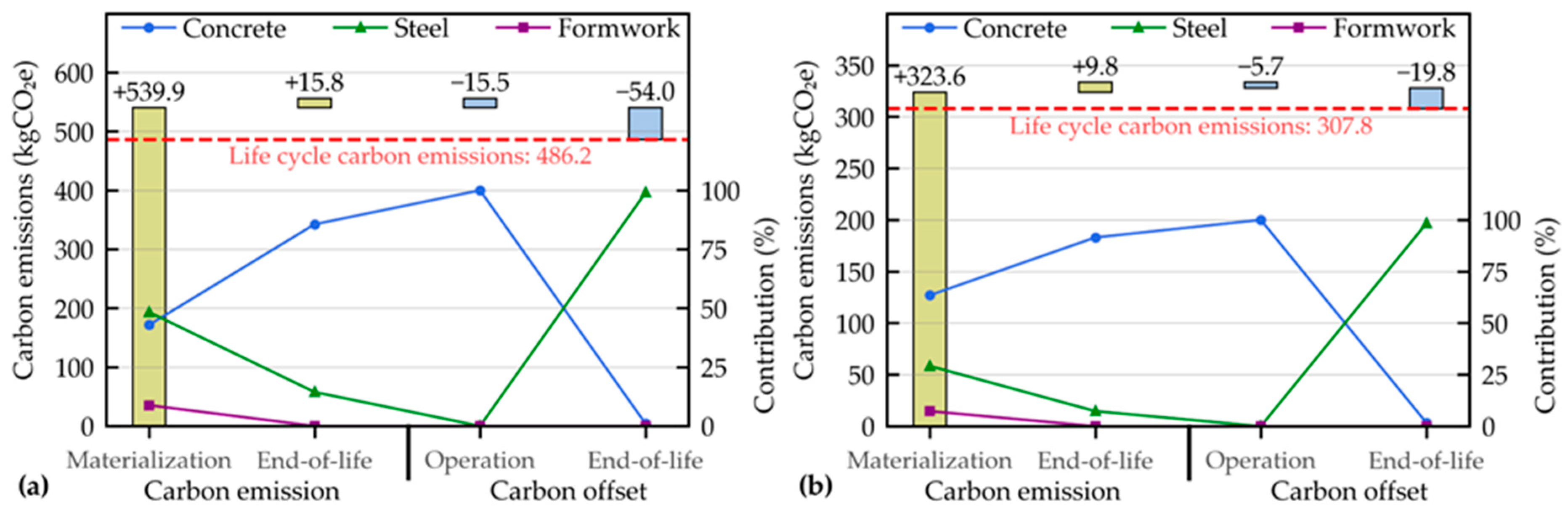
- The Pareto sets showed that the minimum carbon emissions for the case beam and column were 486.2 kgCO2e and 307.8 kgCO2e, respectively, with corresponding minimum costs of 1037.0 CNY and 545.8 CNY. The results validated the effectiveness of the proposed approach, achieving a carbon reduction of over 10% compared to the initial manual design.
- (3)
- A comparison of optimization results between the reliability index-based method and typical partial coefficient design method indicated that different strategies were required for life cycle sustainable design, considering structural deterioration and uncertainties. While the trends in optimized carbon emissions by varying material strengths were generally consistent across both methods, the optimized concrete cover depth differed. A thicker cover was preferred to mitigate carbon emissions in life cycle design.
Author Contributions
Funding
Institutional Review Board Statement
Informed Consent Statement
Data Availability Statement
Conflicts of Interest
Abbreviations
| BPNN | Back propagation neural networks |
| CNY | Chinese Yuan |
| LCA | Life cycle assessment |
| LightGBM | Light gradient boosting machine |
| MAPE | Mean absolute percentage error |
| MCS | Monte Carlo simulation |
| NSGA-II | Non-dominated sorting genetic algorithm |
| PR | Polynomial regression |
| PSO | Particle swarm optimization |
| R2 | Coefficient of determination |
| RC | Reinforced concrete |
| RF | Random Forest |
| RMSE | Root mean squared error |
| SVR | Support vector regression |
| XGBoost | Extreme gradient boosting |
References
- Poorisat, T.; Aigwi, I.E.; Doan, D.T.; GhaffarianHoseini, A. Unlocking the potentials of sustainable building designs and practices: A Systematic Review. Build. Environ. 2024, 266, 112069. [Google Scholar] [CrossRef]
- Chen, T.; Zhang, N.; Ye, Z.; Jiang, K.; Lin, Z.; Zhang, H.; Xu, Y.; Liu, Q.; Huang, H. Carbon reduction benefits of photovoltaic-green roofs and their climate change mitigation potential: A case study of Xiamen city. Sustain. Cities Soc. 2024, 114, 105760. [Google Scholar] [CrossRef]
- Govindarajan, L.; Batcha, M.F.B.M.; Abdullah, M.K.B. Solar energy policies in southeast Asia towards low carbon emission: A review. Heliyon 2023, 9, e14294. [Google Scholar] [CrossRef] [PubMed]
- Abass, P.J.; Muthulingam, S. Comprehensive assessment of PCM integrated roof for passive building design: A study in energo-economics. Energy Build. 2024, 317, 114387. [Google Scholar] [CrossRef]
- Liang, Y.; Pan, Y.; Yuan, X.; Yang, Y.; Fu, L.; Li, J.; Sun, T.; Huang, Z.; Kosonen, R. Assessment of operational carbon emission reduction of energy conservation measures for commercial buildings: Model development. Energy Build. 2022, 268, 112189. [Google Scholar] [CrossRef]
- Chen, R.; Tsay, Y.; Zhang, T. A multi-objective optimization strategy for building carbon emission from the whole life cycle perspective. Energy 2023, 262, 125373. [Google Scholar] [CrossRef]
- Falana, J.; Osei-Kyei, R.; Tam, V.W.Y. Towards achieving a net zero carbon building: A review of key stakeholders and their roles in net zero carbon building whole life cycle. J. Build. Eng. 2024, 82, 108223. [Google Scholar] [CrossRef]
- Feng, H.; Zhao, J.; Zhang, H.; Zhu, S.; Li, D.; Thurairajah, N. Uncertainties in whole-building life cycle assessment: A systematic review. J. Build. Eng. 2022, 50, 104191. [Google Scholar] [CrossRef]
- Wang, X.; Teigland, R.; Hollberg, A. Identifying influential architectural design variables for early-stage building sustainability optimization. Build. Environ. 2024, 252, 111295. [Google Scholar] [CrossRef]
- Cang, Y.; Yang, L.; Luo, Z.; Zhang, N. Prediction of embodied carbon emissions from residential buildings with different structural forms. Sust. Cities Soc. 2020, 54, 101946. [Google Scholar] [CrossRef]
- Tian, Y.; Chai, K. Building design and operation multi-objective optimization: Energy costs vs. emissions. Energy Build. 2025, 329, 115225. [Google Scholar] [CrossRef]
- Qin, S.; Guan, H.; Liao, W.; Gu, Y.; Zheng, Z.; Xue, H.; Lu, X. Intelligent design and optimization system for shear wall structures based on large language models and generative artificial intelligence. J. Build. Eng. 2024, 95, 109996. [Google Scholar] [CrossRef]
- Negrin, I.; Kripka, M.; Yepes, V. Multi-criteria optimization for sustainability-based design of reinforced concrete frame buildings. J. Clean. Prod. 2023, 425, 139115. [Google Scholar] [CrossRef]
- Fraile-Garcia, E.; Ferreiro-Cabello, J.; Martinez-Camara, E.; Jimenez-Macias, E. Optimization based on life cycle analysis for reinforced concrete structures with one-way slabs. Eng. Struct. 2016, 109, 126–138. [Google Scholar] [CrossRef]
- Huang, X.; Jiao, Z.; Xing, F.; Sui, L.; Hu, B.; Zhou, Y. Performance assessment of LC3 concrete structures considering life-cycle cost and environmental impacts. J. Clean. Prod. 2024, 436, 140380. [Google Scholar] [CrossRef]
- Khalid, O.W.; Isa, N.A.M.; Sakim, H.A.M. Emperor penguin optimizer: A comprehensive review based on state-of-the-art meta-heuristic algorithms. Alex. Eng. J. 2023, 63, 487–526. [Google Scholar] [CrossRef]
- Röck, M.; Balouktsi, M.; Saade, M.R.M. Embodied carbon emissions of buildings and how to tame them. One Earth 2023, 6, 1458–1464. [Google Scholar] [CrossRef]
- Li, X.; Xie, W.; Xu, L.; Li, L.; Jim, C.Y.; Wei, T. Holistic life-cycle accounting of carbon emissions of prefabricated buildings using LCA and BIM. Energy Build. 2022, 266, 112136. [Google Scholar] [CrossRef]
- Seyedabadi, M.R.; Abolhassani, S.S.; Eicker, U. District cradle to grave LCA including the development of a localized embodied carbon database and a detailed end-of-life carbon emission workflow. J. Build. Eng. 2023, 76, 107101. [Google Scholar] [CrossRef]
- Hong, J.; Shen, G.Q.; Feng, Y.; Lau, W.S.; Mao, C. Greenhouse gas emissions during the construction phase of a building: A case study in China. J. Clean. Prod. 2015, 103, 249–259. [Google Scholar] [CrossRef]
- Teng, Y.; Pan, W. Estimating and minimizing embodied carbon of prefabricated high-rise residential buildings considering parameter, scenario and model uncertainties. Build. Environ. 2020, 180, 106951. [Google Scholar] [CrossRef]
- Ding, Z.; Liu, S.; Luo, L.; Liao, L. A building information modeling-based carbon emission measurement system for prefabricated residential buildings during the materialization phase. J. Clean. Prod. 2020, 264, 121728. [Google Scholar] [CrossRef]
- Zhang, X.; Wang, F. Influence of parameter uncertainty on the low-carbon design optimization of reinforced concrete continuous beams. Struct. Concr. 2023, 24, 855–871. [Google Scholar] [CrossRef]
- Zhang, X.; Zhang, X. Sustainable design of reinforced concrete structural members using embodied carbon emission and cost optimization. J. Build. Eng. 2021, 44, 102940. [Google Scholar] [CrossRef]
- Mergos, P.E. Contribution to sustainable seismic design of reinforced concrete members through embodied CO2 emissions optimization. Struct. Concr. 2018, 19, 454–462. [Google Scholar] [CrossRef]
- Park, H.S.; Lee, H.; Kim, Y.; Hong, T.; Choi, S.W. Evaluation of the influence of design factors on the CO2 emissions and costs of reinforced concrete columns. Energy Build. 2014, 82, 378–384. [Google Scholar] [CrossRef]
- Hussain, K.; Salleh, M.N.M.; Cheng, S.; Shi, Y. Metaheuristic research: A comprehensive survey. Artif. Intell. Rev. 2019, 52, 2191–2233. [Google Scholar] [CrossRef]
- Khajehzadeh, M.; Iraji, A.; Majdi, A.; Keawsawasvong, S.; Nehdi, M.L. Adaptive salp swarm algorithm for optimization of geotechnical structures. Appl. Sci. 2022, 12, 6749. [Google Scholar] [CrossRef]
- Kashani, A.R.; Camp, C.V.; Akhani, M.; Ebrahimi, S. Optimum design of combined footings using swarm intelligence-based algorithms. Adv. Eng. Softw. 2022, 169, 103140. [Google Scholar] [CrossRef]
- Tunca, O.; Çarbaş, S. Minimum weight design of reinforced concrete beams utilizing grey wolf and backtracking search optimization algorithms. Chall. J. Concr. Res. Let. 2022, 13, 72–79. [Google Scholar] [CrossRef]
- Pierott, R.; Hammad, A.W.A.; Haddad, A.; Garcia, S.; Falcón, G. A mathematical optimisation model for the design and detailing of reinforced concrete beams. Eng. Struct. 2021, 245, 112861. [Google Scholar] [CrossRef]
- Xu, C.; Liu, J.; Wu, Z.; Chen, Y.F. Automated steel reinforcement detailing in reinforced concrete frames using evolutionary optimization and artificial potential field. Automat. Constr. 2022, 138, 104224. [Google Scholar] [CrossRef]
- Yücel, M.; Nigdeli, S.M.; Bekdaş, G. Generation of sustainable models with multi-objective optimum design of reinforced concrete (RC) structures. Structures 2022, 40, 223–236. [Google Scholar] [CrossRef]
- Kripka, M.; Medeiros, G.F. Cross-sectional optimization of reinforced concrete columns considering both economical and environmental costs. In Proceedings of the International Conference on Green Building, Materials and Civil Engineering, Sanya, China, 22–23 August 2012; pp. 1086–1089. [Google Scholar]
- Medeiros, G.F.; Kripka, M. Optimization of reinforced concrete columns according to different environmental impact assessment parameters. Eng. Struct. 2014, 59, 185–194. [Google Scholar] [CrossRef]
- Sánchez-Olivares, G.; Tomás, A. Improvements in meta-heuristic algorithms for minimum cost design of reinforced concrete rectangular sections under compression and biaxial bending. Eng. Struct. 2017, 130, 162–179. [Google Scholar] [CrossRef]
- Vaez, S.R.H.; Qomi, H.S. Bar layout and weight optimization of special RC shear wall. Structures 2018, 14, 153–163. [Google Scholar] [CrossRef]
- Sangngamratsakul, N.; Kubaha, K.; Chiarakorn, S. Embodied energy coefficient quantification and implementation for an energy-conservative house in Thailand. Sustainability 2024, 16, 4045. [Google Scholar] [CrossRef]
- Asare, G.O.; Barnett, S.; Awinda, K.; Martinson, B. Life cycle assessment of steel fibre-reinforced concrete beams. Cogent Eng. 2024, 11, 2374942. [Google Scholar] [CrossRef]
- Zhang, X.; Zhang, X. A subproject-based quota approach for life cycle carbon assessment at the building design and construction stage in China. Build. Environ. 2020, 185, 107258. [Google Scholar] [CrossRef]
- Medvedev, V.; Pustovgar, A. A review of concrete carbonation and approaches to its research under irradiation. Buildings 2023, 13, 1998. [Google Scholar] [CrossRef]
- Zhang, Y.; Jiang, L.X. A practical mathematical model of concrete carbonation depth based on carbonation mechanism. Ind. Build. 1998, 1, 16–19. (In Chinese) [Google Scholar]
- Pade, C.; Guimaraes, M. The CO2 uptake of concrete in a 100 year perspective. Cem. Concr. Res. 2007, 37, 1348–1356. [Google Scholar] [CrossRef]
- Kong, M.; Ji, C.; Hong, T.; Kang, H. Impact of the use of recycled materials on the energy conservation and energy transition of buildings using life cycle assessment: A case study in South Korea. Renew. Sust. Energ. Rev. 2022, 155, 111891. [Google Scholar] [CrossRef]
- Zhao, Q.; Gao, W.; Su, Y.; Wang, T.; Wang, J. How can C&D waste recycling do a carbon emission contribution for construction industry in Japan city? Energy Build. 2023, 298, 113538. [Google Scholar] [CrossRef]
- Liu, K.; Zheng, J.; Dong, S.; Xie, W.; Zhang, X. Mixture optimization of mechanical, economical, and environmental objectives for sustainable recycled aggregate concrete based on machine learning and metaheuristic algorithms. J. Build. Eng. 2023, 63, 105570. [Google Scholar] [CrossRef]
- Zhang, X.; Li, Y.; Chen, H.; Yan, X.; Liu, K. Characteristics of embodied carbon emissions for high-rise building construction: A statistical study on 403 residential buildings in China. Resour. Conserv. Recycl. 2023, 198, 107200. [Google Scholar] [CrossRef]
- GB/T 50010-2010; Code for Design of Concrete Structures. China Architecture & Building Press: Beijing, China, 2024.
- GB 50068-2018; Unified Standard for Reliability Design of Building Structures. China Architecture & Building Press: Beijing, China, 2018.
- Val, D.V.; Andrade, C.; Sykora, M.; Stewart, M.G.; Bastidas-Arteaga, E.; Mlcoch, J.; Truong, Q.C.; El Soueidy, C.P. Probabilistic modelling of deterioration of reinforced concrete structures. Struct. Saf. 2025, 113, 102454. [Google Scholar] [CrossRef]
- Li, H.; Wu, X.; Nie, Q.; Yu, J.; Zhang, L.; Wang, Q.; Gao, Q. Lifetime prediction of damaged or cracked concrete structures: A review. Structures 2025, 71, 108095. [Google Scholar] [CrossRef]
- Gao, X.; Li, J.; Ren, X. Probabilistic model for long-term time-dependent compressive strength of concrete in existing buildings. J. Perform. Constr. Facil. 2018, 32, 115157619. [Google Scholar] [CrossRef]
- Gao, X.; Yan, Y.; Li, L. Change law of time-dependent concrete compressive strength in the atmospheric environment. China Civ. Eng. J. 2015, 48, 19–26. (In Chinese) [Google Scholar] [CrossRef]
- GB 50292-2015; Standard for Appraisal of Reliability of Civil Buildings. China Architecture & Building Press: Beijing, China, 2016.
- Stewart, M.G.; Rosowsky, D.V. Time-dependent reliability of deteriorating reinforced concrete bridge decks. Struct. Saf. 1998, 20, 91–109. [Google Scholar] [CrossRef]
- Vu, K.A.T.; Stewart, M.G. Structural reliability of concrete bridges including improved chloride-induced corrosion models. Struct. Saf. 2000, 22, 313–333. [Google Scholar] [CrossRef]
- Fang, L.; Zhou, Y.; Yi, D.; Yi, W. Experimental study on flexural capacity of corroded RC slabs reinforced with basalt fiber textile. Appl. Sci. 2021, 11, 144. [Google Scholar] [CrossRef]
- Gong, J.; Zhang, Q. Principles of Reliability Design for Engineering Structures; China Machine Press: Beijing, China, 2022. (In Chinese) [Google Scholar]
- Pradlwarter, H.J.; Schuëller, G.I.; Koutsourelakis, P.S.; Charmpis, D.C. Application of line sampling simulation method to reliability benchmark problems. Struct. Saf. 2007, 29, 208–221. [Google Scholar] [CrossRef]
- Yang, Z.; Ching, J. A novel reliability-based design method based on quantile-based first-order second-moment. Appl. Math. Model. 2020, 88, 461–473. [Google Scholar] [CrossRef]
- Zhang, X.; Chen, H.; Sun, J.; Zhang, X. Predictive models of embodied carbon emissions in building design phases: Machine learning approaches based on residential buildings in China. Build. Environ. 2024, 258, 111595. [Google Scholar] [CrossRef]
- Liu, Q.; Li, X.; Liu, H.; Guo, Z. Multi-objective metaheuristics for discrete optimization problems: A review of the state-of-the-art. Appl. Soft Comput. 2020, 93, 106382. [Google Scholar] [CrossRef]



| Uncertainty | Specification | Distribution | Ratio of Mean Value to Standard Value | Coefficient of Variation |
|---|---|---|---|---|
| Load | Dead load | Normal | 1.0600 | 0.0700 |
| Live load | Extreme I | 0.5240 | 0.2880 | |
| Wind load | Extreme I | 1.0070 | 0.1930 | |
| Compressive strength of concrete | 25 MPa | Normal | 1.4512 | 0.1890 |
| 30 MPa | Normal | 1.3946 | 0.1720 | |
| 35 MPa | Normal | 1.3695 | 0.1640 | |
| 40 MPa | Normal | 1.3452 | 0.1560 | |
| 45 MPa | Normal | 1.3452 | 0.1560 | |
| 50 MPa | Normal | 1.3247 | 0.1490 | |
| Strength of steel bars | 300 MPa | Normal | 1.1726 | 0.0895 |
| 400 MPa | Normal | 1.1392 | 0.0743 | |
| 500 MPa | Normal | 1.1392 | 0.0743 | |
| Dimension | Area of steel bars | Normal | 1.0000 | 0.0300 |
| Sectional width and height | Normal | 1.0000 | 0.0200 | |
| Effective height | Normal | 1.0000 | 0.0300 | |
| Spacing of stirrups | Normal | 0.9900 | 0.0700 | |
| Calculation mode | Bending | Normal | 1.0000 | 0.0400 |
| Compression | Normal | 1.0000 | 0.0500 | |
| Shearing | Normal | 1.0000 | 0.1500 |
| Classification | Variable | Unit | Range of Variable | Limitation | |
|---|---|---|---|---|---|
| Beam | Column | ||||
| Cross-section | Width | mm | (200, 500) | (300, 1000) | Multiples of 50 mm |
| Height | mm | (300, 800) | (300, 1000) | Multiples of 50 mm | |
| Concrete cover depth | mm | (20, 50) | (20, 50) | Multiples of 5 mm | |
| Concrete | Strength grade | MPa | (25, 50) | (25, 50) | Multiples of 5 MPa |
| Longitudinal bar | Strength grade | MPa | (400, 500) | (400, 500) | Multiples of 100 MPa |
| Number of bars a | – | (2, 12) | (0, 5) | Integer | |
| Diameter of bars b | mm | (12, 14, 16, 18, 20, 22, 25) | (12, 14, 16, 18, 20, 22, 25) | ||
| Stirrup | Strength grade | MPa | (300, 500) | (300, 500) | Multiples of 100 MPa |
| Spacing | mm | (100, 250) | (100, 250) | Multiples of 10 mm | |
| Diameter of stirrup | mm | (8, 10, 12, 14, 16) | (8, 10, 12, 14, 16) | ||
| Component | Solution | Dimension (mm) | Concrete Strength (MPa) | Longitudinal Bar | Stirrup | Carbon Emissions (kgCO2e) | Cost (CNY) | ||||||
|---|---|---|---|---|---|---|---|---|---|---|---|---|---|
| b | h | c | fy (MPa) | d (mm) | n | fyv (MPa) | dsv (mm) | s (mm) | |||||
| Beam | B1 | 200 | 550 | 30 | 30 | 500 | 18 | 5 | 400 | 8 | 250 | 486.2 | 1037.0 |
| B2 | 200 | 550 | 30 | 35 | 500 | 16 | 6 | 300 | 8 | 240 | 508.9 | 1024.8 | |
| B3 | 200 | 550 | 20 | 40 | 500 | 22 | 3 | 300 | 8 | 250 | 538.0 | 1016.1 | |
| Column | C1 | 300 | 450 | 50 | 45 | 500 | 16 + 12 | 4 + 2 | 300 | 8 | 180 | 307.8 | 552.8 |
| C2 | 300 | 450 | 50 | 50 | 400 | 14 + 12 | 4 + 2 | 300 | 8 | 180 | 309.8 | 545.8 | |
Disclaimer/Publisher’s Note: The statements, opinions and data contained in all publications are solely those of the individual author(s) and contributor(s) and not of MDPI and/or the editor(s). MDPI and/or the editor(s) disclaim responsibility for any injury to people or property resulting from any ideas, methods, instructions or products referred to in the content. |
© 2025 by the authors. Licensee MDPI, Basel, Switzerland. This article is an open access article distributed under the terms and conditions of the Creative Commons Attribution (CC BY) license (https://creativecommons.org/licenses/by/4.0/).
Share and Cite
Zhang, X.; Zhang, J. Life Cycle Sustainable Design Optimization of Building Structural Components: A Hybrid Approach Incorporating Genetic Algorithm and Machine Learning. Sustainability 2025, 17, 10449. https://doi.org/10.3390/su172310449
Zhang X, Zhang J. Life Cycle Sustainable Design Optimization of Building Structural Components: A Hybrid Approach Incorporating Genetic Algorithm and Machine Learning. Sustainability. 2025; 17(23):10449. https://doi.org/10.3390/su172310449
Chicago/Turabian StyleZhang, Xiaocun, and Jingfeng Zhang. 2025. "Life Cycle Sustainable Design Optimization of Building Structural Components: A Hybrid Approach Incorporating Genetic Algorithm and Machine Learning" Sustainability 17, no. 23: 10449. https://doi.org/10.3390/su172310449
APA StyleZhang, X., & Zhang, J. (2025). Life Cycle Sustainable Design Optimization of Building Structural Components: A Hybrid Approach Incorporating Genetic Algorithm and Machine Learning. Sustainability, 17(23), 10449. https://doi.org/10.3390/su172310449