Article

Bridging the Digital Gradient: How Digital Literacy and Information Perception Shape Innovation and Entrepreneurship Across Urban, County and Township Students

1
Department of Sociology, School of Humanities and Social Sciences, Xi’an Jiaotong University, Xi’an 710049, China
2
Chenzhou Forestry Science Research Institute, Chenzhou 423002, China
*
Author to whom correspondence should be addressed.
Sustainability 2025, 17(22), 9942; https://doi.org/10.3390/su17229942
Submission received: 1 October 2025 / Revised: 4 November 2025 / Accepted: 5 November 2025 / Published: 7 November 2025

Abstract

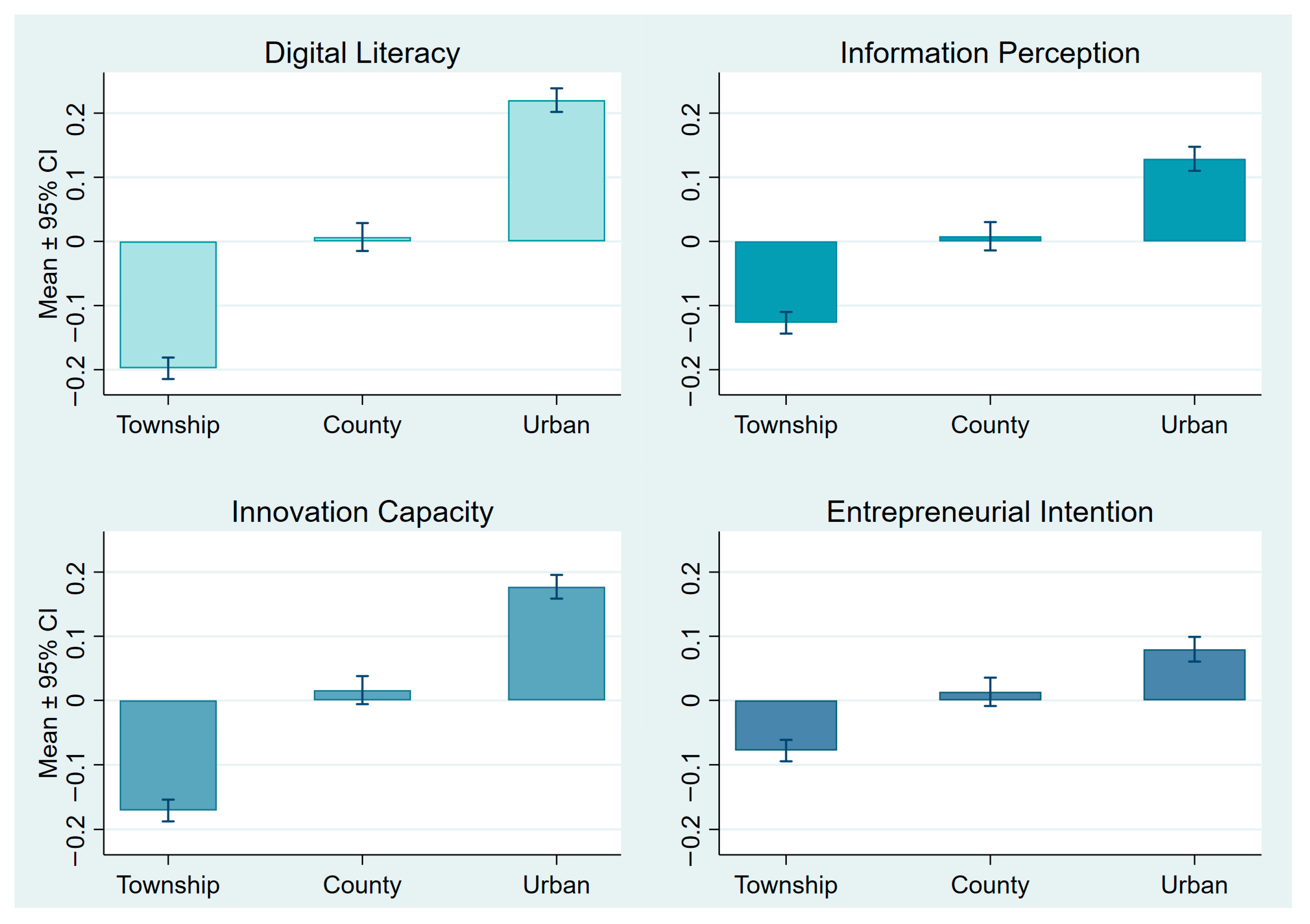
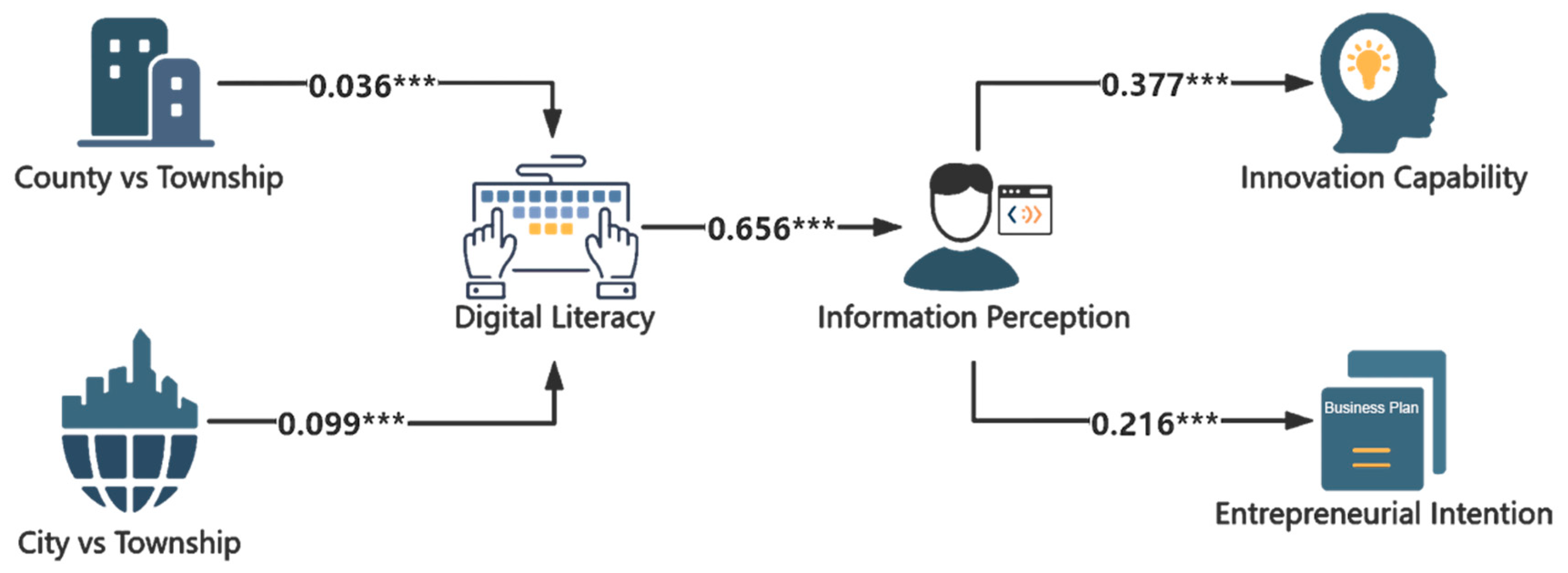
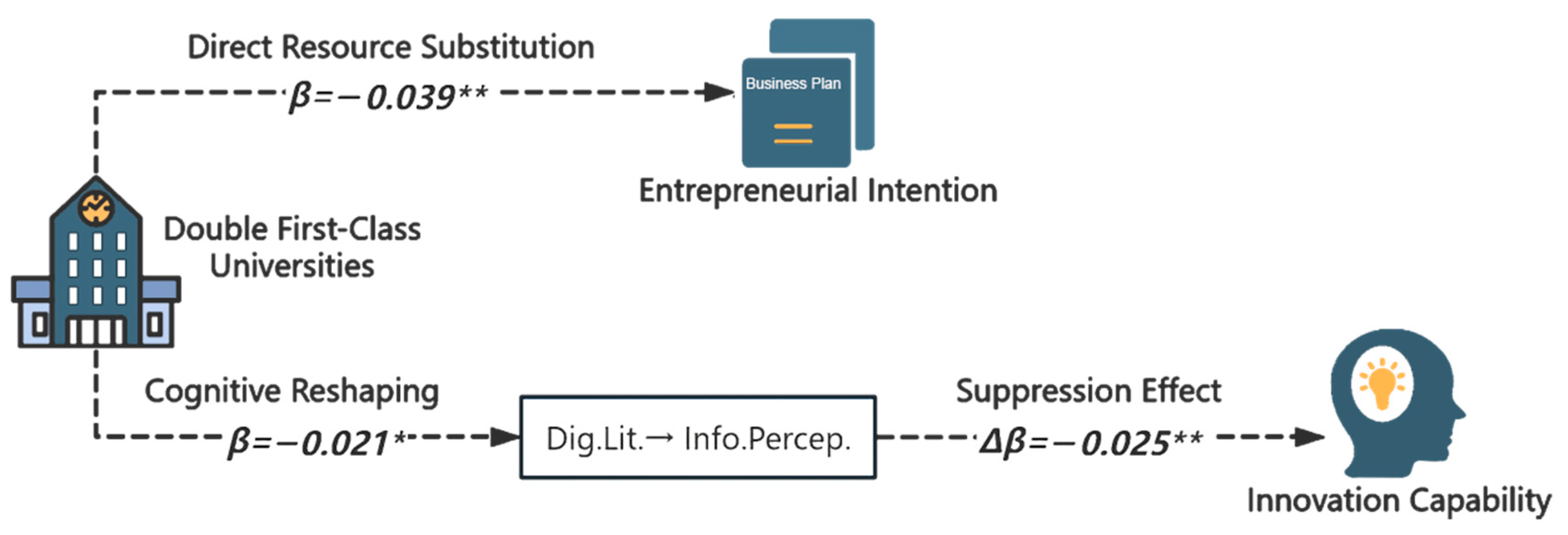
Background: In China, a paradox has emerged: while the digital access gap narrows, a pronounced digital gradient—a sequential decline in outcomes from urban to county to township students—persists in innovation and entrepreneurship. This study investigates the hidden, cognitive mechanisms behind this enduring gradient inequality. Methods: Analyzing a national survey of 31,779 students, we employed statistical models designed to trace sequential pathways and account for institutional influences. Results: We found a clear urban > county > township gradient in students’ digital literacy, information perception, and innovation capabilities. The disparity is primarily driven by a cognitive mediation chain: rural students’ lower digital literacy inhibits their ability to perceive and evaluate information effectively, which in turn suppresses their innovation and entrepreneurial potential. This “digital literacy → information perception” pathway explains over 80% of the gap in entrepreneurial intention and one-third of the gap in innovation capacity. Crucially, elite “Double First-Class” universities mitigate this gradient; their robust offline support systems compensate for deficits in students’ digital literacy, reducing its necessity for entrepreneurial success. Conclusions: The contemporary digital divide is fundamentally a cognitive gradient. Moving forward, policy must look beyond infrastructure to foster a cognitive capacity to transform digital access into innovation capability, rather than merely expanding digital access. Our findings affirm that universities can act as powerful institutional compensators. A dual strategy that combines cognitive empowerment with targeted institutional support is essential to bridge the digital gradient and close the innovation gap across urban, county, and township student populations.
Keywords: urban–county–township gradient; digital literacy; information perception; innovation capacity; entrepreneurial intention; Chinese higher education urban–county–township gradient; digital literacy; information perception; innovation capacity; entrepreneurial intention; Chinese higher education