Article

Mine Emergency Rescue Capability Assessment Integrating Sustainable Development: A Combined Model Using Triple Bottom Line and Relative Difference Function
1
Key Laboratory of Safe and Efficient Mining of Rare Metal Resources in Jiangxi Province, Ganzhou 341000, China
2
School of Safety Engineering, Jiangxi University of Science and Technology, Ganzhou 341000, China
3
Ganzhou Innovation Center for Comprehensive Emergency Technology of Multi-Disasters, Jiangxi University of Science and Technology, Ganzhou 341000, China
4
Yichun Lithium New Energy Industry Research Institute, Jiangxi University of Science and Technology, Yichun 336000, China
*
Author to whom correspondence should be addressed.
Sustainability 2025, 17(22), 9948; https://doi.org/10.3390/su17229948
Submission received: 10 October 2025 / Revised: 31 October 2025 / Accepted: 4 November 2025 / Published: 7 November 2025

Abstract

Assessing Mine Emergency Rescue Capability (MERC) is critical for ensuring mining safety and advancing sustainable development. However, existing MERC assessments often lack a holistic sustainability perspective. To bridge this gap, this study develops a MERC assessment model grounded in the Triple Bottom Line (TBL) framework, integrating the relative difference function (RDF) to address the fuzziness and subjectivity in evaluation processes. A hierarchical indicator system is constructed, comprising 5 primary factors and 25 sub-indicators across environmental, economic, and social dimensions, reflecting both immediate rescue effectiveness and long-term sustainability performance. Indicator weights are derived from a hybrid approach that combines the subjective G1 method with the objective entropy weight method. RDF is employed to compute membership degrees, and the final MERC level is determined by level characteristic values. The model is validated through an empirical study of six green mines in China. Results demonstrate robust performance and consistency with alternative methods and reveal the environmental dimension as the dominant driver within the TBL framework. This finding supports the ecology-first principle of green mining and underscores the alignment of high-level emergency preparedness with sustainable development objectives. By explicitly embedding sustainability principles into safety assessment, the proposed model provides a scientifically grounded tool to guide the green transformation of the mining industry. Future work will adapt the model to diverse mining contexts and refine the indicators to better support global sustainability goals.

1. Introduction

In the context of the global mining industry facing dual challenges from the energy revolution and low-carbon transition, the transformation of traditional mines into green mines has become an inevitable pathway for sustainable development [1,2,3]. Green mine construction emphasizes not only resource conservation and efficient mining but also environmental controllability and ecological friendliness throughout the lifecycle [4]. Nevertheless, mining operations remain accompanied by significant safety and environmental risks. When disasters occur, casualties and equipment damage may be accompanied by substantial or even irreversible downstream impacts on surrounding ecosystems [5,6,7,8,9,10]. Consequently, mine emergency rescue should not only achieve rapid personnel evacuation and incident response but also integrate environmental risk prevention and ecological protection, thereby becoming a core mechanism to safeguard the outcomes of green mining, protect personnel safety, and preserve ecosystem integrity [11,12]. MERC is directly related to the sustainable operation of green mines and the stability of adjacent ecosystems, and it has emerged as an important benchmark for high-quality development in the mining sector [13]. Empirical evidence indicates that mines with high-efficiency emergency rescue capabilities can rapidly conduct personnel rescue and incident management while effectively curbing pollutant diffusion, thereby reducing ecological disturbances and fulfilling corporate environmental responsibilities [14]. A scientifically grounded assessment of MERC can help enterprises identify ecological weaknesses within their emergency systems, guide the optimization of green emergency resource allocation and technical frameworks, and provide regulators with quantitative evidence to promote enhanced risk control and the deeper integration of mining development with ecological civilization.
Currently, scholars have conducted innovative research on the assessment of MERC and proposed several distinctive evaluation methods, including the gray evaluation method [15], fuzzy comprehensive assessment method (FCA) [16], matter-element extension theory [17], fuzzy Petri net method [18], TOPSIS method [19], improved catastrophe progression method [20], and cloud model method [21]. Each method has distinct characteristics but also specific limitations. The gray evaluation method is primarily suited for small samples and may yield low-precision results. FCA can suffer from information loss during fuzzification. Both the matter-element extension theory and the fuzzy Petri net method involve complex modeling and require extensive data. The TOPSIS method relies on positive and negative ideal solutions, with a focus on scheme optimization rather than providing an accurate assessment. The improved catastrophe progression and cloud model methods rely heavily on expert experience to adjust parameters, introducing subjectivity and computational complexity. Consequently, these approaches cannot fully and objectively capture the relative differences among indicators across various evaluation levels in the MERC system. In contrast, the RDF offers an effective solution to overcome these challenges.
RDF, proposed by Professor Shouyu Chen based on variable fuzzy set theory [22], offers a key advantage in its ability to flexibly define fuzzy intervals according to specific application contexts, thereby constructing more rational grading standards for each evaluation indicator and markedly improving the accuracy of evaluation outcomes. This method has been successfully applied across multiple engineering evaluation domains [23,24]. In light of this, this study integrates TBL and leverages RDF to develop a MERC evaluation model. The model assigns weights by combining the G1 method with entropy weighting and computes the membership degrees of each indicator to different evaluation levels using RDF, enabling precise quantification of green mine emergency rescue capability. The aim is to provide a novel evaluative tool that integrates ecological sustainability with emergency response effectiveness, thereby supporting safe mining production and furnishing theoretical grounds and methodological support for advancing green mine safety practices and environmental governance.

2. Basic Theories

2.1. Principle of TBL

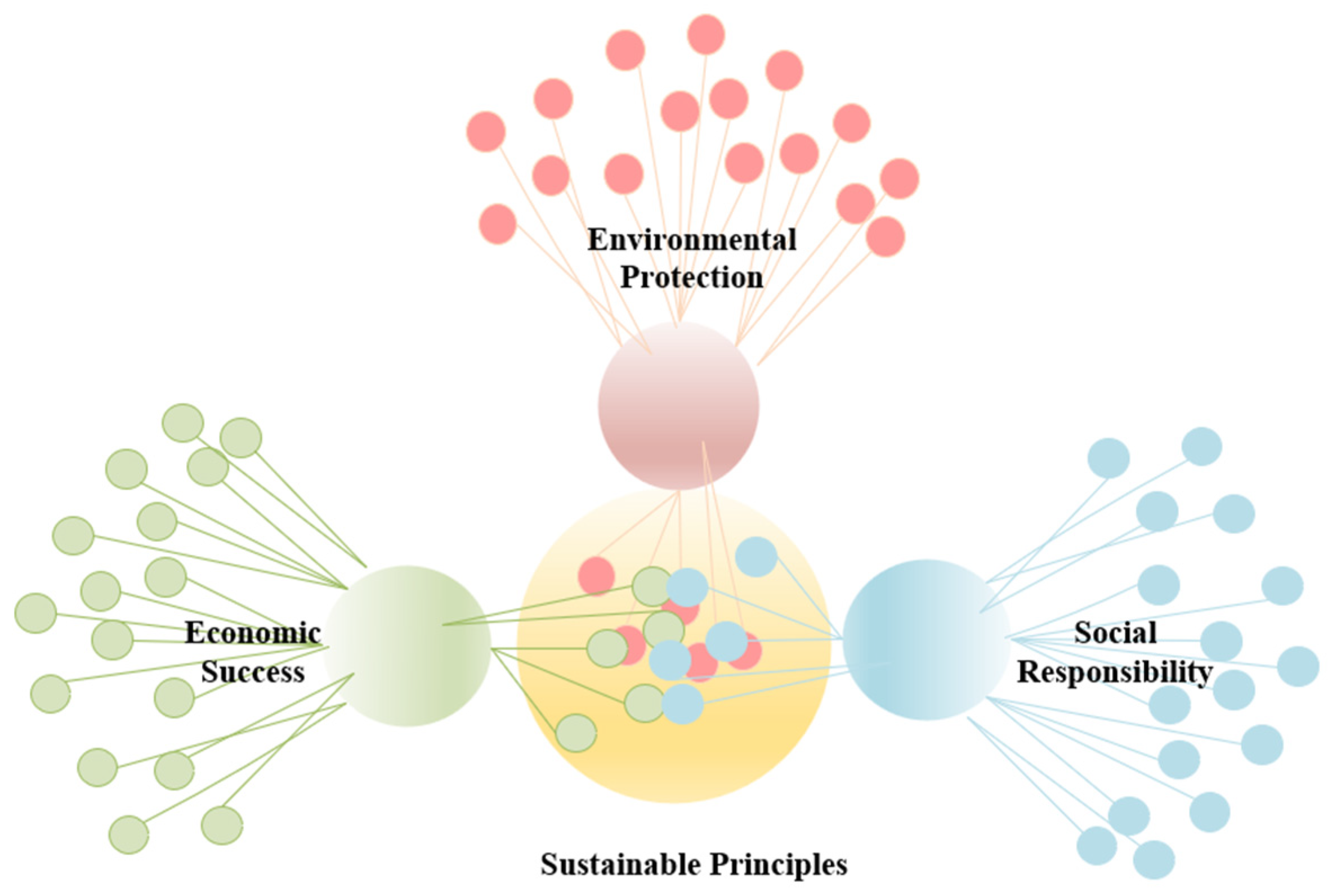
TBL refers to the integrated conception of the economic bottom line, the environmental bottom line, and the social bottom line, first proposed by the British scholar John Elkington in 1997 [25]. The theoretical stance contends that firms should not pursue profit as their sole objective; rather, they must proactively assume responsibility for environmental and social considerations while pursuing economic benefits [26]. By balancing the interrelations among these three dimensions, a comprehensive sustainability assessment framework can be constructed. This framework emphasizes that environment, economy, and society constitute not discrete spheres but an indivisible, organic whole. The objective is to achieve balance and synergy among the three, thereby avoiding unilateral decision-making and attaining genuine sustainability. The core principles of the TBL are illustrated in Figure 1.

2.2. Principle of RDF

  • RDF
In practical engineering applications, problems often evolve dynamically over time. To address such time-dependent challenges, Professor Chen Shouyu proposed the concept of “gradually varying boundaries”. Typically, an object α possesses two opposing fuzzy attributes, H(a) and Hc(a). When H(a) > Hc(a), α exhibits the attribute H(a). Conversely, if Hc(a) > H(a), a exhibits the attribute Hc(a). This implies that as the properties of a change gradually, any transition between attributes must pass through the critical threshold where H(a) = Hc(a) [22].
Let A be a fuzzy concept for the universe of discourse U. For any element α (αU), when HA(α) > HAc(α), α exhibits attraction to the attribute A. Conversely, if HAc(α) > HA(α), α exhibits repulsion from the attribute A. If there exists a point in the continuous interval [0, 1] satisfying HA(α) + HAc(α) = 1, where HA(α) ∈ [0, 1] and HAc(α) ∈ [0, 1], then α has an opposite fuzzy set as
A = { α ,   H A ( α ) ,   H A c ( α ) }
In Equation (1), the relative difference degree DA(α) of α with respect to A can be defined on the continuous real axis as
D A α = H A α H A c α
The mapping DA, U → [−1, 1], α→DA(α) ∈ [−1, 1], is called the RDF of α to A, as shown in Figure 2.
2.
Relative affiliation
According to the variable fuzzy set theory, given that uki represents the i (i = 1, 2, …, m) level of the k (k = 1, 2, …, n) indicator, with its attraction domain being [aki, bki] and the fuzzy boundary range [cki, dki], then the repulsion intervals of uki exist as [cki, aki] and [bki, dki], as shown in Figure 3.
Let oki be the point in the attraction domain of element uki, where the difference degree DA(α) = 1. Assuming oki varies linearly, it can be determined using Equation (3).
o k i = m i m 1 a k i + i 1 m 1 b k i
Let the characteristic value of element uk be hk. Then, the membership degree function φ(uk)i of element uk to the i level can be determined according to Equations (4)–(7).
When hk is located at the left endpoint of oki.
ϕ u k i = o k i + h k 2 a k i 2 ( o k i a k i ) ,   u k a k i ,   o k i
ϕ u k i = c k i h k 2 ( c k i a k i ) ,   u k c k i ,   a k i
where hk is located at the right endpoint of oki.
ϕ u k i = o k i + h k 2 b k i 2 ( o k i b k i ) ,   u k o k i ,   b k i
ϕ u k i = d k i h k 2 ( d k i b k i ) ,   u k b k i ,   d k i
3.
Adaptability of RDF
Mine emergency rescue is a systematic endeavor, wherein the grading of evaluation indicators for mine emergency rescue involves numerous fuzzy concepts. Existing methods, including the gray evaluation method, fuzzy comprehensive assessment, matter-element extension method, TOPSIS, and improved catastrophe progression method, each exhibit respective limitations [27,28]. The gray evaluation method is grounded in gray system theory, with its mathematical formulas focusing on gray correlation degree computation and whitening weight function construction; although adaptable to small-sample scenarios, its formulas are rigid and the resulting precision is limited, making it difficult to capture the dynamic variation characteristics of the rescue process in emergency assessment. FCA is based on fuzzy set theory for modeling, constructing an operational framework through fuzzy matrices and membership functions, with mathematical formulas emphasizing fuzzy synthetic operations; although capable of handling uncertainty issues, it is prone to information loss, requires predefined fuzzy subsets for modeling, and cannot effectively integrate the diverse evolution of emergency situations, resulting in insufficient adaptability. The matter-element extension method revolves around matter-element models and correlation functions for modeling, with mathematical formulas involving extension set operations and correlation degree calculations; the modeling process is cumbersome and imposes stringent requirements on indicator hierarchy division, rendering it difficult to meet the real-time demands of rescue scenarios in emergency assessment. The core of TOPSIS modeling lies in the construction of positive and negative ideal solutions, with mathematical formulas using Euclidean distance or cosine similarity as core measurement indicators, focusing on alternative selection rather than capability grading, and unable to reflect the dynamic upgrading or attenuation of emergency capabilities in emergency assessment. The improved catastrophe progression method is based on catastrophe theory for modeling, with mathematical formulas encompassing indicator normalization processing and catastrophe fuzzy function operations; modeling relies on complex hierarchical indicator decomposition, with rigid formula logic that does not consider temporal factors, leading to cumbersome operations and strong subjectivity in emergency assessment. In contrast, the RDF is supported by variable fuzzy set theory, with its modeling core being the dynamic setting of fuzzy intervals; the mathematical formulas depict the continuous transitional relationships of indicators across different evaluation grades through relative difference degree functions, offering strong parameter adjustability, which overcomes the defects of rigid grade boundaries and formula solidification in traditional modeling, while precisely capturing the relative differences between different grades of emergency capability in emergency assessment, combining result precision and scenario adaptability, thereby enhancing the overall feasibility and practicality of the evaluation.

2.3. Weighting Methods

To enhance the rationality and precision of weight determination while improving the scientific rigor and accuracy of decision making, this paper employs a combined weighting approach integrating the G1 method and entropy weighting method to determine the optimal weights for evaluation indicators [29,30].
(1)
The G1Method
The G1 method is a subjective weighting approach based on expert judgment. It determines weight coefficients by establishing an order of importance among evaluation indicators. The calculation steps are as follows:
① Establish the relative importance ranking. Experts evaluate and rank the indicators based on their importance. For example, if indicator ρs (s = 1, 2, …, n) is deemed more important than ρt (t = 1, 2, …, n), then ρs > ρt. This process generates a sequence from the most to the least important indicator.
② Quantify the importance ratio between adjacent indicators. Using the established ranking, the relative importance between two adjacent indicators, such as ρn−1 and ρn, is assigned a ratio rk. The value of rk is determined by referring to a predefined standard, as detailed in Table 1.
r k = ρ n ρ n 1 ( k = n ,   n 1 , ,   3 ,   2 )
③ Calculate the specific weight values for each indicator. Using Equation (9), the weights of each indicator can be calculated in turn.
w ¯ k = 1 + k = 2 n k = n n r k 1 , w ¯ k 1 = r k w ¯ k
(2)
Entropy weight method
The entropy weight method is an objective weighting method based on the principle of information entropy. It determines relative weights by analyzing the variability of each evaluation indicator. The calculation procedure includes the following steps:
① Data Standardization. The raw data are standardized using Equation (10) to normalize measurements with different units or scales into a dimensionless form, ensuring comparability across indicators.
u k i = u k i min ( u k i ) max ( u k i ) min ( u k i )
② Entropy Value Calculation. For each indicator, the information entropy is calculated based on the standardized data. The entropy value is derived based on Equation (11).
e i = 1 ln ( n ) k = 1 n h k i ln h k i ,   h k i = u k i k = 1 n u k i
③ Entropy Weight Calculation. Entropy weights, representing the contribution of each indicator to the overall evaluation, are calculated using Equation (12).
w k = ( 1 η k i ) [ k = 1 n ( 1 η k i ) ] 1

3. Evaluation Procedures for RDF Assessing MERC

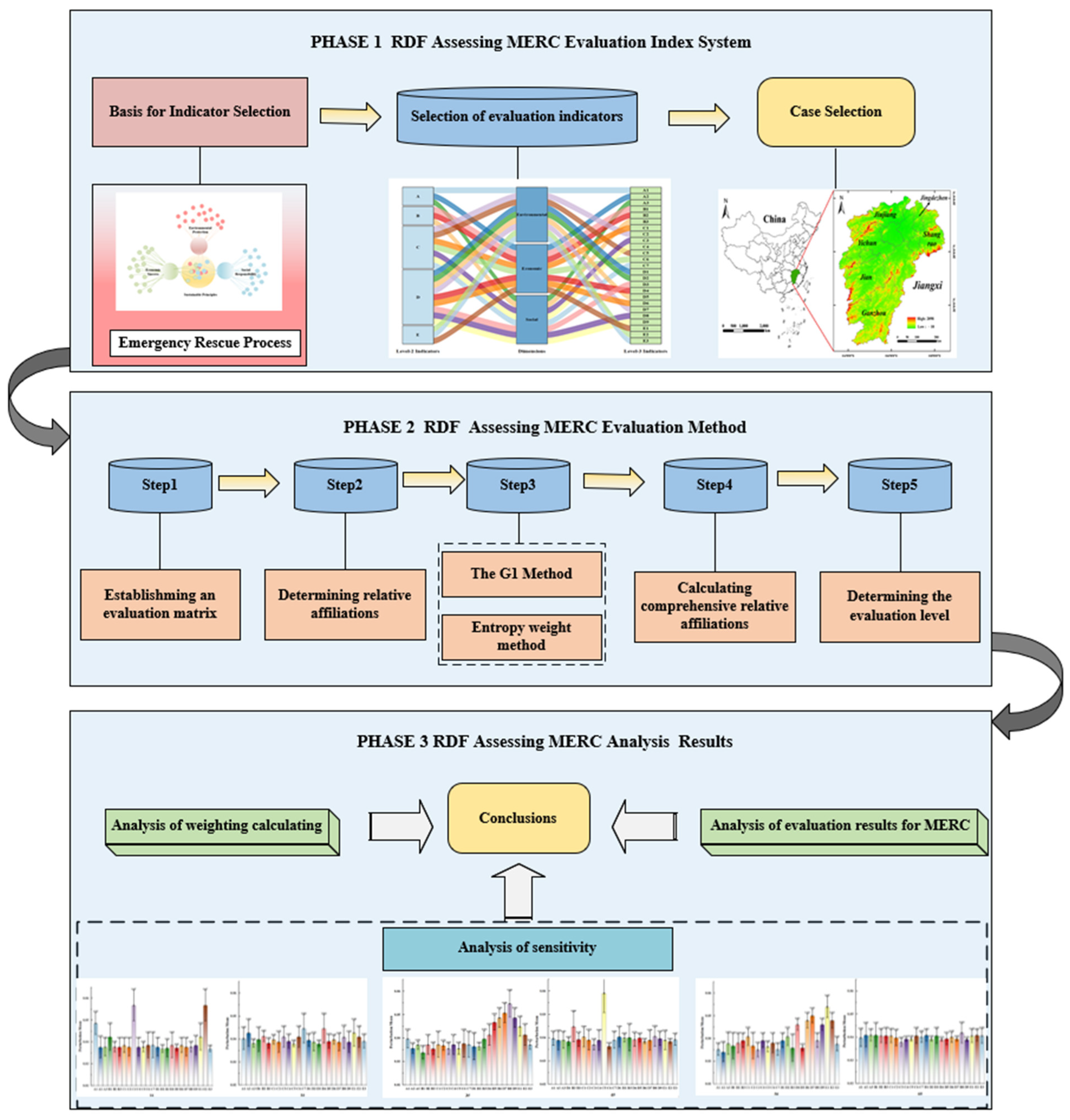
To ensure the scientific accuracy and precision of the MERC assessment, this study develops a comprehensive evaluation model grounded in RDF theory. The specific implementation process is shown in Figure 4.

3.1. Establishing the Characteristic Value Evaluation Matrix

For an evaluation system with n indicators and m rating levels per indicator, the characteristic value evaluation matrix D can be defined as follows:
D = u 11 u 1 i u 1 m u k 1 u k i u k m u n 1 u n i u n m

3.2. Determining Relative Membership Degree

(1) Calculate the relative membership degree of evaluation indicators. Based on the RDF principle, the standard interval of each indicator’s feature value corresponding to each level defines its attraction domain [aki, bki], denoted as Lab. The variation interval corresponds to the fuzzy boundary range [cki, dki], denoted as Lcd.
(2) Determine the Point Value Matrix Q. Using Equation (3), identify points within the attraction domain where the relative difference degree DA(α) = 1. The point value matrix Q is then defined as
Q = [ o k i ] n × m
(3) Determine the Relative Membership Degree Matrix Lk. Applying Equations (4)–(7), determine the membership degrees of the evaluation indicator for each evaluation level. The relative membership degree matrix Lk is then defined as
L k = [ ϕ u k i ] n × m

3.3. Calculating Combined Weights

Subjective weights of each indicator are obtained using Equations (8) and (9), and objective weights are calculated using Equations (10)–(12). The combined weights can then be derived from Equation (16).
w k = 0.5 w k + 0.5 w ¯ k
In the equation, λ1 + λ2 = 1, with λ1, λ2 ∈ (0, 1). Given [31,32,33] that the G1 method and entropy weight method play equally important roles in the combined weighting process, both λ1 and λ2 are assigned a value of 0.5.

3.4. Calculating Comprehensive Relative Membership Degree

According to Lk, w k and the four combinations of θ and β, the non-normalized comprehensive relative membership matrix X y can be calculated using Equation (17). Then, the comprehensive relative membership degree matrix X y is derived by normalizing matrix X y according to Equation (18).
X y = x i 1 × y = 1 + k = 1 n w k ( 1 u k i ) y k = 1 n w k ( u k i ) y θ θ β θ 1 1 × y
X y = [ x i ] 1 × y = x i ( i = 1 m x i ) 1 1 × y
where θ is the distance parameter, and β is the optimization criterion parameter. The four combinations are as follows: θ = 1, β = 1; θ = 1, β = 2; θ = 2, β = 1; θ = 2, β = 2.

3.5. Determining the Evaluation Level

Based on the eigenvalues of the comprehensive relative membership degree matrix X y for each parameter combination, the corresponding grade characteristic value can be calculated. Using these values, the grade characteristic matrix Y for the four condition combinations is constructed according to Equation (19). The average of the eigenvalues in matrix Y is then calculated to obtain Y (1 ≤ Ym), based on which the evaluation level of MERC can be determined according to Equation (20).
Y = ( i = 1 m x i y ) 1 × 4
1.0 Y 1.5 ,   Level   I y 0.5 < Y y ,   Level   y ,   close   to   Level   ( y 1 ) ,   ( y = 2 ,   3 , ,   m 1 ) y < Y y + 0.5 ,   Level   y ,   close   to   Level   ( y + 1 ) ,   ( y = 2 ,   3 , ,   m 1 ) m 0.5 < Y m ,   Level   m

4. Model Application and Analysis

4.1. Establishment of MERC Evaluation Index System for Metal Mine

A scientific and reasonable emergency rescue capability evaluation indicator system is a crucial foundation for accurately assessing the emergency management level of green mines and achieving systematic disaster reduction [34]. To ensure the proper application of TBL, this study established a comprehensive and systematic indicator system, covering three aspects—environmental, social, and economic—to ensure an in-depth assessment of the sustainability of green mine extraction. The system also integrates national and industry-related standards—including the Mine Rescue Regulations (National Mine Safety Administration) [35], Mine Rescue Team Quality Standardization Assessment Norms [36] (AQ/T 1009-2021), Mine Rescue Team Risk Pre-control Management System [37] (AQ 1123-2023), General Rules for Green Mine Evaluation [38] (GB/T 44823-2024), and Green Mine Construction Norms [39] (GB/T 34180-2023). It also incorporates the research findings [40,41,42,43,44,45,46]. Within TBL, this system spans the entire emergency rescue process, covering 5 primary indicators (A–E) and 25 secondary indicators. The goal is to achieve a multi-dimensional and continuous improvement in MERC, as shown in Figure 5.

4.1.1. Description of Evaluation Indicators

The following are the specific contents of each indicator:
A. 
Organization and institutional construction
A1 Institutional Greening Degree: This refers to the systematicness and completeness of management systems in aspects such as ecological protection, low-carbon operation, and the coordination of post-disaster ecological restoration.
A2 Regulatory Compliance Level: Assesses the strictness with which an enterprise enforces national and local ecological protection regulations, green mine construction standards, and environmental emergency requirements.
A3 Expert Allocation Ratio: The proportion of experts in the emergency team who have both ecological and environmental protection knowledge and safety production knowledge, as well as their professional qualifications.
B. 
Monitoring and early warning
B1 Multi-parameter Real-time Monitoring: Refers to the capability for simultaneous and continuous monitoring of both mine safety production parameters and ecological environment indicators.
B2 Monitoring Equipment Accuracy: The accuracy, stability, and reliability of monitoring equipment in measuring both safety production and ecological parameters.
B3 Daily Inspection Effectiveness: The coverage of daily inspections on safety production facilities and ecological protection facilities, as well as the efficiency of problem rectification.
C. 
Emergency preparation
C1 Rescue Team Skill Level: The extent to which rescue personnel have mastered environmental emergency handling skills, such as using environmentally friendly rescue equipment, controlling pollutant diffusion, and performing ecologically friendly rescue operations.
C2 Plan Feasibility: Whether the emergency plan includes an independent and operable module for controlling ecological impacts, including specific measures such as controlling pollution diffusion and protecting ecologically sensitive points.
C3 Risk Report Quality: Risk reports should cover both safety and ecological risks and provide a forward-looking assessment of their potential economic losses, serving as a basis for optimizing risk control resource allocation.
C4 Comprehensive Drill Frequency: The number of annual emergency drills that cover both safety and ecological goals, and the effectiveness of the drills in improving practical combat capability.
C5 Emergency Fund Proportion: The proportion of annual special emergency funds used for purposes such as the purchase of ecological emergency equipment, ecological restoration, and environmental protection drills.
C6 Green Emergency Supplies: Used to reserve ecological restoration materials and low-carbon equipment and to establish a regular inspection and update mechanism.
C7 Public Education: Promotional and training activities aimed at employees and surrounding communities.
D. 
Emergency response
D1 Rescue Plan: Whether the rescue plan systematically incorporates ecological protection measures, such as selecting environmentally friendly extinguishing agents, controlling pollution from rescue operations, and protecting threatened species.
D2 Sensitive Area Disturbance Control: Measures such as avoidance, isolation, and control of operational intensity are used during rescue operations near ecologically sensitive areas to minimize ecological disturbance.
D3 Coordinated Command: The inclusion of ecological experts in the emergency command headquarters to achieve a simultaneous balance and command of safety and ecological goals in rescue decisions.
D4 Monitoring Information Integration: The command platform integrates safety and ecological monitoring data to achieve real-time visualization and comprehensive analysis of disaster situations and ecological impacts.
D5 Rescue Duration Control: The percentage reduction in the total duration of rescue operations within ecologically sensitive areas compared to previous or standard times to reduce cumulative ecological impact.
D6 Response Speed: The degree to which the overall response time for the emergency team in mine areas near ecologically sensitive zones—including dispatch, arrival, and initiation of rescue—is further reduced compared to conventional requirements.
D7 Rescue Effect: The use of biodegradable, low-environmental-impact medical consumables, and the harmless disposal of rescue medical waste to avoid secondary pollution.
D8 Rescue Personnel Adaptability: The physiological endurance and psychological stability of rescue personnel in complex ecological emergency environments, such as high temperature, high humidity, and light pollution.
D9 Collaboration with Partner Organizations: An emergency linkage mechanism and collaborative capability established with external entities such as ecological authorities, professional environmental protection organizations, and ecological restoration enterprises.
E. 
Recovery and reconstruction
E1 Post-disaster Investigation: The post-event investigation analyzes the causes and assesses losses from both a safety production accident and an ecological environment impact perspective, and proposes comprehensive management measures.
E2 Technical Support: The use of environmentally friendly technologies, such as high-pressure water jets and biodegradation for post-disaster cleanup, and the application of eco-friendly technologies, such as vegetated concrete and ecological slopes during the reconstruction phase.
E3 Recovery Duration: The time required for production facilities to resume operation and for the surrounding ecological environment to meet third-party acceptance standards, providing a comprehensive assessment of recovery efficiency and quality.

4.1.2. Research Field

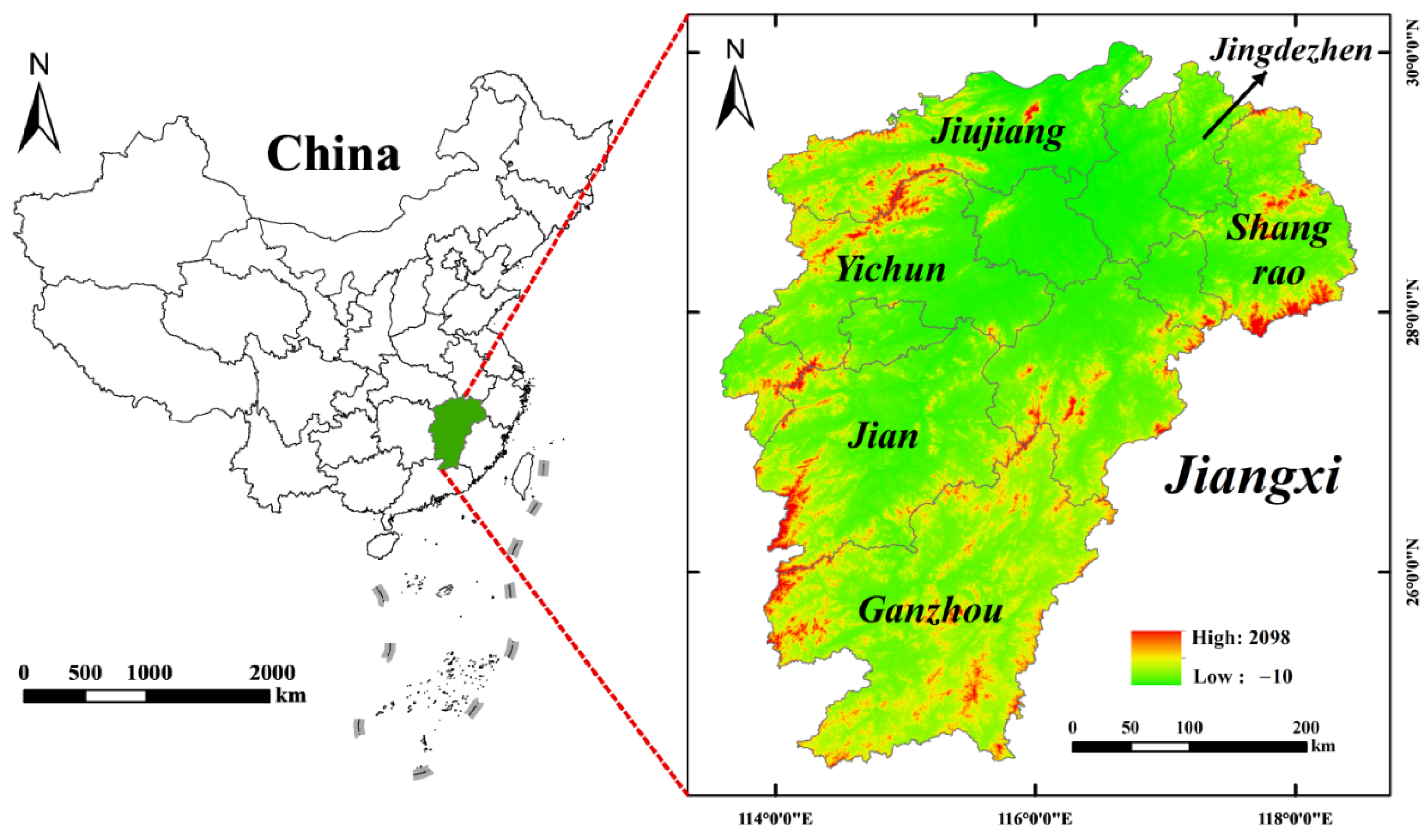
Jiangxi Province, as a key mineral resource base in China, has representative practices in green mine development [47]. To validate the reliability and applicability of the mining emergency rescue capability evaluation model developed in this study, six typical green mines in Jiangxi Province were selected as case studies for empirical analysis, as shown in Figure 6.

4.1.3. Grade Classification Standards

Based on the core concepts of CMM [48], MERC is divided into five grades, and the specific grade classification standards are as follows:
Level I: The green mine emergency rescue capability is in a deficient state. The enterprise lacks green emergency awareness, has not established an emergency management mechanism, and the emergency rescue process is completely disordered, ignoring ecological protection requirements.
Level II: The enterprise begins to possess basic green emergency rescue awareness and has established an emergency organization, but with low integration of ecological protection. Emergency rescue is primarily driven by a single department, and regulations and systems only meet minimum requirements and lack systematicity. Ecological measures are weak, capable of handling general sudden accidents, but with poor ecological protection effects, resulting in an overall simplistic capability.
Level III: Mine emergency rescue capability enters the standardized phase. The enterprise establishes a systematic emergency organizational structure, with leadership emphasizing green emergency and full staff participation. However, optimization and improvement are insufficient, and ecological protection remains at a procedural level without achieving quantitative management.
Level IV: Emergency rescue capability construction becomes core work, achieving quantitative management and continuous improvement. The enterprise regularly evaluates ecological performance and promptly identifies deficiencies and implements corrections; the emergency system is mature, but strategic innovation is insufficient.
Level V: Green mine emergency rescue capability reaches a lean level. The enterprise plans green emergency from a strategic height, pursuing innovation and best practices. The rescue process fully integrates ecological protection, achieving continuous capability enhancement through organizational learning and technological innovation, with significant ecological benefits.
Due to space limitations, specific scoring criteria for each indicator are exemplified solely by “Emergency Preparation (C)”, presenting the detailed scoring standards for its subordinate indicators.

4.2. Quantitative Scoring Results for Evaluation Indicators

This study statistically analyzed the scoring data provided by 10 experts qualified to evaluate MERC for six mines. The expert panel comprehensively covered the key dimensions of MERC assessment. The team composition is as follows: Three experts in emergency management and institutional evaluation, including one professor from a university’s emergency management-related school, one researcher from a national-level work safety research institute, and one associate professor from a university’s public administration department. These individuals have long focused on work safety and emergency management research, emergency management policy and standards research, and emergency legal systems and risk governance research, respectively, with expertise in institutional optimization, evaluation system construction, and closed-loop assessment model development. Two are experts in technical monitoring and equipment support, comprising one researcher from a national-level research institute and one senior engineer from a mine engineering technology institution. The former specializes in emergency monitoring technology and data processing algorithm optimization, while the latter focuses on the development of mine emergency monitoring equipment and dynamic threshold adjustment techniques. Five are experts in on-site rescue and operational assessment, including a senior engineer from a national emergency rescue agency, a senior engineer from an environmental and safety testing institution, a senior technician from a local mine emergency rescue expert group, a rescue team captain from a large-scale mining enterprise’s emergency response unit, and a senior engineer from a central enterprise’s emergency rescue division. These experts possess extensive practical experience in accident rescue command, environmental risk assessment operations, 30 years of frontline rescue disposal, on-site mine rescue management, and emergency response to tailings dam and water hazard incidents, respectively.
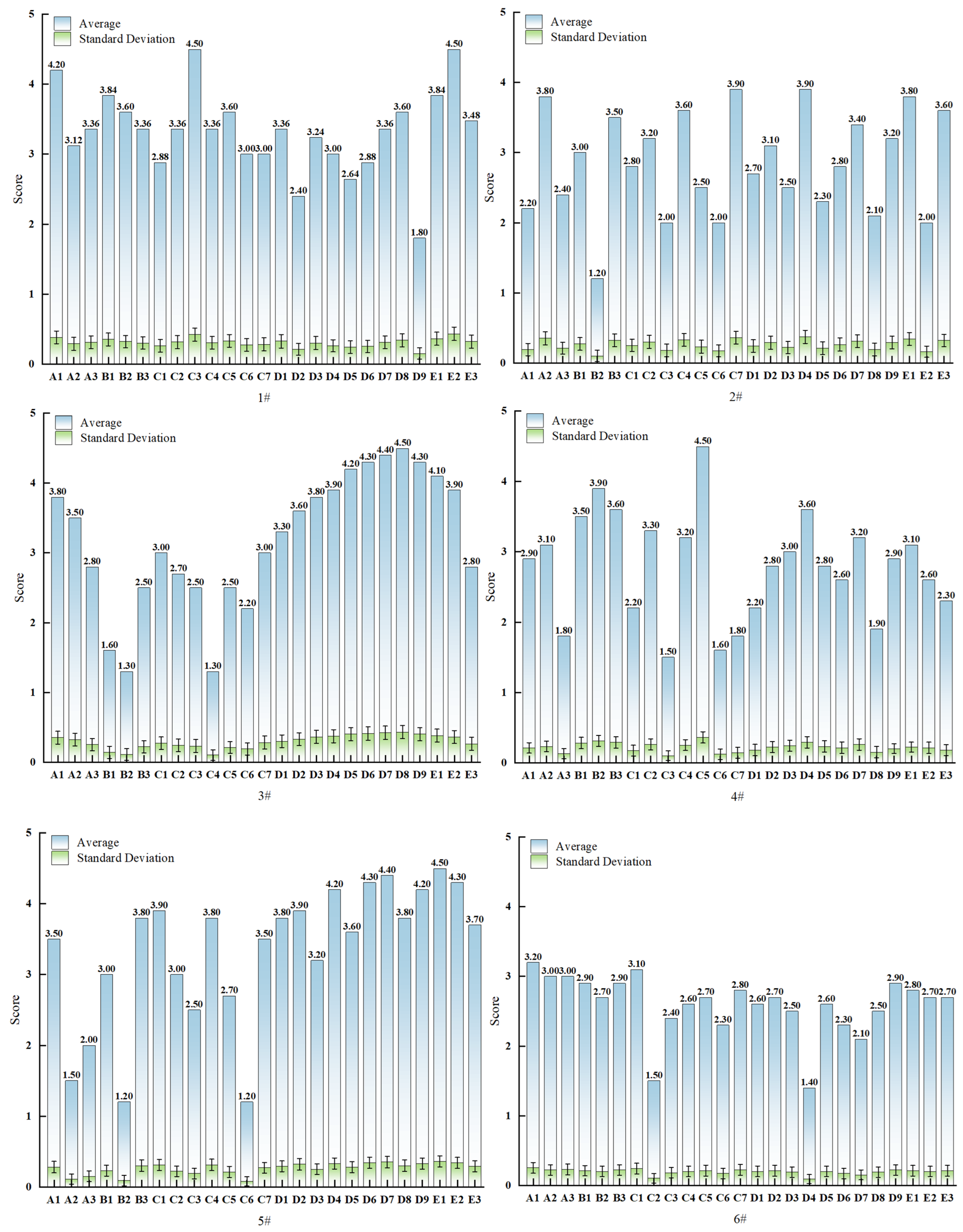
During the scoring process, the 10 experts independently scored the six mines based on the indicator grade evaluation criteria presented in Table 2, leveraging their respective professional expertise. To mitigate the influence of subjective preferences and opinion convergence, no information exchange occurred among experts throughout the scoring phase, ensuring objectivity. Upon completion of scoring, the coefficient of variation (CV) was calculated for all raw scoring data to verify the coordination of expert opinions and data reliability. If the CV ≤ 10%, the scores were deemed valid, requiring no secondary expert review or revision. Conversely, if the CV > 10%, significant discrepancies in expert scoring for the indicator were indicated, necessitating a focused discussion among experts to re-examine scoring rationale and standard interpretation for the disputed indicators, followed by a second round of independent scoring until the CV ≤ 10%, thereby ensuring a robust consistency foundation for the scoring results. The final evaluation scores for each mine are presented in Figure 7.

4.3. Determination of Relative Membership Degree for MERC Evaluation Indicator in Mines

Due to space limitations, this study only uses the evaluation process of the emergency rescue capability at Green Mine 1# as an example. According to the principle of relative membership, the standard interval for this evaluation index system can be determined as Lab, the variable interval as Lcd, and the point value matrix Q composed of characteristic values.
L a b = [ 0.00 ,   1.00 ] [ 1.00 ,   2.00 ] [ 2.00 ,   3.00 ] [ 3.00 ,   4.00 ] [ 4.00 ,   5.00 ] 25 × 1
L c d = [ 0.00 ,   2.00 ] [ 0.00 ,   3.00 ] [ 1.00 ,   4.00 ] [ 2.00 ,   5.00 ] [ 3.00 ,   5.00 ] 25 × 1
Q = 1.00 1.25 2.50 3.75 4.00 25 × 1
Based on Lab, Lcd, and Q, the relative membership degrees of each evaluation indicator for each level can be calculated using Equations (4)–(7). Taking index A1 as an example, its characteristic value h1 = 4.2 is located in the interval [4, 5]. Firstly, its membership degree at the fifth-level interval [4.00, 5.00] was calculated. Using the above matrix, we knew a15 = 4.00, b15 = 5.00, c15 = 3.00, d15 = 5.00, and o15 = 4.00. h1 located to the right of oij and to the left of bij, using Equation (6), yielded φ(u1)5 = 0.9. Then, the relative membership degree was calculated in the fourth interval [3.00, 4.00]. The above matrix showed a14 = 3.00, b14 = 4.00, c14 = 2.00, d14 = 5.00, and o14 = 3.75, with h1 positioned to the right of both oij and bij. Applying Equation (7) yielded φ(u1)4 = 0.4. Since h1 does not fall within the first three level intervals, the relative membership degrees for these levels were zero. Similarly, the relative membership degrees of other indices can be calculated in the same way. Ultimately, Lk for the entire index system could be determined.
L k = 0.000 0.000 0.000 0.400 0.900 0.000 0.000 0.440 0.580 0.060 0.000 0.000 0.320 0.740 0.180 0.000 0.000 0.080 0.820 0.420 0.000 0.000 0.200 0.900 0.300 0.000 0.000 0.320 0.740 0.180 0.000 0.060 0.620 0.440 0.000 0.000 0.000 0.320 0.740 0.180 0.000 0.000 0.000 0.250 0.750 0.000 0.000 0.320 0.740 0.180 0.000 0.000 0.200 0.900 0.300 0.000 0.000 0.500 0.500 0.000 0.000 0.000 0.500 0.500 0.000 0.000 0.000 0.320 0.740 0.180 0.000 0.300 0.900 0.200 0.000 0.000 0.000 0.380 0.660 0.120 0.000 0.000 0.500 0.500 0.000 0.000 0.180 0.860 0.320 0.000 0.000 0.060 0.620 0.440 0.000 0.000 0.000 0.320 0.740 0.180 0.000 0.000 0.200 0.900 0.300 0.100 0.633 0.400 0.000 0.000 0.000 0.000 0.080 0.820 0.420 0.000 0.000 0.000 0.250 0.750 0.000 0.000 0.260 0.820 0.240

4.4. Weight Assignment to MERC Evaluation Indicator in Mine

(1) The G1 method determined subjective weights. According to Equations (8) and (9), the subjective weights for the 5 primary indicators were w ¯ k 1 = (0.111, 0.187, 0.225, 0.404, 0.073), and those for the 25 secondary indicators were w ¯ k 2 = (0.040, 0.044, 0.027, 0.056, 0.047, 0.084, 0.067, 0.045, 0.034, 0.029, 0.021, 0.016, 0.013, 0.079, 0.061, 0.051, 0.046, 0.046, 0.042, 0.032, 0.027, 0.021, 0.023, 0.023, 0.028).
(2) The entropy weight method determined objective weights. Using Equations (10)–(12), the objective weights for the 5 Level-2 indicators were w k 1 = (0.125, 0.112, 0.295, 0.338, 0.130), and those for the 25 secondary indicators were w k 2 = (0.051, 0.039, 0.035, 0.040, 0.037, 0.035, 0.039, 0.035, 0.054, 0.035, 0.037, 0.047, 0.047, 0.035, 0.037, 0.036, 0.047, 0.037, 0.039, 0.035, 0.037, 0.036, 0.040, 0.054, 0.035).
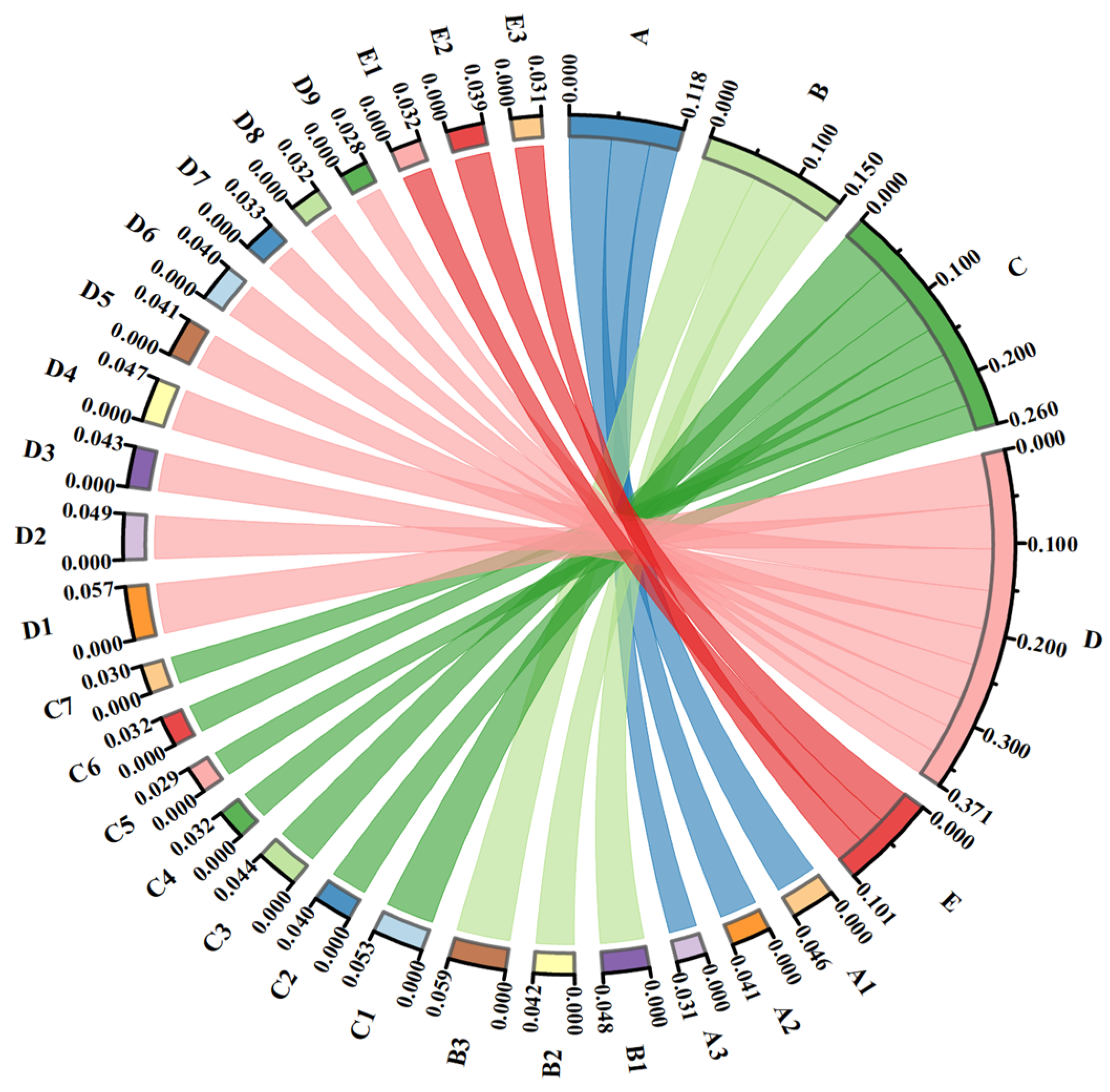
(3) Combined weights. Using Equation (16), the combined weights for the 5 primary indicators were w k 1 = (0.118, 0.150, 0.260, 0.371, 0.101), and those for the 25 secondary indicators were w k 2 = (0.046, 0.041, 0.031, 0.048, 0.042, 0.059, 0.053, 0.040, 0.044, 0.032, 0.029, 0.032, 0.030, 0.057, 0.049, 0.043, 0.047, 0.041, 0.040, 0.033, 0.032, 0.028, 0.032, 0.039, 0.031).

4.5. Determination of Comprehensive Relative Membership Degree for MERC Evaluation Indicator in Mine

Using Equations (17) and (18), the normalized relative membership degree matrix was calculated as follows.
X = θ = 1 ,   β = 1   0.002 0.038 0.292 0.479 θ = 2 ,   β = 1   0.010 0.081 0.284 0.409 θ = 1 ,   β = 2   0.000 0.002 0.238 0.677 θ = 2 ,   β = 2   0.000 0.014 0.268 0.577         0.188 0.216 0.083 0.141

4.6. Determination of Evaluation Level for MERC in Mine

Using Equation (19), the level characteristic value and risk level of MERC for Mine #1 are determined and presented in Table 3. By repeating the same steps, the level characteristic values and risk levels for the other mines can be obtained. The identification results of RDF for MERC are shown in Table 3.

5. Results Analysis

5.1. Weight Calculation Results Analysis

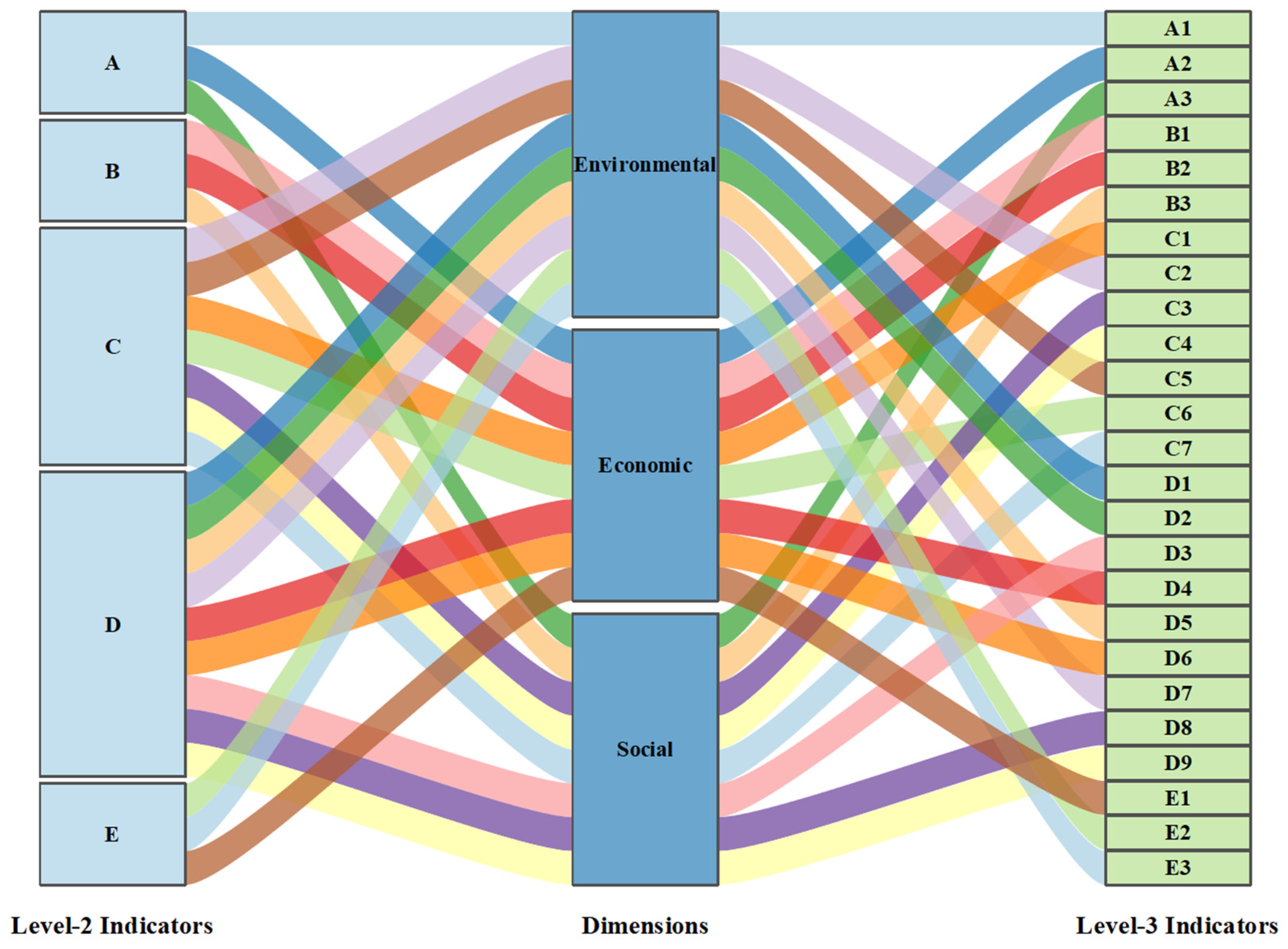
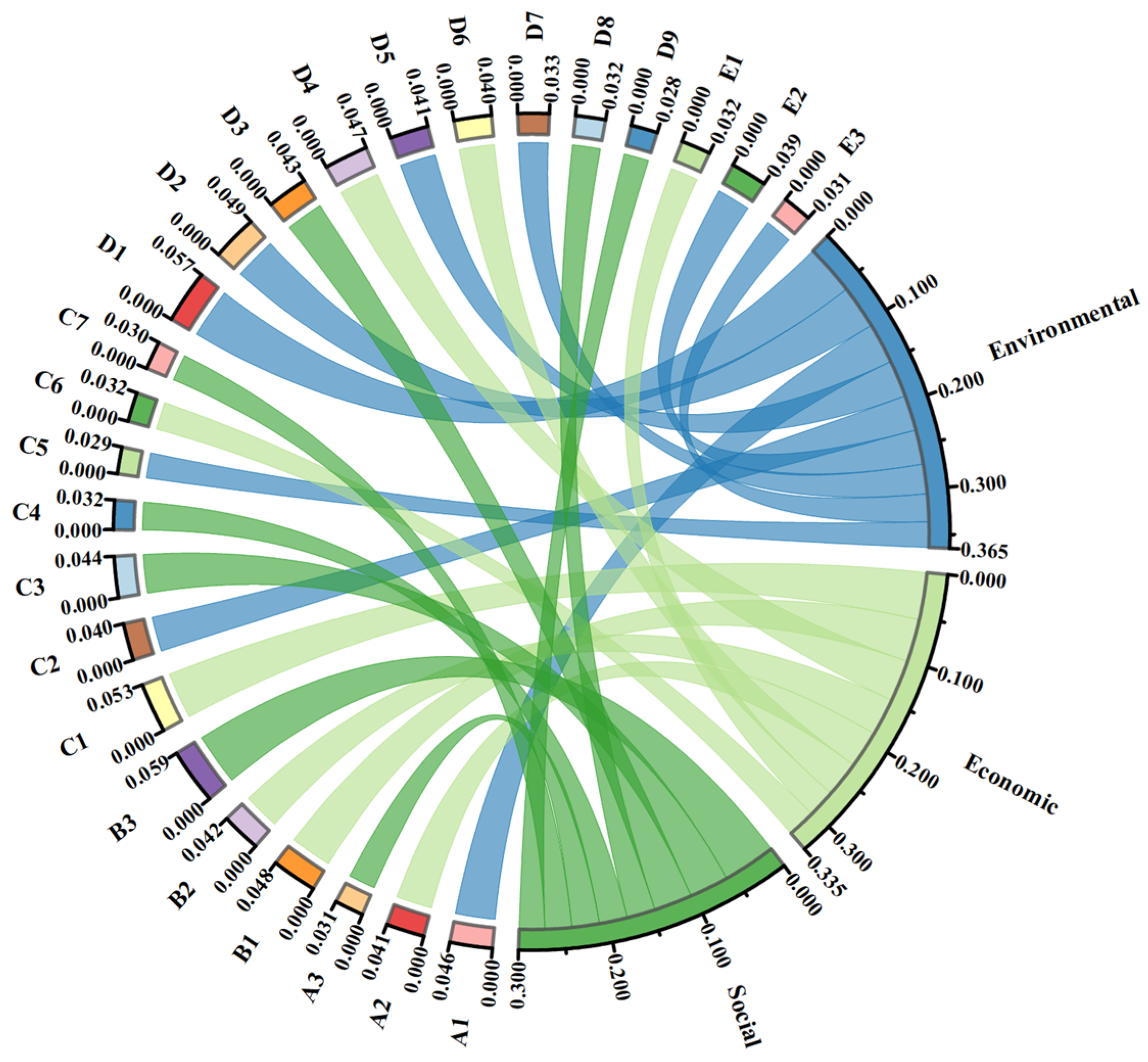
As shown in Figure 8, the current development of China’s MERC construction exhibits a core focus on the ecological–environmental dimension. Within this dimension, the composite weights of the indicators “Daily Inspection Effectiveness (B3)”, “Rescue Plan (D1)”, and “Rescue Team Skill Level (C1)” reach 0.059, 0.057, and 0.055, respectively, occupying a central position in the emergency rescue system. This indicates that Chinese mining enterprises highly value scientifically sound rescue planning and the professional capabilities of rescue personnel as foundational factors in enhancing system resilience. This study also found that environmental indicators are prominent in the overall weight distribution, suggesting that MERC construction largely depends on the coordinated governance and integrated management of ecological and environmental factors. Although economic indicators and social indicators are relatively lower in the composite weights, they nonetheless play an irreplaceable role within the emergency rescue system, especially in post-disaster recovery and the establishment of long-term mechanisms. This weighting structure both reflects the current practical demand in China’s green mine enterprises to center on ecological and environmental considerations in emergency management and underscores the necessity of multi-dimensional capability synergy.
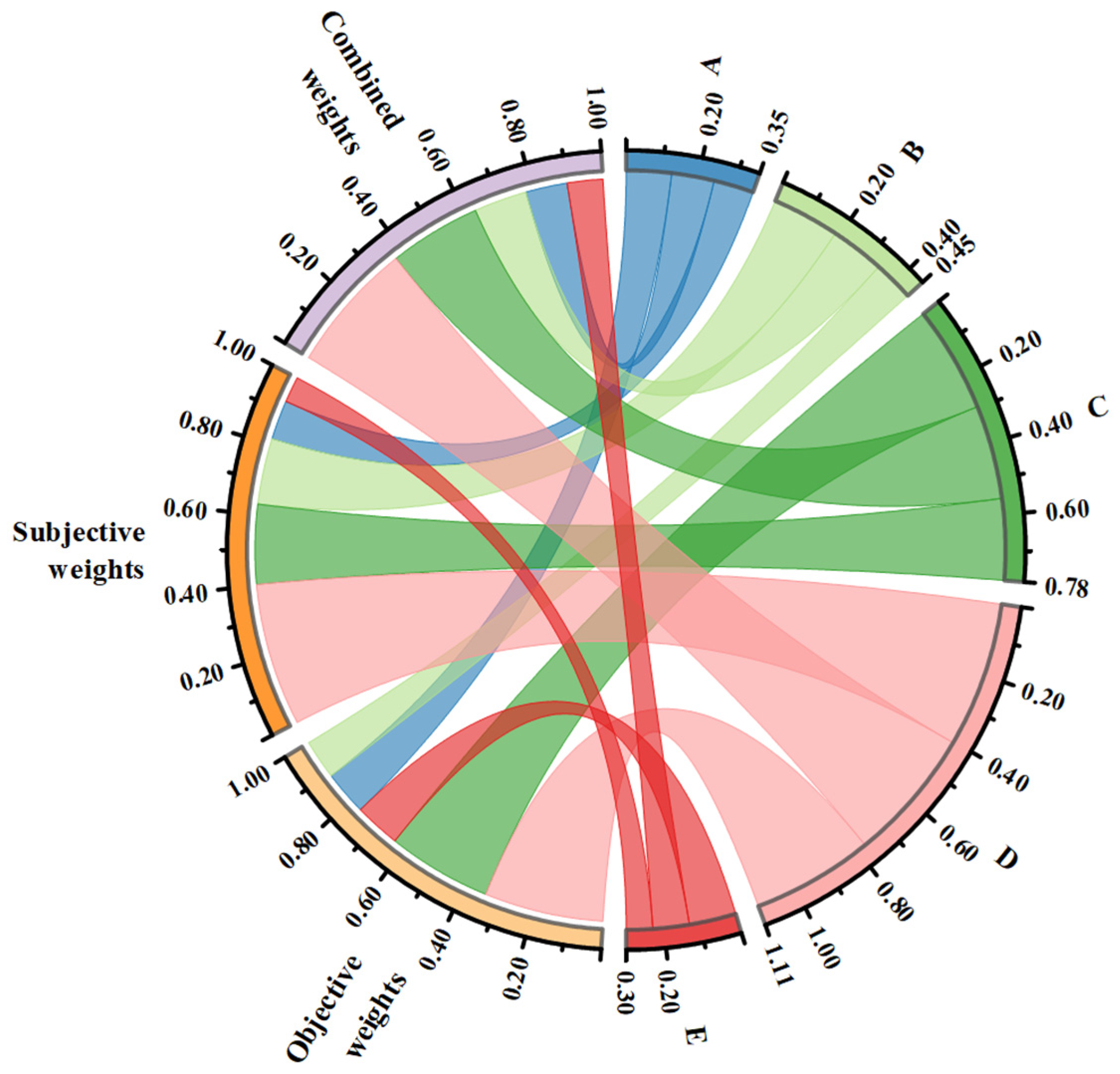
Analysis of the correlations between subjective weights, objective weights, and combined weights with various indicator categories in Figure 9 reveals significant differential characteristics across weighting methods. The G1 method exhibits a pronounced emphasis on emergency response (D) during the weighting process, assigning it a weight of 0.404—surpassing the combined weights of the organization and institutional construction (A), monitoring and early warning (B), and recovery and reconstruction (E) dimensions—indicating a strong subjective bias. In contrast, the data-driven objective weighting approach markedly increases the weight proportions of the organization and institutional construction (A), emergency preparation (C), and recovery and reconstruction (E) dimensions. However, individual weighting methods suffer from inherent limitations: subjective weights are susceptible to expert cognitive biases, potentially undermining the objective attributes of indicators, whereas objective weights struggle to effectively capture the implicit value of institutional indicators. Notably, the combined weighting method achieves a more balanced distribution for emergency preparation (C) and emergency response (D), preserving the foundational role of organization and institutional construction (A) institutional indicators while reinforcing the central importance of emergency response (D), thereby demonstrating the synergistic advantages of subjective–objective integration. The results indicate that a combined weighting strategy integrating the G1 method and entropy weight method effectively balances expert experience with data-driven insights, mitigating the arbitrariness of subjective judgment while compensating for the neglect of institutional factors in purely objective weighting. This approach significantly enhances the scientific rigor and reliability of the green mine emergency capability assessment framework.
Based on the analysis of the association structure between the mine emergency rescue process and evaluation indicators, as shown in Figure 10, several weak links in China’s mine emergency rescue system were identified. The data indicate that indicators such as Collaboration with Collaboration with Partner Organizations (D9), Emergency Fund Proportion (C5), Expert Allocation Ratio (A3), Public Education (C7), and Recovery Duration (E3) have relatively low weights of 0.028, 0.029, 0.030, 0.031, and 0.031, respectively. These values reflect evident shortcomings in Chinese mining enterprises concerning external coordination mechanisms, financial support, professional talent allocation, training system development, and post-disaster recovery efficiency. To address these deficiencies, it is recommended that relevant management authorities prioritize the following improvements in optimizing the emergency rescue system: strengthen external coordination mechanisms by establishing normalized collaboration platforms with environmental protection departments and specialized institutions to enhance the implementation effectiveness of indicator D9; improve the emergency funding guarantee system by developing a performance evaluation mechanism for fund utilization to ensure the practical realization of indicator C5; establish a sound expert participation mechanism by constructing a cross-disciplinary emergency expert database to bolster the professional support capacity of indicator A3; enhance the construction of emergency publicity and training systems through regular drills and case-based teaching to improve the implementation outcomes of indicator C7; define clear time standards for post-disaster ecological restoration and establish a recovery efficiency evaluation system to increase the execution efficacy of indicator E3. By systematically strengthening these critical links, the integrity and synergy of the green mine emergency rescue system can be effectively enhanced, providing institutional safeguards for achieving full-process optimization encompassing “rapid response–effective control–ecological recovery”.

5.2. Policy Recommendations

To systematically enhance the MERC of green mines, mining enterprises should collaborate with government regulatory authorities. On the enterprise side, in the context of green mine development, firms should establish a full-life-cycle environmental risk assessment mechanism, promote the application of intelligent monitoring and green mining technologies, precisely allocate resources based on risk levels, build regional emergency resource-sharing platforms to enable unified dispatching, and intensify realistic emergency drills. Simultaneously, enterprises must integrate ecological protection principles comprehensively into emergency management systems, resource allocation, and training drill frameworks, achieving a full-process ecological transformation from passive compliance to proactive innovation. On the government side, authorities should provide positive guidance and rigid constraints by formulating clear standards, establishing resource-sharing platforms, implementing incentive policies, and strengthening supervision. Through this joint effort, both parties aim to co-construct a modern emergency rescue system characterized by “rapid response, efficient handling, environmental friendliness, and timely recovery,” effectively promoting the deep integration of mine safety production and ecological environmental protection.

6. Comparative Analysis of Evaluation Models

6.1. Sensitivity and Robustness Analysis

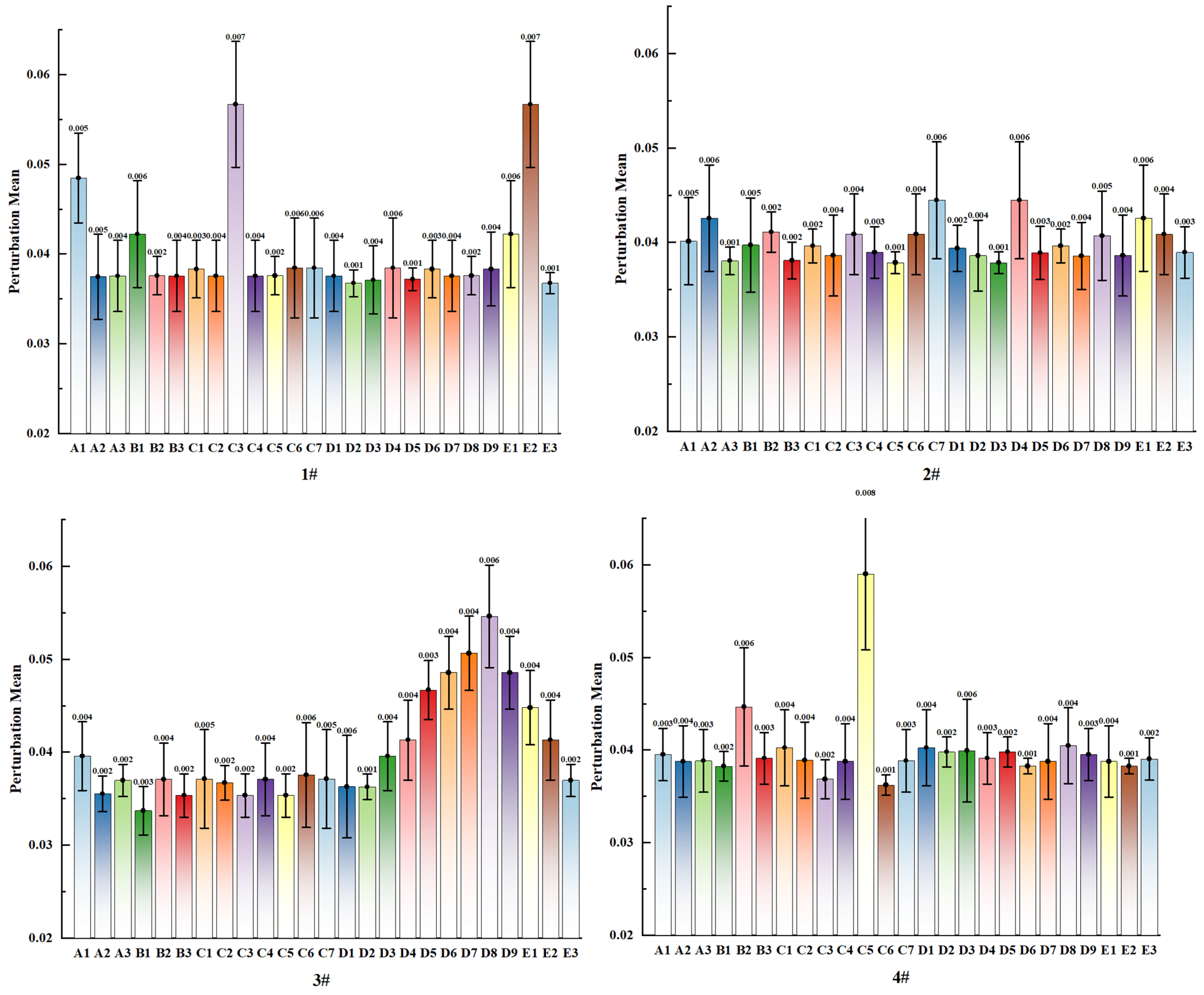
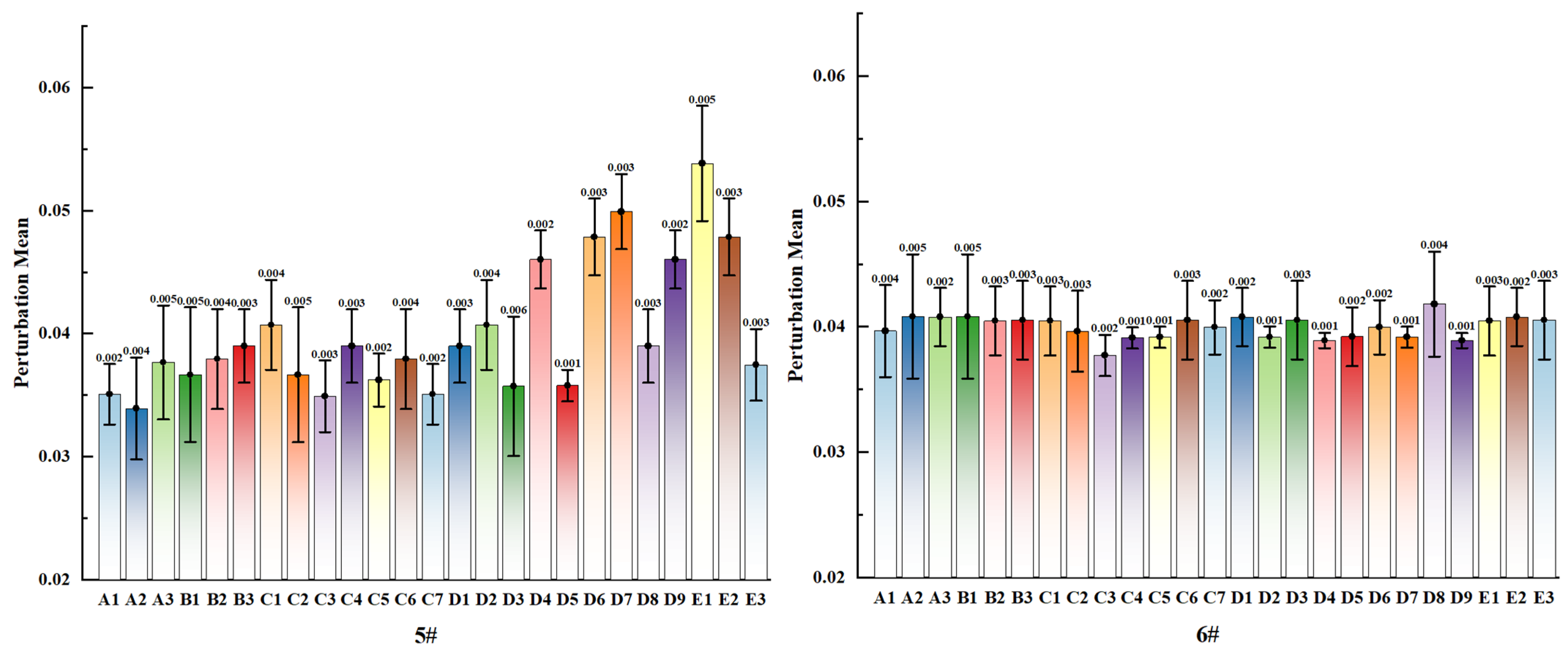
Sensitivity analysis and robustness testing are critical for evaluating model stability. This study employs a parameter perturbation method, selecting six green mining enterprises in Jiangxi, China, as case studies, and applies ±5% and ±10% perturbations to their 25 emergency rescue capability evaluation indicators to assess output stability. Figure 11 shows significant variations in model responses across different indicator categories and mines. At the indicator category level, the model exhibits higher sensitivity to “emergency preparedness (C)” and “emergency response (D)” indicators, characterized by larger error bar ranges and significant fluctuations in perturbation means. These indicators, including risk report quality, rescue team skill level, and scientific validity of rescue plans, pertain to dynamic operational aspects, where minor value changes directly impact overall emergency capability assessment outcomes. In contrast, “organization and institution (A)” and “monitoring and early warning (B)” indicators show lower sensitivity, with shorter error bars and smoother perturbation mean changes, reflecting the robust systemic stability of these foundational and institutional indicators. At the individual mine level, Mines 3 and 5 demonstrate markedly higher sensitivity to (D) indicators, and Mine 4 to (C) indicators, compared to other samples, indicating that differences in baseline conditions and management priorities lead to varying impacts of indicator changes on emergency capability assessment results. Based on these findings, it is recommended that green mining enterprises in China adopt refined and targeted management for highly sensitive (C) and (D) indicators, such as optimizing drill mechanisms and enhancing information integration and coordinated command efficiency. For less sensitive (A) and (B) indicators, emphasis should be placed on systematic and long-term assurance to achieve sustained improvements in emergency management efficacy under resource constraints.

6.2. Comparison and Analysis of Evaluation Results for MERC

To validate the evaluation performance of the RDF model, this study applied it to the assessment of MERC and compared the results with those obtained using the Vague sets [49] method and the FCA [50]. As shown in Table 4, the evaluation outcomes of the RDF method are largely consistent with those of the Vague sets approach, which sufficiently demonstrates the reliability of the proposed method. However, the FCA method rated Mine #5 as Level IV and Mine #6 as Level II, exhibiting partial discrepancies with the former two methods. These differences primarily stem from the inherent limitations of the FCA mechanism: although FCA can yield a comprehensive evaluation value for fuzzy objects, its model structure lacks reverse diagnostic capability. It neither clarifies the contribution of individual indicators to the overall evaluation result nor provides specific improvement directions for enhancing the comprehensive evaluation grade [51]. This deficiency renders FCA ineffective in balancing inter-indicator interactions under scenarios of uneven indicator distribution, as observed in Mines #5 and #6, making the evaluation results susceptible to interference from extreme indicator values and prone to deviation.
In contrast, the RDF model constructed in this study incorporates parameters such as standard intervals and point-value matrices to establish an evaluation framework with intrinsic feedback and self-validation mechanisms. This approach fully accounts for the statistical characteristics of the data while effectively mitigating the influence of subjective factors. Consequently, the evaluation model based on the RDF demonstrates superior rationality and reliability in the context of MERC assessment.

6.3. Limitations of the Model

While the MERC evaluation model based on the RDF constructed in this study exhibits structural rationality and practical applicability, several limitations remain that can be addressed in future research. First, subjective factors still exert a certain influence on the model. Although the G1 and entropy weight methods are employed for combined weighting to balance subjective and objective components, the G1 method’s judgment of indicator importance relies on expert experience. Additionally, the grading criteria for qualitative indicators such as “ecological compatibility of rescue plans” involve subjective judgment. This issue can be mitigated by standardizing expert selection procedures and refining grading criteria to enhance objectivity. Second, the model’s generalization capability across application scenarios is insufficient. It does not systematically account for the influence of different mineral types or regional characteristics on the evaluation framework and continues to adopt a unified structure. Future studies could introduce scenario-adaptive parameters to improve specificity. Finally, the model lacks predictive capability. The current framework primarily evaluates static capability at a single point in time and cannot capture trends under dynamic interventions such as technological upgrades or personnel training. Subsequent research could incorporate time-series data adjustment mechanisms to endow the model with trend forecasting functionality, thereby providing decision support for the sustained enhancement of mine emergency response capabilities.

7. Conclusions

This study develops an MERC evaluation model integrating RDF and a combined weighting approach, with its effectiveness validated through a case study. The main conclusions are as follows:
(1) The proposed TBL-based MERC evaluation model incorporates multiple parameter combinations (θ and β) in the RDF, enabling self-verification of results and significantly improving robustness. It effectively handles the ambiguity and variability of cross-level indicators, offering a methodology for MERC assessment that underscores the importance of synergistically advancing environmental protection, economic efficiency, and social equity.
(2) Grounded in the TBL framework, the study establishes an indicator system comprising 25 metrics across 5 dimensions: organizational development, monitoring and early warning, preparedness, response, and recovery. This structure fully incorporates sustainability criteria, including geo-conservation, economic viability, and social responsibility. The combined use of G1 and entropy weighting methods integrates expert insight on sustainability priorities with objective data patterns, resulting in more scientific and rational weight assignments.
(3) Comparative analysis with the vague sets method and FCA confirms the consistency and rationality of the model, which also demonstrates stronger interpretability and adaptability. The model not only identifies gaps in China’s current mine rescue systems but also provides practical guidance for mining enterprises to improve sustainability performance by aligning emergency management with geo-environmental protection and resource utilization efficiency.
(4) This study has limitations regarding the expert-dependent setting of RDF interval thresholds and the sensitivity of results to data quality and parameter selection. Future work should focus on developing adaptive parameter mechanisms, assessing data deviation impacts, and strengthening the quantitative analysis of TBL synergies. These refinements will enhance the model’s applicability in supporting sustainable mineral resource utilization and geo-conservation strategies.

Author Contributions

L.F.: data curation, writing—original draft, and formal analysis. J.X.: writing—review and editing. Y.K.: conceptualization, resources, formal analysis, validation, writing—review and editing, supervision. All authors have read and agreed to the published version of the manuscript.

Funding

This research was funded by the Key Basic RESEARCH Project of Yichun Science and Technology Special Fund (No. 2023ZDJCYJ05).

Institutional Review Board Statement

Not applicable.

Informed Consent Statement

Not applicable.

Data Availability Statement

The original contributions presented in this study are included in the article. Further inquiries can be directed to the corresponding author.

Acknowledgments

The authors would also like to thank the reviewers for commenting on this paper.

Conflicts of Interest

The authors declare that they have no known competing financial interests or personal relationships that could have appeared to influence the work reported in this paper.

References

  1. Yu, H.; Li, S.; Yu, L.; Wang, X. The Recent Progress China Has Made in Green Mine Construction, Part II: Typical Examples of Green Mines. Int. J. Environ. Res. Public Health 2022, 19, 8166. [Google Scholar] [CrossRef] [PubMed]
  2. Sovacool, B.K.; Ali, S.H.; Bazilian, M.; Radley, B.; Nemery, B.; Okatz, J.; Mulvaney, D. Sustainable Minerals and Metals for a Low-Carbon Future. Science 2020, 367, 30–33. [Google Scholar] [CrossRef] [PubMed]
  3. Pollack, K.; Bongaerts, J.C.; Drebenstedt, C. Towards Low-Carbon Economy: A Business Model on the Integration of Renewable Energy into the Mining Industry. In Proceedings of the 28th International Symposium on Mine Planning and Equipment Selection—MPES 2019; Topal, E., Ed.; Springer Series in Geomechanics and Geoengineering; Springer International Publishing: Cham, Switzerland, 2020; pp. 422–430. ISBN 978-3-030-33953-1. [Google Scholar]
  4. Chen, J.; Jiskani, I.M.; Lin, A.; Zhao, C.; Jing, P.; Liu, F.; Lu, M. A Hybrid Decision Model and Case Study for Comprehensive Evaluation of Green Mine Construction Level. Environ. Dev. Sustain. 2023, 25, 3823–3842. [Google Scholar] [CrossRef]
  5. Yuan, D. Exploration and application of artificial intelligence in mine emergency rescue. Shaanxi Coal 2024, 43, 175–178. [Google Scholar] [CrossRef]
  6. Jha, A.; Verburg, A.; Tukkaraja, P. Internet of Things–Based Command Center to Improve Emergency Response in Underground Mines. Saf. Health Work 2022, 13, 40–50. [Google Scholar] [CrossRef]
  7. Li, G.; Cheng, G.; Li, Z.; Zhu, W.; Wu, F. Visualized analysis of mine emergency rescue in China based on bibliometrics. Saf. Coal Mine 2023, 54, 253–259. [Google Scholar] [CrossRef]
  8. Wei, J.; Xv, Y.; Xie, D.; Liu, C.; Zhong, C. The risk assessment of water bursting based on combination rule of distance function. China Min. Mag. 2021, 30, 162–167. [Google Scholar]
  9. Peng, R. Study on the impact of multi-disaster chains on emergency rescue. China Min. Mag. 2021, 30, 161–165. [Google Scholar]
  10. Fang, B. Risk Decision Evaluation of Mine Gas Explosion Emergency Rescue Based on Vague Set. In Proceedings of the 2022 World Automation Congress (WAC), San Antonio, TX, USA, 11–15 October 2022; pp. 553–557. [Google Scholar]
  11. Li, X.; Shi, Y.; Wang, Z.; Zhang, W. Modified Stochastic Petri Net-Based Modeling and Optimization of Emergency Rescue Processes during Coal Mine Accidents. Geofluids 2021, 4141236. [Google Scholar] [CrossRef]
  12. Yuan, L.; Zhang, T.; Zhang, Q.; Jiang, B.; Lu, X.; Li, S.; Fu, Q. Construction of green, low-carbon and multi-energy complementary system for abandoned mines under global carbon neutrality. J. China Coal Soc. 2023, 47, 2131–2139. [Google Scholar] [CrossRef]
  13. Liu, H.; Kang, Q.; Zou, Y.; Yu, S.; Ke, Y.; Peng, P. Research on Comprehensive Evaluation Model of Metal Mine Emergency Rescue System Based on Game Theory and Regret Theory. Sustainability 2023, 15, 10879. [Google Scholar] [CrossRef]
  14. Sun, C.; Hao, Y.; Wei, J.; Zhang, L. Research on the Evaluation of Emergency Management Synergy Capability of Coal Mines Based on the Entropy Weight Matter-Element Extension Model. Processes 2023, 11, 2492. [Google Scholar] [CrossRef]
  15. Lei, K.; Qiu, D.; Zhang, S.; Wang, Z.; Jin, Y. Coal Mine Fire Emergency Rescue Capability Assessment and Emergency Disposal Research. Sustainability 2023, 15, 8501. [Google Scholar] [CrossRef]
  16. Chen, G.; Li, Y. Evaluation of Coal Mine Water Permeable Emergency Rescue Capability Based on Combined Weighting. Sci. Technol. Eng. 2023, 23, 2353–2361. [Google Scholar]
  17. Tian, S.; Gao, L.; Fan, B.; Shun, W.; Zhao, Z.; Cai, X. Capability evaluation of coal mine emergency management based on WSR methodology. J. Xi’an Univ. Sci. Technol. 2022, 42, 647–654. [Google Scholar] [CrossRef]
  18. Zhou, J.; Reniers, G. Development of a Risk Assessment Approach by Combining SPA-Fuzzy Method with Petri-Net. J. Loss Prev. Process Ind. 2024, 91, 105372. [Google Scholar] [CrossRef]
  19. Li, X.; Shi, Y.; Pang, C.; Li, H.; Lin, J. Evaluation Model of Coal Mine Emergency Rescue Resource Allocation Based on Weight Optimization TOPSIS Method. In IOP Conference Series: Earth and Environmental Science; IOP Publishing: Bristol, UK, 2021. [Google Scholar]
  20. Cheng, L.; Zhou, R.; Yan, J.; Guo, H. Construction and application of maturity evaluation model of coal mine emergency rescue ability. China Saf. Sci. J. 2021, 31, 180–186. [Google Scholar] [CrossRef]
  21. Qi, Y.; Xue, K.; Wang, W.; Cui, X.; Liang, R.; Wu, Z. Coal and Gas Protrusion Risk Evaluation Based on Cloud Model and Improved Combination of Assignment. Sci. Rep. 2024, 14, 4551. [Google Scholar] [CrossRef] [PubMed]
  22. Chen, S. Theory and Model of Variable Fuzzy Sets and Its Application; Dalian University of Technology Press: Dalian, China, 2009. [Google Scholar]
  23. Qiao, J.; Wang, W.; Li, S. Risk Assessment of Highway Construction Based on Relative Difference Function. J. Chongqing Jiaotong Univ. (Nat. Sci.) 2020, 39, 81–85+99. [Google Scholar]
  24. Liao, B.; Ke, Y.; Qing, C.; Zhang, H.; Huang, H.; Fang, L.; Wang, C.; Tao, T. Risk Recognition of Metal Mine Goaf Based on Rel-ative Difference Function. Gold Sci. Technol. 2021, 29, 440–448. [Google Scholar]
  25. Alhaddi, H. Triple Bottom Line and Sustainability: A Literature Review. Bus. Manag. Stud. 2015, 1, 6–10. [Google Scholar] [CrossRef]
  26. Goh, C.S.; Chong, H.-Y.; Jack, L.; Mohd Faris, A.F. Revisiting Triple Bottom Line within the Context of Sustainable Construction: A Systematic Review. J. Clean. Prod. 2020, 252, 119884. [Google Scholar] [CrossRef]
  27. Li, H.; Zhu, J.P. Review of Research Progress on Comprehensive Evaluation Methods. Stat. Decis. 2012, 7–11. [Google Scholar] [CrossRef]
  28. Zhang, X.; He, N. Study on Classification and Applicability of Comprehensive Evaluation Methods. Stat. Decis. 2022, 38, 31–36. [Google Scholar] [CrossRef]
  29. Dou, J.; Ma, H.; Yang, J.; Zhang, Y.; Guo, R. An Improved Power Quality Evaluation for LED Lamp Based on G1-Entropy Method. IEEE Access 2021, 9, 111171–111180. [Google Scholar] [CrossRef]
  30. Zhang, Y.; Tang, Y.; Liu, Y.; Liang, Z. Research on Variable Weight Synthesizing Model for Transformer Condition Assessment. Front. Energy Res. 2022, 10, 941985. [Google Scholar] [CrossRef]
  31. Chen, H.; Cheng, Z.; Kong, D. Evaluation of Mining Capacity of Mines Using the Combination Weighting Approach: A Case Study in Shenmu Mining Area in Shaanxi Province, China. Sci. Prog. 2021, 104, 00368504211044032. [Google Scholar] [CrossRef]
  32. Fang, L.; Ke, Y.; Wang, C.; Zeng, Z.; Liao, B. Standardization grade evaluation for non-coal mine safety based on matter-element extension model with variable weight. Nonferrous Met. Sci. Eng. 2021, 12, 96–102. [Google Scholar] [CrossRef]
  33. Zhao, Z.; Gu, J. Risk Evaluation of Mine-Water Inrush Based on Comprehensive Weight Method. Geotech. Geol. Eng. 2023, 41, 189–203. [Google Scholar] [CrossRef]
  34. Cheng, L.; Li, S.; Lin, H. Establishment of Assessment Index System for the Emergency Capability of the Coal Mine Based on SEM. Procedia Eng. 2011, 26, 2313–2318. [Google Scholar] [CrossRef][Green Version]
  35. National Mine Safety Administration. Mine Rescue Regulations; National Mine Safety Administration: Beijing, China, 2024.[Green Version]
  36. AQ 1009-2021; Standardized Assessment Criteria for Mine Rescue Teams. Ministry of Emergency Management: Beijing, China, 2021.[Green Version]
  37. AQ 1123-2023; Mine Rescue Teams Risk Pre-Control Management System. Ministry of Emergency Management: Beijing, China, 2023.[Green Version]
  38. State Administration for Market Regulation. General Rules for Evaluation of Green Mines; State Administration for Market Regulation: Beijing, China, 2024.[Green Version]
  39. Ministry of Natural Resources of the People’s Republic of China. Construction Specifications for Green Mine Development; Ministry of Natural Resources of the People’s Republic of China: Beijing, China, 2018.[Green Version]
  40. Shang, D.; Yin, G.; Li, X.; Li, Y.; Jiang, C.; Kang, X.; Liu, C.; Zhang, C. Analysis for Green Mine (Phosphate) Performance of China: An Evaluation Index System. Resour. Policy 2015, 46, 71–84. [Google Scholar] [CrossRef]
  41. Liu, Q.; Qiu, Z.; Li, M.; Shang, J.; Niu, W. Evaluation and Empirical Research on Green Mine Construction in Coal Industry Based on the AHP-SPA Model. Resour. Policy 2023, 82, 103503. [Google Scholar] [CrossRef]
  42. Chen, J.; Jiskani, I.M.; Jinliang, C.; Yan, H. Evaluation and Future Framework of Green Mine Construction in China Based on the DPSIR Model. Sustain. Environ. Res 2020, 30, 13. [Google Scholar] [CrossRef]
  43. Dong, Y.; Liu, X.; Hou, H. Analysis of green mine evaluation index. Chin. Acad. Nat. Resour. Econ. 2020, 29, 68–74. [Google Scholar] [CrossRef]
  44. Luo, D.; Huang, J.; Liang, Y.; Cheng, L. Comprehensive Evaluation of Green Mine Construction Level Considering Fuzzy Factors Using Intuitionistic Fuzzy TOPSIS with Kernel Distance. Environ. Sci. Pollut. Res. 2024, 31, 16884–16898. [Google Scholar] [CrossRef]
  45. Ibrayeva, A.S.; Turdaliyeva, B.S.; Aimbetova, G.Y. Analysis of the Organization and Conduct of Emergency Rescue Activities. SRP 2020, 11, 411–420. [Google Scholar] [CrossRef]
  46. Mi, X.; Cao, Q.; Li, D.; Wang, J. Research and Calculation on Emergency Rescue Reliability Model through Entropy Weight-BP Neural Network. In Proceedings of the 2021 IEEE Conference on Telecommunications, Optics and Computer Science (TOCS), Shenyang, China, 10–11 December 2021; pp. 795–798. [Google Scholar]
  47. Dong, Y.; Wu, X.; Na, C.; Zhang, Y.; Zeng, J. Analysis of green and high quality development of the mining industry in Jiangxi province. China Min. Mag. 2019, 28, 82–86. [Google Scholar] [CrossRef]
  48. Johansson, B.J.E.; Eriksson, P. A Maturity Model to Guide Inter-Organisational Crisis Management and Response Exercises. Int. J. Disaster Risk Reduct. 2024, 106, 104413. [Google Scholar] [CrossRef]
  49. Shan, R.; Wang, C.; Chen, X. Research on Emergency Rescue Capability of Coal Mine Based on Vague Set Theory. Coal Technol. 2016, 35, 320–321. [Google Scholar] [CrossRef]
  50. Zhong, C.; Yang, Q.; Liang, J.; Ma, H. Fuzzy Comprehensive Evaluation with AHP and Entropy Methods and Health Risk Assessment of Groundwater in Yinchuan Basin, Northwest China. Environ. Res. 2022, 204, 111956. [Google Scholar] [CrossRef]
  51. Ma, Z.; Si, Q. Multiple-level Projection of Indexes and the Analysis of Causes on A Fuzzy Evaluation Conclusion. Oper. Res. Manag. Sci. 2023, 32, 126–131+137. [Google Scholar]
Figure 1. TBL.
Figure 1. TBL.
Sustainability 17 09948 g001
Figure 2. RDF.
Figure 2. RDF.
Sustainability 17 09948 g002
Figure 3. Interval diagram.
Sustainability 17 09948 g003
Figure 4. Detailed steps flowchart for using RDF to assess MERC.
Sustainability 17 09948 g004
Figure 5. MERC evaluation index system in green mine.
Sustainability 17 09948 g005
Figure 6. Geographical location map of 6 mines.
Sustainability 17 09948 g006
Figure 7. Expert scoring results. Symbol “#” is used to denote serial numbers.
Sustainability 17 09948 g007
Figure 8. TBL and Level-3 Indicators.
Sustainability 17 09948 g008
Figure 9. Weight distribution of 5 Level-2 indicators.
Sustainability 17 09948 g009
Figure 10. Combined weights distribution of 25 Level-3 indicators.
Sustainability 17 09948 g010
Figure 11. Comparison chart of mean disturbance values for 6 mines. Symbol “#” is used to denote serial numbers.
Sustainability 17 09948 g011aSustainability 17 09948 g011b
Table 1. Relative importance assignment.
rkRelative Importance
1.0Equal importance
1.2Slightly more important
1.4Comparatively more important
1.6Significantly more important
1.8Extremely important
1.1, 1.3, 1.4, 1.5, 1.7Between the above
Table 2. Indicator grades for evaluation criteria.
IndicatorMaturity Level
Level ILevel IILevel IIILevel IVLevel V
(0.0, 1.0](1.0, 2.0](2.0, 3.0](3.0, 4.0](4.0, 5.0]
C1Rescue personnel have no mastery of skills related to environmental emergency response.Only a few team members understand basic concepts, but their practical operational skills are poor.Most team members have received training and execute basic response procedures.Team members are highly skilled, capable of flexibly responding to complex disaster scenarios and minimizing secondary damage.The team possesses expert-level response capabilities and optimizing new techniques, thereby leading the industry.
C2The emergency plan contains no dedicated measures for ecological impact prevention and control.The emergency plan includes ecological protection but lacks specific implementation processes.The emergency plan includes a dedicated chapter, with clear measures covering major risk scenarios.The ecological control module is deeply integrated with core rescue processes, with strong practicality.The emergency plan is ecological prevention and control measures representing industry best practices.
C3No formal risk report has been generated, with information being fragmented and disorganized.A basic report exists, but it merely lists certain safety risks in a simplistic manner.A regular risk reporting system has been established, enabling systematic identification of safety and ecological risks.The report comprehensively analyzes risk interrelationships and prospectively evaluates potential economic.A dynamic risk early warning model has been established, with reports providing precise quantitative analysis and undergoing continuous optimization.
C4No emergency drills have ever been conducted. Occasionally, one drill is conducted annually, but the effectiveness is negligible.Comprehensive drills are conducted regularly1–2 times each year, and ecological measures are basically validated.Drills are conducted with high frequency ≥2 times per year and enhance coordination and operational capabilities.Drill frequency, quality, and innovation serve as industry benchmarks.
C5No allocation has been planned for the emergency funds for any purposes related to ecological or environmental protection.A minimal amount of funds is allocated, but the proportion is extreme, <5%, with usage lacking planning.The proportion of ecological emergency funds meeting basic requirements 5–10%, and usage is standardized.The proportion of funds is relatively 10–20%. Allocations are dynamically optimized based on demand.The proportion of funds is high and stable (>20%), with an innovation fund established to support technology introduction and upgrades.
C6No low-carbon emergency equipment has been stockpiled.Only a minimal amount of conventional material, with no management system.Quantitative stockpiling conducted in accordance with standards, and a regular inspection and update mechanism in place.Material reserves are sufficient, with proactive adoption of new environmentally friendly materials and equipment, supported by informatized management.Intelligent and networked precise allocation and supply chain management have been achieved, ensuring optimal material efficiency.
C7No relevant publicity or training activities have been conducted.Only sporadic, informal publicity activities have been carried out, with no institutionalized framework.An annual publicity and education plan has been formulated, with regular training conducted for internal employees.A comprehensive internal and external publicity system has been established, with content continuously improved based on feedback.The enterprise, in collaboration with the community and relevant stakeholders, has achieved significant publicity impact and high social recognition.
Table 3. Identification results of the RDF for MERC. “#” is used to denote serial numbers.
No.y’YLevel
θ = 1, β = 1θ = 2, β = 1θ = 1, β = 2θ = 2, β = 2
1#3.8133.7413.8403.8433.809III close to IV
2#3.3623.2683.4063.3673.351III close to II
3#3.6443.4733.8553.7283.675III close to IV
4#3.3353.3363.3793.4013.363III close to II
5#3.8383.5954.1564.0003.897III close to IV
6#3.0833.0043.1323.1133.083III close to II
Table 4. Comparison evaluating results of the RDF, vague sets, and FCA. Symbol “#” is used to denote serial numbers.
MethodLevel of MERC
1#2#3#4#5#6#
RDFIIIIIIIIIIIIIIIIII
Vague setsIIIIIIIIIIIIIIIIII
FCAIIIIIIIIIIIIIVII
Disclaimer/Publisher’s Note: The statements, opinions and data contained in all publications are solely those of the individual author(s) and contributor(s) and not of MDPI and/or the editor(s). MDPI and/or the editor(s) disclaim responsibility for any injury to people or property resulting from any ideas, methods, instructions or products referred to in the content.