1. Introduction
To address global challenges such as climate change, the United Nations (UN) introduced the concept of Education for Sustainable Development (ESD). Building on the experiences gained through previous initiatives, the current programme, ESD for 2030 [
1], focuses on contributing to the achievement of the UN Sustainable Development Goals (SDGs). The relevance of ESD is also embedded in the SDGs themselves, as SDG 4.7 aims to “ensure that all learners acquire the knowledge and skills needed to promote sustainable development” by 2030 [
2] (p. 21). As each person can contribute to sustainable development in various ways, for instance, through responsible consumption [
3,
4], ESD must target a global audience to achieve the SDGs [
1]. A key objective of ESD is to equip learners with the competences to critically reflect on sustainability challenges, envision multiple futures, and take problem-solving measures [
5,
6]. These competences are particularly important in the context of climate change adaptation (SDG 13, Climate Action), where locally grounded measures also play a crucial role [
7]. Climate change adaptation is therefore increasingly recognised as an integral component of ESD [
8].
Although the SDGs have a global reach, local measures play a key role in achieving sustainability goals such as SDG 13. Global effects become visible at the local scale, making local action essential in implementing the SDGs [
9]. To address local measures, learning approaches are needed that focus on the local living environment. Location-based mobile learning (LBML) approaches are regarded as a promising concept for teaching ESD topics [
10] such as climate change adaptation, as they visualise location-specific measures and foster active engagement [
11]. LBML uses mobile digital devices at selected locations to create situated and contextualised learning experiences. This enables learners to explore local sustainability topics through concrete, location-based examples. Although mobile learning in general is considered to have high transformative potential, its impact depends on the context in which it is implemented. Therefore, understanding the role of context is fundamental in making informed decisions, maximising the benefits of mobile learning, and reflecting on its limitations [
12]. Several papers have shown that working with mobile devices in outdoor learning settings positively affects collaboration skills [
13], knowledge acquisition [
14,
15], learner motivation [
16,
17], and the ability to interact with the physical, temporal, social, and cultural environment [
18].
Embedding methodological approaches such as LBML into formal education can help utilise their potential for advancing ESD. Therefore, teachers’ participation is a decisive factor, as they are largely responsible for successfully translating changes into action in classrooms [
19]. A number of studies emphasise the importance of teaching ESD during teacher training to ensure that teachers can implement ESD in schools [
20]. To fulfil this role, they require not only a positive attitude towards ESD but also specific methodological skills to support effective learning processes [
20]. Approaches such as LBML, which situate learning in the local environment, are not only suitable for students but can also serve as learning tools for future teachers to develop these skills. However, despite the recognised potential of LBML to create suitable learning environments for ESD topics such as climate change adaptation [
11], no studies have examined its utilisation specifically for teaching local climate change adaptation strategies to pre-service teachers. This underlines the need to study how LBML can be employed to equip pre-service teachers with the knowledge and skills required to tackle local sustainability challenges such as climate change adaptation in their future classrooms. Given LBML’s benefits of enhancing motivation, collaboration, and real-world engagement, exploring its use in teacher training represents a logical next step.
Thus, this study addresses this research gap at the intersection of ESD, climate change adaptation, and the use of LBML in teacher training. The aim of this study is to examine how an LBML unit can be employed to enhance pre-service teachers’ understanding of local climate change adaptation strategies and to analyse their perceptions of the potential and challenges associated with implementing an approach of this type in class. The study is guided by the following research questions:
To what extent does the LBML unit help participants understand the relevance of taking action on a local scale in the context of climate change adaptation?
To what extent does the LBML unit raise awareness of local climate change adaptation strategies?
What potential and challenges do pre-service teachers associate with implementing LBML in their own teaching?
In order to address these questions, this article is structured as follows:
Section 2 outlines the theoretical foundations of LBML, its relevance for ESD, and the use of the BIPARCOURS app as a platform for LBML. In this context, we also discuss the importance of climate change adaptation within ESD and address the question of how this topic can be taught through LBML.
Section 3 presents the study design and methodology, while the results are reported in
Section 4. The results are then discussed in a broader research context in
Section 5, while
Section 6 concludes with implications for teacher education and recommendations for future research.
2. Theoretical Background
The study at hand combines perspectives from educational sciences, geography education, sustainability research, and educational technology. It builds on the concept of ESD, incorporates geographical perspectives on local spatial contexts, and draws on climate science findings regarding the need for climate change adaptation. At the same time, approaches from mobile learning and digital education are used to design and analyse innovative learning environments. In order to point out how LBML tools, such as BIPARCOURS, can contribute to climate change adaptation in terms of ESD, the following section focuses on the theoretical foundation for LBML and its relevance in sustainability education.
2.1. Location-Based Mobile Learning
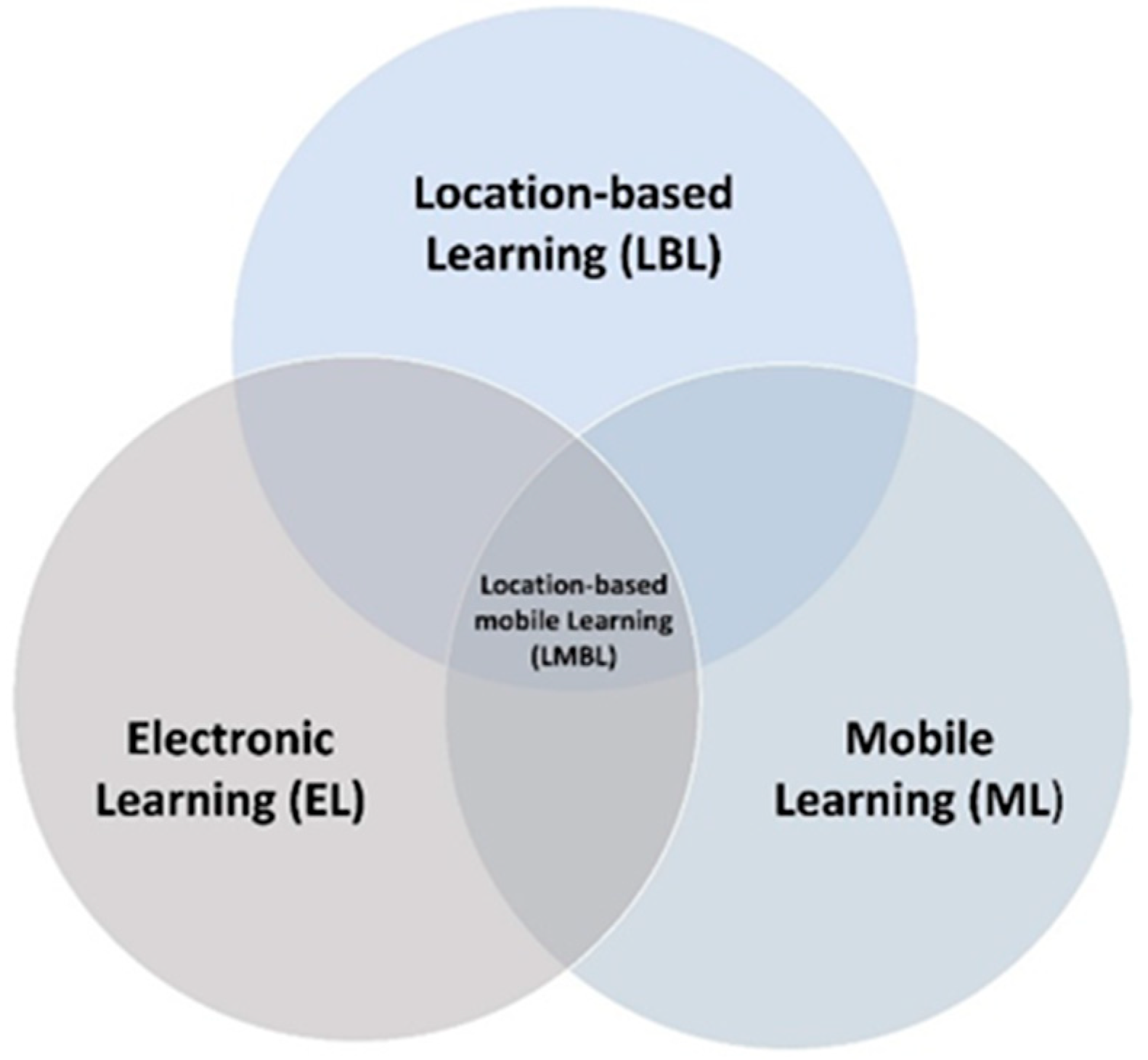
In this study, location-based mobile learning (LBML) is understood as an educational approach that uses portable digital devices to link information, tasks, and media to specific physical locations. By integrating digital resources into contextualised location-based activities, LBML creates situated learning experiences that connect theoretical knowledge with spatial contexts. As shown in
Figure 1, LBML emerges at the intersection of three pedagogical approaches.
In mobile learning (1) (ML or m-learning), portable devices or objects are used to support learning settings [
22]. Examples include worksheets, brochures, and compasses. Those portable objects or devices do not necessarily have to be linked to a specific location as they can be used independently of place. Electronic learning (2) (EL or e-learning) refers to learning processes that involve the use of electronic devices such as stationary computers, tablets, smartphones, or laptops [
23]. Some definitions emphasise that ML and EL overlap considerably, since many devices commonly used in ML today, such as smartphones or tablets, are both electronic and portable [
24]. Location-based learning (3) (LBL or place-based learning) adopts a more geographical perspective, as it focuses on spatial learning settings in which the content, tasks, and materials are tied to specific locations that learners are required to visit [
25]. LBL can also include excursions or field trips where knowledge is conveyed directly onsite (for example, by a person), without necessarily relying on (digital) media. The combination of ML, EL, and LBL constitutes location-based mobile learning (LBML). In LBML, learning activities must (1) be portable (ML), (2) involve electronic devices (EL), and (3) have a clear connection to a specific location (LBL).
Due to their ties to specific locations, mobile devices used for LBML mostly rely on Global Positioning System (GPS) tracking to enable learners to navigate outdoors [
18]. The features and displays of mobile devices also implement various types of media (e.g., maps, images, audio, and audiovisual files) and enable a wide range of tasks that encourage interactions with the environment, such as taking photographs or recording observations. Hence, smartphones and tablets are particularly suited to LBML since they combine different functions of conventional tools in a single device. Furthermore, LBML is supported by the large distribution of mobile devices in society; for example, 94.1% of people in Germany aged 14–19 own a smartphone [
26].
LBML is used in various disciplines to create learning settings that implement functions of mobile devices [
18]. Research in the field of mobile learning has emphasised cognitive benefits such as improved conceptual understanding or the promotion of scientific knowledge [
27]. Furthermore, it has been pointed out that mobile learning supports the transfer of knowledge from short-term memory to long-term memory, as well as problem-solving skills [
12]. In addition to cognitive skills, the effects of mobile learning on affective variables such as motivation have also been examined. Various studies indicate that the use of mobile devices can contribute to increased motivation [
12]. Research on behavioural outcomes such as collaboration skills also points to improvements as a result of mobile learning [
13]. In addition to the potential benefits, various challenges in the use of LBML have been identified. These include the inadequate didactic preparation of mobile learning environments and the need for innovative teaching concepts that establish a connection to students’ everyday lives [
28], as well as technical restrictions such as poor GPS signals and low battery capacities [
12]. Moreover, teachers play an important role in the success of LBML. Insufficient training, for example, in terms of their technical skills and their awareness of the advantages of mobile learning, lead to challenges in establishing the use of mobile devices in educational settings [
12]. In summary, the existing research suggests that LBML can foster cognitive, affective, and behavioural learning outcomes but also faces challenges such as a lack of didactic concepts, technical constraints, or limited teacher training. Given its benefits, LBML can also contribute to the teaching of ESD.
2.2. Location-Based Mobile Learning as an Approach for Teaching Education for Sustainable Development
Within the framework of ESD, LBML can represent a promising approach since it addresses ESD-related competences and didactical principles on multiple levels. This can be demonstrated with the help of three main learning domains that reflect the central objectives of ESD: the cognitive, socio-emotional, and behavioural domains [
5].
The cognitive domain is important for learners to understand complex interrelations, which is a core competence of ESD [
5]. By combining first-hand outdoor experiences with digital information, LBML supports a deeper conceptual understanding of spatial processes [
29]. A recent study [
14] demonstrated that an LBML unit was effective in promoting climate change-related knowledge among participating students. Active engagement and reflection contribute to this knowledge acquisition [
5]. Therefore, mobile learning units should include situated tasks that stimulate interaction with specific places [
30].
In addition to cognitive aspects, LBML can also help to achieve the socio-emotional learning objectives of ESD. The development of attitudes and values plays a pivotal role in enabling motivated and active participation in social transformation processes [
1]. Several studies point out that LBML can initiate attitude changes in sustainability contexts. One study [
31] found a significant improvement in attitude and behaviour scores among adults who participated in an environmental education LBML intervention. Other findings [
32] indicate that young people rated local biodiversity as significantly more valuable after an LBML intervention. Similar results can be found in [
10], which reports increased connectedness to nature in all intervention groups studied. Moreover, significant changes in environmental awareness were detected following LBML, particularly in the form of improved attitudes toward preventing environmental pollution [
33].
ESD is also designed to translate knowledge and attitudes into active engagement in the personal, social, and political spheres [
1,
34]. LBML can provide a learning environment for this behavioural transfer, as learners are directly involved in onsite activities. Mobile devices offer numerous opportunities to practice action through tasks. Two particular types of tasks can be identified that support this process. While design tasks encourage learners to develop their own solutions to a local sustainability problem, decision-making tasks comprise several given options to select from and require learners to give a well-founded justification for their choice [
21]. Tasks of this kind strengthen critical reflection, foster problem-solving competences, and prepare learners to translate their skills into real-world action.
Overall, LBML appears to support learning outcomes that can help to promote the different objectives of ESD. At the same time, however, several challenges have been identified, such as the lack of established didactic concepts [
28], the need for appropriate teacher training, and technical limitations [
12]. In order to overcome these obstacles, there is a need for suitable tools that offer a user-friendly interface while maintaining didactic flexibility. One such tool is the BIPARCOURS app, which serves as a platform for designing and implementing LBML environments for educational purposes.
2.3. The BIPARCOURS App as a Platform for Location-Based Mobile Learning
For this study, we relied on BIPARCOURS, a free application for educational institutions provided by the German federal state of North Rhine-Westphalia. The technological features of the app are based on Actionbound, an app that can be used for educational purposes throughout Germany and is a combination of a browser-based interface and a mobile app for digital devices. In the browser-based interface, LBML units can be designed by selecting individual routes with stations at special points of interest. Various types of questions, tasks and media such as texts, images, videos, or audio recordings can be inserted as slides to engage learners or provide information at specific locations along the route. Before the unit can be used, references and copyright information for the media must be provided. In addition, a description of the unit (e.g., target group, topic, authors) and the specification of access options (public or password protection) are required. When designing an LBML unit, creators can also choose whether the locations must be visited in a specific order or whether participants are free to follow an individual order. All answers from the participants can be viewed by the creator of the unit via the browser. The mobile app is used by participants to complete the LBML unit in groups or individually onsite. In line with the gamification approach, points can be earned by reaching the destination or answering questions. In this study, five main slide formats were selected and employed:
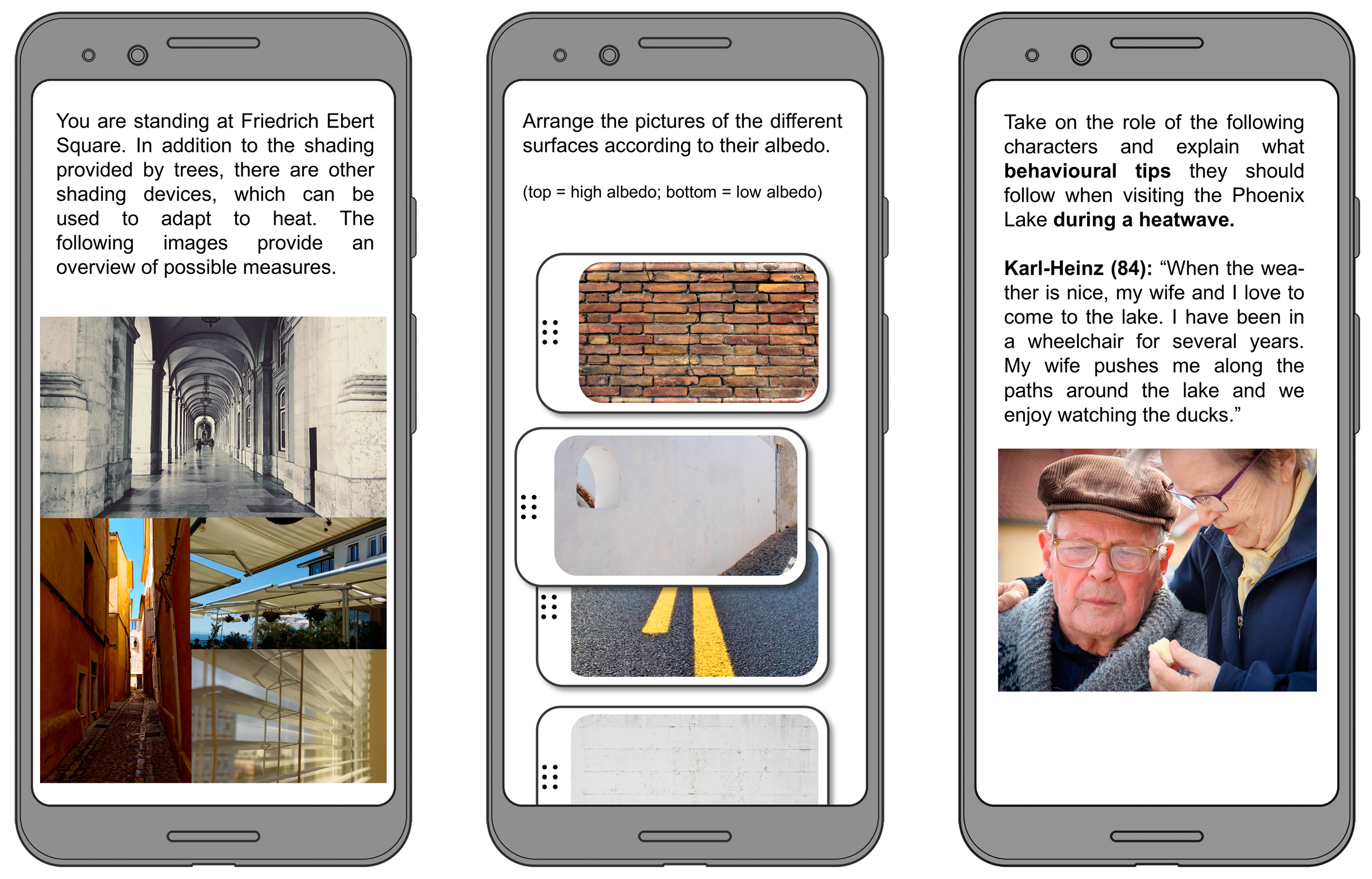
Information slides, which convey information about the location through text, images, graphics, videos, or audio to contextualise the sustainability topic of climate change adaptation onsite.
Location-finding tasks, which guide participants to the specified locations via GPS. The destinations can be reached using a map or a compass that displays the direction and remaining distance.
Question slides, which feature closed formats such as multiple-choice or single-choice questions or ordering or guessing tasks. Immediately after completing the slide, the participants receive feedback on their answers and a score.
Task slides, which are used for open, creative answers that can be submitted as texts, images, audio, or video. This type of slide promotes greater engagement and communication.
Survey slides, which either focus on opinions within the group or initiative conversations with passers-by at selected locations.
The use of the various slide formats and the development of the route were based on several didactic key principles. These include the following:
- -
Local relevance: The learning process is carried out at selected locations to achieve a strong connection between theory and practice.
- -
Transfer: The tasks require participants to apply previously acquired knowledge to a local example in a practical way [
35].
- -
Technology: The app supports the learning process through multimedia access to information and visualisations [
35].
- -
Collaboration: The mobile technology promotes dialogues and collaborations between participants [
36].
- -
Gamification: Points and feedback foster motivation based on the gamification approach [
37].
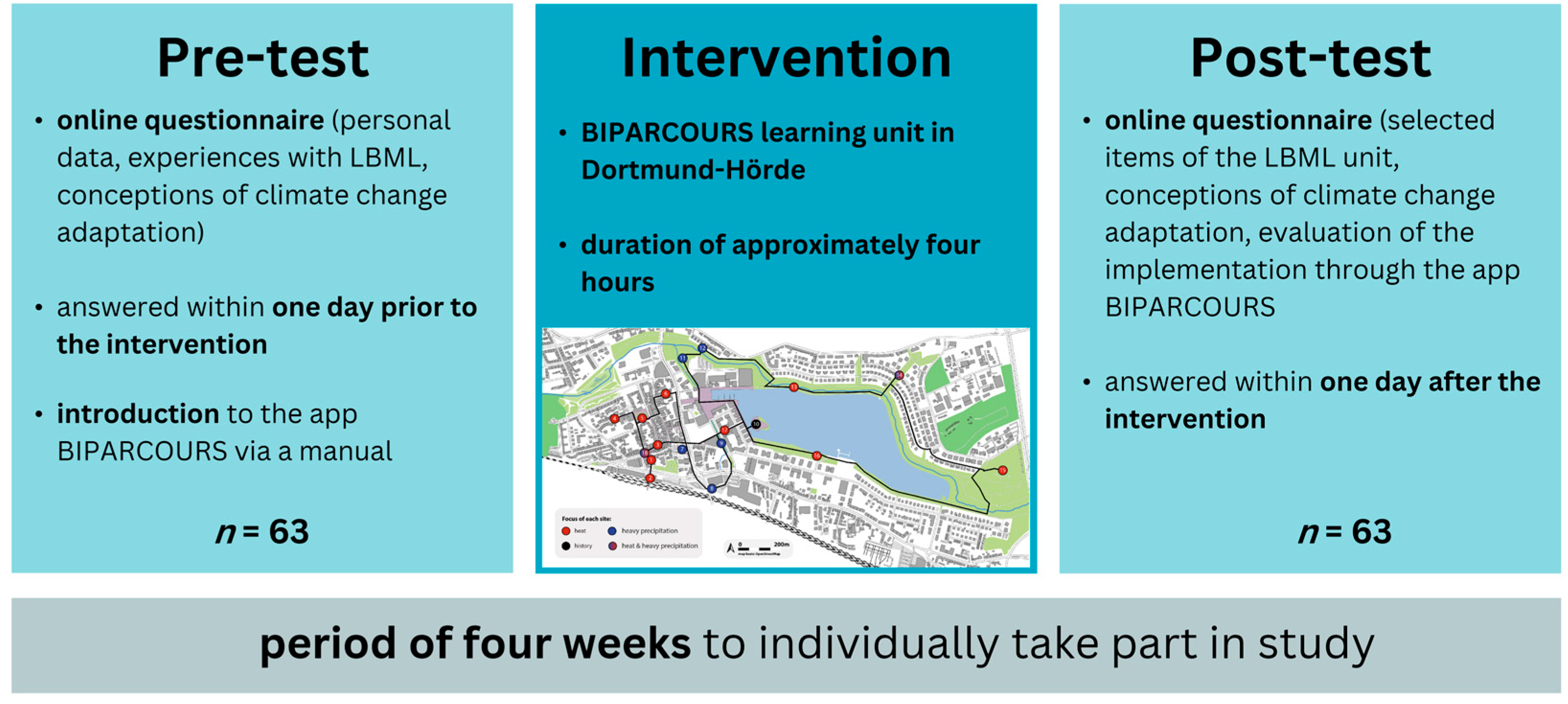
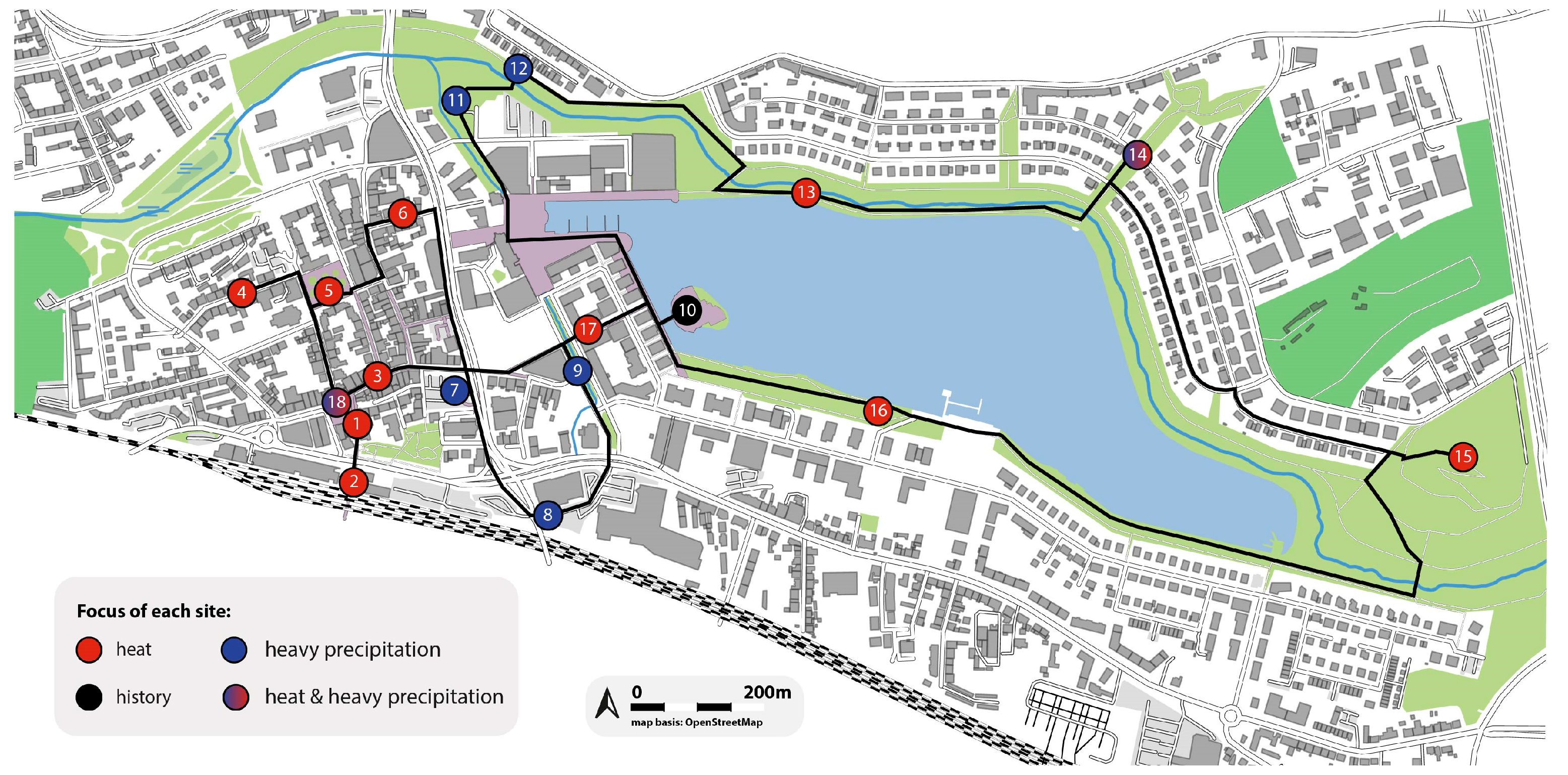
According to the didactic principles and technical possibilities, we developed an LBML unit for this study. A detailed overview of the unit and its route, as well as three examples of slides that were used during the unit, can be found in
Section 3.3.
2.4. Climate Change Adaptation in the Context of Education for Sustainable Development and Location-Based Mobile Learning
Due to climate change, there are increasing dangers in the form of extreme weather events, such as heatwaves or heavy precipitation, which pose high risks, especially in urban areas [
38,
39,
40]. To cope with the inevitable effects of climate change in the near and long-term future, younger generations in particular need to learn how to adapt to climate hazards. Since climate hazards vary locally, this process mainly occurs at local and individual scales [
41]. Education has been identified as a key component in strengthening adaptive capacity, which is necessary to achieve practical climate change adaptation [
42]. For this reason, climate change adaptation is gaining importance in the field of ESD and is mentioned in the context of several ESD programmes (e.g., [
2]).
According to [
11] (p. 16), LBML is especially suitable for teaching climate change adaptation in educational settings, due to its location-based features, which can be used to visualise adaptation strategies and “combine active learning, participation, and local problem-solving.” However, despite its increasing importance, climate change adaptation has received comparatively little attention in empirical studies on LBML and teacher education. Therefore, LBML’s potential to support climate change adaptation has not yet been sufficiently explored. As mobile learning is considered to have high transformative potential, it is important to investigate advantages and challenges in specific contexts to ensure that LBML processes can be optimised [
12].
4. Results
The results of this study are presented in accordance with the three research questions. Results considering general information on previous experiences with the BIPARCOURS app and the participant’s interest in climate change adaptation are outlined to provide contextual background in advance.
4.1. Prior Experience with BIPARCOURS and Interest in Climate Change Adaptation
In the pre-test, participants were asked about their prior experience with the BIPARCOURS app and their knowledge of the topic of climate change adaptation. The results showed that only 7.9% of the participants (n = 63) had previously used the app. A statistically significant difference was found in the number of courses attended on climate change adaptation between the participants from TU Dortmund and those from Ruhr University Bochum using an independent-samples t test (t(61) = −3.22, p = 0.003, d = −0.82, 95% CI [−1.52,−0.35]). This result is not surprising because the Master of Education students from Bochum had studied longer and were more familiar with the topic due to the stronger subject-specific focus on climate change in their programme. The participants also expressed a high level of interest in the topic of climate change adaptation in the pre-test (Dortmund: M = 4.07, SD = 0.75; Bochum: M = 4.11, SD = 0.47), measured using a 5-point Likert scale ranging from 1 (no interest) to 5 (very high interest). The following section presents the study results with regard to the first research question (RQ1).
4.2. RQ1: Relevance of the Local Scale
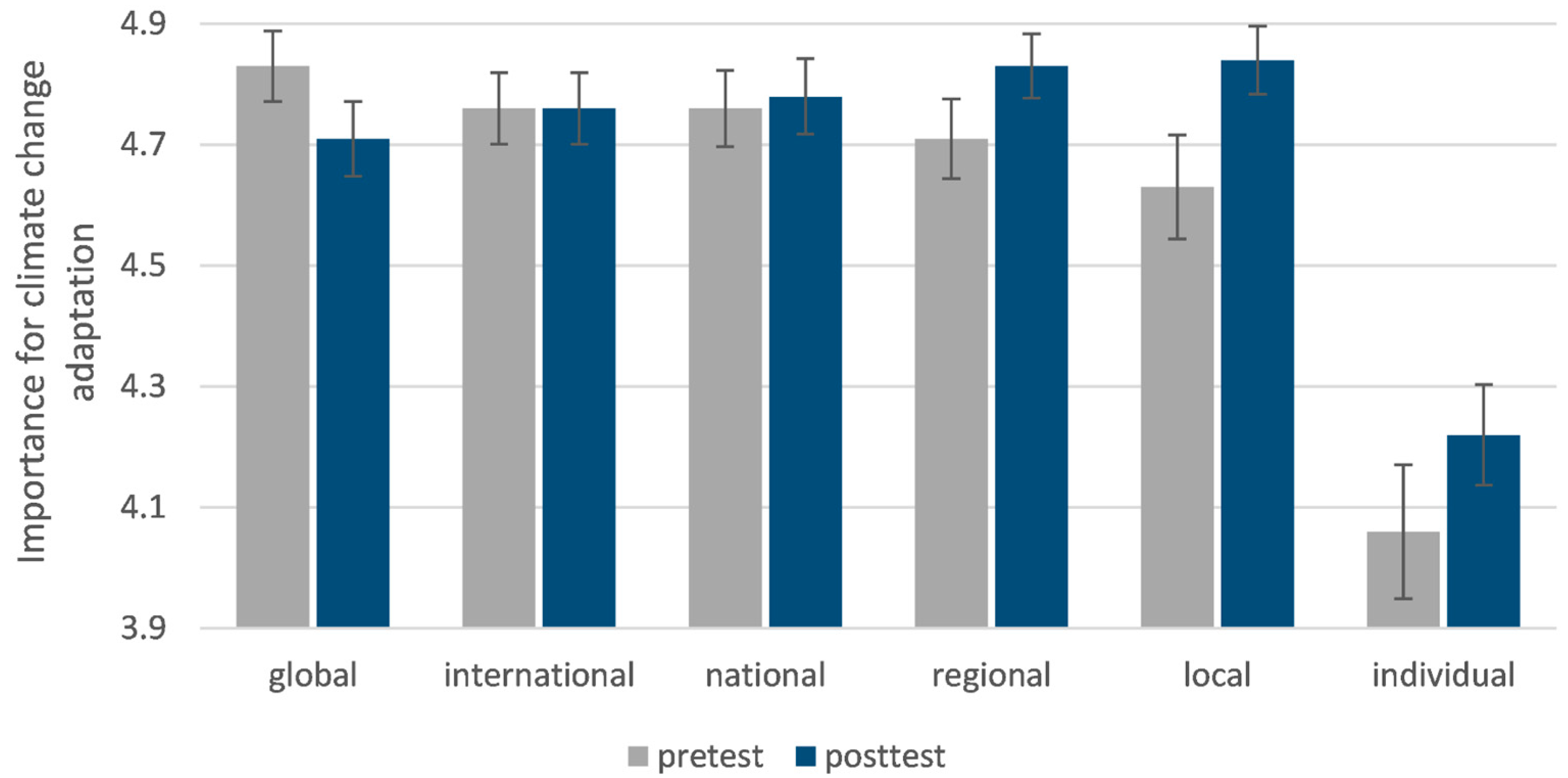
As shown in
Figure 5, the importance that the participants assigned to different scales for climate change adaptation in both the pre-test and post-test was assessed using a Likert scale ranging from 1 (not important) to 5 (very important).
Overall, the participants rated all spatial scales for climate change adaptation as having high or very high importance. Whereas they regarded each scale as more important than the next smallest scale in the pre-test―with the global scale being the most important for climate change adaptation―this order was reversed in the post-test, except for the individual scale, which remained the lowest. Small but statistically significant differences between the pre-test and post-test results were found with paired-samples
t tests for the global scale (t(62) = 2.17,
p = 0.034, d = 0.27, 95% CI [0.01,0.21]) and the local scale (t(62) = −2.86,
p = 0.006, d = −0.36, 95% CI [−0.35,−0.06]). These results suggest that in the post-test, the participants generally found smaller scales to be more important in climate change adaptation than larger scales.
Figure 5 also illustrates that, overall, the participants rated the individual scale as less important than the other scales. Nevertheless, between the pre-test and the post-test, the estimated importance increased.
While the results indicate a shift in the perception of local-scale relevance and individual responsibility, the next research question (RQ2) addresses whether the LBML unit influenced the participants’ awareness and the perceived importance of specific local climate change adaptation measures.
4.3. RQ2: Awareness of Climate Change Adaptation
The participants’ awareness of climate change adaptation was assessed using a 5-point Likert scale (see
Table 2).
The participants reported higher agreement with the statement “Climate adaptation is an important issue for society” in the post-test than in the pre-test. However, a paired-samples t test revealed that this increase was not statistically significant. Similarly, participants showed higher agreement with the statement “In the future, climate change adaptation will become increasingly important” in the post-test than in the pre-test. Again, a paired-samples t test revealed that this increase was not statistically significant. After completing the LBML unit, the participants also stated that they recognised significantly greater potential for climate change adaptation in their everyday lives.
In addition to the comparative items, the participants’ self-perceived ability to act and behavioural intentions were assessed via several post-test questions on a 5-point Likert scale (see
Table 3).
After the LBML intervention, the participants acknowledged the importance of their own contributions to climate change adaptation in the future, felt confident in convincing others about the need to adapt to climate change, and reported an intention to change their own behaviours.
Whereas the previous analysis examined perceptions and awareness of climate change adaptation, the third research question (RQ3) turned to the didactic potential and challenges posed by the LBML unit.
4.4. Relationship Between Local Relevance and Adaptation Awareness (RQ1 and RQ2)
Spearman’s rank correlation was used to identify possible correlations between the variables addressed in RQ1 and RQ2 (
Table 4). Due to the relatively small sample size, the correlations should be interpreted with caution. With a larger sample size, additional or stronger significant correlations could be expected. The results indicate several significant positive correlations between local relevance and adaptation awareness—more specifically the perceived importance of climate change adaptation and behavioural readiness.
A positive correlation was found between the pre-service teachers’ perceived importance of the local scale for climate change adaptation and their view that climate change adaptation is an important societal issue (p = 0.002). The perceived importance of the local scale was also significantly related to recognising the importance of one’s own contribution for the future (p = 0.017). Although the correlation between the local scale and the recognition of everyday opportunities to adapt to climate change did not reach statistical significance (p = 0.132), the positive trend suggests that participants who identified more opportunities for climate adaptation in their daily lives also tended to acknowledge the relevance of the local scale. Furthermore, it was striking that the perception of climate change adaptation as an important societal issue was significantly correlated with several items, particularly the pre-service teachers’ recognition of everyday adaptation opportunities (p = 0.014), perceived importance of one’s own contribution (p = 0.021), willingness to change one’s own behaviour (p = 0.015) and the conviction to persuade others of the need to adapt (p = 0.011). These findings indicate that participants with higher societal awareness also displayed stronger personal involvement and motivation to act in climate change adaptation. A significant positive correlation was also observed between the perceived importance of one’s own contribution and both the willingness to change one’s own behaviour (p = 0.006) as well as the conviction to persuade others to change their behaviour towards climate change adaptation (p < 0.001). The strongest correlation was found between the willingness to change one’s own behaviour and the conviction to persuade others to do the same (p < 0.001). Overall, spatial, attitudinal, and behavioural variables appear to reinforce one another. Participants who acknowledged the relevance of the local scale also demonstrated a greater sense of personal responsibility and willingness to engage in climate change adaptation.
4.5. RQ3: Didactic Potential and Challenges
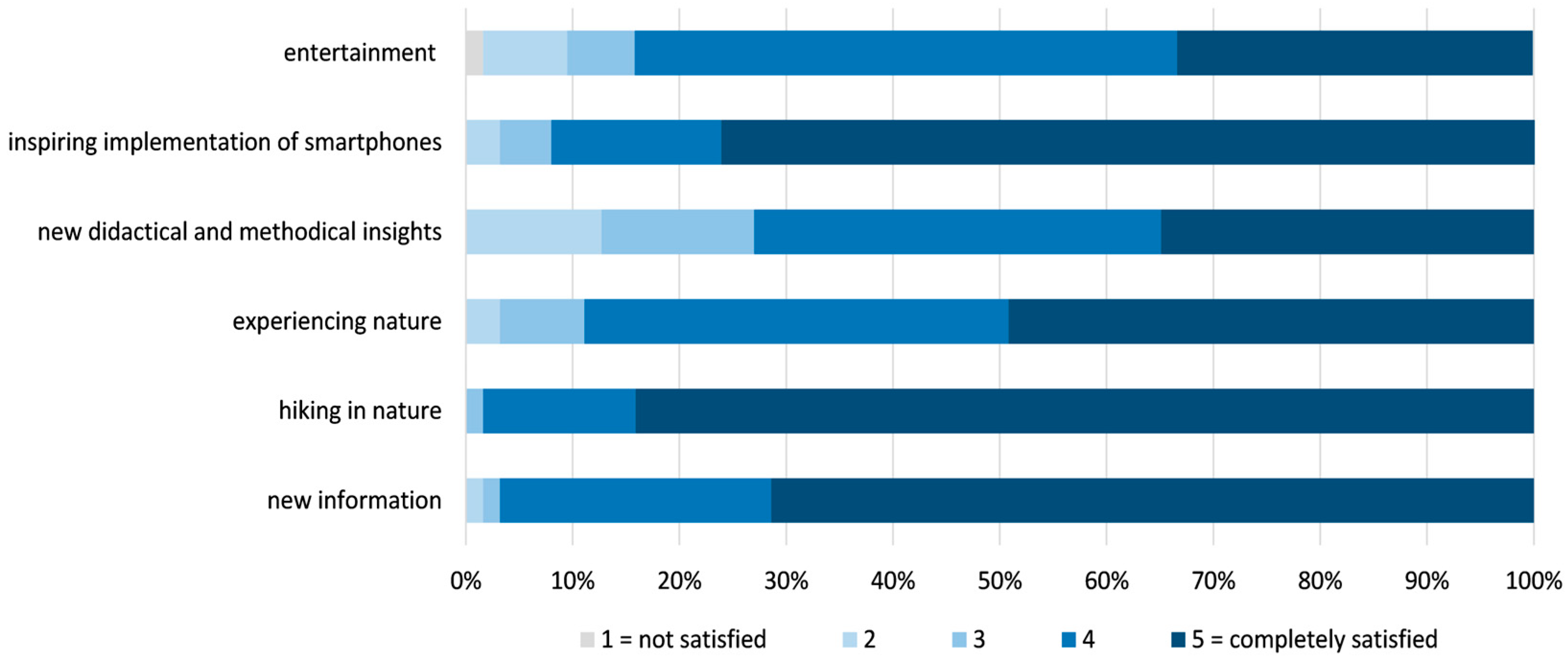
After completing the LBML unit, the participants were asked whether their expectations for the unit were satisfied, using a 5-point Likert scale (1 = not satisfied; 5 = completely satisfied). The results indicated that the core objectives of the unit―teaching contents on climate change adaptation and providing first-hand experiences―were largely achieved. The participants also rated other aspects of the unit highly, such as its entertainment value and the didactic-method insights gained (
Figure 6).
The positive feedback was further validated by the results of the post-test because 90.5% of the participants (
n = 63) noted that apps could be seen as useful support tools for outdoor learning, with their future profession as teachers in mind. In addition, categories for an in-depth evaluation of the challenges and potential advantages of using LBML from the perspective of pre-service teachers were derived from the open-ended questions. The categories extracted are shown in
Table 5. The numbers in brackets represent the number of times a category was mentioned. The pre-service teachers were able to identify several benefits that show the potential of LBML, as well as a number of challenges. Due to the open-ended questions, individual responses were sometimes assigned to multiple categories. Two main aspects were heavily criticised by the participants. The first major criticism focused on technical issues, mostly resulting from the device itself. The participants, for instance, were worried about certain technical issues that could prevent the LBML unit from being completed because “the success of a unit always depends on the technical device at hand. If the device is not working properly, such as when there is a weak signal, certain tasks cannot be solved, or locations cannot be found” (Participant 11, Quote 1, hereafter abbreviated as P11, Q1). Secondly, the participants raised concerns about the students’ need for a personal device that met the required technical standards: “not every child owns a web-enabled smartphone, some students could be excluded” [from taking part in the LBML unit] (P23, Q2).
While the previous criticism centres on technical issues and the availability of adequately equipped devices, participants also identified didactical restrictions, such as the device potentially representing a distraction. Some participants argued that smartphone use might diminish students’ environmental perception, thereby conflicting with the primary educational objective of field trips: “It is a bit of a pity, that especially when navigating, there is a focus on the device instead of the environment” (P11, Q3). In this context, participants also worried about traffic-related dangers due to the device representing a distraction, stating “that the pupils are only facing the device and not paying attention to the road” (P22, Q4). Remarks were also made about the disadvantages attached to outdoor learning in general. Among other issues, participants suggested that there were often time restrictions in school that limited outdoor learning, a high dependence on weather conditions, and a lack of supervision when working independently during the LBML unit.
In terms of the advantages of the LBML unit, participants mentioned an increase in their level of motivation or interest. They cited several contributing factors, including student autonomy: “The pupils are completely in charge, which gives them a good feeling” (P7, Q5). Moreover, the use of digital devices, not only as part of LBML units, was seen as a reason for increased student motivation: “The use of digital media such as apps mostly leads to excitement and can raise the pupils’ interest” (P15, Q6). Some participants also referred to the elements of gamification provided when using the BIPARCOURS app as a potential source of motivation: “Digital media and the playful approach to learning, similar to a treasure hunt, can have a motivating effect” (P27, Q7).
Participants indicated that digital devices can not only improve student motivation but also offer proximity to the everyday environment of young learners and be used to promote competencies concerning the use of digital media. Other participants cited the versatility of the design due to the use of different types of media and tasks as a positive didactic feature. Many also made positive comments that could be ascribed to the category of “first-hand experience of nature”, pointing out that “students learn more about their environment” (P42, Q8) or are confronted with reality. According to the participants, the LBML environment provides didactical benefits because “children are actively engaged when searching the area and their attention is directed towards new things, thus creating awareness for things such as climate change adaptation and ways to personally adapt to climate change” (P36, Q9).
In addition to the advantages perceived by participants, the final assignments written by the participants provide further qualitative evidence of their understanding and practical application of climate adaptation in real-life situations. Several examples show that participants were able to assess the exposure of city centres in terms of climate adaptation, for example, “The large, often dark buildings […] absorb more sunlight than the surrounding area and therefore store more heat within the city. In addition, these buildings form barriers to the wind, which means that only a small amount of heat can be transported away.” The newly acquired information on climate adaptation was also applied to the design of the plaza: “Shading provided by trees, green façades, and green roofs contributes to protecting visitors […] on the market square from strong sunlight and intense heat. […] Green areas increase the possibilities for water infiltration and evaporation, which can also reduce the heat island effect, as evaporation removes heat from the air.” It is also worth noting that the proposed measures were discussed critically: “A measure that would be difficult to implement in this area would be restricting traffic in the city centre […] or introducing a further speed limit. It would be more feasible to provide more bicycle parking spaces and cheaper parking facilities further outside.” Overall, these reflections indicate that the participants not only gained new information but also learned how to apply it practically to real-world contexts.
5. Discussion
Because there were changes in the perceptions of the importance of different scales for climate change adaptation between the pre-test and post-test, we conclude that LBML is well suited to conveying the importance of individual and local scales for ESD-related topics, such as climate change adaptation. This observed shift resulted from the participants’ own conclusions based on the information given during the LBML unit, as we did not explicitly address different scales. These findings are in line with [
30] (p. 4), which states that “the direct perception, understanding, and analysis of […] geographical phenomena and processes at the local and regional scale” are particularly promising in the context of LBML. The results and the experiences gained during the LBML intervention also point to the fact that more abstract geographical phenomena and processes, which take place primarily on a national and global scale, suit conventional learning approaches well [
30], while LBML is particularly suited to addressing local topics and daily actions.
One of the most striking findings regarding RQ2 was that the participants stated that they recognised significantly more opportunities to adapt to climate change in their everyday lives after completing the LBML unit. As previously mentioned, it is important to note that identifying opportunities for climate change adaptations in everyday life does not necessarily mean that actual actions will be taken [
11] (p. 3). The transfer of action knowledge into practice is a subject of much discussion in ESD [
47,
48]. Especially in the case of brief interventions, such as the LBML unit in the present study, the potential for long-term changes in the participants’ behaviour is limited and should be critically discussed [
31]. However, the connection between factual knowledge and knowledge on how to implement action in everyday life can be considered a crucial foundation for acting according to the concept of sustainability. Following the LBML unit, the participants stated their intentions to change their own behaviour and convince other people of the necessity of adapting to climate change. We assume that the unit could have a positive impact on students’ behaviours. This implication is in line with [
49], who found that dealing with issues related to ESD at university can be beneficial in achieving attitude changes among future teachers. A potential change in behaviour of this type could prove to be highly important because teachers’ attitudes are essential when it comes to implementing ESD in class and thus generating changes in school [
19]. With regard to RQ2, it should be noted that participants already assigned high importance to climate change adaptation in the pre-test. This suggests a possible ceiling effect, which may have limited the measurable changes between the pre-test and post-test. The strong relevance attributed to climate adaptation can likely be explained by the disciplinary focus of the degree programmes in geography and general studies. Both are closely aligned with topics of sustainability and climate change [
45,
50]. It therefore seems plausible that relevant content had already been addressed earlier in their studies. Consequently, we cannot rule out the possibility that more pronounced differences between pre- and post-test results might occur in other degree programmes where sustainability topics are less prominently featured.
In addition to the findings on the separate research questions, the correlation analysis also provided insights across the different variables. The positive correlation between the perceived importance of the local scale for climate change adaptation, the societal relevance of climate change adaptation, and the perceived importance of one’s own contribution for the future suggests that participants who recognised the relevance of the local scale also had a stronger sense of personal responsibility [
51]. This connection indicates that the local scale could serve as a bridge to translate abstract knowledge into concrete actions. Furthermore, the significant correlations between the societal importance of climate change adaptation and all other tested items point to the fact that these variables might be closely interrelated. Participants, who highly acknowledged the importance of climate change adaptation for society also recognised more opportunities for action in their everyday life, showed greater motivation to adapt their own behaviour, and felt more confident to influence others to adapt to climate change. In line with other studies (e.g., [
52,
53]), the strong correlation between the statement “my own contribution is important” as a potential indicator of self-efficacy, and behavioural intentions such as “I am willing to change my behaviour” or “I am confident that I can convince others” also highlights the crucial role of self-efficacy for behavioural intentions in climate change adaptation. Overall, the results show that LBML is not only suitable for communicating concrete local action measures, but also for influencing motivational and self-efficacy-related factors which are fundamental components for an education towards sustainable development [
54,
55].
In addition to the first two research questions, we asked the students about the challenges and potential advantages of implementing LBML in their own teaching. The findings reflect positive feedback, with 70% of the students stating that their expectations were “mostly” or “completely” satisfied. However, prior to the intervention, most students anticipated didactical content during the unit (M = 4.43, SD = 0.62, n = 63). The post-test confirmed that the unit did not meet this expectation (M = 3.95, SD = 1.00, n = 63). One reason for this might be that the unit was designed primarily to provide information about climate change adaptation through LBML using local examples instead of addressing didactical competences. Thus, the results in terms of the subject-related category “new information” (M = 4.67, SD = 0.60, n = 63) exceeded the participants’ pretreatment expectations (M = 4.21, SD = 0.63, n = 63).
Although some participants expressed concern that LBML might lead to a “limited perception of the environment” (see Q3), this was not supported by the quantitative data obtained. On the contrary, most participants stated that they were fully satisfied with their experience of nature throughout the LBML unit (M = 4.35, SD = 0.77,
n = 63). Thus, the findings indicate that the frequently suspected “antagonism” between the experience of nature and the use of digital devices [
31] (p. 1054) cannot be confirmed. Instead, we believe that LBML can help students to actively engage with the learning environment through the specific design of location-aware tasks.
Based on the participants’ qualitative feedback, we were able to identify several factors that could contribute to the successful teaching of LBML concepts in higher education and secondary education. Concerns in terms of social injustice (that not every student has the financial resources to own a digital device) (see Q2) or technical issues (related to data demand, app availability, or the battery life of devices) (see Q1) can be resolved if the required technical equipment is supplied to students in schools or universities. This can also limit the distractions caused by the devices by activating only the functions necessary to complete the LBML unit. In this study, participants mentioned technical difficulties as potential challenges in LBML. Nevertheless, during our intervention, no major technical problems were reported or observed. This may be due to the short manual and additional instructions provided in advance (e.g., high battery consumption or downloading the LBML unit beforehand via Wi-Fi). Based on our experience, the only recurring issue with the BIPARCOURS app was its GPS inaccuracy, which occasionally led to difficulties in locating the designated stops.
To support deep learning, the use of LBML should be meaningfully embedded in the syllabuses of different subjects [
56]. This is particularly relevant because the participants in the present study often emphasised time restrictions as challenges in outdoor learning. Because time restrictions are frequently identified as a barrier to teaching sustainability in schools (e.g., [
57]), LBML excursions could be seen as a chance to address sustainability topics in a meaningful and time-efficient way if they take place close to the location of the school. The present study also demonstrated that even a relatively short LBML intervention, which lasted approximately 3.5 h, could lead to a significant change in perception in terms of the ESD-related topic of climate change adaptation.
Similar to previous studies (e.g., [
58,
59]), the gamification approach of the LBML unit in the present study was perceived as highly motivating (see Q7). Thus, for the development of future LBML approaches, it is recommended that gamification elements, such as rewards through points or competitive tasks, should be included. Completing a task in groups is particularly beneficial, because mobile learning can promote collaborative work [
59], which is considered highly important for ESD [
60].
The present study showed that digital approaches could make a significant contribution to ESD when grounded in thoughtful design. In particular, it demonstrates how LBML offers new approaches to teaching complex sustainability topics by combining first-hand experiences with digital information and gamification elements. LBML can thus be considered to be at the intersection of digitalisation and transformative education. Higher education, in particular, should be open to innovative approaches to teaching [
36] that combine different didactical benefits, as they could play an important role in students’ everyday lives and be helpful in teaching ESD and shaping future change agents [
1]. According to our findings, LBML represents such an approach because mobile technologies are suitable for teaching complex and systemic ESD-related topics in outdoor settings. Therefore, LBML can also provide assistance in training pre-service teachers in higher education, who, as change agents, could eventually implement ESD in schools and create similar LBML units.
The present study has several limitations that must be addressed. First, the small sample size does not allow generalisations. Therefore, future studies should aim for a larger sample size to validate the results of the present study. In addition, it must be taken into account that the sample consisted of students from two different programmes at different stages of their studies. As this may have influenced the results, different outcomes may be found for other degree programmes or stages of study. Secondly, the LBML unit on climate change adaptation was carried out at a location that was particularly well suited to the implementation. Whether this approach can be transferred to other locations or ESD topics remains to be examined in further studies. Thirdly, the participants may have responded in a socially desirable manner in their self-assessment, even though the survey was conducted digitally and anonymously. In addition, the questionnaire was answered immediately after the participants completed the LBML unit. Hence, further studies should focus on the long-term effects of LBML interventions.
6. Conclusions
The present study examined to what extent an LBML unit is suitable for highlighting the relevance of local scales in climate adaptation and raising pre-service teachers’ awareness of local adaptation measures. The findings indicate that the LBML unit designed with the BIPARCOURS app strengthened participants’ perception of local and individual adaptation strategies and enhanced their awareness of everyday opportunities for climate adaptation. At the same time, the results point to promising effects of LBML on motivational and self-efficacy-related factors, considering climate change adaptation. The pre-service teachers also identified both potential advantages and challenges in using LBML. Among other things, the participants stressed the motivational effect of game-based tasks, the potential for collaborative learning, and the strong connection to students’ everyday lives. Overall, this study demonstrates that LBML can enrich ESD by anchoring sustainability issues in local contexts, fostering digital skills, and providing pre-service teachers with valuable experience of an innovative didactic approach, which is essential in their role as future change agents [
61]. At the same time, several challenges emerged. The LBML unit did not fully meet the participants’ expectations in terms of didactic content, pointing to the need for stronger integration into teacher training. Moreover, technical limitations (e.g., battery life and GPS accuracy), structural barriers (e.g., time constraints), and social justice issues (e.g., unequal access to mobile devices) represent persistent obstacles to broader implementation.
In terms of research, this study contributes to the limited knowledge on pre-service teachers as multipliers of ESD [
62]. However, the small sample size, the specific location of the LBML unit, and the relatively short intervention period limit the generalisability of the results. Future studies should therefore involve larger samples, explore long-term effects, and investigate the potential of LBML for use with a wider range of sustainability topics.
In conclusion, this study points to LBML as a promising didactic approach at the intersection of digitalisation and transformative education for sustainable development. By combining direct onsite experiences with digital information and gamification elements, LBML supports the development of cognitive, socio-emotional, and behavioural competences that are key domains of ESD. Given its potential, teacher education programmes should integrate LBML into higher education more systematically to prepare pre-service teachers for implementing innovative, digitally supported, and location-based approaches in schools.