Article

Utilization of Construction and Demolition Waste in Concrete as Cement and Aggregate Substitute: A Comprehensive Study on Microstructure, Performance, and Sustainability


1
Sichuan Provincial Engineering Research Center of Cement-Based Green Building Materials, State Key Laboratory of Environment-Friendly Energy Materials, School of Materials and Chemistry, Southwest University of Science and Technology, Mianyang 621010, China
2
Sichuan Shudao Construction Science and Technology Co., Ltd., Chengdu 641402, China
3
Concrete Technology Unit, School of Science and Engineering, University of Dundee, Scotland DD1 4HN, UK
*
Author to whom correspondence should be addressed.
Sustainability 2025, 17(22), 10135; https://doi.org/10.3390/su172210135
Submission received: 19 September 2025 / Revised: 2 November 2025 / Accepted: 4 November 2025 / Published: 13 November 2025
(This article belongs to the Topic Sustainable Building Materials)

Abstract

Construction and demolition waste (CDW) was successfully utilized as an aggregate with 100% replacement of natural aggregates and mineral admixtures, with up to 60% replacement of ordinary Portland cement (OPC) in the production of recycled concrete. The effects of ratios of concrete-based CDW (concrete-CDW)/brick-based CDW (brick-CDW) in both aggregates and CDW mineral admixture contents in the binder on recycled concrete were investigated in terms of their workability and compressive strength, microstructure, and sustainability. The results showed that with an increase in the ratios of brick-CDW/concrete-CDW aggregates, the concrete workability continuously deteriorated, while the compressive strength firstly increased and then decreased. Compared to the 100% dosage of concrete-CDW aggregates, the 28-day compressive strength of the recycled concrete was 37.4 MPa; the optimized relative proportions of brick-CDW and concrete-CDW aggregates were 20% and 80%, respectively; and the 28-day compressive strength was the highest, reaching to 46.7 MPa, and increasing by 24.9%. In a binder study, the microstructure of the paste was found to be improved, with the dosage of brick-CDW and concrete-CDW admixtures at up to 20%. In this range, the workability changed slightly when the relative proportion of brick-CDW admixture increased, the 28-day compressive strength of the recycled concrete increased, and the pore structure was refined. Furthermore, the utilization of a large amount of CDW as a mineral admixture and aggregate in concrete significantly reduced costs and CO2 emissions in different regions.

1. Introduction

According to research and statistical analyses in the literature, urbanization has resulted in the annual generation of approximately 1.3–1.7 billion tons of construction and demolition waste (CDW) in China per year, leading to the significant accumulation of this waste [1,2,3]. Seeking reasonable approaches to achieve large-scale consumption of CDW has become urgent. To address this issue, some studies from different regions have employed various recycling methods and management strategies, and methods for the CDW recycling industry have been explored in 12 pilot cities of China [4]. For instance, CDW has been commonly utilized as filler in road bases and sub-bases [5]. Concrete is one of the most widely used building materials in the world [6], and its production consumes large amounts of raw materials, such as sand, stone, and cement, causing significant environmental damage and adverse impacts. CDW as a substitute for raw materials can mitigate these environmental impacts.
Many studies have tried to use solid waste for the replacement of these raw materials, such as using circulating fluidized bed combustion ash (CFBA) and phosphorus slag as mineral admixtures for the replacement of cement. With the help of potential pozzolanic activity, Gao et al. [7] and Zhang et al. [8] designed concretes containing CFBA and phosphorus slag, respectively. Additionally, other industrial solid wastes, such as titanium-bearing blast furnace slag and steel slag, have also been used for the substitution of natural aggregate to mitigate environmental impact. Jiang et al. [9] and Shen et al. [10] prepared mortar with expanded titanium-bearing blast furnace slag and asphalt concrete with porous steel slag, respectively. As one of the most widely generated solid wastes, CDW has also shown enormous potential to replace natural aggregate or cement. For example, adding CDW as an aggregate and mineral admixture to concrete not only prevents the accumulation of waste but also reduces the consumption of natural resources and cement in concrete manufacturing. CDW consists of waste concrete, brick, glass, tile, and plastic, which are different from other solid wastes. Usually, each component shows special characteristics, thus presenting different effects on material performance. For instance, with the full utilization of high-strength waste tiles, Zhang et al. [11] fabricated ultra-high-performance concrete, achieving 5.5% and 26.5% improvements in compressive and flexural strength, respectively. Owing to its inherent chemical stability, waste plastic can be upcycled into high-value chemicals through novel chemical processes [12], and waste glass has been recycled to fabricate new glass products through melting, including flat glass panels and containers [13]. These types of waste have been fully consumed in special fields. However, waste brick and concrete, as the main components of CDW [14,15,16], cannot be fully utilized and consumed. Thus, to fully consume concrete and brick, their composition and characteristics were analyzed. Specifically, concrete-CDW contains natural aggregates and attached mortar [17], indicating that CDW shows great potential in the replacement of aggregate and cement, and brick-CDW contains 11.2–17.0% amorphous SiO2 and Al2O3, 26.8–39.3% of quartz and calcite, and other crystalline phases [18]. The amorphous phase offers pozzolanic activity, for use as an admixture. The crystalline phases provide a robust skeleton, for use as a recycled aggregate. Therefore, Soares et al. [19] utilized brick-CDW recycled aggregates to replace 20% of conventional aggregate, and the drying shrinkage of the recycled concrete was not affected significantly. Similarly, Ozcelikci et al. [20] developed low-quality concrete using concrete-CDW recycled aggregates at water/cement ratios of 0.60 and 0.74, and the 7-day and 28-day compressive and splitting-tensile strength increased. For the substitute for cement, Senol et al. [21] used 20% of brick recycled powder to successfully produce high-strength self-compacting concrete. Tang et al. [22] designed a kind of limestone calcined clay cement containing 30% recycled powder, and the dry shrinkage of mortar containing this cement decreased by 18.75% at 90 days.
Although introducing concrete-CDW and brick-CDW in concrete and mortar improves their performance, the dosage of introduction is relatively low. To address the accumulation of these two types of CDW, large-scale recycling and reuse of these wastes in concrete production are urgent. Yang et al. [23] tried to use a large content of CDW to prepare lightweight concrete, and 60% brick-CDW aggregates and 20% brick-CDW powder were finally successful to prepare recycled lightweight aggregate concrete with a dry density of 1935 kg/m3, a 28-day compressive strength of 39.4 MPa, and a thermal conductivity of 0.63 W/(m·K). Ma et al. [24] utilized 100% concrete-CDW recycled aggregate and 30% concrete-CDW recycled powder to fabricate recycled mortar, and this mortar exhibited better chloride resistance than a reference mortar. However, some researchers found that the large-scale incorporation of concrete-CDW and brick-CDW into concrete and mortar weakened their properties and durability significantly. Ma et al. [25] developed a kind of low-carbon ultra-high-performance concrete using carbonated recycled fine aggregate, and the 28-day compressive strength decreased by 14.5%. Abbas et al. [26] reported the integrated utilization of brick-CDW in concrete, indicating a 71.43% workability decline in mixtures containing 100% recycled brick aggregate and a substantial 47.20% strength reduction. Yang [27] reported a kind of recycled concrete containing 50% recycled aggregate, where the 28-day compressive strength decreased by 18.12%, the sulfate resistance and frost resistance performance of recycled concrete decreased, and the dry shrinkage increased significantly. Thus, the large-scale incorporation of CDW entailed a significant reduction in mechanical performance and durability of recycled concrete. There is a contradiction between large-scale utilization of these wastes and performance retention of recycled concrete: when concrete-CDW and brick-CDW were the main components of CDW, under the condition of the large-scale incorporation of brick-CDW and concrete-CDW into concrete, the relative proportion of concrete-CDW and brick-CDW as aggregate and admixture could be optimized, thereby showing potential for maintaining the performance of the recycled concrete.
In this paper, concrete-CDW and brick-CDW were simultaneously used as aggregates with 100% replacement of natural aggregates and their ground powders used as mineral admixtures with up to 60% replacement of cement to prepare recycled concrete. Its workability, compressive strength, and microstructure were investigated and its sustainability issues discussed. This work provides a comprehensive assessment of the utilization of both concrete-CDW and brick-CDW in cementitious materials and aggregates, considering performance, environmental, and economic impacts. The findings offer valuable guidance for the development of low-carbon, cost-effective concrete incorporating both concrete-CDW and brick-CDW.

2. Materials and Methods

2.1. Raw Materials

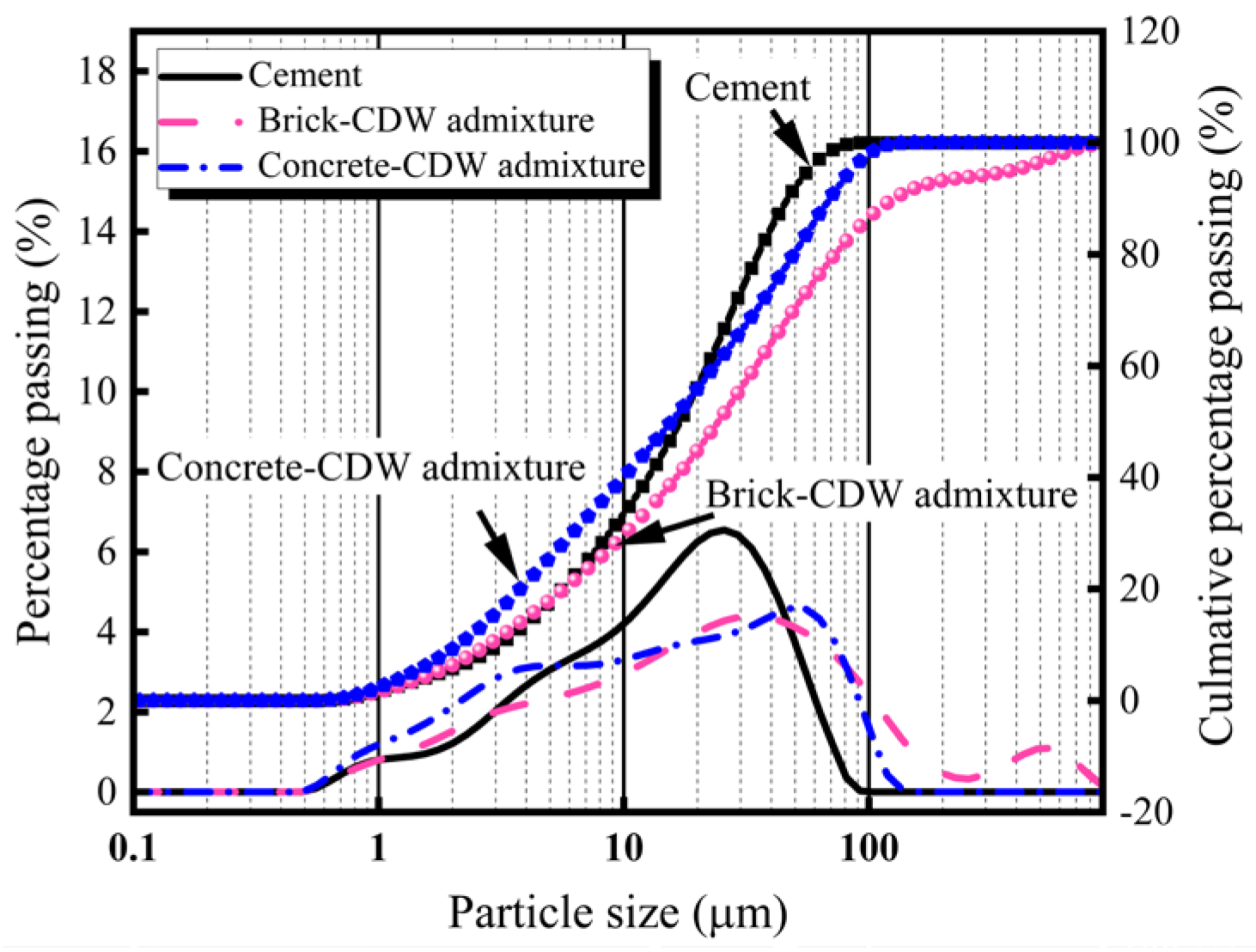
In this study, ordinary Portland cement (OPC, P·O 42.5R) from the Jiangyou Lafarge Cement Plant (Mianyang, China) was used as a binder. The particle size and chemical composition of OPC are shown in Figure 1 and Table 1, respectively. The recycled concrete was prepared by two types of CDW (waste concrete and waste brick), which were sourced from Ningbo city, and CDW was collected by Ningbo Construction Engineering Group Co., Ltd. (Ningbo, China). These materials were used to prepare concrete-based CDW (concrete-CDW) and brick-based CDW (brick-CDW) aggregates and mineral admixtures. Specifically, for these two kinds of CDW aggregates, these CDWs (particle size > 63.0 mm) were crushed using a jaw crusher (PC-200×300, Henan Zhaochen Machinery Equipment Co., Ltd., Zhengzhou, China). Then, these CDW aggregates were then sieved through the 4.75 mm square mesh sieve, particles ranging from 37.5 mm to 4.75 mm were used as coarse aggregates, while those between 4.75 mm and 0.15 mm were used as fine aggregates. The properties and particle size distribution of CDW aggregates are presented in Table 2, Table 3, Table 4 and Table 5. The CDW admixtures were prepared by dry-grinding CDW aggregates (particle size < 4.75 mm) for 30 min in a ball mill (SM500, Wuxi Jianyi Instrument Machinery Co., Ltd., Wuxi, China). The particle size distribution and chemical composition of the CDW admixtures are shown in Figure 1 and Table 1, respectively. The true density of concrete-CDW and brick-CDW admixtures were 2680 kg/m3 and 2670 kg/m3. A polycarboxylate superplasticizer (SP) with 18% solid content was sourced from the Henan Xinxiang Jiesheng Co., Ltd. (Xinxiang, China).
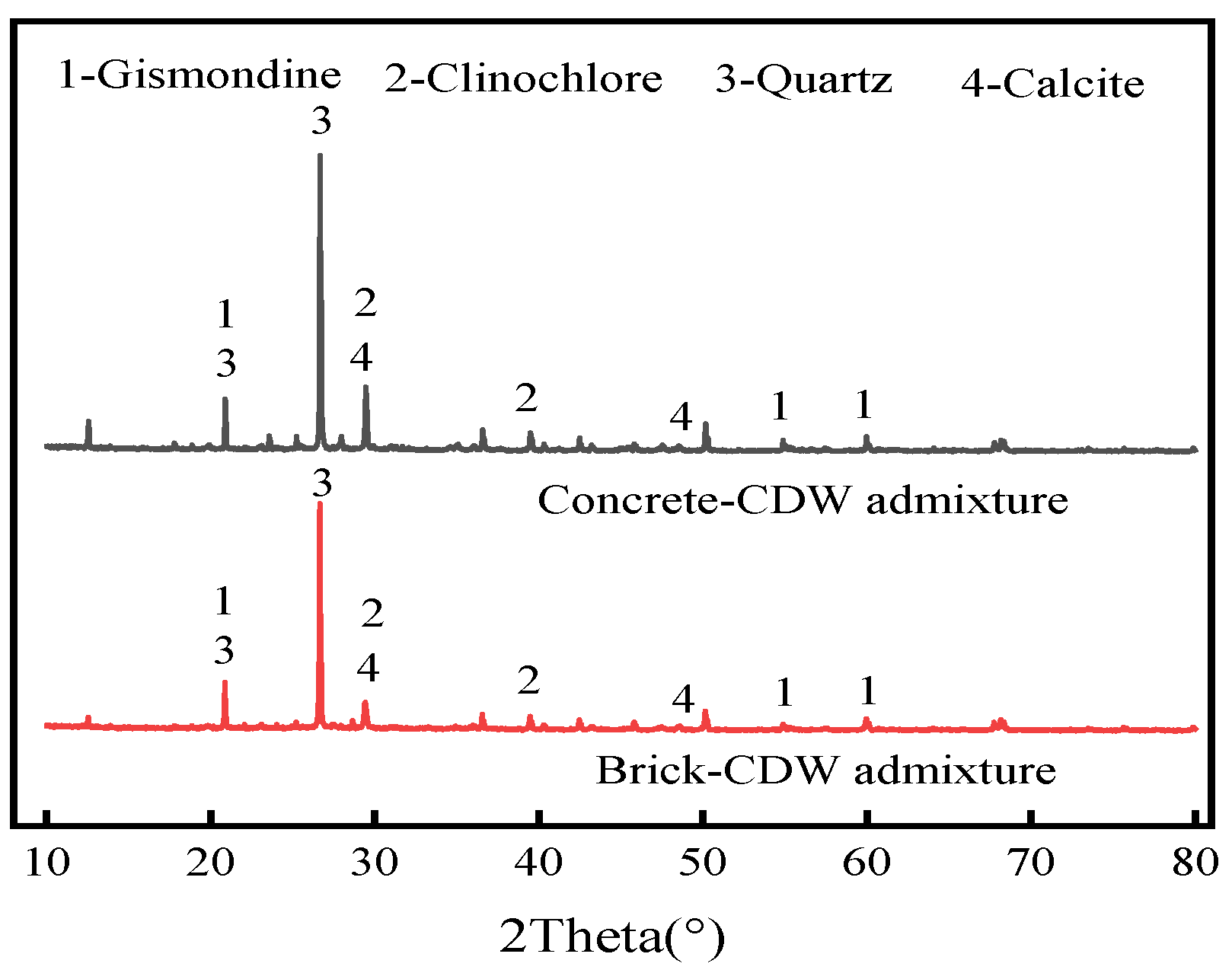
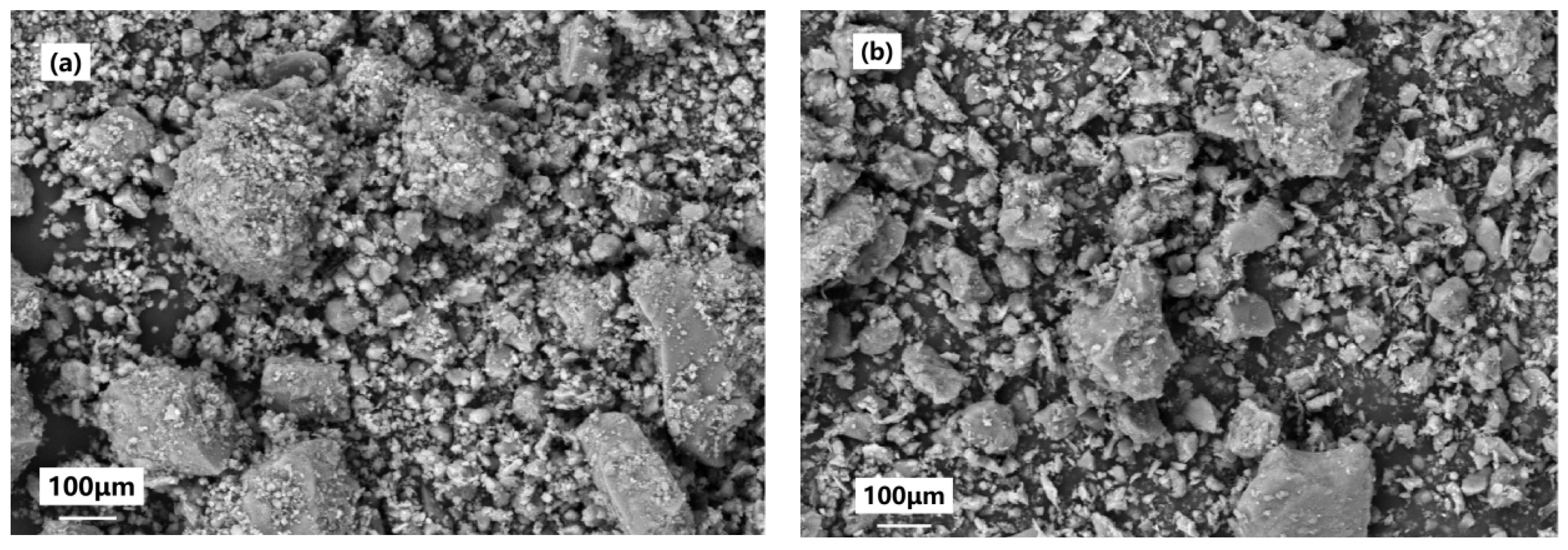
The mineralogical compositions of the brick-CDW admixture and concrete-CDW admixture are shown in Figure 2. The main components of concrete-CDW and brick-CDW admixtures are quartz, calcite, gismondine, and clinochlore. The micromorphology images of CDW admixtures are presented in Figure 3.

2.2. Mix Proportions and Experimental Procedure

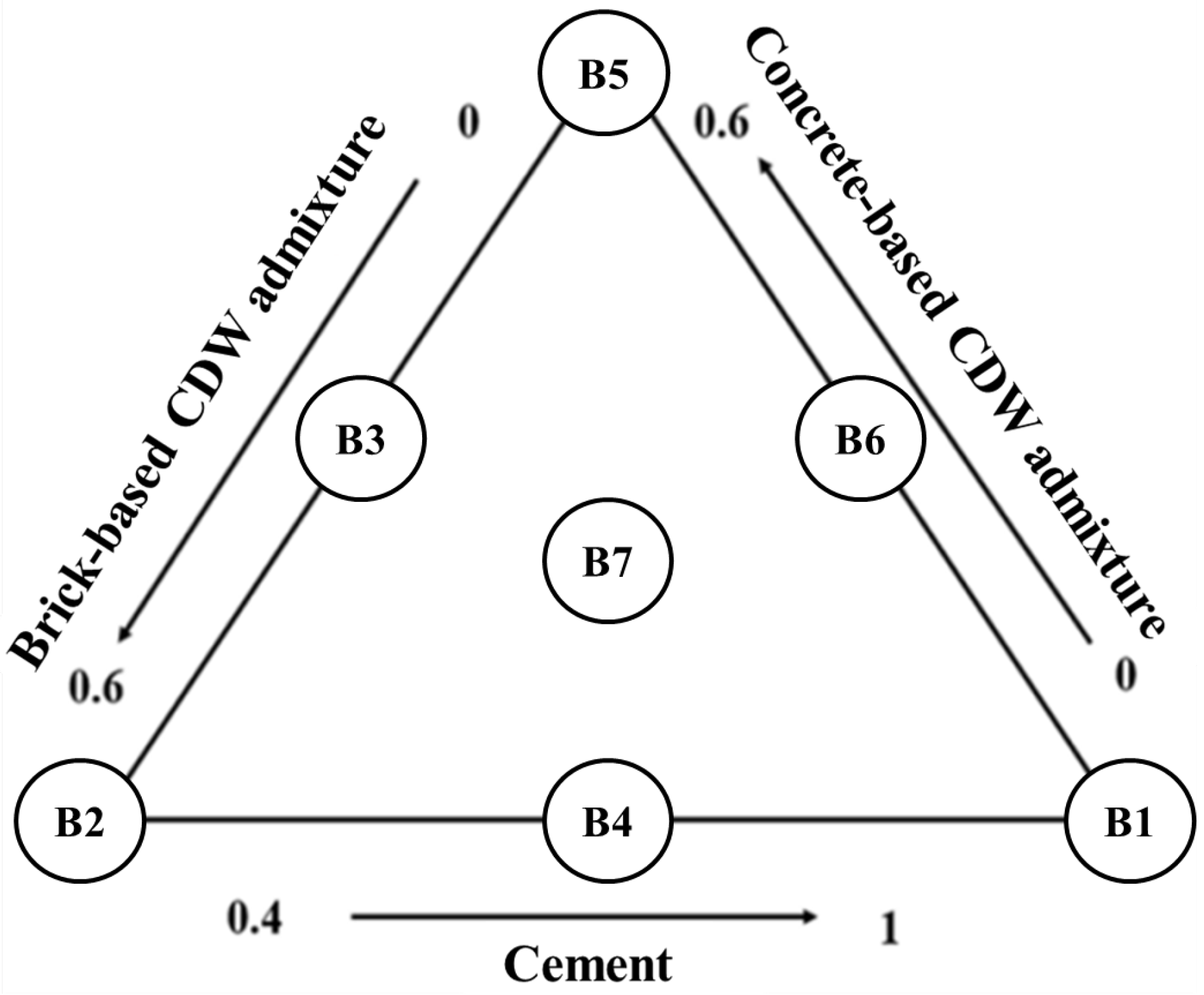
To investigate the effect of concrete-CDW and brick-CDW on recycled concrete, these two types of CDW aggregates and mineral admixtures were used to replace natural aggregates and cement. Under the condition of a constant water and superplasticizer content, in a series of utilizing CDW as aggregates, the relative proportion of concrete-CDW aggregates was 100%, used to replace both fine and coarse natural aggregates with brick-CDW/concrete-CDW ratios varying from 0/100% to 60%/40%, and pure OPC was used; in the series utilizing CDW as mineral admixtures, the brick-CDW/concrete-CDW ratio for aggregate was fixed at 20%/80%, as this proportion demonstrated the optimal workability and compressive strength. Based on this optimal aggregate proportion, a ternary binder system was formulated with the following constraints for cement (x1), brick-CDW admixture (x2), and concrete-CDW admixture (x3) (0.4 ≤ x1 ≤ 1, 0 ≤ x2 ≤ 0.6, 0 ≤ x3 ≤ 0.6, and x1 + x2 + x3 = 1). The composition design of the ternary system is shown in Figure 4. The mix proportions were determined using the simplex-centroid experimental design method [28]. Accordingly, seven distinct concrete mixtures incorporating brick-CDW and concrete-CDW were prepared, corresponding to the three vertices, three edge midpoints, and the centroid of the ternary diagram, as illustrated in Figure 4. The performances of these mixtures were measured many times. This data was subsequently fitted using Design-Expert software (v.13) to develop a predictive model for estimating properties at other mixture proportions (Equation (1)).
y = β 1 x 1 + β 2 x 2 + β 3 x 3 + β 12 x 1 x 2 + β 13 x 1 x 3 + β 23 x 2 x 3 + β 123 x 1 x 2 x 3
where β i represents the value of the seven groups.
The mixture proportions are presented in Table 6, with the reference (A1) representing a commonly used mixture with 100% concrete-CDW replacement in local concrete factories. This reference proportion was also pre-tested by adjusting workability with the target of obtaining a slump of 220 mm and a slump flow of 550 mm. For these proportions, all raw materials after homogeneous sampling were pre-mixed in a concrete mixer for 2 min. Then, water and admixtures were added and mixed for 3 min. After assessing the workability of the fresh mixture, the fresh mixture was cast into molds and cured for 24 h (at 20 ± 1 °C and 60% RH). After demolding, the samples were placed in a standard curing room (20 ± 1 °C, ≥95% RH) for curing.

2.3. Test Method

To evaluate the workability of the recycled concrete, the fresh concrete mixture was placed in a slump cone and tested three times to determine the slump and slump flow values by following the Chinese Standard GB/T 50080-2016 [29].
To obtain the compressive strength, three specimens (100 mm × 100 mm × 100 mm) were tested using a 3000 kN electro-hydraulic servo pressure testing machine (YL64.306, Shenzhen Labsans Machine Co., Ltd., Shenzhen, China) in accordance with the Chinese Standard GB/T 50081-2019 [30], with a loading rate of 0.4 MPa/s.
After 28-day curing, the binder paste was dried at 50 °C until the mass remained constant and then ground. This powder was used for thermogravimetric analysis (50–1000 °C, 20 °C/min, N2) using a simultaneous thermal analyzer (STA 449F5, NETZSCH Instrument Manufacturing GmbH, Selb, Germany).
The pore structure characteristics of the concrete matrix were analyzed using a fully automated pore tester (poreMaster 60, Anton Paar, Ashland, Virginia (VA), USA), with pressure ranging from 0.1 to 214 MPa. Relevant pore structure parameters were then obtained.
To examine the micromorphology and hydration products, broken specimens were observed using a scanning electron microscope and energy dispersive spectroscopy (SEM/EDS ULTRA55, Zeiss Instruments, Ostfildern, Germany) after gold coating.

3. Results

3.1. Series One: Use CDW as Aggregates

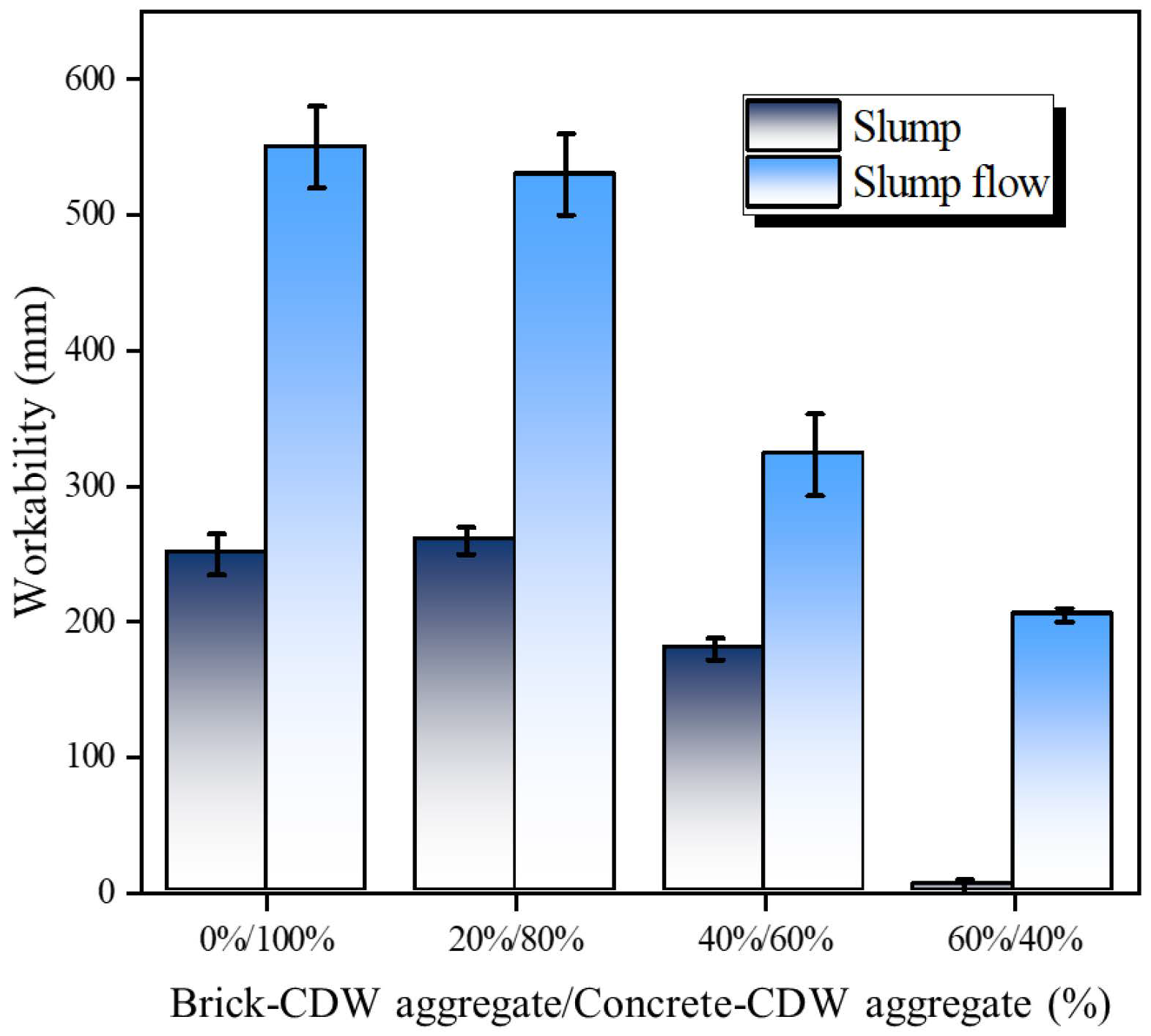
The slump and slump flow of the recycled concretes are shown in Figure 5. As the proportion of brick-CDW aggregates increased, both the slump and slump flow of the recycled concrete decreased. As the relative proportions of brick-CDW and concrete-CDW reached to 20% and 80%, respectively, the slump and slump flow of recycled concrete were 260 mm and 530 mm, respectively. Compared to recycled concrete with a ratio of 0%/100% (brick-CDW/concrete-CDW aggregates), the workability of concrete changed slightly. When the ratio of brick-CDW to concrete-CDW aggregates reached to 60%/40%, the slump and slump flow were 5 mm and 200 mm, respectively, and the slump and slump flow were reduced by 80% and 64%, respectively. This decrease can be attributed to the higher water absorption of the brick-CDW aggregates compared to the concrete-CDW aggregates. As the proportion of brick-CDW aggregates increased, the water demand of the mixture also increased, leading to a reduction in the slump and slump flow of the recycled concrete.
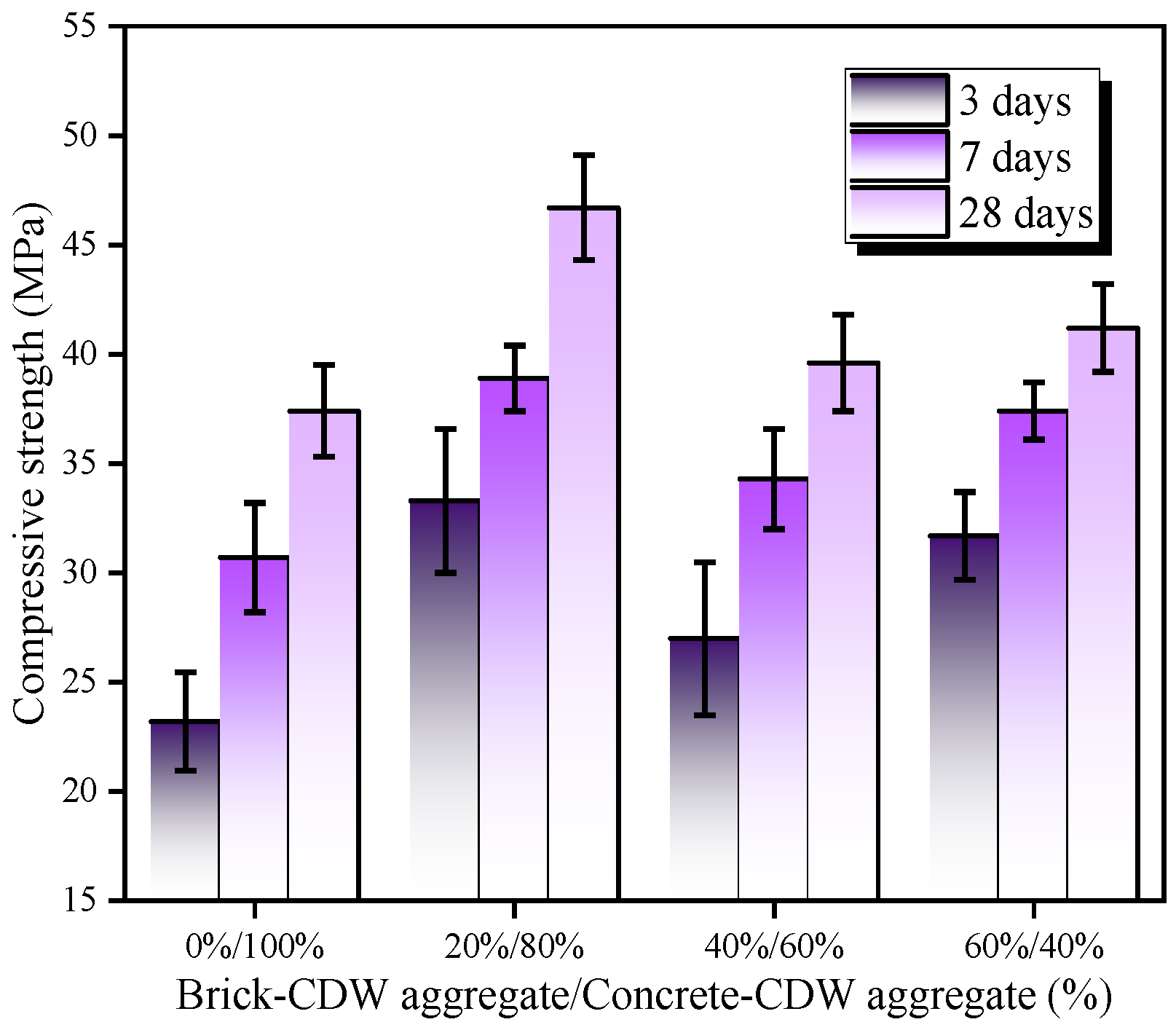
The compressive strength of the recycled concrete is shown in Figure 6. As the proportion of brick-CDW aggregates in the recycled concrete increased, the compressive strength firstly increased and then decreased. When the volume ratio of brick-CDW to concrete-CDW reached 20%/80%, the maximum compressive strengths were observed as 33.3 MPa, 38.9 MPa, and 46.7 MPa for 3 days, 7 days, and 28 days, respectively. Compared to the mixture with concrete-CDW aggregates, the compressive strengths at 3 days, 7 days, and 28 days increased by 42.4%, 26.7%, and 24.9%, respectively.
Since the water absorption of brick-CDW aggregates is higher than that of concrete-CDW aggregates (Table 2 and Table 3), the actual water-to-binder ratio of the paste decreased when the proportion of brick-CDW aggregates increased. As the recycled concrete hardened, the paste developed a more compact microstructure while reducing the pore content. The densified microstructure contributed to improving the mechanical properties of the concrete [31,32], which led to the increase in compressive strength. In addition, the enhancement of strength was also attributed to the chemical activity of the brick-CDW aggregates. The waste bricks, containing rich reactive aluminosilicate compounds, showed pozzolanic reactivity [33]. These components reacted with the Ca(OH)2 liberated from cement hydration in the slurry, generating secondary reaction products (C-S-(A)-H gel), which could contribute to compressive strength development. The help of the lower actual water-to-binder ratio and the chemical effect of the pozzolanic reaction synergistically led to the increase in the 3-day, 7-day, and 28-day compressive strength.
However, with a further increase in the proportion of brick-CDW aggregates, the effect of apparent and bulk density became more significant. The apparent and bulk density of the brick-CDW aggregates was lower than that of concrete-CDW aggregates (Table 2), indicating that the brick-based aggregates showed a lower strength when compared with concrete-based aggregates. As the content of brick-CDW aggregates further increased, the 3-day, 7-day, and 28-day compressive strengths of the recycled concrete gradually decreased.

3.2. Series Two: Use of CDW Powders as Mineral Admixtures

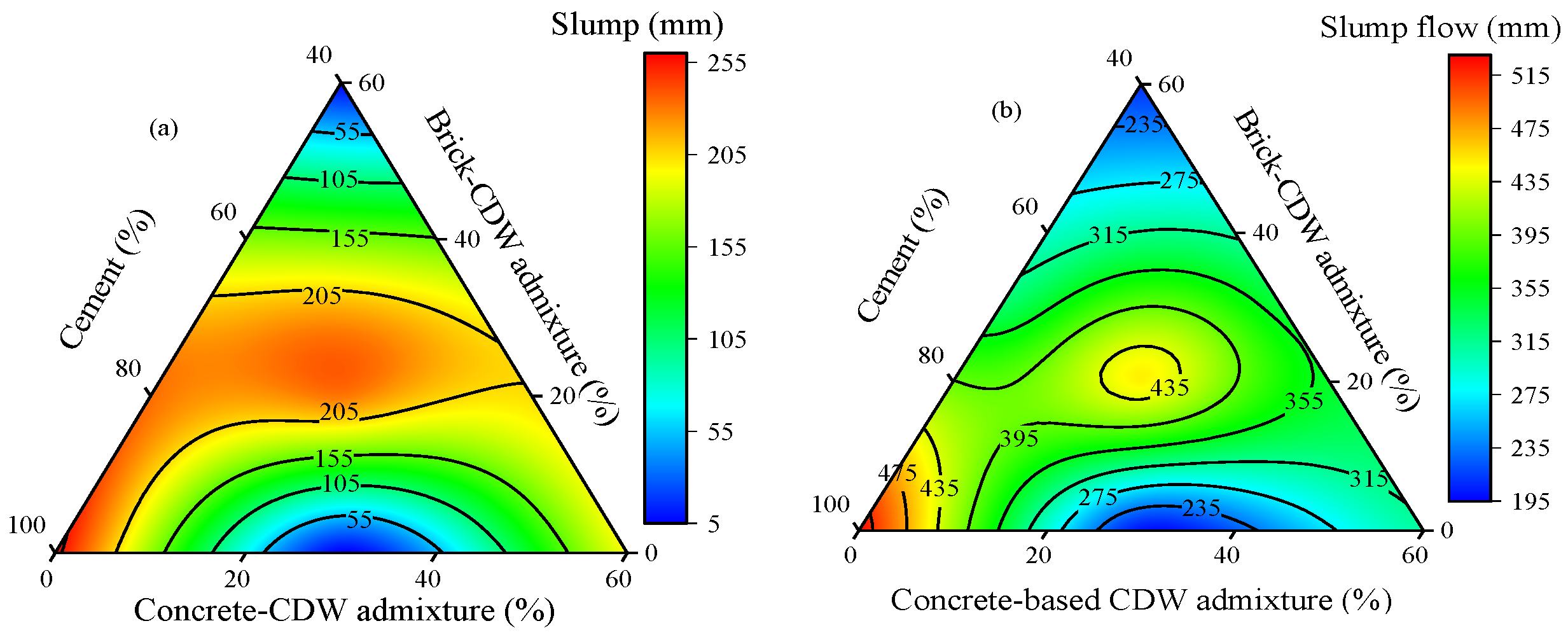
To investigate the impact of the matrix containing brick-CDW and concrete-CDW admixtures on the workability of recycled concrete, the effects of concrete-CDW admixture, brick-CDW admixture, and cement on slump and slump flow are shown in Figure 7a and Figure 7b, respectively. When the cement content was maintained at 40–70%, the dosage of brick-CDW admixture increased, and the concrete-CDW admixture decreased, while the slump and slump flow firstly increased and then decreased. For example, when the cement content was 70%, we increased the brick-CDW admixture from 0% to 40% and decreased the concrete-CDW admixture from 40% to 0%, and the slump increased from 55 mm to 230 mm and then decreased from 230 mm to 160 mm, while the slump flow increased from 240 mm to 455 mm and then reduced from 455 mm to 295 mm. Specifically, the dosage of brick-CDW and concrete-CDW admixture reached to 20%, respectively, the content of cement reached to 60%, and the highest slump and slump flow were 230 mm and 455 mm, respectively. This can be attributed to the particle packing effect of brick-CDW and concrete-CDW admixtures with the help of superplasticizer, which filled the spaces among particles, thereby reducing the water demand of the binders; consequently, the workability of recycled concrete improved under a constant water content. When the cement content was maintained at 70–100%, increasing the brick-CDW admixture and decreasing the concrete-CDW admixture led to an increase in slump and slump flow. For instance, when the cement content was 80%, the brick-CDW admixture increased from 0% to 20% and the concrete-CDW admixture decreased from 20% to 0%, the slump increased from 80 mm to 225 mm, and the slump flow increased from 280 mm to 395 mm. Specifically, when the content of cement was maintained at 70–80%, with the concrete-CDW admixture at 0–5% and brick-CDW admixture at 20–25%, the slump changed slightly.
The particle size distribution of the brick-CDW and concrete-CDW admixtures, shown in Figure 1, mostly ranged from 1 to 100 μm and was broader than that of cement. Some voids among cement particles were filled with particles from CDW admixtures, reducing the water demand for cementitious materials. Thus, when the cement content is maintained at 70–80%, with the concrete-CDW admixture of 0–5% and the brick-CDW admixture of 20–25%, the slump and slump flow might show positive change. However, the micromorphology of these admixtures, shown in Figure 3a,b, revealed that they contain some pores, and compared with cement, the water absorption rate of these two admixtures was higher. As the dosage of both CDW admixtures increased, the water absorption rate of the cementitious material became higher. Therefore, when the cement content was maintained at 40–70%, and the dosage of the two admixtures increased from 30% to 60%, the slump and slump flow of the recycled concrete gradually decreased.
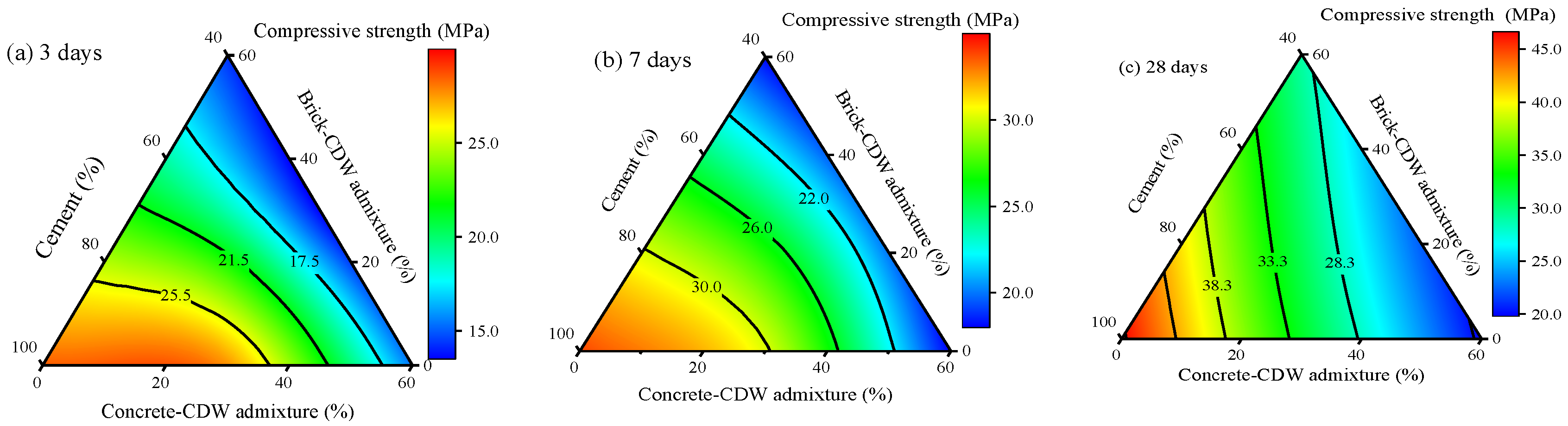
The 3-day, 7-day, and 28-day compressive strengths of the recycled concrete containing brick-CDW and concrete-CDW admixtures are presented in Figure 8a, Figure 8b, and Figure 8c, respectively. As the dosage of brick-CDW and concrete-CDW admixtures increased, the compressive strength at all ages (3-day, 7-day, and 28-day) decreased. For example, when the dosage of concrete-CDW admixture increased from 0% to 30%, the dosage of brick-CDW admixture increased from 0% to 30%, and the cement content decreased from 100% to 40%, while the 3-day, 7-day, and 28-day compressive strengths decreased by 47.5%, 40.5%, and 49.2%, respectively. Notably, the dosage of CDW admixtures reached to 60%, and the relative proportion of brick-CDW admixture (relative to concrete-CDW) increased from 0% to 60%, while the 28-day compressive strength increased from 19.8 MPa to 29.0 MPa, by 46.5%; when the same dosage of CDW admixtures was incorporated into the paste, the relative proportion of brick-CDW admixture increased, and the 28-day compressive strength of the recycled concrete was higher, so brick-CDW demonstrated greater suitability for application as a mineral admixture in recycled concrete.

3.3. Series Three: Microstructure of Recycled Concrete

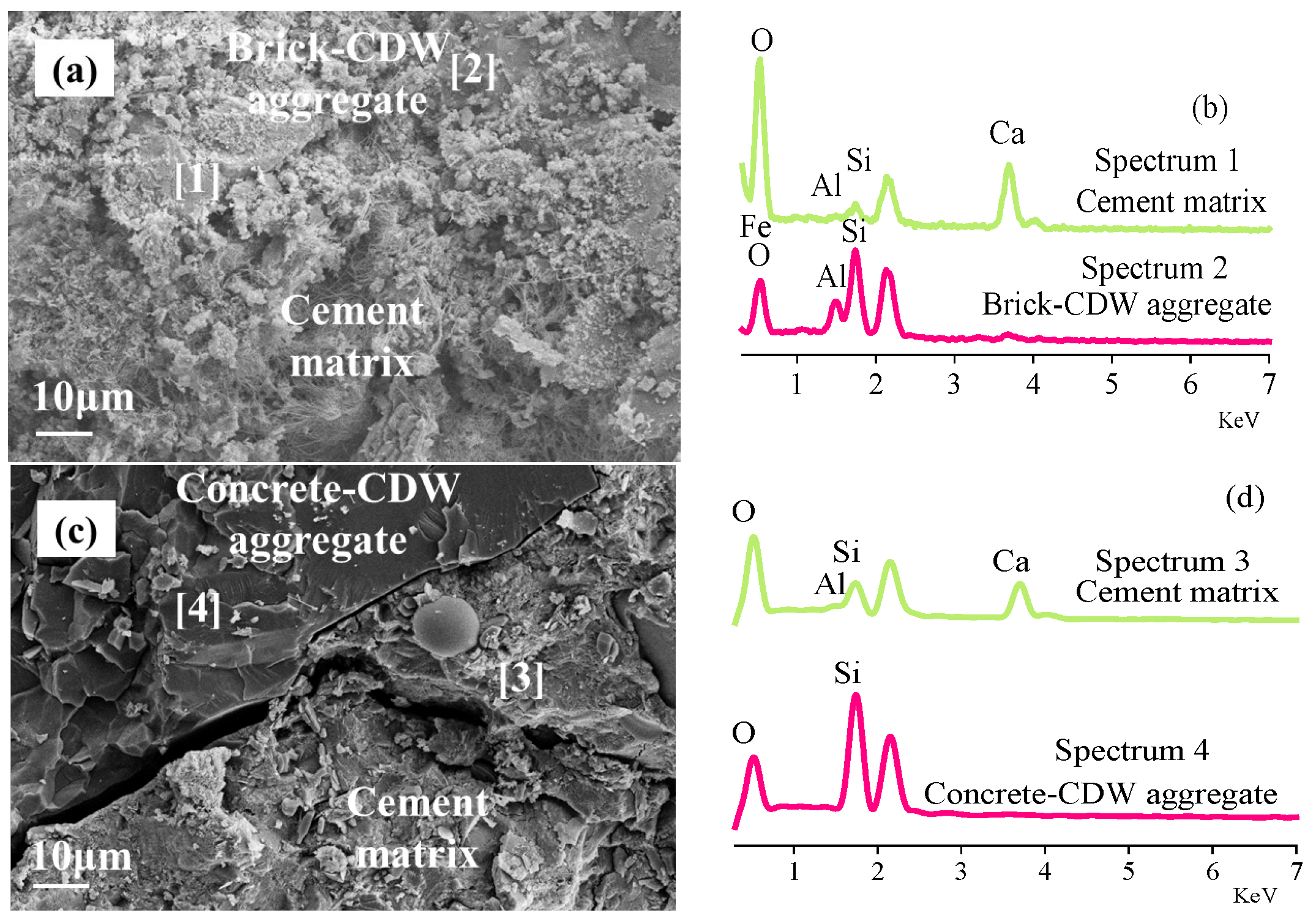
The microstructure between brick-CDW/concrete-CDW aggregate and the matrix is shown in Figure 9. When the brick-CDW aggregates were tightly bonded to the matrix, a significant amount of fibrous and flocculent hydration products appeared in the paste. These elemental compositions of the matrix are shown in Figure 9b and Figure 9d, respectively, which revealed that the matrix contained numerous hydration products. The interface between concrete-CDW aggregate and the paste exhibited a gap of approximately 5 μm, indicating a weaker bond between concrete-CDW aggregate and the paste. The water absorption rates of the brick-CDW fine and coarse aggregates were 34.0% and 35.0% (Table 2 and Table 3), respectively. Compared with the concrete-CDW aggregate, the water absorption rate of the brick-CDW aggregate was higher. Therefore, when the brick-CDW aggregate-to-concrete-CDW aggregate volume ratio reached 20%/80%, the porous brick aggregates absorbed the surrounding free water, effectively reducing the actual water-to-binder ratio. Concurrently, the abundant fine particles in the brick-CDW (smaller than 0.15 mm) generated a pozzolanic reaction. The amorphous siliceous and aluminous components from these fines reacted with calcium hydroxide (Ca(OH)2) from cement hydration, generating additional products (such as calcium silicate hydrate (C-S-H) gels). These reaction products filled the micropores and created a robust bond between the brick-CDW aggregate and the cement paste, thereby densifying the microstructure of the interfacial transition zone [34]. Consequently, these led to an increase in the 28-day compressive strength of the recycled concrete.
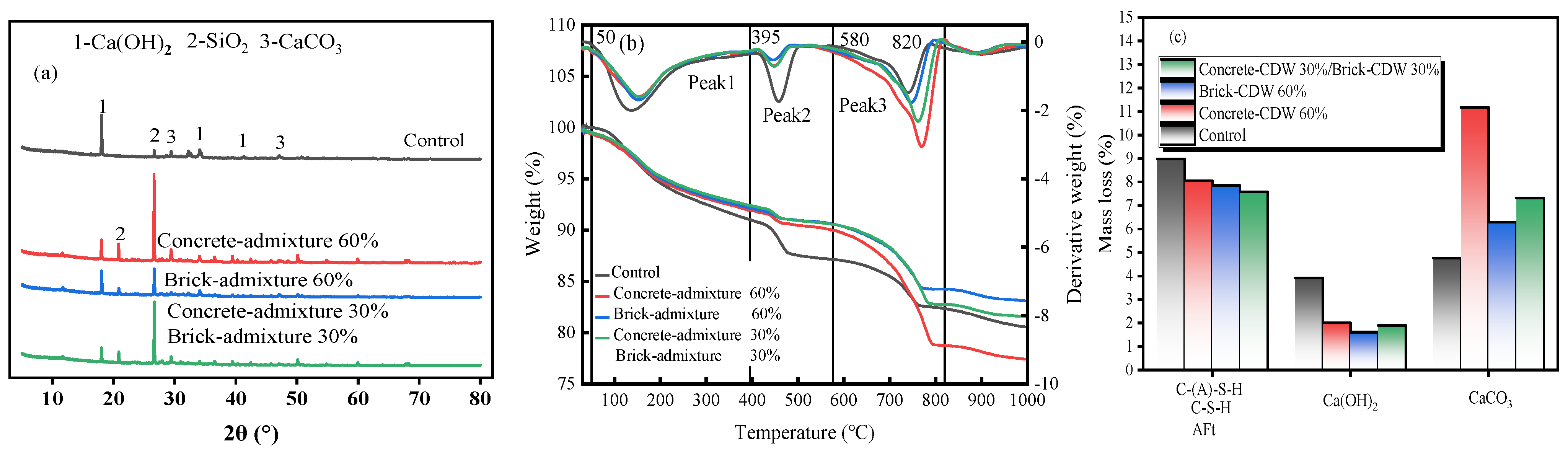
The phase compositions of the pastes are shown in Figure 10a. When 60% of concrete-CDW admixture, 60% of brick-CDW admixture, and 30% of concrete-CDW and brick-CDW admixture were incorporated into the system, the diffraction peak of quartz and calcite enhanced significantly. As shown in Figure 2, brick-CDW and concrete-CDW admixture contained quartz and calcite, and the cement was replaced by brick-CDW and concrete-CDW admixture, so their crystallinity enhanced in the paste. The peak of Ca(OH)2 decreased for paste containing CDW, and one reason of this result was that the cement was replaced by concrete-CDW and brick-CDW admixture, while the content of hydration products could reduce, which was unfavorable for the generation and crystallization of Ca(OH)2, while the Ca(OH)2 peak of the paste containing two types of CDW admixtures reduced. The other reason may be that CDW admixture contained an amorphous phase, which could react with Ca(OH)2 to reduce the crystallinity of Ca(OH)2 [18]. Furthermore, the main contents of concrete-CDW were natural aggregate and attached mortar, while the main components of brick-CDW were the bricks; the quartz and calcite components of concrete-CDW admixture could show better crystallization than those of the brick-CDW admixture, so the quartz and calcite peak of the paste containing 60% of concrete-CDW admixture was higher than that of paste containing 60% of brick-CDW admixture, and the quartz and calcite peak of the paste containing 30% of concrete-CDW admixture and 30% of brick-CDW admixture was higher than that of the paste containing 60% of brick-CDW admixture, but was lower than that of the paste containing 60% of concrete-CDW admixture. Therefore, when concrete-CDW and brick-CDW admixtures were incorporated into the paste, the hydration reaction of the paste weakened, the hydration product content decreased, the bonding capacity of the paste reduced, the unhydrated residual water increased, and the porosity of the paste increased after the residual water loss. These last two outcomes resulted in the decrease in 28-day compressive strength of concrete. When the same dosages of CDW admixtures were incorporated into the paste and the relative proportion of concrete-CDW and brick-CDW admixture changed, the Ca(OH)2 crystallinity of the paste containing 60% of concrete-CDW admixture, 60% of brick-CDW admixture, and 30% of concrete-CDW and brick-CDW admixture changed slightly.
To further quantitatively analyze the content of hydration products of the paste containing brick-CDW and concrete-CDW admixture, the thermogravimetric curve and quantitative result were obtained, as shown in Figure 10. When the temperature ranged from 50 °C to 395 °C, the main peaks of the curves corresponded to ettringite (AFt), hydrated calcium silicate (C-S-H), or hydrated calcium aluminate silicate (C-(A)-S-H), and the dehydration percentages were as follows: control (8.98%) > concrete-CDW admixture 60% (8.05%) > brick-CDW admixture 60% (7.85%) > brick-CDW admixture 30% and concrete-CDW admixture 30% (7.58%). When 60% of the cement was substituted with concrete-CDW admixture, brick-CDW admixture, or both brick-CDW and concrete-CDW admixture, respectively, the degree of hydration reaction reduced, so the AFt, C-(A)-S-H, and C-S-H contents of the matrix containing these two types of CDW admixtures decreased. Additionally, concrete-CDW admixture contained C-S-H and C-(A)-S-H particles, which provided nucleation sites, contributing to the hydration reaction of the paste and promoting the growth of hydration products [35]. Consequently, when the same dosages of CDW admixtures were incorporated into the paste, the relative proportion of concrete-CDW (relative to brick-CDW) increased, and the hydration product content of the matrix containing 60% of concrete-CDW admixture was higher than that of the paste with 60% of brick-CDW admixture. Meanwhile, the hydration products of the matrix containing 30% of brick-CDW admixture and 30% of concrete-CDW admixture had undergone severe carbonization, so the hydration products of the matrix containing 30% of brick-CDW admixture and 30% of concrete-CDW admixture were lowest.
When the temperature was at 395–580 °C, the main peaks of the curves mainly represented the decomposition of Ca(OH)2, with the following percentages: control (3.91%) > concrete-CDW admixture 60% (2.01%) > concrete-CDW admixture 30% and brick-CDW admixture 30% (1.90%) > brick-CDW admixture 60% (1.61%). Similarly, when these CDW admixtures were incorporated into the paste, the degree of hydration reduced, and the Ca(OH)2 content of the paste containing two types of CDW admixture also decreased. Notably, when the same dosages of CDW admixtures were incorporated into the paste, and the relative proportion of concrete-CDW (relative to brick-CDW) increased, the hydration degree of the paste containing concrete-CDW admixture increased, so the Ca(OH)2 content of the paste containing 60% of concrete-CDW admixture was higher than that of the paste containing 60% of brick-CDW admixture, and the Ca(OH)2 content of the paste containing 30% of concrete-CDW admixture and 30% of brick-CDW admixture was lower than that of the paste containing 60% of concrete-CDW admixture, but higher than that of the paste containing 60% of brick-CDW admixture.
From 580 °C to 820 °C, the main decomposition was calcite, with the following percentages: control (4.76%) < brick-CDW admixture 60% (6.29%) < concrete-CDW admixture 30% and brick-CDW admixture 30% (7.32%) < concrete-CDW admixture 60% (11.18%). Because brick-CDW and concrete-CDW admixture contained calcite, when 60% of concrete-CDW admixture, 60% of brick-CDW admixture, and 30% of brick-CDW and concrete-CDW admixture were incorporated into the matrix, the content of calcite increased. Moreover, the major content of concrete-CDW was a natural aggregate and attached mortar, while the main component of brick-CDW was the sintered bricks, and the calcite components of concrete-CDW admixture could be greater than those of brick-CDW admixture [36]. Consequently, under the same dosage of CDW admixtures, when the relative proportion of concrete-CDW (relative to brick-CDW) increased, the content of CaCO3 increased in the paste. The calcite content of the matrix containing 60% of concrete-CDW admixture was higher than that of paste with 60% of brick-CDW admixture, and the calcite content of the paste containing 30% of concrete-CDW admixture and 30% of brick-CDW admixture was lower than that of the paste containing 60% of concrete-CDW admixture, but higher than that of the paste containing 60% of brick-CDW admixture.
The decreased content of hydration products (such as C-S-H gel and AFt) coupled with an increased calcite content, leading to a decrease in the 28-day compressive strength of recycled concrete containing CDW admixtures. Moreover, the same dosages of CDW admixtures were incorporated into the paste, and the relative proportion of concrete-CDW (relative to brick-CDW) increased, benefiting the formation of hydration products. However, as demonstrated in Section 3.2, when the same dosages of CDW admixtures were incorporated into the paste, the relative proportion of brick-CDW admixture (relative to concrete-CDW admixture) increased, and the 28-day compressive strength of the recycled concrete increased. To further identify the reasons for the change in compressive strength of recycled concrete containing CDW, the pore structure was characterized by mercury intrusion porosimetry (MIP).
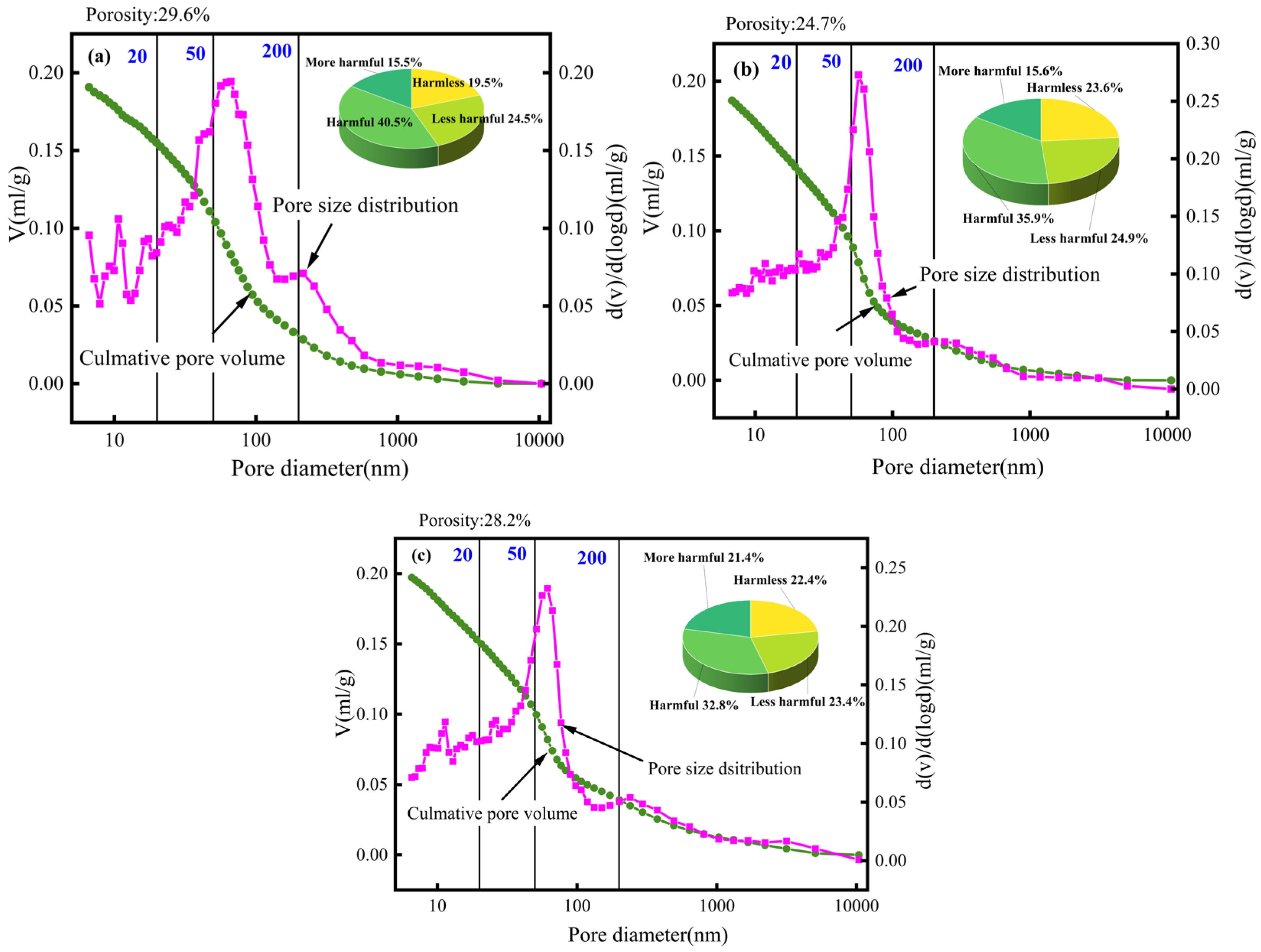
The pore structure parameters of the paste containing 60% concrete-CDW admixture, 60% brick-CDW admixture, and 30% of brick-CDW and concrete-CDW admixture are shown in Figure 11. The porosities of the paste containing 60% concrete-CDW admixture, 60% brick-CDW admixture, and 30% of brick-CDW and concrete-CDW admixture were 29.6%, 24.7%, and 28.2%, respectively. Compared to the paste containing 60% concrete-CDW admixture, the porosity of the paste containing 60% brick-CDW admixture and that with 30% of concrete-CDW and brick-CDW admixture decreased by 4.9% and 1.4%, respectively. The pore size distribution shifted towards the direction of less harmful and harmless pores, and the less harmful and harmless pores increased by 4.4% and 2.0%, respectively. As shown in Figure 1, compared with the particle size distribution of concrete-CDW admixture, brick-CDW admixture was wider, and the particles of brick-CDW admixture filled the voids of cement particles, improving the compactness of the paste. Consequently, when the same dosages of CDW admixtures were incorporated into the paste, the relative proportion of brick-CDW (relative to concrete-CDW) increased, and the pore structure of the paste improved, so the porosity of the matrix containing 60% of concrete-CDW admixture was higher than that of paste with 60% of brick-CDW admixture, while the porosity of the paste containing 30% of concrete-CDW admixture and 30% of brick-CDW admixture was lower than that of the paste containing 60% of concrete-CDW admixture, but higher than that of the paste containing 60% of brick-CDW admixture. Therefore, when the same dosages of CDW admixtures were incorporated into the paste, the 28-day compressive strength of the recycled concrete containing brick-CDW admixture increased, and concrete containing another CDW admixture decreased.

3.4. Series Four: Cost and CO2 Emission Analysis

To validate the robustness and credibility of the cost and CO2 emission assessments for recycled concrete incorporating CDW, costs and CO2 emission factors of the raw material from four major Chinese regions were employed in the calculations. The results for these input parameters are presented in Table 7 and Table 8.
The cost of the prepared recycled concrete with two types of CDW admixtures and aggregates was calculated using Equation (2):
Cos t = ( M i × C i )
where C i and M i represent the price (CNY/t) and the proportion (t/m3) of each raw material used for preparing the recycled concrete, respectively.
Based on the Chinese standard [47], the CO2 emissions for the prepared recycled concrete with CDW admixtures and aggregates was calculated using Equation (3):
C O 2   e m i s s i o n   =   ( M i × F i )
where F i and M i represent the CO2 emission content for each material (kg CO2-eq/t) and each proportion of raw materials in recycled concrete (t/m3), respectively.
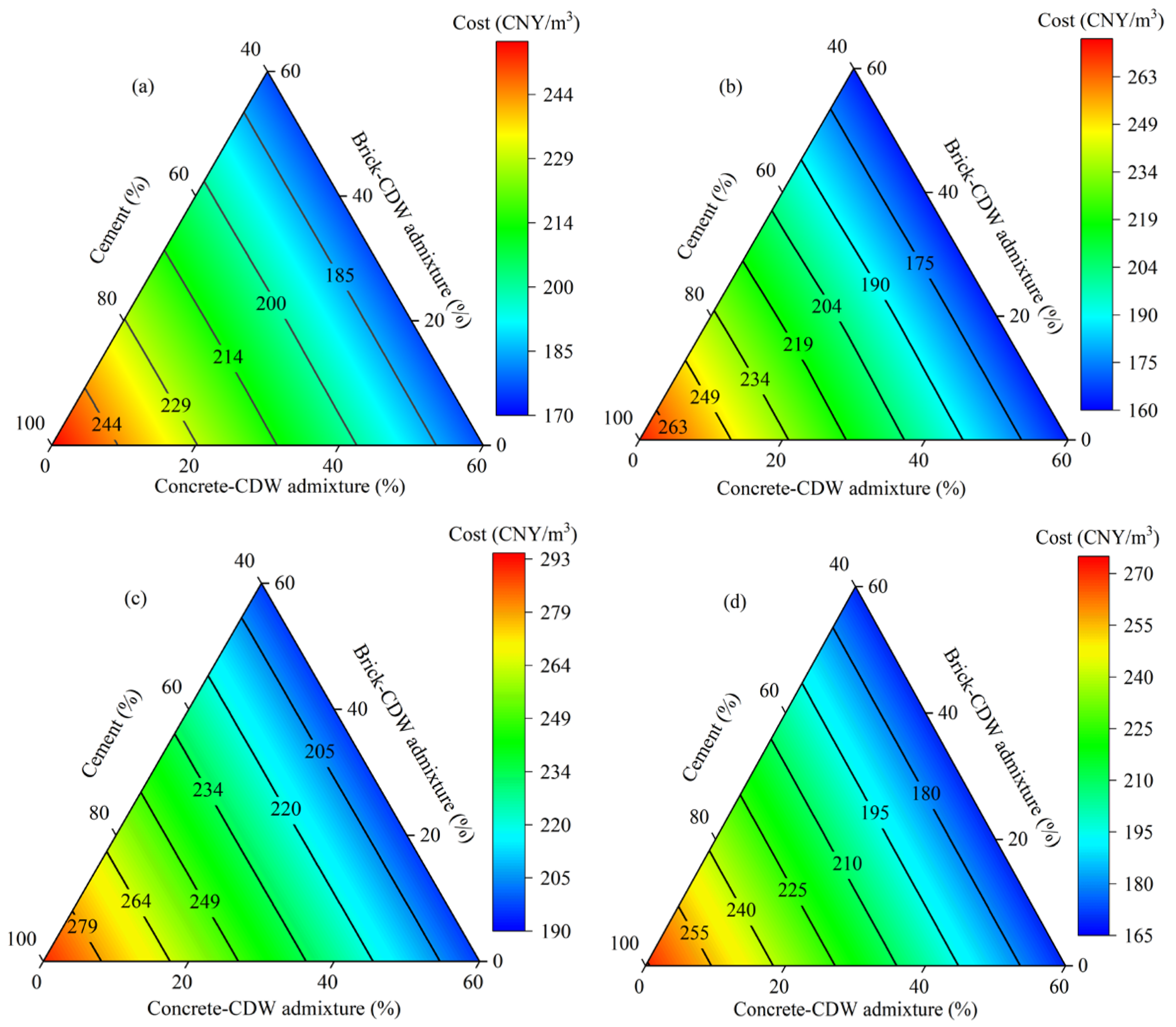
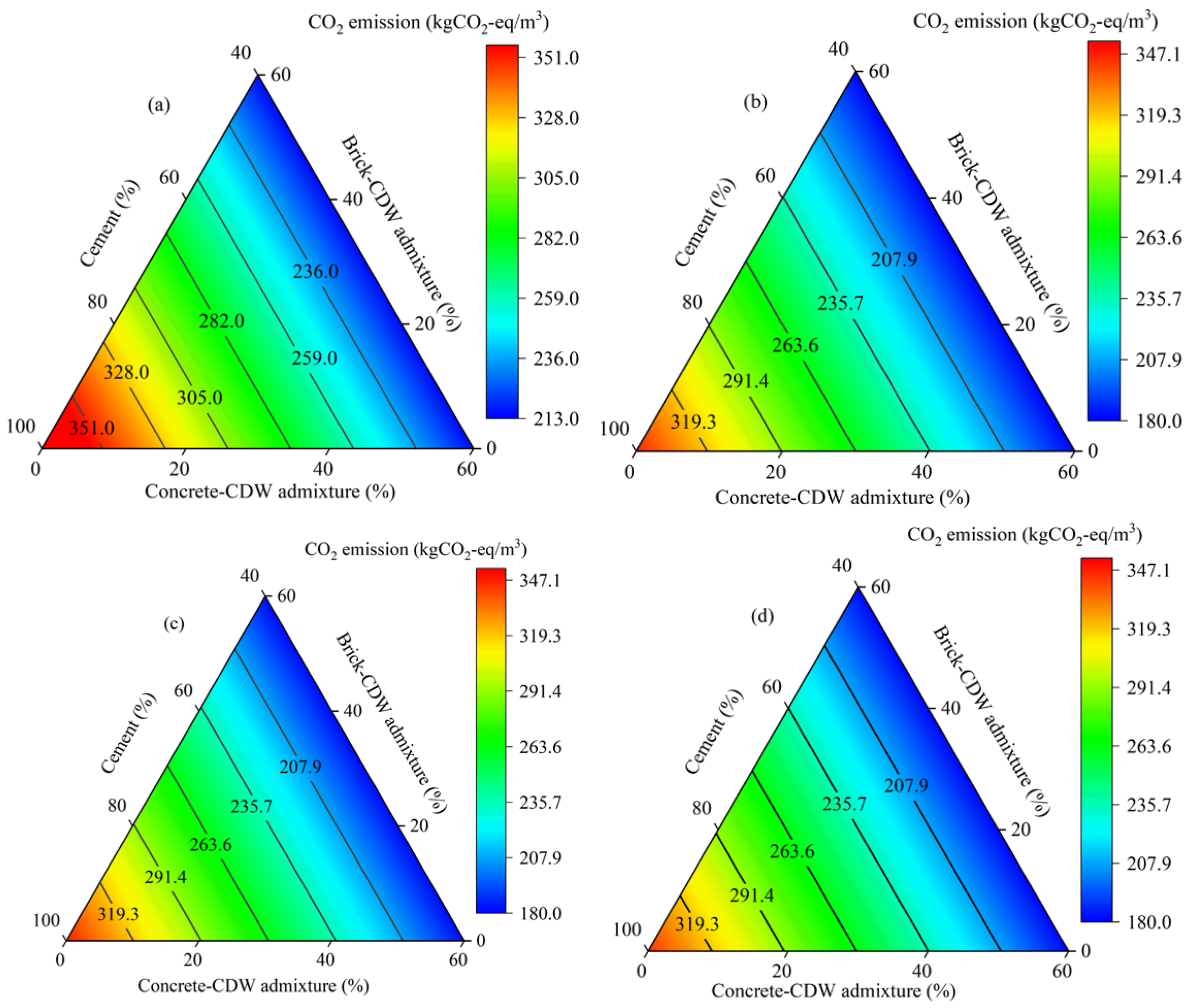
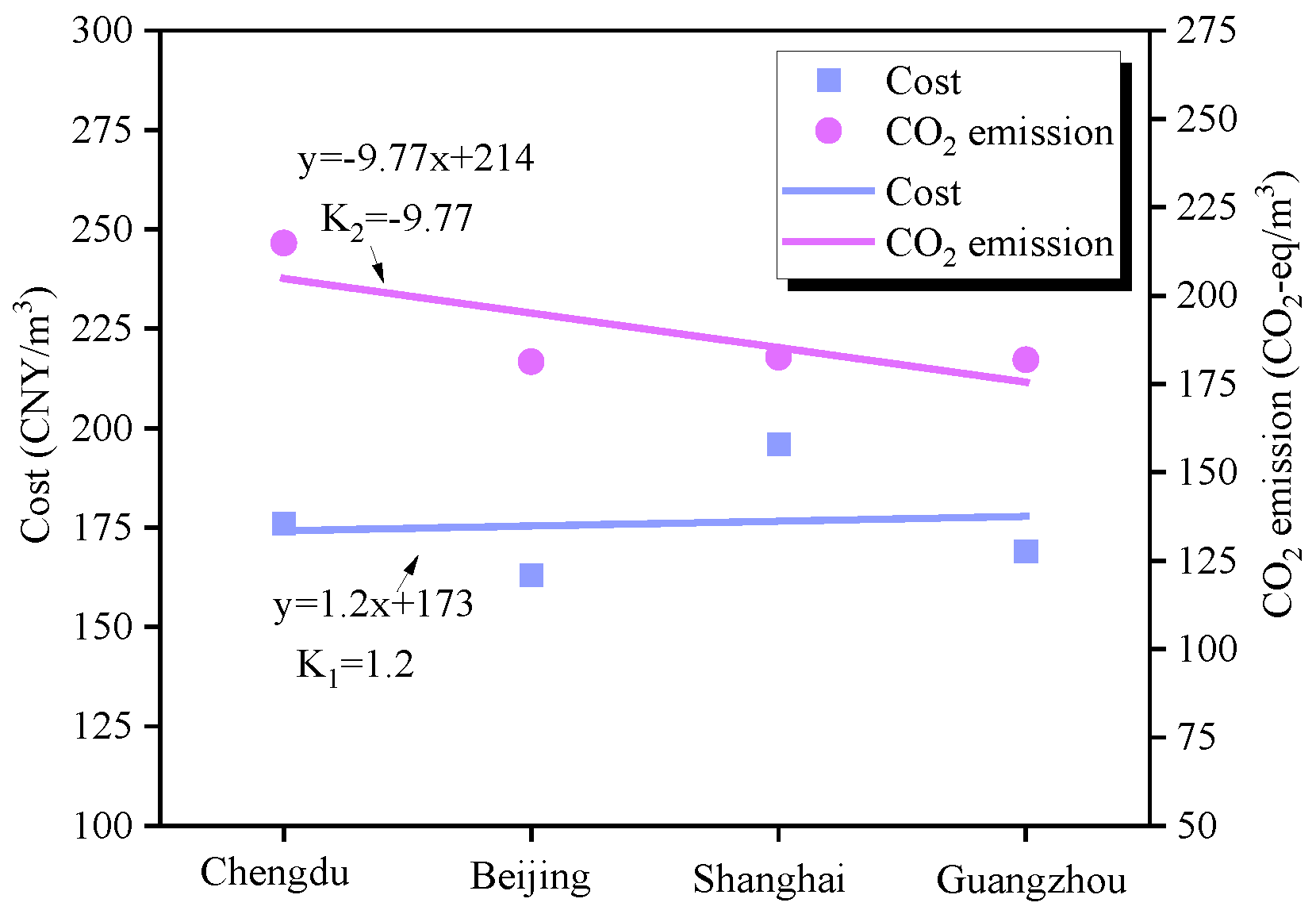
As shown in Figure 12 and Figure 13, when the dosage of brick-CDW and concrete-CDW admixture increased, the cost and CO2 emissions decreased in four regions significantly. As the dosage of brick-CDW and concrete-CDW admixture reached to 60%, respectively, the cost and CO2 emissions of recycled concrete were lowest, the result of recycled concrete containing brick-CDW and concrete-CDW admixture in four regions, as shown in Figure 14. As the dosage of brick-CDW and concrete-CDW admixture reached 60%, respectively, the lowest cost of the recycled concrete reached 175 CNY/m3 in Chengdu, 162 CNY/m3 in Beijing, 196 CNY/m3 in Shanghai, and 169 CNY/m3 in Guangzhou, and compared to the concrete (no CDW admixture), the cost decreased by 32.3% in Chengdu, 39.8% in Beijing, 32.6% in Shanghai, and 37.6% in Guangzhou; as the dosage of brick-CDW and concrete-CDW admixture reached to 60%, the lowest CO2 emissions of the recycled concrete reached 210.9 kgCO2-eq/m3 in Chengdu, 181.3 kgCO2-eq/m3 in Beijing, 182.6 kgCO2-eq/m3 in Shanghai, and 181.9 kgCO2-eq/m3 in Guangzhou, and compared to the concrete (no CDW admixture), the CO2 emissions decreased by 41.5% in Chengdu, 47.6% in Beijing, 47.4% in Shanghai, and 47.1% in Guangzhou. The sensitivity of the lowest cost and CO2 emissions was analyzed in these four regions, as shown in Figure 14; the value of K 1 was close to 1, yielding the concrete cost variation rate of 1.0 CNY/m3 across different regions, and the regional differences had a negligible impact on the cost of the recycled concrete; the value of K 2 was approximately 10, resulting in a carbon emission variation rate of 10 kgCO2-eq/m3. This result implied the regional influence on the carbon footprint of concrete, primarily attributable to differences in the energy consumption and transportation involved in CDW management, which led to variations in CO2 emissions of the recycled concrete. Furthermore, the sensitivity analysis of recycled concrete containing CDW admixture regarding the benefit of CDW utilization remained widely applicable.

4. Conclusions

Concrete-CDW and brick-CDW were successfully used as aggregates with 100% replacement of natural aggregates and mineral admixtures with up to 60% replacement of OPC to prepare recycled concrete, and the effects of using these CDWs on workability, hardened performance, microstructure, cost, and CO2 emissions of the concretes were investigated. The main conclusions are as follows:
(1)
The increase in portion of brick-CDW aggregates weakened the workability of the recycled concrete.
(2)
When the volume ratio of brick-CDW aggregate to concrete-CDW aggregate was 20%/80%, the optimal strength was obtained, and the 28-day compressive strength increased by 24.9%.
(3)
With the dosage of both types of CDW admixtures maintained at 0–20%, respectively, the slump and slump flow changed slightly.
(4)
The 28-day compressive strength increased with an increase in relative proportion of brick-CDW admixture.
(5)
The increase in the 28-day compressive strength can be attributed to the improved microstructure of the interfacial transition zone between brick-CDW aggregate and paste, as well as the refined pore structure caused by the brick-CDW admixture.
(6)
After concrete-CDW and brick-CDW admixture were incorporated into the recycled concrete, the cost and CO2 emissions could decrease by 40.1% and 47.6%, respectively.
When CDWs were employed as aggregates, if the volume ratio of brick-CDW content exceeded 20%, the workability and compressive strength of recycled concrete declined. The 20%/80% volume ratio of brick-CDW aggregate to concrete-CDW aggregate yielded the highest compressive strength. When CDW was used as an admixture, the workability of recycled concrete reduced at high incorporation levels. As the content of CDW admixture increased, the 28-day compressive strength generally decreased. Compared to concrete-CDW, brick-CDW admixture contributed to a high compressive strength.
Further pilot tests with our industry partners to verify the optimal concrete mix proportions for repeatability and reproducibility will be carried out in our following study, with long-term performance investigations to promote this green concrete in sustainable construction.

Author Contributions

N.M.: data curation, writing—original draft. J.J.: conceptualization, methodology, supervision, writing—review and editing. J.Z.: supervision. F.Y.: supervision, validation. X.Y.: supervision. P.G.: supervision. L.Z.: supervision. Z.L.: supervision. All authors have read and agreed to the published version of the manuscript.

Funding

This research was funded by the Sichuan Province Technology Program (2023YFG0379), Guidance Fund of the Central Government for Local Technological Development (24ZCYP0040), and Natural Science Foundation of Southwest University of Science and Technology (20zx7102).

Institutional Review Board Statement

Not applicable.

Informed Consent Statement

Not applicable.

Data Availability Statement

Data will be made available on request.

Conflicts of Interest

Authors Junfeng Zheng, Fengyuan Yang, and Xiaoming Ying were employed by Sichuan Shudao Construction Science and Technology Co., Ltd. The remaining authors declare that this research was conducted in the absence of any commercial or financial relationships that could be construed as potential conflicts of interest.

Abbreviations

The following abbreviations are used in this manuscript:
CDWConstruction Demolition Waste
Concrete-CDWConcrete-based Construction Demolition Waste
Brick-CDWBrick-based Construction Demolition Waste

References

  1. Ozcelikci, E.; Hu, M.; van der Meide, M.; Sahmaran, M. Life cycle assessment of SCM substitution in various CDW-based geopolymer concretes and sensitivity analyses on allocation methods. Waste Manag. 2025, 205, 115034. [Google Scholar] [CrossRef]
  2. Wu, H.; Hu, R.; Yang, D.; Ma, Z. Micro-macro characterizations of mortar containing construction waste fines as replacement of cement and sand: A comparative study. Constr. Build. Mater. 2023, 383, 131328. [Google Scholar] [CrossRef]
  3. Sabrin, R.; Shahjalal, M.; Bachu, H.A.E.; Habib, M.M.L.; Jerin, T.; Billah, A.M. Recycling of different industrial wastes as supplement of cement for sustainable production of mortar. J. Build. Eng. 2024, 86, 108765. [Google Scholar] [CrossRef]
  4. Huang, W.; Zheng, X.; Bai, B.; Wu, L. Spatial Distribution and Elements of Industrial Agglomeration of Construction and Demolition Waste Disposal Facility: A Case Study of 12 Cities in China. Buildings 2025, 15, 617. [Google Scholar] [CrossRef]
  5. Garzón, E.; Martínez-Martínez, S.; Pérez-Villarrejo, L.; Sánchez-Soto, P.J. Assessment of construction and demolition wastes (CDWs) as raw materials for the manufacture of low-strength concrete and bases and sub-bases of roads. Mater. Lett. 2022, 320, 132343. [Google Scholar] [CrossRef]
  6. Wang, D.Y.; Lu, C.X.; Zhu, Z.M.; Zhang, Z.Y.; Liu, S.Y.; Ji, Y.C.; Xing, Z.Q. Mechanical performance of recycled aggregate concrete in green civil engineering: Review. Case Stud. Constr. Mater. 2023, 19, e02384. [Google Scholar] [CrossRef]
  7. Gao, Y.; Li, J.; Lu, Z.; Zhang, M.; Duan, L.; Wang, J. Utilization of composite supplementary cementitious material containing circulating fluidized bed ash in concrete. Constr. Build. Mater. 2025, 479, 141486. [Google Scholar] [CrossRef]
  8. Zhang, Y.; Nie, S.; Liu, C. Phosphorus slags: Structural insights, dissolution behavior, and potential as sustainable supplementary cementitious materials. Chem. Eng. J. 2025, 507, 160463. [Google Scholar] [CrossRef]
  9. Jiang, J.; Lei, L.; Jin, C.; Liu, T.; Huang, J.; Wu, Y.; Lv, S.; Lu, Z.; Zheng, L.; Li, J. Preparation, microstructure, performance and mortar application of paraffin/titanium-bearing blast furnace slag phase change aggregate. Case Stud. Constr. Mater. 2023, 19, e02262. [Google Scholar] [CrossRef]
  10. Shen, Z.; Xiao, Y.; Hou, K.; Chen, Y.; Meng, F. Investigating the impact of porous steel slag aggregates on the low-temperature crack resistance of asphalt concrete. Constr. Build. Mater. 2024, 453, 138914. [Google Scholar] [CrossRef]
  11. Zhang, L.Q.; Shen, H.; Xu, K.C.; Huang, W.Y.; Wang, Y.Y.; Chen, M.C.; Han, B.G. Effect of ceramic waste tile as a fine aggregate on the mechanical properties of low-carbon ultrahigh performance concrete. Constr. Build. Mater. 2023, 370, 130595. [Google Scholar] [CrossRef]
  12. Wang, K.L.; Yuan, F.; Huang, L. Recent progresses and challenges in upcycling of plastics through selective catalytic oxidation. ChemPlusChem 2024, 89, e202300701. [Google Scholar] [CrossRef]
  13. Delbari, S.A.; Hof, L.A. Glass waste circular economy—Advancing to high-value glass sheets recovery using industry 4.0 and 5.0 technologies. J. Clean. Prod. 2024, 462, 142629. [Google Scholar] [CrossRef]
  14. Hasheminezhad, A.; King, D.; Ceylan, H.; Kim, S. Comparative life cycle assessment of natural and recycled aggregate concrete: A review. Sci. Total Environ. 2024, 950, 175310. [Google Scholar] [CrossRef]
  15. Zeng, Y.; Guo, H.; Lei, J.S.; Hu, Y.B.; Yang, Z.C. Study on the mechanical properties of recycled brick coarse aggregate concrete based on finite element modeling. J. Build. Eng. 2024, 95, 110110. [Google Scholar] [CrossRef]
  16. Huang, W.; Wang, H. Comprehensive assessment of engineering and environmental attributes of geopolymer pervious concrete with natural and recycled aggregate. J. Clean. Prod. 2024, 468, 143138. [Google Scholar] [CrossRef]
  17. Ashutosh, S.; Sarath, V.B.; Iyer, Y.M. Use of treated recycled aggregates in high-strength concrete: A response surface approach. Proc. Inst. Civ. Eng.-Eng. Struct. 2025; in press. [Google Scholar] [CrossRef]
  18. Bertelsen, I.M.G.; Ottosen, L.M.; Pedersen, M.T.; De Weerdt, K.; Kunther, W. Relevance of the mineralogy of recycled clay brick powder as SCM for cementitious binder applications. J. Build. Eng. 2025, 111, 113580. [Google Scholar] [CrossRef]
  19. Soares, A.C.M.; Tavares, M.E.N. Shrinkage of concrete with recycled brick aggregates. Constr. Build. Mater. 2025, 491, 142485. [Google Scholar] [CrossRef]
  20. Ozcelikci, E.; Sahmaran, M. Characterization and value-added application of low-quality concrete waste based recycled aggregates. Mater. Today Proc. 2023. [Google Scholar] [CrossRef]
  21. Şenol, A.F.; Karakurt, C. High-strength self-compacting concrete produced with recycled clay brick powders: Rheological, mechanical and microstructural properties. J. Build. Eng. 2024, 88, 109175. [Google Scholar] [CrossRef]
  22. Tang, J.; Zhen, L.; Yu, C.; Yu, J. Viability of using recycled powder from CDW to produce ternary cement type LC3. Case Stud. Constr. Mater. 2024, 21, e03668. [Google Scholar] [CrossRef]
  23. Yang, X.; Jin, C.; Liu, T.; Jiang, J.; Mao, N.; Huang, J.; Wu, Y.; Lu, Z.Y.; Li, J. Effect of brick-based construction and demolition waste on the performance and microstructure of lightweight aggregate concrete. J. Build. Eng. 2023, 78, 107665. [Google Scholar] [CrossRef]
  24. Ma, Z.M.; Liu, X.; Hu, R.H.; Ba, G.Z.; Wang, C.Q. Using recycled aggregate and powder from high-strength mortar waste for durable cement-based materials: Microstructure and chloride transport. J. Clean. Prod. 2023, 417, 137998. [Google Scholar] [CrossRef]
  25. Ma, M.; Chen, M.; Zhang, T. Research on the mechanical properties and microstructure of low-carbon ultra-high performance concrete using carbonated recycled fine aggregate. Constr. Build. Mater. 2025, 491, 142762. [Google Scholar] [CrossRef]
  26. Abbas, S.N.; Qureshi, M.I. Variation in mechanical properties of concrete having recycled brick aggregates, recycled concrete aggregates and recycled plastic aggregates: A review. Next Res. 2025, 2, 100324. [Google Scholar] [CrossRef]
  27. Yang, Z.H. Research on the Mechanics and Durability of Alkali-Activated Recycled Micro Powder Slag-Based Concrete. Master’s Thesis, Ningxia University, Yinchuan, China, 2025. [Google Scholar] [CrossRef]
  28. Shi, X.; Su, Y.; Luo, J.; Zhang, Y.; Hu, R. Preparation and performance optimization of fly ash-slag-red mud based geopolymer mortar: Simplex-centroid experimental design method. Constr. Build. Mater. 2024, 450, 138573. [Google Scholar] [CrossRef]
  29. GB/T 50080-2016; Standard for Test Method of Performance on Ordinary Fresh Concrete. Standards Press of China: Beijing, China, 2016.
  30. GB/T 50081-2019; Standard for Test Methods of Concrete Physical and Mechanical Properties. Standards Press of China: Beijing, China, 2019.
  31. Meng, T.; Yang, X.F.; Wei, H.D.; Meng, R.T.; Zhou, W.J. Study of the relationship between the water binder ratio and strength of mixed recycled aggregate concrete based on brick content. Constr. Build. Mater. 2023, 394, 132148. [Google Scholar] [CrossRef]
  32. Li, Y.; Huang, L.; Gao, C.; Mao, Z.J.; Qin, M.Z. Workability and mechanical properties of GGBS-RFBP-FA ternary composite geopolymer concrete with recycled aggregates containing recycled fireclay brick aggregates. Constr. Build. Mater. 2023, 392, 131450. [Google Scholar] [CrossRef]
  33. Wen, Q.; Jiang, Z.; Ou, W.; Abbas, M.A.A.M.; Li, P. Recycling high-volume waste brick powder in sustainable ultra-high-performance concrete for mass concrete application. Mater. Lett. 2026, 405, 139678. [Google Scholar] [CrossRef]
  34. Miah, M.J.; Miah, M.S.; Hasan, N.M.S.; Sobuz, M.H.R.; Li, Y. Role of recycled crushed clay bricks as fine aggregates in enhancing the performance of ferrocement-strengthened RC beams. Constr. Build. Mater. 2025, 478, 141412. [Google Scholar] [CrossRef]
  35. Wu, H.; Liu, C.; Zhao, Y.; Chen, G.; Gao, J. Elucidating the role of recycled concrete powder in low-carbon ultra-high performance concrete (UHPC): Multi-performance evaluation. Constr. Build. Mater. 2024, 441, 137520. [Google Scholar] [CrossRef]
  36. Feng, R.; Xian, X. A review for accelerated carbonation improvement of recycled concrete coarse aggregates and the meta-analysis of environmental benefit assessment and cost analysis of concrete so produced. J. Build. Eng. 2025, 106, 112649. [Google Scholar] [CrossRef]
  37. Che, Y.T. Study on the Problems and Countermeasures of Construction Waste of Resource Utilization in Pidu District, Chengdu City. Master’s Thesis, Sichuan University, Chengdu, China, 2023. [Google Scholar] [CrossRef]
  38. Basit, M.A.; Hasan, N.M.S.; Miah, M.J.; Paul, S.C. Strength and cost analysis of concrete made from three different recycled coarse aggregates. Mater. Today Proc. 2023. [Google Scholar] [CrossRef]
  39. Wang, S.B.; Xu, Z.S.; Chen, J.R. Study on the development course of disposal and utilization of construction waste in Beijing. Appl. Chem. Ind. 2022, 51, 777–780. [Google Scholar] [CrossRef]
  40. Liu, G.F.; Xu, Y.L. Research Report on the Utilization of Construction Waste Resources in Shanghai. Sci. Dev. 2021, 7, 87–95. [Google Scholar]
  41. Meng, F.W.; Liu, L.Z.; Ren, Y.; Ma, Y.Y.; Cao, J.S. Research on the current situation of and countermeasures for construction waste recycling and utilization in Guangzhou. Build. Sci. 2024, 239–247. [Google Scholar] [CrossRef]
  42. Zhang, J.Q. Environmental Benefit Assessment of Construction Waste Recycling Based on Carbon Emission Accounting. Master’s Thesis, Sichuan Agricultural University, Ya’an, China, 2023. [Google Scholar] [CrossRef]
  43. Jiang, J.; Li, F.; Zhang, Z.; Zhou, A.L. Analysis of carbon reduction benefits from construction waste resource utilization. New Build. Mater. 2023, 50, 6–10+43. [Google Scholar]
  44. Hu, M.X. Research on Environment and Economic Benefits of Construction Waste Recycling in Shanghai. Master’s Thesis, Shanghai Second Polytechnic University, Shanghai, China, 2022. [Google Scholar] [CrossRef]
  45. Qv, W.T. The Location-Routing Collaborative Optimization of Construction Waste Recycling Systems Under Multi-Risks. Master’s Thesis, Guangdong University of Technology, Guangzhou, China, 2025. [Google Scholar] [CrossRef]
  46. Zhang, H.; Zhang, C.; He, B.; Yi, S.; Tang, L. Recycling fine powder collected from construction and demolition wastes as partial alternatives to cement: A comprehensive analysis on effects, mechanism, cost and CO2 emission. J. Build. Eng. 2023, 71, 106507. [Google Scholar] [CrossRef]
  47. GB/T51366-2019; Standard for Building Carbon Emission Calculation. Concrete. Standards Press of China: Beijing, China, 2019.
Figure 1. Particle size of binders.
Sustainability 17 10135 g001
Figure 2. Mineral phase components of concrete-CDW admixture and brick-CDW admixture.
Sustainability 17 10135 g002
Figure 3. Micromorphology images of the CDW admixtures: (a) concrete-CDW admixture, (b) brick-CDW admixture.
Sustainability 17 10135 g003
Figure 4. Composition design of ternary cementitious binder system.
Sustainability 17 10135 g004
Figure 5. Workability of concrete with the different aggregate ratios.
Sustainability 17 10135 g005
Figure 6. Compressive strength of concrete with the different aggregate ratios.
Sustainability 17 10135 g006
Figure 7. Workability of concrete with different binders: (a) slump; (b) slump flow.
Sustainability 17 10135 g007
Figure 8. Compressive strength of concrete with different binders: (a) 3 days, (b) 7 days, (c) 28 days.
Sustainability 17 10135 g008
Figure 9. Microstructure of recycled concrete after 28-day curing: (a) micromorphology of brick-CDW aggregate and paste, (b) energy dispersive spectroscopy of brick-CDW aggregate and paste, (c) micromorphology of concrete-CDW aggregate and paste, (d) energy dispersive spectroscopy of concrete-CDW aggregate and paste.
Sustainability 17 10135 g009
Figure 10. Microstructure analysis of the pastes containing 60% concrete-CDW admixture, 60% brick-CDW admixture, and 30% of concrete-CDW and brick-CDW admixture after 28-day curing: (a) XRD, (b) thermogravimetric analysis (TG), (c) quantitative result of thermogravimetric analysis.
Sustainability 17 10135 g010
Figure 11. Pore structure of the paste after 28-day curing: (a) concrete-CDW admixture 60%, (b) brick-CDW admixture 60%, (c) concrete-CDW admixture 30% and brick-CDW admixture 30%.
Sustainability 17 10135 g011
Figure 12. Cost of recycled concrete containing cement, concrete-CDW admixture, and brick-CDW admixture in different regions: (a) Chengdu; (b) Beijing; (c) Shanghai; (d) Guangzhou.
Sustainability 17 10135 g012
Figure 13. CO2 emissions of recycled concrete-containing cement, concrete-CDW admixture, and brick-CDW admixture: (a) Chengdu; (b) Beijing; (c) Shanghai; (d) Guangzhou.
Sustainability 17 10135 g013
Figure 14. Lowest cost and CO2 emissions of recycled concrete containing cement, concrete-CDW admixture, and brick-CDW admixture in four regions.
Sustainability 17 10135 g014
Table 1. Chemical components of raw materials (%).
BinderSiO2CaOAl2O3Fe2O3SO3MgOK2OOther
Cement19.5165.474.332.882.451.420.653.26
Concrete-CDW55.1228.836.794.021.811.140.771.52
Brick-CDW63.7114.0011.745.510.710.931.531.87
Table 2. Characteristics of CDW fine aggregates.
IDApparent Density
(kg/m3)
Bulk Density
(kg/m3)
Crushing Value
(%)
Water Absorption
(%)
Brick-CDW2260121034.017.5
Concrete-CDW2570126024.011.9
Table 3. Characteristics of CDW coarse aggregates.
IDApparent Density
(kg/m3)
Bulk Density
(kg/m3)
Crushing Value
(%)
Water Absorption
(%)
Brick-CDW2200115035.09.3
Concrete-CDW2580170025.04.9
Table 4. Particle size distribution of CDW fine aggregate (%).
ID0.15 mm0.315 mm0.630 mm1.18 mm2.36 mm4.75 mm
Brick-CDW10.025.657.087.0100.0100.0
Concrete-CDW13.030.054.075.098.0100.0
Table 5. Particle size distribution of CDW coarse aggregate (%).
ID4.75 mm9.50 mm16.0 mm19.0 mm26.5 mm31.5 mm37.5 mm
Brick-CDW28.354.971.689.495.598.6100
Concrete-CDW0.011.064.073.084.093.0100
Table 6. Mixture proportion of concrete (kg/m3).
Mix-IDFine AggregateCoarse AggregateBinder
Brick-CDWConcrete-CDWBrick-CDWConcrete-CDWOPCBrick AdmixtureConcrete AdmixtureWaterSP
Series of use CDW as aggregates (Brick-CDW/Concrete-CDW)
A1 (0/100)080708734500015320.3
A2 (20/80)1476471607004500015320.3
A3 (40/60)2934873205274500015320.3
A4 (60/40)4403204803474500015320.3
Series of use CDW powders as mineral admixtures (OPC/Brick-CDW/Concrete-CDW)
B1 (100/0/0)1476471607004500015320.3
B2 (40/60/0)147647160700180270015320.3
B3 (40/30/30)14764716070018013513515320.3
B4 (70/30/0)147647160700315135015320.3
B5 (40/0/60)147647160700180027015320.3
B6 (70/0/30)147647160700315013515320.3
B7 (60/20/20)147647160700270909015320.3
Table 7. Cost of raw materials reported in different regions (CNY/t) [37,38,39,40,41].
Raw MaterialsChengduBeijingShanghaiGuangzhou
OPC365475445455
CDW aggregates30355540
CDW admixtures65749378
Table 8. CO2 emission factors of each raw material in different regions (kg CO2-eq/t) [42,43,44,45,46].
TypeChengduBeijingShanghaiGuangzhou
OPC735.0745.0745.0735.0
CDW aggregates19.06.57.37.8
CDW admixtures147.0135.0135.0136.0
Disclaimer/Publisher’s Note: The statements, opinions and data contained in all publications are solely those of the individual author(s) and contributor(s) and not of MDPI and/or the editor(s). MDPI and/or the editor(s) disclaim responsibility for any injury to people or property resulting from any ideas, methods, instructions or products referred to in the content.