The Influence of Female Farmers in Digital Urban Agriculture in Khartoum State: Examining Gender Challenges and Opportunities

 ,
,
Abstract
1. Introduction
1.1. Integrated Theoretical Framework
- Gender and Development Theory
- ○
- This paper examines the role of gender in shaping access to resources, opportunities, and decision-making in agriculture, with a specific focus on Sudan.
- ○
- Our study highlights structural inequalities that prevent women in Sudan from participating in urban agriculture and benefiting from digital agricultural innovations.
- Sustainable Livelihoods Framework
- ○
- This study examines the assets (human, social, physical, financial, and natural) available to female farmers in Sudan and how they impact their resilience and productivity.
- ○
- This paper explores how urban planning and digital tools in Sudan can enhance livelihood sustainability by addressing systemic barriers such as limited access to credit, land, and extension services.
- Urban Planning and Digital Agriculture
- ○
- The paper incorporates urban planning principles into the spatial dynamics of urban agriculture, emphasizing the need for gender-responsive zoning and land-use regulations.
- ○
- Digital tools and platforms play a crucial role in addressing barriers to market access, credit, and agricultural knowledge for women in urban and peri-urban areas like Sudan. Online marketplaces enable women to sell their agricultural produce directly to consumers, bypassing intermediaries and ensuring fair pricing. Credit access is facilitated through microfinance and crowdfunding platforms, connecting women to financial resources tailored to their needs, reducing dependence on traditional banking systems. Additionally, mobile apps and online training programs provide real-time information on farming techniques, weather forecasts, and pest control, empowering women with practical knowledge to enhance productivity. These tools help overcome challenges such as limited mobility, inadequate infrastructure, and social constraints, while fostering economic empowerment and sustainable agricultural practices. In addition, digital platforms facilitate access to financial services and training resources. As a result of these advancements, communities are empowered, productivity is improved, and long-term sustainability is promoted.
- Urban Agriculture
- ○
- The study examines the role of urban farming in enhancing food security, income generation, and community resilience.
- ○
- The study analyzes the unique challenges and opportunities faced by female farmers in urban contexts, including land scarcity and sociocultural constraints.
1.2. Research Question
1.3. Objectives
- We analyzed patterns within each challenge category to determine the underlying factors contributing to these issues.
- We proposed targeted interventions and policy recommendations based on the identified patterns to enhance the resilience and productivity of female farmers. Recognizing the inherent differences between men and women as purposeful and complementary highlights their essential role in maintaining balance and harmony in human societies. Rather than being deficiencies, these distinctions are essential elements of a larger design, in which each gender fulfills specific roles aligned with their unique characteristics. By understanding these natural differences, we can appreciate each gender’s individual strengths and contributions, which are crucial for maintaining a societal balance. As a result of this perspective, gender dynamics in participation and collaboration are also shaped.
2. Materials and Methods
2.1. Qualitative Methods
2.2. Quantitative Methods
2.3. Socioeconomic Characteristics
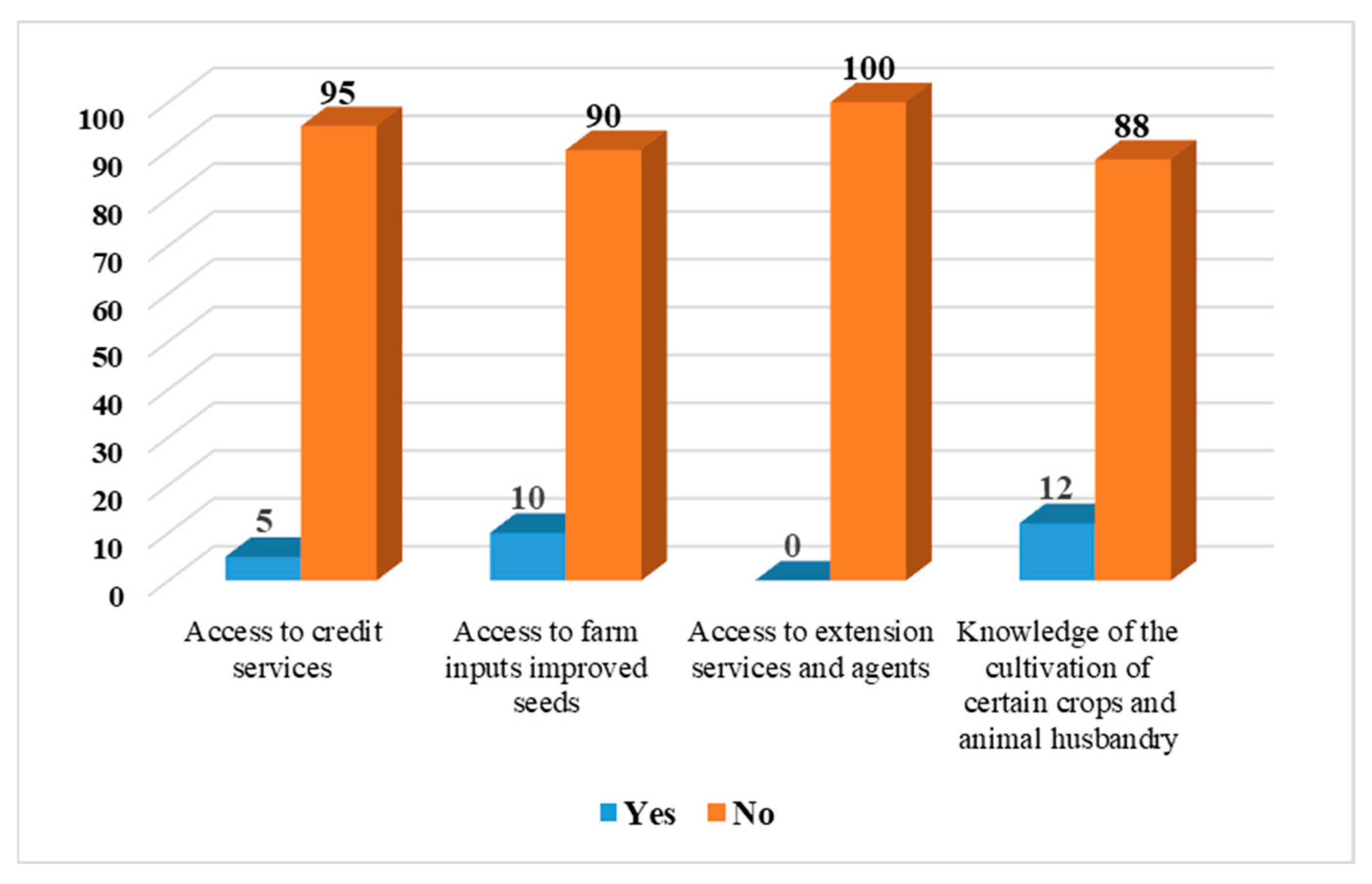
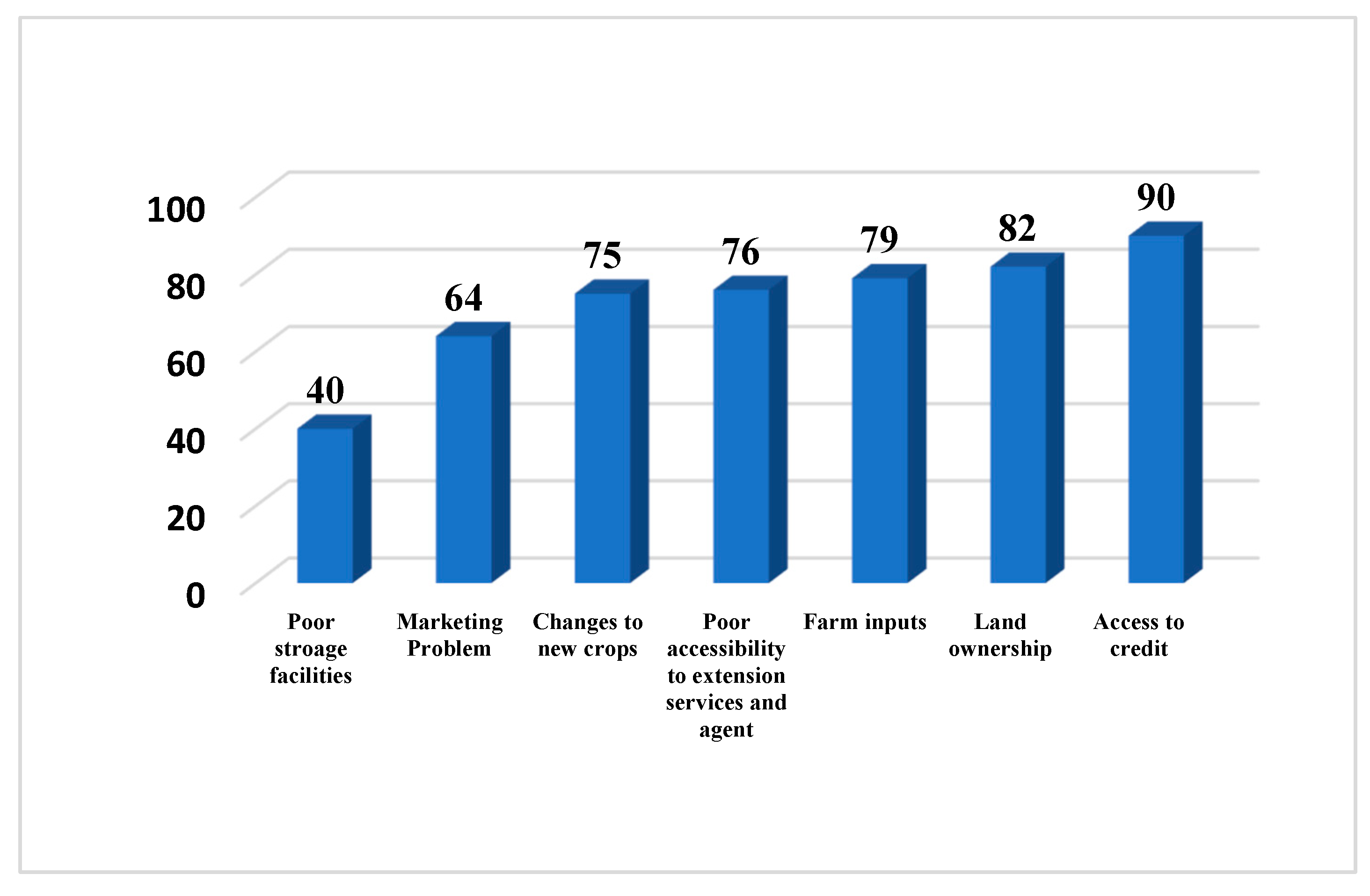
- Lack of Financial Institutions
- ○
- “Unavailability of banks and financial institutions in the area.”
- ○
- “There are no female agricultural organizations that can help us get credit.”
- ○
- “There is a lack of agricultural cooperatives.”
- ○
- “We are isolated from the center (services).”
- Barriers to Loan Access
- ○
- “We fear the risk of our crops failing.”
- ○
- “We do not meet the criteria for getting loans.”
- ○
- “We would like to get loans, but we do not know how.”
- Preferred Financing Options
- ○
- “We can accept finance through agricultural organizations.”
- Seed Accessibility
- ○
- “Unavailability of improved seeds or difficulty in accessing them.”
- Knowledge Gaps
- ○
- “We lack the knowledge to use insecticide.”
- ○
- “We lack access to agricultural extension.”
- ○
- “We do not have the knowledge to introduce new crops.”
- ○
- “We do not have the knowledge to use certain technologies/technical packages.”In this context, “technical packages” likely refers to specific technologies, tools, or methodologies used in digital urban agriculture. These could include software, hardware, or integrated systems designed to support urban farming, such as precision agriculture tools, IoT devices, or data analytics platforms. The lack of familiarity with these technologies may hinder their adoption and effective use in urban agricultural practices.
- Irrigation Challenges
- ○
- “We experience difficulties relating to irrigation methods and time.”
- Technical Difficulties
- ○
- “We have difficulties of technical methods.”Technical methods refer to challenges in adopting modern or smart irrigation practices, particularly among female farmers. These challenges stem from limited access to information, insufficient training, and a lack of resources or emphasis on modern techniques in the target region.
- Limitations on Crop Expansion
- ○
- “Small land limit grows new crops.”
- ○
- “The land is insufficiently large to grow what we need to satisfy our needs.”
- ○
- “The smallness of the land area prevents us from growing fruit trees.”
- Financial Constraints
- ○
- “We do not have money to hire large areas of land.”
- Specific Land Size Issues
- ○
- “The land is small, only five feddan.”
- ○
- “The land is very small, we have only one feddan.”Referring to this point, the authors did not include questions about suitable technology for small land areas in the survey because the focus was on broader or different aspects, such as overall land management strategies or specific challenges unrelated to technology for small land areas. Alternatively, the authors assumed that participants would address this topic indirectly through other related questions.
- Economic and Knowledge Barriers
- ○
- “Growing crops have high economic return like the fool masri. We cannot change to more profitable crops.”
- ○
- “We do not have information on the prices of the crops.”
- ○
- “We do not have the knowledge to introduce new crops.”
- Exclusion from Services
- ○
- “We are excluded from extension services.”
3. Results and Findings
3.1. Farming Characteristics, Entrepreneurial Activities, and Source of Labor for Digital Urban Agriculture
3.2. Water Source, Patterns of Irrigation in Digital Urban Agriculture, and Types of Crops Grown by Females
3.3. Livestock Production and Digital Urban Agriculture and Fertilizers Used
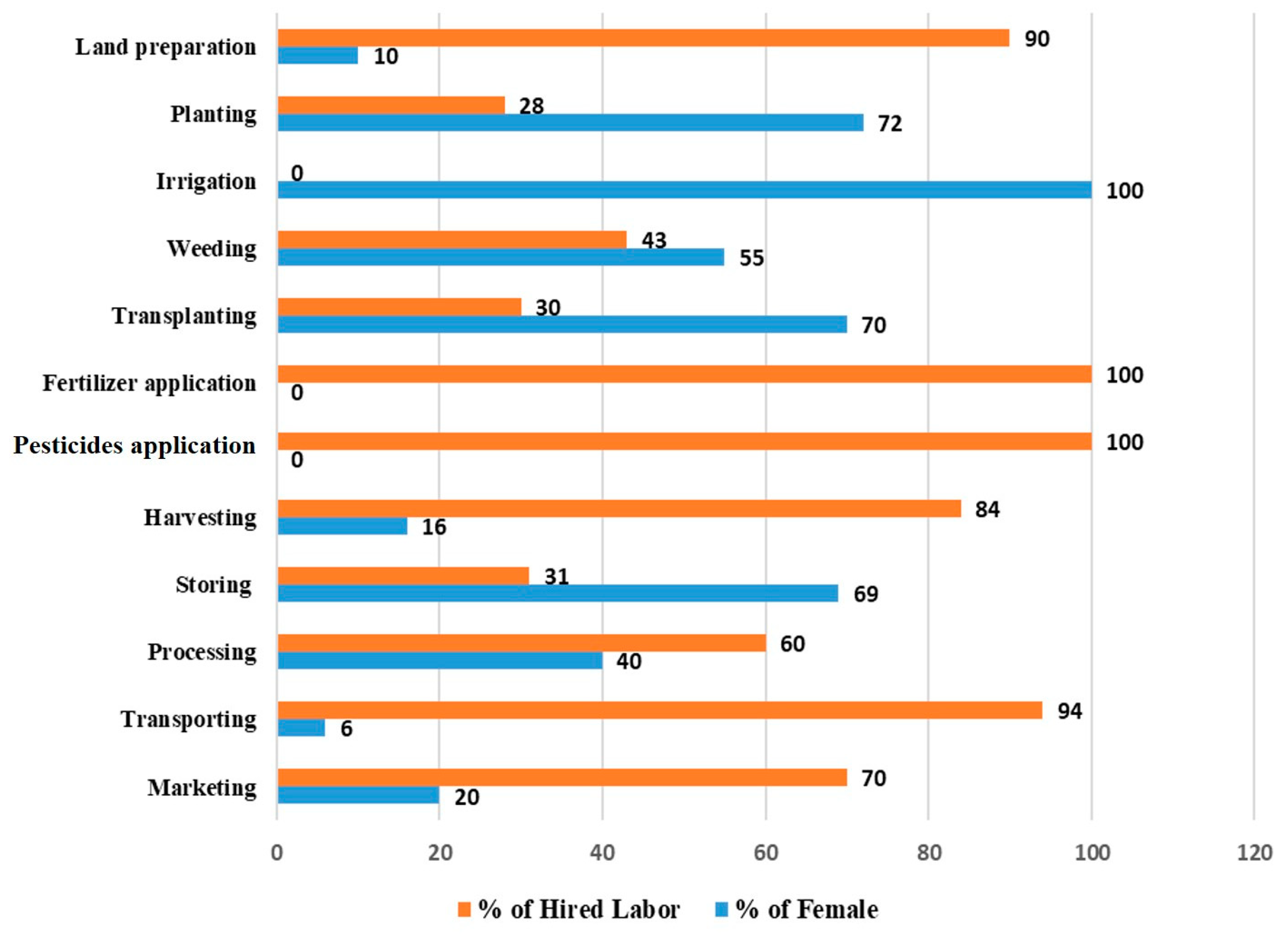
3.4. Division of Labor and Farming-Related Responsibilities of Female Farmers
3.5. Access, Control, and Benefits of Digital Urban Agriculture
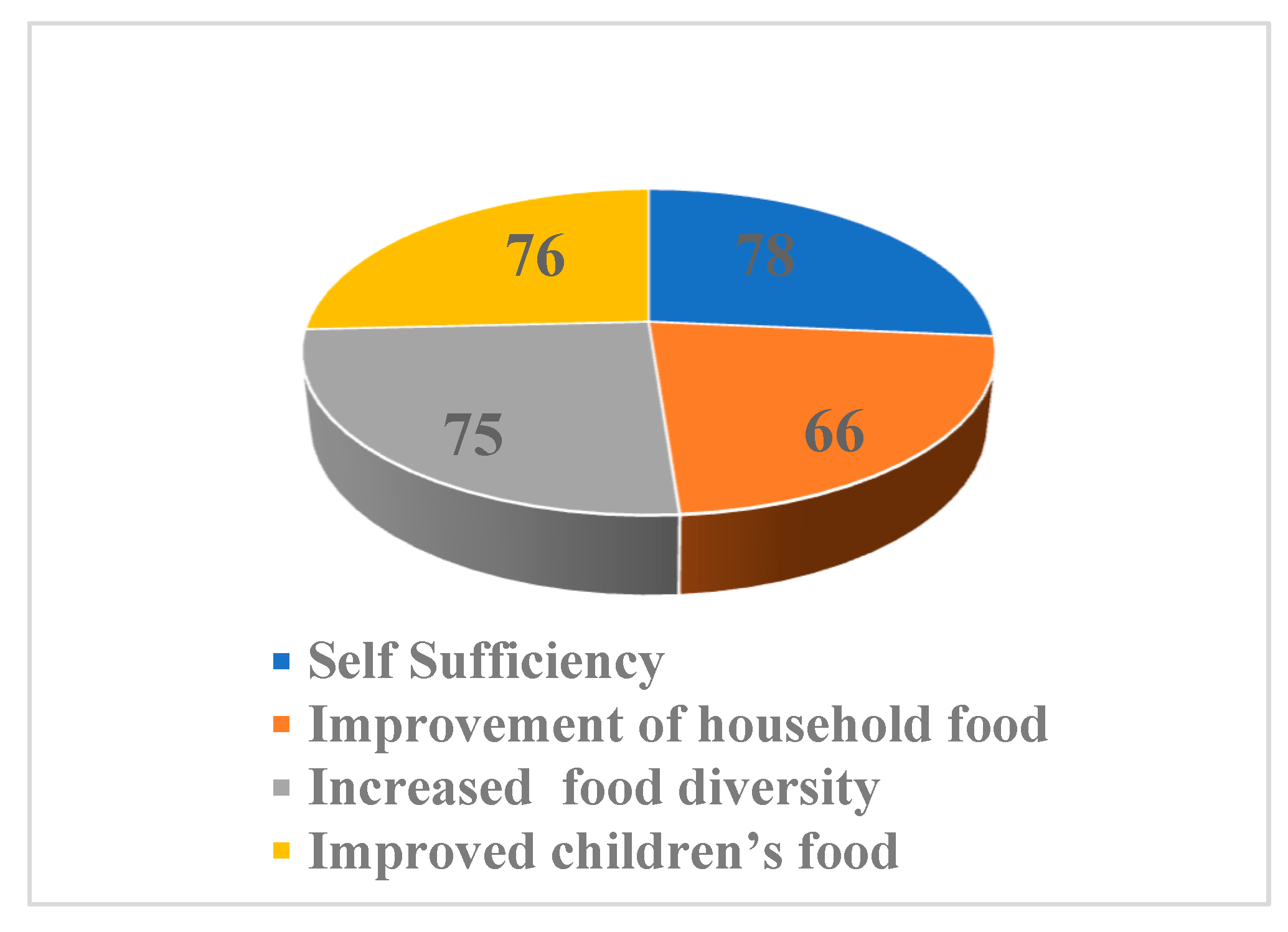
3.6. Food Security, Nutrition, and Decision-Making in Digital Urban Agriculture
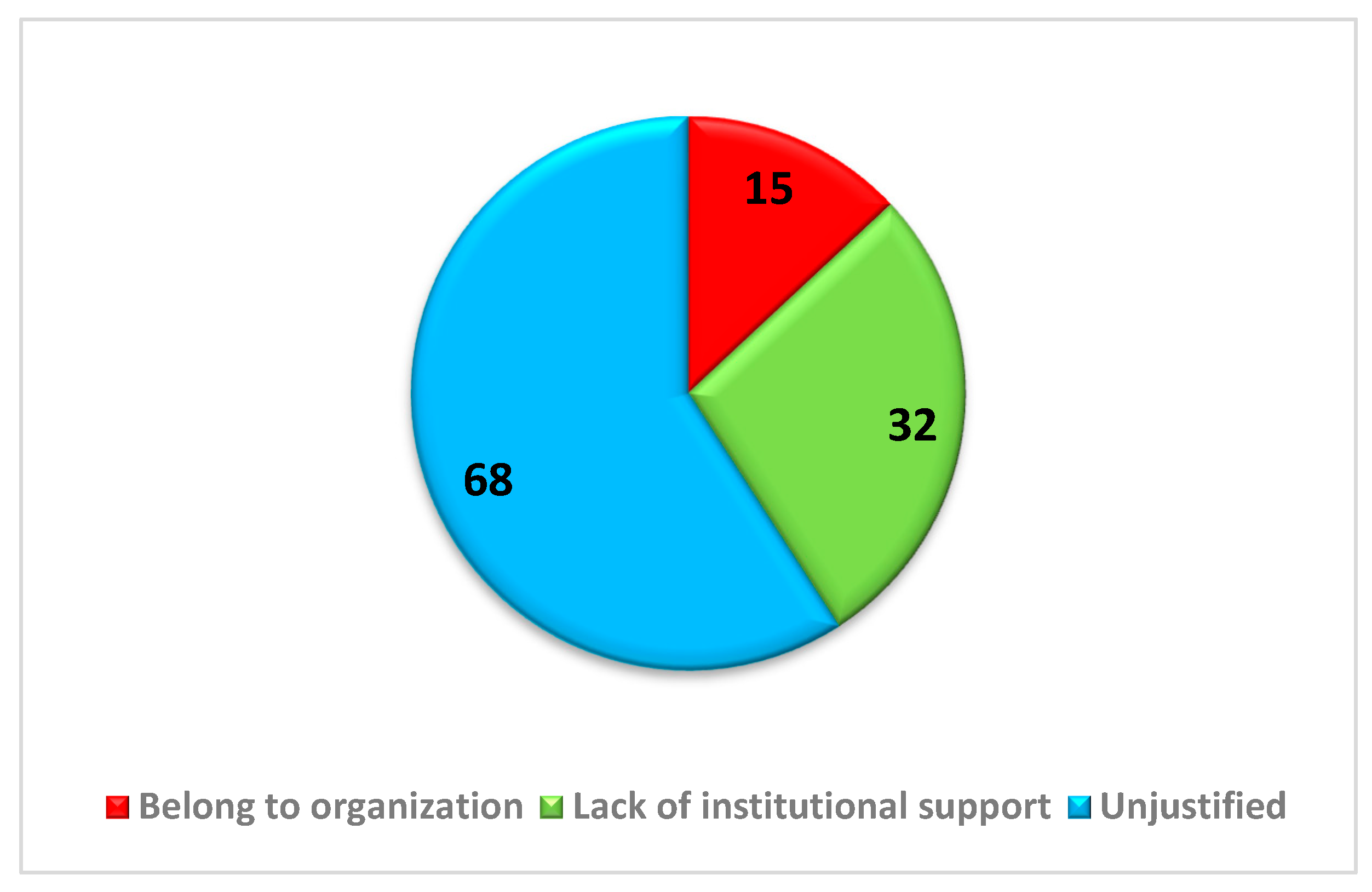
3.7. Institutional Support, Challenges and Opportunities for Digital Urban Agriculture
4. Discussion and Recommendations
Recommendations
- A framework can be developed by identifying the key stages, tools, and strategies involved in the transition to digital systems. It should include steps such as assessing current systems, setting objectives, selecting appropriate technologies, implementing changes, and monitoring outcomes.
- Female farmers’ involvement in digital urban agriculture should be promoted and supported on official agendas that support their individual, practical, and strategic goals, and ultimately challenge the structural conditions which led to their involvement in the activity in the first place, in order to benefit rather than burden them.
- An effective digital urban agriculture base is essential to create awareness, among the public, policymakers, donors, and local civil society actors, of the need for a comprehensive strategy for urban female farmers and a related action plan for Khartoum, Sudan. It is also necessary to effectively disseminate this digital information in order to make it available to the public for discussion.
- The development of men and female through local-level groups enhances the security of poor people’s livelihoods, and a special focus should be placed on the needs of different groups based on their demographic characteristics (age, gender, status, etc.). Local collectives may include savings and credit groups, informal mutual aid and insurance groups, cooperatives, or groups that manage common property resources. Programs and regulations that support these groups will be beneficial and required.
- In order to promote gender equality in agriculture, it is necessary to address systemic barriers and to provide women with equal opportunities to participate fully and equitably in all aspects of agricultural production, decision-making, and resource management. Among the key strategies are access to resources: ensuring that women have equal access to land, credit, seeds, fertilizers, and modern farming tools. This can be achieved through legal reforms, financial inclusion programs, and targeted subsidies. Policy and legal support are also essential to protecting the rights of women to land ownership, inheritance, and participation in agricultural cooperatives. Furthermore, social and cultural change will be addressed through community engagement, awareness campaigns, and advocacy for gender-sensitive approaches to agriculture.
- By integrating these strategies, agricultural systems can become more inclusive, equitable, and sustainable, contributing to improved livelihoods and food security for all. It is also vital to collaborate with other agencies that have developed social protection programs in order to minimize piloting and maximize learning and application lessons. To collaborate with other agencies that have developed social protection programs in order to minimize piloting and maximize learning and application lessons.
- Providing female farmers with access to digital urban agricultural extension programs in order to facilitate the acquisition of technical knowledge and advanced technology would be crucial in, improving their role in food security and community development. This will also assist in the transition to media that significantly impacts cultural change, particularly in the manner in which people use communication media, seek information, and are given information.
- It is crucial to organize female farmers into groups so that they can have better access to credit and marketing opportunities in the future. As a result of this organization, they will be able to pool resources, share knowledge, and gain collective bargaining power. It is imperative for female farmers to be able to receive adequate credit in order to expand their farms, invest in better technology, and increase their productivity. In addition to being a part of organized groups, female farmers can also benefit from training programs and support networks that can help them improve their agricultural practices and business acumen to increase their success rates. There should be a link between civil society organizations that work in the relevant areas and female farmers so that networking and potential partnerships can be formed.
- Through mobilization and awareness programs, it is important to promote female farmers with some control over resources and experience in decision-making.
- Farming households, as well as communities and organizations concerned, should consider the role and bargaining power of female in decision-making. In communities, the extent to which female participate in group activities may have a significant impact on the decision-making power of female farmers. Through these activities, female farmers are able to pool their resources, skills, information, time, and energy in a cooperative manner.
- To promote females’ participation in digital urban agriculture research and development, detailed digital guidelines and tools must be developed. It is important to provide global evidence as well as guidelines that have been tested in the field. Policymakers, planners, researchers, and practitioners involved in urban agriculture programs should be familiar with research on the role played by female farmers in feeding cities.
5. Conclusions
Author Contributions
Funding
Institutional Review Board Statement
Informed Consent Statement
Data Availability Statement
Conflicts of Interest
References
- Wolfert, S.; Ge, L.; Verdouw, C.; Bogaardt, M.-J. Big Data in Smart Farming—A review. Agric. Syst. 2017, 153, 69–80. [Google Scholar] [CrossRef]
- Klerkx, L.; Rose, D.C. Dealing with the game-changing technologies of Agriculture 4.0: How do we manage diversity and responsibility in innovation trajectories? Glob. Food Secur. 2019, 26, 100382. [Google Scholar] [CrossRef]
- Bronson, K. Smart Farming: Including Rights Holders for Responsible Agricultural Innovation. NJAS—Wagening. J. Life Sci. 2018, 86, 1–6. Available online: https://timreview.ca/sites/default/files/article_PDF/Bronson_TIMReview_February2018.pdf (accessed on 5 October 2025). [CrossRef]
- Rose, D.C.; Chilvers, J. Agriculture 4.0: Broadening Responsible Innovation in an Era of Smart Farming. Front. Sustain. Food Syst. 2018, 2, 87. [Google Scholar] [CrossRef]
- Ahmed, N.; Shakoor, N. Advancing agriculture through IoT, Big Data, and AI: A review of smart technologies enabling sustainability. Smart Agric. Technol. 2025, 10, 100848. [Google Scholar] [CrossRef]
- Dhanaraju, M.; Chenniappan, P.; Ramalingam, K.; Pazhanivelan, S.; Kaliaperumal, R. Smart Farming: Internet of Things (IoT)-Based Sustainable Agriculture. Agriculture 2022, 12, 1745. [Google Scholar] [CrossRef]
- Sanyaolu, M.; Sadowski, A. The Role of Precision Agriculture Technologies in Enhancing Sustainable Agriculture. Sustainability 2024, 16, 6668. [Google Scholar] [CrossRef]
- Fasiolo, D.T.L.; Scalera, E.; Maset, A. Gasparetto. Towards autonomous mapping in agriculture: A review of supportive technologies for ground robotics. Robot. Auton. Syst. 2023, 169, 104514. [Google Scholar] [CrossRef]
- Shamshiri, R.R.; Weltzien, C.; Hameed, I.A.; Yule, I.J.; Grift, T.E.; Balasundram, S.K.; Pitonakova, L.; Ahmad, D.; Chowdhary, G. Research and development in agricultural robotics: A perspective of digital farming. Int. J. Agric. Biol. Eng. 2018, 11, 1–14. [Google Scholar] [CrossRef]
- Balhara, H.; Dahiya, S. The Role of Digital Platforms in Connecting Farmers to Markets. Vigyan Varta 2025, 6, 23–25. Available online: https://www.vigyanvarta.in/adminpanel/upload_doc/VV_0225_07.pdf (accessed on 5 October 2025).
- Kamal, M.; Bablu, T.A. Mobile applications empowering smallholder farmers: A review of the impact on agricultural development. Int. J. Soc. Anal. 2023, 8, 36–50. Available online: https://www.researchgate.net/profile/Mostafa-Kamal-10/publication/374164307_Mobile_Applications_Empowering_Smallholder_Farmers_An_Analysis_of_the_Impact_on_Agricultural_Development/links/6511b591c05e6d1b1c314002/Mobile-Applications-Empowering-Smallholder-Farmers-An-Analysis-of-the-Impact-on-Agricultural-Development.pdf (accessed on 5 October 2025).
- Sishodia, R.P.; Ray, R.L.; Singh, S.K. Applications of Remote Sensing in Precision Agriculture: A Review. Remote Sens 2020, 12, 3136. [Google Scholar] [CrossRef]
- Rejeb, A.; Abdollahi, K.; Rejeb, K.; Treiblmaier, H. Drones in agriculture: A review and bibliometric analysis. Comput. Electron. Agric. 2022, 198, 107017. [Google Scholar] [CrossRef]
- Abbasi, R.; Martinez, P.; Ahmad, R. The digitization of agricultural industry—A systematic literature review on agriculture 4. 0. Smart Agric. Technol. 2022, 2, 100042. [Google Scholar] [CrossRef]
- Pathmudi, V.R.; Khatri, N.; Kumar, S.; Abdul-Qawy, A.S.H.; Vyas, A.K. A systematic review of IoT technologies and their constituents for smart and sustainable agriculture applications. Sci. Afr. 2023, 19, e01577. [Google Scholar] [CrossRef]
- Powell, G.N.Y.G.; Marquez, B.; Deng, H.; Iu, A.; Fabella, M.; Salonga, R.B.; Ashardion, F.; Cartagena, J.A. A review on urban agriculture: Technology, socio-economy, and policy. Heliyon 2022, 8, e11583. [Google Scholar] [CrossRef]
- Food and Agriculture Organization (FAO) Report. The State of Food Insecurity in the World 2008; Food and Agriculture Organization: Rome, Italy, 2008; Available online: https://www.fao.org/4/i0100e/i0100e.pdf (accessed on 5 October 2025).
- United Nations Human Settlements Programme (UN-HABITAT). The State of African Cities: Governance, Inequality and Urban Land Markets; UN-HABITAT: Nairobi, Kenya, 2010; ISBN 978-92-1-132291-0. [Google Scholar]
- Olawepo, R.A. Food Security and Challenges of Urban Agriculture in Third World Countries. In Food Production—Approaches, Challenges and Tasks; Aladjadjiyan, A., Ed.; IntechOpen: Rijeka, Croatia, 2012; pp. 55–66. Available online: https://pdfs.semanticscholar.org/023f/82f4c5edc9cffc78e6483ab5d2f694265f84.pdf?_ga=2.192629609.2109605824.1573502115-279829758.1567599662 (accessed on 11 November 2019).
- Buvinic, M. Women in Poverty: A New Global Underclass; Inter-American Development Bank: Washington, DC, USA, 1998. [Google Scholar] [CrossRef]
- Naila, K. Gender Equality Women’s Empowerment: A Critical Analysis of the Third Millennium Development Goal. Gend. Dev. 2005, 13, 13–24. Available online: https://www.jstor.org/stable/20053132 (accessed on 4 October 2025).
- Duflo, E. Women Empowerment and Economic Development. J. Econ. Lit. 2012, 50, 1051–1079. [Google Scholar] [CrossRef]
- Bertay, C.; Dordevic, L.; Sever, C. Gender Inequality and Economic Growth: Evidence from Industry-Level Data; WP/20/119; International Monetary Fund: Washington, DC, USA, 2020. [Google Scholar]
- Cislaghi, B.; Weber, A.M.; Gupta, G.R.; Darmstadt, G.L. Gender equality and global health: Intersecting political challenges. J. Glob. Health 2020, 10, 010701. [Google Scholar] [CrossRef]
- Smit, J.; Ratta, A.; Nasr, J. Urban Agriculture: Food, Jobs and Sustainable Cities; The Urban Agriculture Network, Inc.: Washington, DC, USA, 1996. [Google Scholar]
- Smit, J.E. The Impact of Urban Agriculture on Household Food Security in Cape Town, South Africa. Master’s Thesis. Stellenbosch University, Stellenbosch, South Africa, 2022. [Google Scholar]
- Mougeot Luc, J.A. Growing Better Cities: Urban Agriculture for Sustainable Development; IDRC: Ottawa, ON, Canada, 2006. [Google Scholar]
- Food and Agriculture Organization (FAO). The State of Food Security and Nutrition in the World. Transforming Food Systems for Affordable Healthy Diets; FAO: Rome, Italy, 2020; Available online: https://openknowledge.fao.org/server/api/core/bitstreams/9a0fca06-5c5b-4bd5-89eb-5dbec0f27274/content (accessed on 5 October 2025).
- World Bank. The State of Social Safety Nets 2018; World Bank: Washington, DC, USA, 2019; Available online: https://documents1.worldbank.org/curated/en/427871521040513398/pdf/124300-PUB-PUBLIC.pdf (accessed on 4 October 2025).
- Oktarina, S.; Sumardjo, S.; Purnaningsih, N.; Hapsari, D.R. Activities of Farmer Women Groups in Utilizing Digital Communication Media in Urban Farming Activities in Bogor City. Int. J. Progress. Sci. Technol. 2020, 19, 241–249. [Google Scholar]
- Wahyono, E.; Kolopaking, L.M.; Titik Sumarti, M.C.; Hubeis, A.V.S. Jaringan Digital dan Pengembangan Kewirausahaan Sosial Buruh Migran Perempuan. J. Ilmu Komun. 2019, 16, 57–76. [Google Scholar] [CrossRef]
- Food and Agriculture Organization (FAO). The Role of Female in Agriculture; FAO: Rome, Italy, 2011; Available online: https://www.fao.org/docrep/013/am307e/am307e00.pdf (accessed on 2 September 2025).
- Egziabher, A.G.; Lee-Smith, D.; Maxwell, D.G.; Memon, P.A.; Mougeot, L.J.A.; Sawio, C.J. African City Farming from a World Perspectives. In Cities Feeding People: An Examination of Urban Agriculture in East Africa; International Development Research Centre: Ottawa, ON, Canada, 1994; pp. 1–24. [Google Scholar]
- Mougeot, L.J.A. Urban Agriculture: Concept and Definition; Resource Centre on Urban Agriculture and Forestry: Leusden, The Netherlands, 1999; Available online: https://ruaf.org/assets/2019/12/Urban-Agriculture-Magazine-no.-1.pdf (accessed on 11 November 2019).
- Pangbourne, K.; Roberts, D. Small Towns and Agriculture: Understanding the Spatial Pattern of Farm Linkages. Eur. Plan. Stud. 2015, 23, 494–508. [Google Scholar] [CrossRef]
- Vaage, A. Understanding Competing Motivations for Urban Agriculture: An Analysis of U.S. Municipal Ordinance Adoption. Master’s Thesis, Iowa State University, Ames, IA, USA, 2015. [Google Scholar]
- Dona, C.G.W.; Mohan, G.; Fukush, K. Promoting Urban Agriculture and Its Opportunities and Challenges—A Global Review. Sustainability 2021, 13, 9609. [Google Scholar] [CrossRef]
- Simiyu, R.R. “I Don’t Tell My Husband About Vegetable Sales”. Gender Dynamics in Urban Agriculture in Eldoret, Kenya; African Studies Collection: Leiden, The Netherlands, 2012. [Google Scholar]
- Mencher, J.P.; Saradamoni, K. Muddy Feet, Dirty Hands: Rice Production and Female Agricultural Labour. Econ. Political Wkly. 1982, 17, A149–A167. [Google Scholar]
- Balogun, A.-L.; Adebisi, N.; Abubakar, I.R.; Dano, U.L.; Tella, A. Digitalization for transformative urbanization, climate change adaptation, and sustainable farming in Africa: Trend, opportunities, and challenges. J. Integr. Environ. Sci. 2022, 19, 17–37. [Google Scholar] [CrossRef]
- Korth, M.; Stewart, R.; Lange, L.; Madinga, N.; Da Silva, N.R.; Zaranyika, H.; van Rooyen, C.; de Wet, T. What are the impacts of urban agriculture programs on food security in low and middle-income countries: A systematic review. Environ. Evid. 2014, 3, 21. [Google Scholar] [CrossRef]
- Abdalla, S.B.A. Characterization of Urban Agricultural Activities in Khartoum State Sudan. J. Des. Res. 2018, 10, 111–134. [Google Scholar]
- Mahgoub, F. Book Current Status of Agriculture and Future Challenges in Sudan, 57th ed.Nordic Africa Institute: Uppsala, Sweden, 2014. [Google Scholar]
- El-Siddig Gebauer, K.; Dawoud, D.H.; Buerkert, A. The Status of Urban and Peri-Urban Agriculture (UPA) in Khartoum. Available online: http://www.tropentag.de/2006/abstracts/posters/461.pdf (accessed on 11 November 2019).
- Schumachera, J.; Luedeling, E.; Gebauera, J.; Saieda, A.; El-Siddig, K.; Buerkerta, A. Spatial expansion and water requirements of urban agriculture in Khartoum, Sudan. J. Arid Environ. 2009, 73, 399–406. [Google Scholar] [CrossRef]
- IGAD. Gender Strategy 2023-2030; IGAD: Djibouti City, Djibouti, 2023; Available online: https://igad.int/wp-content/uploads/2023/11/IGAD-Gender-Strategy-2023-2030-2.pdf (accessed on 2 September 2025).
- FAO. The State of Food and Agriculture 2010–2011, Women in Agriculture Closing the Gender Gap for Development; FAO: Rome, Italy, 2011; Available online: https://www.fao.org/4/i2050e/i2050e01.pdf (accessed on 4 October 2025).
- Campi, M. The Evolving Profile of New Entrants in Agriculture and the Role of Digital Technologies; OECD Food, Agriculture and Fisheries Papers, No. 209; OECD Publishing: Paris, France, 2024. [Google Scholar] [CrossRef]
- Daoud, S. The Role of Women Farmers in the Urban Agriculture; Ahfad University for Women, School of Development, Training and Rural Extension and the Italian Agency for Development Cooperation-Khartoum Office: Khartoum, Sudan, 2019. Available online: https://khartoum.aics.gov.it/wp-content/uploads/2020/02/ENGLISH-FINAL-.pdf (accessed on 4 October 2025).
- Urban Agriculture Magazine. Gender and Urban Agriculture. 2024. Available online: https://ruaf.org/assets/2019/12/Urban-Agriculture-Magazine-no.-12-Gender-and-Urban-Agriculture.pdf (accessed on 2 September 2025).
- The Ministry of Agriculture and Forestry Website. Available online: https://moaf.gov.sd/services.html (accessed on 2 September 2025).
- Edeoghon, C.O.; Izekor, B. Food accessibility, distribution and production constraints of urban farmers in Ikorodu Metropolis, Lagos state. Niger. IOSR J. Agric. Vet. Sci. 2017, 10, 8–15. [Google Scholar]
- Foeken, D.W. Urban Agriculture in East Africa as a Tool for Poverty Reduction: A Legal and Policy Dilemma? ASC Working Paper, No. 65/2005; African Studies Centre: Leiden, The Netherlands, 2005. [Google Scholar]
- Salau, E.S.; Attah, A.J. A socio-economic analysis of urban agriculture in Nasarawa state. Prod. Agric. Technol. 2012, 8, 17–29. [Google Scholar]
- Adedayo, A.; Tunde, A.M. Challenges of women in urban agriculture in Kwara State, Nigeria. Sustain. Agric. Res. 2013, 2, 8–14. [Google Scholar] [CrossRef]
- Wekesah, F.M.; Mutua, E.N.; Izugbara, C.O. Gender and conservation agriculture in sub-Saharan Africa: A systematic review. Int. J. Agric. Sustain. 2019, 17, 78–91. [Google Scholar] [CrossRef]
- Abdalla, I.F. Socioeconomic Aspects of Urban and Peri-Urban Agriculture: A Diagnostic Study in Khartoum, Sudan; Kassel University Press GmbH: Kassel, Germany, 2012. [Google Scholar]
- Ji, Y. The Credit Accessibility and Adoption of New Agricultural Inputs Nexus: Assessing the Role of Financial Institutions in Sudan. Sustainability 2023, 15, 1297. [Google Scholar] [CrossRef]
- Cabannes, Y. Financing urban agriculture. Environ. Urban. 2012, 24, 665–683. [Google Scholar] [CrossRef]
- Stephen, R.G. Agroecology Book: The Ecology of Sustainable Food Systems, 3rd ed.; CRC Press: Boca Raton, Florida, USA, 2014. [Google Scholar] [CrossRef]
- Ahmed, A.E.; Imam, N.A.; Siddig, K.H. Women as a key to agriculture and food security in Sudan: The case study of Northern Kordofan State. J. Agric. Sci. Technol. B 2012, 2, 614. [Google Scholar]
- Ibnouf, F.O. Challenges and possibilities for achieving household food security in the Western Sudan region: The role of female farmers. Food Sec. 2011, 3, 215–231. [Google Scholar] [CrossRef]
- Ovharhe, O.J. Appraisal of backyard farming among households: Implications for rural development and food security in Nigeria. Asian J. Agric. Rural Dev. 2020, 10, 160–170. [Google Scholar] [CrossRef]
- Poulsen, M.N. A systematic review of urban agriculture and food security impacts in low-income countries. Food Policy 2015, 55, 131–146. [Google Scholar] [CrossRef]
- Nogeire-McRae, T.; Ryan, E.P.; Jablonski, B.B.R.; Carolan, M.; Arathi, H.S.; Brown, C.S.; Saki, H.H.; McKeen, S.; Lapansky, E.; Schipanski, M.E. The Role of Urban Agriculture in a Secure, Healthy, and Sustainable Food System. BioScience 2018, 68, 748–759. [Google Scholar] [CrossRef]
- Kennard, N.J.; Bamford, R.H. Urban Agriculture: Opportunities and Challenges for Sustainable Development. In Zero Hunger. Encyclopedia of the UN Sustainable Development Goals; Leal Filho, W., Azul, A., Brandli, L., Özuyar, P., Wall, T., Eds.; Springer: Cham, Switzerland, 2020. [Google Scholar] [CrossRef]
- Hallett, S.; Hoagland, L.; Toner, E. A book Urban Agriculture: Environmental, Economic, and Social Perspectives. In Horticultural Reviews; Wiley-Blackwell, Inc.: Hoboken, NJ, USA, 2016; Volume 44. [Google Scholar] [CrossRef]
- Boserup, E. Female’s Role in Economic Development; St. Martin’s Press: New York, NY, USA, 1970. [Google Scholar]
- Silver, H. Social Exclusion: Comparative Analysis of Europe and Middle East Youth Middle East Youth Initiative (MEYI). Available online: https://papers.ssrn.com/sol3/papers.cfm?abstract_id=1087432 (accessed on 4 October 2025).
- Elddis, D. Too Much and Too Little? Debates on Surplus Food Sustainability; The Alliance for Better Food and Farming National Council of Female National Farmers: London, UK, 2012; Available online: www.sustainweb.org/pdf/pov (accessed on 4 October 2025).
- UNESCO. World Water Day. Less Water, Less Food; UNESCO: Paris, France, 2021. [Google Scholar]
- Kevane, M. Official Representations of the Nation: Comparing the Postage Stamps of Sudan and Burkina Faso. Afr. Stud. Q. 2008, 10, 71–94. [Google Scholar] [CrossRef]
- Daoud, S. Baseline Studies at the National Level for IGAD Priority Sectors State of Gender Affairs Report. In Sudan; IGAD: Djibouti City, Djibouti, 2014. [Google Scholar]



| Socio-Demographic Characteristics | Frequency (n = 100) | % |
|---|---|---|
| Age | ||
| <35 | 30 | 30 |
| 36–45 | 34 | 34 |
| 46–55 | 14 | 14 |
| 50+ | 22 | 22 |
| Total | 100 | 100 |
| minimum age = 15, maximum = 56, mean age = 45, SD = 7 | ||
| Marital status | ||
| Single/separated | 14 | 14 |
| Married | 63 | 63 |
| Divorced | 6 | 6 |
| Widowed | 17 | 17 |
| Total | 100 | 100 |
| Number of household members (family size) | ||
| >5 | 82 | 82 |
| <15 | 12 | 12 |
| <20 | 6 | 6 |
| 20+ | 0 | 0 |
| Total | 100 | 100 |
| Minimum number = 6, larger = 10, mean = 8, SD = 1.34 | ||
| Head of the household | ||
| Me | 25 | 25 |
| Husband | 40 | 40 |
| Father | 30 | 30 |
| Son | 5 | 5 |
| Total | 100 | 100 |
| Educational level | ||
| Illiterate | 33 | 35 |
| Primary School | 51 | 50 |
| Secondary School | 11 | 10 |
| University | 5 | 5 |
| Total | 100 | 100 |
| Type of family | ||
| Nuclear (family + children only) | 53 | 53 |
| Extended | 47 | 47 |
| Total | 100 | 100 |
| Number of children | ||
| No children | 0 | 0 |
| Fewer than 5 | 14 | 14 |
| 6–10 | 70 | 70 |
| 11–15 | 16 | 16 |
| Total | 100 | 100 |
| Source of income | ||
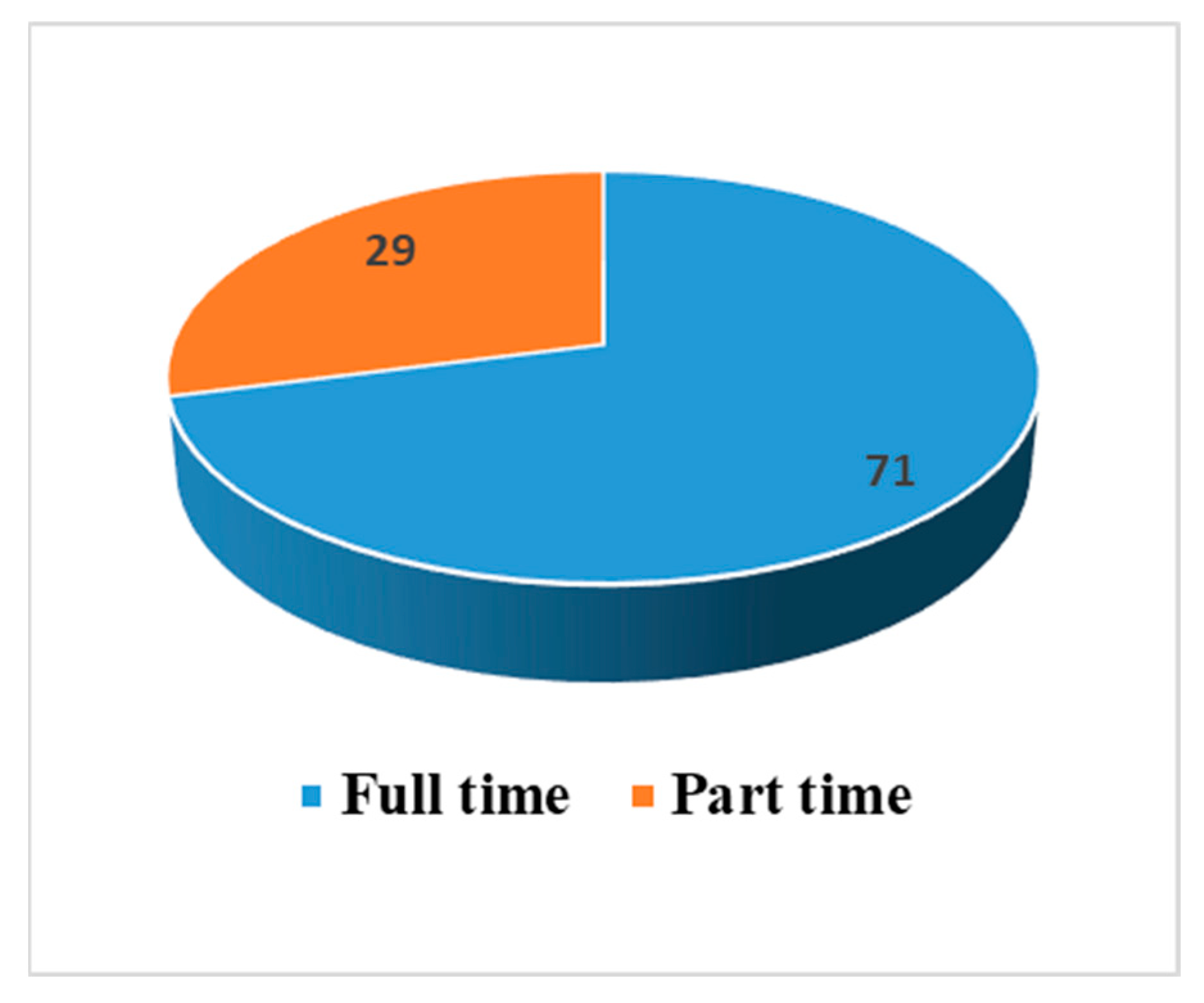
| Farming | 71 | 71 |
| Farming and other sources | 29 | 29 |
| Total | 100 | 100 |
| Category | F | % |
|---|---|---|
| Poultry kept within the backyard of family home | 3 | 3 |
| Goat kept within the backyard of family home | 66 | 66 |
| Poultry and goats kept within the backyard of family home | 15 | 15 |
| No animals | 16 | 16 |
| Total | 100 | 100 |
| Category | F | % |
|---|---|---|
| Household consumption (food security) | ||
| Yes | 82 | 82 |
| No | 18 | 18 |
| Total | 100 | 100 |
| Generation of income | ||
| Yes | 80 | 80 |
| No | 40 | 40 |
| Total | 100 | 100 |
| Satisfaction about income | ||
| Yes | 40 | 40 |
| No | 60 | 60 |
| Total | 100 | 100 |
| Tasks Related to Digital Urban Agriculture | Male % | Female % | Both % |
|---|---|---|---|
| Use of land (size) | 66 | 24 | 10 |
| What to produce | 60 | 20 | 20 |
| When to produce | 60 | 42 | 30 |
| Where to produce | 80 | 10 | 10 |
| How to produce | 70 | 20 | 10 |
| Why to produce | 20 | 70 | 10 |
| Sale of products | 60 | 20 | 20 |
| Practice digital urban agriculture | 40 | 60 | - |
| Consumption and division of food | 0 | 100 | 0 |
| Raising animals | 0 | 80 | 20 |
Disclaimer/Publisher’s Note: The statements, opinions and data contained in all publications are solely those of the individual author(s) and contributor(s) and not of MDPI and/or the editor(s). MDPI and/or the editor(s) disclaim responsibility for any injury to people or property resulting from any ideas, methods, instructions or products referred to in the content. |
© 2025 by the authors. Licensee MDPI, Basel, Switzerland. This article is an open access article distributed under the terms and conditions of the Creative Commons Attribution (CC BY) license (https://creativecommons.org/licenses/by/4.0/).
Share and Cite
Yousif, N.B.A.; Mohammed, S.A.R.; Youssef, E.; Behari, S. The Influence of Female Farmers in Digital Urban Agriculture in Khartoum State: Examining Gender Challenges and Opportunities. Sustainability 2025, 17, 10083. https://doi.org/10.3390/su172210083
Yousif NBA, Mohammed SAR, Youssef E, Behari S. The Influence of Female Farmers in Digital Urban Agriculture in Khartoum State: Examining Gender Challenges and Opportunities. Sustainability. 2025; 17(22):10083. https://doi.org/10.3390/su172210083
Chicago/Turabian StyleYousif, Nagwa Babiker Abdalla, Shadia Abdel Rahim Mohammed, Enaam Youssef, and Sarra Behari. 2025. "The Influence of Female Farmers in Digital Urban Agriculture in Khartoum State: Examining Gender Challenges and Opportunities" Sustainability 17, no. 22: 10083. https://doi.org/10.3390/su172210083
APA StyleYousif, N. B. A., Mohammed, S. A. R., Youssef, E., & Behari, S. (2025). The Influence of Female Farmers in Digital Urban Agriculture in Khartoum State: Examining Gender Challenges and Opportunities. Sustainability, 17(22), 10083. https://doi.org/10.3390/su172210083