Review

Feasibility and Implications of Biodegradable Diaper Alternatives

by
Vintia Mulungo
and
Thandi Patricia Gumede
*
Department of Life Sciences, Faculty of Health and Environmental Sciences, Central University of Technology, Free State, Bloemfontein 9301, South Africa
*
Author to whom correspondence should be addressed.
Sustainability 2025, 17(22), 10072; https://doi.org/10.3390/su172210072
Submission received: 25 September 2025 / Revised: 1 November 2025 / Accepted: 7 November 2025 / Published: 11 November 2025

Abstract

Disposable diapers contribute significantly to municipal solid waste, with non-biodegradable polymers such as low-density polyethylene (LDPE) persisting in landfills for centuries. Biodegradable alternatives, including polylactic acid (PLA), poly(butylene adipate-co-terephthalate) (PBAT), bamboo, and organic cotton, offer reduced environmental persistence, although challenges remain regarding cost, mechanical performance, and scalability. This review synthesizes current literature on these materials, highlighting their properties, biodegradation mechanisms, environmental performance, and commercial feasibility. In addition, we examine emerging biodegradable superabsorbent polymers (SAPs), such as polysaccharide-based hydrogels, chitosan, and nanocellulose, essential for fully compostable diapers. Our review uniquely integrates material performance, tropical high-humidity degradation, cost considerations, and consumer acceptance, providing insights into both technological advances and barriers to adoption. Key challenges include high production costs, supply chain limitations, and maintaining performance parity with conventional diapers. Finally, we discuss sustainable waste management strategies, including industrial composting, and identify future research directions focused on optimizing biopolymer properties, safety, and life-cycle impacts. This synthesis informs researchers, industry stakeholders, and policymakers seeking to advance environmentally responsible diaper products.

1. Introduction

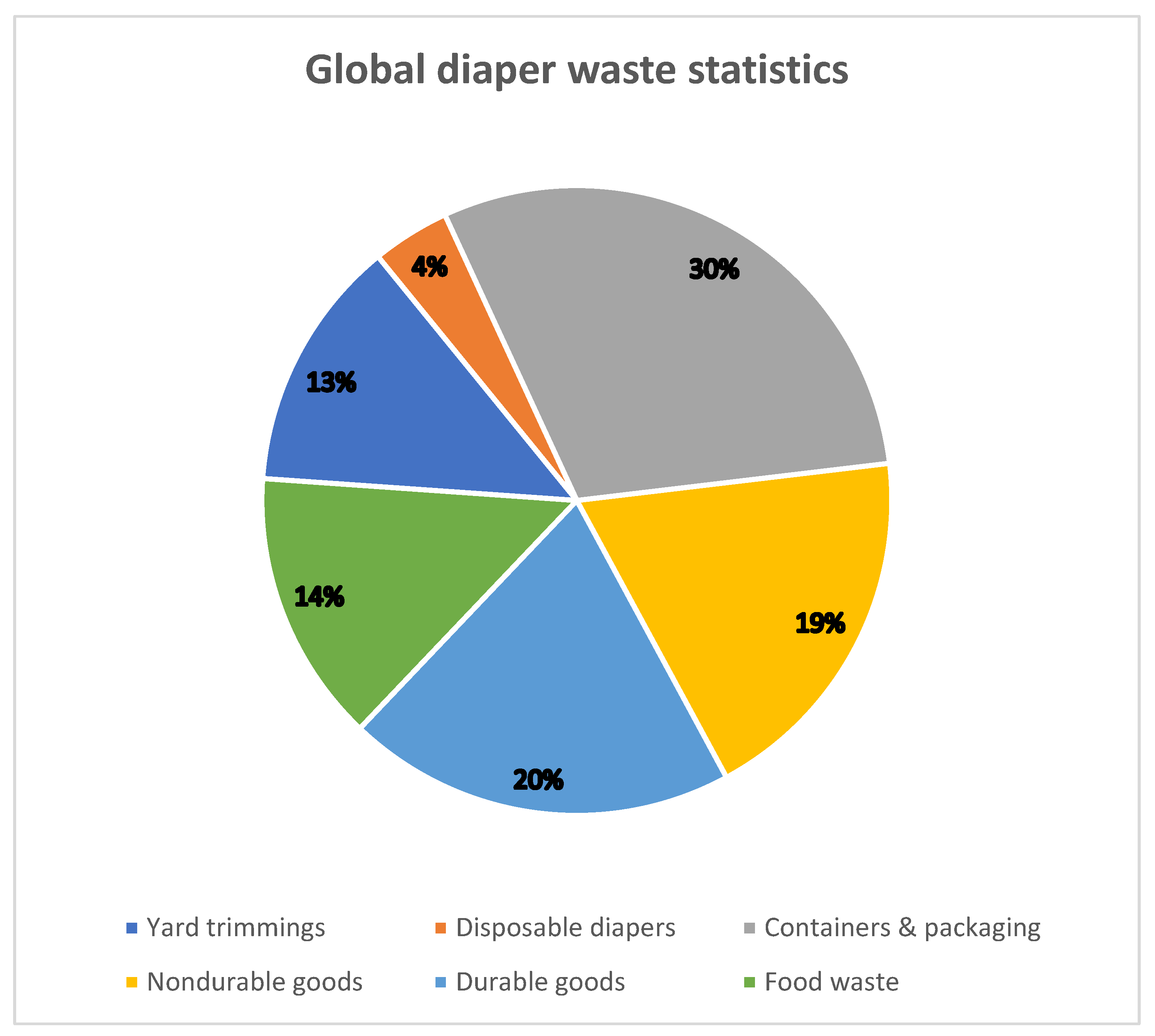
Disposable diapers are commonly made from synthetic, non-biodegradable materials that contain absorbent chemicals to manage urination or excrement [1]. The rising demand for disposable diapers, especially in urban settings, has caused significant waste management challenges and environmental concerns. A newborn typically needs about 5000 diaper changes before potty training, with disposable diapers accounting for about 95% of these changes. Both high-income and low- and middle-income countries depend heavily on disposable rather than reusable cloth diapers [2]. Globally, disposable diapers contribute ~4% of municipal solid waste, as presented in Figure 1, and require centuries to decompose [1]. In low-income countries, poor disposal infrastructure leads to open dumping, burning, and sewage blockages [3,4], worsening public health risks. Conventional disposable diapers present a significant environmental and public health challenge, particularly in regions with limited waste management infrastructure [5,6]. Collectively, studies from Europe, Asia, and Africa demonstrate that conventional disposable diapers present both environmental and public health challenges, particularly in regions lacking effective waste management infrastructure [7].
Common parental disposal methods in African countries include open dumping, burial, incineration, or flushing down toilets, reflecting limited awareness of health hazards [8]. Incineration can reduce waste volume but often produces air pollutants and is costly; open burning and shallow burial are common due to poor regulatory compliance [3,4]. Open burning releases dioxins, furans, and particulate matter, while landfilling introduces chemical leachates into soil and groundwater [9].
Modern diapers are mainly composed of polymers, such as low-density polyethylene (LDPE), which provide a moisture barrier but are persistent in the environment. While conventional diapers persist for centuries, biodegradable alternatives can degrade within months under appropriate conditions, highlighting their potential for sustainable waste management [7]. Biopolymer-based diapers, including PLA and PBAT, have received increasing attention for their potential to replace LDPE while reducing environmental impact [10]. However, successful adoption requires balancing environmental benefits with consumer acceptance, cost, and regulatory compliance.
In addition to the polyolefin outer layers, a critical barrier to fully biodegradable diapers lies in the superabsorbent polymer (SAP), which is conventionally sodium polyacrylate. This polymer provides excellent liquid uptake and retention but is essentially non-biodegradable, thereby contributing significantly to persistent waste and microplastic concerns [11]. Several biodegradable substitutes have been explored in recent years. Polysaccharide-based hydrogels—for example, carboxymethyl cellulose or starch derivatives—can be chemically modified via graft copolymerization or crosslinking to enhance swelling while retaining biodegradability (e.g., in starch–polyacrylic acid systems) [12]. Composite systems combining alginate and starch have also been demonstrated as biodegradable SAP beads with acceptable absorption behaviour under experimental conditions [13].
This review examines biodegradable diaper alternatives, emphasizing their composition, mechanical performance, biodegradability, economic feasibility, and sustainability implications. Additionally, it highlights consumer acceptance, challenges to adoption, policy considerations, and future research directions, providing insights into the implementation of more sustainable waste management practices in low- and middle-income countries. Unlike prior reviews that primarily focused on biodegradable outer-layer materials, it comprehensively examines both outer layers and emerging biodegradable SAPs, while considering material performance, cost, and degradation under tropical, high-humidity conditions. This integrated perspective highlights both technological advances and practical challenges in implementing fully biodegradable diapers. It argues that true adoption of biodegradable diapers depends on material innovations and also on solving the interlinked challenges of cost, SAP performance, and the establishment of biodegradable waste infrastructure.
This review provides an overview of disposable diapers, highlighting their composition, widespread use, and environmental impacts, especially in low- and middle-income countries. It then provides a comprehensive review of biodegradable alternatives, including key materials such as PLA, PBAT, bamboo, and organic cotton, along with their characteristics, manufacturing processes, and biodegradability mechanisms. The discussion further evaluates performance, safety, and consumer acceptance of biodegradable diapers, with emphasis on absorbency, comfort, and health considerations. The subsequent sections examine challenges and barriers to adoption, focusing on cost, scalability, and product consistency. The review further identifies future research priorities, particularly in material innovation, safety testing, and understanding biodegradation pathways under real-world conditions. Finally, the paper concludes with a synthesis of findings and proposes research priorities and strategies needed to enable the widespread adoption of biodegradable diaper technologies.

2. Conventional Diapers and Their Environmental Impact

2.1. Composition and Materials Used in Conventional Diapers

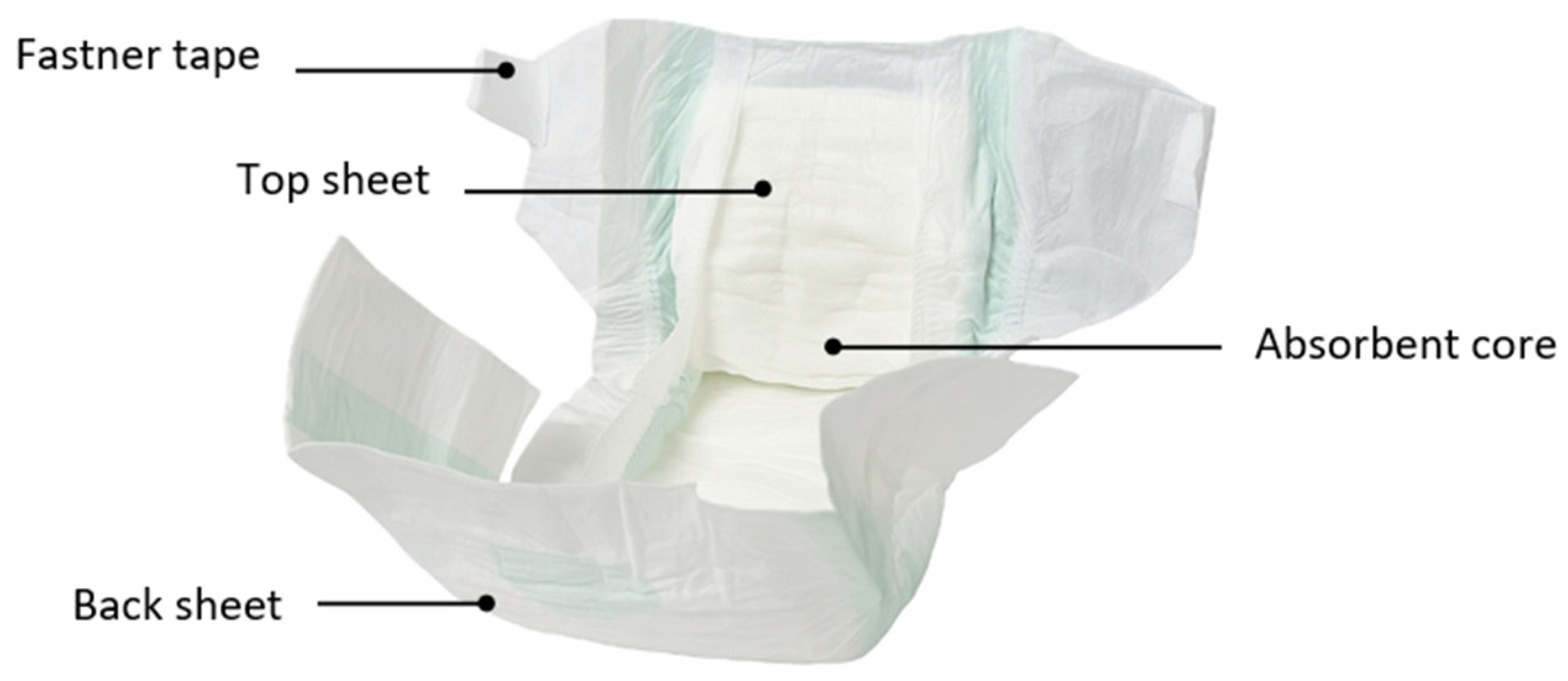
A disposable diaper typically consists of four main layers: the top sheet, acquisition layer, absorbent core, and backsheet (Figure 2). The top sheet is a soft, porous polypropylene layer that rapidly transfers moisture to the inner layers and may include a lotion to protect the skin. The acquisition layer traditionally contains SAPs, which are non-biodegradable [14]. The acquisition layer distributes liquid evenly to the absorbent core, which acts as the main SAP reservoir. Recent developments have introduced plant-derived cellulose into this layer, improving biodegradability without compromising absorbency.
The absorbent core consists of SAP gel, usually sodium polyacrylate mixed with cellulose, enclosed in a porous polymer layer [15]. This core absorbs and retains urine and faeces, while the LDPE backsheet provides waterproofing but persists in the environment for centuries [3]. The backsheet, made from low-density polyethylene (LDPE), provides a waterproof outer layer to prevent leakage.

2.2. Environmental Impact and Disposal Challenges

In low- and middle-income countries, inadequate waste management infrastructure leads to diapers being discarded in municipal solid waste, landfills, or the environment. Disposal practices are often unregulated, and public awareness of sustainable alternatives is limited [3]. Improper disposal contributes to environmental accumulation of non-biodegradable materials and faecal pathogens, posing risks to human health, domestic animals, and ecosystems [5].
Disposable diapers generate substantial waste: an average infant uses ~5000 diapers before toilet training, producing approximately 1 ton of waste per year. In households with children in diapers, these products can account for 50% of household waste and represent 1.5–4% of municipal solid waste [2]. Conventional diapers composed mainly of polyethylene and polypropylene can persist for hundreds of years in landfills due to their resistance to microbial degradation (estimated > 400 years in some studies [16]. Improper disposal introduces multiple environmental hazards. Water contamination may occur, as landfilled diapers can leach chemicals and pathogens (e.g., hepatitis B, poliovirus) into groundwater, affecting drinking water safety [2]. Air pollution results from the open burning releases dioxins, furans, phthalates, carbon monoxide, and particulate matter, posing respiratory risks [1,6]. Soil contamination and bioaccumulation are also of concern, as hazardous chemicals from diapers can accumulate in soil and aquatic ecosystems, impacting fish and entering the food chain [17]. Furthermore, discarded diapers provide breeding grounds for flies and mosquitoes, increasing the risk of diarrhoea and vector-borne illnesses [18]. Additionally, diaper waste contributes to urban and drainage issues, including sewer blockages, drainage obstruction, flooding, and urban aesthetic degradation [19].

3. Biodegradable Diaper Alternatives

3.1. Definition and Key Characteristics

Biodegradable polymers are defined as materials that undergo microbially induced chain scission, resulting in mineralisation [20]. Biodegradation, also known as biotic degradation, involves the breakdown of polymer substances in the presence of living organisms such as algae, fungi, and bacteria. Microorganisms utilise biodegradable polymers as a source of energy and nutrients, producing progressively smaller molecules that enter cellular metabolic pathways such as the Krebs cycle. This process ultimately converts polymers into water, carbon dioxide, biomass, and other non-toxic by-products [21].
Biodegradable diaper materials are evaluated not only for their degradation rates but also for mechanical performance, cost, and safety [22]. PLA and PBAT have been widely studied due to their commercial availability and compliance with compostability standards [23], whereas natural fibres such as bamboo and organic cotton offer rapid biodegradability and hypoallergenic properties [24]. Each material presents trade-offs: PLA is brittle but renewable, PBAT is flexible but expensive, and natural fibres require careful processing to maintain absorbency.

3.2. Types of Biodegradable Diaper Materials

3.2.1. Bamboo and Organic Cotton

Bamboo, a member of the Poaceae family, is a rapidly renewable source of cellulose fibres, with species such as Phyllostachys edulis widely used in textile applications [25]. Bamboo fibres contain natural antibacterial compounds, such as bamboo kun, and exhibit high water absorbency and breathability, making them suitable for hypoallergenic diaper designs.
Organic cotton, cultivated without synthetic pesticides or fertilizers, provides environmental and social benefits, including reduced water contamination and improved working conditions [26]. Bamboo’s natural antimicrobial properties reduce the risk of diaper rash [27], while organic cotton minimizes chemical exposure for infants [28]. These fibres degrade within 2–3 months under composting conditions, significantly faster than LDPE. However, water-intensive cultivation of cotton may offset some environmental benefits [29]. Studies indicate that blends of bamboo and organic cotton perform well in terms of absorbency, liquid permeability, and rewettability, making them feasible alternatives to conventional materials in disposable diapers [25].

3.2.2. Polybutylene Adipate-Co-Butylene Terephthalate

PBAT is a synthetic, fully biodegradable copolymer composed of adipic acid, terephthalic acid, and 1,4-butanediol [30,31]. It demonstrates high elongation at break, ductility, and compostability. Under industrial composting conditions, PBAT-based materials can degrade completely within three to six months [32]. PBAT meets the required standard for plastics designed for aerobic composting in municipal or industrial facilities (ASTM D6400) and for packaging recoverable through composting and biodegradation (EN 13432) [33,34]. However, its high production cost and certain mechanical limitations still restrict its large-scale application [30,35]. Comparative studies show that PBAT is more flexible than PLA but less suitable for home composting due to slower degradation at ambient temperatures [23].

3.2.3. Polylactic Acid

PLA is a thermoplastic polymer derived from renewable feedstocks such as corn and sugarcane. It exhibits similar functional properties to LDPE, traditionally used in diaper backsheets, but is biodegradable and can be processed using conventional polymer processing equipment [36]. PLA-based diapers can achieve comparable absorbency to conventional products while reducing environmental persistence. Strategies such as blending PLA with PBAT, copolymerisation, and addition of biodegradable fillers can improve its mechanical performance [37,38]. Studies indicate that PLA-based backsheets can achieve comparable absorbency to LDPE, with lower carbon footprint [39].

3.2.4. Other Biopolymers Explored

Polybutylene succinate (PBS) and polyhydroxyalkanoates (PHAs) have been explored as potential diaper materials. PBS offers good clarity, flexibility, and processability, but its brittleness and cost may limit practical applications [40,41]. PHAs are microbial polyesters with thermoplastic and elastomeric properties that degrade readily into water and carbon dioxide, although industrial-scale production remains costly and challenging [42,43].
Table 1 provides a comparative overview of barrier and topsheet materials based on barrier strength, Water Vapor Transmission Rate and flexibility. Low-density polyethylene (LDPE) provides excellent flexibility and waterproofing, but it is highly hydrophobic and non-biodegradable. It exhibits very low water vapor transmission rates (WVTRs) and high barrier strength, which makes it effective at preventing leakage, but it persists in the environment for centuries [3,7]. By comparison, PLA offers moderate barrier properties due to its hydrophobic nature, which restricts its application for high-barrier packaging unless it is blended [44]. In contrast, PBAT has very high flexibility and moisture resistance but has a lower barrier strength [45,46]. When added to polymers, natural fibres like bamboo and organic cotton can improve gas barrier qualities by forming a more intricate diffusion channel; nevertheless, because they are hydrophilic, these materials have a high WVTR [47,48]. While organic cotton is softer and a bit more pliable than bamboo fibres, both tend to lessen the flexibility of polymers when added to composites [48,49].
Superabsorbent polymers are good for hygiene products since they have the largest absorbency and liquid retention capacity [50]. However, because of their synthetic composition, SAPs are not very biodegradable [3]. Chitosan hydrogels are environmentally beneficial substitutes because of their great biodegradability and biocompatibility, moderate to high absorption, and good retention [51,52]. Despite its poor retention and reduced absorbency, cellulose is a desirable natural absorbent or reinforcing material in biodegradable composite systems since it is extremely sustainable and biodegradable [53].
For convenience, Table 2 summarises the advances and challenges of core superabsorbent materials.
Additionally, nanocellulose-based hydrogels are an especially promising class for replacing SAPs. When properly crosslinked, they can achieve compostable behaviour suitable for hygiene products (e.g., diapers) and show favourable swelling and retention properties. Their use is discussed broadly in recent reviews of cellulose-based SAPs for personal care applications. A particularly compelling example comes from fully bio-based, thermally crosslinked SAPs derived from citric acid, monosodium citrate, and glycerol (no acrylate monomers). These materials obtained ~24 g g−1 absorbency and exhibited ~40% biodegradation over 28 days in activated sludge assays [54]. Despite these advances, none of the current biodegradable alternatives yet match the combination of absorption capacity, retention under load, polymer stability, and cost performance of conventional sodium polyacrylate. As such, the development of scalable, high-performance biodegradable SAPs remains a key research frontier alongside the replacement of polyolefin outer layers.

3.3. Manufacturing Processes and Sustainability Considerations

The production of biodegradable diaper materials varies depending on the polymer type, with distinct environmental and practical implications. Bamboo fibres are extracted using mechanical or eco-friendly chemical methods that preserve antimicrobial properties while minimizing chemical effluents [55]. Organic cotton cultivation avoids synthetic pesticides and fertilizers, reducing environmental impact and safeguarding human health [56].
PLA is industrially synthesised via fermentation of renewable feedstocks into lactic acid, followed by polymerisation. Industrial composting of PLA significantly reduces its environmental footprint compared to conventional plastics, though energy-intensive polymerisation steps may offset some sustainability benefits [57,58]. PBAT and PBS are produced through condensation polymerisation of their constituent acids and diols. Despite complete biodegradability, their higher cost and energy requirements limit widespread use [30,41].
A critical engineering dilemma arises from the need for diapers to remain stable during use but degrade rapidly post-disposal. Addressing this paradox requires materials that respond to compost-specific triggers such as moisture, temperature, or enzymatic cues [59]. The literature suggests that material choice and processing techniques strongly influence the environmental sustainability and practical feasibility of biodegradable diapers. Optimising manufacturing efficiency while maintaining biodegradability, safety, and comfort remains an important area for further research.

3.4. Biodegradability Mechanisms and Sustainable Considerations

The biodegradation of polymers used in disposable diapers depends on both the chemical structure of the polymer and the environmental conditions to which it is exposed [21]. Fundamentally, biodegradation can occur through oxidation-based or hydrolysis-based reactions, which may act sequentially or simultaneously. Condensation polymers such as polyesters and polyamides predominantly degrade via hydrolysis, while polymers with a carbon-only main chain, such as lignin or polyvinyl alcohol, undergo oxidation followed by hydrolysis of chains following oxidative cleavage [21].
Polylactic acid and polybutylene adipate-co-terephthalate have been the most widely studied biopolymers in diaper applications due to their commercial availability, cost-effectiveness, and relative biodegradability. PLA undergoes enzymatic hydrolysis, a zipper-like depolymerisation mechanism, which breaks macromolecular chains into smaller fragments that are further mineralised into carbon dioxide and water [60,61]. Factors such as molecular weight, degree of crystallinity, purity, and presence of stabilisers affect the degradation rate [62,63]. PLA typically degrades within 6–12 months under industrial composting conditions (≈58 °C, high humidity, controlled microbial activity) but may persist for several years in ambient or landfill environments, whereas PBAT blends can fully decompose in 90 days to six months [32]. Bamboo and organic cotton fibres also exhibit high biodegradability, with composting times of 2–3 months and 3 months, respectively [25].
Table 3 summarises typical decomposition times for various biodegradable and conventional diaper materials. The data illustrates that while LDPE persists in landfills for centuries, biopolymers such as PLA, PBAT, bamboo, and organic cotton exhibit significantly faster biodegradation under appropriate conditions.
Environmental conditions strongly affect degradation rates. In tropical regions with high humidity and temperatures above 30 °C, microbial activity and hydrolysis accelerate biodegradation of bamboo and organic cotton, often reducing composting time to under 8 weeks [65]. Conversely, PLA degrades poorly at ambient tropical temperatures due to its high glass transition temperature, requiring industrial composting for efficient breakdown [66]. Such climate-linked degradation dynamics must be considered when implementing biodegradable diapers in African and Asian contexts.
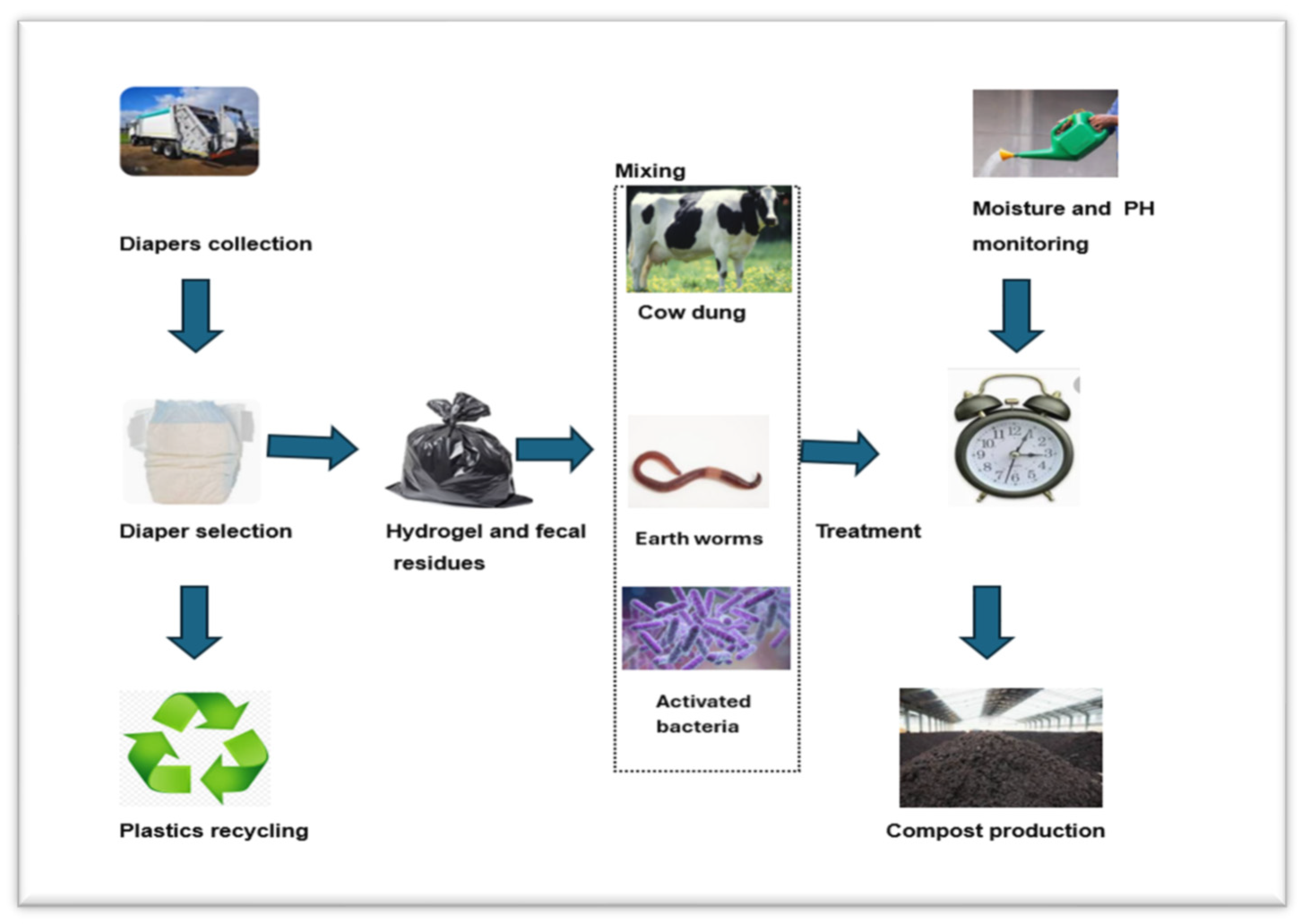
The effective end-of-life management of biodegradable diapers can further enhance environmental benefits. Industrial composting is particularly promising for PLA, PBAT, and natural fibres. As illustrated in Figure 3, collected diapers are sorted to separate plastics from organic material. The organic fraction, including SAPs and faecal residues, is combined with cow dung, earthworms, or activated bacteria and composted under controlled pH and moisture to produce stabilised, sanitised compost [26].
This synthesis highlights that while conventional LDPE-based diapers persist in the environment for centuries, alternative biodegradable polymers offer faster decomposition rates and can be integrated into sustainable waste management strategies. Additionally, selecting materials with known biodegradation mechanisms ensures both environmental safety and compliance with industrial composting standards, addressing key concerns regarding long-term ecological impact.

4. Performance and Safety

The successful adoption of biodegradable diapers depends on their ability to balance environmental benefits, product performance, consumer acceptance, and infant safety. These dimensions are critical for ensuring market viability, human health, and practical utility [68,69].

4.1. Absorbency and Leakage Prevention

Diaper performance is primarily determined by liquid absorption, retention, and leakage prevention. Conventional diapers achieve this through a combination of SAPs and cellulose [15,70]. Biodegradable alternatives, such as PLA, PBAT, bamboo, and organic cotton, can reach comparable absorbency when blended with absorbent cores or reinforced with natural fibres. For example, bamboo–cotton blends demonstrate high liquid retention and low rewetting, while PLA-based backsheets, when plasticised or blended with flexible polymers such as PBAT, can replicate the barrier properties of LDPE without losing flexibility [25,36]. Nonetheless, variability in natural fibres or material heterogeneity can cause inconsistencies in performance, highlighting the need for standardized manufacturing protocols [71].

4.2. Comfort and Skin Health

Softness, breathability, and hypoallergenic properties are equally important in determining infant comfort. Bamboo fibres, containing natural antimicrobial and moisture-wicking compounds (bamboo kun), reduce the risk of diaper rash and irritation [25]. Organic cotton provides similar benefits and avoids pesticide residues associated with conventional cotton [26]. In contrast, PLA and PBAT may require copolymerisation or plasticiser incorporation to achieve the softness and flexibility needed for sensitive infant skin [37]. Studies report that infants wearing bamboo or organic cotton blends experience fewer skin issues than those using conventional SAP–LDPE diapers [25].

4.3. Consumer Perception and Acceptance

Parents often express interest in eco-friendly diaper alternatives, but purchasing decisions remain influenced by performance, convenience, and price [72,73]. If biodegradable diapers are significantly more costly than conventional products, uptake remains limited despite ecological benefits. Effective communication of product advantages, including biodegradability, safety, and compliance with international standards, is essential to improve market adoption. Additionally, cultural factors play a role, as disposal practices differ across regions; in some low- and middle-income countries, open dumping remains common despite awareness of sustainable options [4].

4.4. Health and Safety Considerations

An important requirement for biodegradable diapers is the absence of harmful substances such as phthalates, bisphenol-A, and heavy metals, which are often detected in conventional plastics [6,17]. Materials such as PLA, PBAT, bamboo, and organic cotton generally demonstrate low toxicity and are safe for infants when appropriately processed [74]. However, additives, coatings, or blended polymers must be carefully evaluated for allergenicity or leaching risks during prolonged skin contact. Regulatory compliance and adherence to safety testing standards are vital to ensure consumer trust and infant well-being [75].
Performance and safety also extend to the disposal phase. Biodegradable diapers that maintain absorbency while being compostable contribute to industrial or home composting, reducing landfill volumes and pollution. Composting of organic cores and recycling compatible bioplastics can enhance the sustainability profile of these alternatives [10,67]. Taken together, biodegradable diapers can match or approach the functionality of conventional products, but successful adoption depends on simultaneously optimizing absorbency, comfort, safety, affordability, and integration with waste management systems as shown in Table 4.

5. Environmental and Economic Barriers

Despite clear environmental advantages, the transition from conventional to biodegradable diapers faces technical, economic, and social barriers. Adoption depends not only on ecological benefits but also on achieving cost-effectiveness, scalability, and consistent product performance.

5.1. Cost and Affordability: Comparison of Biodegradable Polymers vs. Conventional Polymers

There is a noticeable trade-off between environmental performance and economic viability when comparing the costs of biodegradable and conventional polymers. High production costs of bio-based polymers remain a critical limitation. For instance, PHAs are significantly more expensive than petroleum-based plastics due to complex microbial synthesis and reliance on carbon-rich feedstocks [72]. PHA and chitosan composites are examples of advanced bio-based materials that may cost more than $6 per kilogram [78]. While microbial engineering and mixed-culture fermentation have shown potential to reduce costs, these processes often yield lower productivity and volumes [72,79]. Because of their established production infrastructure, abundant fossil feedstocks, and great manufacturing efficiency, conventional plastics like low-density polyethylene (LDPE) are still substantially less costly, usually costing ~$1/kg [80].
The price of biodegradable polymers, such as polylactic acid (PLA) and poly(butylene adipate-co-terephthalate) (PBAT), ranges from $2.5 to 5.0 per kilogram, which is mostly due to the high cost of raw ingredients, fermentation-based manufacture, and smaller production quantities [81]. Although blending with natural fibres or optimizing fermentation can lower expenses, these strategies may compromise mechanical properties [82]. They provide long-term environmental and waste management benefits by lowering pollutants, carbon emissions, and landfill usage, despite their high initial cost [60]. Market research suggests that parents often prioritize performance and affordability over environmental benefits, limiting willingness to pay a premium for biodegradable options [72,73]. Therefore, cost reductions must be coupled with equivalent performance to achieve widespread adoption.

5.2. Production Scalability and Supply Chain Constraints

Even when production technologies exist, scalability remains a challenge. For example, a company with an annual production capacity of 50,000 tonnes of PHAs reported selling less than 500 tonnes annually due to low adoption, leading to closure [83]. Reliable feedstock availability, efficient supply chains, and stable consumer demand are essential to sustain commercial production. Without this, investment in large-scale facilities may not be viable.

5.3. Performance Consistency and Product Design

Consistency in product performance is another barrier. Biodegradable polymers such as PLA and PBAT often require reinforcement with fibres, plasticisers, or copolymers to match the flexibility, absorbency, and durability of LDPE-based diapers [36,37]. Variability in fibre quality or polymer blends can lead to unpredictable results, which undermines consumer trust. At the same time, maintaining infant safety requires minimizing the use of additives or chemicals that may leach during wear, posing risks of irritation or toxicity [6,17].
Table 5 summarizes the existing barriers to adoption of the promising diaper alternatives. In general, the adoption of biodegradable diapers is constrained by high costs, limited scalability, and inconsistent performance. Addressing these barriers through innovations in material science, supply chain improvements, and cost optimization is essential to enable meaningful market penetration.

6. Policy, Waste Infrastructure, and Social Acceptance

Although biodegradable diapers have advanced significantly, further research is needed to enhance material performance, ensure safety, and validate environmental sustainability. The following areas highlight promising directions for future innovation.

6.1. Material Innovation and Optimization

Current biopolymers such as PLA and PBAT show promise as alternatives to LDPE, but their brittleness and limited flexibility restrict direct application in diapers [36,37]. Strategies such as blending, copolymerization, and nanofiller reinforcement could improve mechanical properties and durability [37]. Reinforcement with biodegradable fibres or nanocomposites may also enhance absorbency and structural integrity [60]. Surface modification techniques, including hydrophilic treatments or antimicrobial coatings, could further improve comfort and moisture management, thereby aligning product performance with consumer expectations.

6.2. Safety and Toxicity Assessment

Ensuring infant safety remains paramount. While PLA, PBAT, bamboo, and organic cotton generally exhibit low toxicity, additives and coatings must be evaluated for allergenicity or chemical leaching [6,17]. Future research should focus on identifying potential chemical by-products under real-world conditions, assessing allergenic or cytotoxic risks, and establishing standardized eco-toxicity and safety testing protocols. Strengthening regulatory frameworks will also be crucial to gain consumer trust and meet international standards [69].

6.3. Biodegradation Pathways and Environmental Fate

Understanding how biodegradable polymers decompose under practical conditions is critical to validating their sustainability claims. Comparative studies on industrial composting versus home composting can clarify decomposition rates and end-of-life pathways [85,86]. Monitoring potential release of microplastics or chemical residues during degradation is equally important to prevent unintended environmental impacts [75]. Life cycle assessment (LCA) models should be expanded to quantify the true environmental footprint of biopolymer-based diapers and guide both manufacturers and policymakers [22].
Table 6 highlights the key strategies and research directions for advancing alternative biodegradable materials for disposable diapers. Exploring and implementing the recommended will ensure the development of more efficient, environmentally responsible and safer biodegradable diapers.
Future progress in biodegradable diapers requires a multi-pronged approach: material innovation to close the performance gap with conventional products, rigorous safety assessment to protect infant health, and deeper investigation into degradation processes to ensure environmental benefits are fully realized. These directions will determine whether biodegradable diapers can transition from niche alternatives to mainstream solutions.

7. Conclusions

This review highlights the potential of biodegradable polymers to reduce the environmental burden of disposable diapers. PLA, PBAT, bamboo, and organic cotton represent viable alternatives to conventional LDPE-based products, offering benefits in terms of biodegradability, renewable sourcing, and reduced landfill persistence. However, each material presents limitations: PLA is brittle, PBAT and PHAs are costly, and natural fibres require careful processing to meet absorbency and mechanical performance standards. Equally critical is the replacement of sodium polyacrylate-based SAPs. Recent research into polysaccharide-based hydrogels, chitosan, and nanocellulose demonstrates progress toward biodegradable SAPs, yet their performance and scalability remain insufficient compared to conventional SAPs.
Adoption of biodegradable diapers faces barriers related to cost, supply chain constraints, and consumer acceptance, emphasizing the need for scalable production methods and strategic education on environmental benefits [68,69]. Market acceptance depends on achieving functional parity with conventional diapers in absorbency, comfort, and safety, while communicating environmental benefits effectively [7]. Furthermore, effective waste management systems, including industrial composting and proper collection, are critical to ensuring the environmental advantages of these materials are realized. End-of-life management ensures that rapid biodegradation occurs without generating secondary pollutants, such as microplastics [85]. Future progress will depend not only on replacing polyolefin-based outer layers but also on advancing high-performance, biodegradable SAP systems to enable the development of truly sustainable diaper products.
Future research should focus on the development of SAPs incorporating compost-triggered degradation mechanisms. Additionally, there is a need to design multi-layer structures where only outer layers biodegrade under controlled conditions, ensuring both performance stability during use and efficient degradation post-disposal. Moreover, integrating cost-reduction strategies through the inclusion of bio-fillers and the valorisation of waste materials presents an important avenue for improving the economic feasibility and sustainability of biopolymer-based disposable diapers. Researchers must assess health and safety implications for infants, including potential chemical leachates and allergenicity. Finally, investigating biodegradation pathways under diverse environmental conditions and evaluating life-cycle impacts—together with exploring cost-effective production and market strategies to bridge the gap between technological potential and consumer adoption—will be important to translating these materials into practical, sustainable alternatives.
By addressing these challenges, biodegradable diaper alternatives can provide practical, sustainable solutions that reduce landfill accumulation, minimize public health risks, and support circular economy practices in waste management. Integrating material innovation, consumer awareness, and effective disposal strategies will be critical to advancing the adoption of environmentally responsible diaper products globally. Therefore, despite clear environmental advantages, widespread adoption will depend on overcoming economic barriers, improving waste management infrastructure, and adapting products to the climatic conditions of high-humidity regions.

Author Contributions

Conceptualization, V.M. and T.P.G.; validation, V.M. and T.P.G.; investigation, V.M.; resources, T.P.G.; writing—original draft preparation, V.M.; writing—review and editing, V.M. and T.P.G.; supervision, T.P.G., project administration, T.P.G.; funding acquisition, V.M. and T.P.G. All authors have read and agreed to the published version of the manuscript.

Funding

Financial support was provided by the Postgraduate Student Fund of the Central University of Technology, Free State, South Africa as well as the National Research Foundation (NRF) Thuthuka Programme, grant number TTK2204264865.

Institutional Review Board Statement

Not applicable.

Informed Consent Statement

Not applicable.

Data Availability Statement

No new data were created or analyzed in this study. Data sharing is not applicable to this article.

Conflicts of Interest

The authors declare no conflicts of interest.

References

  1. Ndifreke, E. Disposable Diapers: Impact of Disposal Methods on Public Health and the Environment. Am. J. Med. Public Health 2020, 1, 1009. [Google Scholar]
  2. Meseldzija, J.; Poznanovic, D.; Frank, R. Assessment of the Differing Environmental Impacts Between Reusable and Disposable Diapers. Dufferin Res. 2013, 1–11. Available online: https://www.dufferinresearch.com/images/sampledata/documents/Environmental%20Impact%20Report%20-%20Cloth%20vs%20Disposible.pdf (accessed on 1 September 2025).
  3. Płotka-Wasylka, J.; Makoś-Chełstowska, P.; Kurowska-Susdorf, A.; Treviño, M.J.S.; Guzmán, S.Z.; Mostafa, H.; Cordella, M. End-of-life management of single-use baby diapers: Analysis of technical, health and environment aspects. Sci. Total Environ. 2022, 836, 155339. [Google Scholar] [CrossRef]
  4. Wambui, K.E.; Joseph, M.; Makindi, S. Soiled Diapers Disposal Practices among Caregivers in Poor and Middle Income Urban Settings. Int. J. Sci. Res. Publ. 2014, 5, 1–10. [Google Scholar]
  5. Kordecki, H.; Antrobus-Wuth, R.; Uys, M.T.; van Wyk, I.; Root, E.D.; Berrian, A.M. Disposable diaper waste accumulation at the human-livestock-wildlife interface: A one health approach. Environ. Chall. 2022, 8, 100589. [Google Scholar] [CrossRef]
  6. Shah, D.R.S.I.; Ramli, F.F.; Anuar, N.F.; Daud, W.M.A.W.; Aghamohammadi, N. A systematic review on employing thermochemical techniques for the production of exceptionally efficient biochar from discarded disposable diapers (D3). J. Anal. Appl. Pyrolysis 2024, 180, 106527. [Google Scholar] [CrossRef]
  7. Shah, D.R.S.I.; Anuar, N.F.; Jaafar, M.I.; Daud, W.M.A.W.; Aghamohammadi, N. Towards a greener future of sustainable and circular practices in resource recovery from discarded disposable diaper (D3): A systematic review and meta-analysis. J. Mater. Cycles Waste Manag. 2025, 27, 3033–3054. [Google Scholar] [CrossRef]
  8. Jesca, M.; Junior, M. Practices Regarding Disposal of Soiled Diapers among Women of Child Bearing Age in Poor Resource Urban Setting. J. Nurs. Health Sci. 2015, 4, 63–67. [Google Scholar]
  9. Zhang, M.; Buekens, A.; Li, X. Open burning as a source of dioxins. Crit. Rev. Environ. Sci. Technol. 2017, 47, 543–620. [Google Scholar] [CrossRef]
  10. Fu, Y.; Wu, G.; Bian, X.; Zeng, J.; Weng, Y. Biodegradation Behavior of Poly(Butylene Adipate-Co-Terephthalate) (PBAT), Poly(Lactic Acid) (PLA), and Their Blend in Freshwater with Sediment. Molecules 2020, 25, 3946. [Google Scholar] [CrossRef] [PubMed]
  11. Gadtya, A.S.; Tripathy, D.; Moharana, S. Recycling and Reuse of Superabsorbent Polymers. In Bio-Based Superabsorbents; Engineering Materials; Springer: Singapore, 2023; pp. 161–183. [Google Scholar] [CrossRef]
  12. Czarnecka, E.; Nowaczyk, J. Semi-Natural superabsorbents based on Starch-g-poly(acrylic acid): Modification, synthesis and application. Polymers 2020, 12, 1794. [Google Scholar] [CrossRef]
  13. Lertsarawut, P.; Laksee, S.; Rattanawongwiboon, T.; Hemvichian, K. Eco-friendly alginate-starch-based water super-absorbent beads spherically shaped and uniformly fabricated via spherification and radiation-assisted polymerization. Carbohydr. Polym. Technol. Appl. 2024, 7, 100456. [Google Scholar] [CrossRef]
  14. Li, W.; Chen, H.; Xu, Q.; Yang, D.; Zhang, C.; Cai, S.; Wang, Y.; Luo, J. Waste treatment by waste: High-value utilization of superabsorbent polymer in disposable diapers as efficient adsorbent for heavy metal. Sep. Purif. Technol. 2024, 340, 126819. [Google Scholar] [CrossRef]
  15. Baldwin, S.; Odio, M.R.; Haines, S.L.; O’Connor, R.J.; Englehart, J.S.; Lane, A.T. Skin benefits from continuous topical administration of a zinc oxide/petrolatum formulation by a novel disposable diaper. J. Eur. Acad. Dermatol. Venereol. 2001, 15 (Suppl. 1), 5–11. [Google Scholar] [CrossRef]
  16. Patel, P.N.; Parmar, K.G.; Nakum, A.N.; Patel, M.N.; Patel, P.R.; Patel, V.R.; Sen, D.J. Biodegradable Polymers: An Ecofriendly Approach In Newer Millenium. Asian J. Biomed. Pharm. Sci. 2011, 1, 23–39. [Google Scholar]
  17. Asian Development Bank Institute; Jagath, P.; Gamaralalage, D. Derek Hondo. Solid Waste Management in Developing Asia: Prioritizing Waste Separation. Available online: https://www.adb.org/sites/default/files/publication/652121/adbi-pb2020-7.pdf (accessed on 30 November 2020).
  18. Cruvinel, V.R.N.; Zolnikov, T.R.; Obara, M.T.; de Oliveira, V.T.L.; Vianna, E.N.; Santos, F.S.G.D.; de Oliveira, K.C.; Scott, J.A. Vector-borne diseases in waste pickers in Brasilia, Brazil. Waste Manag. 2020, 105, 223–232. [Google Scholar] [CrossRef] [PubMed]
  19. Imam, A.; Mohammed, B.; Wilson, D.C.; Cheeseman, C.R. Solid waste management in Abuja, Nigeria. Waste Manag. 2008, 28, 468–472. [Google Scholar] [CrossRef]
  20. Nayak, P.L. Biodegradable polymers: Opportunities and challenges. J. Macromol. Sci. Part C Polym. Rev. 1999, 39, 481–505. [Google Scholar] [CrossRef]
  21. Kržan, A. Biodegradable Polymers and Plastics; Innovative Value Chain Development for Sustainable Plastics in Central Europe (Plastice): Vienna, Austria, 2012. [Google Scholar]
  22. Mirabella, N.; Castellani, V.; Sala, S. Life cycle assessment of bio-based products: A disposable diaper case study. Int. J. Life Cycle Assess. 2013, 18, 1036–1047. [Google Scholar] [CrossRef]
  23. Myalenko, D.; Fedotova, O. Physical, Mechanical, and Structural Properties of the Polylactide and Polybutylene Adipate Terephthalate (PBAT)-Based Biodegradable Polymer During Compost Storage. Polymers 2023, 15, 1619. [Google Scholar] [CrossRef]
  24. Amjad, A.I. Bamboo fibre: A sustainable solution for textile manufacturing. Adv. Bamboo Science. 2024, 7, 100088. [Google Scholar] [CrossRef]
  25. Shanmugasundaram, O.L.; Gowda, R.V.M. Development and characterization of bamboo and organic cotton fibre blended baby diapers. Indian J. Fibre Text. Res. 2010, 35, 201–205. [Google Scholar]
  26. Tamta, M.; Kamboj, A. Cultural Influences on Consumption: Insights from India. In Consumption and Production in the Textile and Garment Industry; Springer: Singapore, 2024; pp. 87–99. [Google Scholar] [CrossRef]
  27. Malarvizhi, G. Development of Herbal Finished Baby Diapers with Bamboo Fiber. BEST Int. J. Humanit. Arts Med. Sci. 2015, 3, 41–46. [Google Scholar]
  28. Rovira, J.; Domingo, J.L. Human health risks due to exposure to inorganic and organic chemicals from textiles: A review. Environ. Res. 2019, 168, 62–69. [Google Scholar] [CrossRef]
  29. Zhang, Z.; Huang, J.; Yao, Y.; Peters, G.; Macdonald, B.; La Rosa, A.D.; Wang, Z.; Scherer, L. Environmental impacts of cotton and opportunities for improvement. Nat. Rev. Earth Environ. 2023, 4, 703–715. [Google Scholar] [CrossRef]
  30. Roy, S.; Ghosh, T.; Zhang, W.; Rhim, J.W. Recent progress in PBAT-based films and food packaging applications: A mini-review. Food Chem. 2023, 437, 137822. [Google Scholar] [CrossRef] [PubMed]
  31. Xing, Q.; Buono, P.; Ruch, D.; Dubois, P.; Wu, L.; Wang, W.J. Biodegradable UV-Blocking Films through Core-Shell Lignin-Melanin Nanoparticles in Poly(butylene adipate-co-terephthalate). ACS Sustain. Chem. Eng. 2019, 7, 4147–4157. [Google Scholar] [CrossRef]
  32. Jian, J.; Xiangbin, Z.; Xianbo, H. An overview on synthesis, properties and applications of poly(butylene-adipate-co-terephthalate)—PBAT. Adv. Ind. Eng. Polym. Res. 2020, 3, 19–26. [Google Scholar] [CrossRef]
  33. ASTM D6400; Standard Specification for Labelling Plastics Designed to be Aerobically Composted in Municipal or Industrial Facilities. American Society for Testing and Materials: Conshocken, PA, USA, 2023.
  34. EN 13432; Packin-Requirements for packaging recoverable through composting and biodegradation-Test scheme and evaluation criteria for the final acceptance of packaging. European Committee for Standardization: Brussels, Belgium, 2000.
  35. Touchaleaume, F.; Martin-Closas, L.; Angellier-Coussy, H.; Chevillard, A.; Cesar, G.; Gontard, N.; Gastaldi, E. Performance and environmental impact of biodegradable polymers as agricultural mulching films. Chemosphere 2016, 144, 433–439. [Google Scholar] [CrossRef]
  36. Henton, D.E.; Gruber, P.; Lunt, J.; Randall, J. Polylactic Acid Technology. In Natural Fibers, Biopolymers, and Biocomposites; CRC Press: Boca Raton, FL, USA, 2005. [Google Scholar]
  37. Zhao, G.; Gomes, F.P.C.; Marway, H.; Thompson, M.R.; Zhu, Z. Physical Aging as the Driving Force for Brittle–Ductile Transition of Polylactic Acid. Macromol. Chem. Phys. 2020, 221, 1900475. [Google Scholar] [CrossRef]
  38. Olonisakin, K.; Mohanty, A.K.; Thimmanagari, M.; Misra, M. Recent advances in biodegradable polymer blends and their biocomposites: A comprehensive review. Green Chem. 2025, 27, 11656–11704. [Google Scholar] [CrossRef]
  39. Kaptan, A.; Kartal, F. Advancements in polylactic acid research: From material properties to sustainable applications. Eur. Mech. Sci. 2024, 8, 104–114. [Google Scholar] [CrossRef]
  40. Barletta, M.; Aversa, C.; Ayyoob, M.; Gisario, A.; Hamad, K.; Mehrpouya, M.; Vahabi, H. Poly(butylene succinate) (PBS): Materials, processing, and industrial applications. Prog. Polym. Sci. 2022, 132, 101579. [Google Scholar] [CrossRef]
  41. Rafiqah, S.A.; Khalina, A.; Harmaen, A.S.; Tawakkal, I.A.; Zaman, K.; Asim, M.; Nurrazi, M.; Lee, C.H. A review on properties and application of bio-based poly(Butylene succinate). Polymers 2021, 13, 1436. [Google Scholar] [CrossRef]
  42. Philip, S.; Keshavarz, T.; Roy, I. Polyhydroxyalkanoates: Biodegradable polymers with a range of applications. J. Chem. Technol. Biotechnol. 2007, 82, 233–247. [Google Scholar] [CrossRef]
  43. Wang, Y.; Yin, J.; Chen, G.Q. Polyhydroxyalkanoates, challenges and opportunities. Curr. Opin. Biotechnol. 2014, 30, 59–65. [Google Scholar] [CrossRef] [PubMed]
  44. Mohsen, A.H.; Ali, N.A. Mechanical, Color and Barrier, Properties of Biodegradable Nanocomposites Polylactic Acid/Nanoclay. J. Bioremediat. Biodegrad. 2018, 9, 455. [Google Scholar] [CrossRef]
  45. Debeli, D.K.; Wu, L.; Huang, F. PBAT-based biodegradable nanocomposite coating films with ultra-high oxygen barrier and balanced mechanical properties. Polym. Degrad. Stab. 2023, 216, 110489. [Google Scholar] [CrossRef]
  46. Elhamnia, M.; Motlagh, G.H.; Jafari, S.H. Improved barrier properties of biodegradable PBAT films for packaging applications using EVOH: Morphology, permeability, biodegradation, and mechanical properties. J. Appl. Polym. Sci. 2023, 140, e53855. [Google Scholar] [CrossRef]
  47. Jayarathna, S.; Andersson, M.; Andersson, R. Recent Advances in Starch-Based Blends and Composites for Bioplastics Applications. Polymers 2022, 14, 4557. [Google Scholar] [CrossRef] [PubMed]
  48. Nautiyal, M.; Vasugi, N. Evaluating the performance attributes of single jersey conventional and organic cotton. Int. J. Home Sci. 2018, 4, 202–207. [Google Scholar]
  49. Tiwari, A.; Turner, A.P.F. Biosensors Nanotechnology; John Wiley and Sons, Inc.: Hoboken, NJ, USA, 2014. [Google Scholar]
  50. Meshram, I.; Kanade, V.; Nandanwar, N.; Ingle, P. Super-Absorbent Polymer: A Review on the Characteristics and Application. Int. J. Adv. Res. Chem. Sci. 2020, 7, 8–21. [Google Scholar] [CrossRef]
  51. Michalik, R.; Wandzik, I. A mini-review on chitosan-based hydrogels with potential for sustainable agricultural applications. Polymers 2020, 12, 2425. [Google Scholar] [CrossRef] [PubMed]
  52. Ahmadi, F.; Oveisi, Z.; Samani, S.M.; Amoozgar, Z. Chitosan based hydrogels: Characteristics and pharmaceutical applications. Res. Pharm. Sci. 2015, 10, 1–16. [Google Scholar]
  53. Ragab, M.M.; Othman, H.; Hassabo, A.G. Natural polymers and their application in the textile sector (Review). J. Text. Color. Polym. Sci. 2025, 22, 93–113. [Google Scholar] [CrossRef]
  54. Chen, J.; Chan, D.Y.; Yang, T.; Parisi, D.; Reuvers, B.; Veldhuis, T.; Picchioni, F.; Wu, J.; Raffa, P.; Koning, C. Bio-degradable, fully bio-based, thermally cross-linked superabsorbent polymers from citric acid and glycerol. Green Chem. 2025, 27, 3234–3247. [Google Scholar] [CrossRef]
  55. Wang, G.; Innes, J.L.; Dai, S.; He, G. Achieving sustainable rural development in Southern China: The contribution of bamboo forestry. Int. J. Sustain. Dev. World Ecol. 2008, 15, 484–495. [Google Scholar] [CrossRef]
  56. Adnan Ali, M.; Imran Sarwar, M. Sustainable and Environmental Friendly Fibers in Textile Fashion (A Study of Organic Cotton and Bamboo Fibers). Master’s Thesis, University of Borås/Swedish School of Textiles, Borås, Sweden, 2010. [Google Scholar]
  57. Feghali, E.; Tauk, L.; Ortiz, P.; Vanbroekhoven, K.; Eevers, W. Catalytic chemical recycling of biodegradable polyesters. Polym. Degrad. Stab. 2020, 179, 109241. [Google Scholar] [CrossRef]
  58. Ghomi, E.R.; Khosravi, F.; Ardahaei, A.S.; Dai, Y.; Neisiany, R.E.; Foroughi, F.; Wu, M.; Das, O.; Ramakrishna, S. The life cycle assessment for polylactic acid (PLA) to make it a low-carbon material. Polymers 2021, 13, 1854. [Google Scholar] [CrossRef]
  59. Hossain, W.; Kasprzak, J. Application of Economic Aspects of Life Cycle Management to Biodegradable Plastics Made Products. Master’s Thesis, Poznan University of Technology, Poznan, Poland, 2024. [Google Scholar] [CrossRef]
  60. Weng, Y.X.; Jin, Y.J.; Meng, Q.Y.; Wang, L.; Zhang, M.; Wang, Y.Z. Biodegradation behavior of poly(butylene adipate-co-terephthalate) (PBAT), poly(lactic acid) (PLA), and their blend under soil conditions. Polym. Test. 2013, 32, 918–926. [Google Scholar] [CrossRef]
  61. Ghorpade, V.M.; Gennadios, A.; Hanna, M.A. Laboratory composting of extruded poly(lactic acid) sheets. Bioresour. Technol. 2001, 76, 57–61. [Google Scholar] [CrossRef]
  62. Park, K.I.; Xanthos, M. A study on the degradation of polylactic acid in the presence of phosphonium ionic liquids. Polym. Degrad. Stab. 2009, 94, 834–844. [Google Scholar] [CrossRef]
  63. Rudnik, E.; Briassoulis, D. Degradation behaviour of poly(lactic acid) films and fibres in soil under Mediterranean field conditions and laboratory simulations testing. Ind. Crops Prod. 2011, 33, 648–658. [Google Scholar] [CrossRef]
  64. Leejarkpai, T.; Suwanmanee, U.; Rudeekit, Y.; Mungcharoen, T. Biodegradable kinetics of plastics under controlled composting conditions. Waste Manag. 2011, 31, 1153–1161. [Google Scholar] [CrossRef]
  65. Bher, A.; Mayekar, P.C.; Auras, R.A.; Schvezov, C.E. Biodegradation of Biodegradable Polymers in Mesophilic Aerobic Environments. Int. J. Mol. Sci. 2022, 23, 12165. [Google Scholar] [CrossRef]
  66. Lin, L.; Joe, M.; Dang, Q.A.; Park, H.E. Enhancing Biodegradation of Poly(lactic acid) in Compost at Room Temperature by Compounding Jade Particles. Polymers 2025, 17, 2037. [Google Scholar] [CrossRef]
  67. Ferronato, N.; Pinedo, M.L.N.; Torretta, V. Assessment of used baby diapers composting in Bolivia. Sustainability 2020, 12, 5055. [Google Scholar] [CrossRef]
  68. Mendoza, J.M.F.; D’Aponte, F.; Gualtieri, D.; Azapagic, A. Disposable baby diapers: Life cycle costs, eco-efficiency and circular economy. J. Clean. Prod. 2019, 211, 455–467. [Google Scholar] [CrossRef]
  69. Saifudeen, A.; Kumar, M.; Mani, M. Sustainability Asessment in Disposable Baby Diapers by Adopting a Systems Approach. Environ. Eng. Manag. J. (EEMJ) 2022, 11, 21. [Google Scholar]
  70. Dey, S.; Purdon, M.; Kirsch, T.; Helbich, H.; Kerr, K.; Li, L.; Zhou, S. Exposure Factor considerations for safety evaluation of modern disposable diapers. Regul. Toxicol. Pharmacol. 2016, 81, 183–193. [Google Scholar] [CrossRef]
  71. Konstantopoulos, S.; Hueber, C.; Antoniadis, I.; Summerscales, J.; Schledjewski, R. Liquid composite molding reproducibility in real-world production of fiber reinforced polymeric composites: A review of challenges and solutions. Adv. Manuf. Polym. Compos. Sci. 2019, 5, 85–99. [Google Scholar] [CrossRef]
  72. Maraveas, C. Production of sustainable and biodegradable polymers from agricultural waste. Polymers 2020, 12, 1127. [Google Scholar] [CrossRef] [PubMed]
  73. White, H.L.; Mwapasa, T.; Mphasa, M.; Kalonde, P.K.; Feasey, N.; Oliver, D.M.; Ormsby, M.J.; Morse, T.; Chidziwisano, K.; Quilliam, R.S. Open defaecation by proxy: Tackling the increase of disposable diapers in waste piles in informal settlements. Int. J. Hyg. Environ. Health 2023, 250, 114171. [Google Scholar] [CrossRef]
  74. Mondal, M.I.H. Antimicrobial Textiles from Natural Resources; Woodhead Publishing: Sawston, UK, 2021. [Google Scholar]
  75. Makoś-Chełstowska, P.; Kurowska-Susdorf, A.; Płotka-Wasylka, J. Environmental problems and health risks with disposable baby diapers: Monitoring of toxic compounds by application of analytical techniques and need of education. TrAC Trends Anal. Chem. 2021, 143, 116408. [Google Scholar] [CrossRef]
  76. Dey, S.; Helmes, C.T.; White, J.C.; Zhou, S. Safety of disposable diaper materials: Extensive evaluations validate use. Clin. Pediatr. 2014, 53, 17S–19S. [Google Scholar] [CrossRef] [PubMed]
  77. Tamta, M. Organic Cotton. Available online: https://www.researchgate.net/publication/384499073 (accessed on 1 September 2025).
  78. Gundlapalli, M.; Ganesan, S. Polyhydroxyalkanoates (PHAs): Key Challenges in production and sustainable strategies for cost reduction within a circular economy framework. Results Eng. 2025, 26, 105345. [Google Scholar] [CrossRef]
  79. Tsang, Y.F.; Kumar, V.; Samadar, P.; Yang, Y.; Lee, J.; Ok, Y.S.; Song, H.; Kim, K.-H.; Kwon, E.E.; Jeon, Y.J. Production of bioplastic through food waste valorization. Environ. Int. 2019, 127, 625–644. [Google Scholar] [CrossRef]
  80. Hernández, B.; Kots, P.; Selvam, E.; Vlachos, D.G.; Ierapetritou, M.G. Techno-Economic and Life Cycle Analyses of Thermochemical Upcycling Technologies of Low-Density Polyethylene Waste. ACS Sustain. Chem. Eng. 2023, 11, 7170–7181. [Google Scholar] [CrossRef]
  81. Dallaev, R.; Papež, N.; Allaham, M.M.; Holcman, V. Biodegradable Polymers: Properties, Applications, and Environmental Impact. Polymers 2025, 17, 1981. [Google Scholar] [CrossRef]
  82. Tripathi, N.; Misra, M.; Mohanty, A.K. Durable Polylactic Acid (PLA)-Based Sustainable Engineered Blends and Biocomposites: Recent Developments, Challenges, and Opportunities. ACS Eng. Au 2021, 1, 7–38. [Google Scholar] [CrossRef]
  83. Wu, F.; Misra, M.; Mohanty, A.K. Challenges and new opportunities on barrier performance of biodegradable polymers for sustainable packaging. Prog. Polym. Sci. 2021, 117, 101395. [Google Scholar] [CrossRef]
  84. Naser, A.Z.; Deiab, I.; Darras, B.M. Poly(lactic acid) (PLA) and polyhydroxyalkanoates (PHAs), green alternatives to petroleum-based plastics: A review. RSC Adv. 2021, 11, 17151–17196. [Google Scholar] [CrossRef] [PubMed]
  85. Sikorska, W.; Musioł, M.; Zawidlak-Wȩgrzyńska, B.; Rydz, J. End-of-Life Options for (Bio)degradable Polymers in the Circular Economy. Adv. Polym. Technol. 2021, 2021, 6695140. [Google Scholar] [CrossRef]
  86. Xulu, T.M.; Mkhize, N.M.; Iwarere, S.A.; Nkomo, S.L. Life Cycle and End-of-Life Waste Management of Disposable Diapers: A Mini-Review. Detritus 2023, 22, 86–98. [Google Scholar] [CrossRef]
Figure 1. Global diaper waste statistics. (Source: Data adapted from Ndifreke et al., 2020 [1]) [open access].
Sustainability 17 10072 g001
Figure 2. Components of commercial disposable diapers (Source: Author’s own (2025)).
Sustainability 17 10072 g002
Figure 3. Flowchart illustrating the key steps in industrial composting, from collection to the final compost product. (Source: Adapted from [67]) [open access].
Sustainability 17 10072 g003
Table 1. Barrier and topsheet materials (Source: Author’s own (2025)).
Material Barrier StrengthWater Vapor Transmission Rate (WVTR)FlexibilityReferences
Low-density polyethyleneGoodVery lowHigh[3,7]
Polylactic acid ModerateHighLow[44]
Polybutylene adipate-co-terephthalateGoodLower than PLAVery high[45,46]
Bamboo fibreGood HighVery low [47,48]
Organic cotton GoodVery highModerate[47,48]
Table 2. Core absorbent materials (Source: Author’s own (2025)).
MaterialAbsorbency
Capacity
Retention BiodegradabilityReferences
SAPs Very high ExcellentNon-biodegradable [3,50]
Cellulose ModerateModerateBiodegradable[51,52]
Chitosan hydrogels HighGood Biodegradable [53]
Table 3. Biodegradation rates of different diaper materials (Source: Author’s own (2025)).
MaterialDecomposition Time
in Landfills (Years/Months)
Decomposition Time in Composting
Facilities (Months)
References
Low-density polyethylene 500+ yearsNot compostable[2]
Polylactic acid 2–5 years6–12 months under industrial composting conditions[61,64]
Polybutylene adipate-co-terephthalate 3–6 months3 months [32]
Bamboo fibre6 months3 months[25]
Organic cotton 5 months2–3 months[26]
Table 4. Performance and safety of biodegradable diaper alternatives (Source: Author’s own (2025)).
MaterialAbsorbency and Leakage PreventionComfort and Skin HealthConsumer
Perception and Acceptance
Health & Safety
Considerations
Integration with Waste
Management
References
Low-density polyethylene Good Smooth Positive Contain toxinsLimited waste management approach [6,15,17,76]
Polylactic acid Good when blended Rough, copolymerisation required Positive, limited by lack of informationLow toxicity and safe Numerous treatment options.[10,25,36,37,67,72,74]
Polybutylene adipate-co-terephthalate BetterRough, copolymerisation requiredPositive, limited by lack of informationLow toxicity and safe Numerous treatment options.[37,67,73,74]
Bamboo fibreGood SmoothPositive, limited by lack of informationLow toxicity and safe Numerous treatment options.[10,25,36,67,72,74]
Cotton Good SmoothPositive, limited by lack of informationLow toxicity and safe Numerous treatment options.[25,36,73,74,75,77]
Table 5. Barriers to adoption of biodegradable diapers (Source: Author’s own (2025)).
MaterialCost and
Affordability
Production
Scalability and Supply Chain Constraints
Performance
Consistency and Product Design
References
PolyhydroxyalkanoatesHighly expensive LimitedFlexible[83]
Polylactic acid Less expensive LimitedNot flexible, require reinforcement[36,37,84]
Polybutylene adipate-co-terephthalate Moderately expensiveLimitedFlexible[36,37]
Bamboo fibreModerately expensive LimitedFlexible [27]
Cotton Moderately expensive LimitedFlexible [27,77]
Table 6. Areas of focus for future innovation (Source: Author’s own (2025)).
ElementStrategiesReferences
Material Innovation and OptimizationImprove biopolymer mechanical properties, explore surface and modification techniques.[36,37,60]
Safety and Toxicity AssessmentIdentification of by-products, allergic risks assessment, safety testing and eco-toxicity protocols.[6,17,70]
Biodegradation Pathways and Environmental FateExpansion of LCA models, monitoring potential release of microplastics during degradation.[22,76,85,86]
Disclaimer/Publisher’s Note: The statements, opinions and data contained in all publications are solely those of the individual author(s) and contributor(s) and not of MDPI and/or the editor(s). MDPI and/or the editor(s) disclaim responsibility for any injury to people or property resulting from any ideas, methods, instructions or products referred to in the content.