1. Introduction
The global construction industry is one of the most significant contributors to economic growth and urban development, accounting for nearly 13% of the world’s gross domestic product (GDP) [
1,
2]. Yet, it is simultaneously one of the largest sources of environmental challenges, generating substantial greenhouse gas (GHG) emissions such as carbon dioxide (CO
2) and methane (CH
4), consuming vast amounts of energy and producing extensive construction and demolition waste [
3,
4]. Reports from the United Nations Environment Program (UNEP) and the United Nations Department of Economic and Social Affairs (UN DESA) highlight that urban expansion, coupled with rapid infrastructure development, is placing unprecedented pressure on ecosystems and natural resources. These trends underscore the urgent need to integrate sustainability principles into construction practices worldwide.
The urgency is further amplified by global commitments to the United Nations Sustainable Development Goals (SDGs), particularly Goal 9 (Industry, Innovation, and Infrastructure), Goal 11 (Sustainable Cities and Communities), and Goal 13 (Climate Action). Achieving these targets requires a fundamental rethinking of how construction projects are planned, managed, and executed. Traditional project success measures, such as cost, time, and quality, are no longer sufficient; the sector must now also account for long-term environmental, social, and governance (ESG) considerations. This shift points to the importance of merging construction management with environmental engineering, providing a holistic framework to balance technical performance, economic feasibility, and ecological responsibility.
Recent developments demonstrate promising advances. Environmental engineering methodologies such as Environmental Impact Assessment (EIA) and Life Cycle Assessment (LCA) are increasingly being employed to measure the consequences of construction activities across different phases [
4]. These tools provide quantitative insights into emissions, resource use, and waste generation, helping decision-makers minimize negative impacts. Likewise, global sustainability certifications such as Leadership in Energy and Environmental Design (LEED), the Building Research Establishment Environmental Assessment Method (BREEAM), and the Deutsche Gesellschaft für Nachhaltiges Bauen (DGNB) in Germany are playing a transformative role in standardizing sustainable practices. Although these frameworks differ regionally, they share the common goal of making construction more resource-efficient and environmentally responsible [
5]. Beyond environmental performance, the construction sector is increasingly evaluated through broader societal expectations. Corporate Social Responsibility (CSR) and ESG frameworks are no longer peripheral but central to maintaining competitiveness and resilience in global markets. Stakeholders now demand that contractors, consultants, and developers demonstrate not only technical proficiency but also commitment to ethical, transparent, and environmentally sustainable operations [
6]. From a technological standpoint, the rise in Building Information Modeling (BIM) and other digital innovations has expanded opportunities for integrating sustainability into project delivery systems [
7]. BIM enables project teams to simulate energy efficiency, material flows, and life cycle costs at early design stages, creating a stronger alignment between construction management and environmental engineering [
8]. This technological convergence illustrates the sector’s capacity to bridge economic and ecological priorities when supported by advanced tools [
9]. Nevertheless, critical gaps remain. First, the implementation of sustainability standards remains fragmented across countries and regions, with limited alignment between developed and developing contexts. Second, financial constraints, particularly among small- and medium-sized enterprises (SMEs), restrict access to green technologies and certifications. Third, research is disproportionately concentrated on advanced economies, while data and case studies from the Global South remain underrepresented. This imbalance risks excluding the unique challenges and opportunities faced by rapidly urbanizing regions. Moreover, despite technological progress, questions persist regarding the long-term monitoring of certified buildings, the cost-effectiveness of sustainable practices, and the integration of emerging technologies such as artificial intelligence (AI) and the Internet of Things (IoT) into construction workflows. Against this backdrop, the originality of this paper lies in critically synthesizing insights from both construction management and environmental engineering, which are often treated separately in the existing literature. By examining their intersection, this review aims to highlight not only achievements but also structural shortcomings, while outlining a forward-looking research agenda. The objectives of this paper are to analyze current sustainable practices in the construction industry through the dual lenses of management and environmental engineering, to identify key barriers that hinder widespread adoption across different socioeconomic contexts, and to propose integrative pathways and research directions that align construction practices with global sustainability imperatives.
This paper is organized as follows: a comprehensive literature review explores sustainable construction practices, management approaches, and environmental engineering tools. The integration of these disciplines is then critically discussed, with particular attention given to contrasts between developed and developing regions. Challenges and barriers to implementation are examined, followed by emerging opportunities and future research directions. The conclusion synthesizes the main findings and calls for stronger interdisciplinary collaboration to ensure that the construction sector meaningfully contributes to sustainability transitions. While prior studies often treat sustainable construction from either a managerial or technical perspective, this review highlights the critical intersection of both. By combining construction management strategies such as project delivery and stakeholder engagement with environmental engineering tools such as life cycle assessment, energy optimization, and waste reduction, projects can achieve measurable environmental, economic, and social outcomes. This integrated approach ensures that sustainability is embedded not only in operational decisions but also in long-term planning and policy compliance. A distinctive contribution of this review is the emphasis on emerging digital tools, including building information modeling, digital twins, artificial intelligence, and the Internet of Things as facilitators of integration. These technologies enable real-time monitoring of resource flows, predictive modeling of energy consumption, and closed-loop waste management. By connecting management decisions with engineering performance data, digital innovations transform sustainability from a conceptual goal into actionable practices on-site. This review uniquely aligns the integrated framework with the United Nations Sustainable Development Goals. By mapping construction practices to specific goals such as sustainable cities and responsible consumption, this article provides a holistic evaluation tool for policymakers, developers, and engineers. This explicit connection between project-level strategies and global sustainability targets represents a novel contribution to the literature.
The primary aim of this review is to critically synthesize existing research on sustainable construction by examining the intersection of construction management and environmental engineering. It seeks to map current practices, identify barriers to adoption, and highlight opportunities for integrating managerial and technical strategies to achieve measurable sustainability outcomes. The review assesses managerial approaches and engineering tools applied in sustainable construction projects across diverse contexts, evaluates structural, economic, and technological constraints that limit widespread implementation, and explores how construction management strategies can align with environmental engineering methodologies to improve project-level sustainability. The role of emerging digital technologies and data-driven solutions in facilitating integrated sustainability outcomes is also examined. By providing a structured synthesis of the literature, this review offers evidence-based insights for researchers, practitioners, and policymakers, while identifying areas where further study and innovation are needed. This paper contributes a holistic perspective on sustainable construction, emphasizing actionable strategies that effectively bridge managerial, technical, and environmental considerations.
2. Methodology
To provide a comprehensive and systematic review of research on sustainable construction management and environmental engineering, a structured literature search was conducted across three authoritative academic databases: Scopus, Web of Science, and ScienceDirect. These databases were selected for their extensive coverage of peer-reviewed studies in engineering, environmental science, and construction management, ensuring that the review captured high-quality and widely recognized research relevant to the integration of managerial and environmental perspectives.
A set of carefully designed keywords was applied to capture literature addressing both technical and managerial dimensions of sustainable construction. The main search terms included “sustainable construction management,” “environmental engineering in construction,” “green building,” “life cycle assessment in construction,” and “BIM and sustainability.” Boolean operators (AND, OR) were used to combine these concepts, ensuring that only articles addressing the intersection of construction management and environmental engineering were retrieved, rather than studies focusing on isolated aspects of either discipline. This strategy minimized bias and enhanced the comprehensiveness of the search.
Inclusion and exclusion criteria were strictly applied to maintain rigor and relevance. Eligible studies were peer-reviewed journal articles published between 2005 and 2025, written in English or French, and explicitly focused on the integration of construction management and environmental engineering. Conference abstracts, book chapters, editorials, and opinion pieces were excluded to ensure the final pool consisted of methodologically robust, evidence-based studies.
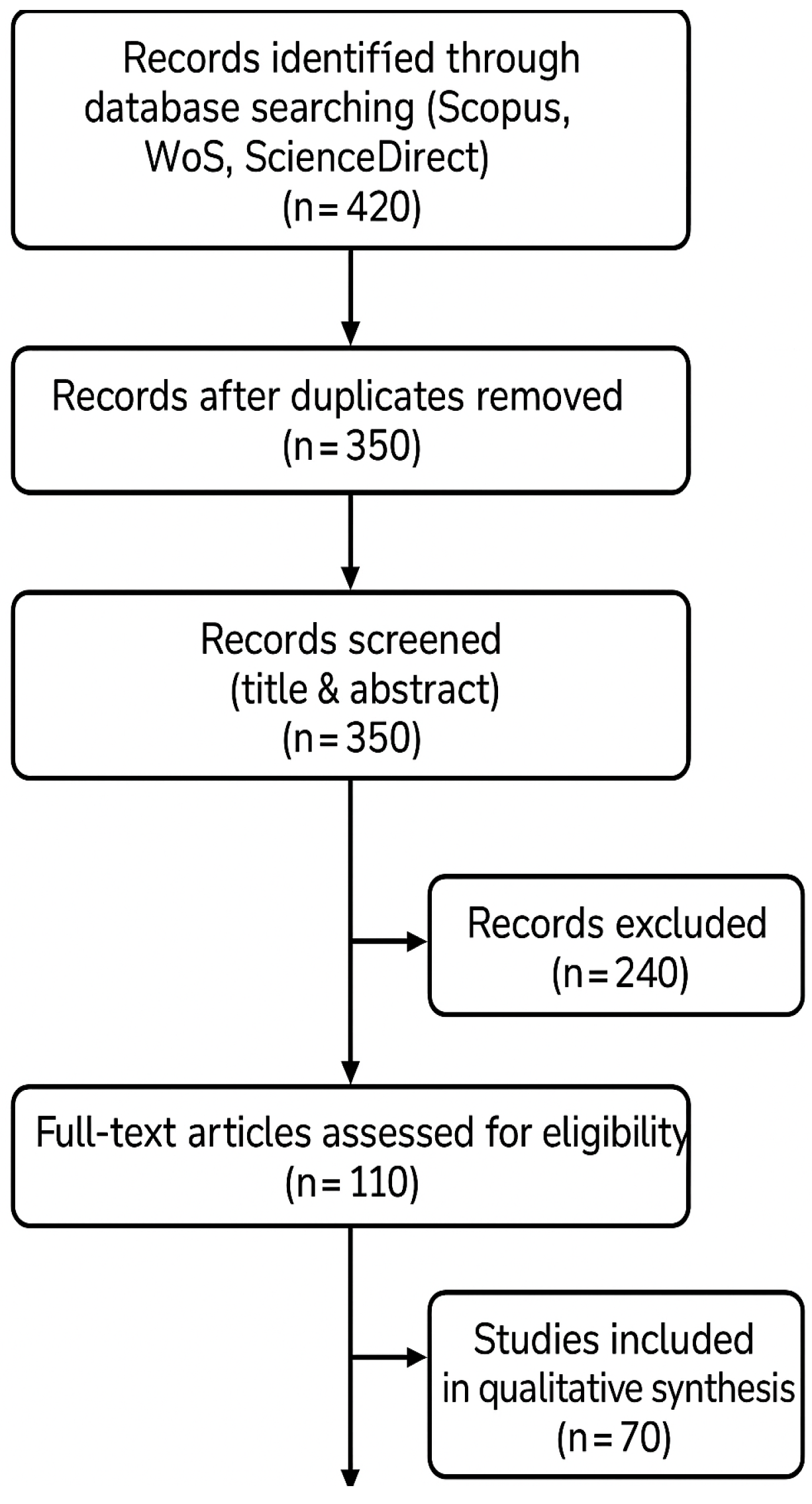
The screening process followed the PRISMA (Preferred Reporting Items for Systematic Reviews and Meta-Analyses) protocol, widely recognized for enhancing transparency and reproducibility. The initial search identified 420 records, of which 350 unique articles remained after duplicates were removed (
Figure 1). Title and abstract screening excluded 240 records that did not directly address the study focus. Full-text screening of the remaining 110 articles led to the removal of studies with insufficient methodological rigor, incomplete data, or limited relevance, leaving a final set of 70 peer-reviewed studies for in-depth analysis (
Figure 2).
To provide a structured and systematic synthesis, the selected studies were clustered into five thematic areas based on their focus as identified from titles and abstracts: sustainable construction management, environmental engineering approaches, green certification and standards, waste and circular economy practices, and emerging trends and technologies. This thematic clustering enabled a focused analysis of both managerial and technical aspects, highlighting intersections, recurring patterns, and areas of innovation within the literature.
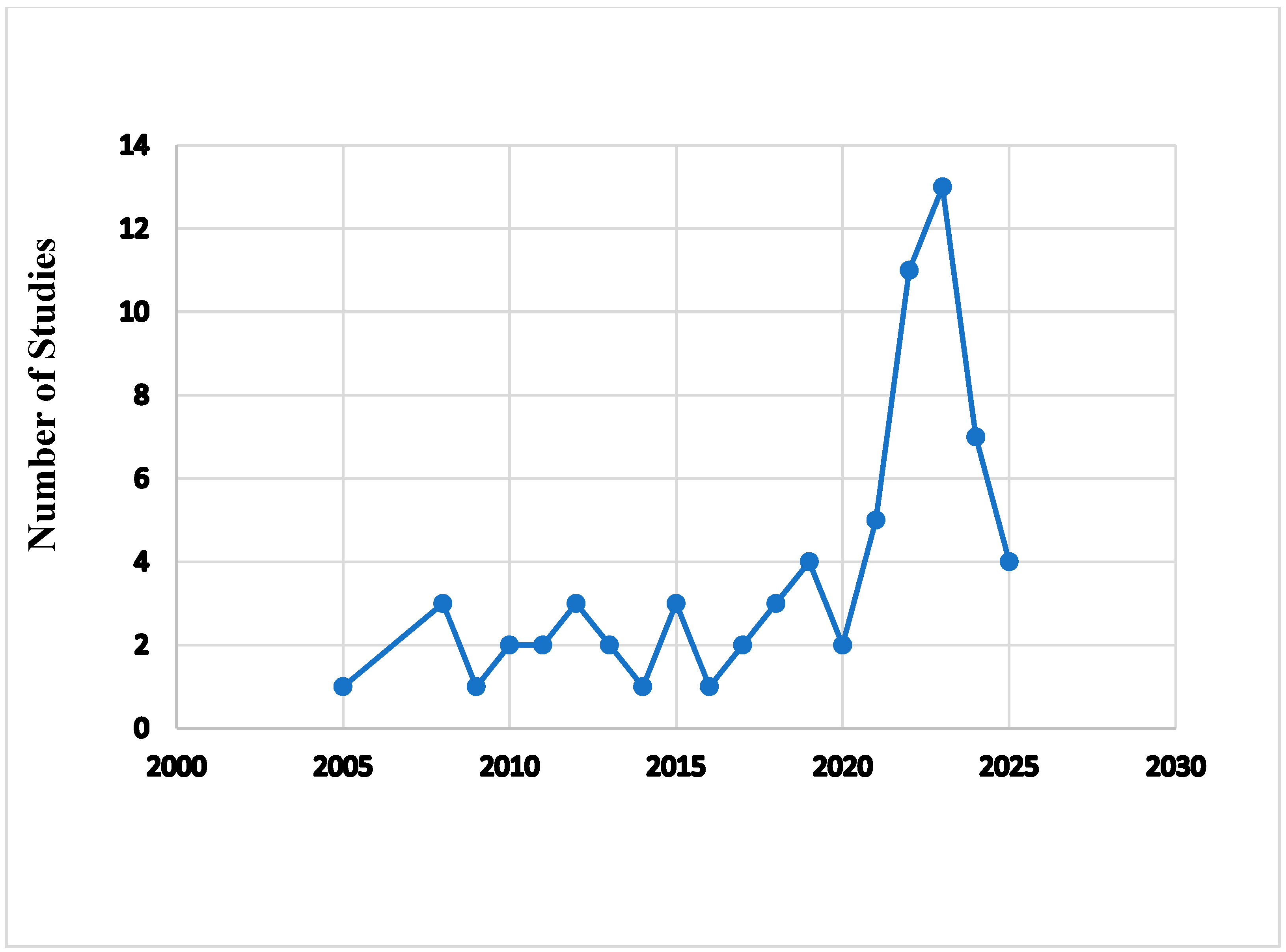
The publication years of the selected studies were analyzed to examine temporal trends and provide an evolutionary perspective on research priorities. Early studies (2005–2010) primarily addressed foundational sustainability practices and green building frameworks, while research from 2011 to 2015 explored the integration of life cycle assessment and early adoption of digital tools. More recent studies (2015–2025) increasingly focus on advanced digital innovations, including Building Information Modeling, artificial intelligence, the Internet of Things, and circular economy applications. This temporal analysis provides insights into how research interests have evolved, showing the progression of key topics and emerging trends in the field.
Each study was carefully examined to distinguish evidence-based findings from interpretive synthesis. Including English and French articles broadened the scope, capturing insights from regions such as Europe, Canada, and parts of Africa where French-language research is prominent. This approach strengthens the generalizability of the findings and provides a robust, evidence-based foundation for the subsequent discussion of sustainable construction practices.
3. Review of Literature
3.1. Sustainable Construction Management
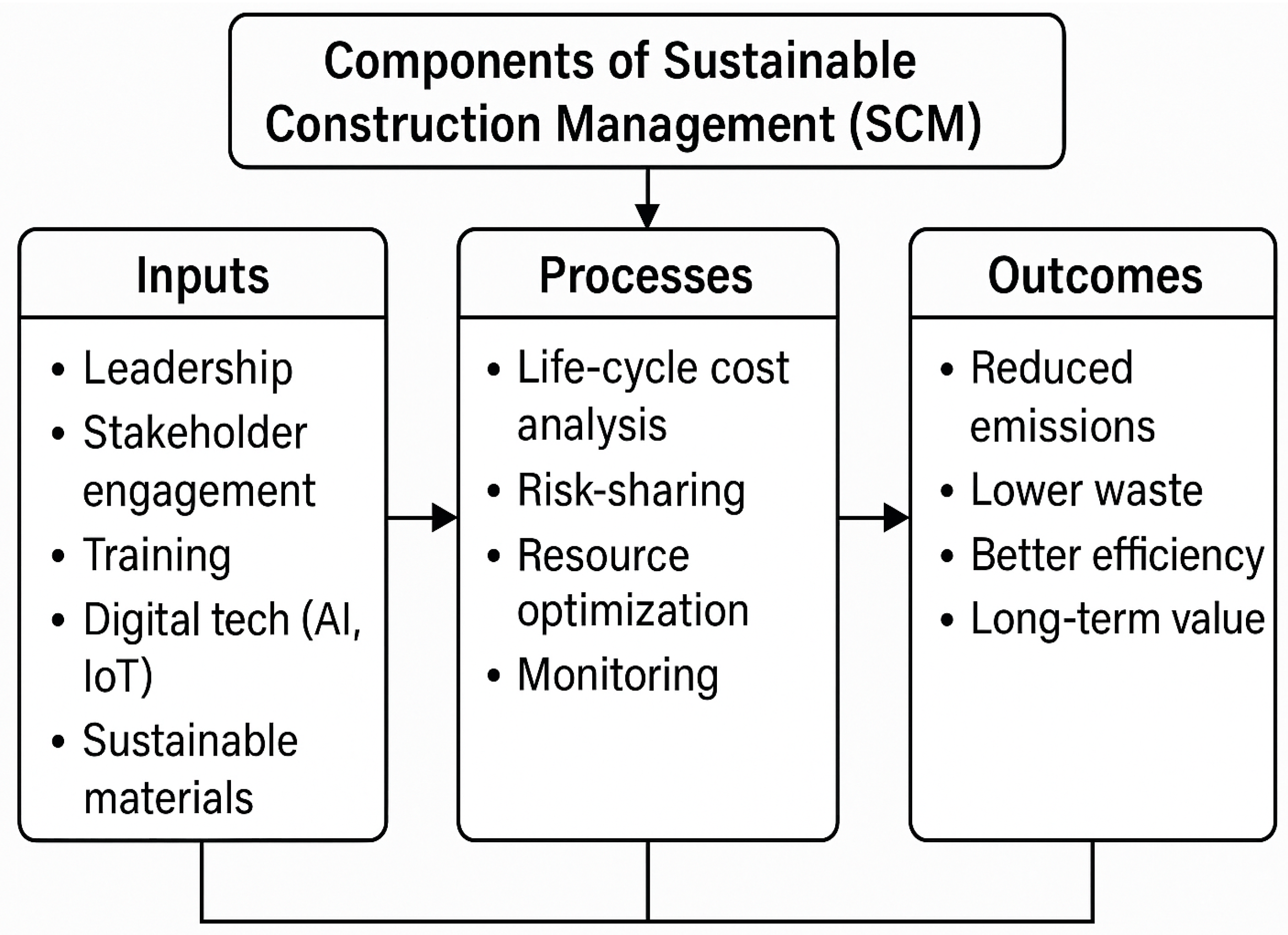
Sustainable construction management (SCM) has become an essential paradigm as the global construction industry seeks to balance productivity, cost-effectiveness, and environmental stewardship (
Figure 3). Traditionally, project delivery systems in construction emphasize cost and schedule, but with the introduction of sustainability frameworks, these systems have evolved to incorporate long-term environmental and social goals. This shift requires stakeholders, including project managers, engineers, clients, and regulators, to consider carbon emissions, material efficiency, and lifecycle costs alongside financial profitability. For example, project delivery systems such as Integrated Project Delivery (IPD) and Public–Private Partnerships (PPPs) are increasingly designed with sustainability targets embedded in their contractual frameworks [
10].
Leadership and stakeholder engagement are critical enablers of sustainability in construction management. Strong leadership ensures that sustainability goals are not treated as add-ons but as core project objectives. Project managers play a crucial role in embedding green practices, such as life cycle cost analysis and risk-sharing mechanisms, into decision-making processes. Equally important is training and capacity building for the workforce, which fosters awareness and equips employees with the technical skills to implement sustainable practices effectively. Research shows that when employees understand the environmental rationale behind their tasks, adoption of green practices improves significantly [
11]. Digital technologies such as AI and the IoT enhance sustainability in construction management by enabling real-time monitoring, predictive analytics, and optimized resource allocation. These tools reduce material waste, improve energy efficiency, and lower carbon emissions. Potential challenges include high initial costs, cybersecurity concerns, and the requirement for skilled personnel.
Despite these advances, barriers persist. High initial costs, limited availability of sustainable materials, and resistance from stakeholders who prioritize short-term gains often slow progress. The availability of sustainable construction materials remains uneven across regions, influencing their integration into project management strategies. Materials such as fly ash, ground granulated blast-furnace slag, and recycled aggregates are increasingly used to replace conventional concrete components, yet their supply depends on local industrial activities. In regions with limited cement or steel production, such as parts of the Middle East and North Africa, access to these industrial by-products is restricted, often requiring costly importation. Bio-based materials, including bamboo, hempcrete, and timber composites, present additional opportunities for sustainable design but are more readily available in tropical and temperate regions than in arid climates. These disparities in supply chains, combined with varying national standards and certification systems, continue to hinder the widespread adoption of sustainable materials in the construction sector. Moreover, fragmented regulatory frameworks and a lack of standardized sustainability metrics complicate integration efforts. Many firms continue to view sustainability initiatives as financially burdensome rather than as opportunities for innovation and long-term value creation. These challenges underscore the need for more effective governance models, collaborative approaches, and performance monitoring systems to ensure sustainability goals are achieved [
12].
Overall, SCM demonstrates significant potential to improve efficiency and reduce environmental impacts in the construction sector, but its success depends heavily on leadership commitment, effective stakeholder involvement, and the gradual institutionalization of sustainability practices into mainstream project management frameworks [
13].
3.2. Environmental Engineering Approaches in Construction
Environmental engineering plays a complementary role in advancing sustainable construction by providing technical solutions for pollution control, resource conservation, and ecosystem protection. One of the most pressing challenges in the construction industry is the generation of pollutants, including dust, particulate matter, and wastewater effluents. Environmental engineers design and implement strategies such as advanced filtration systems, sedimentation basins, and onsite wastewater treatment plants to minimize these impacts. In arid regions, water reuse technologies are particularly important, enabling treated greywater to be recycled for dust suppression, landscaping, or even cooling purposes in construction operations [
14].
Energy efficiency is another critical domain. By applying engineering principles, designers integrate renewable energy sources and passive design strategies into buildings and infrastructure. Techniques such as high-performance insulation, photovoltaic integration, and natural ventilation significantly reduce energy demand and contribute to the broader goal of decarbonization. These innovations not only lower greenhouse gas emissions but also generate operational cost savings, creating strong economic incentives for adoption. Engineers also deploy computational tools to model and optimize energy consumption, ensuring that new projects achieve net-zero or near-zero energy performance targets [
15]. LCA is increasingly applied as a decision-support tool in construction projects. By evaluating environmental impacts across the entire life cycle, from raw material extraction to demolition and disposal, LCA enables project managers and engineers to make informed decisions about material selection and construction methods. For example, the use of fly ash or slag in concrete can reduce embodied carbon significantly compared to traditional Portland cement. Similarly, modular construction methods can reduce waste and energy consumption over the project life cycle [
16]. Nevertheless, challenges remain in integrating environmental engineering solutions into mainstream practice. High costs of advanced technologies, lack of skilled personnel, and institutional inertia often hinder implementation. In addition, the lack of standardized LCA methodologies across countries creates inconsistencies in project evaluations. Despite these obstacles, environmental engineering innovations provide the technical backbone for sustainable construction, linking theoretical goals with practical implementation on-site [
17,
18].
Recent studies have provided quantitative evidence supporting the effectiveness of environmental engineering interventions in construction [
19,
20,
21]. Greywater recycling systems can reduce freshwater demand on construction sites by 45–60%, equivalent to savings of up to 25–40 cubic meters of water per 1000 m
2 of built area [
22,
23]. Onsite wastewater treatment units achieve over 90% pollutant removal efficiency, reducing suspended solids concentrations from 250 mg/L to below 25 mg/L [
24,
25]. Integrating photovoltaic panels and passive cooling strategies can lower annual energy use by 30–50%, equivalent to 40–80 kWh/m
2 per year in typical mid-rise buildings [
26,
27]. The partial substitution of Portland cement with 30% fly ash can reduce embodied carbon by 300–400 kg CO
2 per ton of cement produced [
28]. Moreover, modular and prefabricated methods can cut construction waste generation from 120 kg/m
2 to as low as 60 kg/m
2, improving both resource efficiency and site cleanliness [
29,
30].
3.3. Green Certification and Standards
Green building certification systems have become powerful drivers of sustainable construction by offering standardized frameworks to assess and benchmark performance. Among the most influential are the LEED, the BREEAM, and the DGNB system. These certifications provide structured methodologies for evaluating projects in terms of energy efficiency, material use, indoor environmental quality, and overall ecological footprint [
31,
32,
33]. LEED is widely applied in North America and parts of Asia, focusing on energy efficiency and water management. BREEAM is common in Europe, emphasizing lifecycle assessment and social sustainability. DGNB from Germany integrates ecological, economic, and sociocultural criteria. Certification costs vary with project size and enhance marketability while providing incentives and recognition (
Table 1).
The benefits of certification are multifaceted. They enhance a project’s marketability by demonstrating environmental responsibility, reducing operational costs through energy and water savings, and improving occupant health and well-being. Furthermore, certifications can attract environmentally conscious investors and clients, thereby providing a competitive advantage in the global construction market. In many cases, governments incentivize certification by offering tax breaks, subsidies, or expedited permitting processes, further motivating stakeholders to pursue green credentials [
34,
35].
However, limitations exist. The certification process can be costly and time-consuming, particularly for smaller firms or projects with limited budgets. Moreover, some critics argue that certifications often emphasize compliance and checklists rather than encouraging holistic sustainability innovation. For example, a project may achieve certification by focusing narrowly on energy savings while neglecting broader social dimensions such as community integration or labor welfare. Another challenge lies in adapting international certification systems to local contexts, where climatic conditions, cultural values, and regulatory frameworks may differ significantly from the assumptions embedded in global standards [
36].
Integrating certifications into project management frameworks remains an evolving practice. While some firms fully embed certification goals into their project delivery systems, others treat them as optional add-ons [
37]. To maximize impact, certifications should be incorporated from the design stage, enabling a “design for sustainability” approach that ensures alignment between management practices, engineering solutions, and certification requirements [
38].
3.4. Waste and Circular Economy Practices
The construction industry is widely recognized as one of the largest contributors to global waste streams, with construction and demolition (C&D) activities accounting for approximately 30–40% of total solid waste worldwide [
39]. This scale of waste generation poses significant environmental, economic, and social challenges, as it contributes not only to landfilling and resource depletion but also to greenhouse gas emissions and ecological degradation. In fast-growing urban regions, the problem is particularly acute, as infrastructure expansion and demolition of outdated structures produce immense volumes of debris with limited pathways for sustainable management. Against this backdrop, the concept of the circular economy (CE) has emerged as a transformative paradigm. Rather than relying on the linear model of “take, make, dispose,” circular economy principles prioritize waste prevention, resource recovery, and closed-loop systems, thereby aligning construction practices with broader sustainability goals and the United Nations SDGs, especially SDG 12 (Responsible Consumption and Production). Circular economy approaches in construction emphasize the “3Rs”: reduction, reuse, and recycling, with an increasing focus on design strategies that minimize material use from the outset. Selective demolition, sometimes termed deconstruction, represents a critical step toward realizing circularity, as it enables the careful dismantling of structures to preserve reusable materials such as wood, steel, and masonry [
40]. Material recovery ensures that elements from one project can be repurposed in another, reducing the demand for virgin resources. Reuse markets for doors, windows, flooring, and structural components are growing in several regions, supported by digital platforms that connect suppliers of reclaimed materials with buyers seeking affordable and sustainable options. Recycling, meanwhile, transforms waste into new inputs for construction, with recycled aggregates, reclaimed asphalt pavement (RAP), and recycled concrete aggregates (RCA) gaining increasing acceptance in both public and private sector projects [
41]. Technological advancements have expanded the feasibility of recycling in construction. Conventional crushing techniques have been complemented by advanced sorting technologies, which improve the separation of materials such as concrete, brick, and metals, thereby ensuring higher-quality outputs. Chemical recycling innovations further extend possibilities by breaking down plastics, composites, and other complex materials into reusable raw inputs. For example, processes that depolymerize plastics allow them to be reintegrated into construction products such as insulation panels or piping. The use of recycled concrete aggregate (RCA) has been particularly prominent, with research demonstrating its potential to replace natural aggregates in structural and non-structural applications, although concerns about mechanical strength and durability persist. Reclaimed asphalt pavement (RAP), when processed effectively, has also shown significant promise in reducing both costs and carbon footprints of road construction. These innovations collectively reduce reliance on virgin materials, thereby lowering the embodied energy of projects and reducing overall environmental impacts [
42].
Digital technologies are increasingly recognized as enablers of circular construction practices. BIM, for instance, provides a digital representation of a structure’s components, enabling precise material tracking and management. Through BIM, project teams can estimate quantities, predict waste generation, and identify opportunities for reuse and recycling during both design and construction phases [
9,
43]. Material passports, digital documents that provide information on material properties, origins, and potential reuse pathways, are also being developed to facilitate circularity across the life cycle of buildings. When integrated with BIM, such tools support closed-loop supply chains, ensuring that materials can be efficiently disassembled, cataloged, and repurposed. Emerging technologies, such as digital twins, virtual replicas of built assets, extend this potential by allowing continuous monitoring of material performance and life cycle impacts, thereby informing decisions on reuse and recycling at the end of life [
44].
Case studies from around the world demonstrate both the potential and limitations of waste and circular economic practices in construction (
Table 2). In Europe, particularly in countries like the Netherlands, Denmark, and Germany, strong regulatory frameworks and cultural emphasis on sustainability have enabled the widespread adoption of circular construction principles. The Dutch government, for instance, has set ambitious goals to become fully circular by 2050, with the construction sector identified as a priority area [
45]. Pilot projects in Amsterdam have demonstrated the feasibility of designing buildings for disassembly, using modular components that can be easily reused [
46]. The adoption of waste management and circular economy practices in the European construction sector is guided by specific regulatory frameworks. Key instruments include the EU Waste Framework Directive 2008/98/EC, which sets targets for waste prevention, recycling, and recovery, the Construction Products Regulation 305/2011/EU, which regulates sustainable material use, and the Circular Economy Action Plan 2020, which promotes resource efficiency and the integration of secondary materials into construction processes. These regulations provide legal backing and incentives for implementing circular practices across EU member states. In contrast, many developing countries face greater challenges, including limited infrastructure for waste collection and recycling, weak enforcement of regulations, and insufficient financial incentives. In such contexts, informal recycling systems often play a critical role, though they frequently operate without adequate safety standards or technological support. The disparity between developed and developing regions underscores the need for context-specific approaches that consider local economic, social, and institutional capacities [
47]. Despite significant advances, several barriers impede the large-scale adoption of circular economy practices in construction. Technical challenges include the variability in quality of recycled materials, which may limit their use in structural applications where safety and durability are paramount. Standardization remains limited, with few universally accepted benchmarks for assessing the performance of recycled materials. Market-related barriers are also significant: demand for recycled products often lags behind supply due to perceptions of inferior quality and a preference for conventional materials. Cost considerations further complicate adoption, as logistical challenges in collecting, transporting, and processing construction waste can render recycling less economically attractive than landfilling. In addition, regulatory frameworks in many regions do not adequately incentivize circular practices, with landfill fees remaining low and policies insufficiently aligned with sustainability goals [
48]. Overcoming these challenges requires coordinated action across multiple dimensions. Policy incentives such as tax breaks, subsidies, and extended producer responsibility (EPR) schemes can make recycling and reuse more financially viable. Governments can also play a key role in mandating recycled content in public projects, thereby creating stable demand for secondary materials. Standardization of recycled materials, through certification systems and testing protocols, can increase confidence among industry stakeholders and encourage wider adoption. Cultural shifts are equally important: reframing waste as a resource requires awareness campaigns, training programs, and leadership from both industry and academia. Public–private partnerships (PPPs) represent another avenue for advancing circular practices, as they can mobilize funding, expertise, and innovation from diverse stakeholders [
49]. Looking forward, integrating circular economy principles into construction holds immense potential for reducing environmental impacts and fostering sustainable growth. Innovations such as bio-based construction materials, including hempcrete and bamboo composites, align with circularity by offering renewable alternatives to conventional inputs. Advances in additive manufacturing (3D printing) also enable precise material use, reducing waste during construction and facilitating the incorporation of recycled content. Moreover, AI and the IoT are beginning to play a role in waste management, with AI-powered sorting systems improving efficiency in recycling plants and IoT sensors enabling real-time tracking of material flows across construction sites. These developments point to a future where circular economy strategies are deeply embedded in construction workflows, supported by both technological innovation and policy reform.
Waste management and circular economy practices in construction represent a critical frontier in the pursuit of sustainability. By shifting from linear to circular models, the sector can significantly reduce its environmental footprint, conserve natural resources, and create new economic opportunities. However, realizing this potential requires overcoming persistent barriers through stronger regulatory frameworks, market development for recycled materials, and cultural acceptance of waste as a resource. Equally important is the need for more data and case studies from developing regions, where unique challenges and opportunities must be understood to ensure equitable global progress. As the construction industry continues to expand to meet the demands of urbanization, integrating circular economy principles will be essential to achieving long-term sustainability goals and ensuring alignment with global commitments such as the SDGs.
3.5. Emerging Trends and Technologies
The future of sustainable construction is being shaped by emerging materials, digital innovations, and strategies for carbon neutrality. Renewable and low-carbon materials, such as hempcrete, bamboo, and geopolymer concrete, offer alternatives to traditional high-emission materials like cement and steel (
Table 3). Hempcrete, for instance, provides excellent insulation while sequestering carbon during its growth phase, making it both a sustainable and energy-efficient option. Geopolymer concrete, made from industrial byproducts such as fly ash, significantly reduces CO
2 emissions compared to conventional cement [
50,
51].
Digital twin technology is revolutionizing construction management by creating dynamic, real-time digital replicas of physical assets. Digital twins integrate data from sensors, BIM, and other monitoring tools to optimize energy use, track material flows, and predict maintenance needs. When combined with artificial intelligence, these systems enable predictive modeling that enhances sustainability outcomes throughout a project’s life cycle. Similarly, smart construction technologies, including drones, robotics, and IoT devices, are being used to monitor site conditions, reduce waste, and improve efficiency [
52].
Carbon-neutral and climate-positive strategies are also gaining traction. Initiatives such as carbon capture and storage (CCS), renewable energy integration, and offsetting schemes are increasingly embedded in construction projects. Some forward-looking firms are experimenting with carbon accounting at the project level, setting ambitious targets such as “net-zero by design”. These approaches align with international frameworks like the Paris Agreement and SDGs, positioning the construction sector as a proactive player in global climate action.
Nevertheless, the widespread adoption of emerging technologies faces obstacles, including high upfront costs, a lack of technical expertise, and regulatory uncertainty. There is also the risk of technological lock-in, where early adoption of certain technologies may limit flexibility in the face of newer innovations. To address these challenges, collaborative research, pilot projects, and supportive policy frameworks are necessary to accelerate learning and ensure equitable diffusion of sustainable technologies.
4. Discussion
The implementation of sustainable construction practices varies considerably across the global landscape, particularly when comparing developed and developing countries [
53]. Developed nations such as the United States, Germany, and Japan have integrated sustainability into their construction sectors through advanced technologies, strong regulatory frameworks, and well-established green certification systems [
54]. Building codes often mandate energy efficiency, while government incentives accelerate the adoption of renewable energy systems, waste recycling, and innovative materials. Furthermore, the financial sector in these countries is more supportive of green investments, offering favorable loan structures for certified sustainable projects. In contrast, many developing countries face significant barriers. Limited access to capital, insufficient technical expertise, and weak enforcement of environmental regulations hinder widespread adoption. For instance, while flagship projects in cities like Dubai or Singapore demonstrate high levels of sustainability, these often remain isolated cases, driven by international investment rather than local industry transformation. Cultural and socioeconomic conditions also influence adoption; in regions where housing shortages or rapid urbanization dominate priorities, cost and speed of delivery often outweigh environmental considerations. This global imbalance underscores the need for context-specific strategies that address local constraints while aligning with international sustainability targets [
55].
Beyond geographic disparities, the construction industry as a whole faces integration challenges that slow progress toward sustainability. One of the most persistent obstacles is cost. Although sustainable practices such as energy-efficient designs or low-carbon materials often lead to long-term savings, their upfront costs remain prohibitive for many stakeholders. Contractors and developers may resist adopting technologies like digital twin systems, renewable energy integration, or advanced wastewater treatment, perceiving them as financially risky. Training and human capital also present barriers. In many regions, construction workers, engineers, and project managers lack adequate training in sustainability tools such as LCA or BIM. Without this knowledge, even well-designed policies cannot achieve full implementation. Institutional inertia compounds these issues, particularly in industries accustomed to traditional delivery models. Resistance to change, coupled with fragmented supply chains, slows the mainstreaming of sustainable practices. Furthermore, the absence of universal standards for measuring sustainability complicates adoption; firms may be uncertain about which benchmarks to prioritize, leading to inconsistent results. These challenges illustrate that the transition to sustainable construction requires not only new technologies but also cultural and institutional transformation across the industry [
56].
Policy and regulation remain central drivers of change in sustainable construction. In developed economies, strong regulatory systems often compel industry compliance, ensuring that sustainability standards are integrated into every stage of project delivery. Examples include the European Union’s Energy Performance of Buildings Directive, which sets stringent requirements for energy efficiency, and the U.S. Environmental Protection Agency’s initiatives for reducing construction-related emissions. In developing countries, however, policies may be poorly enforced or underfunded, creating gaps between legislative intent and practical outcomes. Financial incentives such as tax reductions, subsidies for green materials, and expedited approval processes for certified projects have proven effective in accelerating adoption where they are consistently applied. However, policy effectiveness depends not only on the design of regulations but also on political stability and long-term commitment. Sudden policy shifts or lack of continuity can undermine industry confidence and deter investment in sustainable projects. Furthermore, international agreements such as the Paris Agreement and SDGs provide overarching frameworks, but their translation into actionable national policies varies widely. The challenge lies in tailoring regulatory mechanisms that balance economic growth with environmental protection, ensuring that sustainability is not perceived as a constraint but as a catalyst for innovation and competitiveness [
57].
A final but crucial dimension of sustainable construction advancement is the collaboration between industry and academia. Universities and research institutes generate knowledge on emerging materials, innovative project management models, and advanced environmental engineering solutions [
58]. For example, research into alternative binders for cement, such as geopolymers, originates in academic laboratories but requires industry partners to scale up production and integrate them into real-world projects. Industry–academia partnerships also facilitate training programs that build human capacity, equipping future engineers and managers with the skills to implement sustainability tools effectively [
59,
60]. Collaborative pilot projects funded jointly by governments, universities, and private firms serve as testbeds for innovative practices, enabling evaluation before large-scale rollout [
61]. These collaborations, however, are not without challenges. Misalignment between academic research priorities and industry’s immediate needs can limit the practical applicability of projects. In some cases, intellectual property concerns and funding constraints also restrict the extent of collaboration. Nevertheless, the synergy between theoretical research and industry practice remains a powerful mechanism for accelerating sustainability. Stronger networks, cross-border collaborations, and multidisciplinary approaches will be essential to ensuring that innovation flows seamlessly from academia to industry, ultimately driving the construction sector toward more sustainable futures.
Taken together, these dimensions reveal that sustainable construction is both a global and local challenge. Developed countries continue to lead in implementing advanced technologies and regulatory systems, while developing nations face unique socioeconomic and institutional barriers that require tailored strategies. Integration challenges cut across both contexts, with financial, cultural, and technical issues slowing adoption. Policies and regulations, when effectively designed and enforced, act as strong levers for change, but their success depends on consistency and long-term political will. Finally, bridging the gap between research and practice through industry–academia collaboration offers a pathway to innovation and accelerated adoption. The future of sustainable construction depends on addressing these multifaceted issues holistically, ensuring that sustainability becomes embedded not as an optional feature but as a fundamental principle of construction management and environmental engineering worldwide.
Recent studies have quantified the positive impacts of digital technologies in construction management [
62,
63]. AI and IoT applications have been shown to improve operational efficiency, reduce costs, and lower carbon emissions [
64]. AI-based scheduling and predictive analytics can reduce project delays by 10–25% while optimizing resource allocation and reducing material waste [
65]. IoT-enabled monitoring of equipment and building systems allows for predictive maintenance, lowering operational costs by 5–15% and decreasing energy consumption [
66,
67]. Digital twins integrated with BIM support real-time tracking of material flows, energy use, and environmental performance, enabling carbon reductions of 5–12% per project [
68]. These digital approaches are often implemented following international standards such as ISO 19650 [
69] for BIM and ISO 50001 [
70] for energy management, as well as sustainability frameworks including LEED, BREEAM, and DGNB. Together, these technologies demonstrate the tangible benefits of digitalization in enhancing both economic and environmental performance in construction projects.
5. Conclusions and Future Research Directions
Sustainable construction management and environmental engineering have made notable progress in recent decades, yet the path toward full integration remains uneven and challenging. The literature shows clear benefits of sustainable practices from reduced energy consumption to enhanced waste recovery and healthier built environments—but it also highlights significant gaps that must be addressed. This section reflects on the main findings and outlines four key future directions that can accelerate the transition toward sustainability: the need for more data from the Global South, the integration of digital technologies such as AI and the IoT, the long-term monitoring of certified green buildings, and the development of policy frameworks that explicitly link construction with the SDGs. Together, these priorities offer a roadmap for ensuring that sustainable construction evolves as both a global and inclusive movement.
The first pressing need is for more data from the Global South. Much of the current literature on sustainable construction originates in developed regions such as North America, Europe, and parts of East Asia. These contexts benefit from advanced economies, robust regulatory systems, and strong research infrastructures. In contrast, the Global South, including countries in Africa, South Asia, and parts of Latin America, remains underrepresented in sustainability studies despite being regions of rapid urbanization and major construction growth. The lack of empirical data from these regions limits the global understanding of how sustainability can be adapted to diverse socioeconomic and climatic conditions. For instance, construction challenges in tropical climates, where cooling demand dominates, differ significantly from those in temperate zones, where heating is the primary concern. Similarly, the availability of local materials, cultural construction practices, and policy contexts varies widely across countries, yet they are rarely integrated into global sustainability debates. Without a stronger evidence base from the Global South, sustainability risks are being defined primarily by the priorities of developed nations, which may not translate effectively into local contexts. Future research should therefore prioritize longitudinal case studies, regional benchmarking, and context-specific evaluations that capture the realities of construction in underrepresented areas. Collaborative networks, involving local universities, governments, and industry players, can help generate this knowledge and ensure it informs global policy frameworks.
A second form of development for sustainable construction lies in the integration of advanced digital technologies, particularly AI and the IoT. These technologies offer transformative potential for optimizing resource use, improving efficiency, and reducing environmental impacts throughout the construction life cycle. AI algorithms can analyze large datasets to identify patterns, predict energy consumption, and optimize supply chain logistics, thereby reducing waste and costs. Machine learning models can also forecast material deterioration, enable proactive maintenance, and extend building lifespans. Meanwhile, IoT devices ranging from smart meters to environmental sensors enable real-time monitoring of building performance, construction site conditions, and resource flows. When combined, AI and IoT create powerful feedback systems that allow managers to make data-driven decisions and continuously improve sustainability outcomes. However, the integration of these technologies is still in its infancy. High implementation costs, cybersecurity risks, and a lack of technical expertise hinder widespread adoption, especially in developing regions. To maximize their potential, future research should focus on creating scalable, affordable digital solutions that are adaptable across different economic contexts. Furthermore, industry training programs must evolve to equip professionals with the skills necessary to use AI and IoT tools effectively, ensuring that digital innovation translates into practical sustainability gains.
Another critical gap concerns the long-term monitoring of certified green buildings. While certification systems such as LEED and BREEAM have advanced sustainability practices by setting benchmarks and rewarding performance, most certification processes focus heavily on the design and construction phases. Post-occupancy performance, however, often deviates from initial predictions, a phenomenon known as the “performance gap.” Buildings may fail to deliver the promised energy savings or environmental benefits due to poor maintenance, changes in occupancy behavior, or inadequate operational management. The absence of consistent long-term monitoring undermines the credibility of certification systems and limits the ability to refine sustainability strategies based on real-world performance. Establishing frameworks for continuous data collection using tools such as smart meters, digital twins, and occupant feedback systems would help bridge this gap. Moreover, integrating long-term performance monitoring into certification requirements would ensure that sustainability is not a one-time achievement but a continuous commitment. Future research should explore models for cost-effective monitoring and assess the potential of blockchain or decentralized databases to ensure transparency and accountability in reporting building performance over time.
Finally, there is a need for stronger policy frameworks that explicitly link sustainable construction with the SDGs. While sustainability in construction is often framed in terms of energy efficiency and carbon reduction, the SDGs emphasize a broader agenda that includes social equity, community resilience, and responsible consumption. Linking construction practices to SDG targets would expand the scope of sustainability beyond environmental metrics to include social and economic dimensions. For example, SDG 11 (“Sustainable Cities and Communities”) and SDG 12 (“Responsible Consumption and Production”) directly relate to the construction sector, but other goals such as SDG 3 (“Good Health and Well-being”) and SDG 8 (“Decent Work and Economic Growth”) are also relevant. Policymakers should design regulatory frameworks that incentivize construction projects to align with multiple SDG targets, encouraging holistic sustainability. In addition, international cooperation is crucial. Knowledge transfer between countries, harmonization of certification systems, and joint funding mechanisms could ensure that sustainability in construction contributes meaningfully to the global SDG agenda. Future research will play a role by developing methodologies to quantify construction’s contributions to the SDGs and by identifying best practices from both developed and developing contexts.
Taken together, these four areas highlight that the future of sustainable construction depends on expanding knowledge, embracing digital innovation, ensuring accountability, and aligning with global policy frameworks. More data from the Global South will help bridge geographic disparities and provide inclusive solutions. The integration of AI and IoT will enhance efficiency and precision in managing resources, while long-term monitoring of certified buildings will ensure that sustainability commitments translate into real-world outcomes. Finally, policy frameworks explicitly tied to the SDGs will broaden the impact of construction practices, ensuring that they contribute not only to environmental protection but also to social equity and economic resilience. Addressing these priorities requires collaboration among governments, academia, industry, and civil society. By advancing in these directions, sustainable construction can become a truly global endeavor, one that not only reduces environmental footprints but also fosters inclusive and resilient communities for generations to come.