


Abstract
Circular economy learning fosters competencies in sustainable resource management and environmental protection, which have been recognized by the OECD (Organization for Economic Cooperation and Development) to be essential for cross-curricular training and higher education. However, implementing gamification techniques through mobile applications remains challenging, as their effectiveness depends on students’ willingness to adopt them. This study evaluated acceptance of a gamified mobile application for circular economy learning among university students in Peru, analyzing the relationships between the constructs of the Technology Acceptance Model (TAM). A quantitative correlational case study involving 76 students was conducted. The results showed a moderate-to-high acceptance rate of 73.69%, with significant correlations identified between the TAM constructs. This study contributes to closing gaps in empirical evidence on the acceptance of technology for sustainability education in diverse contexts. Future studies should integrate generative artificial intelligence into gamified apps to deliver personalized feedback and employ learning analytics tools for progress tracking, supporting global efforts toward SGD 4 (Quality Education) and SDG 12 (Responsible Production and Consumption) for the transition to circular economies.
1. Introduction
Over the last decade, the digital transformation in education has experienced significant growth, driven by policies that seek to respond to the needs of new pedagogical demands in university training [1]. This process has placed higher education in a scenario of unprecedented change, where the integration of digital technologies has progressively modified traditional teaching–learning methods [2]. The incorporation of Information and Communication Technologies (ICT) has been consolidated as an essential component to improve educational quality and reduce gaps in access to knowledge [3], in turn strengthening pedagogical and educational management processes through more dynamic and interactive environments [4]. However, this advance also poses challenges for university institutions, which must adapt their training strategies to new technological environments [5]. The integration of digital tools has opened up opportunities for more personalized and collaborative learning experiences, contributing to student-centered training [6] and aligning with a global trend that seeks to redefine university education in a highly digitalized society [7].
In this context, active learning has gained special relevance, promoting reflective and critical participation of students through the integration of theoretical and practical content supported by digital resources [8]. Likewise, the incorporation of the digital economy in higher education has facilitated access to information and favored more flexible and efficient teaching processes [9]. In this way, university education plays a key role in the development of competencies associated with the circular economy, integrating scientific and technical training with ethical and sustainable values to face contemporary environmental and social challenges [10]. The methodological application of the circular economy in teaching has been shown to enhance environmental awareness and strengthen conceptual and attitudinal competencies oriented towards sustainability [11], preparing students to implement responsible practices in their professional lives [12].
In this process of educational transformation, mobile learning has emerged as a key strategy to offer flexible and personalized training experiences, integrating applications and digital platforms in the teaching-learning process [13]. To guarantee its effectiveness, it is necessary to consider the educational context, the competencies to be developed, and the needs of the students, such that its use transcends the simple transmission of content and promotes active and collaborative learning [14,15]. Several studies have indicated that digital tools favor autonomy and academic motivation, facilitating the integration of content related to sustainable resource management and responsible production in different disciplines [16].
In particular, the m-learning model has made it possible to link theory with practice in real contexts, strengthening professional competencies and promoting the understanding of socioeconomic and environmental problems [17]. This approach, supported by academic innovation, is presented as a fundamental pillar for raising awareness among students about sustainability—especially regarding the responsible management of resources and e-waste—through accessible information and integrated pedagogical practices [18,19]. Additionally, the incorporation of emerging technologies such as Big Data, artificial intelligence, or gamification in educational management offers new opportunities to optimize processes and move towards teaching models that promote the circular economy and sustainability [20,21].
Gamification, understood as an innovative methodological strategy that incorporates game dynamics and mechanics into the teaching-learning process, seeks to increase students’ motivation, participation, and commitment to more active and meaningful learning [22,23]. Recent research has shown that the integration of challenges, rewards, and feedback in digital educational environments enhances the acquisition of theoretical and practical skills [24,25]. Furthermore, the application of gamification in higher education has been shown to improve both academic performance and student motivation, especially when adapted to the predominant learning styles [26,27]. It has also emerged as an effective strategy to promote collaborative and participatory learning in virtual environments, integrating playful dynamics that favor students’ autonomy and commitment to active learning [28,29].
Finally, the TAM argues that the adoption of a technology depends on its perceived usefulness (PU) and perceived ease of use (PEOU), as determining variables of attitude toward use (ATU) and behavioral intention to use (BIU) [30,31,32]. This model has established itself as a benchmark for understanding technology adoption in academic settings, given that these perceptions influence students’ attitudes and intentions to incorporate digital applications into their learning [33,34]. The literature has shown that perceived usefulness has a significant impact on behavioral intention to use, and is even the most influential factor in the adoption of mobile applications in fields such as education [35,36]. Similarly, empirical studies have confirmed that the constructs of the TAM present positive and significant correlations, validating its ability to predict the acceptance and adoption of educational technologies in different training contexts [37,38].
In this sense, the main objective of this study is to evaluate the level of acceptance and the interrelationships between the TAM constructs in the context of a gamified mobile application designed to teach the fundamentals of the circular economy. The focus is limited to users’ perceptions of the tool’s usefulness and ease of use, without inferring actual learning improvements or educational outcomes, which fall beyond this perceptual and correlational analysis. Thus, the research adopts an exploratory–correlational quantitative approach in a limited case study design, without a control group or causality assessment, to examine acceptance perceptions via TAM. The purpose is not to evaluate causality or intervention effects on cognitive performance, but rather to examine perceptions of acceptance through the TAM constructs. This was applied to 76 undergraduate students from the Professional School of Economics at a Peruvian public university, representative of a typical demographic profile of young adults in emerging higher education programs. This sample provides contextual insights into local technology adoption patterns, emphasizing interpretive depth over generalizability. The article is structured as follows: Section 2 presents the theoretical and conceptual framework; Section 3 details the methodological design and development process of the gamified mobile application; Section 4 presents the results of perception and correlational analysis; and Section 5, Section 6 and Section 7 address the discussion, conclusions, and limitations of the study. Table 1 details the research questions (RQ), focus of action, and specific objectives that guided the development of the study, reinforcing the alignment between the design and perceptual purposes.
Table 1.
Research questions, focus of action and objectives of the study.
2. Conceptual Framework
2.1. Circular Economy
The circular economy is presented as an alternative to the conventional linear model, prioritizing the reduction, reuse, and recycling of resources to promote development that balances environmental and economic dimensions [39,40]. This approach drives more efficient production and consumption systems by extending the useful life of materials through maintenance, repair, and reuse, which reduces dependence on scarce resources [41,42]. It also promotes resource regeneration and waste minimization through collaboration between social, industrial, and governmental actors, serving as a foundation for a sustainable economic model [43,44].
2.2. Gamification in Higher Education
Gamification, by introducing playful elements into non-recreational academic environments, has proven effective in increasing student motivation and engagement, facilitating the adoption of sustainable practices in higher education [45]. The application of challenges, levels, and rewards in university contexts stimulates active participation and strengthens essential skills to address social and environmental challenges [46]. As an innovative pedagogical methodology, it fosters responsible attitudes towards the environment, enriching environmental and social awareness in learning processes [47]. Furthermore, its use in non-recreational educational settings enhances student interest and promotes the integration of sustainable values into academic training [48]. The combination of digital skills and sustainable principles through this strategy is key to preparing students to face the environmental and technological challenges of the 21st century [49]. In this context, the implementation of this technology in circular economy programs stimulates experiential learning and active participation, training professionals who are capable of designing circular business models [50].
2.3. Sustainable Education SDG 4 and SDG 12
The Sustainable Development Goals (SDGs), defined by the United Nations in 2015, were established as 17 global goals aimed at building an equitable and sustainable future by 2023, covering areas such as education, responsible consumption, and climate action [51]. SDG 4 seeks to ensure inclusive, equitable, and quality education, positioning lifelong learning as a pillar of sustainable development [52], while SDG 12 focuses on promoting sustainable production and consumption patterns, reducing the pressure on natural resources [53]. In higher education, the inclusion of sustainability and social responsibility principles in curricula plays a central role in advancing these goals, guiding teaching towards conscious consumption and sustainable production [54,55]. This educational approach integrates social, economic, and environmental dimensions, allowing students to understand and apply these global goals in the context of educational quality and environmental responsibility [56,57]. In this sense, the use of technologies stands out as a strategic resource, improving the accessibility and quality of education (SDG 4) while also promoting pedagogical practices that reinforce sustainable patterns of production and consumption (SDG 12) [58].
2.4. Synthesis and Relevance to the Study
The convergence of the circular economy, gamification, and SDGs 4 and 12 offers a theoretical framework for addressing sustainability in higher education based on emerging technologies. In the context of this study, the integration of these dimensions through a gamified mobile application for university students in Peru aligns with the promotion of circular practices, inclusive learning, and responsible consumption, providing a basis for evaluating its acceptance and effectiveness.
3. Materials and Methods
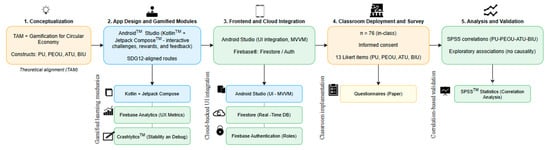
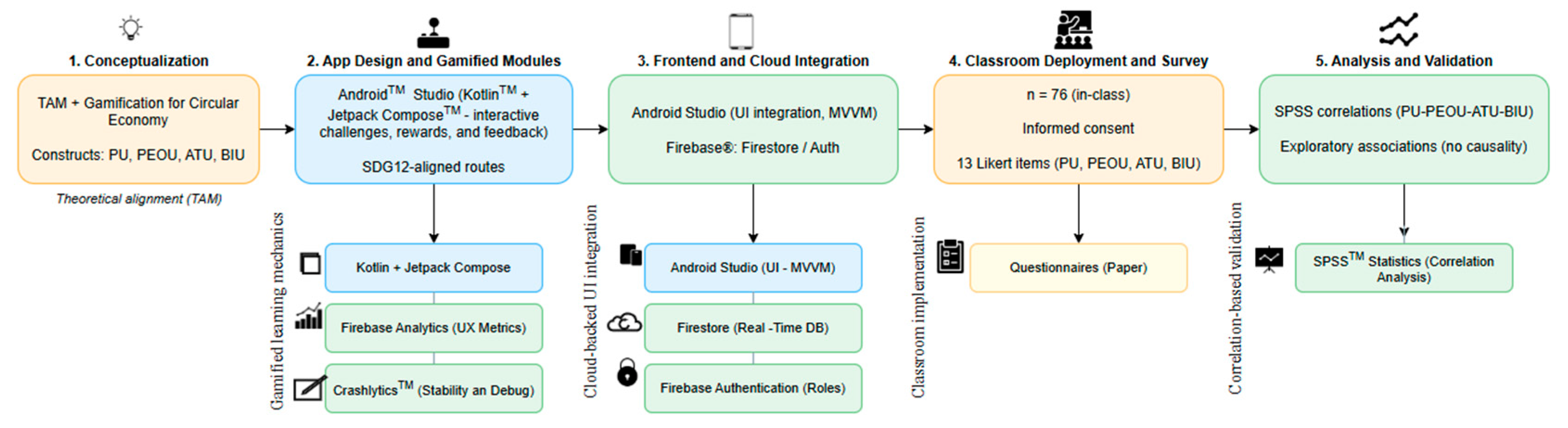
This section delineates the specific methodological guidelines and key aspects that development and evaluation of the gamified mobile application, tailored to the Peruvian higher education context. It outlines the sequential phases of the research process, emphasizing tool selections for accessibility and alignment with exploratory objectives in sustainability education, while ensuring ethical compliance through informed consent in a classroom setting. In Figure 1 show the methodological framework of this research, depicting educational and technological components and their interrelations.
Figure 1.
Methodological framework of this research, representing the educational and technological components and their interrelations. Note: Android™ (version 2024.3.2, Google LLC, Mountain View, CA, USA), Kotlin™ (version 2.1.0, JetBrains s.r.o., Prague, Czech Republic), Jetpack Compose™ (via BoM (Bill of Materials) version 2025.08.00, Google LLC, Mountain View, CA, USA), and Crashlytics™ (version 20.0.0, Google LLC Mountain View, CA, USA) are trademarks, and Firebase® storage (version 22.0.0, Google LLC, Mountain View, CA, USA). SPSS™ (version 25.0, IBM Corporation, Armonk, NY, USA). All brand names are used for academic and illustrative purposes only and do not imply endorsement.
The study was structured in five sequential phases, each aligned with a specific methodological step. Phase 1 (Conceptualization) encompassed the theoretical alignment between the Technology Acceptance Model (TAM) and gamification principles for circular economy education, focusing on the constructs of PU, PEOU, and BIU. Phase 2 (App and Gamified Module Design) focused on the pedagogical and gamified design of the mobile app. It involved the development of interactive 2D modules in Android Studio (Kotlin with Jetpack Compose), leveraging Jetpack Compose to build a responsive user interface integrating question-based activities, word matching, and drag-and-drop mechanics to promote engagement and motivation in line with the SDG 12 learning paths. These features were supported by Firebase Analytics for user experience metrics and Firebase Crashlytics for stability and debugging.
Phase 3 (Frontend and Cloud Integration) emphasized the system’s technical architecture and data management, implemented under the Model-View-ViewModel (MVVM) structure, with Firebase Firestore (version 26.0.1, Google LLC, Mountain View, CA, USA) for real-time data synchronization and Firebase Authentication (version 24.0.1, Google LLC, Mountain View, CA, USA) for secure role management between students and instructors.
Phase 4 (Classroom Implementation and Survey) consisted of the in-class administration of a 13-item Likert-scale questionnaire (n = 76), with full informed consent, to measure perceptions related to TAM constructs using both paper and digital formats. Finally, Phase 5 (Analysis and Validation) applied correlation analysis in SPSS to examine associations between TAM variables (PU–PEOU–ATU–BIU), adopting an exploratory and non-causal approach, consistent with the correlational design of the study.
Based on the Phase 5 correlations of the SPSS (version 25.0, IBM Corporation, Armonk, NY, USA) statistical software described in the methodological phases, the present research employed an association-based analysis rather than structural equation modeling (SEM/PLS-SEM). This choice aligns with the exploratory design, which prioritizes examining relationships over demonstrating causality. This approach is consistent with previous TAM-based research in small samples (n < 100), which often applies inferential or association techniques rather than causal modeling. For example, in [59], technology acceptance in flipped learning was examined with 84 participants using nonparametric inference; in [60], TAM constructs were validated using correlations and Pearson regression in a sample of 77 students in AR learning contexts. Furthermore, the methodological sources emphasize that non-experimental designs do not allow for causal inference, and the maxim “correlation does not imply causation” is central to their interpretation [61,62]. Similarly, in [63], technology acceptance was analyzed using a correlation-based modeling approach without employing control groups. Therefore, this study focused on examining relationships between perceptual constructs rather than evaluating intervention effects. In line with [64], such non-experimental frameworks are appropriate when the goal is to describe patterns of association and ensure internal validity through validated measurement instruments and correlation-based analyses, rather than through experimental comparisons.
3.1. Description of the Gamified Mobile Application LearningCiEc
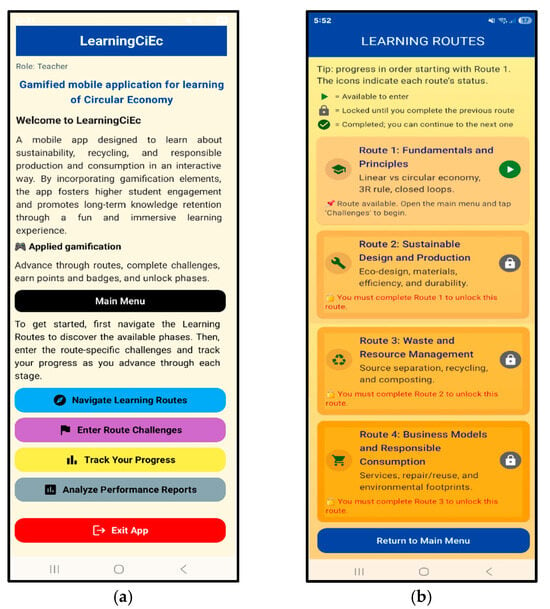
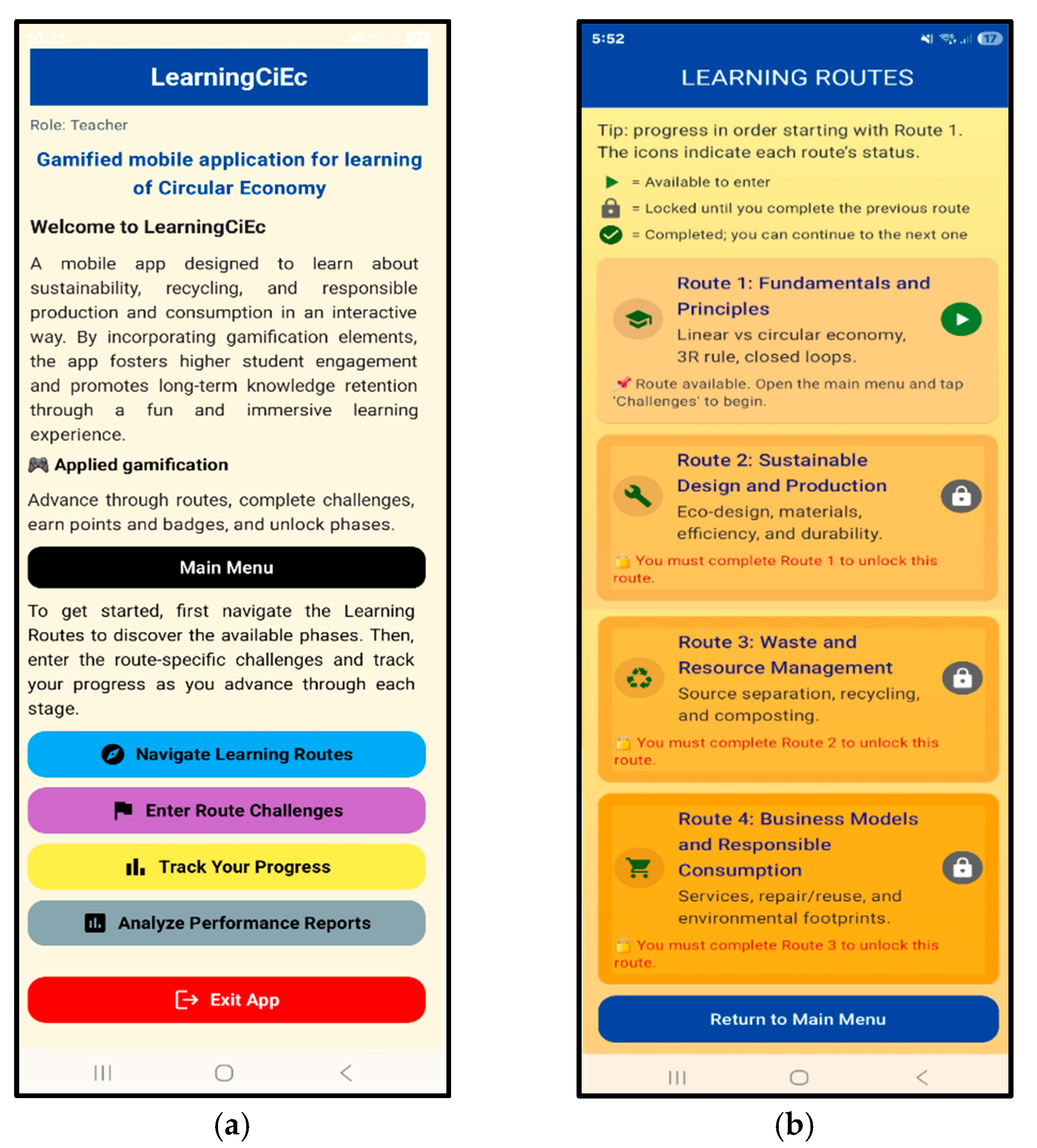
The gamified mobile app, LearningCiEc, was designed to foster circular economy competencies through student-centered, interactive experiences. Its pedagogical foundation is based on the TAM, which prioritizes PU and PEOU, and is extended through gamification to enhance motivation and engagement in sustainability learning, as evidenced by previous integrations of TAM and gamified environments [46]. Figure 2 illustrates the main menu (a) and the learning path map (b), which includes four sequential paths: Foundations and Principles of the Circular Economy, Sustainable Design and Production, Waste and Resource Management, and Business Models and Responsible Consumption. Each path integrates theoretical content with interactive challenges that unlock progressive stages, fostering student autonomy and persistent engagement throughout the learning process.
Figure 2.
Gamified mobile application interface for learning about the circular economy: main menu (a) and learning paths (b).
The educational design followed a constructivist approach, encouraging students to actively construct knowledge through challenges aligned with SDG 12 (Responsible Consumption and Production). The course instructor progressively integrated the content, ensuring coherence between the app modules and the classroom sequence of topics, thereby connecting theoretical understanding with practical, real-time gamified activities.
The mobile app was developed entirely in Android Studio using Kotlin with Jetpack Compose, allowing the creation of responsive 2D interactive modules without the need for external game engines. Jetpack Compose enabled a fluid user interface integrating question-based activities, word matching, and drag-and-drop mechanics, encouraging engagement and immediate feedback through accessible mobile interfaces. Backend services were implemented with Firebase Firestore for real-time synchronization, Firebase Authentication for secure role management, and Firebase Crashlytics for stability monitoring and debugging. These components ensured performance and scalability on mid-range Android devices common in Peruvian higher education. The app promotes active and meaningful learning through gamified features such as challenges, rewards, badges, and progress tracking, facilitating faculty feedback and formative assessment. The main interface is tailored to user roles: teachers access four functions: Explore Learning Paths, Develop Challenges, Track Progress, and Analyze Performance Reports, while students access the first three.
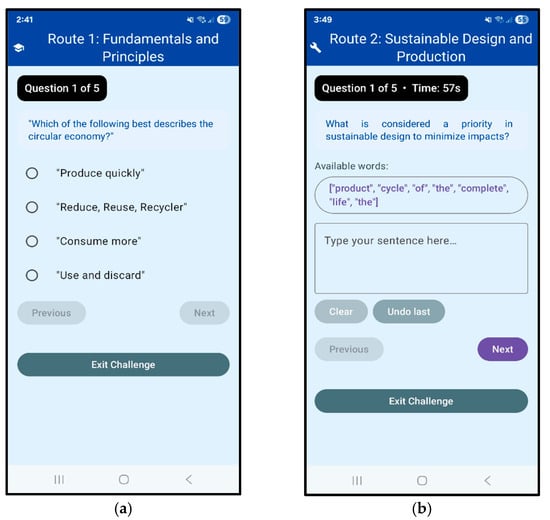
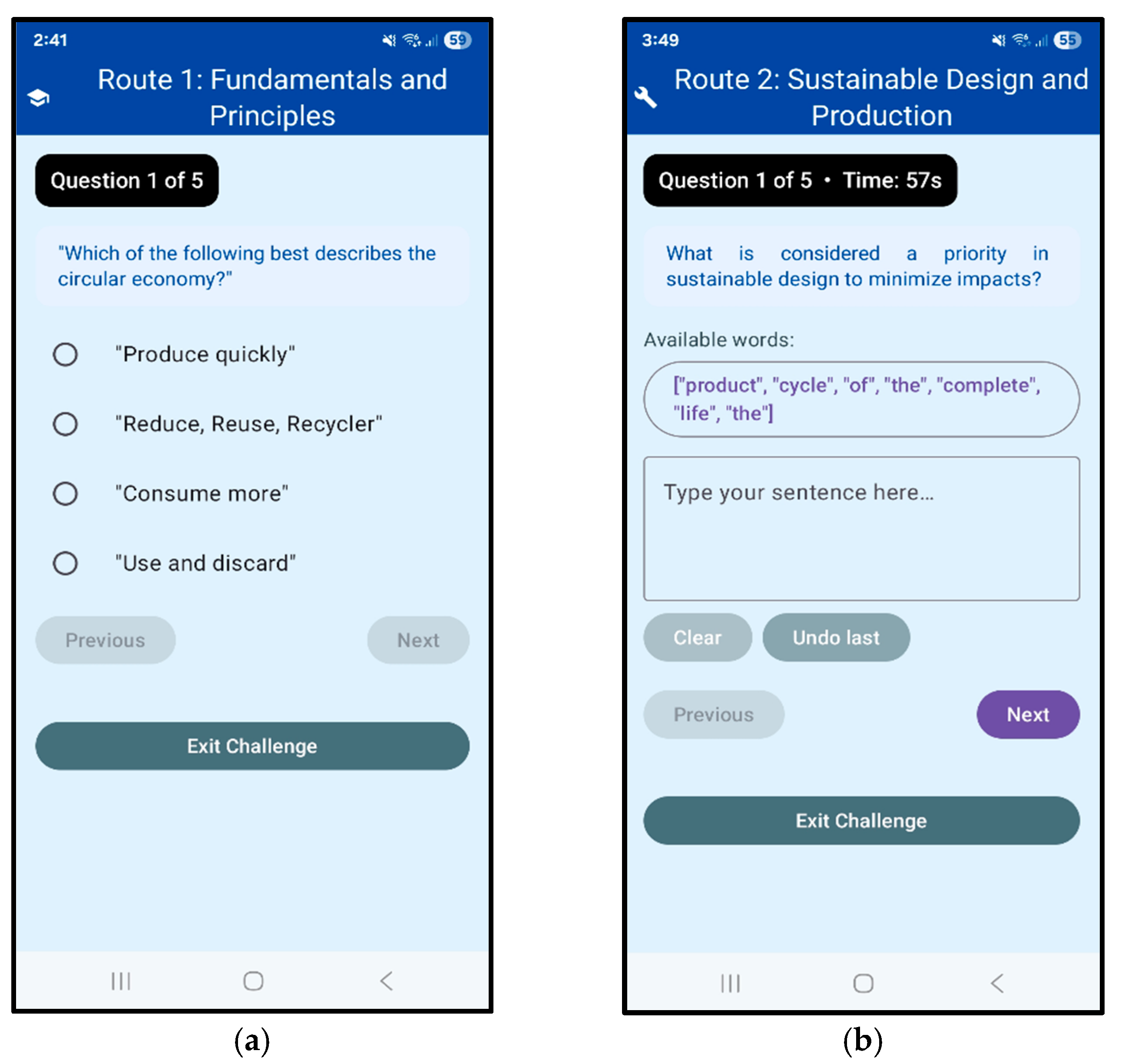
Figure 3 describes the characteristics of each challenge. Figure 3a illustrates the first challenge corresponding to Route 1, which consists of answering a questionnaire composed of five random multiple-choice questions, each of which is worth 10 points. To advance to the next route, the student must achieve a minimum score of 70%, which is equivalent to answering at least four questions correctly.
Figure 3.
Interface of the challenges by route in gamified mobile application: Route 1 (a) and Route 2 (b).
This design responds to a gamified pedagogical approach that seeks to foster conceptual understanding through feedback and motivation based on level progression. Figure 3b shows the challenge corresponding to Route 2, where the student must order words to construct correct sentences related to sustainable design and responsible production. Each correct answer grants a point, and, like Route 1, the student must achieve 70% of the total score to complete the challenge and unlock the next route. This type of activity promotes logical-linguistic reasoning and the ability to relate key concepts of the circular economy with their practical application.
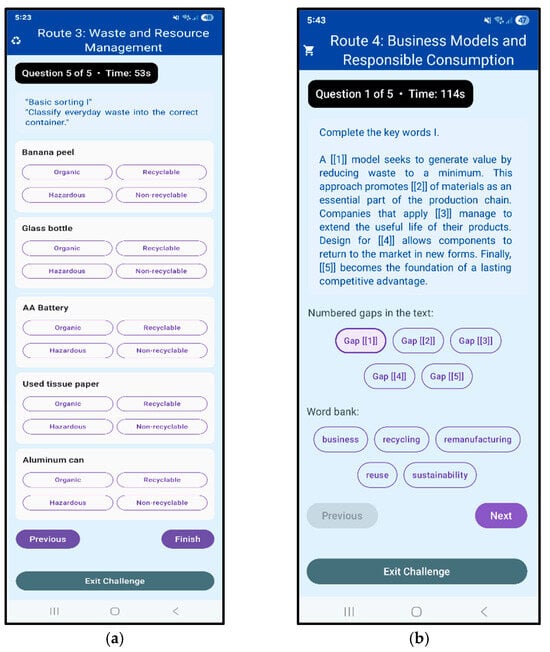
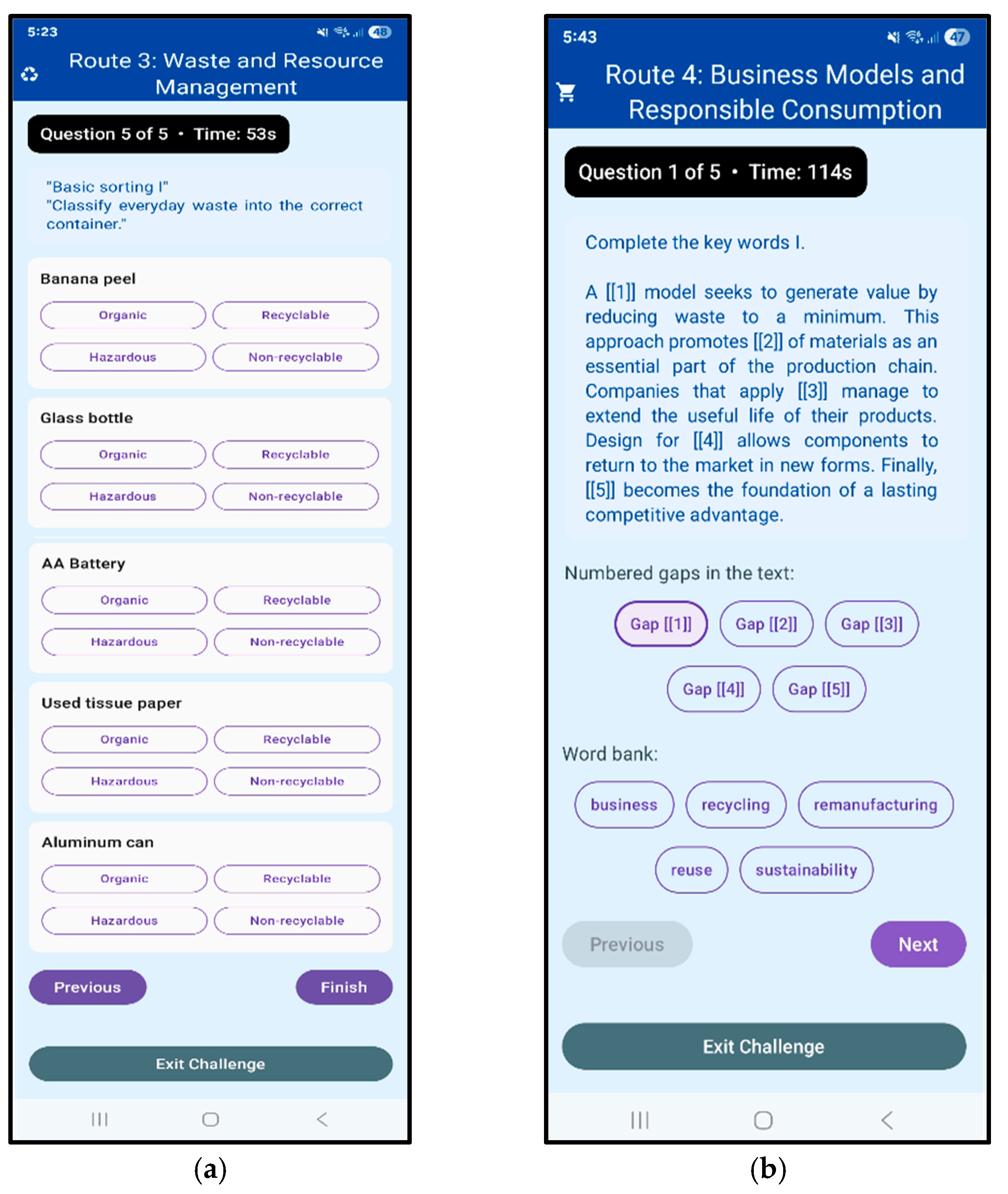
Figure 4 shows the interface of the challenges corresponding to Routes 3 and 4 in LearningCiEc for learning the circular economy, in which the pedagogical complexity of the activities progressively increases. In Figure 4a, corresponding to Route 3, the challenge involves classifying different types of waste—such as fruit peels, glass, batteries, paper, and aluminum—into the correct category: Organic, recyclable, hazardous, or non-recyclable. To promote more rigorous learning, a maximum time of 60 s per exercise was established and a penalty system was incorporated for 25 exercises, requiring students are not only fast but also precise in applying waste management concepts. The passing criterion maintained the minimum standard of 70% to advance to the next route, reinforcing the need for comprehension to pass each level. Figure 4b, corresponding to Route 4, presents a challenge in which the user fills in the blanks with keywords related to sustainable business models and responsible consumption, including terms such as recycling, remanufacturing, and reuse. In this case, the time allotted to answer each question is 120 s, maintaining the penalty of −2 points per error. This design seeks to enhance reading comprehension and the integration of complex circular economy concepts, while encouraging self-management of time and decision-making under pressure.
Figure 4.
Interface of the challenges by route in gamification: Route 3 (a) and Route 4 (b).
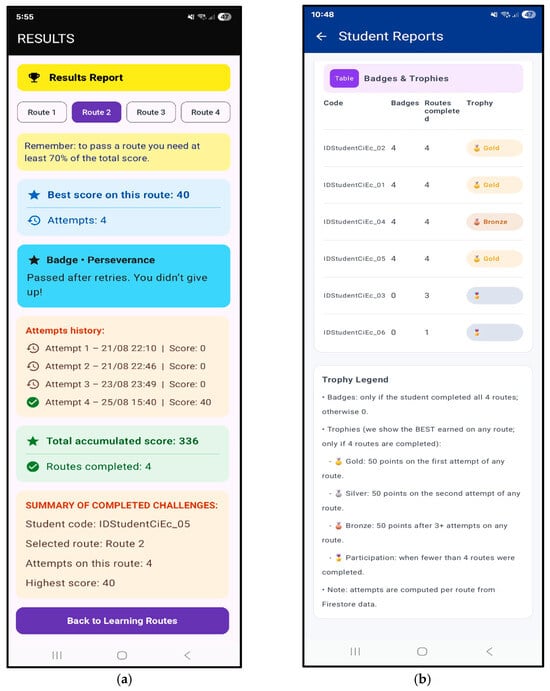
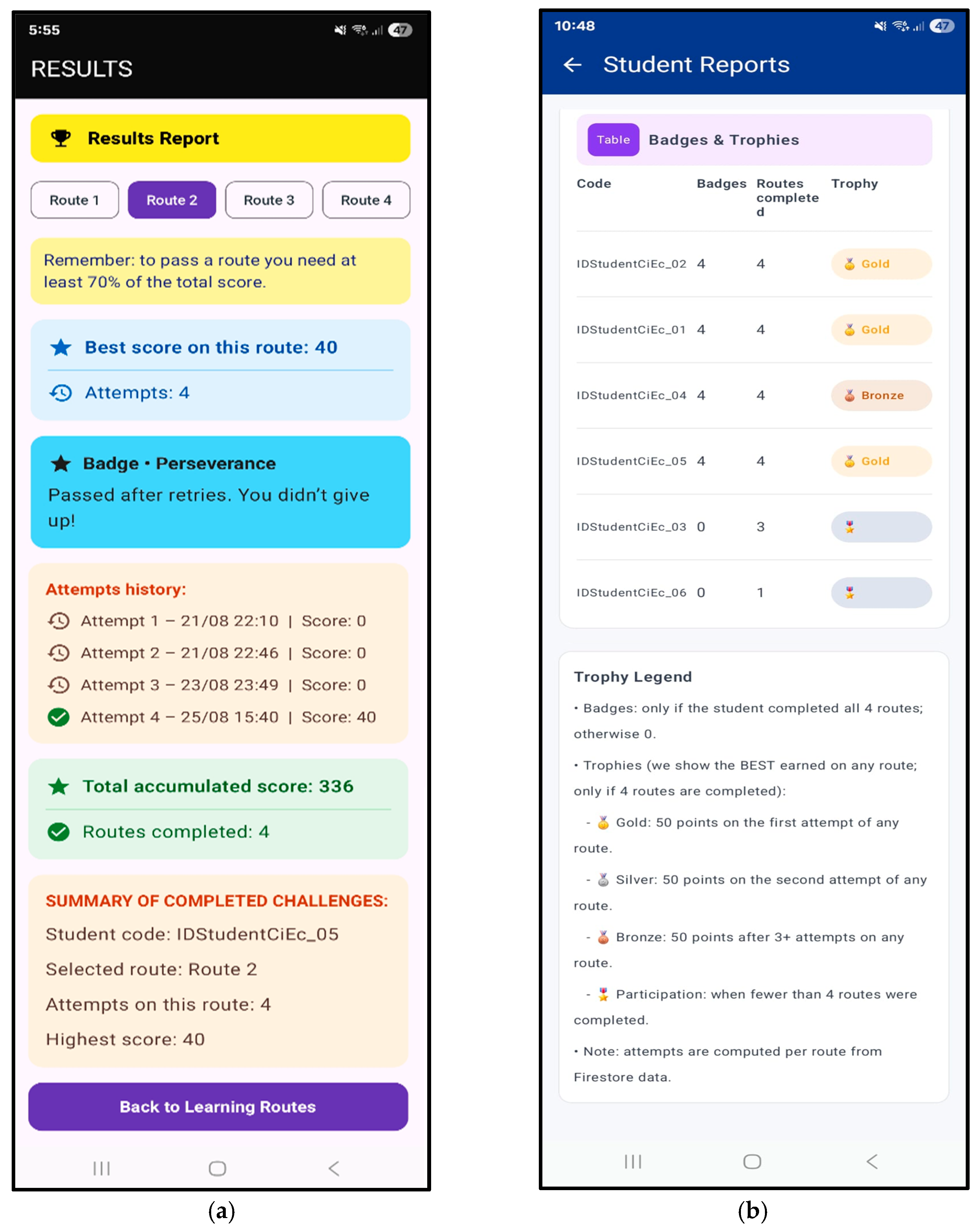
Figure 5 presents the reporting interface in the LearningCiEc application, which was designed for performance tracking, providing students with detailed information on their individual progress and a general monitoring mechanism for the teacher. Figure 5a shows the individual student report, which displays the cumulative score per route considering all attempts made, the best score achieved, and a summary of completed challenges. This information allows students to autonomously identify their progress and areas for improvement, promoting self-reflection and motivation through gamified elements such as scores, badges, and achievement levels. Figure 5b corresponds to the general report available to the teacher, which shows (through the anonymous code IDStudentCiEc) the number of routes completed and the badges or trophies achieved by each student. The trophy and badge legend at the bottom explains the significance of each achievement—for example, the gold trophy for completing a route on the first attempt—making it easy to clearly interpret each student’s individual performance.
Figure 5.
Score Result interface (a) and Badge and Trophy Reports (b).
3.2. Method
This study was conducted as a case study focused on analyzing the acceptance of a gamified mobile application designed to teach the principles of the circular economy among undergraduate students at the Professional School of Economics of a Peruvian public university. The study population consisted of 76 students enrolled in the same economics course, who participated voluntarily and provided informed consent. Consequently, the questionnaire was administered to the entire population rather than to a subsample, resulting in a full participation design that guaranteed complete data coverage and eliminated potential sampling biases. While the analysis does not aim to generalize statistically, it aligns with exploratory TAM-based studies that prioritize analytical depth and correlational interpretation over causal inference [65]. For ethical and privacy reasons, no personal or sociodemographic identifiers, such as gender, were collected; therefore, the analysis relies exclusively on anonymized perceptual and academic data. The study emphasized anonymity, voluntariness, and informed consent at all stages of data collection.
The research adopted a quantitative, exploratory-correlational, non-experimental approach. Its objective was to describe the levels of acceptance and validate the relationships between the TAM constructs: PU, PEOU, ATU, and BIU. The survey followed a cross-sectional quantitative approach, employing a 13-item questionnaire on a 5-point Likert scale (1 = Strongly Disagree to 5 = Strongly Agree), adapted from the instrument validated in [66]. The items were distributed as follows: PU (4 items), PEOU (3 items), ATU (3 items), and BIU (3 items).
Data collection was conducted in class, with full informed consent and voluntary participation. This methodological configuration allowed for correlation tests to be carried out between the TAM constructs, as presented later in Section 4. The internal consistency of the instrument was confirmed through calculation of the Cronbach’s alpha; in particular, an overall value of 0.979 was reached, indicating the optimal reliability of all the items evaluated. Table 2 shows the results of the internal validity analysis.
Table 2.
Results of the internal validity analysis for each of the indicators of the questionnaire, according to the Cronbach’s alpha values.
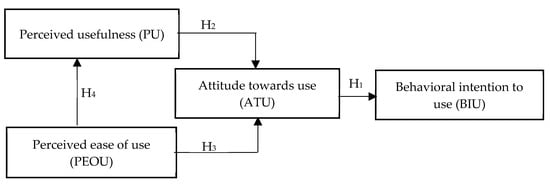
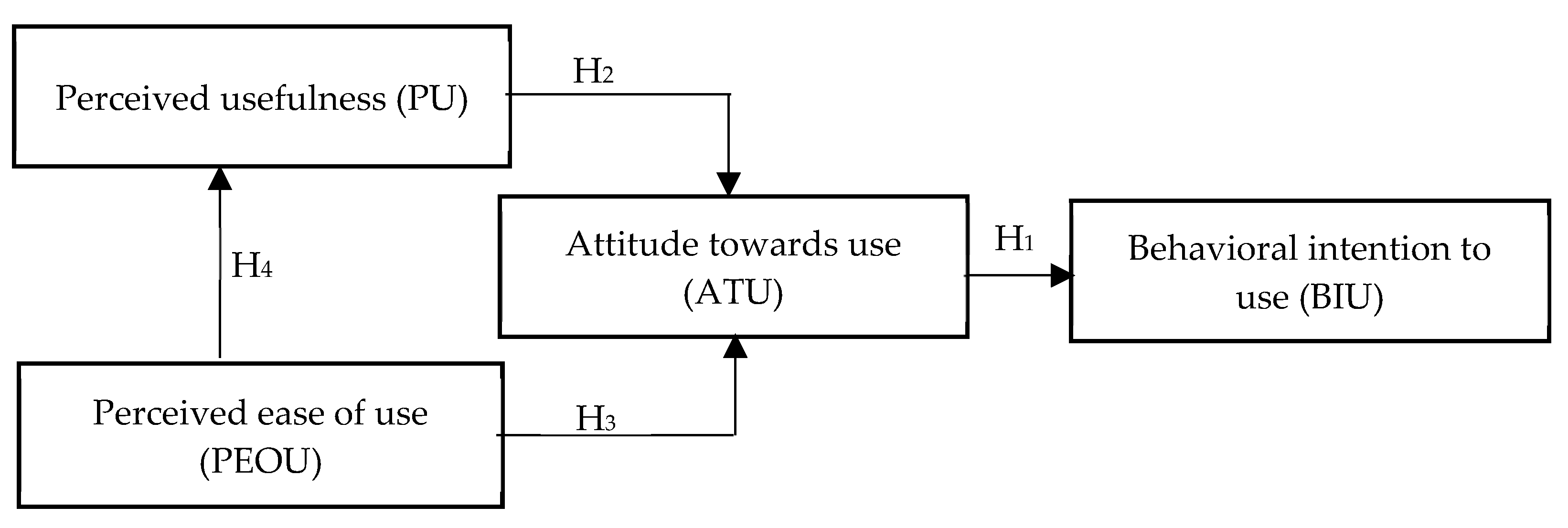
Based on the structure of the TAM, as shown in Figure 6, the proposed hypotheses are as follows:
Figure 6.
Structure of the TAM for formulation of the research hypotheses.
H1.
Attitude towards use (ATU) is positively correlated with behavioral intention to use (BIU) the gamified mobile application for learning about the circular economy.
H2.
Perceived usefulness (PU) is positively correlated with attitude towards use (ATU) of the gamified mobile application for learning about the circular economy.
H3.
Perceived ease of use (PEOU) is positively correlated with attitude towards use (ATU) of the gamified mobile application for learning about the circular economy.
H4.
Perceived ease of use (PEOU) is positively correlated with perceived usefulness (PU) of the gamified mobile application for learning about the circular economy.
4. Results
Before categorizing responses into low, medium, and high levels using established benchmarks, descriptive statistics were calculated for the four TAM constructs based on a 13-item Likert scale (1 = Strongly Disagree to 5 = Strongly Agree), which produces ordinal data. In keeping with standard practices in technology acceptance research, means and standard deviations (SDs) are reported here to summarize central tendency and variability, complemented by interquartile ranges (IQRs) for robust measures of dispersion that mitigate sensitivity to outliers. For the sample (n = 76), PU exhibited a mean of 3.29 (SD = 1.161; IQR = 1.94), indicating moderate to high perceived benefits with moderate dispersion. PEOU displayed a mean of 3.30 (SD = 1.161; IQR = 2.00), reflecting comparable agreement but slightly greater central variability. The ATU averaged 3.30 (SD = 1.178; IQR = 1.92), while the BIU reached 3.29 (SD = 1.167; IQR = 2.00), underscoring the consistency of the positive results. These metrics provide fundamental information about the distribution of the data, which informs the categorical and correlational analyses presented in Section 4.1 and Section 4.2.
4.1. Results for Acceptance of Use of the Gamified Mobile Application
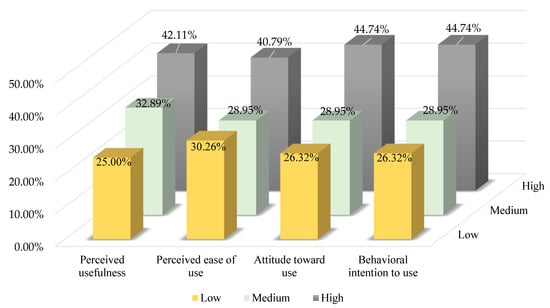
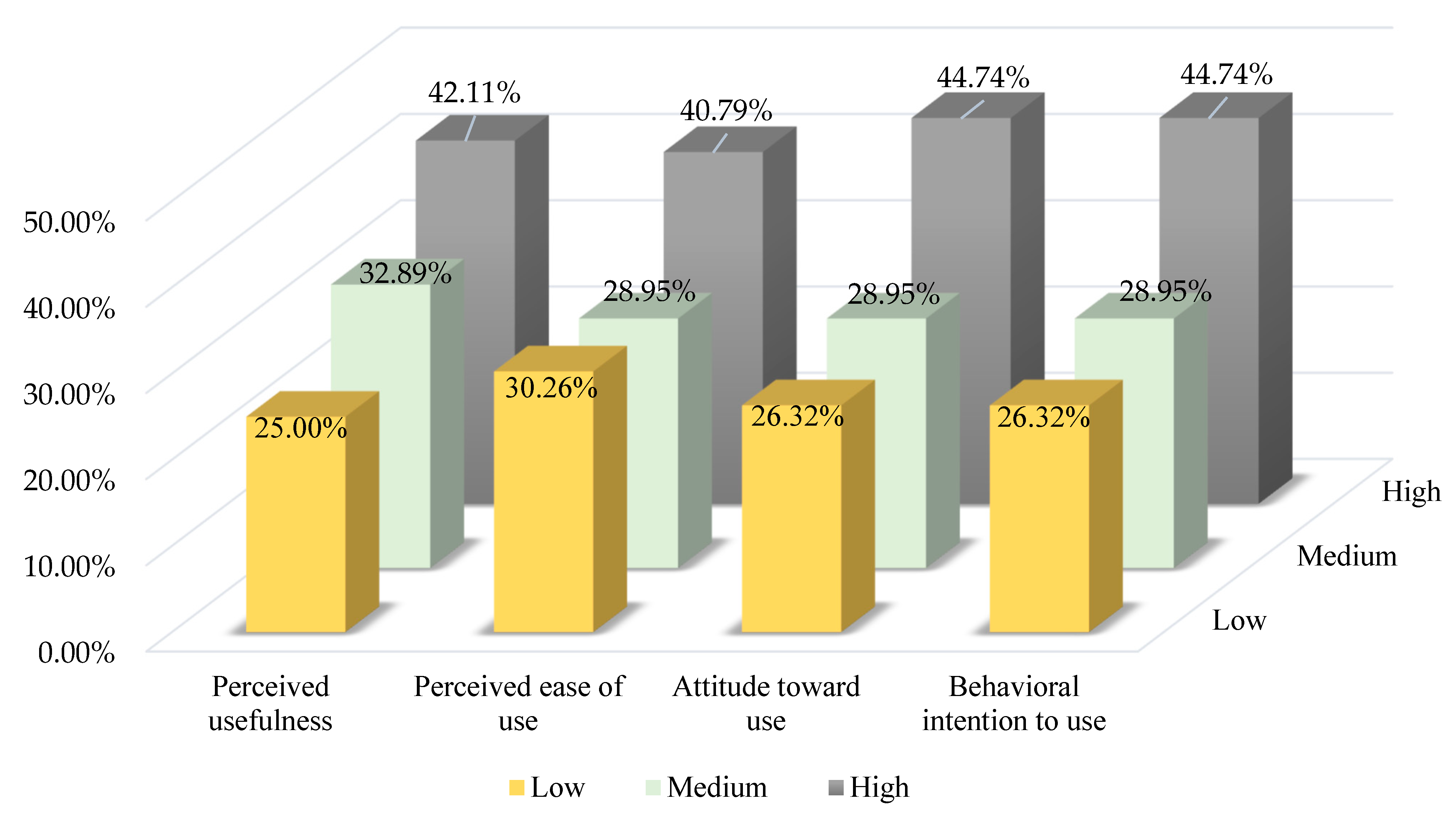
Regarding the descriptive analysis of the results regarding the constructs of the TAM, it was observed that the gamified mobile application for learning about the circular economy presented its highest level of acceptance in the construct PU, at a level of 75.00% when considering both the medium (32.89%) and high (42.11%) levels. This result indicates that the majority of students perceive the gamified mobile application to contribute significantly to their learning about the circular economy. On the other hand, the construct PEOU showed the lowest percentage of 69.74% when considering the medium (28.95%) and high (40.79%) levels; this result represents that, although their interactions with the application were generally favorable, the user experience could be optimized to make it more intuitive and simple.
Regarding the overall acceptance of the gamified mobile application, both the ATU and the BIU scores reached identical values of 73.69%, demonstrating that a favorable attitude toward the application is directly associated with students’ willingness to continue using it in their academic training on the circular economy. In this context, BIU can be considered the construct that best represents the overall acceptance of the mobile application, as it directly reflects students’ intention to integrate it into their learning process. However, the results suggest that in order to increase acceptance to higher levels, it will be necessary to improve the perceived ease of use, given that it presented the highest percentage of perceptions at the low level, reaching 30.26%. Figure 7 shows the levels of perception by constructs of the TAM regarding the acceptance of the LearningCiEc application.
Figure 7.
Levels of perception by constructs of the TAM regarding the acceptance of the gamified mobile application.
4.2. Results of the Correlational Analysis
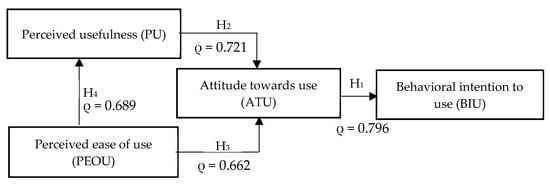
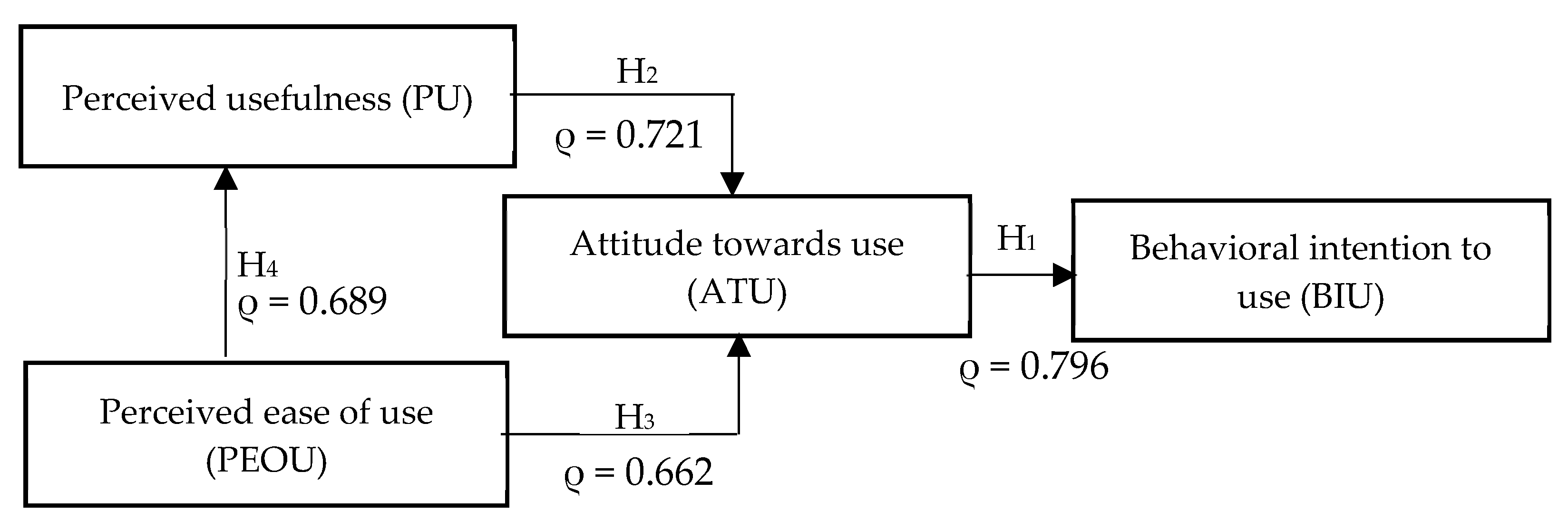
Regarding the second research objective—which sought to analyze the correlational validity between the constructs of the TAM in the context of the use of the gamified mobile application for learning about the circular economy—the results of the Spearman analysis revealed positive and statistically significant correlations (p < 0.01) between all the constructs evaluated. First, hypothesis H1—which proposed a relationship between ATU and BIU—was confirmed with a correlation coefficient of 0.796, indicating that a favorable attitude toward the application is associated with a greater willingness of students to continue using it in their learning process. Likewise, hypothesis H2—which evaluated the relationship between PU and ATU—was also confirmed due to a correlation coefficient of 0.721 between these constructs, indicating that when students perceive the mobile application to be useful for learning about the circular economy, they develop more positive attitudes regarding its use. On the other hand, hypothesis H3—which proposed the existence of a relationship between PEOU and ATU—was confirmed with a correlation coefficient of 0.662 between these constructs, confirming that a perception of simplicity in the interaction with the application contributes to more favorable attitudes towards its use in the learning process. Finally, hypothesis H4—which reflected the relationship between PEOU and PU—was confirmed via a correlation coefficient of 0.689, thus supporting the theoretical coherence of the TAM in the sense that perceived ease of use positively influences perceived usefulness. Table 3 shows the results of the Spearman correlation analysis.
Table 3.
Results of Spearman correlation analysis between all constructs of the TAM.
Figure 8 graphically summarizes the relationships between the constructs of the TAM in the context of the acceptance of the gamified mobile application for learning about the circular economy. While the relationships confirm the theoretical coherence of the model, the analysis also reveals that some levels of acceptance do not reach optimal values, suggesting opportunities for improvement in the pedagogical design of the application. In particular, it would be advisable to incorporate more personalized gamification strategies, adaptive feedback, and collaborative dynamics to strengthen students’ motivation. These improvements could enhance not only the perceived ease of use and perceived usefulness, but also the attitude and intention to use, consolidating gamification as a key tool to promote more active and meaningful learning experiences in higher education.
Figure 8.
Correlation results inserted in the structural diagram of the TAM regarding the acceptance of the gamified mobile application.
5. Discussion
5.1. Gamification and Motivation
Our results indicate moderate-to-high acceptance of gamification in sustainability education, with BIU at 73.69% (medium 28.95%, high 44.74%), underscoring its motivational value through PU and PEOU. This echoes studies showing gamification enhances student engagement and content interaction in higher education [67,68]. The significant PU-PEOU correlation (r = 0.689, p < 0.01) demonstrates how gamified elements link theoretical sustainability to interactive mechanics, fostering adaptive strategies in resource-scarce contexts like Peru—where high BIU signals enduring intent and participatory retention. Tailoring gamification to circular economy principles in Peru advances existing research, as PU’s 75.00% acceptance counteracts disengagement based on traditional university lectures in emerging economies.
Reward- and community-driven apps likewise promote sustainable behaviors, prolonging resources and amplifying educational outcomes [69]. The PU-ATU correlation (r = 0.721, p < 0.01) reveals rewards sustaining motivation for circular transitions, honing TAM extensions; ATU’s profile mirrors BIU as a core mediator. Gamified tools boost sustainable motivation when content-play balance aligns with user needs [70]; our PEOU at 69.74% (with 30.26% low) cautions against PU erosion from over-gamification, advocating culturally attuned designs for Peruvian settings. Points, badges, and levels amplify motivation and performance [71,72], as our overall correlation (r = 0.65, p < 0.01) affirms, positioning them as SDG curriculum drivers. Personalized feedback refines user prototype shortcomings, urging real-time analytics in TAM-gamification hybrids.
5.2. TAM and Technological Adoption
Correlational patterns expose strong TAM ties (e.g., PU-BIU r = 0.674, p < 0.01; PEOU-ATU r = 0.662, p < 0.01), illuminating gamified adoption dynamics rooted in PU’s 75% acceptance. These factors propel mediation (r = 0.689, p < 0.01) of digital divides, probing TAM’s universality via accessibility moderators-highlighted by POEU’s 69.74% constraints. Such links to attitudes and self-efficacy reinforce TAM’s forecasting strength [73].
For our circular economy app, elevated inter-construct correlations (all r > 0.70 except PEOU-ATU) frame PEOU as a PU entry point, while ATU-BIU (r = 0.796, p < 0.01) at 73.69% exposes cross-sectional gaps, necessitating longitudinal tracking. Personalization elevates TAM’s adoption projections [74,75], evident in BIU path variations that avert plateaus. Incentives hasten intentions [76], but our gamification-ATU link critiques self-efficacy fixes against superficiality, amid ATU-BIU symmetry. Gamification enhances user engagement with sustainability-oriented digital platforms [77], though PU-PEOU imbalances call for equity-oriented adjustments to TAM in Latin American countries, particularly those in South America.
Intuitive interfaces sustain acceptance [78], upheld by PEOU despite challenges with low internet speeds in hybrid learning environments. Gamification magnifies PU’s role in intentions [79], per our PU-BIU tie, cementing it as a TAM accelerator and shaping equitable, scalable policies for Peruvian universities. Overall, these findings position gamified TAM-based applications as effective pedagogical tools for sustainability education in emerging contexts, providing empirical evidence for context-sensitive technology adoption frameworks.
6. Conclusions
The findings of this study indicate that the acceptance of a gamified mobile application for learning about the circular economy reached a moderate to high level (73.69%) in the Intention to Use dimension, suggesting a favorable disposition among Peruvian university students toward integrating these tools into their academic experience. The correlational analysis confirmed direct, positive, and statistically significant relationships between the TAM constructs, identifying Perceived Usefulness and Perceived Ease of Use as the strongest predictors of technology adoption in this context. These findings should be interpreted within the limits of the present case study, specifically, a non-experimental correlational design applied to a single group of 76 undergraduate students from a Peruvian public university. Consequently, the study does not infer causal effects or direct improvements in academic performance, but rather focuses on the perceptual dimensions of acceptance and usability. Within these limits, this research provides contextual evidence that gamified applications can effectively foster motivation and engagement in sustainability-oriented education when adapted to the local realities of emerging higher education systems. This contribution enriches the literature by illustrating how game-based mobile tools can complement sustainability education through the TAM framework, emphasizing the importance of pedagogical design consistency, user motivation, and technological accessibility. Future research should expand this evidence by applying causal or structural modeling approaches (PLS/SEM or control group analysis), incorporating academic performance indicators, and examining the mediating effects of demographic or contextual variables. Longitudinal or cross-institutional comparative designs could also provide a deeper understanding of behavioral intention and learning outcomes, paving the way for data-driven improvements in educational technology design and policymaking.
7. Limitations of the Study
This study presents limitations that restrict the scope of interpretation. The non-experimental and correlational design prevents establishing causal relationships or measuring actual learning outcomes, while the sample size of 76 undergraduate students from a single Peruvian public university limits the external validity of the findings. Furthermore, demographic and academic variables such as gender, grade point average, or achievement were not analyzed, which could reveal patterns of differential acceptance among subgroups. Additionally, the study did not incorporate the perspective of course instructors, despite the app developer’s role in its design based on curricular expertise; this omission overlooks potential barriers to adoption from a facilitator standpoint. Future educational research should expand the sample to diverse educational contexts, apply structural equation modeling approaches such as PLS-SEM to assess causal relationships between constructs, and integrate mixed methods to strengthen the explanatory and predictive capacity of gamified learning acceptance models in sustainability education.
Supplementary Materials
The following supporting information can be downloaded at: https://www.mdpi.com/article/10.3390/su17219694/s1, File S1: Dataset for statistical analyses; File S2: Correlation analysis of indicators.
Author Contributions
Conceptualization, J.A.A.-T. and O.C.-A.; methodology, G.M.-R. and O.C.-A.; software, O.C.-A. and A.Q.-A.; validation, G.M.-R. and N.T.-L.; formal analysis, A.Q.-A. and J.A.A.-T.; investigation, C.L.-V. and I.A.-B.; resources, J.A.A.-T. and M.A.; data curation, M.A. and N.T.-L.; writing—original draft preparation, O.C.-A. and I.A.-B.; writing—review and editing, C.L.-V. and G.M.-R.; visualization, I.A.-B. and M.A.; supervision, A.Q.-A. and J.A.A.-T.; project administration, O.C.-A. and N.T.-L. All authors have read and agreed to the published version of the manuscript.
Funding
This research received no external funding.
Institutional Review Board Statement
According to Law No. 29733—Personal Data Protection Law (2011), Article 2(14) defines anonymization as a procedure that prevents the identification of the data subject and is irreversible, while Article 14 stipulates that anonymized data are exempt from requiring consent or additional supervision. Furthermore, Article 41 of Supreme Decree No. 016-2024-JUS (updated regulation of Law 29733) specifies the dissociation procedure, reaffirming that data which do not allow the identification of the subject cease to be considered personal data. In accordance with this current legal framework, and given that all data collected were fully anonymized prior to statistical analysis—without retaining any information that would allow re-identification or linkage—the research team determined that formal ethical approval was not required. This institutional practice is consistent with the current regulation of the Universidad Nacional Federico Villarreal, which likewise does not include waiver procedures for minimal-risk, anonymized studies.
Informed Consent Statement
Informed consent was obtained from all subjects involved in the study.
Data Availability Statement
The data presented in this study are available in the Supplementary Materials. Additional details can be requested from the corresponding author.
Acknowledgments
During the preparation of this manuscript, the authors used ChatGPT 5 (OpenAI, San Francisco, CA, USA) for language editing, specifically to improve the clarify and accuracy of English-language grammar and syntax. The authors have reviewed and edited the output, and take full responsibility for the content of this publication.
Conflicts of Interest
The authors declare no conflicts of interest.
Abbreviations
The following abbreviations are used in this manuscript:
| AI | Artificial Intelligence |
| AR | Augmented Reality |
| ATU | Attitude Toward Use |
| BIU | Behavioral Intention to Use |
| 3R | Reduce, Reuse, Recycle (Principles of Circular Economy) |
| DB | Database |
| IQR | Interquartile Range |
| MVVM | Model-View-ViewModel (software architecture pattern) |
| PEOU | Perceived Ease of Use |
| PLS-SEM | Partial Least Squares Structural Equation Modeling |
| PU | Perceived Usefulness |
| SD | Standard Deviation |
| SDG | Sustainable Development Goal |
| SDG 4 | Sustainable Development Goal 4: Quality Education |
| SDG 12 | Sustainable Development Goal 12: Responsible consumption |
| SPSS | Statistical Package for the Social Sciences |
| TAM | Technology Acceptance Model |
| UI | User Interface |
| UX | User Experience |
References
- Medina, G.I.; Vinueza, B.A.; Castro, A.D.; Polanco, Q.B. Digital transformation in Ecuadorian education: Impact of educational technology on teaching and learning. Rev. Soc. Front. 2025, 5, e565. [Google Scholar] [CrossRef] [Scilit]
- Almache, D.V.J.; Jiménez, A.A.M.; Calderón, G.D.E.; Vásquez, R.S.F. Digital transformation in higher education learning processes. Mag. Cienc. Investig. Innov. 2024, 9, 52–73. [Google Scholar] [CrossRef] [Scilit]
- Guarnizo, C.J.E.; Andrade, S.T.C.; Sánchez, C.V.A.; Quichimbo, A.A.C.; Bravo, V.S.J. Digital transformation in rural Ecuadorian education: Obstacles and opportunities. Cienc. Lat. Rev. Cienc. Multidiscip. 2025, 9, 11640–11651. [Google Scholar] [CrossRef] [Scilit]
- Santana, G.L.A.; Deler, F.G. The digital transformation in the Cuban socioeducational context. Ref. Pedagog. 2023, 11, 59–74. [Google Scholar]
- Mejía, D.Y.Y.; Mejía, D.O.A. Digital transformation in higher education institutions in the wake of COVID-19: Technological maturity of students in Colombia. Rev. Univ. Empres. 2021, 23, 71–106. [Google Scholar] [CrossRef] [Scilit]
- Vargas, Z.M.; Guerrero, C.Y.; Medina, M.E.; Salinas, R.M. The implementation of technology for the teaching Learning process. Rev. Tecnol. Educ. Docentes 2.0 2024, 17, 286–295. [Google Scholar] [CrossRef] [Scilit]
- Aguilar-Muñoz, J.A.; Gaibor-Bifarini, J.M.; Vizcaino-Pusda, V.D.; Muyolema, G.V.A. The digital transformation in higher education and its impact on teaching and learning. Space Sci. 2023, 1, 15–28. [Google Scholar] [CrossRef] [Scilit]
- Moral, P.E.; Barreda, T.R.; Gallego, V.L.; Pedrosa, O.C.; Martínez, A.C. Active learning and ICT in the teaching of economics at university. Rev. Estud. Empres. Segunda Época 2024, 1, 39–53. [Google Scholar] [CrossRef] [Scilit]
- Zambrano-Noboa, H.A.; Pinargote-Delgado, I.M.; Cedeño-Pinargote, L.M.; Guillen-García, J.F. Analysis of the digital economy and its contribution to higher education: Integration, challenges, and future prospects. Rev. Científica Multidiscip. Arbitr. Yachasun 2024, 8, 2–18. [Google Scholar]
- Barrios, B.B.; Lopes, M.I.; Delgado, F.T.; Noya, D.L.; Gerke, G. Capacity building in the circular economy in the teaching-learning process of industrial engineering. Rev. Cubana Adm. Pública Empres. 2023, 7, e256. [Google Scholar] [CrossRef]
- Mendoza, S. Influence of the circular economy on the transformation of environmental awareness among students at Cesar Vallejo University. Cienc. Lat. Rev. Cienc. Multidiscip. 2023, 7, 3781–3793. [Google Scholar] [CrossRef] [Scilit]
- Pino, C.; Jacome, O.; Vásquez, M.; Pena, R. Circular economy model for technical and technological institutes. Univ. Cienc. Tecnol. 2024, 28, 121–132. [Google Scholar] [CrossRef] [Scilit]
- Loayza, M.E.F. Mobile learning (m-learning) at university during COVID-19: A training tool in higher education. Educare Comunicare Rev. Investig. Fac. Humanid. 2022, 10, 5–12. [Google Scholar] [CrossRef] [Scilit]
- Boude, O.R. Design of mobile learning strategies in higher education through a professor training process. Form. Univ. 2021, 14, 181–188. [Google Scholar] [CrossRef] [Scilit]
- Gómez, M.P.; Jiménez, G.M.; González, R.E. Educational application to promote mobile learning. RIDE Ibero-Am. J. Educ. Res. Dev. 2024, 14, e630. [Google Scholar] [CrossRef] [Scilit]
- Santos-Vélez, K.A.; Franco-Menéndez, J.A.; Márquez-Bravo, Y.J. Sustainability of the circular economy for knowledge transfer in Latin America from a public management perspective. Rev. Cienc. INGENIAR 2024, 7, 2–9. [Google Scholar]
- Torres-Taborda, S.; Casillas-Martín, S.; Cabezas-González, M. Innovation in training style to transform realities in higher education. Rev. Estilos Aprendiz. 2024, 17, 30–51. [Google Scholar] [CrossRef] [Scilit]
- Marcillo, F. Using mobile applications to raise awareness about e-waste recycling among higher education students in Ecuador. Rev. Cienc. Kosmos 2024, 3, 49–66. [Google Scholar] [CrossRef] [Scilit]
- Guendulain, T.; Guendulain, G.; Ibarra, N.I.; Baldarotta, S.; Bonafé, F. BioTEC: Generating technologies with an impact on the circular economy. Bitácora Dig. 2022, 9, 45–51. [Google Scholar]
- Silva, A.J.A.; Manzano, D.O.; Gonzalez, C.Y. Theoretical analysis of materials life cycle optimization using artificial Intelligence and big data technologies: Reuse strategies in the circular. Rev. Cienc. Profund. Constr. Futuro 2024, 21, 123–138. [Google Scholar] [CrossRef] [Scilit]
- Mendoza-Rangel, J.M.; Díaz-Aguilera, J.H. Circular economy in the Latin American cement and concrete industry: A sustainable solution in design, durability, materials, and processes. Rev. ALCONPAT 2023, 13, 328–348. [Google Scholar] [CrossRef] [Scilit]
- Pegalajar, P.M.C. Implications of gamification in higher education: A systematic review of student perceptions. Rev. Investig. Educ. 2021, 39, 169–188. [Google Scholar] [CrossRef] [Scilit]
- Nivela-Cornejo, M.A.; Otero-Agreda, O.E.; Morales-Caguana, E.F. Gamification in higher education. Rev. Publicando 2021, 8, 165–176. [Google Scholar] [CrossRef] [Scilit]
- Díaz-García, A.K.; González-Herrera, S.L.; Santiago-Roque, I.; Hernández-Lozano, M.; Soto-Ojeda, G.A. Gamification through the use of the Genially application to innovate learning processes in higher education. Rev. Eduscientia Divulg. Cienc. Educ. 2022, 5, 129–139. [Google Scholar]
- Ojeda-Lara, O.; Zaldívar-Acosta, M. Gamification as an innovative methodology for higher education students. Rev. Tecnol. Educ. Docentes 2.0 2023, 16, 5–11. [Google Scholar] [CrossRef] [Scilit]
- Olivo, G.E.; Moreno, B.R.; Mondragón, H.R. Gamification and ubiquitous learning in higher education: Applying learning styles. Apertura 2023, 15, 20–35. [Google Scholar] [CrossRef] [Scilit]
- Carrión, C.E.; Sotomayor, N.S.; Medel, M.I. The use of video games and gamification as innovative teaching materials for learning social sciences in higher education. Edmetic Rev. Educ. Mediat. TIC 2022, 11, 6. [Google Scholar] [CrossRef] [Scilit]
- Medel-San, E.Y.L.; Moreno, B.R.; Aguirre, C.E. Implementation of gamification in virtual teaching-learning environments for higher education. RIDE. Rev. Iberoam. Para Investig. Desarro. Educ. 2023, 14, e527. [Google Scholar] [CrossRef] [Scilit]
- Lazarte, I.M.; Gómez, S.G. Application of the Quizizz tool as a gamification strategy in higher education. In Proceedings of the XXIII Workshop of Computer Science Researchers, RedUNCI, Chilecito, Argentina, 15–16 April 2021; pp. 313–317. Available online: https://riaa-tecno.unca.edu.ar/handle/123456789/967 (accessed on 20 September 2025).
- Poveda, D.F.; Limas-Suárez, S.J.; Cifuentes, J.E. Gamification as a learning strategy in higher education. Educ. Educadores 2023, 26, e2612. [Google Scholar] [CrossRef] [Scilit]
- León-Garrido, A.; Gutiérrez-Castillo, J.J.; Barroso-Osuna, J.M.; Cabero-Almenara, J. Evaluating the use and acceptance of mobile apps in higher education using the TAM model. RIED-Rev. Iberoam. Educ. A Distancia 2025, 28, 107–126. [Google Scholar] [CrossRef] [Scilit]
- Clucas, J.S. Promoting Current App Usage Through the Adoption of a Gamified Loyalty Program; A Quantitative Study Based on the Technology Acceptance Model (TAM). Master’s Thesis, University of Zaragoza, Zaragoza, Spain, 2023. Available online: https://zaguan.unizar.es/record/128570 (accessed on 20 September 2025).
- Calle-Díaz, D.M.; Porras-Cruz, F.L.; Santamaría-Freire, E.J. Modelo de aceptación tecnológica y la difusión de contenidos en estudiantes universitarios. MQRInvestigar 2024, 8, 5685–5705. [Google Scholar] [CrossRef] [Scilit]
- Campoverde-Calle, M.S.; Sañay-Sañay, S.I.; Cabrera-Duffaut, A.E. Development of an app validation methodology based on the Technology Acceptance Model: Case study BodyUC. MQRInvestigar 2024, 8, 3742–3770. [Google Scholar] [CrossRef] [Scilit]
- Usuga-Escobar, J.F.; Palacio-Baena, L.G.; Barrios, D. Technological acceptance of a mobile application for dairy business management. Rev. CEA 2022, 8, e2007. [Google Scholar] [CrossRef] [Scilit]
- Valencia-Arias, A.; Gómez-Molina, S.; Vélez-Holguín, R.M.; Cardona-Acevedo, S. Disposition to use mobile learning (m-learning) in virtual programs: A hybrid technology acceptance model (TAM) and the theory of planned behavior (TPB). Form. Univ. 2023, 16, 25–34. [Google Scholar] [CrossRef] [Scilit]
- Terminel, Z.C.; Mendoza, L.J.; García, O.J. Application of a technology acceptance model on the use of the digital driver’s license through a mobile application among adults in the state of Sonora, Mexico. Rev. Sinergia 2023, 1, 7–16. [Google Scholar]
- Abundis, E.V.M.; Hinojosa, L.J.I. Evaluating the Microsoft Teams application using the Technology Acceptance Model (TAM). Rev. Acad. Investig. 2023, 14, 86–99. [Google Scholar]
- Schöggl, J.-P.; Stumpf, L.; Baumgartner, R.J. The narrative of sustainability and circular economy—A longitudinal review of two decades of research. Resour. Conserv. Recycl. 2020, 163, 105073. [Google Scholar] [CrossRef] [Scilit]
- Matarneh, S.; Pipriani, A.Z.; Ellahi, R.M.; Nguyen, D.N.; Le, T.M.; Nazir, S. Industry 4.0 technologies and circular economy synergies: Enhancing corporate sustainability through sustainable supply chain integration and flexibility. Environ. Technol. Innov. 2024, 35, 103723. [Google Scholar] [CrossRef] [Scilit]
- Anderluh, A.; Raffler, C.; Hackl, R.; Mesbahi, Z.; Pellegrin, T. Consumers’ affinity to the circular economy: Empirical evidence utilizing the circular economy cube. J. Clean. Prod. 2025, 525, 146539. [Google Scholar] [CrossRef] [Scilit]
- Lombani, I.; Fraccascia, L.; Giannoccaro, I. Economic complexity tools to analyze circular economy capabilities in global economy. Resour. Conserv. Recycl. Adv. 2025, 28, 200286. [Google Scholar] [CrossRef] [Scilit]
- Ibach, M.; Tatum, K.; Knieling, J. Crafting open innovation for collaboration: Insights into multi-actor dynamics for the circular economy transformation. J. Innov. Knowl. 2025, 10, 100799. [Google Scholar] [CrossRef] [Scilit]
- Rosário, A.T.; Lopes, P.; Rosário, F.S. Sustainability and the circular economy business development. Sustainability 2024, 16, 6092. [Google Scholar] [CrossRef] [Scilit]
- Hosseini, C.; Humulung, O.; Fagerstrom, A.; Haddara, M. An experimental study on the effects of gamification on task performance. Procedia Comput. Sci. 2022, 196, 999–1006. [Google Scholar] [CrossRef] [Scilit]
- Legaki, N.-Z.; Xi, N.; Hamari, J.; Karpouzisa, K.; Assimakopoulosa, V. The effect of challenge-based gamification on learning: An experiment in the context of statistics education. Int. J. Hum.-Comput. Stud. 2020, 144, 102496. [Google Scholar] [CrossRef] [Scilit]
- Dzandu, M.D.; Hanu, C.; Amegbe, H. Gamification of mobile money payment for generating customer value in emerging economies: The social impact theory perspective. Technol. Forecast. Soc. Change 2022, 185, 122049. [Google Scholar] [CrossRef] [Scilit]
- Wang, Y.-F.; Hsu, Y.-F.; Fang, K. The key elements of gamification in corporate training—The Delphi method. Entertain. Comput. 2022, 40, 100463. [Google Scholar] [CrossRef] [Scilit]
- Vittia, M.; Trevisana, A.H.; Ocampo, H.R.; Cuentas, V.K.; Sarbazvatan, S.; Terzi, S.; Sassanelli, C. A competency map for circular economy education. Procedia Comput. Sci. 2025, 253, 336–345. [Google Scholar] [CrossRef] [Scilit]
- Rejeb, H.B.; Muxika, E.; Ghadimi, P. Summer school on circular economy for sustainable manufacturing: A case study and lessons learned. Procedia CIRP 2024, 122, 952–957. [Google Scholar] [CrossRef] [Scilit]
- Alhashmi, S.M.; Al-Qudah, I.; Hashem, I.A.; Alsinglawi, B.; Borreo, R.; Migdadi, H.S.; Chen, W. Connecting the Dots: IoT, sustainability, and SDGs. Sustain. Futures 2025, 10, 101170. [Google Scholar] [CrossRef] [Scilit]
- Liu, L.; Li, K.; Yue, L.; Arshad, M.Z. Burnout and leadership in special education: A sustainable approach through the Lens of SDG 3 and SDG 4. Acta Psychol. 2025, 259, 105421. [Google Scholar] [CrossRef] [Scilit]
- Rahman, M.; Hossain, E. Green technology, policy and sustainable finance nexus with SDG-12: Moderating effects of stakeholder awareness. Sustain. Futures 2024, 8, 100405. [Google Scholar] [CrossRef] [Scilit]
- McCowan, T. The crosscutting impact of higher education on the sustainable development goals. Int. J. Educ. Dev. 2023, 103, 102945. [Google Scholar] [CrossRef] [Scilit]
- Khajuria, A.; Verma, P.; Vella, A.; Zanini-Freitag, D.; Xin, H.; Murthy, I.K.; Arora, J.K.; Sylva, K.; Menon, L.; Pardeshi, S.; et al. The SDG accelerator: Circular economy solutions through efficient sustainable consumption. Cir. Econ. 2025, 4, 100140. [Google Scholar] [CrossRef] [Scilit]
- Greenland, S.J.; Saleem, M.; Misra, R.; Nguyen, N.; Mason, J. Reducing SDG complexity and informing environmental management education via an empirical six-dimensional model of sustainable development. J. Environ. Manag. 2023, 344, 118328. [Google Scholar] [CrossRef] [Scilit] [PubMed]
- Bashir, H.; Araci, Z.C.; Obaideen, K.; Alsyouf, I. An approach for analyzing and visualizing the relationships among key performance indicators for creating sustainable campuses in higher education institutions. Environ. Sustain. Indic. 2023, 19, 100267. [Google Scholar] [CrossRef] [Scilit]
- Mashroof, M.M.; Haleem, A.; Nawaz, H.; Saldeen, M.A. E-learning adoption for sustainable higher education. Heliyon 2023, 9, e17505. [Google Scholar] [CrossRef] [Scilit]
- Andujar, A.; Salaberri-Ramiro, M.S.; Martínez, M.S.C. Integrating Flipped Foreign Language Learning through Mobile Devices: Technology Acceptance and Flipped Learning Experience. Sustainability 2020, 12, 1110. [Google Scholar] [CrossRef] [Scilit]
- Lo, J.-H.; Lai, Y.-F.; Hsu, T.-L. The Study of AR-Based Learning for Natural Science Inquiry Activities in Taiwan’s Elementary School from the Perspective of Sustainable Development. Sustainability 2021, 13, 6283. [Google Scholar] [CrossRef] [Scilit]
- Lau, F.; Kuziemsky, C. Chapter 2: Benefits Evaluation Framework. In Handbook of eHealth Evaluation: An Evidence-Based Approach; University of Victoria: Victoria, BC, Canada, 2017; pp. 23–54. Available online: https://www.ncbi.nlm.nih.gov/books/NBK481590/ (accessed on 20 September 2025).
- Spector, P.E. Do Not Cross Me: Optimizing the Use of Cross-Sectional Designs. J. Bus. Psychol. 2019, 34, 125–137. [Google Scholar] [CrossRef] [Scilit]
- Al-Adwan, A.S.; Li, N.; Al-Adwan, A.; Abbasi, G.A.; Albelbisi, N.A.; Habibi, A. Extending the Technology Acceptance Model (TAM) to Predict University Students’ Intentions to Use Metaverse-Based Learning Platforms. Educ. Inf. Technol. 2023, 28, 15381–15413. [Google Scholar] [CrossRef] [Scilit] [PubMed]
- Hoi, V.N. Understanding higher education learners’ acceptance and use of mobile devices for language learning: A Rasch-based path modeling approach. Comput. Educ. 2020, 146, 103761. [Google Scholar] [CrossRef] [Scilit]
- Valencia-Arias, A.; Cardona-Acevedo, S.; Gómez-Molina, S.; Vélez, H.R.; Valencia, J. Adoption of mobile learning in the university context: Systematic literature review. PLoS ONE 2024, 19, e0304116. [Google Scholar] [CrossRef] [Scilit]
- Queiro-Ameijeiras, C.M.; Seguí-Mas, E.; Martí-Parreño, J. Determinants of gamification acceptance in higher education: An empirical model. RIED-Rev. Iberoam. Educ. A Distancia 2025, 28, 127–155. [Google Scholar] [CrossRef] [Scilit]
- Wendy, J.; Grainne, O.; Nikki, S. Improving retention while enhancing student engagement and learning outcomes using gamified mobile technology. Account. Educ. 2025, 34, 366–386. [Google Scholar] [CrossRef] [Scilit]
- Vankúš, P. Game-Based learning and gamification technologies in the preparation of future mathematics teachers. Int. J. Interact. Mob. Technol. 2023, 17, 53–67. [Google Scholar] [CrossRef] [Scilit]
- Cudok, A.; Lawrenz, S.; Rausch, A.; Vietor, T. Circular economy driven communities-Sustainable behavior driven by mobile applications. Procedia CIRP 2022, 105, 362–367. [Google Scholar] [CrossRef] [Scilit]
- Venturi, S.; Zulauf, K.; Cuel, R.; Wagner, R. Trash to treasure: Gamification and informed recycling behavior. Resour. Conserv. Recycl. 2025, 215, 108108. [Google Scholar] [CrossRef] [Scilit]
- Zeng, J.; Sun, D.; Looi, C.-K.; Wai, F.A.C. Exploring the impact of gamification on students’ academic performance: A comprehensive meta- analysis of studies from the year 2008 to 2023. Br. J. Educ. Technol. 2024, 55, 2478–2502. [Google Scholar] [CrossRef] [Scilit]
- Khaldi, A.; Bouzidi, R.; Nader, F. Gamification of e-learning in higher education: A systematic literature review. Smart Learn. Environ. 2023, 10, 10. [Google Scholar] [CrossRef] [Scilit] [PubMed]
- Van, D.B.L. Re-thinking invigilation implementation: A mixed method approach to student perceptions and system usability for digital assessment adoption. Int. J. Educ. Integr. 2025, 21, 10. [Google Scholar] [CrossRef] [Scilit]
- Shishakly, R.; Almaiah, M.A.; Al-Otaibi, S.; Lutfi, A.; Alrawad, M.; Almulhem, A. A new technological model on investigating the utilization of Mobile Learning Applications: Extending the TAM. Multimodal Technol. Interact. 2023, 7, 92. [Google Scholar] [CrossRef] [Scilit]
- Qazi, A.; Hasan, N.; Owusu-Ansah, C.M.; Hardaker, G.; Dey, S.K.; Haruna, K. SentiTAM: Sentiments centered integrated framework for mobile learning adaptability in higher education. Heliyon 2022, 9, e12705. [Google Scholar] [CrossRef] [Scilit]
- Toșa, C.; Paneru, C.P.; Joudavi, A.; Tarigan, A.K.M. Digital transformation, incentives, and pro-environmental behavior: Assessing the uptake of sustainability in companies’ transition towards circular economy. Sustain. Prod. Consum. 2024, 47, 632–643. [Google Scholar] [CrossRef] [Scilit]
- Tundjungsari, V.; Putranto, B.P.D.; Ulum, M.B.; Anwar, N. An integrated model for circular waste management using the internet of things, semantic web, and gamification (Circonomy): Case study in Indonesia. JMIR Serious Games 2025, 13, e66781. [Google Scholar] [CrossRef] [Scilit] [PubMed]
- Teixeira, J.; Carvalho, B.; Pereira, S.; Sousa, C.; Véreb, V.; Gouveia, A.J. AppCycle—Reducing electronic and textile wastes. Procedia Comput. Sci. 2024, 239, 2126–2134. [Google Scholar] [CrossRef] [Scilit]
- Akhtar, M.A.; Sarea, A.; Khan, I.; Khan, K.A.; Singh, M.P. The moderating role of gamification toward intentions to use mobile payments applications in Bahrain: An integrated approach. PSU Res. Rev. 2025, 8, 706–726. [Google Scholar] [CrossRef] [Scilit]

Disclaimer/Publisher’s Note: The statements, opinions and data contained in all publications are solely those of the individual author(s) and contributor(s) and not of MDPI and/or the editor(s). MDPI and/or the editor(s) disclaim responsibility for any injury to people or property resulting from any ideas, methods, instructions or products referred to in the content. |
© 2025 by the authors. Licensee MDPI, Basel, Switzerland. This article is an open access article distributed under the terms and conditions of the Creative Commons Attribution (CC BY) license (https://creativecommons.org/licenses/by/4.0/).