Article

Comparison of Lichen and Moss Transplants for Monitoring the Deposition of Airborne Microfibers

1
Department of Life Sciences, University of Siena, 53100 Siena, Italy
2
Istituto Nazionale di Geofisica e Vulcanologia, 00143 Rome, Italy
3
School of Environment, Trent University, Peterborough, ON K9L 0G2, Canada
4
Instituto Argentino de Oceanografía (IADO–CONICET/UNS), Camino La Carrindanga Km 7.5, Bahía Blanca 8000, Argentina
5
Departamento de Biología, Bioquímica y Farmacia, Universidad Nacional del Sur, San Juan 670, Bahía Blanca 8000, Argentina
*
Author to whom correspondence should be addressed.
These authors contributed equally to this work.
Sustainability 2025, 17(2), 537; https://doi.org/10.3390/su17020537
Submission received: 19 October 2024 / Revised: 9 January 2025 / Accepted: 10 January 2025 / Published: 12 January 2025
(This article belongs to the Special Issue Microplastic Research and Environmental Sustainability)

Abstract

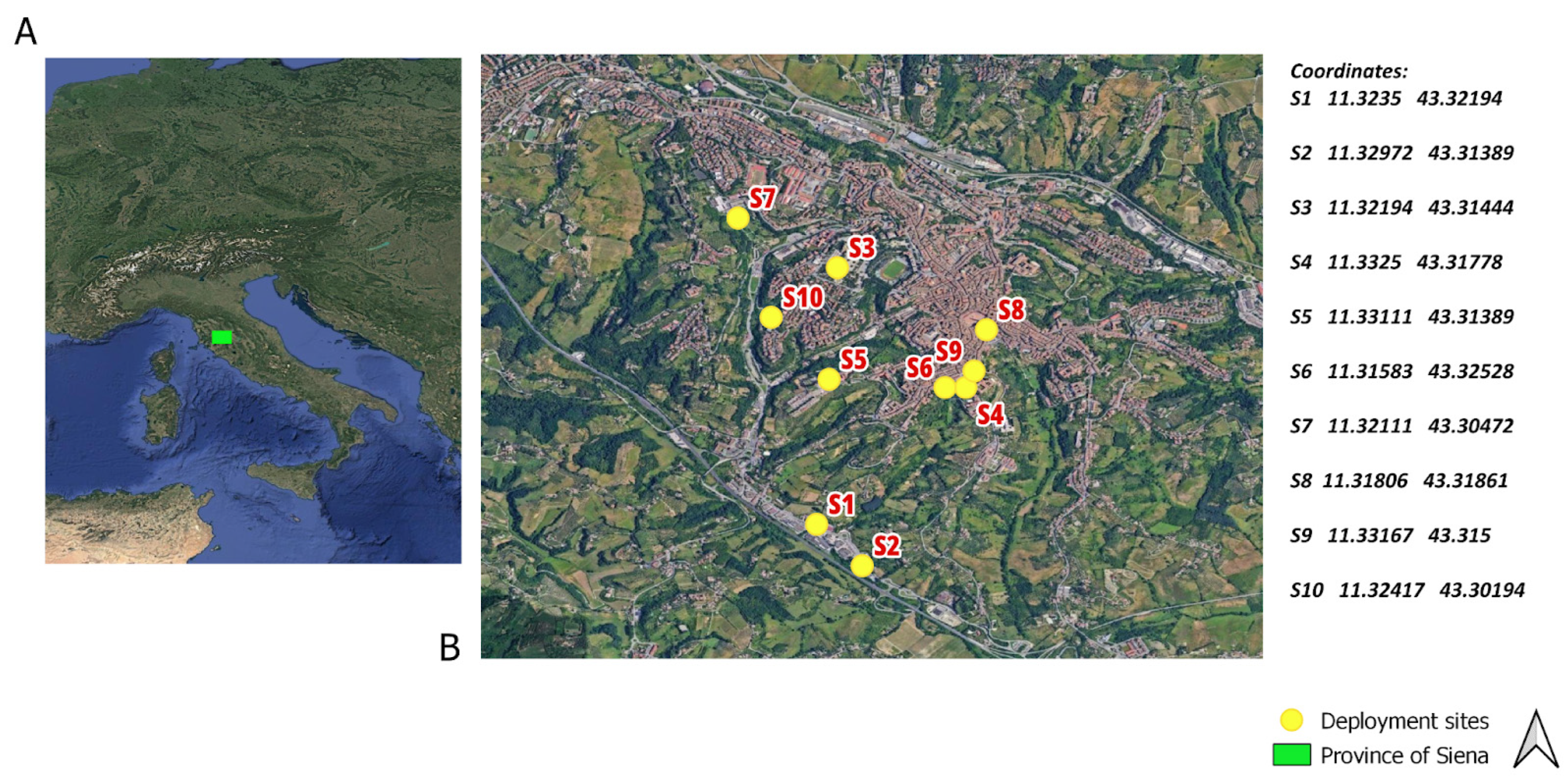
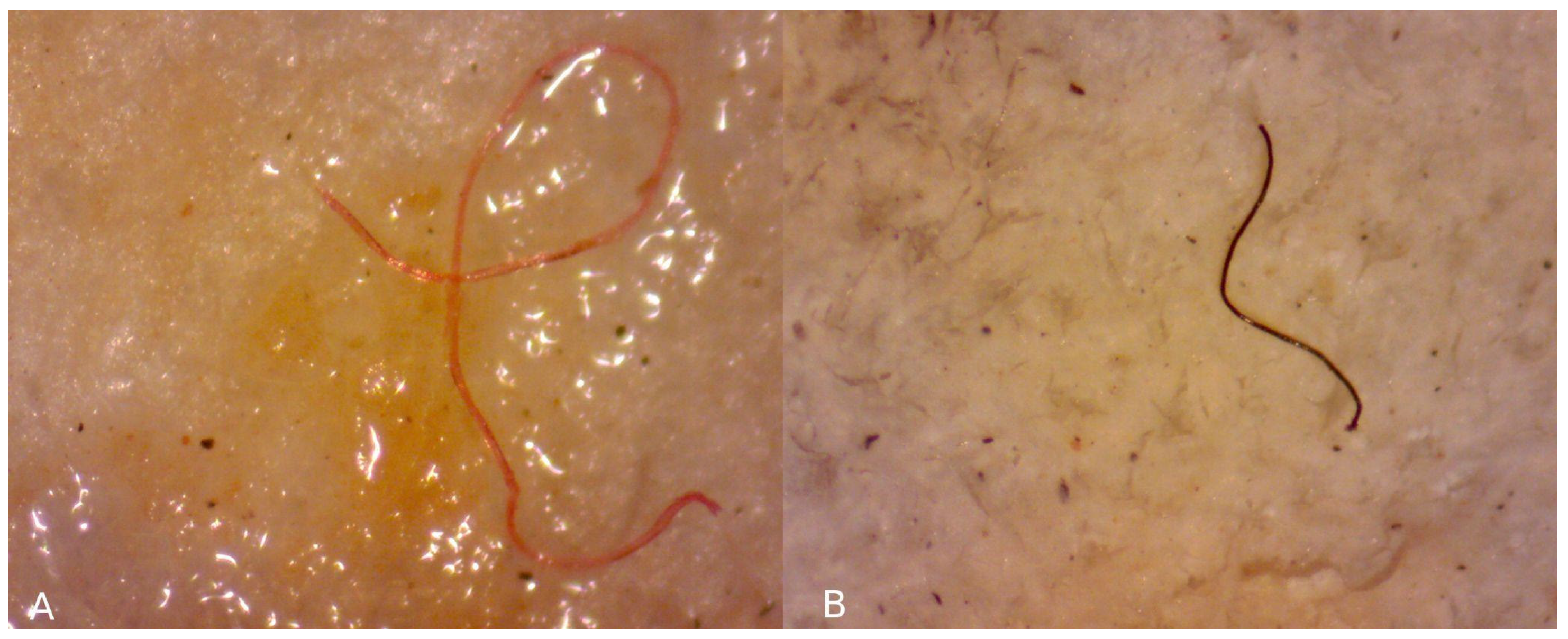
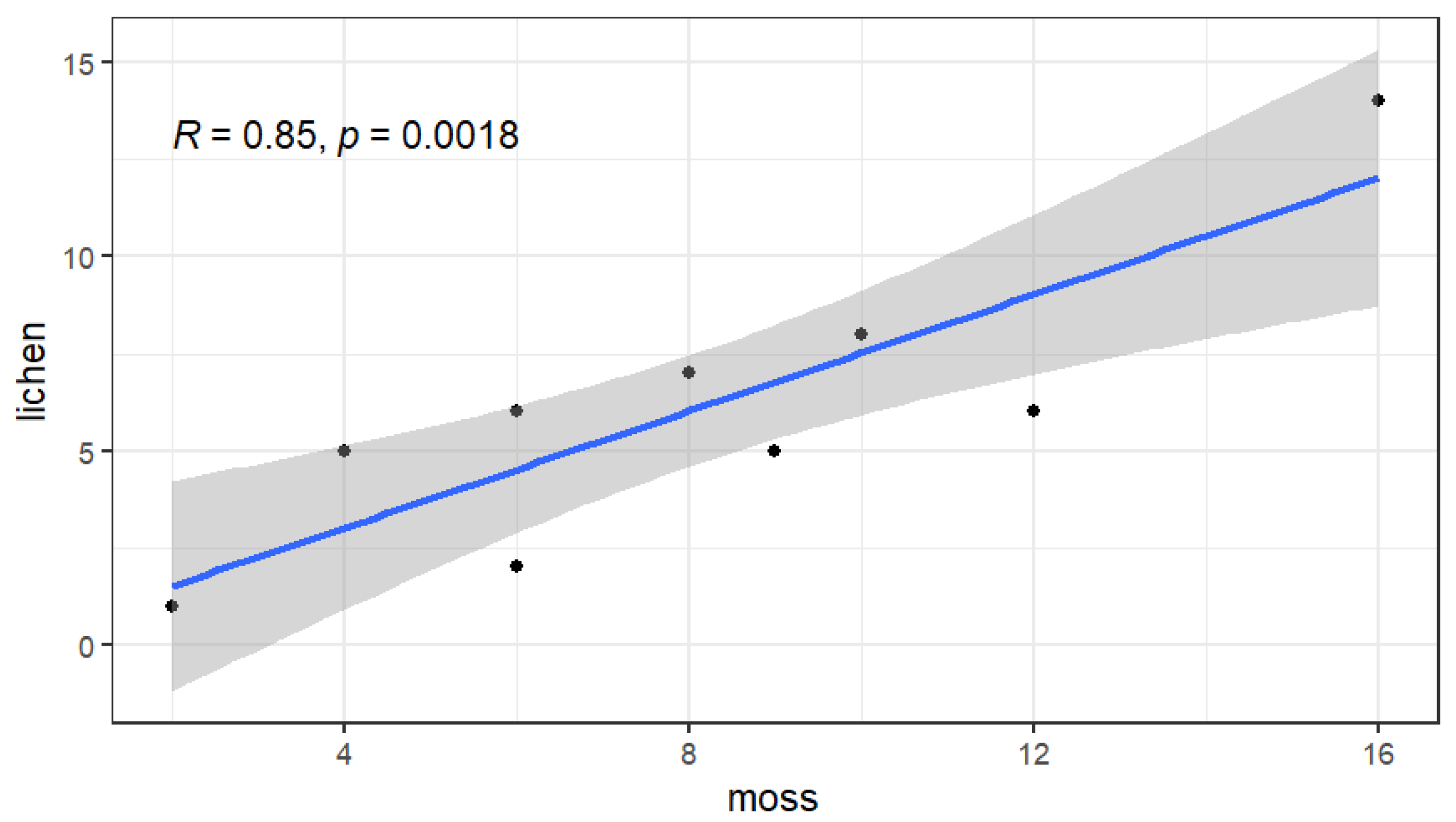
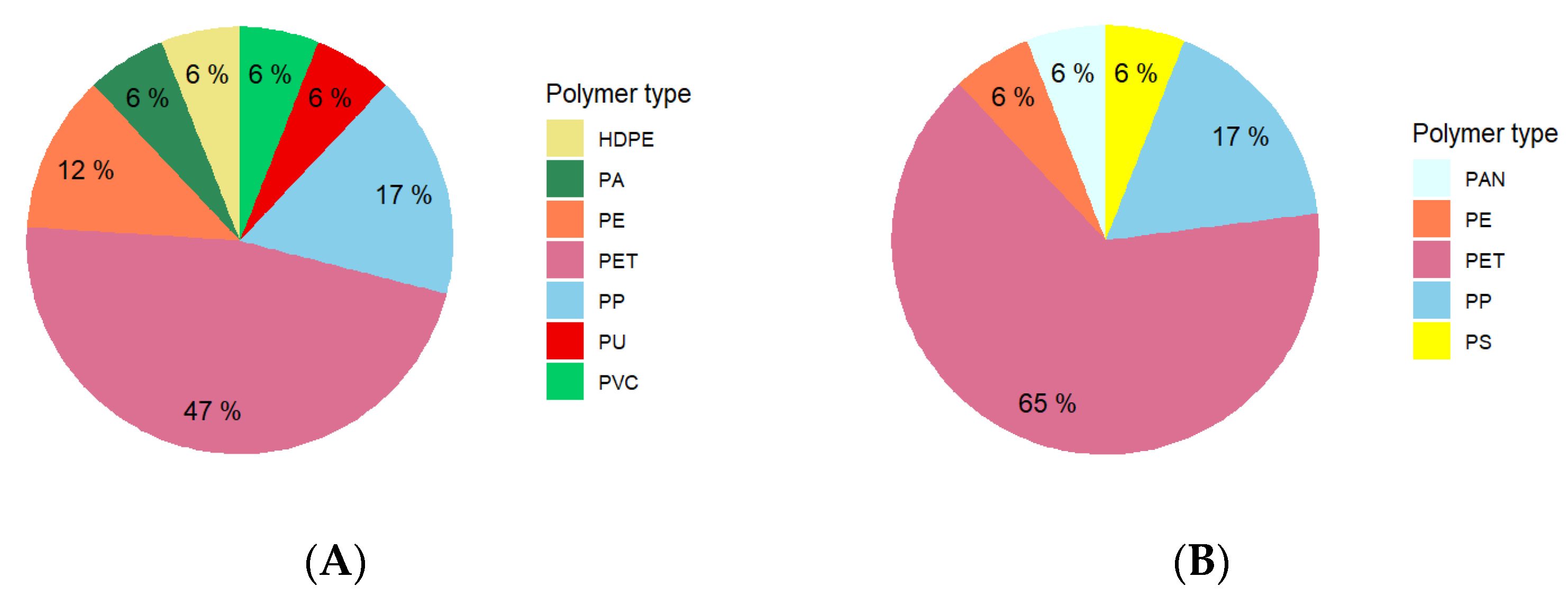
Interest in using lichens and mosses to monitor airborne microplastics is growing, but few studies have thoroughly compared their effectiveness as biomonitors. Here, we directly compare the ability of lichen and moss transplants collected from a rural area to accumulate microfibers (MFs) and Potentially Toxic Elements (PTEs) under the same deployment conditions. Transplants (n = 60; triplicates for both lichen and moss) were co-deployed on tree branches across a range of urban exposure sites (e.g., commercial and residential areas and urban parks) for 77 days in Siena, Italy. The results showed that both biomonitors accumulated similar amounts of MFs, in terms of counts and on a mass basis, but when expressed on a surface area basis, lichens showed significantly higher values. Irrespective of the metric, lichen and moss MF accumulation data were strongly correlated. In contrast, there was no correlation between MFs and PTEs, suggesting that their sources were different. MFs accumulated by lichen and moss transplants were dominated by polyethylene terephthalate (PET) and polypropylene polymers, suggesting that the main source of airborne MFs is synthetic textiles. Our results suggest that both lichen and moss transplants can be effectively used as low-cost monitors of atmospheric MFs in urban areas in support of the sustainable development goal of clean air.
Keywords: air quality; atmosphere; biomonitoring; microplastics; potentially toxic elements air quality; atmosphere; biomonitoring; microplastics; potentially toxic elements