1. Introduction
In today’s highly uncertain (VUCA) and intensely competitive global environment, sustainable innovation has become essential for firms seeking long-term competitive advantages and sustainable development [
1]. An enterprise’s sustainable innovation capability is not an abstract strategic concept; its realization heavily depends on the micro-level within the organization, specifically the continuous emergence and institutionalization of innovative behavior among knowledge-based employees [
2,
3].
Knowledge-based employees typically refer to professionals who use knowledge as their primary work resource, leveraging innovative thinking and analytical judgment to create value for organizations [
4,
5]. They generally possess advanced degrees, engage in R&D and other knowledge-intensive tasks, and exert a decisive influence on an organization’s innovative competitiveness [
6]. Their innovative behaviors are the foundation of organizational innovation and performance [
7,
8], ultimately transforming into sustainable competitive advantages for organizations through knowledge creation, dynamic capability building, and organizational learning cycles. Therefore, how to effectively stimulate and maintain such innovative behavior has become a core concern in both academia and industry.
In this context, transformational leadership (TL) has emerged as a key focal point of this study due to its unique value in fostering sustainable innovation capabilities [
9,
10]. This study adopts a four-dimensional framework comprising moral exemplification, charismatic leadership, inspirational motivation, and individualized consideration [
11]. TL empowers employees directly by setting moral examples, demonstrating leadership charisma, describing inspirational futures, and providing individualized consideration [
12]. Existing research has generally confirmed its positive impact on employee innovation behavior and explored mediation mechanisms such as psychological empowerment and knowledge sharing [
13,
14,
15].
Nevertheless, a notable research gap persists: insufficient exploration of the mediating role of stable and institutionalized organizational contextual factors. While the direct impact of leadership is important, the sustainability of innovation depends more on a self-sustaining ecosystem [
16]. Most existing mediating variables (such as psychological state) are individualized and volatile, making it difficult to explain the continuity and stability of innovative behavior [
3,
17]. Therefore, this study introduces organizational innovation climate (OIC) as a key mediating mechanism.
OIC represents an organizational context resource shaped by leadership yet relatively stable and institutionalizable [
18]. It transforms leaders’ temporary support into sustained resource guarantees, error-tolerant mechanisms, and shared values, creating a “soil” that continuously nurtures and regenerates employees’ innovative behaviors, ensuring that innovative activities are not interrupted by changes in individual leaders or projects [
19,
20]. Currently, empirical research specifically examining the independent mediating role of OIC between TL and employee innovative behavior (EIB) is particularly scarce, and its specific mediating pathways have not been fully validated. This gap in the mediating mechanism is precisely the core focus of this study, which aims to explore and fill it in depth.
This study constructs a mediated “leadership-climate-behavior” model and adopts an integrated theoretical framework: social exchange theory (SET) explains the reciprocal nature of relationships among leadership, climate, and behavior [
21]; conservation of resources theory (COR) explains the psychological mechanisms underlying employees’ willingness to invest resources in innovation within a supportive climate [
22,
23]; while resource-based view (RBV) and dynamic capabilities theory (DCT) collectively provide a strategic-level explanation for the entire mediating pathway [
24,
25], through which leadership influences behavior via climate. Using SEM on survey data from Chinese high-tech enterprises, the study empirically validates the proposed model.
The theoretical contribution of this study lies in the following: first, it systematically reveals the micro-level driving mechanisms for achieving sustainable innovation, clarifying the dual role of TL and OIC as engines in fostering this capability; second, it deepens our understanding of the mediating mechanisms, demonstrating the critical role of OIC as a stabilizing contextual factor in the process of transforming leadership into sustainable organizational capability; finally, it provides enterprises facing transformational pressures with an operational pathway to build long-term competitive advantages through leadership development and climate building. This study not only reveals the micro-level mechanisms of “how leadership drives continuous innovation through organizational context” but also provides important contextualized empirical evidence for sustainable innovation.
2. Theory and Hypotheses
Employee innovative behavior serves as the microfoundation of organizational innovation [
17]. However, isolated, one-time innovation behaviors are insufficient to constitute an organization’s sustainable innovation capability. Sustainable innovation emphasizes an organizational state capable of continuously and self-sustainably generating innovative outcomes [
18,
26]. Therefore, the dependent variable of this study focuses on EIB that drives sustainable innovation, i.e., employees not only generate novel and useful ideas but also commit to implementing, disseminating, and integrating these ideas into organizational processes, thereby making a substantial contribution to the organization’s long-term competitiveness [
27,
28]. This chapter aims to construct a theoretical model connecting transformational leadership, organizational innovation climate, and the innovative behavior of knowledge-based employees, and to put forward research hypotheses based on this model.
2.1. Transformational Leadership and the Innovative Behavior of Knowledge-Based Employees
Studies have shown that leadership style is a key contextual factor influencing employee innovative behavior. TL has been proven to effectively promote innovation by stimulating employees’ higher-level needs and changing their values and attitudes [
29]. For example, research found that TL encourages employees to challenge the status quo through intellectual stimulation, thereby promoting organizational innovation [
12]. However, the study pointed out, investigation outcomes on the connection between TL and innovative behavior are inconsistent, indicating that there are complex intermediate mechanisms that need to be revealed [
30,
31].
Although prior studies have yielded significant findings, there is still room for further exploration. First, most studies treat TL as a single construct, and the potential differentiated effects of its various dimensions (such as moral exemplification and charismatic leadership) have not been sufficiently explored [
29,
32]. Second, the black box mechanism through which TL influences EIB—i.e., “how” and “under what conditions” it operates—remains to be thoroughly elucidated [
13,
15]. Its potential mediating mechanisms and boundary conditions (such as team diversity, knowledge sharing, and organizational learning capacity) require further exploration.
Grounded in SET, the connection between leaders and personnel is a reciprocal exchange process [
33]. Transformational leaders invest in employees through individualized consideration (e.g., providing support, focusing on their growth), impart a profound meaning beyond economic rewards to employees’ work through inspirational motivation, and earn employees’ admiration and trust through charismatic leadership and moral exemplification [
6,
34,
35]. According to SET’s reciprocal norms, employees who feel that leaders have invested in them develop a sense of obligation to reciprocate [
36]. This reciprocity often manifests as organizational citizenship behavior that goes beyond role requirements [
37], and innovative behavior is a typical example of high-risk, role-extraneous behavior [
38]. Employees invest extra effort in innovation to repay the leader’s recognition and trust. Therefore, we propose:
H1. Transformational leadership exerts a significant positive effect on the innovative behavior of knowledge-based personnel.
2.2. Transformational Leadership and Organizational Innovation Climate
Organizational innovation climate serves as a shared perception among employees regarding whether organizational policies, practices, and processes support innovation and is a critical contextual factor in fostering innovation [
16,
39]. Leaders are regarded as playing the central role in shaping this climate. Researchers confirmed that the inspirational motivation dimension of TL effectively links innovation goals with organizational mission, providing a cognitive framework for the innovation climate [
9]. The research found in their study of the construction industry that supportive leadership behaviors (such as openly discussing mistakes) were significantly positively correlated with employees’ perceived psychological safety for innovation [
40]. Domestic scholars also found through a survey of community doctors that TL has a positive predictive effect on OIC [
41]. Despite these findings, current research has mostly concentrated on the direct effect of TL on OIC, with insufficient exploration of “how” and “to whom” TL can more effectively shape OIC (i.e., intermediary and moderating mechanisms).
The perspective of social exchange can be applied across different levels. Transformational leadership behavior is not only an investment in individuals but also a signal sent to the entire group [
42]. When leaders publicly take on innovation risks through moral exemplification, emphasize the strategic value of innovation through inspirational motivation, and systematically delegate decision-making authority through individualized consideration, these behaviors are observed and interpreted collectively by team members [
6,
35,
43]. Through social information processing, members gradually form a shared belief: In this organization, innovation is encouraged, supported, and rewarded. This shared belief ultimately crystallizes into an OIC [
44]. Therefore, OIC is a collective outcome formed by TL investing in the organizational environment through the social exchange process. Therefore, we propose:
H2. Transformational leadership exerts a significant positive effect on the organizational innovation climate.
2.3. Organizational Innovation Climate and the Innovative Behavior of Knowledge-Based Employees
Investigations have directly validated the promotional effect of OIC on EIB. Research found that OIC positively influences personnel’s innovative behavior by improving their psychological capital [
23]. Researchers further demonstrated that OIC not only directly stimulates innovation but also reinforces this relationship through its interaction with psychological ownership [
16]. In the Chinese context, studies both consistently confirmed that a supportive innovation atmosphere is an important catalyst for employees to generate and implement innovative ideas [
45,
46,
47]. These studies generally point out that OIC operates through two mechanisms: providing resource guarantees and eliminating the fear of failure.
Conservation of resources theory (COR) provides profound insights into the mechanisms underlying the role of OIC. This theory posits that individuals endeavor to obtain, safeguard, and cultivate the resources they value [
48,
49,
50]. OIC precisely provides employees with the essential, valuable contextual resource bundle required for innovation [
51]. Material resources include R&D budgets, experimental equipment, and time. Social resources include collaboration mechanisms and knowledge-sharing platforms. Psychological resources include psychological safety (fear of being blamed for failure) and innovation self-efficacy.
According to COR’s gain spiral principle, when employees are in a resource-rich environment, they are more willing to invest existing resources in challenging high-risk innovation tasks because they have sufficient “capital” to cope with failure and expect greater resource returns (such as recognition, rewards, and a sense of accomplishment) after success [
52]. Conversely, in a resource-scarce environment, employees fall into “protection mode” and are unwilling to take risks [
53,
54]. Therefore, OIC directly reduces the perceived cost of innovation by “replenishing ammunition” for employees, thereby increasing expected returns and stimulating innovative behavior. Therefore, we propose:
H3. Organizational innovation climate exerts a significant positive effect on the innovative behavior of knowledge-based personnel.
2.4. The Mediating Role of Organizational Innovation Climate
Although the relationships between TL, OIC, and EIB have been extensively validated in pairs, research integrating all three into a unified model—particularly studies explicitly examining the mediating role of OIC—remains relatively scarce. This suggests that the pathways through which TL influences EIB may be more complex than previously imagined, with OIC likely serving as a core yet under-explored intermediary mechanism. Especially in the Chinese organizational context, which emphasizes collectivism and relationship-oriented values [
55], the pathway through which leadership influences individual behavior by shaping a shared atmosphere may be particularly prominent.
Based on H1, H2, and H3, we infer that OIC plays a key mediating role between TL and EIB. Its theoretical significance should be understood from a macro perspective of strategic management. The resource-based view (RBV) proposes that sustainable competitive advantage originates from strategic resources that are valuable, rare, inimitable, and organized (VRIO) [
56,
57]. Transformational leadership itself, as a form of human capital, is fluid and difficult to institutionalize [
58]. Organizational innovation climate, however, is a form of organizational-level social capital and situational resource catalyzed by leadership behavior, characterized by VRIO [
59,
60]. It transfers and solidifies the potential for innovation from individual leaders into the organizational system.
Dynamic capabilities theory further elaborates on this process. Dynamic capabilities refer to an organization’s ability to integrate, build, and reconfigure internal and external resources to address change [
61]. TL is precisely about building and shaping a high-level organizational capability (OIC) that can continuously stimulate innovation [
62,
63]. OIC enables organizations to systematically and sustainably generate innovation outputs (EIB) [
39]. It improves an organization’s ability to detect market and technological changes (sensing), commit resources to capture innovation opportunities (seizing), and reconfigure processes to address challenges (reconfiguring), thereby serving as the microfoundation of organizational dynamic capabilities [
64].
Therefore, the path of TL-OIC-EIB essentially transforms and institutionalizes the leader’s personal, dynamic influence into a sustainable, inimitable dynamic capability (OIC) at the organizational level through social exchange (SET) and resource creation (COR) processes, thereby driving sustained innovation performance. OIC is the core hub for achieving this transformation. Therefore, we propose:
H4. Organizational innovation climate mediates the connection between transformational leadership and the innovative behavior of knowledge-based personnel.
2.5. The Bridge to Sustainable Organizational Innovation
Although EIB is the origin of organizational innovation, isolated, one-off individual innovation efforts do not automatically equate to sustainable innovation capability at the organizational level [
65]. Sustainable innovation emphasizes a systemic, renewable organizational state that requires innovation not to be the accidental product of heroism, but rather a process and capability embedded in the organizational fabric that can occur continuously [
66,
67]. Therefore, a critical theoretical question demands an answer: How can individual innovative behavior transcend its own boundaries to ultimately contribute to the organization’s sustainable innovation? This study argues that the core of this transformation process lies in “institutionalization” and “capability building”.
From the perspective of organizational routines, successful innovative behaviors of employees do not simply disappear [
68]. Once a new idea or method is proven effective, it undergoes knowledge creation and dissemination processes such as socialization, externalization, combination, and internalization (SECI) within the organization [
69,
70]. These processes gradually lead to its acceptance and adoption by team members, ultimately being absorbed and solidified as new organizational routines or standard operating procedures [
71]. For example, a programmer’s innovative script is incorporated into the firm’s code repository, or a marketer’s effective promotional strategy is documented in the brand manual. These new practices become part of the organization’s knowledge assets, reducing the cost and uncertainty of executing similar tasks in the future, thereby enabling the “reproduction” of innovative behavior [
72,
73].
The theory of dynamic capabilities offers a broader framework for understanding this process. Sustainable innovation capability is essentially a higher-order dynamic capability, i.e., an organization’s ability to integrate, build, and reconfigure internal and external resources to address rapidly changing settings [
74,
75]. The TL-OIC-EIB pathway revealed in this study is precisely the key micro-mechanism for building such dynamic capabilities. TL shapes an OIC, creating a supportive environment that can continuously sense internal and external innovation opportunities, seize these opportunities (by incentivizing EIB), and transform organizational resources to implement innovation [
76]. The resource, psychological safety, and learning orientation provided by OIC ensure that EIB outputs can be effectively screened, tested, and absorbed, thereby continuously restructuring the organization’s operational routines and competitive foundation [
77].
Therefore, EIB is not merely the end point of innovation but also an input for organizational learning and capability evolution [
78]. A high-level, sustained flow of EIB, within a supportive organizational innovation climate (OIC), is continuously “institutionalized” through the aforementioned mechanisms, ultimately crystallizing into an organization’s sustainable innovation capability that is difficult for others to imitate. This theoretical framework effectively bridges the micro-level behavioral model of this study with macro-level strategic management outcomes (sustainable innovation), clearly demonstrating the substantial contribution of employee innovative behavior to an organization’s long-term competitiveness. It also supplies a robust theoretical foundation for the dependent variable of this investigation—employee innovative behavior that drives sustainable innovation.
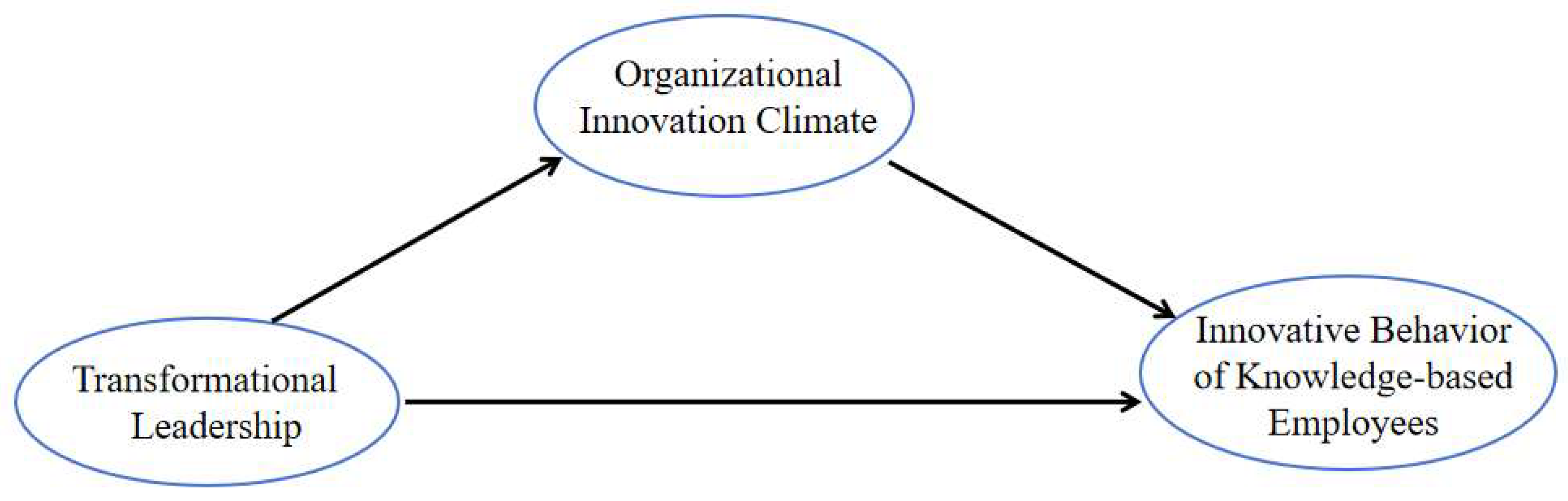
2.6. Research Framework
Based on the above theory and hypotheses, this investigation built a research framework (
Figure 1), which not only reflects the mechanism by which TL influences EIB by shaping the OIC, but also supplies a theoretical basis for further exploration of the role of employee innovative behavior in organizational sustainable innovation.
3. Method
3.1. Sample and Procedure
The data for this investigation were gathered from knowledge-based personnel at 10 high-tech enterprises in China (including Shandong Province, Shanghai, Guangdong Province, and Liaoning Province). The specific regions were chosen based on theory-driven purposive sampling, with the aim of capturing the dynamic mechanisms at the core of China’s high-tech industry innovation, rather than pursuing a nationwide probability sample. The reasons for selecting this sample frame are as follows:
First, while we acknowledge that focusing on the eastern region may to some extent limit the immediate applicability of our research findings to China’s underdeveloped central and western regions, this strategy offers significant advantages for our specific research questions. The eastern regions of China are the absolute engines of technological innovation and economic modernization in the country [
79], concentrating the nation’s most densely populated high-tech enterprises, research and development centers, and the knowledge-based workforce that is the focus of this institute’s research. Therefore, research targeting this region serves as a critical test of our theoretical model within the core context where the phenomena are most pronounced and intense.
More importantly, the provinces we selected represent diverse and highly representative models within China’s innovation ecosystem, enhancing the contextual richness of our sample. Shanghai and Guangdong: As global innovation hubs and pioneers of China’s reform and opening-up, they represent economically developed, market-driven, and highly internationalized regional models [
80,
81]. Their high-tech industries are mature and highly competitive, making them typical examples of cutting-edge innovation. Shandong and Liaoning: As traditional heavy industrial bases, these provinces are at the forefront of China’s “new industrialization” strategy and industrial transformation and upgrading [
82,
83]. Sampling from these provinces allows us to explore how TL fosters innovative behavior in the context of strategic innovation and upgrading within traditional enterprises—a critical factor in China’s current economic landscape.
By covering leading innovation regions and important industrial transformation bases, our sample captures a large and strategically significant part of China’s high-tech industry. This purposive sampling strategy ensures that the conclusions of this study are highly relevant [
84], and have important theoretical and practical value for understanding the innovation mechanisms of China’s core innovation areas and key transformation regions.
This study utilized an online survey platform for data collection. We contacted the human resources departments or senior managers of target companies to assist in distributing the survey link within their organizations. Involvement in the survey was entirely voluntary and anonymous. A total of 450 surveys were distributed, with 441 valid replies obtained, yielding a high response rate of 98.0%. Elaborate demographic characteristics of the respondents are listed in
Section 3.4.
3.2. Measures
The questionnaire used in this study consisted of two sections. The initial section incorporated demographic variables such as gender, age, educational background, and years of work experience. The second part consisted of measurement scales for core constructs, with all items rated using a five-point Likert scale (1 = “strongly disagree”, 5 = “strongly agree”).
The core variables measured in this investigation draw upon established scales from both domestic and international origins, with appropriate contextual adjustments made to align with the specific context of Chinese high-tech enterprises, ensuring that item statements are clear and culturally appropriate. Transformational leadership is quantified using the simplified version of the Multi-Factor Leadership Questionnaire (MLQ-5X) created by Avolio and Bass [
85], which includes four dimensions and six items. Moral exemplification, measuring leaders’ actions that set an example and demonstrate virtue; charismatic leadership, measuring the leader’s ability to inspire admiration and respect from subordinates; inspirational motivation, measuring the leader’s behavior of inspiring subordinates by envisioning a future; and individualized consideration, measuring the leader’s behavior of addressing subordinates’ individual needs and providing guidance. In this investigation, the overall Cronbach’s alpha coefficient for this scale was 0.942, with good internal consistency across all dimensions, indicating extremely high reliability.
The measurement of organizational innovation climate mainly draws on the situational outlook questionnaire (SOQ) and Amabile’s innovation climate framework [
86,
87], from which three key dimensions are extracted: organizational support for new ideas (e.g., reward mechanisms and resource commitment), team-level innovation atmosphere (e.g., trust, communication, and closeness), and work autonomy (e.g., decision-making freedom). Four items were set up for measurement, and the reliability coefficient of the scale was 0.891, indicating sound reliability.
The measurement of the innovative behavior of knowledge-based personnel draws on the classic dimensions of employee innovative behavior proposed by Scott and Bruce [
88] and Janssen [
89], covering the process of “idea generation, promotion, and implementation,” and incorporates related factors such as value alignment and psychological empowerment. The scale consists of six items, including two reverse-scored items to control for common method bias. The scale’s reliability coefficient was 0.927, indicating excellent reliability. The aforementioned scales collectively form the measurement tools for the core variables of this study, providing a reliable basis for subsequent empirical analysis.
3.3. Controlling for Common Method Bias
Common method bias (CMB) is an issue that needs to be carefully considered in studies using self-report questionnaires [
90]. This study conducted a comprehensive assessment and control of CMB through a combination of strict procedural controls and statistical tests.
Procedural remedies. During the research design phase, we implemented the following measures to minimize CMB at the source. Anonymity assurance: Respondents were explicitly informed that their answers would be completely anonymous and used solely for academic research, greatly reducing their tendency to give socially desirable responses [
91]. Item separation and counterbalancing: Items measuring different constructs were randomly mixed and arranged to break logical associations between variables, preventing respondents from guessing research hypotheses and providing consistent answers [
92]. Use of reverse-scored items: Reverse-scored items are included in the scale to disrupt respondents’ mental biases and encourage them to read the items more carefully [
93].
Statistical testing and evaluation. After data collection, we employed various statistical methods to assess the potential impact of CMB. Harman’s single-factor test: We included all measurement items in exploratory factor analysis (EFA). The unrotated factor analysis results indicated that the first principal component explained less than 50% of the variance, which is beneath the critical threshold [
94]. This denotes that no single factor explained the majority of the variance, implying that CMB was not a significant issue in this investigation.
To further examine the severity of common method bias, we conducted a CFA model comparison based on Podsakoff et al. [
95]. We compared the fit of a single-factor model, in which all items load on a single common method factor, with that of the multi-factor theoretical model used in this study. The outcomes indicated that the single-factor model had a poorer fit (x
2/df = 2289.539/104 ≈ 22.00, CFI = 0.614, TLI = 0.555, RMSEA = 0.219), while the theoretical model fit well (x
2/df = 283.047/101 ≈ 2.80, CFI = 0.968, TLI = 0.962, RMSEA = 0.064). Model comparison further indicated that the differences between the two models were significant (Δx
2(Δdf) = 2006.492(3),
p < 0.001). The above results collectively denote that common method bias is insufficient to explain the structural relationships among variables, and the constructs in this investigation display sound discriminant validity.
3.4. Sample Statistics and Demographics
The sample consists of employees from 10 high-tech enterprises in Shandong Province, Shanghai, Guangdong Province, Liaoning Province, and other regions in China. The survey primarily targeted individuals holding a bachelor’s degree or higher. A questionnaire was used, and
Table 1 shows the distribution and collection of the questionnaires.
Before conducting statistical analysis on the returned questionnaire samples, this study first performed descriptive statistics on the demographic characteristics of the respondents to understand the basic structure and representativeness of the sample [
96].
Table 2 shows the distribution of the sample regarding gender, age, education level, years of work experience, and job category.
3.5. Method of Analysis
The data analysis in this investigation adopted a structured multi-stage process utilizing SPSS 27.0 and AMOS 26.0 software. First, descriptive statistical analysis was performed to summarize the demographic characteristics of the sample (e.g., gender, age, and education level). The basic characteristics of the respondents were described by calculating frequencies and percentages.
Second, the reliability and validity of the measurement scales were rigorously assessed. Internal consistency reliability was evaluated employing Cronbach’s alpha coefficient, with a coefficient value greater than 0.70 deemed acceptable [
97]. Validity was tested employing EFA and CFA. Prior to conducting EFA, the Kaiser–Meyer–Olkin (KMO) statistic and Bartlett’s test were used to assess whether the data were suitable for factor analysis (KMO > 0.60, Bartlett’s test
p < 0.05) [
98]. EFA was utilized to validate the essential structure of the scale, followed by CFA to further evaluate the measurement model, including convergent validity and discriminant validity.
Third, to address potential CMB issues, Harman’s single-factor test was utilized. All measurement items underwent EFA without rotation. If no single factor appeared in the analysis, or if the first factor explained less than 50% of the total variance, this indicated that there was no CMB [
95].
Finally, to test the research hypotheses, SEM analysis was conducted utilizing AMOS software. The hypothetical model was estimated employing the maximum likelihood method [
99]. The overall model fit was assessed using a series of standard indices: the chi-square value to degrees of freedom ratio (x
2/df < 3), comparative fit index (CFI > 0.90), Tucker–Lewis index (TLI > 0.90), and root mean square error of approximation (RMSEA < 0.08) [
100]. The significance and directionality of path coefficients were tested to determine whether the proposed hypotheses were supported.
4. Results
4.1. Analysis of Reliability and Validity
In this paper, exploratory factor and validation factor analyses were conducted, and the value of Cronbach’s Alpha was 0.934, which is greater than the reliability standard of 0.7, indicating that the overall reliability is good. The Cronbach’s test for all dimensions individually shows that all α values are greater than 0.7, which indicates that there is good stability within each factor measurement item. According to the results of the KMO and Bartlett test, the overall KMO value is 0.924, and the significance level tends to be close to 0.000. The results of the KMO and Bartlett test for each latent variable (
Table 3) indicate that it is suitable for factor analysis, and the rotated principal factors are extracted using principal component analysis, and each measurement item is clearly categorized, and the factor loadings on the principal factors are higher than 0.5, with good discriminant validity, so all measurement items were retained.
4.2. Model Goodness-of-Fit
According to Harman’s one-factor test, all variables were placed in an EFA to detect the unrotated factors, and the results indicated that the common method bias problem did not have a significant effect on this data analysis. An SEM using AMOS 26.0 aimed at elucidating the relationship between transformational leadership and innovative behaviors of knowledge-based employees mediated by the organizational innovation climate and testing the hypothesized model. The indicators for judging the overall model fit can be divided into the absolute fit index, mainly x
2, df, GFI, RMR, RMSEA, etc.; the incremental fit index, including NFI, CFI, IFI, TLI, NNFI, etc.; and the parsimonious fit index, including x
2/df, GFI, NFI, CFI, and other indicators. The results of the indicator test of model goodness-of-fit (
Table 4) show that x
2/df < 3, indicating a good model fit; RMR < 0.08, indicating that the model achieves good fit; RMSEA < 0.08, indicating that the fit passes the test; and GFI, CFI, NFI, IFI, and TLI are all greater than 0.9, indicating that the model is well-fitted.
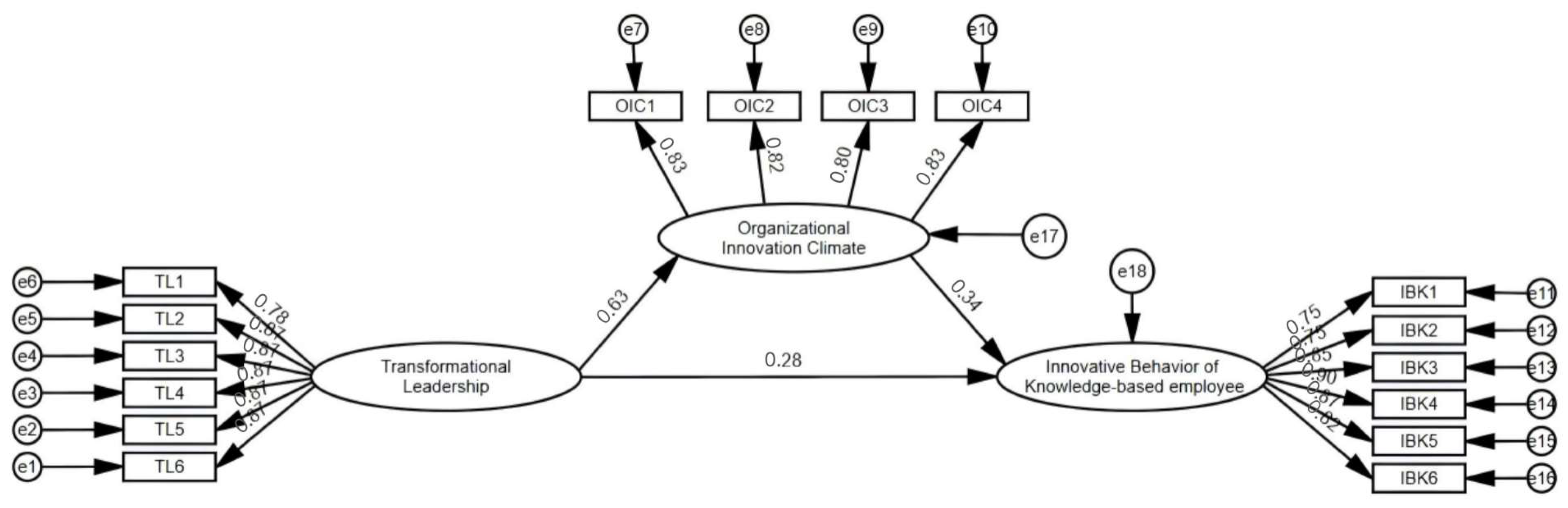
Figure 2 shows the path of the model of the association between TL, OIC, and innovative behavior of knowledge-based employees obtained from the results of the validation analysis.
4.3. Model Measurement Results
Table 5 shows that the three regression coefficient dimensions of TL, including charismatic leadership, inspirational motivation, and individualized consideration, have a more significant direct positive correlation with the innovative behavior of knowledge-based employees, so
H1 is valid; TL and OIC reflects a significant positive correlation, in which the inspirational motivation is significant at the level of 0.001, and the moral exemplification, charismatic leadership, and individualized consideration meet the required level of 0.05, so
H2 is verified; OIC has a positive impact on innovative behavior of knowledge-based employees at the level of 0.01, and
H3 is verified; OIC has a fully mediating impact on moral exemplification, and a partially mediating impact on charismatic leadership, inspirational motivation, and individualized consideration, so
H4 is valid.
4.4. Effect Analysis
The significance of the degree of direct correlation of the variables was tested through
p-value analysis, where
p-values between 0.05 and 0.1 imply marginal significance, and those below 0.01 indicate high significance. Using AMOS to analyze the results (
Table 6), TL directly positively affects the innovative behavior of knowledge-based employees, while indirectly positively affecting the innovative behavior of knowledge-based employees. Therefore, TL, on the one hand, directly affects the innovative behavior of knowledge-based employees, and on the other hand, it has an indirect effect on the innovative behavior of knowledge-based employees through the mediating role of the OIC.
5. Discussion
This study used SEM to validate the multi-level influence mechanism of TL on the innovative conduct of knowledge-based personnel. The outcomes revealed that transformational leadership not only directly and positively influences innovative behavior (β = 0.278, p < 0.001), but also indirectly enhances innovative behavior through the mediating effect of OIC (indirect effect β = 0.218, p = 0.01). This finding prompts in-depth discussion in the following three areas:
5.1. Revisiting the Theoretical Mechanisms: Integrating and Complementing Multiple Frameworks
This study integrates Social Exchange Theory, Conservation of Resources Theory, Resource-Based View, and Dynamic Capabilities Theory to systematically elucidate the interplay mechanism among “leadership–climate–behavior.” The findings indicate that different theories exhibit significant complementarity in explaining each pathway. Specifically, transformational leadership directly promotes employee innovative behavior by stimulating employees’ social exchange intentions (SET), consistent with Western research findings. Additionally, TL fosters a positive OIC by providing support, trust, and respect to create a favorable social exchange atmosphere, enabling employees to perceive the organization’s commitment to innovation. From the standpoint of conservation of resources theory, OIC, as a critical contextual resource, reduces employees’ concerns about innovation failure and provides necessary instrumental support (such as resources and rewards), directly stimulating innovative behavior, thereby embodying the resource gain spiral. On a broader scale, TL and the OIC it shapes constitute the organization’s inimitable soft resources (RBV). These resources are ultimately transformed into sustained employee innovative behavior through the organization’s dynamic capabilities (DCT)—i.e., the ability to integrate and adapt to the environment—effectively channeling leadership into sustainable innovation performance.
5.2. Dialogue with Existing Literature: Cross-Cultural Consistencies and Contextual Specificities
This study validated the effectiveness of transformational leadership in the knowledge-intensive environment of high-tech enterprises in China, indicating that exceptional leadership behaviors exhibit a certain degree of cross-cultural consistency in stimulating employees’ intrinsic motivation and innovative self-efficacy. However, the full mediating effect of the moral exemplification dimension revealed cultural uniqueness, which may be related to China’s paternalistic leadership tradition and employees’ high expectations of leaders’ moral character. This suggests that the mechanisms underlying the various dimensions of transformational leadership may differ in non-Western contexts. Additionally, this study emphasizes the independent mediating value of organizational innovation climate, addressing the shortcomings of previous research that overly focused on individual cognitive mechanisms while neglecting organizational-level contextual mechanisms.
5.3. Linking Employee Innovation to Organizational Sustainability
One of the key contributions of this investigation is that it bridges the gap between employee micro-innovative behavior and organizational macro-sustainable innovation. Sustainable innovation depends on an organization’s capacity to continuously generate and implement new ideas, a capability deeply rooted in a supportive organizational innovation climate shaped by transformational leadership. Through the construction of dynamic capabilities, this climate ensures that organizations can continuously adapt to complex environments, systematize and normalize employees’ discrete innovation behaviors, thereby transforming them into long-term competitive advantages. This finding transcends the limitations of focusing solely on short-term innovation outputs, delving into the core essence of sustainable innovation.
6. Theoretical and Practical Implications
6.1. Theoretical Contributions
This investigation represents a multifaceted theoretical innovation and expansion. First, in terms of the application context of transformational leadership theory, this study places it within the context of Chinese high-tech enterprises—a typical knowledge-intensive, non-Western cultural setting—to validate the positive impact of the four-dimensional model of transformational leadership on employee innovative behavior and to reveal the unique mediating effect of the moral exemplification dimension. This not only supports the theory’s universality across cultural contexts but also enriches its underlying mechanisms in different cultural settings, supplying empirical evidence for the localization and contextualization of leadership theory. Second, this investigation deepens the understanding of organizational innovation climate, clarifying its core mediating function between transformational leadership and employee innovative behavior. By integrating social exchange theory, conservation of resources theory, the resource-based view, and dynamic capability theory, it systematically reveals its bridging function. This finding addresses the previous research gap in insufficient attention to organizational-level contextual mechanisms, providing a more comprehensive and profound theoretical framework for understanding how leadership shapes individual behavior through environmental influences. Finally, this study builds a theoretical bridge between micro-level innovative behavior and organizational sustainable innovation. By incorporating the resource-based view and dynamic capability theory, this investigation clarifies how transformational leadership can transform employee innovative behavior into organizational sustainable innovation capability by constructing a scarce and inimitable organizational innovation climate. This integrates individual-level innovation research into a macro-level competitive advantage perspective, transcending the limitations of previous studies that focused solely on short-term innovation outputs, and enriching the theoretical implications of innovation sustainability.
6.2. Practical Implications
The findings of this investigation offer important insights for the management practices of high-tech enterprises in China. First, in terms of leadership selection and development, companies should prioritize the cultivation of transformational leaders. While focusing on their charismatic leadership, inspirational motivation, and individualized consideration, it is equally important to emphasize the cultivation of moral exemplification. By leading by example and taking on responsibilities courageously, such leaders can earn the trust and emulation of their employees. Second, in the systematic construction of an innovative organizational culture, companies should recognize that innovation is not only the outcome of individual behavior but also a product of the organizational environment and culture. In practice, companies should design systems to provide error-tolerant mechanisms, adequate innovation resources, and a comprehensive reward system to reduce innovation risks from a structural perspective. Simultaneously, through symbolic management and narrative communication, companies should convey values that support innovation and tolerate failure, creating a psychologically safe environment. Finally, in managing knowledge-based employees, companies should adopt flexible, empowering management approaches. Through delegation of authority, challenging work assignments, and flat communication channels, they can fully unleash employees’ innovative potential, achieving synergistic development between individual growth and organizational innovation. Overall, this study provides systematic theoretical guidance and practical pathways for companies to build sustainable innovation capabilities in complex and dynamic environments.
7. Limitations and Future Research Directions
Although this investigation makes significant contributions in terms of theory and methodology, it still has several limitations that provide room for improvement in future research. First, in terms of sample and external validity, the samples in this study are all from high-tech enterprises in eastern China. Although this region is economically developed and has active innovation activities, the geographical and industry limitations of the samples may affect the generalizability of the conclusions. Future research could broaden the sample coverage to incorporate enterprises from different tiers of economic development and regions to enhance the external validity of the research conclusions.
Secondly, in terms of data types and measurement methods, this investigation utilizes cross-sectional questionnaire data for analysis, which cannot directly infer causal relationships between variables. Additionally, the study variables are primarily measured using self-report scales, which may introduce some subjectivity and common method bias. Future studies may contemplate utilizing longitudinal research or experimental designs, combined with objective indicators (such as the number of patent applications or innovation projects) or multi-source data (such as leader-employee matching data) to enhance the reliability and validity of the research.
Finally, the model does not contemplate moderating variables or direct measurements of sustainable innovation. This study does not introduce potential contextual moderating variables, such as firm size, industry type, or cultural differences, which may influence the underlying mechanisms of the “leadership–innovation climate–employee innovative behavior” pathway. Additionally, while this study theoretically links employee innovative behavior to organizational sustainability, it does not directly measure sustainable innovation outcomes. Future research could introduce specific sustainability indicators, such as environmental innovation, social innovation, or green technology innovation, to further validate the actual contribution of employee innovative behavior to organizational sustainable innovation.
8. Conclusions
This study empirically verified the positive effect of transformational leadership on the innovative behavior of knowledge-based personnel through the mediating effect of organizational innovation climate. The study not only supports the applicability of theories such as the resource-based view and social exchange theory in innovation research, but also provides a theoretical basis and practical guidelines for Chinese high-tech enterprises on how to promote sustainable innovation through leadership and organizational climate construction in the context of the knowledge economy.
Despite limitations such as geographical constraints and cross-sectional data, this study has made valuable explorations in theoretical construction, mechanism interpretation, and practical application. Future research can further deepen related studies by expanding the sample scope, introducing longitudinal designs, and utilizing multi-source data, thereby promoting transformational leadership and sustainable innovation research toward more in-depth and systematic directions.
Author Contributions
Conceptualization, C.C.; Methodology, C.C.; Writing—original draft, C.C.; Writing—review & editing, S.A.K. All authors have read and agreed to the published version of the manuscript.
Funding
This research received no external funding.
Institutional Review Board Statement
According to the research ethics policy of INTI International University, ethical review and approval were waived for this study, due to the non-invasive nature of the survey and the absence of sensitive personal data.
Informed Consent Statement
Informed consent was obtained from all subjects involved in the study. Participation was voluntary and responses were anonymous.
Data Availability Statement
The original contributions presented in this study are included in the article. Further inquiries can be directed to the corresponding author.
Conflicts of Interest
The authors declare no conflict of interest.
References
- Afeltra, G.; Alerasoul, S.A.; Strozzi, F. The evolution of sustainable innovation: From the past to the future. Eur. J. Innov. Manag. 2023, 26, 386–421. [Google Scholar] [CrossRef]
- Li, M.; Hsu, C.H. A review of employee innovative behavior in services. Int. J. Contemp. Hosp. Manag. 2016, 28, 2820–2841. [Google Scholar] [CrossRef]
- Ng, T.W.; Lucianetti, L. Within-individual increases in innovative behavior and creative, persuasion, and change self-efficacy over time: A social-cognitive theory perspective. J. Appl. Psychol. 2016, 101, 14. [Google Scholar] [CrossRef]
- Lee-Kelley, L.; Blackman, D.A.; Hurst, J.P. An exploration of the relationship between learning organisations and the retention of knowledge workers. Learn. Organ. 2007, 14, 204–221. [Google Scholar] [CrossRef]
- Hosseini, E.; Saeida Ardekani, S.; Sabokro, M.; Salamzadeh, A. The study of knowledge employee voice among the knowledge-based companies: The case of an emerging economy. Rev. Gestão 2022, 29, 117–138. [Google Scholar] [CrossRef]
- Paulsen, N.; Maldonado, D.; Callan, V.J.; Ayoko, O. Charismatic leadership, change and innovation in an R&D organization. J. Organ. Change Manag. 2009, 22, 511–523. [Google Scholar]
- Wan, X.; He, R.; Zhang, G.; Zhou, J. Employee engagement and open service innovation: The roles of creative self-efficacy and employee innovative behaviour. Front. Psychol. 2022, 13, 921687. [Google Scholar] [CrossRef]
- Ghlichlee, B.; Motaghed Larijani, M. Servant leadership and knowledge employee performance: The mediating role of employee innovative behavior in knowledge-based firms. Leader. Organ. Dev. J. 2024, 45, 544–558. [Google Scholar] [CrossRef]
- Khalili, A. Linking transformational leadership, creativity, innovation, and innovation-supportive climate. Manag. Decis. 2016, 54, 2277–2293. [Google Scholar] [CrossRef]
- Gumusluoğlu, L.; Ilsev, A. Transformational leadership and organizational innovation: The roles of internal and external support for innovation. J. Prod. Innov. Manag. 2009, 26, 264–277. [Google Scholar] [CrossRef]
- Bass, B.M.; Avolio, B.J.; Jung, D.I.; Berson, Y. Predicting unit performance by assessing transformational and transactional leadership. J. Appl. Psychol. 2003, 88, 207. [Google Scholar] [CrossRef] [PubMed]
- Khan, I.U.; Amin, R.U.; Saif, N. Individualized consideration and idealized influence of transformational leadership: Mediating role of inspirational motivation and intellectual stimulation. Int. J. Leadersh. Educ. 2022, 1–11. [Google Scholar] [CrossRef]
- Stanescu, D.F.; Zbuchea, A.; Pinzaru, F. Transformational leadership and innovative work behaviour: The mediating role of psychological empowerment. Kybernetes 2021, 50, 1041–1057. [Google Scholar]
- Fatmawaty, A.S.; Widigdo, A.M.N.; Ie, M.; Karlinah, L.; Julitasari, E.N.; Hairani, E.; Muttaqiyathun, A. Improving SMEs innovative work behavior: How the role of transformational leadership and knowledge sharing in the digital era. J. Law. Sustain. Dev. 2023, 11, e735. [Google Scholar] [CrossRef]
- Aydın, E.; Erkılıç, E. Transformational leadership and innovative work behaviour: The mediating role of knowledge sharing. Tour. Recreat. 2020, 2, 106–117. [Google Scholar]
- Liu, F.; Chow, I.H.S.; Zhang, J.C.; Huang, M. Organizational innovation climate and individual innovative behavior: Exploring the moderating effects of psychological ownership and psychological empowerment. Rev. Manag. Sci. 2019, 13, 771–789. [Google Scholar]
- Baer, M.; Frese, M. Innovation is not enough: Climates for initiative and psychological safety, process innovations, and firm performance. J. Organ. Behav. 2003, 24, 45–68. [Google Scholar] [CrossRef]
- Lloréns Montes, F.J.; Ruiz Moreno, A.; Miguel Molina Fernández, L. Assessing the organizational climate and contractual relationship for perceptions of support for innovation. Int. J. Manpow. 2004, 25, 167–180. [Google Scholar] [CrossRef]
- You, Y.; Hu, Z.; Li, J.; Wang, Y.; Xu, M. The effect of organizational innovation climate on employee innovative behavior: The role of psychological ownership and task interdependence. Front. Psychol. 2022, 13, 856407. [Google Scholar] [CrossRef]
- Aarons, G.A.; Sommerfeld, D.H. Leadership, innovation climate, and attitudes toward evidence-based practice during a statewide implementation. J. Am. Acad. Child. Adolesc. Psychiatry 2012, 51, 423–431. [Google Scholar]
- Cook, K.S.; Cheshire, C.; Rice, E.R.; Nakagawa, S. Social exchange theory. In Handbook of Social Psychology; Springer: Dordrecht, The Netherlands, 2013; pp. 61–88. [Google Scholar]
- Che, Y.; Zhu, J.; Huang, H. How does employee–organization relationship affect work engagement and work well-being of knowledge-based employees? Front. Psychol. 2022, 13, 814324. [Google Scholar] [CrossRef]
- Hsu, M.L.; Chen, F.H. The cross-level mediating effect of psychological capital on the organizational innovation climate–employee innovative behavior relationship. J. Creat. Behav. 2017, 51, 128–139. [Google Scholar] [CrossRef]
- Barney, J. Firm resources and sustained competitive advantage. J. Manag. 1991, 17, 99–120. [Google Scholar] [CrossRef]
- Probojakti, W.; Utami, H.N.; Prasetya, A.; Riza, M.F. Building sustainable competitive advantage in banking through organizational agility. Sustainability 2024, 16, 8327. [Google Scholar] [CrossRef]
- Edmondson, A.C. The Fearless Organization: Creating Psychological Safety in the Workplace for Learning, Innovation, and Growth; John Wiley & Sons: Hoboken, NJ, USA, 2018. [Google Scholar]
- Afsar, B.; Umrani, W.A. Transformational leadership and innovative work behavior: The role of motivation to learn, task complexity and innovation climate. Eur. J. Innov. Manag. 2020, 23, 402–428. [Google Scholar] [CrossRef]
- Slåtten, T. Determinants and effects of employee’s creative self-efficacy on innovative activities. Int. J. Qual. Serv. Sci. 2014, 6, 326–347. [Google Scholar] [CrossRef]
- Bednall, T.C.; Rafferty, A.E.; Shipton, H.; Sanders, K.; Jackson, C. Innovative behaviour: How much transformational leadership do you need? Br. J. Manag. 2018, 29, 796–816. [Google Scholar] [CrossRef]
- Messmann, G.; Evers, A.; Kreijns, K. The role of basic psychological needs satisfaction in the relationship between transformational leadership and innovative work behavior. Hum. Resour. Dev. Q. 2022, 33, 29–45. [Google Scholar] [CrossRef]
- Jun, K.; Lee, J. Transformational leadership and followers’ innovative behavior: Roles of commitment to change and organizational support for creativity. Behav. Sci. 2023, 13, 320. [Google Scholar] [CrossRef]
- Afsar, B.; Badir, Y.F.; Bin Saeed, B. Transformational leadership and innovative work behavior. Ind. Manag. Data Syst. 2014, 114, 1270–1300. [Google Scholar] [CrossRef]
- Settoon, R.P.; Bennett, N.; Liden, R.C. Social exchange in organizations: Perceived organizational support, leader–member exchange, and employee reciprocity. J. Appl. Psychol. 1996, 81, 219. [Google Scholar] [CrossRef]
- Koveshnikov, A.; Ehrnrooth, M. The cross-cultural variation of the effects of transformational leadership behaviors on followers’ organizational identification: The case of idealized influence and individualized consideration in Finland and Russia. Manag. Organ. Rev. 2018, 14, 747–779. [Google Scholar] [CrossRef]
- Ameen, A.; Alshamsi, S.; Isaac, O.; Gazem, N.A.; Mohammed, F. Impact of inspirational motivation on organizational innovation (Administrative innovation, process innovation, and product innovation). In Advances on Smart and Soft Computing, Proceedings of ICACIn, Casablanca, Morocco, 12–13 April 2020; Springer: Singapore, 2020; pp. 613–623. [Google Scholar]
- Wang, Z.; Hangeldiyeva, M.; Ali, A.; Guo, M. Effect of enterprise social media on employee creativity: Social exchange theory perspective. Front. Psychol. 2022, 12, 812490. [Google Scholar] [CrossRef] [PubMed]
- Ilies, R.; Nahrgang, J.D.; Morgeson, F.P. Leader-member exchange and citizenship behaviors: A meta-analysis. J. Appl. Psychol. 2007, 92, 269. [Google Scholar] [CrossRef] [PubMed]
- Yuan, F.; Woodman, R.W. Innovative behavior in the workplace: The role of performance and image outcome expectations. Acad. Manag. J. 2010, 53, 323–342. [Google Scholar] [CrossRef]
- Yeoh, K.K.; Mahmood, R. The relationship between pro-innovation organizational climate, leader-member exchange and innovative work behavior: A study among the knowledge workers of the knowledge intensive business services in Malaysia. Bus. Manag. Dyn. 2013, 2, 15–30. [Google Scholar]
- Liu, A.M.; Chan, I.Y. Understanding the interplay of organizational climate and leadership in construction innovation. J. Manag. Eng. 2017, 33, 04017021. [Google Scholar] [CrossRef]
- Xu, Q.; Yao, Z.Z. Influence of transformational leadership and psychological empowerment on organizational innovation climate of general practitioners in community health service centers. Chin. Gen. Pract. 2018, 21, 2690. [Google Scholar]
- Wu, J.B.; Tsui, A.S.; Kinicki, A.J. Consequences of differentiated leadership in groups. Acad. Manag. J. 2010, 53, 90–106. [Google Scholar] [CrossRef]
- Eisenbeiss, S.A.; Van Knippenberg, D.; Boerner, S. Transformational leadership and team innovation: Integrating team climate principles. J. Appl. Psychol. 2008, 93, 1438. [Google Scholar] [CrossRef]
- Zhang, W.; Zeng, X.; Liang, H.; Xue, Y.; Cao, X. Understanding how organizational culture affects innovation performance: A management context perspective. Sustainability 2023, 15, 6644. [Google Scholar] [CrossRef]
- Wu, W.Y.; Chang, M.L.; Chen, C.W. Promoting innovation through the accumulation of intellectual capital, social capital, and entrepreneurial orientation. R&D Manag. 2008, 38, 265–277. [Google Scholar] [CrossRef]
- Xie, Y.; Xue, W.; Li, L.; Wang, A.; Chen, Y.; Zheng, Q.; Wang, Y.; Li, X. Leadership style and innovation atmosphere in enterprises: An empirical study. Technol. Forecast. Soc. Change 2018, 135, 257–265. [Google Scholar] [CrossRef]
- Yue, Y.; Lin, W.L.; Tan, H.C. Unlocking employee creativity: Ethical leadership, employee voice behavior and innovation climate in the era of intelligent manufacturing in China. Soc. Responsib. J. 2025, 21, 1440–1465. [Google Scholar] [CrossRef]
- Liao, H.; Huang, L.; Hu, B. Conservation of resources theory in the organizational behavior context: Theoretical evolution and challenges. Adv. Psychol. Sci. 2022, 30, 449. [Google Scholar] [CrossRef]
- Hobfoll, S.E.; Shirom, A. Conservation of resources theory: Applications to stress and management in the workplace. In Handbook of Organization Behavior, 2nd ed.; Marcel Dekker: New York, NY, USA, 2000; pp. 57–81. [Google Scholar]
- Hobfoll, S.E. The influence of culture, community, and the nested-self in the stress process: Advancing conservation of resources theory. Appl. Psychol. 2001, 50, 337–421. [Google Scholar] [CrossRef]
- Xu, Z.; Suntrayuth, S. Innovative work behavior in high-tech enterprises: Chain intermediary effect of psychological safety and knowledge sharing. Front. Psychol. 2022, 13, 1017121. [Google Scholar] [CrossRef]
- Chen, W.; Zheng, B. Social media use and employee innovation performance: The roles of work engagement and traditionality. J. Univ. Sci. Technol. China 2024, 54, 1103–1111. [Google Scholar] [CrossRef]
- Alvaro, C.; Lyons, R.F.; Warner, G.; Hobfoll, S.E.; Martens, P.J.; Labonté, R.; Brown, E.R. Conservation of resources theory and research use in health systems. Implement. Sci. 2010, 5, 79. [Google Scholar] [CrossRef]
- Pitesa, M.; Thau, S. Resource scarcity, effort, and performance in physically demanding jobs: An evolutionary explanation. J. Appl. Psychol. 2018, 103, 237. [Google Scholar] [CrossRef]
- Qi, J.C.; Ling, L.K. A review on Western and Chinese organization culture: Similarities and differences. Inti J. 2020, 2019, 65. [Google Scholar]
- Kero, C.A.; Bogale, A.T. A systematic review of resource-based view and dynamic capabilities of firms and future research avenues. Int. J. Sustain. Dev. Plan. 2023, 18, 3137–3154. [Google Scholar] [CrossRef]
- Zica, R.M.F.; Gonçalves, C.A.; Martins, H.C.; Gonçalves, M.A. The resource-based theory and its adherence to a superior performance strategy: An analysis in small companies in Brazil. Corp. Ownersh. Control. 2016, 13, 434–444. [Google Scholar] [CrossRef][Green Version]
- Fennell, K. Conceptualisations of leadership and relevance to health and human service workforce development: A scoping review. J. Multidiscip. Healthc. 2021, 14, 3035–3051. [Google Scholar] [CrossRef]
- Silva, E.M.S.G.D.; Weber, A.F.; Moreira, M.F.; Silva, S.M.D. Innovation climate, human capital and dynamic capacities: Interrelations between innovation antecedents. Innov. Manag. Rev. 2022, 19, 270–289. [Google Scholar] [CrossRef]
- Newman, A.; Round, H.; Wang, S.; Mount, M. Innovation climate: A systematic review of the literature and agenda for future research. J. Occup. Organ. Psychol. 2020, 93, 73–109. [Google Scholar] [CrossRef]
- Teece, D.J.; Pisano, G.; Shuen, A. Dynamic capabilities and strategic management. Strateg. Manag. J. 1997, 18, 509–533. [Google Scholar] [CrossRef]
- Sarros, J.C.; Cooper, B.K.; Santora, J.C. Building a climate for innovation through transformational leadership and organizational culture. J. Leadersh. Organ. Stud. 2008, 15, 145–158. [Google Scholar] [CrossRef]
- Jung, D.I.; Chow, C.; Wu, A. The role of transformational leadership in enhancing organizational innovation: Hypotheses and some preliminary findings. Leadersh. Q. 2003, 14, 525–544. [Google Scholar] [CrossRef]
- Teece, D.J. Explicating dynamic capabilities: The nature and microfoundations of (sustainable) enterprise performance. Strateg. Manag. J. 2007, 28, 1319–1350. [Google Scholar] [CrossRef]
- Koivisto, T. Developing strategic innovation capability of enterprises. In Theoretical and Methodological Outlines of Intervention; VTT Publications: Espoo, Finland, 2005. [Google Scholar]
- Jorna, R.J. Sustainable Innovation: The Organisational, Human and Knowledge Dimension; Routledge: London, UK, 2017. [Google Scholar]
- Saxena, P.K.; Seetharaman, A.; Shawarikar, G. Factors that influence sustainable innovation in organizations: A systematic literature review. Sustainability 2024, 16, 4978. [Google Scholar] [CrossRef]
- Lin, H.; Chen, M.; Su, J. How management innovations are successfully implemented? An organizational routines’ perspective. J. Organ. Change Manag. 2017, 30, 456–486. [Google Scholar] [CrossRef]
- Nonaka, I. The knowledge-creating company. In The Economic Impact of Knowledge; Routledge: London, UK, 2009; pp. 175–187. [Google Scholar]
- Farnese, M.L.; Barbieri, B.; Chirumbolo, A.; Patriotta, G. Managing knowledge in organizations: A Nonaka’s SECI model operationalization. Front. Psychol. 2019, 10, 2730. [Google Scholar] [CrossRef]
- Feldman, M.S. Organizational routines as a source of continuous change. Organ. Sci. 2000, 11, 611–629. [Google Scholar] [CrossRef]
- Nonaka, I. A dynamic theory of organizational knowledge creation. Organ. Sci. 1994, 5, 14–37. [Google Scholar] [CrossRef]
- Grant, R.M. Toward a knowledge-based theory of the firm. Strateg. Manag. J. 1996, 17, 109–122. [Google Scholar] [CrossRef]
- Inigo, E.A.; Albareda, L. Sustainability oriented innovation dynamics: Levels of dynamic capabilities and their path-dependent and self-reinforcing logics. Technol. Forecast. Soc. Change 2019, 139, 334–351. [Google Scholar] [CrossRef]
- Dangelico, R.M.; Pujari, D.; Pontrandolfo, P. Green product innovation in manufacturing firms: A sustainability-oriented dynamic capability perspective. Bus. Strateg. Environ. 2017, 26, 490–506. [Google Scholar] [CrossRef]
- Ayaz, S. Transformational leadership and dynamic capabilities in businesses: A review. Uluslarar. Yonet. Akad. Derg. 2022, 5, 602–621. [Google Scholar] [CrossRef]
- Patil, R.; Raheja, D.K.; Nair, L.; Deshpande, A.; Mittal, A. The power of psychological safety: Investigating its impact on team learning, team efficacy, and team productivity. Open Psychol. J. 2023, 16, e187435012307090. [Google Scholar] [CrossRef]
- Lin, H.C.; Lee, Y.D. A study of the influence of organizational learning on employees’ innovative behavior and work engagement by a cross-level examination. Eurasia J. Math. Sci. Technol. Educ. 2017, 13, 3463–3478. [Google Scholar] [CrossRef]
- National Bureau of Statistics of China. Regional Coordinated Development Moving Toward High-Level Major Strategy Achievements—Report on the 75 Years of Economic and Social Development of New China; No. 9; National Bureau of Statistics of China: Beijing, China, 13 September 2024. Available online: https://www.stats.gov.cn/sj/sjjd/202409/t20240912_1956416.html (accessed on 22 August 2025).
- Shanghai Municipal People’s Government. Shanghai Weekly Bulletin; No. 2; Shanghai Municipal People’s Government: Shanghai, China, 12 March 2025. Available online: https://wsb.sh.gov.cn/ztzl/shzxzb/20250312/f1885311d2eb48518ea4e343bbdfbe01.html (accessed on 22 August 2025).
- Guangdong Provincial People’s Government General Office. 2023 Report on the Work of the Guangdong Government; People’s Government of Guangdong Province: Guangzhou, China, 20 January 2023. Available online: https://www.gd.gov.cn/gkmlpt/content/4/4084/post_4084966.html#45 (accessed on 22 August 2025).
- PR Newswire. A Green and Low-Carbon Path: Shandong’s Answer to Modernization Practice with Chinese Characteristics; PR Newswire: Shandong, China, 2 November 2023; Available online: https://en.prnasia.com/releases/global/a-green-and-low-carbon-path-shandong-s-answer-to-modernization-practice-with-chinese-characteristics-425046.shtml (accessed on 22 August 2025).
- China Daily. Liaoning Leverages AI for Technological Transformation; China Daily: Liaoning, China, 10 March 2025; Available online: https://www.chinadaily.com.cn/a/202503/10/WS67ce923fa310c240449d9e46.html (accessed on 22 August 2025).
- Campbell, S.; Greenwood, M.; Prior, S.; Shearer, T.; Walkem, K.; Young, S.; Bywaters, D.; Walker, K. Purposive sampling: Complex or simple? Research case examples. J. Res. Nurs. 2020, 25, 652–661. [Google Scholar] [CrossRef] [PubMed]
- Avolio, B.J.; Bass, B.M. Multifactor Leadership Questionnaire (TM); Mind Garden, Inc.: Menlo Park, CA, USA, 2004; pp. 1–10. [Google Scholar]
- Isaksen, S.G.; Lauer, K.J.; Ekvall, G.; Britz, A. Perceptions of the best and worst climates for creativity: Preliminary validation evidence for the situational outlook questionnaire. Creat. Res. J. 2001, 13, 171–184. [Google Scholar] [CrossRef]
- Amabile, T.M. Creativity in Context: Update to the Social Psychology of Creativity; Routledge: London, UK, 2018. [Google Scholar]
- Scott, S.G.; Bruce, R.A. Determinants of innovative behavior: A path model of individual innovation in the workplace. Acad. Manag. J. 1994, 37, 580–607. [Google Scholar] [CrossRef]
- Janssen, O. Job demands, perceptions of effort-reward fairness and innovative work behaviour. J. Occup. Organ. Psychol. 2000, 73, 287–302. [Google Scholar] [CrossRef]
- Polas, M.R.H. Common Method Bias in Social and Behavioral Research: Strategic Solutions for Quantitative Research in the Doctoral Research. J. Compr. Bus. Admin. Res. 2025, 1–12. [Google Scholar] [CrossRef]
- Ong, A.D.; Weiss, D.J. The impact of anonymity on responses to sensitive questions. J. Appl. Soc. Psychol. 2000, 30, 1691–1708. [Google Scholar] [CrossRef]
- Reichardt, C.S. Experimental and Quasi-Experimental Designs for Generalized Causal Inference; University of Chicago Press: Chicago, IL, USA, 2002. [Google Scholar]
- İlhan, M.; Güler, N.; Teker, G.T.; Ergenekon, Ö. The effects of reverse items on psychometric properties and respondents’ scale scores according to different item reversal strategies. Int. J. Assess. Tools Educ. 2024, 11, 20. [Google Scholar] [CrossRef]
- Howard, M.C.; Boudreaux, M.; Oglesby, M. Can Harman’s single-factor test reliably distinguish between research designs? Not in published management studies. Eur. J. Work. Organ. Psychol. 2024, 33, 790–804. [Google Scholar] [CrossRef]
- Podsakoff, P.M.; MacKenzie, S.B.; Lee, J.Y.; Podsakoff, N.P. Common method biases in behavioral research: A critical review of the literature and recommended remedies. J. Appl. Psychol. 2003, 88, 879. [Google Scholar] [CrossRef]
- Marshall, G.; Jonker, L. An introduction to descriptive statistics: A review and practical guide. Radiography 2010, 16, e1–e7. [Google Scholar] [CrossRef]
- Kilic, S. Cronbach’s alpha reliability coefficient. Psychiatry Behav. Sci. 2016, 6, 47. [Google Scholar] [CrossRef]
- Shrestha, N. Factor analysis as a tool for survey analysis. Am. J. Appl. Math. Stat. 2021, 9, 4–11. [Google Scholar] [CrossRef]
- Blunch, N.J. Introduction to Structural Equation Modeling Using IBM SPSS Statistics and AMOS; SAGE Publications Ltd.: London, UK, 2012. [Google Scholar]
- Hu, L.T.; Bentler, P.M. Cutoff criteria for fit indexes in covariance structure analysis: Conventional criteria versus new alternatives. Struct. Equ. Model. 1999, 6, 1–55. [Google Scholar] [CrossRef]
| Disclaimer/Publisher’s Note: The statements, opinions and data contained in all publications are solely those of the individual author(s) and contributor(s) and not of MDPI and/or the editor(s). MDPI and/or the editor(s) disclaim responsibility for any injury to people or property resulting from any ideas, methods, instructions or products referred to in the content. |
© 2025 by the authors. Licensee MDPI, Basel, Switzerland. This article is an open access article distributed under the terms and conditions of the Creative Commons Attribution (CC BY) license (https://creativecommons.org/licenses/by/4.0/).