1. Introduction
The global population is projected to reach approximately 9.7 billion by 2030 [
1], which is expected to drive the demand for food crops up by 100–110% by 2050 [
2]. Smith [
3] further notes that population growth is fueling increased demand for animal-based products, such as milk, meat, and eggs, placing additional pressure on the global food system. In contrast, global yields for major staple foods have been declining, with reductions ranging from 2.9 to 8.4% [
4]. According to FAO, an estimated 821 million people are currently undernourished in terms of energy intake, namely one in nine individuals worldwide [
5].
The Sustainable Development Goals (SDGs), which emanated from the 1996 World Food Summit, include among their core objectives the eradication of poverty and hunger by 2030 [
6]. However, progress toward these goals has been severely hindered by the growing impacts of climate change—such as global warming, rising sea levels, and increasing climate variability—combined with unsustainable land-use practices, including the conversion of arable land into residential developments. These factors have significantly undermined food security and contribute to rising global hunger [
7].
One understudied aspect of food security is labor, particularly that of agricultural farmworkers. As observed in many countries, the U.S. agricultural workforce has traditionally relied on a labor mix of self-employed farmers, their family members, and “hired farmworkers” who typically work in crop and livestock systems that are both difficult and expensive to mechanize. In 2022, agriculture directly supported approximately 2.6 million jobs, accounting for about 1.2% of total employment in the United States. Also, U.S., agriculture accounts for 5.4% of the U.S. economy, contributing approximately
$1.264 trillion, namely 0.7% of the nation’s gross domestic product (GDP), and supporting 10.9% of total employment [
8]. However, the living conditions of farmworkers and their invisibility within key institutions, such as healthcare, education, and social services, stand in stark contrast to the vital role they play in sustaining the trillion-dollar agricultural economy [
9].
This study focuses specifically on agricultural labor within the United States, with particular attention to Haitian farmworkers, who represent a critical yet often overlooked segment of the workforce. Despite their essential contributions to the country’s food production systems, Haitian farmworkers frequently endure precarious working and living conditions, compounded by language barriers, immigration status, and limited access to public services.
1.1. Overview/Radiography of Farm Labor in the United States
Farm labor, in many ways, is like gold in the hands of a goldsmith. It must be carefully preserved, skillfully cultivated, and diligently protected. To quote Brenda Schoepp, “Once in your life, you may need a doctor, a lawyer, a policeman, and a preacher, but every day, three times a day, you need a farmer, thus farmworkers [
10].” Farmworkers in the United States have a well-documented history of hardship. With nearly half without legal immigration status, many are vulnerable to exploitation, often fearing job loss or deportation if they speak out. They are among the lowest-paid, least protected, and most vulnerable workers in the U.S.
1.1.1. Farm Labor Statistics in the United States
Farmworkers account for 2.6 million, namely 1.2% of U.S. employment [
8]. Hispanics represent about 70% of this total employment [
11]. Approximately 33% of farmworkers in the U.S. live in poverty, earning a median annual income between
$17,500 and
$19,999 for an average of 9.2 h of work per day [
11,
12]. According to Hernandez and Gabbard, the majority (88%) are paid hourly, with an average wage of
$10.60, while the remainder are compensated through a piece-rate system [
11]. This system often pressures workers to overexert themselves in order to earn more, sometimes at the expense of their health. As a result, many fail to follow the safety guidelines recommended by the National Institute for Occupational Safety and Health (NIOSH), which advises farmworkers to take regular breaks, rest in the shade, and stay hydrated during long work hours [
13]. These working conditions not only impact the farmworkers themselves but also have consequences for their families.
Farmworkers work in both rural and urban settings. Although there are no national statistics regarding food insecurity among farmworkers in the United States, Kiehne and Mendoza revealed, in their systematic review of localized studies, that food insecurity is endemic among migrant and seasonal farmworker populations [
14]. They found that between 20% and 80% of hired farmworkers in the United States are food-insecure themselves. This wide range stems from variation differences across regions and populations. Food security has long been a challenge for farmworker families due to their low wages and poor living conditions. However, the risk of food insecurity due to potential declines in the available agricultural labor market is a new phenomenon that may be increasing for the food supply system as a whole. The effects of harsh living and working conditions, as well as immigration policy and politicization of undocumented workers, may be contributing to a decline in agricultural labor and the “replacement rate” for new agricultural workers. Although AI-infused mechanization holds promise, it could be some time before an AI robot can surpass human workers in all agricultural production systems.
1.1.2. Food Insecurity Among Farmworkers
Food insecurity among farmworkers is a multifaceted issue that both influences and is influenced by their overall health and well-being. It shares a reciprocal relationship with health outcomes and exerts a ripple effect on the health and development of their children. Multiple household-level and individual factors converge to exacerbate these challenges. At the household level, barriers such as the lack of access to essential appliances like stoves and refrigerators for food preparation and storage, the presence of children, and transportation challenges (including unreliable access and long distances to workplaces, grocery stores, food pantries, and any other place for food provision) contribute to persistent food insecurity [
15,
16]. On the individual level, low maternal education, undocumented immigration status, and limited nutrition knowledge further compound food access and quality issues [
17]. Research has shown that poor nutritional intake, especially among undocumented farmworkers, may increase the risk of chronic diseases, such as cardiovascular illnesses, which are disproportionately prevalent in this population [
18].
While government programs such as WIC and SNAP are designed to mitigate food insecurity, undocumented status renders many farmworkers ineligible [
19]. Furthermore, limited maternal knowledge about nutrition often affects the quality of food provided to children, thereby influencing early developmental outcomes. Studies confirm that children of farmworkers are particularly vulnerable to nutrition-related health problems due to inconsistent access to healthy, balanced diets [
17,
20].
1.2. Regulations Governing Farm Labor in America/Policy and Governance
Labor standards are one of the more unsustainable aspects of the current U.S.A. food supply system, as they are often prey to policy change. While agriculture is the second most dangerous industry after construction in the U.S.A., farmworkers are, for the most part, excluded from the benefits provided by workers’ occupational health and safety regulations. For example, after almost nine decades of the Fair Labor Standards Act (FLSA, 1938) and its multiple revisions, farmworkers are still enduring the effects of “agricultural exceptionalism”, an expression used by scholars to describe and denounce the systemic exclusion of agricultural laborers from many standard labor protections afforded to workers in other industries [
21]. Most farmworkers are not granted social benefits, including healthcare, paid leave, pension plans, overtime payments, collective bargaining, child labor protection, and similar benefits. The minimum wage and overtime provisions in the Fair Labor Standards Act (FLSA) do not cover thousands of such laborers because of the exemptions provided by the law regarding minimum wage and overtime.
For example, agricultural workers who are paid on a piece-rate basis and meet specific conditions, such as working fewer than 13 weeks in the previous year and commuting daily, are exempt from minimum wage and overtime laws. Additionally, children under 16 who work as hand-harvest laborers on farms where their family members are employed and are paid at the same rate as adult workers are also exempt from these regulations [
22]. Hernandez & Gabbard found that only 47% of workers reported having health insurance, and only four states cover agricultural workers with overtime laws [
11]. Additionally, four states cover some workers but with limitations or exceptions, twenty-five do not cover them at all, and seventeen do not have any specific regulations regarding agricultural overtime laws [
23]. Guild and Figueroa argue that while policies from national, state, and local levels directly affect the lives of farmworkers’ families, farmworkers are often overlooked or purposely disadvantaged in forming and implementing these policies [
24] (p. 159). Unfortunately, fear of retaliation, particularly for those who are undocumented, hinders their ability to file complaints.
The longstanding and current politicization of immigration exacerbates food system vulnerability due to potential labor shortages through a plethora of anti-immigration laws. These laws disproportionately target undocumented immigrants and, in some cases, create a climate of fear that extends to immigrants regardless of their legal status, including the threat of deportation. For example, the New York Times reported in 2023 that states like Florida and Texas were the first to enact laws that empower local law enforcement to detain individuals suspected of being undocumented, often without clear due process. Florida’s Senate Bill (SB1718), signed into law in 2023, criminalizes the transportation of undocumented migrants, mandates hospitals, which accept Medicaid, to collect and report patients’ immigration status, and invalidates out-of-state driver’s licenses issued to undocumented immigrants [
25]. In Texas, Senate Bill 4 (SB4) authorizes state law enforcement to detain anyone suspected of entering the United States illegally and enables state judges (as opposed to federal authorities, who retain such prerogatives) to issue deportation orders [
26]. Such politicization has not only contributed to a climate of fear, but has also led to concerns about potential shortages in the agricultural workforce, as many workers who are undocumented may choose to self-deport or enter into less visible lines of work. The American Immigration Council reported that many immigrants, regardless of their legal status, tend to disappear from public scenes to avoid encounters with an Immigration and Customs Enforcement (ICE) agent. Therefore, they are unable to access essential services, including healthcare, legal aid, and social programs designed to help them, due to fear of being detained or deported [
27]. The New York Times reported that, in some areas, entire ESL (English as a Second Language) programs have been forced to close because of low enrollment and attendance due to fears of being trapped by ICE. This fear has been exacerbated by a detention facility officially baptized “Alligator Alcatraz,” recently built in the isolated swamplands of Dade-Collier, Florida, to house undocumented migrants awaiting deportation [
28].
1.3. What Is Food Security?
La Vía Campesina defines food security as the right of people, countries, or states to determine their agricultural and alimentary policies [
29]. The FAO states that “Food security exists when all people, at all times, have physical and economic access to sufficient, safe and nutritious food that meets their dietary needs and food preferences for an active and healthy life” [
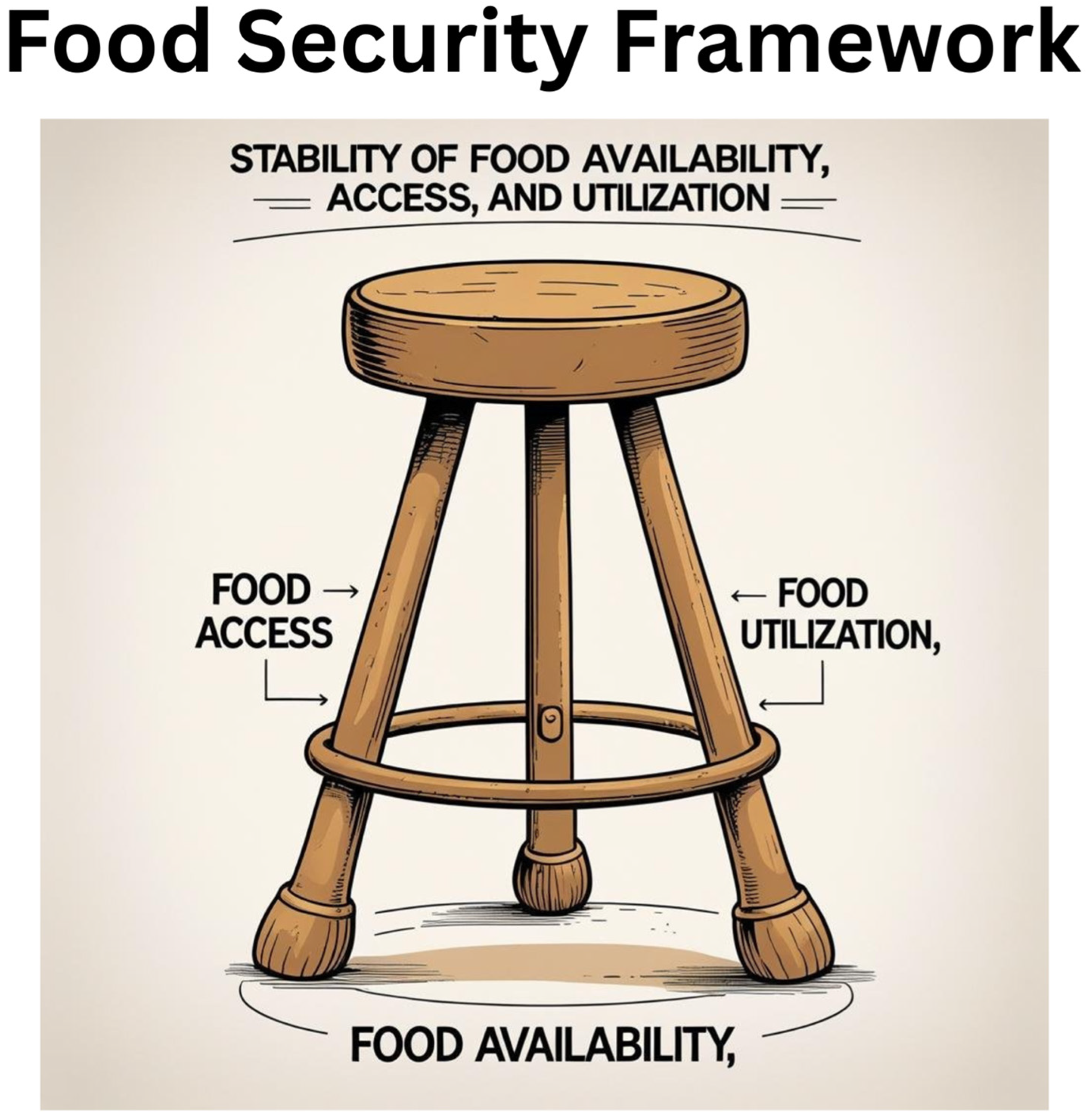
6]. To better address the complex nexus of factors that affect food security, we posit a “food security nexus” that can be conceptualized as a three-legged stool (
Figure 1), with availability, access, and utilization representing the three legs. These legs are connected and stabilized by the seat, which ensures the overall balance and cohesion of the structure. The seat symbolizes the interdependence of the three pillars and the need for their collective stability to achieve sustained food security. Just as a stool cannot support someone if a leg is broken, communities and nations cannot support food security if any of the food security pillars is neglected.
- 1.
Food Availability
This refers to the consistent presence of adequate quantities and quality of food to meet the dietary needs and preferences of a population within a specific geographic boundary—be it a community, state, country, or at the global level. This food may be locally produced, imported, provided through food aid, or a combination of all three. What matters is that the food is reliably available to meet the nutritional needs of the population at all times. Studies have demonstrated that, in addition to factors such as climate, education, infrastructure, technology, and financial capital, labor constitutes a key pillar in ensuring food availability both in terms of quantity and quality [
30]. Scholars consider food availability as the cornerstone of food security, forming the basis upon which the other three pillars—food access, food utilization, and stability—are built. Without sufficient food available, discussions on access and utilization become irrelevant. As such, food availability is foundational to agricultural production systems and the broader goal of achieving sustainable food security.
- 2.
Food Access
This factor pertains to the economic means by which individuals and populations can obtain both the quantity and quality of food necessary for a healthy diet. It is largely contingent upon people’s incomes. For this reason, low-income countries and those with high unemployment rates are more vulnerable to food insecurity, as many individuals lack the financial resources to meet their basic nutritional needs. In such cases, governments often implement food subsidies and social support programs to curb malnutrition and ensure access to essential food items. For example, in the United States, various federal assistance programs aim to address food access disparities. These include the Supplemental Nutrition Assistance Program (SNAP), the Special Supplemental Nutrition Program for Women, Infants, and Children (WIC), and the National School Lunch Program (NSLP). These programs are designed to close the food access gap among vulnerable populations and reduce the risk of hunger and malnutrition.
- 3.
Food Utilization
Food utilization encompasses knowledge provided to individuals to make proper use of food preparation practices, nutritional/healthy diets, portion control, dietary diversity, and access to healthcare. While food availability and access are key to ensuring food security, bad utilization may defeat the purpose [
31]. For instance, individuals may have adequate calorie intake but still suffer from malnutrition or obesity due to imbalanced diets and a lack of nutritional education.
- 4.
Stability
The three core components of food security—availability, access, and utilization—are deeply intertwined, forming a complex and interrelated system. While food availability constitutes the bedrock for food security, the consistent stability of all three pillars constitutes the main driver for true and sustainable food security. In the three-legged stool analogy, the seat represents the overall integrity and long-term reliability of the food system. When all three legs are strong and stable, the seat of food security is well-supported. However, if one leg becomes compromised, perhaps due to climate shocks (affecting food availability), rising food prices (affecting access), or poor health infrastructure (affecting utilization), then food security becomes wobbly or collapses altogether.
1.4. The Current Study
This study addresses a critical gap in prior research on food security: the limited understanding of the role farmworkers’ experiences, as perceived by their children, may play in sustaining food systems. This research seeks to illuminate how rural farmworker youth interpret their families’ experiences in agricultural labor and how these perceptions influence their aspirations and willingness to engage in the industry. Additionally, farmworkers are generally understudied, particularly their children, to the point that they are often referred to as invisible [
32]. The few existing research studies have been conducted with mainly Hispanic workers, thereby potentially overlooking other ethnic groups, including Haitians.
Studies revealed that all farmworkers, regardless of race, gender, nativity, country of origin, or age, face extreme hardships that negatively impact both themselves and their children [
32]. Nevertheless, those with darker skin tones are particularly more vulnerable, as colorism may shape discriminatory treatment by supervisors [
33]. Overall, the focus on Latino farmworkers leaves Haitian farmworkers overlooked, reinforcing their marginalization and contributing to their self-perception as an oppressed immigrant ethnic group [
34].
2. Theoretical Framework
The Political Economy of the Food System, also referred to as the Agrifood Systems Theory or the Political Ecology of Food Systems, is a holistic approach that examines food systems through political, social, and economic lenses, emphasizing the influence of power relations on food production, access, and consumption. Rather than focusing solely on supply and demand, this framework considers the role of political institutions, historical contexts, and structural inequalities in shaping food systems. This theoretical orientation resulted from the collective work of multiple scholars, with Friedman and McMichael [
35] often referenced as foundational figures. The evolution of this framework is typically divided into three periods.
The first phase, which began in the late 1970s and early 1980s, was shaped by the emergence of critical development theory and Marxist political perspectives. Scholars during that period critiqued the influence of capitalism and global food trade systems on agriculture and food, analyzing the Green Revolution from the perspectives of unequal access to land, labor, and food, while also introducing environmental concerns into the analysis of food systems.
The second phase was marked by the emergence of the food regime theory, proposed by Friedmann and McMichael [
35], which became the cornerstone of the political–economic approach to food. This structuralist theory situates agrifood systems as being shaped by historical relationships between regions, countries, and commodities on a global scale, encompassing political, social, economic, and ecological factors.
In the third phase, from the 1990s through the 2000s, the framework was further expanded to incorporate analyses of gender, labor, race, and environmental justice. Key contributions during this period include the work of Allen, Watts, Rossett, and Hotl-Giménez, who deepened and diversified the framework’s analytical scope [
36,
37,
38,
39]. All three phases of the framework were used to inform this study.
3. Materials and Methods
3.1. Sample: Participants’ Recruitment and Sampling
This study sought to understand how farmworker youth (ages 18–29) perceive their family’s experience of agricultural labor and how these experiences shape their perceptions of and willingness to engage in farm work. This was part of a much larger mixed-method study that focused on farmworker youth (18–29). This age range was selected to align with the study’s retrospective approach, which asked participants to reflect on their childhood experiences as far back as they could remember. Research has shown that adults, including emerging adults, exhibit stronger neural development, which supports greater accuracy in recalling past events and helps reduce recall bias in retrospective studies [
40,
41]. Moreover, this generation carries a cohort effect on youth facing similar circumstances, making their insights particularly valuable for informing future interventions.
The participants were all of Haitian descent, in order to address research gaps about Haitian farmworkers and for practical reasons, such as the lead researcher sharing the language and cultural identity, which facilitated trust and openness in this hard-to-reach group. Consistent with the growing consensus that small sample sizes are favored in qualitative research and guided by the Information Power Model proposed by Malterud and Guassora, a sample of 8 participants (6 females and 2 males) was selected [
42,
43,
44,
45]. This group included an equal split between participants from the quantitative arm of the broader study, selected on a pro-rata age distribution, and newly recruited participants who shared the same profile as the other half [
46]. It is important to note that the information power model supports smaller sample sizes when participants are knowledgeable about the study topic, as in the case of purposive sampling, and when the interviewer is well-equipped to conduct robust dialogs of high quality, conducive to facilitating rich, high-quality dialog during the interview. Participants for both the quantitative and qualitative arms were purposefully recruited through churches, organizations serving farmworkers, and referrals from friends and acquaintances [
47]. Although, by default, the aim of qualitative studies is not to generalize the results, the similarity in farmworkers’ living conditions in the U.S. makes it possible to transfer the findings to farmworkers’ children in general [
9,
11,
13,
24,
32].
3.2. Measures: Data Collection and Instrumentation
This study employed a semi-structured, individual interview approach, utilizing probing questions to prompt deeper reflection and clarify participants’ responses as needed. The data collection lasted 2 months from May to June 2023, while the survey regarding the quantitative arm took place in December 2022.
The lead author handled the interview data collection process alone to ensure consistency in the delivery of the questions, including the tone and speed with which the questions were asked. The individual interviews were conducted online using the Zoom platform, which has a built-in feature to record and transcribe interviews or telephone calls while recording the conversation. The interviews lasted an average of 60 min, ranging from 45 to 95 min in duration.
The interview guide was designed in alignment with the study’s aim and divided into three main sections. The first section served as the introduction to help create a comfortable and friendly conversation, since interviews should not feel like an interrogation [
48]. This section also gathered demographic information that was helpful in reconfirming participants’ eligibility for the study. The second segment focused on the participants’ perception of their family’s socioeconomic status. It also provided an opportunity for them to articulate and contextualize their perceived social ranking relative to their peers, both within and beyond their community. The answers would enable the assessment of predictive and risk factors associated with their self-assessed socioeconomic status rankings. Finally, the third section invited participants to share ideas or suggestions that would improve the outcomes of Haitian farmworkers, including those of their children.
The data used for this paper were collected from the second section, which included three open-ended questions with multiple probes, designed to explore the research topic in a participant-centered manner. The questions were carefully worded to avoid leading responses and to encourage honest, personal reflections. Examples of questions included the following: Please tell me about your childhood growing up? Growing up, how did you perceive your family’s socioeconomic status compared to that of your peers? From a community and country standpoint? Probe: Did you feel inferior/equal, or superior to them? And why? Any examples?
3.3. Data Analysis
For this dataset, the researcher employed Yin’s five-step qualitative data analysis process, which was selected for its clarity, practicality, and appropriateness in systematically analyzing interview data [
49]. NVivo 12 software was utilized to support the coding and organization of qualitative data due to its robust features that enhance analytical rigor.
To ensure the accuracy and trustworthiness of the data, the researcher began by generating clean verbatim transcripts of all eight Zoom interviews. Transcripts were cleaned manually after being auto-generated by Zoom and cross-verified with a second set created using the TEMI-API (Temi is a basic transcription service that offers such features as the ability to review and edit data transcriptions, slow down the replay, and export your files into text (Microsoft Word, PDF) or closed caption. An API is an Automated Programming Interface. It allows users to programmatically interact with Temi and automate the process.
https://help.temi.com/hc/en-us/articles/20716503110925-Temi-API (accessed on 4 April 2025). This dual transcription strategy enhanced transcription fidelity, allowing the researcher to capture subtle vocal nuances and nonverbal cues. Listening to the recordings multiple times further supported data immersion and enhanced interpretive depth.
To support transparency and establish an audit trail, the researcher developed a structured five-column coding matrix in Microsoft Word (
Appendix A), which included the following: (1) participant ID (for deidentification), (2) primary codes, (3) pattern codes, (4) main takeaways, and (5) original respondent quotations. This matrix was organized in alignment with the interview guide, facilitating systematic coding and easy traceability of findings.
Throughout the process, the researcher adhered to the principles of credibility, dependability, and confirmability by maintaining detailed records of coding decisions and analytic memos, ensuring that the findings could be traced back to the original data. Yin’s structured approach thus supported both the analytical rigor and the trustworthiness of the findings.
4. Results
4.1. Participants’ Description
Eight young adults, aged 23 to 29, participated in this study, of whom six identified themselves as female and two as male. They were all of Haitian descent and grew up in two-parent households with at least one parent working on a farm for a living. Six were raised by both biological parents, one by their grandparents, and one by their mother and stepfather.
Additionally, for all but two participants, both parents were farmworkers, primarily employed in packing houses and fruit picking. Most of the participants (6) declared having a bachelor’s degree, with two who were pursuing their master’s and one who was about to start her Physician Assistant (PA) degree at the time of the interview. It is worth mentioning that of the participants pursuing their master’s degree, one was a military officer.
Half of the participants were born in America, one arrived in the U.S.A at the age of 15, and the rest came to America between the ages of 3 and 7. They grew up in Immokalee (6) and Belle Glade (2). While they were all American citizens, they identified themselves as Haitians first during their introduction. Interviewee 2 reported that, “I’m American outside of my house but [lakay mwen se Ayisyen mwen ye] i.e., when I am home, I am Haitian”. They all had a Christian background, with Protestantism (75%) and Catholicism (25%) being the two main religions they said their parents practiced during their upbringing. Two participants mentioned being married and having children, while the rest did not provide such information; we did not follow up on this either, as marital status was not the focus of the study. Some participants did not know their parents’ education levels, but among those who did, their parents’ literacy level varied from no literacy at all to the first year of middle school.
Table 1 below provides a descriptive summary of the participants.
4.2. Brief Panorama of Immokalee and Belle Glade
Immokalee, meaning “my home” in the Seminole language, is located in Collier County in southwestern Florida. Per the 2020 Census, it has a population of 24,557 inhabitants distributed into predominantly Hispanic or Latinos (75.5%); followed by Black or African American (19.9%); White (non-Hispanic) (2.9%); Mixed race or multiracial (non-Hispanic) (~1.0%); and Asian, Native Americans, Pacific Islander (non-Hispanic) (<1%) [
50]. It is one of the nation’s major centers for tomato production. It also grows citrus, pepper, cucumbers, and watermelon, and is the hub for processing, packing, and shipping facilities [
51,
52]. Therefore, it serves as a labor base for thousands of migrant and seasonal farmworkers, many of whom are Mexicans, Guatemalans, and Haitians.
Belle Glade, located in Palm Beach County in South-Central Florida, is known as the “Muck City” due to its nutrient-rich soil that makes it ideal for farming [
53]. According to the 2020 U.S. Census, the city had a population of 16,698, with a demographic makeup that was predominantly Black or African American (non-Hispanic) (56.5%), followed by Hispanic or Latino (34.8%), White (non-Hispanic) (6.5%), Asian (non-Hispanic) (0.5%), and Mixed race or multiracial (non-Hispanic) (1.6%) [
54]. Belle Glade’s economy heavily depends on agriculture, particularly with the cultivation of sugar cane and vegetables, including lettuce, celery, and sweet corn [
55]. Migrant and seasonal farmworkers constitute the bulk of the labor force, playing a critical role in sustaining the city’s agricultural output.
4.3. An Overview of Haitian Migration to the United States
Haiti is located 600 miles from the Floridian coasts. It takes less than 2 h to fly from Haiti to Miami or Fort Lauderdale, Florida. As of 2020, statistics reveal that there are nearly two million Haitians living abroad, of which 40% are in the U.S. Studies show that Haitians migrate in search of better living conditions [
56,
57], hoping to secure a better future for their children. Haitians have one mantra: “Lespwa f. viv meaning hope makes one live”.
Haitian migration to the U.S. encompasses at least five waves. The first wave started in the 1950s and 1960s, with well-educated people trying to escape to northern destinations because of the political and economic deterioration of the country during the Duvaliers’ reign and the open immigration policies and practices for foreigners [
58]. The second, baptized as “boat people”, emerged in the 1970s with the continuing terror created by the Duvaliers’ dictatorship and dynasty and the depletion of the economy, which forced working-class people to clandestinely reach the coast of Florida. The third, which overlapped to some extent with the previous one, arose with the opportunity given to U.S. residents to petition for their family members in 1965. It still prevails and is revealed to be the most secure way to migrate to the U.S. The Fourth emanated from the U.S. Congress’s decision to grant temporary protection status (TPS) to all undocumented Haitians, including those who were already in the country and those who fled the country after the deadly earthquake of January 2010, which killed more than 200,000 people, affected almost 3.5 million others, and provoked the collapse of approximately 250,000 buildings [
59]. The TPS is still in effect but is announced to be revoked on 2 September 2025. The fifth wave, which is the most recent, came with the humanitarian parole in January 2023, which was extended to Haitians due to the unceasing political, economic, and social unrest the country has been going through, including the assassination of the president in July 2022.
Besides people from the first wave, who represented the political, economic, and social elite of the country and who escaped for their security, and those of the third wave, who entered the country with their green card, most of the other categories, mainly those from the boat-people era, had only farmwork as their sole opportunity to make ends meet. This is how the number of Haitian farmworkers in the U.S. has grown. Research indicates that farm labor often serves as entry-level employment for newly arriving immigrants, notably those lacking formal education [
60].
4.4. Participants’ Perceptions of Their Family’s Experience in Agricultural Labor
To assess the participants’ perception of their family’s experience as farmworkers, the principal investigator used a comparison analogy, which asked the participants to rank their family’s socioeconomic status, both at the community and at the national levels, and to explain their rankings. They used a thematic comparison approach to thoroughly analyze participants’ responses and identify the most common themes that significantly shaped their impressions of farmwork, particularly highlighting the emotional and physical dimensions of agricultural labor.
4.4.1. Participants’ Self-Ranking in Their Community and in the U.S.A. in General
The findings revealed that, from a young age, the participants overall acknowledged that they were not better off than anyone, regardless of the level of comparison. One participant advanced, “Well, since a kid, I knew, or I recognized that we were poor, and we didn’t have a lot of money”. Participants unanimously felt inferior to their peers outside of their towns and at the national level. At the community level, however, their views varied—some felt equal to their peers, others felt inferior, and a few believed such comparisons were irrelevant. Nevertheless, as the researchers analyzed the data more closely, it became clear that these initial categories did not hold over time. As participants interacted more with their classmates, they began to notice apparent differences that challenged their earlier perceptions of equality and the irrelevance of the comparison. The three themes that emerged from the findings are explained below.
Equal to Peers
Participants in that category initially felt a sense of equality with their peers from their community because they all attended the same school within the community. Additionally, outside of school, they often interacted with peers when they accompanied their parents to social and government programs or church. There, they would talk to other youth, which fostered a sense of camaraderie and shared experience. Interviewee 5 reported that,
I think most of the kids around us, we lived in the village. It’s like a farmworker’s place, right? So, all of the kids there, their parents were farmworkers. We were basically at the same level. All of our parents were working on the farms. No one had their […] It’s income restricted housing too. So, everybody was kind of at the same level.
However, as they interacted with classmates, they discovered that peers from non-farmworker households appeared to be better off. This led to a growing awareness of subtle social and economic differences and a perception that farmwork held the lowest status among local industries. As Interview 4 reflected, “So, it’s not as if I was miserable, it’s more so as if the older I got, the more I started to recognize that there were some differences between myself and other people.”
Comparison with Peers Did Not Matter
Unlike those in the previous category, these participants viewed their community as a predominantly working-class environment constituted of farmworkers dealing with the same longstanding challenges. Therefore, making individual comparisons proved unnecessary. For instance, Interviewees 2 and 8 expressed this sentiment as follows:
I think, being raised in a small low-income community, we didn’t really have much comparison, because we were all going through the same thing. You would rarely find a family that had 2 parents in it. So, for us, it was normal. Oh, you only live with your mom. Okay, that’s normal. Oh, you don’t live with your dad? Okay, that’s normal. You live with your aunt or your aunt brought you in America. Oh, that’s normal. So, for us that was normal, granted we’re in the same county, Collier, so that we would fit together, right!
But I didn’t necessarily compare myself to other people because the town where I’m from, everyone is kind of in the same bracket. So, it didn’t feel like anyone was better than me or it didn’t feel like I was better than anyone. It felt like we’re just working-class.
Ironically, the findings reveal that, despite their initial assertions, participants ultimately acknowledged experiencing feelings of inferiority during interactions with their classmates.
Feeling Inferior to Peers
Feelings of inferiority toward peers were either immediate or developed over time. For some participants, these feelings were especially pronounced when comparing themselves to peers outside their communities, including those at the national level. Others, as seen in the first two categories, began to feel worse off only after recognizing specific disparities between themselves and their peers. Overall, all participants expressed a sense of inferiority, whether it was experienced from the outset or emerged gradually through comparison.
4.5. Participants’ Determining Factors of Their Ranking
An in-depth analysis of the dataset revealed several key themes that shaped participants’ perceptions of farmwork, particularly through their observations of their parents’ experiences. These themes include (1) the rearing environment, (2) the inherent vulnerability of farmwork, and (3) the emotional toll on farmworkers’ children.
4.5.1. Rearing Environment
The findings revealed that the physical rural environment of farmworkers constituted one of the factors contributing to the negative perception of farmwork among the participants. They described their living location as remote, lacking basic infrastructure, such as public transportation, road access, recreational parks, stores, and basic administrative offices. Reflecting on their towns’ isolation in 1997, one participant recalled using quarters at public payphones to call Haiti. For instance, when participants visited neighboring towns, they were struck by the variety of entertainment options available for children, the numerous restaurants, the prevalence of brand-name clothing among local youth, and the noticeably different attitudes and behaviors exhibited by the local population. Interviewee 4, echoing the sentiments of many, reported, “So, it wasn’t until I went to outside events, like schools far away, but when I got older, not when I was younger, that I was exposed to other nationalities. And then when I was exposed to other schools, that’s when I really started to see how poor I was. Because then you would see kids wearing things that you would not necessarily wear or like doing things that you just would not do as, you know, someone who lived in Immokalee and you were just like, wow, I didn’t know that you could live a life that way, but mm-hmm”.
The findings also highlighted a lack of accessible services to farmworker children, either due to poor outreach and limited awareness of existing resources or the absence of centralized support systems to help residents navigate them. This created significant disadvantages for families in these communities, particularly affecting children’s educational trajectories. For example, one of the two major cities where participants originated was relatively well-structured and provided a range of supportive services. These included tutoring programs to help migrant children prepare for SAT/ACT exams, develop job readiness skills, and meet other academic needs, such as college campus visits. The town also housed a Migrant Center dedicated to addressing the specific needs of farmworkers’ children by providing scholarships, school supplies, and furniture, while also serving as a liaison between schools and parents to support students’ academic progress, Additionally, there were Haitian representatives in the schools to assist parents by sharing information about their children’s behavior and performance and offering interpretation services during meetings. Unfortunately, the lack of communication created a barrier for residents to take advantage of such opportunities.
However, the other town did not have any structured services at all. Participants highlighted the lack of a central resource hub where community members could seek assistance with various needs—such as navigating the education system, choosing schools for their children, or applying for social programs like Medicare, Medicaid, and WIC. They also noted the absence of Haitian representatives in schools to help bridge communication between parents and educators. Interviewee 3 shared the following:
For teachers’ meetings, I would be the one interpreting for my parents. So, if I was a bad kid, I would get away with it. If something was wrong, I would get away with it because I’m the one they’re telling it to. I’m telling it to them. I’m not gonna tell them anything bad about me!
4.5.2. Inherent Vulnerability of Farmwork
Two main themes emerged from the findings to explain the participants’ depiction of the inherent vulnerability of farmwork, including the nature of farmwork, and the lack of appreciation for farmworkers, encompassing the recruitment methods of farmworkers, their meager salaries, and lack of social benefits.
Nature of Farmwork
Participants depicted farmwork as heart-wrenching due to the physical toll it takes on workers. They reported that farmworkers typically work 12 to 14 h shifts from Monday through Saturday and often exceed these hours to meet the demands of harvesting perishable crops and addressing their financial needs. Interviewee 6 shared the following:
Mostly by 5:00 in the morning. And yeah, he [Dad] would be back maybe on a normal day around 5:00 PM or 6:00 PM maybe, yeah. But whenever he decides he’ll even go up for a week, just trying to switch up the shifts with people. Yeah, I would say he really lived hard.
Participants perceived their parents’ working conditions as far from ideal, according to the findings. For instance, participants recalled the physical strain farmwork placed on their parents, commonly resulting in swollen feet, back pain, and profound exhaustion after long days in the fields. Interviewee 4 shared a poignant example of her mother having to kneel to pick peppers, enduring rain, and working through discomfort—an example that underscores the harsh and demanding nature of the labor. They said the following:
Moreover, she would tell me that she would have to get down on her knees to pick the piman [pepper], she would tell me that she would bend down there on her knees, it would rain on them. It would dry on them, and then they would still be working, picking piman [pepper], you know. So those things, like they took a toll on your body, she would go to work at the packing house and a section of the packing house would be flooded with water because they finish washing the fruit. They would still have to step in that to get to their section of work and they wouldn’t tell them that it’s gonna be wet. So, their shoes would get soaked and that would wet their feet and they would have to change their socks. What if you didn’t bring a change socks? So, all of those things, they take a toll on your body and they make you older than you actually are. So, mm-hmm.
Perceived Lack of Appreciation for Farmworkers
Participants unanimously expressed that farmworkers are deeply undervalued, despite the immense labor they perform and the sacrifices they make to ensure food reaches our tables. The lack of appreciation is manifested through their mode of recruitment via intermediaries, their meager salary, and the lack of social benefits.
Farmworkers’ Recruitment: Participants reported that farmworkers are often hired through intermediaries or labor contractors rather than directly by the companies they serve, which contributes to the perception that they are seen as replaceable and treated as just numbers. Interviewees 1 and 7 used the terminology of “Next one up” to describe the companies’ philosophy regarding farmworkers’ disabilities or unavailability. Additionally, this mode of recruitment deprives farmworkers of their right to be informed about the specifics of the job before their hiring. They are tasked with the most physically demanding work—picking, gathering, and harvesting—yet receive little recognition or acknowledgment of the demanding nature of the work. As Interviewee 4 explains,
“And I feel like they don’t respect farmworkers enough to make them aware……and I’m not gonna understand that because the farmworkers are the ones who have to do the hardest part of the labor in order to help people make or corporations make the most, because they have to do the actual picking, the actual gathering, the actual harvesting and then the actual sorting.”
Farmworkers’ low salary: Participants repeatedly shared that they could barely get by, as their parents were not making much and were in continuous hardship. They constantly struggled to survive financially. Therefore, they, especially those paid on a piece-rate basis, were compelled to work relentlessly without breaks. This deprived them of valuable time with their families. A closer examination of the data revealed that participants often viewed their parents’ income as a key factor in perceiving themselves as inferior to their peers. For example, during the introduction, Interviewee 1 stated the following: “It is like we don’t get what we want, but we get what we need. So, you know the essentials: clothes, shoes, food, we got that.” The following quote from Interviewee 3 reflects a similar sentiment related to this component:
I would say I don’t know a better word for poor <laugh>, but we were, we were, we were poor. But by the grace of God, it wasn’t like we were struggling to eat or anything like that…. it paid the bills, and we were able to get roof over our heads. And like, we weren’t homeless, thanks God. And whenever, like it was time for school, I had school supplies, I had new book bag, new shoes. So, yeah.
Similarly, several participants reported experiencing deprivation, which prevented them from meeting their basic needs and, in turn, negatively affected their school attendance. As an illustration, Interviewee 4 shared, “especially because we had a year where we couldn’t afford shoes. So, I had some days where I just didn’t go to school because I didn’t have shoes.” Participants explained that their parents’ primary strategy for staying afloat involved relying on government assistance and local social programs, such as food stamps, free or reduced lunch, and aid from the Catholic Church Organization. Additionally, their families managed financial hardship by circumscribing shopping to stores like Walmart for essentials and relying on secondhand clothing from places like Goodwill. They also cut back on social and extracurricular activities that parents might typically share with their children—such as going on excursions, taking vacations, attending school performances, sharing lunch at school, or celebrating birthdays in the classroom.
Absence of social benefits: Participants reported that, despite the high-risk nature of their parents’ work, they lacked access to health or life insurance. Most of the companies their parents worked for did not offer such benefits, nor did they provide paid time off, such as sick leave or annual leave. Participants explained that while farmworkers contribute to Medicare and Social Security, their retirement benefits are contingent on their level of contribution and the duration of their contributions. Given these circumstances and the uncertainty surrounding their parents’ health as they age due to the demanding nature of farmwork, some participants have taken proactive measures to prepare for their parents’ retirement. The excerpt below illustrates this point.
And not too long ago, actually before my mom retired, we [siblings] all got together and we’re like, Hey, it is again that time. We really don’t want them working right now. So, we sat down and we’re like, okay, what plan can we make to help them retire? Because they’re not really gonna be getting that much money. So, we literally came together. Right now we are supporting our parents and it’s okay because we’re doing okay in our careers. That way we can support them. And it’s like the most gratifying, the best thing to tell your parents, Hey, you can retire. You don’t have to worry about it. We got it. Their lifestyle is not crazy. We can support them and support our families as well. It was just really awesome to be able to do that. Just to see where we came from.
4.6. Emotional Toll of the Fieldwork on Farmworkers’ Children
The findings revealed that the harsh working conditions faced by farmworkers, as described by the participants, had direct repercussions on their children. On one hand, these conditions took a significant emotional toll, as children not only witnessed their parents’ constant physical and mental exhaustion but also grew up with limited emotional support due to their parents’ demanding workloads. On the other hand, this exposure to hardship fostered a strong desire for upward mobility among farmworkers’ children, motivating them to break the cycle of poverty and pursue a different path than their parents. Thus, four themes emerged from this section: (1) Lack of quality time and parental involvement, (2) Potential child neglect, (3) Ripple effect on emotional well-being and relationships, and (4) Aspiration and upward mobility.
4.6.1. Lack of Quality Time and Parents–Child Relationship
One of the most distressing factors revealed by the results is the lack of paid time off, which forces parents to work continuously without rest to make ends meet, given their minimal earnings. Participants believed that the lack of quality time with their parents affected their relationships with them.
Most participants reported not remembering a day when their parents attended their school performances, including honor roll presentations, games, talent exhibitions, birthday celebrations at school, and even sharing lunch at school, as other non-farmworker parents were accustomed to doing. Interviewee 4 conveyed this reality by saying, “My parents never came to those things. Like the ceremonies, they didn’t come to the performances, they did not come to music performances, or any kind of plays. They didn’t have time to come to these things because they were busy working in the fields”. Interviewee 3 echoed the sentiment, emphasizing the challenges they faced due to their parents’ work commitments:
“So, my parents would miss a lot of my honor roll ceremonies, a lot of my recognitions because they would work. They would have to go, they had to go to work. And most of the time that would probably be one of the saddest days for me because you see everyone else and their parents are there and then they’re cheering them on and then they call me and it’s just like, where’s everybody kind of thing. And that’s, I would say that was hard. But I understood like they had to go to work, they had to provide for us. If they don’t, if they missed the day of work, they would be considered unreliable and then they’d be let go and all of that. So, I understood, but at the same time it was still painful. I would say it wasn’t until it got up to a point where I just stopped inviting them, where I stopped giving them the invitation or just telling them about it. And it would just be like another thing, like they weren’t gonna go, I knew they weren’t gonna go”.
Interviewee 5 eloquently highlighted the prevalent issue of the absence of farmworker parents in their children’s lives, emphasizing that this is not an isolated case but a widespread problem affecting many farmworkers’ children. Here is what they said:
Well, you see, that’s the thing! Everybody, all my friends around me, their parents were the same way. They weren’t around either. They never came to these scholarship events. They never came to the school. They never ……, they’re all the same. That’s why I’m saying, I wish there were more resources, more things for, because I wasn’t the only one. It wasn’t me. I’m thinking, I’m saying this is a community issue. Our parents didn’t show up half the time.
4.6.2. Potential Child Neglect
Along the same line, some participants went further, alluding to potential child neglect to explain the emotional toll that farmworkers’ working conditions take on their children. They reported that parents often had to drop their children off at school as early as 4:30 or 5:00 a.m.—well before the school doors opened—in order to catch the bus to the fields. This left children vulnerable to difficult and potentially unsafe situations. Interviewee 4′s account of waiting outside the school at 5 a.m. vividly illustrates this reality. “I remember my dad having to bring me to school really, really, really, really early. And I had to sit on a bench outside because school was not open yet. So, I think like five o’clock in the morning because he had to go get on the field working bus or something like that”.
The findings reveal multiple interrelated factors that support evidence of potential neglect. First, the lack of time emerges as a significant contributor, as parents often work 12- to 14-hour shifts for at least six days a week. This demanding schedule leaves little opportunity for parent–child interaction, resulting in limited time for emotional bonding. Second, and along the same line as the first factor, is the fear of job loss, driven by a “next one up” workplace culture that discourages taking time off. Third, the identified conflict of priorities shaped by ignorance and the constant pressure of survival further contributes to the potential for neglect. For instance, the findings revealed that farmworker parents often prioritize basic necessities, such as food, clothes, and shelter, as the most important and unintentionally disregard emotional needs. Interviewee 7 claimed the following:
The way I see most parents, not all of them of course, neglect their kids is their focus to work to pay their bills. For them, once they provide roof, food, and clothes for the children, they don’t care about anything else. Also, they care a lot about sending them to church, this is very important, that’s it! but that’s not it.
4.6.3. Ripple Effect on Emotional Well-Being and Relationships
The findings continue to reveal that among the consequences of the emotional experiences mentioned earlier, farmworkers’ children face frustration and sadness for not having their parents present during important moments of their lives, which leaves lasting impacts on their emotional well-being. To that, Interviewee 4 expressed:
For me, anytime something would happen, and I would wonder why my Mom was not there or why my Dad was not there, I would always think in the back of my mind, “I have to work”. But it would frustrate me sometimes because why do you have to work all the time? Why can’t you just be here?
It is worth noting in this context that participants described their relationships with their parents as superficial, not too deep, okay, and the like. For instance, Interviewee 3 reported, “our relationship kind of was very superficial, I’d say. Like, it was not really deep, like we weren’t about emotions and all that”. Interviewee 1 added, “Uhmmm, I would say it was good as a child, you know”. Interviewee 4 stated, “It was okay. I wouldn’t necessarily say it was amazing, but it wasn’t terrible. It wasn’t great. It was just more so like, these are my parents, I love them, they love me, we hang out”.
However, regardless of the middling nature of these relationships, except for one participant, the majority identified their mothers as the one with whom they had the best relationship. This was particularly true for those raised in two-parent households. Since some mothers were housewives, participants often spent more time with them than with their fathers. Even those mothers who worked in the fields still found ways to manage their domestic responsibilities, such as cooking and caring for their children. For instance, Interviewee 1 mentioned that “my Mom will cook my favorite food and ask what I want”. Similarly, Interviewee 4 noted a similar dynamic and explained that
Even if my mom was exhausted, she was still gonna do my hair. And I feel like for her that was like a bonding experience that she just refused to let go. So, for me that was kind of important because even as I got older and I learned how to do my own hair, I would still ask her to like put little beads in my hair or to help me do this down just so I could have that little time with her so that I could, you know, ask her questions.
4.6.4. Aspiration for Upward Mobility
The participants’ consciousness of their marginalized social position, shaped by their parents’ occupations and having to witness firsthand their parents’ hardships, boosted their aspirations to achieve upward mobility. They all expressed a desire to break the cycle of poverty and unanimously believed that the ultimate way to reach that goal was to work for corporations and get out of their hometowns. Even their teachers and mentors would reinforce this perspective. Many participants recalled the prevailing mantra from their teachers and mentors that says, “you need to be out of there,” a way to encourage the youth to pursue their education and strive for a life beyond the struggles of their parents. Interviewee 5 expressed that, “People are always telling us to dream big, to see the bigger picture, to go out there and work in the corporate fields, and all that.” The participants were determined to break the cycle of poverty so their children would not have to suffer what they suffered. For instance, Interviewee 2 said
I didn’t want that same, I didn’t want to struggle like my mom. Because my mom was always working. So, she didn’t have much time to spend with us. So, I remember longing for mommy to be there one day, I wanted my mom around and seeing that she had to work, to provide. It was like, Okay, I want my Mommy, but Mommy has to provide. “Mommy has to go to work”. So, at that point, I’m like, Okay, I’m gonna make it. So, mommy could stop working.
It is worth reporting that this goal to break the cycle of poverty enabled the participants’ self-acceptance and acceptance of their circumstances, which provided them with the strength to persevere until fulfilling their aspirations to move up the ladder. The participants seemed to hold on to the mantra of “getting out of here.” As a result, they were encouraged from an early age to believe in the power of their efforts and to surround themselves with like-minded individuals who shared their aspirations, avoiding the need for comparison with others. Interviewee 2 further explained that by saying, “So, we were always together. So, we hung out with people with similar circumstances as us, and even my friends, who had 2 parents in their home, or they were doing better, we didn’t really judge each other because we knew we were going to get out of that situation together.
5. Discussion
The findings highlight the complex and multifaceted experiences of farmworkers’ children. Viewed through the lens of the Political Economy of the Food System, the study reveals how social, economic, and political structures shape not only the labor of farmworkers but also the trajectories of their families. Participants described their families’ engagement in agricultural labor as marked by marginalization and a sense of inferiority, deeply rooted in the power dynamics that underpin the U.S.A. food system.
These accounts transcend individual hardship to illuminate a broader matrix of systemic inequality. This resonates with Crenshaw’s [1991] framework of intersectionality, which demonstrates how overlapping identities—race, skin tone, and migrant status—compound vulnerability in labor environments [
61]. Robinson’s [1983] racial capitalism further refines this interpretive lens, showing how the preferential treatment of lighter-skinned supervisors in agricultural hierarchies reflects a historically rooted exploitation embedded in racialized economic systems [
62].
The results also expose the toll that harsh working conditions exact on farmworkers’ children—including emotional distress, risk of neglect, and strained parent–child relationships. The lack of quality time and parental involvement, coupled with the perceived lack of appreciation for farmworkers, contribute to these negative outcomes. Moreover, the absence of social benefits, such as health or life insurance, and limited access to education and resources, exacerbate the difficulties faced by farmworkers’ children.
These challenges contribute to the disengagement of the participants from agricultural labor. On the one hand, they serve as deterrents, discouraging them from entering the industry themselves and potentially motivating them to advocate for others to avoid similar experiences, including their parents. On the other hand, they trigger resilience and determination, which drive the participants’ aspirations for upward mobility as they do not want to follow their parents’ trajectories. Their aim is to leave their hometowns and work for corporations to achieve their goals of breaking the cycle of poverty and improving their socio-economic status.
From a labor–food-security–policy nexus perspective, the findings of this study underscore the need for a more comprehensive approach to addressing the challenges faced by farmworkers and their families. The current policy framework, which prioritizes efficiency and productivity in the food system, often overlooks the social and economic costs of farmwork. The lack of protection for farmworkers, including access to fair wages, safe working conditions, and social benefits, perpetuates a cycle of poverty and marginalization. Furthermore, current anti-migration policies pose a significant threat to the stability of the agricultural workforce. If left unaddressed, the declining “replacement rate” among agricultural workers could jeopardize the food availability “leg” of the conceptual model of food security presented here. Labor shortages may lead to post-harvest losses due to unharvested crops, as insufficient labor directly reduces farmers’ harvesting capacity. Previous studies have documented the cascading impacts of such shortages. Initially, food availability is affected when crops go unharvested, leading to substantial economic losses [
63]. A second-level consequence of the influence of food availability on food security is the potential shift by farmers toward less labor-intensive crops. However, such decisions are constrained by factors like soil type, climate, topography, and existing agricultural infrastructure. Even when feasible, transitioning, for example, from fruits and vegetables to row crops can disrupt multiple segments of the agricultural value chain, including packing houses, transportation services, and rural economies more broadly. Labor shortages have been a longstanding issue and have gained a lot of attention. In 2024, U.S. Congressional Representative Slotkin pledged to increase immigration opportunities for individuals willing to perform year-round work on U.S. farms in need of those types of employees and parallelly, expediting farmworkers’ green card applications in exchange for an agreement to perform a certain amount of agricultural work [
64].
When switching crops is not viable, some farmers may turn to labor-saving technologies, such as mechanical harvesters, specialized tractor attachments, or artificial intelligence (AI)-based vision systems. These technologies show promise—for example, AI systems that can detect fruit under foliage—but current limitations remain. Studies indicate that existing mechanization cannot yet match the precision of human hands and eyes for tasks like fruit and vegetable harvesting [
65]. AI technologies are currently unable to effectively reach the interior canopy of plants and trees, often causing damage during the collection process. Guyer found that such systems are only capable of detecting 40–50% of the fruit on a plant, a detection rate that renders machine harvesting economically unviable for many growers [
65].
To conclude this section, it is worth highlighting that Haitian farmworkers’ children are not unique in experiencing emotional distress due to their parents’ demanding and often migratory work. Similar experiences have been observed among Latino farmworker families, as well as in other groups, including affluent families, military families, healthcare workers, and individuals in all industries subject to work shifts. The literature on shift work broadly highlights its detrimental effects on children and family life. Research indicates that factors such as parental depression, reduced quality of parenting, and limited parent–child interaction often mediate these negative outcomes, creating a less supportive home environment. Particularly during early childhood, exposure to parents’ irregular or demanding work hours can be especially harmful, though some families develop strategies that foster positive work–family experiences despite these challenges. These findings suggest that social status is not the sole factor contributing to this phenomenon [
66,
67,
68,
69,
70].
6. Limitations
The findings should be interpreted in light of a few noteworthy limitations. First, self-reported retrospective data may be subject to response and recall biases. While response bias is intrinsic to self-assessment tools, recall bias was mitigated by recruiting participants at a developmental stage conducive to rehashing autobiographical memories. This stage enabled the participants to provide adequate insights in informing interventions addressing youth facing similar situations not only currently but also in the future. Second, the sample’s homogeneity and small size—comprised solely of eight Haitian individuals—may appear exclusive and limit the exploration of intersectionality within broader farmworker communities. Even so, this limitation is tempered by the qualitative nature of the study, which prioritizes depth and transferability of insights over statistical generalizability. Moreover, Haitian and non-Haitian farmworkers are often subjected to the same working conditions, although participants noted differential treatment based on skin tone. Those with darker complexions—predominantly Haitians—were perceived to receive less favorable treatment from supervisors, who are typically of lighter Latino descent.
In total, despite these limitations, findings from this study fall aplomb with previous research on Haitians and provide sound insights for practitioners to tailor youth interventions and policymakers to understand better the reality, which may inform policy decisions, especially in the context of farmworkers.
7. Implications
The focus on exploring perceived food security as a function of interrelated elements, including food availability, access, and utilization, anchored by stability, provides significant opportunity for future research and practice. Empirical studies testing the validity of the proposed conceptual model are greatly needed, along with intervention studies that target strategies designed to make agricultural labor more appealing to a broader range of people. This includes providing social benefits, a fair salary, and additional support for farmworker families, if we want to meet the food consumption needs of a growing population, not only globally but specifically in the U.S.A.
The findings revealed important implications for various stakeholders, including practitioners, scholars, and those involved in securing food security for the growing global population, such as world leaders, policymakers, farmers, agricultural contractors, and others. They underscore the need to assess the potential effects of revamping the regulations in the U.S.A. governing farm labor to make it more consistent with other occupations in terms of worker protection and investment. For example, to support migrant farmworkers more effectively, policymakers, working in collaboration with the Department of Homeland Security (DHS), the Department of Labor (DOL), and state agricultural agencies, alongside labor advocacy groups, could pursue targeted reforms. These might include expanding Temporary Protected Status (TPS) and providing pathways to permanent residency for undocumented workers with longstanding employment in agriculture. At the federal level, introducing legislation modeled on the Farm Workforce Modernization Act, while imperfect, could serve as an essential starting point. Also, programs designed to test various compensation strategies and living conditions could be implemented and tested to see if they make a difference in worker-perceived quality of life, productivity, and positive family outcomes. These outcomes might be examined as to how they affect profitability, diversity of job applicants, and retention of workers.
Additional recommendations include conducting studies designed to compare and contrast farmworker perceptions based on their demographic characteristics and implementing recruitment and retention programs aimed at expanding the resource pool of qualified agricultural laborers and making them feel appreciated.
8. Conclusions
This study explored the perception of farmworkers’ children regarding agricultural labor from a food security angle. By focusing on the participants’ firsthand experiences, the study aimed to generate insights that inform strategies to stabilize the agricultural workforce, thereby enhancing food availability—a core pillar of food security—in the United States and beyond. Academically speaking, the stool metaphor is used as a visual representation of a hypothesized nexus between food security, labor, and policy. The findings reaffirm the critical, yet often overlooked, role of farmworkers in sustaining national and global food systems. Most importantly, they also highlighted the impact of agricultural labor policies and the compounding effects of anti-immigration regulations. This form of political marginalization, which hinders the well-being of farmworker families, could have repercussions for the sustainability of the food system itself.
This study constitutes a potential wake up call for practitioners, scholars, policymakers, and stakeholders involved in food security to focus on upcoming labor shortages due to immigration policy, to come up with policies and programs that are more inclusive of farmworkers, ensuring that those who labor to feed the world are heard, protected, and valued concretely.
Author Contributions
Conceptualization, B.F.P. and T.A.I.; methodology, B.F.P. and T.A.I.; validation, B.F.P.; formal analysis, B.F.P.; investigation, B.F.P.; resources, T.A.I.; data curation, B.F.P.; writing—original draft preparation, B.F.P., writing—review and editing, B.F.P., T.A.I. and J.F.; visualization, B.F.P.; supervision, T.A.I.; project administration, B.F.P.; funding acquisition, T.A.I. All authors have read and agreed to the published version of the manuscript.
Funding
The authors gratefully acknowledge the support of the Center for Disease Control (CDC)/National Institute for Occupational Safety and Health (NIOSH) grant 1−U54 OH 011230−01, which funds the Southeastern Coastal Center for Agricultural Health and Safety (
http://sccahs.org/ accessed on 5 July 2025).
Institutional Review Board Statement
The study was conducted according to the guidelines of the Declaration of Helsinki and approved by the Institutional Review Board of University of Florida (IRB202202327, 15 November 2022).
Informed Consent Statement
Informed consent was obtained from all subjects involved in the study.
Data Availability Statement
The original contributions presented in this study are included in the article. Further inquiries can be directed to the corresponding author.
Acknowledgments
We sincerely thank the participants of this study for generously sharing their time and insights. We also gratefully acknowledge the faculty members who assisted with the design and implementation of the mixed-methods study from which data for this study stemmed: Jennifer Doty, Kate Fogarty, Sebastian Galindo, Tracy Irani, and Latoya O’Neal.
Conflicts of Interest
The authors declare no conflicts of interest. The funding sources had no involvement in the study’s design; data collection, analysis, or interpretation; manuscript preparation; or the decision to publish the findings.
Correction Statement
This article has been republished with a minor correction to the Data Availability Statement. This change does not affect the scientific content of the article.
Appendix A. Recapitulative Table for the Transcript Coding Matrix
Section I: Perception of your family socioeconomic status: growing up, how did you perceive your family’s socioeconomic status compared to that of your peers, from a community and country standpoint?
Probe: Did you feel inferior, equal, or superior to them? And why? Any examples to share? |
|---|
| ID | Primary Codes | Pattern Codes | Main Takeaway/Summary | Answers to Q1 |
| 1 | | | | |
| 2 | | | | |
| 3 | | | | |
| 4 | | | | |
| 5 | | | | |
| 6 | | | | |
References
- Boliko, M.C. FAO and the situation of food security and nutrition in the world. J. Nutr. Sci. Vitaminol. 2019, 65, S4–S8. [Google Scholar] [CrossRef]
- Godfray, H.C.J.; Beddington, J.R.; Crute, I.R.; Haddad, L.; Lawrence, D.; Muir, J.F.; Pretty, J.; Robinson, S.; Thomas, S.M.; Toulmin, C. Food security: The challenge of feeding 9 billion people. Science 2010, 327, 812–818. [Google Scholar] [CrossRef]
- Smith, J.; Sones, K.; Grace, D.; MacMillan, S.; Tarawali, S.; Herrero, M. Beyond milk, meat, and eggs: Role of livestock in food and nutrition security. Anim. Front. 2013, 3, 6–13. [Google Scholar] [CrossRef]
- Zhao, C.; Liu, B.; Piao, S.; Wang, X.; Lobell, D.B.; Huang, Y.; Huang, M.; Yao, Y.; Bassu, S.; Ciais, P.; et al. Temperature increase reduces global yields of major crops in four independent estimates. Proc. Natl. Acad. Sci. USA 2017, 114, 9326–9331. [Google Scholar] [CrossRef] [PubMed]
- FAO; IFAD; UNICEF; WFP; WHO. The State of Food Security and Nutrition in the World Building Climate Resilience for Food Security and Nutrition; FAO: Rome, Italy, 2018. [Google Scholar]
- FAO. Rome Declaration on World Food Security and World Food Summit Plan of Action. In Proceedings of the World Food Summit, Rome, Italy, 13–17 November 1996; Available online: http://www.fao.org/docrep/003/w3613e/w3613e00.htm (accessed on 31 May 2025).
- Abbas, S.; Haider, A.; Kousar, S.; Lu, H.; Lu, S.; Liu, F.; Li, H.; Miao, C.; Feng, W.; Ahamad, M.I.; et al. Climate variability, population growth, and globalization impacting food security in Pakistan. Sci. Rep. 2025, 15, 4225. [Google Scholar] [CrossRef] [PubMed]
- U.S. Department of Agriculture. Ag and Food Sectors and the Economy; Economic Research Service: Washington, DC, USA, 2021. Available online: https://www.ers.usda.gov/data-products/ag-and-food-statistics-charting-the-essentials/ag-and-food-sectors-and-the-economy (accessed on 24 May 2022).
- Bail, K.M.; Foster, J.; Dalmida, S.G.; Kelly, U.; Howett, M.; Ferranti, E.P.; Wold, J. The impact of invisibility on the health of migrant farmworkers in the Southeastern United States: A case study from Georgia. Nurs. Res. Pract. 2012, 8, 1–8. [Google Scholar] [CrossRef]
- Schoepp, B. Farmer. 2012. Available online: https://brendaschoepp.com/farmer/ (accessed on 30 May 2025).
- Hernandez, T.; Gabbard, S. Findings from the National Agricultural Workers Survey (NAWS) 2015–2016: A Demographic and Employment Profile of United States Farmworkers; Department Labor Employ Train Adm Wash Dist Columbia, National: Washington, DC, USA. Available online: https://www.dol.gov/sites/dolgov/files/ETA/publications/ETAOP_2019-01_NAWS_Research_Report_13.pdf (accessed on 24 March 2022).
- Rusch, D.; Reyes, K. Examining the effects of Mexican serial migration and family separations on acculturative stress, depression, and family functioning. Hisp. J. Behav. Sci. 2012, 35, 139. [Google Scholar] [CrossRef]
- Arcury, T.A.; Trejo, G.; Suerken, C.K.; Ip, E.H.; Quandt, S.A. Stability of household and housing characteristics among farmworker families in North Carolina: Implications for health. J. Immigr. Minor. Health 2017, 19, 398–406. [Google Scholar] [CrossRef]
- Kiehne, E.; Mendoza, N.S. Migrant and Seasonal Farmworker Food Insecurity: Prevalence, Impact, Risk Factors, and Coping Strategies. Soc. Work. Public Health 2015, 30, 397–409. [Google Scholar] [CrossRef]
- Quandt, S.A.; Arcury, T.A.; Early, J.; Tapia, J.; Davis, J.D. Household food security among migrant and seasonal Latino farmworkers in North Carolina. Public Health Rep. 2004, 119, 568–576. [Google Scholar] [CrossRef]
- Wirth, C.; Strochlic, R.; Getz, C. Hunger in the Fields: Food Insecurity Among Farmworkers in Fresno County; California Institute for Rural Studies: Davis, CA, USA, 2007. [Google Scholar]
- Kilanowski, J.F. Patterns and correlates of nutrition among migrant farmworker children. West. J. Nurs. Res. 2012, 34, 396–416. [Google Scholar] [CrossRef]
- Villarejo, D.; McCurdy, S.A.; Bade, B.; Samuels, S.; Lighthall, D.; Williams, D. The health of California’s immigrant hired farmworkers. Am. J. Ind. Med. 2010, 53, 387–397. [Google Scholar] [CrossRef] [PubMed]
- Bovell-Ammon, A.; de Cuba, S.E.; Coleman, S.; Ahmad, N.; Black, M.M.; Frank, D.A.; Ochoa, E., Jr.; Cutts, D.B. Trends in Food Insecurity and SNAP Participation among Immigrant Families U.S.-Born Young Children. Children 2019, 6, 55. [Google Scholar] [CrossRef] [PubMed]
- Martin, P.; Hooker, B.; Akhtar, M. Farmworker Food Insecurity and the US Food System; California Institute for Rural Studies: Davis, CA, USA, 2016. [Google Scholar]
- North Carolina Farmworker Health Program. Mental Health Among Latina Farmworkers and Other Employed Latinas in North Carolina; North Carolina Department of Health and Human Services, Office of Rural Health: Raleigh, NC, USA, 2018. Available online: https://ncfhp.ncdhhs.gov/resources/research-articles/ (accessed on 27 April 2022).
- Polopolus, L.C.; Olexa, M.T.; Roka, F.; Fountain, C. Handbook of Employment Regulations Affecting Florida Farm Employers and Workers: Minimum Wage. In Fair Labor Standards Act; IFAS Extension University of Florida: Gainesville, FL, USA, 2017; p. FE407. Available online: http://www.doleta.gov/regions/reg03 (accessed on 27 February 2022).
- U.S. Department of Labor. Fair Labor Standards Act Advisor. n.d. Available online: https://webapps.dol.gov/elaws/whd/flsa/screen75.asp (accessed on 6 February 2022).
- Guild, A.; Figueroa, I. The neighbors who feed Us: Farmworkers and government policy-challenges and solutions. Harvard. Law Policy Rev. 2018, 13, 157. [Google Scholar]
- Florida Senate. Senate Bill 1718—2023 Regular Session. The Florida Senate. Retrieved from bill summary and text. 2023. [Google Scholar]
- Medrano, M. Texas’ SB 4: Immigration Law Challenged as Federal Overreach. In Proceedings of the Texas Tribune, Austin, TX, USA, 19 December 2023; Available online: https://www.texastribune.org (accessed on 23 May 2025).
- American Immigration Council. The Impact of State-Level Immigration Laws on Immigrant Communities. 2023. Available online: https://www.americanimmigrationcouncil.org (accessed on 11 May 2025).
- Bailey, C.; Rosales, I.; Elassar, A. ‘Alligator Alcatraz’: What to Know About Florida’s New Controversial Migrant Detention Facility. CNN. 2025. Available online: https://www.cnn.com/2025/07/01/us/what-is-alligator-alcatraz-florida (accessed on 28 July 2025).
- Campesina, L.V. What Is Food Sovereignty? 2003. Available online: https://viacampesina.org/en/what-is-food-sovereignty/ (accessed on 23 May 2025).
- Popkin, B.M. Reducing meat consumption has multiple benefits for the world’s health. Arch. Intern. Med. 2009, 169, 543–545. [Google Scholar] [CrossRef]
- Malanski, P.D.; De Alencar Schiavi, S.M.; Dedieu, B.; Damansceno, J.C. International research on labor in agrifood value chains: A bibliometric review. Front. Sustain. Food Syst. 2022, 6, 852178. [Google Scholar] [CrossRef]
- Academy for Educational Development. The Invisible Children of Migrant and Seasonal Farmworkers in the United States: An Examination of Existing Pre-K Partnerships; National Migrant and Seasonal Head Start Collaboration Office: Washington, DC, USA, 2009. [Google Scholar]
- Unseld, M. Farmworkers-always essential, always at risk: An Interview with Jeannie Economos. NEW Solut. A J. Environ. Occup. Health Policy 2021, 30, 305–310. [Google Scholar] [CrossRef]
- Pichard, M. A Focus Group of Adolescent Haitian Immigrants: Factors Affecting Their Perceptions of Academic Success in a Florida Public High School; University of Central Florida: Gainesville, FL, USA, 2006; Available online: https://core.ac.uk/download/pdf/4832756.pdf (accessed on 18 March 2024).
- Friedmann, H.; McMichael, P. Agriculture and the State System: The Rise and Decline of National Agricultures, 1870 to the Present. Sociol. Rural. 1989, 29, 93–117. [Google Scholar] [CrossRef]
- Allen, P. Together at the Table. Sustain. Sustenance Am. Agrifood Syst. 2006, 6, 103–104. [Google Scholar] [CrossRef]
- Watts, M.J.; Bohle, H.G. The space of vulnerability: The causal structure of hunger and famine. Prog. Hum. Geogr. 1993, 17, 43–67. [Google Scholar] [CrossRef]
- Rosset, P.M. Food Is Different: Why We Must Get the WTO Out of Agriculture; Zed Books: New York, NY, USA, 2008. [Google Scholar]
- Holt-Giménez, E. Campesino a Campesino: Voices from Latin America’s Farmer to Farmer Movement for Sustainable Agriculture; Food First Books: Oakland, CA, USA, 2006. [Google Scholar]
- Bauer, P.J.; Larkina, M. The onset of childhood amnesia in childhood: A prospective investigation of the course and determinants of forgetting of early-life events. Memory 2014, 22, 907–924. [Google Scholar] [CrossRef]
- Bauer, P.J.; Larkina, M. Predicting remembering and forgetting of autobiographical memories in children and adults: A 4-year prospective study. Memory 2016, 24, 1345–1368. [Google Scholar] [CrossRef] [PubMed]
- Brocks, J.M.; Wearden, A.J. A critical evaluation of the use of interpretative phenomenological analysis (IPA) in health psychology. Psychol. Health 2006, 21, 87–108. [Google Scholar] [CrossRef]
- Reid, K.; Flowers, P.; Larkin, M. Exploring lived experience: An introduction to interpretative phenomenological analysis. Psychologist 2005, 18, 20–23. Available online: https://thepsychologist.bps.org.uk/volume-18/edition-1/exploring-lived-experience (accessed on 15 May 2025).
- Smith, J.A. Reflecting on the development of interpretative phenomenological analysis and its contribution to qualitative research. Qual. Res. Psychol. 2004, 1, 39–54. [Google Scholar]
- Malterud, K.; Siersma, V.D.; Guassora, A.D. Sample size in qualitative interview studies: Guided by information power. Qual. Health Res. 2016, 26, 1753–1760. [Google Scholar] [CrossRef]
- Bowen, P.W.; Rose, R.; Pilkington, A. Mixed methods-theory and practice. Sequential, explanatory approach. Int. J. Quant. Qual. Res. Methods. 2017, 5, 10–27. Available online: http://www.eajournals.org/journals/international-journal-of-quantitativeand-qualitative-research-methods-ijqqrm/vol-5-issue-2-may-2017/mixed-methodstheory-practice-sequential-explanatory-approach/ (accessed on 24 May 2022).
- Coombe, C.M.; Chandanabhumma, P.P.; Bhardwaj, P.; Brush, B.L.; Greene-Moton, E.; Jensen, M.; Lachance, L.; Lee, S.; Meisenheimer, M.; Minkler, M.; et al. A participatory, mixed methods approach to define and measure partnership synergy in longstanding equity-focused CBPR partnerships. Am. J. Community Psychol. 2020, 66, 427–438. [Google Scholar] [CrossRef]
- Patton, M.Q. Qualitative Research and Evaluation Methods; Sage Publications: Thousand Oaks, CA, USA, 2002. [Google Scholar]
- Yin, R.K. Qualitative Research from Start to Finish, 2nd ed.; The Guilford Press: New York, NY, USA, 2016. [Google Scholar]
- U.S. Census Bureau. 2020 Decennial Census Data for Immokalee, Florida. 2021. Available online: https://data.census.gov. (accessed on 4 April 2025).
- Bowe, J. Nobodies; Random House, Inc.: New York, NY, USA, 2007. [Google Scholar]
- Cano, M. Immokalee Farm Workers and Their Social Crisis in Education and Health. Master’s Thesis, University of Miami, Coral Gables, FL, USA, 2014. Available online: https://scholarship.miami.edu/esploro/outputs/graduate/Immokalee-Farm-Workers-and-their-Social/991031447856702976?institution=01UOML_INST (accessed on 4 April 2025).
- Hamilton, R.A. Muckraking and C.O.B.Y (Cry of Black Youth): Uncovering a History of Organizing in Belle Glade. Master’s Thesis, USF Tampa, Tampa, FL, USA, 2015. Available online: https://digitalcommons.usf.edu/etd/5695 (accessed on 4 April 2025).
- United States Census Bureau. American Community Survey 5-Year Estimates. 2020. Available online: https://www.census.gov/programs-surveys/acs (accessed on 5 April 2025).
- University of Florida Institute of Food and Agricultural Sciences. Palm Beach County. n.d. Available online: https://edis.ifas.ufl.edu/topic_palm_beach_county (accessed on 5 April 2025).
- Itzigsohn, J. Migrant remittances, labor markets, and household strategies: A comparative analysis of low-income household strategies in the Caribbean Basin. Soc. Forces 1995, 74, 633–655. [Google Scholar] [CrossRef]
- Rigueur, S. Haitian Diaspora Impact on Haitian Socio-Political and Economic Development. Master’s Thesis, The City College of New York, New York, NY, USA, June 2011. Available online: https://academicworks.cuny.edu/cgi/viewcontent.cgi?article=1050&context=cc_etds_theses (accessed on 24 August 2023).
- Vanderkooy, P.N. Life Pathways of Haitian-American Young Adults in South Florida; FIU Digital Commons; Florida International University: Miami, FL, USA, 2011. [Google Scholar] [CrossRef]
- Marcelin, L.H.; Cela, T.; Shultz, J. Haiti and the politics of governance and community responses to Hurricane Matthew. Disaster Health 2016, 3, 151–161. [Google Scholar] [CrossRef]
- Farmworker Justice. Farmworkers Housing and Health in the United States. 2015. Available online: https://www.farmworkerjustice.org (accessed on 23 May 2024).
- Crenshaw, K. Mapping the Margins: Intersectionality, Identity Politics, and Violence against Women of Color. Stanf. Law Rev. 1991, 43, 1241–1299. [Google Scholar] [CrossRef]
- Robinson, C. Black Marxism: The Making of the Black Radical Tradition; University of North Carolina Press: Chapel Hill, NC, USA, 1983. [Google Scholar]
- Clemens, M.A.; Lewis, E.G.; Postel, H.M. Immigration Restrictions as Active Labor Market Policy: Evidence from the Mexican Bracero Exclusion. Am. Econ. Rev. 2018, 108, 1468–1487. [Google Scholar] [CrossRef] [PubMed]
- Slotkin, E. House of Representatives Testimony on Immigration Reform. 2024. Available online: https://www.youtube.com/watch?v=1jX9uigR3r8 (accessed on 22 May 2025).
- Guyer, D. Mechanical Harvesting. In Advanced Automation for Tree Fruit Orchards and Vineyards; Vougioukas, S.G., Zhang, Q., Eds.; Springer Nature: Berlin, Germany, 2023; Volume 7, pp. 151–174. Available online: https://link.springer.com/book/10.1007/978-3-031-26941-7 (accessed on 17 April 2025).
- Taylor, Z.E.; Ruiz, Y.; Nair, N. A mixed-method examination of ego-resiliency, adjustment problems, and academic engagement in children of Latino migrant farmworkers. Soc. Dev. 2018, 28, 200–217. [Google Scholar] [CrossRef]
- Arlinghaus, A.; Bohle, P.; Iskra-Golec, I.; Jansen, N.; Jay, S.; Rotenberg, L. Working Time Society consensus statements: Evidence-based effects of shift work and non-standard working hours on workers, family and community. Ind. Health 2019, 57, 184–200. [Google Scholar] [CrossRef] [PubMed]
- Sullivan, R.M.; Cozza, S.J.; Dougherty, J.G. Children of Military Families. Child Adolesc. Psychiatr. Clin. N. Am. 2019, 28, 337–348. [Google Scholar] [CrossRef]
- Crouch, E.; Bennett, K.; Boswell, E.; Odahowski, C. The Health of Children in U.S. Military Families: Evaluation of the 2020–2021 National Survey of Children’s Health. Mil. Med. 2025, 190, e1168–e1175. [Google Scholar] [CrossRef]
- Cooper, M.; Pugh, A.J. Families across the income spectrum: A decade in review. J. Marriage Fam. 2020, 82, 272–299. [Google Scholar] [CrossRef]
| Disclaimer/Publisher’s Note: The statements, opinions and data contained in all publications are solely those of the individual author(s) and contributor(s) and not of MDPI and/or the editor(s). MDPI and/or the editor(s) disclaim responsibility for any injury to people or property resulting from any ideas, methods, instructions or products referred to in the content. |
© 2025 by the authors. Licensee MDPI, Basel, Switzerland. This article is an open access article distributed under the terms and conditions of the Creative Commons Attribution (CC BY) license (https://creativecommons.org/licenses/by/4.0/).