1. Introduction
Recently, the global intelligent and decarbonization transition has triggered intense competition for strategic mineral resources among major countries. Rare earth elements (REEs) are strategic resources that play an indispensable role in modern technology, national defense, and the transition to clean energy. They are currently facing serious supply chain vulnerabilities and geopolitical influences [
1]. The uneven distribution of REE resources is significantly shaped by the policies of major supplying countries, particularly China, which holds a dominant position in global production and exports [
2]. Currently, the significant uncertainty in the global trade environment and trade policies, including the US–China trade war, the COVID-19 pandemic, China’s rare earth trade policy, and the Trump 2.0 tariffs, has exacerbated the turbulence in the rare earth trade and posed a significant challenge to the sustainable development of the global rare earth industry [
3].
Cerium (Ce) is the most abundant REE on Earth, with an estimated abundance of approximately 60 to 68 parts per million (ppm). It has been designated as a critical material by the U.S. government due to its unique reversible transformation ability (conversion between +3 and +4 oxidation states), cerium oxide lattice rich in oxygen vacancies, and diverse electronic structure [
4]. The unique physical and chemical properties of cerium support its various applications, making it essential in many sectors, including environmental protection and advanced technology [
5]. For instance, in the traditional field, cerium is widely employed in glass manufacturing as a polishing agent and decolorizer, transforming greenish impurities into nearly colorless compounds and improving glass clarity [
6]. In the green field, cerium oxide (CeO
2) is vital in energy systems for its catalytic properties that reduce emissions, its role in advanced energy storage technologies, and its contribution to thermal management and fuel cell efficiency [
7]. In the high-tech industry, the utilization of high-performance cerium-containing magnets has witnessed a marked augmentation in various fields, including electroacoustics, mobile smart terminals, wind power, and notably, medical devices such as magnetic resonance imaging machines [
8]. In China, cerium was mainly used in traditional fields, but its consumption in both high-tech and green fields is growing rapidly [
9]. Additionally, the
Cerium Market Research Report—Global Forecast by 2034 (see
https://www.marketresearchfuture.com/reports/cerium-market-27884, accessed on 15 August 2025) shows that the global cerium market CAGR (growth rate) is expected to be around 5.2% during the forecast period (2025–2034), primarily driven by automotive catalysts, glass and ceramics manufacturing, alloys, electronics, and green technologies. The Asia–Pacific region leads in demand, with the market expanding in both volume and value, underpinned by environmental regulations and technological advances. Evidently, cerium, as a typical representative of REEs, has a broad global application prospect, so it is necessary to conduct an in-depth study on the global trade pattern of its diversified products in the traditional, green, and high-tech fields from the perspective of the industrial chain and to uncover China’s major trading partners and trade influence.
Currently, a substantial body of research has concentrated on the international trade of mineral resources, including oil [
10], natural gas [
11], critical minerals [
12], lithium [
13], copper [
14], antimony [
15], tungsten [
16], cobalt [
17], nickel [
18], phosphorus [
19], chromium [
20], and rare earths [
21]. Scholars have conducted detailed research on global trade patterns of various mineral resources, competitive relationships, trade network structures, and their influencing factors and economic consequences. The previous literature integrated the complex network model with various methodologies, including the panel regression model [
21], the time-exponential stochastic graphical model [
3], the extended gravity model with stochastic frontiers [
15], interruption simulation [
22], the seepage model [
16], and material flow analysis [
23]. Among them, some scholars investigated the international trade pattern of REEs. For instance, to analyze the evolution of the global rare earth trade network from 2002 to 2018, Xu et al. [
24] constructed dependency and competition networks using trade preference and import similarity indicators. Yu et al. [
25] examined the evolution of global rare earth trade networks from 1999 to 2020 by integrating social network analysis with spatial measurement and network statistical analysis. Zuo et al. [
26] conducted an analysis of global REE trading data from 2005 to 2020 through complex network models, revealing that the upstream trade flow exhibited characteristics of “Europeanization,” whereas the mid- and downstream flows demonstrated traits of “Asianization.” Guo and Wang [
27] utilized a rare earth trade dependence network and panel regression model to analyze the characteristics of rare earth trade networks from 2008 to 2022. Zhang et al. [
3] used the time-exponential random graph model to examine the dynamic impact of China’s export restriction policy on rare earth trade. Zhang et al. [
21] further analyzed the impact of international REE competition patterns on global value chains, revealing that China and Germany exhibit significant competitiveness in downstream products. Overall, the existing literature on global trade patterns of diverse natural resources is well studied, but the research on REE remains limited. First, the current literature relies mostly on aggregate trade data of REE rather than categorized trade data of individual REEs, failing to capture the heterogeneity of 17 types of REE. Second, the chosen representative rare earth products do not encompass the diversified products at all phases of the rare earth industry chain. Third, the trade network currently consists of only the main trading countries rather than all trading entities. Fourth, trade network features are not systematically evaluated. Finally, the impact of certain events on China’s trade influence has not been carefully examined.
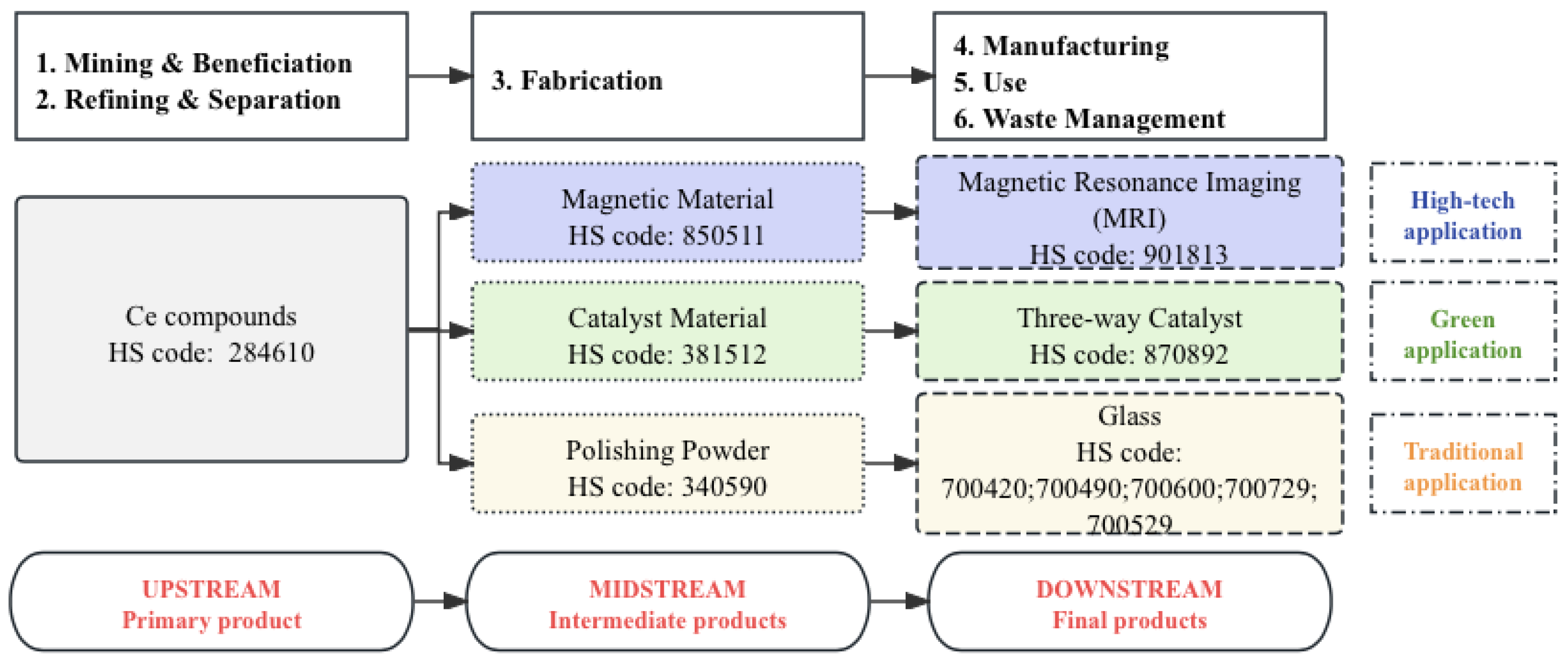
This study aims to fill existing research gaps by using cerium, the most widely traded REE, as an example to illustrate the global trade patterns of diversified rare earth products and China’s role in the trade from an industry chain perspective. First, seven representative cerium products are selected, covering traditional, green, and high-tech applications. Then, the global trade network models of seven products in 2000–2022 are constructed via the complex network method, which offers a powerful and versatile framework to analyze, understand, and model systems composed of interconnected elements across diverse domains. Furthermore, this study systematically analyzes the heterogeneous global trade patterns of the seven products in three dimensions: macro, meso, and micro, using nine indicators. Finally, changes in China’s trade influence are analyzed, and the impact of major events is further examined through a panel regression model, which offers a powerful econometric framework to address heterogeneity, dynamics, and causality in data spanning multiple entities and time. This research is anticipated to enhance the research on cerium resources, broaden the research perspectives of rare earth’s international trade, and offer empirical evidence and policy insights for the sustainable development of the global cerium industry.
The remainder of this study is organized as follows:
Section 2 outlines the data sources and methodology employed.
Section 3 provides a comprehensive examination of the global cerium trade network.
Section 4 examines China’s role within the trade network.
Section 5 presents the conclusion, recommendations, and prospects.
3. The Global Cerium Trade Patterns Analysis
3.1. Global Trade Volume of Cerium Products
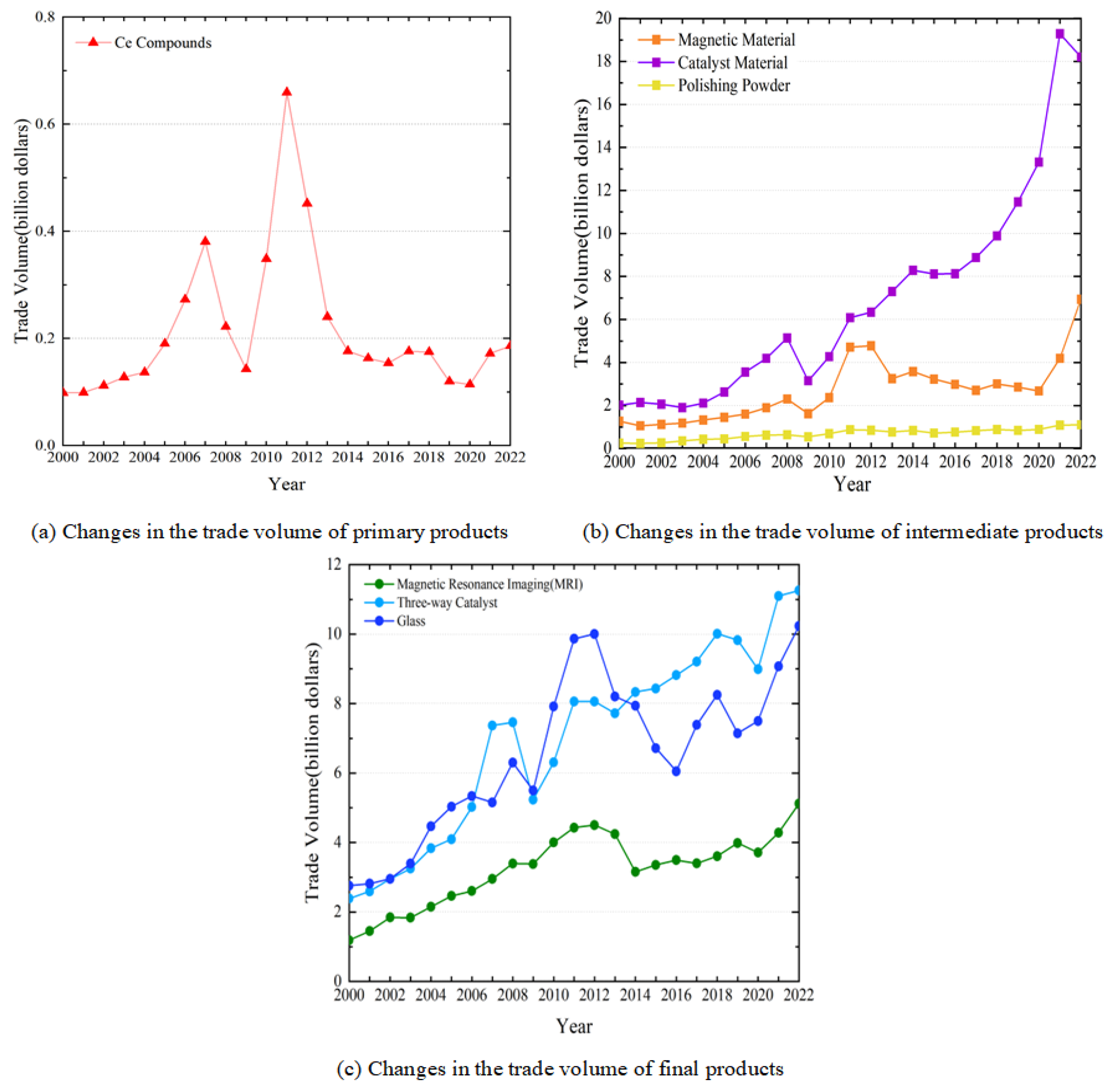
Figure 2 illustrates a significant disparity in the global trade scale across the seven products within the cerium industry chain. According to
Figure 2a, the global trade volume of Ce compounds in the upstream of the cerium industry chain was below USD 1 billion. This volume experienced continuous growth from 2000 to 2007, followed by a rapid decline attributed to the global financial crisis in 2008. Consequently, China’s restrictive policies on rare earth mineral exports led to a substantial increase in trade volume, escalating from USD 100 million in 2009 to a peak of USD 700 million in 2012. Despite the implementation of China’s rare earth export control policy, trade volume has experienced a significant decline to USD 200 million since 2013, demonstrating a modest oscillating trend. The trade volume of Ce compounds is dependent on the price fluctuations of rare earths.
Figure 2b demonstrates that between 2000 and 2022, the trade volume of products in the middle reaches showed an increasing trend. The polishing powder used in traditional sectors demonstrated suboptimal performance, marked by the lowest trade volume (under USD 1 million) and slow growth. The catalytic materials in the green sector and magnetic materials in the high-tech sector exhibited exceptional performance. Magnetic materials experienced significant growth from 2009 to 2012 and again from 2020 to 2022, culminating in a peak of approximately USD 7 billion in 2022. Catalytic materials, essential for automotive exhaust purification, demonstrated significant growth, increasing from USD 2 billion in 2000 to approximately USD 19 billion in 2022. This phenomenon may arise from support for the global energy transition and carbon-neutral policies.
Additionally,
Figure 2c illustrates a steady increase in the global trade volume of all cerium final products from 2000 to 2022. In comparison, trade in the high-tech product MRI exhibited the lowest growth, increasing gradually from about USD 1 billion in 2000 to a peak of around USD 5 billion in 2022. The trade volume of traditional glass exhibited significant volatility, attributed to the fluctuating prices of rare earths, which escalated rapidly from 2009 to 2011, culminating in an approximate value of USD 10 billion in 2012. Trade in the green product of three-way catalysts experienced the highest growth rate, influenced by environmental policies affecting the automotive market. This product outperformed all others from 2014 to 2022, reaching a peak of approximately USD 11 billion in 2022.
3.2. Macro-Features of the Global Cerium Trade Networks
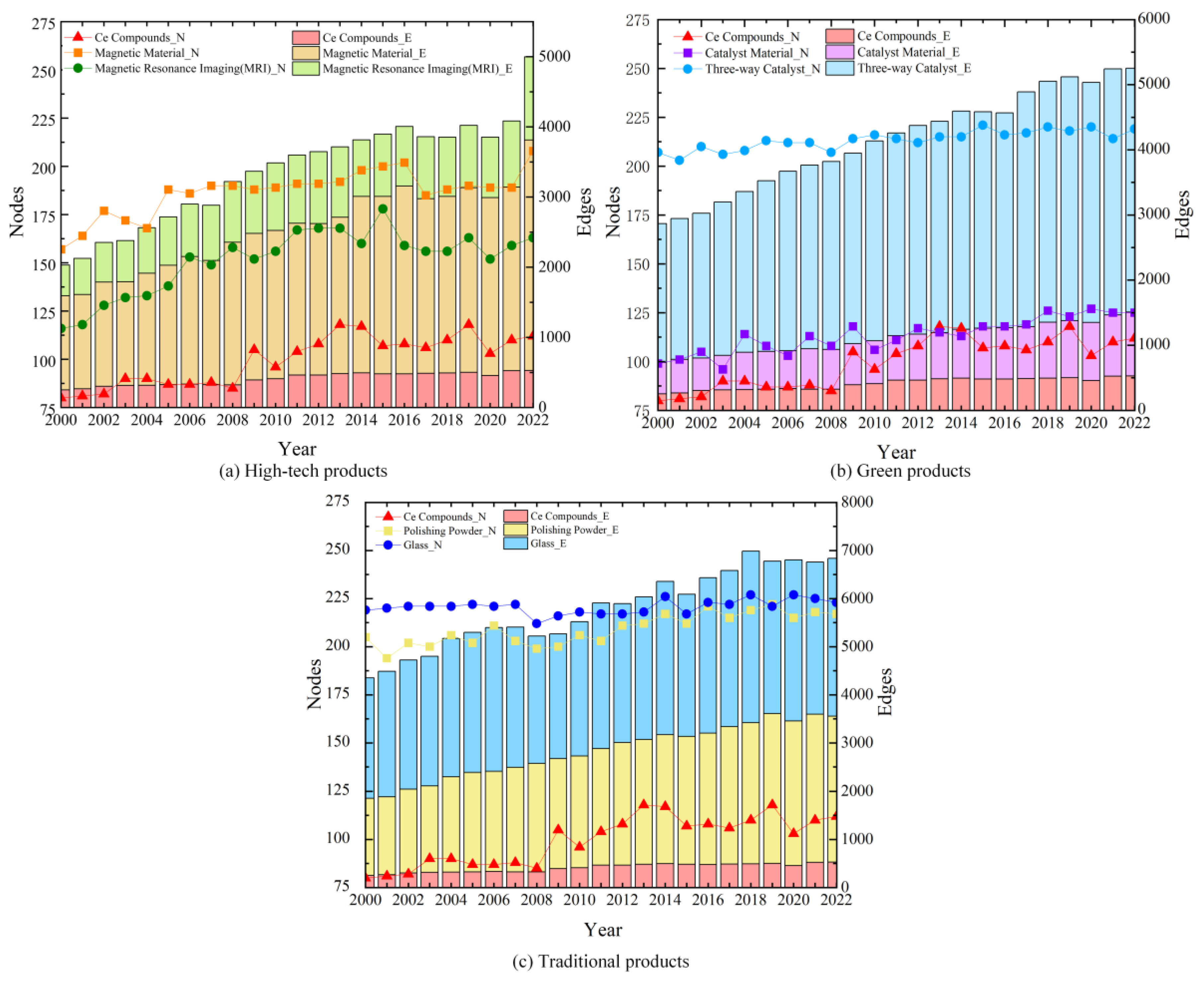
This study analyzes the macro-features of the global trade network for seven cerium products from 2000 to 2022, focusing on the number of network nodes and edges (refer to
Figure 3) and key topological indicators (refer to
Table 1).
Figure 3 demonstrates a significant rise in the quantity of international trade entities and trade relations concerning all cerium products. Ce compounds demonstrated the fewest trade participants and connections in comparison. Catalytic materials and MRI exhibited the lowest number of nodes and edges within the trade networks for midstream and downstream products, respectively.
Specifically,
Figure 3a indicates that within the high-tech segment industry chain, magnetic materials exhibited the most extensive scale and the highest degree of integration. The growth rate of its nodes and the number of its edges were considerably higher than that of the upstream Ce compounds and the downstream MRI. Conversely,
Figure 3b demonstrates that from 2000 to 2022, the global trade network of downstream product three-way catalyst has the largest scale in the green segment industry chain, and the number of its participants essentially remains around 210, with the number of trade relations increasing year by year. However, the number of trade entities and relationships for midstream and upstream cerium products were quite low; specifically, the number of participants did not exceed 125, and the number of trade links was fewer than 1000.
Figure 3c shows that in the conventional segment industry chain, the global trade networks of midstream and downstream cerium products exhibited a relatively similar size and were substantially larger than that of upstream cerium products. For instance, the number of trade entities involved in the downstream glass trade remained approximately 220, which was marginally higher than the number of midstream polishing powder trade entities. Nonetheless, there was a substantial increase in the number of trade relations for midstream polishing powder, which reached approximately 3000 by the year 2022.
Furthermore, as displayed in
Table 1, global trade networks for the seven cerium products grow more interconnected, regionalized, stable, and efficient from 2000 to 2022. Specifically, increased trade network density signifies greater trade tightness among trading entities. The growing average clustering coefficient indicates that trade in cerium products is getting more regionalized. A boost in the modularity index suggests that the cerium product trade community is becoming more stable. A general drop in average path length leads to a significant rise in the trade efficiency of cerium products.
3.3. Meso-Features of the Global Cerium Trade Networks
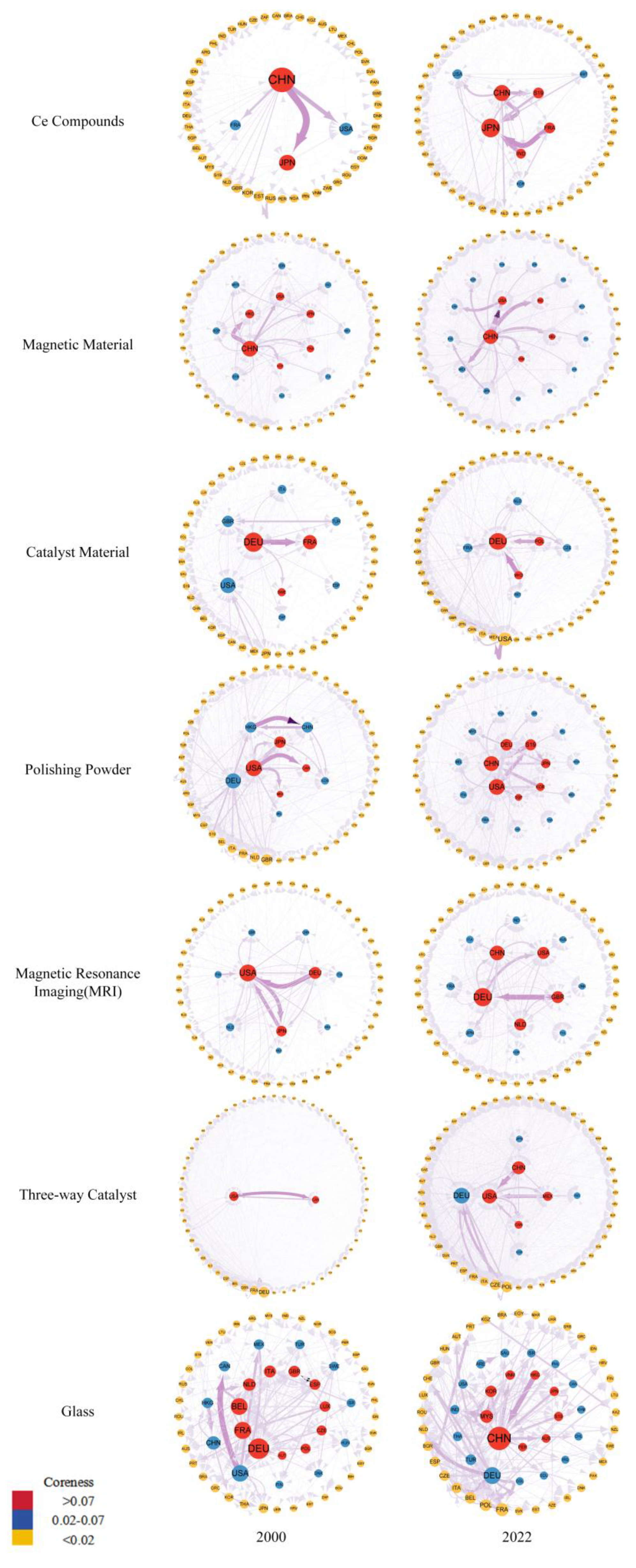
This study utilizes UCINET 6.661 software to categorize the countries involved in global cerium trade networks into three distinct layers: core, main, and periphery.
Figure 4 illustrates the distribution of core–periphery structures for the seven cerium products in the years 2000 and 2022. China plays a significant role in global trade concerning upstream products; however, its influence diminishes in the midstream and downstream sectors, where it mainly exports magnetic materials and three-way catalysts. Germany, France, the U.S., and other European countries have maintained a central role in the trade network of cerium intermediates and final products for an extended period.
The upstream sector exhibits a notable disintegration of the oligopoly in the trade of Ce compounds, characterized by a rise in the number of key participants within the trade network. In 2000, the core countries included China and Japan; by 2022, the United States, France, and India were also integrated into the core group. In 2022, Japan emerged as the leading importer of Ce compounds, surpassing China in trade volume. Since 2000, China has maintained its status as the leading exporter of Ce compounds, attributed to its significant mineral reserves.
The midstream sector is witnessing a growing influx of entities, although the composition of the primary core countries remains largely unchanged. Firstly, China held a dominant position in the global magnetic materials network in both 2000 and 2022, demonstrating an export-oriented economic strategy. The U.S. emerged as the second-largest core country, transitioning from a reliance on imports to engaging in both import and export trade flows. Secondly, the global trade in catalytic materials exhibits significant competition, with Germany being a notable exception. Thirdly, the global competition for polishing powders has intensified significantly. By 2022, the number of core countries increased from four to seven. The U.S. and China demonstrated significant trade flows, predominantly consisting of exports to Asia and other nations.
The trade patterns of the three final products differ significantly at the downstream stage. In 2022, China, the United Kingdom, and the Netherlands entered the core tier of high-tech MRI, with trade flows primarily driven by Germany, the United States, and the United Kingdom. In 2022, China and Mexico were classified in the core tier of green three-way catalysts, while India, Germany, Japan, and South Korea were categorized in the main tier. The trade patterns were primarily defined by U.S. imports from other core countries and German imports from various European nations. In the traditional sector, the number of core and major participants in glass production is significantly greater than that of other products, attributable to the straightforward nature of the glass manufacturing process and its extensive range of applications. As of 2022, the count of core glass-producing nations declined to 9, whereas the total of major glass-producing nations increased to 15. China’s exports to other Asian nations and Germany’s exports to other European nations predominantly shaped the trade patterns.
3.4. Micro-Features of the Global Cerium Trade Networks
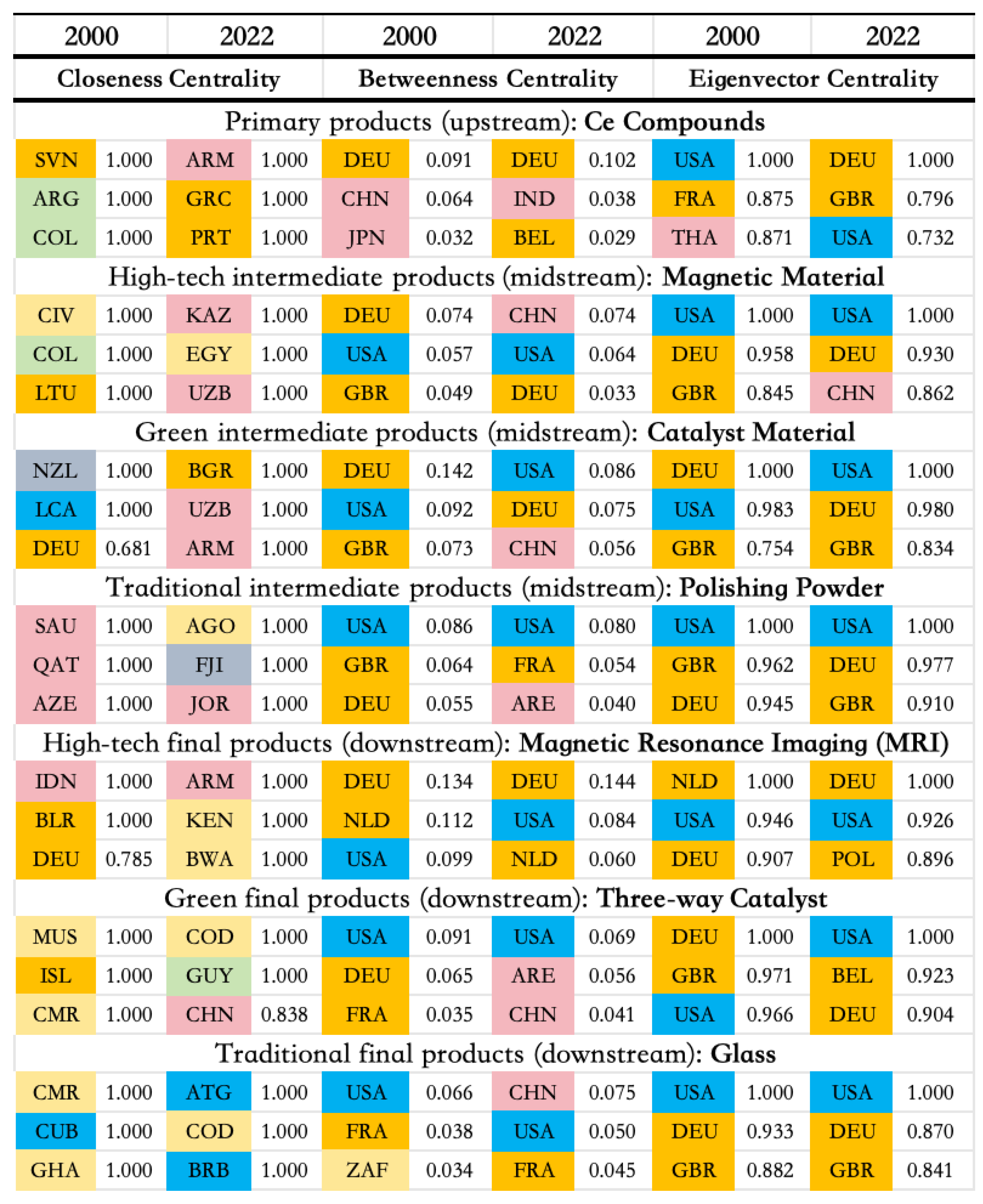
This study utilizes closeness centrality, betweenness centrality, and eigenvector centrality at the micro level to identify influential and controlling nodes within the global cerium trade network.
Figure 5 demonstrates that the top three ranked entities for the years 2000 and 2022 were identified through three centrality indicators.
The leading three countries in cerium product trade are primarily in Europe, North America, and Asia; specifically, they are Germany, the United Kingdom, the United States, and China. Firstly, countries exhibiting high closeness centrality (approximately 1) in the trade of cerium products span six continents from 2000 to 2022. Secondly, regarding the trade-bridging influence in cerium products, the three countries with the highest betweenness centrality are located in Europe, Asia, and North America. In the trade of upstream Ce compounds, Germany ranked first, while India surpassed China and Japan to secure second place in 2022. In the midstream magnetic materials sector, China surpassed Germany to secure the top position in 2022, while the United States maintained its second-place ranking. In 2022, the United States surpassed Germany to secure the leading position in the catalytic materials market, while China ascended to third place. The United States ranks first in the trade of polishing powders, followed by European countries. Finally, the primary high-influence trade entities for cerium products are predominantly in Europe and North America, particularly in Germany, the United Kingdom, and the United States. In the trade of Ce compounds, European countries and the U.S. surpassed Asia, with Germany, the United Kingdom, and the U.S. occupying the top three positions in 2022. In the trade of magnetic materials, the United States and Germany maintained their positions as first and second, respectively, while China surpassed the United Kingdom to secure third place in 2022. In the trade of catalytic materials, polishing powders, three-way catalysts, and glass, the United States held the leading position in 2022, with European countries following closely behind. In 2022, Germany emerged as the leading nation in MRI trade, while the United States maintained its position in second place.
4. China’s Trade Role and Influence Analysis
4.1. China’s Major Trade Partners and Relations
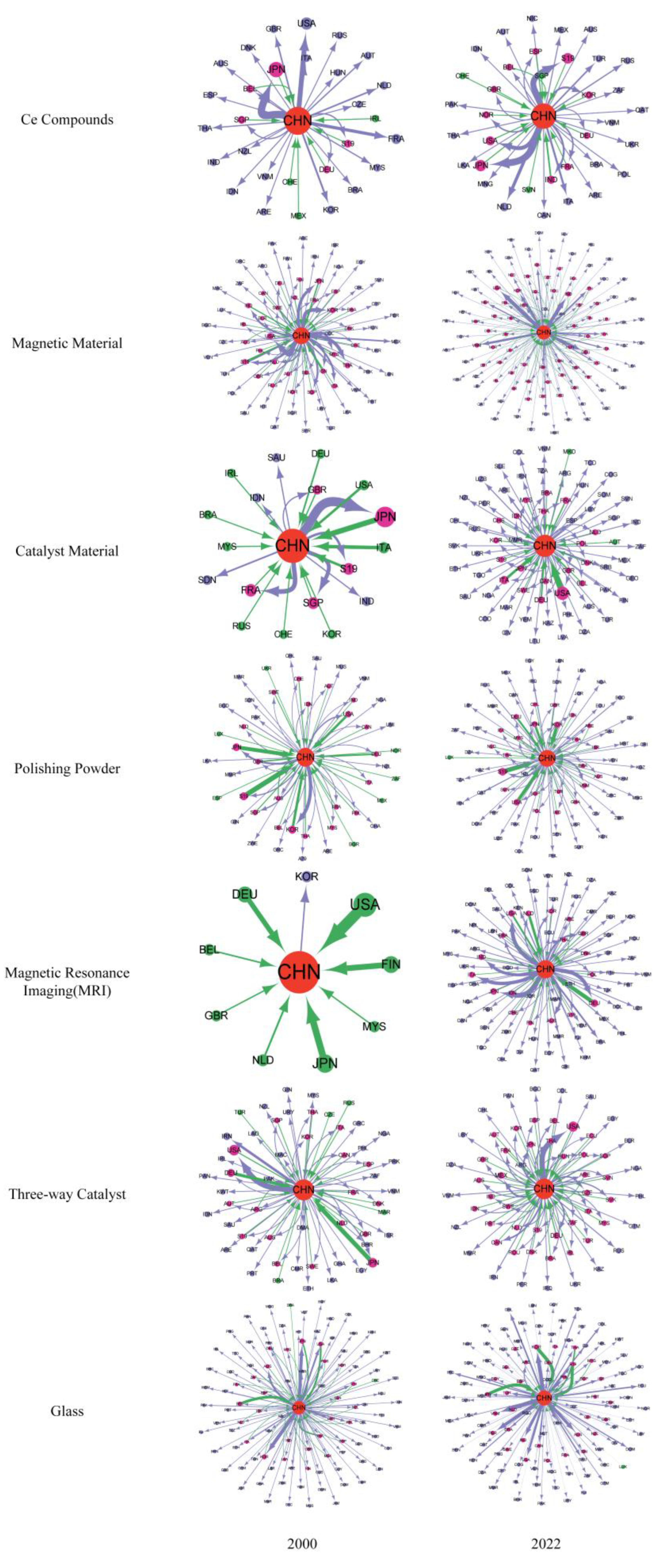
To further analyze the changes in China’s role in the global cerium trade networks, this study employs Cytoscape 3.9.1 software to visualize and analyze the systematic presentation of the increasingly close network of trade relations between China and its major trading partners around the world (see
Figure 6). It is worth noting that the trade data of Hong Kong and Macao has been included in the scope of China’s overall data in this section, since this study strictly adheres to the “One China” principle.
China has been a prominent exporter of upstream Ce compounds, with Japan and the United States as main purchasers. In the midstream sector, China emerged as a significant supplier of magnetic materials, broadening its trading partnerships from the United States, South Korea, and Japan to include several developing nations such as India. Between 2000 and 2022, China’s trading partners for catalytic materials expanded significantly; China transitioned from a predominant exporter to a principal importer. In 2000, China primarily imported from Japan and Italy; thereafter, it exported to Japan, France, and Singapore. By 2022, China’s imports were predominantly from industrialized nations, including the United States and Germany. Conversely, China has been a prominent importer of polishing powders, with key trading partners comprising Japan, the United States, South Korea, Germany, and many other Asian nations. In downstream MRI commerce, China transitioned from a principal importer to a prominent exporter, experiencing a substantial rise in trading partners from 2000 to 2022. In 2000, China primarily imported from industrialized nations, including the United States, Japan, and Finland. By 2022, China had significantly exported to countries, including Japan, the United States, Germany, and India. In the trade of three-way catalysts, China is a prominent exporter, with the United States as its primary trading partner. In 2000, China mostly imported from Japan and Germany and then exported to nations such as the U.S.; by 2022, China predominantly exported in substantial volumes to the U.S. Ultimately, China possesses numerous partners in the glass industry. From 2000 to 2022, the primary export destinations for Chinese glass transitioned from South Korea and Japan to Vietnam and South Korea; conversely, the principal import sources for Chinese glass switched from Belgium and the United States to Japan, Vietnam, and South Korea.
4.2. The Shocks of Major Events on China’s Trade Influence
This study examines the effects of four major events on the three centrality indicators of China’s cerium products, as depicted in
Table 2, due to the substantial influence of major events on the worldwide commerce of rare earths. The results demonstrate that all four categories of significant events significantly influence the closeness centrality and betweenness centrality of China inside the global cerium trade networks (refer to Panels A and B). Nonetheless, the effect on eigenvector centrality does not achieve statistical significance in many instances (see Panel C). The eigenvector centrality of China increased following the US–China trade war and China’s management policy regarding rare earth industries, rather than due to the COVID-19 outbreak or the implementation of China’s export control policy.
Firstly, the results of the impact of COVID-19 can be attributed to the exploration of emerging markets and the expansion of trade channels following epidemic control, as well as the reinforcement of control over the global cerium resource supply due to stable rare earth production capacity. The advantages of China and its principal trading partners in cerium resources trade remain unaffected by the epidemic. Secondly, the outcomes of the US–China trade war can be attributed to China’s proactive expansion of trade channels following the conflict’s onset. China implemented export control measures to regulate the flow and volume of its exports, thereby strengthening its bargaining power within the cerium trade network and fostering closer trade relationships with more developed nations. Thirdly, the effects of China’s export control policy can be understood through its role in standardizing cerium resource exports, attracting additional trading partners, and increasing China’s influence and control over global cerium resource trade by regulating export flow and quantity. The export control policy primarily regulated and standardized the export process, exerting minimal influence on trade relations between China and its key trading partners. The potential reasons for the impact of China’s rare earth industry management policy include its role in promoting high-quality development through the standardization of cerium resource mining and production. This policy has attracted additional trading partners, reinforced China’s position as a trade intermediary, enhanced the competitiveness of Chinese cerium products in the global market, and fostered strong relationships with influential countries.
5. Conclusions and Implications
5.1. Conclusions
Cerium, the most extensively utilized REE, is significant in high-tech, green, and conventional sectors. This study investigates the global trade pattern of the rare earth industry chain, using cerium as a case study. It constructs a global trade network model for seven cerium products from 2000 to 2022; analyzes the evolution of network characteristics through macro, medium, and micro indicators; and evaluates China’s trade role while examining the impacts of four events using a panel regression model. The major conclusions are presented and discussed as follows:
(1) At the macro level, the trade volume of upstream products in the cerium industry chain was the lowest and exhibited significant fluctuations, whereas the trade volume of intermediate and downstream products demonstrated an upward trend. This finding is consistent with the findings of Zuo et al. [
26] in general. The trade volume of catalytic materials exhibited the highest levels and the most rapid growth, whereas the trade volume of polishing powders demonstrated the lowest levels and sluggish growth. The global trade network for the seven cerium products in 2022 showed significant growth, indicating trends of increased interconnectedness, regionalization, stability, and efficiency. This outcome is in accordance with the findings of the existing literature. For example, Hou et al. [
38] found that the world’s rare earth trade shows a tendency towards integration. Yu et al. [
25] demonstrated that the linkages of rare earth trade networks among countries remained relatively stable, pointing to the long-term dependence of countries with scarce rare earth resources on resource-rich countries.
(2) At the meso level, the trade pattern of upstream Ce compounds, which was monopolized by China and Japan, was broken. The core countries for midstream products remained largely unchanged. China was the leading exporter of magnetic materials, followed by the U.S., while Germany was the only stable core country in the global trade of catalytic materials. The global competition for polishing powders was fierce, with the U.S. and China having the largest trade flows. The core–periphery structures of downstream products varied considerably. The U.S.–Japan–Germany-dominated trade pattern of MRI was broken. The trade in three-way catalysts was no longer dominated solely by the U.S. and Canada. The trade pattern of glass was dominated by China and Germany. This result is generally in line with Zuo et al. [
26], which indicated that the upstream and downstream trade in REEs is mainly concentrated in China, Germany, the United States, Japan, etc.
(3) At the micro level, the three most influential countries in cerium product trade were primarily in Europe, North America, and Asia; specifically they were Germany, the United Kingdom, the United States, and China. This finding is inconsistent with the finding of Zuo et al. [
26], which suggested that the REE trade flow upstream is characterized by “Europeanization” and midstream and downstream are characterized by “Asianization”. This difference may be attributed to the different rare earth products and trade periods considered. Additionally, the performance of the three centrality indicators differs among countries, with China’s role as a trade bridge increasing, while Europe and the United States excel in eigenvector centrality. Between 2000 and 2022, China experienced a notable expansion in its trading partners and trade relations, particularly with countries such as Japan, the United States, Germany, and South Korea. In line with the literature [
3,
26], China’s trade influence has expanded significantly and is responsive to the international trade environment and associated domestic policies, such as the COVID-19 pandemic, the US–China trade conflict, China’s export restrictions, and China’s rare earth industry policies.
5.2. Policy Implications
The conclusions presented above suggest the following implications for the sustainable development of the cerium industry.
(1) Enhance the global competitiveness of cerium products to mitigate the surplus of primary cerium products and improve resource utilization. The uneven geographical distribution of rare earth mines has led to a serious REEs supply–demand imbalance problem. In particular, some large rare earth suppliers, such as China, frequently suffer from a severe surplus of cerium due to its high abundance. Therefore, enhancing the international competitiveness of cerium products has become crucial for alleviating the supply–demand imbalance problem. According to the findings of this study, China is a significant exporter of Ce compounds, magnetic materials, and three-way catalysts; however, it continues to depend on imports from developed nations, including Europe, America, and Japan, for catalytic materials, MRI, polishing powders, and glass. Meanwhile, the increasing participation of various countries in trade has disrupted China’s monopoly on primary Ce compounds, highlighting the urgent necessity to enhance trade competitiveness. Hence, major rare earth suppliers (e.g., China) should enhance the competitiveness of their cerium products in the midstream and downstream sectors promptly, considering the context of energy transition and artificial intelligence advancements. First, a wide range of incentive policies may be considered, including providing direct incentives to enterprises in key areas, such as technology research and development and market expansion, through financial support and tax incentives, thereby reducing enterprise costs. Second, market signals should be utilized to encourage businesses to take the initiative to improve their competitiveness, such as establishing government procurement mechanisms and strengthening intellectual property protection. Finally, China should develop a collaborative innovation platform for industry, academia, research, and use, as well as fostering upstream and downstream collaboration throughout the industrial chain, to compensate for companies’ technological, information, and resource deficiencies.
(2) Ensure the sustainable trade of the cerium resource under tariff policy uncertainties and geopolitical concerns. Our findings indicate that the trade networks for Ce compounds, catalytic materials, and MRI were narrow in scope and largely homogeneous, with China, Japan, Germany, and the U.S. as the primary participants. Furthermore, European and American countries dominate the midstream and downstream cerium markets. Although China’s trade influence is expanding at a rapid pace, it is more susceptible to factors such as domestic industry policies and the international trade environment. Currently, rivalry among major countries such as China, the United States, and Europe has increased, and the uncertainty of trade policies and geopolitical threats has gravely challenged the trade stability of cerium resources. For example, to reduce reliance on China’s rare earth supply chain, the United States has implemented a number of policies aimed at the rare earth industry in the context of Trump’s tariff 2.0, including raising tariffs on Chinese rare earth imports to 55%, strengthening the domestic rare earth supply chain, and forming alliances with countries such as Saudi Arabia and Greenland to create secure supply chains. These actions have had a significant influence on the stability of the global rare earth trade network and put trade entities in danger. To address this challenge, China may implement strategies such as enhancing export controls, expanding international markets beyond the United States, fostering technological innovation in rare earth products, and engaging in trade negotiations with the United States. On the other hand, other trade entities should actively establish diverse trade partnerships; enhance the resilience of trade networks; closely monitor developments in trade relations and policies between the U.S., China, and European countries; and promptly adjust their trade strategies to mitigate the risk of trade disruption.
(3) Increase the global market share of green and high-tech cerium products to facilitate the high-quality development of the cerium industry. Currently, the cerium industry’s excellence is evident in its contributions to the global energy transition and industrial upgrading. According to this study, the trade volume of cerium products in the green and high-tech industries has increased dramatically and is now significantly larger than that of traditional cerium products. Furthermore, the trade network for green and high-tech cerium products is rapidly increasing, with Europe, the United States, China, and Japan dominating. This phenomenon is associated with the focus on green and high-tech products by the governments of China, the United States, and Europe. Therefore, to achieve the high-quality development of the cerium industry and improve its support for global energy transition and industrial upgrading, it is advised that major trading entities like China, Japan, Germany, and the United States actively develop more green and high-tech cerium products, come up with new application scenarios, and expand domestic markets to reduce the market risk of some cerium products being replaced. Furthermore, these large trading entities should actively investigate new international markets, such as Asia, Africa, and Latin America, to increase the international market share of cerium green and high-tech products and assist other nations in achieving sustainable development.
5.3. Limitations and Future Directions
Due to factors such as data availability and methodology, the limitations of this study are mainly reflected in the following aspects: initially, this study primarily examines the global trade pattern of representative products in the cerium industry chain from 2000 to 2022, but it does not disclose the influencing factors of the trade network. Future research can predict the cerium demand in green and high-tech sectors, as well as investigate its impact on the global trade network pattern of green and high-tech cerium products. Additionally, this study employs the panel regression model to preliminarily verify the impact of four categories of events on the trade influence of China, but it does not delve deeply into the transmission mechanism of exogenous event shocks in the trade networks. As suggested by Acemoglu et al. [
39] and Angelidis and Varsakelis [
40], future research can integrate the input–output method and the complex network model to examine how the shocks of significant events related to rare earths spread across interconnected industries and structural channels between the trade entities.