1. Introduction
In recent years, sustainable development has become a key focus for governments, businesses, and academia. With the intensification of climate change, resource pollution and depletion, and environmental pollution, promoting the transition to a green economy has become a global consensus. As one of the major industries of the global economy, the environmental impact of the apparel industry is particularly significant. It is not only one of the main sources of global water consumption and pollution, but is also ranked as one of the most polluting industries due to its high carbon emissions and use of chemical substances [
1]. In addition, the growing problem of processing waste and the disposal of discarded clothing, with large quantities of non-biodegradable textiles ending up as garbage, further exacerbates the environmental burden, making the sustainable transformation of the fashion industry imperative.
Bacterial cellulose (BC), also known as microbial cellulose (MC), is a highly hydrated, flexible biofilm material that can be produced through static fermentation using substrates such as kombucha, coconut water, or agricultural waste [
2,
3]. As an emerging bio-based material, BC has attracted increasing attention in recent years across various fields, including food, medicine, textiles, papermaking, and electronics [
4,
5]. This organic material can be cultivated in any desirable garment panel shape [
6]. After undergoing purification, plasticization, and drying processes, it can be transformed into a fashion material with wearable properties [
7,
8]. This significantly reduces the environmental damage caused by the production process compared to that of traditional textile materials. In addition, the unique physicochemical properties of BC, such as its high mechanical strength, hydrophilicity, biodegradability, and environmental friendliness, make it an ideal alternative to traditional textile materials [
9]. The high strength and plasticity of these materials also provide more possibilities for apparel design, which can meet different design needs and provide new solutions for the sustainable development of the fashion industry.
Designers Suzanne Lee, Sacha Laurin, and others have begun experimenting with BC to create biodegradable clothing and accessories to reduce the environmental impact of the fashion industry. However, in fashion design, beyond material properties, esthetic attributes such as color and pattern are equally important, yet research on dyeing and printing techniques for BC materials remains relatively limited. In terms of dyeing, BC shows a color tendency consistent with the culture medium. Costa et al. [
10] investigated dyeing techniques using Clitoria ternatea and Hibiscus rosa-sinensis extracts on BC, evaluating both color fastness and physical properties. The results demonstrated that dyed BC materials can be applied to various products. Shim et al. [
11] explored the coloration of BC by adding different dyes during cultivation (in situ) and dyeing BC after cultivation (ex situ) for fashion and textile applications. The in situ method was found to be more effective than the ex situ method for coloring BC. The designer Ellen Rykkelid [
12] also added indigo, kale, grapes, beets, mulberries, dragon fruits, and other plant juices and root pieces to the culture medium to achieve in situ dyeing of BC, significantly reducing water pollution and the resource consumption associated with dyeing traditional textiles. However, in situ dyeing results in the uneven accumulation of sugars within the material, resulting in surface irregularities, ultimately affecting the material’s quality. Kim et al. [
13] successfully dyed BC material using discarded coffee grounds. The dyed BC exhibited a deep curry color, eliminating its translucency and providing a better body-covering effect. However, it only exhibited darker colors, such as curry and black, limiting the scope of the design applications of BC material. In terms of patterns, Suzanne Lee [
14] used the principle that BC will exhibit a rust color due to iron oxidation when it comes into contact with iron in a wet state, presenting dark patterns, such as polka dots, letters, and other designs on the material. The designer Sacha Laurin [
15], in her design of kombucha fashion, used edible metallic dyes to give BC materials brilliant color variations and metallic luster. Therefore, BC has potential for pattern printing; however, different dyeing and printing processes for this material need to be further explored to provide a practical reference for fashion design applications.
This study, from a fashion designer’s perspective, examines the appearance of BC material, with an emphasis on the visual outcomes of dyeing and printing processes. Plants and reactive dyes were used in dyeing experiments, alongside different printing methods, such as stencil printing, digital printing, and cyanotype printing, to explore the color pattern expressions of BC. Based on the experimental results, a fashion collection themed Photosynthesis was created, providing a case study for the application of bio-based BC material in fashion design.
2. Materials and Methods
2.1. Apparel-Oriented Treatment of BC
2.1.1. Fostering
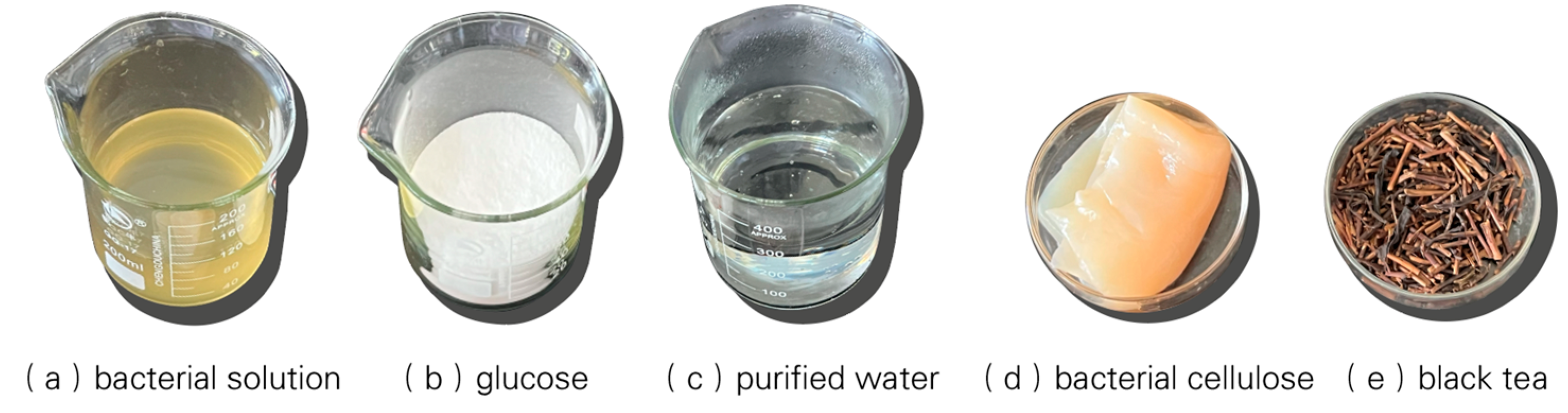
In this experiment, BC was cultivated using the kombucha fermentation method. As shown in
Figure 1, the culture medium consisted of a bacterial inoculum and pellicle (derived from the previous generation culture), glucose, purified water, and black tea. Black tea was brewed with boiled purified water and quickly cooled to room temperature (25 °C) to avoid potential contamination. Then, 60–100 g/L of sucrose was dissolved and poured into the filtered black tea water, along with 10–15%
v/
v of the bacterial solution. Finally, the inoculated bacterial film (approximately 3%
w/
v) was placed in the mixture, ensuring it lay flat on the bottom of the container [
16]. The opening of the container was covered with a breathable mesh screen. Fermentation was carried out at 30 ± 2 °C for 20 days using a passaging culture method.
2.1.2. Purification
BC membranes grown through fermentation retain bacteria and media residues on their surface, which may lead to odor and discoloration problems in subsequent applications, affecting the chemical stability and biosafety of BC. Therefore, BC must be purified to remove impurities. In this study, the surface of the BC membrane was washed several times with deionized water. The membrane was immersed in a 10% w/w sodium hydroxide (97%) solution at 100 °C for 1 h at a bath ratio of 1:1.5 to remove the bacteria and residual medium from the membrane [
17]. The bath ratio was calculated by dividing the weight of the bacterial fibers (g) by the volume of the solution (mL). It was then treated with a 5 g/L hydrogen peroxide solution at 80 °C for 1 h to remove residual pigments. Subsequently, the surface of the BC material was neutralized with acetic acid (99%) at a pH value of 3–4 for 2 h, until the pH value of the surface reached about 7, followed by thorough rinsing with water.
2.1.3. Plasticization
The dried BC film is relatively stiff and brittle. Incorporating plasticization during preparation can enhance its physical properties and processability. Various plasticization methods can be used to process BC materials. In this study, three plasticization treatments were explored, including linseed oil and quebracho filler [
3], epoxidized soybean oil citric acid cross-linking [
18], and glycerol-based moisturizing [
8]. The specific plasticizers, immersion times, and experimental conditions are listed in
Table 1.
2.1.4. Drying
The padding method is currently regarded as the most efficient technique for drying BC, as it enables rapid dehydration while minimizing losses in mass and thickness [
19]. A plain-woven worsted fabric (areal density of 185 g/m
2 and fabric density of 86 ends/inch and 65 picks/inch) was used to cover the BC material, which was then passed through rubber-covered rollers (Shore 70A, diameter 125 mm) applying a padding pressure P
0 of 0.05 MPa to the material at a speed of 0.5 m/min. The material was then laid flat in a ventilated area for natural air drying.
2.2. Dyeing Experiment of BC Material
The dyeing and printing process significantly influences the results, with variations among the dyes and methods employed. The BC material’s water absorbency directly impacts the dyeing effectiveness of water-soluble dyes. As the water absorption of the dried BC decreases, its dyeing efficiency also declines. Therefore, both plant-based dyeing and reactive dyeing were applied via in situ coloration during glycerol immersion of the BC material [
11]. Pattern printing, however, was applied after the BC was dried.
2.2.1. Plant-Based Dyeing
Natural plant-based dyeing is non-toxic and biodegradable, with pigments found in various parts of plants, such as roots, stems, leaves, flowers, fruits, and bark [
20]. In this experiment, 20 g each of dried mugwort, safflower, madder, sappanwood, gardenia, and lithospermum were selected for dyeing. A total of 24 experimental groups were designed and numbered A1–A24 (
Table 2), with BC samples measuring 6 × 6 cm.
Different plants require distinct dyeing methods. Mugwort, madder, sappanwood, and gardenia must be boiled in 20 times their weight of water over a high heat and then simmered for 20 min. The dye solution was filtered and used for dyeing at 80 °C for 30 min. Safflower was first immersed in 10 mL/L of vinegar water for 12 h to remove all the yellow color, and it was then soaked in a clarified solution of oxalic ash to draw out the pigment. Umeboshi water was added to adjust the pH value to 4, and the material was dyed for 30 min under normal conditions. Lithospermum was soaked in 75% alcohol for 10 h, filtered, and diluted with water at a 1:5 ratio, and the fabric was dyed for 20 min. All dyed BC materials were mordanted and color-fixed for 30 min using blue alum, alum, iron slurry, and saponalum solution on plasticized BC. Subsequently, the materials were steamed at 100–120 °C for 30 min, rinsed with water to remove unfixed color, and air-dried naturally.
2.2.2. Reactive Dye
Reactive dyes exhibit superior colorfastness and chromatic vibrancy, making them prevalent in textile applications [
21]. Owing to BC’s pure cellulose fibrillar network, these dyes demonstrate effective affinity for BC substrates. For reactive dyeing, nine experimental groups were designed and labeled B1–B9 (
Table 3), using BC samples measuring 6 × 6 cm.
Reactive dyeing was performed with a dye concentration of 1%. BC membranes were immersed in the dye solution at 70 °C for 2 h, with 0.2% sodium carbonate added to promote covalent bonding between the dye and the cellulose. After dyeing, unfixed dyes were removed via washing with soapy water. Since glycerol tends to leach from BC during dyeing, causing increased brittleness, two strategies were adopted to supplement or reduce glycerol loss: post-dyeing glycerol re-soaking and glycerol–dye co-bath treatment. In the re-soaking method, the dyed BC was immersed in 10% v/v glycerol (99%) at a liquid ratio of 1:1.5 for 3 h. In the co-bath method, 10% v/v glycerol was added directly to the dye bath. The glycerol–dye co-bath method was also used for secondary color mixing, producing green, orange, and purple shades.
2.3. BC Material Printing Experiment
2.3.1. Stencil Printing
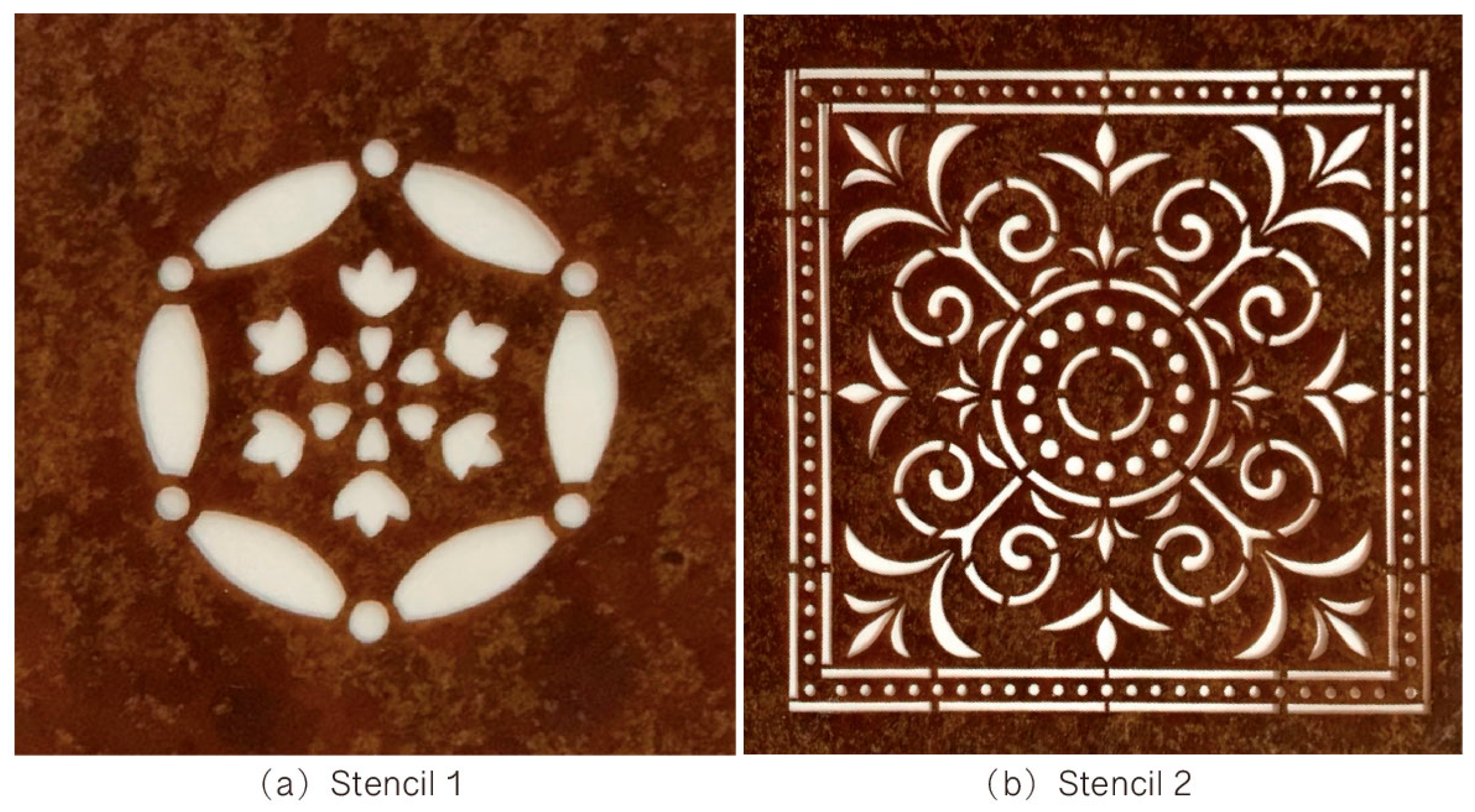
Stencil printing is a simple technique that requires no complex equipment, making it suitable for small-batch production and experimental research. Its basic principle involves transferring pigment paste onto the material through the hollowed areas of a stencil. This technique encompasses four primary types: woodblock printing, stencil printing, screen printing, and roller printing. In this study, two different patterns of palm oil stencils were employed as printing templates, as shown in
Figure 2. Stencil 1 features a relatively simple circular motif combining solid blocks and dots, measuring 10 × 10 cm with a pattern diameter of approximately 5 cm. Stencil 2 presents a more intricate and elaborate square motif, measuring 15 × 15 cm with a pattern side length of 11.5 cm.
The printing paste for stencil printing requires appropriate viscosity, as it affects the clarity and uniformity of the print [
22,
23]. In this experiment, plant-based printing paste prepared by
Qiri Plant Dye Textile Studio (in Chongqing, China) was selected as the color source for stencil printing. The printing process involved placing the carved palm oil hollow stencil onto the BC samples and fixing it into position. A hog bristle brush was then used to pick up the paste and dab it into the hollow areas of the stencil, allowing the pigment to transfer onto the sample. The stencil was then carefully removed, and the printed sample was left to rest for 24 h. Afterward, excess pigment was rinsed away using a gentle water stream, moisture on the surface was blotted with paper towels, and the samples were air-dried naturally. A total of 14 experimental sets were designed, labeled C1–C14 (
Table 4), with BC material samples matching the dimensions of the stencils.
Stencil 1 was used to conduct plant-based paste printing experiments on BC materials. Buddleja, cochineal, and phalaenopsis pigment pastes were selected to print yellow, red, and blue colors onto BC materials plasticized with 15%
v/
v glycerol (99%) and 10%
v/
v glycerol (99%), respectively [
24]. To explore the printing performance of different plant dyes on this material, pomegranate peel, indigo, and Pu’er tea pigment pastes were applied to BC plasticized with 10%
v/
v glycerol. Additionally, color blending was tested by mixing light pomegranate peel and indigo pastes to produce a dark green shade for single-color printing. In an attempt to create a multicolor pattern, pomegranate peel and indigo were mixed into dark green and matched with the brown color of Pu’er tea in the same pattern to enrich the visual color effect. Subsequently, Stencil 2 was used for both single-color printing and multicolor overprint experiments to evaluate the clarity and expressiveness of the printed patterns.
2.3.2. Digital Printing
Digital printing is a method that uses computer-controlled inkjet technology to directly apply patterns onto material surfaces [
25,
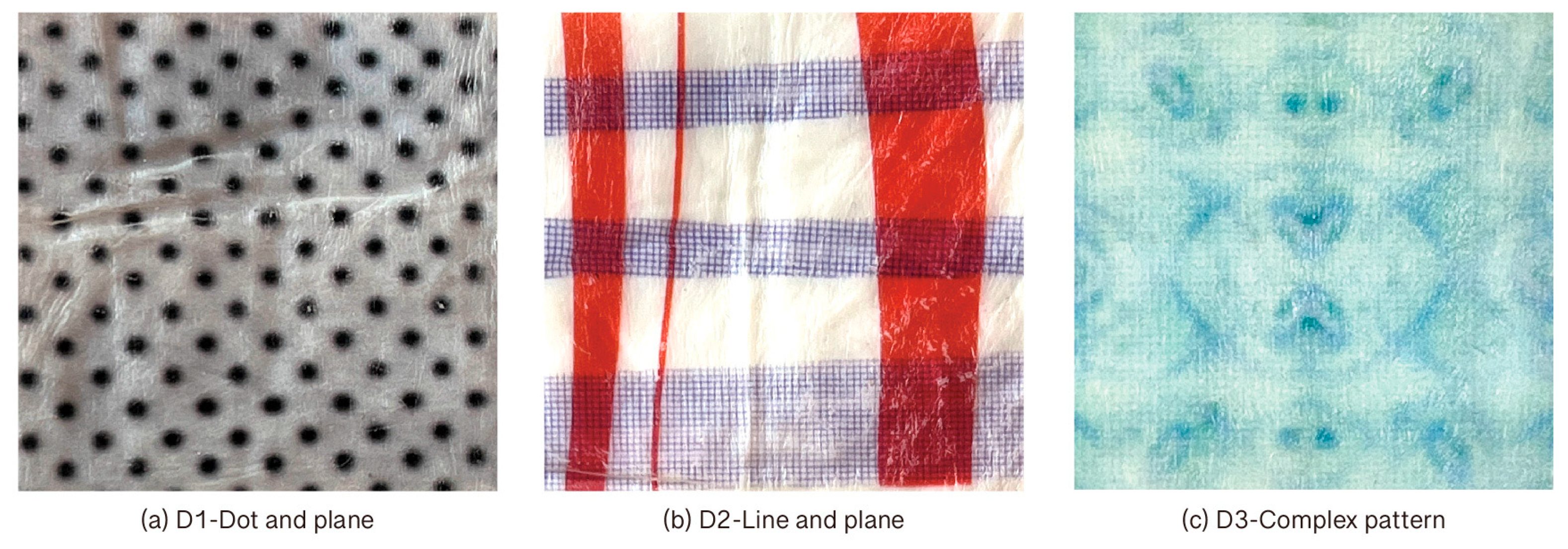
26]. Compared to traditional printing, it offers higher precision, greater flexibility, and lower pollution. In printing experiments with BC materials, this technology enables accurate reproduction of complex patterns, expanding the design possibilities. For this experiment, 3 groups (designated D1–D3) were established, as detailed in
Table 5.
The digital printing performance of BC plasticized with 10% v/v glycerol (99%) was investigated by examining the color quantity, color effect, and pattern form using graphic design software. Design D1 is a two-color polka dot pattern with a gray background and black dots, differentiated by lightness, demonstrating an interplay between the dot and plane. Design D2 features a red-and-blue checkered pattern with hue contrast, forming a combination of lines and planes. Design D3 employs adjacent colors with similar hues and lightness, resulting in subtle color variations and a gradient blending effect, thus requiring higher printing precision. The BC materials were fixed on the printer platform, printed within an 8 × 8 cm area, and subjected to high-temperature steam fixation to improve the color fastness.
2.3.3. Cyanotype Printing
Cyanotype printing is a classical photosensitive process that can capture the shadows of objects. The UV light from sunlight reacts with the sensitized solution before oxidizing to create the characteristic blue color, while unexposed areas remain white, preserving the captured shadows [
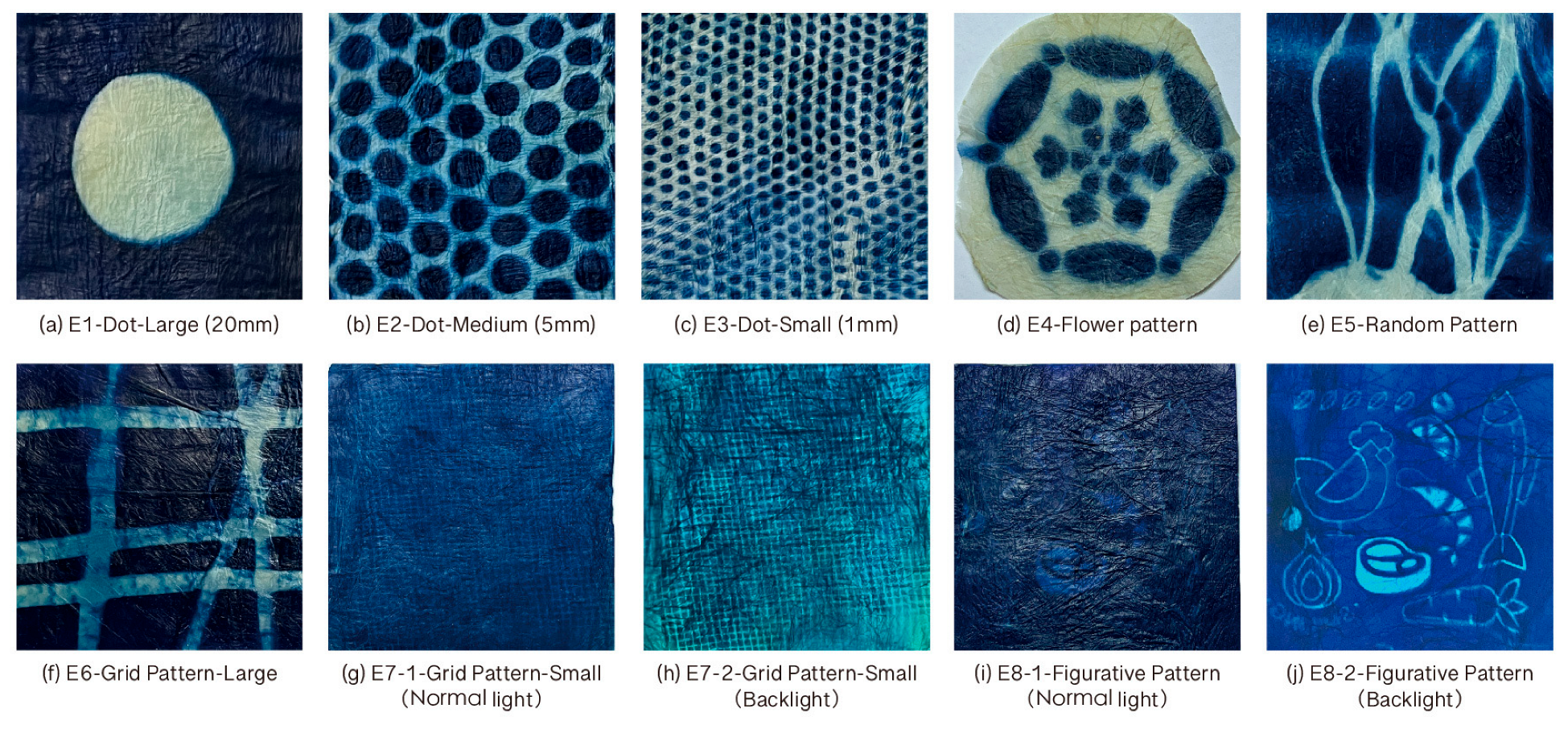
27]. Patterns for cyanotype printing can be created using film, plants, insects, or daily objects. Cyanotype printing, which relies on light and shadow, interacts with the translucency of BC materials to produce experimental prints with distinctive design esthetics. In this study, 8 groups were designed and labeled E1–E8 (
Table 6), with BC samples measuring 15 × 15 cm.
The cyanotype sensitizer, comprising a mixture of two iron salt solutions, utilizes ammonium ferric citrate as the photosensitizer, which undergoes reduction under UV exposure, and potassium ferricyanide as the developer, which reacts with reduced iron ions to form insoluble Prussian Blue [
28]. The two solutions were mixed at a 1:1 ratio to prepare the cyanotype dye solution, which was evenly coated onto the surface of BC dry films plasticized with 10%
v/
v glycerol (99%) and dried in a dark room. Samples were exposed under a 100 W UV lamp for 60 s and then developed by rinsing with water to remove the unreacted dye until all yellow coloration disappeared, followed by natural drying. Dot stencil patterns were made in three sizes: large (20 mm), medium (5 mm), and small (1 mm). Patterned cut-outs were designed to create varied light-blocking effects. Additional experiments were carried out to simulate tie-dying effects by folding and binding the material with elastic bands. Mesh fabric, masking tape, and film negatives were used to produce grid and figurative patterns.
2.4. Analytical Methods
2.4.1. Thickness
The thickness of the BC samples was measured using a YG141 film thickness gauge, with the average calculated from measurements taken at 10 different locations.
2.4.2. Color Measurement
The color of BC samples was characterized using the CIE 1976 LAB color space. Measurements were conducted with a Datacolor 600 spectrophotometer under a D65 light source and 10° viewing angle. Each sample was folded twice, exposed twice for each fold, tested 3 times on the front side, and the average value was recorded.
2.4.3. Color Fastness to Rubbing Test
The color fastness was measured according to ISO 105-X12: 2016, Textiles-Tests for colour fastness Part X12: Colour fastness to rubbing [
29]. BC samples were mounted on a rubbing fastness tester, using a 5 × 5 cm rubbing cloth on the meter. Both dry and wet rubbing fastness were tested. The dry test involved 10 rubs within 10 s at a pressure of 9 ± 2 N. For the wet test, the rubbing cloth was saturated to 95–100% before rubbing. After testing, the samples were air-dried and evaluated under a D65 light source for rubbing fastness.
3. Results
3.1. Apparel-Oriented Processing of BC Material
The apparel-oriented processing of BC material includes cultivation, purification, plasticization, and drying. In this experiment, three different plasticization methods were tested. After plasticization and drying, the thickness of BC samples was measured. The designers then evaluated the color, texture, and sewing tests to determine the most suitable plasticization method for subsequent dye-printing experiments and apparel design applications. This evaluation established the finalized apparel-oriented processing protocol for BC material.
The properties of BC material under the three plasticization methods are presented in
Table 7.
Method 1 employed linseed oil and quebracho extract as plasticizers. The resulting BC material was firm, thick, and leather-like in texture; however, it required high-temperature processing and tanning, involving multiple steps and substantial energy consumption. In addition, the application of tannin imparted a dark brown color to the material, which limited the expression of color and patterns during printing and dyeing. In sewing tests, the material’s thickness and slight stickiness made it unsuitable for use with garment sewing machines.
Method 2 utilized epoxidized soybean oil and citric acid, which required heating to 105 °C to initiate cross-linking. The BC material produced was thin, white, and demonstrated high toughness but low flexibility, resembling plastic film. This compromised comfortable wearing and lacked the premium esthetic qualities needed for fashion applications. During sewing tests, the thin material showed a tendency to fracture.
Method 3 used glycerol as a plasticizer, effectively retaining moisture within the material at room temperature with a short immersion time, thereby reducing energy consumption. The resulting BC material displayed a translucent nature with white coloration, high toughness, excellent flexibility, and an intermediate texture between the paper and fabric, offering superior tactile comfort. With optimal stitch length (2 mm in this experiment), satisfactory sewing performance was achieved.
Based on comparative analysis, Method 3 was selected for BC plasticization, using 10–15%
v/
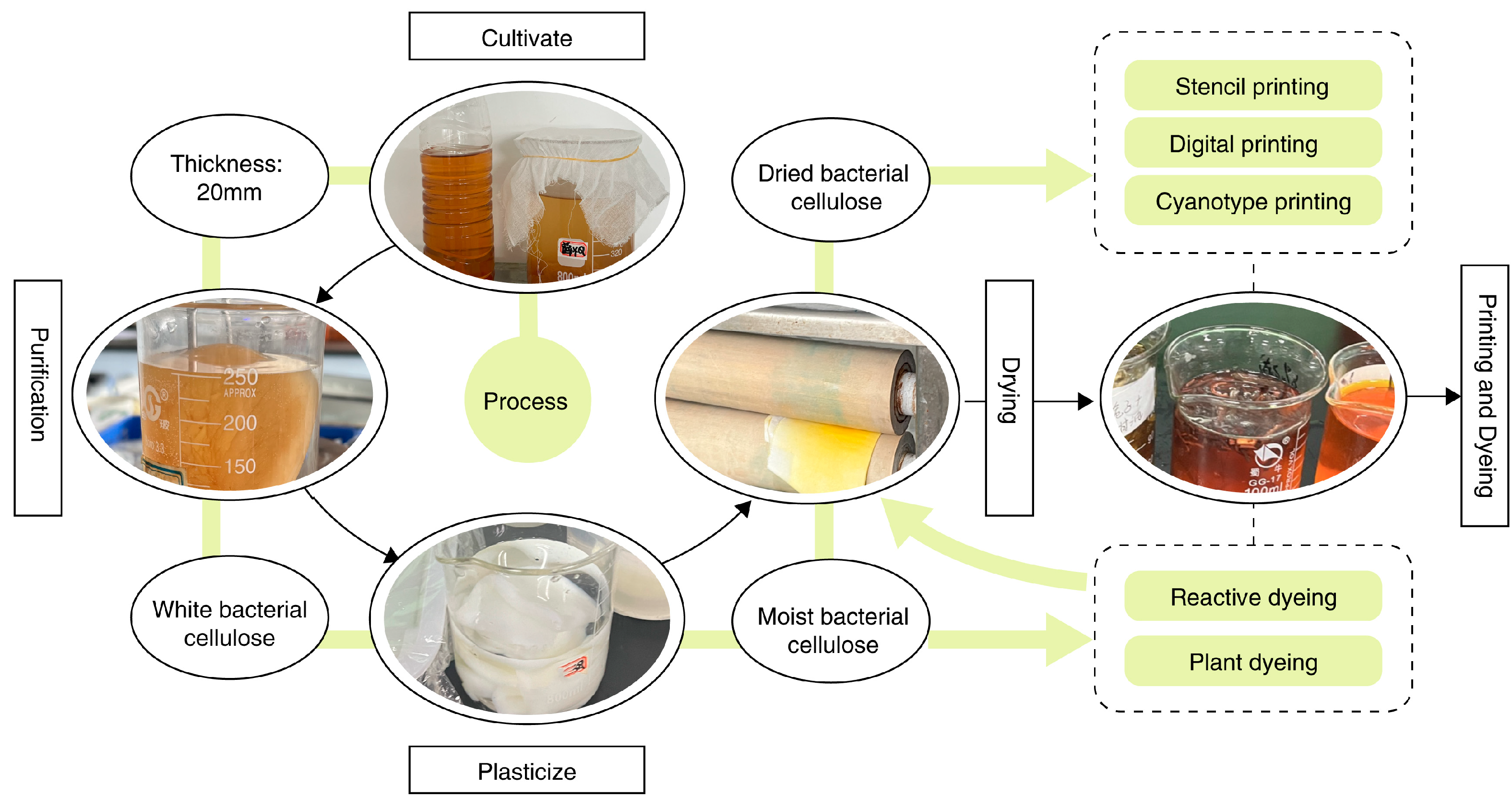
v glycerol (99% purity) at room temperature with a 1:1.5 liquor ratio for a 2 h immersion. The final processing flow for the BC material was ultimately determined as follows: cultivation into film via kombucha, purification to remove residues and pigments, plasticization with glycerol, and drying using the padding method. This process is shown in
Figure 3.
3.2. Dyeing and Printing Effects of BC Materials
The dyeing and printing performances on BC materials were evaluated in terms of color characteristics, print effects, and rubbing color fastness tests.
3.2.1. Color Characteristics
The dyeing quality and color tendencies of the BC materials were evaluated by measuring the CIE L* (lightness), C* (chroma), a* (red-green values), and b* (yellow-blue values) after plant dyeing and reactive dyeing.
The results for the plant-dyed specimens appear in
Table 8.
The experimental data demonstrate the following:
Mugwort-dyed BC (A1–A4): The color tended toward yellow-green with low lightness. Dyeing with blue alum and alum mordant rendered the color more yellowish, while iron slurry and saponalum mordants resulted in a darker, greener hue.
Safflower-dyed BC (A5–A8): The color tended toward red-green with high lightness. Alum or iron slurry mordanting resulted in a more pink hue; blue alum mordanting resulted in a more green hue; and saponalum mordanting resulted in a pink-yellow hue.
Madder-dyed BC (A9–A12) and sappanwood-dyed BC (A13–A16): These BCs demonstrated similar red-green hues with moderate saturation and low lightness. Influenced by the dye mordant, blue alum and alum mordants produced a reddish-yellow tone, while iron slurry and saponalum mordant dyeing yielded a darker, green-blue color. However, in terms of their overall color tendency, sappanwood was slightly redder than the madder-dyed sample and exhibited marginally higher saturation.
Gardenia-dyed BC (A17–A20): This sample displayed high lightness and saturation with dominant yellow tones. Alum further increased brightness, saturation, and yellow purity.
Lithospermum-dyed BC (A21–A24): This sample displayed high lightness with low saturation, appearing grayish without distinct color dominance. By contrast, alum, iron slurry, and saponalum produced warm gray tones, and blue alum imparted a cooler gray tone.
The color properties of the BC materials dyed with reactive dyes are summarized in
Table 9. In the BC materials dyed with reactive dyes, tender yellow exhibited significantly higher lightness, which is attributed to the inherent color characteristics of the dye pigment. Bright red, tender yellow, and orange showed relatively high rates of saturation, whereas evidence of brilliant blue, green, and purple was comparatively low.
A comparison of the B1–B2, B3–B4, and B5–B6 color groups indicated that different glycerol application methods had minimal impact on the color characteristics. However, the glycerol co-bath dyeing method produced slightly higher L* and C* values in the dyed BC. Moreover, the glycerol co-bath method effectively shortened the dyeing process and reduced the processing time. Compared with re-soaking in glycerol after dyeing, the BC dyed using the co-bath method demonstrated better flexibility. The re-soaking method did not effectively improve the dryness and hardness caused by glycerol loss in the material, and its dye absorption rate and color brightness were inferior to those achieved with the glycerol co-bath method.
A comprehensive comparison of BC materials dyed with plant dyes and reactive dyes showed that the performance differences were similar to those observed in traditional textile materials. Reactive dyes produced higher overall color saturation, while plant-dyed BC materials had a lower color saturation with more natural tones. Reactive dyes also offered a wider color gamut on BC materials.
3.2.2. Printing Effects
The printing effect was evaluated through visual inspection, analyzing print feasibility, pattern clarity, and overall design reproduction. Under natural light conditions, the clarity and edge sharpness of the printed patterns were observed, and printing methods that could be implemented in different designs of BC materials were analyzed.
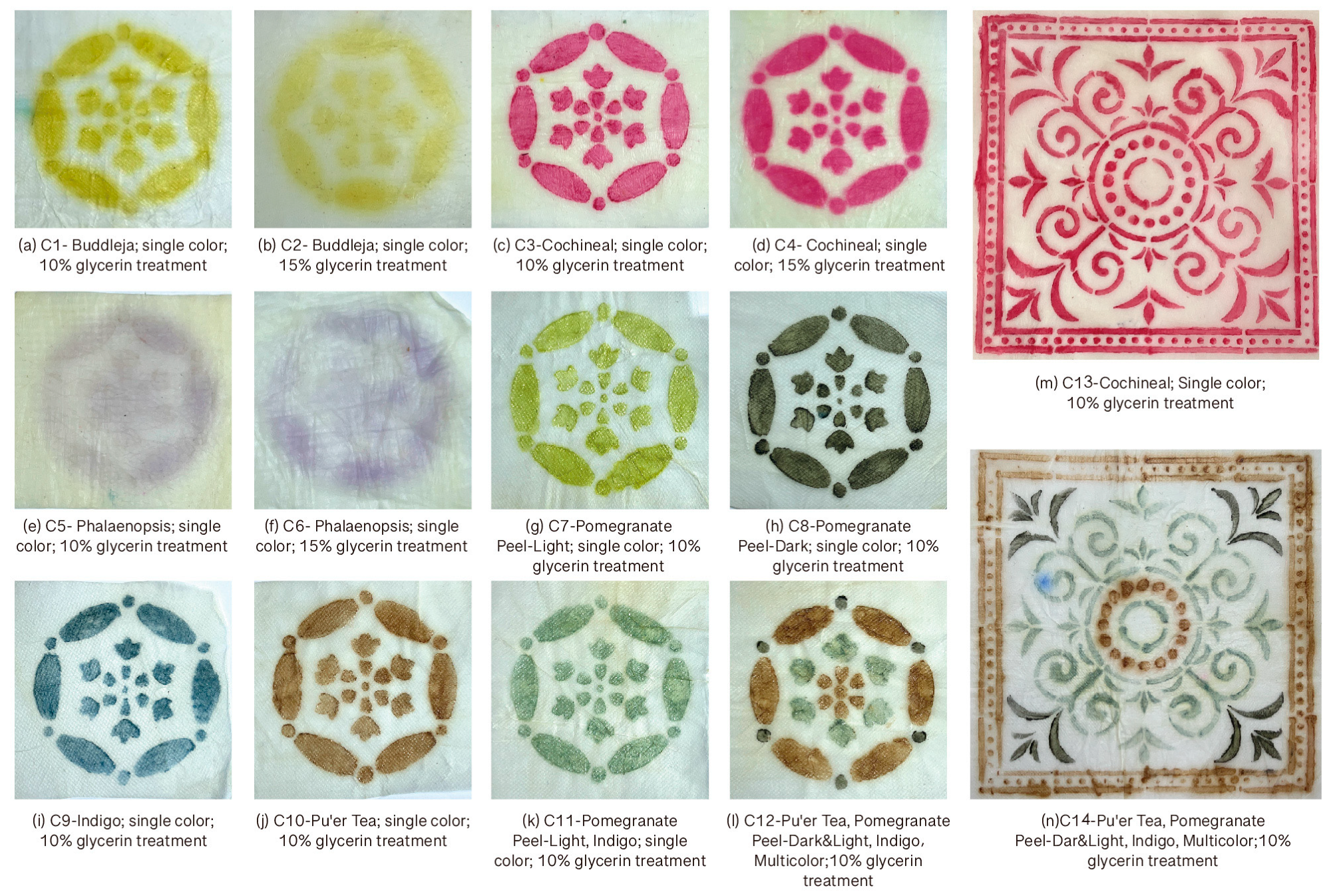
Figure 4 presents the stencil printing outcomes on BC materials. The stencil printing effect of the patterns was influenced by the plant pigment and the glycerol concentration used to plasticize the BC material. When buddleja and phalaenopsis were used as pigment sources, the printed pattern was blurred, with phalaenopsis showing the worst performance. This is attributed to the fact that buddleja is prone to oxidation and fading, particularly under light exposure, which accelerates degradation and affects the durability of pattern clarity. Phalaenopsis is rich in anthocyanins with large molecular structures and has a limited ability to penetrate BC materials, resulting in boundary diffusion [
30].
Comparing C1–C6, it was found that when C2, C4, and C6 were printed using BC plasticized with 15% v/v glycerol (99%), the patterns were more blurred, and the pattern using BC plasticized with 10% v/v glycerol (99%) performed better. Therefore, when plasticizing BC materials, it is essential to balance the material’s softness with printing performance. The BC plasticized with 10% v/v glycerol (99%) proved to be the optimal choice.
When cochineal, pomegranate peel, indigo, and Pu’er tea were used as color pastes, they produced clear patterns. In multicolor printing, C11 combined light pomegranate peel and indigo for color adjustment, achieving a richer hue with clear patterns and smooth edges. The three-color composition in C12 resulted in a vibrant pattern. C13 and C14 employed larger and more complex stencils for single-color and three-color printing, verifying the feasibility and stability of plant-based stencil printing on BC materials.
The digital printing effects on BC material are shown in
Figure 5. The inkjet-printed patterns on BC material are accurate, clear, and exhibit good color rendering. Dots, lines, and planes are distinctly displayed, with patterns successfully reproduced in terms of lightness contrast, color contrast, and adjacent colors. The dried BC substrate’s textural characteristics imparted a paper-like appearance to digitally printed specimens.
The cyanotype printing effect on BC materials is shown in
Figure 6. In E1–E3, dot patterns of varying sizes are clearly displayed on the BC surface. The pattern in E4 exhibits a distinct blue-and-white contrast with strong color differentiation. However, since a long washing process is required in cyanotype printing to remove unreacted solution, the BC absorbed water, became thicker, and deformed upon drying, causing slight color bleeding at the blue-white edges. E5 demonstrates superior random patterns from folding and tying and was minimally affected by deformation and color bleeding. In E6 and E7, grids with different densities and line thicknesses formed on the BC material; E6 displays clear patterns and strong color contrast, while E7 shows weak contrast and patterns obscured against the dark background. In E8, figurative patterns created by shading with a printed film are similar to those in E7 under normal light, but their visibility and brightness are improved significantly under backlighting, as shown in E7-2 and E8-2. Therefore, cyanotype printing can be combined with the excellent translucency of BC materials to produce distinctive light and shadow effects. After cyanotype printing, BC material exhibits reduced flexibility and becomes drier and harder, consequently diminishing its wearability. Methods such as tanning are required to enhance its pliability.
Based on the comparative analysis of these three printing methods, the following conclusions can be drawn:
The clarity of stencil printing is affected by the color paste. Buddleja and phalaenopsis should be avoided as pigments. The concentration of glycerol for plasticizing BC materials should not exceed 10% v/v.
Digital printing on BC materials can implement a wide range of patterns, with fewer restrictions in design applications, and will not change the texture of the material, making it one of the most suitable pattern printing methods for BC materials.
Cyanotype printing of BC material produces blue and white patterns, with its photosensitive properties offering creative design possibilities and distinctive backlit effects that enhance the artistic quality of the prints. However, its limited color richness and reduced flexibility restrict its application scope, making it more suitable for partial use or incorporation into accessories.
3.2.3. Color Fastness to Rubbing
From each group of dyed and printed BC material samples, three representative samples with different colors or patterns were selected. The selection was made with consideration for variations in color lightness (dark, medium, light), hue (cool, warm, and neutral tones), and pattern diversity within each group in order to accommodate a range of potential applications in fashion design contexts.
The degree of staining was evaluated by comparing the color change on the rubbing cloth with the standard gray scale. A rating of grade 5 indicates no staining (white), grade 4 indicates slight staining, grade 3 indicates moderate staining (acceptable threshold), grade 2 indicates obvious staining, and grade 1 indicates severe staining. The experimental results are shown in
Table 10.
The experimental results suggest the following:
In terms of dry rubbing fastness, the dyed BC materials generally exhibited good performance. Among them, the three samples dyed with reactive dyeing consistently achieved a grade 5 rating, indicating better fastness compared to those dyed with plant dyeing. For printed BC materials, noticeable differences in rubbing fastness were observed; digital printing and cyanotype printing outperformed plant pigment stencil printing.
Regarding wet rubbing fastness, although the values for all BC samples met the acceptable threshold, they were consistently lower than those obtained in the dry rubbing fastness test. This reduction was attributed to the transfer of floating water-soluble dyes and the mechanical transfer of colored fiber particles under the influence of moisture. Nevertheless, reactive dyeing, digital inkjet printing, and cyanotype printing still maintained a relatively high fastness level of grade 4–5.
4. Photosynthesis Series Fashion Designs with BC Materials
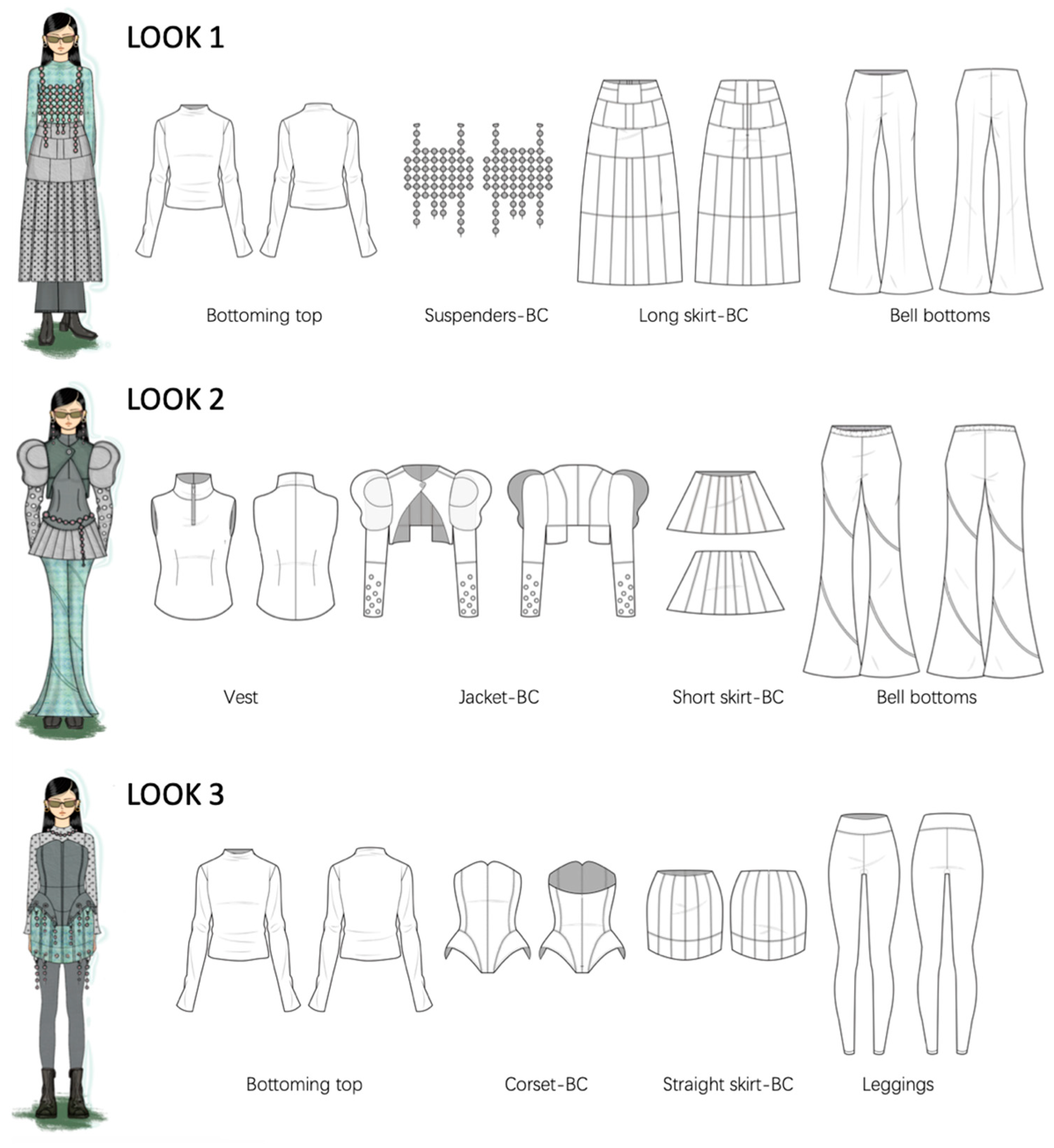
Based on the above research findings and the characteristics of BC materials, printing and dyeing processes were applied to create a fashion series named
Photosynthesis, as shown in
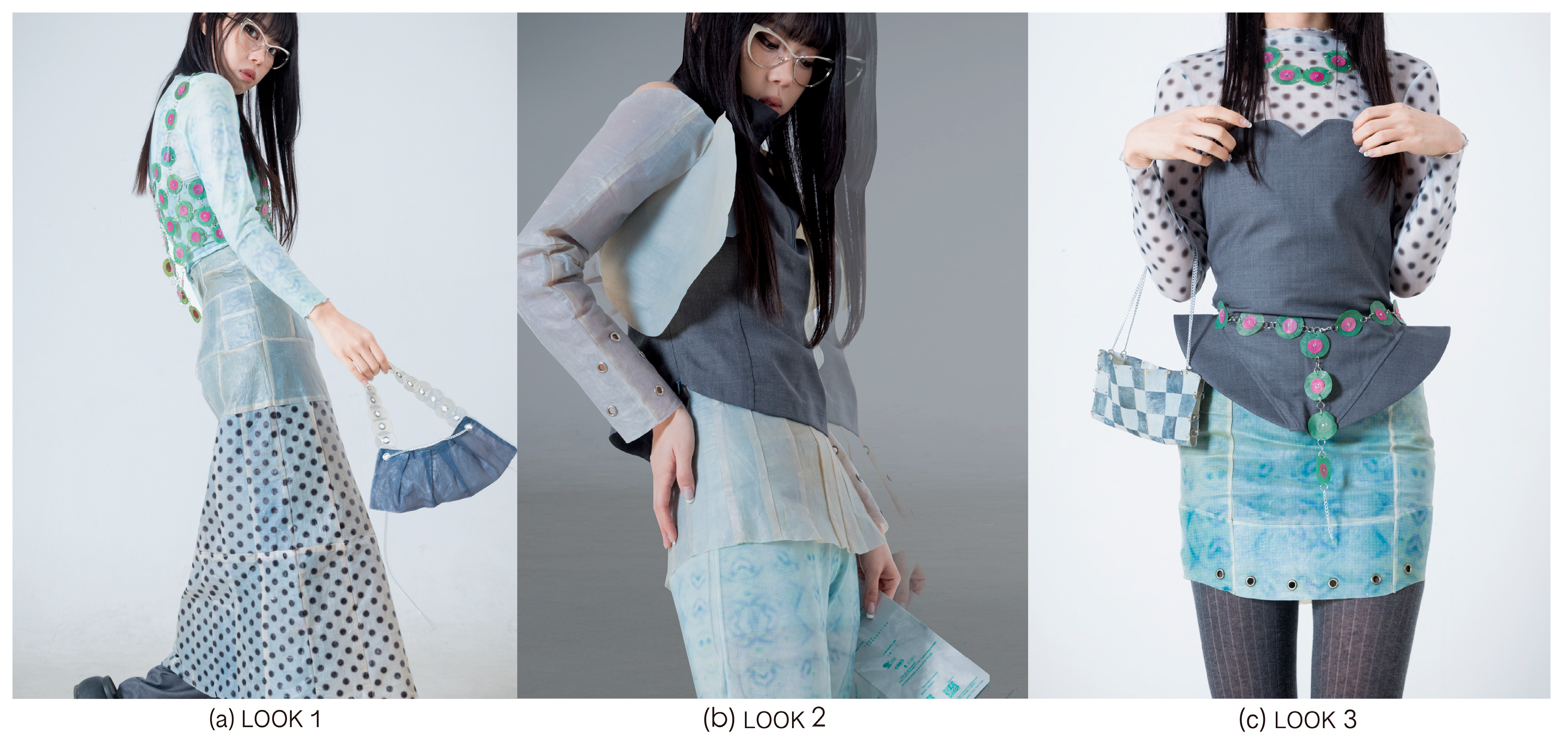
Figure 7. Inspired by the photosynthetic conversion of carbon dioxide to oxygen in plants. Circular forms and dot embellishments in the garments and accessories echo the morphology of chloroplast cells, reinforcing the theme. The collection aims to convey the symbiotic relationship between nature and humanity through fashion design, offering a profound reflection on environmental protection and resource utilization, and providing a new reference case for future fashion design.
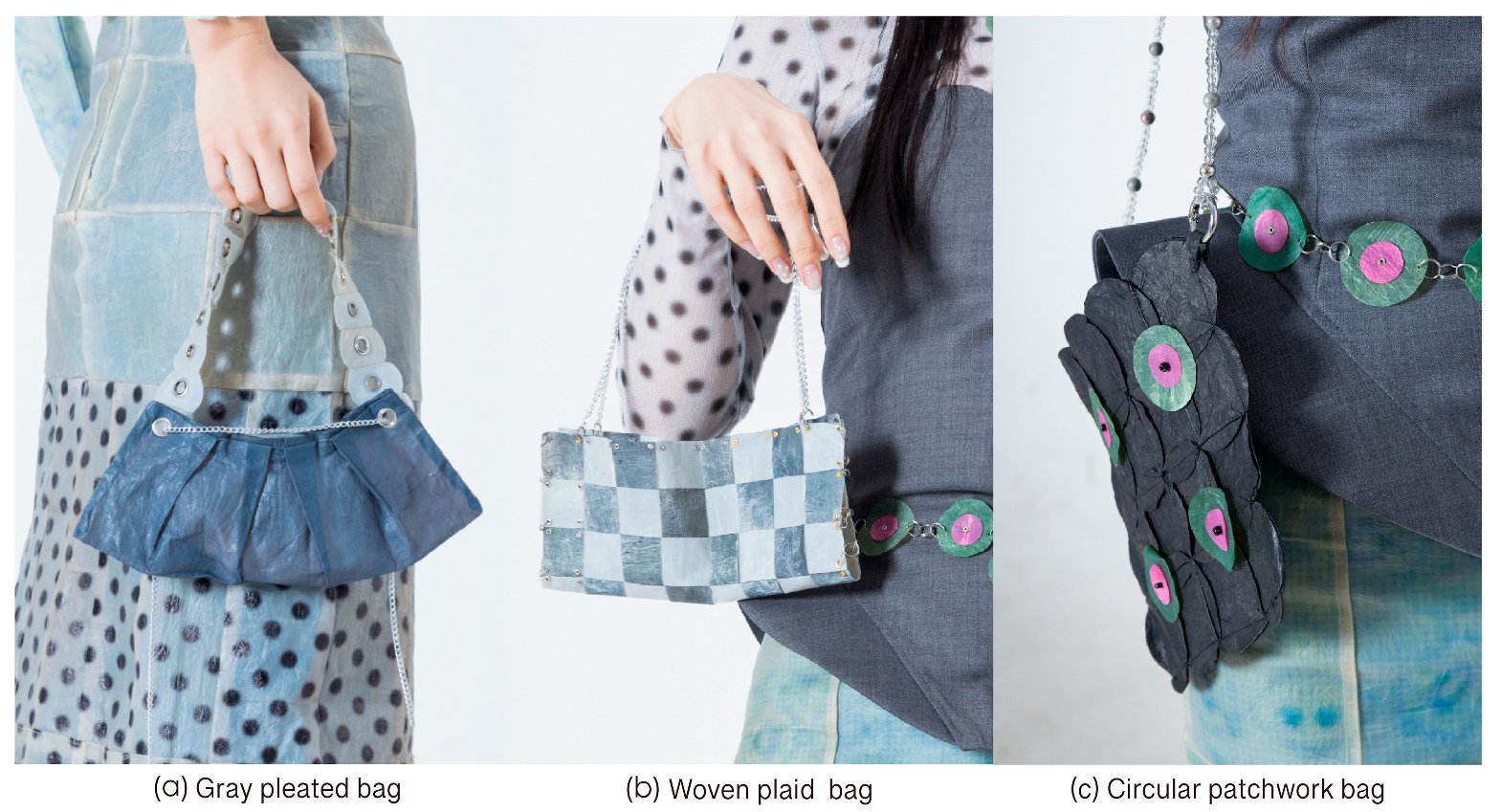
The spring/summer womenswear collection primarily employed digital printing, with pattern designs inspired by the abstracted structural features of plant chloroplasts. BC materials were integrated with conventional textiles, such as power mesh and wool suit fabrics. The entire collection included garments and accessories, such as camisoles, corsets, jackets, skirts, and handbags, demonstrating the versatility of BC materials in a diverse range of fashion styles. The extensive use of seam lines cleverly addressed the size limitations of BC materials, forming a complete, sustainable fashion collection.
The BC materials were processed according to the methods described in
Section 2, using 10%
v/
v glycerol (99%) as a plasticizer. Then, digital printing and reactive dyeing were performed after the padding drying process. Due to larger material dimensions (each BC film used in this experiment measured 32 × 23 cm), central glycerol penetration was impeded compared to the edges. To ensure uniform plasticization, the immersion duration was extended to 48 h. Subsequently, 80% of the water was removed through rolling mill squeezing, and the samples were laid flat to dry naturally. To achieve a smooth surface, it was necessary to monitor the condition of the material during the drying process and intervene as needed to reduce curling caused by moisture loss. If noticeable local wrinkling occurred, it was corrected by lightly spraying the affected area with water and stretching it flat.
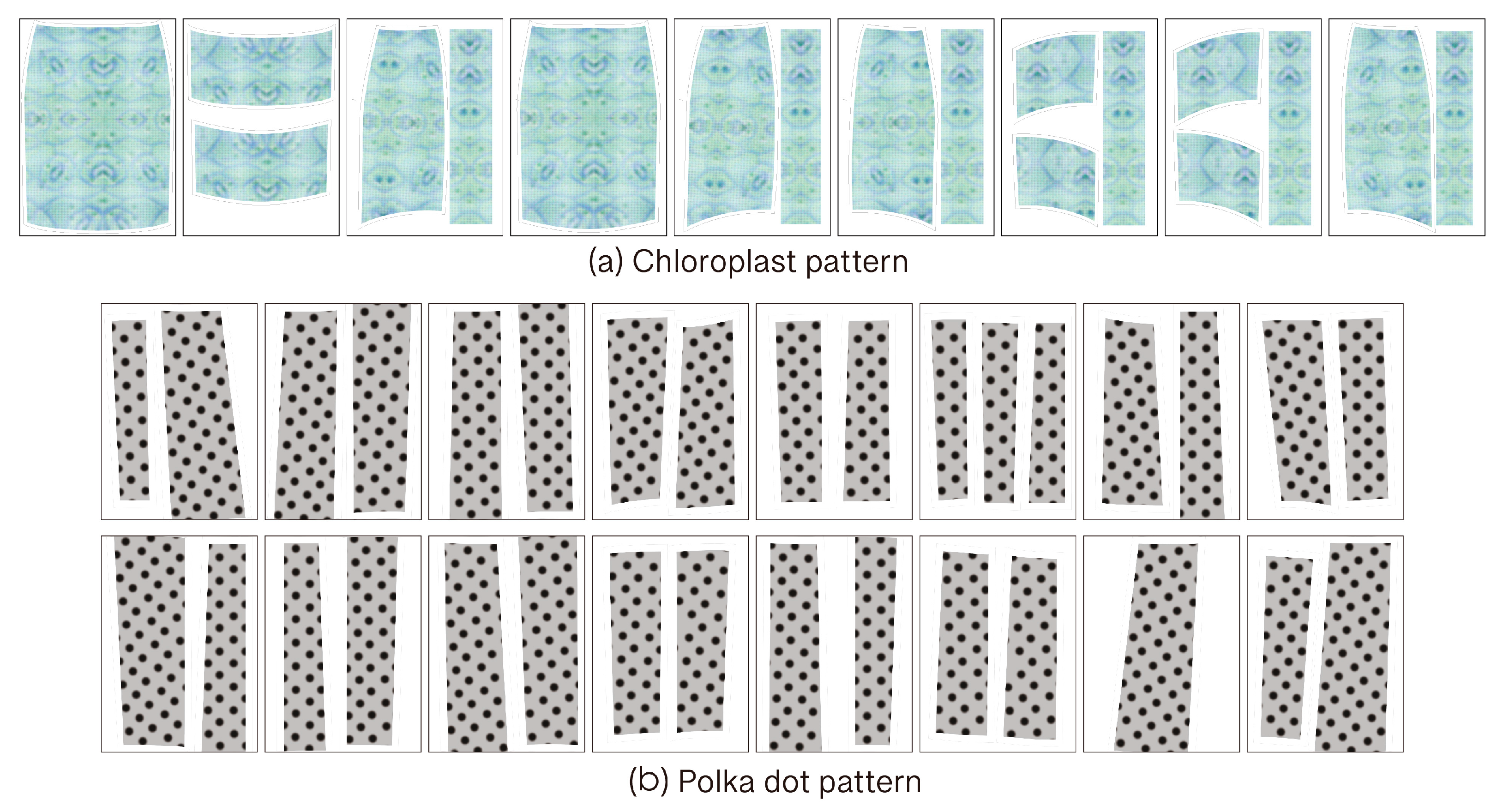
A total of 59 BC sheets were prepared for this collection, with 56 sheets trimmed along the edges for digital printing. The selected digital placement printing layouts are shown in
Figure 8. The remaining three sheets were soaked in reactive dye solutions containing 10% glycerol and dyed in raspberry and dark green. The resulting BC materials were smooth, flexible, and compatible with machine sewing alongside conventional textiles. The finalized
Photosynthesis-themed clothing and accessory designs are shown in
Figure 9 and
Figure 10.
5. Conclusions
This study investigated the dyeing and printing applications of BC materials in fashion design from an artistic perspective, proposing innovative approaches for utilizing BC in apparel. Using the kombucha culture method, preparation, processing, printing, and dyeing procedures were established. The BC was purified with sodium hydroxide, hydrogen peroxide, and glycerol plasticization, and pad-drying was found to better meet the requirements of BC for printing, dyeing, and garment performance.
In the dyeing experiments, the effects of mugwort, safflower, madder, sappanwood, gardenia, and lithospermum were tested using blue alum, alum, iron slurry, and saponalum as mordants. In the reactive dyeing experiments, two methods were employed—re-soaking in glycerol and a dye–glycerol co-bathing technique—in order to observe the color appearance and texture of BC materials after dyeing. The results indicate that the color characteristics of plant-dyed BC are jointly influenced by both the plant source and the mordant, with the plant playing a dominant role in determining pigment properties and the mordant regulating color expression. Among the mordants tested, alum significantly enhanced color saturation and lightness, making it the most suitable mordant for plant-dyed BC materials. For reactive dyeing, the dye–glycerol co-bath method effectively reduced the dyeing steps and processing time while improving the flexibility and softness of the BC material. Compared with plant dyeing, reactive dyeing provided a broader color gamut, richer color effects, and higher rubbing fastness.
The printing experiments explored three techniques for patterning BC materials: traditional stencil printing, digital printing, and cyanotype printing. These methods provide a variety of printing solutions for applying BC materials in apparel design. The results indicate that the clarity of the plant pigment paste stencil printing was influenced by both the type of plant pigment and the glycerol content in the BC material. Pigments derived from Buddleja officinalis and phalaenopsis produced blurred patterns, while those from cochineal, pomegranate peel, indigo, and Pu’er tea resulted in clearer prints. To enhance printing definition, the glycerol content in BC plasticization should be maintained below 10% v/v (99%). Digital printing enabled a diverse range of pattern designs, offering greater flexibility and creative freedom for incorporating BC materials into fashion applications. Cyanotype printing produced distinctive, light-transmitting pattern effects, and both cyanotype-printed and digitally printed BC exhibited good rubbing fastness. However, this printing technique reduces the flexibility of BC, thereby limiting its suitability for apparel applications.
The Photosynthesis clothing collection was crafted from digitally printed and reactively dyed BC materials. When discarded, these garments decompose through microbial action, releasing nutrients back into the soil and helping to restore vibrant grasslands and lush mountains. Like photosynthesis itself, BC clothing supports the Earth’s ecological health.
This research contributes to the understanding of BC applications to fashion design; nevertheless, its scope and methodology present certain limitations that should be considered. This study does not fully address correlations between BC’s mechanical properties and garment performance, the influence of dye or paste formulations on coloration outcomes, performance, and cost comparisons with conventional textiles, or technical refinements for individual printing methods. BC materials are further constrained by their limited breathability, comfort, and durability, along with long production cycles and scalability challenges that restrict their commercial adoption. Even so, ongoing advancements in BC material science and performance optimization are paving a viable pathway toward sustainable fashion innovation.
Author Contributions
Conceptualization, Y.T. and Y.X.; methodology, Y.T., J.Y., and Y.X.; formal analysis, Y.X.; writing—original draft, Y.X. and Y.T.; writing—review and editing, Y.T.; resources, J.Y. and J.X.; funding acquisition, Y.T. All authors have read and agreed to the published version of the manuscript.
Funding
This research was funded by the China MOE (Ministry of Education) Project for Humanities and Social Sciences, grant number: 19YJC760096.
Data Availability Statement
The original contributions presented in this study are included in the article. Further inquiries can be directed to the corresponding author.
Acknowledgments
We would like to thank the editors and anonymous reviewers for their valuable time and effort devoted to improving the quality of this research.
Conflicts of Interest
The authors declare no conflicts of interest.
Correction Statement
This article has been republished with a minor correction to the Data Availability Statement. This change does not affect the scientific content of the article.
References
- Niinimäki, K.; Peters, G.; Dahlbo, H.; Perry, P.; Rissanen, T.; Gwilt, A. The environmental price of fast fashion. Nat. Rev. Earth Environ. 2020, 1, 189–200. [Google Scholar] [CrossRef]
- Domskiene, J.; Sederaviciute, F.; Simonaityte, J. Kombucha bacterial cellulose for sustainable fashion. Int. J. Cloth. Sci. Technol. 2019, 31, 644–652. [Google Scholar] [CrossRef]
- Yang, F.; Zhang, Z.; Yuan, J.; Xu, J.; Ji, Q.; Bai, Y. Eco-friendly production of leather-like material from bacterial cellulose and waste resources. J. Clean. Prod. 2024, 476, 143700. [Google Scholar] [CrossRef]
- Choi, S.M.; Rao, K.M.; Zo, S.M.; Shin, E.J.; Han, S.S. Bacterial Cellulose and Its Applications. Polymers 2022, 14, 1080. [Google Scholar] [CrossRef]
- Zhong, C. Industrial-scale production and applications of bacterial cellulose. Front. Bioeng. Biotechnol. 2020, 8, 605374. [Google Scholar] [CrossRef] [PubMed]
- Chan, C.K.; Shin, J.; Jiang, S.X.K. Development of tailor-shaped bacterial cellulose textile cultivation techniques for zero-waste design. Cloth. Text. Res. J. 2017, 36, 33–44. [Google Scholar] [CrossRef]
- Ng, M.C.F.; Wang, W. A study of the receptivity to bacterial cellulosic pellicle for fashion. Res. J. Text. Appar. 2015, 19, 65–69. [Google Scholar] [CrossRef]
- Kamiński, K.; Jarosz, M.; Grudzień, J.; Pawlik, J.; Zastawnik, F.; Pandyra, P.; Kołodziejczyk, A.M. Hydrogel bacterial cellulose: A path to improved materials for new eco-friendly textiles. Cellulose 2020, 27, 5353–5365. [Google Scholar] [CrossRef]
- Wood, J.; Verran, J.; Redfern, J. Bacterial cellulose grown from kombucha: Assessment of textile performance properties using fashion apparel tests. Text. Res. J. 2023, 93, 3094–3108. [Google Scholar] [CrossRef]
- Costa, A.F.S.; de Amorim, J.D.P.; Almeida, F.C.G.; de Lima, I.D.; de Paiva, S.C.; Rocha, M.A.V.; Vinhas, G.M.; Sarubbo, L.A. Dyeing of bacterial cellulose films using plant-based natural dyes. Int. J. Biol. Macromol. 2019, 121, 580–587. [Google Scholar] [CrossRef]
- Shim, E.; Kim, H.R. Coloration of bacterial cellulose using in situ and ex situ methods. Text. Res. J. 2019, 89, 1297–1310. [Google Scholar] [CrossRef]
- Ellen, R. Growing Products. Available online: https://growingproducts.tumblr.com (accessed on 12 January 2025).
- Kim, H.; Kim, H.R. Production of coffee-dyed bacterial cellulose as a bio-leather and using it as a dye adsorbent. PLoS ONE 2022, 17, 265743. [Google Scholar] [CrossRef] [PubMed]
- Suzanne, L. Grow Your Own Clothes. Available online: https://www.ted.com/speakers/suzanne_lee (accessed on 25 May 2024).
- Sacha, L. Kombucha Couture. Available online: http://www.kombuchacouture.com (accessed on 6 September 2024).
- Diez-Ozaeta, I.; Astiazaran, O.J. Recent advances in Kombucha tea: Microbial consortium, chemical parameters, health implications and biocellulose production. Int. J. Food Microbiol. 2022, 377, 109783. [Google Scholar] [CrossRef]
- Phan, H.N.; Okubayashi, S. Modification of dehydrated bacterial cellulose with glycerol and succinic acid by using padding method for textile applications. Res. J. Text. Appar. 2024, 29, 371–388. [Google Scholar] [CrossRef]
- Jamali-Moghadam-Siahkali, M.; Guigo, N.; Vincent, L.; Sbirrazzuoli, N. Low-Viscosity Eutectic Hardeners for More Sustainable Cross-Linking Conditions. ACS Appl. Polym. Mater. 2024, 6, 6334–6346. [Google Scholar] [CrossRef]
- Phan, H.N.; Bui, H.M.; Vu, N.K. Fabric-like bacterial cellulose for textile applications–analysis of influences between physical and thermal dehydration on end-use performance. J. Text. Inst. 2024, 115, 1644–1654. [Google Scholar] [CrossRef]
- Prabhu, K.H.; Bhute, A.S. Plant based natural dyes and mordants: A Review. J. Nat. Prod. Plant Resour. 2012, 2, 649–664. [Google Scholar]
- Lewis, D.M. Developments in the chemistry of reactive dyes and their application processes. Color. Technol. 2014, 130, 382–412. [Google Scholar] [CrossRef]
- Repon, M.R.; Islam, T.; Paul, T.K.; Jurkonienė, S.; Haji, A.; Shukhratov, S.; Toki, G.F.I. Natural dyes in textile printing: Parameters, methods, and performance. Environ. Sci. Pollut. Res. 2024, 31, 47552–47583. [Google Scholar] [CrossRef]
- Mongkholrattanasit, R.; Klaichoi, C.; Rungruangkitkrai, N.; Vuthiganond, N.; Nakpathom, M. Eco-Printing on Cotton Fabric with Natural Indigo Dye Using Wild Taro Corms as a New Thickening Agent. J. Nat. Fibers. 2021, 19, 5435–5450. [Google Scholar] [CrossRef]
- Nayak, R.; Cleveland, D.; Tran, G.; Joseph, F. Potential of bacterial cellulose for sustainable fashion and textile applications: A review. J. Mater. Sci. 2024, 59, 6685–6710. [Google Scholar] [CrossRef]
- Tyler, D.J. Textile digital printing technologies. Text. Prog. 2005, 37, 1–65. [Google Scholar] [CrossRef]
- Koseoglu, A.U. Innovations and analysis of textile digital printing technology. Int. J. Sci. Technol. Soc. 2019, 7, 38–43. [Google Scholar] [CrossRef]
- Ibrahim, A.A.; Elsayed, M.F.; Ibrahim, D.F.; Khodary, M.M. Cyanotype Printing Technique Using Redox System in Application of Printed Hanging Fabrics Designs. Egypt. J. Chem. 2023, 66, 541–549. [Google Scholar] [CrossRef]
- Wells, K. Cyanotype and Anthotype: Eco-patterning with mineral and natural dyes. In Proceedings of the 3rd International Textile and Costume Congress (ITCC), Istanbul, Turkey, 4–6 November 2015. [Google Scholar]
- ISO 105-X12:2016; Textiles-Tests for colour fastness Part X12: Colour fastness to rubbing. Deutsches Institut für Normung: Berlin, Germany, 2016.
- Cai, T.; Ge-Zhang, S.; Song, M. Anthocyanins in metabolites of purple corn. Front. Plant Sci. 2023, 14, 1154535. [Google Scholar] [CrossRef] [PubMed]
Figure 1.
Essential materials for the synthesis of BC in kombucha.
Figure 1.
Essential materials for the synthesis of BC in kombucha.
Figure 2.
Stencils made from palm oil boards.
Figure 2.
Stencils made from palm oil boards.
Figure 3.
Processing steps for BC material.
Figure 3.
Processing steps for BC material.
Figure 4.
Plant pigment stencil printing presentation on BC materials.
Figure 4.
Plant pigment stencil printing presentation on BC materials.
Figure 5.
Digital printing effects on BC materials.
Figure 5.
Digital printing effects on BC materials.
Figure 6.
Effects of cyanotype printing on BC materials.
Figure 6.
Effects of cyanotype printing on BC materials.
Figure 7.
Design sketches of the Photosynthesis fashion series.
Figure 7.
Design sketches of the Photosynthesis fashion series.
Figure 8.
Digital placement printing layout for the Photosynthesis fashion series.
Figure 8.
Digital placement printing layout for the Photosynthesis fashion series.
Figure 9.
Photosynthesis ready-to-wear clothing showcased using BC materials.
Figure 9.
Photosynthesis ready-to-wear clothing showcased using BC materials.
Figure 10.
Photosynthesis accessories showcased using BC materials.
Figure 10.
Photosynthesis accessories showcased using BC materials.
Table 1.
Three plasticization methods for BC materials.
Table 1.
Three plasticization methods for BC materials.
| Method | Plasticizer | Time | Conditions |
|---|
| 1 | Linseed oil with quebracho extract | 24 h | High temperature, tanning |
| 2 | Epoxidized soybean oil with citric acid | 3 h | High temperature |
| 3 | Glycerol | 2 h | Normal temperature |
Table 2.
Experimental design of BC plant dyes.
Table 2.
Experimental design of BC plant dyes.
| No. | Plants | Dyeing Media | No. | Plants | Dyeing Media | No. | Plants | Dyeing Media |
|---|
| A1 | Mugwort | Blue alum | A9 | Madder | Blue alum | A17 | Gardenia | Blue alum |
| A2 | Alum | A10 | Alum | A18 | Alum |
| A3 | Iron slurry | A11 | Iron slurry | A19 | Iron Slurry |
| A4 | Saponalum | A12 | Saponalum | A20 | Saponalum |
| A5 | Safflower | Blue alum | A13 | Sappanwood | Blue alum | A21 | Lithospermum | Blue alum |
| A6 | Alum | A14 | Alum | A22 | Alum |
| A7 | Iron slurry | A15 | Iron slurry | A23 | Iron Slurry |
| A8 | Saponalum | A16 | Saponalum | A24 | Saponalum |
Table 3.
Experimental design of BC reactive dyes.
Table 3.
Experimental design of BC reactive dyes.
| No. | Color Category | Dye Name | Glycerol Participation Modalities |
|---|
| B1 | Primary colors | Scarlet | Glycerin solution re-soaking for 3 h |
| B2 | Glycerin dye co-bath |
| B3 | Bright yellow | Glycerin solution re-soaking for 3 h |
| B4 | Glycerin dye co-bath |
| B5 | Brilliant blue | Glycerin solution re-soaking for 3 h |
| B6 | Glycerin dye co-bath |
| B7 | Secondary colors | Green | Glycerin dye co-bath |
| B8 | Orange | Glycerin dye co-bath |
| B9 | Purple | Glycerin dye co-bath |
Table 4.
Experimental design for BC stencil printing.
Table 4.
Experimental design for BC stencil printing.
| No. | Color Quantity | Color Paste | Color | Stencil | Glycerin |
|---|
| C1 | Single color | Buddleja | Bright Yellow | 1 | 10% v/v |
| C2 | Single color | Buddleja | Bright Yellow | 1 | 15% v/v |
| C3 | Single color | Cochineal | Carmine | 1 | 10% v/v |
| C4 | Single color | Cochineal | Carmine | 1 | 15% v/v |
| C5 | Single color | Phalaenopsis | Blue | 1 | 10% v/v |
| C6 | Single color | Phalaenopsis | Blue | 1 | 15% v/v |
| C7 | Single color | Pomegranate Peel—Light | Yellow-Green | 1 | 10% v/v |
| C8 | Single color | Pomegranate Peel—Dark | Black | 1 | 10% v/v |
| C9 | Single color | Indigo | Indigo | 1 | 10% v/v |
| C10 | Single color | Pu’er Tea | Brown | 1 | 10% v/v |
| C11 | Single color | Pomegranate Peel—Light, Indigo | Dark Green | 1 | 10% v/v |
| C12 | Multiple colors | Pu’er Tea, Pomegranate Peel—Dark, Pomegranate Peel—Light, Indigo | Dark Green, Brown, Black | 1 | 10% v/v |
| C13 | Single color | Cochineal | Carmine | 2 | 10% v/v |
| C14 | Multiple colors | Pu’er Tea, Pomegranate Peel—Dark, Pomegranate Peel—Light, Indigo | Dark Green, Brown, Black | 2 | 10% v/v |
Table 5.
Experimental design for digital inkjet printing on BC.
Table 6.
Experimental design for cyanotype printing on BC.
Table 6.
Experimental design for cyanotype printing on BC.
| No. | Pattern Color | Pattern Form | Shading Method | Exposure Method |
|---|
| E1 | White | Large dots | Cover | Cut-out stencil |
| E2 | Blue | Medium dots | Cover | Cut-out stencil |
| E3 | Blue | Small dots | Cover | Cut-out stencil |
| E4 | White | Flower pattern | Cover | Cut-out stencil |
| E5 | Blue | Random pattern | Bundling | Rubber band |
| E6 | White | Large grid pattern | Cover | Masking tape |
| E7 | White | Small grid pattern | Cover | Mesh |
| E8 | Blue | Figurative pattern | Cover | Film |
Table 7.
Characterization of BC under three plasticization methods.
Table 8.
Color characteristics of BC plant dyeing.
Table 9.
Color characteristics of reactive dyeing for BC.
Table 10.
Color fastness from the rubbing tests conducted on BC after dyeing and printing.
Table 10.
Color fastness from the rubbing tests conducted on BC after dyeing and printing.
| BC Samples | Dyeing | Printing |
|---|
| Plant Dyeing | Reactive Dyeing | Plant Pigment Stencil Printing | Digital Printing | Cyanotype Printing |
|---|
| A1 | A14 | A20 | B1 | B4 | B9 | C1 | C3 | C8 | D1 | D2 | D3 | E1 | E4 | E8 |
|---|
| Dry rubbing fastness | 3–4 | 4 | 4 | 5 | 5 | 5 | 3–4 | 3–4 | 3 | 5 | 4–5 | 5 | 5 | 5 | 5 |
| Wet rubbing fastness | 3 | 3 | 3 | 4 | 4–5 | 4–5 | 3 | 3 | 3 | 4 | 4 | 4–5 | 5 | 5 | 4–5 |
| Disclaimer/Publisher’s Note: The statements, opinions and data contained in all publications are solely those of the individual author(s) and contributor(s) and not of MDPI and/or the editor(s). MDPI and/or the editor(s) disclaim responsibility for any injury to people or property resulting from any ideas, methods, instructions or products referred to in the content. |
© 2025 by the authors. Licensee MDPI, Basel, Switzerland. This article is an open access article distributed under the terms and conditions of the Creative Commons Attribution (CC BY) license (https://creativecommons.org/licenses/by/4.0/).