1. Introduction
Decarbonizing transport remains a core task for sustainable development in settings where e-mobility is still emerging [
1]. University-led pilots link electric vehicles (EVs) with decentralized photovoltaic (PV) systems under controlled schedules, allowing direct measurement of energy flows and operating behavior. In Latin America, where public charging infrastructure and regulatory frameworks remain limited, such pilots can generate empirical data to inform both policy and institutional decision-making. University campuses suit this purpose due to defined travel patterns, concentrated users, and persistent data collection. Integrating EVs with on-site PV generation can reduce institutional transport emissions and produce datasets useful for instruction and technical analysis [
2,
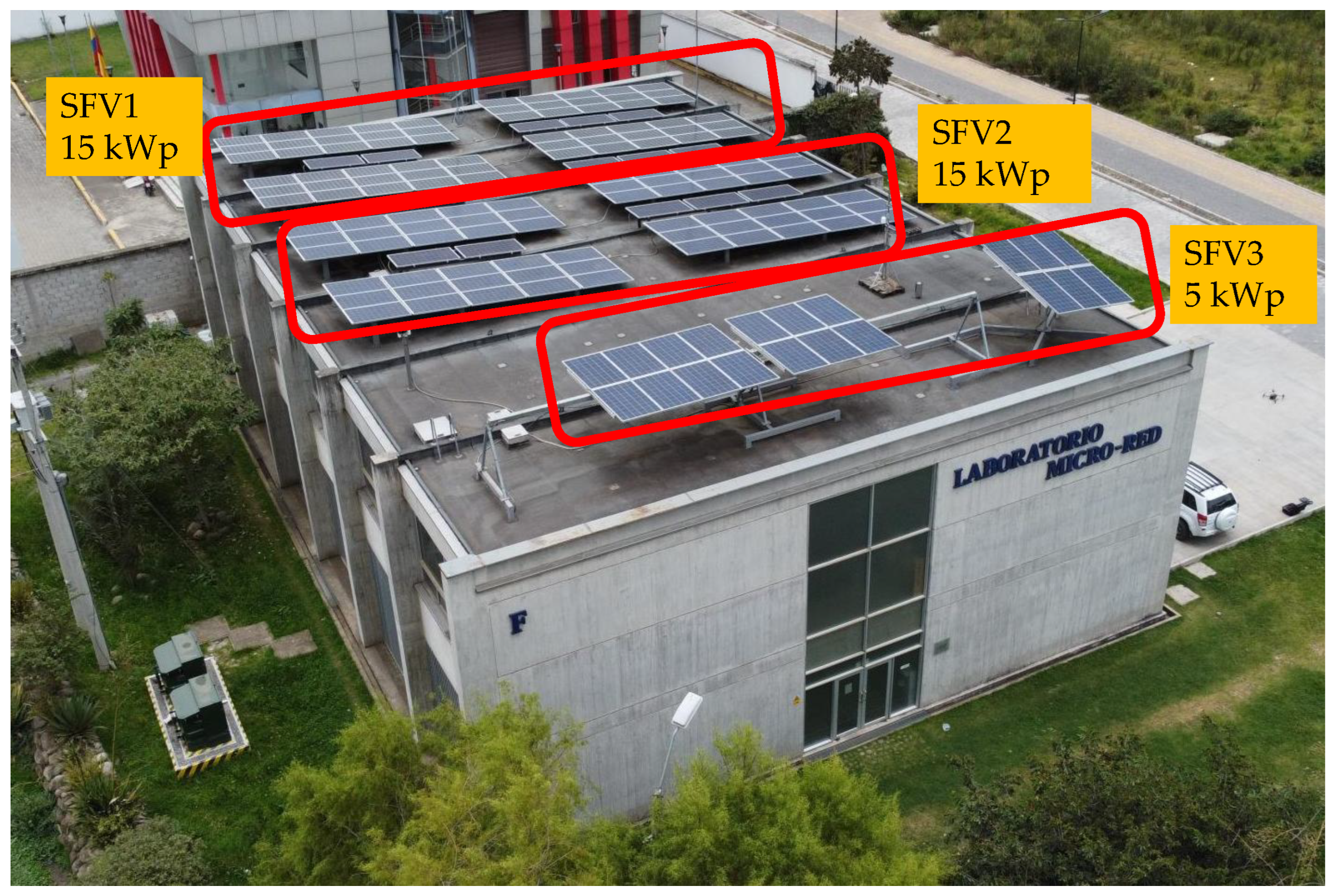
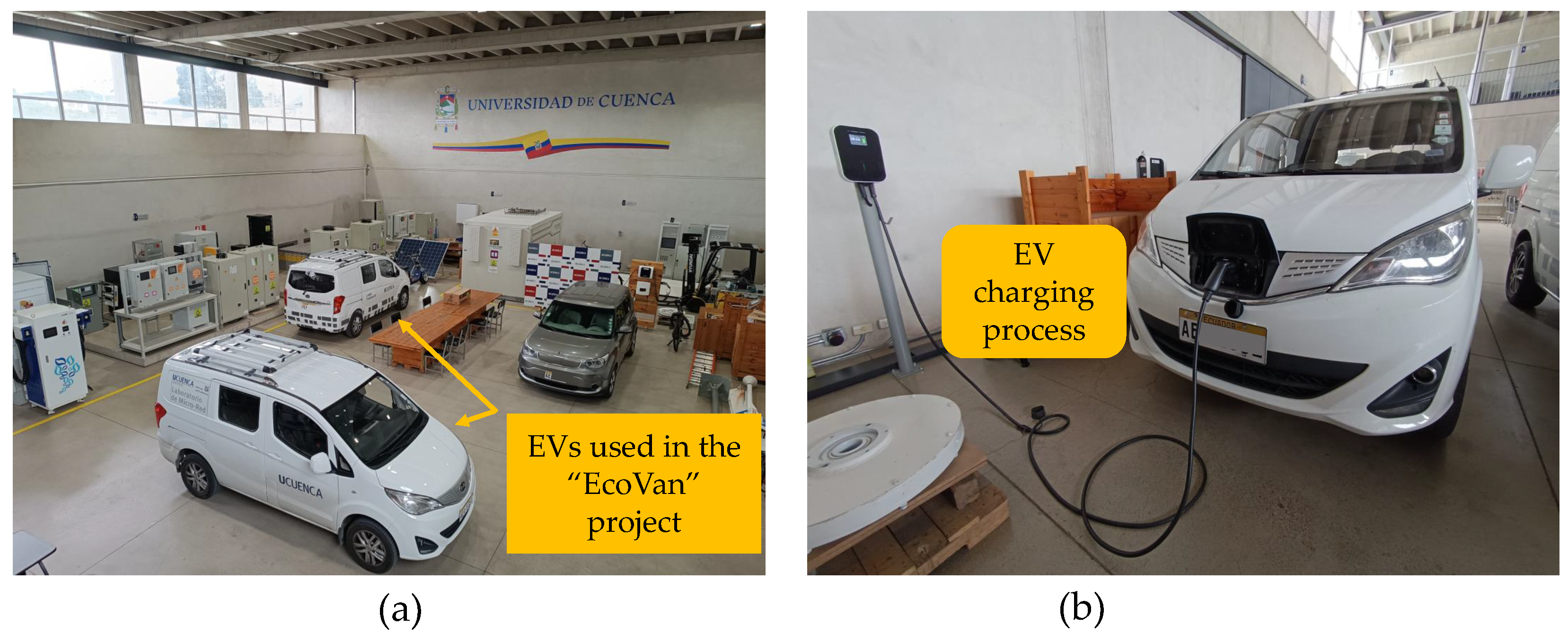
3]. To anchor scope early, this article examines a one-year campus pilot in Cuenca where two vans are charged in daylight from a 35 kWp microgrid with SCADA monitoring.
In parallel, the rapid advancement of EV technologies—exemplified by the energy-oriented torque-vector control framework described in [
4]—addresses the urgent need to lower greenhouse gas emissions and urban air pollution from combustion-engine fleets. Further developments in chassis and control architectures, such as the hierarchical control of independently driven electric vehicles (IDEVs) described in [
5], illustrate how integrating direct yaw moment control with optimized torque allocation can simultaneously enhance handling stability and improve energy efficiency. These strategies align with the environmental objectives of EV adoption by reducing consumption while maintaining dynamic safety and provide relevant context for the operational focus of this study. This reference illustrates how distributed drivetrain architectures, coupled with advanced control strategies, improve energy efficiency and operational stability, aligning with the overarching aim of reducing the environmental impact of transport. Linking these technological trends to the objectives of this study positions PV-powered institutional fleets within a broader shift toward low-emission mobility. However, despite these advances, empirical validation of EV performance under real operational conditions—particularly in decentralized, high-altitude contexts—is still limited.
Previous research on PV–EV integration covers a variety of approaches. Highway fast-charging PV deployments in Brazil estimated up to 72% cost savings compared to diesel [
6], while modeling in China examined renewable utilization challenges for anticipated EV demand [
7]. Spatial optimization studies in Ireland incorporated both economic and environmental costs for charger placement [
8]. In Brazil, university transport pilots with electric buses demonstrated reduced emissions and improved air quality through PV integration [
9], and campus microgrid simulations combining PV, storage, and EVs proposed strategies to reduce costs and ensure supply continuity [
10].
In Europe and North America, work has examined open-source PV canopy designs achieving up to 85% cost reduction compared to conventional structures [
11] and IEEE 33-bus simulations showing that higher PV penetration can mitigate grid stress from EV charging [
12]. Battery energy storage systems have been analyzed for peak demand reduction and grid stability [
13], while dynamic energy management integrating PV, storage, and EVs has been shown to enhance profitability [
14]. Advanced predictive control approaches, such as deep reinforcement learning for household EVs, have been used to balance loads and improve voltage quality under time-of-use pricing [
15]. Broader reviews highlight the integration of EVs into smart grids and associated infrastructure challenges [
16], and the specific barriers for Latin America, including infrastructure deficits and high costs [
17].
Empirical studies with long-term monitoring remain rare. Reviews of EV infrastructure emphasize implications for grid planning and regulation in regions with unreliable access [
18]. Barrier analyses in emerging economies point to high purchase costs and limited charging infrastructure [
19]. According to [
20], EV sales in the region grew by 187% by 2024, but charging network expansion lagged behind. Policy analyses in Central America note unstable tariffs, limited public investment, and weak regional coordination [
21]. Case studies show high PV coverage in Saudi university pilots [
22] and U.S. campus deployments integrating geospatial analysis for charger placement [
23]. Building-integrated PV systems are widely deployed for self-generation [
6,
7,
22], yet most evaluations rely on simulations or feasibility studies, often overlooking operational complexity in Andean contexts [
17,
23].
A concise comparison with selected studies is provided in
Table 1 to focus on the monitored scope rather than a broad survey. This study documents a one-year, SCADA-monitored deployment of PV-powered electric vans in the Andean city of Cuenca, Ecuador. It combines high-resolution energy data, transport activity logs, and operational context to assess energy efficiency, CO
2 emissions avoided, and economic performance under local topographic and climatic constraints. The dataset reflects full integration of PV generation, EV charging, and passenger transport service within a public university microgrid, providing verifiable evidence to guide expansion or adaptation in similar institutional environments. Two guiding questions frame the work: (i) how does a building-integrated PV system perform in production, self-consumption, and cost when paired with campus transport; and (ii) what scheduling issues arise from mismatches between solar availability and mobility demand. The study offers a twelve-month monitored dataset linking SCADA records to transport metrics, emissions, and operational guidelines for institutional application.
As shown in
Table 1, few existing studies address simultaneously the technical, contextual, and operational dimensions considered here. Long-term empirical assessments of solar-powered EVs in institutional microgrids are scarce, particularly in high-altitude Latin American settings where solar resource patterns, elevation, and transport infrastructure demand localized solutions.
This study extends the evidence base by presenting a one-year SCADA-monitored assessment of the MOVER-U program at the University of Cuenca, integrating PV generation data, EV charging records, and passenger transport information under the prevailing topographic and climatic conditions. The combination of these elements provides an uncommon level of operational traceability in high-altitude Latin American contexts, where empirical, long-term PV–EV datasets are rarely available. The approach links measured operational parameters to contextual constraints, ensuring a direct path from monitored data to evaluation of system viability. This design enables the quantification of energy, environmental, and transport indicators without reliance on modeled data, offering a reproducible structure for comparable institutional settings. The analysis integrates measured energy efficiency for varied routes, monitored PV-based charging, and cumulative transport activity, alongside avoided CO2 estimation benchmarked against conventional diesel transport. While prior Latin American initiatives have examined solar mobility, most lack either long-term datasets, detailed SCADA-based charging analysis, or application in high-altitude institutional contexts. In this case, the combined dataset—linking energy performance, environmental indicators, and operational metrics within an active university microgrid—serves as a verifiable source for evaluating expansion and adaptation in comparable academic settings. By explicitly combining route-specific efficiency measurements, synchronized PV generation profiles, and year-round operational data, the study positions itself as a reference case for regions where altitude, climate, and infrastructure create unique operational constraints. These same guiding questions balance technical output and operational alignment: How does a building-integrated PV system perform in terms of energy production, self-consumption, and economic return when paired with electric transport in a university? What operational issues emerge from temporal mismatches between solar generation and mobility demand in academic settings?
In the interest of clarity, the main contributions of this work are summarized as follows:
A fully monitored twelve-month dataset capturing the technical performance of a solar-powered electric van system operating under real-world conditions at high altitude, suitable for reproducibility in comparable contexts. The dataset includes complete SCADA-based tracking of PV generation and charging events, directly linked to operational transport metrics.
Integrated analysis of energy efficiency, PV-based charging behavior, and user transport metrics in an institutional deployment. This integration allows cross-referencing of technical and service performance under the same monitored framework.
Empirical evaluation of the environmental impact of the system through avoided CO2 emissions, using diesel transport as a reference scenario.
Implementation of SCADA-based monitoring and assessment strategies within a distributed PV–EV microgrid architecture. Such monitoring ensures verifiable correspondence between renewable energy availability and mobility demand.
Interpretation of results within the Latin American context, providing evidence grounded in local operating conditions to inform institutional mobility and energy planning. The findings serve as an operational benchmark for other universities or public institutions considering PV–EV integration in similar geographic and infrastructural environments.
The remainder of this article is structured as follows.
Section 2 describes the methodology applied to evaluate the system, including the definition of transport demand, vehicle and infrastructure specifications, measurement strategies, and the assumptions used for emission calculations.
Section 3 presents the results of the pilot implementation, focusing on energy efficiency, transport activity, photovoltaic utilization, and avoided CO
2 emissions.
Section 4 discusses the findings in the context of the existing literature, economic feasibility, scalability potential, and operational constraints. Finally,
Section 5 provides the main conclusions and outlines future directions for institutional solar-electric mobility initiatives.
3. Results
3.1. Energy Efficiency Performance
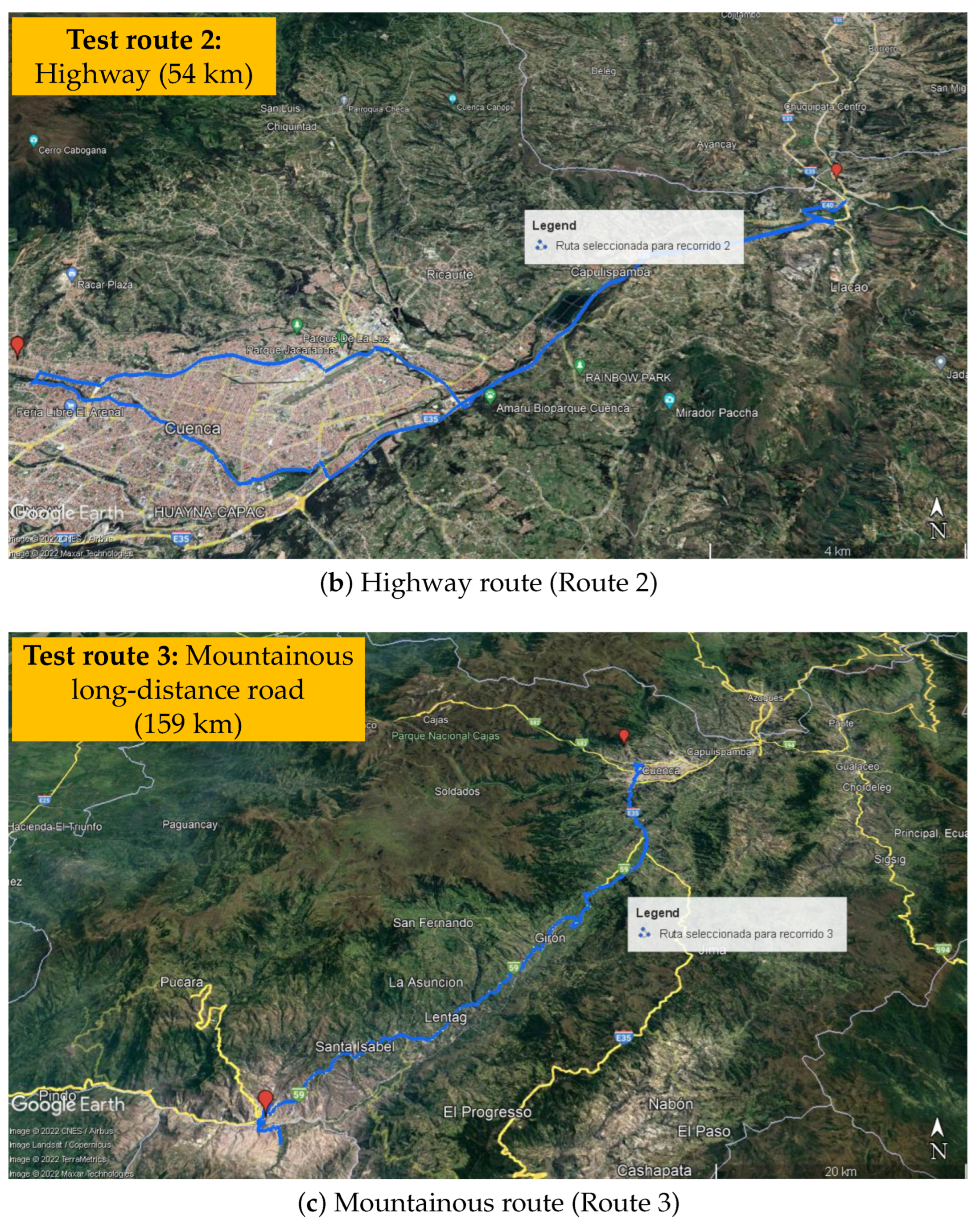
To evaluate the real-world energy consumption of the electric vehicles used in this study, three route-based pilot tests were conducted under representative operating conditions. The aim was to establish accurate energy efficiency values, expressed in kilowatt-hours per kilometer (kWh/km), beyond those declared by the manufacturer. These values are essential for planning transport logistics, estimating energy needs, and assessing the effectiveness of the photovoltaic charging system.
Table 4 summarizes the measured values for each route, including distance traveled, battery state-of-charge reduction, calculated energy consumption, and estimated recharge times using AC charging.
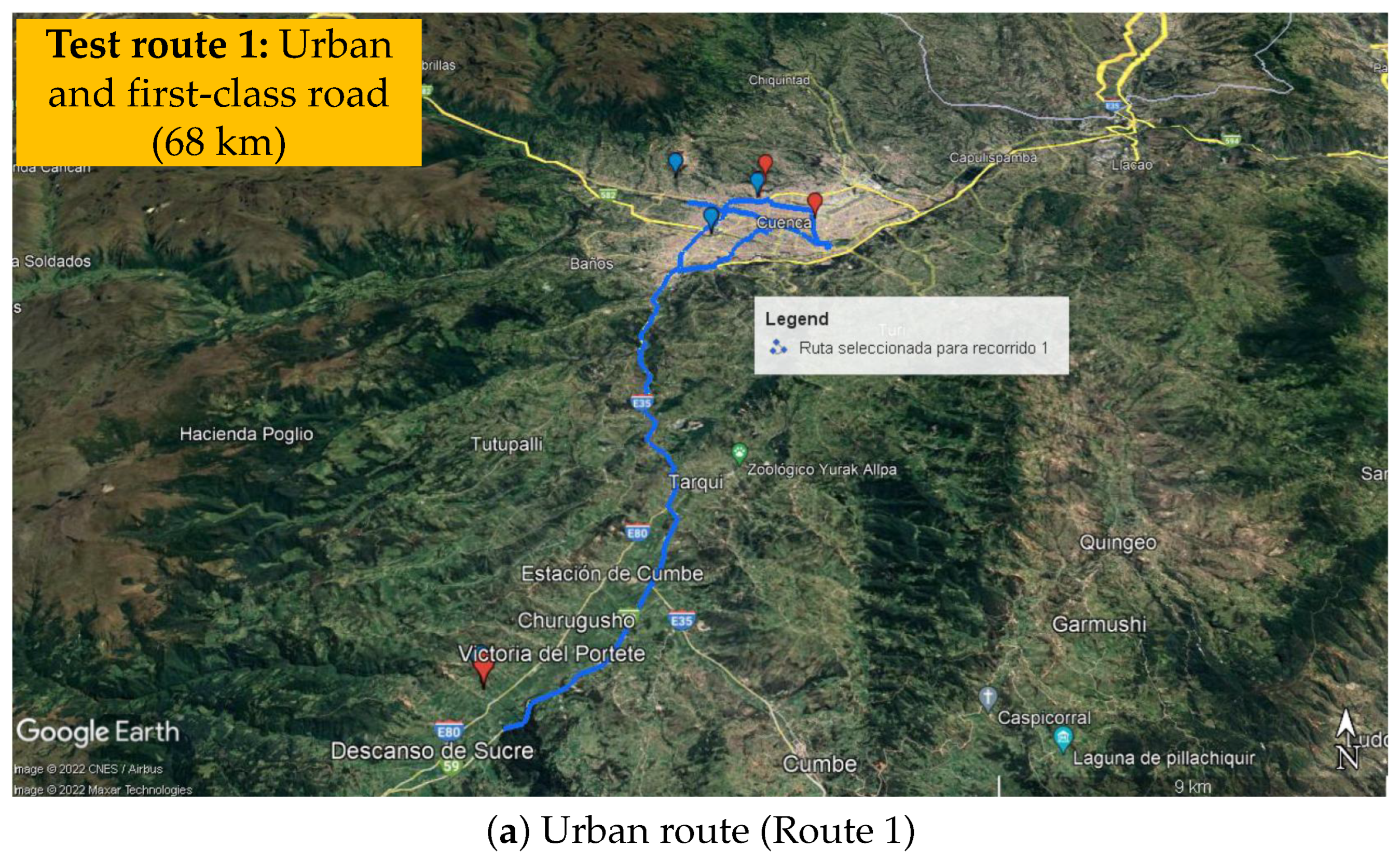
These results directly feed into the system-level calculations defined in Equations (1)–(3) of the methodology, providing the real-world efficiency parameter used to determine total annual energy demand and the number of required charging sessions. The differences between routes align with their geographic and operational context: Route 1 involved mixed urban driving with moderate elevation changes; Route 2, a regional highway with steady speeds and fewer stops; and Route 3, long-distance travel with substantial climbs and descents. As expected, Route 3 showed the highest energy consumption due to its terrain and distance, while Route 1 recorded the lowest.
The selection of three distinct routes was intended to capture the range of driving conditions in the university’s mobility environment. Although the pilot mainly operated on intra-urban trips between campuses, the additional routes allowed assessment of performance under varied topographic and traffic scenarios typical of Cuenca’s mountainous setting. Despite these differences,
Table 4 shows efficiency values within a narrow range, with deviations below 0.4 km/kWh. This consistency supports the adopted average of 0.17 kWh/km for system planning and emissions analysis, providing a margin for variability under real operating conditions.
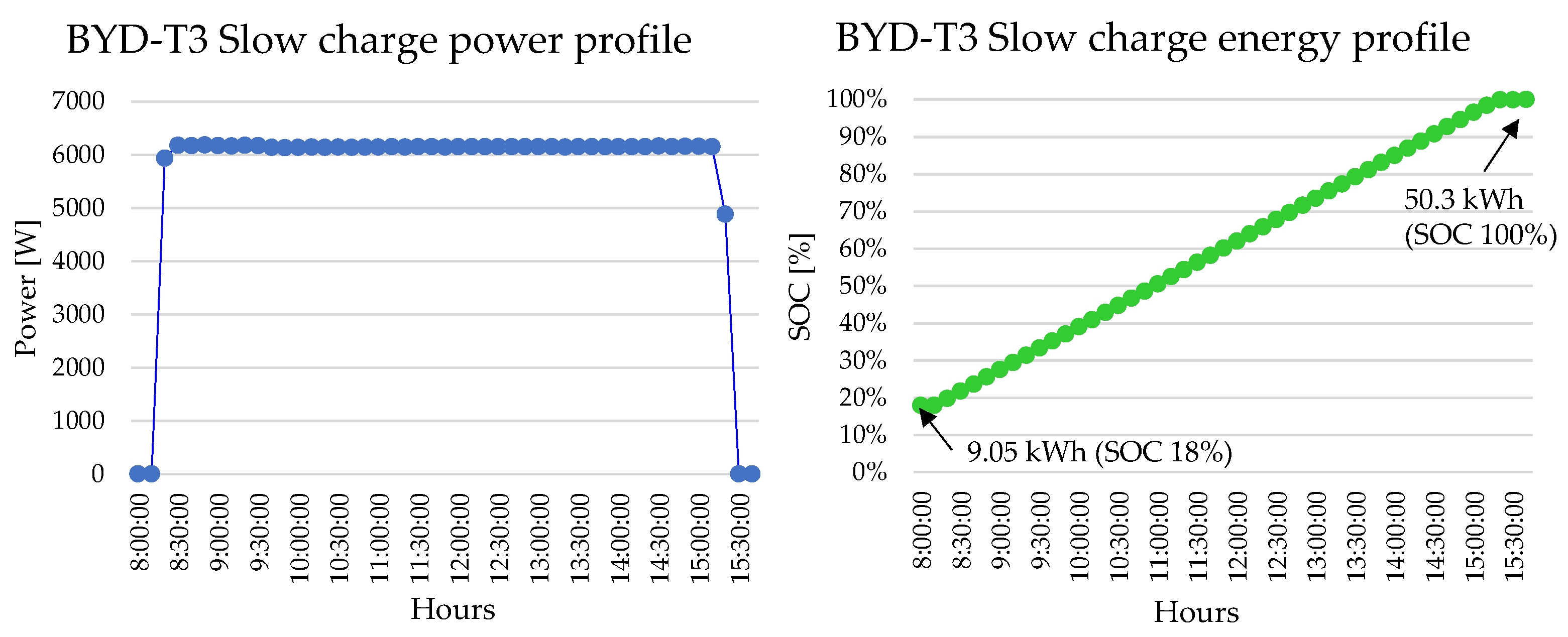
To confirm the usable battery capacity, a full charging cycle was conducted under laboratory supervision.
Figure 5 shows the measured accumulation, matching the manufacturer’s 50.3 kWh specification for the lithium-ion battery system.
Confirming the total usable capacity is essential for applying Equations (1) and (2) in the methodology, as these are the basis for estimating both the energy delivered per session and the associated charging duration under operational conditions. The observed linearity of the charging profiles in
Figure 5 is associated with the controlled laboratory conditions under which the test was conducted, using slow AC charging at constant current. This setup produces a stable power delivery profile, as no variable environmental disturbances were introduced during the session. At the time of testing, the SCADA system was not configured to record battery temperature or ambient thermal conditions. As a result, no thermal effects are reflected in the current charge profile. Future tests will include additional instrumentation to monitor temperature evolution, irradiance, and air flow around the battery system, allowing for a more complete characterization of energy dynamics under real-world variability.
3.2. Transport Metrics and Student Reach
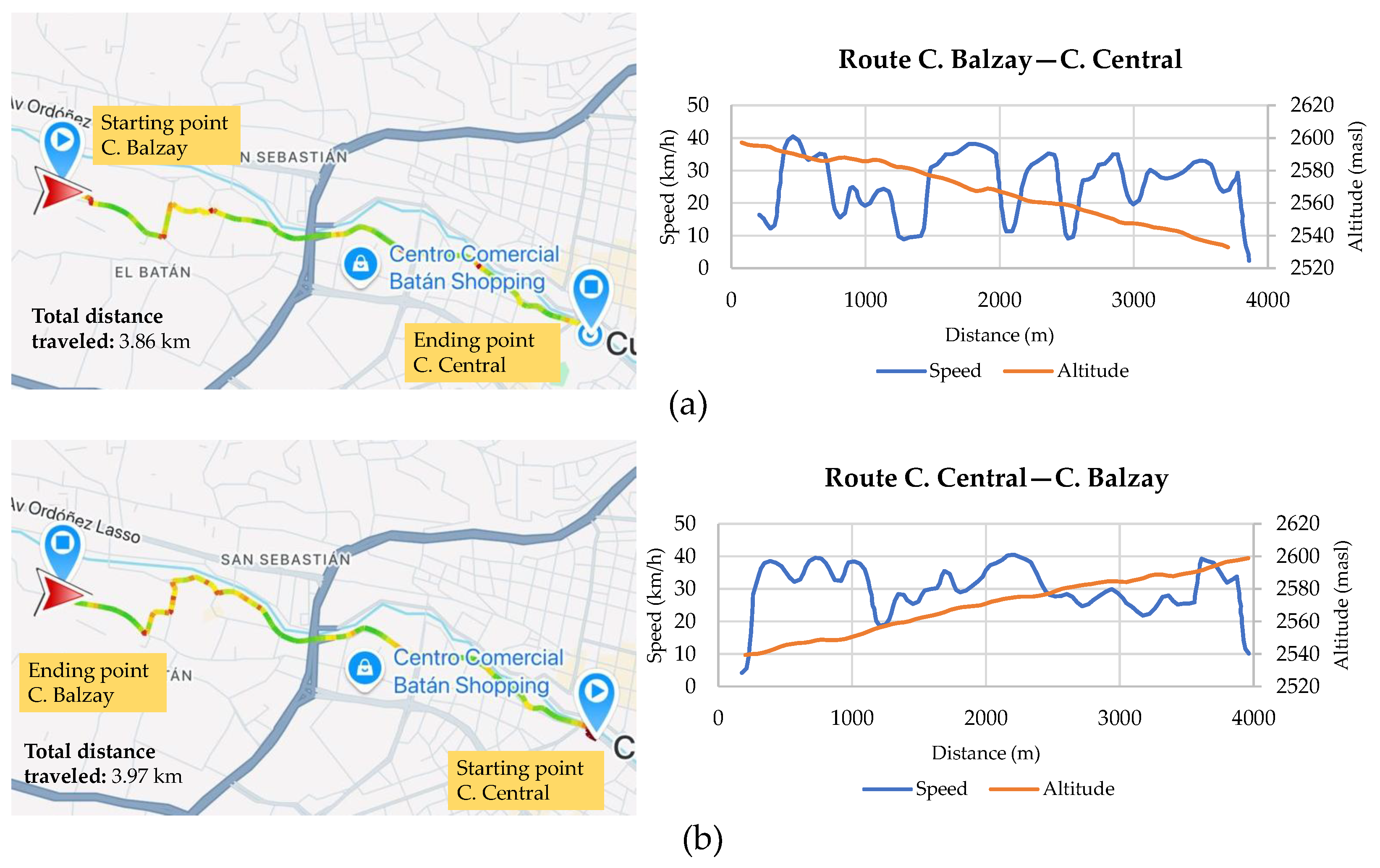
The electric mobility service operated by the EcoVan initiative was implemented from Monday to Thursday during academic periods. The operation followed a fixed route structure with three round trips per day per vehicle, connecting the Balzay and Central campuses. These trips were suspended during official holidays and recesses defined in the institutional calendar. The routes shown in
Figure 6 correspond to the actual paths traveled by the electric fleet. Vehicles operated exclusively along these predefined circuits, as no alternative itineraries were authorized within the scope of the pilot system.
Throughout the year 2024, the transport system provided service to a total of 4772 individual beneficiaries, covering 5256 km over 1384 scheduled trips.
Table 5 presents the monthly distribution of users, distances, trips, and occupancy rates, excluding periods when service was interrupted due to recess or holidays.
Despite the modest scale of operation, the system maintained consistently high occupancy rates across most months, averaging around 87%. This indicates effective matching between supply and transport demand within the limited fleet capacity. December showed a lower value (73.9%) due to academic calendar constraints and reduced campus activity.
The occupancy and distance data in this table link directly to the energy demand calculations in
Section 3.3, where Equations (3)–(5) are applied to determine monthly energy use and the distribution of charging events. This operational profile also supports the scalability considerations discussed later in
Section 4.3.
The monthly variation in the number of passengers and distances traveled corresponds closely to the academic calendar. For instance, no data are reported for February, August, or September due to institutional breaks and administrative recesses.
Operational consistency was observed in the months of April, May, and October, which correspond to periods of uninterrupted academic activity. A reduction in both trips and users is evident during July and December, which include partial recesses or reduced attendance. The highest recorded transport activity occurred in October, with 663 passengers and 189 trips.
3.3. PV Energy Use in Charging Events
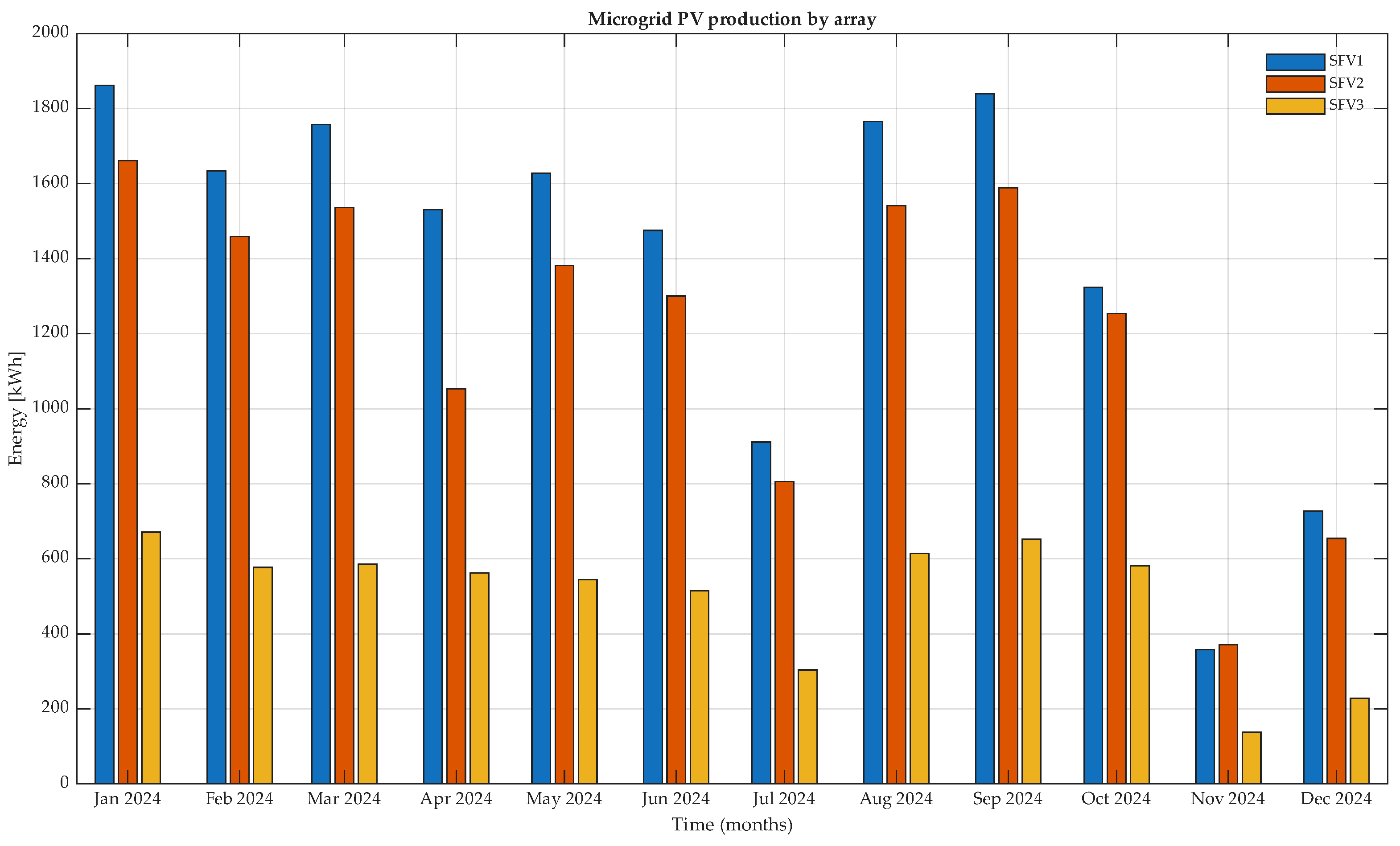
The electric vehicles in the pilot program followed a structured charging protocol prioritizing on-site PV energy. All charging sessions occurred during daylight hours, typically between 09:00 and 17:00, aligning consumption with peak solar availability. This approach allowed most charging demand to be met directly by the Microgrid Laboratory’s PV arrays, reducing reliance on the public grid.
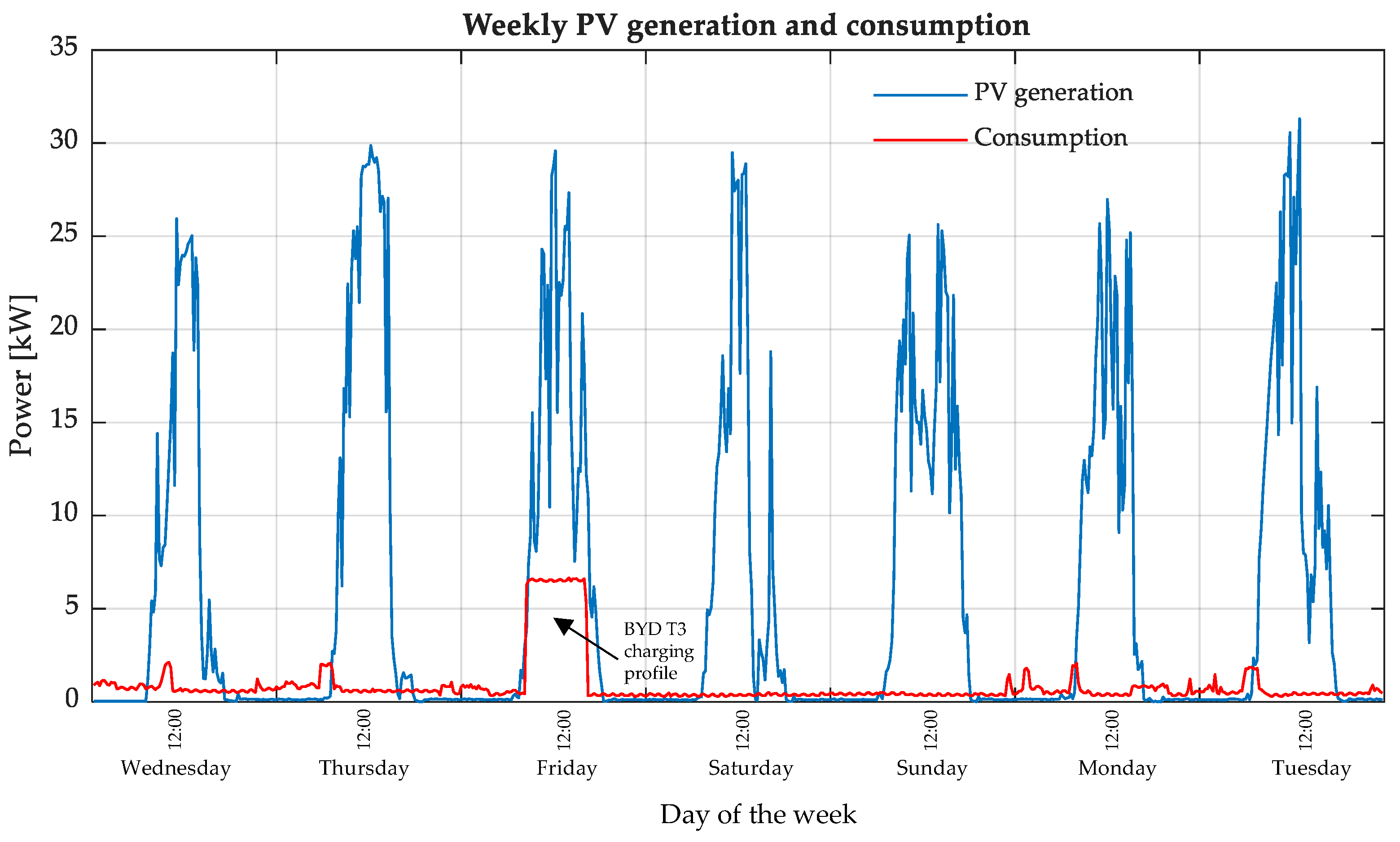
Figure 7 presents an illustrative weekly profile of solar generation and EV charging, showing the temporal match between supply and demand. The red line marks one charging session, included to visualize synchronization rather than overall usage.
Only a small share of total PV energy was used for vehicle charging; the rest supplied other laboratory loads or was injected into the public grid. As discussed in
Section 4.3, this underutilization indicates capacity for expansion. The PV installation was not designed solely for the EcoVan project but to support a broader academic ecosystem, including permanent equipment, experimental setups, and real-time monitoring for teaching and research. The resulting capacity margin reflects intentional multipurpose planning, not an error or inefficiency.
The overlap between solar generation and charging events in this example shows that energy transfer from PV to vehicle occurred with minimal curtailment or grid use. Scheduling charging to follow the solar profile ensured reliance on renewable energy while reducing idle generation and curtailment losses.
The temporal alignment visible in this profile validates the operational strategy underlying Equation (
6), as it demonstrates a high proportion of PV generation being consumed directly for vehicle charging without intermediate storage. This pattern is a key driver for the low grid dependency reported in the pilot.
The usable battery capacity for each vehicle was 50.3 kWh, and the operational SOC window ranged from 20% to 80%. Thus, the energy delivered in each charging session was
With a real charging power of 6.15 kW, the average charging time was
The combined annual distance traveled by both vehicles was 5256 km. Assuming an average consumption of 0.17 kWh/km:
Distributing this energy equally between the two vehicles:
Monthly energy demand and estimated charges are summarized in
Table 6.
These monthly values are the direct output of applying Equations (3)–(5) from the methodology, with the proportion of PV use calculated using Equation (
6). They quantify the actual PV contribution to the mobility service and reveal the margin available for system expansion without additional generation capacity.
Finally, the proportion of PV generation used for charging was
The PV utilization ratio of 2.41% highlights that the current configuration operates well below its potential charging capacity, confirming one of the central research questions on scalability and temporal matching between generation and demand.
As detailed in
Appendix A, a total of 30 monitored charging sessions were recorded during the year. Each entry included weather conditions and PV energy contribution, which allowed a precise estimation of the photovoltaic energy share per session. From this detailed record, it was determined that 98.2% of the energy used for charging originated from the on-site PV installation, while the remaining 1.80% was supplied by the public grid. This confirms the predominance of solar energy in the system’s operational profile, with minimal energy reliance on external sources.
This result highlights the technical feasibility of supporting the electric mobility initiative entirely with locally produced solar energy. Moreover, it confirms that the available photovoltaic infrastructure has enough reserve capacity to support an expansion of the transport system or integration of additional loads.
These figures also demonstrate that the current system could sustain a significant increase in electric vehicle usage without the need for structural modifications to the energy generation system, as long as charging continues to occur during daylight hours.
3.4. Estimated CO2 Emission Avoidance
The displacement of conventional gasoline-powered vehicles by solar-powered electric vans enabled the estimation of avoided CO2 emissions for the entire pilot program. Since all the charging sessions were performed using on-site photovoltaic energy, the emission factor for electric vehicles was considered zero.
Assuming a total travel distance of 5256 km and an emission factor for internal combustion engine (ICE) vehicles of 249.31 gCO
2/km, the emissions avoided during the evaluation period were calculated as
This calculation applies Equation (
7) from the methodology to the monitored transport activity, producing an emissions avoidance figure that forms the basis for evaluating the environmental relevance of SCADA-based PV–EV integration under Andean conditions.
This quantity corresponds to the annual CO2 emissions that were avoided by powering the transport system with solar energy instead of operating a conventional internal combustion vehicle fleet. The result can be further disaggregated into per-unit indicators:
Emissions avoided per trip:
Emissions avoided per student transported:
Emissions avoided per kWh consumed:
These metrics provide a multi-layered perspective on the environmental gains achieved and serve as benchmarks for scaling the project to additional campuses or comparing its impact with other decarbonization strategies in the transport sector.
The amount of avoided emissions is modest in absolute terms due to the limited operational scale of the pilot. However, in the context of low-carbon institutional transitions, the 1310.52 kgCO2/year reduction is fully verifiable and achieved without reliance on carbon offsets or unverified certificates.
Only 2.41% of the annual PV production (see Equation (
6)) was required to achieve this reduction, indicating a favorable emissions-per-kWh ratio and confirming the technical viability of a fully solar-powered university transport fleet.
The low level of vehicle utilization reflects the pilot-scale scope, intentionally designed for controlled evaluation and data acquisition under stable operating conditions. The mileage and avoided emissions reported here are not representative of a mature or fully scaled service. To avoid misinterpretation, these results correspond to one year of monitored operation involving two vehicles, three round trips per day, and academic calendar constraints. Within this framework, the CO
2 avoidance figures provide a reliable baseline to assess technical feasibility and environmental alignment, with scalability considerations addressed in
Section 4.3.
In a broader environmental and educational context, the project supports the university’s sustainability goals and demonstrates the integration of distributed renewable energy with mobility services in public institutions. The use of precise monitoring, energy accounting, and direct substitution of fossil-fuel kilometers strengthens the assessment and offers a basis for further replication.
3.5. Economic Comparison and Updated Fuel Cost Analysis
To complement the environmental indicators, the empirical dataset also supports a quantitative comparison of operating costs between the electric vehicle system and conventional alternatives, based on local tariffs and consumption patterns.
In addition to environmental performance, economic viability is a key factor in assessing the long-term sustainability of electric mobility. Based on the actual electricity billing applied to the Microgrid Laboratory—subject to the institutional tariff scheme for public entities—during the daytime slot when charging occurs (08:00–18:00), the unit energy cost was calculated as
This pricing is based on Ecuador’s net-metering framework established in the national grid code ARCONEL 005/24, which regulates distributed generation and energy compensation schemes [
34]. Under this model, on-grid photovoltaic systems without storage inject surplus energy into the public network and receive credits at the official commercialization rate, later offset during periods of higher consumption.
The 35 kWp PV system at the Microgrid Laboratory was installed prior to the EcoVan pilot and was not built exclusively for vehicle charging. The facility supports a range of academic and research activities and is designed to operate during grid outages. As the PV output is distributed among multiple uses, EV charging accounts for only a small share of total consumption. In this context, the PV system is considered fully amortized, so vehicle charging in the EcoVan project incurs no LCOE-based marginal cost. The economic value of the electricity used is therefore derived from the public billing mechanism, which provides a transparent and verifiable comparison basis.
The electricity price applied here is well below benchmarks from international studies. For example, Singapore reports an average residential price of approximately 0.23 USD/kWh [
35] under unsubsidized market conditions. In Latin America, Colombia averages 0.209 USD/kWh and Peru 0.196 USD/kWh as of late 2024 [
36]. These figures show that electricity costs in the region are often two to three times higher than in Ecuador, mainly due to differences in subsidies and generation mixes.
Fuel prices for conventional vehicles in Ecuador are also subsidized. In 2024, the average retail price per gallon is about USD 2.466 for Ecopaís gasoline and USD 1.797 for diesel. Using consumption norms (10 L/100 km for gasoline and 7 L/100 km for diesel), the cost comparison per 100 km is presented in
Table 7.
This analysis shows that the current implementation saves up to USD 2432 per vehicle per year when compared to gasoline alternatives. These savings would increase proportionally with higher usage or in the event of reduced fuel subsidies. Furthermore, even when assuming regional electricity prices such as those in Colombia or Peru, the electric system would remain economically advantageous. The use of on-site photovoltaic generation insulates the system from external price volatility and, at the same time, guarantees long-term affordability and replicability in institutional settings across Latin America.
To further reinforce the financial perspective, a simplified payback analysis was conducted based on the investment differential between the electric vehicle and a representative conventional counterpart. The acquisition cost of the BYD T3 (
) is approximately USD 39,702.45. For comparison, three ICE-based vans currently marketed in Ecuador were reviewed: Hyundai Staria (USD 47,000 [
37]), Citroën Berlingo VAN (USD 23,990 [
38]), and Dongfeng Activan (USD 18,990 [
39]). Averaging these values yields an estimated ICE vehicle cost of
Thus, the cost premium for choosing the electric alternative is
Considering the annual fuel savings of USD 2432.24, the simple payback period (SPB) is calculated as
This result suggests that the initial investment in the electric alternative would be recovered in approximately four years under current operating patterns and price conditions. Given that institutional vehicles typically remain in service for 7 to 10 years, this payback period is well within the expected lifespan and does not account for potential reductions in maintenance costs or increased fuel prices.
While this calculation does not include a net present value (NPV) or internal rate of return (IRR) due to the absence of long-term cash flow projections, it provides an accessible and concrete reference for decision-makers considering EV adoption in similar institutional settings.
4. Discussion
4.1. Comparison with the Existing Literature
The integration of PV generation with electric mobility in institutional settings has been studied in several recent works. For example, Martínez et al. [
2] evaluated the technical and environmental viability of PV-powered EV charging in public institutions, reporting that 100% solar-based charging is achievable with daily energy demands under 15 kWh/day per vehicle. Our study confirms this claim under real operating conditions, with daily average consumption per vehicle estimated at approximately 1.7 kWh (total annual: 893.52 kWh for two vehicles).
Studies such as Li et al. [
40] further indicate that decentralized PV-BESS systems in urban EV charging schemes offer environmental advantages and operational autonomy. Our results validate this conclusion: the microgrid configuration allowed complete disconnection from the public grid during all charging operations, while covering only 2.41% of the total PV production capacity. This low utilization margin highlights a strong opportunity for expanding the system or integrating additional vehicles without major infrastructure upgrades.
The emission reduction achieved (1310.52 kgCO
2/year) may appear modest in absolute terms, but it is consistent with other small-scale pilots in educational institutions. Compared to estimates by the IEA [
1], our emissions avoided per passenger (0.275 kgCO
2) are well aligned with expectations for light-duty electric public transport operating in mixed urban environments.
Beyond numerical alignment with earlier research, this study contributes distinctively by providing a one-year dataset based entirely on monitored operation in a high-altitude Latin American setting, supported by SCADA-verified PV-to-EV energy tracking. Few publications incorporate uninterrupted empirical observations over this time span with detailed energy accounting, emissions estimation grounded in localized models (MOVES 4.0.1), and cost analysis based on institutional tariffs. The system evaluated is not theoretical or simulated but physically installed and operational, providing evidence that complements existing projections with real operational behavior under contextual constraints. This is particularly relevant for regions where policy, grid reliability, and urban layout require adaptable and verifiable micro-scale transport solutions.
4.2. Economic Comparison and Updated Fuel Cost Analysis
In addition to environmental metrics, the financial feasibility of electric transport is a central element for decision-making in public institutions. Based on actual billing from the Microgrid Laboratory, the effective electricity cost during the daylight charging period (08:00–18:00) was 0.065 USD/kWh, under the institutional tariff scheme. While this rate reflects grid energy pricing, it serves as a conservative proxy for operational expenses in the absence of detailed LCOE modeling for the PV system. A future assessment may incorporate generation cost analysis.
The resulting transport cost using electric vehicles totaled USD 117.76 per year, compared to USD 2550 and USD 1408 for gasoline and diesel alternatives, respectively. These calculations use official fuel prices and standard consumption profiles for comparable minivans. Although the absolute savings remain modest due to the low operational mileage of the pilot, they illustrate the scalability potential: under increased usage scenarios, the savings would grow proportionally while energy costs remain stable. Moreover, the insulation from fossil fuel price volatility offers financial predictability that aligns with institutional budgeting practices.
4.3. Scalability and Broader Implications
The pilot system currently serves only two inter-campus routes with a limited number of trips per day. However, the data demonstrate that the infrastructure is underutilized: only 2.41% of the PV production from the Microgrid Laboratory is allocated to vehicle charging, indicating substantial headroom for scaling without major capital investments. If the number of vehicles was increased to eight (a 4× expansion), and charging schedules optimized to avoid nighttime grid dependency, the existing PV infrastructure could likely meet the full energy demand while maintaining system stability.
From a service coverage perspective, the program transported 4772 students over 1384 trips during 2024. While this number corresponds to raw transport records, it includes repeated usage by regular passengers. Estimations based on usage frequency and trip records suggest that approximately 140 unique students may have benefited from the system throughout the year, considering turnover between academic periods. Given that the pilot primarily involved the Faculty of Engineering and the Faculty of Chemical Sciences—with a combined student population of approximately 2700—this figure represents a coverage of around 5.2% of the directly involved academic community. These values confirm that the current pilot remains limited in scope, but clearly demonstrates operational viability and the potential for broader access if scaled institutionally.
Moreover, the scalability potential is not restricted to the Microgrid Laboratory. The university’s central campus hosts an additional 75.6 kWp photovoltaic system, which has been technically evaluated in previous studies for its capacity to support daytime electric loads without the need for storage or grid injection [
41]. This infrastructure, already equipped with slow EV charging stations, could serve as a strategic node for expanding the electric fleet to serve other faculties and administrative units. The combination of distributed solar generation and existing institutional charging points establishes favorable conditions for extending electric mobility across the university’s operational structure.
Beyond energy metrics, the initiative has implications for academic engagement and institutional leadership in sustainability. It provides live data for engineering coursework, supports thesis projects, and positions the university as a regional reference in applied energy transition strategies. Furthermore, the combination of real-time monitoring, emissions accounting, and cost tracking provides a replicable model for public institutions seeking to integrate renewable energy with transport operations.
Despite the technical feasibility, several constraints influence scalability: the absence of battery storage limits flexibility during extended cloudy periods; the restriction of operation to daylight hours ties service reliability to irradiance patterns; the SOC window of 20–80% reduces usable capacity; per-trip passenger capacity is low (four seats), affecting mass transport potential; and the small fleet size constrains coverage. These factors must be weighed when planning replication or scale-up.
Conversely, successful replication depends on specific enabling conditions: availability of institutional or public financing, favorable local solar resource, competitive acquisition costs for EVs and charging infrastructure, campus topology with well-defined inter-site travel demand, and alignment of operating schedules with peak PV generation.
The low utilization rate of the available PV capacity reinforces the technical feasibility of including more vehicles or longer routes without grid dependence. Additionally, the alignment of student transport needs with peak solar production creates a favorable load-generation correlation, which strengthens the practical basis for broader institutional deployment.
Although the current study is limited to a single year of operation, the observed synchronization between daytime transport activity and solar energy availability reinforces the rationale for system expansion. The fact that the vehicles operated entirely within the PV generation window, and that the charging demand remained consistently below available supply, provides a stable foundation for scaling scenarios. Future annual cycles could incorporate more granular time-series visualizations and trend analysis, once longer datasets are available, enabling a more comprehensive understanding of seasonal effects and operational resilience under varying conditions.
In this context, the relatively low absolute values of energy use and emissions avoidance should be interpreted not as performance limitations, but as characteristics of a pilot deployment constrained by design. The key takeaway is the proven technical feasibility and replicability of the system under institutional operating conditions, supported by real-time data acquisition and controlled energy management. Rather than extrapolating speculative long-term outcomes, the study provides a primary baseline from which future implementations can be validated and optimized. The current operational scale—limited to two vehicles and academic periods—was intentionally selected to allow a high-resolution, traceable evaluation of energy flows, scheduling patterns, and carbon displacement in a controlled setting. This empirical foundation is essential before proposing system-wide adoption or investment in broader deployment strategies.
4.4. Operational and Environmental Constraints
While performance results are favorable, some limitations must be considered. First, the operational design limits service to daylight hours and excludes storage, making the system vulnerable to extended cloudy periods. Second, the SOC restriction of 20–80% preserves battery life but reduces range flexibility. Third, the small passenger capacity per trip limits the scalability of transport service without additional vehicles.
Moreover, even with the relatively low energy demand, real-time monitoring, preventive maintenance, and route scheduling coordination are required to maintain service reliability. In addition, the absence of redundancy in fleet composition means that any single vehicle outage can reduce total service capacity by 50%.
While diesel emissions were avoided at the point of use, indirect emissions from battery production, PV panel manufacturing, and vehicle assembly remain outside the scope of this paper and should be addressed in future life-cycle assessments. This limitation becomes particularly relevant in light of recent studies showing that battery manufacturing accounts for 10–75% of the total energy consumption and between 10–70% of GHG emissions during the production phase of an electric vehicle [
42]. According to McKinsey estimates, the production of lithium-ion batteries contributes between 40% and 60% of the total embedded emissions of an EV, with values reaching up to 100 kg CO
2e per kWh of battery capacity [
43]. Photovoltaic systems also involve upstream emissions associated with materials extraction, module fabrication, and installation. While these impacts do not compromise the environmental advantages of solar-electric mobility during the operational stage, a complete evaluation of sustainability must incorporate life-cycle assessment (LCA) to account for manufacturing emissions, material intensity, and end-of-life scenarios [
44].
From an operational perspective, the system’s economic and environmental performance is also sensitive to contextual variables such as changes in electricity tariffs, the presence or removal of fuel subsidies, and the choice of reference emission factors for avoided emissions. For example, replacing the locally derived baseline with international fleet averages would reduce the calculated emission avoidance by more than 25%, revealing the importance of site-specific parameters in system evaluation. Future studies should include LCA-based comparisons and sensitivity analyses to ensure that environmental trade-offs are fully characterized, especially if the system is scaled or replicated in institutional contexts.
5. Conclusions
This work presents an empirical, SCADA-based evaluation of a solar-electric transport pilot in a high-altitude Andean context, where the University of Cuenca operated two electric vans for inter-campus service charged exclusively from a 35 kWp PV microgrid. Over one year, the system maintained stable efficiency across varied topography, relied almost entirely on on-site solar generation, and achieved measurable emission reductions at low operating cost. The findings reflect conditions specific to Cuenca, including operation at 2560 m altitude with moderate, year-round irradiance; connection to a fully amortized 35 kWp microgrid with slow AC chargers; access to a low institutional electricity tariff; and campus distances compatible with daytime charging and a 20–80% SOC policy. At the same time, several elements are transferable to other institutional contexts, such as real-time monitoring and traceability of PV-EV energy flows via SCADA as a basis for performance verification, prioritization of daytime solar charging to minimize grid dependency, incremental fleet growth strategy that leverages existing renewable generation before investing in new capacity, and integration of transport planning with existing renewable energy assets. From the technical, environmental, and economic analysis, replication efforts should align operating schedules with peak solar output to maximize direct PV use and reduce curtailment losses, ensure sufficient charging infrastructure preferably co-located with PV arrays, manage occupancy rates through demand coordination to maximize energy productivity per passenger, and implement basic yet continuous monitoring to track operational metrics, validate environmental gains, and support decision-making. The pilot’s scope was constrained by small fleet size, limited passenger capacity per trip, absence of storage systems, and dependence on solar availability, which ties operation to daylight hours. The embodied emissions of vehicles, batteries, and PV systems were not included and should be assessed through life-cycle analysis in future studies, while planned extensions should include multi-campus deployment, integration of other EV types such as buses or utility fleets, and evaluation of storage and predictive charging strategies to increase resilience and optimize self-consumption. Overall, this case demonstrates that, under suitable resource and infrastructure conditions, solar-electric mobility can be a viable, cost-effective, and environmentally sound option for public institutions, while providing a replicable framework for policy and planning in similar contexts.




 ,
,