Article

Analysis of Ecosystem Pattern Evolution and Driving Forces in the Qin River Basin in the Middle Reaches of the Yellow River


1
School of Engineering and Technology, China University of Geosciences, Beijing 100083, China
2
Langfang Integrated Natural Resources Survey Center, China Geological Survey, Langfang 065000, China
3
Hebei Center for Ecological and Environmental Geology Research, Hebei GEO University, Shijiazhuang 050031, China
4
Department of Geological Engineering and Geomatics, Chang’an University, Xi’an 710054, China
5
Center for Hydrogeology and Environmental Geology, China Geological Survey, Tianjin 300304, China
6
Key Laboratory of Coupling Process and Effect of Natural Resources Elements, Beijing 100055, China
*
Authors to whom correspondence should be addressed.
Sustainability 2025, 17(13), 6199; https://doi.org/10.3390/su17136199
Submission received: 13 May 2025 / Revised: 20 June 2025 / Accepted: 1 July 2025 / Published: 7 July 2025

Abstract

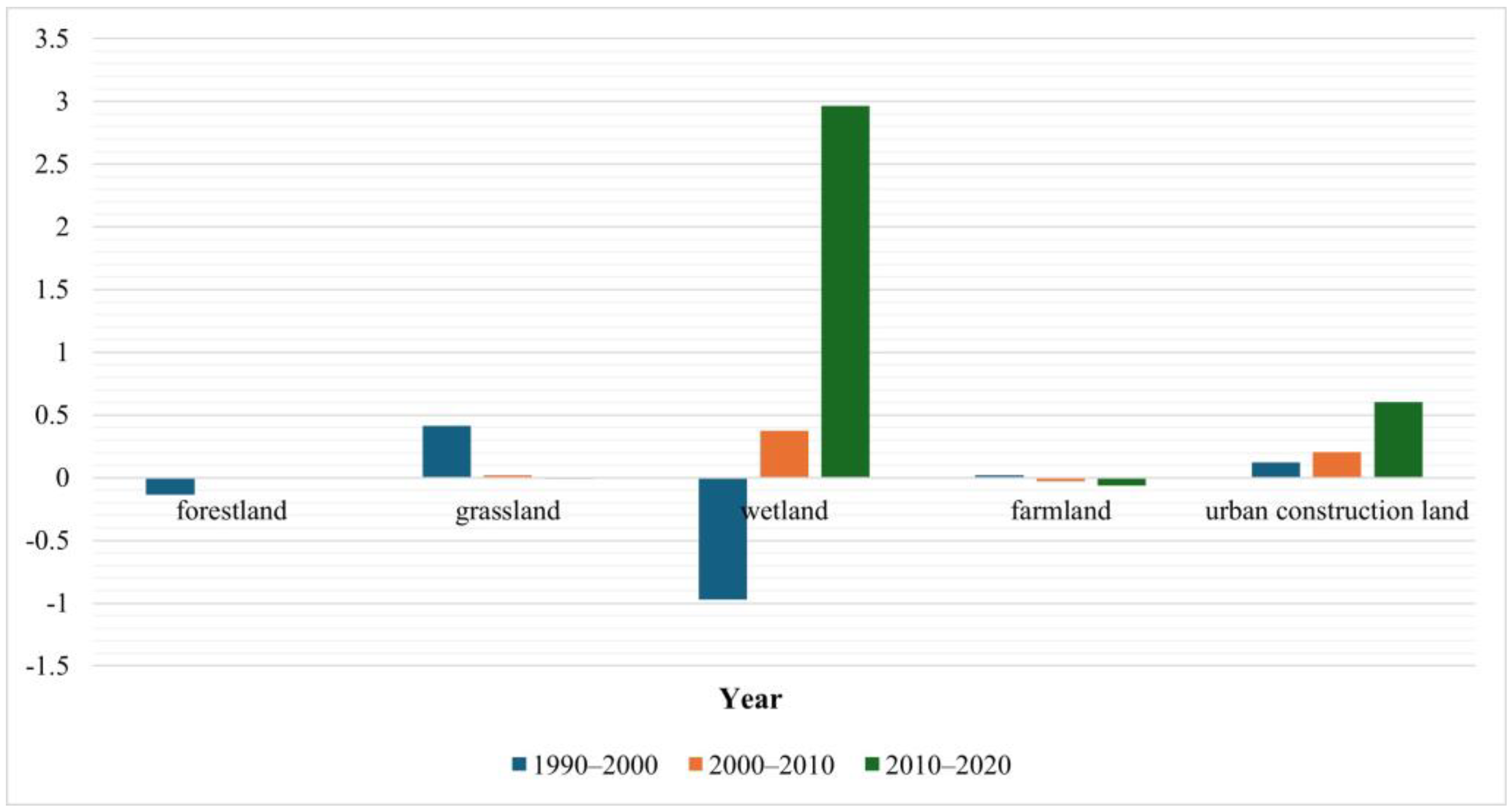
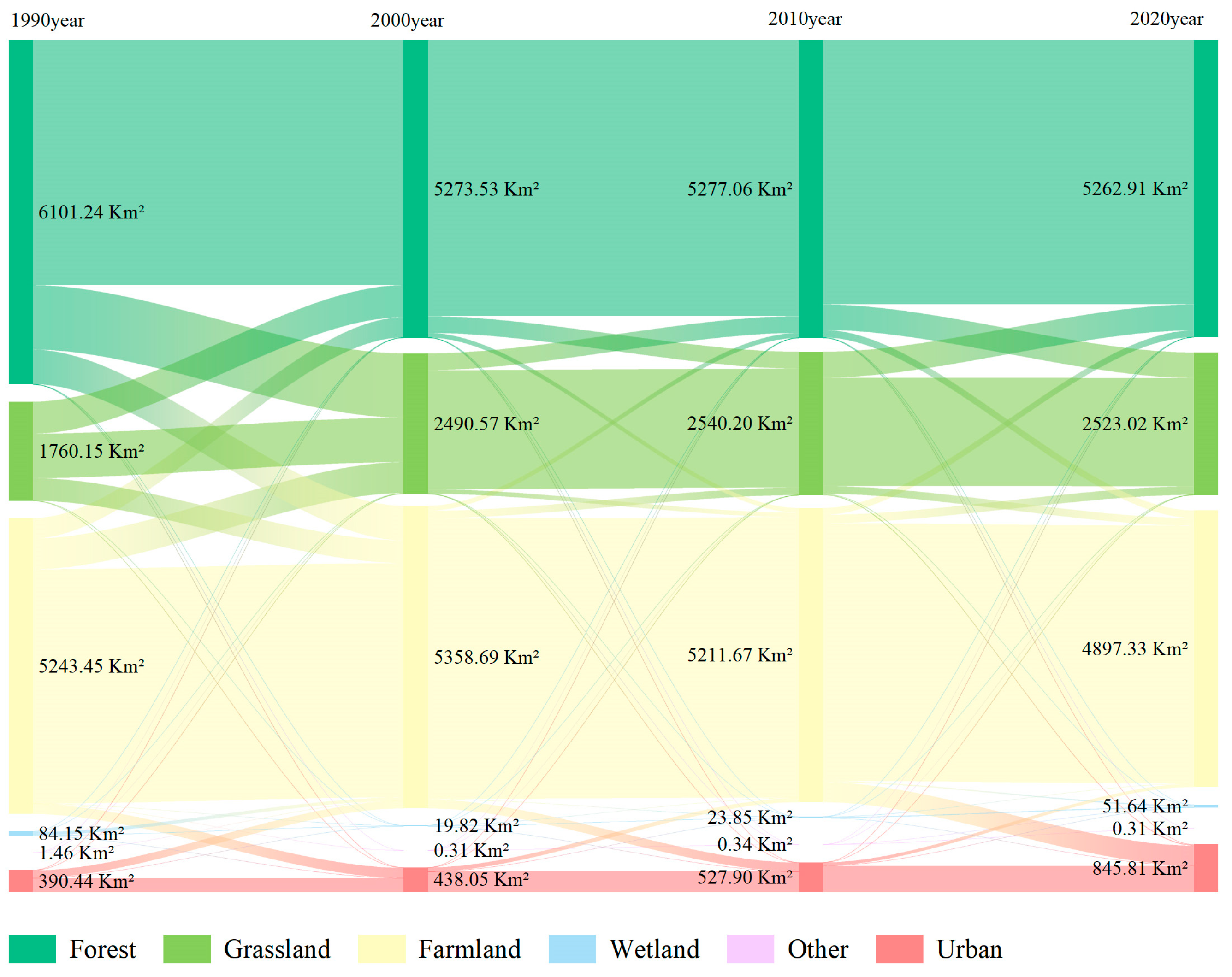
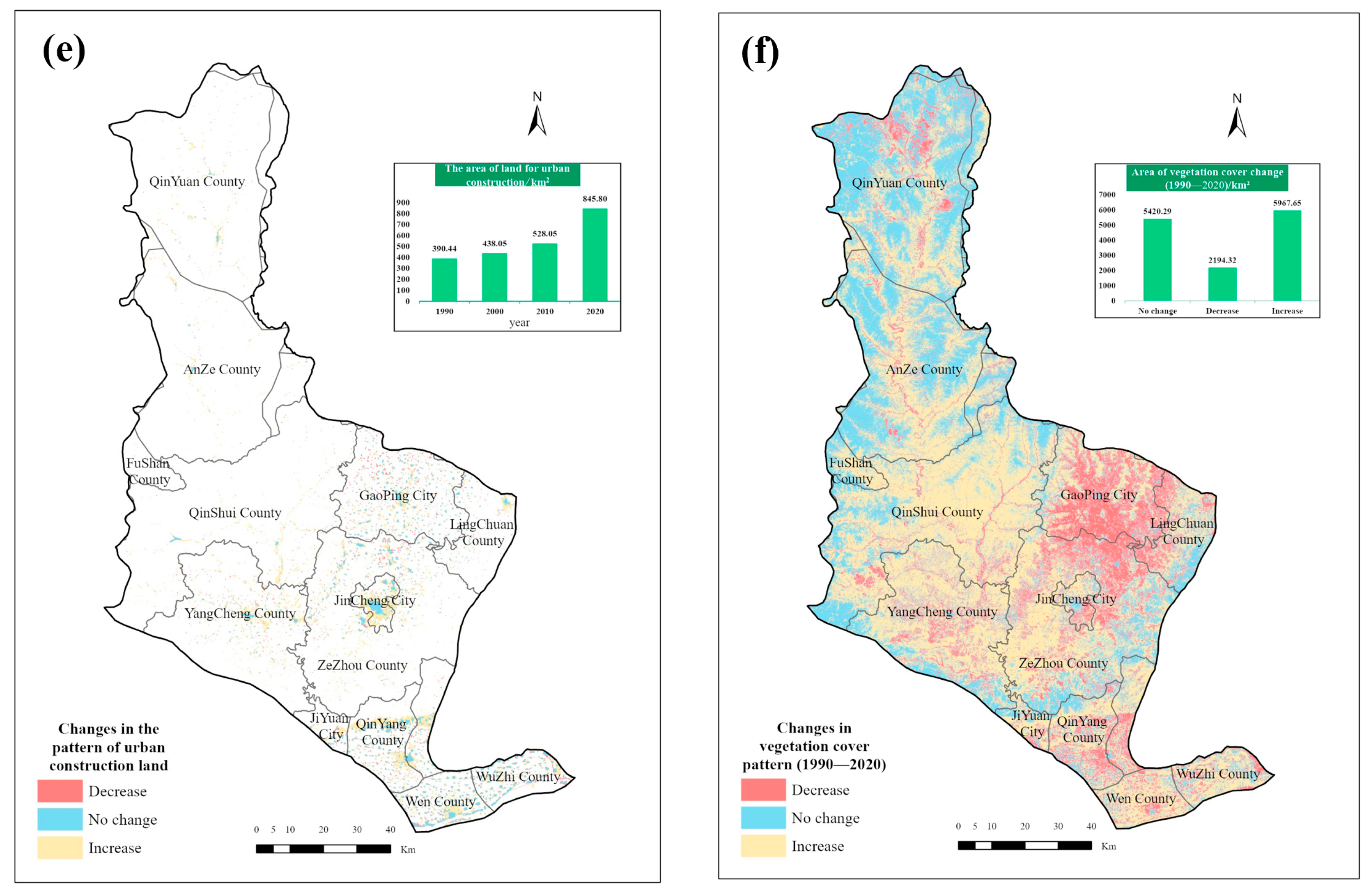
As an ecological transition zone, the ecosystem of the Qin River Basin in the middle reaches of the Yellow River is of great significance to the regional ecological balance. With the rapid socio-economic development, land use changes are significant, and the spatial and temporal patterns of ecosystems are evolving. Exploring its dynamics and driving mechanisms is crucial to the ecological protection and sustainable development of watersheds. This research systematically examines the spatiotemporal dynamics and driving mechanisms of ecosystem patterns in the middle Yellow River’s Qin River Basin (1990–2020). Quantitative assessments integrating ecosystem transition metrics and redundancy analysis reveal three critical insights: (1) dominance of agricultural land and woodland (74.81% combined coverage), with grassland (18.58%) and other land types (6.61%) constituting secondary components; (2) dynamic interconversion between woodland and grassland accompanied by urban encroachment on agricultural land, manifesting as net reductions in woodland (−13.74%), farmland (−6.60%), and wetland (−38.64%) contrasting with grassland (+43.34%) and built-up area (+116.63%) expansion; (3) quantified anthropogenic drivers showing agricultural intensification (45.03%) and ecological protection measures (36.50%) as primary forces, while urbanization account for 18.47% of observed changes. The first two RDA ordination axes significantly (p < 0.01) explain 68.3% of the variance in ecosystem evolution, particularly linking land-use changes to socioeconomic indicators. Based on these findings, the study proposes integrated watershed management strategies emphasizing scientific land-use optimization, controlled urban expansion, and systematic ecological rehabilitation to enhance landscape stability in this ecologically sensitive region. The conclusions of this study have important reference value for other ecologically sensitive watersheds in land use planning, ecological protection policy making, and ecological restoration practice, which can provide a theoretical basis and practical guidance.
Keywords: pattern evolution; driving force analysis; ecosystem; Qin River Basin pattern evolution; driving force analysis; ecosystem; Qin River Basin