Article

A Living Lab Model for Elementary Informatics Education: Enhancing Sustainability Competencies Through Collaborative Problem-Solving, Computational Thinking, and Communication


1
Elementary School Affiliated with Korea National University of Education, Cheongju 28172, Republic of Korea
2
Department of Computer Education, Korea National University of Education, Cheongju 28173, Republic of Korea
*
Author to whom correspondence should be addressed.
Sustainability 2025, 17(13), 5811; https://doi.org/10.3390/su17135811
Submission received: 12 May 2025 / Revised: 10 June 2025 / Accepted: 20 June 2025 / Published: 24 June 2025

Abstract

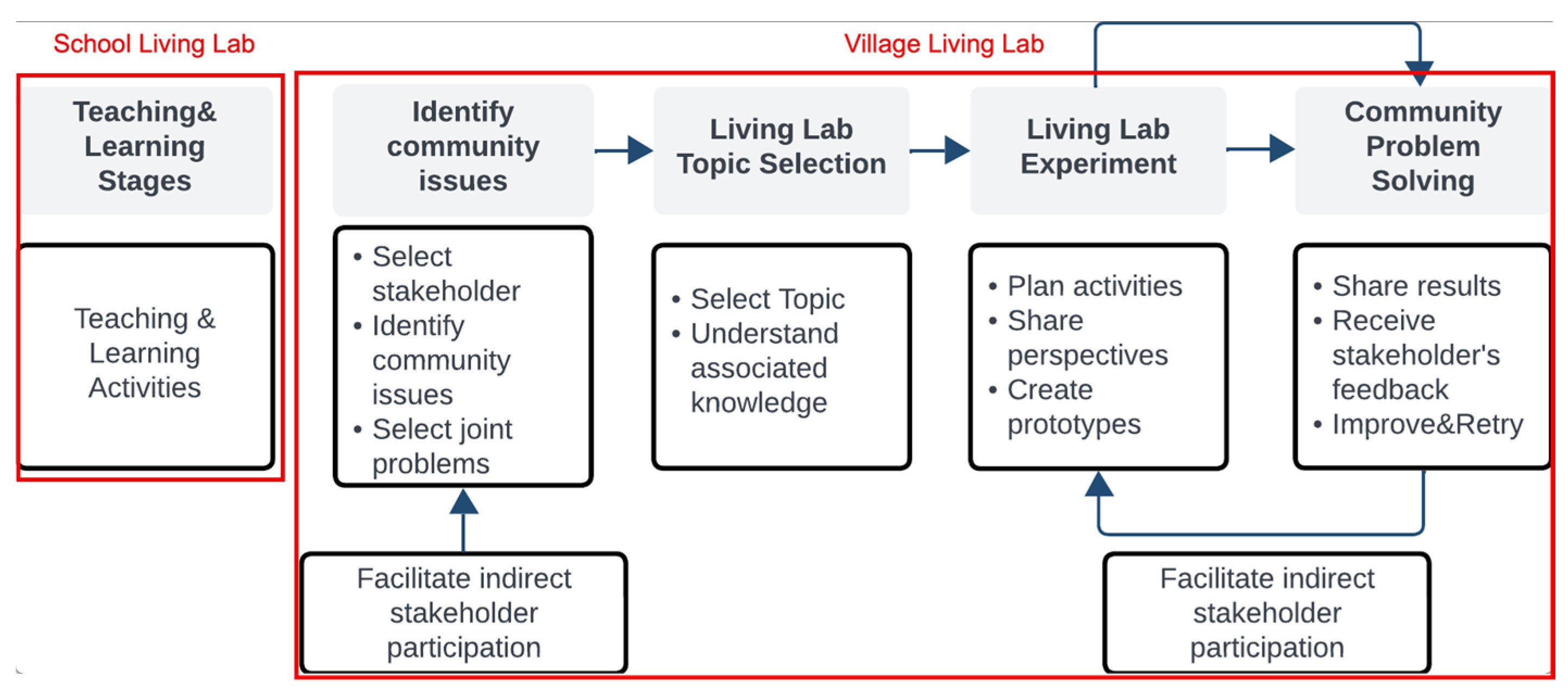
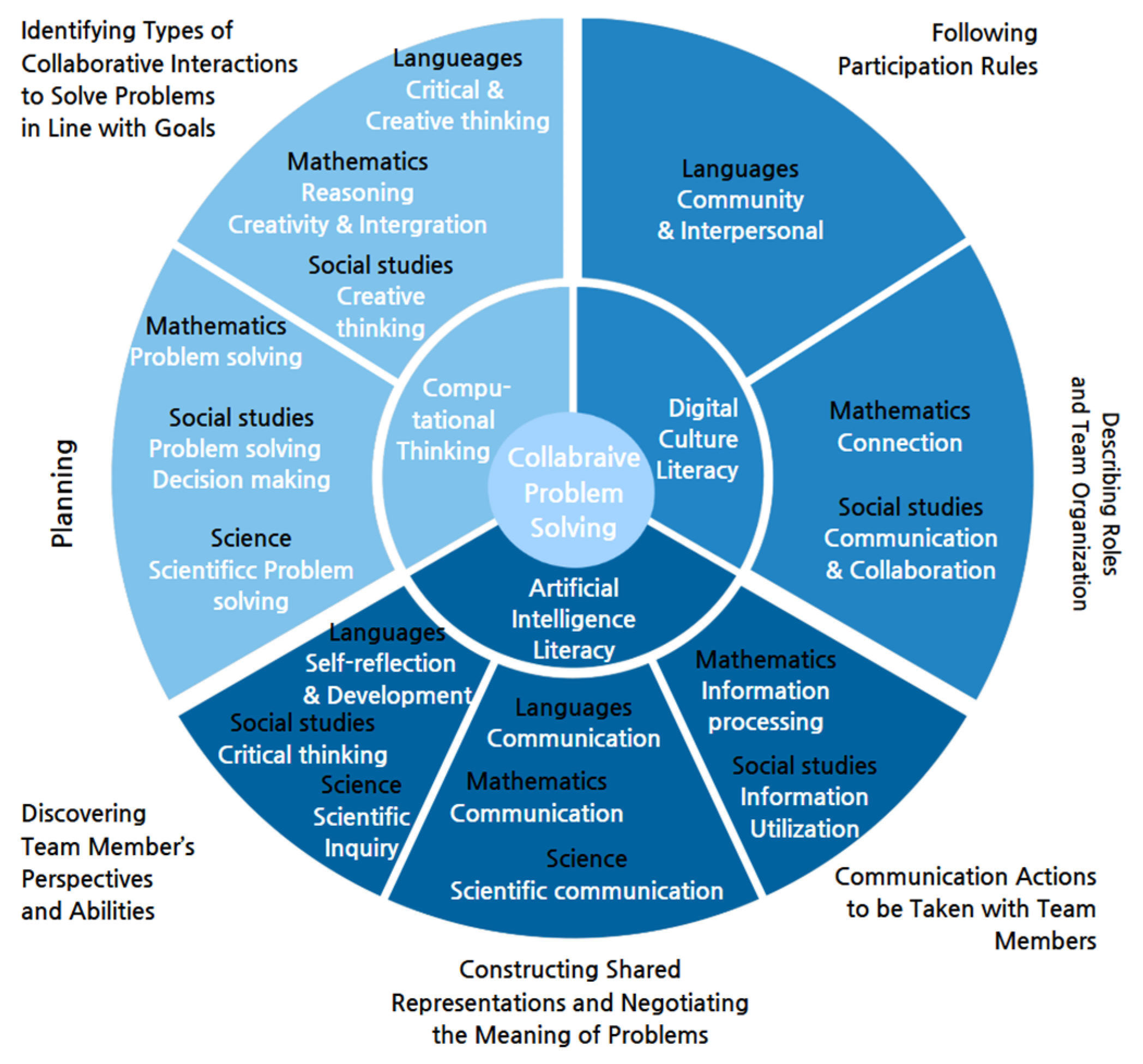
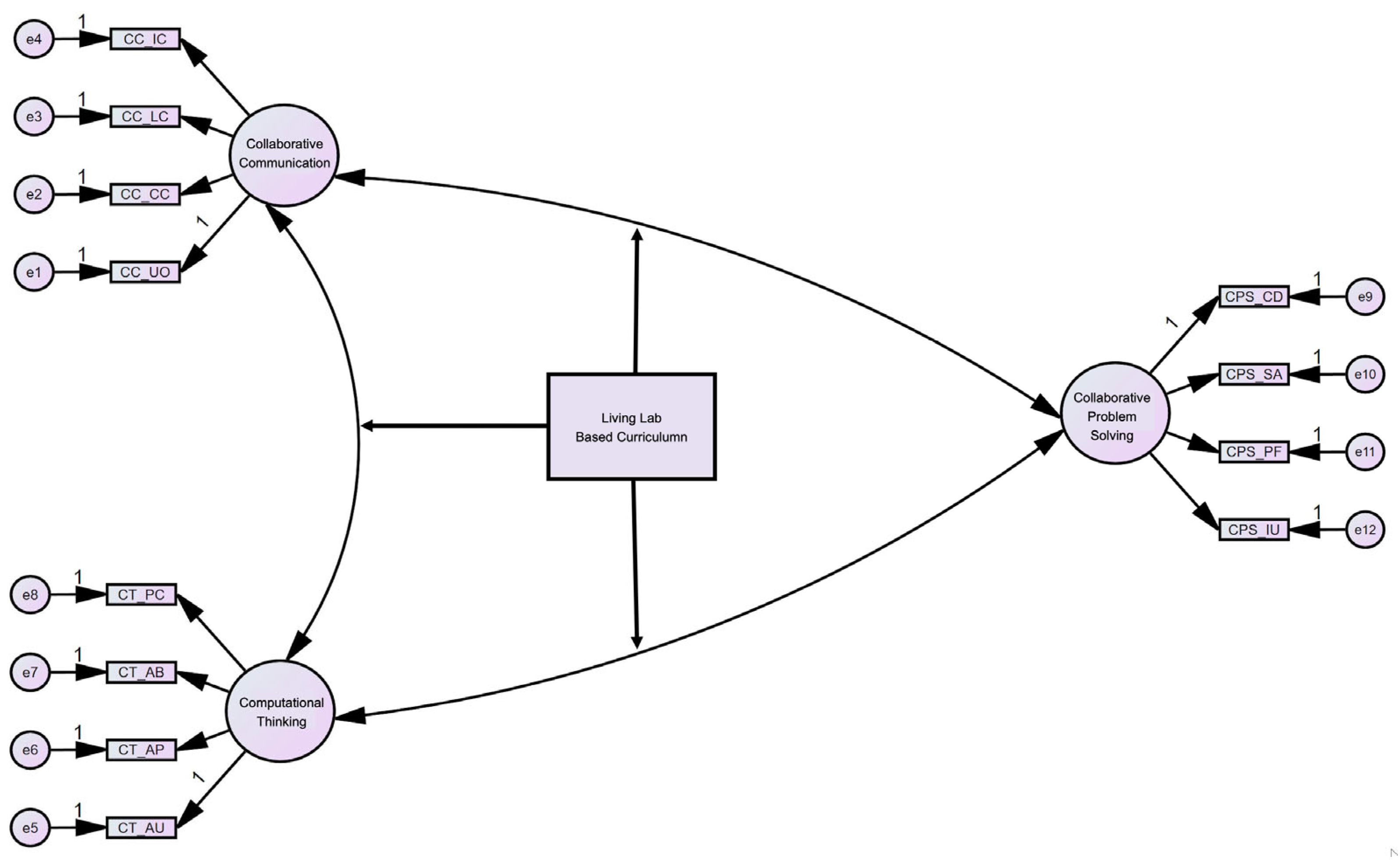
Rapid digital transformation demands educational approaches that effectively equip students with competencies crucial for addressing real-world sustainability challenges. This study introduces and evaluates a Living Lab-based collaborative problem-solving educational model explicitly designed to enhance collaborative problem-solving (CPS), computational thinking (CT), and collaborative communication (CC) within elementary informatics education. Aligned with South Korea’s 2022 revised curriculum, this quasi-experimental research involved 196 elementary students, divided into experimental and control groups. Both groups participated in pre- and post-tests measuring CPS, CC, and CT competencies. The experimental group actively engaged in structured, community-based tasks integrating informatics concepts with authentic, real-world problems, whereas the control group experienced traditional instruction methods. Statistical analysis demonstrated significant improvements in the experimental group’s CPS and CT competencies (e.g., applying problem-solving strategies increased from 3.44 to 3.93, p < 0.001; ICT usage from 3.40 to 3.82, p = 0.002). However, advancements in CC were comparatively modest (creative communication increased from 3.31 to 3.81, p = 0.006), highlighting the necessity for explicit and structured communication interventions within collaborative frameworks. This study confirms the effectiveness of the Living Lab-based collaborative problem-solving educational model in cultivating comprehensive competencies essential for sustainable development, while underscoring the need for further integration of targeted communication strategies to maximize educational impact. Future implementations should prioritize structured communication training to fully leverage the model’s interdisciplinary potential.
Keywords: informatics in K-12; Living Lab; STEM education; sustainable curriculum; collaborative problem-solving; collaborative communication; computational thinking informatics in K-12; Living Lab; STEM education; sustainable curriculum; collaborative problem-solving; collaborative communication; computational thinking