Article

Causes and Effects of Climate Change 2001 to 2021, Peru

by
Vicenta Irene Tafur Anzualdo
1,
Felipe Aguirre Chavez
1,
Miluska Vega-Guevara
1,
Doris Esenarro
2,3,* and
Jesica Vilchez Cairo
2,3
1
Institute of Research (ININ), Marcelino Champagnat University (UMCH), Lima 15039, Peru
2
Faculty of Architecture and Urbanism, Ricardo Palma University (URP), Santiago de Surco 15039, Peru
3
Research Laboratory for Formative Investigation and Architectural Innovation (LABIFIARQ), Ricardo Palma University (URP), Santiago de Surco 15039, Peru
*
Author to whom correspondence should be addressed.
Sustainability 2024, 16(7), 2863; https://doi.org/10.3390/su16072863
Submission received: 16 December 2023 / Revised: 29 February 2024 / Accepted: 14 March 2024 / Published: 29 March 2024

Abstract

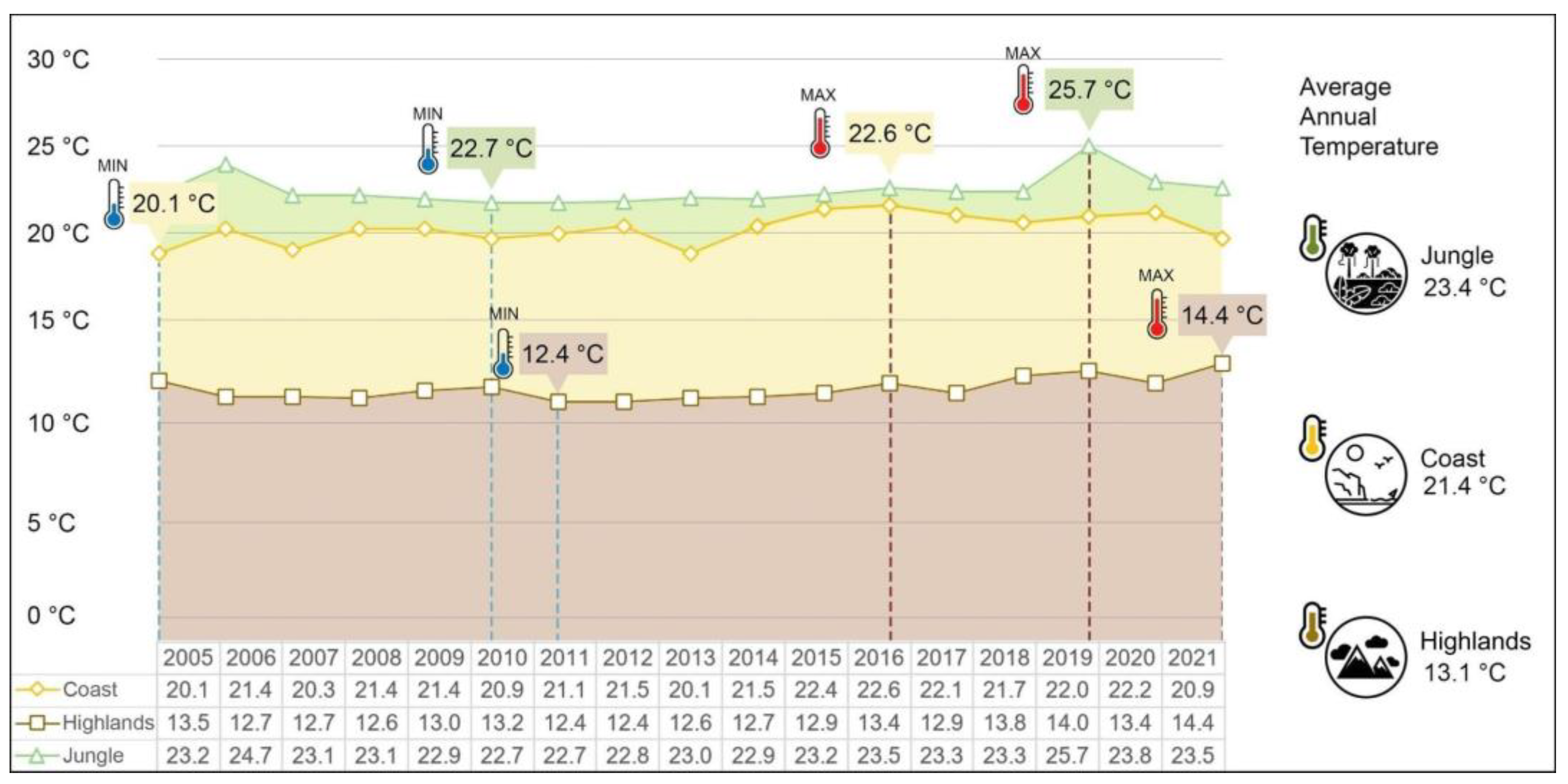
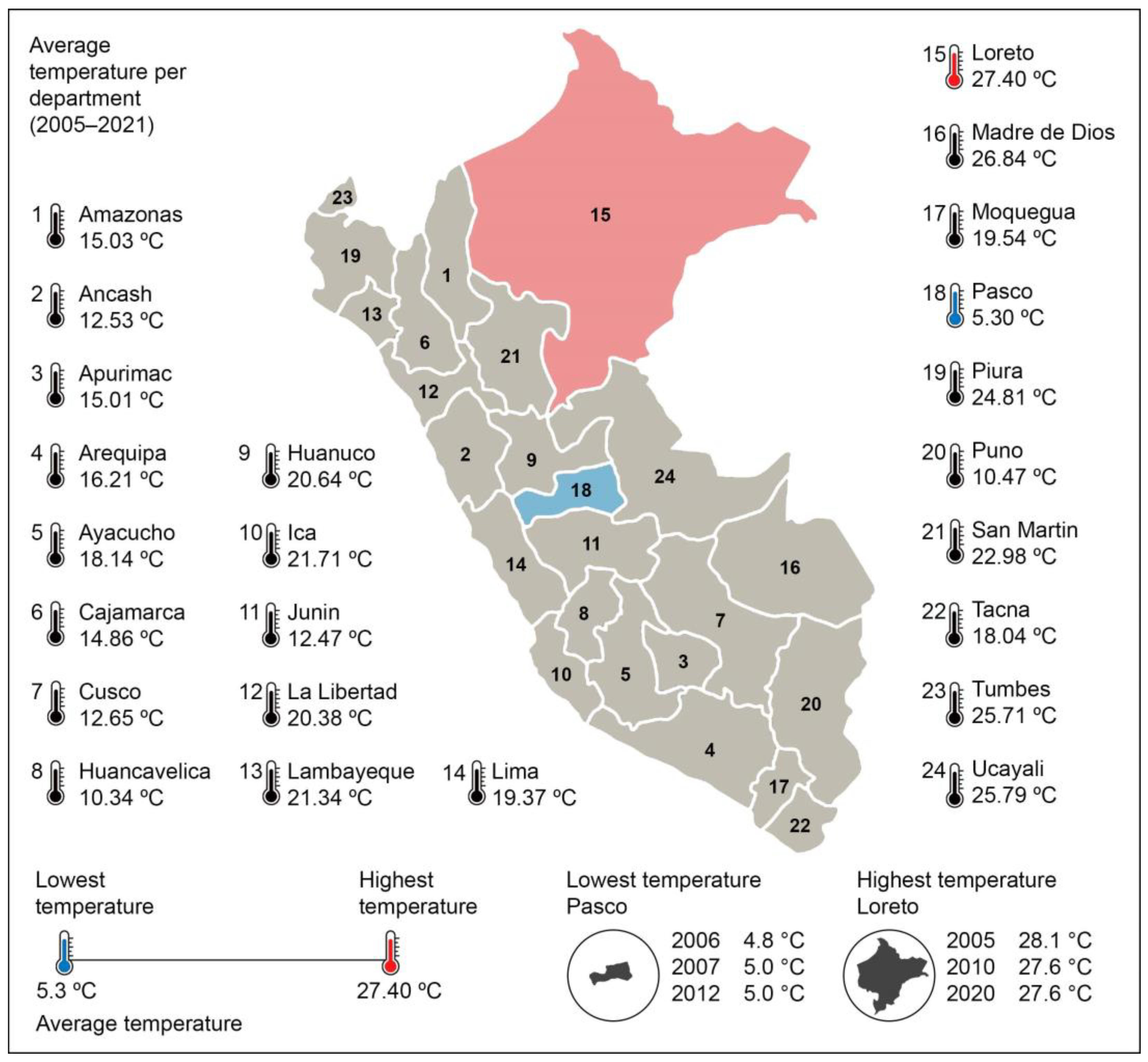
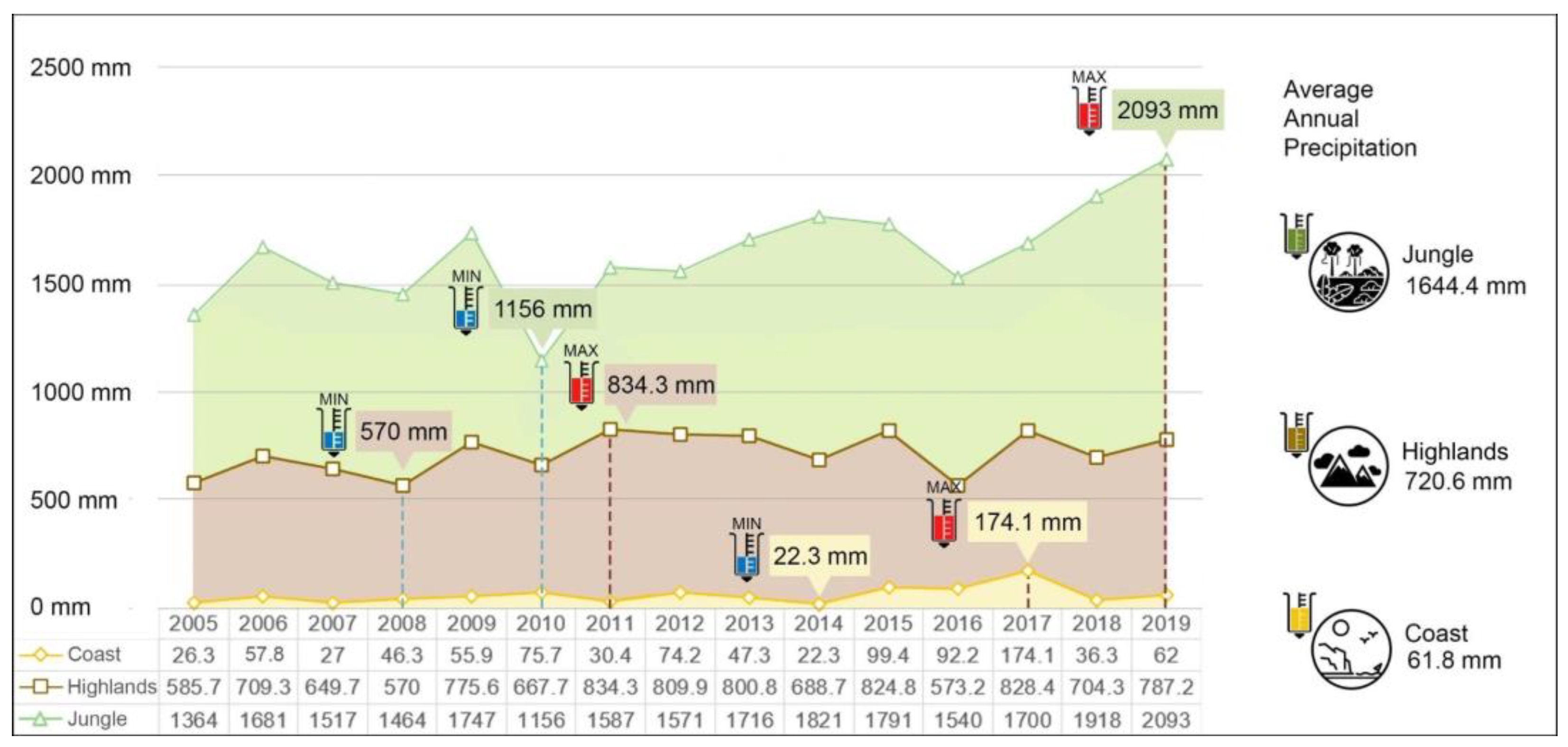
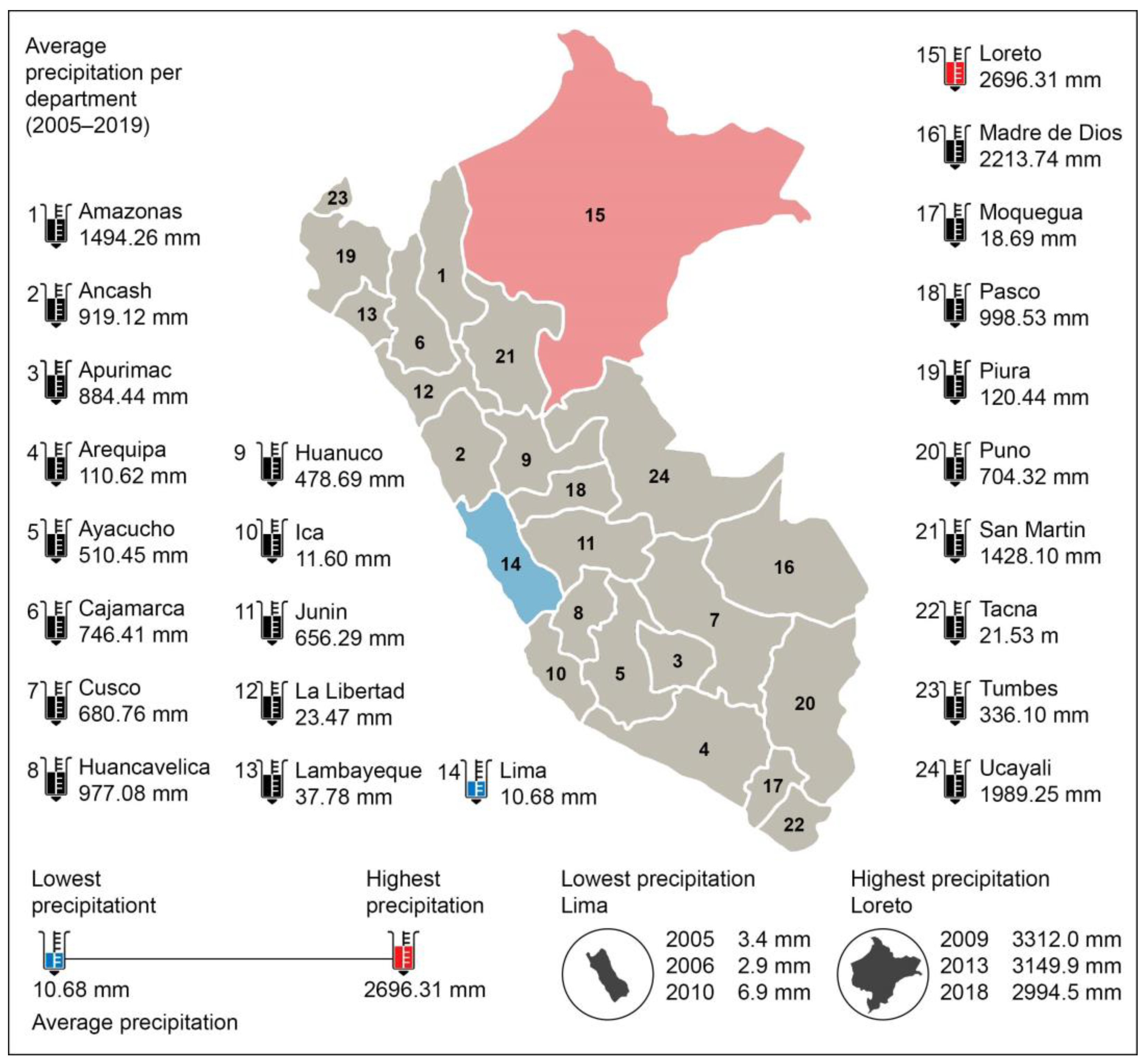
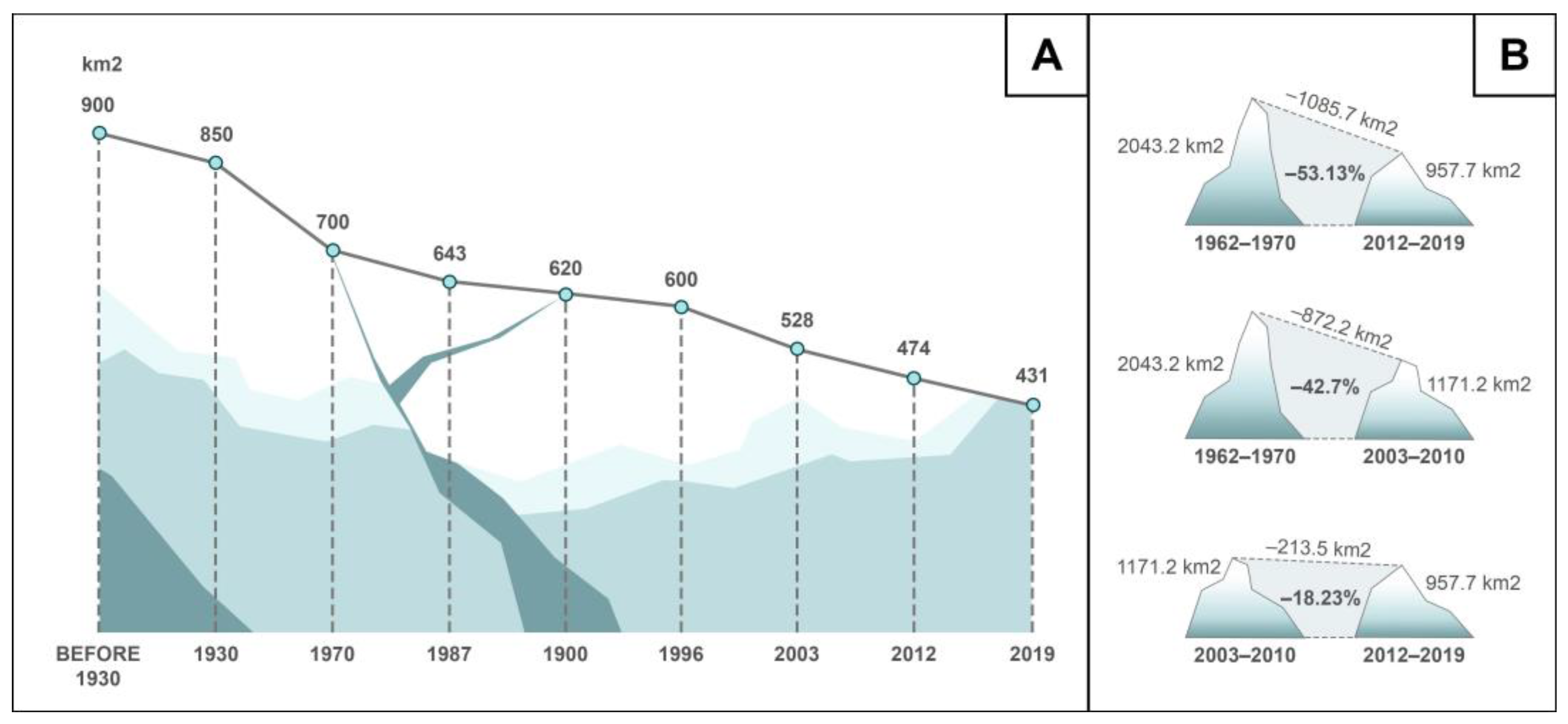
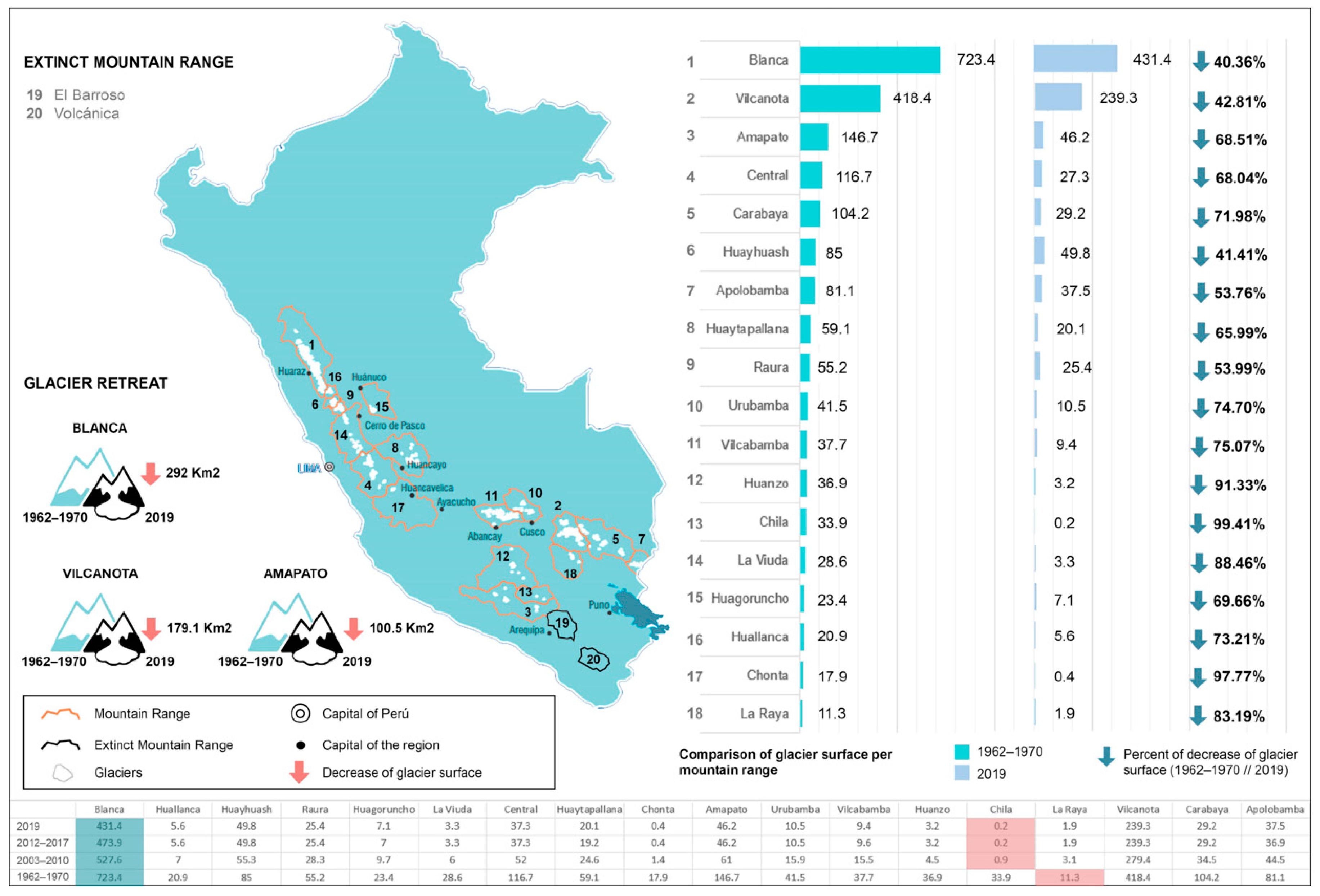
Climate change is an imminent threat to humanity that brings significant environmental, social, and economic consequences worldwide, with population growth and deforestation among these effects. The research aims to analyze the causes and effects of climate change over the last 30 years. Various sources of information were analyzed to interpret the consequences; therefore, it is important to understand and analyze the causes and effects of climate change, generating information on temperature trends, precipitation, and glacier loss from 1990 to 2020. The evidence of the increase in the average temperature of the planet is becoming increasingly solid. The average annual temperature in the Coast region ranges from 21.1 to 22.6 °C, in the Sierra region from 12.6 to 14.4 °C, and in the Jungle region from 22.7 to 25.7 °C. Annual average precipitation in the Coast region varies from 22.3 to 174.1 mm, in the Highlands region from 570 to 834.3 mm, and in the Jungle region from 1156 to 2093 mm. The White Mountain Range has lost approximately 40.5% of its total glacier coverage on average, and between 1996 and 2019 the amount of tropical glaciers has decreased by 28.17%. It was concluded that the threats of climate change are increasingly evident, due not only to environmental pollution but also to the various human activities that generate changes in the environment.
Keywords: climate change; carbon dioxide; temperature; precipitation; greenhouse gases climate change; carbon dioxide; temperature; precipitation; greenhouse gases