Skip to Content
SustainabilitySustainability
  • Article
  • Open Access

22 July 2024

Exploring Sustainable VR Use Cases for Startup Business Models: A Customized Customer Development Approach


and
Faculty of Computer Science, Universitas Indonesia, Jakarta 10430, DKI Jakarta, Indonesia
*
Authors to whom correspondence should be addressed.

Abstract

Startups often face uncertainty and the potential Valley of Death. To address these challenges, Sustainable Development Goals (SDGs) can serve as a starting point to identify business opportunities in markets driven by SDG-related issues. In this case, we propose using virtual reality (VR) technology as a “painkiller”. This study aims to explore VR use cases and their implications for startup business models and discover a problem–solution fit, i.e., identify the degree to which VR applications effectively address actual problems as “killer applications”. The study employs a customized customer discovery technique, an essential process in the Customer Development methodology. By exploring VR’s applicability in various domains such as entertainment, training, education, and tourism, this study unveils compelling use cases that align with SDG aspects, thus validating the hypothesis on startups’ potential to harness VR for SDG contributions. Furthermore, the study produces VR business model designs based on solutions to SDG-related problems. Thus, startups can function effectively as “painkillers”, offering solutions that are not only desired but urgently needed (problem–solution fit). The implications of these findings extend globally, underlining VR’s role in addressing SDG issues and offering practical insights for startup business model development that are applicable to broader technology adoptions.

1. Introduction

A startup is a newly established company that has been operating for less than five years [1]. Operating in “search” mode, they continually seek a repeatable and profitable business model [2,3], often amidst extreme uncertainty [4]. Most startups do not progress beyond the initial development stage and face challenges related to sustainability and scalability. In their effort to scale within a competitive, uncertain, and creatively disruptive environment, they enter the “Valley of Death (VoD)”—a high-risk period. The VoD represents a series of challenges faced by technology-based companies in their early development stages [5]. The COVID-19 pandemic is a clear example of an event that significantly reduced demand for many startups, leading to substantial failures. A report by CBInsight [6] indicates that one of the primary causes of startup failure is their inability to meet market needs. Many startups present fresh and intriguing ideas but fail to deliver significant benefits or lack market demand. Some launch products that are too advanced or ahead of their time, making them difficult for the public to accept, while others struggle to convince potential customers to purchase their products [7]. To avoid these pitfalls, more in-depth market research is essential. The Lean Startup philosophy teaches us to test the riskiest assumptions first. However, startup founders tend to focus on building the product without taking the time to learn whether their target customers need it. The concept of having a worthwhile problem to solve, also known as problem–solution fit, is a crucial initial step towards the success of any startup [8]. Therefore, to avoid mistakes due to poor problem–solution fit, it is vital to first test the assumptions that the target users have the problem, the problem is inadequately addressed by the current market, and there is an opportunity to offer a solution significantly better than existing market solutions.
This study proposes using the Sustainable Development Goals (SDGs) as a starting point to identify business opportunities that address real-world problems related to the SDGs [9]. The Sustainable Development Goals, also known as the Global Goals, were adopted by the United Nations in 2015 as a universal call to action to end poverty, protect the planet, and ensure that, by 2030, all people will enjoy peace and prosperity. There are 17 integrated SDGs—they recognize that action in one area will affect outcomes in others and that development must balance social, economic, and environmental sustainability. Creativity, knowledge, technology, and financial resources from all sectors of society are required to achieve the SDGs in any context [10]. However, sustainability remains a global challenge, requiring individuals and businesses to change their behaviors and consumption patterns for sustainable development [11].
Entrepreneurship holds the potential to alleviate poverty, stimulate economic growth, foster innovation, and enhance social and environmental sustainability [12]. Startups, with their agility and innovation focus, are ideal organizations for addressing SDG-related challenges. When a startup generates revenue from transactions based on solving problems related to SDG targets, the SDGs and business become aligned [9]. VR has emerged as one of the most exciting and innovative technologies in recent years. This technology not only transforms how we play games and watch films [13], but also holds potential beyond entertainment, reshaping how we work, learn, and interact with the world around us. VR has great potential to achieve the SDGs. Various studies and initiatives demonstrate that virtual reality can contribute to gender equality, educational advancement, and more [14]. With the notions that “startups are ideal organizations for addressing SDG-related challenges” [9] and that “VR has significant potential to advance the SDGs” [14], the hypothesis is formed that startups have great potential to leverage VR technology in efforts to address issues impacting the SDGs.
Statista’s report [15] indicates that VR adoption will increase with growing use cases. Analysts from Statista expect healthcare services, workforce development, and manufacturing to be the sectors most disrupted by VR technology. Examples of VR usage include surgical training simulations, production operator simulations, and immersive classroom teaching experiences. As a result, the economic benefits of VR are expected to be felt worldwide and will continue to increase as use cases expand. However, analysis of the current market conditions indicates that no proven and widely accepted VR business models exist. This fact suggests that there is a gap in the field, as existing business models cannot be reliably deemed relevant to the market, potentially leading to business failures for adopters.
The uncertainty surrounding business prospects is a fact of life for every business [16]. Uncertainty is inevitable, especially for early-stage innovative startups [17]. New businesses are always in a risky environment, whether they are technology-based businesses with entirely new customer approaches or franchise companies with solid business plans applied in new locations [3]. When deciding whether to invest in new technology, businesses need to determine if it will result in better sales and profits, as there are factors beyond their control [16]. In order to reduce uncertainty, the SDGs can be used as a starting point in establishing a business foundation. This study selects VR technology due to several VR use-case initiatives with significant potential in addressing issues impacting various aspects of the SDGs [14]. The results of this research are expected to provide recommendations for a VR business model based on solutions to actual problems related to the SDGs so that startups can function as effective painkillers rather than merely vitamins. In the startup world, painkillers are solutions that address critical problems that users are willing to pay for or use frequently. In contrast, vitamins also solve problems but with a lower impact, making users feel less compelled to use them or pay a premium because their needs are already met or the problem is not significant [8,18]. Ultimately, startups functioning as painkillers have the potential to succeed in the market by providing desired solutions for actual and significant problems (problem–solution fit), particularly, in this study’s context, by utilizing VR technology as a “killer application”. In marketing terminology, a killer application is any computer program that is so essential or desirable that it proves the core value of a more significant technology [19], such as computer hardware, gaming consoles, software, programming languages, platform software, or operating systems [20]. In other words, consumers would purchase VR devices (usually expensive) solely to run that application. Killer applications can provide significant added value to their platform.
Managing innovation and validating business models is a challenge. Entrepreneurs face significant barriers in the early stages of creating and developing new ventures, such as finding potential investors and raising capital, transforming ideas into products/services, validating business models based on products, and scaling their businesses [3]. Despite all of this, the development of sustainable business models is increasingly gaining attention in both the literature and industry, as companies seek ways to enhance their impact on the three pillars of sustainability: economic, social, and environmental (profit, people, and planet) [21]. The findings from previous literature reviews [22] provide additional evidence of this growing interest. The various studies mentioned highlight the importance of business model innovation in achieving sustainable performance for startups across different sectors, including digital technology, transportation, and the food industry.
In the context of VR, research has shown many use cases for VR in various fields that have the potential to support SDGs, such as education [23], healthcare [24,25], entertainment [26], and training [27]. However, how this technology can be effectively adopted in the context of startup businesses remains a critical question. Who are the potential customers for VR? What problems are worth solving using VR? What business models can be adopted to leverage the potential of VR fully? Based on the series of studies outlined in the previous analysis, there appear to be no specific research findings that directly address these questions of uncertainty. Hence, these questions drive this study to explore VR use cases and how they can assist in developing business models for startups, particularly in addressing SDG-related issues.
The study by Ignat et al. [28] provides insights into developing VR business models and innovation theory, but it is limited to the medical industry. Additionally, the methods used are impractical for startups, which tend to be agile. A study by Brecht et al. [29] proposes the B2B Startup Experimentation Framework (B-SEF) to help reduce uncertainty in business model development. While not specifically addressing VR business models, the experimental approach is generally well suited to the agile nature of startups. However, B-SEF has limitations, such as an excessive focus on customer desires and practical challenges in executing business experiments. In contrast, frameworks like the Customer Development Process by Blank and Dorf [2] are designed to explore and validate entire business models [29]. The study by Satrio et al. [30] focuses on developing MVPs for hyperlocal market business ecosystems. The methods used, such as the Customer Development approach, are highly relevant for agile startups. Their research also provides insights into using tools like the Value Proposition Canvas (VPC) and Business Model Canvas (BMC) for designing business models. However, this study does not specifically address business model development in the context of VR technology utilization, nor does it explicitly discuss aspects of the SDGs. In order to fill this gap, our study aims to explore VR use cases and their implications for startup business models, as well as discover a problem–solution fit that aligns with aspects of the SDGs. Specifically, the objective of this research is to explore VR use cases based on solving actual problems related to the SDGs to design business models. Our research question (RQ) is as follows: “How can VR be used in business models for use cases with a problem–solution fit in alignment with SDG aspects?” To answer this question, we adopt Steve Blank’s Customer Development method [2]. To achieve our research objectives, we focus on the search phase (customer discovery and validation), particularly emphasizing the customer discovery process. The essence of this process is quickly turning assumptions into facts to find a problem–solution fit [2]. Given the challenge of identifying VR use cases that align with tested problem–solution fit aspects of SDGs, our study proposes a customized, practical, and systematic Customer Development approach.

2. Materials and Methods

2.1. Method Background

This study aims to explore VR use cases based on solving actual problems related to the SDGs for the design of business models. This means that this research is driven by the idea of using VR technology as a solution for problems impacting the SDGs. In order to achieve this goal, the research method adapts Steve Blank’s Customer Development approach [2], based on insights from previous studies conducted by Brecht et al. [29] and Satrio et al. [30]. The choice of the Customer Development method as the research approach is based on the need to understand who the users or beneficiaries of VR technology are. On the other hand, Design Thinking emphasizes a deep understanding of needs and a prototyping approach to finding technologies that can meet those needs. Although both methods explore customer needs, Customer Development is more suitable for conditions where the product or technology idea already exists [31], in this case, VR technology (Figure 1). Moreover, there is a risk that focusing on needs identified using Design Thinking might lead to solutions that do not use VR technology, or even contradictions in determining whether VR is the right solution. Therefore, in this study, it is crucial to remain focused on the primary goal: identifying who the users or beneficiaries of VR technology will be, identifying the problems that can be solved with VR technology, and designing effective business models by applying VR technology.
Figure 1. Comparative interpretation of Design Thinking and Customer Development approaches.
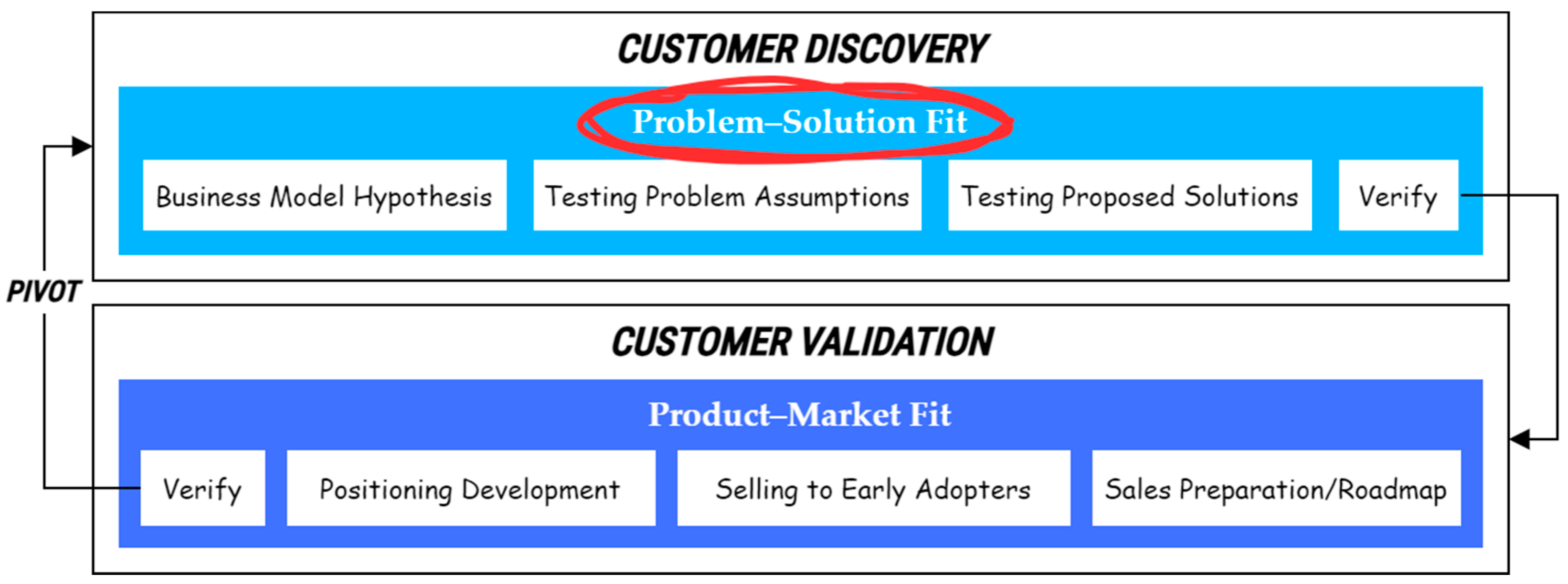
Due to time constraints, this study focuses solely on the customer discovery process rather than including the customer validation process. As shown in Figure 2, customer discovery emphasizes problem–solution fit, whereas customer validation pertains to product–market fit [32]. Customer discovery aims to identify significant customer problems and build a Minimum Viable Product (MVP) [32] to answer the following questions: “Have we found a problem that many people want to be solved (or a need they want us to fulfill)?” and “Does our solution (product, website, or application) solve the problem convincingly?” [2].
Figure 2. Customer Development process in the search phase.
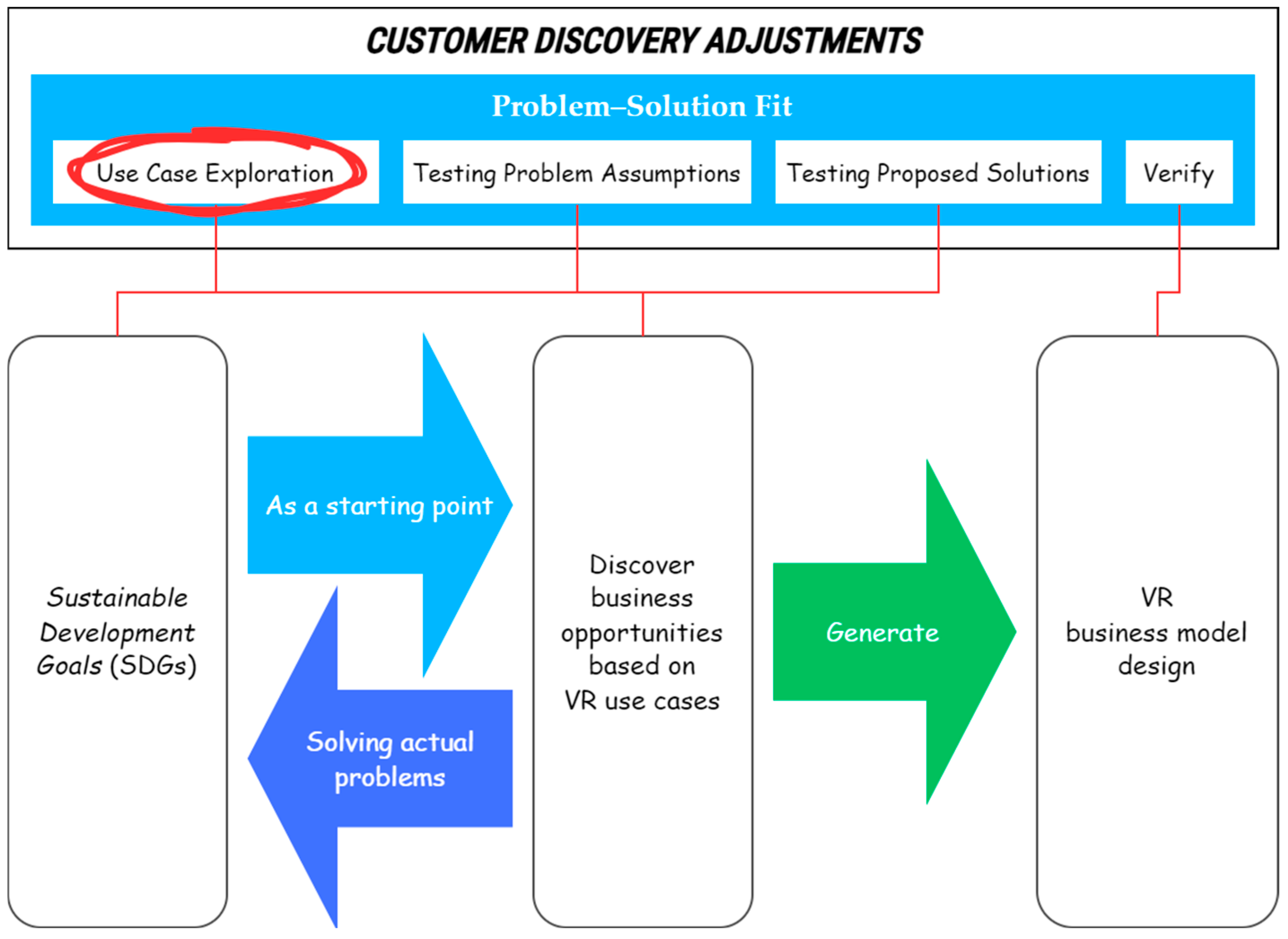
Given the challenges in solving actual problems related to the SDGs using VR technology, this study proposes a tailored customer discovery technique (Figure 3).
Figure 3. A customer discovery process adapted to SDG ideas.
Figure 3 illustrates the proposed steps, starting with exploring use cases rather than directly formulating business model hypotheses. This adjustment is intended to follow the guiding principle of this research, which is to use the SDGs as a starting point to identify business opportunities based on VR use cases that address actual problems related to the SDGs. Additionally, this approach is expected to be useful for startups that know the technology they want to use and are aiming to design a business model, but are uncertain about the product, customers and their problems, pricing, channels, and other aspects.

2.2. Research Flow

2.2.1. Generating Ideas

Considering that the research challenge is to find VR use cases that align with SDG aspects, the proposed steps will start by exploring existing use cases in the industry. The exploration is performed through secondary data analysis using keyword search techniques on search engines, such as “Applications of Extended Reality/XR/Virtual Reality/VR/Mixed Reality/MR”. This step employs a divergent thinking approach where data are elaborated freely without strict evaluation, allowing for an organic and comprehensive flow of information from various sources, including scientific articles, reports, documents, websites, and previous surveys.
The next step is identifying and outlining the most promising VR use cases for further development using the SCAMPER method. SCAMPER, developed by Bob Eberle, stands for Substitute, Combine, Adapt, Modify, Put to another use, Eliminate, and Reverse, a set of creative thinking techniques that encourage breaking away from traditional logic to generate innovative ideas [33,34]. SCAMPER is a creative technique used to generate new ideas by questioning and modifying elements of a concept or product. It consists of seven methods:
  • Substitute: What can be substituted or changed?
  • Combine: What elements can be combined to create something new?
  • Adapt: What can be adapted or adjusted for different situations?
  • Modify: What can be modified, altered, or reduced?
  • Put to another use: How can something be used for a different purpose or in a different place?
  • Eliminate: What can be eliminated or removed?
  • Reverse: What if we reverse or invert the current situation?
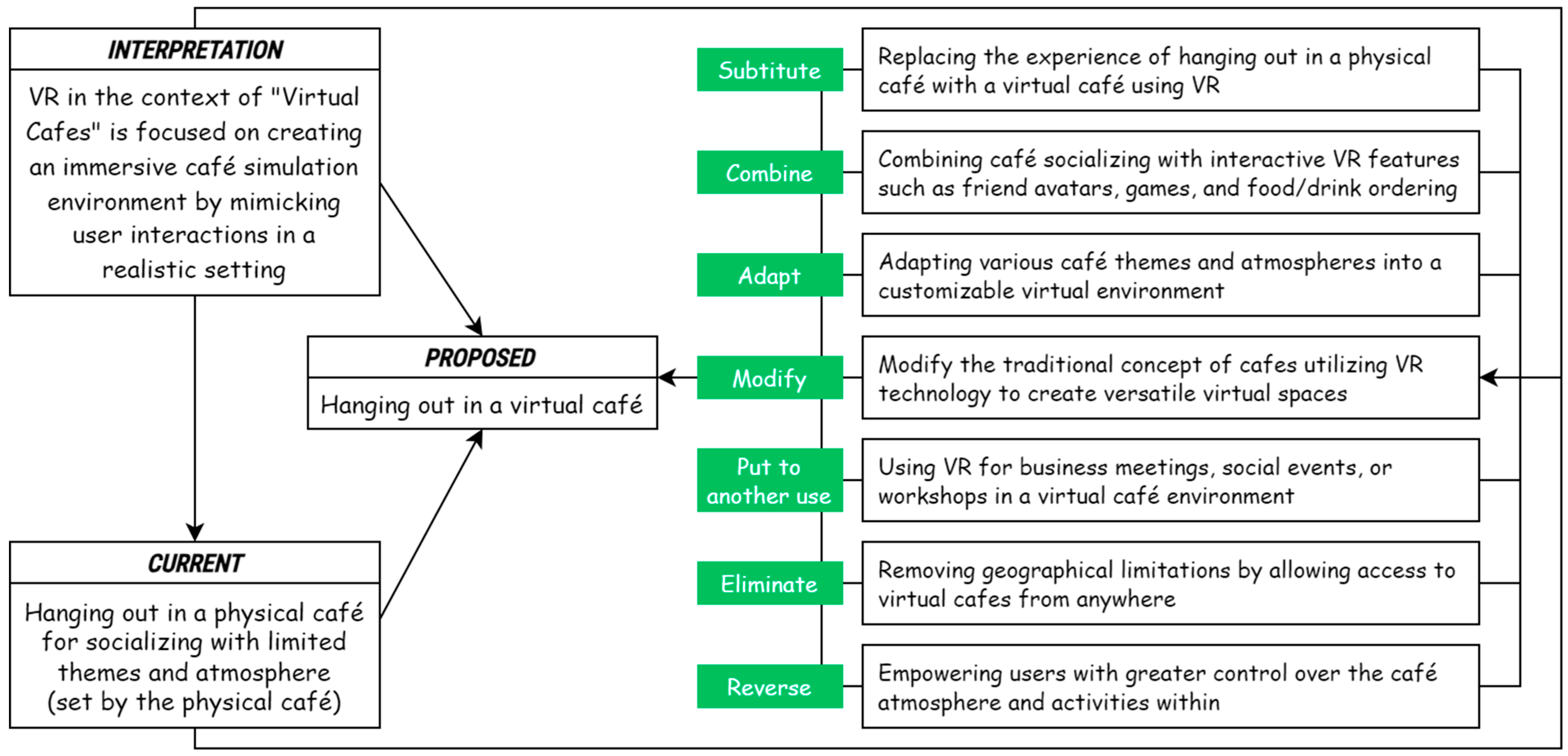
The SCAMPER method is used in this study to formulate innovative ideas aligned with consumer market needs, particularly targeting Generation Y and Z. The reason for choosing Generation Y and Z, or the “digital natives”, is that they are individuals raised in a digital-media-rich environment and show a significant dependence on smartphones in their daily routines [35], thus creating a consumer base ready to adopt VR technology. Figure 4 illustrates the brainstorming process using SCAMPER based on preliminary research in this study.
Figure 4. Example of brainstorming using SCAMPER.
Figure 4 exemplifies the brainstorming process using the SCAMPER method. This process began with the interpretation of a VR use case. VR in the context of “virtual cafés” is focused on creating an immersive café simulation environment by mimicking user interactions in a realistic setting [36]. This interpretation inspired us to consider how it might be possible to transform the previous solution (current state/services) of hanging out in a physical café to socialize with limited themes and atmosphere (set by the physical café). The previous solution was then re-examined using SCAMPER, leading to the following innovative ideas: replacing the experience of hanging out in a physical café with a virtual café using VR; combining café socializing with interactive VR features such as friend avatars, games, and food/drink ordering; adapting various café themes and atmospheres into a customizable virtual environment; modifying the traditional concept of cafés by utilizing VR technology to create versatile virtual spaces; using VR for business meetings, social events, or workshops in a virtual café environment; removing geographical limitations by allowing access to virtual cafés from anywhere; and empowering users with greater control over the café atmosphere and activities within. In practice, this stage is very flexible, with SCAMPER serving merely as a framework to guide creative thinking. This iterative process of reinterpreting and reimagining the original concept using SCAMPER helps to unlock new possibilities and innovative solutions for VR-based virtual cafés, ultimately aiming to enhance user experience and broaden the functional scope of such virtual environments.

2.2.2. Idea Selection

The designed use cases are then re-evaluated, considering their benefits and business aspects. The decision-making method used is the Plus Minus Interesting (PMI) model. Several researchers have found many benefits of PMI, the most significant being its assistance in decision making [37]. It is called the PMI model because it requires critical thinking about an issue or idea, and identifying what are considered “plus, minus, and interesting points” [38,39]. For example, Table 1 illustrates the PMI analysis conducted during our preliminary study.
Table 1. Example of PMI analysis conducted in the preliminary study.
This study’s PMI model facilitates a structured analysis of various aspects of virtual café use cases (Table 1). It identifies and categorizes the positive aspects (“plus”), negative aspects (“minus”), and intriguing aspects (“interesting”), thereby providing a comprehensive view of the potential impacts and implications of implementing virtual café environments. This systematic approach ensures that decisions regarding the development and deployment of virtual cafés are grounded in a thorough assessment of their benefits, challenges, and strategic opportunities. The assessment is inherently subjective, reflecting the researcher’s interpretation and analysis. Given the example provided in Table 1, where the total PMI score is positive (+15), indicating a net benefit from implementing virtual café environments, the decision-making process leans towards acceptance of the proposed use cases. This approach ensures that decisions regarding the development and deployment of virtual cafés are grounded in a thorough assessment of their benefits, challenges, and strategic opportunities.

2.2.3. Problem Testing

The proposed use cases are based on initial assumptions that need to be converted into facts in the context of the underlying problem. Therefore, this study uses the Jobs-to-be-Done (JTBD) framework to formulate problems based on each use case. Introduced by Harvard Professor Clay M. Christensen [40] and popularized by Anthony W. Ulwick [41], JTBD focuses on the understanding that customers buy products to complete specific tasks [42]. In this study, JTBD identifies the “jobs” or tasks customers need to accomplish in each proposed use case. Assumptions about potential problems for users in each job are then identified and validated through questionnaires. The questionnaire was distributed online to respondents representing the digital-native generations (Generations Y and Z). It began by collecting respondent profile data, as outlined in the respondent profile form design (Table 2). Each respondent was allowed to validate these assumptions, providing insights into the relevance and preferences of the respondents regarding the proposed problems. This marks the beginning of the problem-testing process, which was conducted using a quantitative approach.
Table 2. Form design for respondent profiles.
The number of proposed assumption questions will depend on the results of the needs and problems analysis of the beneficiaries during the research implementation. Each question includes options designed to represent the respondents’ choices, particularly regarding the relevance and importance of the problems.
The research hypothesis posits that certain use cases (Use Case X) of VR technology will align with the needs and expectations of digital natives, particularly in addressing specific tasks or problems they encounter. To validate this hypothesis, the questionnaire included a 7-point scale to measure the relevance and importance of the identified problems. The design of the scoring indicators can be seen in Table 3.
Table 3. Assessment indicators for validating customer problem assumptions.
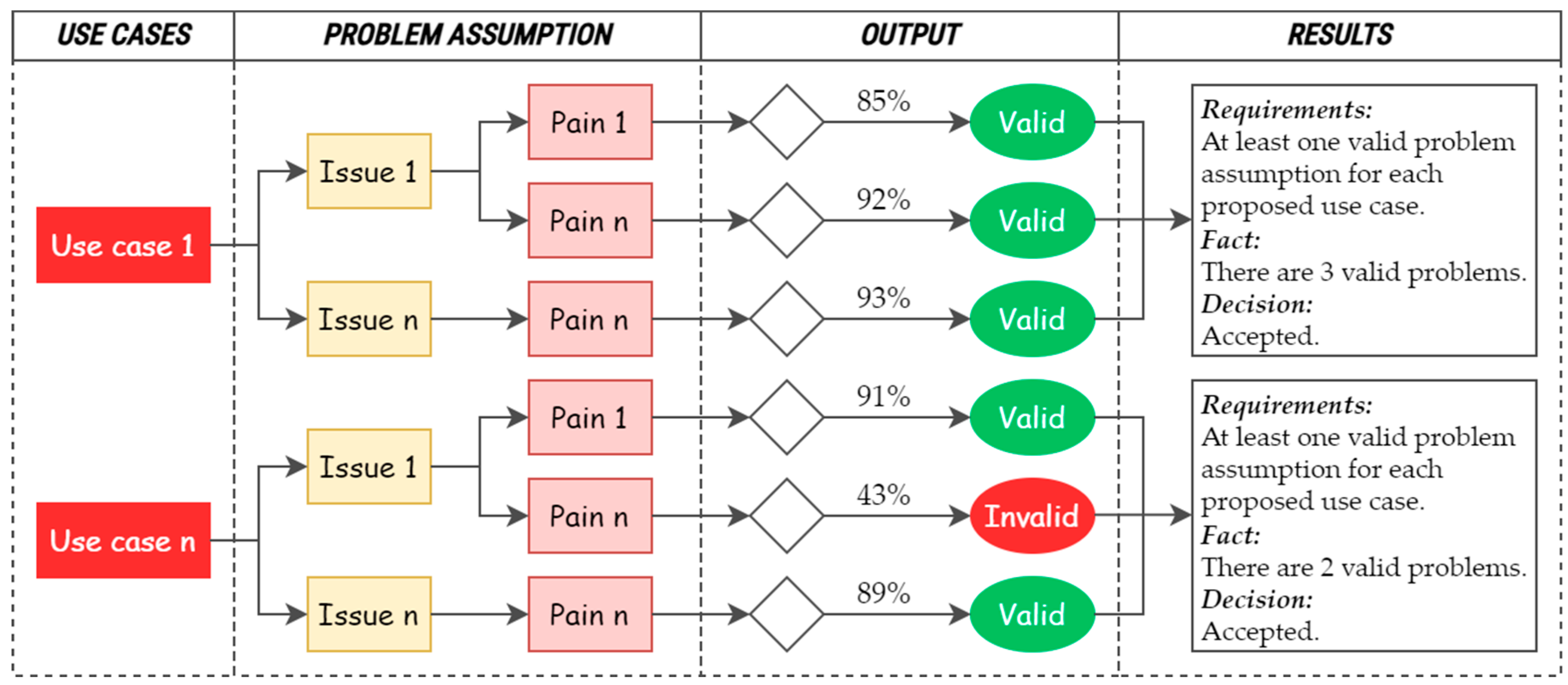
The questionnaire was first tested on 30 respondents to ensure its reliability. Cronbach’s alpha was calculated to assess the internal consistency of the questionnaire items. A Cronbach’s alpha value of 0.7 or higher was acceptable for establishing reliability. If the questionnaire met the expectations (i.e., at least one valid problem assumption for each proposed use case), it was then distributed to a larger sample of a minimum of 100 respondents. The problem-testing stage allows for iterative testing depending on the results, with targets achieved through descriptive statistical analysis. Descriptive statistical analysis summarizes and describes the essential characteristics of the data obtained from the problem-validation stage. This involves using various statistical measures, particularly those emphasized in this study, such as minimum, maximum, mean, and standard deviation, to better understand data distribution and emerging patterns [43]. This analysis aims to present clear and concise information about the observed data, such as the relevance and urgency of the proposed problem assumptions according to respondent evaluations, thus assisting researchers in drawing conclusions or taking further steps. The main target is to consistently achieve a high total relevance percentage, with trends exceeding 75%. This means that the percentage of respondents selecting scores 5, 6, and 7 should be significant, regardless of variations in the level of importance based on respondent preferences. The priority is relevance (how actual the problem is). Additionally, it is essential to note that each problem will be represented by issues comprising various “pains”—anything that might inconvenience beneficiaries before, during, or after attempting to complete a task, or simply hinder them from completing it [44]. Figure 5 illustrates the process by which a use-case hypothesis is deemed valid based on validated problem feasibility with a threshold exceeding 75%.
Figure 5. Example of the concept of validating problem assumptions.

2.2.4. Product Concept Testing

The next step involves solution testing, which in this study involves creating an MVP as a product concept and testing it with participants from the previous questionnaire sessions. There are many debates about the uses of and ideas behind MVPs, especially in the context of digital startups [45]. Despite ongoing debates, the essence of the MVP is that it is the fastest way to get through the Build–Measure–Learn feedback loop with minimal effort [46], and its primary goal is solution testing.
In this study, the MVP is built using a prototyping approach, specifically a functional prototype, while adhering to the principle of minimal effort. MVP data are collected through individual trials, participant observations, and unstructured interviews. In other words, the product concept testing process uses a qualitative method approach. Narrative analysis is conducted on observation results and interview transcripts to evaluate participants’ responses and interactions with the MVP. Narrative analysis was chosen for its ability to interpret how the text is constructed systematically, revealing implicit meanings [47], thus providing a deeper understanding of participant responses to explore the significance of the findings in further product development.
Lastly, a survey was conducted to further understand the interest in using VR among various groups of trial participants. Each participant was asked to rate their level of interest on a scale of 1 to 5 and provide comments explaining their rating. The scale was defined as follows: 1 indicated not interested, 2 indicated slightly interested, 3 indicated moderately interested, 4 indicated very interested, and 5 indicated extremely interested.

2.2.5. Verify

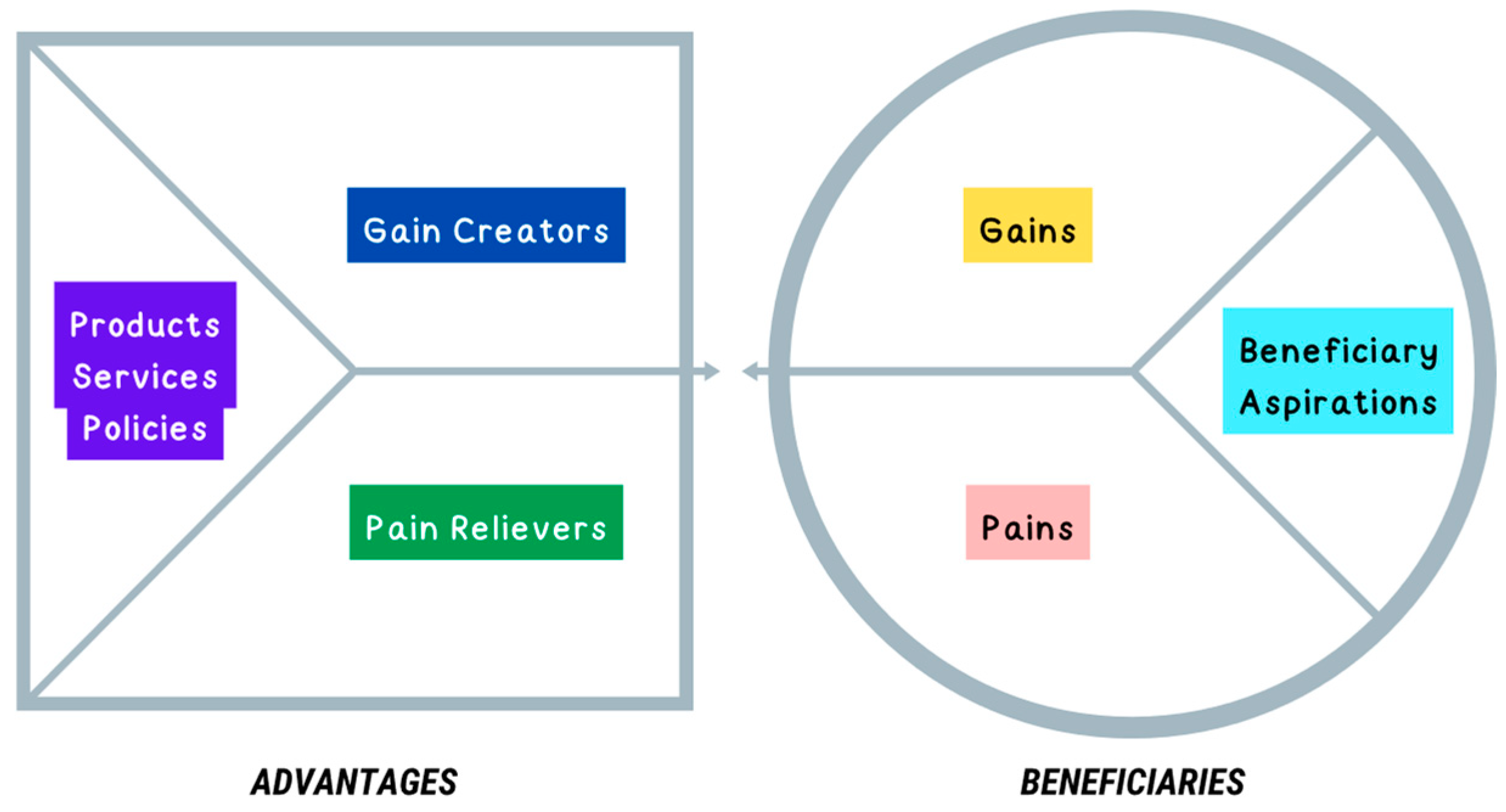
The final step involves verifying the problems, products, and business model of the proposed VR use case. Problem and product verification, in this case involving problem–solution fit analysis, will be documented in the Value Proposition Canvas (VPC) format. In contrast, business model verification will be documented in the Business Model Canvas (BMC) format. Both of these instruments were developed by Alex Osterwalder and Yves Pigneur [44,48]. Considering that VPC is very business-oriented, with its main profit-oriented goal making it difficult to focus on impact-oriented solutions [49], this study proposes the use of the Sustainability Value Proposition Canvas (sVPC) by Denis Gillet et al. [49] (Figure 6), which is dedicated to SDGs with a focus on impact-oriented solutions.
Figure 6. Sustainability Value Proposition Canvas (sVPC).
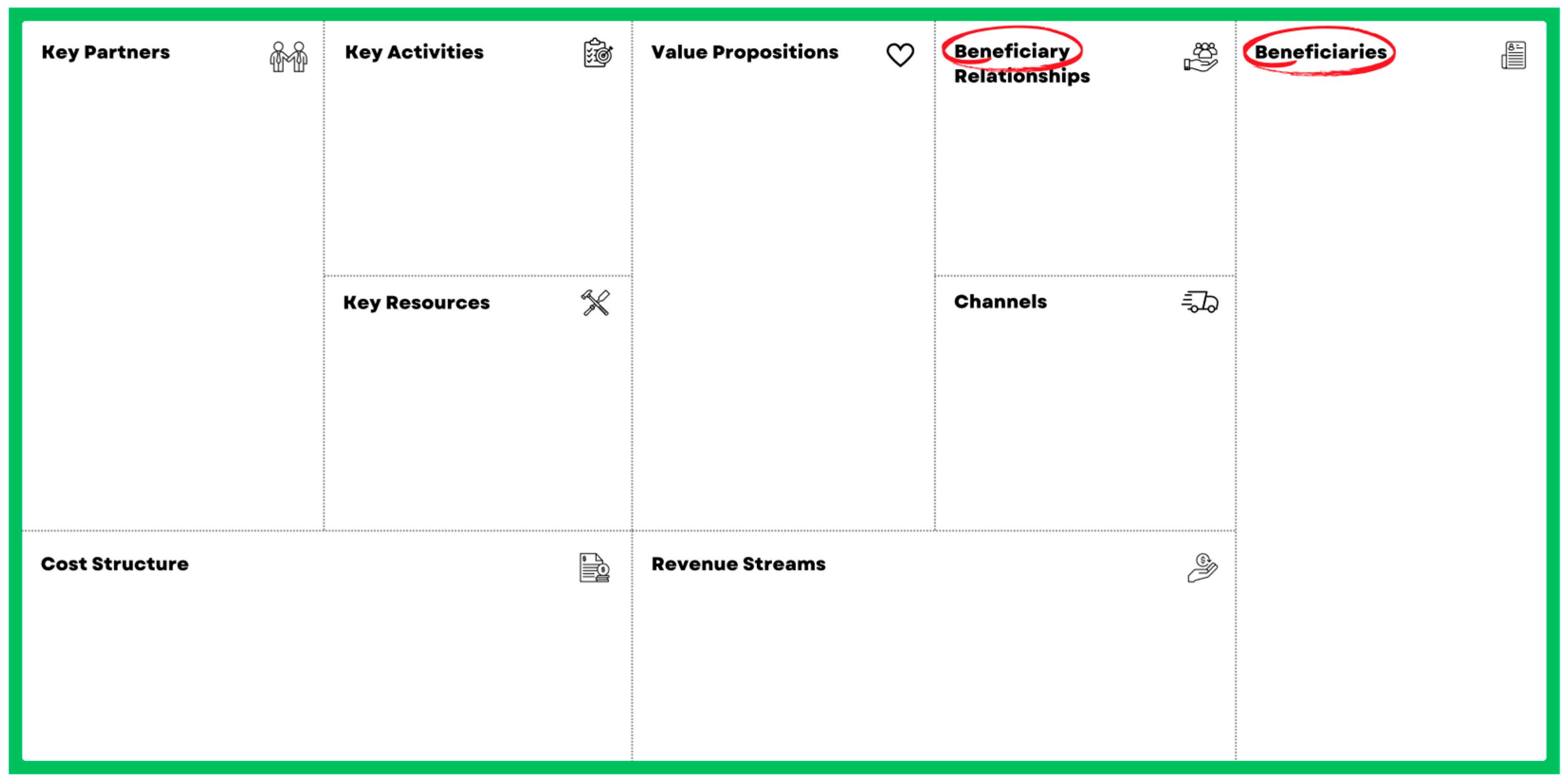
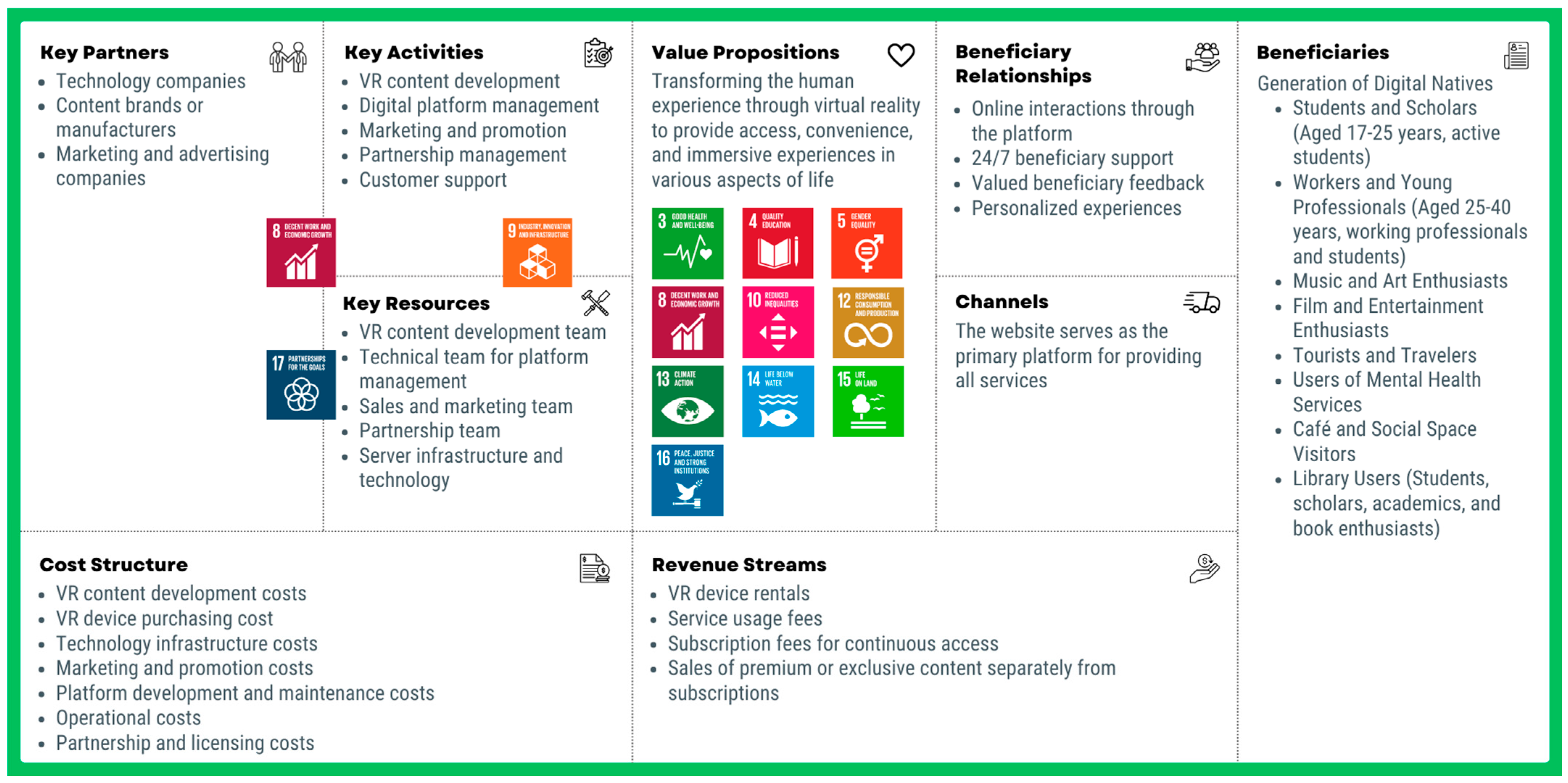
The business model formulation uses BMC, a strategic business planning tool described in the book “Business Model Generation” [50]. This tool allows companies to document current and desired future business models [51]. On the other hand, Gonçalo Cardeal et al. [21] proposed an extension of the BMC that incorporates sustainability aspects called the Business Model Canvas for Sustainability (BMCS), which integrates all dimensions of sustainability comprehensively into a single canvas to ensure alignment and vertical coherence in business analysis. In our study, the BMC was also adjusted to follow the sVPC concept (Figure 7), namely in terms of vocabulary, using the term “beneficiaries” instead of “customer”. This adjustment highlights that the business model is focused on impact-oriented solutions aimed at assisting the community [49].
Figure 7. Proposed Sustainable Business Model Canvas (sBMC).
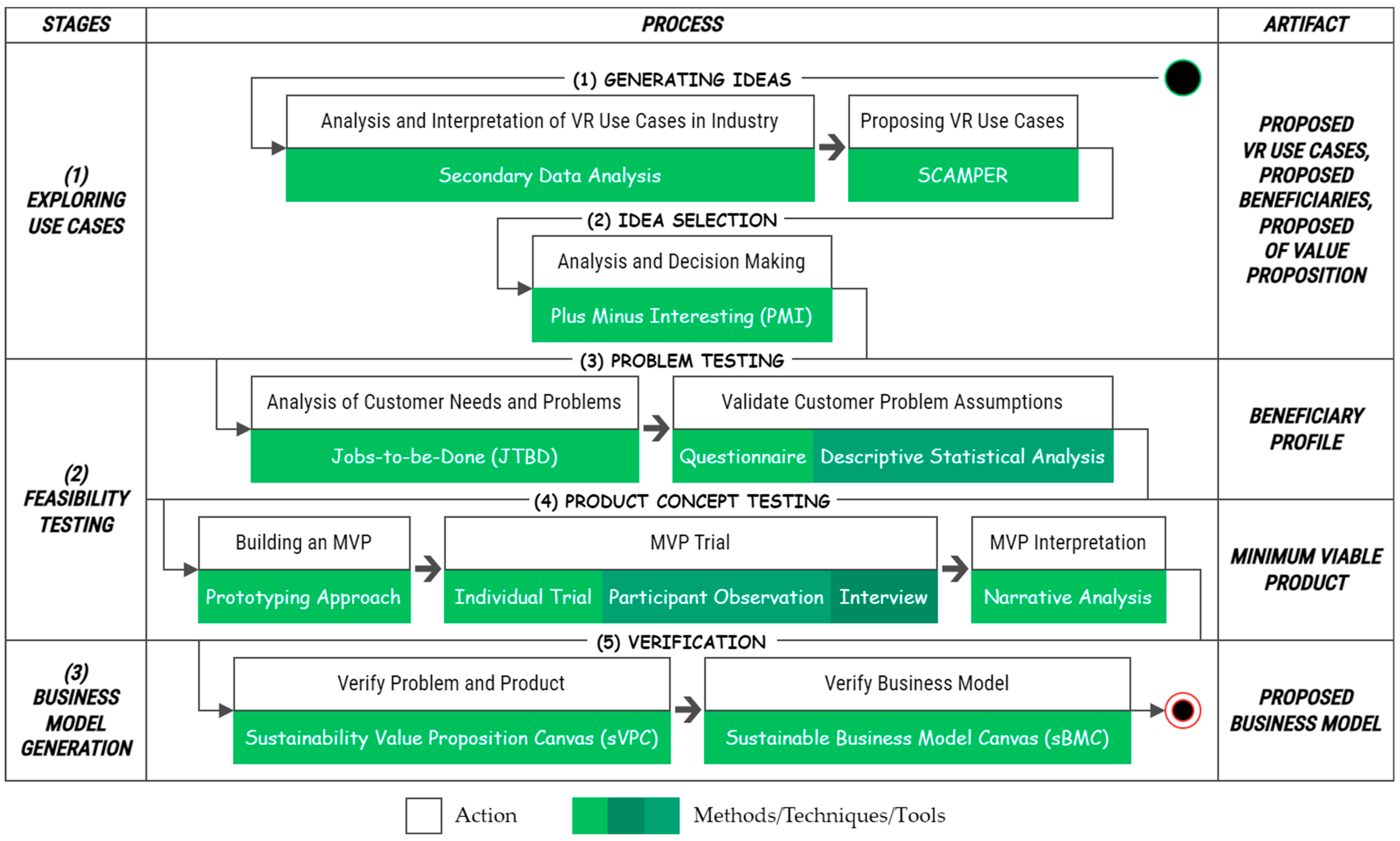
Figure 8 illustrates this study’s overall proposed customer discovery process techniques and its supporting instruments (methods, techniques, and tools used). Generally, this process is divided into three main stages—(1) Exploring Use Cases, (2) Feasibility Testing, and (3) Business Model Generation—with five specific steps, as follows: (1) Generating Ideas, (2) Idea Selection, (3) Problem Testing, (4) Product Concept Testing, and (5) Verification.
Figure 8. Proposed techniques for the customer discovery process.

2.3. Research Design

Table 4 presents the overall research design used in this study, detailing the hypothesis, research questions, objectives, expected outcomes, methodological framework, data collection and analysis tools, and techniques employed.
Table 4. Proposed research design.
Table 4 outlines the practical research design utilized in this study. This design, underpinned by the research hypothesis, suggests that startups hold significant potential to exploit VR technology in addressing issues that affect the SDGs. The research question aims to understand the VR business model with use cases that have a problem–solution fit and are aligned with SDG aspects. This research focuses on exploring VR use cases to solve real-world problems related to the SDGs and develop a practical business model design. The expected outcome of this research is a business model design. The methodological framework combines quantitative and qualitative approaches within customer discovery (adapted) based on Customer Development processes. The study is facilitated by innovative tools such as SCAMPER, PMI, and JTBD, which add an element of excitement and intrigue to the research process. The study utilizes a WebXR-based functional prototype and VR headsets as a testbed. Data collection using questionnaires, discussions, and unstructured interviews via questionnaire applications (Google Forms), video conferencing, and instant messaging applications are employed. The data analysis is conducted using descriptive statistical analysis for the questionnaire data and narrative analysis for the observation and interview data. Documentation tools include the sVPC and sBMC, while data processing tools include SPSS, Microsoft Excel, and Generative AI ChatGPT.

3. Results and Analysis

The results of the study are presented in four sections, as follows: (Section 3.1). Proposed VR Use Cases, Beneficiaries, and Value Proposition, (Section 3.2). Beneficiary Profiles, (Section 3.3). Minimum Viable Product, and finally, (Section 3.4). Proposed Business Model.

3.1. Proposed VR Use Cases, Beneficiaries, and Value Proposition

3.1.1. Proposed VR Use Cases

After employing a combination of methodologies, including secondary data analysis, SCAMPER, and PMI, this study successfully generated and curated a comprehensive list of VR use case ideas. Table 5 presents the culmination of these efforts, outlining the outcomes of the proposed use cases identified through our rigorous process.
Table 5. Proposed VR use cases.
Furthermore, a hypothesis was formulated (within the context of Customer Development theory) that implementing a VR application catering to various user groups, such as individuals, professionals, families, communities, and groups with specific interests, such as mental health patients and literacy activists, would enhance their experience by providing greater access, convenience, and deeper engagement. The alignment between problems and solutions (problem–solution fit) with VR technology will contribute to the achievement of SDGs 3, 4, 5, 8, 10, 12, 13, 14, 15, and 16, demonstrating the potential of VR to offer impactful and sustainable solutions across various sectors.

3.1.2. Proposed Beneficiaries

Various user groups, including individuals, professionals, music fans, families, communities, travelers, mental health patients, and literacy activists, will benefit from VR applications, with experiences in public speaking training, virtual concerts, movie theaters, hotel explorations, mental health consultations, socializing in virtual cafés, exploring libraries, and reviewing tourist locations being enhanced. These benefits will address their specific needs for access, convenience, and immersive experiences.

3.1.3. Proposed Value Proposition

Virtual reality will transform the human experience by providing access, convenience, and immersive experiences in diverse aspects of life, such as public speaking, virtual entertainment, mental health, social interactions, education, and tourism. This transformation aligns with the Sustainable Development Goals (SDGs) 3 (Good Health and Well-being), 4 (Quality Education), 5 (Gender Equality), 8 (Decent Work and Economic Growth), 10 (Reduced Inequalities), 12 (Responsible Consumption and Production), 13 (Climate Action), 14 (Life Below Water), 15 (Life on land), and 16 (Peace, Justice, and Strong Institutions).

3.2. Beneficiary Profiles

3.2.1. Analysis and Design

The proposed beneficiaries in this study are the Y and Z generations. The reason for selecting Generation Y and Z, commonly referred to as “digital natives”, is because they are individuals who have been raised in a rich digital media environment and exhibit significant dependence on smartphones in their daily routines [35], thus creating a consumer base ready to adopt VR technology.
Table 6 details the results of the JTBD analysis for assumed beneficiary needs, formulated through reverse thinking for each proposed use case.
Table 6. JTDB analysis for assumed beneficiary needs.
Next, Table 7 outlines everything that might inconvenience beneficiaries before, during, or after attempting to complete a task or simply hinder them from completing it [44].
Table 7. JTBD analysis for assumed beneficiary problems.

3.2.2. Quantitative Findings

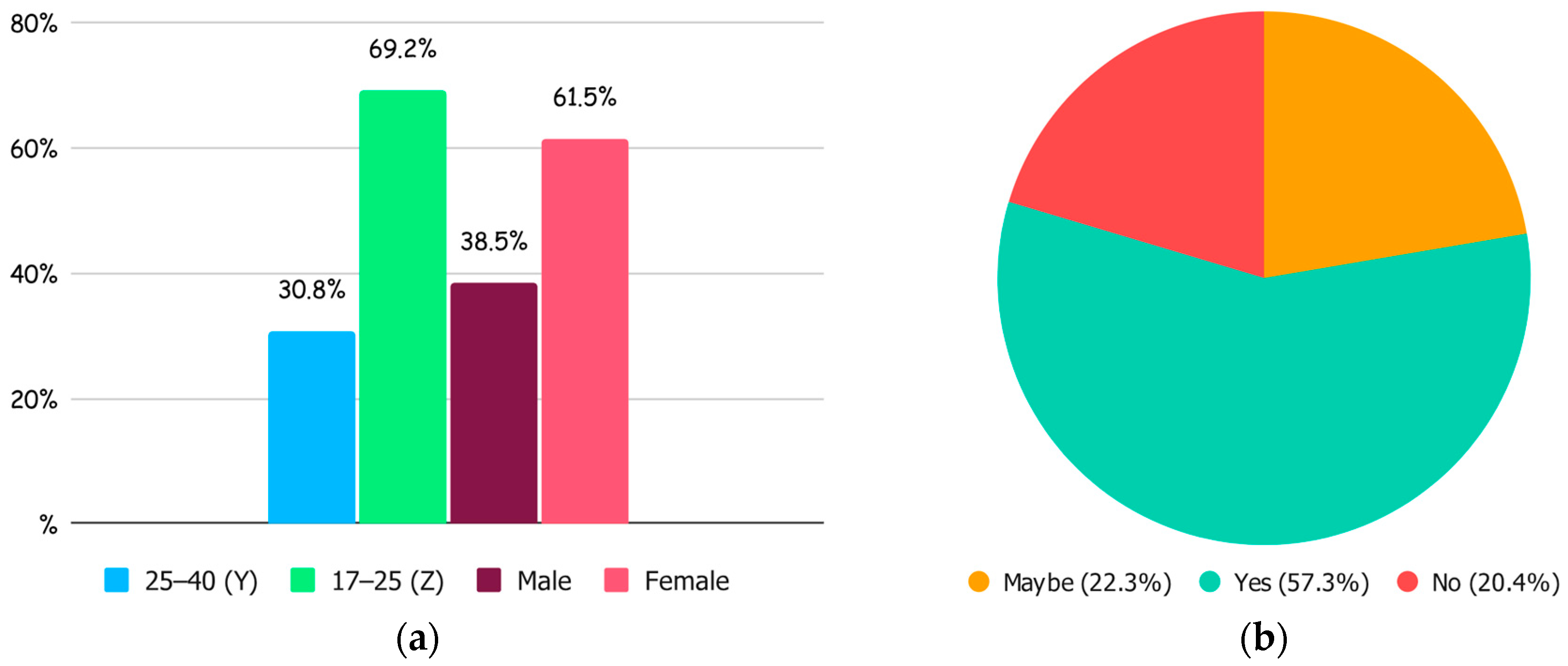
Figure 9, which consists of parts (a) and (b), illustrates the demographics of the respondents in the problem assumption validation questionnaire and their willingness to participate in the MVP trial. The sample (n = 104) consisted of Generation Y participants aged 25–40 and Generation Z participants aged 17–25, all hailing from Indonesia. Specifically, 69.2% of respondents belonged to Generation Z, while 30.8% belonged to Generation Y. The gender distribution further indicates that 61.2% were female and 38.8% were male, showing a notable skew with a significantly higher number of females and a more significant representation of Generation Z. Nevertheless, this distribution adequately represents the digital-native generations and is justified given that all respondents are young individuals familiar with information technology. Additionally, Figure 9b shows that 57.3% of respondents were willing to participate in the MVP trial, 22.3% were undecided, and 20.4% were unwilling to participate.
Figure 9. (a) Demographics of respondents in the problem assumption validation questionnaire; (b) whether respondents were willing to become a participant.
The reliability coefficient (Cronbach’s alpha) for participants’ responses to the problem assumption validation survey ranged from 0.83 to 0.84 (Table 8). According to [82], which cites [83], the proposed satisfaction level is 0.70. Therefore, we can argue that the ratings given to the examined statements demonstrate high reliability [82].
Table 8. Descriptive statistics of the problem assumption validation questionnaire.
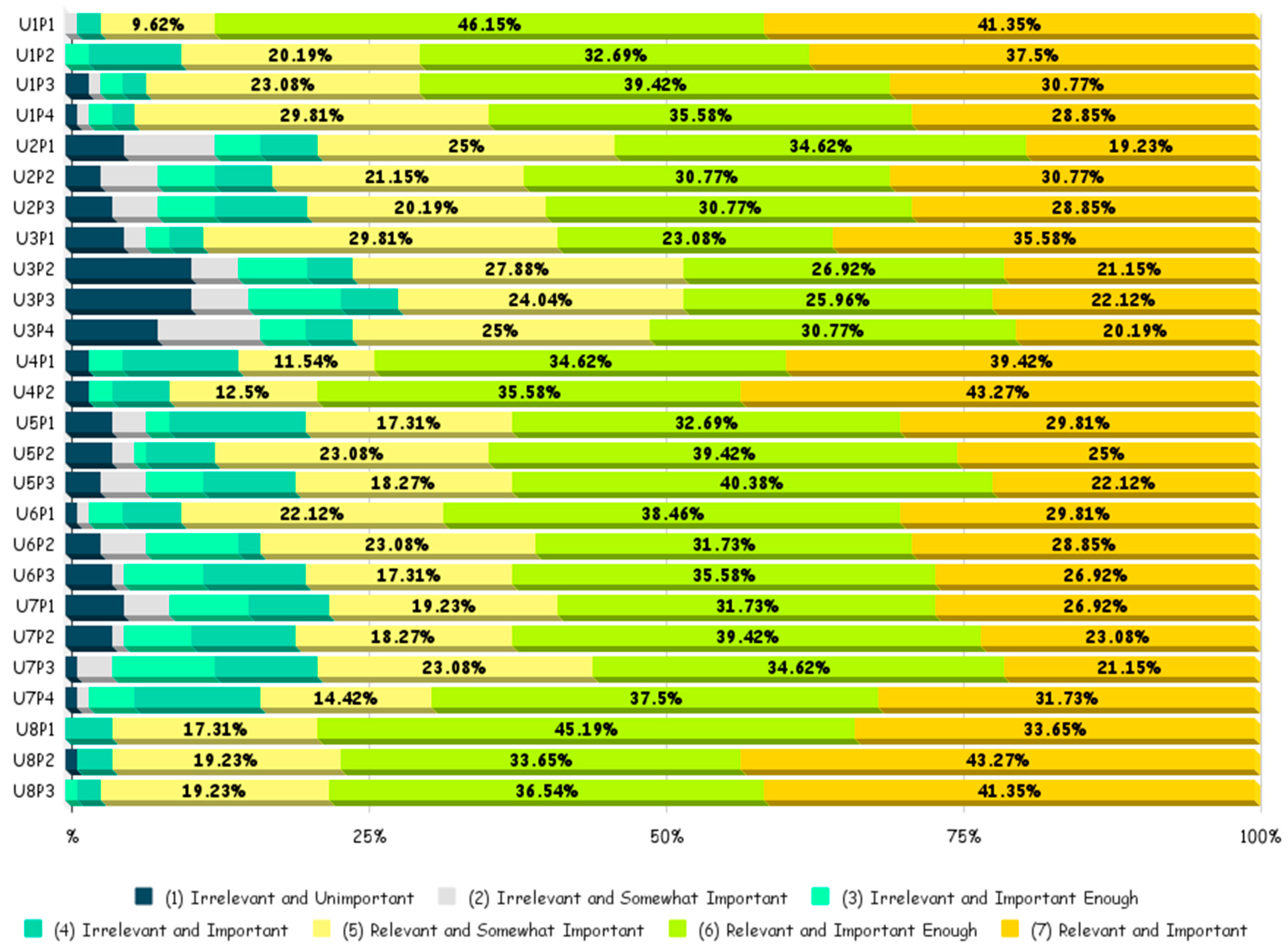
The findings of this study, as presented in Table 9, reveal varying levels of relevance attributed by respondents to each assumed problem. For instance, the issues represented by U1P1 and U8P3 are considered highly relevant, with 97.12% of respondents rating these issues as relevant. Similarly, U8P1 and U8P2 are deemed relevant by 96.15% of respondents, indicating a very high level of agreement regarding their significance. U1P3 and U1P4 also received high relevance ratings of 93.27% and 94.24%, respectively, underscoring their importance. Other issues, such as U1P2 and U6P1, are regarded as relevant by 90.38% and 90.39% of respondents, respectively, demonstrating a substantial recognition of their significance. The issues U4P2 and U5P2 also received high ratings, with relevance scores of 91.35% and 87.50%, respectively, reflecting a strong consensus on their importance. Moderate levels of relevance were observed for issues U2P1, U2P3, and U5P1, which were considered relevant by 78.85%, 79.81%, and 79.81% of respondents, respectively. Similarly, U6P3 and U7P1 received relevance ratings of 79.81% and 77.88%, respectively, indicating moderate recognition of their significance. Issues such as U3P2, U3P3, and U3P4 were rated slightly lower in relevance, with scores of 75.95%, 72.12%, and 75.96%, respectively.
Table 9. Problem assumption validation results in terms of percentage.
Overall, the data reveal that most assumed problems were considered relevant and significant by the majority of respondents, indicating a strong recognition of these issues among digital natives. Supporting this argument, Figure 10 demonstrates that, despite varying levels of importance based on respondent preferences, the sum of total relevance consistently reaches high percentages, with trends exceeding 75%.
Figure 10. Percentage of problem assumption validation results.

3.2.3. Characteristics

The characteristics of the respondents identified as beneficiaries in this study can be seen in Table 10.
Table 10. Characteristics of the respondents.
This study involved a total of 104 respondents, divided into two generational groups: Generation Z and Generation Y. Generation Z comprises individuals aged 17 to 25 years, while Generation Y includes individuals aged 25 to 40 years. Out of the 104 respondents, 72 (69.2%) belonged to Generation Z, while 32 (30.8%) were part of Generation Y, ensuring a substantial representation of both generational groups in the study. In terms of gender distribution among the respondents, 64 were female (61.5%) and 40 were male (38.5%). In Generation Z, there were 48 females (46.2%) and 24 males (23.1%). In Generation Y, there were 16 females (15.4%) and 16 males (15.4%). The primary activities of the respondents were categorized into three groups. The majority of respondents, 70 (67.3%), were students. Among them, 65 (90.3%) were from Generation Z, and 5 (15.6%) were from Generation Y. There were 25 respondents (24.0%) who were working professionals. Among these, 3 (4.2%) were from Generation Z, while 22 (68.8%) were from Generation Y. Additionally, nine respondents (8.7%) were both students and working. Of these, four (5.6%) were from Generation Z and five (15.6%) were from Generation Y. The respondents’ familiarity with technology was also assessed. A significant portion of the respondents, 78 (75.0%), reported being highly familiar with technology (54 (75.0%) from Generation Z and 24 (75.0%) from Generation Y). Another 26 respondents (25.0%) reported being moderately familiar with technology (18 (25.0%) from Generation Z and 8 (25.0%) from Generation Y). Notably, no respondents reported being unfamiliar with technology.

3.2.4. Profile

Regarding specific needs, the following table (Table 11) provides insights into the challenges faced by average students and workers aged 17–40 across various aspects of life, from communication skills and career advancement to mental health therapy and leisure activities. The data highlight prevalent issues and perceptions related to public speaking, attending events, watching films, booking accommodation, managing mental health, socializing in cafés, visiting libraries, and experiencing tourist locations. These findings underscore the diverse barriers and concerns affecting individuals within this demographic, shaping their experiences and choices.
Table 11. Analysis of beneficiary profiles based on questionnaire results.
In the U1 use case, we identify the target group as young individuals, particularly those aged 17 to 40 years. The majority are students actively seeking to improve their communication skills and confidence, as well as workers striving to enhance their career prospects. They belong to Generations Z and Y, who often face challenges related to public speaking. The main needs of this group include improving communication skills to effectively convey messages, which is expected to help them in both professional and social aspects of their lives. They also seek to build confidence, reduce anxiety associated with public speaking, and gain recognition from peers, thereby enhancing their social status. However, they face significant challenges such as difficulty in organizing their thoughts coherently while speaking and the inability to access appropriate places or facilities for practice. They often feel anxious or uncomfortable in unfamiliar situations, which can impair their performance and concentration when speaking publicly. VR technology is expected to provide an effective solution for them. By offering immersive simulation experiences, they can develop their speaking skills in a controlled and safe environment. This is anticipated to result in improved communication abilities, more effective message delivery, enhanced career prospects, and overall increased confidence. VR use is also expected to reduce public speaking anxiety and offer social recognition, thereby elevating status in professional and social settings.
In the U2 use case, the target group consists of individuals who face barriers to physically attending concerts and festivals. The majority are music and art enthusiasts actively seeking valuable live performance experiences who are hindered by factors such as the event’s distant location, uneven ticket distribution, and high crowd density, which can detract from their experience. This beneficiary profile spans various ages, but primarily includes young and young adult individuals belonging to Generations Z and Y. They have a strong desire to attend exclusive events and share memorable musical experiences with friends and their community. However, challenges such as limited access to sold-out concerts or difficult-to-reach locations and discomfort with large crowds often prevent them from participating directly. VR technology is anticipated to offer a solution by allowing them to enjoy concerts and festivals virtually from the comfort of their homes. This technology will provide flexible access without requiring long-distance travel, enabling them to attend events that may be sold out or physically limited. Personalized and enhanced audio/visual experiences are expected to create a safe, crowd-free environment, enhancing their virtual concert experience.
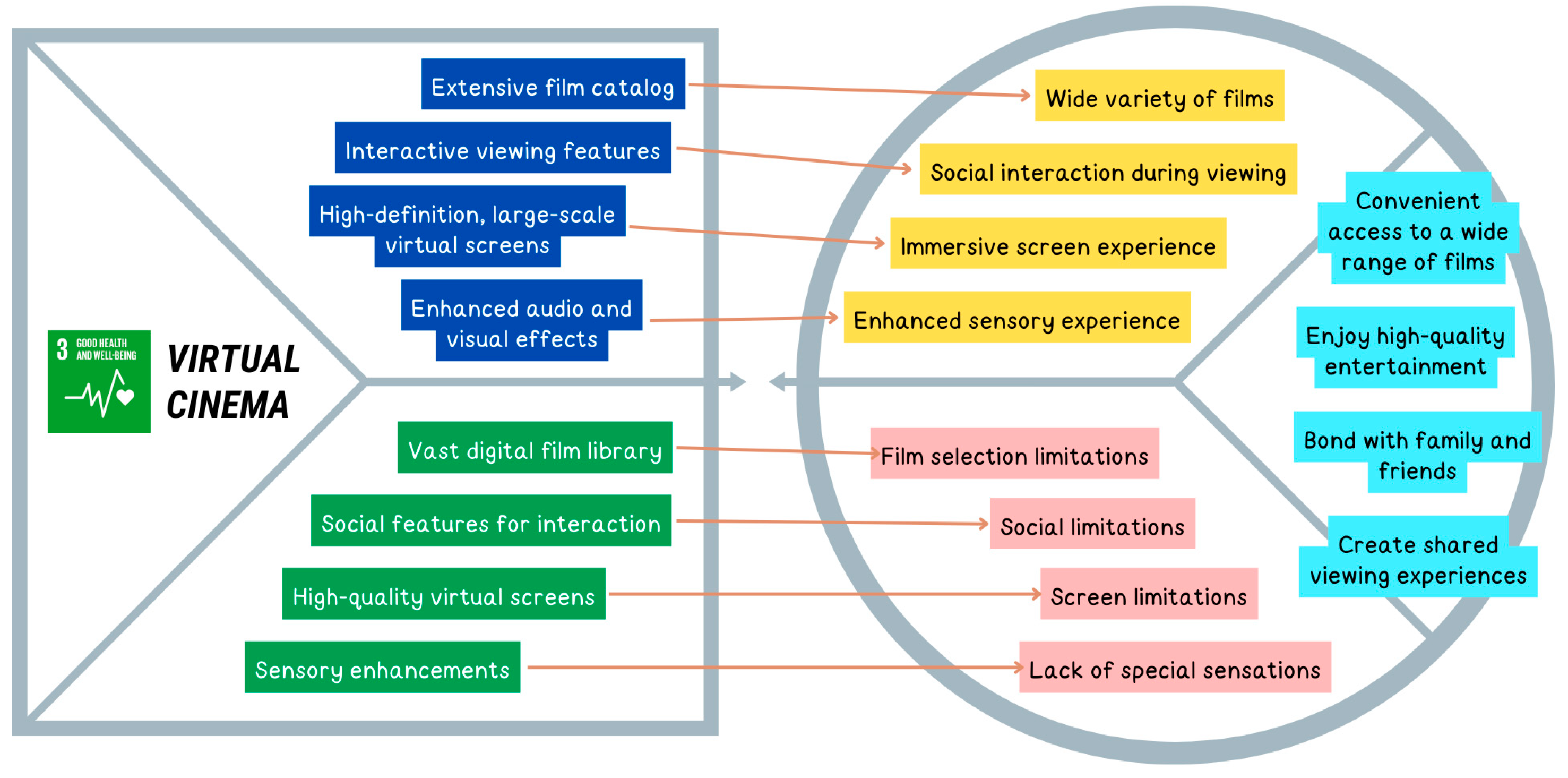
In the U3 use case, the target group is users who face challenges in their home movie-watching experiences, including the young and young adult generations. They are film and entertainment enthusiasts actively seeking ways to enhance their viewing experience quality. The majority of this group belong to Generations Z and Y, with varying needs such as easy access to a wide range of films, a desire for high-quality entertainment, and a drive to bond with family and friends through shared viewing experiences. They seek a more intense and immersive watching experience and hope to create memorable moments and share these experiences with their community. However, they encounter challenges such as limited access to certain films not available on streaming platforms or films that are accessible only at an extra cost. They also acknowledge that, despite advancements in home technology, the home viewing experience often cannot match the intensity and immersion of a cinema. This is especially true for smaller screen sizes with the inability to replicate special effects like IMAX or 3D. VR technology is expected to provide a solution to these challenges. With VR, users can enjoy a variety of films flexibly in a personalized environment, allowing deeper social interactions and a more immersive viewing experience. This technology will not only enhance audio/visual quality, but also offer a more engaging sensory experience, creating a safe and exciting virtual environment for users to explore and enjoy their favorite movies.
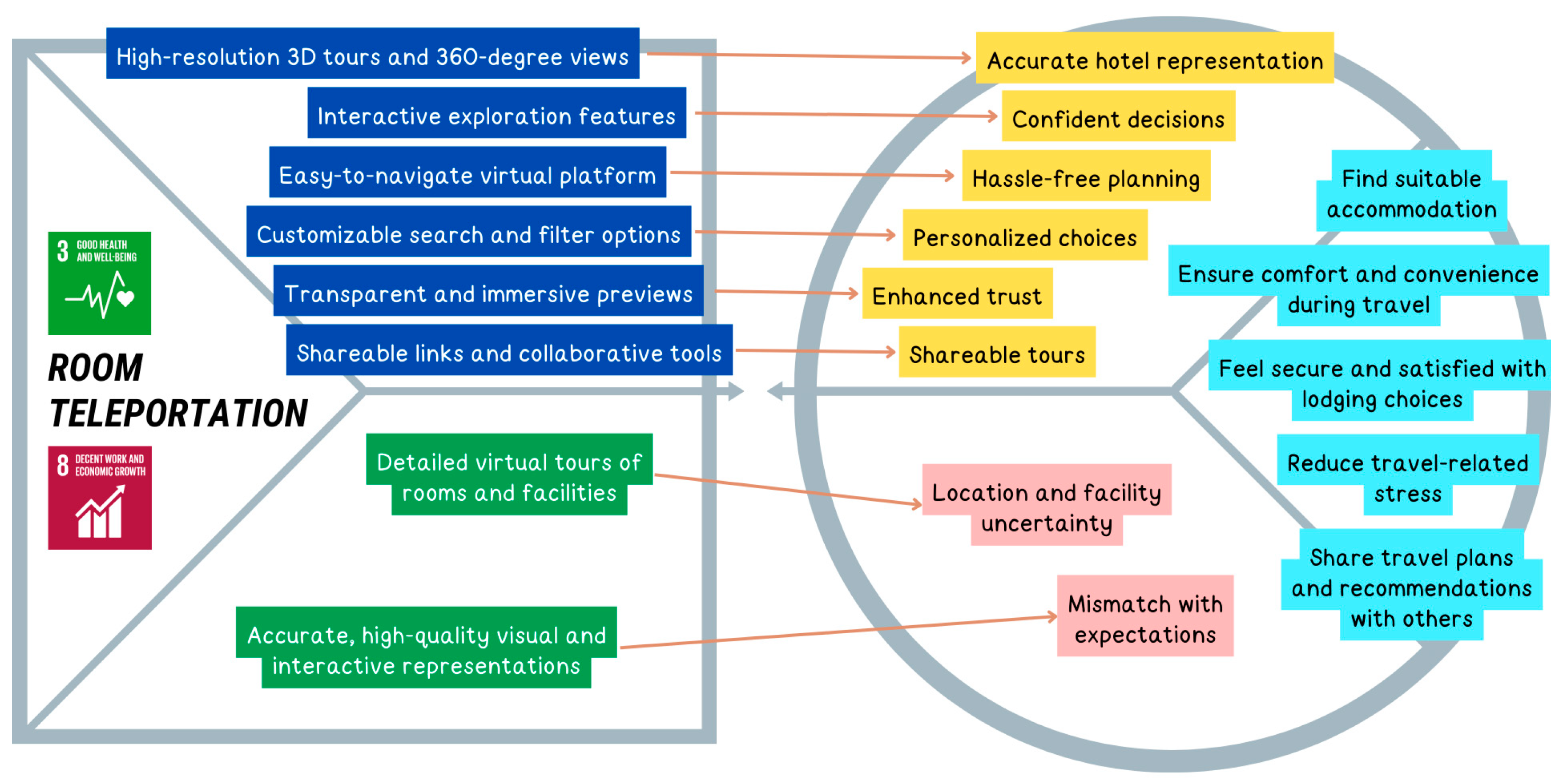
In the U4 use case, the target group faces challenges in the hotel booking process, covering various aspects from finding suitable accommodation to ensuring comfort and safety during their travels. This beneficiary profile includes individuals of various ages, but primarily the young and adult generations actively involved in travel planning and selecting accommodation that meets their needs. They seek enjoyable, safe, and satisfactory lodging experiences that align with their expectations when booking hotels. Their needs include finding accommodations that match their personal preferences, such as available facilities and strategic locations. They also want to ensure that the information they receive about hotels, whether through photos, descriptions, or reviews, is accurate and reflective of reality to avoid mismatches with their expectations. However, they face challenges such as inadequate information about hotel locations or facilities on booking sites, and uncertainty about whether the visual representations of hotels through photos and videos accurately reflect their actual condition. VR technology is expected to provide a solution by allowing users to explore various hotels virtually before making a booking decision. This technology enables users to gain a more accurate representation of the hotel, experience the room and facilities more realistically, and make booking decisions with greater confidence and timeliness. Additionally, users can plan trips hassle-free, choose personalized options that suit their preferences, and share experiences and recommendations with others more easily.
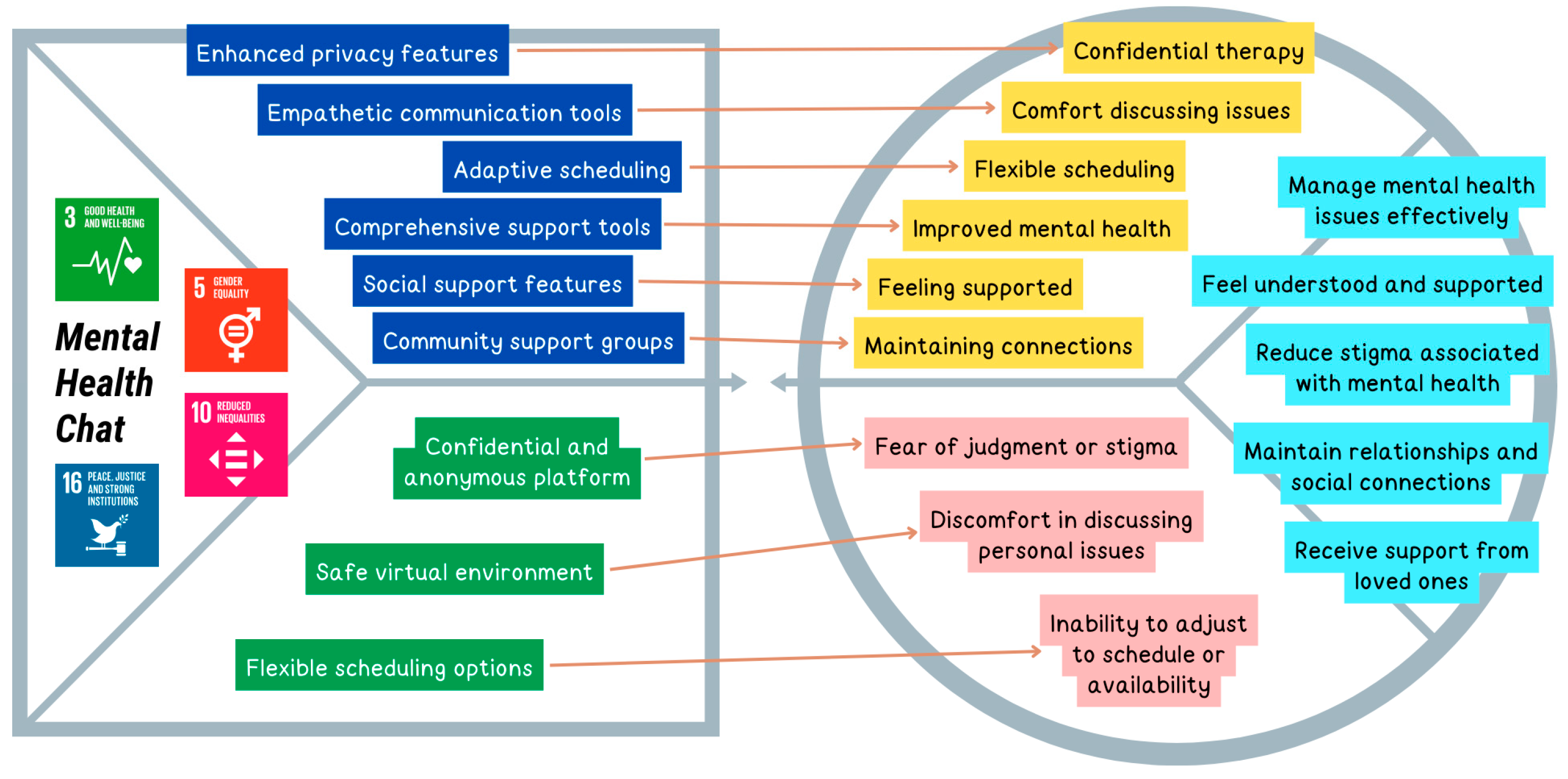
Use case U5 targets individuals facing challenges in accessing mental health therapy, leveraging technology to improve their quality of life through virtual private consultations. The beneficiary profile includes individuals of various ages, but primarily the young and young adult generations who are aware of the importance of mental health. They seek ways to effectively manage their mental health issues, feel understood and supported, and reduce the stigma associated with seeking therapy. Their needs include easy and confidential access to private consultation sessions, where they can openly discuss their personal issues without shame or fear of ostracism. They also desire flexibility in scheduling therapy sessions, accommodating their busy and irregular schedules. However, they face significant challenges such as feeling ashamed or fearful of seeking mental health therapy, which may hinder them from clearly expressing their needs. Additionally, they may feel uncomfortable opening up to a therapist they do not know well and have difficulty maintaining consistent therapy attendance due to busy schedules. VR technology for private consultation sessions is expected to provide a solution by allowing users to overcome these challenges. In a safe and trusted virtual environment, users can feel more comfortable and confident discussing their personal issues. They can benefit from more confidential therapy, with flexible scheduling as per their needs, and feel supported and understood by mental health professionals.
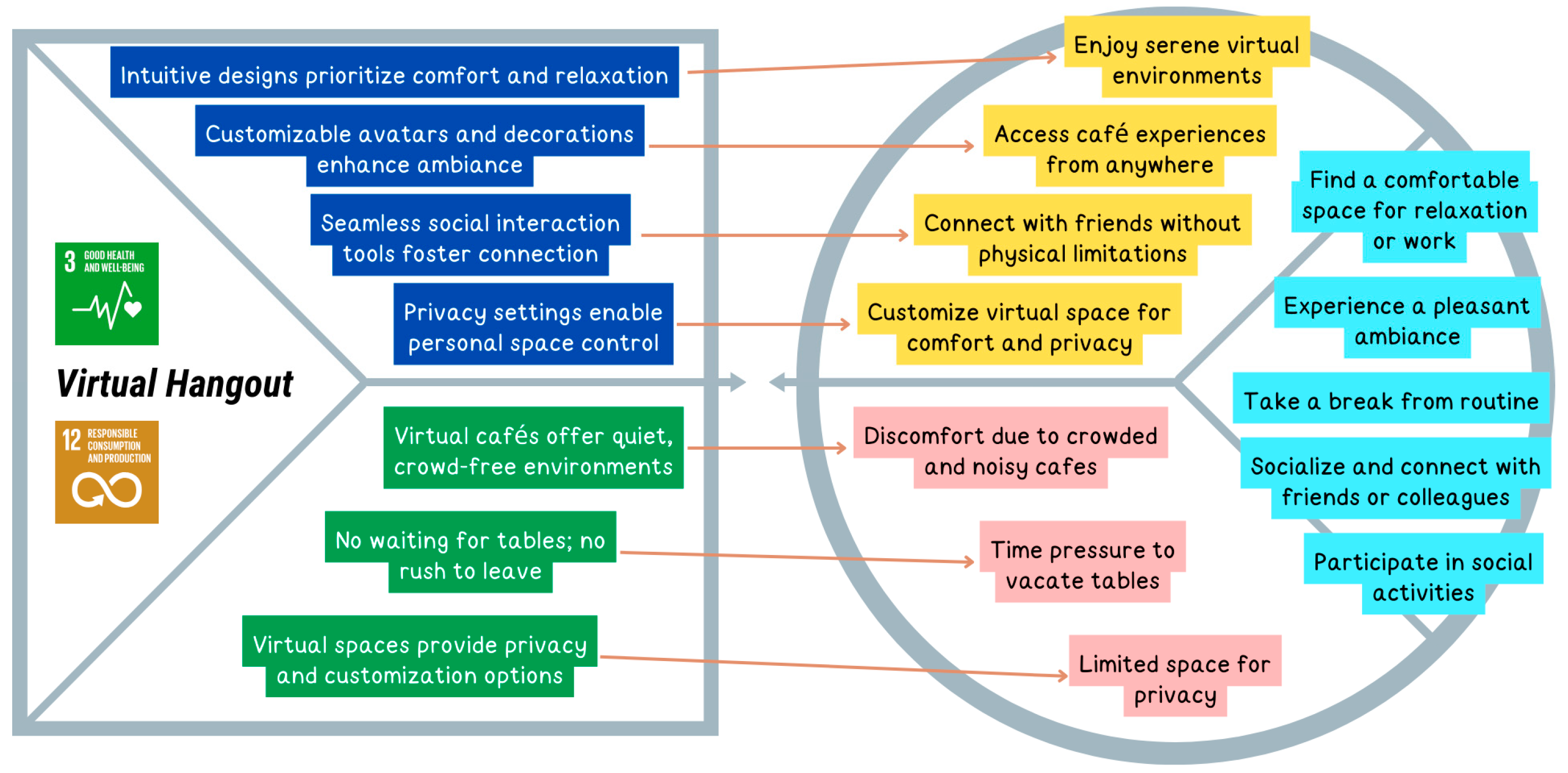
Use case (U6) targets individuals who face challenges in enjoying traditional café or coffee shop hangout experiences and seek virtual alternatives to meet their social and recreational needs. The beneficiary profile consists of various age groups, but primarily young and young adult generations actively seeking comfortable places to relax, work, or socialize with friends and colleagues. They value a pleasant atmosphere and want to take a break from their daily routine while staying connected with others and participating in social activities. Their main needs include finding comfortable and quiet places to spend time and having the flexibility to customize the virtual environment according to their personal preferences. They also desire the ability to connect with friends and colleagues without physical limitations, often a constraint in traditional café settings. However, they face significant challenges, such as noise and crowds in cafés, that make it difficult to enjoy relaxation or conversation with friends, as well as time-limit policies on table use, creating pressure to vacate seating. Additionally, some cafés may lack sufficient private space, reducing comfort in interaction or behaving according to personal preferences without disturbance. VR technology for virtual cafés is expected to provide a solution by allowing users to overcome these challenges. In a quiet and customizable virtual environment, users can enjoy a pleasant café experience without being disturbed by noise or time constraints. They can tailor the virtual space to their comfort and privacy needs while staying connected with friends and colleagues from anywhere in a more flexible and intuitive way.
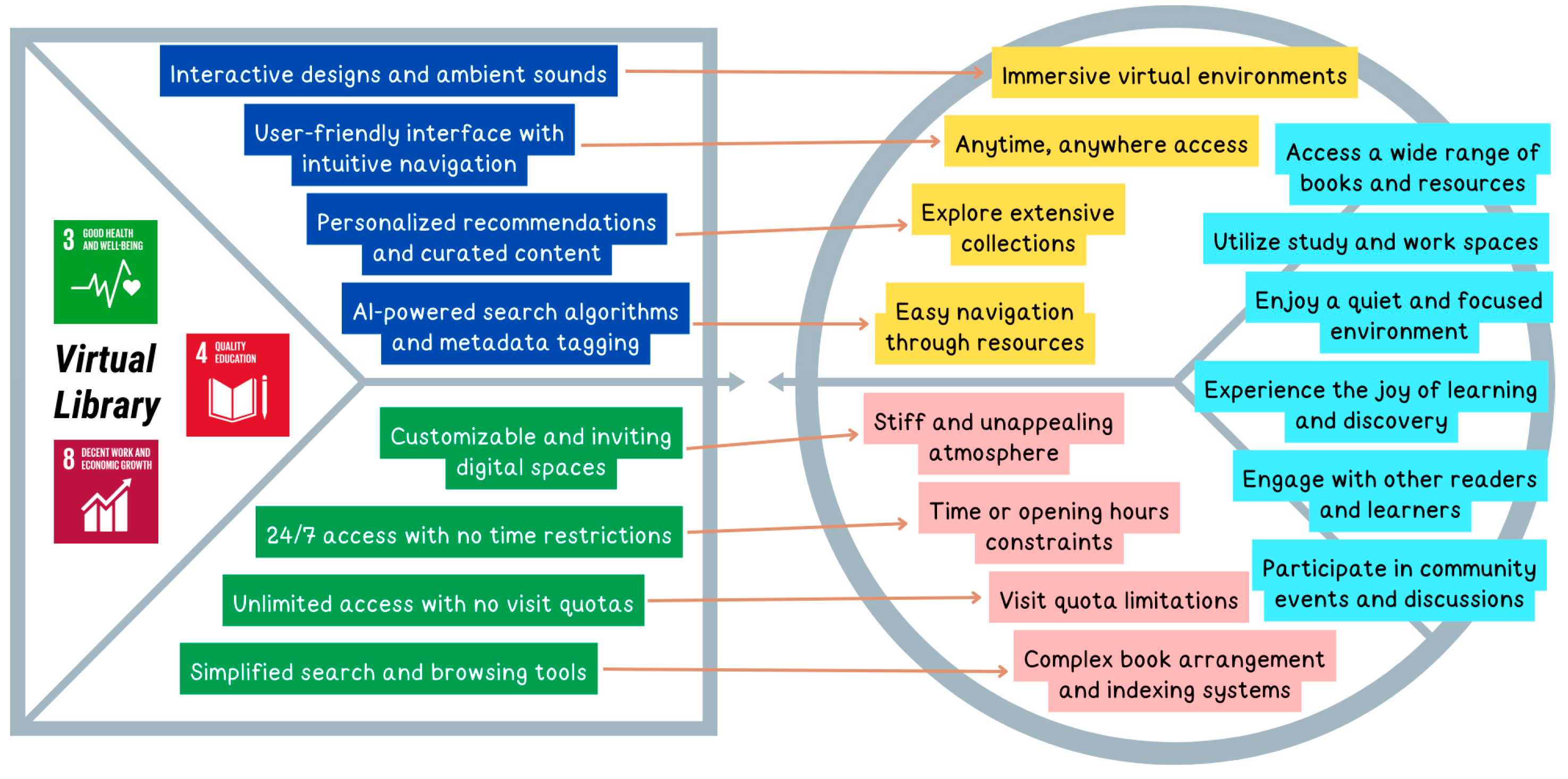
Use case U7 targets individuals who face challenges in accessing and utilizing physical library facilities and seek virtual solutions to meet their learning, discovery, and community interaction needs. The beneficiary profile includes various age groups, including students, scholars, and book enthusiasts actively seeking access to a wide range of books and resources without being limited by the physical constraints of traditional libraries. They are individuals who enjoy a quiet and focused environment for learning and exploration and want to interact with other readers and scholars via community discussions. Their main needs include easy and flexible access to a wide range of book collections and resources, as well as the utilization of study and work spaces provided by the library. They seek an immersive virtual environment where they can explore extensive book collections without time or location restrictions. They also desire easy navigation through library resources unencumbered by the complexities of book arrangement systems or visit quotas. However, they face significant challenges such as the rigid and unattractive atmosphere of libraries, which can reduce the interest in visiting or using their facilities. Additionally, limited library hours or hours that do not align with personal schedules make it difficult for them to visit physically. Other challenges include limited visit quotas or visitor density making it difficult to comfortably enter or use library facilities, and the complexity of book arrangement systems making it difficult to navigate the library. VR technology is expected to provide a solution by allowing users to overcome these challenges. In an immersive virtual environment, users can enjoy access to extensive book collections anytime, anywhere, and explore library resources with easy and intuitive navigation. They can experience the joy of learning and discovery in an engaging environment, unbound by physical or time constraints.
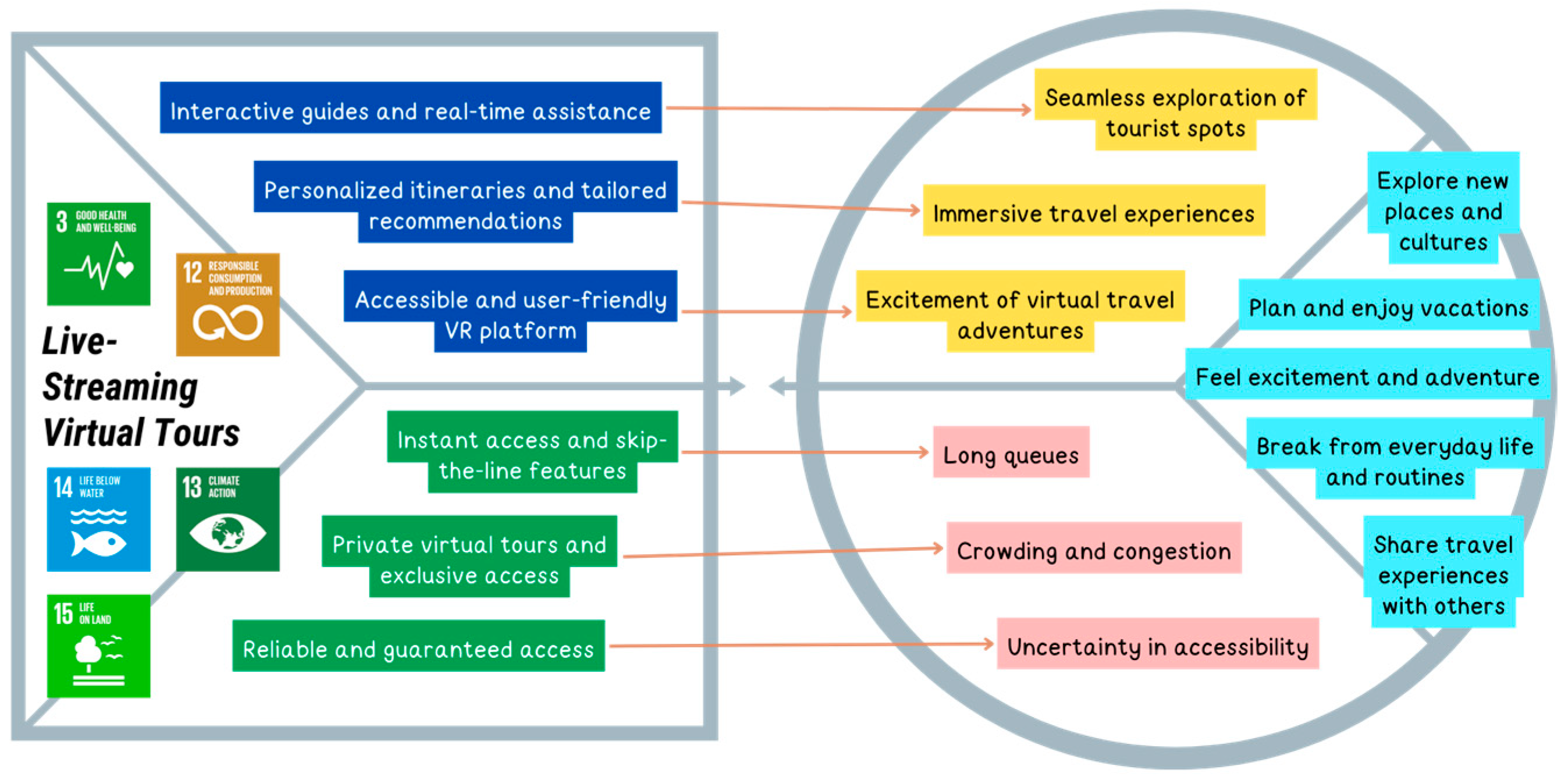
Use case (U8) targets individuals who face challenges in physically visiting tourist locations due to geographical and physical constraints, and seek virtual solutions to explore various tourist attractions and share memorable experiences with others. The beneficiary profile spans various age groups, primarily the young and young adult generations who actively seek to explore tourist attractions and experience different cultures. They are adventure seekers who want to share memorable experiences with friends and family through exciting exploration activities. Their main needs include finding and exploring new and interesting tourist spots without being limited by physical constraints, as well as feeling the atmosphere and environment of the location in a more immersive and realistic way. They also seek a safe and enjoyable experience without worrying about travel risks or physical fatigue. Additionally, they hope to share exploration experiences with friends and family to create shared memories, and seek trip recommendations and suggestions from others. However, they face significant challenges such as difficulty finding and accessing certain tourist locations, especially those that are remote or have challenging geographical conditions. They also encounter physical limitations, such as travel fatigue or the risk of accidents while exploring, which can detract from the experience. Additionally, they may feel overwhelmed by crowds in tourist spots, reducing the comfort and enjoyment of the visit. VR technology for exploring tourist locations with 360-degree panorama views is expected to provide a solution by allowing users to overcome these challenges. Users can explore various tourist locations more freely and realistically, feeling the atmosphere and environment of the area in an immersive way without worrying about physical constraints. They can enjoy a safe and exciting exploration experience and share these experiences with friends and family more easily, fostering social interaction and enhancing exploration enjoyment.

3.3. Minimum Viable Product

A recapitulation of the solution testing design can be found in Table 12 below.
Table 12. Recapitulation of solution testing design.
The development of the MVP was supported by the WebXR A-Frame framework, Next.js, and the 3D asset platform Sketchfab. The MVP is accessed through a website compatible with mobile devices running on Android or iOS operating systems, as well as VR headsets such as Google Cardboard. Specifically, B*b* VR Z6 was used in this study. Twelve participants were involved in the testing: six Generation Y participants and six Generation Z participants. Among them, five participants had some experience using VR, albeit only once or twice, while the remaining seven participants had never used VR at all. These participants were selected from the respondents in the problem-testing phase based on the criteria they had relevance to or due to experiencing almost all of the proposed problems. Thus, overall, they were ideal for the MVP trial testing solutions for each proposed use case.

3.3.1. Concept

During the trial session of our MVP, we explained and guided participants in using the VR technology while actively collecting data through direct observation, discussions, and interviews. This process aimed to clarify the concept and elicit requirements for future development. In markets like Indonesia, the high cost of VR units, which can reach around IDR 40 million per unit, presents a significant barrier to widespread adoption [84,85,86]. Although more affordable alternatives like cardboard VR headsets exist, issues related to size and the complexity of VR technology remain unaddressed in terms of mass-market needs. Therefore, the current MVP aims to strike a balance between accessibility and user experience, making it a potentially viable solution for broader adoption. The MVP leverages mobile devices (smartphones) and VR headsets designed as virtual reality 3D glasses for smartphones through WebXR, ensuring the solution is accessible to a wider audience, as nearly everyone owns a smartphone. Testing this minimal version is crucial to assess its feasibility in terms of quality and durability compared to more expensive versions.

3.3.2. Demonstration

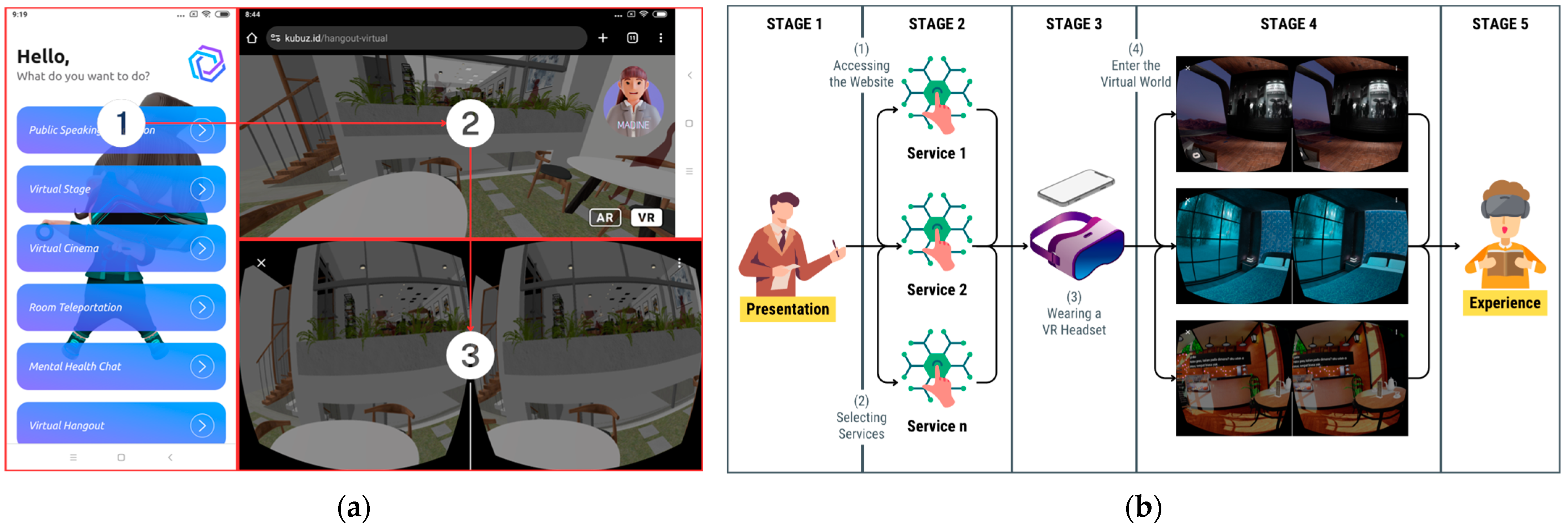
Figure 11a delineates the main flow of the MVP interface, commencing with the selection of service menus at number (1), proceeding to enter the chosen service at number (2), and culminating in transitioning to virtual reality mode at number (3). The various service scenarios tested encompassed public speaking simulation, virtual stages, virtual cinemas, hotel room teleportation, personal consultations for mental health, hanging out in virtual cafés, accessing information through virtual libraries, and participating in the live streaming of virtual tours. Each service scenario was crafted to address a range of previously validated issues. Meanwhile, Figure 11b presents a comprehensive overview of the journey undertaken by participants during the MVP trial. The process begins with an exposition of the proposed problems, accompanied by an explanation of how the MVP solution can address each problem. Each service is then elucidated to the participants, who actively explore each feature through the available menu. Subsequently, participants immerse themselves in the virtual world using VR headsets, experiencing an interface that presents stereoscopic visual scenes and audio reflections via smartphones.
Figure 11. MVP demonstration (1): (a) MVP interface flow; (b) MVP trial journey for participants.
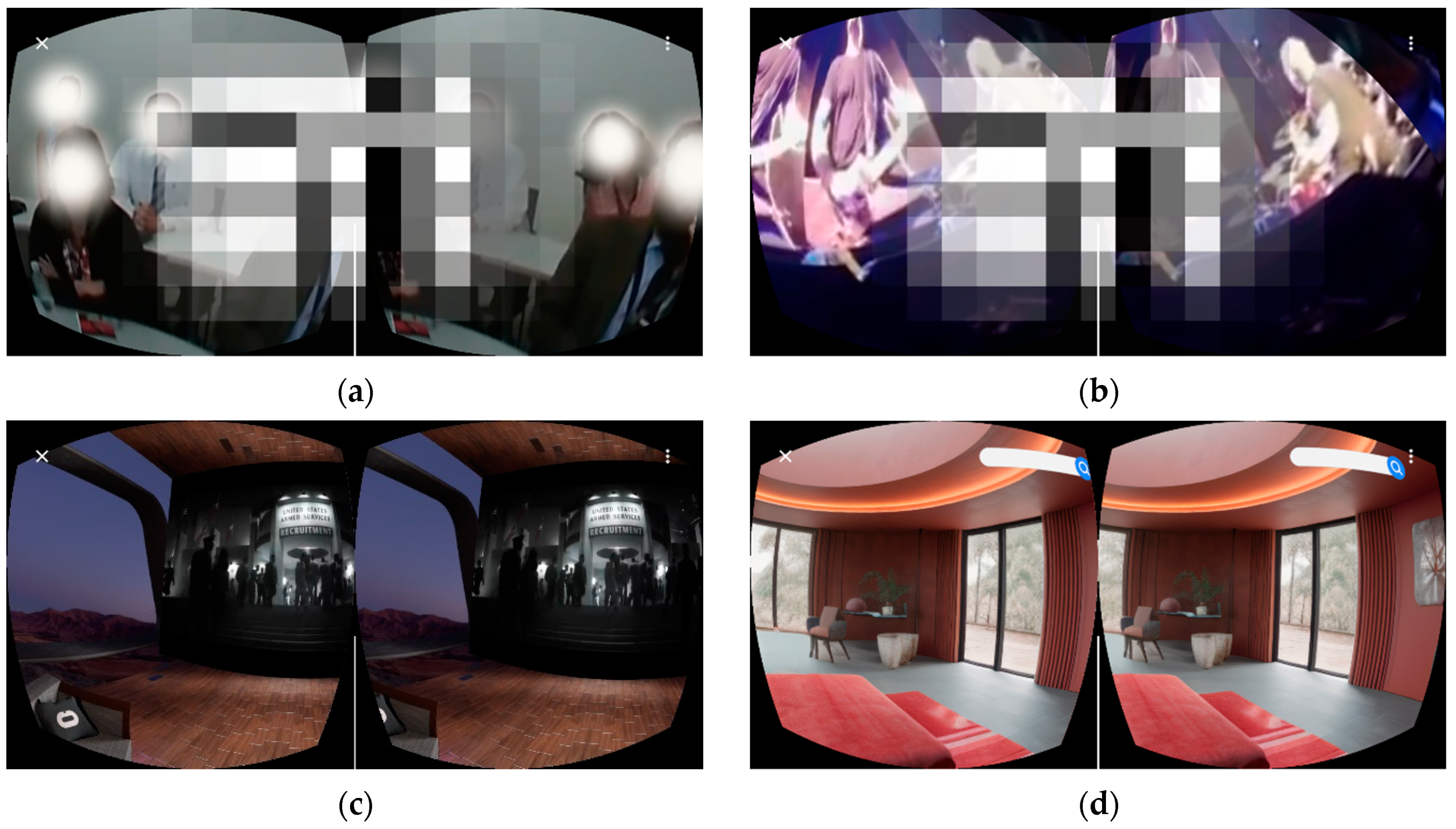
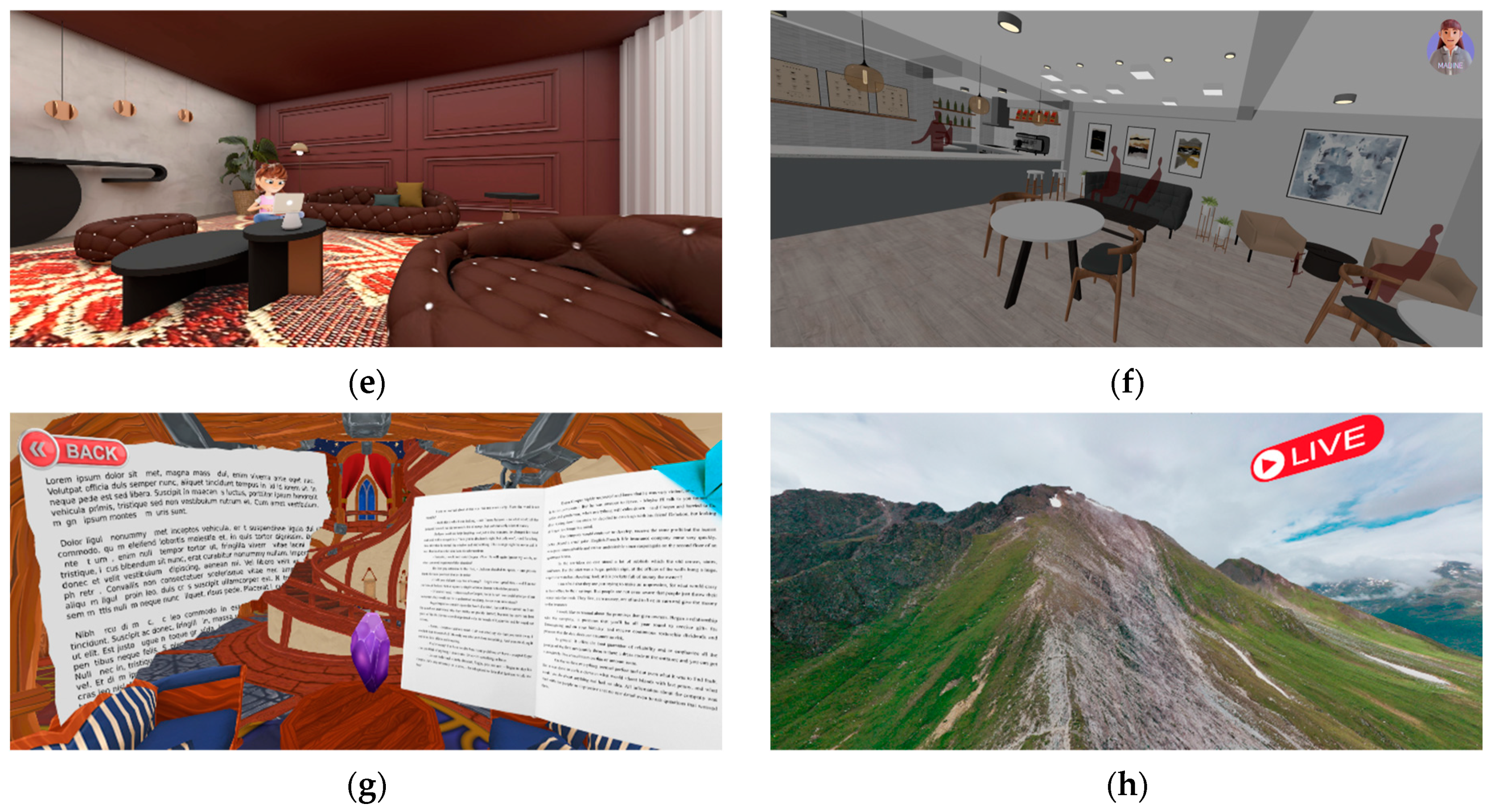
Figure 12 shows screenshots of the interface representing each service in the MVP. Figure 12a shows a public speaking simulation in stereoscopic mode designed for conducting public speaking training simulations. Figure 12b presents a virtual concert scene that offers participants an immersive experience, making them feel as if they are watching the concert from the front row. In Figure 12c, there is a display of a virtual cinema scene, providing participants with the experience of watching movies in an imaginative atmosphere with immersive sound. Figure 12d shows room teleportation in stereoscopic mode, allowing users to explore various hotels virtually before making a reservation. Figure 12e presents a scenario of a personal consultation situation for mental health therapy, with a relaxed atmosphere conducive to storytelling and light conversation. Meanwhile, Figure 12f depicts a virtual café scenario, providing a comfortable atmosphere conducive to working, completing assignments, or simply hanging out and meeting friends. Finally, Figure 12g illustrates a virtual library visit scenario. Meanwhile, Figure 12h depicts a real-time virtual tour scenario with a 360-degree video, seemingly guided by a tour guide.
Figure 12. MVP demonstration (2): (a) public speaking simulation stereoscopic mode display (video asset source: https://shorturl.at/m0Apc); (b) virtual stage concert stereoscopic mode display (video asset source: https://shorturl.at/BYCGs); (c) virtual cinema stereoscopic mode display (3D model source: https://skfb.ly/6SWzw); (d) room teleportation stereoscopic mode display (image asset source: https://shorturl.at/DO5TT); (e) mental health chat scene display (3D model source: https://skfb.ly/oI8uY); (f) virtual hangout scene display (3D model source: https://skfb.ly/6RsMK); (g) virtual library scene display (3D model source: https://skfb.ly/6D8HF); (h) live-streamed virtual tour scene display (3D model source: https://skfb.ly/ooWEo) (all URLs are accessed on 22 November 2023).

3.3.3. Qualitative Findings—Reaction

We observed several notable aspects of participants’ responses to the VR experience. Many participants reacted positively, expressing admiration for the immersive and realistic VR environments. They frequently mentioned VR’s potential to revolutionize various fields, such as education and entertainment. However, some participants provided neutral or critical feedback, highlighting areas for improvement. The average participant was able to use the VR headset continuously for approximately four minutes for each type of service. This duration was generally adequate for meaningful engagement with each VR scenario, but also emphasized the need to optimize user comfort in VR environments.
By measuring the duration of the VR experience in this trial, we aimed to assess whether a VR solution based on smartphones and inexpensive VR headsets could provide a comfortable experience. This consideration is important because the size and screen reflection of smartphones mean that they may not be as immersive as dedicated VR devices like Oculus or Apple Vision Pro. Additionally, we suspect that the gyroscope capabilities of smartphones may cause users to experience symptoms of motion sickness, referred to as VR sickness or cybersickness. This is corroborated by previous research indicating that VR users can experience symptoms of VR sickness. The symptoms include, but are not limited to, eye fatigue, disorientation, and nausea, which can impair the VR experience of users [87]. Overexposure to VR can lead to increased alterations such as headaches and nausea or malaise, dizziness, stomach awareness, and blurred vision [88].
In our study, two participants experienced nausea, possibly due to graphic delays or misaligned perspective angles in the VR experience. Participants’ statements such as “The graphics seem delayed when moving, which makes me dizzy” and “Watching a 360 video with perspectives not aligning with mine makes me feel nauseous” underscored the need for technical refinements to enhance the user experience. These findings align with earlier research, highlighting that the quality of the VR experience can significantly affect user comfort and the incidence of VR sickness. Ensuring a seamless and well-synchronized VR experience is crucial to minimizing these adverse effects and improving overall user satisfaction. Further details about these findings are presented in Table 13 below.
Table 13. MVP trial session observation results.
Next, Table 14 shows the survey results regarding interest in using VR among various groups of participants.
Table 14. Results of participants’ interest in using VR.
The table above (Table 14) summarizes the survey results regarding interest in using VR among different groups of participants, including students and employees. Analysis shows that their interest is focused on various VR applications, such as public speaking simulations (U1), virtual concerts (U2), virtual cinemas (U3), hotel explorations (U4), mental health consultations (U5), virtual cafés (U6), virtual libraries (U7), and tourist location tours (U8).
Students with VR experience, represented by Participants 1, 6, 9, and 11, indicated high interest (score 4) and potential for wide usage across all VR applications (U1-U8). However, they had some concerns about device rental costs and the need for more exclusive content. Notably, Participant 9 particularly liked the concept of virtual cafés (U6), indicating a preference for applications that facilitate social interactions in virtual environments.
Conversely, students without VR experience, including Participants 2, 4, and 5, showed relatively low interest in VR, with scores ranging between 1 and 2. There was a specific disinterest in virtual concerts (U2), virtual cinemas (U3), and online mental health consultations (U5). Participant 4 prefers watching movies in traditional cinemas over virtual cinemas (U3), and Participant 5 is not yet interested in online mental health consultations (U5).
Among employees with VR experience, represented by Participant 3, there is moderate interest (score 3) in VR applications, particularly in virtual libraries (U7). This suggests the potential for VR applications that support learning and research activities.
Employees without VR experience, including Participants 7, 8, 10, and 12, exhibit varying levels of interest, with particular concerns about subscription costs and the need for improved image quality. Interest scores for this group range from 2 to 3. Participant 8 prefers exploring tourist locations in person rather than through VR (U8), while Participant 10 feels that mental health consultations require higher privacy (U5). Additionally, Participant 12 emphasizes the need for improved image quality to enhance the VR experience across various applications (U1-U8).
In conclusion, students with VR experience tend to have a high interest in a wide range of VR applications, indicating significant potential for the adoption of this technology if cost and content issues can be addressed. On the other hand, students without VR experience show low interest, a strong preference for traditional methods, such as watching movies in cinemas, and a lack of interest in virtual concerts and online mental health consultations. Employees with VR experience also show considerable interest, particularly in applications that support learning, such as virtual libraries. Employees without VR experience exhibit more varied interest levels, with some concerns about costs and quality, as well as the need for higher privacy in mental health consultations. Thus, this study highlights that to achieve a wider adoption of VR, it is essential to address barriers such as device and subscription costs, as well as to improve content and image quality.

3.3.4. Qualitative Findings—Feedback

The feedback on the idea of enhancing public speaking training through VR simulations (U1) was predominantly positive. Participants expressed interest in improving the training environment. One participant stated, “In my opinion, if the situation of public speaking training can be enhanced, it would be good”. Another highlighted the importance of interactive features, suggesting, “Avatars being able to do things like teasing and taunting, hehe, that could be utilized for a more realistic simulation”. These suggestions emphasize the potential benefits of incorporating dynamic interactions and varied simulation scenarios to better meet training needs.
The participants voiced a common desire to attend concerts and festivals (U2) more easily, noting the challenge of securing tickets due to limited availability (U2P2). One participant shared, “Sometimes or even frequently, my friends and I want to attend concerts but don’t get tickets due to limited availability”. The idea of offering exclusive virtual tickets was met with approval, with another participant acknowledging, “I agree if there are exclusive tickets that allow us to experience the concert realistically, even from a distance”. Enhancements such as high-quality streaming and interactive features were suggested to provide a realistic and engaging virtual concert experience.
The concept of experiencing movies in a virtual movie theater (U3) received positive feedback. Participants were intrigued by the idea of watching films differently, with one stating, “I find it interesting to watch differently”. The immersive aspect and the ability to interact with other viewers in real time were highlighted as appealing features. One participant suggested, “A more advanced version that allows for watching Korean dramas while directly interacting with other viewers in different locations could be quite appealing”. Another participant asked, “Oh yes, sometimes I want to watch Netflix even though I only subscribe to Disney Hotstar. So, can I join someone who has a Netflix account and is currently watching using VR? So that I can watch along too”. These suggestions indicate a strong interest in creating customizable and interactive viewing experiences (U3J3, U3J4).
The feedback regarding virtual hotel exploration for reservations (U4) was largely positive. Participants recognized the potential for VR technology to enhance travel planning reliability and comfort (U4J2, U4J3). One participant commented, “It can indeed be utilized for surveying tourist spots or hotels. Sometimes, I hesitate or feel disappointed when visiting a tourist attraction, even though it seems promising on YouTube. Perhaps with various immersive experiences with VR, it becomes more reliable, and we also feel more comfortable”. Suggestions included developing immersive virtual tours of hotel facilities and tourist spots, with a focus on intuitive navigation and easy access to detailed information.
The participants expressed mixed feelings about VR-based mental health therapy (U5). While there were concerns about patients becoming too reliant on the virtual world, as one participant noted, “In my opinion, if the mental health therapy situation is developed and implemented, there’s a concern that patients might become too comfortable with the VR world and refuse to interact with others in the real world”, there was also a recognition of potential benefits. Another participant acknowledged, “Certainly, due to its virtual nature, it becomes more flexible. Sometimes, it’s also challenging to schedule consultations with doctors if it requires in-person meetings”. Suggestions included integrating social engagement features and motivational prompts to encourage real-world interaction outside of therapy sessions.
The idea of virtual café experiences (U6) received positive feedback. Participants appreciated the concept of enjoying a café ambiance virtually. One participant suggested, “In my opinion, the café doesn’t have to be entirely in 3D; it could also be a real café but with a 360-degree view”. Another participant recommended incorporating ASMR content, stating, “It would be even better if the videos were ASMR, providing sensations when listening to soft sounds like the wind, finger tapping, coffee cup clinks, whispers, or brush sounds touching the microphone. Such content is highly popular on social media”. These suggestions indicate a preference for realistic environments and engaging sensory experiences.
Participants had mixed reactions to the concept of virtual libraries (U7). While some viewed it as a gimmick, others recognized its potential value. One participant commented, “In my opinion, the concept of a virtual library is merely a gimmick. On Kindle, you just need to click for a quick search, and you can start reading immediately”. However, another participant saw potential in the ambiance and events offered by virtual libraries, noting, “However, it’s a different story if what’s being offered is the ambiance of a library, reading spaces, or its events; for accessing content, it should still be on-demand and at least as comfortable as existing digital libraries”. These suggestions highlight the importance of providing intuitive navigation (U7P4), comfortable reading spaces (U7J2, U7J3), and access to engaging content (U7J4).
The feedback on using VR for panoramic views of tourist locations (U8) was positive. Participants appreciated the potential for immersive exploration and virtual travel experiences. One participant shared, “It’s very helpful to use if it is for requesting surveyor assistance or paying someone to review a place that I can’t access”. Another participant, who enjoys mountain climbing, suggested, “I enjoy mountain climbing; if possible, I’d also like to offer exclusive tickets for people who want to experience mountain climbing directly but with a 360-degree VR device”. Additionally, a participant proposed enhancing user control, asking, “What about VR that’s wirelessly connected to a camera at the destination and can be moved according to our eye direction?” These suggestions indicate a strong interest in customizable viewing experiences and user-generated content features.

3.4. Proposed Business Model

The verification of problem assumptions, solutions, and business models indicates that VR applications have significant potential to enhance user experiences across various fields, such as public speaking training, virtual concerts, movie-watching experiences, hotel exploration, mental health therapy, virtual cafés, virtual libraries, and panoramic tourism. Data collected from a sample of Generation Y and Generation Z participants in Indonesia reveal that most of the assumed issues are deemed relevant and significant by respondents, with recognition rates exceeding 75%. During the MVP trial, participants provided diverse feedback, ranging from admiration for the immersive VR technology to criticism of technical aspects needing improvement, such as graphic delays causing nausea. The average duration for continuous VR headset use was about 4 min, which was sufficient for meaningful engagement but highlighted the importance of optimizing user comfort. The survey results indicate varying levels of interest in using VR across different participant groups. Students with VR experience exhibited high interest and potential for wide usage across all VR applications, although they expressed concerns about device rental costs and the need for more exclusive content. Conversely, students without VR experience showed relatively low interest, with specific disinterest in virtual concerts, virtual cinemas, and online mental health consultations. Among employees with VR experience, there was moderate interest, particularly in virtual libraries, suggesting potential for VR applications that support learning and research activities. Employees without VR experience exhibited varying interest levels, with particular concerns about subscription costs and the need for improved image quality. Overall, respondents demonstrated a strong interest in the proposed VR applications. They acknowledged VR’s potential to revolutionize education, entertainment, mental health, social interactions, and tourism. For instance, the idea of enhancing public speaking training through VR simulations received positive feedback, with suggestions for more dynamic interactive features. The concepts of exclusive virtual concert tickets and movie-watching in a virtual theater were well received, with recommendations for high-quality streaming and interactive features. Virtual hotel and tourist spot exploration were recognized to improve reliability and comfort in travel planning. Despite some concerns about VR-based mental health therapy, respondents recognized its flexibility and convenience. The virtual café and library concepts received mixed reactions, but there was an appreciation for realistic environments and engaging sensory experiences. All feedback and collected data were thoroughly documented in the Sustainability Value Proposition Canvas (sVPC) and the Sustainable Business Model Canvas (sBMC), highlighting VR’s potential to provide impactful and sustainable solutions across multiple sectors. This aligns with achieving Sustainable Development Goals (SDGs) 3, 4, 5, 8, 10, 12, 13, 14, 15, and 16.

3.4.1. Sustainability Value Proposition Canvas

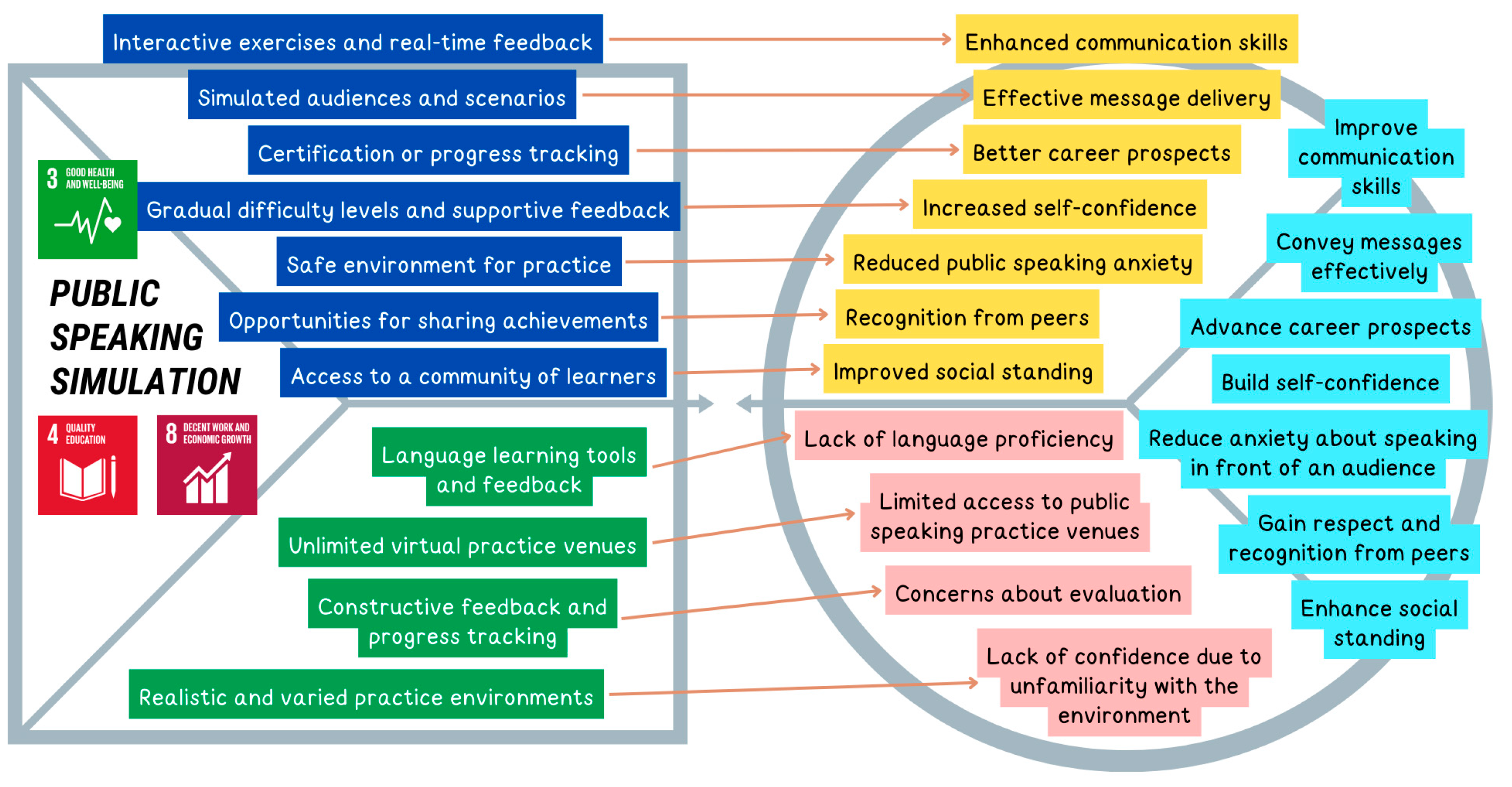
The use of VR for public speaking training simulations (Figure 13) significantly supports SDGs 3, 4, and 8. In relation to SDG 3 (Good Health and Well-being), VR helps reduce anxiety and boosts confidence [27,53,59], thus contributing to improved mental health. By providing a simulated environment where individuals can practice public speaking in a controlled setting, VR enables users to confront their fears and develop essential communication skills, ultimately enhancing their overall well-being. This aligns with the goal of creating a digital virtual world where social and economic activities can be conducted safely and freely [14,89]. Regarding SDG 4 (Quality Education), VR offers interactive and practical communication training, providing inclusive and high-quality educational programs [14,90]. Through immersive simulations, VR enables learners to engage in realistic scenarios and receive instant feedback, facilitating experiential learning and skill development. By leveraging VR technology for education, individuals from diverse backgrounds can access effective communication training, thus promoting educational equality and supporting the goal of ensuring inclusive and equitable quality education for all. In relation to SDG 8 (Decent Work and Economic Growth), VR enhances employability and productivity by developing crucial public speaking skills, fostering better job opportunities and economic growth. By providing a platform for individuals to hone their communication abilities, VR contributes to the expansion of the economic scale related to virtual reality [14,91]. Improved public speaking proficiency not only increases individuals’ competitiveness in the job market, but also enhances their overall effectiveness in various professional settings, thereby supporting sustainable economic growth and promoting full and productive employment for all.
Figure 13. sVPC for public speaking simulation (U1).
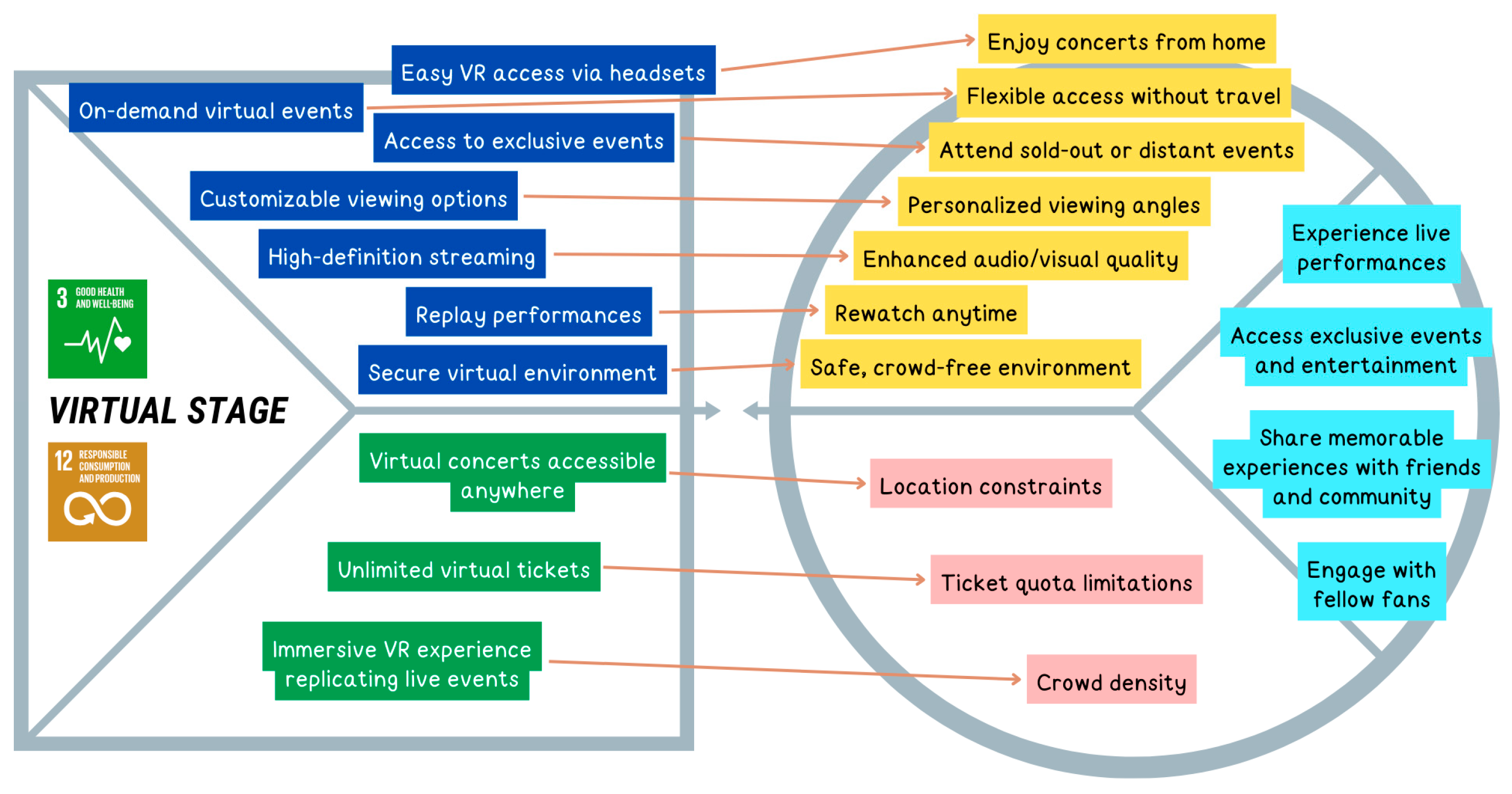
The use of VR for attending concerts and festivals virtually (Figure 14) supports SDGs 3 and 12. In relation to SDG 3 (Good Health and Well-being), VR enables safe and stress-free participation in live events, enhancing mental well-being and reducing the risk of injuries or exposure to illnesses. It also offers inclusive access [63] for individuals with disabilities, aligning with the goal of creating a digital virtual world where social and economic activities can be conducted safely and freely [14,89]. In relation to SDG 12 (Responsible Consumption and Production), VR reduces environmental impacts like waste and carbon emissions from travel to large-scale events, promoting more sustainable consumption and production patterns. By attending concerts and festivals virtually, participants can enjoy the experience without contributing to the environmental degradation often associated with physical events, such as littering and excessive resource use. This supports the goal of providing VR technology-based programs aimed at reducing food waste, as well as decreasing post-harvest losses and other food losses in production and supply chains [14,92].
Figure 14. sVPC for virtual stage (U2).
The utilization of VR to replicate the sensation of watching movies in a theater (Figure 15) significantly supports SDG 3 (Good Health and Well-being) by enhancing accessibility and comfort. VR eliminates physical barriers, allowing individuals with mobility issues or health concerns to enjoy movies without constraints. This aligns with the goal of creating a digital virtual world where social and economic activities can be conducted safely and freely [14,89]. Additionally, VR promotes mental well-being by providing a private and immersive environment where viewers can escape the stressors of the outside world. This inclusive and stress-reducing aspect of VR movie experiences can positively impact the mental health and overall well-being of beneficiaries, supporting the objectives of SDG 3.
Figure 15. sVPC for virtual cinema (U3).
The application of VR for virtual hotel tours (Figure 16) significantly supports SDGs 3 and 8. In relation to SDG 3 (Good Health and Well-being), virtual tours allow travelers to assess accommodations remotely, reducing the need for physical travel and exposure to health risks. This aligns with the goal of creating a digital virtual world where social and economic activities can be conducted safely and freely [14,89]. By offering safer travel planning alternatives, VR enhances the well-being of beneficiaries, providing them with a secure and convenient way to explore hotel options without the stress and potential health risks associated with physical visits. In relation to SDG 8 (Decent Work and Economic Growth), VR facilitates virtual exploration, which supports the growth of the tourism industry by making it easier for potential guests to explore hotel options. This contributes to economic development by creating opportunities for hotel businesses and promoting sustainable economic growth. The use of VR in the tourism sector can drive the expansion of the economic scale related to virtual reality [14,91], fostering innovation and increasing productivity within the industry. By enhancing customer experience and making the hotel selection process more efficient, VR helps generate more business opportunities and supports the creation of decent work for all.
Figure 16. sVPC for room teleportation (U4).
The utilization of VR for virtual private mental health consultation sessions (Figure 17) significantly supports SDGs 3, 5, 10, and 16 by addressing various aspects of well-being and societal challenges. In relation to SDG 3 (Good Health and Well-being), virtual consultations provide accessible and convenient mental health support, reducing barriers to seeking help and promoting early intervention. This aligns with the goal of creating a digital virtual world where social and economic activities can be conducted safely and freely [14,89]. Regarding SDG 5 (Gender Equality), VR consultations offer a safe and confidential space, mainly benefiting women who may face cultural or social stigmas in accessing mental health services. Regarding SDG 10 (Reduced Inequalities), virtual sessions bridge the gap in mental health care access, ensuring individuals from marginalized communities receive the support they need regardless of location or socioeconomic status. This supports the goal of ensuring diversity in virtual reality spaces to reduce racial bias [14,93]. Finally, regarding SDG 16 (Peace, Justice, and Strong Institutions), VR provides a secure and private environment for mental health consultations, promoting the protection of individuals’ rights and fostering inclusive societies. This technological application emphasizes the importance of redefining personal VR spaces to safeguard commercial and national interests [14,94].
Figure 17. sVPC for mental health consultation (U5).
The adoption of VR for socializing in virtual cafés (Figure 18) significantly supports SDGs 3 and 12 by enhancing individual well-being and promoting sustainable consumption patterns. In relation to SDG 3 (Good Health and Well-being), virtual café experiences provide opportunities for social interaction and relaxation, which are crucial for mental health and social well-being. By offering a virtual space for socializing, VR cafés help reduce feelings of isolation and promote connections, thereby improving overall mental health among beneficiaries. This aligns with the goal of creating a digital virtual world where social and economic activities can be conducted safely and freely [14,89]. Regarding SDG 12 (Responsible Consumption and Production), virtual cafés present an eco-friendly alternative to traditional social venues, reducing the environmental footprint associated with transportation and waste generation. Many individuals frequent cafés primarily for socializing, relaxation, or work purposes, rather than solely intending to purchase food or drinks. However, conventional cafés often require customers to make purchases to access these social spaces. Virtual cafés address this by providing a space for social interaction without the need for physical consumption. By encouraging virtual socialization, VR helps foster more sustainable consumption patterns, supporting the goal of ensuring sustainable consumption and production. This approach aligns with the aim of using VR technology-based programs to reduce food waste and decrease losses in production and supply chains [14,92].
Figure 18. sVPC for virtual hangouts (U6).
The use of VR to explore book collections and library facilities without the need for physical presence (Figure 19) significantly contributes to the achievement of SDGs 3, 4, and 8. Firstly, concerning SDG 3 (Good Health and Well-being), VR libraries mitigate health risks by providing access to educational resources without the need to be in crowded physical spaces, thereby promoting both mental and physical well-being. This aligns with the goal of creating a digital virtual world where social and economic activities can be conducted safely and freely [14,89]. Secondly, regarding SDG 4 (Quality Education), VR libraries offer universal access to education and literacy in an innovative and engaging manner. By providing immersive and interactive learning experiences, VR libraries facilitate inclusive and empowering learning opportunities that promote educational equality. This supports the need to provide educational programs using VR technology [14,90]. Lastly, in the context of SDG 8 (Decent Work and Economic Growth), VR libraries contribute to economic growth by enabling access to knowledge and skills relevant to the global job market. By providing virtual access to vast collections of books and resources, VR libraries empower individuals with the tools they need to enhance their skills and knowledge, thereby creating better job opportunities and enhancing productivity. This aligns with the expansion of the economic scale related to virtual reality [14,91], which is essential for sustainable economic development.
Figure 19. sVPC for virtual libraries (U7).
The tourism sector has frequently been criticized for its negative environmental impacts resulting from travel and activities at tourist destinations [95]. However, the utilization of VR for virtual tourism (Figure 20) significantly contributes to SDGs 3, 12, 13, 14, and 15, promoting well-being and environmental sustainability. Virtual tourism offers accessible and immersive experiences, reducing the stress and health risks associated with physical travel, thereby aligning with SDG 3 (Good Health and Well-being). This is in line with the goal of creating a digital virtual world where social and economic activities can be conducted safely and freely [14,89]. Moreover, by minimizing the environmental impact of traditional tourism, VR tourism supports SDG 12 (Responsible Consumption and Production) by reducing carbon emissions and promoting sustainable travel practices. Virtual tourism helps mitigate the carbon footprint associated with travel, contributing to efforts to combat climate change [14,96]. Additionally, virtual tourism plays a role in reducing waste generated by careless tourists. In virtual environments, visitors are not physically present to leave behind litter or produce waste, thus helping to preserve natural landscapes and ecosystems. Moreover, virtual tourism is crucial in conserving biodiversity and ecosystems, directly supporting SDG 15 (Life on Land). By reducing physical tourist traffic in sensitive ecosystems, VR tourism helps safeguard terrestrial habitats and wildlife populations from the disruption caused by conventional tourism activities. This aspect of VR tourism aligns to conserve and sustainably utilize terrestrial resources (SDG 15), and complements efforts related to marine conservation (SDG 14—Life Below Water) for sustainable development, as highlighted by the statement “using VR to support environmentally sustainable behaviors” [14,97].
Figure 20. sVPC for live-streamed virtual tours (U8).

3.4.2. Sustainable Business Model Canvas

The proposed sBMC (Figure 21) provides support for the achievement of SDGs in various ways. The proposed business model presents a Value Proposition Canvas, stating the following objective: “Transforming human experiences through virtual reality to provide access, convenience, and immersive experiences across various aspects of life”. This value proposition offers significant benefits to a diverse range of customer segments (beneficiaries), particularly in the generation of digital natives, including students and scholars (aged 17–25 years), workers and young professionals (aged 25–40 years), music and art enthusiasts, film and entertainment enthusiasts, tourists and travelers, users of mental health services, café and social space visitors, and library users (students, scholars, academics, and book enthusiasts).
Figure 21. Proposed VR Sustainable Business Model Canvas (sBMC) for startups.
Verified digital natives are key beneficiaries, including, for example, individuals looking to enhance their public speaking skills through online simulations, music enthusiasts enjoying virtual concerts, and movie fans seeking cinematic experiences from the comfort of their homes. Additionally, travelers exploring virtual hotel options, individuals seeking online mental health consultations, socializers gathering in virtual cafés, book lovers exploring virtual library collections, and tourists and surveyors interested in reviewing tourist locations with 360-degree panoramic views also benefit greatly.
Overall, this business model contributes to several SDGs, including SDGs 3, 4, 5, 8, 10, 12, 13, 14, 15, 16, and 17. The value proposition particularly aligns with SDGs 3 (Good Health and Well-being), 4 (Quality Education), 5 (Gender Equality), 8 (Decent Work and Economic Growth), 10 (Reduced Inequalities), 12 (Responsible Consumption and Production), 13 (Climate Action), 14 (Life Below Water), 15 (Life on Land), and 16 (Peace, Justice, and Strong Institutions) by addressing diverse needs and enhancing quality of life for beneficiaries.
Additionally, the key resources, key activities, and key partners identified within this business model contribute specifically to SDGs 8 (Decent Work and Economic Growth), 9 (Industry, Innovation, and Infrastructure), and 17 (Partnerships for the Goals). The primary activities of this business model include VR content development, digital platform management, marketing and promotion, partnership management, and customer support. These activities not only create new job opportunities, but also drive innovation within the VR industry, supporting SDG 8 and SDG 9. Furthermore, collaboration with key partners, such as technology companies, content producers, and marketing firms, strengthens the overall network and supports SDG 17, fostering a robust and innovative ecosystem. The revenue streams for this business model include VR device rentals, service usage fees, subscription fees for continuous access, and sales of premium or exclusive content separately from subscriptions. These revenue streams ensure a steady flow of income while providing various options for customers to access and benefit from VR technology. The cost structure comprises VR content development costs, VR device purchasing costs, technology infrastructure costs, marketing and promotion costs, platform development and maintenance costs, operational costs, and partnership and licensing costs. These costs reflect the necessary investments to build and sustain the VR platform, ensuring its quality, accessibility, and continuous improvement.

4. Discussion

4.1. Findings

This study generated a comprehensive list of VR use-case ideas that potentially impact SDG aspects (Section 3.1.1). The underlying assumption posited that VR applications catering to diverse user groups, including individuals, professionals, families, communities, and interest-specific groups, could enhance their experiences through increased accessibility, comfort, and deep engagement (Section 3.1.2). This alignment is particularly relevant to SDGs 3, 4, 5, 8, 10, 12, 13, 14, 15, and 16, highlighting VR’s potential to offer impactful and sustainable solutions across various sectors (Section 3.1.3). These findings demonstrate that the idea of using the SDGs as a starting point for identifying business opportunities to serve a market driven by actual issues related to SDG targets [9] is reliable.
After conducting problem testing, the data indicated that most respondents perceived the assumed problems as relevant and significant, reflecting a strong acknowledgment of these issues among the digital-native generation. While the perceived importance levels varied based on respondent preferences, the total percentage of relevance consistently reached high figures, with trends exceeding 75% (Section 3.2.2). At this point, the idea of having a worthwhile problem to solve (problem–solution fit), a crucial first step towards the success of any startup [1], has been identified. Following satisfactory outcomes, identified beneficiaries included Generations Y and Z (Section 3.2.4), recognized as digital natives who are highly familiar with digital technologies. These groups stand to benefit from VR applications for public speaking training (U1), virtual concerts (U2), cinema experiences (U3), hotel exploration (U4), mental health consultations (U5), socializing in virtual cafés (U6), exploring virtual libraries (U7), and reviewing tourist locations (U8). These applications meet their needs for accessible, comfortable, and immersive experiences.
The MVP, developed using the WebXR A-Frame, Next.js, and Sketchfab frameworks, was tested with participants from Generations Y and Z. It included scenarios such as public speaking simulations (U1), virtual concerts (U2), virtual cinemas (U3), hotel explorations (U4), mental health consultations (U5), virtual cafés (U6), virtual libraries (U7), and tourist location tours (U8). The testing demonstrated that VR can deliver immersive experiences as a value-added solution for the identified problems, despite some users experiencing side effects like nausea. Overall, the participants’ positive sentiments indicate that VR-based MVPs have the potential to succeed in the market. Furthermore, the MVP testing validated the potential use cases and identified beneficiaries in alignment with the SDGs, thereby supporting the hypothesis that startups leveraging VR technology have great potential in addressing issues impacting the SDGs (Section 2.3). However, challenges such as device cost, size, and content quality must be addressed to ensure the wider market success and acceptance of this technology. Participant feedback serves as a reference for further development toward enhanced versions. At this point, a problem–solution fit aligned with the SDGs has been identified. The proposed solutions meet the desired outcomes, although there is room for improvement. Additionally, the problems addressed are genuine and based on the SDGs, and the proposed solutions demonstrate the potential to meet the needs of the beneficiaries.
This study also generated a business model design formulated using sVPC (Section 3.4.1) and sBMC (Section 3.4.2) tools, emphasizing the value proposition of transforming human experiences through VR to provide access, comfort, and profound experiences across various aspects of life. This model broadly contributes to SDGs 3, 4, 5, 8, 10, 12, 13, 14, 15, and 16 by offering relevant solutions to beneficiaries, creating job opportunities, fostering innovation, and strengthening partnerships. These findings validate that exploring sustainable VR use cases has a positive impact by providing a foundational business model with potential for startups, particularly in identifying a problem–solution fit that aligns with aspects of the SDGs.
In conclusion, this study has successfully addressed the research question: “How can VR be used in business models for use cases with a problem–solution fit in alignment with SDG aspects?” The findings demonstrate that the proposed business model offers a value proposition aimed at solving real-world problems, presenting potential solutions through well-tested use-case concepts, and ultimately impacting various aspects of the SDGs. This indicates that integrating VR technology into startup business models holds significant promise for effectively addressing SDG-related issues.

4.2. Implications

The implications of the findings in this study are manifold. Firstly, the study reinforces previous research emphasizing the importance of innovative and sustainable business models within the startup ecosystem [98,99,100,101,102,103]. Secondly, it aligns with the proposition by Lauri Järvilehto [9] regarding the use of the SDGs as a starting point to identify business opportunities to serve markets driven by pressing issues related to SDG targets. Moreover, this research supports earlier studies highlighting startups as ideal organizations to address SDG challenges [9], underscoring VR’s significant potential in advancing the SDGs [14], and validating the hypothesis that startups can effectively leverage VR technology to tackle SDG-related issues. This research employs and enhances methods similar to the Customer Development method, as exemplified by Satrio et al. [30]. The demonstration of customer discovery techniques in the Customer Development method has proven practical and adaptable for designing business models based on the use of any technology. This complements existing research frameworks and similar methods, such as those conducted by Satrio et al. [30] and Brecht et al. [29]. Furthermore, identifying relevant issues among digital-native generations (Generations Y and Z) provides new insights and a foundation for similar research or alternative technology adoption solutions. The findings from the MVP testing offer new insights into the potential and shortcomings of basic MVPs that need to be addressed in future VR solutions to enhance credibility. The findings of the sVPC and sBMC offer a practical framework for VR startup research, relating to Denis Gillet et al.’s [49] proposal of using sVPC tools and substantive findings regarding value propositions and business model designs. Finally, this research contributes knowledge on impactful VR use cases that align with the SDGs, explaining their relevance, beneficiaries, and existing challenges, ultimately leading to effective business model designs. However, the current low-cost VR solutions based on WebXR and smartphones may not yet provide a fully comfortable experience for users, as our findings support previous research on VR sickness or cybersickness. This issue, arising from graphic delays and misaligned perspective angles, underscores the need for technical refinements. Ensuring a seamless and well-synchronized VR experience is crucial to minimizing these adverse effects and improving overall user satisfaction.

5. Conclusions

This study has identified several VR use cases that significantly support startups in developing business models that have a problem–solution fit while addressing SDG aspects. The findings confirm our hypothesis that startups can leverage VR technology to address SDG-related challenges effectively. This aligns with previous research highlighting startups as ideal entities to tackle SDG issues [9] and underscores VR’s potential in advancing the SDGs [14]. The study addresses fundamental questions regarding the adoption of VR in startup contexts, including identifying potential VR customers (beneficiaries), determining the problems worth addressing, devising suitable business models, and exploring VR’s role in startup business development, particularly in addressing SDG-related issues. The implications of this research are profound within the global business landscape. VR use cases that fit problem–solution frameworks can significantly contribute to addressing SDG challenges and establish a robust foundation for startup business models. Moreover, the customized customer discovery techniques applied in this study are practical, adaptable, and applicable for designing business models around various technologies. The findings from the MVP testing offer new insights into the need for enhancements in future VR solutions to improve user experience and credibility. Lastly, the sVPC and sBMC frameworks developed in this study provide practical tools for VR startup research and offer substantive insights into value propositions and business model designs.
However, this study has several limitations that should be acknowledged:
  • The focus was primarily on exploring VR use cases in the entertainment, training, education, and tourism sectors, potentially limiting relevance to other business sectors.
  • The study confined itself to the Generation Y and Z consumer market, which may not fully reflect the interests or needs of other demographic segments.
  • The MVP developed and tested centered around low-cost VR solutions for smartphones and headsets, highlighting the necessity for technical enhancements to improve user experience, and thereby not fully capturing the user experience with more advanced VR devices.
  • While the proposed method identifies potential business opportunities, its actual success hinges on complex environmental factors beyond consumer demand, including the popularization and portability of VR, as well as ethical and security concerns related to VR space usage.
For future research, the following steps are recommended:
  • Strengthen problem testing through in-depth interviews to delve into issues and clarify concepts before developing MVPs or prototypes (limited to presentations only). This sequential approach could mitigate weaknesses inherent in parallel product concept testing, particularly when individuals may not fully agree with the proposed solutions despite experiencing the actual issues they face.
  • Explore VR’s business potential across diverse markets and broader audience segments.
  • Conduct further studies to validate consumer purchase intentions related to the benefits of VR technology.
  • Utilize analytical tools such as SWOT analysis to evaluate internal and external factors influencing VR adoption.
  • Develop more sophisticated MVPs to better simulate real-world conditions and user experiences.
  • Implement ethical and security frameworks to address concerns related to VR space usage, ensuring user safety and privacy.
These steps are essential for strengthening the foundation of VR technology’s potential in the future, both for business applications and real solutions that contribute to achieving the SDGs.

Author Contributions

Conceptualization, D.P.P. and P.O.H.P.; methodology, D.P.P. and P.O.H.P.; software, D.P.P.; validation, D.P.P.; formal analysis, D.P.P.; investigation, D.P.P.; resources, D.P.P.; data curation, D.P.P.; writing—original draft preparation, D.P.P. and P.O.H.P.; writing—review and editing, D.P.P. and P.O.H.P.; visualization, D.P.P.; supervision, P.O.H.P.; project administration, D.P.P. and P.O.H.P. All authors have read and agreed to the published version of the manuscript.

Funding

This research was funded by the Universitas Indonesia. Research grant contract number: NKB-295/UN2.RST/HKP.05.00/2023.

Institutional Review Board Statement

We received approval from the respondents to include their questionnaire and interview responses in the study.

Data Availability Statement

The data can be downloaded here: https://shorturl.at/KPuNX (accessed on 5 June 2024).

Acknowledgments

We would like to express our gratitude to all participants in this study, as well as the research assistants and colleagues who contributed to the data collection and analysis.

Conflicts of Interest

The authors declare no conflicts of interest.

References

  1. Bakhar, M.; Harto, B.; Gugat, R.M.D.; Hendrayani, E.; Setiawan, Z.; Surianto, D.F.; Salam, M.F.; Suraji, A.; Sukmariningsih, R.M.; Ssopiana, Y.; et al. Perkembangan Startup di Indonesia (Perkembangan Startup Di Indonesia Dalam Berbagai Bidang); PT. Sonpedia Publishing Indonesia: Jambi, Indonesia, 2023; ISBN 9786230926709. [Google Scholar]
  2. Blank, S.; Dorf, B. The Startup Owner’s Manual: The Step-By-Step Guide for Building a Great Company; K&S Ranch: Pescadero, CA, USA, 2012; ISBN 978-0984999309. [Google Scholar]
  3. Silva, D.S.; Ghezzi, A.; de Aguiar, R.B.; Cortimiglia, M.N.; ten Caten, C.S. Lean Startup, Agile Methodologies and Customer Development for Business Model Innovation: A Systematic Review and Research Agenda. Int. J. Entrep. Behav. Res. 2020, 26, 595–628. [Google Scholar] [CrossRef] [Scilit]
  4. Ries, E. The Lean Startup; Random House USA Inc.: New York, NY, USA, 2011; ISBN 9780307887917. [Google Scholar]
  5. Gbadegeshin, S.A.; Natsheh, A.A.; Ghafel, K.; Mohammed, O.; Koskela, A.; Rimpiläinen, A.; Tikkanen, J.; Kuoppala, A. Overcoming the Valley of Death: A New Model for High Technology Startups. Sustain. Futur. 2022, 4, 100077. [Google Scholar] [CrossRef] [Scilit]
  6. CBINSIGHTS. The Top 12 Reasons Startups Fail. Available online: https://www.cbinsights.com/research/report/startup-failure-reasons-top/ (accessed on 15 March 2022).
  7. vOffice. 15 Penyebab Startup Gagal Yang Harus Dihindari. Available online: https://voffice.co.id/blog/penyebab-start-up-gagal/ (accessed on 1 July 2024).
  8. Grove, A. Is Your Startup Idea A Vitamin Or A Painkiller? And How to Test It! Available online: https://medium.com/lean-startup-circle/is-your-startup-idea-a-vitamin-or-a-painkiller-and-how-to-test-it-c2160a8ea122 (accessed on 1 July 2024).
  9. Järvilehto, L. Sustainable Development Goal Targets As Startup Business Opportunities. Aalto Univ. Publ. Ser. 2024, 30. [Google Scholar]
  10. UNDP. Sustainable Development Goals. Available online: https://www.undp.org/sustainable-development-goals (accessed on 5 June 2024).
  11. Ronaghi, M.H. The Effect of Virtual Reality Technology and Education on Sustainable Behavior: A Comparative Quasi-Experimental Study. Interact. Technol. Smart Educ. 2023, 20, 475–492. [Google Scholar] [CrossRef] [Scilit]
  12. Rashid, L. Entrepreneurship Education and Sustainable Development Goals: A Literature Review and a Closer Look at Fragile States and Technology-Enabled Approaches. Sustainability 2019, 11, 5343. [Google Scholar] [CrossRef] [Scilit]
  13. Cosio, L.D.; Buruk, O.; Fernández Galeote, D.; Bosman, I.D.V.; Hamari, J. Virtual and Augmented Reality for Environmental Sustainability: A Systematic Review. In Proceedings of the 2023 CHI Conference on Human Factors in Computing Systems, Hamburg, Germany, 23–28 April 2023. [Google Scholar] [CrossRef] [Scilit]
  14. Kunitake, Y.; Rights, V.; Field, V.R. The Potential of Virtual Reality for the SDGs: Infrastructure Development through Content and Cultural Policies. 2023. Available online: https://sdgs.un.org/sites/default/files/2023-05/A9%20-%20Kunitake%20-%20The%20Potential%20of%20Virtual%20Reality%20for%20the%20SDGs%20Infrastructure%20Development.pdf (accessed on 5 June 2024).
  15. Statista. Virtual Reality (VR)—Statistics & Facts. Available online: https://www.statista.com/topics/2532/virtual-reality-vr (accessed on 5 June 2024).
  16. Avalos, E.; Barrero, J.M.; Davies, E.; Iacovone, L.; Torres, J. Measuring Business Uncertainty in Developing and Emerging Economies. Available online: https://www.brookings.edu/articles/measuring-business-uncertainty-in-developing-and-emerging-economies/ (accessed on 17 October 2023).
  17. Riani, A. 4 Ways To Manage Startup Uncertainty. Available online: https://www.forbes.com/sites/abdoriani/2021/03/11/4-ways-to-manage-startup-uncertainty/?sh=321360097c77 (accessed on 15 November 2023).
  18. 1000StartupDigital. Vitamin Atau Painkiller? Menjadi Bagian Manakah Ide Startupmu? Available online: https://1000startupdigital.id/vitamin-atau-painkiller-menjadi-bagian-manakah-ide-startupmu/ (accessed on 1 July 2024).
  19. The Investopedia Team. Killer Application: What It Means, How It Works, Value. Available online: https://www.investopedia.com/terms/k/killerapplication.asp (accessed on 1 July 2024).
  20. Wikipedia. Killer Application. Available online: https://en.wikipedia.org/wiki/Killer_application (accessed on 1 July 2024).
  21. Cardeal, G.; Höse, K.; Ribeiro, I.; Götze, U. Sustainable Business Models–Canvas for Sustainability, Evaluation Method, and Their Application to Additive Manufacturing in Aircraft Maintenance. Sustainability 2020, 12, 9130. [Google Scholar] [CrossRef] [Scilit]
  22. Deu, I. Business Model, Innovation, and Start-Up Sustainability in Indonesia. J. Inf. Syst. Technol. 2022, 3, 10–19. [Google Scholar]
  23. Ylipulli, J.; Pouke, M.; Ehrenberg, N.; Keinonen, T. Public Libraries as a Partner in Digital Innovation Project: Designing a Virtual Reality Experience to Support Digital Literacy. Futur. Gener. Comput. Syst. 2023, 149, 594–605. [Google Scholar] [CrossRef] [Scilit]
  24. Baghaei, N.; Ahmadi, A.; Khaliq, I.; Liang, H.N. Individualised Virtual Reality for Supporting Depression: Feedback from Mental Health Professionals. In Proceedings of the 2021 IEEE International Symposium on Mixed and Augmented Reality Adjunct (ISMAR-Adjunct), Bari, Italy, 4–8 October 2021; pp. 63–67. [Google Scholar] [CrossRef] [Scilit]
  25. Bridge, P.; Mehta, J.; Keane, P.; El-Sayed, O.; Mackay, S.; Ketterer, S.J.; West, H.; Wilson, N.; Higginson, M.; Hanna, J. A Virtual Reality Environment for Supporting Mental Wellbeing of Students on Remote Clinical Placement: A Multi-Methods Evaluation. Nurse Educ. Today 2024, 138, 106184. [Google Scholar] [CrossRef] [Scilit]
  26. Szita, K.; Moss-Wellington, W.; Sun, X.; Ch’ng, E. Going to the Movies in VR: Virtual Reality Cinemas as Alternatives to in-Person Co-Viewing. Int. J. Hum. Comput. Stud. 2024, 181, 103150. [Google Scholar] [CrossRef] [Scilit]
  27. Reeves, R.; Elliott, A.; Curran, D.; Dyer, K.; Hanna, D. 360° Video Virtual Reality Exposure Therapy for Public Speaking Anxiety: A Randomized Controlled Trial. J. Anxiety Disord. 2021, 83, 102451. [Google Scholar] [CrossRef] [Scilit]
  28. Kulkov, I.; Berggren, B.; Hellström, M.; Wikström, K. Navigating Uncharted Waters: Designing Business Models for Virtual and Augmented Reality Companies in the Medical Industry. J. Eng. Technol. Manag.—JET-M 2021, 59, 101614. [Google Scholar] [CrossRef] [Scilit]
  29. Brecht, P.; Hendriks, D.; Stroebele, A.; Hahn, C.H.; Wolff, I. Discovery and Validation of Business Models: How B2B Startups Can Use Business Experiments. Technol. Innov. Manag. Rev. 2021, 11, 17–31. [Google Scholar] [CrossRef] [Scilit]
  30. Satrio, S.; Budiarjo, E.K.; Rifki Shihab, M. Minimum Viable Product Analysis in Hyperlocal Marketplace Applications Using Customer Development Method. In Proceedings of the 2022 10th International Conference on Information and Communication Technology (ICoICT), Bandung, Indonesia, 2–3 August 2022; pp. 334–339. [Google Scholar] [CrossRef] [Scilit]
  31. Blank, S. Driving Corporate Innovation: Design Thinking vs. Customer Development. Available online: https://www.forbes.com/sites/steveblank/2014/07/29/driving-corporate-innovation-design-thinking-vs-customer-development/ (accessed on 1 July 2024).
  32. Maurya, A. Customer Development Checklist for My Web Startup—Part 2. Available online: https://blog.leanstack.com/customer-development-checklist-for-my-web-startup-part-2/ (accessed on 5 June 2024).
  33. Gündoğan, A. Scamper: Improving Creative Imagination of Young Children. Creat. Stud. 2019, 12, 315–326. [Google Scholar] [CrossRef] [Scilit]
  34. Boonpracha, J. SCAMPER for Creativity of Students’ Creative Idea Creation in Product Design. Think. Ski. Creat. 2023, 48, 101282. [Google Scholar] [CrossRef] [Scilit]
  35. Lee, Y.; Shin, S. Risk of Using Smartphones While Walking for Digital Natives in Realistic Environments: Effects of Cognitive–Motor Interference. Heliyon 2024, 10, e28901. [Google Scholar] [CrossRef] [Scilit] [PubMed]
  36. Blankenburg, R.; Poitevien, P.; Gonzalez del Rey, J.; Degnon, L. Virtual Cafes: An Innovative Way for Rapidly Disseminating Educational Best Practices and Building Community During COVID-19. Acad. Pediatr. 2020, 20, 756–757. [Google Scholar] [CrossRef] [Scilit] [PubMed]
  37. Sharma, H.L.; Priyamvada, C. PMI (Plus-Minus-Interesting): An Attention- Directed Strategy For Enhancing Creative Thinking Among Elementary School Students. Int. J. Multidiscip. Res. 2023, 5, 1–15. [Google Scholar] [CrossRef]
  38. de Bono, E. DE Bono’s Thinking Course; Pearson Education Canada: North York, ON, Canada, 1982. [Google Scholar]
  39. Kivunja, C. Using De Bono’s Six Thinking Hats Model to Teach Critical Thinking and Problem Solving Skills Essential for Success in the 21st Century Economy. Creat. Educ. 2015, 06, 380–391. [Google Scholar] [CrossRef]
  40. Christensen, C.M. The Innovator’s Dilemma: When New Technologies Cause Great Firms to Fail.; Harvard Business School Press: Boston, MA, USA, 1997; ISBN 0875845851. [Google Scholar]
  41. Ulwick Anthony, W. Jobs to Be Done—Theory to Practice; STRATEGN: Denver, CO, USA, 2016; ISBN 9780990576747. [Google Scholar]
  42. Settelen, C.; Seyff, N.; Hess, A. Is the “Job Map” the Next-Generation “Story Map”? Investigating the Application of Jobs-to-Be-Done for Requirements Engineering in Agile Projects. In Proceedings of the 2020 Fourth International Workshop on Learning from Other Disciplines for Requirements Engineering (D4RE), Zurich, Switzerland, 31 August 2020; pp. 1–5. [Google Scholar] [CrossRef] [Scilit]
  43. Hair, J.F., Jr.; Black, W.C.; Babin, B.J.; Anderson, R.E. Multivariate Data Analysis, 8th ed.; Cengage Learning: Boston, MA, USA, 2019. [Google Scholar]
  44. Osterwalder, A.; Pigneur, Y.; Greg Bernarda, A.S. Value Proposition Design; John and Wiley Sons: Hoboken, NJ, USA, 2014; ISBN 9781118968055. [Google Scholar]
  45. Umbreen, J.; Mirza, M.Z.; Ahmad, Y.; Naseem, A. Assessing the Role of Minimum Viable Products in Digital Startups. In Proceedings of the 2022 IEEE International Conference on Industrial Engineering and Engineering Management (IEEM), Kuala Lumpur, Malaysia, 7–10 December 2022; pp. 1073–1077. [Google Scholar] [CrossRef] [Scilit]
  46. Melegati, J.; Chanin, R.; Sales, A.; Prikladnicki, R.; Wang, X. MVP and Experimentation in Software Startups: A Qualitative Survey. In Proceedings of the 2020 46th Euromicro Conference on Software Engineering and Advanced Applications (SEAA), Portoroz, Slovenia, 26–28 August 2020; pp. 322–325. [Google Scholar] [CrossRef] [Scilit]
  47. Safitri, A.; Husin, N.; Fazlurrahman, H.; Dhenabayu, R.; Kautsar, A. Purwohandoko Variable on SME Fashion Industry with NFT Blockchain as the Design Protection and Counterfeiting Measurement Using Narrative Analysis. In Proceedings of the 2023 International Conference on Data Science and Its Applications (ICoDSA), Bandung, Indonesia, 9–10 August 2023; pp. 489–494. [Google Scholar] [CrossRef] [Scilit]
  48. Osterwalder, A.; Pigneur, Y.; Smith, A.; Movement, T. Business Model Generation; Wiley: Hoboken, NJ, USA, 2010; ISBN 9780470876411. [Google Scholar]
  49. Gillet, D.; Voneche-Cardia, I.; Scala, J. La Introducing Alternative Value Proposition Canvases for Collaborative and Blended Design Thinking Activities in Science and Engineering Education. In Proceedings of the 2022 IEEE International Conference on Teaching, Assessment and Learning for Engineering (TALE), Hung Hom, Hong Kong, 4–7 December 2022; pp. 252–257. [Google Scholar] [CrossRef] [Scilit]
  50. Manning, M.L.; Renzi, J. The Business Model Canvas: A Tool to Enhance Nurse Business Acumen. Nurse Lead. 2023, 22, 303–307. [Google Scholar] [CrossRef] [Scilit]
  51. Kemell, K.K.; Elonen, A.; Suoranta, M.; Nguyen-Duc, A.; Garbajosa, J.; Chanin, R.; Melegati, J.; Rafiq, U.; Aldaeej, A.; Assyne, N.; et al. Business Model Canvas Should Pay More Attention to the Software Startup Team. In Proceedings of the 2020 46th Euromicro Conference on Software Engineering and Advanced Applications (SEAA), Portoroz, Slovenia, 26–28 August 2020; pp. 342–345. [Google Scholar] [CrossRef] [Scilit]
  52. Lee, A.D.; Da Costa, A.F.; Davis, A.; Linvill, D.L.; Hodges, L.F. Virtualized Speech Practice for the College Classroom. In Proceedings of the 2020 IEEE Conference on Virtual Reality and 3D User Interfaces Abstracts and Workshops (VRW), Atlanta, GA, USA, 22–26 March 2020; pp. 133–137. [Google Scholar] [CrossRef] [Scilit]
  53. Fehlmann, B.; Mueller, F.D.; Wang, N.; Ibach, M.K.; Schlitt, T.; Bentz, D.; Zimmer, A.; Papassotiropoulos, A.; de Quervain, D.J. Virtual Reality Gaze Exposure Treatment Reduces State Anxiety during Public Speaking in Individuals with Public Speaking Anxiety: A Randomized Controlled Trial. J. Affect. Disord. Reports 2023, 14, 100627. [Google Scholar] [CrossRef] [Scilit]
  54. Girondini, M.; Stefanova, M.; Pillan, M.; Gallace, A. Speaking in Front of Cartoon Avatars: A Behavioral and Psychophysiological Study on How Audience Design Impacts on Public Speaking Anxiety in Virtual Environments. Int. J. Hum. Comput. Stud. 2023, 179, 103106. [Google Scholar] [CrossRef] [Scilit]
  55. Gorinelli, S.; Gallego, A.; Lappalainen, P.; Lappalainen, R. Virtual Reality Acceptance and Commitment Therapy Intervention for Social and Public Speaking Anxiety: A Randomized Controlled Trial. J. Context. Behav. Sci. 2023, 28, 289–299. [Google Scholar] [CrossRef] [Scilit]
  56. Siddiqui, H.; Irfan, H.; Lakhani, A.S.; Ahmed, B.; Shaikh, S.; Movania, M.M.; Farhan, M. Manifest: Public Speaking Training Using Virtual Reality. In Proceedings of the 2023 IEEE International Symposium on Mixed and Augmented Reality Adjunct (ISMAR-Adjunct), Sydney, Australia, 16–20 October 2023; pp. 468–473. [Google Scholar] [CrossRef] [Scilit]
  57. van Veen, S.C.; Zbozinek, T.D.; van Dis, E.A.M.; Engelhard, I.M.; Craske, M.G. Positive Mood Induction Does Not Reduce Return of Fear: A Virtual Reality Exposure Study for Public Speaking Anxiety. Behav. Res. Ther. 2024, 174, 104490. [Google Scholar] [CrossRef] [Scilit] [PubMed]
  58. van Dis, E.A.M.; Landkroon, E.; Hagenaars, M.A.; van der Does, F.H.S.; Engelhard, I.M. Old Fears Die Hard: Return of Public Speaking Fear in a Virtual Reality Procedure. Behav. Ther. 2021, 52, 1188–1197. [Google Scholar] [CrossRef] [Scilit] [PubMed]
  59. Yadav, M.; Sakib, M.N.; Nirjhar, E.H.; Feng, K.; Behzadan, A.H.; Chaspari, T. Exploring Individual Differences of Public Speaking Anxiety in Real-Life and Virtual Presentations. IEEE Trans. Affect. Comput. 2022, 13, 1168–1182. [Google Scholar] [CrossRef] [Scilit]
  60. Chen, Y.; Cabrera, D.; Alais, D. Modelling Audiovisual Seat Preference in Virtual Concert Halls. Appl. Acoust. 2023, 212, 109589. [Google Scholar] [CrossRef] [Scilit]
  61. Scorolli, C.; Naddei Grasso, E.; Stacchio, L.; Armandi, V.; Matteucci, G.; Marfia, G. Would You Rather Come to a Tango Concert in Theater or in VR? Aesthetic Emotions & Social Presence in Musical Experiences, Either Live, 2D or 3D. Comput. Human Behav. 2023, 149, 107910. [Google Scholar] [CrossRef] [Scilit]
  62. Munoz-Gonzalez, A.; Kobayashi, S.; Horie, R. A Multiplayer VR Live Concert with Information Exchange Through Feedback Modulated by EEG Signals. IEEE Trans. Human-Machine Syst. 2022, 52, 248–255. [Google Scholar] [CrossRef] [Scilit]
  63. Nuanain, C.O.; O’Mahony, K.; Maye, K.; De Juan, A.; Clarke, J.; McCarthy, H.; Griew, M.; Tucker, S.M. Réaltacht: Creating Immersive and Accessible Experiences of Irish Traditional Music in Virtual Reality. In Proceedings of the 2023 4th International Symposium on the Internet of Sounds, Pisa, Italy, 26–27 October 2023. [Google Scholar] [CrossRef] [Scilit]
  64. Beacco, A.; Oliva, R.; Cabreira, C.; Gallego, J.; Slater, M. Disturbance and Plausibility in a Virtual Rock Concert: A Pilot Study. In Proceedings of the 2021 IEEE Virtual Reality and 3D User Interfaces (VR), Lisboa, Portugal, 27 March–1 April 2021; pp. 538–545. [Google Scholar] [CrossRef] [Scilit]
  65. Yakura, H.; Goto, M. Enhancing Participation Experience in VR Live Concerts by Improving Motions of Virtual Audience Avatars. In Proceedings of the 2020 IEEE International Symposium on Mixed and Augmented Reality (ISMAR), Porto de Galinhas, Brazil, 9–13 November 2020; pp. 555–565. [Google Scholar] [CrossRef] [Scilit]
  66. Bogicevic, V.; Liu, S.Q.; Seo, S.; Kandampully, J.; Rudd, N.A. Virtual Reality Is so Cool! How Technology Innovativeness Shapes Consumer Responses to Service Preview Modes. Int. J. Hosp. Manag. 2021, 93, 102806. [Google Scholar] [CrossRef] [Scilit]
  67. Xie, C.; Xiong, W.; Guo, Y. Design of a Virtual Reality-Based Mandala Painting Assisted Therapy System. In Proceedings of the 2023 15th International Conference on Intelligent Human-Machine Systems and Cybernetics (IHMSC), Hangzhou, China, 26–27 August 2023; pp. 245–249. [Google Scholar] [CrossRef] [Scilit]
  68. Riches, S.; Nicholson, S.L.; Fialho, C.; Little, J.; Ahmed, L.; McIntosh, H.; Kaleva, I.; Sandford, T.; Cockburn, R.; Odoi, C.; et al. Integrating a Virtual Reality Relaxation Clinic within Acute Psychiatric Services: A Pilot Study. Psychiatry Res. 2023, 329, 115477. [Google Scholar] [CrossRef] [Scilit] [PubMed]
  69. Zandstra, E.H.; Kaneko, D.; Dijksterhuis, G.B.; Vennik, E.; De Wijk, R.A. Implementing Immersive Technologies in Consumer Testing: Liking and Just-About-Right Ratings in a Laboratory, Immersive Simulated Café and Real Café. Food Qual. Prefer. 2020, 84, 103934. [Google Scholar] [CrossRef] [Scilit]
  70. Sureephong, P.; Chernbumroong, S.; Intawong, K.; Jansukpum, K.; Wongwan, N.; Puritat, K. The Effect of Virtual Reality on Knowledge Acquisition and Situational Interest Regarding Library Orientation in the Time of Covid-19. J. Acad. Librariansh. 2023, 49, 102789. [Google Scholar] [CrossRef] [Scilit]
  71. Iakovides, N.; Lazarou, A.; Kyriakou, P.; Aristidou, A. Virtual Library in the Concept of Digital Twin. In Proceedings of the 2022 International Conference on Interactive Media, Smart Systems and Emerging Technologies (IMET), Limassol, Cyprus, 4–7 October 2022; pp. 1–8. [Google Scholar] [CrossRef] [Scilit]
  72. Constantinescu, G.; Stamate, V.; Filimon, D.; Iftene, A. Book Reckon—The Use of Virtual Reality in the Creation of Libraries of the Future. In Proceedings of the 2023 International Conference on Innovations in Intelligent Systems and Applications (INISTA), Hammamet, Tunisia, 20–23 September 2023; pp. 1–6. [Google Scholar] [CrossRef] [Scilit]
  73. Idris, I.; Pratikto, H.; Herdiani, A.; Kurniawan, N.C.; Maharani, D. Assisting Smart Tourism Through Virtual Reality Apps for Tourists Destination in Indonesia. In Proceedings of the 2023 8th International Conference on Electrical, Electronics and Information Engineering (ICEEIE), Malang City, Indonesia, 28–29 September 2023; pp. 1–6. [Google Scholar] [CrossRef] [Scilit]
  74. Gunawan, E.S.; Lesmana, C. Developing 360 Degree Virtual Tour of Dharma Rakhita Temple as a Cultural Learning Source. In Proceedings of the 2023 1st IEEE International Conference on Smart Technology (ICE-SMARTec), Bandung, Indonesia, 17–19 July 2023; pp. 151–154. [Google Scholar] [CrossRef] [Scilit]
  75. Xing, Y.; Fahy, C.; Feng, G.; Liang, Y.; Huang, H.; Shell, J. Digital Storytelling in Virtual Reality: Bridging the Virtual and Reality in Cultural Tourism at the Great Bay Area. In Proceedings of the 2024 IEEE International Conference on Artificial Intelligence and eXtended and Virtual Reality (AIxVR), Los Angeles, CA, USA, 17–19 January 2024; pp. 355–359. [Google Scholar] [CrossRef] [Scilit]
  76. Wu, X.; Lai, I.K.W. Identifying the Response Factors in the Formation of a Sense of Presence and a Destination Image from a 360-Degree Virtual Tour. J. Destin. Mark. Manag. 2021, 21, 100640. [Google Scholar] [CrossRef] [Scilit]
  77. Eiris, R.; Wen, J.; Gheisari, M. IVisit—Practicing Problem-Solving in 360-Degree Panoramic Site Visits Led by Virtual Humans. Autom. Constr. 2021, 128, 103754. [Google Scholar] [CrossRef] [Scilit]
  78. Arago, N.M.; De Guzman, D.V.; De Leon, N.A.; Esteves, R.; Pepino, T.L.F.; Socorro, L.D.; Amado, T.M.; Amon, V.M.; Fernandez, E.O.; Quijano, J.F.C.; et al. MNLTour: A Web and Mobile Application for Virtual Tour System of Select Tourist Spots Around Manila Using 360-Degree Imagery and Virtual Reality Technology. In Proceedings of the 2022 IEEE 14th International Conference on Humanoid, Nanotechnology, Information Technology, Communication and Control, Environment, and Management (HNICEM), Boracay Island, Philippines, 1–4 December 2022; pp. 1–5. [Google Scholar] [CrossRef] [Scilit]
  79. Zhu, J.; Jiang, Y.; Jiang, Y.; Wang, Y.; Yang, Q. The Effectiveness of Social Elements in Virtual Reality Tourism: A Mental Imagery Perspective. J. Hosp. Tour. Manag. 2023, 56, 135–146. [Google Scholar] [CrossRef] [Scilit]
  80. Huang, G.; Wang, Z. The Application of Virtual Reality Technology in the Coordination and Interaction of Regional Economy and Culture in the Sustainable Development of Ecotourism. Math. Probl. Eng. 2022, 2022, 9847749. [Google Scholar] [CrossRef] [Scilit]
  81. Mambu, J.Y.; Wahyudi, A.K.; Posumah, F. Aplikasi Simulasi Public Speaking Berbasis Virtual Reality. CogITo Smart J. 2019, 4, 327–336. [Google Scholar] [CrossRef] [Scilit]
  82. Mystakidis, S.; Christopoulos, A. Teacher Perceptions on Virtual Reality Escape Rooms for STEM Education. Information 2022, 13, 136. [Google Scholar] [CrossRef] [Scilit]
  83. Heo, M.; Kim, N.; Faith, M.S. Statistical Power as a Function of Cronbach Alpha of Instrument Questionnaire Items Data Analysis, Statistics and Modelling. BMC Med. Res. Methodol. 2015, 15, 86. [Google Scholar] [CrossRef] [Scilit]
  84. Agung, B. Langkah Berat Bisnis Virtual Reality Di Indonesia. Available online: https://www.cnnindonesia.com/teknologi/20180125180607-185-271600/langkah-berat-bisnis-virtual-reality-di-indonesia (accessed on 1 July 2024).
  85. MonsterAR. Kisaran Harga Virtual Reality Untuk Pengalaman Game Dan Film Yang Makin Maksimal. Available online: https://monsterar.net/2022/09/27/harga-virtual-reality/ (accessed on 1 July 2024).
  86. Pramudita, B.A. Duh! Implementasi VR Di Indonesia Rendah, Penyebabnya. Available online: https://wartaekonomi.co.id/read259662/duh-implementasi-vr-di-indonesia-rendah-penyebabnya (accessed on 1 July 2024).
  87. Chang, E.; Kim, H.T.; Yoo, B. Virtual Reality Sickness: A Review of Causes and Measurements. Int. J. Hum. Comput. Interact. 2020, 36, 1658–1682. [Google Scholar] [CrossRef] [Scilit]
  88. Sokołowska, B. Impact of Virtual Reality Cognitive and Motor Exercises on Brain Health. Int. J. Environ. Res. Public Health 2023, 20, 4150. [Google Scholar] [CrossRef] [Scilit]
  89. Mozumder, M.A.I.; Sheeraz, M.M.; Athar, A.; Aich, S.; Kim, H.C. Overview: Technology Roadmap of the Future Trend of Metaverse Based on IoT, Blockchain, AI Technique, and Medical Domain Metaverse Activity. Int. Conf. Adv. Commun. Technol. ICACT 2022, 2022, 256–261. [Google Scholar] [CrossRef] [Scilit]
  90. Hwang, G.J.; Chien, S.Y. Definition, Roles, and Potential Research Issues of the Metaverse in Education: An Artificial Intelligence Perspective. Comput. Educ. Artif. Intell. 2022, 3, 100082. [Google Scholar] [CrossRef] [Scilit]
  91. Hamilton, S. Deep Learning Computer Vision Algorithms, Customer Engagement Tools, and Virtual Marketplace Dynamics Data in the Metaverse Economy. J. Self-Governance Manag. Econ. 2022, 10, 37. [Google Scholar] [CrossRef] [Scilit]
  92. Seiler, R.; Fankhauser, D.; Keller, T. Reducing Food Waste With Virtual Reality (Vr) Training—A Prototype and a/B-Test in an Online Experiment. In Proceedings of the International Conference e-Society, Virtual, 12–14 March 2022; pp. 179–186. [Google Scholar] [CrossRef] [Scilit]
  93. Peck, T.C.; Seinfeld, S.; Aglioti, S.M.; Slater, M. Putting Yourself in the Skin of a Black Avatar Reduces Implicit Racial Bias. Conscious. Cogn. 2013, 22, 779–787. [Google Scholar] [CrossRef] [Scilit] [PubMed]
  94. Tambiama, M.; Polona, C.; Maria, N.; Van de Pol, L. Metaverse Opportunities, Risks and Policy Implications; EPRS: Brussels, Belgium, 2022; pp. 1–12. [Google Scholar]
  95. Talwar, S.; Kaur, P.; Escobar, O.; Lan, S. Virtual Reality Tourism to Satisfy Wanderlust without Wandering: An Unconventional Innovation to Promote Sustainability. J. Bus. Res. 2022, 152, 128–143. [Google Scholar] [CrossRef] [Scilit]
  96. Özdemir, Ö.G.; Özdemir, M.T. The Role of COVID-19 on Sustainability in Tourism Industry Through Green Marketing Perspective and A Conceptual Model Proposal on Virtual Reality Tourism. Pazarlama Ve Pazarlama 2023, 16, 221–244. [Google Scholar] [CrossRef]
  97. Scurati, G.W.; Bertoni, M.; Graziosi, S.; Ferrise, F. Exploring the Use of Virtual Reality to Support Environmentally Sustainable Behavior: A Framework to Design Experiences. Sustainability 2021, 13, 943. [Google Scholar] [CrossRef] [Scilit]
  98. Danarahmanto, P.A.; Primiana, I.; Azis, Y.; Kaltum, U. The Sustainable Performance of the Digital Start-up Company Based on Customer Participation, Innovation, and Business Model. Bus. Theory Pract. 2020, 21, 115–124. [Google Scholar] [CrossRef] [Scilit]
  99. de Faria, V.F.; Santos, V.P.; Zaidan, F.H. The Business Model Innovation and Lean Startup Process Supporting Startup Sustainability. Procedia Comput. Sci. 2021, 181, 93–101. [Google Scholar] [CrossRef] [Scilit]
  100. Skala, A. Sustainable Transport and Mobility—Oriented Innovative Startups and Business Models. Sustainability 2022, 14, 5519. [Google Scholar] [CrossRef] [Scilit]
  101. Ludwig, K.; Profeta, A.; Märdian, A.; Hollah, C.; Schmiedeknecht, M.H.; Heinz, V. Transforming the German Food System: How to Make Start-Ups Great! Sustainability 2022, 14, 2363. [Google Scholar] [CrossRef] [Scilit]
  102. Kikoano. Web2VR—Dynamically Translate HTML and CSS to A-Frame 3D World for Virtual Reality. Available online: https://github.com/kikoano/web2vr?tab=readme-ov-file (accessed on 5 June 2024).
  103. Oliveira-Dias, D.; Kneipp, J.M.; Bichueti, R.S.; Gomes, C.M. Fostering Business Model Innovation for Sustainability: A Dynamic Capabilities Perspective. Manag. Decis. 2022, 60, 105–129. [Google Scholar] [CrossRef] [Scilit]
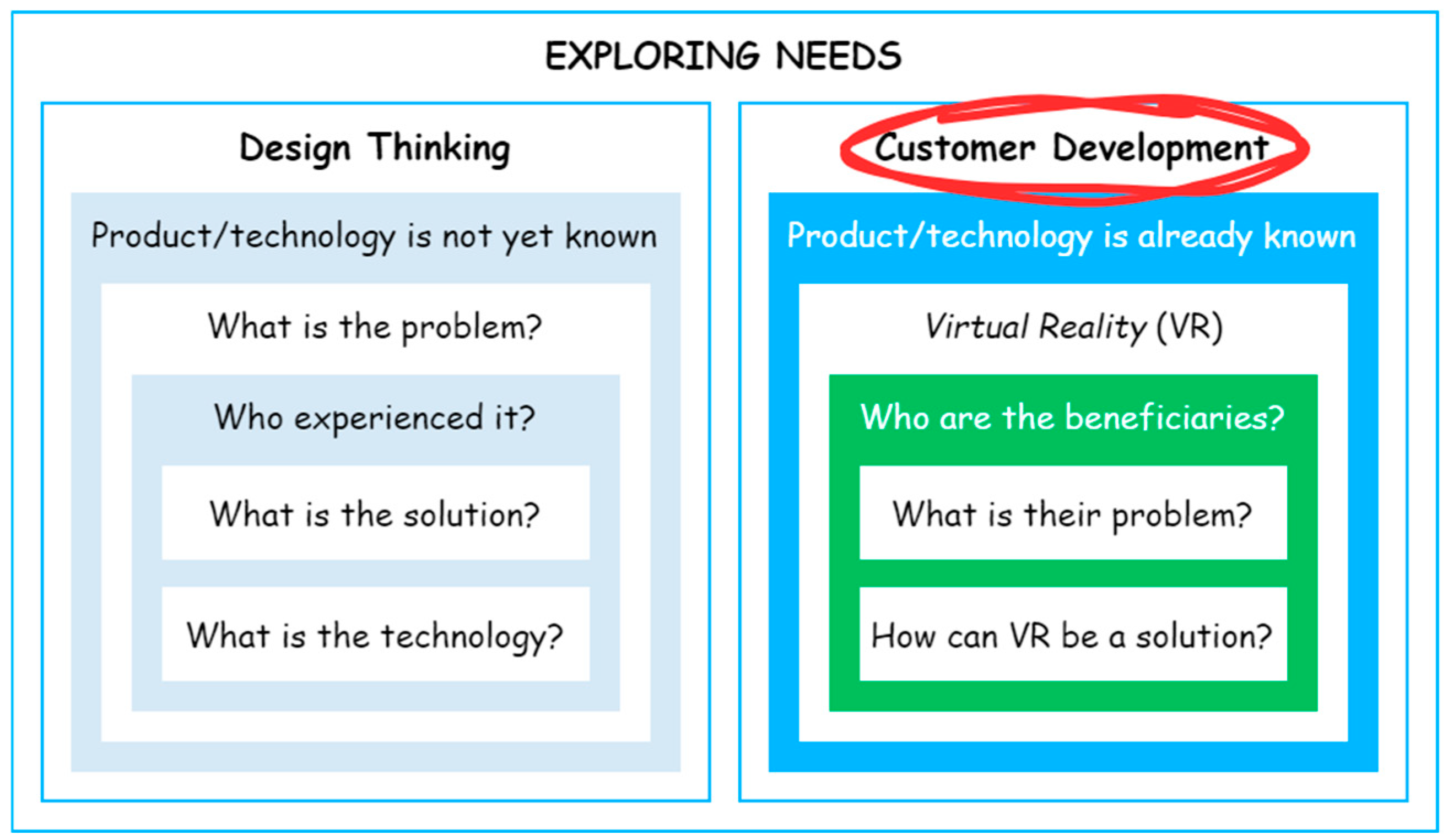
Disclaimer/Publisher’s Note: The statements, opinions and data contained in all publications are solely those of the individual author(s) and contributor(s) and not of MDPI and/or the editor(s). MDPI and/or the editor(s) disclaim responsibility for any injury to people or property resulting from any ideas, methods, instructions or products referred to in the content.

Article Metrics

Citations

Article Access Statistics

Multiple requests from the same IP address are counted as one view.