Article

Analysis of the Factors Influencing Speed Cushion Effectiveness in the Urban Context: A Case Study Experiment in the City of Bari, Italy


1
Department of Civil, Environmental, Land, Building Engineering and Chemistry, Polytechnic University of Bari, 4 Via Orabona, 70126 Bari, Italy
2
ASSET—Agenzia Regionale Strategica per lo Sviluppo Ecosostenibile del Territorio, Regione Puglia, 52 Via G. Gentile, 70126 Bari, Italy
3
Department of Engineering for Innovation, University of Salento, Ecotekne Center, S.P.6 Lecce-Monteroni, 73047 Lecce, Italy
*
Author to whom correspondence should be addressed.
Sustainability 2023, 15(8), 6352; https://doi.org/10.3390/su15086352
Submission received: 14 February 2023 / Revised: 28 March 2023 / Accepted: 4 April 2023 / Published: 7 April 2023
(This article belongs to the Special Issue Sustainable Mobility in Urban and Peri-Urban Areas)

Abstract

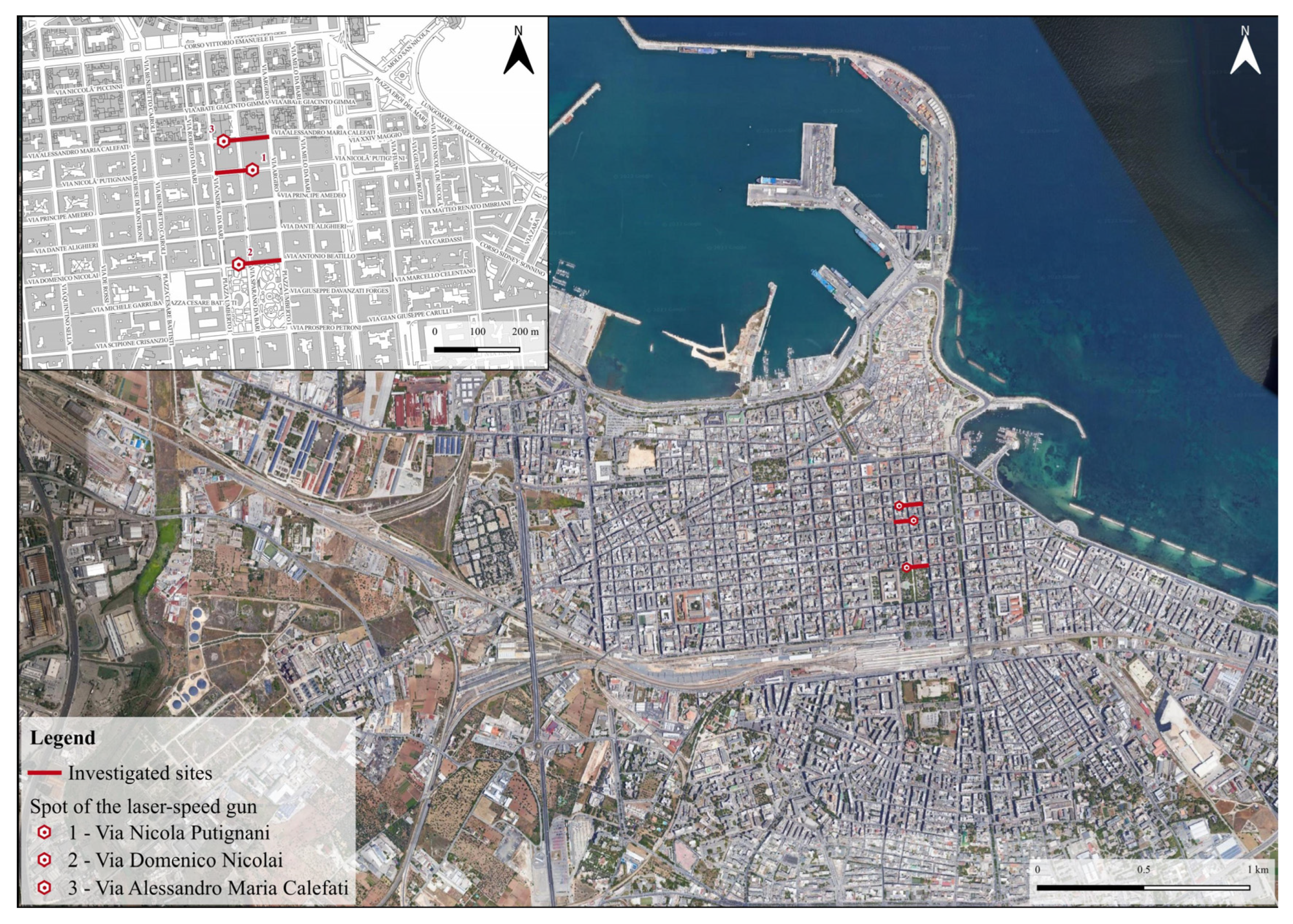
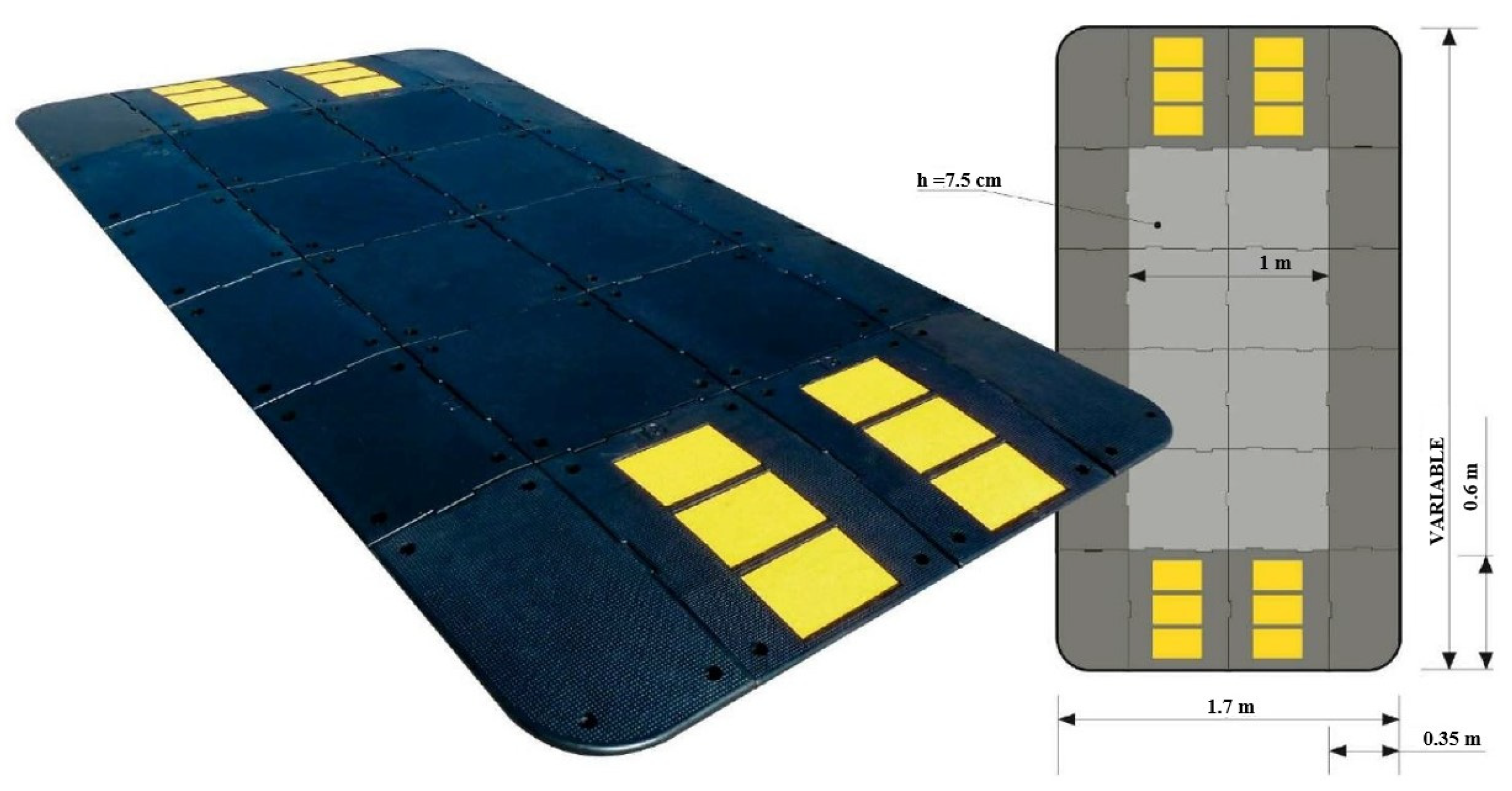
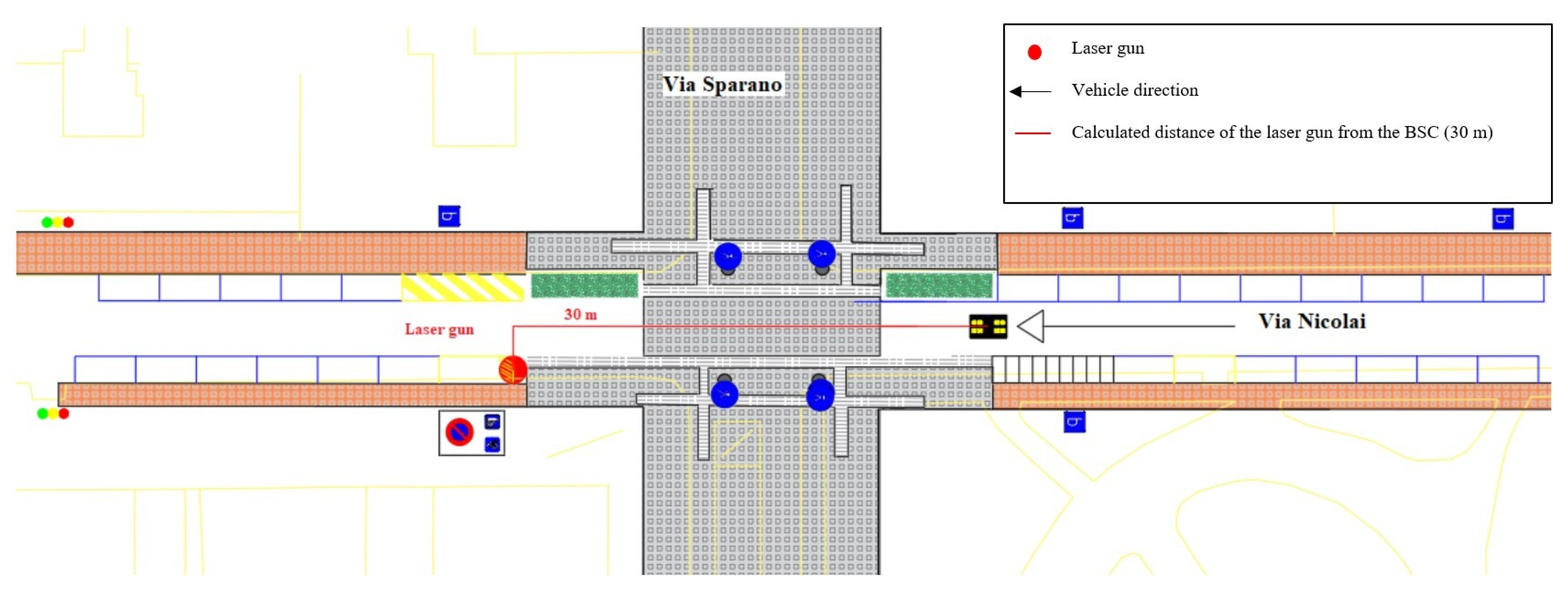
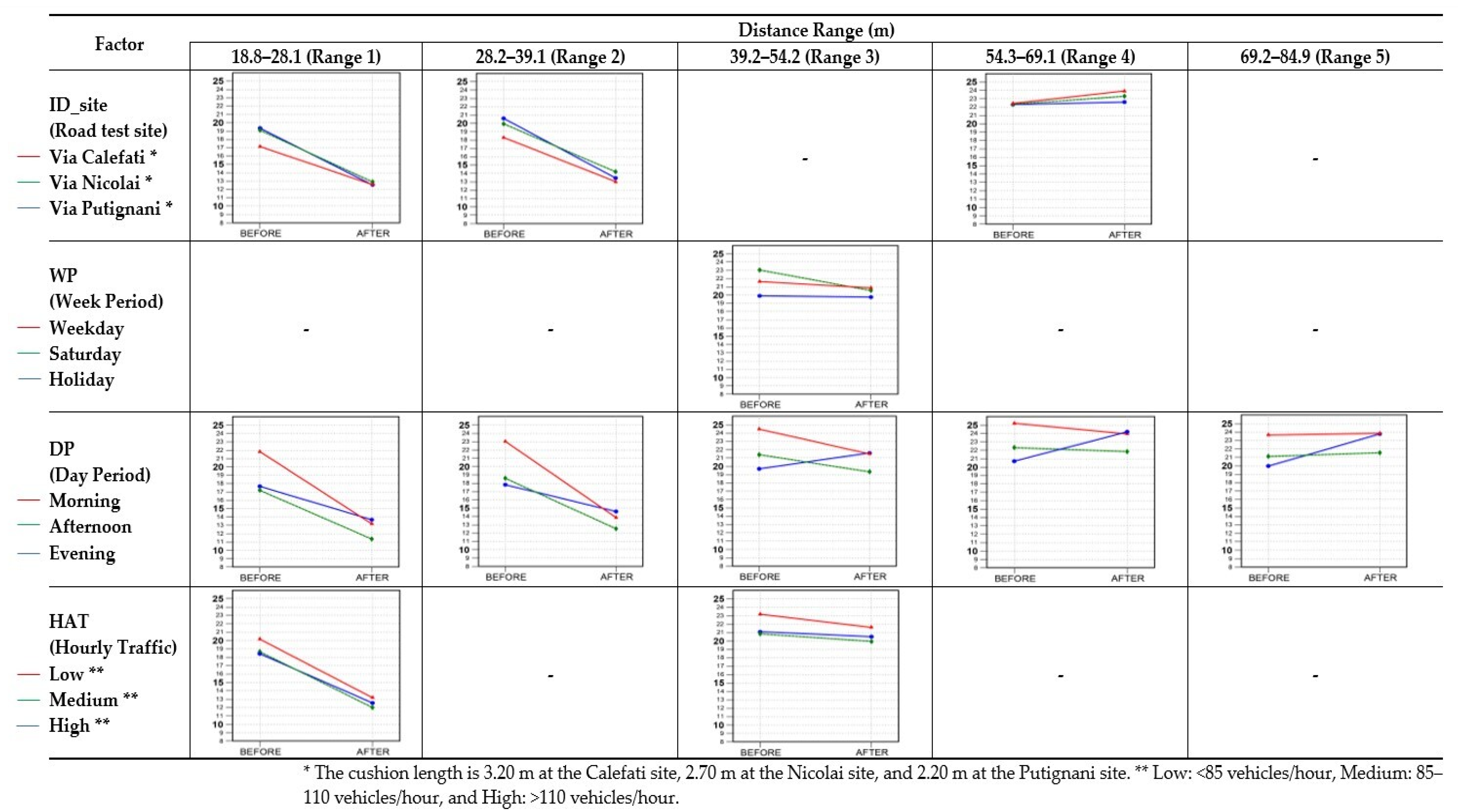
The installation of Traffic-Calming Devices (TCDs) is an extremely valuable countermeasure to prevent vulnerable road users from fatalities in urban contexts. Among all the TCDs, Berlin Speed Cushions (BSCs) seem to be one of the most promising because they reduce speeds but do not affect emergency vehicles. However, previous research on BSCs is limited and lacks some important aspects, such as the analysis of speeds at different distances from the cushion or the investigation of the influence of other context variables. In this study, BSCs of different lengths (2.20 m, 2.70 m, and 3.20 m) were deployed in the City of Bari on three roads belonging to the same area. To overcome the limitations of previous research, speeds were recorded using a laser-speed gun before and after the implementation of BSCs, in different conditions, in order to take into account the effect of the following factors: the time of day, day of the week, and average hourly traffic. An ANOVA analysis was performed, with speed as the dependent variable and the above-reported factors and the test road site (proxy variable for the cushion length) as factors, independently repeated for six distance ranges with respect to the cushion. The results reveal that speed evidently decreases immediately before (down to about 13 km/h) and after the cushion (down to about 12 km/h), time of the day is an important factor (speed decrease is much more evident during the morning than the evening), and the length of the cushion has some influence on speed decrease (the speed decrease is lower for the longest cushion).
Keywords: Berlin speed cushions; traffic-calming device; vulnerable road user; urban context; speed reduction; real-world tests Berlin speed cushions; traffic-calming device; vulnerable road user; urban context; speed reduction; real-world tests