Article

Research on Full-Element and Multi-Time-Scale Modeling Method of BIM for Lean Construction

1
Faculty of Architecture, Civil and Transportation Engineering, Beijing University of Technology, 100 Pingleyuan, Chaoyang District, Beijing 100124, China
2
School of Economics and Management, Beijing Jiaotong University, 3 Shangyuancun, Haidian District, Beijing 100044, China
*
Author to whom correspondence should be addressed.
Sustainability 2023, 15(17), 12717; https://doi.org/10.3390/su151712717
Submission received: 26 April 2023 / Revised: 26 July 2023 / Accepted: 17 August 2023 / Published: 22 August 2023

Abstract

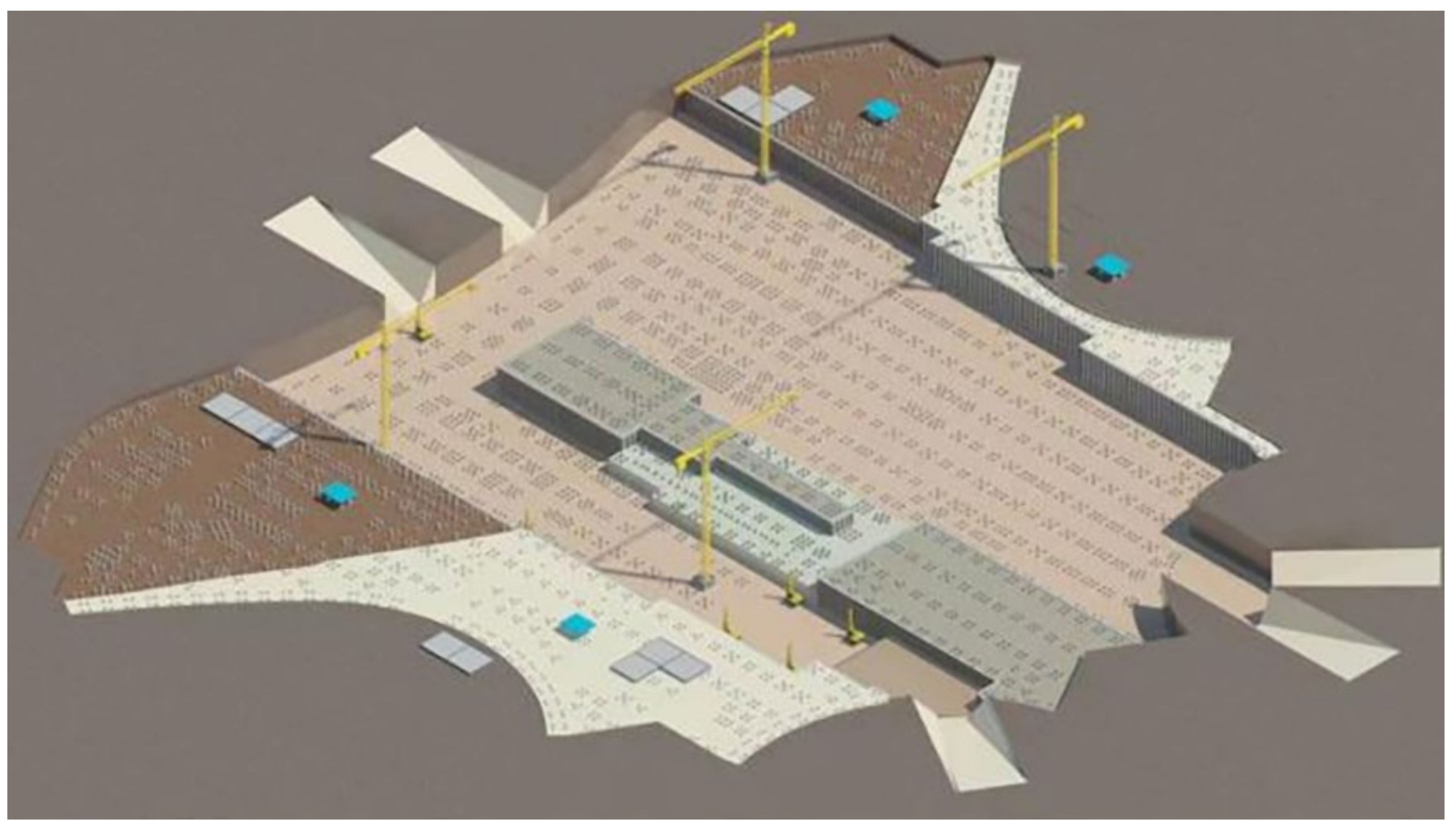
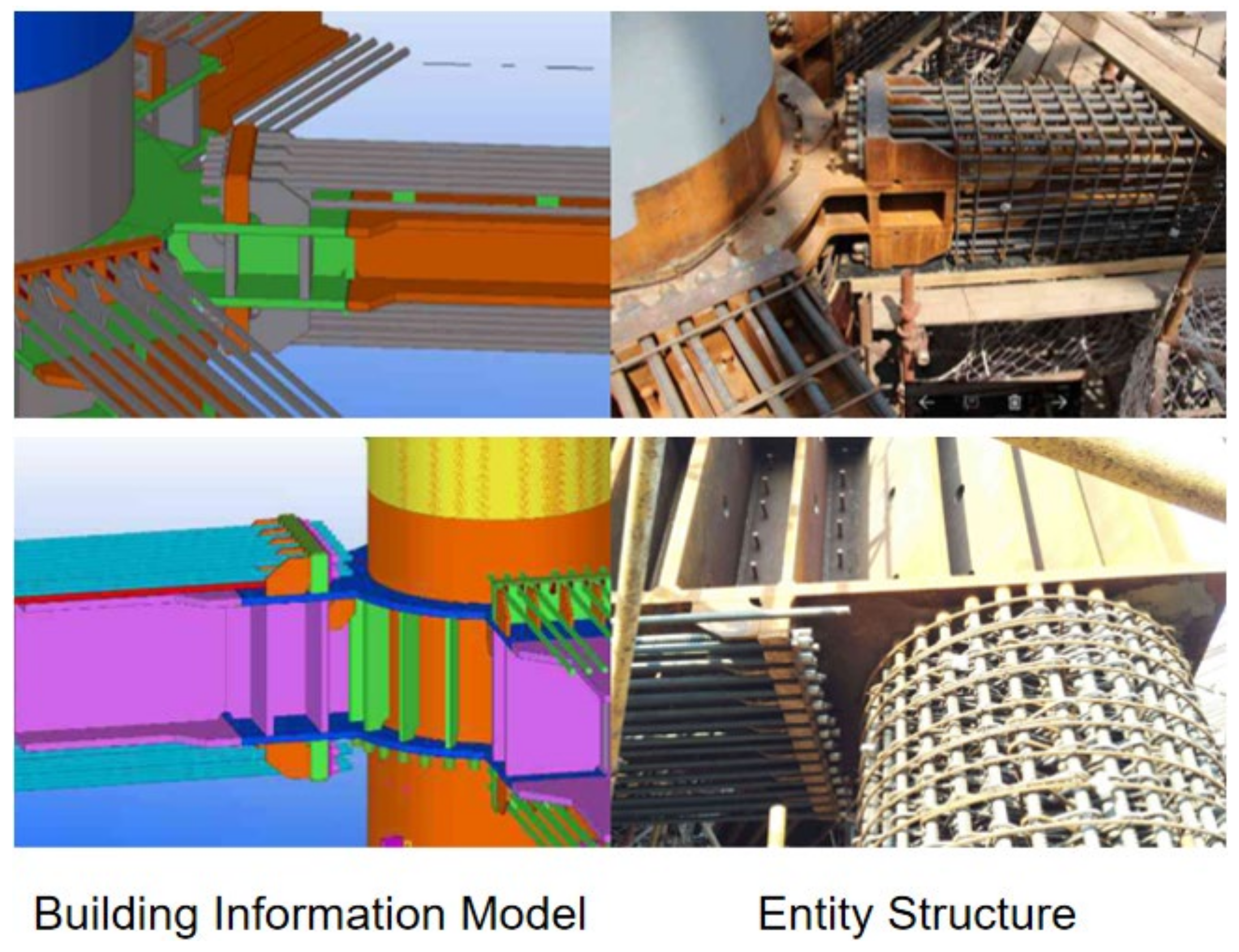
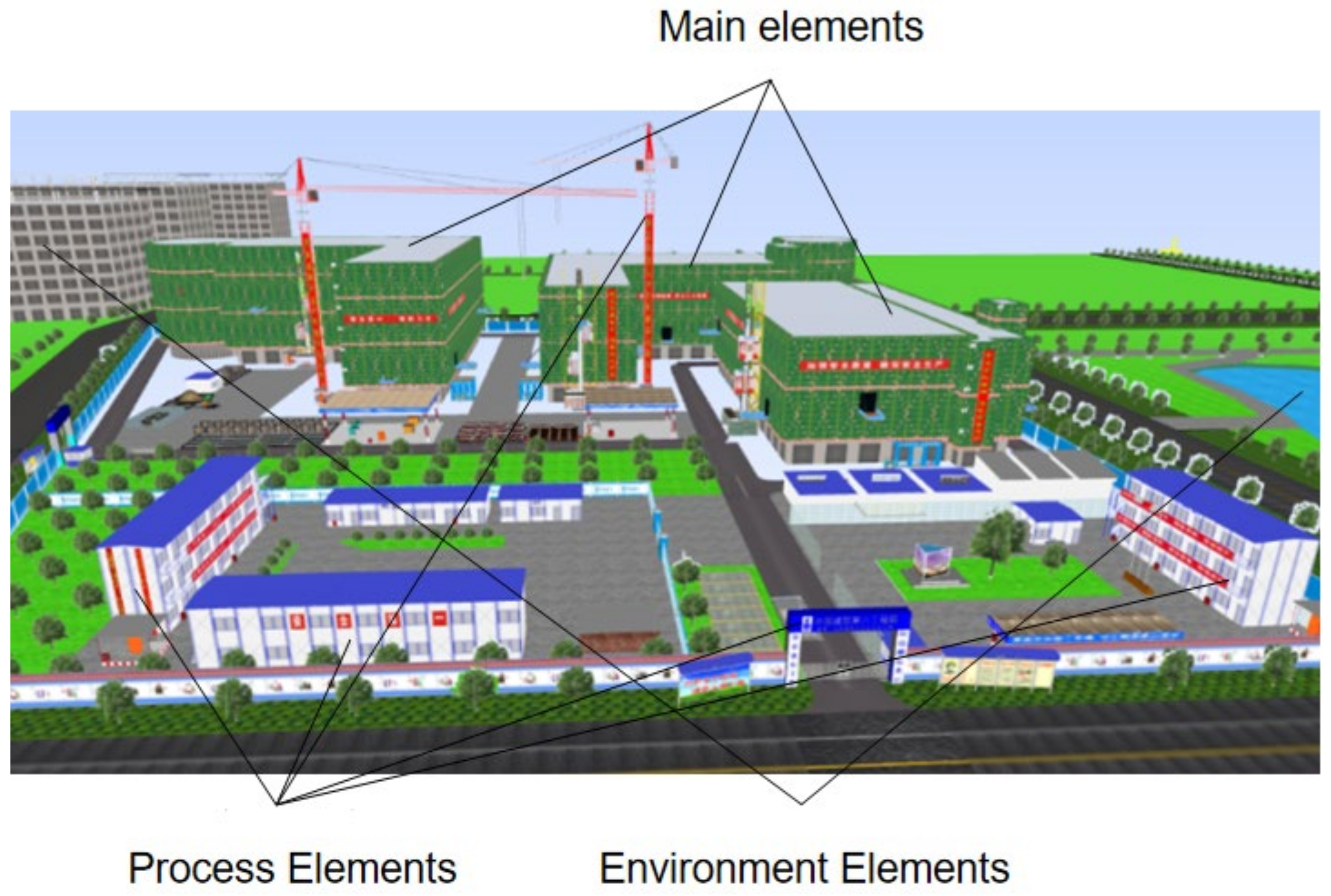
Building Information Modeling (BIM) is a very effective technology for supporting lean construction. However, the current application of BIM during the construction phase does not incorporate all necessary elements of the construction site in a comprehensive manner. Additionally, the depiction of the construction process lacks the desired level of detail. These limitations impede the application of BIM-based lean construction. In this paper, we propose a full-element and multi-time-scale modeling approach to BIM during the construction phase. Our method first establishes a full-element model by reconstructing the main body of the building based on construction subdivision dimensions, construction technology, and management objectives. We then create a three-dimensional model that includes a process elements model of circulating materials, temporary facilities, construction machinery, and surrounding environmental elements. The integrated model of these elements provides a comprehensive representation of BIM at any static time point. Second, we conduct multi-time-scale simulations based on the full-element model. Our approach divides the entire time, local time, and special time points into three scales to simulate project progress, local structure construction technology, and working conditions. A case study of the Daxing International Airport construction project verifies that our method can achieve lean management of construction resources. Full-element modeling provides a comprehensive BIM representation at any static time point, thereby supporting lean construction by improving construction resource management, reducing costs, and enhancing efficiency.
Keywords: BIM; lean construction; full-element; comprehensive progress simulation BIM; lean construction; full-element; comprehensive progress simulation