Article

Effects of Weather on Iowa Nitrogen Export Estimated by Simulation-Based Decomposition
1
Department of Aerospace Eng., Iowa State University, Ames, IA 50011, USA
2
School of Aeronautics and Astronautics, Purdue University, West Lafayette, IN 47907, USA
3
Department of Agricultural and Biosystems Eng., Iowa State University, Ames, IA 50011, USA
*
Author to whom correspondence should be addressed.
Sustainability 2022, 14(3), 1060; https://doi.org/10.3390/su14031060
Submission received: 11 December 2021 / Revised: 6 January 2022 / Accepted: 8 January 2022 / Published: 18 January 2022

Abstract

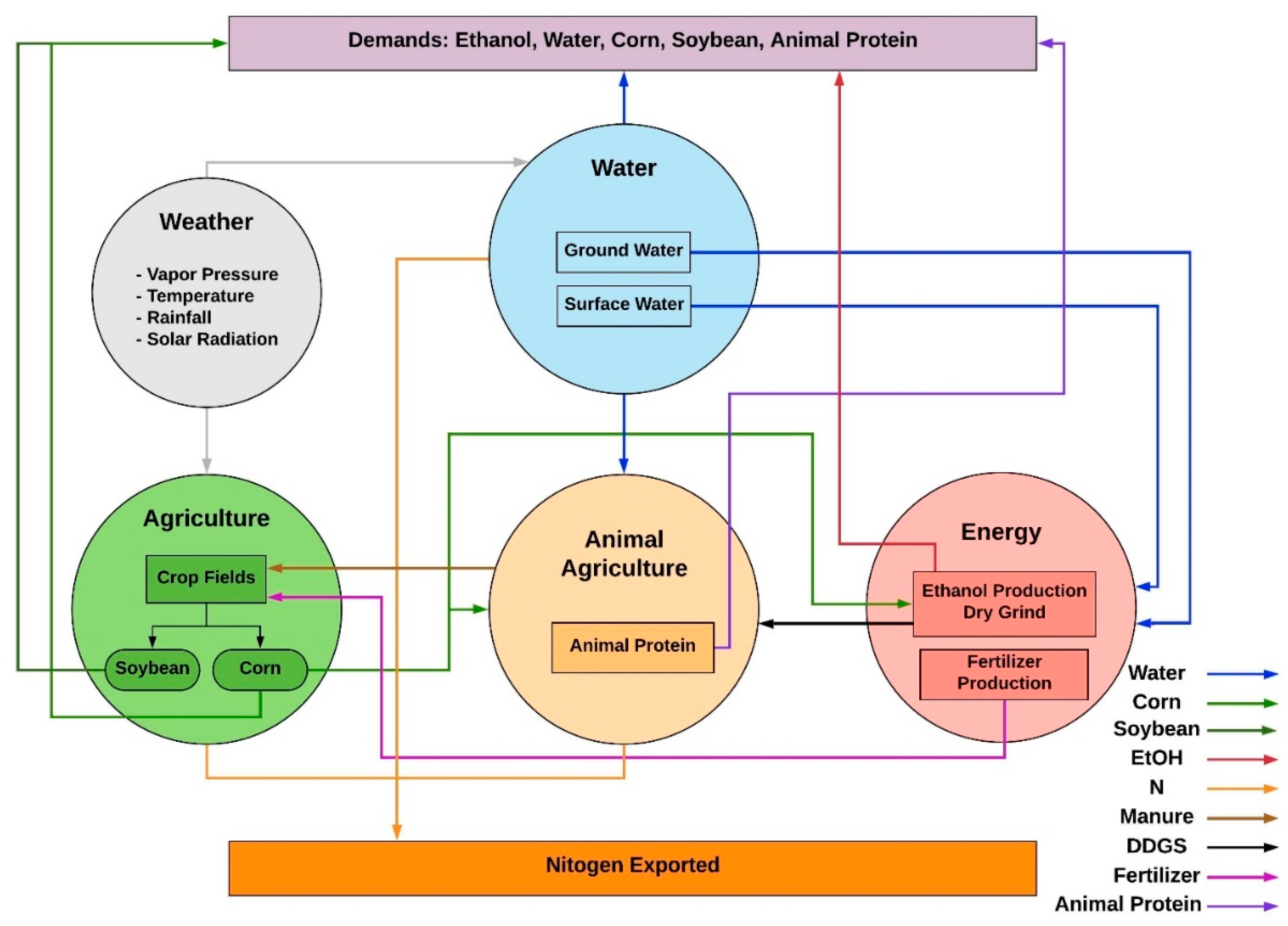
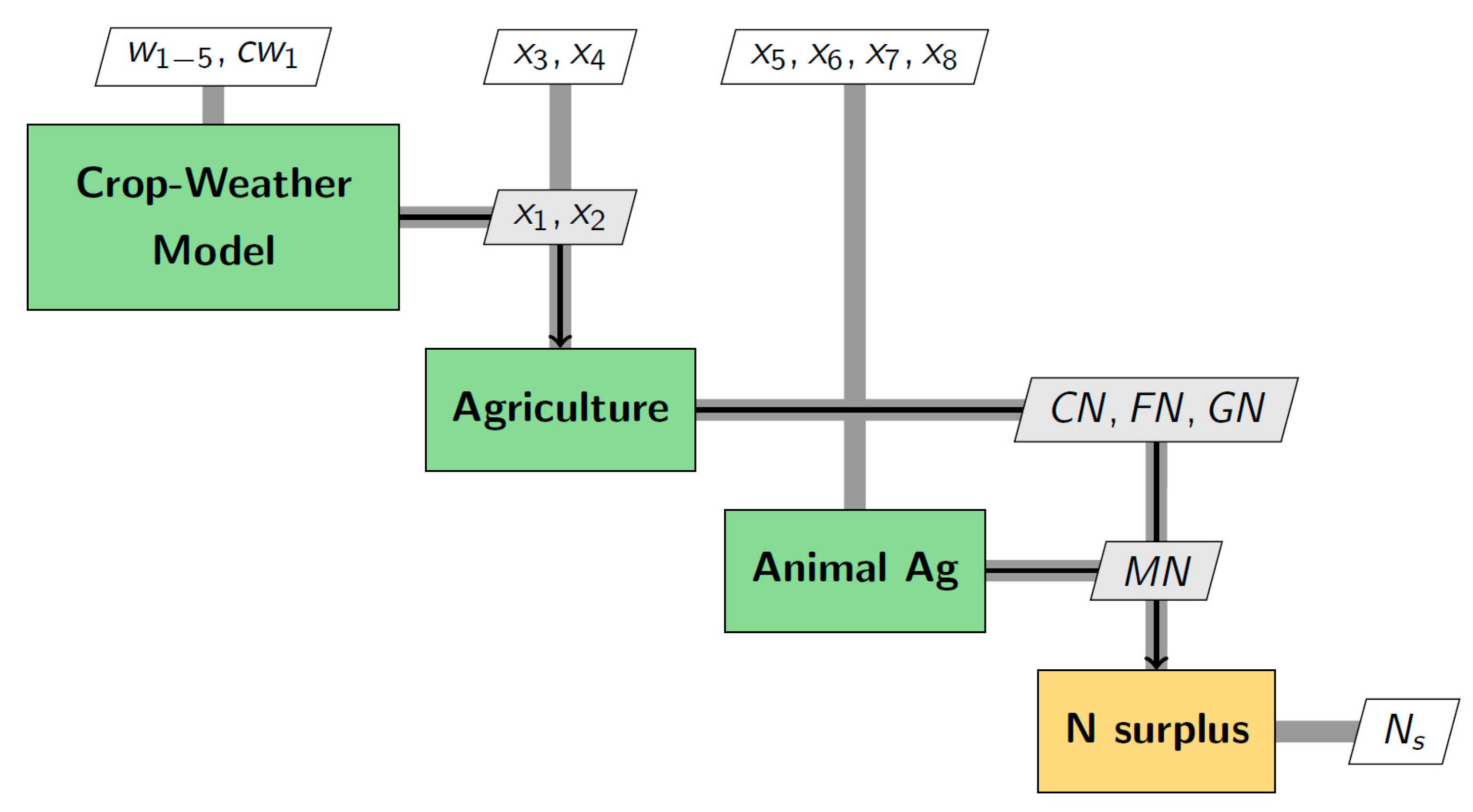
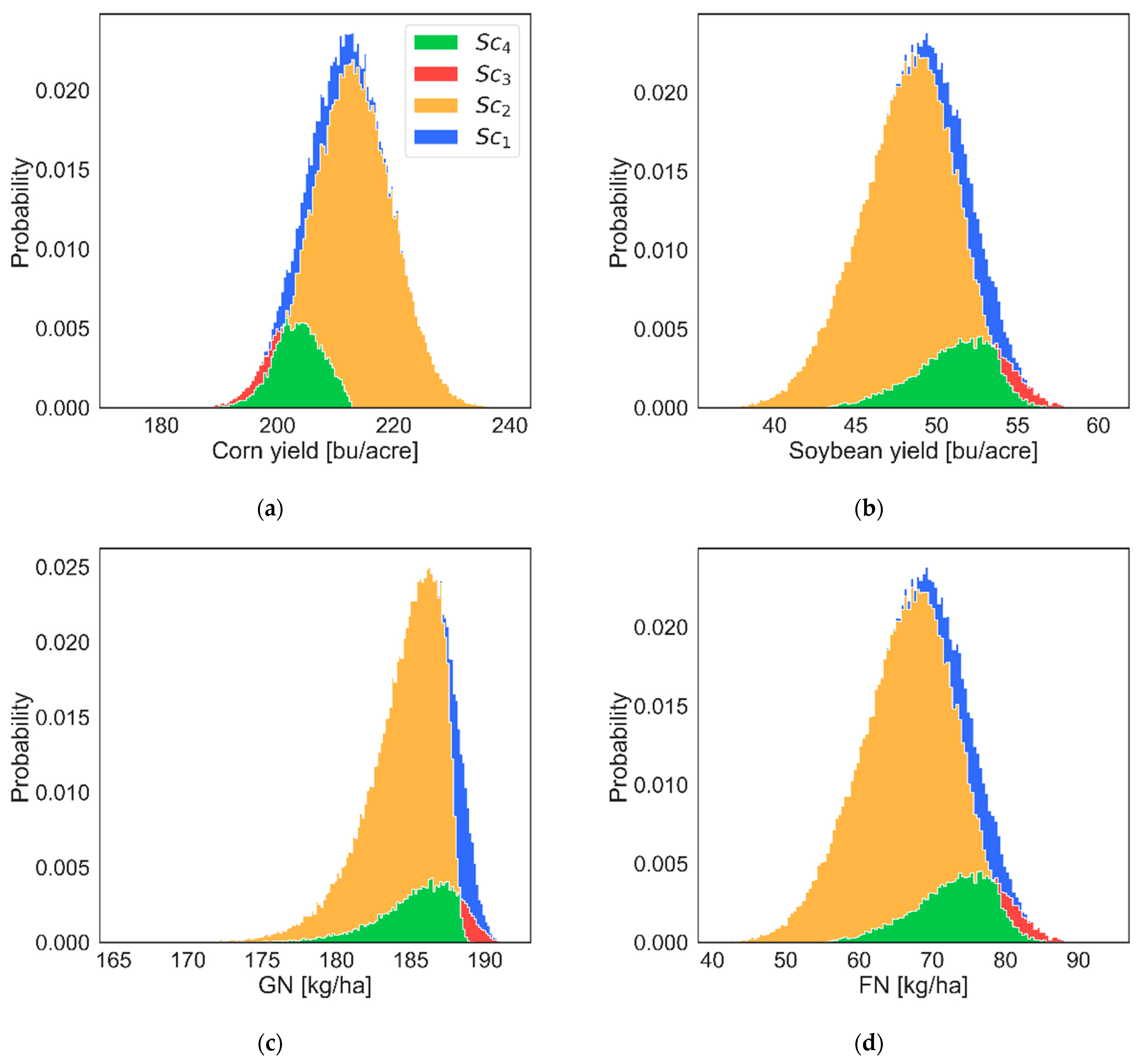
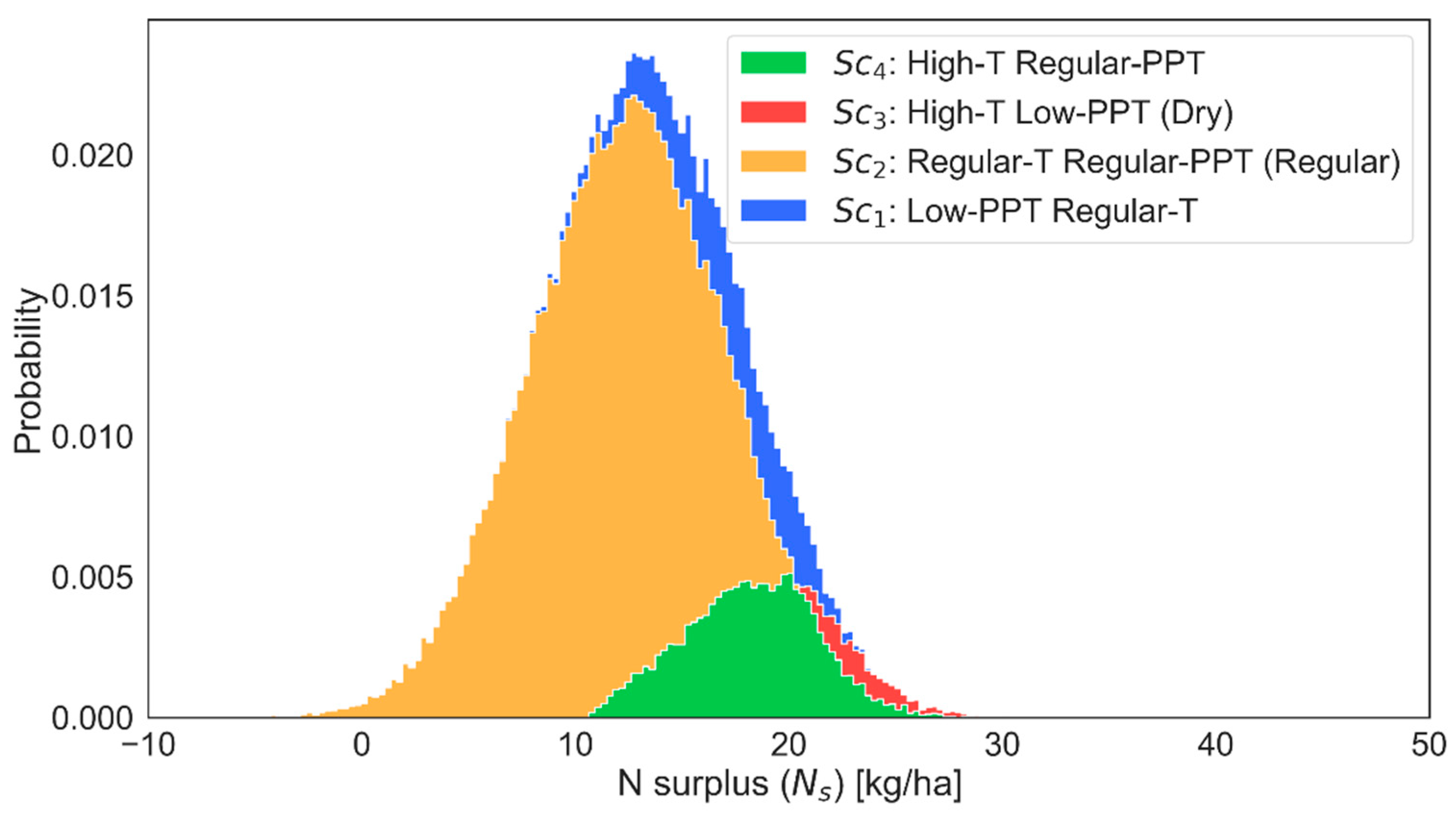
The state of Iowa is known for its high-yield agriculture, supporting rising demands for food and fuel production. But this productivity is also a significant contributor of nitrogen loading to the Mississippi River basin causing the hypoxic zone in the Gulf of Mexico. The delivery of nutrients, especially nitrogen, from the upper Mississippi River basin, is a function, not only of agricultural activity, but also of hydrology. Thus, it is important to consider extreme weather conditions, such as drought and flooding, and understand the effects of weather variability on Iowa’s food-energy-water (IFEW) system and nitrogen loading to the Mississippi River from Iowa. In this work, the simulation decomposition approach is implemented using the extended IFEW model with a crop-weather model to better understand the cause-and-effect relationships of weather parameters on the nitrogen export from the state of Iowa. July temperature and precipitation are used as varying input weather parameters with normal and log normal distributions, respectively, and subdivided to generate regular and dry weather conditions. It is observed that most variation in the soil nitrogen surplus lies in the regular condition, while the dry condition produces the highest soil nitrogen surplus for the state of Iowa.
Keywords: Iowa food-energy-water nexus; nitrogen export; system modeling; weather modeling; simulation decomposition Iowa food-energy-water nexus; nitrogen export; system modeling; weather modeling; simulation decomposition