Article

Clustering Analysis of the Spatio-Temporal On-Street Parking Occupancy Data: A Case Study in Hong Kong
1
Department of Civil and Environmental Engineering, The Hong Kong Polytechnic University, Hong Kong, China
2
Research Institute for Sustainable Urban Development, The Hong Kong Polytechnic University, Hong Kong, China
*
Author to whom correspondence should be addressed.
Sustainability 2022, 14(13), 7957; https://doi.org/10.3390/su14137957
Submission received: 30 May 2022 / Revised: 19 June 2022 / Accepted: 21 June 2022 / Published: 29 June 2022

Abstract

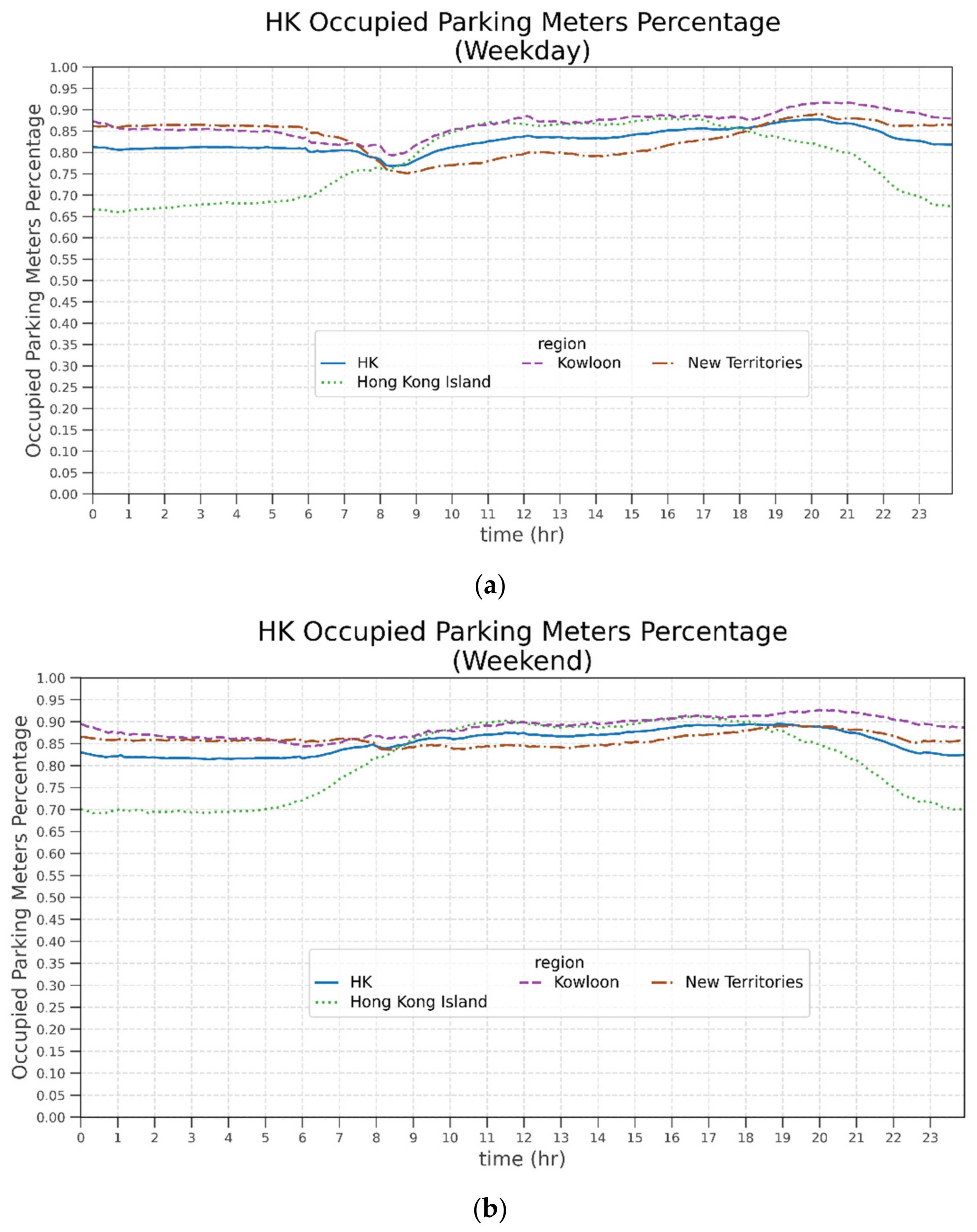
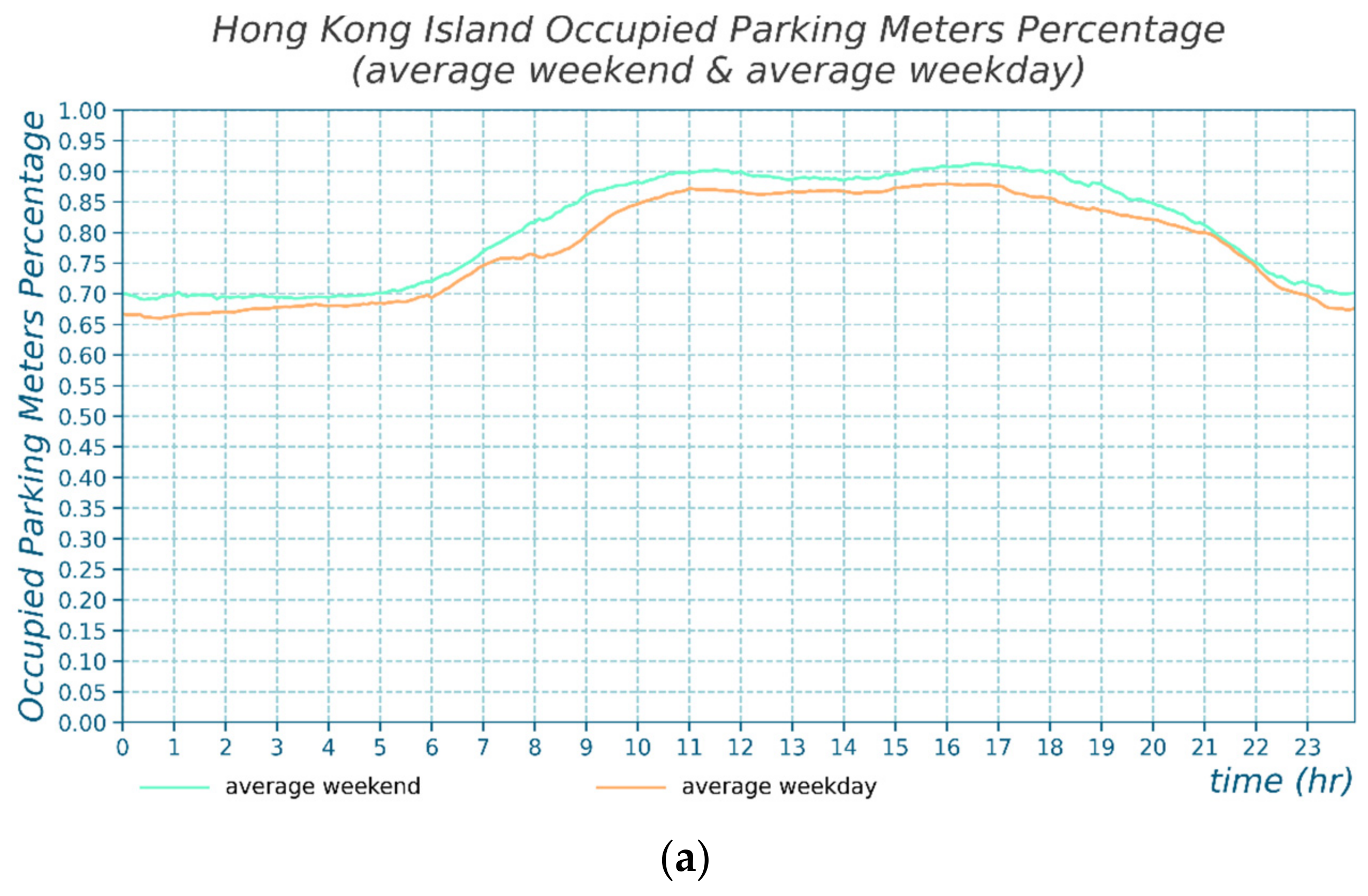
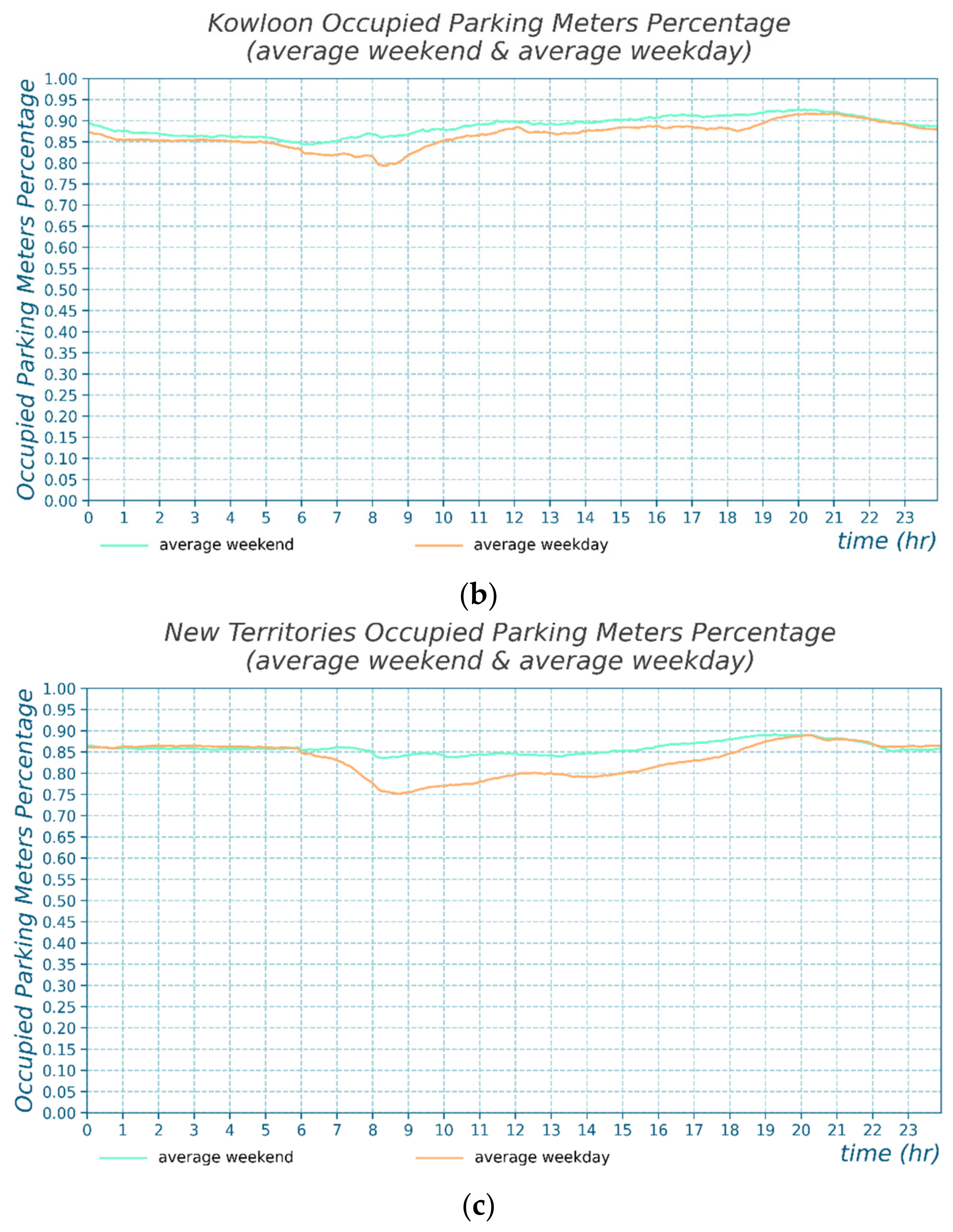
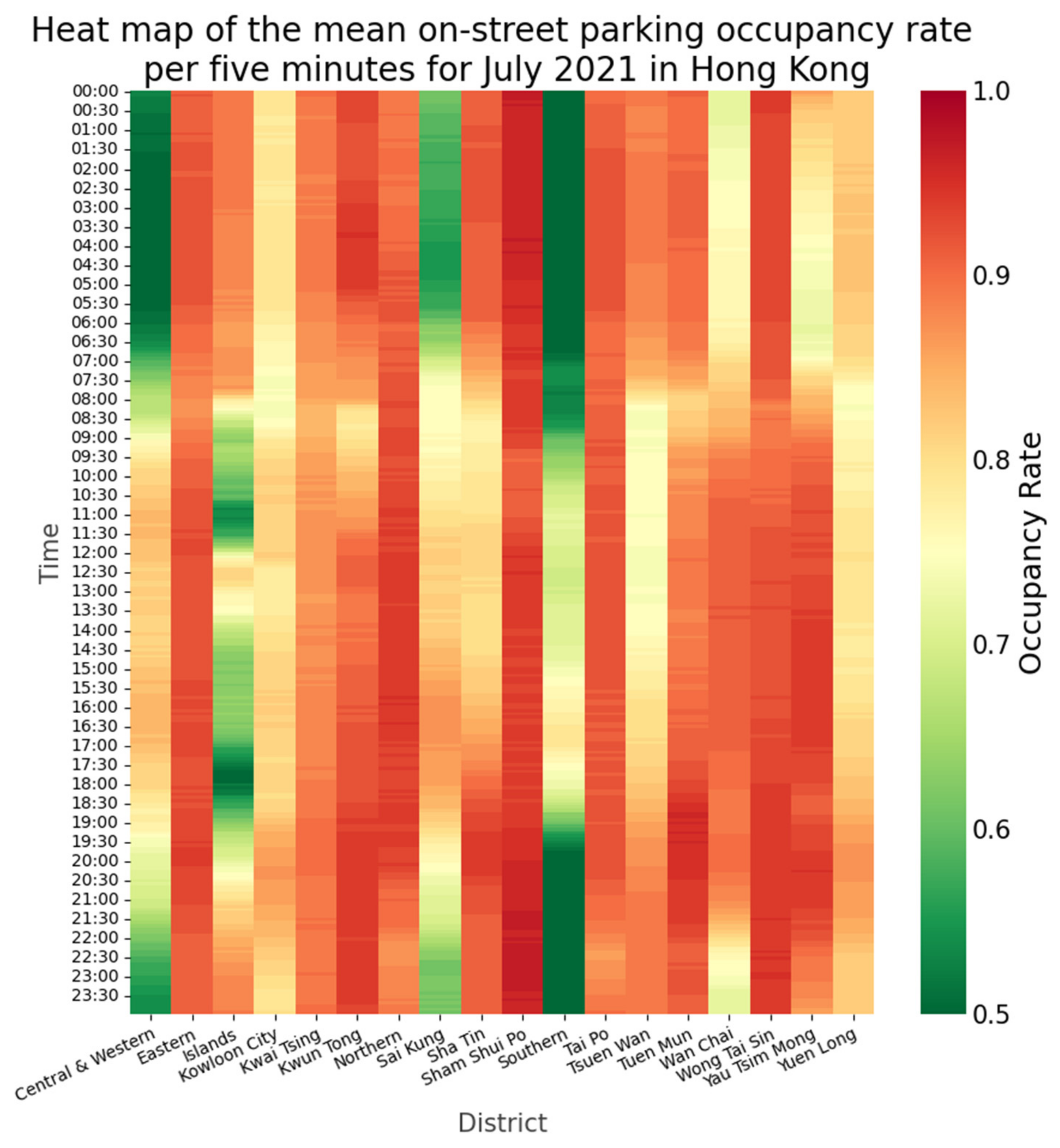
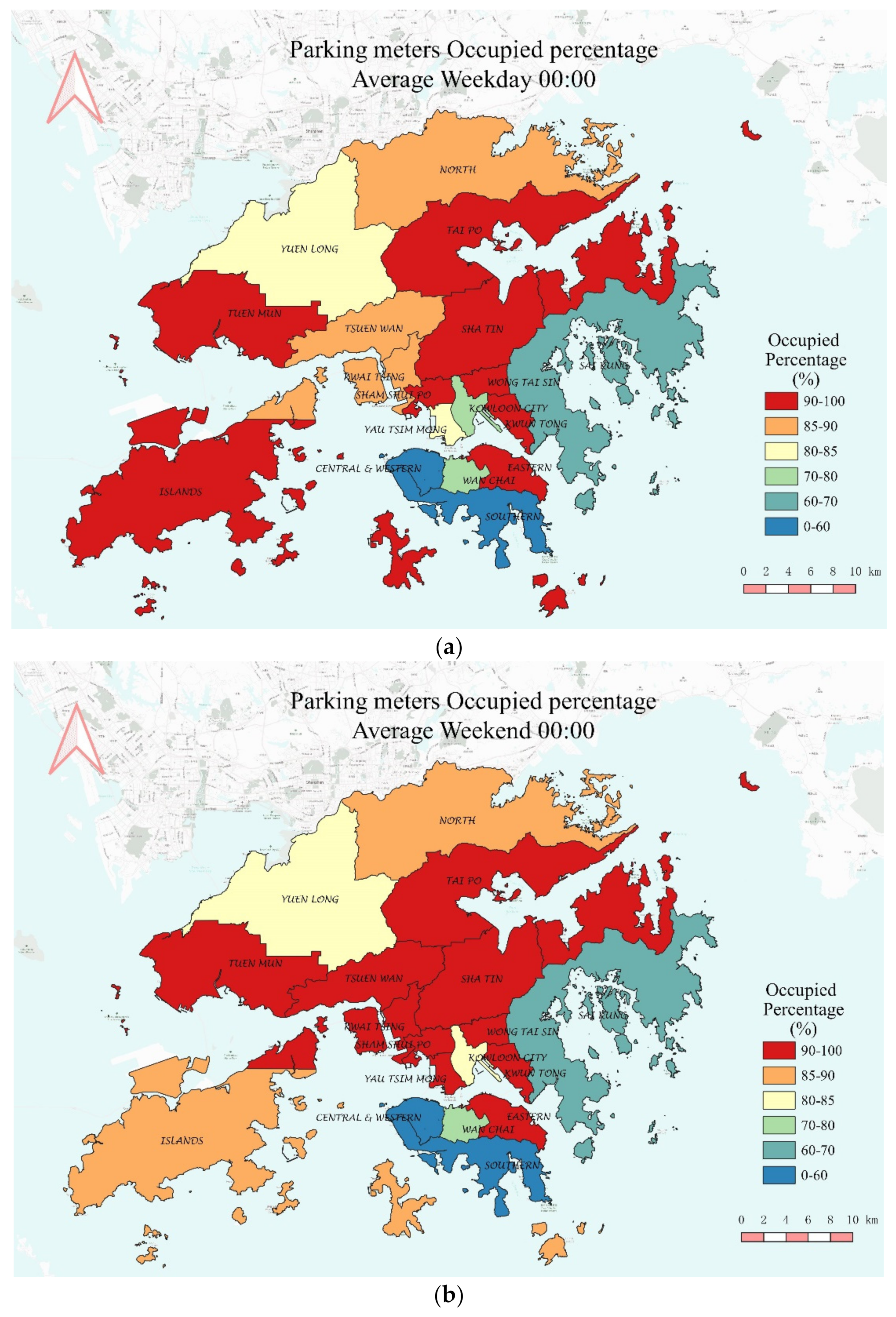
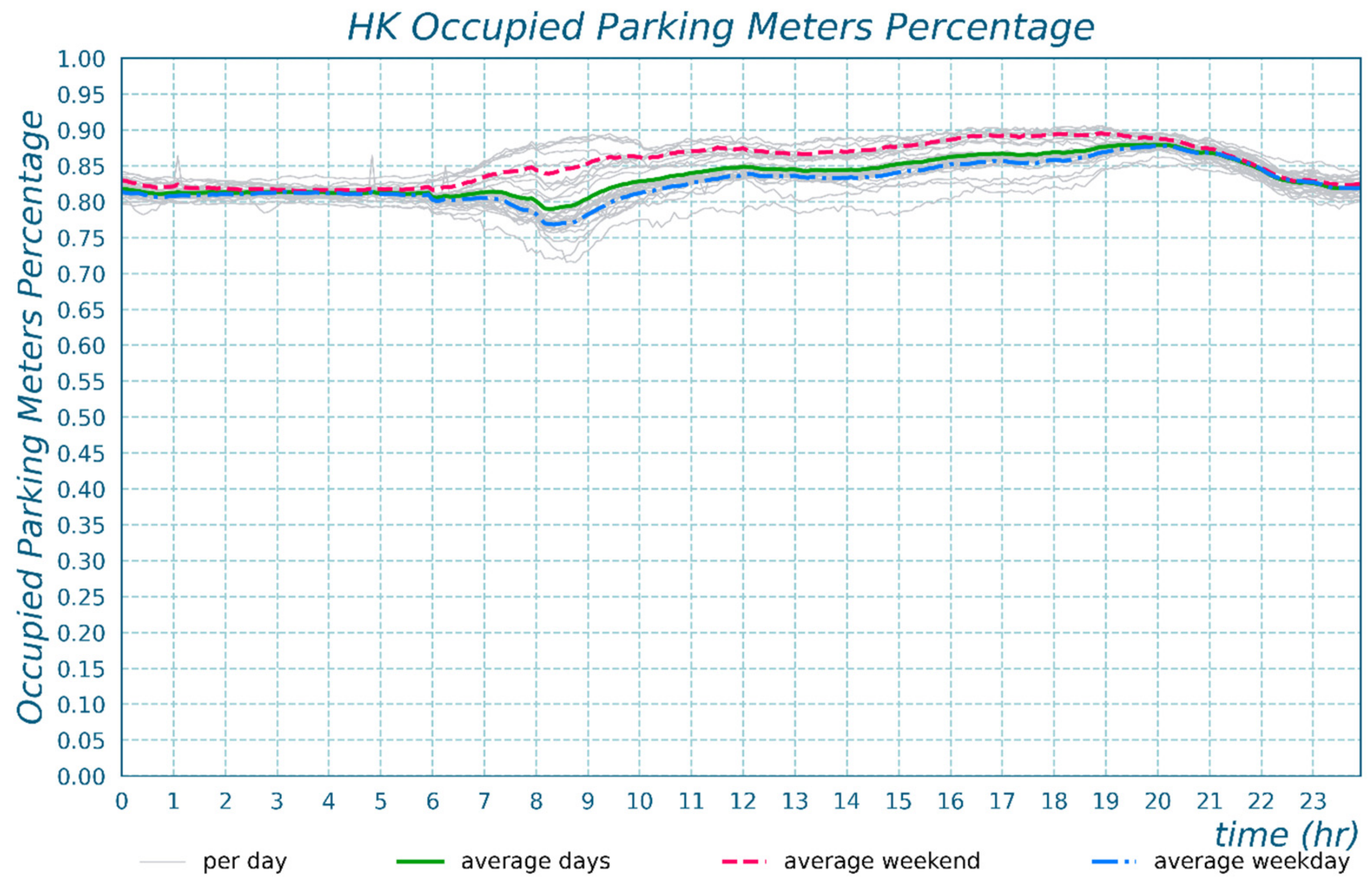
Parking plays an essential role in urban mobility systems across the globe, especially in metropolises. Hong Kong is a global financial center, international shipping hub, fast-growing tourism city, and major aviation hub, and it thus has a high demand for parking. As one of the initiatives for smart city development, the Hong Kong government has already taken action to install new on-street parking meters and release real-time parking occupancy information to the public. The data have been released for months, yet, to the best of our knowledge, there has been no study analyzing the data and identifying their unique characteristics for Hong Kong. In view of this, we examined the spatio-temporal patterns of on-street parking in Hong Kong using the data from the new meters. We integrate the t-SNE and k-means methods to simultaneously visualize and cluster the parking occupancy data. We found that the average on-street parking occupancy in Hong Kong is over 80% throughout the day, and three parking patterns are consistently identified by direct data visualization and clustering results. Additionally, the parking patterns in Hong Kong can be explained using land-use factors. Overall, this study can help the government better understand the unique characteristics of on-street parking and develop smart management strategies for Hong Kong.
Keywords: on-street parking; t-SNE; k-means; spatio-temporal parking patterns; Hong Kong on-street parking; t-SNE; k-means; spatio-temporal parking patterns; Hong Kong