Article

Socioeconomic Determinants of Households’ Vulnerability to Drought in Western Cape, South Africa


by
Isaac Busayo Oluwatayo
1,* and
Tamunotonye Mayowa Braide
2
1
Department of Agricultural Economics and Agribusiness, University of Venda, Thohoyandou 0950, South Africa
2
Department of Agricultural Economics and Animal Production, University of Limpopo, Sovenga 0727, South Africa
*
Author to whom correspondence should be addressed.
Sustainability 2022, 14(13), 7582; https://doi.org/10.3390/su14137582
Submission received: 25 February 2022 / Revised: 28 April 2022 / Accepted: 4 May 2022 / Published: 22 June 2022
(This article belongs to the Topic Climate Change and Environmental Sustainability)

Abstract

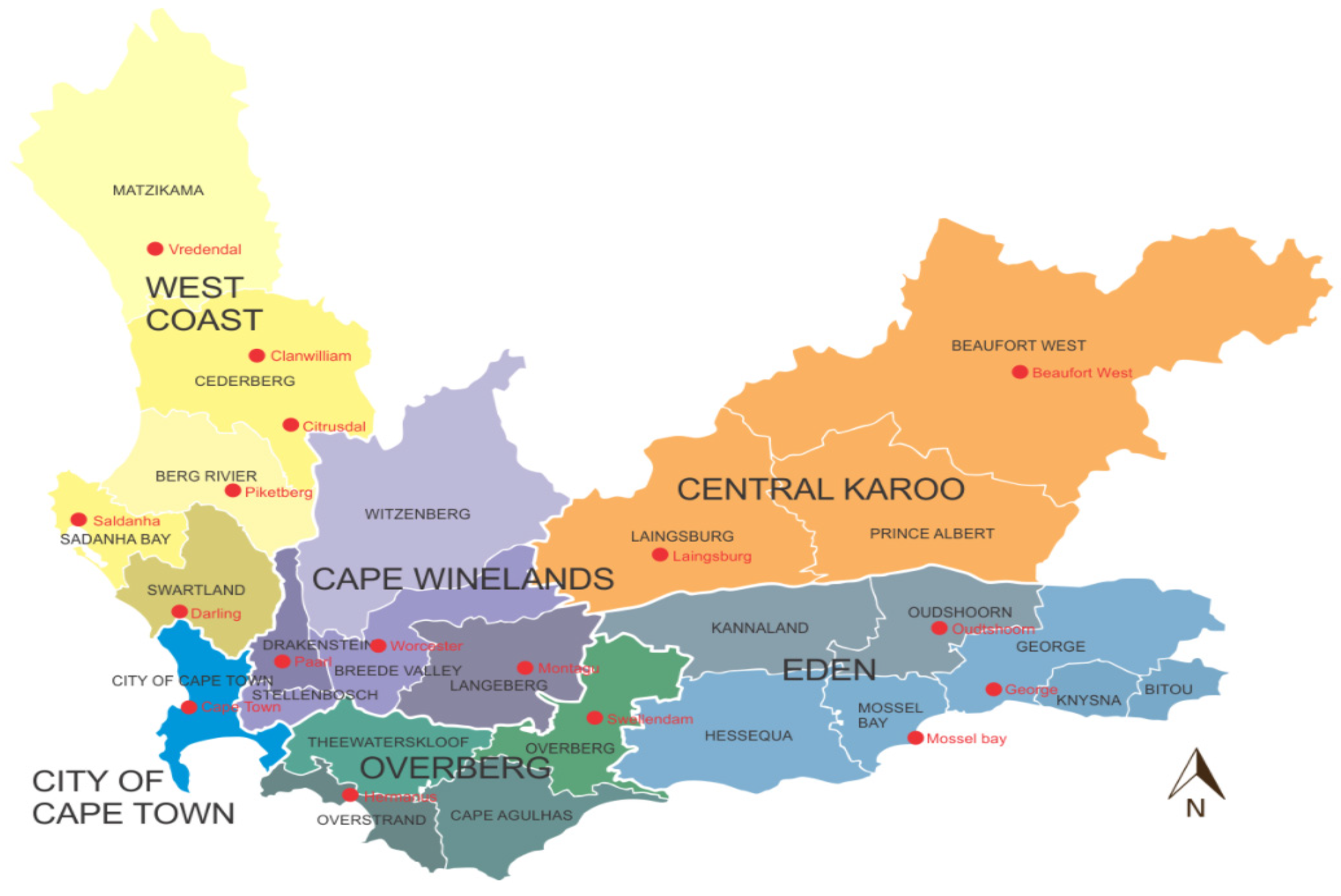
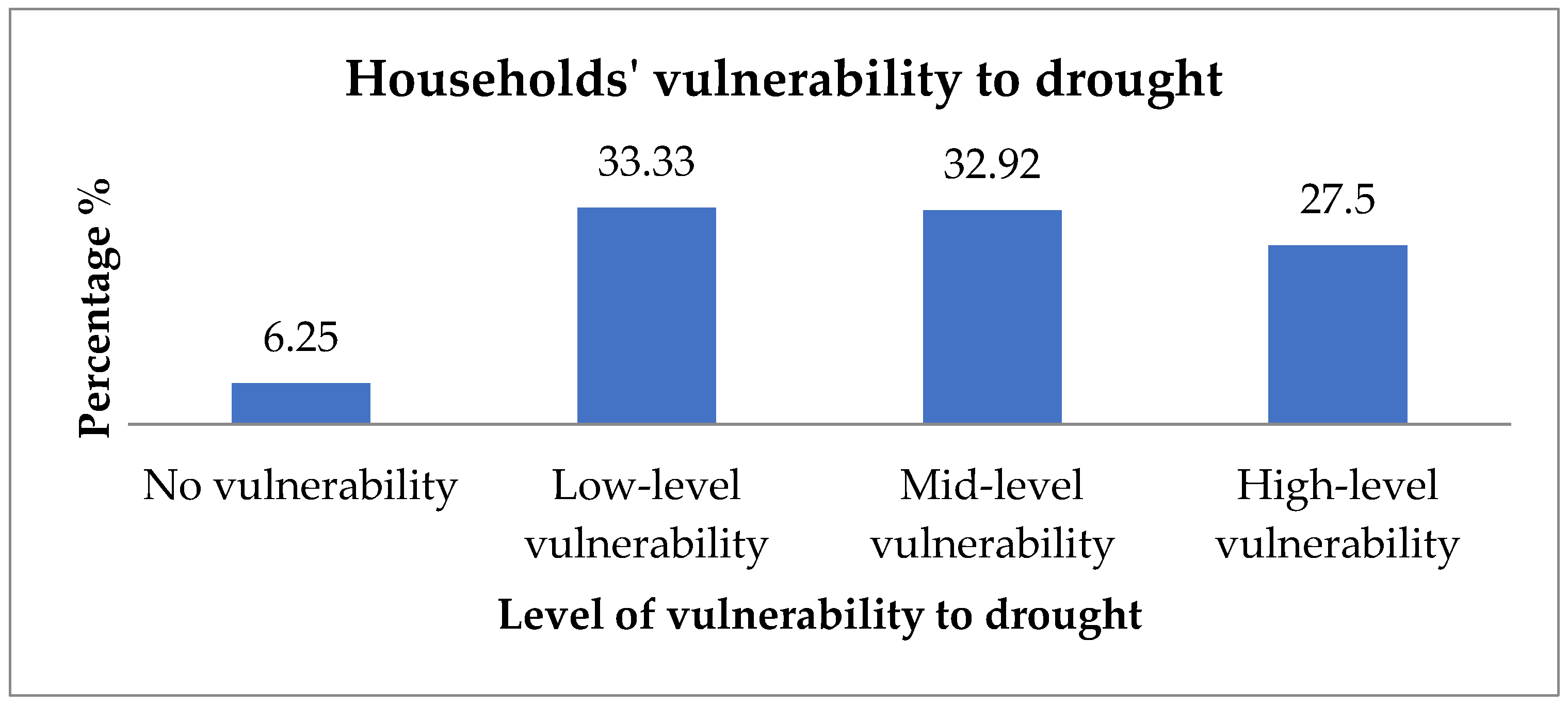
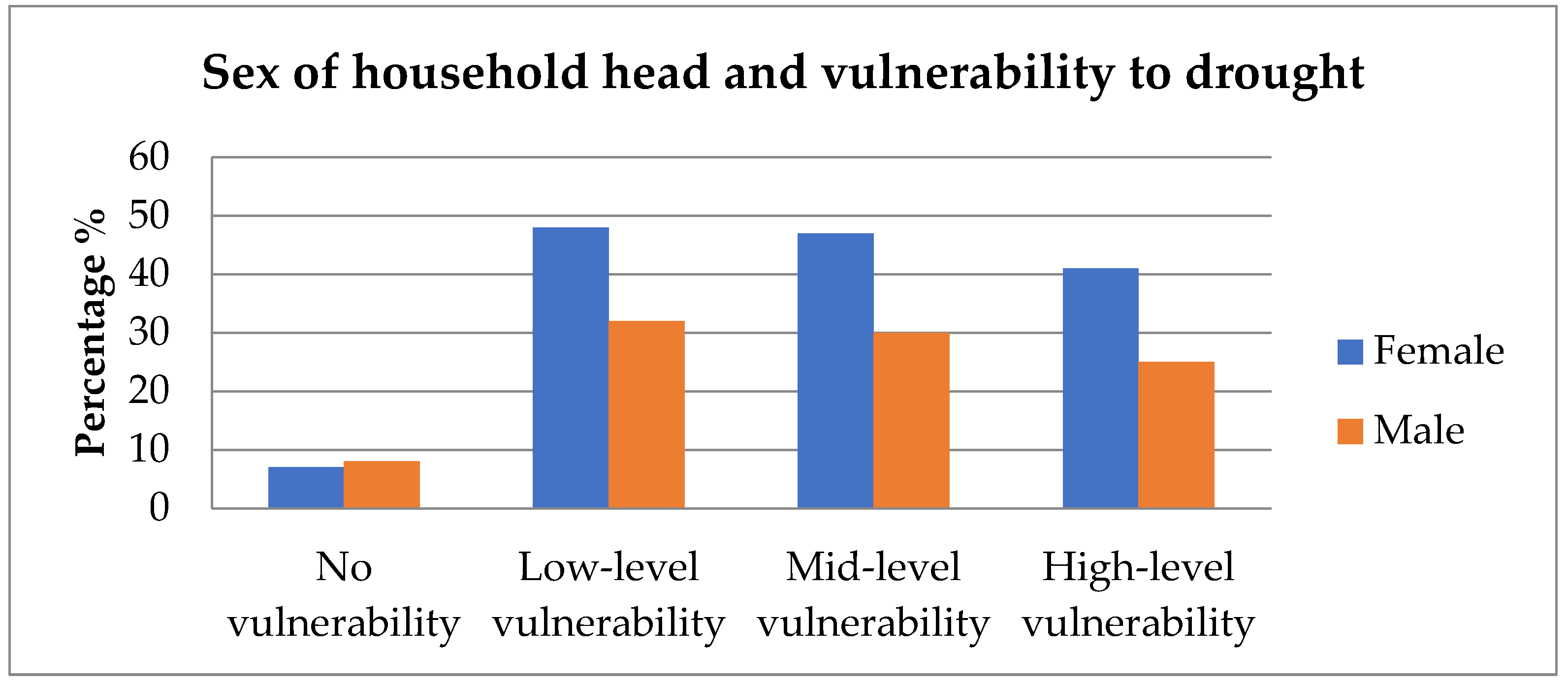
This paper examines the determinants of household vulnerability to drought in the Western Cape province, South Africa. The study used secondary data collected by the Human Sciences Research Council (HSRC). The dataset is made up of 240 households located in the City of Cape Town along with two small towns in the West Coast District Municipality (Piketberg and Clanwilliam). While descriptive statistics were used to analyse households’ socioeconomic variables, an ordered logit model was employed to analyse the factors contributing to households’ vulnerability to drought in the study area. The paper revealed that 28% of the households were extremely vulnerable to drought. The result of the ordered logit regression model showed that factors such as the age of the household head, communication of water restrictions by the authorities, household water consumption in the last two years, and public cooperation with water restrictions were significant factors influencing households’ vulnerability to drought. It was also discovered that female-headed and older household members were more vulnerable to drought than their male-headed and younger members respectively. The paper concluded that to minimise vulnerability to drought among the households, stakeholders in the province should be better prepared to implement proactive policies with regard to climate disasters.
Keywords: drought; ordered logistic regression; vulnerability; Western Cape province drought; ordered logistic regression; vulnerability; Western Cape province