Article

Tension-Stiffening Effect Consideration for Modeling Deflection of Cracked Reinforced UHPC Beams

1
Department of Civil, Architectural and Environmental Engineering, Missouri University of Science and Technology, Rolla, MO 65409-0030, USA
2
Department of Civil Engineering, Lanzhou Jiaotong University, Lanzhou 730070, China
*
Authors to whom correspondence should be addressed.
Sustainability 2022, 14(1), 415; https://doi.org/10.3390/su14010415
Submission received: 14 November 2021 / Revised: 28 December 2021 / Accepted: 29 December 2021 / Published: 31 December 2021

Abstract

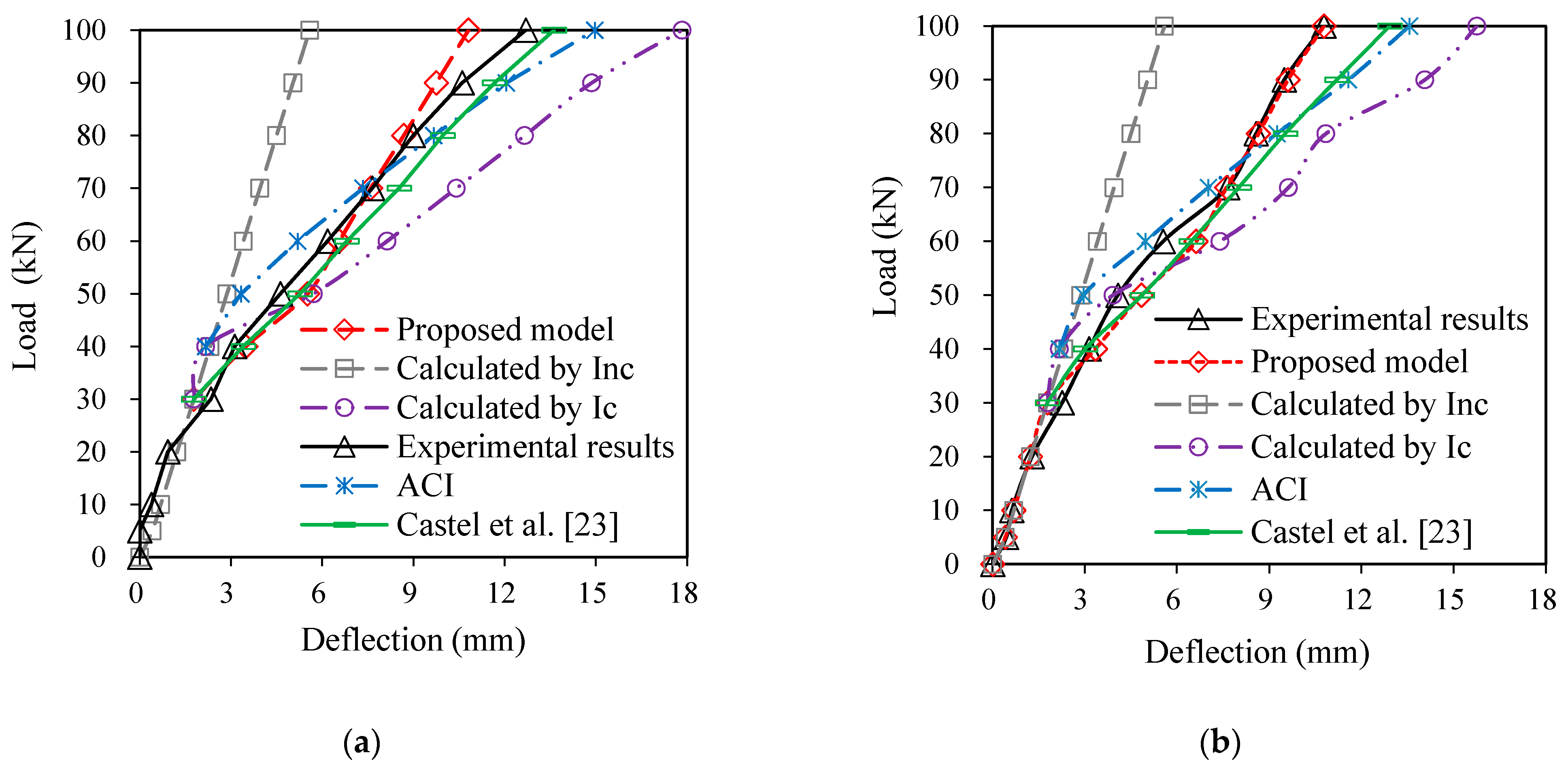
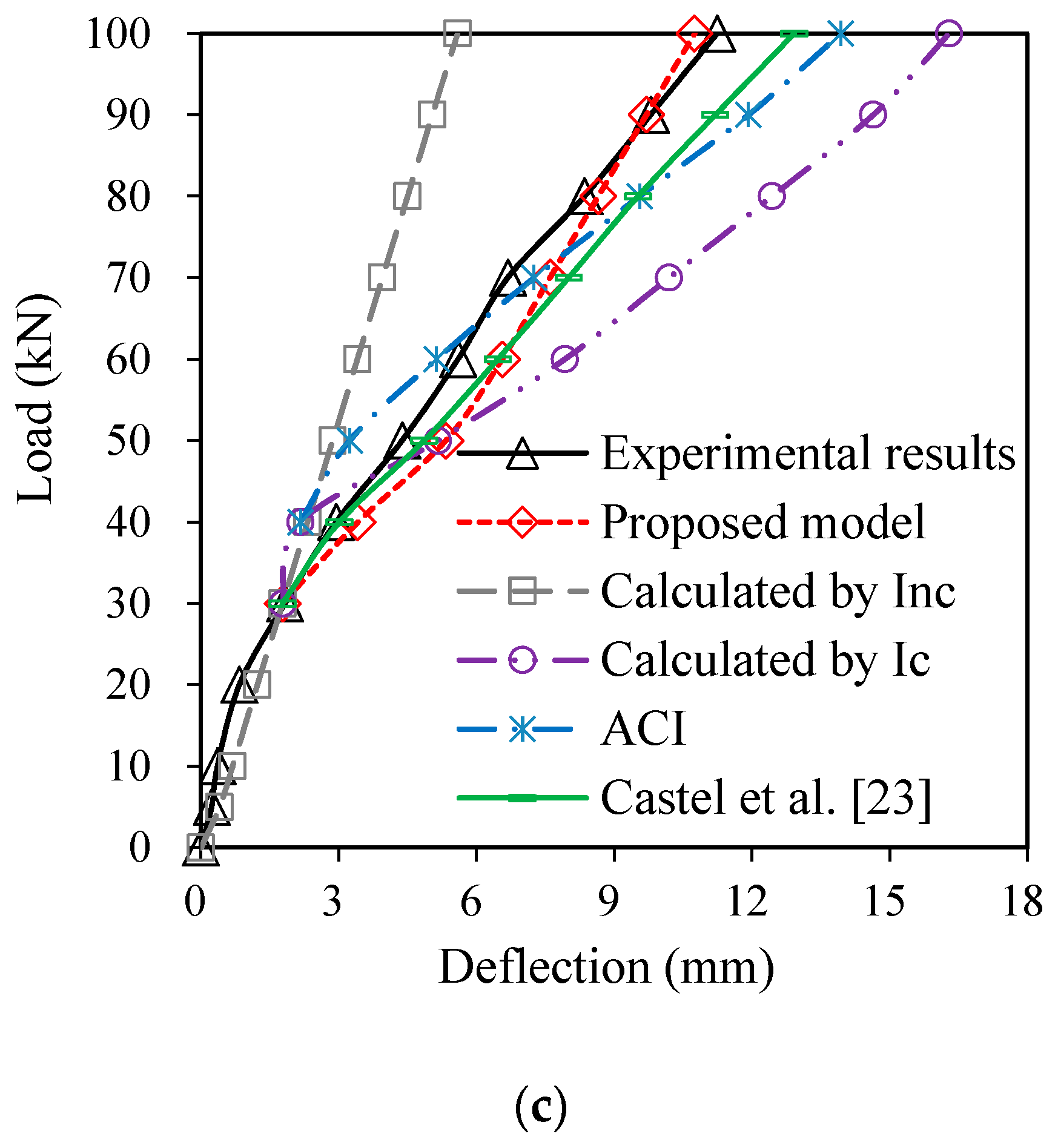
Tension-stiffening effects can significantly influence the flexural performance of cracked reinforced concrete specimens. Such effect is amplified for fiber-reinforced concrete, given the fact that fibers can bridge the cracks. The objective of this study was to develop a model to predict the deflection of cracked reinforced ultra-high performance concrete (R-UHPC) beam elements. The modeling approach characterized the average bending moment of inertia by combining the existing model used for conventional reinforced concrete and the analytical model of stress distribution of UHPC along the cross-section. The finite element analysis (FEA) was employed to evaluate the flexural deflection based on the average bending moment of inertia. The calculated load-deflection relationships have been compared to experimental results. The results indicated that the relative errors of deflection between predicted and experimental results can be controlled within 15%, compared to values ranging from 5% to 50% calculated by neglecting the tensile properties of cracked UHPC and values ranging from 5% to 30% calculated by effective inertia of bending moment of ACI code. Therefore, the developed model can be used in practice because it can secure the accuracy of deflection prediction of the R-UHPC beams. Such a simplified model also has higher sustainability compared to FEA using solid elements since it is easier and time-saving to be established and calculated.
Keywords: cracked beam; flexural strength; inertia of bending moment; tension stiffening; UHPC cracked beam; flexural strength; inertia of bending moment; tension stiffening; UHPC