Article

An Inclusive Model for Assessing Age-Friendly Urban Environments in Vulnerable Areas
by
Raquel Agost-Felip
1,2,
María José Ruá
2,3,* and
Fatiha Kouidmi
1
1
Departament of Developmental, Educational and Social Psychology and Methodology, Universitat Jaume I, 12071 Castelló de la Plana, Spain
2
Local Development Interuniversity Institute (IIDL), Universitat Jaume I, 12071 Castelló de la Plana, Spain
3
Departament of Mechanical Engineering and Construction, Universitat Jaume I, 12071 Castelló de la Plana, Spain
*
Author to whom correspondence should be addressed.
Sustainability 2021, 13(15), 8352; https://doi.org/10.3390/su13158352
Submission received: 2 July 2021 / Revised: 20 July 2021 / Accepted: 20 July 2021 / Published: 27 July 2021

Abstract

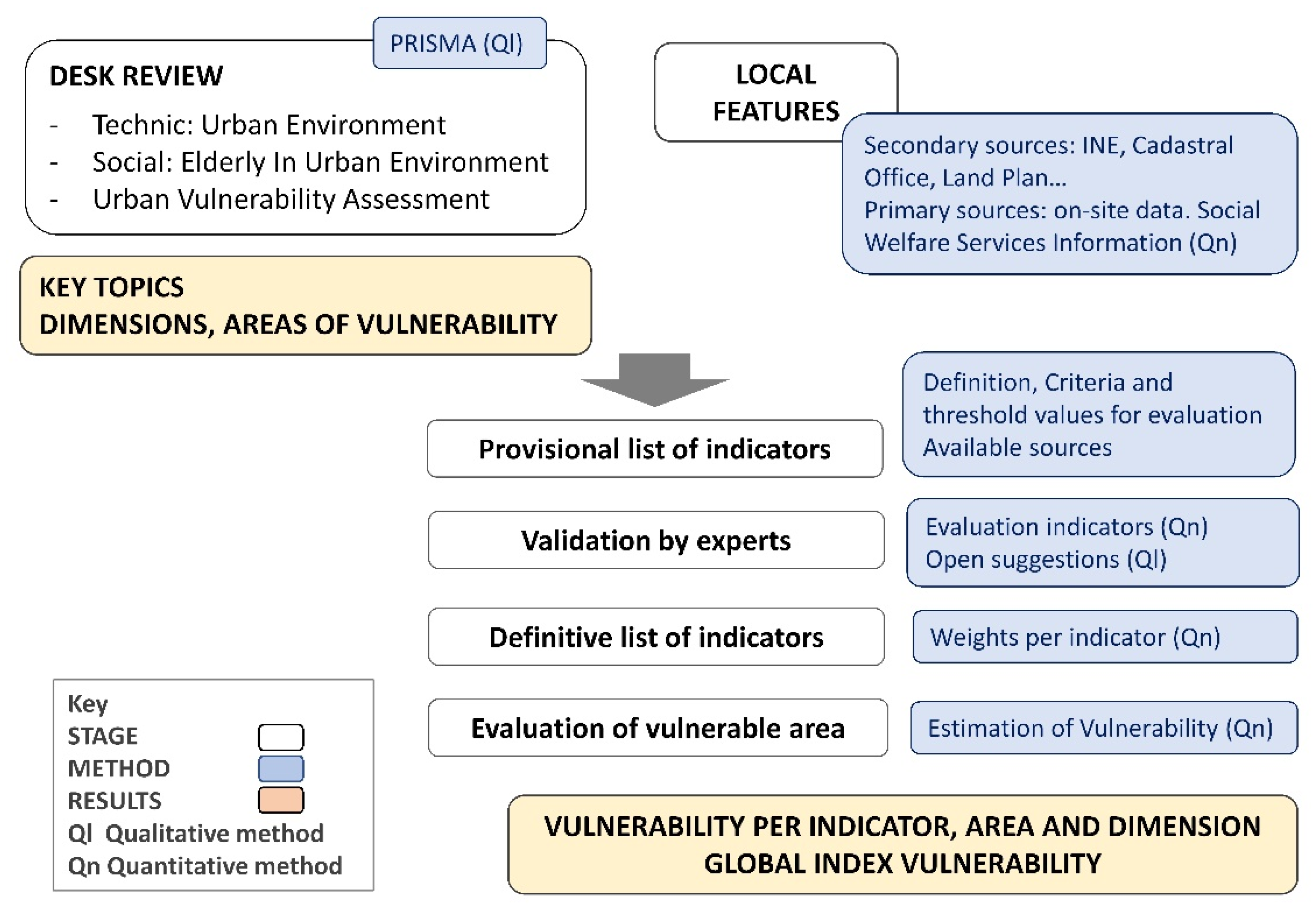
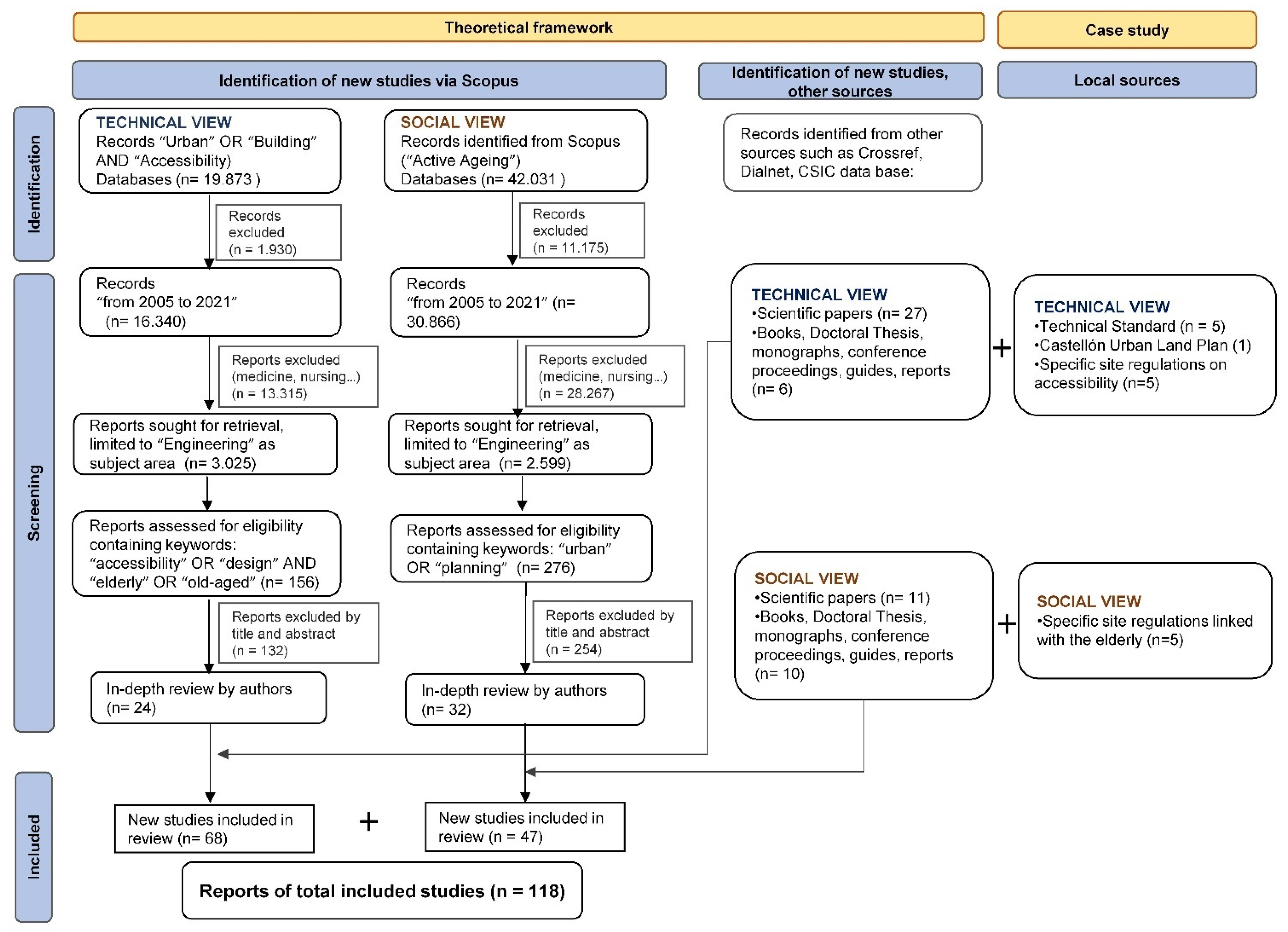
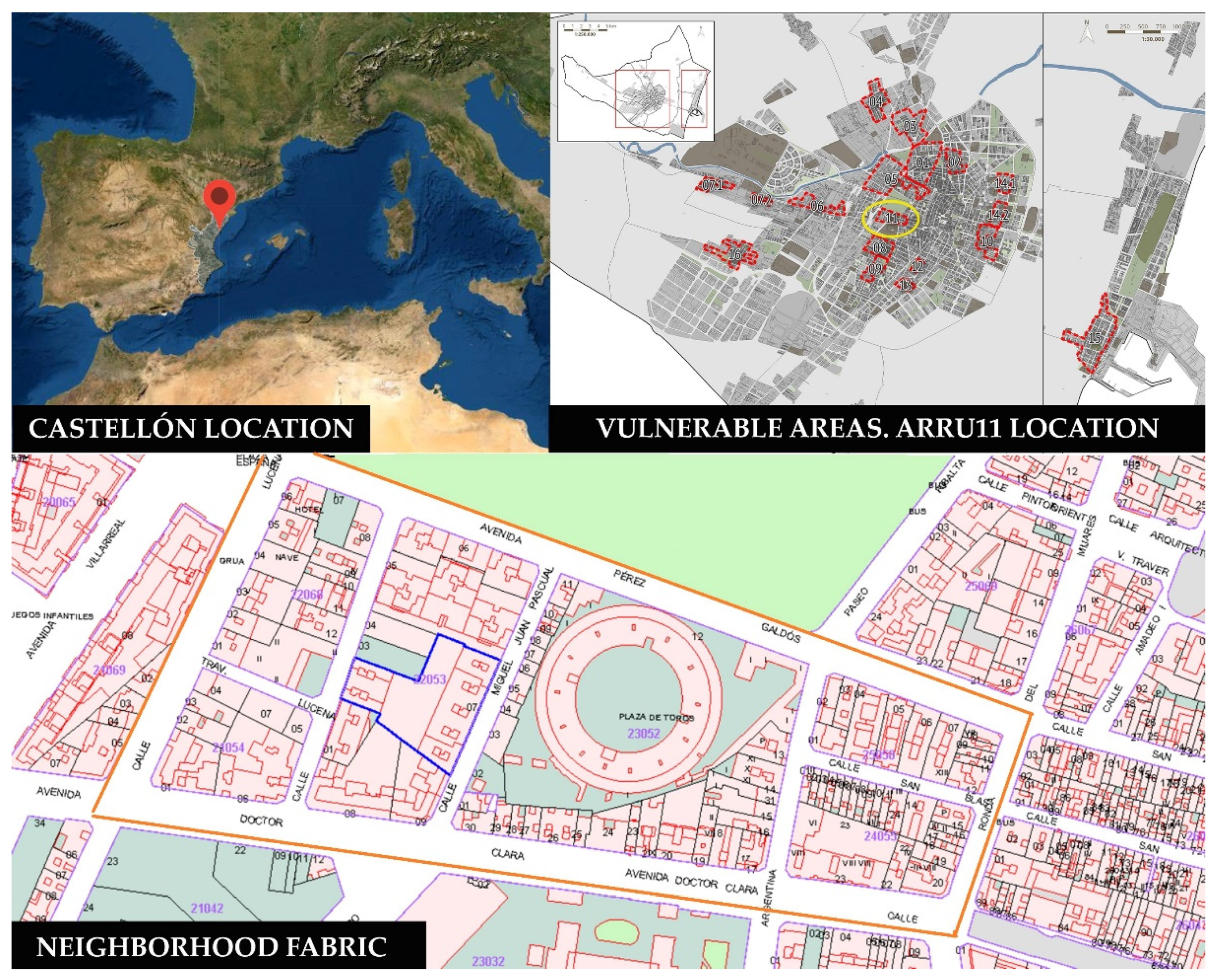
Population aging is becoming a major challenge in many countries. This paper deals with the elderly’s specific needs in the public open space as it can play a significant role in their social inclusion and could be especially relevant in deprived areas. The main goal is to build a model to evaluate the vulnerability of the public space by focusing on the elderly’s needs, using indicators. A previous analysis of the scientific and policy-oriented literature and of the technical standards and regulations linked with accessibility and social aspects that affect the elderly in urban areas was performed to identify the main dimensions for evaluation. The interjudge agreement technique was applied to validate the indicators with a panel of experts in technical and social disciplines. The model was applied to a vulnerable area in Castellón (East Spain), based on indicators adapted to the specific context features. The agreement level reached by experts was used to weight the indicators. The application of the model permitted the vulnerability in the suggested dimensions to be estimated and a global integrated index of vulnerability in the area to be calculated. It could assist in urban planning decision making toward age-friendly and, therefore, inclusive cities.
Keywords: neighborhood regeneration; urban realm; accessibility; social inclusion; active aging; social services neighborhood regeneration; urban realm; accessibility; social inclusion; active aging; social services