Review

Can I Sustain My Happiness? A Review, Critique and Research Agenda for Economics of Happiness


1
University School of Management Studies, Guru Gobind Singh Indraprastha University, New Delhi 110078, India
2
State Bank Institute of Credit and Risk Management, Gurugram 122015, India
*
Author to whom correspondence should be addressed.
Sustainability 2019, 11(22), 6375; https://doi.org/10.3390/su11226375
Submission received: 21 October 2019 / Revised: 7 November 2019 / Accepted: 10 November 2019 / Published: 13 November 2019
(This article belongs to the Section Economic and Business Aspects of Sustainability)

Abstract

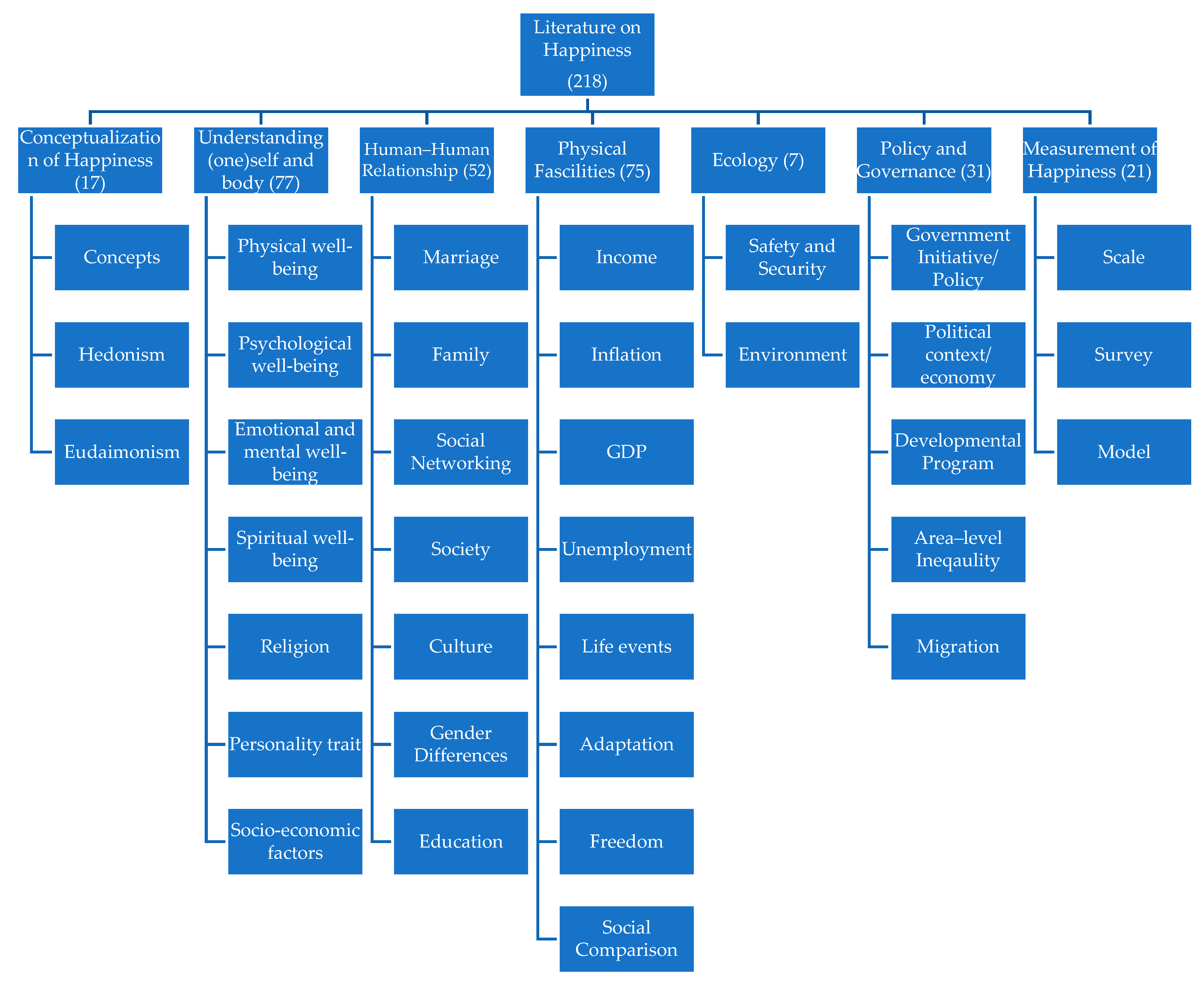
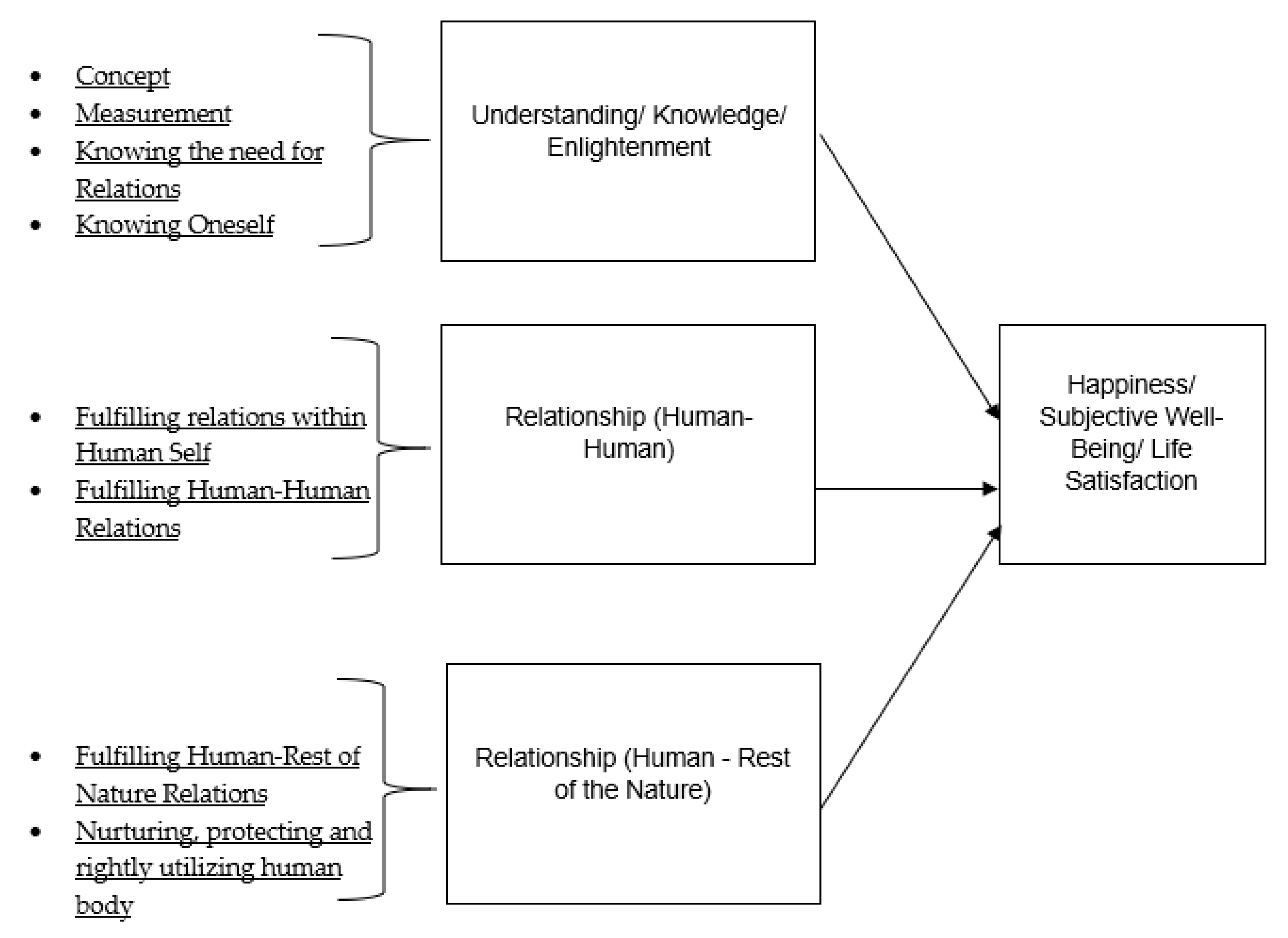
Human beings want to live in a state of happiness and prosperity, but happiness is important not just for the well-being of individuals but for the well-being of society. To ensure the maximization of happiness, it is necessary to consider more than just money, and rather include the right understanding of happiness at the individual level, the family level, the society level, and the environmental (nature) level. This paper contributes to the existing body of knowledge by consolidating the findings of the literature; grouping those into major themes and sub-themes; describing the mechanisms based on the empirical papers by highlighting the independent, dependent, control, and moderating variables, to study the causal relationships between variables under study; proposing an agenda for future research; and informing the policymakers about decisions influencing the human happiness level through legislative rules and regulations. Our results suggest prioritizing the conceptualization of happiness while computing the happiness level at the individual or collective levels. Furthermore, the study recommends governments to establish the conditions enabling individuals to report happiness independently from the political pressure to answer strategically for impressive happiness level figures at the macro level.
Keywords: happiness; subjective well-being; life satisfaction; income inequality; income–happiness paradox; socio-economic factors happiness; subjective well-being; life satisfaction; income inequality; income–happiness paradox; socio-economic factors