Article

An Exploration of the Cultural Landscape Model of Zhuge Village

1
Graduate School of Design, National Yunlin University of Science & Technology, Yunlin 64002, Taiwan
2
Shang Institute of Design, China Academy of Art, Hangzhou 310002, China
*
Author to whom correspondence should be addressed.
Sustainability 2018, 10(9), 3172; https://doi.org/10.3390/su10093172
Submission received: 6 July 2018 / Revised: 27 August 2018 / Accepted: 31 August 2018 / Published: 5 September 2018
(This article belongs to the Special Issue Local Heritage and Sustainability)

Abstract

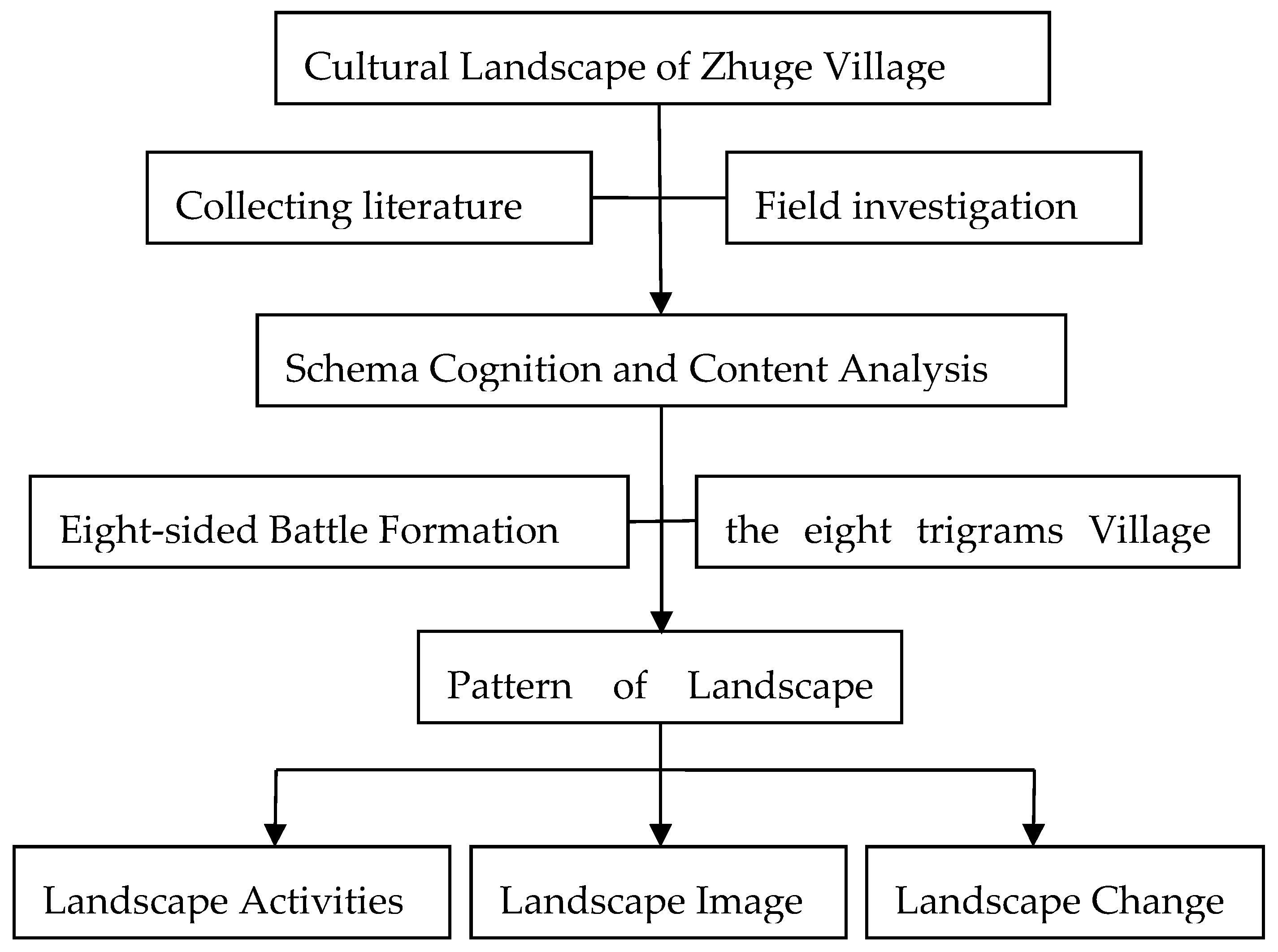
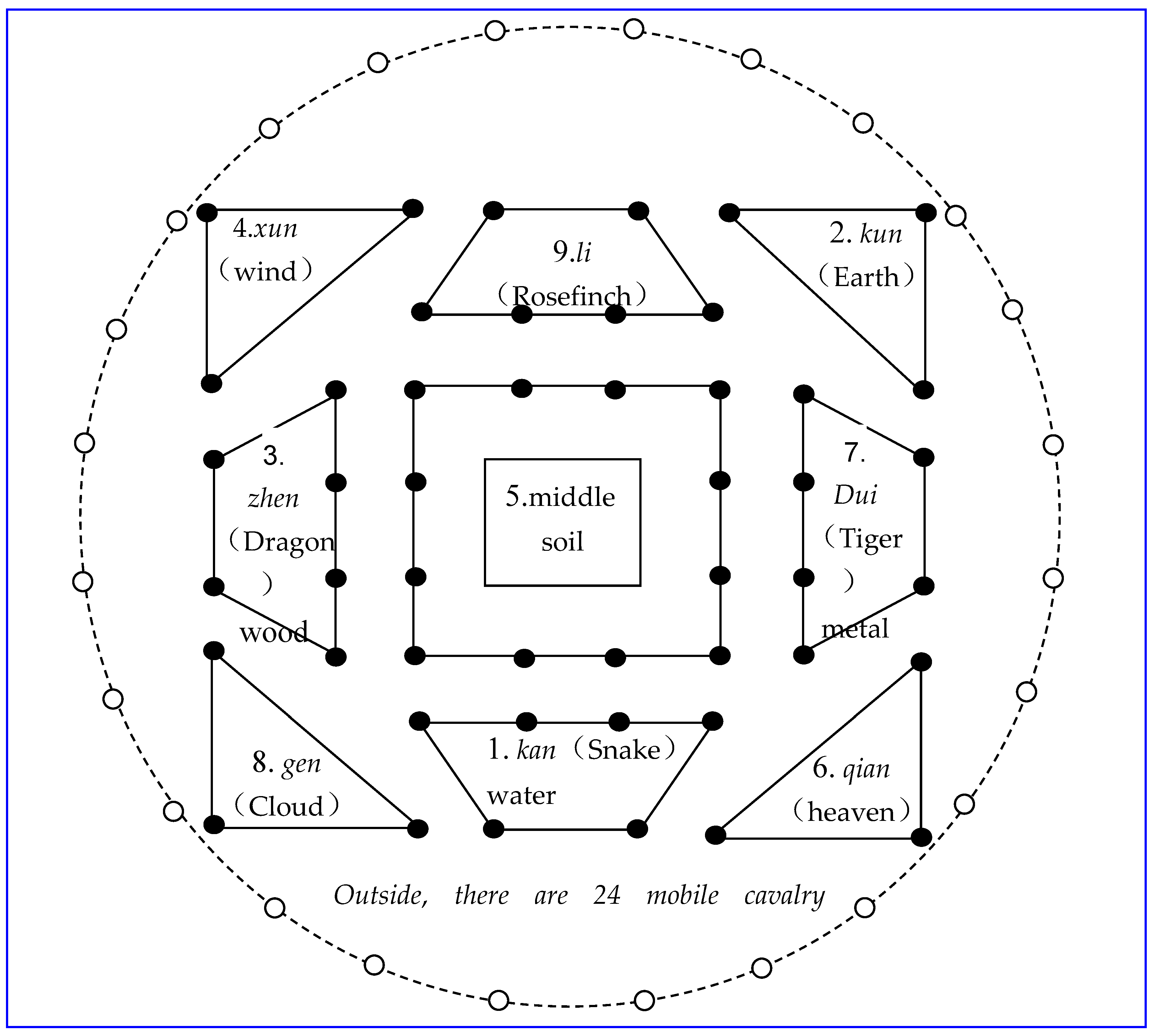
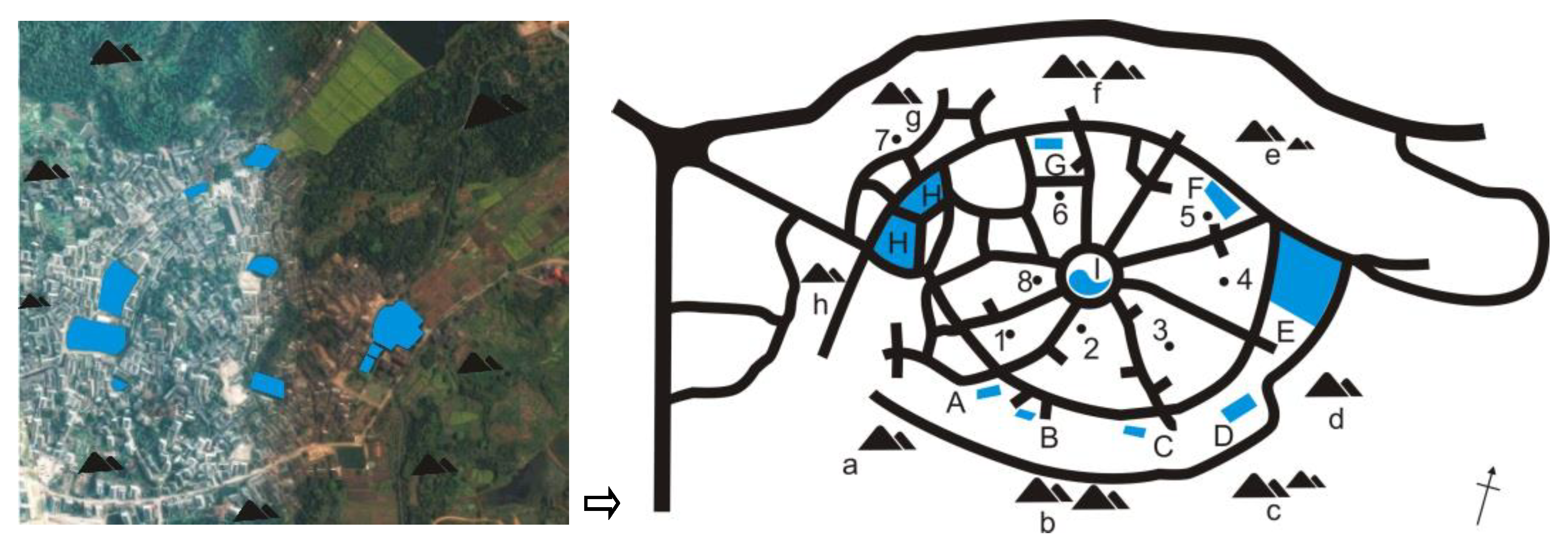
Since ancient times, China has adhered to designing human settlement based on the concept of “defending the emperor and safeguarding the ordinary”. With its spatial structure in accordance with the Chinese ancient strategist Zhuge Liang’s art of war “the Diagram of the Eight-Sided Battle Formation” and in line with the terrain of natural landscape, Zhuge Village, the settlement of Zhuge Liang’s descendants in middle Zhejiang Province, has formed a landscape model featuring cultural characteristics. Using literature research, field research, schema cognition and analysis method, this paper investigates and analyzes aspects such as the siting of settlement, spatial layout, landscape images, ritual activities, and landscape changes so as to explore the concepts from ancient art of war to spatial design as well as analyze its landscape forms and the construction of its landscape model. The paper aims to reveal how the designer of Zhuge Village transformed the spatial deployment of the battle formation in the ancient art of war into the spatial landscape model of “living and working in peace and contentment”. In addition, this paper intends to explore the cultural landscape model of the traditional settlement on the basis of Chinese traditional cultural symbol, “the Eight Trigrams”, in hope that it will provide some inspiration for urban public landscape design in China.
Keywords: cultural; landscape; Zhuge village; Zhuge Liang; Battle Formation cultural; landscape; Zhuge village; Zhuge Liang; Battle Formation