President Trump Tweets Supreme Leader Kim Jong-Un on Nuclear Weapons: A Comparison with Climate Change †



Abstract
:1. Introduction
“Mentally Deranged U.S. Dotard” Tweets “Little Rocket Man”
2. Research Method
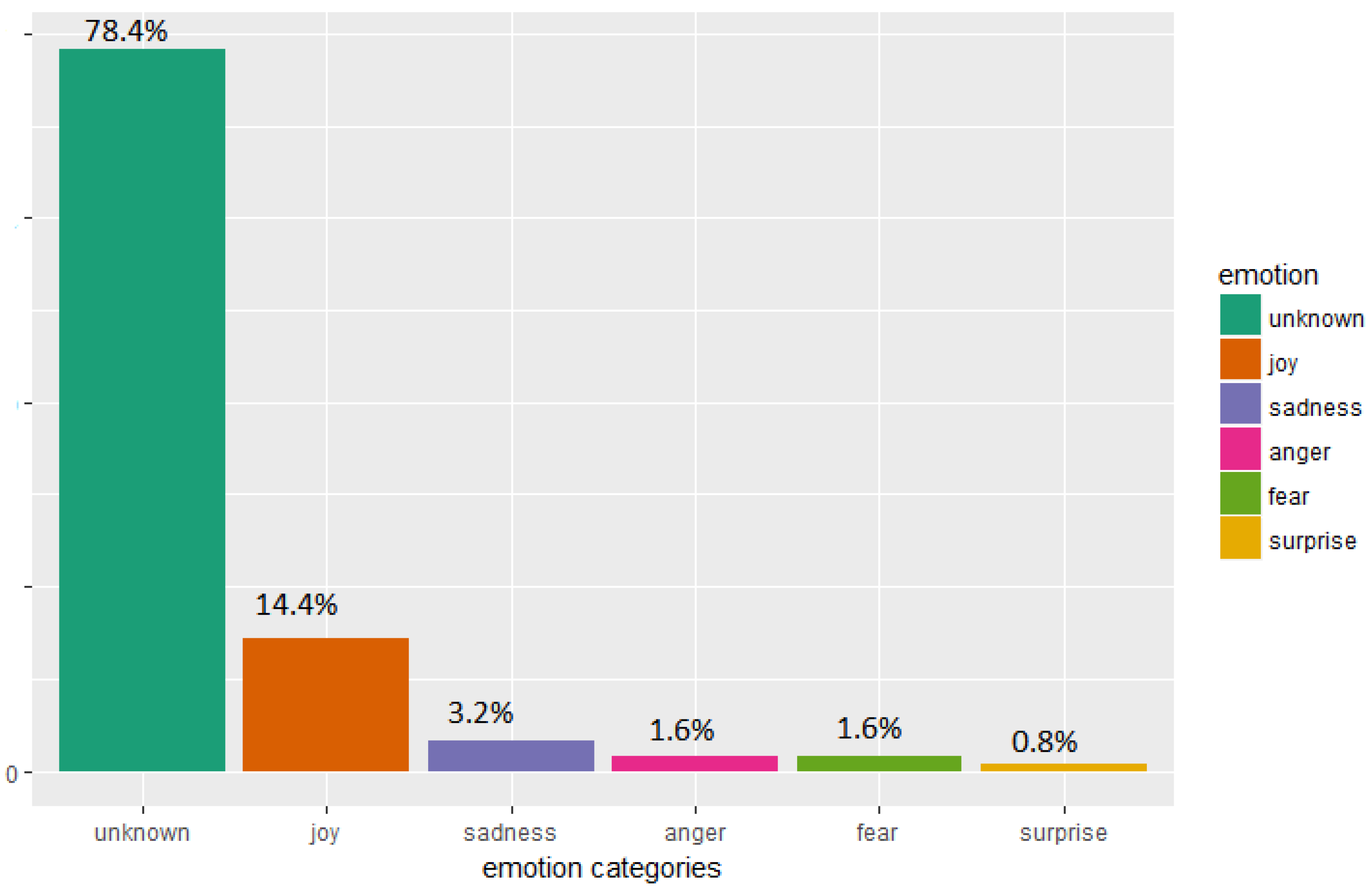
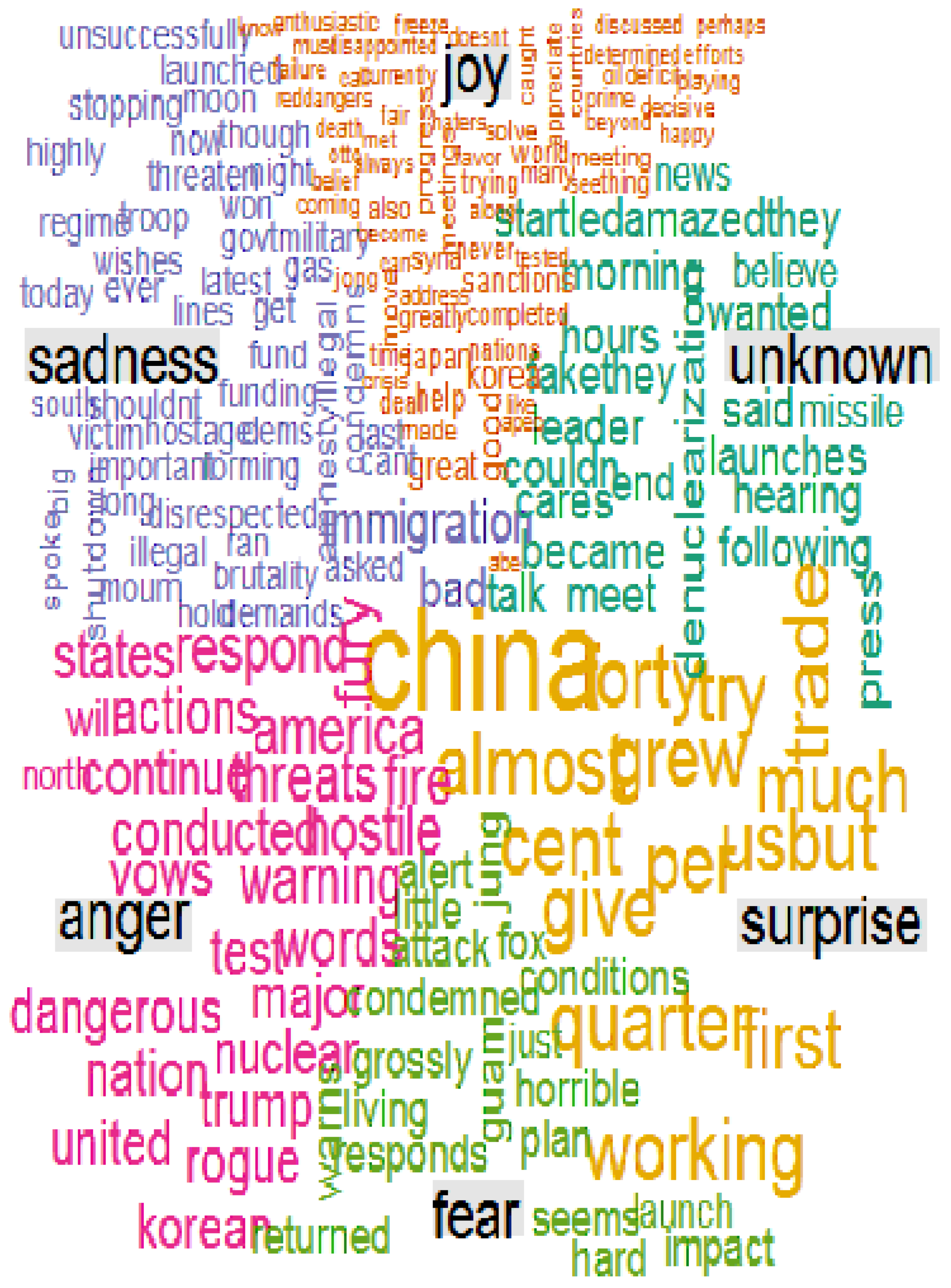
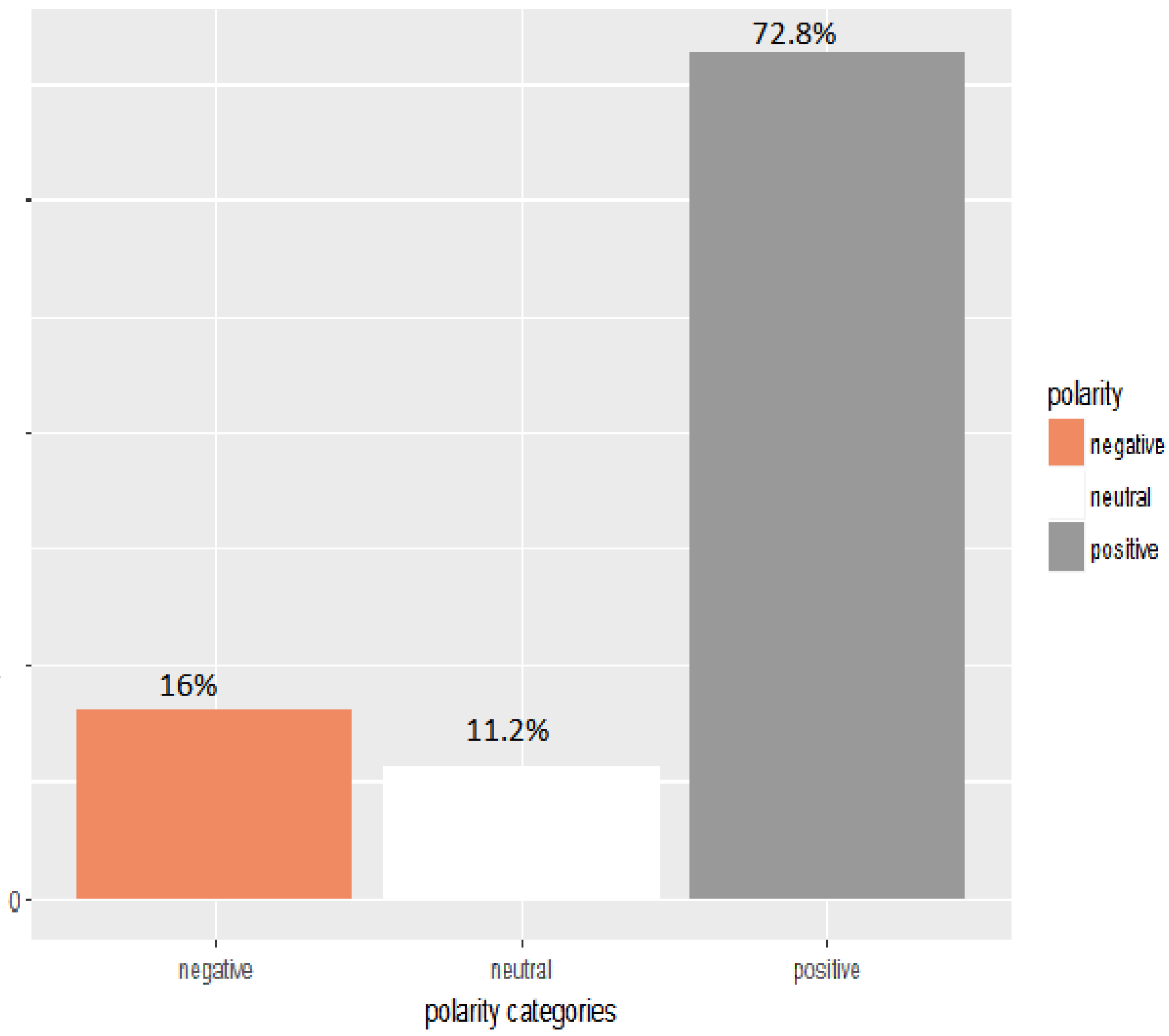
2.1. Results of the Analysis
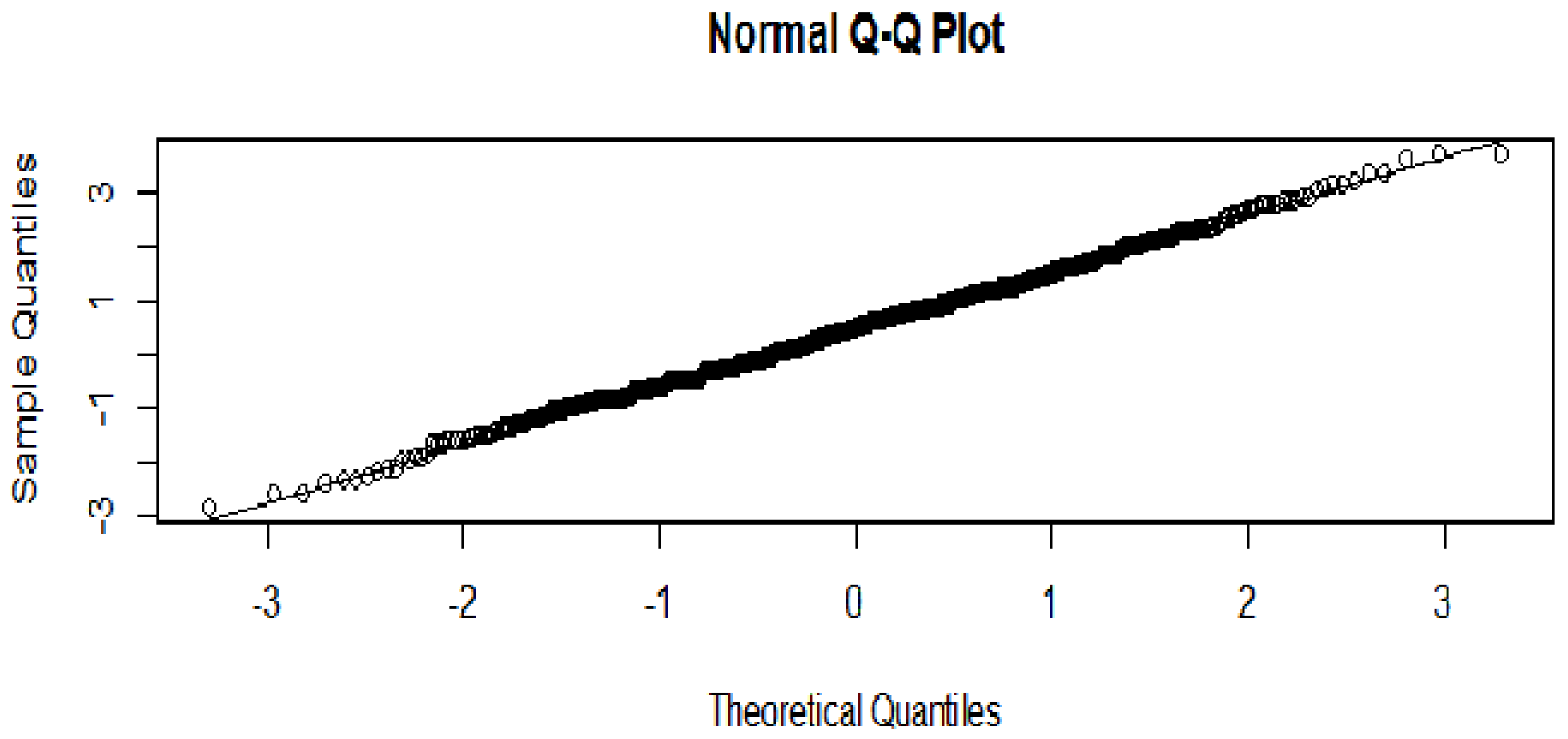
2.2. Bootstrapped t Tests
3. Conclusions
Author Contributions
Acknowledgments
Conflicts of Interest
References
- Allen, D.E.; McAleer, M. Fake News and Indifference to Scientific Fact: President Trump’s Confused Tweets on Global Warming, Climate Change and Weather; Econometric Institute Research Paper EI2018-24; Econometric Institute, Erasmus School of Economics (ESE), Erasmus University Rotterdam: Rotterdam, The Netherlands, 2018. [Google Scholar]
- Allen, D.E.; McAleer, M.; Reid, D.M. Fake News and Indifference to Truth: Dissecting Tweets and State of the Union Addresses by Presidents Obama and Trump; Tinbergen Institute Discussion Paper, TI 2018-020/III; Tinbergen Institute: Amsterdam, The Netherlands; Rotterdam, The Netherlands, 2018. [Google Scholar]
- De Vries, A. Sentiment Package. 2012. Available online: https://github.com/andrie/sentiment/blob/master/DESCRIPTION (accessed on 1 February 2018).



| Trump’s North Korea Tweets ‘Joy’ vs. Trump’s Climate Change ‘Joy’ | |||
|---|---|---|---|
| mean t = 0.467 | mean p-value = 0.4521 | ||
| probability vect | 1st Quartile | median | 3rd Quartile |
| probability | 0.2016 | 0.4215 | 0.6936 |
| t vector | −0.2823 | 0.4941 | 1.1632 |
| Trump’s North Korea Tweets; Positive Polarity score versus Trump’s Climate Change Positive Polarity score | |||
|---|---|---|---|
| mean t = 3.35 | mean p-value = 0.0181 | ||
| probability vect | 1st Quartile | median | 3rd Quartile |
| probability | 0 | 0.0001 | 0.008 |
| t vector | 2.67 | 3.34 | 3.996 |
© 2018 by the authors. Licensee MDPI, Basel, Switzerland. This article is an open access article distributed under the terms and conditions of the Creative Commons Attribution (CC BY) license (http://creativecommons.org/licenses/by/4.0/).
Share and Cite
Allen, D.E.; McAleer, M. President Trump Tweets Supreme Leader Kim Jong-Un on Nuclear Weapons: A Comparison with Climate Change †. Sustainability 2018, 10, 2310. https://doi.org/10.3390/su10072310
Allen DE, McAleer M. President Trump Tweets Supreme Leader Kim Jong-Un on Nuclear Weapons: A Comparison with Climate Change †. Sustainability. 2018; 10(7):2310. https://doi.org/10.3390/su10072310
Chicago/Turabian StyleAllen, David E., and Michael McAleer. 2018. "President Trump Tweets Supreme Leader Kim Jong-Un on Nuclear Weapons: A Comparison with Climate Change †" Sustainability 10, no. 7: 2310. https://doi.org/10.3390/su10072310
APA StyleAllen, D. E., & McAleer, M. (2018). President Trump Tweets Supreme Leader Kim Jong-Un on Nuclear Weapons: A Comparison with Climate Change †. Sustainability, 10(7), 2310. https://doi.org/10.3390/su10072310