Article

Farmers’ Adaptive Strategies in Balancing Commercial Farming and Consumption of Nutritious Foods: Case Study of Myanmar


1
Wageningen Centre for Development Innovation, Droevendaalsesteeg 1, PO Box 88, 6700 AB Wageningen, The Netherlands
2
Myanmar ICCO Cooperation, Royal White Elephant Hotel, 8th floor, 11 Kan Street, 10 Quarter, Hlaing Township, Yangon 11051, Myanmar
*
Author to whom correspondence should be addressed.
Sustainability 2018, 10(12), 4721; https://doi.org/10.3390/su10124721
Submission received: 27 September 2018 / Revised: 4 December 2018 / Accepted: 5 December 2018 / Published: 11 December 2018

Abstract

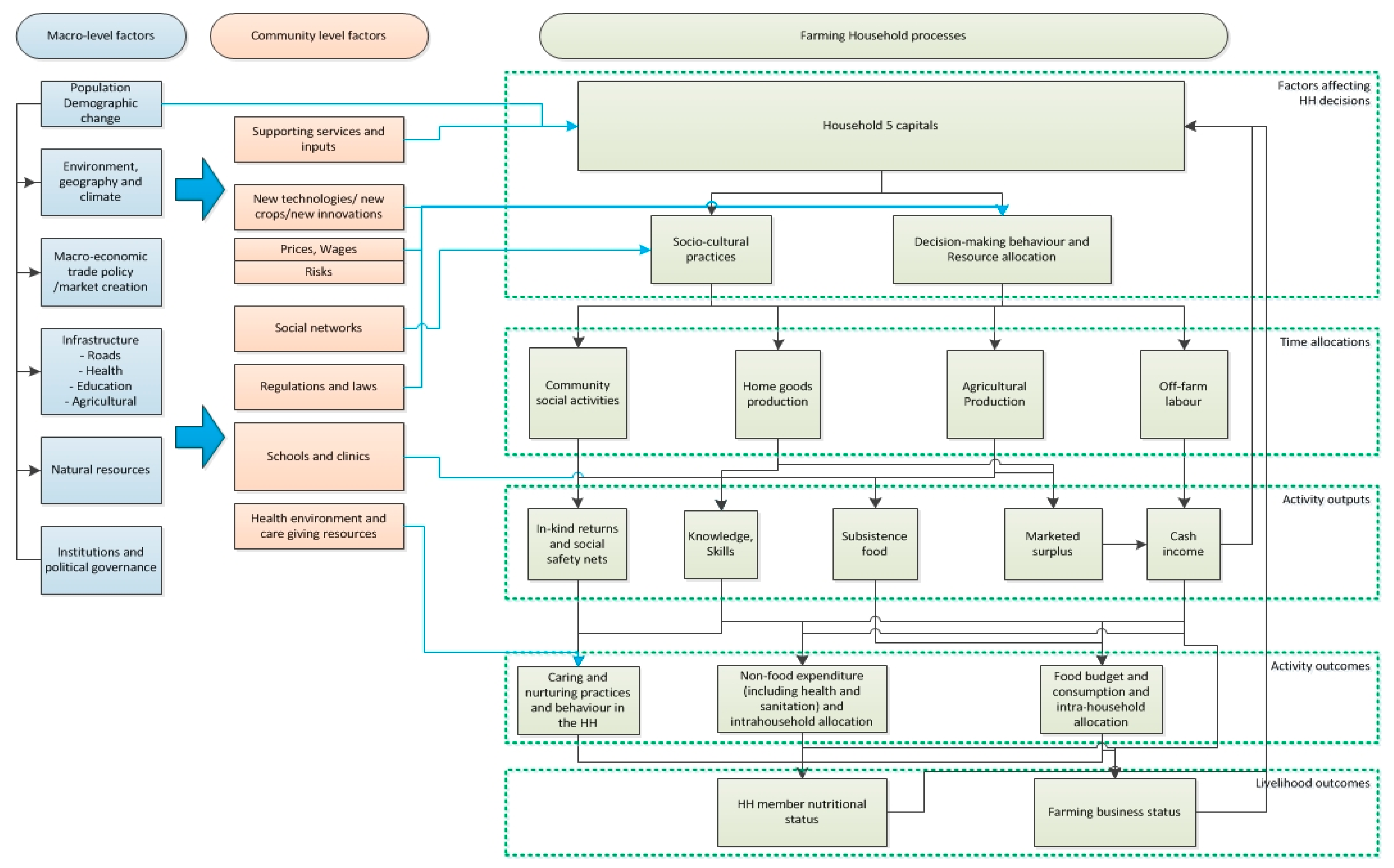
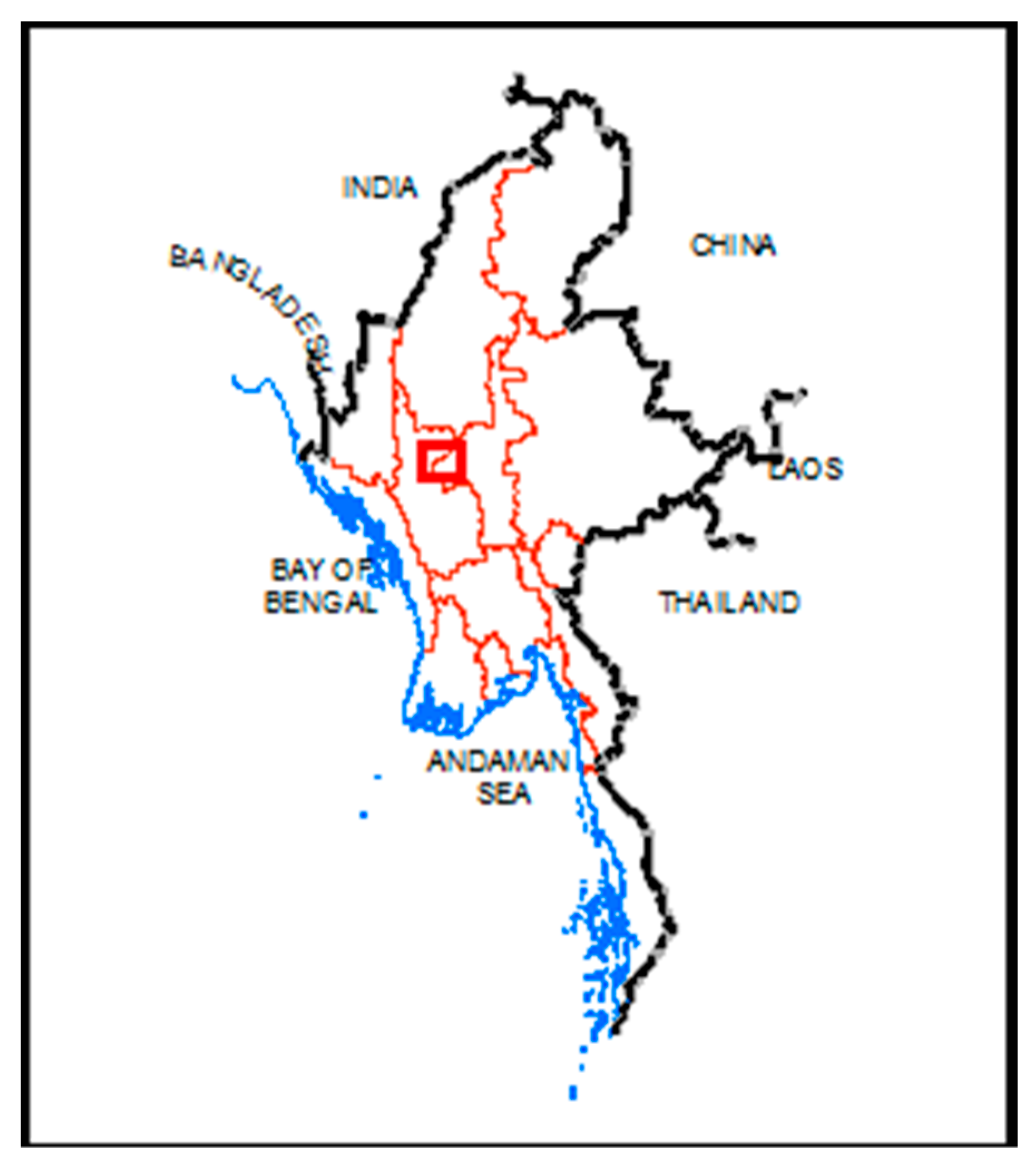
Food systems undergo rapid changes in response to economic and market forces, and environmental and dietary changes. This study aimed to disentangle adaptation strategies in farm households balancing interests in the commercial aspects of farming and the consumption of nutritious foods. The area of interest was Central Myanmar, Pakokku region. A literature-based framework was used to identify entry points for adaptation strategies at the farm household level. A purposive sampling strategy was used to select smallholders (<5 acres), engaged in market-oriented agriculture (≥10 years). In 14 households, in-depth interviews were conducted, using a life course perspective depicting the household history in relation to agricultural developments and household food and nutrition security. The narratives of smallholders confirmed that household food and nutrition security was grounded in mixed livelihood strategies, including migration. Diet quality depended largely on income. Supportive strategies were a frugal lifestyle, responsible use of resources, participation in community activities, and different forms of social innovation. The study shows how the understanding of local diets provides insights in entry points for nutrition-sensitive agriculture, and suggests a need for alternative adaptation strategies, replacing those promoting specialization and intensification, for more holistic solutions that reinforce the flexibility and resilience of farmers.
Keywords: Agricultural commercialization; food and nutrition security; salutogenesis; life course perspective; food systems; multi-level; positive deviance; Myanmar Agricultural commercialization; food and nutrition security; salutogenesis; life course perspective; food systems; multi-level; positive deviance; Myanmar