Development of Salt and Drought Tolerance Classification in the Kazakhstan Cotton Collection Using Optimal Phenotypic Traits

 , , ,
, , , 
Abstract
1. Introduction
2. Materials and Methods
2.1. Research Materials and Growth Conditions
2.2. Phenotypic Data Collection
2.3. Phenotypic Data Analysis
3. Results
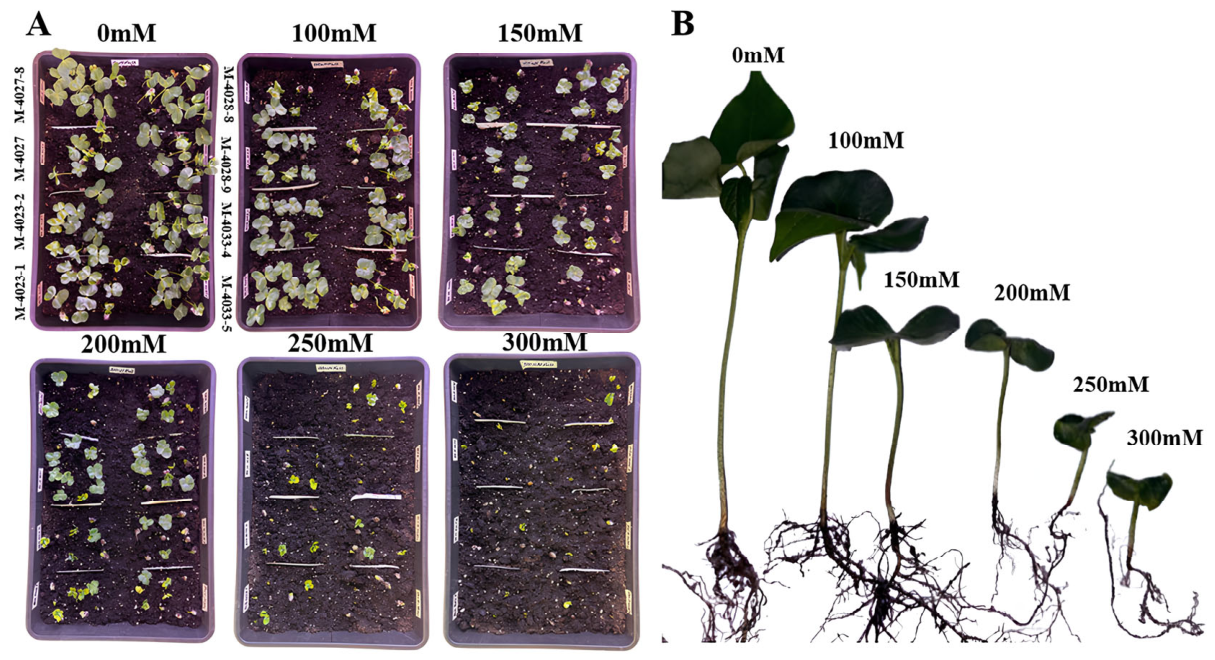
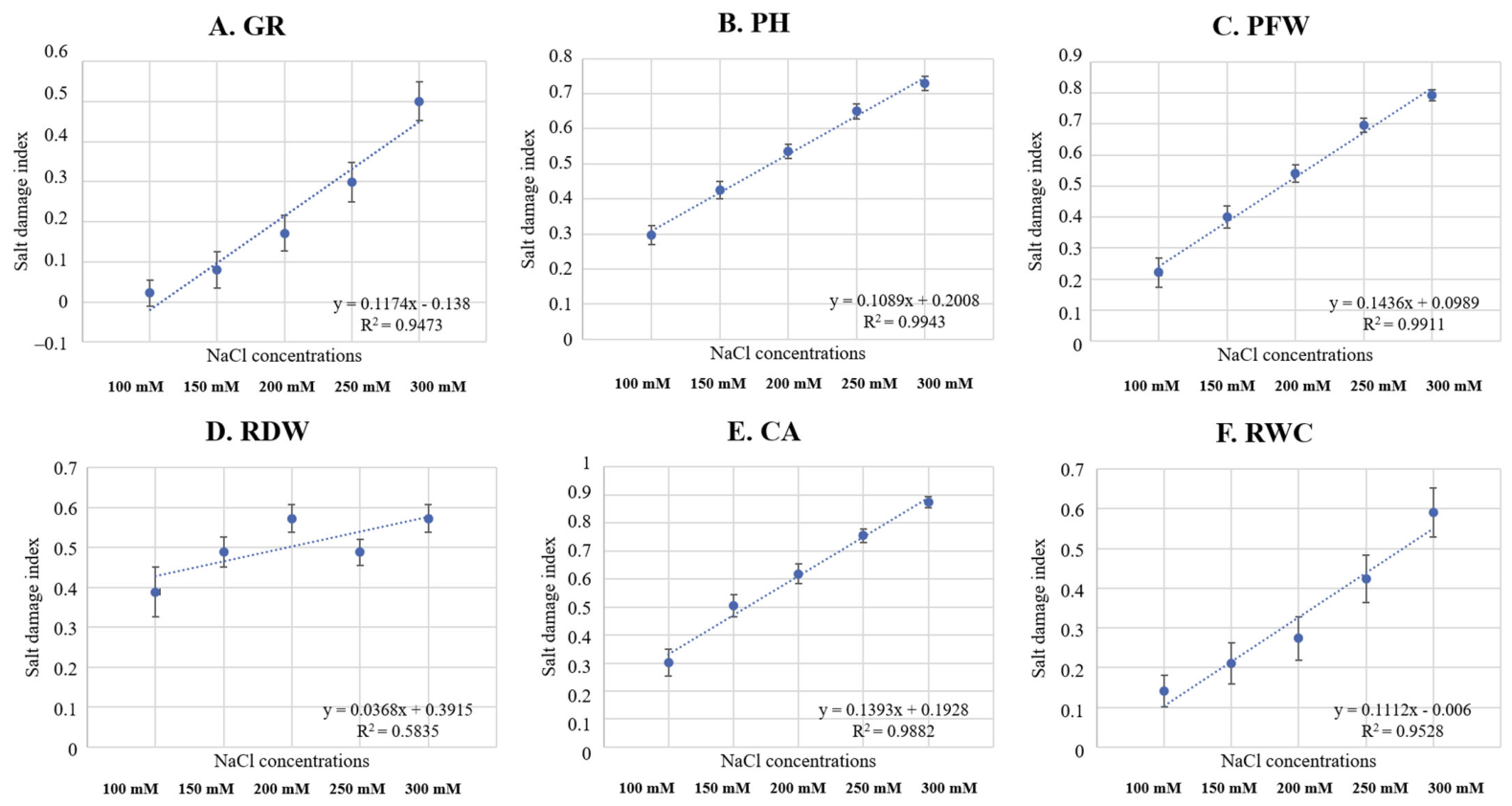
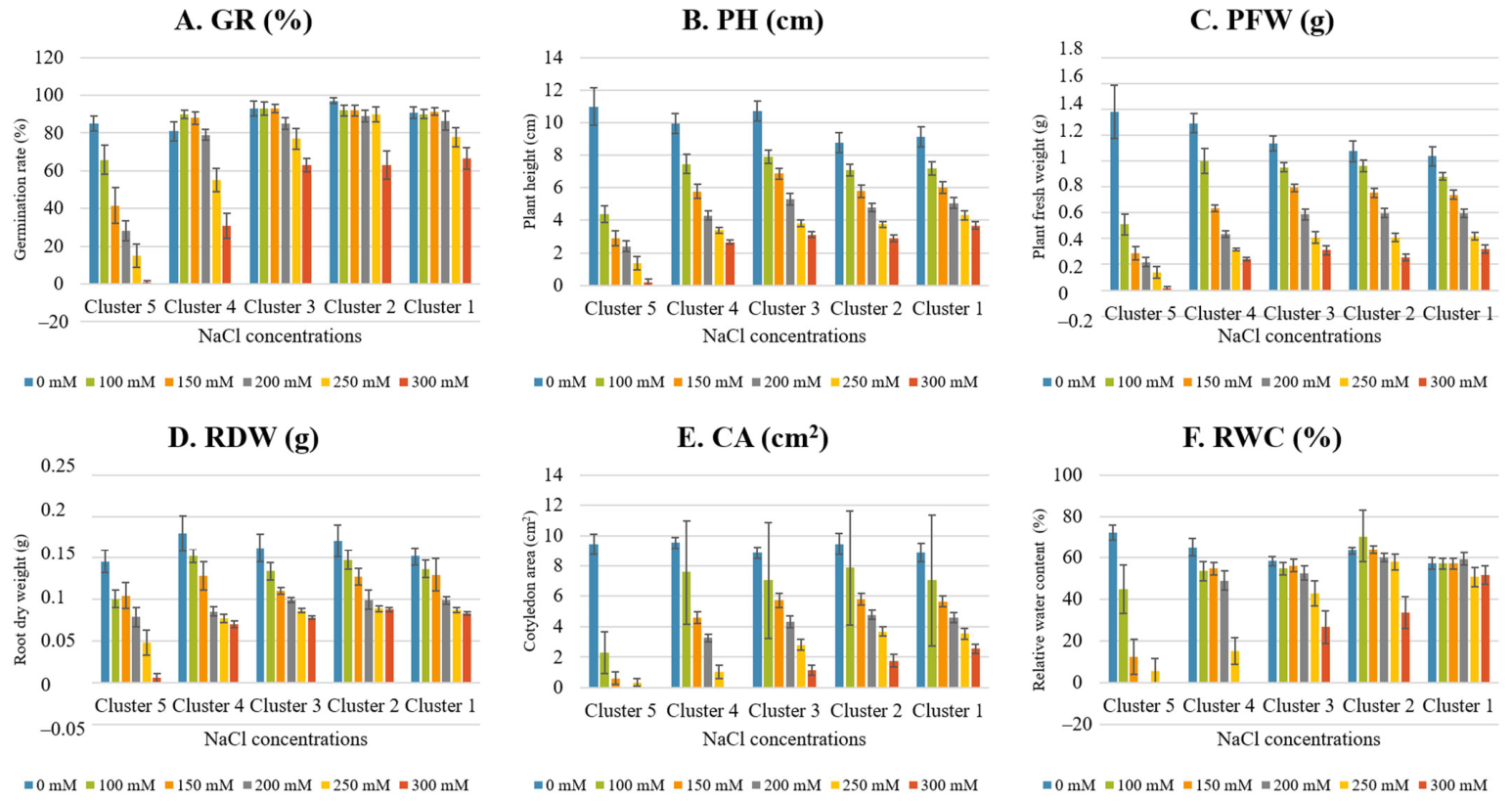
3.1. Morpho-Physiological Responses of Cotton Genotypes to NaCl-Induced Salinity Stress
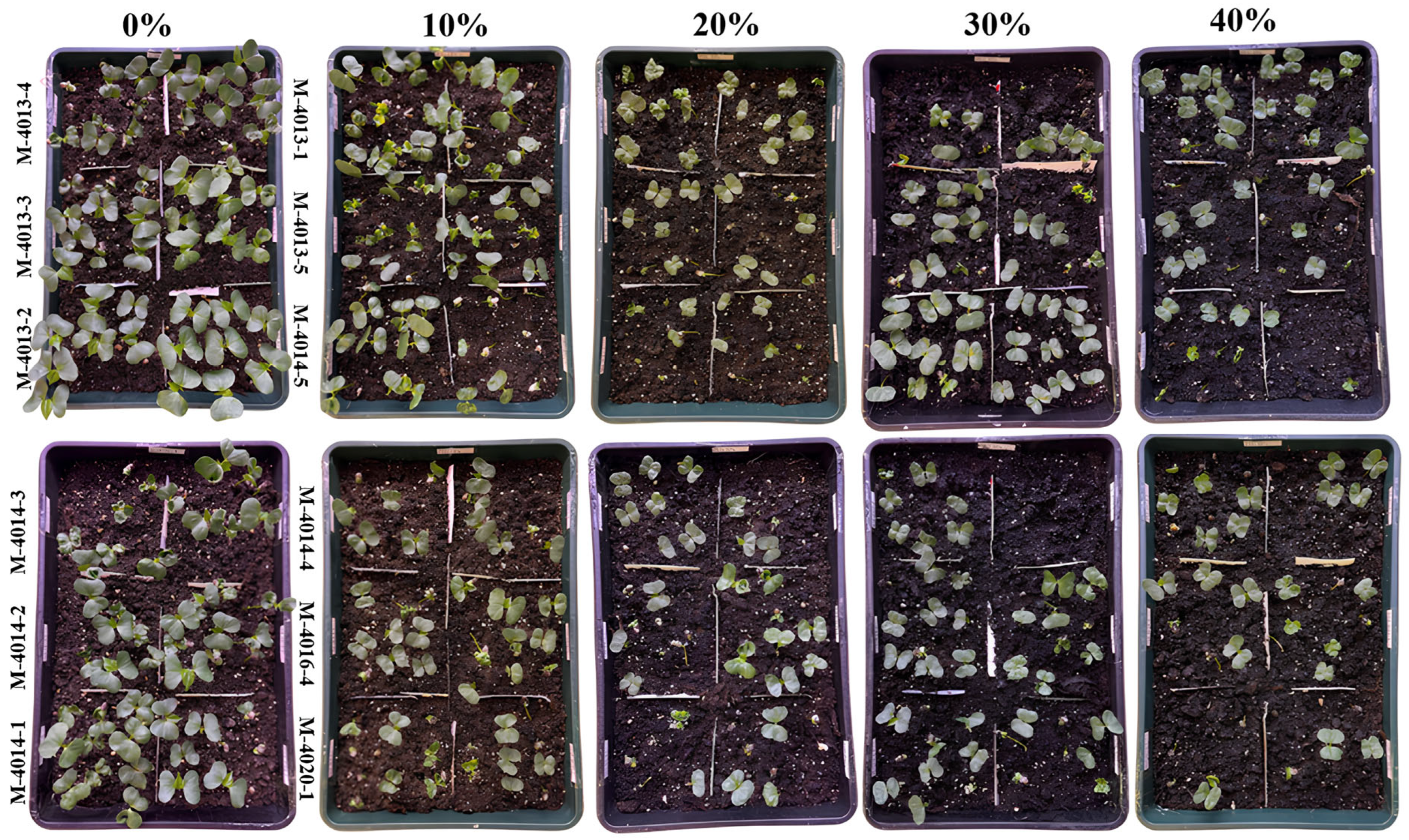
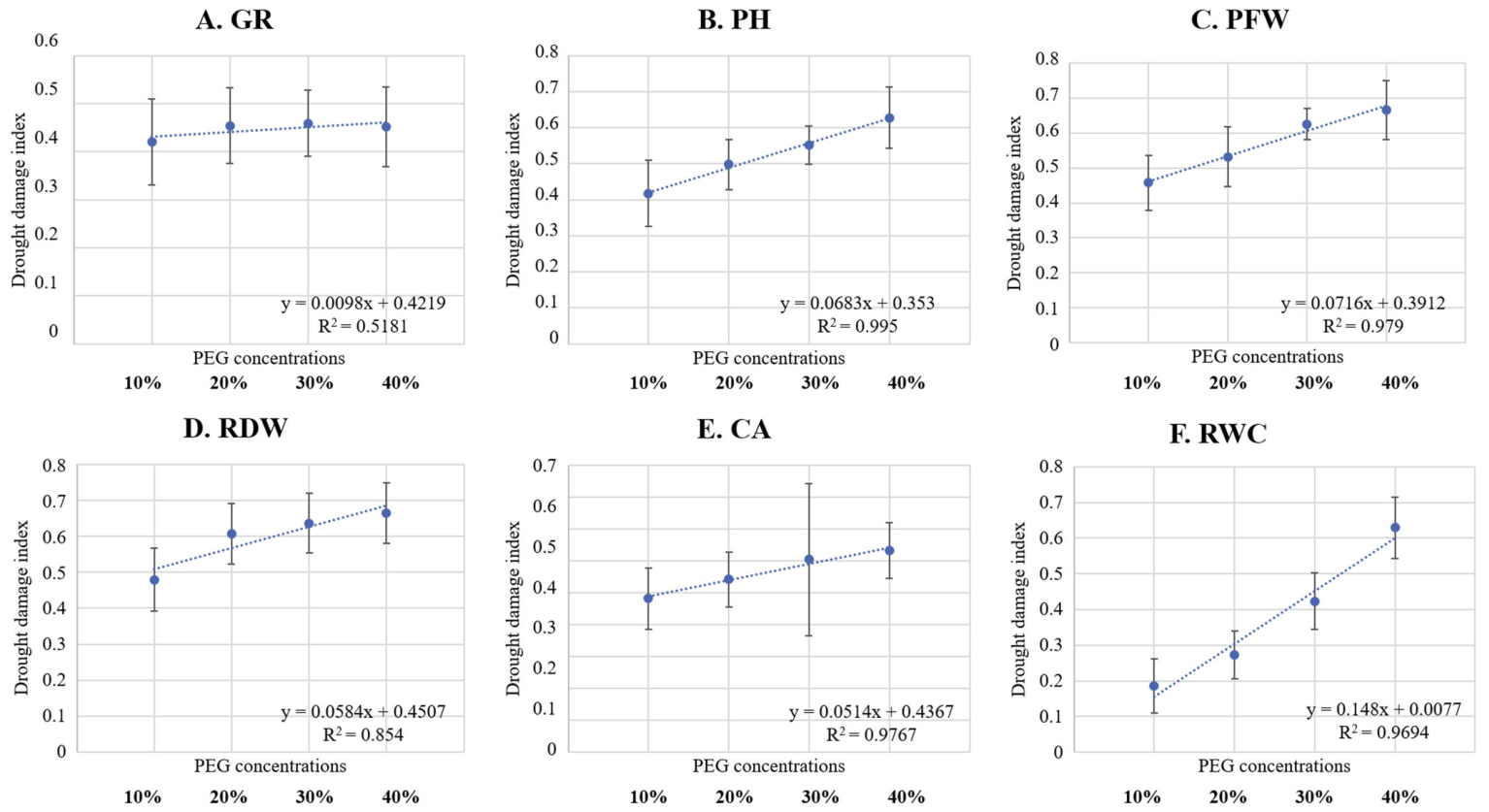
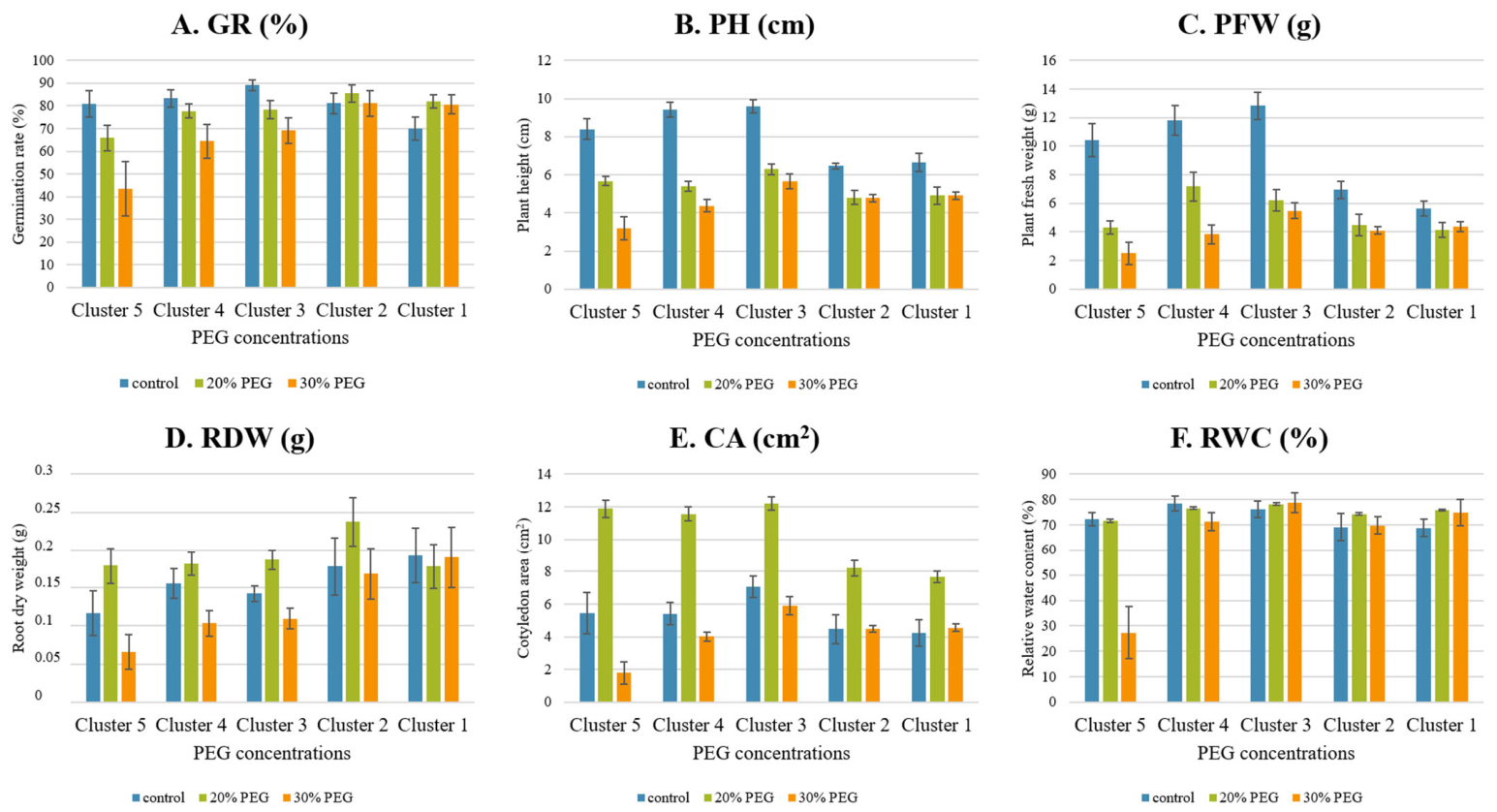
3.2. Morphophysiological Responses of Cotton Genotypes to PEG-6000-Induced Drought Stress
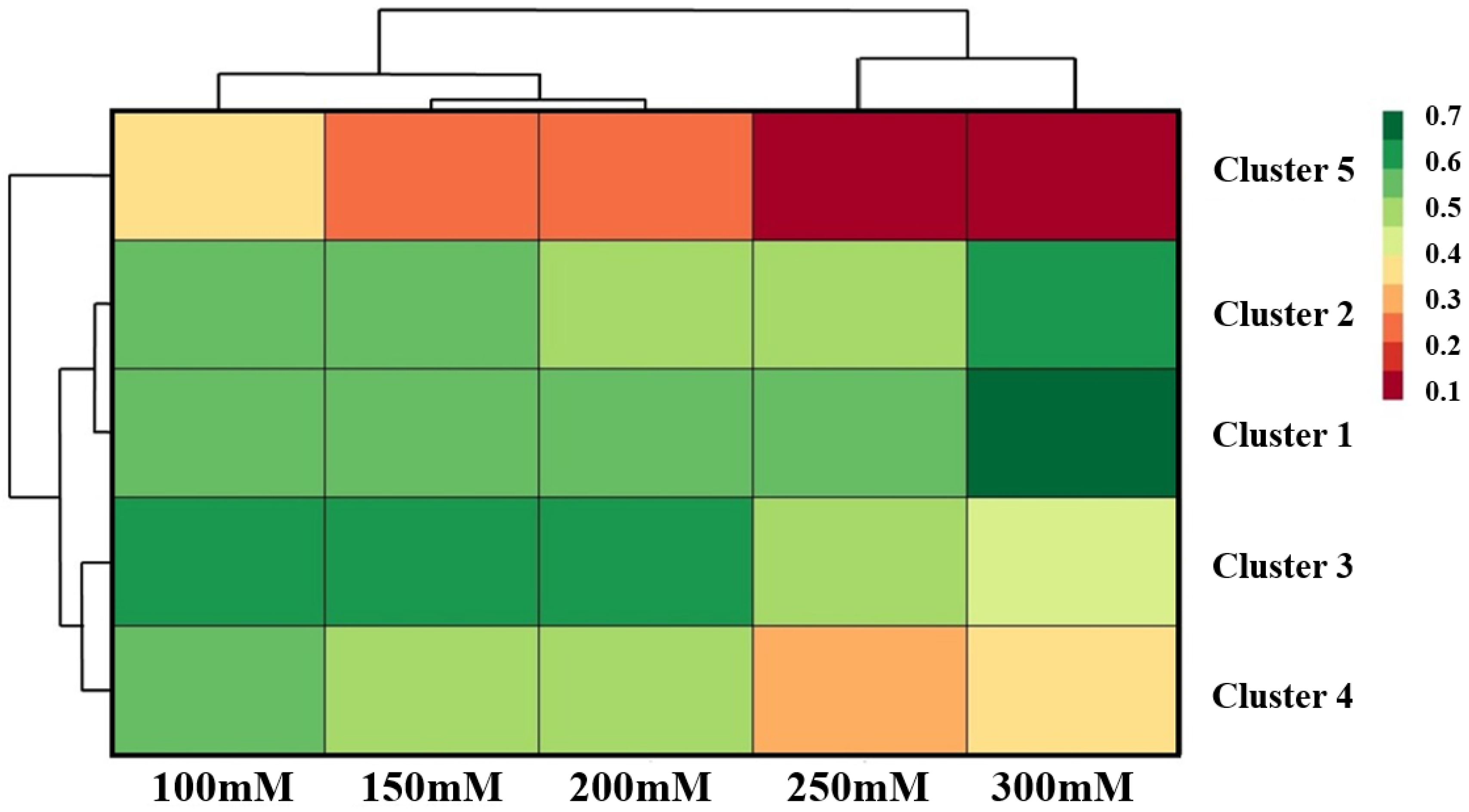
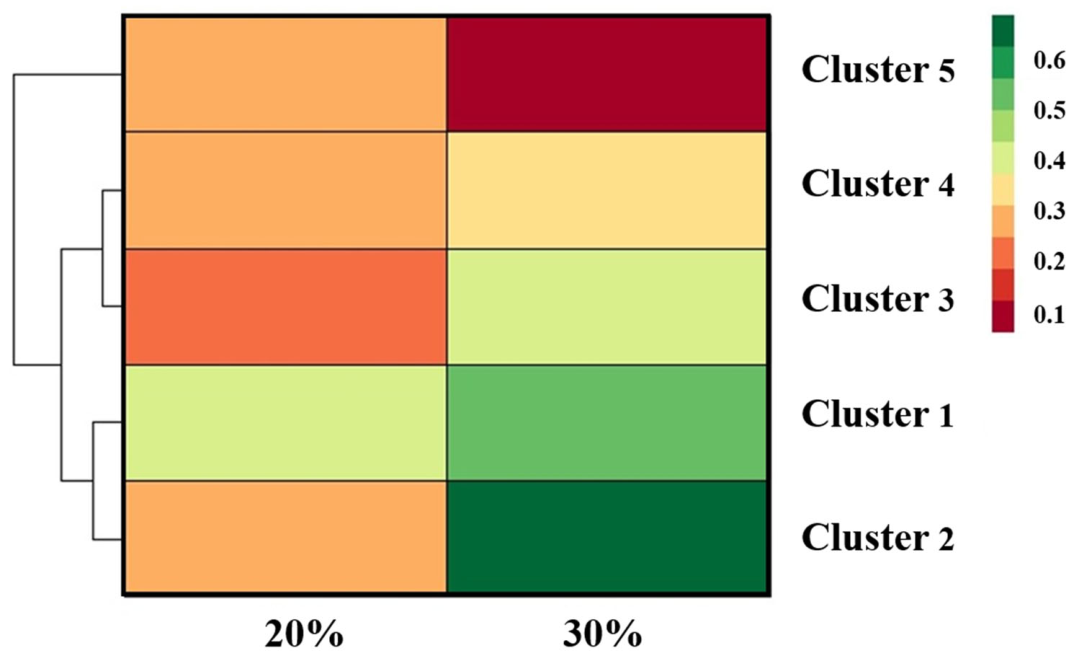
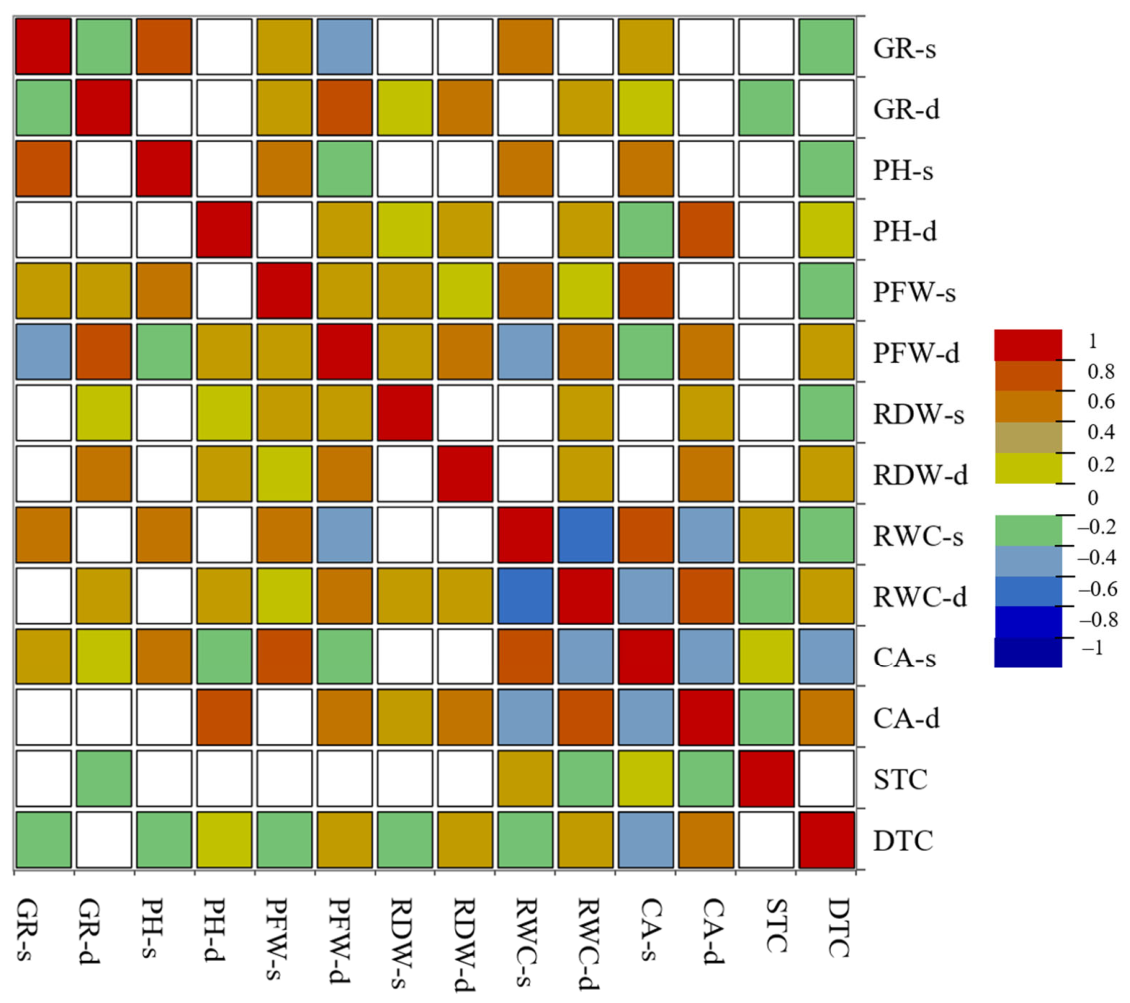
3.3. Cluster Heat Map Analysis and Cross-Classification Under Salts and Drought Stress
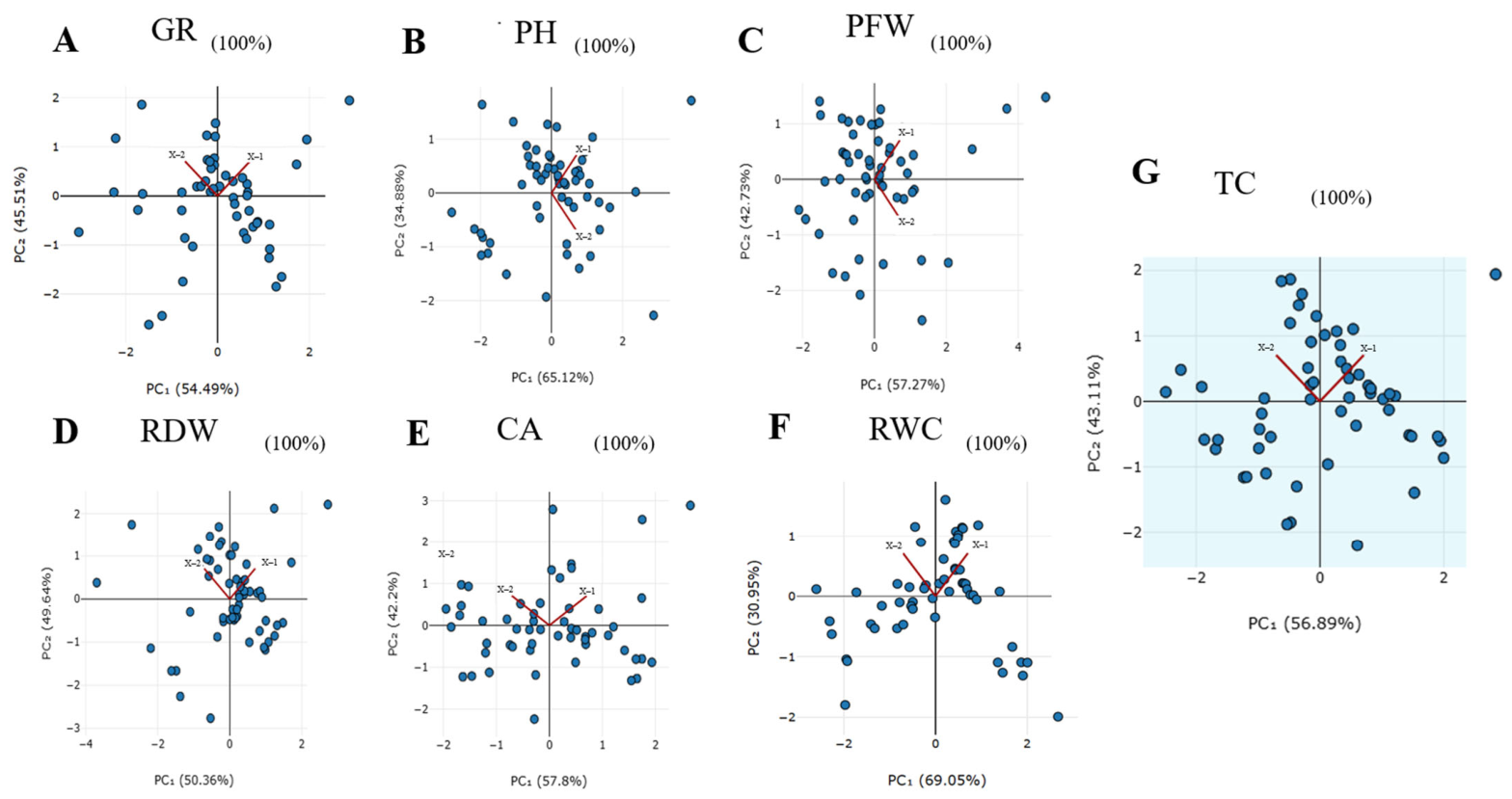
3.4. Relationship Analysis of Salt and Drought Stress in Genotypes Using Principal Component Analysis
4. Discussion
4.1. Morpho-Physiological Responses of Cotton Genotypes to Salt and Drought Stress
4.2. Cluster Heat Map Analysis and Cross-Classification Under Salt Stress and Drought Stress
4.3. Relationship Analysis the Effects of the Salt and Drought Stress on Genotypes Using Principal Component Analysis
5. Conclusions
Supplementary Materials
Author Contributions
Funding
Data Availability Statement
Acknowledgments
Conflicts of Interest
Abbreviations
| PEG-6000 | Polyethylene glycol |
| NaCl | Sodium chloride |
| GR | Germination rate |
| PH | Plant height |
| PFW | Plant fresh weight |
| RDW | Root dry weight |
| CA | Cotyledon area |
| RWC | Water content |
| FW | Fresh weight |
| TW | Turgid weight |
| DW | Dry weight |
| SDI | Salt damage index |
| STC | Salt tolerance coefficient |
| DTC | Drought tolerance coefficient |
| UIJ | The average membership function value |
| PCA | Principal component analysis |
| MFVD | Membership function value of drought tolerance |
| SS | Salt-stressed |
References
- Cao, N.; Hou, J.; Hu, W.; Li, H.; Lin, J.; Chen, G.; Wan, S.; Hu, S. Optimum plant density improved cotton (Gossypium hirsutum L.) root production capacity and photosynthesis for high cotton yield under plastic film mulching. Agronomy 2024, 14, 1040. [Google Scholar] [CrossRef] [Scilit]
- Khan, M.A.; Wahid, A.; Ahmad, M.; Tahir, M.T.; Ahmed, M.; Ahmad, S.; Hasanuzzaman, M. World cotton production and consumption: An overview. In Cotton Production and Uses: Agronomy, Crop Protection, and Postharvest Technologies; Springer: Singapore, 2020; pp. 1–7. [Google Scholar]
- Ma, Z.; Zhang, Y.; Wu, L.; Zhang, G.; Sun, Z.; Li, Z.; Jiang, Y.; Ke, H.; Chen, B.; Liu, Z. High-quality genome assembly and resequencing of modern cotton cultivars provide resources for crop improvement. Nat. Genet. 2021, 53, 1385–1391. [Google Scholar] [CrossRef] [Scilit] [PubMed]
- Iqbal, M.; Khan, M.A.; Chattha, W.S.; Abdullah, K.; Majeed, A. Comparative evaluation of Gossypium arboreum L. and Gossypium hirsutum L. genotypes for drought tolerance. Plant Genet. Resour. 2019, 17, 506–513. [Google Scholar] [CrossRef] [Scilit]
- Feng, L.; Chen, Y.; Ma, T.; Zhou, C.; Sang, S.; Li, J.; Ji, S. Integrative physiology and transcriptome sequencing reveal differences between G. hirsutum and G. barbadense in response to salt stress and the identification of key salt tolerance genes. BMC Plant Biol. 2024, 24, 787. [Google Scholar] [CrossRef] [Scilit] [PubMed]
- Rahimova, G.; Nabiev, S.; Azimov, A.; Sagdiev, M.; Alimova, R.n.; Khamdullaev, S.; Shavkiev, J. Morphological and agronomic characterization of colored cotton cultivars of G. hirsutum L. J. Wildl. Biodivers. 2024, 8, 165–178. [Google Scholar]
- Rauf, S.; Shehzad, M.; Al-Khayri, J.M.; Imran, H.M.; Noorka, I.R. Cotton (Gossypium hirsutum L.) breeding strategies. In Advances in Plant Breeding Strategies: Industrial and Food Crops: Volume 6; Springer: Berlin/Heidelberg, Germany, 2019; pp. 29–59. [Google Scholar]
- Kathiravan, P.; Narayanan, R.; Sathyaraj, D.; Sabesan, T.; Saravanan, K. Genetic variability studies for yield and yield attributing traits in upland cotton (Gossypium hirsutum L.). Int. J. Adv. Biochem. Res. 2025, 9, 1101–1105. [Google Scholar] [CrossRef] [Scilit]
- Zhang, J.; Zhu, Y.; Kole, C. World Cotton Production, Genetic Diversity, Genetic Grain, and Genomics. In The Cotton Genome; Zhang, J., Kole, C., Zhu, Y., Eds.; Springer Nature: Cham, Switzerland, 2025; pp. 1–20. [Google Scholar]
- Voora, V.; Larrea, C.; Bermudez, S. Global Market Report: Cotton; International Institute for Sustainable Development: Geneva, Switzerland, 2020. [Google Scholar]
- Makhmadjanov, S.; Tokhetova, L.; Daurenbek, N.; Dyamurshayeva, G.; Makhmadjanov, D. Selection of productive early maturing cotton genotypes with improved fibre quality parameters. Sci. Horiz. 2024, 27, 69–79. [Google Scholar] [CrossRef] [Scilit]
- Orken, A.; Manabayeva, S.; Makhmadjanov, S.; Ramazanova, M.; Kali, B.; Tokhetova, L.; Tussipkan, D. Cotton (Gossypium L.) production and importance of sequencing technology for improving agronomic traits. Fundam. Exp. Biol. 2025, 11830, 62–74. [Google Scholar] [CrossRef] [Scilit]
- Salnikov, V.; Talanov, Y.; Polyakova, S.; Assylbekova, A.; Kauazov, A.; Bultekov, N.; Musralinova, G.; Kissebayev, D.; Beldeubayev, Y. An Assessment of the Present Trends in Temperature and Precipitation Extremes in Kazakhstan. Climate 2023, 11, 33. [Google Scholar] [CrossRef] [Scilit]
- Tabynbayeva, L. GENETIC POTENTIAL OF NEW PROMISING COTTON (Gossypium hirsutum L.) CULTIVARS IN KAZAKHSTAN. SABRAO J. Breed. Genet. 2025, 57, 1818–1829. [Google Scholar] [CrossRef] [Scilit]
- Tulemetova, A.S.; Dosmuratova, E.E.; Serik, E. THE MAIN TENDENCIES OF PRODUCTION OF COTTON IN KAZAKHSTAN. In Proceedings of the Industrial Technologies and Engineering (ICITE-2018), Shymkent, Kazakhstan, 9–10 November 2018; pp. 205–210. [Google Scholar]
- Chen, X.; Yang, J.; She, D.; Chen, W.; Wu, J.; Wang, Y.; Chen, M.; Li, Y.; Qureshi, A.S.; Singh, A.; et al. Monitoring, Reclamation and Management of Salt-Affected Lands. Water 2025, 17, 813. [Google Scholar] [CrossRef] [Scilit]
- Zhang, D.; Xie, A.; Zhu, C.; Liu, Z.; Zhang, Z.; Zhai, W.; Zhao, Y.; Sun, J.; Zhao, B. Comprehensive evaluation and physiological responses of 20 table grape varieties to sole and combined salt and drought stress. Plant Sci. 2026, 362, 112790. [Google Scholar] [CrossRef] [Scilit] [PubMed]
- Maryum, Z.; Luqman, T.; Nadeem, S.; Khan, S.M.U.D.; Wang, B.; Ditta, A.; Khan, M.K.R. An overview of salinity stress, mechanism of salinity tolerance and strategies for its management in cotton. Front. Plant Sci. 2022, 13, 907937. [Google Scholar] [CrossRef] [Scilit] [PubMed]
- Chen, H.; Khan, M.K.R.; Zhou, Z.; Wang, X.; Cai, X.; Ilyas, M.K.; Wang, C.; Wang, Y.; Li, Y.; Liu, F. A high-density SSR genetic map constructed from a F2 population of Gossypium hirsutum and Gossypium darwinii. Gene 2015, 574, 273–286. [Google Scholar] [CrossRef] [Scilit] [PubMed]
- Razaji, A.; Panknejad, F.; Moarefi, M.; Damghani, A.M.; Ilkaee, M.N. Meta-analytical study of the effect of drought stress on cotton’s performance and its components in Iran. J. Crop Ecophysiol. 2020, 14, fa157–fa170. [Google Scholar]
- Paknejad, F.; Razaji, A.; Moarefi, M.; Damghani, A.M.; Ilkaee, M.N. Meta-analysis of the effects of salinity stress on cotton (Gossypium spp.) growth and yield in Iran. J. Agric. Sci. 2019, 26, 94–103. [Google Scholar]
- Chaudhary, M.T.; Majeed, S.; Rana, I.A.; Ali, Z.; Jia, Y.; Du, X.; Hinze, L.; Azhar, M.T. Impact of salinity stress on cotton and opportunities for improvement through conventional and biotechnological approaches. BMC Plant Biol. 2024, 24, 20. [Google Scholar] [CrossRef] [Scilit] [PubMed]
- Zhang, H.; Mao, L.; Xin, M.; Xing, H.; Zhang, Y.; Wu, J.; Xu, D.; Wang, Y.; Shang, Y.; Wei, L. Overexpression of GhABF3 increases cotton (Gossypium hirsutum L.) tolerance to salt and drought. BMC Plant Biol. 2022, 22, 313. [Google Scholar] [CrossRef] [Scilit] [PubMed]
- Wang, D.; Lu, X.; Chen, X.; Wang, S.; Wang, J.; Guo, L.; Yin, Z.; Chen, Q.; Ye, W. Temporal salt stress-induced transcriptome alterations and regulatory mechanisms revealed by PacBio long-reads RNA sequencing in Gossypium hirsutum. BMC Genom. 2020, 21, 838. [Google Scholar] [CrossRef] [Scilit]
- Li, H.; Liu, L.; Kong, X.; Wang, X.; Si, A.; Zhao, F.; Huang, Q.; Yu, Y.; Chen, Z. Time-course transcriptomics analysis reveals molecular mechanisms of salt-tolerant and salt-sensitive cotton cultivars in response to salt stress. Int. J. Mol. Sci. 2025, 26, 329. [Google Scholar] [CrossRef] [Scilit] [PubMed]
- El-Esawi, M.A.; Alayafi, A.A. Overexpression of StDREB2 transcription factor enhances drought stress tolerance in cotton (Gossypium barbadense L.). Genes 2019, 10, 142. [Google Scholar] [CrossRef] [Scilit] [PubMed]
- Ali, Z.; Maryam, H.; Saddique, M.A.B.; Ikram, R.M. Exploiting genetic diversity in enhancing phenotypic plasticity to develop climate-resilient cotton. Genet. Resour. Crop Evol. 2023, 70, 1305–1320. [Google Scholar] [CrossRef] [Scilit]
- Nour, M.M.; Aljabi, H.R.; AL-Huqail, A.A.; Horneburg, B.; Mohammed, A.E.; Alotaibi, M.O. Drought responses and adaptation in plants differing in life-form. Front. Ecol. Evol. 2024, 12, 1452427. [Google Scholar] [CrossRef] [Scilit]
- Patil, A.M.; Pawar, B.D.; Wagh, S.G.; Shinde, H.; Shelake, R.M.; Markad, N.R.; Bhute, N.K.; Červený, J.; Wagh, R.S. Abiotic Stress in Cotton: Insights into Plant Responses and Biotechnological Solutions. Agriculture 2024, 14, 1638. [Google Scholar] [CrossRef] [Scilit]
- Almeida, D.M.; Oliveira, M.M.; Saibo, N.J.M. Regulation of Na+ and K+ homeostasis in plants: Towards improved salt stress tolerance in crop plants. Genet. Mol. Biol. 2017, 40, 326–345. [Google Scholar] [CrossRef] [Scilit] [PubMed]
- Jomova, K.; Alomar, S.Y.; Alwasel, S.H.; Nepovimova, E.; Kuca, K.; Valko, M. Several lines of antioxidant defense against oxidative stress: Antioxidant enzymes, nanomaterials with multiple enzyme-mimicking activities, and low-molecular-weight antioxidants. Arch. Toxicol. 2024, 98, 1323–1367. [Google Scholar] [CrossRef] [Scilit] [PubMed]
- Cannea, F.B.; Padiglia, A. Antioxidant Defense Systems in Plants: Mechanisms, Regulation, and Biotechnological Strategies for Enhanced Oxidative Stress Tolerance. Life 2025, 15, 1293. [Google Scholar] [CrossRef] [Scilit] [PubMed]
- Aslam, N.; Li, Q.; Bashir, S.; Yuan, L.; Qiao, L.; Li, W. Integrated Review of Transcriptomic and Proteomic Studies to Understand Molecular Mechanisms of Rice’s Response to Environmental Stresses. Biology 2024, 13, 659. [Google Scholar] [CrossRef] [Scilit] [PubMed]
- Raza, A.; Salehi, H.; Bashir, S.; Tabassum, J.; Jamla, M.; Charagh, S.; Barmukh, R.; Mir, R.A.; Bhat, B.A.; Javed, M.A.; et al. Transcriptomics, proteomics, and metabolomics interventions prompt crop improvement against metal(loid) toxicity. Plant Cell Rep. 2024, 43, 80. [Google Scholar] [CrossRef] [Scilit] [PubMed]
- Tussipkan, D.; Pan, Z. Genetic markers and genome-wide association study in plants. Eurasian J. Appl. Biotechnol. 2023, 3, 3–14. [Google Scholar] [CrossRef] [Scilit]
- Peksen, E. Non-destructive leaf area estimation model for faba bean (Vicia faba L.). Sci. Hortic. 2007, 113, 322–328. [Google Scholar] [CrossRef] [Scilit]
- Dilnur, T.; Peng, Z.; Pan, Z.; Palanga, K.K.; Jia, Y.; Gong, W.; Du, X. Association Analysis of Salt Tolerance in Asiatic cotton (Gossypium arboretum) with SNP Markers. Int. J. Mol. Sci. 2019, 20, 2168. [Google Scholar] [CrossRef] [Scilit] [PubMed]
- Xu, C.; Mao, J.; Li, X.; Burner, D.M.; Li, C.; Hussin Hussin, S.H.; Lin, X.; Liu, H.; Zhao, P.; Lu, X. Evaluation of drought tolerance in sugarcane genotypes using the membership function value of drought tolerance (MFVD). Euphytica 2023, 219, 37. [Google Scholar] [CrossRef] [Scilit]
- Chen, X.; Min, D.; Yasir, T.A.; Hu, Y.-G. Evaluation of 14 morphological, yield-related and physiological traits as indicators of drought tolerance in Chinese winter bread wheat revealed by analysis of the membership function value of drought tolerance (MFVD). Field Crop. Res. 2012, 137, 195–201. [Google Scholar] [CrossRef] [Scilit]
- Fischer, R.; Maurer, R. Drought resistance in spring wheat cultivars. I. Grain yield responses. Aust. J. Agric. Res. 1978, 29, 897–912. [Google Scholar] [CrossRef] [Scilit]
- Ltaief, S.; Krouma, A. Functional dissection of the physiological traits promoting durum wheat (Triticum durum Desf.) tolerance to drought stress. Plants 2023, 12, 1420. [Google Scholar] [CrossRef] [Scilit] [PubMed]
- Kolde, R.; Maintainer, R.K. &Quot; Package ‘Pheatmap’. &Quot; R Pack-Age 1.7; R Foundation for Statistical Computing: Vienna, Austria, 2015; p. 790. Available online: https://CRAN.R-project.org/package=pheatmap (accessed on 1 March 2026).
- Sabagh, A.E.; Islam, M.S.; Iqbal, M.A.; Hossain, A.; Mubeen, M.; Jabeen, T.; Waleed, M.; Wasaya, A.; Rahman, M.H.U.; Ratnasekera, D. Salinity stress in cotton: Adverse effects, survival mechanisms and management strategies. In Engineering Tolerance in Crop Plants Against Abiotic Stress; CRC Press: Boca Raton, FL, USA, 2021; pp. 59–80. [Google Scholar]
- Lascano, R.J.; Payton, P.; Mahan, J.R.; Goebel, T.S.; Iii, D.C.G. Annual rainfall and dryland cotton lint yield-southern high plains of Texas. Agric. Sci. 2022, 13, 177–200. [Google Scholar] [CrossRef]
- Sun, Z.; Wang, Z.; Li, J. Identification and Evaluation of the Main Constraints on Cotton Production Within a Collective Drip Irrigation System in Southern Xinjiang, China. Agronomy 2025, 15, 760. [Google Scholar] [CrossRef] [Scilit]
- Anwar, Z.; Ditta, A.; Riaz Khan, M.K. Multivariate screening of upland cotton genotypes reveals key traits for salt tolerance at the seedling stage. BMC Plant Biol. 2025, 25, 1448. [Google Scholar] [CrossRef] [Scilit] [PubMed]
- Li, S.; Nurmemet, I.; Seydehmet, J.; Lv, X.; Aili, Y.; Yu, X. Spatiotemporal Dynamics and Driving Factors of Soil Salinization: A Case Study of the Yutian Oasis, Xinjiang, China. Land 2024, 13, 1941. [Google Scholar] [CrossRef] [Scilit]
- Ali, A. Improving Salinity and Agricultural Water Management in the Indus Basin, Pakistan: Issues, Management and Opportunitie: A Synthesis from a Desk-Top Literature Review; Gulbali Institute, Charles Sturt University Albury: Albury, NSW, Australia, 2023; Volume 1. [Google Scholar]
- Usmanov, D.; Radjapov, F.; Salokhuddinov, I.; Kamburova, V.; Abdukarimov, S.S.; Sobirov, B.; Azimov, A.; Abdugafforov, A.; Rakhmatova, N.; Abdurakhimov, A. ASSESSMENT OF SALT STRESS TOLERANCE IN LOCAL COTTON VARIETIES UNDER LABORATORY CONDITIONS. Сoвременная Биoлoгия И Генетика 2025, 2, 100–107. [Google Scholar]
- Muhammad Riaz, G.; Muhammad Yasir, S.; Sultan Ahmad, R.; Aaqib, R.; Waqas, N.; Ghulam, M.; Sikandar, H.; Mazher, I. Assessment of drought tolerance in various cotton genotypes under simulated osmotic settings. Asian J. Agric. Biol. 2021, 2, 202008437. [Google Scholar] [CrossRef] [Scilit]
- Kylyshbayeva, G.; Bishimbayeva, N.; Jatayev, S.; Eliby, S.; Shavrukov, Y. Polyethylene Glycol (PEG) Application Triggers Plant Dehydration but Does Not Accurately Simulate Drought. Plants 2025, 14, 92. [Google Scholar]
- Töpfer, V.; Melzer, M.; Snowdon, R.J.; Stahl, A.; Matros, A.; Wehner, G. PEG treatment is unsuitable to study root related traits as it alters root anatomy in barley (Hordeum vulgare L.). BMC Plant Biol. 2024, 24, 856. [Google Scholar] [CrossRef] [Scilit] [PubMed]
- Suska-Malawska, M.; Vyrakhamanova, A.; Ibraeva, M.; Poshanov, M.; Sulwiński, M.; Toderich, K.; Mętrak, M. Spatial and in-depth distribution of soil salinity and heavy metals (Pb, Zn, Cd, Ni, Cu) in arable irrigated soils in Southern Kazakhstan. Agronomy 2022, 12, 1207. [Google Scholar] [CrossRef] [Scilit]
- Tanirbergenov, S.; Saljnikov, E.; Suleimenov, B.; Saparov, A.; Cakmak, D. Salt affected soils under cotton-based irrigation agriculture in southern Kazakhstan. Zemlj. I Biljka 2020, 69, 1–14. [Google Scholar] [CrossRef] [Scilit]
- Yildiz-Aktas, L.; Dagnon, S.; Gurel, A.; Gesheva, E.; Edreva, A. Drought tolerance in cotton: Involvement of non-enzymatic ROS-scavenging compounds. J. Agron. Crop Sci. 2009, 195, 247–253. [Google Scholar] [CrossRef] [Scilit]
- Sikder, R.K.; Wang, X.; Jin, D.; Zhang, H.; Gui, H.; Dong, Q.; Pang, N.; Zhang, X.; Song, M. Screening and evaluation of reliable traits of upland cotton (Gossypium hirsutum L.) genotypes for salt tolerance at the seedling growth stage. J. Cotton Res. 2020, 3, 11. [Google Scholar] [CrossRef] [Scilit]
- Oguz, M.C.; Aycan, M.; Oguz, E.; Poyraz, I.; Yildiz, M. Drought stress tolerance in plants: Interplay of molecular, biochemical and physiological responses in important development stages. Physiologia 2022, 2, 180–197. [Google Scholar] [CrossRef] [Scilit]
- Ergin, N.; Kulan, E.; Gözükara, M.; Kaya, M.; Çetin, Ş.; Kaya, M.D. Response of germination and seedling development of cotton to salinity under optimal and suboptimal temperatures. Kahramanmaraş Sütçü İmam Üniversitesi Tarım Doğa Derg. 2021, 24, 108–115. [Google Scholar] [CrossRef] [Scilit]
- Arif, Y.; Singh, P.; Siddiqui, H.; Bajguz, A.; Hayat, S. Salinity induced physiological and biochemical changes in plants: An omic approach towards salt stress tolerance. Plant Physiol. Biochem. 2020, 156, 64–77. [Google Scholar] [CrossRef] [Scilit] [PubMed]
- Shelden, M.C.; Munns, R. Crop root system plasticity for improved yields in saline soils. Front. Plant Sci. 2023, 14, 1120583. [Google Scholar] [CrossRef] [Scilit] [PubMed]
- Michel, B.E.; Kaufmann, M.R. The osmotic potential of polyethylene glycol 6000. Plant Physiol. 1973, 51, 914–916. [Google Scholar] [CrossRef] [Scilit] [PubMed]
- Lokhande, S.; Reddy, K.R. Reproductive and Fiber Quality Responses of Upland Cotton to Moisture Deficiency. Agron. J. 2014, 106, 1060–1069. [Google Scholar] [CrossRef] [Scilit]
- Richards, L.A. Diagnosis and Improvement of Saline and Alkali Soils; US Government Printing Office: Washington, DC, USA, 1954.
- Riaz, M.; Rafiq, M.; Nawaz, H.H.; Miao, W. Bridging Molecular Insights and Agronomic Innovations: Cutting-Edge Strategies for Overcoming Boron Deficiency in Sustainable Rapeseed Cultivation. Plants 2025, 14, 995. [Google Scholar] [CrossRef] [Scilit] [PubMed]
- Ahmed, N.; Chaudhry, U.K.; Ali, M.A.; Ahmad, F.; Sarfraz, M.; Hussain, S. Salinity tolerance in cotton. In Cotton Production and uses: Agronomy, Crop Protection, and Postharvest Technologies; Springer: Berlin/Heidelberg, Germany, 2020; pp. 367–391. [Google Scholar]
- Ranjan, A.; Sinha, R.; Singla-Pareek, S.L.; Pareek, A.; Singh, A.K. Shaping the root system architecture in plants for adaptation to drought stress. Physiol. Plant. 2022, 174, e13651. [Google Scholar] [CrossRef] [Scilit] [PubMed]
- Amin, I.; Rasool, S.; Mir, M.A.; Wani, W.; Masoodi, K.Z.; Ahmad, P. Ion homeostasis for salinity tolerance in plants: A molecular approach. Physiol. Plant. 2021, 171, 578–594. [Google Scholar] [PubMed]
- Atta, K.; Mondal, S.; Gorai, S.; Singh, A.P.; Kumari, A.; Ghosh, T.; Roy, A.; Hembram, S.; Gaikwad, D.J.; Mondal, S. Impacts of salinity stress on crop plants: Improving salt tolerance through genetic and molecular dissection. Front. Plant Sci. 2023, 14, 1241736. [Google Scholar] [CrossRef] [Scilit] [PubMed]
- Bonarota, M.-S.; Kosma, D.K.; Barrios-Masias, F.H. Salt tolerance mechanisms in the Lycopersicon clade and their trade-offs. AoB Plants 2022, 14, plab072. [Google Scholar] [PubMed]
- Bonarota, M.-S.; Fenstemaker, S.; Vasquez-Gross, H.; Petereit, J.; Santos, P.; Francis, D.M.; Barrios-Masias, F.H. Physiology of salt tolerance introgressions from Solanum galapagense in the domesticated tomato. Front. Plant Sci. 2025, 16, 1568851. [Google Scholar] [CrossRef] [Scilit] [PubMed]
- Wasaya, A.; Zhang, X.; Fang, Q.; Yan, Z. Root phenotyping for drought tolerance: A review. Agronomy 2018, 8, 241. [Google Scholar] [CrossRef] [Scilit]
- Roy, S.J.; Negrão, S.; Tester, M. Salt resistant crop plants. Curr. Opin. Biotechnol. 2014, 26, 115–124. [Google Scholar] [CrossRef] [Scilit] [PubMed]
- Liu, X.; Song, Y.; Xing, F.; Wang, N.; Wen, F.; Zhu, C. GhWRKY25, a group I WRKY gene from cotton, confers differential tolerance to abiotic and biotic stresses in transgenic Nicotiana benthamiana. Protoplasma 2016, 253, 1265–1281. [Google Scholar] [PubMed]
- Li, S.; Khoso, M.A.; Xu, H.; Zhang, C.; Liu, Z.; Wagan, S.; Dinislam, K.; Liu, L. WRKY transcription factors (TFs) as key regulators of plant resilience to environmental stresses: Current perspective. Agronomy 2024, 14, 2421. [Google Scholar] [CrossRef] [Scilit]
- Samanta, S.; Roychoudhury, A. Molecular crosstalk of jasmonate with major phytohormones and plant growth regulators during diverse stress responses. J. Plant Growth Regul. 2025, 44, 62–88. [Google Scholar]





| Trait | Min | Max | Average ± SD | Mean Square | p * |
|---|---|---|---|---|---|
| Control | |||||
| GR (%) | 60 | 100 | 89.29 ± 1.74 | 90.22 | |
| PH (cm) | 5.18 | 15.6 | 9.90 ± 0.36 | 10.24 | |
| PFW (g) | 0.31 | 2.63 | 1.18 ± 0.05 | 1.25 | |
| RDW (g) | 0.10 | 0.29 | 0.16 ± 0.01 | 0.17 | |
| CA (cm2) | 2.26 | 14.13 | 9.21 ± 0.26 | 9.40 | |
| RWC (%) | 36.80 | 94.94 | 63.09 ± 1.53 | 64.10 | |
| 100 mM | |||||
| GR (%) | 0 | 100 | 85.71 ± 2.36 | 87.48 | >0.05 |
| PH (cm) | 0 | 10.1 | 6.76 ± 0.26 | 7.03 | <0.0001 |
| PFW (g) | 0 | 1.39 | 0.85 ± 0.04 | 0.89 | <0.0001 |
| RDW (g) | 0 | 0.25 | 0.13 ± 0.01 | 0.14 | <0.01 |
| CA (cm2) | 0 | 12.65 | 6.27 ± 0.38 | 6.89 | <0.0001 |
| RWC (%) | 0 | 100.06 | 53.77 ± 2.79 | 57.60 | <0.01 |
| 150 mM | |||||
| GR (%) | 0 | 100 | 80.53 ± 3.52 | 84.65 | >0.05 |
| PH (cm) | 0 | 8.2 | 5.41 ± 0.25 | 5.73 | <0.0001 |
| PFW (g) | 0 | 0.96 | 0.63 ± 0.03 | 0.67 | <0.0001 |
| RDW (g) | 0 | 0.38 | 0.12 ± 0.01 | 0.13 | <0.0001 |
| CA (cm2) | 0 | 8.56 | 4.42 ± 0.32 | 5.03 | <0.0001 |
| RWC (%) | 0 | 75.16 | 48.10 ± 3.25 | 53.8 | <0.01 |
| 200 mM | |||||
| GR (%) | 0 | 100 | 72.86 ± 3.67 | 77.78 | >0.05 |
| PH (cm) | 0 | 6.75 | 4.35 ± 0.2 | 4.59 | <0.0001 |
| PFW (g) | 0 | 0.84 | 0.49 ± 0.03 | 0.52 | <0.0001 |
| RDW (g) | 0 | 0.14 | 0.09 ± 0.0036 | 0.1 | <0.0001 |
| CA (cm2) | 0 | 6.6 | 3.35 ± 0.27 | 3.92 | <0.0001 |
| RWC (%) | 0 | 79.36 | 43.6 ± 3.37 | 50.26 | <0.0001 |
| 250 mM | |||||
| GR (%) | 0 | 100 | 62.32 ± 4.34 | 70.14 | <0.0001 |
| PH (cm) | 0 | 6.32 | 3.33 ± 0.19 | 3.62 | <0.0001 |
| PFW (g) | 0 | 0.61 | 0.34 ± 0.02 | 0.37 | <0.0001 |
| RDW (g) | 0 | 0.14 | 0.08 ± 0.004 | 0.08 | <0.0001 |
| CA (cm2) | 0 | 5.37 | 2.31 ± 0.24 | 2.9 | <0.0001 |
| RWC (%) | 0 | 86.79 | 34.51 ± 3.6 | 43.63 | <0.0001 |
| 300 mM | |||||
| GR (%) | 0 | 100 | 44.82 ± 4.2 | 54.69 | <0.0001 |
| PH (cm) | 0 | 4.8 | 2.51 ± 0.19 | 2.88 | <0.0001 |
| PFW (g) | 0 | 0.56 | 0.23 ± 0.02 | 0.27 | <0.0001 |
| RDW (g) | 0 | 0.11 | 0.06 ± 0.004 | 0.07 | <0.0001 |
| CA (cm2) | 0 | 4.4 | 1.16 ± 0.18 | 1.78 | <0.0001 |
| RWC (%) | 0 | 64 | 23.6 ± 3.52 | 35.17 | <0.0001 |
| Trait | Min | Max | Average ± SD | Mean Square | p * |
|---|---|---|---|---|---|
| Control | |||||
| GR | 40 | 100 | 80 ± 2.27 | 81.77 | |
| PH (cm) | 4.49 | 11.47 | 8.02 ± 0.26 | 8.25 | |
| PFW (g) | 3.46 | 17.95 | 9.28 ± 0.538 | 10.11 | |
| RDW (cm) | 0.02 | 0.53 | 0.19 ± 0.13 | 0.21 | |
| CA (cm2) | 4.11 | 21.35 | 10.18 ± 0.48 | 10.79 | |
| RWC (%) | 54.44 | 98.98 | 76.29 ± 1.56 | 77.29 | |
| 20% PEG | |||||
| GR | 30 | 100 | 77.68 ± 1.97 | 79.0 | >0.05 |
| PH (cm) | 2.95 | 9.09 | 5.41 ± 0.17 | 5.55 | <0.0001 |
| PFW (g) | 1.42 | 13.44 | 5.13 ± 0.33 | 5.68 | <0.0001 |
| RDW (cm) | 0.02 | 0.42 | 0.19 ± 0.01 | 0.18 | <0.05 |
| CA (cm2) | 2.45 | 9.56 | 5.27 ± 0.24 | 5.56 | <0.0001 |
| RWC (%) | 34.79 | 95.37 | 72.66 ± 1.68 | 73.72 | >0.05 |
| 30% PEG | |||||
| GR | 0 | 100 | 67.86 ± 3.77 | 73.4 | <0.05 |
| PH (cm) | 0 | 7.28 | 4.58 ± 0.2 | 4.82 | <0.0001 |
| PFW (g) | 0 | 8.15 | 4.06 ± 0.27 | 4.54 | <0.0001 |
| RDW (cm) | 0 | 0.59 | 0.13 ± 0.01 | 0.17 | <0.0001 |
| CA (cm2) | 0 | 8.6 | 4.14 ± 0.27 | 4.58 | <0.0001 |
| RWC (%) | 0 | 99.63 | 62.99 ± 3.51 | 68.17 | <0.05 |
| Drought Tolerance | Highly Tolerant | Tolerant | Moderate Tolerant | Susceptible | Highly Susceptible | |
|---|---|---|---|---|---|---|
| Salt Tolerance | ||||||
| Highly tolerant | M-4016-6 M-4031-8 M-4014-6 | M-4029-9 M-4016-7 M-4016-8 | M-4051 M-4033-5 | M-4005-8 M-4028-9 M-4031-9 | M-4028-8 M-4029-8 M-4027 | |
| Tolerant | M-4020-2 | M-4016-4 | M-4031-6 M-4022-8 M-4022-9 | M-4033-4 M-4055 | M-4024 M-4023-1 M-4023-2 | |
| Moderate tolerant | M-4031-5 | 0 | M-4022-7 M-4029-3 | M-4022-6 M-4029-4 | M-4027-8 M-4029-6 M-4029-5 | |
| Susceptible | M-4014-3 M-4022-14 | M-4031-7 | M-4022-11 M-4020-1 | M-4022-10 | M-4005-7 M-4022-13 | |
| Highly Susceptible | M-4013-4 M-4016-3 M-4013-1 M-4014-5 M-4013-3 M-4013-2 | M-4014-2 M-4013-5 M-4014-1 M-4014-7 | 0 | 0 | M-4014-4 | |
Disclaimer/Publisher’s Note: The statements, opinions and data contained in all publications are solely those of the individual author(s) and contributor(s) and not of MDPI and/or the editor(s). MDPI and/or the editor(s) disclaim responsibility for any injury to people or property resulting from any ideas, methods, instructions or products referred to in the content. |
© 2026 by the authors. Licensee MDPI, Basel, Switzerland. This article is an open access article distributed under the terms and conditions of the Creative Commons Attribution (CC BY) license.
Share and Cite
Orken, A.; Zhumabay, N.; Amangeldyeva, N.; Ramazanova, M.; Makhmadjanov, S.; Tokhetova, L.; Manabayeva, S.; Tussipkan, D. Development of Salt and Drought Tolerance Classification in the Kazakhstan Cotton Collection Using Optimal Phenotypic Traits. Int. J. Plant Biol. 2026, 17, 65. https://doi.org/10.3390/ijpb17080065
Orken A, Zhumabay N, Amangeldyeva N, Ramazanova M, Makhmadjanov S, Tokhetova L, Manabayeva S, Tussipkan D. Development of Salt and Drought Tolerance Classification in the Kazakhstan Cotton Collection Using Optimal Phenotypic Traits. International Journal of Plant Biology. 2026; 17(8):65. https://doi.org/10.3390/ijpb17080065
Chicago/Turabian StyleOrken, Aisulu, Nurbek Zhumabay, Nazerke Amangeldyeva, Malika Ramazanova, Sabir Makhmadjanov, Laura Tokhetova, Shuga Manabayeva, and Dilnur Tussipkan. 2026. "Development of Salt and Drought Tolerance Classification in the Kazakhstan Cotton Collection Using Optimal Phenotypic Traits" International Journal of Plant Biology 17, no. 8: 65. https://doi.org/10.3390/ijpb17080065
APA StyleOrken, A., Zhumabay, N., Amangeldyeva, N., Ramazanova, M., Makhmadjanov, S., Tokhetova, L., Manabayeva, S., & Tussipkan, D. (2026). Development of Salt and Drought Tolerance Classification in the Kazakhstan Cotton Collection Using Optimal Phenotypic Traits. International Journal of Plant Biology, 17(8), 65. https://doi.org/10.3390/ijpb17080065