Communication

Whole-Genome Assembly and Antimicrobial Properties of Bacillus atrophaeus R7PjV2-12 from Spruce Picea jezoensis


by
Alexey A. Ananev
1,
Olga A. Aleynova
1,
Nikolay N. Nityagovsky
1,
Alina A. Dneprovskaya
1,2,
Alexandra S. Dubrovina
1,
Haiping Xin
3 and
Konstantin V. Kiselev
1,*
1
Laboratory of Biotechnology, Federal Scientific Center of the East Asia Terrestrial Biodiversity, Far Eastern Branch of the Russian Academy of Sciences, 690022 Vladivostok, Russia
2
The School of Natural Sciences, Far Eastern Federal University, 690090 Vladivostok, Russia
3
State Key Laboratory of Plant Diversity and Specialty Crops, Wuhan Botanical Garden, Chinese Academy of Sciences, Wuhan 430074, China
*
Author to whom correspondence should be addressed.
Microbiol. Res. 2026, 17(2), 39; https://doi.org/10.3390/microbiolres17020039
Submission received: 19 January 2026 / Revised: 6 February 2026 / Accepted: 8 February 2026 / Published: 11 February 2026

Abstract

The search for antagonistic microorganisms as alternatives to chemical pesticides is an urgent priority in sustainable agriculture. Previously, we isolated several bacterial isolates from spruce plants, and one of them, identified as Bacillus atrophaeus R7PjV2-12, showed strong antagonistic properties against plant pathogens such as Magnaporthe oryzae, Fusarium avenaceum, and Erwinia billingiae. Given its strong fungicidal properties, we decided to sequence the complete genome of this bacterium to determine how it can inhibit fungal growth. The whole genome size of B. atrophaeus R7PjV2-12 was 4,127,644 bp with 4032 open reading frames. B. atrophaeus R7PjV2-12 genome possessed clusters of secondary metabolites with a complete set of genes with 100% similarity representing clusters of biosynthesis of bacillin, bacillibactin, subtilosin A, and fungicin, which indicates the studied strain’s ability to synthesize these substances. Thus, this paper has shown and discussed the potential importance of B. atrophaeus R7PjV2-12 for biocontrol of pathogenic microorganisms in agriculture.

1. Introduction

In modern agriculture, the search for environmentally friendly and effective methods of protecting plants from pathogenic microorganisms is of particular importance [1]. Despite their high efficiency, traditional chemical agents have several negative effects on the environment, human health, and the sustainability of agricultural systems [2]. In this regard, the development of biological methods for plant protection is becoming increasingly important [3], one of which is the use of endophytes, microorganisms that are distributed asymptomatically in plant tissues throughout their life cycle, participate in their growth and development, and play an important role in shaping plant health [4].
Endophytes of coniferous trees are a promising research subject, as coniferous forests cover vast terrestrial areas and play critical roles in global carbon sequestration, biodiversity maintenance, and timber production, making them ecologically and economically significant. It has previously been shown that endophytes of spruce Picea rubens and Picea mariana spruces growing in the Acadian forest in North America produce substances with fungicidal properties [5,6]. Some spruce endophytes can stimulate plant growth and inhibit the development of pathogenic microorganisms. Bacterial strains that stimulate plant growth have been isolated from Scots pine trees in western North America. These bacterial strains significantly increased the length and biomass of their natural host (Scots pine), as well as their non-native host (hybrid white spruce) in a 540-day greenhouse experiment [7].
The spruce Picea jezoensis (Siebold et Zucc.) Carrière, which grows in the Russian Far East, is an interesting host of endophytic microorganisms, as it is a fairly successful widespread plant species growing in harsh climatic conditions. Moreover, the bark of P. jezoensis is a rich source of valuable secondary metabolites such as stilbenes (trans-isorapontin, [8,9]). Stilbenes have an antimicrobial effect, inhibiting the growth of certain pathogenic fungi [10,11], and it is known that endophytes can often synthesize some of the secondary metabolites of the host plant [12], which also increases interest in studying them as alternative sources of biologically active substances.
Previously, endophytic bacterial communities in healthy needles, branches, and wood of P. jezoensis from Primorsky Krai were analyzed using metagenomic analysis [13]. The most abundant bacterial classes were Alphaproteobacteria, Gammaproteobacteria, and Actinobacteria. In addition, many endophytes were isolated using microbiological cultures, and their effects on plant pathogens’ growth were analyzed.
In Prymorsky territory, there are many phytopathogens that parasitize agricultural crops. For example, pathogenic fungus M. oryzae causes rice diseases such as rice blast fungus, rice rotten neck, rice seedling blight, blast of rice, or pitting disease [14]. Species of fungus genus Fusarium are of significant importance as pathogens that cause fusarium disease in the form of fusarium wilt in a wide range of plants [15]. Also, phytopathogenic bacteria of the genus Erwinia [16,17], which cause bacterial blight or canker in many fruit plants, are also widespread in the Russian Far East. One of the isolated endophytes from P. jezoensisB. atrophaeus R7PjV2-12—showed strong antagonistic activity against phytopathogens like M. oryzae, F. avenaceum, and E. billingiae. Therefore, the goal of this study was to investigate this R7PjV2-12 isolate in detail.

2. Results and Discussion

2.1. Antipathogenic Activity of Bacteria Strain R7PjV2-12

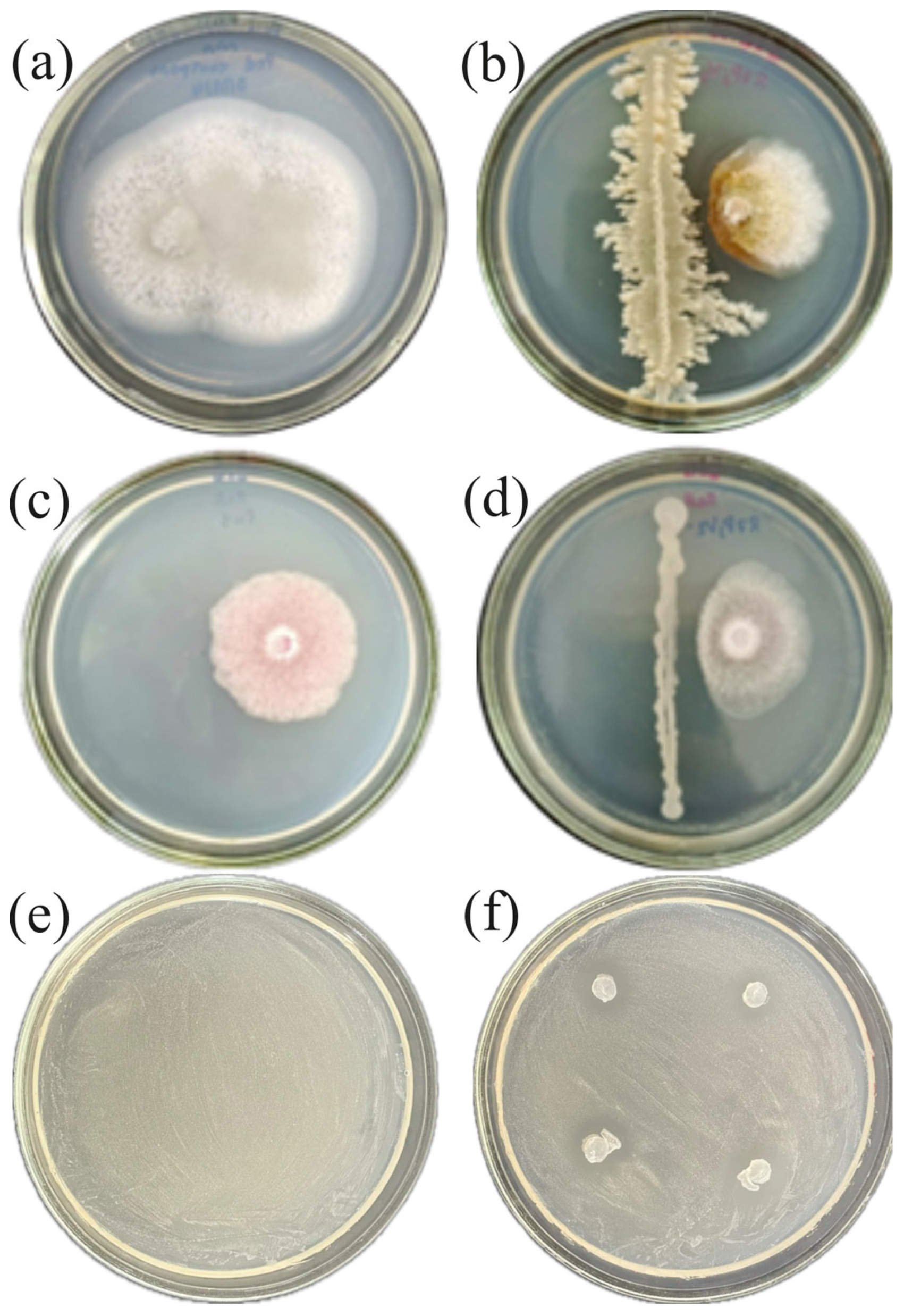
At the beginning of our work, we isolated 104 bacterial isolates and studied their antagonistic properties against pathogenic fungi M. oryzae and F. avenaceum, as well as the bacterium E. billingiae. Using the double culture method, we found that among 104 isolates, only the R7PjV2-12 strain exhibited strong antifungal activity against M. oryzae and F. avenaceum (Figure 1). The average antagonistic activity index of R7PjV2-12 was 66.1% for M. oryzae and 56.8% for F. avenaceum in three independent experiments. Also using the agar plate method, it was shown that the strain R7PjV2-12 has strong antibacterial activity against E. billingiae (Figure 1). Therefore, we can conclude that the R7PjV2-12 strain possesses quite rare and strong antagonistic properties against phytopathogens. However, this is not the highest level of inhibition, as another strain, Bacillus velezensis AMR25, was shown to have a stronger inhibitory effect on the growth of F. avenaceum [18]. The inhibition zone achieved with B. velezensis AMR25 was 62.9%, which is 6.1% higher than that with R7PjV2-12; however, this difference falls within the measurement error.

2.2. Phylogenetic Identification

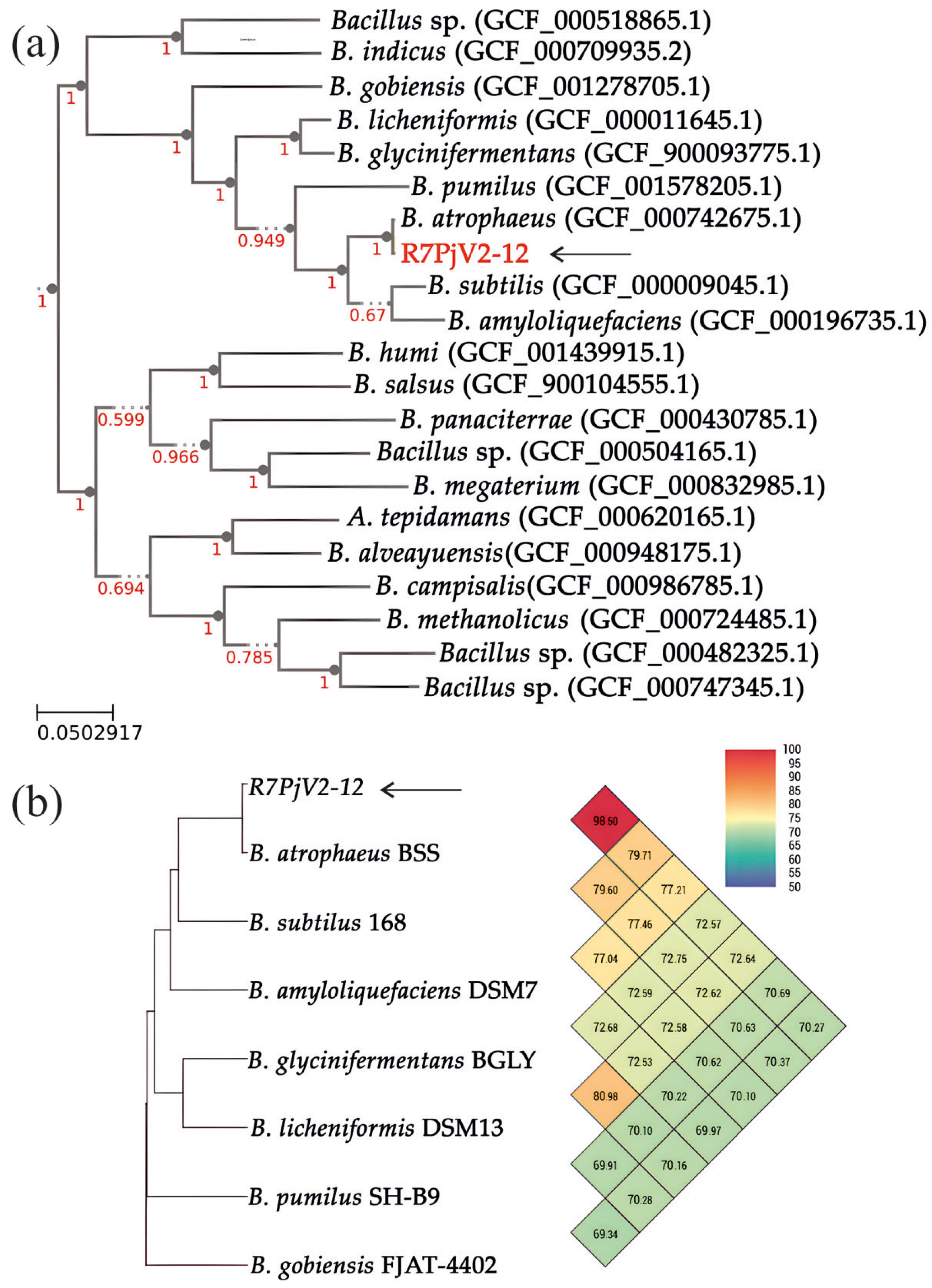
Based on phylogenetic analysis using 49 universal genes based on clusters of orthologous genes (COG), isolate R7PjV2-12 shows the closest genetic relationship to Bacillus atrophaeus (GCF_000742675.1) (Figure 2). These data are confirmed by an average nucleotide identity (ANI) of 98.5% (Figure 2) and digital DNA-DNA hybridization (dDDH) of 89.1% (Tables S1 and S2) in comparison with seven closely related species. Based on phylogenetic analysis, and since the ANI and dDDH values obtained exceed the established species separation thresholds (>95% and >70%, respectively [19]), isolate R7PjV2-12 was assigned to the species B. atrophaeus.

2.3. Genomic Features and Comparison of Genetic Characteristics

The genome of Bacillus atrophaeus R7PjV2-12 associated with P. jezoensis has the following characteristics: size, 4,127,644 bp; number of contigs, 51; GC content, 43.2%; and number of protein-coding sequences (CDSs) equal to 4032 (Table 1). For comparative genomics, we used the genomes of B. atrophaeus, which act as biological control agents, namely the endophytic strain SW isolated from wheat roots [20] and the rhizosphere strain HAB-5 [21]. Data on the characteristics of these genomes are presented in Table 1.
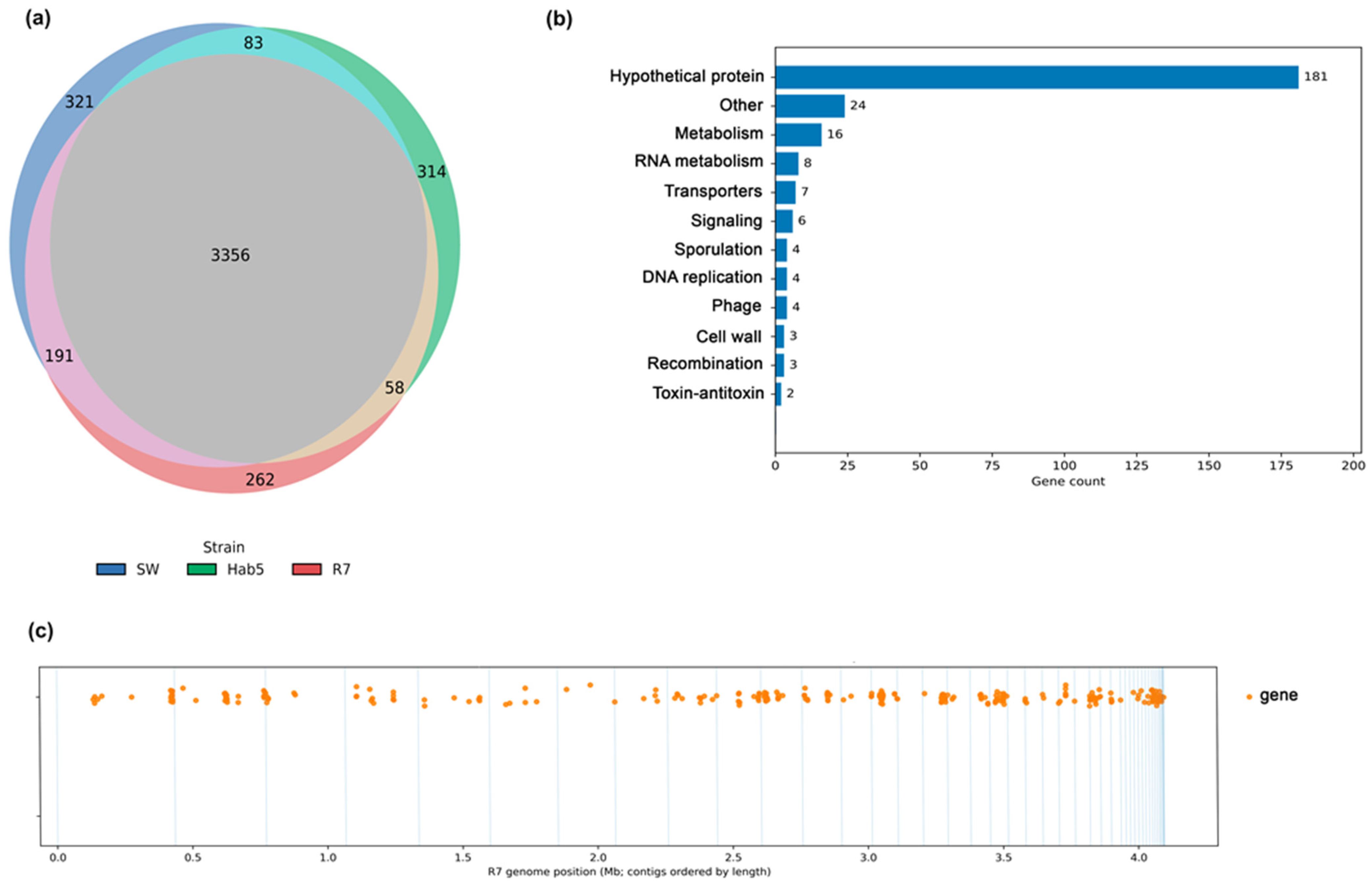
Comparative genomic analysis of three strains related to B. amyloliquefaciens using OrthoVenn revealed differences in the number of genetic clusters: B. atrophaeus R7PjV2-12 had 3867 clusters, SW had 3951, and Hab-5 had 3811 (Figure 3). The analysis revealed a common conservative core of 3356 orthologous clusters present in all three strains. At the same time, B. atrophaeus strains (R7PjV2-12 and SW) showed the greatest similarity to each other, having 3547 common clusters; notably, this strain was also isolated from the internal tissue of the plant. In addition, R7PjV2-12 has 262 unique gene clusters, absent in other isolates studied, distributed evenly throughout the genome as single genes and in groups (Figure 3a,c). However, most of the 181 unique sequence data belong to hypothetical proteins (Figure 3b).
The most interesting unique genetic clusters in the framework of this study were the genes related to the sbo-ald operon. These encode the genes responsible for the biosynthesis of subtilosin [22] and the genes of the yeeF/yezG toxin/antitoxin system involved in the formation of biofilms [23], which promotes the survival of bacteria in the rhizosphere [24] and facilitates plant colonization [25]. These provides R7PjV2-12 an advantage as a potential biological control agent relative to other strains analyzed (Table S2).

2.4. Search for Genes for Biosynthesis of the Antagonize Fungi and Bacteria Compounds

Many bacteria of the genus Bacillus are widely known as biological control agents with high potential in combating phytopathogenic bacteria and fungi [26]. This genus uses a variety of mechanisms to implement biological control, one of the main ones being the synthesis of secondary metabolites [27].
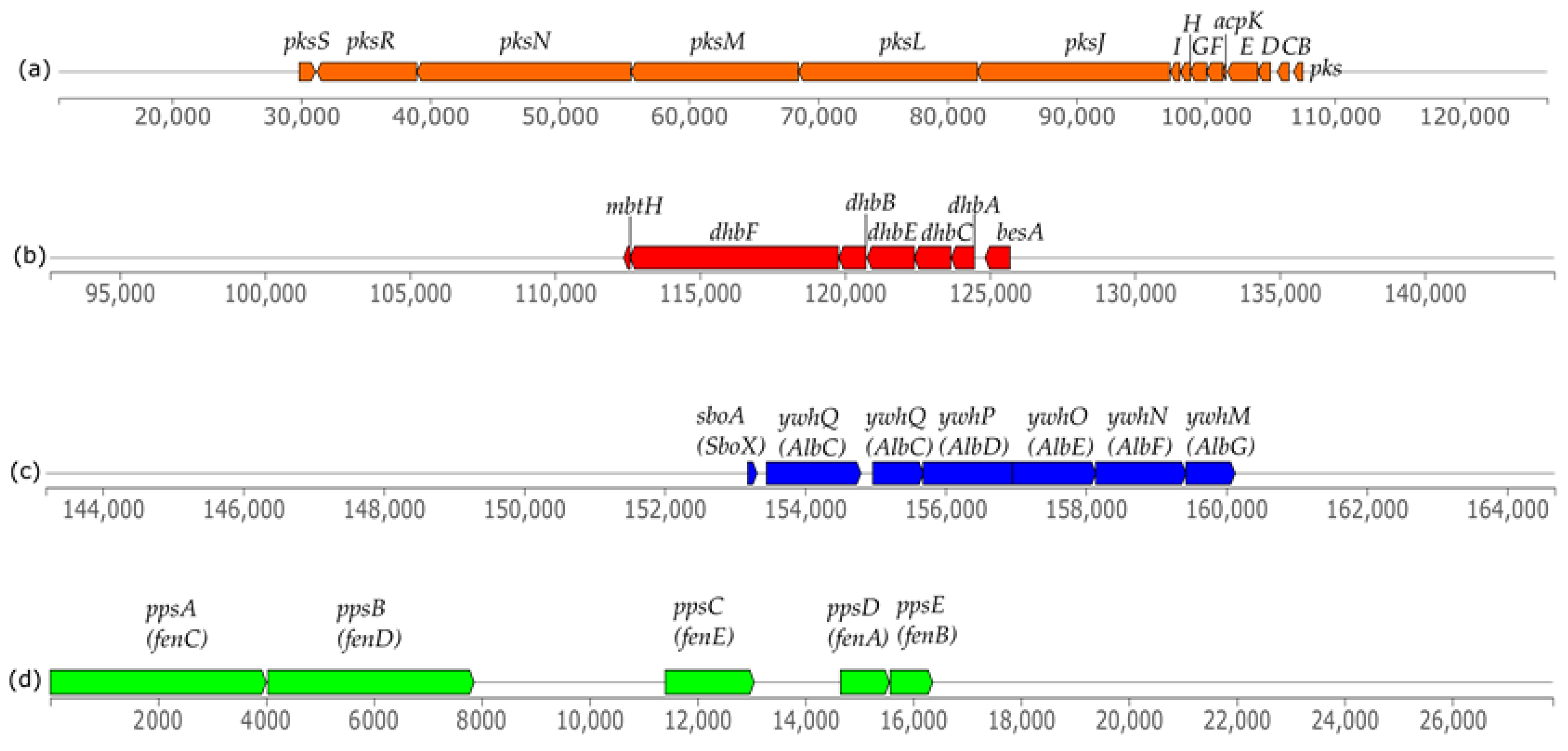
Using antiSMASH 8.0.2, 17 biosynthetic gene clusters located on 14 scaffolds were discovered in the genome of B. atrophaeus R7PjV2-12 (Table 2). Among them were annotated bacillaene, bacillibactin, surfactin, sporulation killing factor, subtilosin A, mycosubtilin, fengycin, 1-carbapen-2-em-3-carboxylic acid, plipastatin, and six biosynthetic clusters related to terpenes, azole-containing-RiPP, lanthipeptide-class-v, and nonribosomal peptide synthetases (NRPSs), for which no closest known clusters were found (Table 2). However, in B. atrophaeus R7PjV2-12, genetic clusters of secondary metabolites with a complete set of genes with 100% similarity represent clusters by antiSMASH of biosynthesis of bacillin, bacillibactin, subtilosin A, and fungicin, which indicates the ability to synthesize these substances by the studied strain (Figure 4, Table 2 and Table S3).
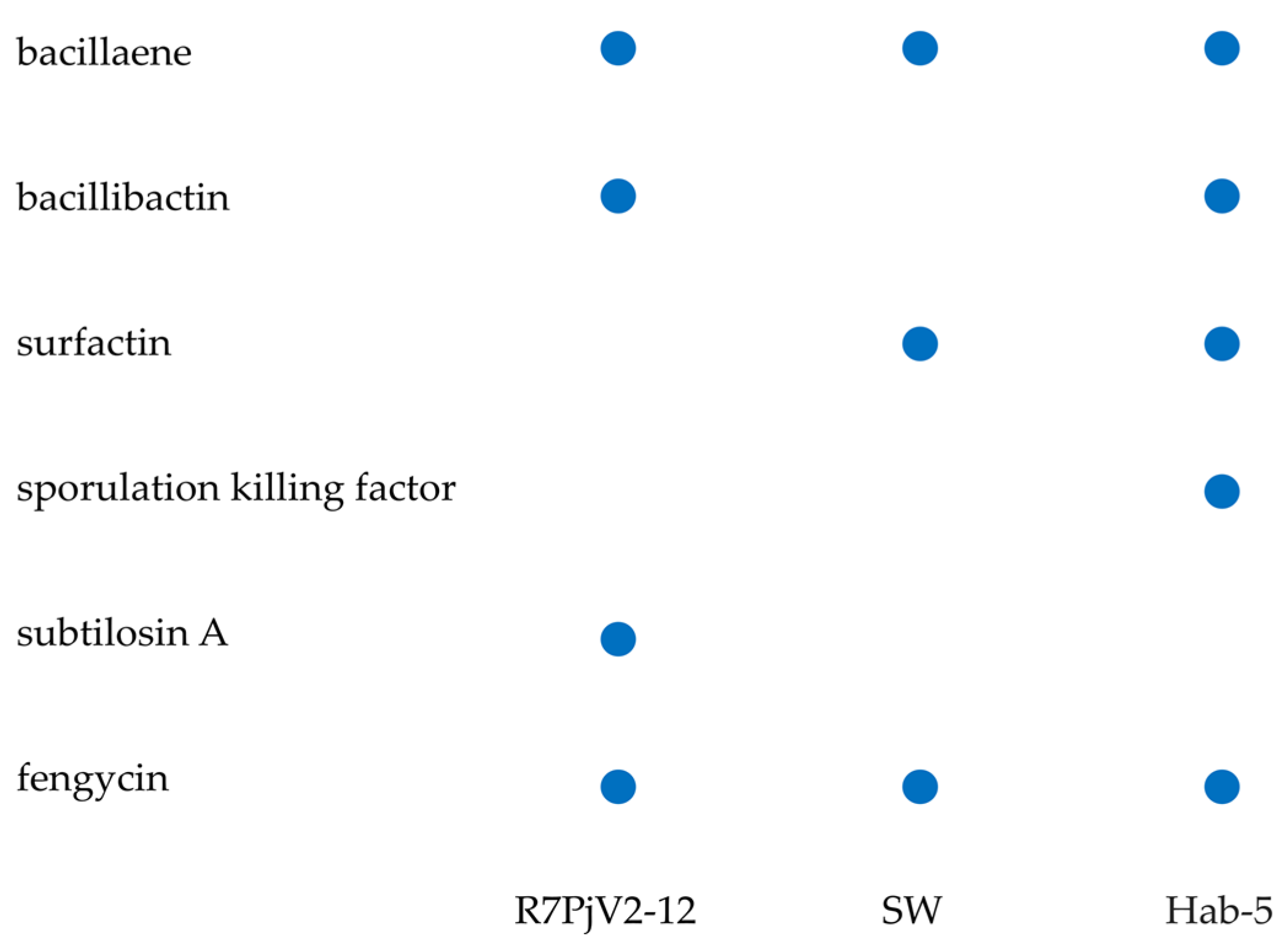
A comparative analysis of biosynthesis, using antiSMASH 8.0.2 with strict search settings, clusters R7PjV2-12 with other representatives of B. atrophaeus SW and HAB-5. Only clusters showing a high level of similarity were used in the analysis. The search results for SW and HAB-5 are presented (Figure 5). Comparative analysis showed that R7PjV2-12 does not have a large number of secondary metabolism clusters, but compared to SW and HAB-5, it has a subtilosin A biosynthesis cluster (Figure 5). However, the presence of the subtilosin A biosynthesis cluster is not unique, since the ability to synthesize this substance has been demonstrated in other strains of B. atrophaeus [28].
Synteny analysis of the matching biosynthesis clusters of secondary metabolites showed that the bacillaene biosynthesis clusters in R7PjV2-12, SW, and HAB-5 are completely identical; in turn, the bacillibactin biosynthesis cluster is identical in R7PjV2-12 and HAB-5 (Figure S1a,b). However, in the fengycin biosynthesis cluster, it was shown that R7PjV2-12 has a low level of identity of the ppsA (fenC) and ppsD (fenA) genes, but the order of these genes is preserved (Figure S1c). The observed divergence of the key genes of the NRPS module suggests possible functional changes in this cluster and suggests that the R7PjV2-12 strain either synthesizes a structurally modified variant of fengycin or has a limited ability to biosynthesize it.
A polyene antibiotic, Bacillaene, and cyclical peptide, subtilosin A, are known to have antibacterial activity against a wide range of bacterial plant pathogens, and bacillaene has been shown to have antibacterial activity against Erwinia amylovora, which causes bacterial burns in plants [29,30]. Subtilosin A has activity against Acidovorax citrulli, which causes bacterial spotting of pumpkin crops [31].
Fengycin is an antifungal lipopeptide that demonstrates antivenom against a wide range of phytopathogenic fungi such as Colletotrichum gloeosporioid, which causes anthractosis of many crops [32,33]; Magnaporthe grisea, causing rice explosion [34,35]; and Fusarium graminearum, causing fusarium of common wheat [36]. In addition, fengycin has antibacterial activity against potato brown rot caused by Ralstonia solanacearum and black bacterial blotch caused by Xanthomonas euvesicatoria [37,38].
Bacillibactin is a bacterial siderophore produced by bacteria of the genus Bacillus, which has antibacterial activity against a wide range of plant pathogens such as Pseudomonas syringae, Xanthomonas oryzae, and Erwinia amylovora [39,40]. In addition, the production of siderophores is also associated with antifungal activity [41].
The presence of complete sets of genes for the biosynthesis of the above substances in the genome of B. atrophaeus R7PjV2-12 is consistent with the data showing that this strain has antifungal and antibacterial properties, as demonstrated in the antagonism experiments described above (Figure 1).

3. Conclusions

The complete genomic sequence (4.1 Mb) of B. atrophaeus R7PjV2-12 was determined through sequencing, assembly, and subsequent annotation. Phylogenetic analysis confirmed the classification of strain R7PjV2-12 within the B. atrophaeus species. B. atrophaeus R7PjV2-12 endophytic bacterial isolate possesses four genetic clusters of secondary metabolites with a complete set of genes with 100% similarity, representing clusters of biosynthesis of bacillin, bacillibactin, subtilosin A, and fungicin, which indicates the studied strain’s ability to synthesize these antimicrobial substances.
Thus, the B. atrophaeus R7PjV2-12 endophytic bacterium, obtained from P. jezoensis, holds promise for use in creating biological control agents against plant diseases caused by species such as M. oryzae, F. avenaceum, and E. billingiae. The precise mechanisms by which B. atrophaeus R7PjV2-12 inhibits these pathogens are currently unclear. But it is likely that bacillin, bacillibactin, subtilosin A, and fungicin are actively involved in the process of inhibiting the growth of plant pathogens; however, further research is needed using metabolomics and transcriptomics to understand this mechanism. So, our experimental data has shown the potential importance of B. atrophaeus R7PjV2-12 for biocontrol of pathogenic microorganisms in agriculture.

4. Materials and Methods

4.1. B. atrophaeus R7PjV2-12 Isolation

The R7PjV2-12 isolate was obtained from the tissues of a visually healthy P. jezoensis spruce branch using the previously described method [42]. In short, the branches of P. jezoensis were briefly washed under running water, soaked in 70% ethanol for one minute and 10% H2O2 for two minutes, and then washed five times in sterile distilled water. Next, a 150 mg fragment of sterile tissue was homogenized in a laboratory mortar with diameter of 10 cm and diluted with 200 μL of sterile water. Then, 70 μL of the resulting solution was plated on Reasoner’s agar 2A (R2A) medium and incubated at 25 °C for 24 h. The resulting isolate was placed in a laboratory collection (Laboratory of Biotechnology, Federal Scientific Center of the East Asia Terrestrial Biodiversity, FEB RAS, Vladivostok, Russia).

4.2. Analysis of Antimicrobial Activity of R7PjV2-12

Antibacterial activity was evaluated using the phytopathogenic bacterium E. billingiae by the agar plate method [43]. Overnight-cultured R7PjV2-12 with concentration of 2 × 10⁸ CFU/mL was placed in Petri dishes with R2A medium and incubated at 25 °C for 12 h. Next, using a cork drill, agar blocks with a diameter of 0.6 cm were cut out of the R7PjV2-12 cup and placed on Petri dishes with R2A medium and previously seeded E. billingiae. The dishes were incubated for 12 h at 25 °C. The antagonistic activity against bacteria was assessed using the following criteria: a growth delay zone diameter of more than 16 mm indicates very strong inhibition, 11–15.9 mm indicates strong inhibition, 6–10.9 mm indicates moderate inhibition, 1–5.9 mm indicates weak inhibition, and 0 mm indicates no inhibition [43].
Antagonistic activity against phytopathogenic fungi was carried out using M. oryzae and F. avenaceum by the method of counter cultures. B. velezensis R7PjV2-12 was placed on a Petri dish at a distance of 2 cm from the pathogen. The inhibition area was measured on the 5th day of cultivation at a temperature of 26 °C. The inhibition index was calculated using the following formula:
(R1 − R2)/R1 × 100,
where R1 is the radius of colony growth in the opposite direction of the candidate microorganism, and R2 is the radius of colony growth in the direction of the candidate microorganism [44]. Pathogenic strains E. billingiae and F. avenaceum were isolated earlier, as described [42], from the wild grapevine Vitis amurensis. M. oryzae strain VPL14 was passed on by colleagues from the Federal Scientific Center of Agricultural Biotechnology of the Far East named after A.K. Chaiki (Timiryazevsky settlement, Russia). All plant pathogens were added to the collection of microorganisms of the laboratory of Biotechnology at the Federal Scientific Center of Biodiversity FEB RAS (storage number for F. avenaceum is R9V3№2F1; R7MakVsik for E. billingiae; VPL14 for M. oryzae). The experiments were conducted at least three times with three replicates in each experiment, and the results are presented as the average value ± standard error.

4.3. Genome Sequencing, Assembly, and Annotation

The total DNA of the R7PjV2-12 isolate was isolated using cetrimonium bromide (CTAB) as described previously [45,46]. The complete genome has been sequenced by MiSeq Illumina method (Illumina, San Diego, CA, USA) in the Department of Scientific and Technical Services of Xi’an Haorui Gene Technology Co., Ltd. (Xi’an, China) and published in GenBank (acc. no PRJNA1401447). The full-genome sequence was assembled using SPAdes v4.2.0 [47], and the assembly quality was assessed using BUSCO [48].
The genome annotation was performed using the Prokka 1.14.6 program [49] and the RAST 2.0 server (http://rast.nmpdr.org/, accessed on 20 December 2025). The antiSMASH 8.0.2 program was used to identify a gene cluster associated with secondary metabolites in the genome [50].

4.4. Phylogenetic Analysis and Comparative Genomics

The phylogenetic analysis was performed using the Kbase server (https://www.kbase.us, accessed on 20 December 2025) data on the set of genes presented in Table S4. The phylogenetic tree was constructed based on 49 genetic markers employing the maximum likelihood method using the Species Tree function v2.2.0 [51].
Orthologous average nucleotide identity was determined using the Orthologous Average Nucleotide Identity Tool (OAT) program [52], and digital DNA-DNA hybridization (dDDH) was calculated using GGDC 3.0 [53]. The UpSet diagram was constructed using the OrthoVenn3 application [54] based on the genomes of R7PjV2-12, SW (GCF_039519175.1), and Hab-5 (GCF_045278795.1). The search for homologous proteins and sequence clustering was carried out using MMseqs2 [55], comparative analysis of gene synthesis, and visualization of homologous clusters by clinker v0.0.32 [56].

Supplementary Materials

The following supporting information can be downloaded at: https://www.mdpi.com/article/10.3390/microbiolres17020039/s1. Table S1: Comparison of Bacillus atrophaeus R7PjV2-12 with B. atrophaeus BSS using digital DNA-DNA hybridization (dDDH). Table S2: Some characteristics of bacterial genomes used for upset construction. Table S3: Genes for the biosynthesis of antimicrobial substances. Table S4: Genomes of the strains included in the set of genomes. Figure S1: Analysis of the synteny of secondary metabolism gene clusters: (a) bacillaene; (b) bacillibactin; (c) fengycin.

Author Contributions

A.S.D. and K.V.K. were responsible for contributing to the research design, interpretation, and paper preparation. O.A.A. and A.A.D. grew fungus and bacteria for experiments and conducted the agar slab method and data analysis. A.A.A., N.N.N. and H.X. conducted genome sequencing analysis. All authors have read and agreed to the published version of the manuscript.

Funding

The research was supported by a grant from the Russian Science Foundation (grant number 22–74–10001-П, https://rscf.ru/project/x4dGQ5KySje3yHIfEP1ushIQeMGgesQQ8UENxiJFT3MKTs-H98_THHYbvtQZUrfrXWLsGQAxPxs~/) (accessed on 7 February 2026).

Institutional Review Board Statement

Not applicable.

Informed Consent Statement

Not applicable.

Data Availability Statement

The data presented in this study are available within the article and Supplementary Materials.

Acknowledgments

Access to the article publisher sites for data analysis was provided by the Ministry of Science and Higher Education of the Russian Federation (theme number 124012200181-4).

Conflicts of Interest

The authors declare no conflicts of interest.

References

  1. El-Saadony, M.T.; Saad, A.M.; Soliman, S.M.; Salem, H.M.; Ahmed, A.I.; Mahmood, M.; El-Tahan, A.M.; Ebrahim, A.A.M.; Abd El-Mageed, T.A.; Negm, S.H.; et al. Plant growth-promoting microorganisms as biocontrol agents of plant diseases: Mechanisms, challenges and future perspectives. Front. Plant Sci. 2022, 13, 923880. [Google Scholar] [CrossRef] [PubMed]
  2. Rani, L.; Thapa, K.; Kanojia, N.; Sharma, N.; Singh, S.; Grewal, A.S.; Srivastav, A.L.; Kaushal, J. An extensive review on the consequences of chemical pesticides on human health and environment. J. Clean. Prod. 2021, 283, 124657. [Google Scholar] [CrossRef]
  3. Komarova, O.; Kozenko, K.; Zemlyanitsina, S. Biological method of plant protection is one of the green economy development directions. IOP Conf. Ser. EES 2021, 786, 012007. [Google Scholar] [CrossRef]
  4. Rana, K.L.; Kour, D.; Kaur, T.; Devi, R.; Yadav, A.N.; Yadav, N.; Dhaliwal, H.S.; Saxena, A.K. Endophytic microbes: Biodiversity, plant growth-promoting mechanisms and potential applications for agricultural sustainability. Antonie Van Leeuwenhoek 2020, 113, 1075–1107. [Google Scholar] [CrossRef]
  5. Tanney, J.B.; McMullin, D.R.; Green, B.D.; Miller, J.D.; Seifert, K.A. Production of antifungal and antiinsectan metabolites by the picea endophyte Diaporthe maritima sp. nov. Fungal Biol. 2016, 120, 1448–1457. [Google Scholar] [CrossRef]
  6. McMullin, D.R.; Green, B.D.; Prince, N.C.; Tanney, J.B.; Miller, J.D. Natural products of picea endophytes from the acadian forest. J. Nat. Prod. 2017, 80, 1475–1483. [Google Scholar] [CrossRef]
  7. Puri, A.; Padda, K.P.; Chanway, C.P. Sustaining the growth of pinaceae trees under nutrient-limited edaphic conditions via plant-beneficial bacteria. PLoS ONE 2020, 15, e0238055. [Google Scholar] [CrossRef]
  8. Kiselev, K.V.; Grigorchuk, V.P.; Ogneva, Z.V.; Suprun, A.R.; Dubrovina, A.S. Stilbene biosynthesis in the needles of spruce Picea jezoensis. Phytochemistry 2016, 131, 57–67. [Google Scholar] [CrossRef]
  9. Suprun, A.R.; Dubrovina, A.S.; Aleynova, O.A.; Kiselev, K.V. The bark of the spruce Picea jezoensis is a rich source of stilbenes. Metabolites 2021, 11, 714. [Google Scholar] [CrossRef]
  10. Song, P.; Yu, X.; Yang, W. Natural phytoalexin stilbene compound resveratrol and its derivatives as anti-tobacco mosaic virus and anti-phytopathogenic fungus agents. Sci. Rep. 2011, 11, 16509. [Google Scholar] [CrossRef]
  11. De Filippis, B.; Ammazzalorso, A.; Amoroso, R.; Giampietro, L. Stilbene derivatives as new perspective in antifungal medicinal chemistry. Drug Dev. Res. 2019, 80, 317–332. [Google Scholar] [CrossRef] [PubMed]
  12. Li, Z.; Xiong, K.; Wen, W.; Li, L.; Xu, D. Functional endophytes regulating plant secondary metabolism: Current status, prospects and applications. Int. J. Mol. Sci. 2023, 24, 1153. [Google Scholar] [CrossRef] [PubMed]
  13. Nityagovsky, N.N.; Ananev, A.A.; Suprun, A.R.; Dneprovskaya, A.A.; Kiselev, K.V.; Aleynova, O.A. Endophytic bacterial and fungal communities of spruce Picea jezoensis in the Russian Far East. Plants 2025, 14, 2534. [Google Scholar] [CrossRef] [PubMed]
  14. Titone, P.; Mongiano, G.; Tamborini, L. Resistance to neck blast caused by Pyricularia oryzae in Italian rice cultivars. Eur. J. Plant Pathol. 2015, 142, 49–59. [Google Scholar] [CrossRef]
  15. Li, Z.; He, F.; Gai, X.; Zhu, H.; He, S.; Xuan, Y.H.; Bai, L. The growth, development and infection process of the plant pathogen Fusarium. Plant Signal. Behav. 2025, 20, 2573097. [Google Scholar] [CrossRef]
  16. Kube, M.; Migdoll, A.M.; Gehring, I.; Heitmann, K.; Mayer, Y.; Kuhl, H.; Knaust, F.; Geider, K.; Reinhardt, R. Genome comparison of the epiphytic bacteria Erwinia billingiae and E. tasmaniensis with the pear pathogen E. pyrifoliae. BMC Genom. 2010, 11, 393. [Google Scholar] [CrossRef]
  17. Kamber, T.; Smits, T.H.M.; Rezzonico, F.; Duffy, B. Genomics and current genetic understanding of Erwinia amylovora and the fire blight antagonist Pantoea vagans. Trees 2012, 26, 227–238. [Google Scholar] [CrossRef]
  18. Ananev, A.A.; Ogneva, Z.V.; Nityagovsky, N.N.; Suprun, A.R.; Kiselev, K.V.; Aleynova, O.A. Whole genome sequencing of Bacillus velezensis AMR25, an effective antagonist strain against plant pathogens. Microorganisms 2024, 12, 1533. [Google Scholar] [CrossRef]
  19. Richter, M.; Rosselló-Móra, R. Shifting the genomic gold standard for the prokaryotic species definition. Proc. Natl. Acad. Sci. USA 2009, 106, 19126–19131. [Google Scholar] [CrossRef]
  20. Guo, S.; Tariq, A.; Liao, J.; Yang, A.; Jiang, X.; Yin, Y.; Shi, Y.; Li, C.; Pan, J.; Han, D.; et al. Identification and antagonistic potential of Bacillus atrophaeus against wheat crown rot caused by Fusarium pseudograminearum. Agronomy 2024, 14, 2135. [Google Scholar] [CrossRef]
  21. Dahar, G.Y.; Wang, H.W.; Rajer, F.U.; Jin, P.; Xu, P.; Abro, M.A.; Qureshi, A.S.; Karim, A.; Miao, W. Comparative genomic analysis of Bacillus atrophaeus HAB-5 reveals genes associated with antimicrobial and plant growth-promoting activities. Front. Microbiol. 2024, 15, 1384691. [Google Scholar] [CrossRef] [PubMed]
  22. Zheng, G.; Yan, L.Z.; Vederas, J.C.; Zuber, P. Genes of the sbo–alb locus of Bacillus subtilis are required for production of the antilisterial bacteriocin subtilosin. J. Bacteriol. 1999, 181, 7346–7355. [Google Scholar] [CrossRef]
  23. Kobayashi, K. Diverse LXG toxin and antitoxin systems specifically mediate intraspecies competition in Bacillus subtilis biofilms. PLoS Genet. 2021, 17, e1009682. [Google Scholar] [CrossRef] [PubMed]
  24. Bhattacharyya, A.; Mavrodi, O.; Bhowmik, N.; Weller, D.; Thomashow, L.; Mavrodi, D. Bacterial biofilms as an essential component of rhizosphere plant–microbe interactions. Methods Microbiol. 2023, 53, 3–48. [Google Scholar] [PubMed]
  25. Pathak, D.; Suman, A.; Sharma, P.; Aswini, K.; Govindasamy, V.; Gond, S.; Anshika, R. Community-forming traits play role in effective colonization of plant-growth-promoting bacteria and improved plant growth. Front. Plant Sci. 2024, 15, 1332745. [Google Scholar] [CrossRef]
  26. Ramírez-Pool, J.A.; Calderón-Pérez, B.; Ruiz-Medrano, R.; Ortiz-Castro, R.; Xoconostle-Cazares, B. Bacillus strains as effective biocontrol agents against phytopathogenic bacteria and promoters of plant growth. Microb. Ecol. 2024, 87, 76. [Google Scholar] [CrossRef]
  27. Zhang, N.; Wang, Z.; Shao, J.; Xu, Z.; Liu, Y.; Xun, W.; Miao, Y.; Shen, Q.; Zhang, R. Biocontrol mechanisms of Bacillus: Improving the efficiency of green agriculture. Microb. Biotechnol. 2023, 16, 2250–2263. [Google Scholar] [CrossRef]
  28. Stein, T.; Düsterhus, S.; Stroh, A.; Entian, K.D. Subtilosin production by two Bacillus subtilis subspecies and variance of the sbo-alb cluster. Appl. Environ. Microbiol. 2004, 70, 2349–2353. [Google Scholar] [CrossRef]
  29. Zeriouh, H.; Romero, D.; Garcia-Gutierrez, L.; Cazorla, F.M.; de Vicente, A.; Perez-Garcia, A. The iturin-like lipopeptides are essential components in the biological control arsenal of Bacillus subtilis against bacterial diseases of cucurbits. Mol. Plant Microbe Interact. 2011, 24, 1540–1552. [Google Scholar] [CrossRef]
  30. Millett, F.; Standish, J.; Scanley, J.; Miller, K.; Inguagiato, J.; Zuverza-Mena, N.; Abril, M.; Robinson, V.; Li, Y.; Sundin, G.W.; et al. The fire blight pathogen Erwinia amylovora enters apple leaves through naturally occurring wounds from the abscission of trichomes. Plant J. 2025, 123, e70472. [Google Scholar] [CrossRef]
  31. Gu, X.; Zeng, Q.; Wang, Y.; Li, J.; Zhao, Y.; Li, Y.; Wang, Q. Comprehensive genomic analysis of Bacillus subtilis 9407 reveals its biocontrol potential against bacterial fruit blotch. Phytopathol. Res. 2021, 3, 4. [Google Scholar] [CrossRef]
  32. Ma, Z.; Liu, F.; Tsui, C.K.M.; Cai, L. Phylogenomics and adaptive evolution of the Colletotrichum gloeosporioides species complex. Commun. Biol. 2025, 8, 593. [Google Scholar] [CrossRef] [PubMed]
  33. Lin, L.Z.; Zheng, Q.W.; Wei, T.; Zhang, Z.Q.; Zhao, C.F.; Zhong, H.; Xu, Q.Y.; Lin, J.F.; Guo, L.Q. Isolation and characterization of fengycins produced by Bacillus amyloliquefaciens JFL21 and its broad-spectrum antimicrobial potential against multidrug-resistant foodborne pathogens. Front. Microbiol. 2020, 11, 579621. [Google Scholar] [CrossRef] [PubMed]
  34. Dean, R.A.; Talbot, N.J.; Ebbole, D.J.; Farman, M.L.; Mitchell, T.K.; Orbach, M.J.; Thon, M.; Kulkarni, R.; Xu, J.R.; Pan, H.; et al. The genome sequence of the rice blast fungus Magnaporthe grisea. Nature 2005, 434, 980–986. [Google Scholar] [CrossRef]
  35. Zhang, L.; Sun, C. Fengycins, cyclic lipopeptides from marine Bacillus subtilis strains, kill the plant-pathogenic fungus Magnaporthe grisea by inducing reactive oxygen species production and chromatin condensation. Appl. Environ. Microbiol. 2018, 84, e00445-18. [Google Scholar] [CrossRef] [PubMed]
  36. Buttar, Z.A.; Cheng, M.; Wei, P.; Zhang, Z.; Lv, C.; Zhu, C.; Ali, N.F.; Kang, G.; Wang, D.; Zhang, K. Update on the basic understanding of Fusarium graminearum virulence factors in common wheat research. Plants 2024, 13, 1159. [Google Scholar] [CrossRef]
  37. Chen, M.C.; Wang, J.P.; Zhu, Y.J.; Liu, B.; Yang, W.J.; Ruan, C.Q. Antibacterial activity against Ralstonia solanacearum of the lipopeptides secreted from the Bacillus amyloliquefaciens strain FJAT-2349. J. Appl. Microbiol. 2019, 126, 1519–1529. [Google Scholar] [CrossRef]
  38. Pajcin, I.; Vlajkov, V.; Frohme, M.; Grebinyk, S.; Grahovac, M.; Mojićević, M.; Grahovac, J. Pepper bacterial spot control by Bacillus velezensis: Bioprocess solution. Microorganisms 2020, 8, 1463. [Google Scholar] [CrossRef]
  39. Dimopoulou, A.; Theologidis, I.; Benaki, D.; Koukounia, M.; Zervakou, A.; Tzima, A.; Diallinas, G.; Hatzinikolaou, D.G.; Skandalis, N. Direct antibiotic activity of bacillibactin broadens the biocontrol range of Bacillus amyloliquefaciens MBI600. mSphere 2021, 6, e0037621. [Google Scholar] [CrossRef]
  40. Arguelles-Arias, A.; Ongena, M.; Halimi, B.; Lara, Y.; Brans, A.; Joris, B.; Fickers, P. Bacillus amyloliquefaciens GA1 as a source of potent antibiotics and other secondary metabolites for biocontrol of plant pathogens. Microb. Cell Fact. 2009, 8, 63. [Google Scholar]
  41. Nagarajkumar, M.; Bhaskaran, R.; Velazhahan, R. Involvement of secondary metabolites and extracellular lytic enzymes produced by Pseudomonas fluorescens in inhibition of Rhizoctonia solani, the rice sheath blight pathogen. Microbiol. Res. 2004, 159, 73–81. [Google Scholar] [CrossRef]
  42. Allu, S.; Kumar, N.P.; Audipudi, A.V. Isolation, biochemical and PGP characterization of endophytic Pseudomonas aeruginosa isolated from chilli red fruit antagonistic against chilli anthracnose disease. IJCMAS 2014, 3, 318–329. [Google Scholar]
  43. Leska, A.; Nowak, A.; Szulc, J.; Motyl, I.; Czarnecka-Chrebelska, K.H. Antagonistic activity of potentially probiotic lactic acid bacteria against honeybee (Apis mellifera L.) pathogens. Pathogens 2022, 11, 1367. [Google Scholar] [CrossRef] [PubMed]
  44. Mirsam, H.; Suriani, A.M.; Azrai, M.; Efendi, R.; Muliadi, A.; Sembiring, H.; Azis, A.I. Molecular characterization of indigenous microbes and its potential as a biological control agent of Fusarium stem rot disease (Fusarium verticillioides) on maize. Heliyon 2022, 8, e11960. [Google Scholar] [CrossRef] [PubMed]
  45. Aleynova, O.A.; Nityagovsky, N.N.; Ananev, A.A.; Suprun, A.R.; Ogneva, Z.V.; Dneprovskaya, A.A.; Beresh, A.A.; Tyunin, A.P.; Dubrovina, A.S.; Kiselev, K.V. The Endophytic microbiome of wild grapevines Vitis amurensis Rupr. and Vitis coignetiae Pulliat growing in the Russian Far East. Plants 2023, 12, 2952. [Google Scholar] [CrossRef]
  46. Ananev, A.A.; Aleynova, O.A.; Nityagovsky, N.N.; Suprun, A.R.; Ogneva, Z.V.; Kiselev, K.V. Whole genome of Gordonia aichiensis P6PL2 associated with Vitis amurensis that stimulates plant growth. Horticulturae 2025, 11, 735. [Google Scholar] [CrossRef]
  47. Prjibelski, A.; Antipov, D.; Meleshko, D.; Lapidus, A.; Korobeynikov, A. Using SPAdes de novo assembler. Curr. Protoc. Bioinform. 2020, 70, e102. [Google Scholar] [CrossRef]
  48. Seppey, M.; Manni, M.; Zdobnov, E.M. BUSCO: Assessing genome assembly and annotation completeness. In Gene Prediction. Methods in Molecular Biology; Kollmar, M., Ed.; Humana: New York, NY, USA, 2019; Volume 1962. [Google Scholar]
  49. Seemann, T. Prokka: Rapid prokaryotic genome annotation. Bioinformatics 2014, 30, 2068–2069. [Google Scholar] [CrossRef]
  50. Blin, K.; Shaw, S.; Vader, L.; Szenei, J.; Reitz, Z.L.; Augustijn, H.E.; Cediel-Becerra, J.D.D.; de Crécy-Lagard, V.; Koetsier, R.A.; Williams, S.E.; et al. antiSMASH 8.0: Extended gene cluster detection capabilities and analyses of chemistry, enzymology, and regulation. Nucleic Acids Res. 2025, 53, W32–W38. [Google Scholar] [CrossRef]
  51. Arkin, A.P.; Cottingham, R.W.; Henry, C.S.; Harris, N.L.; Stevens, R.L.; Maslov, S.; Dehal, P.; Ware, D.; Perez, F.; Canon, S.; et al. KBase: The United States Department of Energy Systems Biology Knowledgebase. Nat. Biotechl. 2018, 36, 566. [Google Scholar]
  52. Lee, I.; Yeong, O.K.; Park, S.C.; Chun, J. OrthoANI: An improved algorithm and software for calculating average nucleotide identity. IJSEM 2016, 66, 1100–1103. [Google Scholar] [CrossRef]
  53. Meier-Kolthoff, J.P.; Auch, A.F.; Klenk, H.P.; Göker, M. Genome sequence-based species delimitation with confidence intervals and improved distance functions. BMC Bioinform. 2013, 14, 60. [Google Scholar] [CrossRef]
  54. Sun, J.; Lu, F.; Luo, Y.; Bie, L.; Xu, L.; Wang, Y. OrthoVenn3: An integrated platform for exploring and visualizing orthologous data across genomes. Nucleic Acids Res. 2023, 51, W397–W403. [Google Scholar] [CrossRef]
  55. Steinegger, M.; Söding, J. MMseqs2 enables sensitive protein sequence searching for the analysis of massive data sets. Nat. Biotechnol. 2017, 35, 1026–1028. [Google Scholar] [CrossRef]
  56. Gilchrist, C.L.M.; Chooi, Y.-H. clinker & clustermap.js: Automatic generation of gene cluster comparison figures. Bioinformatics 2021, 37, 2473–2475. [Google Scholar] [CrossRef]
Figure 1. Antagonism of bacteria strain R7PjV2-12 against phytopathogenic fungi Magnaporthe oryzae, Fusarium avenaceum, and bacterium Erwinia billingiae. (a) Control (M. oryzae without R7PjV2-12); (b) cultivation of the M. oryzae with R7PjV2-12; (c) control (F. avenaceum without R7PjV2-12); (d) cultivation of the F. avenaceum with R7PjV2-12; (e) control (E. billingia without R7PjV2-12); (f) cultivation of the E. billingia with R7PjV2-12.
Microbiolres 17 00039 g001
Figure 2. The phylogenetic analysis of Bacillus atrophaeus R7PjV2-12 (highlighted with an arrow and red font): (a) phylogenetic tree based on 49 genetic markers using the Species Tree-v2.2.0. NCBI RefSeq assembly numbers are listed next to the species name and duplicated in Table S4. (b) Orthologous average nucleotide identity analysis was determined using the Orthologous Average Nucleotide Identity Tool.
Microbiolres 17 00039 g002
Figure 3. Comparative genomic analysis of three strains related to Bacillus amyloliquefaciens: (a) Venn diagram of orthologous clusters R7PjV2-12, SW, and Hab-5. Deep blue indicates unique clusters for the SW strain, green for Hab-5, red for R7. Pale blue common only for SW and Hab-5, yellow for Hab-5 and R7, pink for R7 and SW. Common conservative core of 3356 orthologous clusters for all three strains highlighted in gray; (b) graph of functional distribution of unique genetic sequences in R7PjV2-12; (c) distribution of unique sequence in the R7PjV2-12 genome.
Microbiolres 17 00039 g003
Figure 4. Organization of putative genetic clusters of secondary metabolism with 100% similarity represent clusters by antiSMASH in Bacillus atrophaeus R7PjV2-12 genome: (a) bacillaene cluster with 14 genes: acpK, pksB, pksC, pksD, pksE, pksF, pksG, pksH, pksI, pksJ, pksL, pksM, pksN, pksR, pksS; (b) bacillibactin cluster with 7 genes: besA, dhbA, dhbC, dhbE, dhbB, dhbF, mbtH; (c) subtilosin A clusrew with 7 genes: ywhM (AlbG), ywhN (AlbF), ywhO (AlbE), ywhP (AlbD), ywhQ (AlbC), ywiA (AlbA), sboA (SboX); (d) fengycin cluster with 5 genes: ppsA (fenC), ppsB (fenD), ppsC (fenE), ppsD (fenA), ppsE (fenB).
Microbiolres 17 00039 g004
Figure 5. Comparison of secondary metabolism clusters in genomes of Bacillus atrophaeus R7PjV2-12, SW, and HAB-5 using antiSMASH 8.0.2.
Microbiolres 17 00039 g005
Table 1. Genomic features of the Bacillus atrophaeus R7PjV2-12 and related members of the Bacillus species.
B. atrophaeus
R7PjV2-12
B. atrophaeus SWB. amyloliquefaciens Hab-5
GeneBankPRJNA1401447GCF_039519175.1GCF_045278795.1
Sequence size, bp4,127,6444,292,9104,083,597
Number of contigs5121
GC content (%)43.243.243.5
Shortest contig size56217,9764,083,597
Median sequence size38,4964,274,9344,083,597
Mean sequence size80,980.82,146,4554,083,597
Longest contig size436,3204,274,9344,083,597
N50 value211,7944,274,9344,083,597
L50 value711
Protein-coding genes (CDSs)403240213833
Table 2. Secondary metabolism gene clusters identified using antiSMASH 8.0.2 in Bacillus atrophaeus R7PjV2-12. PKS—polyketide synthase; NRPS—nonribosomal peptide synthetase.
ScaffoldType of the ClusterSize (nt)Most Similar Known ClusterSimilarity, %
3PKS-like115,205Bacillaene100
5NRPS51,867Bacillibactin100
10Sactipeptide21,490Subtilosin A100
17NRPS27,857Fengycin100
8NRPS43,255Sporulation killing factor85
16NRPS76,011Mycosubtilin83
31NRPS15,535Surfactin77
34NRPS12,983Plipastatin74
8NRPS28,267Surfactin73
32NRPS14,085Plipastatin73
38NRPS8909-73
10Lanthipeptide-class-v41,873-56
21T3PKS41,1491-carbapen-2-em-3-carboxylic acid54
5Azole-containing-RiPP30,104-53
2Terpene20,843 50
7Terpene20,891-49
14Terpene21,890-36
Disclaimer/Publisher’s Note: The statements, opinions and data contained in all publications are solely those of the individual author(s) and contributor(s) and not of MDPI and/or the editor(s). MDPI and/or the editor(s) disclaim responsibility for any injury to people or property resulting from any ideas, methods, instructions or products referred to in the content.