Abstract
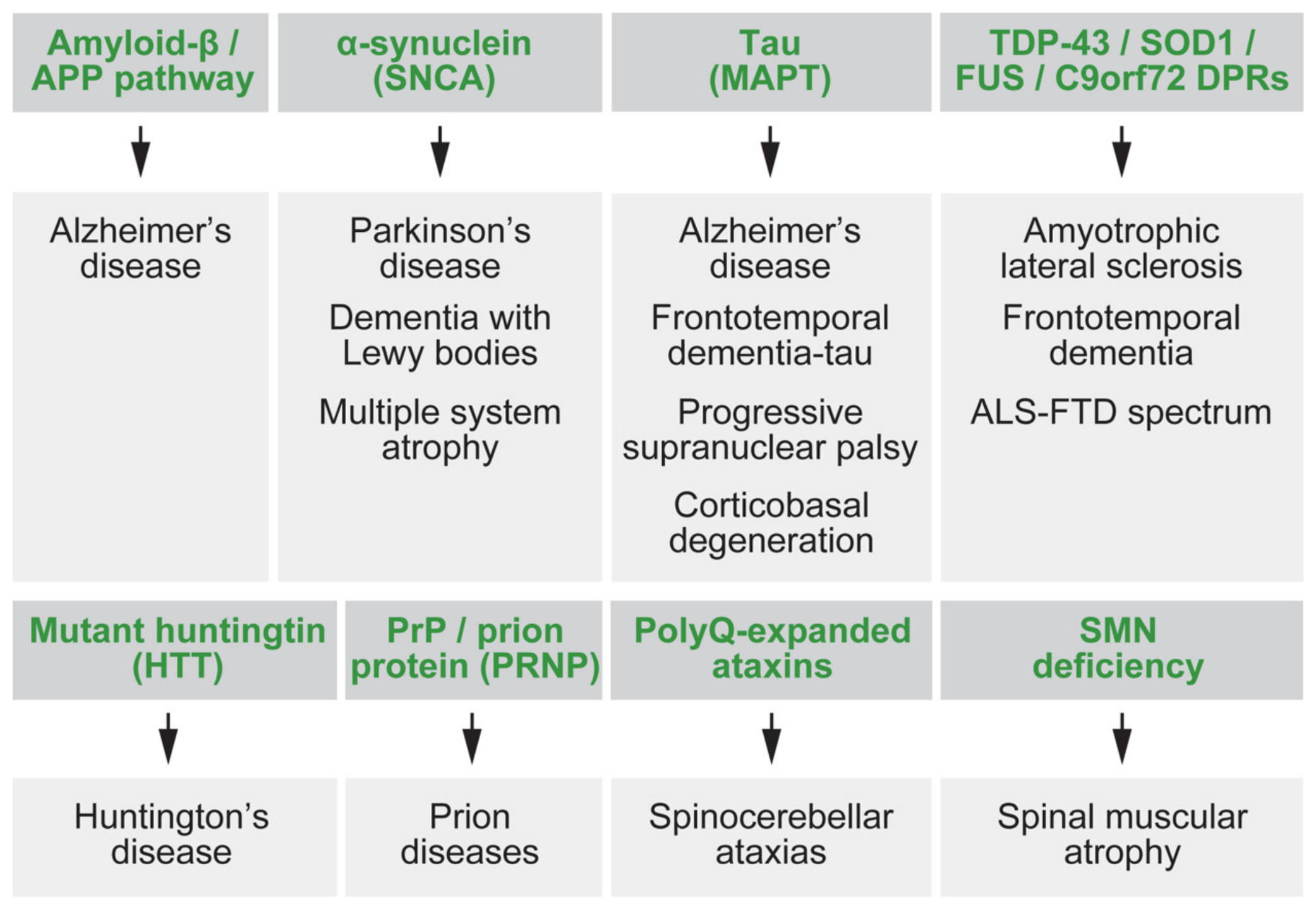
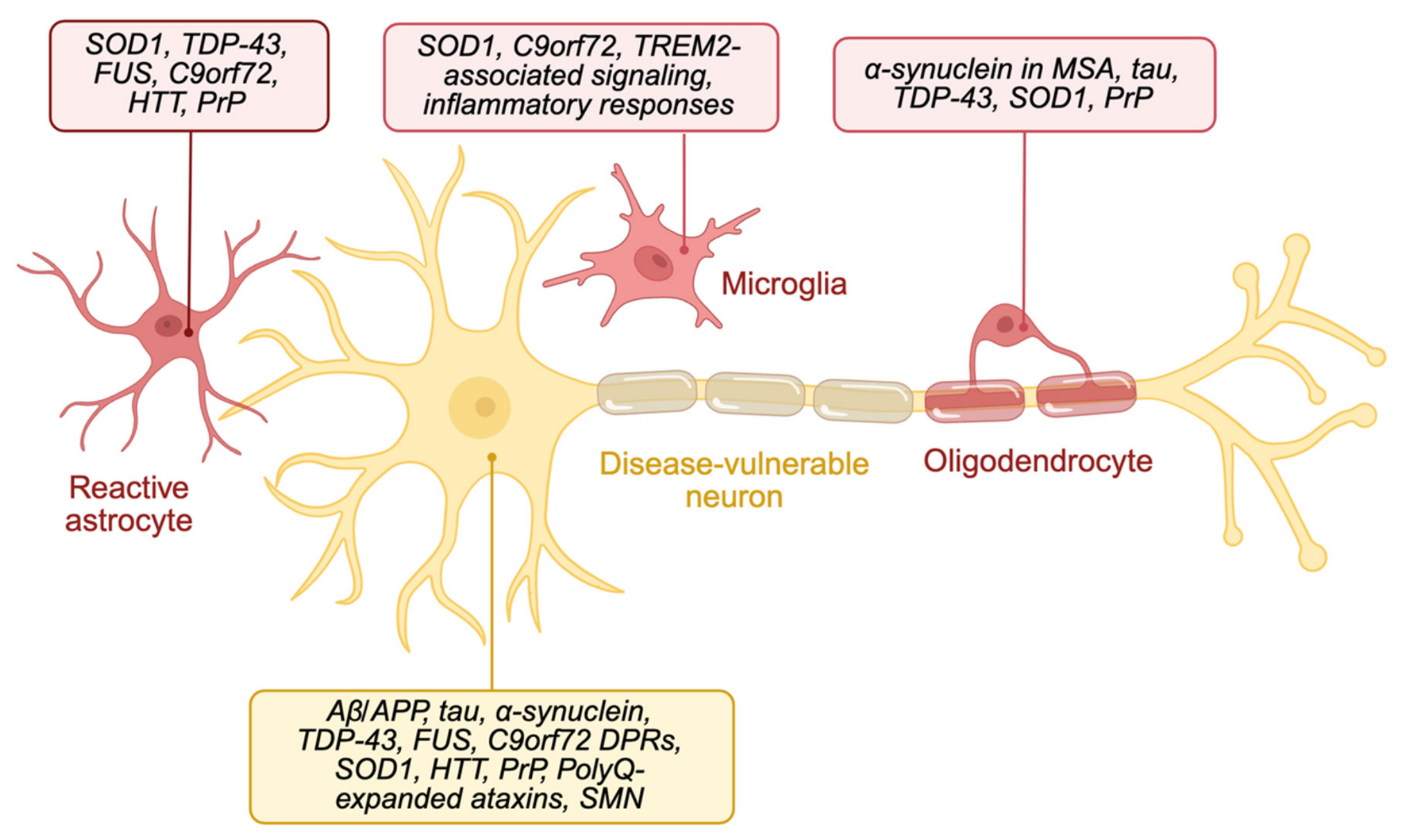
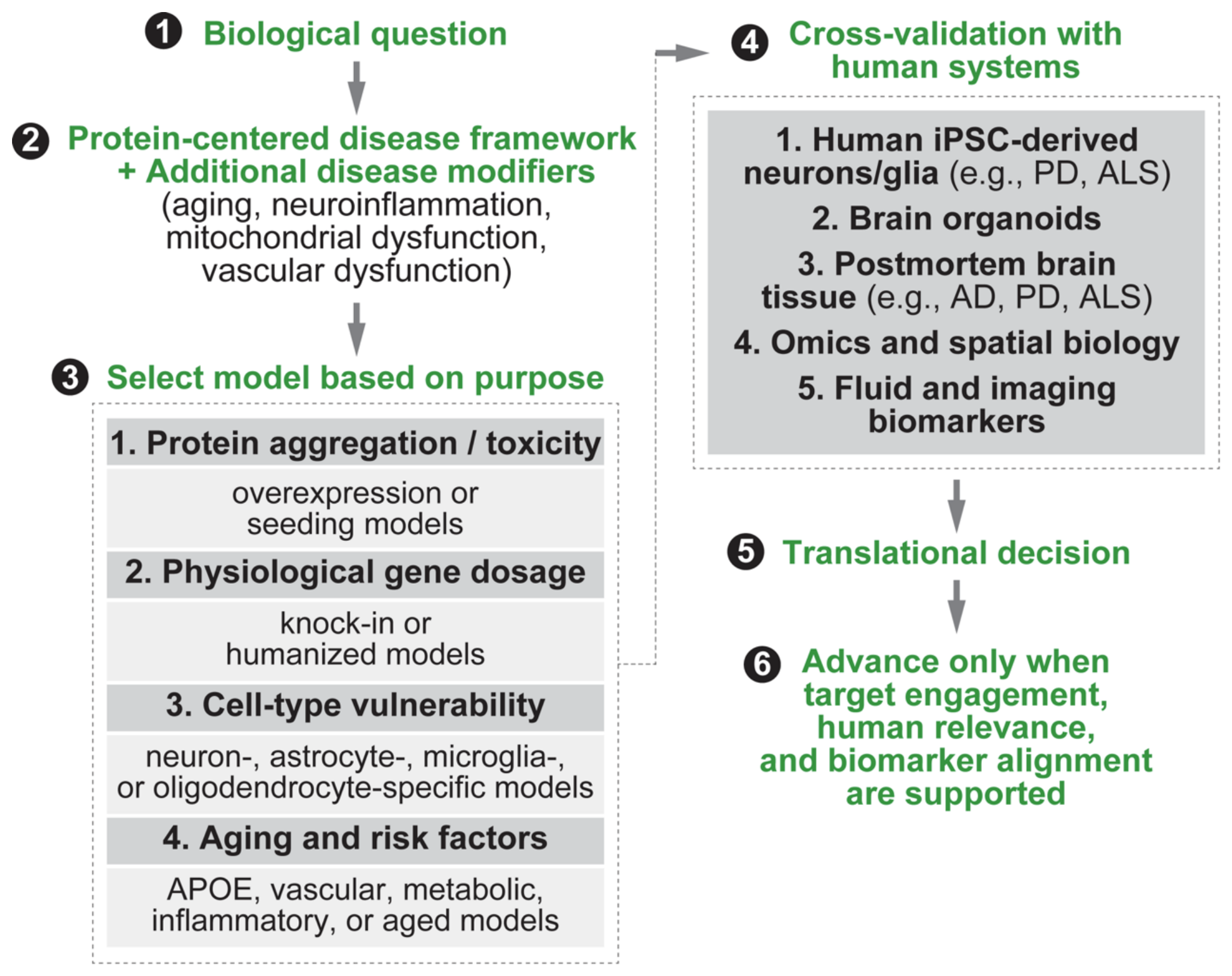
Neurodegenerative diseases represent a major and growing global health burden. Although these disorders are often clinically defined by symptoms and affected brain regions, many are mechanistically linked to abnormal protein accumulation, misfolding, impaired proteostasis, RNA dysregulation, mitochondrial dysfunction, and neuroinflammation. In this Perspective article, I discuss major neurodegenerative diseases, including Alzheimer’s disease, Parkinson’s disease, dementia with Lewy bodies, multiple system atrophy, amyotrophic lateral sclerosis, frontotemporal dementia, Huntington’s disease, prion diseases, spinocerebellar ataxias, and spinal muscular atrophy, through the lens of disease-associated proteins and experimental modeling. I argue that a protein-centered framework provides a useful approach for understanding disease mechanisms and selecting transgenic mouse models, while recognizing that aging, cellular context, neuroinflammation, mitochondrial dysfunction, vascular dysfunction, and other disease modifiers also shape neurodegeneration. Transgenic and genetically engineered mouse models have been essential for dissecting the pathogenic roles of amyloid-β, tau, α-synuclein, TDP-43, SOD1, FUS, C9ORF72-associated dipeptide repeat proteins, mutant huntingtin, prion protein, ataxins, and SMN deficiency. However, these models have important limitations, including artificial overexpression, familial mutation bias, species differences, and incomplete representation of aging-related sporadic diseases. Rather than seeking a single “best” model, a more productive strategy is to adopt model portfolios tailored to specific biological questions and to integrate mouse studies with human cellular models, postmortem tissue, omics approaches, and biomarker-based validation. Such an approach may improve mechanistic insight, strengthen translational relevance, and enhance the predictive value of preclinical neurodegenerative disease research.