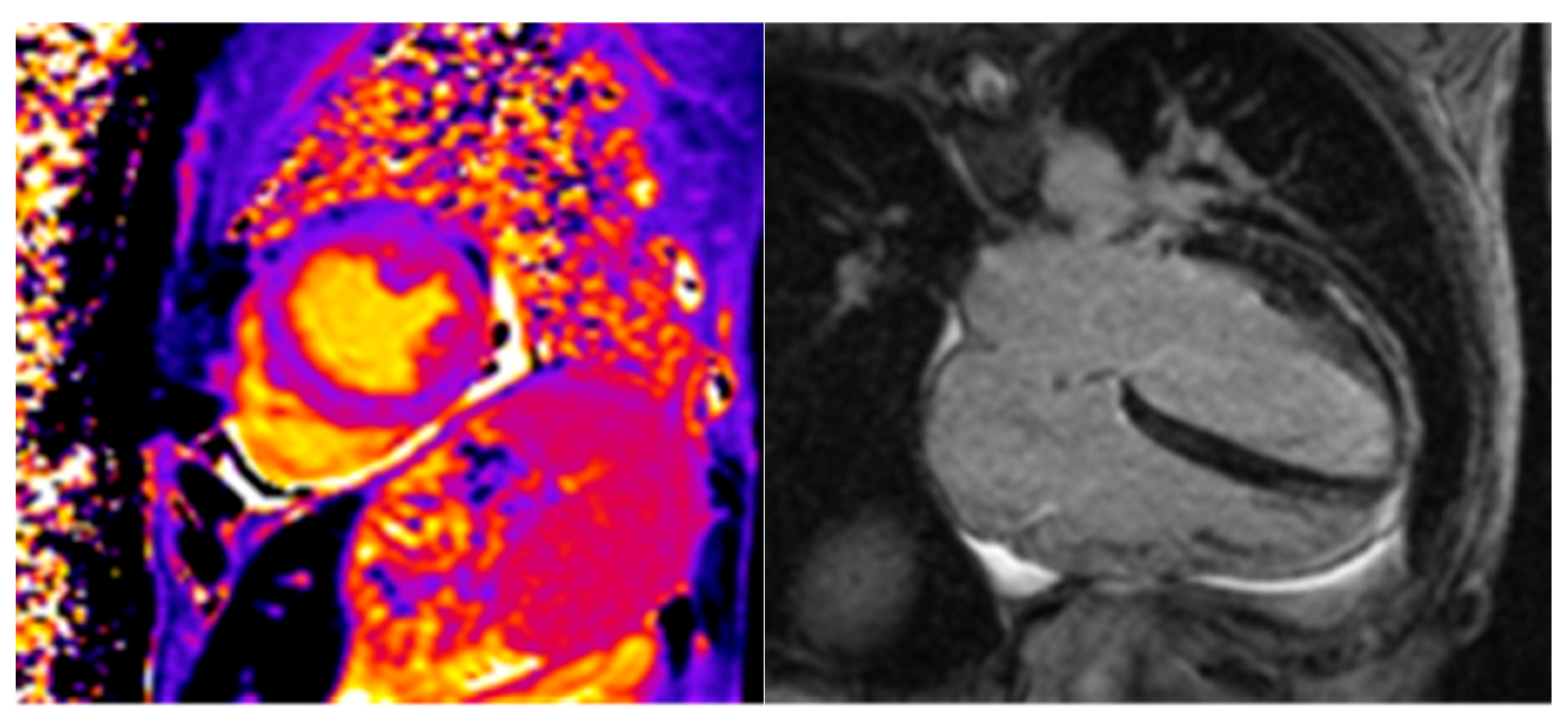
Exploring the Genetic Architecture of Myocarditis and Inherited Cardiomyopathies


Abstract
1. Introduction
2. Methods
3. Results
3.1. Diagnosis of Myocarditis
3.2. Guideline Recommendations for Genetic Testing
3.3. Epidemiology of Myocarditis
3.4. Pathogenesis
3.5. Conceptual Framework: The Genetically Vulnerable Myocardium and Second-Hit Model
3.6. Clinical Significance and Prognostic Implications of Myocarditis
3.7. Treatment of Myocarditis
4. The Genetic Architecture
4.1. Desmosomal Genes and ACM
4.2. Sarcomeres, Titin, and DCM
4.3. Nuclear Envelope Genes and Stress Pathways
4.4. Ion Channelopathies and Electrical Instability
5. Discussion
6. Limitations
7. Future Directions
8. Conclusions
Author Contributions
Funding
Institutional Review Board Statement
Informed Consent Statement
Data Availability Statement
Acknowledgments
Conflicts of Interest
Abbreviations
| ACM | Arrhythmogenic Cardiomyopathy |
| ARVC | Arrhythmogenic Right Ventricular Cardiomyopathy |
| BAG3 | BCL2-Associated Athanogene 3 |
| BNP | B-type Natriuretic Peptide |
| CMR | Cardiovascular Magnetic Resonance |
| DCM | Dilated Cardiomyopathy |
| DES | Desmin |
| DSC2 | Desmocollin-2 |
| DSG2 | Desmoglein-2 |
| DSP | Desmoplakin |
| ECG | Electrocardiogram |
| EMB | Endomyocardial Biopsy |
| EMD | Emerin |
| FDG | Fluorodeoxyglucose |
| FLNC | Filamin C |
| GCM | Giant Cell Myocarditis |
| GWAS | Genome-Wide Association Study |
| HCM | Hypertrophic Cardiomyopathy |
| HLA | Human Leukocyte Antigen |
| ICD | Implantable Cardioverter-Defibrillator |
| IFN-γ | Interferon-gamma |
| IL-1β | Interleukin-1 beta |
| IL-17 | Interleukin-17 |
| JUP | Junction Plakoglobin |
| LGE | Late Gadolinium Enhancement |
| LMNA | Lamin A/C |
| LVEF | Left Ventricular Ejection Fraction |
| MYBPC3 | Myosin-Binding Protein C, Cardiac-Type |
| MYH7 | Beta-Myosin Heavy Chain |
| NF-κB | Nuclear Factor Kappa-Light-Chain-Enhancer of Activated B Cells |
| NK Cells | Natural Killer Cells |
| NLRP3 | NOD-, LRR- and Pyrin Domain-Containing Protein 3 |
| NGS | Next-Generation Sequencing |
| NSVT | Non-Sustained Ventricular Tachycardia |
| PET | Positron Emission Tomography |
| PKP2 | Plakophilin-2 |
| PLN | Phospholamban |
| P/LP | Pathogenic or Likely Pathogenic (variant) |
| RYR2 | Ryanodine Receptor 2 |
| SARS-CoV-2 | Severe Acute Respiratory Syndrome Coronavirus 2 |
| SCD | Sudden Cardiac Death |
| SCN5A | Sodium Voltage-Gated Channel Alpha Subunit 5 |
| SPECT | Single-Photon Emission Computed Tomography |
| STAT3 | Signal Transducer and Activator of Transcription 3 |
| SYNE1/SYNE2 | Synaptic Nuclear Envelope Protein 1/2 |
| Th17 | T-Helper 17 Cells |
| TLR | Toll-Like Receptor |
| TLR3 | Toll-Like Receptor 3 |
| TNF-α | Tumour Necrosis Factor Alpha |
| Tn | Troponin |
| TTN | Titin |
| TTN-tv | Titin Truncating Variant |
| VCL | Vinculin |
References
- Caforio, A.L.P.; Pankuweit, S.; Arbustini, E.; Basso, C.; Gimeno-Blanes, J.; Felix, S.B.; Fu, M.; Heliö, T.; Heymans, S.; Jahns, R.; et al. Current state of knowledge on aetiology, diagnosis, management, and therapy of myocarditis: A position statement of the European Society of Cardiology Working Group on Myocardial and Pericardial Diseases. Eur. Heart J. 2013, 34, 2636–2648. [Google Scholar] [CrossRef] [Scilit]
- Ammirati, E.; Kontorovich, A.R.; Cooper, L.T. Illuminating a Hidden Risk: The Genetic Contribution to Acute Myocarditis. JACC Heart Fail. 2024, 12, 1112–1114. [Google Scholar] [CrossRef] [Scilit]
- Kontorovich, A.R.; Patel, N.; Moscati, A.; Richter, F.; Peter, I.; Purevjav, E.; Selejan, S.R.; Kindermann, I.; Towbin, J.A.; Bohm, M.; et al. Myopathic Cardiac Genotypes Increase Risk for Myocarditis. JACC Basic Transl. Sci. 2021, 6, 584–592. [Google Scholar] [CrossRef] [Scilit]
- Schulz-Menger, J.; Collini, V.; Gröschel, J.; Adler, Y.; Brucato, A.; Christian, V.; Ferreira, V.M.; Gandjbakhch, E.; Heidecker, B.; Kerneis, M.; et al. ESC Guidelines for the management of myocarditis and pericarditis: Developed by the task force for the management of myocarditis and pericarditis of the European Society of Cardiology (ESC) Endorsed by the Association for European Paediatric and Congenital Cardiology (AEPC) and the European Association for Cardio-Thoracic Surgery (EACTS). Eur. Heart J. 2025, 46, 3952–4041. [Google Scholar] [CrossRef] [Scilit]
- Zhao, Y.; Lyu, N.; Zhang, W.; Tan, H.; Jin, Q.; Dang, A. Prognosis Implication of N-Terminal Pro-B-Type Natriuretic Peptide in Adult Patients With Acute Myocarditis. Front. Cardiovasc. Med. 2022, 9, 839763. [Google Scholar] [CrossRef] [Scilit] [PubMed]
- Peretto, G.; Sommariva, E.; Di Resta, C.; Rabino, M.; Villatore, A.; Lazzeroni, D.; Sala, S.; Pompilio, G.; Cooper, L.T. Myocardial Inflammation as a Manifestation of Genetic Cardiomyopathies: From Bedside to the Bench. Biomolecules 2023, 13, 646. [Google Scholar] [CrossRef] [Scilit]
- Martens, P.; Cooper, L.T.; Tang, W.H.W. Diagnostic Approach for Suspected Acute Myocarditis: Considerations for Standardization and Broadening Clinical Spectrum. J. Am. Heart Assoc. 2023, 12, e031454. [Google Scholar] [CrossRef] [Scilit]
- Drazner, M.H.; Bozkurt, B.; Cooper, L.T.; Aggarwal, N.R.; Basso, C.; Bhave, N.M.; Caforio, A.L.; Ferreira, V.M.; Heidecker, B.; Kontorovich, A.R. 2024 ACC Expert Consensus Decision Pathway on Strategies and Criteria for the Diagnosis and Management of Myocarditis: A Report of the American College of Cardiology Solution Set Oversight Committee. J. Am. Coll. Cardiol. 2025, 85, 391–431. [Google Scholar] [CrossRef] [Scilit]
- Ferreira, V.M.; Schulz-Menger, J.; Holmvang, G.; Kramer, C.M.; Carbone, I.; Sechtem, U.; Kindermann, I.; Gutberlet, M.; Cooper, L.T.; Liu, P.; et al. Cardiovascular Magnetic Resonance in Nonischemic Myocardial Inflammation: Expert Recommendations. J. Am. Coll. Cardiol. 2018, 72, 3158–3176. [Google Scholar] [CrossRef] [Scilit] [PubMed]
- Laredo, M.; Charpentier, E.; Soulez, S.; Nguyen, V.; Martino, A.; Calò, L.; Ader, F.; Hermida, A.; Fressart, V.; Charron, P.; et al. Imaging features of desmoplakin arrhythmogenic cardiomyopathy: A comparative cardiovascular magnetic resonance study. J. Cardiovasc. Magn. Reson. 2025, 27, 101867. [Google Scholar] [CrossRef] [Scilit] [PubMed]
- Peretto, G.; Busnardo, E.; Ferro, P.; Palmisano, A.; Vignale, D.; Esposito, A.; De Luca, G.; Campochiaro, C.; Sartorelli, S.; De Gaspari, M.; et al. Clinical Applications of FDG-PET Scan in Arrhythmic Myocarditis. JACC Cardiovasc. Imaging 2022, 15, 1771–1780. [Google Scholar] [CrossRef] [Scilit]
- Ozierański, K.; Tymińska, A.; Kobylecka, M.; Caforio, A.L.; Šobić-Šaranović, D.; Ristić, A.D.; Maksimović, R.; Seferović, P.M.; Marcolongo, R.; Królicki, L.; et al. Positron emission tomography in clinically suspected myocarditis—STREAM study design. Int. J. Cardiol. 2021, 332, 113–118. [Google Scholar] [CrossRef] [Scilit]
- Kircher, M.; Lapa, C. Novel Noninvasive Nuclear Medicine Imaging Techniques for Cardiac Inflammation. Curr. Cardiovasc. Imaging Rep. 2017, 10, 6. [Google Scholar] [CrossRef] [Scilit] [PubMed]
- Vidusa, L.; Kalejs, O.; Maca-Kaleja, A.; Strumfa, I. Role of Endomyocardial Biopsy in Diagnostics of Myocarditis. Diagnostics 2022, 12, 2104. [Google Scholar] [CrossRef] [Scilit]
- McNally, E.M.; Selgrade, D.F. Genetic Testing for Myocarditis. JACC Heart Fail. 2022, 10, 728–730. [Google Scholar] [CrossRef] [Scilit]
- Golpour, A.; Patriki, D.; Hanson, P.J.; McManus, B.; Heidecker, B. Epidemiological Impact of Myocarditis. J. Clin. Med. 2021, 10, 603. [Google Scholar] [CrossRef] [Scilit] [PubMed]
- Fairweather, D.; Beetler, D.J.; Musigk, N.; Heidecker, B.; Lyle, M.A.; Cooper, L.T.; Bruno, K.A. Sex and gender differences in myocarditis and dilated cardiomyopathy: An update. Front. Cardiovasc. Med. 2023, 10, 1129348. [Google Scholar] [CrossRef] [Scilit] [PubMed]
- Siddiqi, R.; Farhan, S.H.; Shah, S.A.; Mushahid, H.; Nasir, M.M.; Moukarbel, G.V. National Trends in Heart Failure and Acute Myocarditis–Related Death Before and During the COVID-19 Pandemic. J. Am. Heart Assoc. 2025, 14, e038987. [Google Scholar] [CrossRef] [Scilit]
- Rottmann, F.A.; Glück, C.; Kaier, K.; Bemtgen, X.; Supady, A.; Mühlen, C.v.Z.; Westermann, D.; Wengenmayer, T.; Staudacher, D.L. Myocarditis incidence and hospital mortality from 2007 to 2022: Insights from a nationwide registry. Clin. Res. Cardiol. Off. J. Ger. Card. Soc. 2025, 114, 1156–1163. [Google Scholar] [CrossRef] [Scilit]
- Heymans, S.; Van Linthout, S.; Kraus, S.M.; Cooper, L.T.; Ntusi, N.A. Clinical Characteristics and Mechanisms of Acute Myocarditis. Circ. Res. 2024, 135, 397–411. [Google Scholar] [CrossRef] [Scilit]
- Palaskas, N.; Lopez-Mattei, J.; Durand, J.B.; Iliescu, C.; Deswal, A. Immune Checkpoint Inhibitor Myocarditis: Pathophysiological Characteristics, Diagnosis, and Treatment. J. Am. Heart Assoc. 2020, 9, e013757. [Google Scholar] [CrossRef] [Scilit]
- Abston, E.D.; Coronado, M.J.; Bucek, A.; Onyimba, J.A.; Brandt, J.E.; Frisancho, J.A.; Kim, E.; Bedja, D.; Sung, Y.-K.; Radtke, A.J.; et al. TLR3 deficiency induces chronic inflammatory cardiomyopathy in resistant mice following coxsackievirus B3 infection: Role for IL-4. Am. J. Physiol.—Regul. Integr. Comp. Physiol. 2012, 304, R267–R277. [Google Scholar] [CrossRef] [Scilit]
- Chen, C.; Feng, Y.; Zou, L.; Wang, L.; Chen, H.H.; Cai, J.; Xu, J.; Sosnovik, D.E.; Chao, W. Role of extracellular RNA and TLR3-Trif signaling in myocardial ischemia-reperfusion injury. J. Am. Heart Assoc. 2014, 3, e000683. [Google Scholar] [CrossRef] [Scilit]
- Zheng, S.-Y.; Dong, J.-Z. Role of Toll-Like Receptors and Th Responses in Viral Myocarditis. Front. Immunol. 2022, 13, 843891. [Google Scholar] [CrossRef] [Scilit] [PubMed]
- Golino, M.; Harding, D.; Del Buono, M.G.; Fanti, S.; Mohiddin, S.; Toldo, S.; Smyth, J.; Sanna, T.; Marelli-Berg, F.; Abbate, A. Innate and adaptive immunity in acute myocarditis. Int. J. Cardiol. 2024, 404, 131901. [Google Scholar] [CrossRef] [Scilit]
- Liu, K.; Han, B. Role of immune cells in the pathogenesis of myocarditis. J. Leukoc. Biol. 2024, 115, 253–275. [Google Scholar] [CrossRef] [Scilit] [PubMed]
- Bhatia, R.T.; Finocchiaro, G.; Westaby, J.; Chatrath, N.; Behr, E.R.; Papadakis, M.; Sharma, S.; Sheppard, M.N. Myocarditis and Sudden Cardiac Death in the Community: Clinical and Pathological Insights From a National Registry in the United Kingdom. Circ. Arrhythmia Electrophysiol. 2023, 16, E012129. [Google Scholar] [CrossRef] [Scilit] [PubMed]
- Lynge, T.H.; Nielsen, T.S.; Winkel, B.G.; Tfelt-Hansen, J.; Banner, J. Sudden cardiac death caused by myocarditis in persons aged 1-49 years: A nationwide study of 14 294 deaths in Denmark. Forensic Sci. Res. 2019, 4, 247–256. [Google Scholar] [CrossRef] [Scilit]
- Georgiopoulos, G.; Figliozzi, S.; Sanguineti, F.; Aquaro, G.D.; Di Bella, G.; Stamatelopoulos, K.; Chiribiri, A.; Garot, J.; Masci, P.G.; Ismail, T.F. Prognostic Impact of Late Gadolinium Enhancement by Cardiovascular Magnetic Resonance in Myocarditis: A Systematic Review and Meta-Analysis. Circ. Cardiovasc. Imaging 2021, 14, E011492. [Google Scholar] [CrossRef] [Scilit]
- Bang, V.; Ganatra, S.; Shah, S.P.; Dani, S.S.; Neilan, T.G.; Thavendiranathan, P.; Resnic, F.S.; Piemonte, T.C.; Barac, A.; Patel, R.; et al. Management of Patients With Giant Cell Myocarditis: JACC Review Topic of the Week. J. Am. Coll. Cardiol. 2021, 77, 1122–1134. [Google Scholar] [CrossRef] [Scilit]
- Lota, A.S.; Hazebroek, M.R.; Theotokis, P.; Wassall, R.; Salmi, S.; Halliday, B.P.; Tayal, U.; Verdonschot, J.; Meena, D.; Owen, R.; et al. Genetic Architecture of Acute Myocarditis and the Overlap with Inherited Cardiomyopathy. Circulation 2022, 146, 1123–1134. [Google Scholar] [CrossRef] [Scilit]
- Cooper, L.T.; Čiháková, D. Do Genes Influence Susceptibility to Myocarditis? JACC Basic Transl. Sci. 2021, 6, 593–594. [Google Scholar] [CrossRef] [Scilit] [PubMed]
- Agarwalla, A.; Austin, M.A.; Reza, N. Genetics in clinical cardiology: The current state and opportunities ahead. Future Cardiol. 2024, 20, 815–818. [Google Scholar] [CrossRef] [Scilit] [PubMed]
- Piriou, N.; Marteau, L.; Kyndt, F.; Serfaty, J.M.; Toquet, C.; Le Gloan, L.; Warin-Fresse, K.; Guijarro, D.; Le Tourneau, T.; Conan, E.; et al. Familial screening in case of acute myocarditis reveals inherited arrhythmogenic left ventricular cardiomyopathies. ESC Heart Fail. 2020, 7, 1520–1533. [Google Scholar] [CrossRef] [Scilit]
- Ammirati, E.; Frigerio, M.; Adler, E.D.; Basso, C.; Birnie, D.H.; Brambatti, M.; Friedrich, M.G.; Klingel, K.; Lehtonen, J.; Moslehi, J.J.; et al. Management of Acute Myocarditis and Chronic Inflammatory Cardiomyopathy: An Expert Consensus Document. Circ. Heart Fail. 2020, 13, E007405. [Google Scholar] [CrossRef] [Scilit]
- Lampejo, T.; Durkin, S.M.; Bhatt, N.; Guttmann, O. Acute myocarditis: Aetiology, diagnosis and management. Clin. Med. 2021, 21, e505–e510. [Google Scholar] [CrossRef] [Scilit]
- Ammirati, E.; Moslehi, J.J. Diagnosis and Treatment of Acute Myocarditis: A Review. JAMA 2023, 329, 1098–1113. [Google Scholar] [CrossRef] [Scilit]
- Imburgio, S.; Johal, A.; Akhlaq, H.; Klei, L.; Arcidiacono, A.M.; Udongwo, N.; Mararenko, A.; Ajam, F.; Heaton, J.; Hansalia, R.; et al. Fatal ventricular arrhythmias in myocarditis: A review of current indications for defibrillator devices. J. Cardiol. 2024, 84, 151–154. [Google Scholar] [CrossRef] [Scilit] [PubMed]
- Ammirati, E.; Palazzini, M.; Gentile, P.; Conti, N.; Sormani, P.; Pedrotti, P.; Garascia, A.; Cartella, I. Management of patients with myocarditis and arrhythmogenic phenotype. Eur. Heart J. Suppl. 2025, 27, iii1–iii6. [Google Scholar] [CrossRef] [Scilit]
- Mora-Ayestarán, N.; Ochoa, J.P.; Gómez-González, C.; Navarro-Peñalver, M.; Gallego-Delgado, M.; Larrañaga-Moreira, J.M.; Robles-Mezcua, A.; Basurte-Elorz, M.T.; Rodriguez-Palomares, J.F.; Climent-Paya, V.; et al. Arrhythmic genotypes in dilated cardiomyopathy and risk of advanced heart failure. Eur. Heart J. 2025, 46, 5222–5233. [Google Scholar] [CrossRef] [Scilit]
- Sorella, A.; Galanti, K.; Iezzi, L.; Gallina, S.; Mohammed, S.F.; Sekhri, N.; Akhtar, M.M.; Prasad, S.K.; Chahal, C.A.A.; Ricci, F.; et al. Diagnosis and management of dilated cardiomyopathy: A systematic review of clinical practice guidelines and recommendations. Eur. Heart J.—Qual. Care Clin. Outcomes 2025, 11, 206–222. [Google Scholar] [CrossRef] [Scilit]
- Asselbergs, F.W.; Sammani, A.; Elliott, P.; Gimeno, J.R.; Tavazzi, L.; Tendera, M.; Kaski, J.P.; Maggioni, A.P.; Rubis, P.P.; Jurcut, R.; et al. Differences between familial and sporadic dilated cardiomyopathy: ESC EORP Cardiomyopathy & Myocarditis registry. ESC Heart Fail. 2021, 8, 95–105. [Google Scholar] [CrossRef] [Scilit]
- Reichart, D.; Magnussen, C.; Zeller, T.; Blankenberg, S. Dilated cardiomyopathy: From epidemiologic to genetic phenotypes: A translational review of current literature. J. Intern. Med. 2019, 286, 362–372. [Google Scholar] [CrossRef] [Scilit]
- Zegkos, T.; Panagiotidis, T.; Parcharidou, D.; Efthimiadis, G. Emerging concepts in arrhythmogenic dilated cardiomyopathy. Heart Fail. Rev. 2021, 26, 1219–1229. [Google Scholar] [CrossRef] [Scilit]
- Ader, F.; Surget, E.; Charron, P.; Redheuil, A.; Zouaghi, A.; Maltret, A.; Marijon, E.; Denjoy, I.; Hermida, A.; Fressart, V.; et al. Inherited Cardiomyopathies Revealed by Clinically Suspected Myocarditis: Highlights From Genetic Testing. Circ. Genom. Precis. Med. 2020, 13, E002744. [Google Scholar] [CrossRef] [Scilit] [PubMed]
- Belkaya, S.; Kontorovich, A.R.; Byun, M.; Mulero-Navarro, S.; Bajolle, F.; Cobat, A.; Josowitz, R.; Itan, Y.; Quint, R.; Lorenzo, L.; et al. Autosomal Recessive Cardiomyopathy Presenting as Acute Myocarditis. J. Am. Coll. Cardiol. 2017, 69, 1653–1665. [Google Scholar] [CrossRef] [Scilit] [PubMed]
- Lee, T.M.; Ware, S.M.; Kamsheh, A.M.; Bhatnagar, S.; Absi, M.; Miller, E.; Purevjav, E.; Ryan, K.A.; Towbin, J.A.; Lipshultz, S.E. Genomics of pediatric cardiomyopathy. Pediatr. Res. 2025, 97, 1381–1392. [Google Scholar] [CrossRef] [Scilit]
- Seidel, F.; Holtgrewe, M.; Al-Wakeel-Marquard, N.; Opgen-Rhein, B.; Dartsch, J.; Herbst, C.; Beule, D.; Pickardt, T.; Klingel, K.; Messroghli, D.; et al. Pathogenic Variants Associated With Dilated Cardiomyopathy Predict Outcome in Pediatric Myocarditis. Circ. Genom. Precis. Med. 2021, 14, E003250. [Google Scholar] [CrossRef] [Scilit] [PubMed]
- Kostareva, A.; Sjoberg, G.; Gudkova, A.; Smolina, N.; Semernin, E.; Shlyakhto, E.; Sejersen, T. Desmin A213V Substitution Represents a Rare Polymorphism but Not a Mutation and Is More Prevalent in Patients with Heart Dilation of Various Origins. Acta Myol. 2011, 30, 42–45. [Google Scholar]
- Callon, D.; Joanne, P.; Andreoletti, L.; Agbulut, O.; Chevalier, P.; Fornès, P. Viral myocarditis in combination with genetic cardiomyopathy as a cause of sudden death. An autopsy series. BMC Cardiovasc. Disord. 2024, 24, 282. [Google Scholar] [CrossRef] [Scilit]
- Bottillo, I.; Giordano, C.; Ciccone, M.P.; Pignataro, M.G.; Albi, F.; Parisi, G.; Formicola, D.; Grotta, S.; Ranocchi, F.; Giuli, M.V.; et al. Dilated cardiomyopathy due to a novel combination of TTN and BAG3 genetic variants: From acute heart failure to subclinical phenotypes. Cardiovasc. Pathol. 2024, 73, 107675. [Google Scholar] [CrossRef] [Scilit]
- Saxton, S.; Kontorovich, A.R.; Wang, D.; Zhou, B.; Um, S.Y.; Lin, Y.; Rojas, L.; Tyll, E.; Dickinson, G.; Stram, M.; et al. Cardiac genetic test yields and genotype-phenotype correlations from large cohort investigated by medical examiner’s office. Cardiovasc. Pathol. 2024, 72, 107654. [Google Scholar] [CrossRef] [Scilit]
- Seidel, F.; Opgen-Rhein, B.; Rentzsch, A.; Boehne, M.; Wannenmacher, B.; Boecker, D.; Reineker, K.; Grafmann, M.; Wiegand, G.; Hecht, T.; et al. Clinical characteristics and outcome of biopsy-proven myocarditis in children—Results of the German prospective multicentre registry “MYKKE”. Int. J. Cardiol. 2022, 357, 95–104. [Google Scholar] [CrossRef] [Scilit] [PubMed]
- Dou, Q.; Peng, Y.; Zhou, B.; Lin, J.; Li, Y.; Yang, H.; Xie, Q.; Li, C.; Zhang, L.; Rao, L. Association of innate immune IFIH1 gene polymorphisms with dilated cardiomyopathy in a Chinese population. Immunol. Investig. 2014, 43, 627–637. [Google Scholar] [CrossRef] [Scilit]
- Knowlton, K.U. Myocarditis: An Intersection Between Genetic and Acquired Causes of Human Cardiomyopathy. J. Am. Coll. Cardiol. 2017, 69, 1666–1668. [Google Scholar] [CrossRef] [Scilit] [PubMed]
- Westphal, D.S.; Krafft, H.; Biller, R.; Klingel, K.; Gaa, J.; Mueller, C.S.; Martens, E. Myocarditis or inherited disease?—The multifaceted presentation of arrhythmogenic cardiomyopathy. Gene 2022, 827, 146470. [Google Scholar] [CrossRef] [Scilit]
- Selgrade, D.F.; Fullenkamp, D.E.; Chychula, I.A.; Li, B.; Dellefave-Castillo, L.; Dubash, A.D.; Ohiri, J.; Monroe, T.O.; Blancard, M.; Tomar, G.; et al. Susceptibility to innate immune activation in genetically mediated myocarditis. J. Clin. Investig. 2024, 134, e180254. [Google Scholar] [CrossRef] [Scilit]
- Poller, W.; Haas, J.; Klingel, K.; Kühnisch, J.; Gast, M.; Kaya, Z.; Escher, F.; Kayvanpour, E.; Degener, F.; Opgen-Rhein, B.; et al. Familial recurrent myocarditis triggered by exercise in patients with a truncating variant of the desmoplakin gene. J. Am. Heart Assoc. 2020, 9, e015289. [Google Scholar] [CrossRef] [Scilit] [PubMed]
- Morales, J.P.; Spaccavento, A.; Guerchicoff, M.; Burgos, L.; Costabel, J.P.; Cingolani, E.; de Lima, A.A. Diagnosis of Arrhythmogenic Cardiomyopathy in a Young Patient With Recurrent Myocarditis: The Importance of Genetic Testing. Am. J. Cardiol. 2025, 242, 37–40. [Google Scholar] [CrossRef] [Scilit]
- Johnson, N.; Ginks, M.; Ferreira, V.M.; Kardos, A. Myocarditis as a trigger for the expression of biventricular arrhythmogenic cardiomyopathy in desmosomal gene mutation. Echocardiography 2023, 40, 1122–1126. [Google Scholar] [CrossRef] [Scilit]
- Rubino, M.; Scatteia, A.; Frisso, G.; Pacileo, G.; Caiazza, M.; Pascale, C.E.; Guarini, P.; Limongelli, G.; Dellegrottaglie, S. Imaging the “hot phase” of a familiar left-dominant arrhythmogenic cardiomyopathy. Genes 2021, 12, 1933. [Google Scholar] [CrossRef] [Scilit] [PubMed]
- Nakamura, M.; Imamura, T.; Fukui, T.; Kataoka, N.; Kinugawa, K. Arrhythmogenic Right Ventricular Cardiomyopathy Accompanied by Chronic Myocarditis. Intern. Med. 2022, 61, 3063–3067. [Google Scholar] [CrossRef] [Scilit]
- Müller-Jensen, L.; Flatz, L.; Ali, O.H.; Mohr, R.; Lachmann, N.; Mödl, L.; Endres, M.; Boehmerle, W.; Huehnchen, P. HLA-A*01:01-B*08:01-C*07:01 is linked to early-onset immune checkpoint inhibitor-induced myositis and myocarditis. J. Immunother. Cancer 2025, 13, e011590. [Google Scholar] [CrossRef] [Scilit] [PubMed]
- Matsumori, A. Myocarditis and autoimmunity. Expert Rev. Cardiovasc. Ther. 2023, 21, 437–451. [Google Scholar] [CrossRef] [Scilit]
- Artico, J.; Merlo, M.; Delcaro, G.; Cannatà, A.; Gentile, P.; De Angelis, G.; Paldino, A.; Bussani, R.; Ferro, M.D.; Sinagra, G. Lymphocytic Myocarditis: A Genetically Predisposed Disease? J. Am. Coll. Cardiol. 2020, 75, 3098–3100. [Google Scholar] [CrossRef] [Scilit]
- Boulet, J.; Lakdawala, N.K.; Christiansen, M.N.; Schou, M.; Køber, L.; Gustafsson, F.; Gislason, G.H.; Torp-Pedersen, C.; Andersson, C. Cardiomyopathy in First-Degree Relatives of Patients Presenting With Acute Myocarditis: Prevalence and Prognostic Significance. Circ. Heart Fail. 2024, 17, e011204. [Google Scholar] [CrossRef] [Scilit] [PubMed]
- Steinke, K.; Sachse, F.; Ettischer, N.; Strutz-Seebohm, N.; Henrion, U.; Rohrbeck, M.; Klosowski, R.; Wolters, D.; Brunner, S.; Franz, W.; et al. Coxsackievirus B3 modulates cardiac ion channels. FASEB J. 2013, 27, 4108–4121. [Google Scholar] [CrossRef] [Scilit]
- Wang, Y.; Jia, L.; Shen, J.; Wang, Y.; Fu, Z.; Su, S.-A.; Cai, Z.; Wang, J.-A.; Xiang, M. Cathepsin B aggravates coxsackievirus B3-induced myocarditis through activating the inflammasome and promoting pyroptosis. PLoS Pathog. 2018, 14, e1006872. [Google Scholar] [CrossRef] [Scilit]
- Tajiri, K.; Yonebayashi, S.; Li, S.; Ieda, M. Immunomodulatory Role of Tenascin-C in Myocarditis and Inflammatory Cardiomyopathy. Front. Immunol. 2021, 12, 624703. [Google Scholar] [CrossRef] [Scilit]
- Imanaka-Yoshida, K. Tenascin-c in heart diseases—The role of inflammation. Int. J. Mol. Sci. 2021, 22, 5828. [Google Scholar] [CrossRef] [Scilit]
- Ruppert, V.; Maisch, B. Molecular signatures and the study of gene expression profiles in inflammatory heart diseases. Herz 2012, 37, 619–626. [Google Scholar] [CrossRef] [Scilit]
- Jordà, P.; Martínez, D.; Farrero, M.; Marcos, M.Á.; Sandoval, E.; Castel, M.Á.; Pereda, D.; Quintana, E.; Arbelo, E.; Sánchez, A.; et al. BAG3 Genetic Cardiomyopathy May Overlap Fulminant Myocarditis Clinical Findings. Circ. Heart Fail. 2022, 15, E008443. [Google Scholar] [CrossRef] [Scilit] [PubMed]
- Kim, Y.; Gunnarsdóttir, O.B.; Viveiros, A.; Reichart, D.; Quiat, D.; Willcox, J.A.; Zhang, H.; Chen, H.; Curran, J.J.; Kim, D.H.; et al. Genetic Contribution to End-Stage Cardiomyopathy Requiring Heart Transplantation. Circ. Genom. Precis. Med. 2023, 16, 452–461. [Google Scholar] [CrossRef] [Scilit]
- Blagova, O.; Pavlenko, E.; Sedov, V.; Kogan, E.; Polyak, M.; Zaklyazminskaya, E.; Lutokhina, Y. Different Phenotypes of Sarcomeric MyBPC3-Cardiomyopathy in the Same Family: Hypertrophic, Left Ventricular Noncompaction and Restrictive Phenotypes (in Association with Sarcoidosis). Genes 2022, 13, 1344. [Google Scholar] [CrossRef] [Scilit]
- Lafferty, E.I.; Wiltshire, S.A.; Angers, I.; Vidal, S.M.; Qureshi, S.T. Unc93b1-dependent endosomal toll-like receptor signaling regulates inflammation and mortality during coxsackievirus B3 infection. J. Innate Immun. 2015, 7, 315–330. [Google Scholar] [CrossRef] [Scilit]
- Xiao, H.; Chen, H.; Liang, W.; Liu, Y.; Lin, K.; Guo, Y. Assessing the causal effect of inflammation-related genes on myocarditis: A Mendelian randomization study. ESC Heart Fail. 2025, 12, 271–280. [Google Scholar] [CrossRef] [Scilit] [PubMed]
- Sawaged, S.; Mota, T.; Piplani, H.; Thakur, R.; Lall, D.; McCabe, E.; Seo, S.; Sutterwala, F.S.; Feuer, R.; Gottlieb, R.A.; et al. TBK1 and GABARAP family members suppress Coxsackievirus B infection by limiting viral production and promoting autophagic degradation of viral extracellular vesicles. PLoS Pathog. 2022, 18, e1010350. [Google Scholar] [CrossRef] [Scilit]
- Campuzano, O.; Fernández-Falgueras, A.; Sarquella-Brugada, G.; Sanchez, O.; Cesar, S.; Mademont, I.; Allegue, C.; Mates, J.; Pérez-Serra, A.; Coll, M.; et al. A Genetically Vulnerable Myocardium May Predispose to Myocarditis. J. Am. Coll. Cardiol. 2015, 66, 2913–2914. [Google Scholar] [CrossRef] [Scilit] [PubMed]
- van der Meulen, M.H.; Herkert, J.C.; Boer, S.L.D.; Sarvaas, G.J.d.M.; Blom, N.; Harkel, A.D.T.; Breur, H.M.; Rammeloo, L.A.; Tanke, R.; Marcelis, C.; et al. Genetic Evaluation of A Nation-Wide Dutch Pediatric DCM Cohort: The Use of Genetic Testing in Risk Stratification. Circ. Genom. Precis. Med. 2022, 15, 375–385. [Google Scholar] [CrossRef] [Scilit]
- Poffenberger, M.C.; Shanina, I.; Aw, C.; El Wharry, N.; Straka, N.; Fang, D.; Baskin-Hill, A.E.; Spiezio, S.H.; Nadeau, J.H.; Horwitz, M.S. Novel nonmajor histocompatibility complex-linked loci from mouse chromosome 17 confer susceptibility to viral-mediated chronic autoimmune myocarditis. Circ. Cardiovasc. Genet. 2010, 3, 399–408. [Google Scholar] [CrossRef] [Scilit]
- Narang, A.; Lacaze, P.; Ronaldson, K.J.; McNeil, J.J.; Jayaram, M.; Thomas, N.; Sellmer, R.; Crockford, D.N.; Stowe, R.; Greenway, S.C.; et al. Whole-genome sequencing analysis of clozapine-induced myocarditis. Pharmacogenom. J. 2022, 22, 173–179. [Google Scholar] [CrossRef] [Scilit] [PubMed]
- Lacaze, P.; Ronaldson, K.J.; Zhang, E.J.; Alfirevic, A.; Shah, H.; Newman, L.; Strahl, M.; Smith, M.; Bousman, C.; Francis, B.; et al. Genetic associations with clozapine-induced myocarditis in patients with schizophrenia. Transl. Psychiatry 2020, 10, 37. [Google Scholar] [CrossRef] [Scilit] [PubMed]
- Chopra, N.; Knollmann, B.C. Genetics of sudden cardiac death syndromes. Curr. Opin. Cardiol. 2011, 26, 196–203. [Google Scholar] [CrossRef] [Scilit]
- Obler, D.; Wu, B.-L.; Lip, V.; Estrella, E.; Keck, S.; Haggan, C.; Semigran, M.; Smoot, L.B. Familial Dilated Cardiomyopathy Secondary to Dystrophin Splice Site Mutation. J. Card. Fail. 2010, 16, 194–199. [Google Scholar] [CrossRef] [Scilit]
- Lee, M.; Choi, J.-O.; Yun, S.-H.; Ju, E.-S.; Lee, Y.-J.; Kim, J.-W.; Lim, B.-K.; Jeon, E.-S. Clinical severity of viral myocarditis is not associated with a mutation of dystrophin gene cleavage sites. Int. J. Cardiol. 2015, 194, 21–22. [Google Scholar] [CrossRef] [Scilit]
- Yang, Q.; Yan, D.; Song, Y.; Zhu, S.; He, Y.; Han, Z.; Wang, D.; Ji, T.; Zhang, Y.; Xu, W. Whole-genome analysis of coxsackievirus B3 reflects its genetic diversity in China and worldwide. Virol. J. 2022, 19, 69. [Google Scholar] [CrossRef] [Scilit] [PubMed]
- Singh, H.; Nair, A.; Mahajan, S.D. Impact of genetic variations of gene involved in regulation of metabolism, inflammation and coagulation on pathogenesis of cardiac injuries associated with COVID-19. Pathol. Res. Pract. 2024, 263, 155608. [Google Scholar] [CrossRef] [Scilit]
- Monda, E.; Limongelli, G. Is There a Role for Genetic Testing in Patients with Myocarditis? Circ. Genom. Precis. Med. 2022, 15, 476–478. [Google Scholar] [CrossRef] [Scilit]
- Scheel, P.J.; Cartella, I.; Murray, B.; Gilotra, N.A.; Ammirati, E. Role of genetics in inflammatory cardiomyopathy. Int. J. Cardiol. 2024, 400, 131777. [Google Scholar] [CrossRef] [Scilit]
- Esmel-Vilomara, R.; Riaza, L.; Dolader, P.; Rodríguez-Santiago, B.; Lasa-Aranzasti, A.; Muñoz-Cabello, P.; Fernández-Álvarez, P.; Figueras-Coll, M.; Bianco, L.; Bueno-Gómez, A.; et al. Infarct-like myocarditis in adolescents: Exploring genetic insights from diagnosis through follow-up. Int. J. Cardiol. 2025, 432, 133255. [Google Scholar] [CrossRef] [Scilit]
- Santoro, F.; Vitale, E.; Ragnatela, I.; Cetera, R.; Leopzzi, A.; Mallardi, A.; Matera, A.; Mele, M.; Correale, M.; Brunetti, N.D. Multidisciplinary approach in cardiomyopathies: From genetics to advanced imaging. Heart Fail. Rev. 2023, 29, 445–462. [Google Scholar] [CrossRef] [Scilit] [PubMed]
- Meraviglia, V.; Alcalde, M.; Campuzano, O.; Bellin, M. Inflammation in the Pathogenesis of Arrhythmogenic Cardiomyopathy: Secondary Event or Active Driver? Front. Cardiovasc. Med. 2021, 8, 784715. [Google Scholar] [CrossRef] [Scilit]
- Asatryan, B.; Asimaki, A.; Landstrom, A.P.; Khanji, M.Y.; Odening, K.E.; Cooper, L.T.; Marchlinski, F.E.; Gelzer, A.R.; Semsarian, C.; Reichlin, T.; et al. Inflammation and Immune Response in Arrhythmogenic Cardiomyopathy: State-of-the-Art Review. Circulation 2021, 144, 1646–1655. [Google Scholar] [CrossRef] [Scilit]
- Mattesi, G.; Cipriani, A.; Bauce, B.; Rigato, I.; Zorzi, A.; Corrado, D. Arrhythmogenic Left Ventricular Cardiomyopathy: Genotype-Phenotype Correlations and New Diagnostic Criteria. J. Clin. Med. 2021, 10, 2212. [Google Scholar] [CrossRef] [Scilit]
- Malik, N.; Mukherjee, M.; Wu, K.C.; Zimmerman, S.L.; Zhan, J.; Calkins, H.; James, C.A.; Gilotra, N.A.; Sheikh, F.H.; Tandri, H.; et al. Multimodality Imaging in Arrhythmogenic Right Ventricular Cardiomyopathy. Circ. Cardiovasc. Imaging 2022, 15, E013725. [Google Scholar] [CrossRef] [Scilit]
- Smith, E.D.; Lakdawala, N.K.; Papoutsidakis, N.; Aubert, G.; Mazzanti, A.; McCanta, A.C.; Agarwal, P.P.; Arscott, P.; Dellefave-Castillo, L.M.; Vorovich, E.E.; et al. Desmoplakin Cardiomyopathy, a Fibrotic and Inflammatory Form of Cardiomyopathy Distinct From Typical Dilated or Arrhythmogenic Right Ventricular Cardiomyopathy. Circulation 2020, 141, 1872–1884. [Google Scholar] [CrossRef] [Scilit] [PubMed]
- Monda, E.; Bakalakos, A.; Cannie, D.; O’mAhony, C.; Syrris, P.; Kaski, J.P.; Limongelli, G.; Elliott, P.M. Prevalence of Pathogenic Variants in Cardiomyopathy-Associated Genes in Acute Myocarditis: A Systematic Review and Meta-Analysis. JACC Heart Fail. 2024, 12, 1101–1111. [Google Scholar] [CrossRef] [Scilit]
- Ammirati, E.; Raimondi, F.; Piriou, N.; Infirri, L.S.; Mohiddin, S.A.; Mazzanti, A.; Shenoy, C.; Cavallari, U.A.; Imazio, M.; Aquaro, G.D.; et al. Acute Myocarditis Associated With Desmosomal Gene Variants. JACC Heart Fail. 2022, 10, 714–727. [Google Scholar] [CrossRef] [Scilit]
- Sikking, M.A.; Stroeks, S.L.V.M.; Henkens, M.T.H.M.; Venner, M.F.G.H.M.; Li, X.; Heymans, S.R.B.; Hazebroek, M.R.; Verdonschot, J.A.J. Cardiac Inflammation in Adult-Onset Genetic Dilated Cardiomyopathy. J. Clin. Med. 2023, 12, 3937. [Google Scholar] [CrossRef] [Scilit]
- Mueller, M.; Zwinger, L.; Klaassen, S.; Poller, W.; Iglesias, L.M.; Ochoa, J.P.; Klingel, K.; Landmesser, U.; Heidecker, B. Severe heart failure in the setting of inflammatory cardiomyopathy with likely pathogenic titin variant. Int. J. Cardiol. Heart Vasc. 2022, 39, 100969. [Google Scholar] [CrossRef] [Scilit] [PubMed]
- Nunes, F.; Couto, R.G.T.; de Avila, D.X.; Torbey, A.F.M.; Luciano, K.S.; Figueiredo, E.L.; Mesquita, E.T. The Multiple Faces of Cardiomyopathy Due to Filamin C Gene Variants (FLNC). ABC Heart Fail. Cardiomyopathy 2025, 5, 20250008. [Google Scholar] [CrossRef] [Scilit]
- Agarwal, R.; Paulo, J.A.; Toepfer, C.N.; Ewoldt, J.K.; Sundaram, S.; Chopra, A.; Zhang, Q.; Gorham, J.; DePalma, S.R.; Chen, C.S.; et al. Filamin C Cardiomyopathy Variants Cause Protein and Lysosome Accumulation. Circ. Res. 2021, 129, 751–766. [Google Scholar] [CrossRef] [Scilit] [PubMed]
- Lutokhina, Y.; Seifatova, N.; Chernova, P.; Kireeva, N.; Komarov, R.; Vukolova, M.; Pirozhkov, S.; Yantikova, E.; Babakulova, N.; Tlisov, B.; et al. Myocarditis in Hypertrophic Cardiomyopathy: Incidence and Contribution to Disease Progression and Outcome. Rev. Cardiovasc. Med. 2025, 26, 28234. [Google Scholar] [CrossRef] [Scilit]
- En, A.; Bogireddi, H.; Thomas, B.; Stutzman, A.V.; Ikegami, S.; LaForest, B.; Almakki, O.; Pytel, P.; Moskowitz, I.P.; Ikegami, K. Pervasive nuclear envelope ruptures precede ECM signaling and disease onset without activating cGAS-STING in Lamin-cardiomyopathy mice. Cell Rep. 2024, 43, 114284. [Google Scholar] [CrossRef] [Scilit]
- Holmström, M.; Kivistö, S.; Heliö, T.; Jurkko, R.; Kaartinen, M.; Antila, M.; Reissell, E.; Kuusisto, J.; Kärkkäinen, S.; Peuhkurinen, K.; et al. Late gadolinium enhanced cardiovascular magnetic resonance of lamin A/C gene mutation related dilated cardiomyopathy. J. Cardiovasc. Magn. Reson. 2011, 13, 30. [Google Scholar] [CrossRef] [Scilit]
- Wang, Z.; Wu, J.; Lv, Z.; Liang, P.; Li, Q.; Li, Y.; Guo, Y. LMNA-related cardiomyopathy: From molecular pathology to cardiac gene therapy. J. Adv. Res. 2025, 77, 443–464. [Google Scholar] [CrossRef] [Scilit]
- Cannie, D.E.; Syrris, P.; Protonotarios, A.; Bakalakos, A.; Pruny, J.-F.; Ditaranto, R.; Martinez-Veira, C.; Larrañaga-Moreira, J.M.; Medo, K.; Bermúdez-Jiménez, F.J.; et al. Emery-Dreifuss muscular dystrophy Type 1 is associated with a high risk of malignant ventricular arrhythmias and end-stage heart failure. Eur. Heart J. 2023, 44, 5064–5073. [Google Scholar] [CrossRef] [Scilit]
- Ollila, L.H.; Nikus, K.; Parikka, H.; Weckström, S.; Tiina, H. Timing of pacemaker and ICD implantation in LMNA mutation carriers. Open Heart 2021, 8, e001622. [Google Scholar] [CrossRef] [Scilit] [PubMed]
- Ying, Z.-M.; Lv, Q.-K.; Yao, X.-Y.; Dong, A.-Q.; Yang, Y.-P.; Cao, Y.-L.; Wang, F.; Gong, A.-P.; Liu, C.-F. BAG3 promotes autophagy and suppresses NLRP3 inflammasome activation in Parkinson’s disease. Ann. Transl. Med. 2022, 10, 1218. [Google Scholar] [CrossRef] [Scilit]
- Sheng, S.-Y.; Li, J.-M.; Hu, X.-Y.; Wang, Y. Regulated cell death pathways in cardiomyopathy. Acta Pharmacol. Sin. 2023, 44, 1521–1535. [Google Scholar] [CrossRef] [Scilit]
- Wang, J.; Tomar, D.; Martin, T.G.; Dubey, S.; Dubey, P.K.; Song, J.; Landesberg, G.; McCormick, M.G.; Myers, V.D.; Merali, S.; et al. Bag3 Regulates Mitochondrial Function and the Inflammasome Through Canonical and Noncanonical Pathways in the Heart. JACC Basic Transl. Sci. 2023, 8, 820–839. [Google Scholar] [CrossRef] [Scilit] [PubMed]
- Qu, H.; Feldman, A.M.; Hakonarson, H. Genetics of BAG3: A Paradigm for Developing Precision Therapies for Dilated Cardiomyopathies. J. Am. Heart Assoc. 2022, 11, 27373. [Google Scholar] [CrossRef] [Scilit] [PubMed]
- Psarras, S.; Mavroidis, M.; Sanoudou, D.; Capetanaki, Y. Severe activation of inflammatory pathways contribute to desmin deficient cardiomyopathy and heart failure. J. Mol. Cell. Cardiol. 2007, 42, S163. [Google Scholar] [CrossRef] [Scilit]
- Duncan, D.J.; Yang, Z.; Hopkins, P.M.; Steele, D.S.; Harrison, S.M. TNF-α and IL-1β increase Ca2+ leak from the sarcoplasmic reticulum and susceptibility to arrhythmia in rat ventricular myocytes. Cell Calcium 2010, 47, 378–386. [Google Scholar] [CrossRef] [Scilit]
- Tian, C.-J.; Zhang, J.-H.; Liu, J.; Ma, Z.; Zhen, Z. Ryanodine receptor and immune-related molecules in diabetic cardiomyopathy. ESC Heart Fail. 2021, 8, 2637–2646. [Google Scholar] [CrossRef] [Scilit]
- Benitah, J.-P.; Perrier, R.; Mercadier, J.-J.; Pereira, L.; Gómez, A.M. RyR2 and Calcium Release in Heart Failure. Front. Physiol. 2021, 12, 734210. [Google Scholar] [CrossRef] [Scilit]
- Heymans, A.B.M.; Bianchi, L.; Volders, P.G.A.; van der Crabben, S.N.; Verdonschot, J.A.J. SCN5A Cardiomyopathy: From Ion Channel Dysfunction To Clinical Disease. Curr. Cardiol. Rep. 2025, 27, 138. [Google Scholar] [CrossRef] [Scilit]
- Adler, A.; Topaz, G.; Heller, K.; Zeltser, D.; Ohayon, T.; Rozovski, U.; Halkin, A.; Rosso, R.; Ben-Shachar, S.; Antzelevitch, C.; et al. Fever-induced Brugada pattern: How common is it and what does it mean? Heart Rhythm Off. J. Heart Rhythm Soc. 2013, 10, 1375–1382. [Google Scholar] [CrossRef] [Scilit]
- Roterberg, G.; El-Battrawy, I.; Veith, M.; Liebe, V.; Ansari, U.; Lang, S.; Zhou, X.; Akin, I.; Borggrefe, M. Arrhythmic events in Brugada syndrome patients induced by fever. Ann. Noninvasive Electrocardiol. 2020, 25, 135–140. [Google Scholar] [CrossRef] [Scilit]
- Frustaci, A.; Priori, S.G.; Pieroni, M.; Chimenti, C.; Napolitano, C.; Rivolta, I.; Sanna, T.; Bellocci, F.; Russo, M.A. Cardiac histological substrate in patients with clinical phenotype of Brugada syndrome. Circulation 2005, 112, 3680–3687. [Google Scholar] [CrossRef] [Scilit] [PubMed]
- Bariani, R.; Rigato, I.; Cipriani, A.; Marinas, M.B.; Celeghin, R.; Basso, C.; Corrado, D.; Pilichou, K.; Bauce, B. Myocarditis-like Episodes in Patients with Arrhythmogenic Cardiomyopathy: A Systematic Review on the So-Called Hot-Phase of the Disease. Biomolecules 2022, 12, 1324. [Google Scholar] [CrossRef] [Scilit]
- Tschöpe, C.; Ammirati, E.; Bozkurt, B.; Caforio, A.L.P.; Cooper, L.T.; Felix, S.B.; Hare, J.M.; Heidecker, B.; Heymans, S.; Hübner, N.; et al. Myocarditis and inflammatory cardiomyopathy: Current evidence and future directions. Nat. Rev. Cardiol. 2021, 18, 169–193. [Google Scholar] [CrossRef] [Scilit] [PubMed]
- Ruppert, V.; Meyer, T.; Pankuweit, S.; Möller, E.; Funck, R.C.; Grimm, W.; Maisch, B. Gene expression profiling from endomyocardial biopsy tissue allows distinction between subentities of dilated cardiomyopathy. J. Thorac. Cardiovasc. Surg. 2008, 136, 360–369.e1. [Google Scholar] [CrossRef] [Scilit] [PubMed]
- Heidecker, B.; Kittleson, M.M.; Kasper, E.K.; Wittstein, I.S.; Champion, H.C.; Russell, S.D.; Hruban, R.H.; Rodriguez, E.R.; Baughman, K.L.; Hare, J.M. Transcriptomic Biomarkers for the Accurate Diagnosis of Myocarditis. Circulation 2011, 123, 1174–1184. [Google Scholar] [CrossRef] [Scilit]
- Huang, W.; Yin, C.; Lento, P.A.; Adem, P.V.; Dimitrova, N.; Fallon, J.T. Differential Deep RNA Sequencing for Diagnostic Detection of Microbial Infections in Inflammatory Cardiomyopathy. Circ. Genom. Precis. Med. 2024, 17, e004487. [Google Scholar] [CrossRef] [Scilit]
- Hammer, E.; Goritzka, M.; Ameling, S.; Darm, K.; Steil, L.; Klingel, K.; Trimpert, C.; Herda, L.R.; Dörr, M.; Kroemer, H.K.; et al. Characterization of the human myocardial proteome in inflammatory dilated cardiomyopathy by label-free quantitative shotgun proteomics of heart biopsies. J. Proteome Res. 2011, 10, 2161–2171. [Google Scholar] [CrossRef] [Scilit]
- Khoury, M.J.; Bowen, S.; Dotson, W.D.; Drzymalla, E.; Green, R.F.; Goldstein, R.; Kolor, K.; Liburd, L.C.; Sperling, L.S.; Bunnell, R. Health equity in the implementation of genomics and precision medicine: A public health imperative. Genet. Med. Off. J. Am. Coll. Med. Genet. 2022, 24, 1630–1639. [Google Scholar] [CrossRef] [Scilit]
- Landstrom, A.P.; Ferguson, J.F.; James, C.A.; Key, K.V.; Lanfear, D.; Natarajan, P.; Rasmussen-Torvik, L.J.; Reza, N.; Roden, D.M.; Tsao, P.S.; et al. Genetic and Genomic Testing in Cardiovascular Disease: A Policy Statement From the American Heart Association. Circulation 2025, 152, 474–489. [Google Scholar] [CrossRef] [Scilit]
- Richards, S.; Aziz, N.; Bale, S.; Bick, D.; Das, S.; Gastier-Foster, J.; Grody, W.W.; Hegde, M.; Lyon, E.; Spector, E.; et al. Standards and Guidelines for the Interpretation of Sequence Variants: A Joint Consensus Recommendation of the American College of Medical Genetics and Genomics and the Association for Molecular Pathology. Genet. Med. 2015, 17, 405–424. [Google Scholar] [CrossRef] [Scilit]
- Rivera-Muñoz, E.A.; Milko, L.V.; Harrison, S.M.; Azzariti, D.R.; Kurtz, C.L.; Lee, K.; Mester, J.L.; Weaver, M.A.; Currey, E.; Craigen, W.; et al. ClinGen Variant Curation Expert Panel experiences and standardized processes for disease and gene-level specification of the ACMG/AMP guidelines for sequence variant interpretation. Hum. Mutat. 2018, 39, 1614–1622. [Google Scholar] [CrossRef] [Scilit] [PubMed]
- Wang, L.; Sun, T.; Liu, X.; Wang, Y.; Qiao, X.; Chen, N.; Liu, F.; Zhou, X.; Wang, H.; Shen, H. Myocarditis: A multi-omics approach. Clin. Chim. Acta Int. J. Clin. Chem. 2024, 554, 117752. [Google Scholar] [CrossRef] [Scilit] [PubMed]


| Modality | Key Information | Strengths | Limitations | Genetic Clues/Implications |
|---|---|---|---|---|
| ECG | Atrial arrhythmias, conduction disturbances, ST-T wave changes | Rapid | Low specificity | Ventricular arrhythmias may suggest LMNA, DSG2, DSP, or SCN5A variants |
| High-sensitivity Troponin | Indicates myocardial injury | Very sensitive | Non-specific | Present in DSP/ACM |
| TTE | LV/RV function, wall motion | Accessible, repeatable | Poor tissue characterization | Dilatation/dysfunction and monitoring of systolic function relevant to variants in TTN, FLNC, or BAG3 |
| CMR | T1/T2 mapping for edema/interstitial fibrosis/inflammation; LGE for replacement fibrosis | Reference standard | Limited availability & depends on expertise | Ring-like or inferolateral epicardial LGE is typical for DSP cardiomyopathy |
| 18F-FDG PET | Detects active inflammation; useful in atypical cases | Complements CMR | Physiologic uptake confounds | Persistent focal FDG uptake may occur in FLNC, DSP, or LMNA inflammatory phenotypes |
| EMB | Histological subtype and viral PCR | Gold standard | Invasive, sampling error | Inflammation on EMB may reflect inflammatory cardiomyopathy in DSP, FLNC, and LMNA |
| Genetic Testing | Identifies P/LP variants | Enables diagnosis & risk stratification | VUS interpretation. Reported diagnostic yields vary by cohort and case definition | Allows identification of known/unknown pathogenic variants |
| Chromosome | Genetic Variant/Locus | Features | Variant Class | ClinVar/Clinical Interpretation |
|---|---|---|---|---|
| 1 | LMNA [42,43,44] RYR2 [45,46] TNNT2 [47,48] | Myocarditis may unmask inherited cardiomyopathy or channelopathy; inflammatory stress has been associated with malignant ventricular arrhythmias; in children, myocarditis-labelled presentations may reflect genetically mediated DCM/HCM triggered by infection rather than primary inflammatory disease | LMNA: truncating/splice-site; RYR2: missense (channel); TNNT2: missense (sarcomeric) | Variant- and phenotype-dependent. Many LMNA truncating/splice-site variants are Pathogenic/Likely Pathogenic (P/LP); RYR2 and TNNT2 include P/LP variants and VUS depending on the specific variant and clinical context |
| 2 | DES A213V [49] DES p.Glu439Lys [50] TTN truncating variants [43,51,52,53] IFIH1 rs1990760/rs3747517 [54] | Inflammatory stress may accelerate progression to DCM with fibrosis and arrhythmias; fulminant myocarditis-like HF may mask inherited DCM; innate immune sensing variants may modify post-viral disease trajectory (association-level evidence) | DES: missense; TTN: truncating (loss-of-function); IFIH1: common immune-modifier SNPs | DES p.Ala213Val reported as Benign; DES p.Glu439Lys reported as VUS in ClinVar; TTN truncating interpretation is context-dependent (region, transcript, phenotype); IFIH1 SNPs are association loci and not ACMG-classified |
| 3 | SCN5A [44,52,55] | Channelopathy substrate interacting with inflammatory triggers; myocarditis has been associated with increased malignant ventricular arrhythmia risk in genetically susceptible individuals, with phenotypic overlap with inherited arrhythmogenic cardiomyopathy | SCN5A: missense (most common), less often truncating | Variant-dependent. Includes Pathogenic/Likely Pathogenic variants and VUS in ClinVar; interpretation requires disease-specific context |
| 5 | SDHA [47] | Metabolic–genetic vulnerability in pediatric myocarditis-labelled DCM; severe LV dysfunction may not be fully explained by inflammation alone | SDHA: missense or truncating (mitochondrial) | Variant-dependent. Pathogenic/Likely Pathogenic variants reported in mitochondrial disease contexts; interpretation requires phenotype correlation |
| 6 | DSP truncating variants [56,57,58,59] PKP2 [45,60,61] DSG2 [34,62] HLA-A*01:01–B*08:01–C*07:01 [63] HLA/MHC loci [64] | Myocarditis-like inflammatory “hot phases” may represent an early manifestation of inherited ACM; recurrent myocarditis-like episodes may precede overt cardiomyopathy; high arrhythmic burden may occur even with preserved early LVEF; HLA associations are subtype-specific | DSP: truncating; PKP2/DSG2: truncating or missense; HLA: haplotypes/association loci | DSP and PKP2 truncating variants are frequently P/LP in ACM contexts (variant-dependent); DSG2 interpretation is variant-dependent; HLA haplotypes are not ACMG-classified and should be interpreted only in defined myocarditis subtypes |
| 7 | FLNC [31,52,65,66] KCNH2/hERG [67] | Inflammation may modify an underlying arrhythmogenic or dilated cardiomyopathy substrate; viral myocarditis may exacerbate ion-channel dysfunction, increasing malignant arrhythmic risk | FLNC: truncating/splice-site; KCNH2: missense or truncating | FLNC truncating variants are frequently P/LP; KCNH2 interpretation is variant-dependent (P/LP and VUS both reported) |
| 8 | CTSB [68] | Inflammasome activation and pyroptosis contribute to viral myocarditis severity in experimental models; genetic deletion has been associated with improved survival and LV function in animal models | Functional/experimental | Not applicable. Mechanistic evidence; not a Mendelian clinical variant claim |
| 9 | TNC Tenascin-C [69,70,71] | ECM–immune coupling promotes myocardial inflammation and fibrosis and may facilitate transition from acute myocarditis to inflammatory cardiomyopathy | Functional/biomarker (ECM signalling) | Not applicable |
| 10 | BAG3 truncating variants [48,51,72,73] RBM20 [44,65] | Fulminant myocarditis-like acute HF may mask inherited DCM; inflammatory stress may precipitate cardiogenic shock with incomplete LV recovery and progression to chronic DCM | BAG3: truncating; RBM20: missense (splicing regulator) | BAG3 truncating variants are frequently P/LP; RBM20 interpretation is variant-dependent |
| 11 | MYBPC3 truncating variants [50,74] UNC93B1 [75] IRF7 [76] KCNQ1 [67] | Sarcomeric cardiomyopathy may display malignant phenotypes during infection; defects in antiviral innate immunity may worsen viral myocarditis; channelopathy–infection interactions may contribute to arrhythmias | MYBPC3: truncating; UNC93B1/IRF7: rare loss-of-function; KCNQ1: missense or truncating | MYBPC3 truncating variants are frequently P/LP; KCNQ1 interpretation is variant-dependent; immune-pathway genes are phenotype-specific and variant-dependent |
| 12 | PKP2 [45,60,61] CACNA1C [67] TBK1 [77] GABARAPL1 [77] | Myocarditis may trigger biventricular ACM; autophagy and innate immune pathways may modulate viral myocarditis severity; channelopathy–inflammation interaction may increase arrhythmic risk | PKP2: truncating/missense; CACNA1C: missense; TBK1: truncating; GABARAPL1: autophagy pathway | PKP2 variants are frequently P/LP (variant-dependent); CACNA1C and TBK1 are variant-dependent; GABARAPL1 is mechanistic and not ACMG-classified |
| 14 | MYH7 [42,47,48,78] | Pediatric and familial cardiomyopathy may present as myocarditis; myocarditis may act as a trigger or unmasker with adverse remodelling and arrhythmic risk | MYH7: missense (rarely truncating) | Variant-dependent. Many MYH7 variants are Pathogenic/Likely Pathogenic, but not all |
| 15 | TPM1 [47,79] | Sarcomeric disease may be misdiagnosed as myocarditis in children; severe LV dysfunction may occur during inflammatory stress | TPM1: missense (sarcomeric) | Variant-dependent (Pathogenic/Likely Pathogenic and VUS reported) |
| 16 | GABARAPL2 [77] | Autophagy–immune signalling may modify viral myocarditis severity | Mechanistic/autophagy pathway | Not applicable |
| 17 | MIR10A rs3809783 [68] ADORA2B [76] Non-MHC immune loci [80] | Altered antiviral immune signalling may increase myocarditis susceptibility; polygenic predisposition may contribute to chronic or autoimmune myocarditis | Common SNPs/association loci | Not ACMG-classified (risk-modifier associations) |
| 18 | DSG2 [62] DTNA [45] | Desmosomal and cytoskeletal substrates may drive myocarditis-like episodes with progression to ACM and high arrhythmic risk | DSG2: truncating/missense; DTNA: missense/truncating | Variant-dependent. DSG2 includes P/LP variants; DTNA interpretation requires phenotype context |
| 19 | GNA15 [81,82] TNNI3 [47,48] | Polygenic susceptibility may contribute to specific drug-induced myocarditis phenotypes (association-level evidence); sarcomeric variants may influence prognosis in myocarditis-labelled DCM | GNA15: association locus; TNNI3: missense | GNA15 is not ACMG-classified; TNNI3 interpretation is variant-dependent |
| 21 | CXADR [83] | Host–virus interaction may influence susceptibility and severity of myocarditis and DCM through viral entry pathways; strength of evidence varies across experimental and association studies | Host susceptibility locus | Not ACMG-classified unless a specific rare clinical variant is defined |
| X | DMD splice-site variants [84] Dystrophin/DGC remodeling [85] | X-linked DCM may present as myocarditis-like illness; viral infection may increase myocardial injury susceptibility even in the absence of skeletal myopathy | DMD: splice-site or truncating (loss-of-function) | DMD LoF/splice variants are frequently P/LP; cardiomyopathy interpretation remains phenotype-dependent |
| Viral genome | Coxsackievirus B3 lineages [86] | Viral genetic diversity may influence myocarditis phenotype and severity via host–virus genomic interaction | Viral lineage | Not applicable |
| Multiple | ACE2/TMPRSS2/IL6/FURIN/AGT/PAI-1 [87] Broad cardiomyopathy panels [43,88,89] Familial screening/autopsy yield [52,66,90,91] | Pathogenic variants are identified in a subset of acute myocarditis cases in some cohorts; genotype-positive myocarditis has been associated with recurrence, fibrosis, and arrhythmias; supports targeted genetic testing and family screening when red flags are present | Mixed: association loci and Mendelian cardiomyopathy genes | Association loci are not ACMG-classified; Mendelian genes are interpreted variant-by-variant using ACMG criteria and phenotype context |
Disclaimer/Publisher’s Note: The statements, opinions and data contained in all publications are solely those of the individual author(s) and contributor(s) and not of MDPI and/or the editor(s). MDPI and/or the editor(s) disclaim responsibility for any injury to people or property resulting from any ideas, methods, instructions or products referred to in the content. |
© 2026 by the authors. Licensee MDPI, Basel, Switzerland. This article is an open access article distributed under the terms and conditions of the Creative Commons Attribution (CC BY) license.
Share and Cite
Pradeep Kundur, S.; Malik, A.; Mizori, R.; Sivalokanathan, S. Exploring the Genetic Architecture of Myocarditis and Inherited Cardiomyopathies. Cardiogenetics 2026, 16, 4. https://doi.org/10.3390/cardiogenetics16010004
Pradeep Kundur S, Malik A, Mizori R, Sivalokanathan S. Exploring the Genetic Architecture of Myocarditis and Inherited Cardiomyopathies. Cardiogenetics. 2026; 16(1):4. https://doi.org/10.3390/cardiogenetics16010004
Chicago/Turabian StylePradeep Kundur, Sukruth, Ali Malik, Rasi Mizori, and Sanjay Sivalokanathan. 2026. "Exploring the Genetic Architecture of Myocarditis and Inherited Cardiomyopathies" Cardiogenetics 16, no. 1: 4. https://doi.org/10.3390/cardiogenetics16010004
APA StylePradeep Kundur, S., Malik, A., Mizori, R., & Sivalokanathan, S. (2026). Exploring the Genetic Architecture of Myocarditis and Inherited Cardiomyopathies. Cardiogenetics, 16(1), 4. https://doi.org/10.3390/cardiogenetics16010004