
Systematic Review

Genetic Variants as a Potentially Arrhythmogenic Substrate in Mitral Annular Disjunction: Case Report and a Systematic Review of the Literature

by
Lorenzo Bianchi
1,*,
Marialaura Buscemi
2,3,
Domenico Coviello
4,
Massimiliano Cecconi
4,
Andrea Minghini
5,
Stefano Cornara
1,6,
Matteo Astuti
6,
Francesco Pentimalli
6,
Pietro Bellone
2,3,6,
Emmanuel Androulakis
7,8,9 and
Alberto Somaschini
2,3
1
Cardiovascular Research Institute Maastricht (CARIM), Maastricht University, Universiteitssingel 50, 6229 ER Maastricht, The Netherlands
2
Cardiac Intensive Care Unit, Division of Cardiology, San Paolo Hospital, 17100 Savona, Italy
3
Heart Failure and Cardiomyopathy Unit, Division of Cardiology, San Paolo Hospital, 17100 Savona, Italy
4
Laboratory of Human Genetics, IRCCS Istituto Giannina Gaslini, 16147 Genoa, Italy
5
Department of Internal Medicine and Medical Specialties, University of Genova, 16132 Genova, Italy
6
Arrhythmia Unit, Division of Cardiology, San Paolo Hospital, 17100 Savona, Italy
7
Kings College Hospital NHS Foundation Trust, Cardiac Unit, Denmark Hill, London SE5 9RS, UK
8
King’s College London, School of Biomedical Engineering & Imaging, London WC2R 2LS, UK
9
City St George’s, University of London, Cranmer Terrace, London SW17 0RE, UK
*
Author to whom correspondence should be addressed.
Cardiogenetics 2026, 16(1), 3; https://doi.org/10.3390/cardiogenetics16010003

Submission received: 24 December 2025 / Revised: 29 January 2026 / Accepted: 13 February 2026 / Published: 26 February 2026
(This article belongs to the Section Cardiovascular Genetics in Clinical Practice)

Abstract

Mitral annular disjunction (MAD) is associated with an increased risk of ventricular arrhythmias and sudden cardiac death, yet its genetic background remains poorly defined. We report the case of a 50-year-old man with MAD who survived cardiac arrest and carries three variants of unknown significance (VUS) in genes involved in cardiomyopathy pathogenesis. To explore the genetic basis of non-syndromic MAD, we performed a systematic review of the literature, identifying five case reports and one retrospective cohort study. The case reports described patients with MAD harboring four pathogenic variants and ten VUS. Two pathogenic variants were linked to cardiomyopathies, involving proteins of the nuclear envelope and cytoskeleton, while two were associated with channelopathies. The retrospective cohort study identified a recurrent variant in a gene involved in intercellular adhesion segregating within a family affected by MAD. Overall, available evidence suggests that genetic factors may hypothetically modulate susceptibility to MAD, not only in connective tissue disorders but also in isolated mitral valve disease. Variants associated with arrhythmogenic cardiomyopathies and channelopathies appear to cluster in families with non-syndromic MAD and arrhythmic phenotypes, suggesting a role in the arrhythmic substrate. However, in absence of definitive functional, segregation, or longitudinal data, the contribution of genetic variants to MAD should be interpreted with caution. Further genomic studies are needed to clarify their genetic contribution and prognostic implications.

1. Introduction

Mitral annular disjunction (MAD) is a structural abnormality characterized by a systolic separation between the ventricular myocardium and the mitral annulus supporting the posterior mitral leaflet [1,2].
The association between MAD and ventricular arrhythmias is significant and appears to be related to mechanical stress on the papillary muscles and posterior/inferior walls of the left ventricle [3,4]. In fact, it has been hypothesized that MAD leads to excessive movement of the mitral valve apparatus, resulting in traction on both the papillary muscles and the posterior-basal myocardium. This mechanic stretch promotes the development of fibrosis within these structures, thereby creating an arrhythmogenic substrate [5]. Consistent with this hypothesis, several cardiac magnetic resonance (CMR) studies have demonstrated an association between non-ischemic late gadolinium enhancement (LGE) of the papillary muscles and the posterior wall of the left ventricle, and the occurrence of ventricular arrhythmias [4,6]. Moreover, electrophysiologic studies have confirmed that, in patients with mitral valve prolapse (MVP) and MAD, the predominant sites of origin for premature ventricular contractions (PVCs) and ventricular tachycardias (VTs) were the mitral valve annulus and the papillary muscles [7].
MAD is sometimes associated with some degree of MVP, with reported prevalence ranging from 31% to 54%, according to different reports [8,9]. Nevertheless, among patients with MVP, the presence of MAD has been associated with a greater burden of severe ventricular arrhythmic events compared to those with MVP and without MAD [9].
From a genetic standpoint, numerous pathogenic gene variants have been identified in both syndromic and isolated forms of MVP, primarily involving genes encoding connective tissue proteins of the mitral valve or those regulating its function [10]. Conversely, the genetic basis of MAD and its clinical impact remain poorly defined.
We report the case of a 50-year-old man with MAD and mild MVP who experienced a sudden cardiac arrest, despite the absence of fibrosis on CMR tissue characterization. Given the limited evidence regarding the genetics of MAD, we conducted a systematic review to summarize current findings and explore the potential arrhythmogenic role of genetic background in MAD.

2. Materials and Methods

2.1. Study Design and Data Sources

The study was conducted following the Preferred Reporting Items for Systematic Reviews (PRISMA) guidelines [11]. A systematic literature search was conducted using PubMed/MEDLINE for literature up until September 2024. The search strategy combined keywords “mitral annular disjunction”, “mitral valve prolapse”, “genetic”, “genotype” and “cardiomyopathy”. The complete search strategy is illustrated in Supplementary Materials (Table S1). Screening and eligibility assessment of articles was performed in Rayyan—a web and mobile app for systematic reviews (https://www.rayyan.ai).

2.2. Ethics Statement

A written informed consent for the publication of the case report, including all relevant clinical details and images, was obtained from the patient in accordance with the Committee on Publication Ethics (COPE) guidelines. As the accompanying review is based exclusively on published data, no additional ethical approval or informed consent from participants was required.

2.3. Eligibility Criteria and Data Collection Process

Inclusion criteria were: (i) studies containing at least one comprehensively described case of MAD reporting clinical features; and (ii) performing a genetic test with description of genetic features. Exclusion criteria were: (i) review, meta-analysis, systematic review, books and chapters; (ii) non-English records; (iii) preclinical studies; and (iv) studies without detailed information about patients’ features or genetic tests.
Although the inclusion criteria were based on published reports, the definition and measurement of MAD varied across studies. Therefore, cases were selected according to generally accepted imaging criteria reported in the original publications, acknowledging potential variability in diagnostic definitions across studies.
The articles were independently screened and extracted by two reviewers, and any discrepancies were resolved through discussion and consensus. The extracted clinical data included age, sex, clinical presentation, ECG, echocardiographic and CMR features, cardiac biopsy or autopsy results, genetic analysis findings and relatives’ histories.

2.4. Statistical Analysis and Quality Assessment

Continuous variables were presented as mean ± standard deviation, while categorical variables were presented as absolute values and percentages. SPSS Statistics 25 (IBM, Armonk, NY, USA) was used to extract data and perform calculations.
Given the heterogeneity in result description, study design and participant selection, the available data were qualitatively described, and no meta-analysis was performed.
The quality of the studies included was assessed using the Joanna Briggs Institute Critical Appraisal tool for case reports and the Newcastle–Ottawa Scale for observational studies by two reviewers that evaluated each article and then assigned a consensus score to each one [12,13]. Any discrepancies were resolved through discussion and consensus. Score reports are provided in Supplementary Materials (Tables S2 and S3).

2.5. Genetic Analysis

Genetic testing on our patient was performed by next-generation sequencing by Sophia Genetics Whole Exome Solution v2 kit (SOPHiA GENETICS, Rolle, Switzerland), run on the NovaSeq 6000 sequencer and 113 selected genes associated with arrhythmias, cardiomyopathy and aortic diseases were analyzed by SOPHiA DDM™ Platform (Gene list in Figure S1). Variants were classified according to the American College of Medical Genetics and Genomics and the Association for Molecular Pathology, and The Association for Clinical Genomic Science Best Practice Guidelines for Variant Classification in Rare Disease 2024 recommendations, [14,15] on what was reported in the literature and in reference databases (Clinvar https://preview.ncbi.nlm.nih.gov/clinvar/), and according to pathogenicity prediction programs (Franklin https://franklin.genoox.com/clinical-db/home).

2.6. Use of Generative AI

ChatGPT-4 (OpenAI) was used solely to rephrase some sentences for language clarity. All content was critically reviewed and verified by the authors.

3. Results

3.1. Study Selection

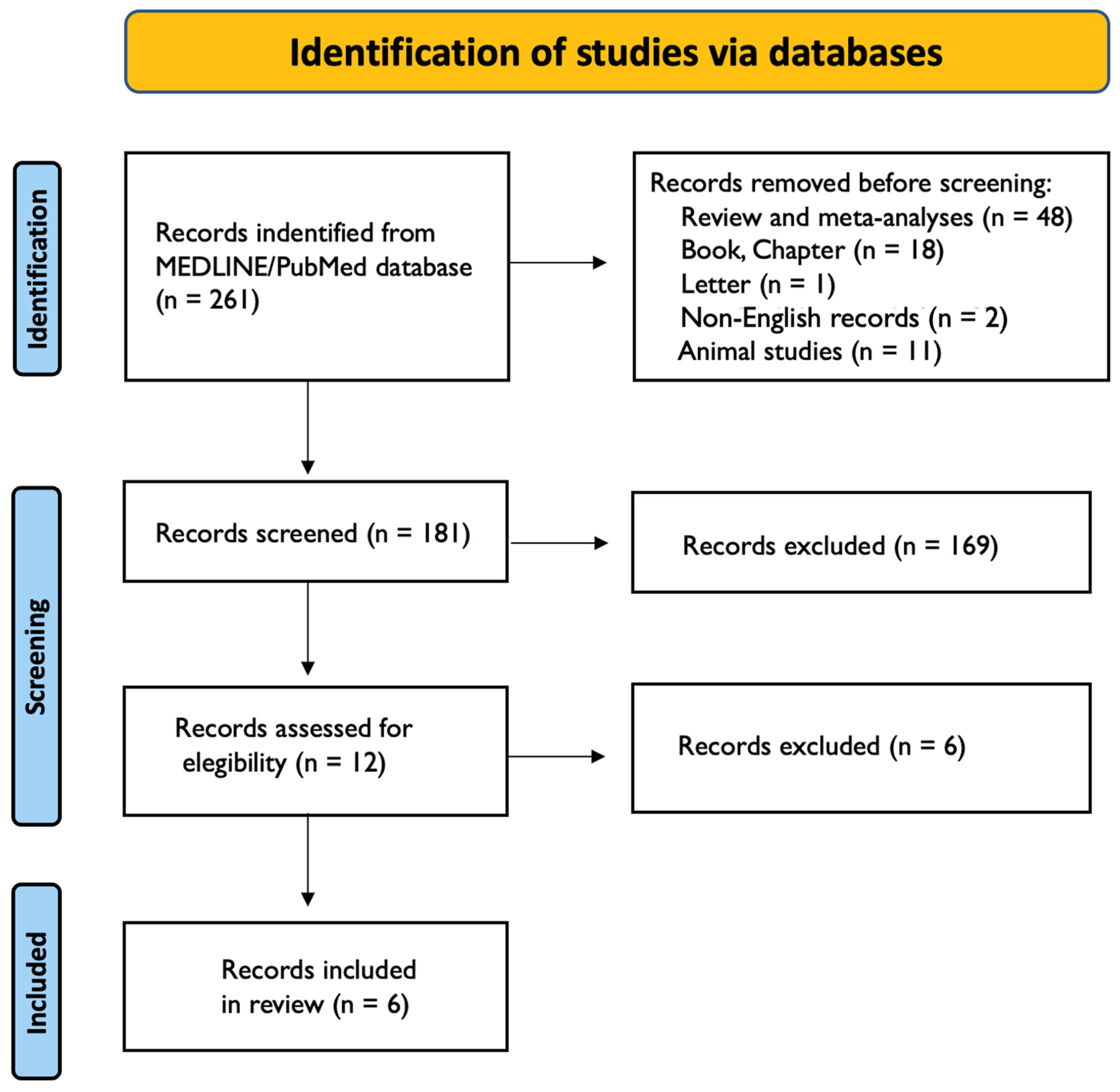
The systematic literature search identified 261 articles: among these, 249 were excluded for not meeting inclusion criteria, leaving 12 articles for further evaluation. After full-text review, 6 studies, including 5 case reports and 1 retrospective cohort study, were selected (Figure 1). The results of the case reports and observational studies are summarized in Table 1.

3.2. Literature Case Reports

Data from five patients were reported as case reports (Table 1). The age of the patients ranged from 28 to 57 years. Four patients (80%) were male, while only one patient was a female. Two patients (40%) presented with sudden cardiac arrest [16,17] while the other three (60%) experienced palpitations as clinical manifestation [18,19,20].
At clinical presentation, all patients exhibited both MAD and bileafleat MVP. Four of them showed mild left ventricle dilatation with normal left ventricle ejection fraction, whereas the fifth case showed a low–normal systolic function.
Regarding myocardial fibrosis, four out of five showed signs of it at the level of the inferior and/or inferior–posterior walls. In three cases, LGE was detected by CMR [16,18,19], and in one case fibrosis was observed at autopsy [17]. The remaining patient did not present LGE on CMR [20].
Concerning the arrhythmic profile during in-hospital ECG monitoring, three patients experienced PVCs, [16,18,19] one had episodes of non-sustained ventricular tachycardia, [18] and one showed a prolonged QT interval corrected for heart rate [20].
Genetic analysis and cascade familial screening revealed the presence of different variants. The first patient, who presented with cardiac arrest, carried two pathogenic CACNB2 variants, a gene with moderate association with Brugada and short-QT syndromes, considered sporadic due to the absence of a family history of sudden cardiac death or early-onset cardiovascular disease [16]. The second patient, who died suddenly, harbored nine VUS, including one in the MYBPC3 gene, usually implicated in the development of hypertrophic cardiomyopathy; no family history of heart disease was reported [17]. The third patient, who complained of palpitations, carried a pathogenic variant of FLNC, also identified in the maternal branch of his family, in which MAD, MVP and ventricular arrhythmias were reported [18]. The fourth patient, also presenting with palpitations, harbored a pathogenic LMNA variant; various relatives of his paternal family branch presented the same LMNA variant associated with dilated cardiomyopathy, MAD and MVP [19]. Finally, the fifth patient presented palpitations, and his genetic test showed a VUS in MYH7, a gene usually associated with hypertrophic and dilated cardiomyopathy; both his parents died suddenly, although their genetic data were not available [20].

3.3. Observational Study

The retrospective cohort study included a total of 150 patients with MAD, of whom 117 (78%) were males [21]. The mean age at clinical presentation was 44 ± 12 years.
A total of 116 patients (77.3%) experienced sudden death; among the whole population, 118 (78.7%) presented longitudinally less extensive MAD (<4 mm), whereas 32 (21.3%) showed longitudinally extensive MAD (≥4 mm).
In the subgroup of patients with longitudinally extensive MAD, one pathogenetic variant associated with Cohen syndrome and 11 VUS were identified. Among the VUS found, the literature data highlighted that gene DCHS1 may be associated with MVP, while COL3A1 and FBN2 may present MVP in the context of Ehlers Danlos and Beals syndrome, respectively [22]. The pedigree genetic analysis of the patient with the DCHS1 variant highlighted a recurrence of MAD in the maternal branch of the proband [21].

4. Case Presentation

A 50-year-old Caucasian man experienced a collapse at home while at rest, unrelated to physical activity or postprandial state. Cardiopulmonary resuscitation maneuvers were started and, once available, the automated external defibrillator revealed ventricular fibrillation. He was shocked 3 times with return to spontaneous circulation, and he was intubated before admission to the intensive care unit.
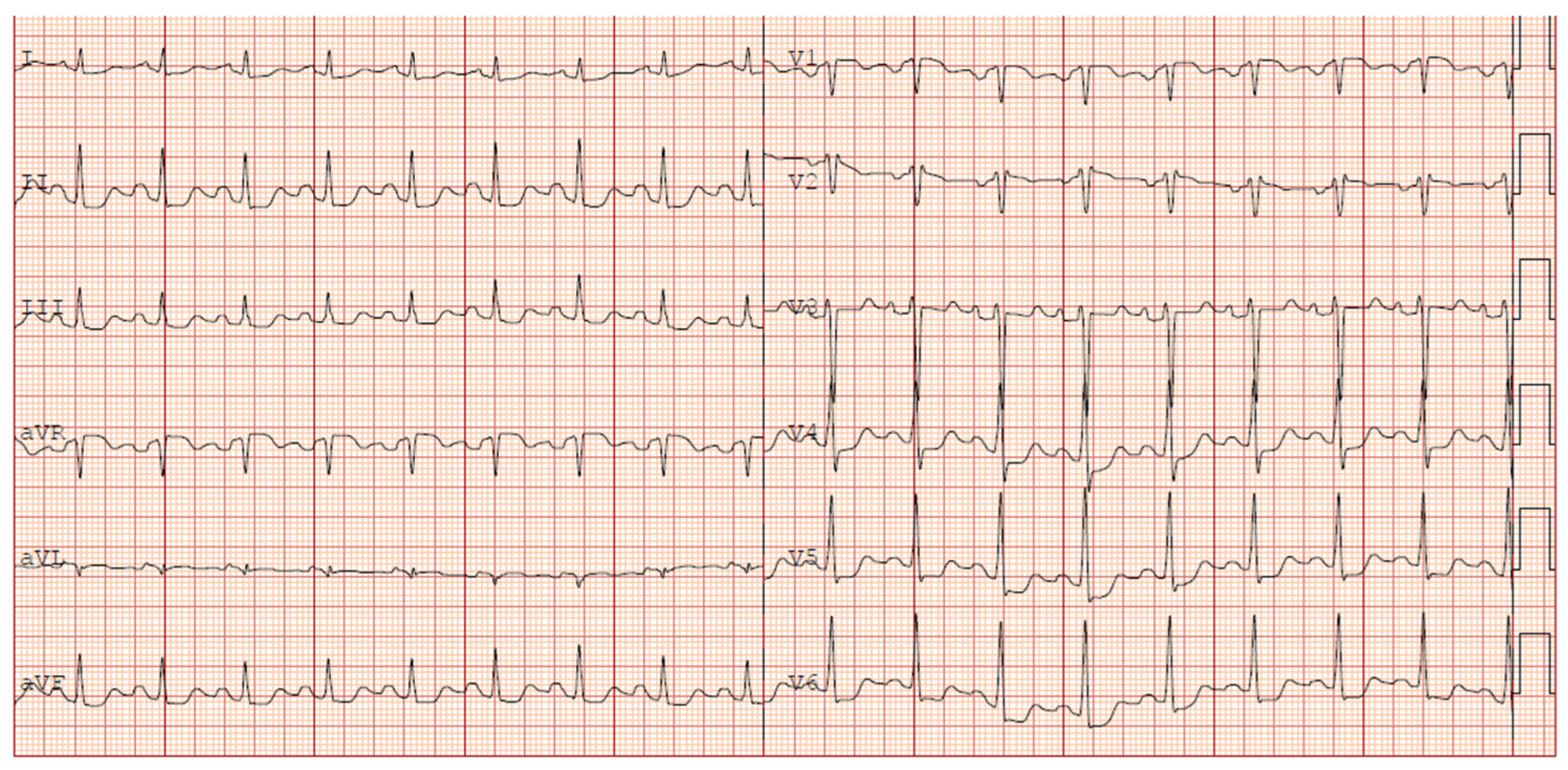
Continuous ECG monitoring showed atrial flutter with high ventricular rate and hemodynamic deterioration; thus, the patient was successfully cardioverted to sinus rhythm with a single 100 joules shock. Post-cardioversion twelve-lead ECG showed sinus tachycardia, mild aVR ST elevation, diffuse ST depression, and prolonged QTcB of 474 msec (Figure 2).
No previous medical treatments were reported, and blood exams, including ions, were within the normal range. He had no cardiovascular risk factors, known cardiac diseases, or other medical conditions, and no family history of sudden cardiac death or cardiomyopathies.
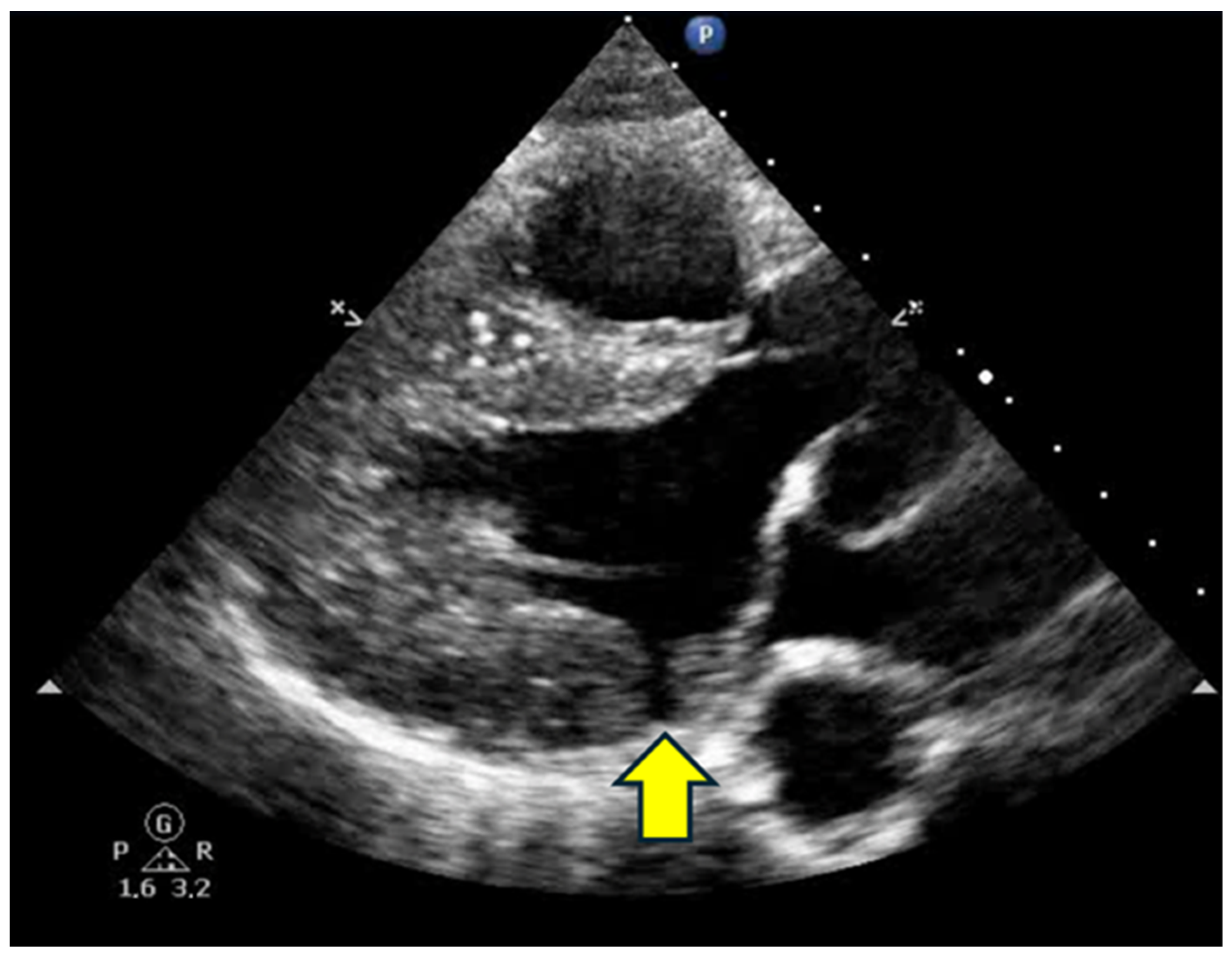
Echocardiography in the ICU revealed moderate left ventricle disfunction due to global hypokinesia, with normal ventricles dimensions; mild dilation of the aortic root with normal sinus–tubular junction, ascending aorta and aortic arch; and evidence of MAD (Figure 3) associated with mild bileafleat mitral valve prolapse and mild regurgitation.
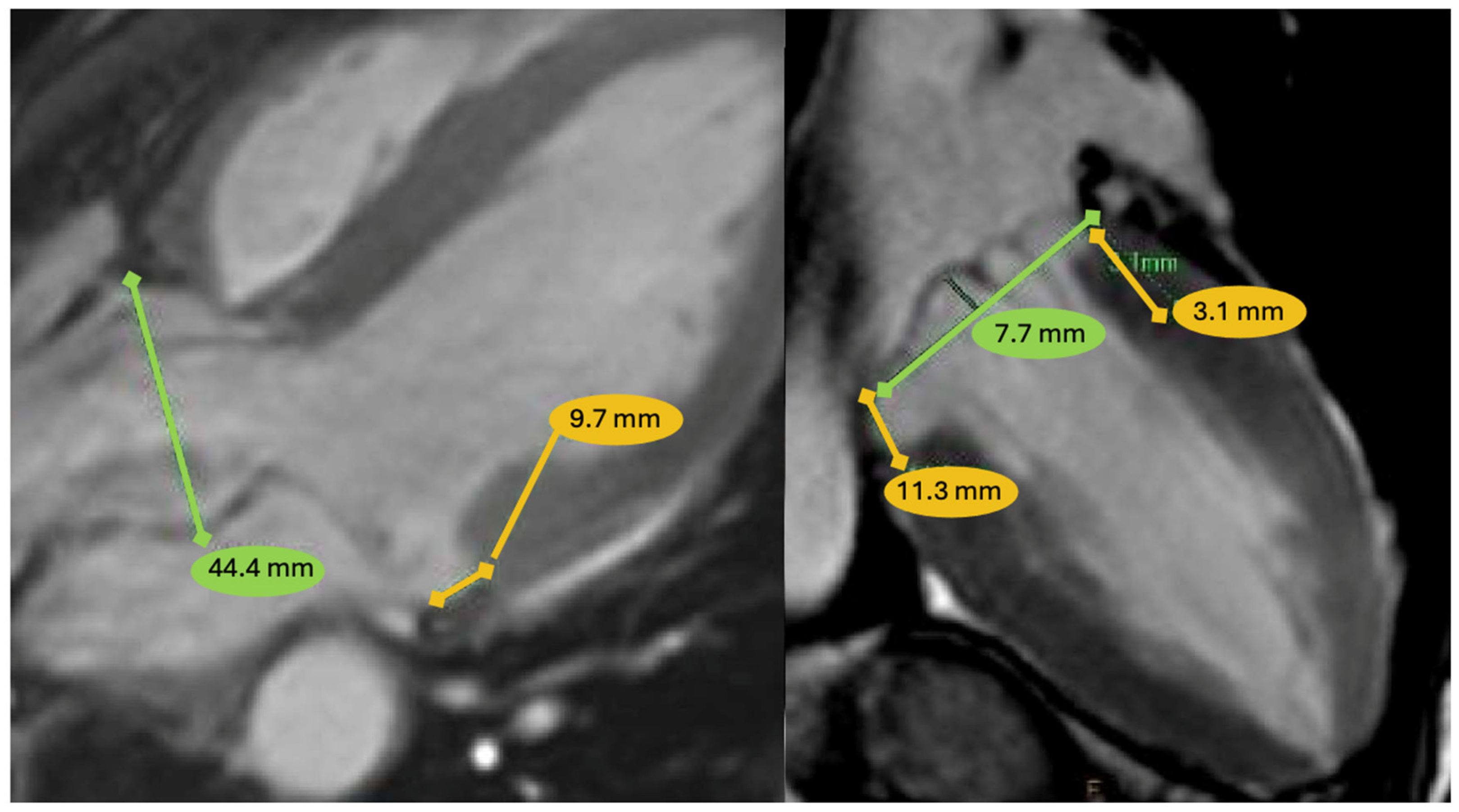
After extubation, the patient was transferred to the cardiac intensive care unit and, subsequently, to the cardiology ward. Coronary angiography showed normal epicardial circulation. The CMR confirmed inferolateral and inferior MAD with a maximum length of 11 mm, no LGE and normal native T1 mapping values (Figure 4).
During hospitalization, 24-h ECG monitoring revealed frequent isolated PVCs without repetitive ventricular arrhythmias; moreover, a mild hypertension was diagnosed. Thus, treatment with bisoprolol 5 mg and olmesartan 10 mg was started, achieving optimal PVC suppression and blood pressure control. No antiarrhythmic drugs were necessary.
A subcutaneous cardiac defibrillator (S-ICD) was implanted for secondary prevention. High-lead ECG was unremarkable, and all subsequent ECGs did not demonstrate type I Brugada pattern. ECG abnormalities and QTcB normalized a few days after hospital admission, likely reflecting an acquired effect of cardiac arrest rather than a primary channelopathy. Echocardiography before discharge showed recovery of cardiac function. An exercise ECG test was scheduled to assess the impact of physical activity on ventricular arrhythmias; however, the patient declined the test because of anxiety and fear following the cardiac arrest.
At the 4-month follow-up after hospital discharge, he was asymptomatic. ECG showed sinus rhythm, normal ST/T and QTcB interval. The S-ICD did not record any ventricular arrhythmias. Genetic tests identified three heterozygous missense variants (Figure S2): c.1255G>A p.(Gly419Ser) in ACTN2 (NM_001103.4), c.7588A>T p.(Ile2530Phe) in DSP (NM_004415.4) and c.3092C>T p.(Pro1031Leu) in FLNC (NM_001458.5) genes.
All variants were classified as VUS [14,15]. Clinical screening of first-degree relatives was recommended; however, to the best of our knowledge, they have not undergone cardiac imaging or evaluation for MAD or related structural abnormalities.

5. Discussion

MAD has been increasingly recognized as a structural substrate associated with an elevated risk of ventricular arrhythmias [3]. Initial studies primarily attributed this link to mechanical stretch on the papillary muscles and the posterior-inferior walls observed in patients with MAD. Supporting this hypothesis, several CMR studies documented localized fibrosis in these regions, often coinciding with PVCs and VTs originating from corresponding ectopic foci [8,9]. However, considering the absence of parietal fibrosis in some MAD patients with severe ventricular arrhythmias [3], some additional factors—including genetic predisposition—may play an additional role in the arrhythmogenic risk associated with MAD.
Emerging evidence also suggests that the length of the MAD may act as a risk modifier [21,23]. Zhou et al. identified in an autoptic cohort of 150 MAD patients a higher prevalence of the longitudinally extensive form, longer than 4 mm [21]. Similarly, Carmo et al. reported that a MAD length > 8.5 mm was a strong predictor of non-sustained VTs [23]. In our patient, the MAD measured 11 mm, aligning with these findings. Nevertheless, cases of sudden cardiac arrest have been reported even in patients with less extensive MAD, indicating that structural abnormalities alone cannot fully explain the arrhythmic risk [16,17]. Therefore, it is likely that structural abnormality may predispose to arrhythmias but cannot be the only determinant.
While genetic background has been hypothesized to contribute to arrhythmic susceptibility in MAD, current evidence remains limited, and causal relationships have not been established. Our systematic review identified genes commonly implicated in the pathogenesis of cardiomyopathies with an arrhythmogenic phenotype and inherited arrhythmia such as FLNC, LMNA, MYH7, DSP, CACNB2 [24,25,26]. Genes such as LMNA, FLNC, DSP, PLN, RBM20 and TMEM43 are recognized for their particularly high arrhythmogenic risk [24].
In our patient, three heterozygous missense VUS were identified in ACTN2, DSP, and FLNC. It is worth noting that P/LP variants in FLNC (OMIM * 102565), although mostly nonsense [27,28], and DSP (OMIM * 125647), have been extensively documented for their significant arrhythmogenic impact and their association with an increased risk of sudden cardiac death in patients with DCM [29]. Although less common, some variants in ACTN2 (OMIM * 102573) are known as the cause of HCM and DCM [24]. Pathogenicity assessment of the patient’s VUS, using the Combined Annotation Dependent Depletion (CADD) score indicated a moderate to low probability of pathogenicity, [30] with CADD (PHRED) scores of 24.8 (FLNC), 33 (ACTN2), and 21.1 (DSP). However, given the current limitations of these prediction tools, the precise contribution of these variants to the patient’s phenotype remains uncertain.
As the variants are classified as of uncertain significance and no segregation studies or functional analyses were performed, in the absence of broader population-level evidence, no causal relationship to the MAD phenotype can be inferred.
Although segregation analysis could not be performed as relatives were asymptomatic and unavailable for testing, the integration of detailed phenotyping and genetic analysis could provide insight into the potential additive role of rare variants in MAD-related arrhythmic risk.
As these variants are extremely rare in the general population (gnomAD frequency ≤ 0.0062%) [Figure S2], this may suggest a potential modulatory role rather than a causal effect. Therefore, any discussion of additive or synergistic effects should be considered hypothetical and interpreted cautiously. Additionally, it must be considered that genetic P/LP variants typically associated with cardiomyopathies may be detected incidentally, without necessarily indicating a hereditary or familial form of MAD.
In conclusion, current data are limited and largely derived from cohorts enriched for severe arrhythmic events, which introduces selection bias and restricts generalization to the wider MAD population; therefore, further studies are needed.
From a research perspective, a robust genomic investigation of MAD should rely on well-phenotyped, homogeneous cohorts, and well-defined standardized imaging criteria. In this setting, the integration of rare variants, common polymorphisms, and epigenetic or environmental modifiers may help explain interindividual variability in disease expression and arrhythmic risk
From a clinical perspective, assessing the risk of ventricular arrhythmias and sudden cardiac death in patients with MVP and/or MAD remains a significant challenge, especially because of the lack of prospective outcome data. According to a recent consensus paper, arrhythmic risk stratification of patients with MVP should be performed through collection of medical history, 12-lead ECG, prolonged ECG monitoring (e.g., ECG Holter and, if necessary, implantable loop recorders), and detailed imaging techniques, such as echocardiography and CMR [1]. The EHRA recommendations have been summarized and readapted in the Graphical abstract, integrating emerging imaging techniques, structural features, and genetic background, which emphasizes a comprehensive, stepwise approach. In this setting, the search for P/LP variants in genes known to be strongly associated with arrhythmic phenotypes and SCD could be helpful to better stratify the arrhythmic risk of patients, with two critical considerations to be considered:
(a) in the diagnostic setting, it is important to limit genetic analysis to genes strongly associated with the phenotype to reduce the number of VUS that could mislead clinical management;
(b) in the research setting, genetic analysis could be complementary to the current diagnostic tools and contribute to a better understanding of disease mechanisms.

Limitations

The present study has several limitations. First, the small number of included studies and patients limits the generalizability of the findings. Second, the available data are largely derived from case reports, introducing potential publication and selection bias. Third, our systematic search was limited to PubMed/MEDLINE, potentially excluding relevant studies indexed in other databases. Fourth, differences in genetic analysis panels across studies may have influenced the detection and interpretation of variants. While the identification of P/LP variants provides valuable insights into potential genetic contributors, their precise pathophysiological significance in the context of MAD remains to be clarified due to the lack of functional and longitudinal data. Finally, VUS are frequently reported but, in the absence of segregation data, cannot currently be clearly associated with disease.

6. Conclusions

Genetic factors are emerging as potential contributors to arrhythmic risk associated with MAD, although current evidence remains limited. This systematic literature review highlights the presence of certain genetic variants that aggregate in various family members presenting the MAD and arrhythmogenic phenotype, including variants in LMNA, FLNC, CACNB2 and DCHS1 genes. While the DCHS1 variant was classified as VUS, its recurrence within affected family members suggested a possible contributory role in the genetic susceptibility to MAD. The relationship between these variants—classically implicated in cardiomyopathies (FLNC, LMNA), channelopathies (CACNB2), and connective or structural abnormalities (DCHS1)—and MAD is yet to be clarified. In the absence of definitive evidence for an inherited arrhythmic syndrome or cardiomyopathy, or for P/LP variants consistent with the observed phenotype, the presence of MAD, MVP, and ventricular arrhythmias represents a potentially life-threatening phenotype that warrants further investigation.

Supplementary Materials

The following supporting information can be downloaded at: https://www.mdpi.com/article/10.3390/cardiogenetics16010003/s1; Figure S1: Panel of variants tested in our patient; Figure S2: Variants of unknown significance highlighted in our patient; Table S1: Search strategy for MEDLINE; Table S2: Quality appraisal of case reports; Table S3: The Newcastle–Ottawa Scale (NOS) for assessing the quality of non-randomized studies in meta-analyses; Table S4: Genetic analysis.

Author Contributions

A.S. and M.B. designed the work. L.B. performed the literature review. L.B. and A.M. performed the screening and data extraction. L.B. and A.S. wrote the paper. D.C., M.C., S.C., M.A., A.M., F.P., P.B. and E.A. critically revised the work. All authors have read and agreed to the published version of the manuscript.

Funding

This research received no external funding.

Institutional Review Board Statement

The study was conducted in accordance with the Declaration of Helsinki. No ethical committee approval was required for this study. The patient provided written informed consent for the publication of fully anonymized data. The systematic review was based on previously published studies.

Informed Consent Statement

A written informed consent for the publication of this case report was obtained from the patient, in line with the Committee on Publication Ethics (COPE) guidelines.

Data Availability Statement

No new data were created or analyzed in this study. Data from the case report are not publicly available due to patient privacy and ethical restrictions. Data from the systematic review are available from the corresponding author upon reasonable request.

Acknowledgments

ChatGPT-4 (OpenAI) was used solely to rephrase some sentences for language clarity. All content was critically reviewed and verified by the authors.

Conflicts of Interest

None of the authors received financial support for this work, and all authors declare no conflicts of interest pertaining to the content of this manuscript.

Abbreviations

The following abbreviations are used in this manuscript:
CMRCardiac magnetic resonance
LGELate gadolinium enhancement
LPLikely pathogenic
MADMitral annular disjunction
MVPMitral valve prolapse
PPathogenic (P) or likely pathogenic (LP)
PVCPremature ventricular contraction
S-ICDSubcutaneous implantable cardiac defibrillator
VTsVentricular tachycardias
VUSVariant of unknown significant

References

  1. Sabbag, A.; Essayagh, B.; Barrera, J.D.R.; Basso, C.; Berni, A.; Cosyns, B.; Deharo, J.-C.; Deneke, T.; Di Biase, L.; Enriquez-Sarano, M.; et al. EHRA expert consensus statement on arrhythmic mitral valve prolapse and mitral annular disjunction complex in collaboration with the ESC Council on valvular heart disease and the European Association of Cardiovascular Imaging endorsed cby the Heart Rhythm Society, by the Asia Pacific Heart Rhythm Society, and by the Latin American Heart Rhythm Society. Europace 2022, 24, 1981–2003. [Google Scholar]
  2. Faletra, F.F.; Leo, L.A.; Paiocchi, V.L.; Caretta, A.; Viani, G.M.; Schlossbauer, S.A.; Demertzis, S.; Ho, S.Y. Anatomy of mitral annulus insights from non-invasive imaging techniques. Eur. Heart J. Cardiovasc. Imaging 2019, 20, 843–857. [Google Scholar] [CrossRef]
  3. Kitkungvan, D.; Nabi, F.; Kim, R.J.; Bonow, R.O.; Khan, M.A.; Xu, J.; Little, S.H.; Quinones, M.A.; Lawrie, G.M.; Zoghbi, W.A.; et al. Myocardial fibrosis in patients with primary mitral regurgitation with and without prolapse. J. Am. Coll. Cardiol. 2018, 72, 823–834. [Google Scholar]
  4. Bui, A.H.; Roujol, S.; Foppa, M.; Kissinger, K.V.; Goddu, B.; Hauser, T.H.; Zimetbaum, P.J.; Ngo, L.H.; Manning, W.J.; Nezafat, R.; et al. Diffuse myocardial fibrosis in patients with mitral valve prolapse and ventricular arrhythmia. Heart 2017, 103, 204–209. [Google Scholar] [CrossRef]
  5. Basso, C.; Perazzolo Marra, M.; Rizzo, S.; De Lazzari, M.; Giorgi, B.; Cipriani, A.; Frigo, A.C.; Rigato, I.; Migliore, F.; Pilichou, K.; et al. Arrhythmic mitral valve prolapse and sudden cardiac death. Circulation 2015, 132, 556–566. [Google Scholar] [CrossRef]
  6. Alzammam, A.; Alanazi, F.; Alenazy, S.; Alsalman, A.; Albadi, A.; Almegbelet, M.; Aljizeeri, A.; Altaweel, M.; Almusaad, A. Case Report: From multimodality imaging to catheter ablation of ventricular arrhythmias in arrhythmogenic mitral valve prolapse. Front. Physiol. 2025, 16, 1654085. [Google Scholar] [CrossRef] [PubMed]
  7. Chakrabarti, A.K.; Deshmukh, A.; Liang, J.J.; Madamanchi, C.; Ghannam, M.; Morady, F.; Bogun, F. Mitral Annular Substrate and Ventricular Arrhythmias in Arrhythmogenic Mitral Valve Prolapse with Mitral Annular Disjunction. JACC Clin. Electrophysiol. 2023, 9, 1265–1275. [Google Scholar] [CrossRef]
  8. Dejgaard, L.A.; Skjølsvik, E.T.; Lie, Ø.H.; Ribe, M.; Stokke, M.K.; Hegbom, F.; Scheirlynck, E.S.; Gjertsen, E.; Andresen, K.; Helle-Valle, T.M.; et al. The Mitral Annulus Disjunction Arrhythmic Syndrome. J. Am. Coll. Cardiol. 2018, 72, 1600–1609. [Google Scholar] [CrossRef] [PubMed]
  9. Essayagh, B.; Sabbag, A.; Antoine, C.; Benfari, G.; Yang, L.; Maalouf, J.; Asirvatham, S.; Michelena, H.; Enriquez-Sarano, M. Presentation and Outcome of Arrhythmic Mitral Valve Prolapse. J. Am. Coll. Cardiol. 2020, 76, 637–649. [Google Scholar] [CrossRef] [PubMed]
  10. Le Tourneau, T.; Mérot, J.; Rimbert, A.; Le Scouarnec, S.; Probst, V.; Le Marec, H.; Levine, R.A.; Schott, J.-J. Genetics of syndromic and non-syndromic mitral valve prolapse. Heart 2018, 104, 978–984. [Google Scholar] [CrossRef]
  11. Page, M.J.; McKenzie, J.E.; Bossuyt, P.M.; Boutron, I.; Hoffmann, T.C.; Mulrow, C.D.; Shamseer, L.; Tetzlaff, J.M.; Akl, E.A.; Brennan, S.E.; et al. The PRISMA 2020 statement: An updated guideline for reporting systematic reviews. BMJ 2021, 372, n71. [Google Scholar] [CrossRef]
  12. Munn, Z.; Barker, T.H.; Moola, S.; Tufanaru, C.; Stern, C.; McArthyr, A.; Matthew, S.; Edoardo, A. Methodological quality of case series studies: An introduction to the JBI critical appraisal tool. JBI Evid. Synth. 2020, 18, 2127–2133. [Google Scholar] [CrossRef] [PubMed]
  13. Wells, G.A.; Shea, B.; O’Connell, D.; Peterson, J.; Welch, V.; Losos, M.; Tugwell, P. The Newcastle-Ottawa Scale (NOS) for Assessing the Quality of Nonrandomised Studies in Meta-Analyses. 2020. Available online: https://www.ohri.ca/programs/clinical_epidemiology/oxford.asp (accessed on 1 May 2025).
  14. Richards, S.; Aziz, N.; Bale, S.; Bick, D.; Das, S.; Gastier-Foster, J.; Grody, W.W.; Hegde, M.; Lyon, E.; Spector, E.; et al. Standards and guidelines for the interpretation of sequence variants: A joint consensus recommendation of the American College of Medical Genetics and Genomics and the Association for Molecular Pathology. Genet. Med. 2015, 17, 405–424. [Google Scholar] [CrossRef]
  15. Durkie, M.; Cassidy, E.J.; Berry, I.; Owens, M.; Turnbull, C.; Scott, R.H.; Taylor, R.W.; Deans, Z.C.; Ellard, S.; Baple, E.L.; et al. ACGS Best Practice Guidelines for Variant Classification in Rare Disease 2024. Available online: https://www.acgs.uk.com/quality/best-practice-guidelines/ (accessed on 1 May 2025).
  16. Parthiban, N.; Sani, H. Sudden cardiac arrest in a patient with malignant mitral valve prolapse with CACNB2 gene mutation: A simple coincidence or coexistence?—A case report. Eur. Heart J.-Case Rep. 2023, 7, ytad196. [Google Scholar] [CrossRef] [PubMed]
  17. Hata, T.; Tomita, N.; Shibata, A.; Yokoyama, S.; Fukahara, K.; Nishida, N. An autopsy case of sudden unexpected death with Barlow’s disease. Cardiovasc. Pathol. 2022, 61, 107462. [Google Scholar] [CrossRef]
  18. Bains, S.; Tester, D.J.; Asiryatham, S.J.; Noseworthy, P.A.; Ackerman, M.J.; Giudicessi, J.R. A Novel Truncating Variant in FLNC-Encoded Filamin C May Serve as a Proarrhythmic Genetic Sub strate for Arrhythmogenic Bileaflet Mitral Valve Prolapse Syndrome. Mayo Clin. Proc. 2019, 94, 906–913. [Google Scholar] [CrossRef] [PubMed]
  19. Appignani, M.; Khanji, M.T.; Arbustini, E.; Stuppia, L.; Ceriello, L.; Di Girolamo, E.; Mantini, C.; Gallina, S.; Chahal, C.A.A.; Ricci, F.; et al. Is Occult Genetic Substrate the Missing Link Between Arrhythmic Mitral Annular Disjunction Syndrome and Sudden Cardiac Death? Can. J. Cardiol. 2021, 37, 1651–1653. [Google Scholar] [CrossRef]
  20. Jeesoo, L.; El Hangouche, N.; Gupta, A.N.; Markl, M.; Kim, S.; Wilcox, J.; Thomas, J.D. Complicated Double-Orifice Mitral Regurgitation: Combined Hemodynamic Assessment Using Echocardiography and Four-Dimensional Flow Magnetic Resonance Imaging. CASE 2020, 4, 494–499. [Google Scholar]
  21. Zhou, N.; Zhao, Q.; Li, R.; Cheng, R.; Wu, Q.; Cheng, J.; Chen, Y. Mutation in mitral valve prolapse susceptible gene DCHS1 causes familial mitral annular disjunction. J. Med. Genet. 2024, 61, 125–131. [Google Scholar] [CrossRef]
  22. Durst, R.; Sauls, K.; Peal, D.S.; deVlaming, A.; Toomer, K.; Leyne, M.; Salani, M.; Talkowski, M.E.; Brand, H.; Perrocheau, M.; et al. Mutations in DCHS1 cause mitral valve prolapse. Nature 2015, 525, 109–113. [Google Scholar] [CrossRef]
  23. Carmo, P.; Andrade, M.J.; Aguiar, C.; Rodrigues, R.; Gouveia, R.; Silva, J.A. Mitral annular disjunction in myxomatous mitral valve disease: A relevant abnormality recognizable by transthoracic echocardiography. Cardiovasc. Ultrasound 2010, 8, 53. [Google Scholar] [CrossRef]
  24. Arbelo, E.; Protonotarios, A.; Gimeno, J.R.; Arbustini, E.; Barriales-Villa, R.; Basso, C.; Bezzina, C.R.; Biagini, E.; Blom, N.A.; de Boer, R.A.; et al. 2023 ESC Guidelines for the management of cardiomyopathies. Developed by the task force on the management of cardiomyopathies of the European Society of Cardiology (ESC). Eur. Heart J. 2023, 44, 3503–3626. [Google Scholar] [CrossRef]
  25. Watanabe, H.; Minamino, T. Genetics of Brugada syndrome. J. Hum. Genet. 2016, 61, 57–60. [Google Scholar] [CrossRef]
  26. Zhong, R.; Schimanski, T.; Zhang, F.; Lan, H.; Hohn, A.; Xu, Q.; Huang, M.; Liao, Z.; Qiao, L.; Yang, Z.; et al. A Preclinical Study on Brugada Syndrome with a CACNB2 Variant Using Human Cardiomyocytes from Induced Pluripotent Stem Cells. Int. J. Mol. Sci. 2022, 23, 8313. [Google Scholar] [CrossRef] [PubMed]
  27. Ortiz-Genga, M.F.; Cuenca, S.; Dal Ferro, M.; Zorlo, E.; Salgado-Aranda, R.; Climent, V.; Padrón-Barthe, L.; Duro-Aguado, I.; Jiménez-Jáimez, J.; Hidalgo-Olivares, V.M.; et al. Truncating FLNC Mutations Are Associated With High-Risk Dilated and Arrhythmogenic Cardiomyopathies. J. Am. Coll. Cardiol. 2016, 68, 2440–2451. [Google Scholar] [CrossRef] [PubMed]
  28. Verdonschot, J.A.J.; Vanhoutte, E.K.; Claes, G.R.F.; Helderman-van den Enden, A.T.J.M.; Hoeijimakers, J.G.J.; Hellebrekers, D.M.E.I.; de Haan, A.; Christiaans, I.; Deprez, R.H.L.; Boen, H.M.; et al. A mutation update for the FLNC gene in myopathies and cardiomyopathies. Hum. Mutat. 2020, 41, 1091–1111. [Google Scholar] [CrossRef]
  29. Escobar-Lopez, L.; Ochoa, J.P.; Mirelis, J.G.; Espinosa, M.A.; Navarro, M.; Gallego-Delgado, M.; Barriales-Villa, R.; Robles-Mezcua, A.; Basurte-Elorz, M.T.; García-Moreno, L.G.; et al. Association of genetic variants with outcomes in patients with nonischemic dilated cardiomyopathy. J. Am. Coll. Cardiol. 2021, 78, 1682–1699. [Google Scholar]
  30. Rentzsch, P.; Witten, D.; Cooper, G.M.; Shendure, J.; Kircher, M. CADD: Predicting the deleteriousness of variants throughout the human genome. Nucleic Acids Res. 2019, 47, D886–D894. [Google Scholar] [CrossRef] [PubMed]
Figure 1. Preferred reporting items for systematic reviews flow diagram.
Cardiogenetics 16 00003 g001
Figure 2. Twelve-lead ECG at hospital admission. ECG speed of 25 mm/s.
Cardiogenetics 16 00003 g002
Figure 3. Trans-thoracic echocardiogram (parasternal long-axis view) demonstrating mitral annular disjunction (MAD), indicated by the arrow.
Cardiogenetics 16 00003 g003
Figure 4. Cardiac magnetic resonance confirming and measuring the mitral annular disjunction (MAD). Cardiac magnetic resonance at 1.5 T with multi-phase SSFP sequences of four-chamber and two-chamber view. Measurements were performed in tele-systole based on ECG triggering at a speed of 25 mm/s.
Cardiogenetics 16 00003 g004
Table 1. Records included in this review.
Sr. NºArticle TypeReferencesNumber of
Patients
Age
Gender
Clinical PresentationECG
Features
ECHO
Features
Cardiac CMRCardiac
Biopsy or
Autopsy
Genetic
Analysis
Relatives
1Case reportParthiban et al. [16]148 years old
Male
Sudden
cardiac
arrest
After ROSC sinus rhythm, PVCNormal LV size and EF of 58%, bileaflet MVP, MAD of 1.2 cm, moderate MRNormal LVEF, bileaflet MVP, MAD of 1.4 cm, inferior and inferolateral LGENot performed- CACNB2*
Pathogenetic
- CACNB2**
Pathogenetic
No family history of SCD or young onset of CVD.
2Case reportHata et al. [17]145 years old
Male
Sudden
cardiac death
Sinus rhythm, LV hypertrophy
(2 years before death)
Mild LV dilatation,
normal LVEF 58%, significant MR, (1 and ½ year before death)
Not performedLV dilatation, MVP, MAD, fibrosis of posterolateral wall, ventricular septum and posterior papillary muscle- GTF2IRD1 Vus
- SACS Vus
- ZNF469 Vus
- APOB Vus
- PDE5A Vus
- MARCHF8 Vus
- MYBPC3 Vus
- HDAC5 Vus
- BRD4 Vus
No family history of SCD or young onset of CVD
3Case reportBains et al. [18]151 years old
Male
PalpitationsMultifocal PVCs and NSVT (suspected posteromedial and anterolateral papillary muscle origin)Mild LV dilatation,
normal LVEF 55%,
bileaflet MVP,
MAD of 1.4 cm,
mild MR
LGE within the inferior and inferolateral base of the LVNot performed- FLNC
Pathogenetic
Brother: MAD, MVP, NSVT;
Mother: MAD, MVP;
Maternal uncle: FLNC, MVP; other features undefined
4Case reportAppignani et al. [19]128 years old
Male
Palpitations and previous exercise
syncope
Sinus rhythm, first degree AVB, PVCs (suspected posteromedial papillary muscle origin)Mild LV dilatation, low-normal LVEF 50%, bileaflet MVP, MAD of 1.4 cm, moderate MRLV dilatation, bileaflet MVP, MAD, LGE of the posteromedial papillary muscle and mid-wall non-ischemic septal and inferior wallNot performed- LMNA
Pathogenetic
Father LMNA variant, MAD, Bi-MVP and DCM;
Paternal uncle: MAD, Bi-MVP and DCM;
Paternal grandmother: MAD, Bi-MVP and DCM
5Case reportJeesoo et al. [20]157 years old
Woman
Palpitation and syncopeSinus rhythm, prolonged QT (QTc 497 msec)Mild LV dilatation, normal EF (56%), bileaflet MVP, MAD, uncertain entity of MRMild LV dilatation, mild reduced EF (47%), bileaflet MVP, MAD, mild to moderate MR, no LGENot performed- MYH7 Vus-Father: sudden cardiac death
-Mother: sudden cardiac death
6Retrospective cohort studyZhou et al. [21]15044 ± 12 years old
Male 117 (78%)
Death
Sudden death 116 (77.3%)
NANANALE MAD (>4 mm)
n = 32 (21.3%)
LLE MAD (≤4 mm)
n = 118 (78.7%)
LEMAD
- DCHS1 Vus
- ANK1 Vus
- PLD1 Vus
- RYR1 Vus
- DCHS1 Vus
- VPS13B P
- GNPTAB Vus
- FBN2 Vus
- COL3A1 Vus
- LZTR1 Vus
- RYR1 Vus
- VPS13B Vus
LLEMAD: NA
DCHS1 family proband
Mother: LEMAD
Brother: LEMAD
Frequent PVC
First granddaughter:
LEMAD
Second granddaughter:
LEMAD
CACNB2* Chr10:18150879 variant; CACNB2** Chr10:18539538 variant.
Disclaimer/Publisher’s Note: The statements, opinions and data contained in all publications are solely those of the individual author(s) and contributor(s) and not of MDPI and/or the editor(s). MDPI and/or the editor(s) disclaim responsibility for any injury to people or property resulting from any ideas, methods, instructions or products referred to in the content.