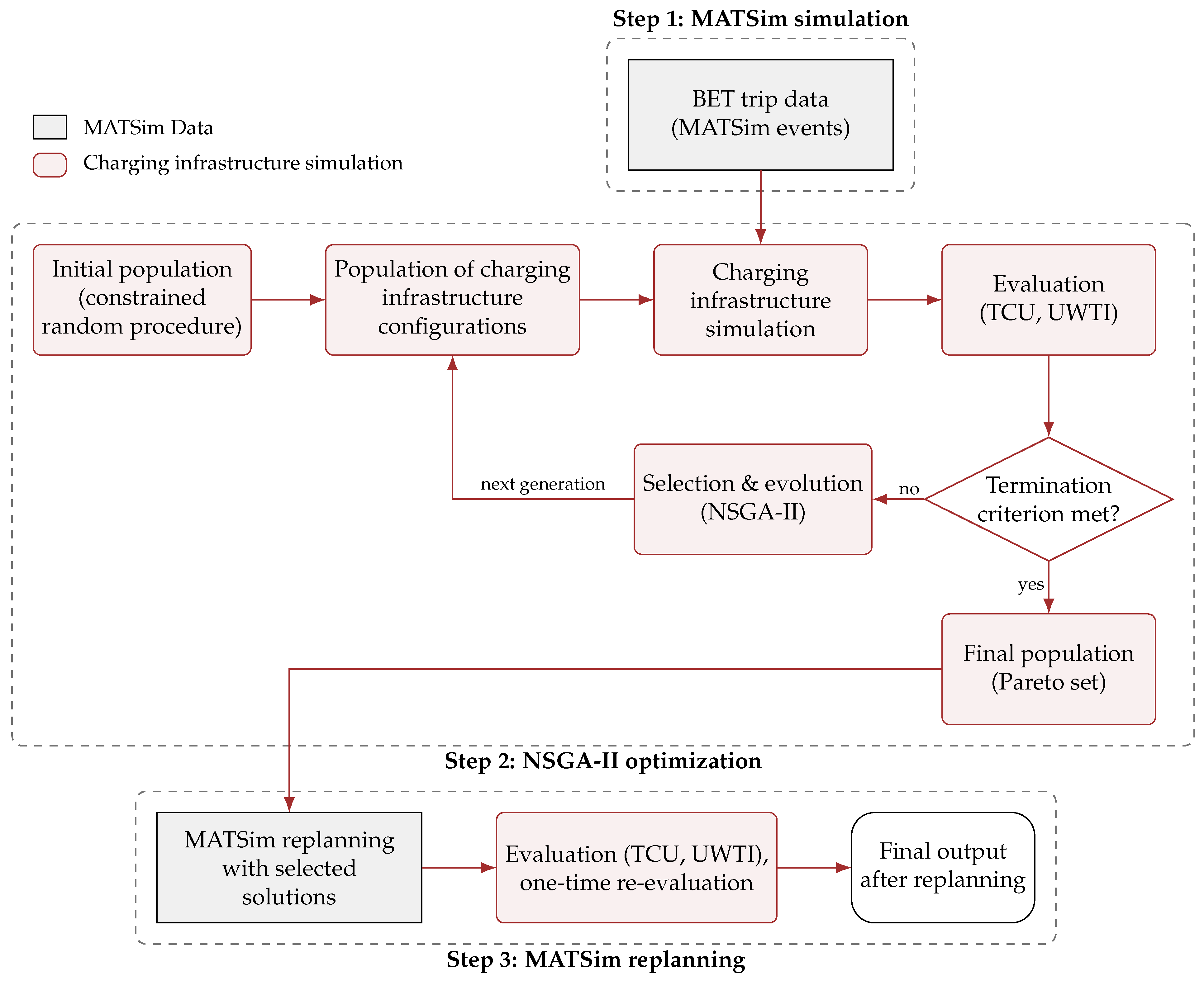
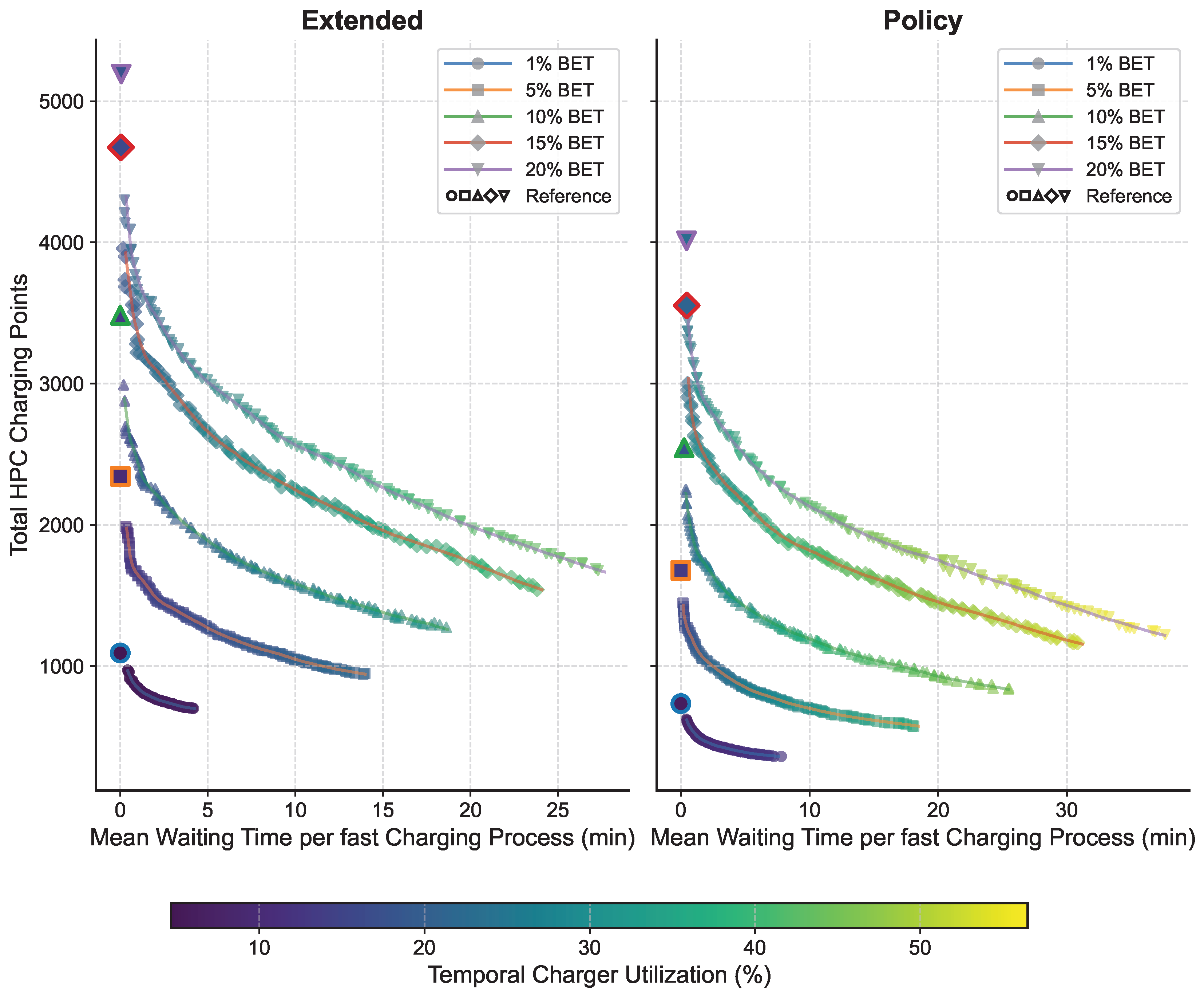
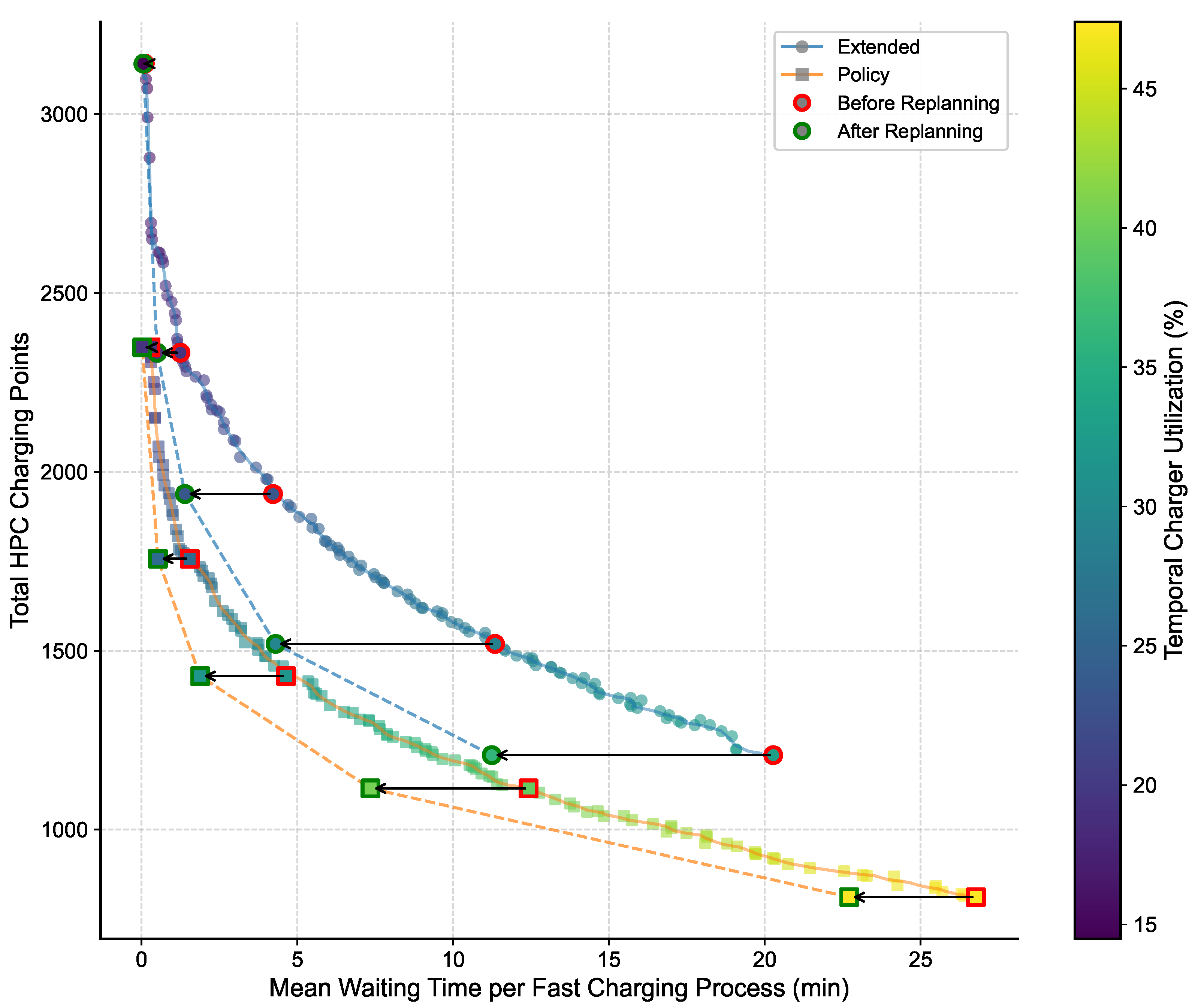
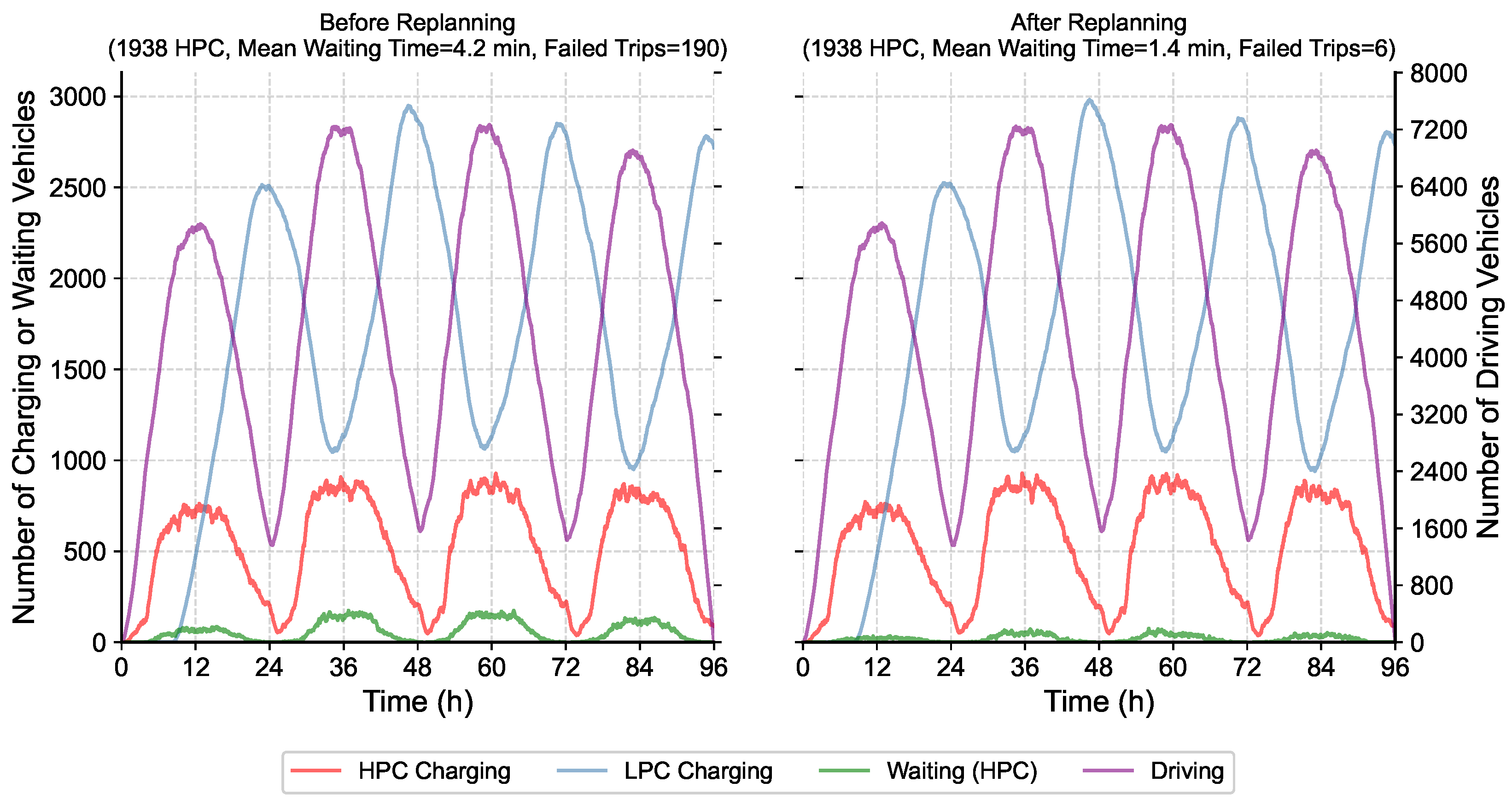
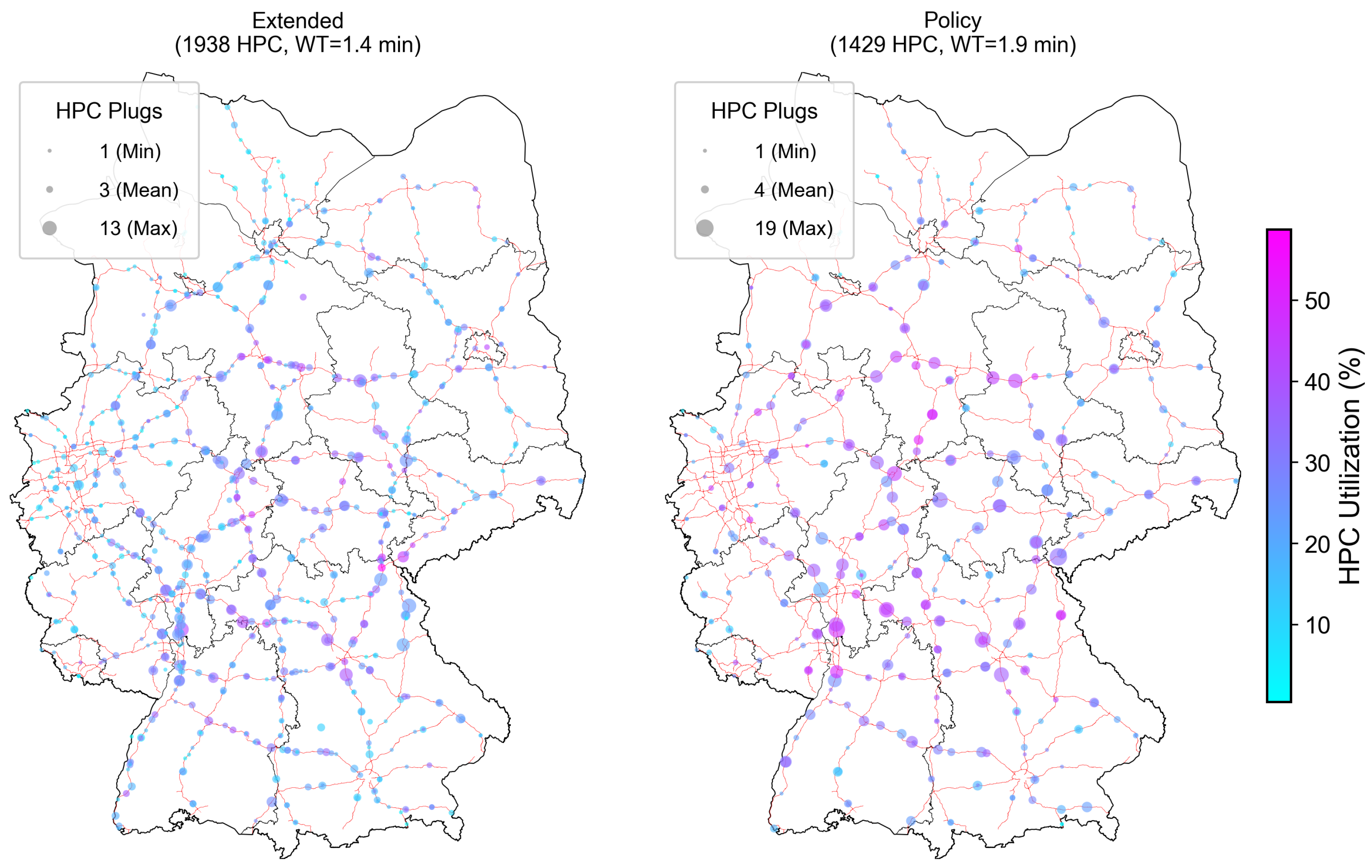
Our study aimed to quantify the number of charging points required for varying levels of long-haul truck electrification on the German motorway network with respect to the trade-off between stakeholder requirements from CPOs and logistics operators, respectively. Using a mesoscopic long-haul freight traffic scenario (MATSim) combined with an evolutionary optimization approach, a Pareto-optimal set of charging infrastructure distributions was identified for five electrification levels and two charging networks with different charging location density. For each electrification level and charging network, five solutions were selected representing different trade-offs between stakeholder perspectives, with user waiting times reflecting logistics priorities and TCU representing CPO interests. For the 10% electrification scenario the effects of route adaptation according to charging infrastructure availability were investigated for the selected solutions of both charging networks.
4.1. Charging Infrastructure Demand for Long-Haul Freight Transport in Germany
Some previous research articles have investigated the required number of charging points for BETs in Germany, providing a basis for comparison with our study’s findings.
Ref. [
12] employs a trip chain approach to model long-haul truck traffic across Europe at a 15% electrification level. For each origin–destination pair, the authors construct a sequence of mandatory breaks and rest periods according to EU driving regulations and allocate charging demand to
km
2 charging areas along the routes without applying an optimization approach. For Germany, they estimate a need for 1360 MCS (comparable to HPC) and 10,300 CCS (comparable to LPC) charging points. While both studies confirm that LPC demand exceeds HPC demand, our results yield a substantially lower LPC requirement and a higher HPC requirement at the 15% electrification level. Specifically, the policy scenario results in a range of 1116 to 3316 HPC points and 5423 LPC points, whereas the extended scenario yields 1482 to 4270 HPC and 6071 LPC points. When selecting solutions with an average waiting time of five minutes, as assumed in [
12], our study yields HPC point counts ranging from 2200 (policy) to 2700 (extended) without replanning (
Figure 3). Based on the replanning effect observed for the 10% electrification level (
Figure 4), it can be estimated that the number of HPC points required to maintain a mean waiting time of five minutes at the 15% level is reduced to approximately 1800 (policy) to 2300 (extended). This still represents a notable difference compared to the 1360 HPC points estimated by [
12].
Multiple methodological differences contribute to this discrepancy. First, the two studies rely on different datasets, resulting in different OD demand matrices for freight transport. Ref. [
12] uses the ETISplus dataset covering all of Europe, while our study is based on the MATSim scenario described in [
7], which uses a dataset provided by the German Federal Ministry of Transport (BMV). As shown in [
7], the BMV dataset is more accurate for the trips considered in our transport model and yields a slightly higher weekly mileage for trips at least starting or ending in Germany compared to ETISplus, resulting in a higher energy demand. Additionally, we include all trips exceeding 300 km, while ref. [
12] considers only trips exceeding 360 km or 4.5 h of driving time, thereby excluding trips in the 300–360 km range that are captured in our study. Furthermore, our model simulates a four-day period from Monday to Thursday, whereas ref. [
12] estimates charging infrastructure demand for a single representative day. Temporal variation in charging demand and local peaks across the four-day period increase the total infrastructure requirements.
Second, ref. [
12] applies a different parametrization. In their model, HPC processes occupy a charging point for 30 min, whereas we assume an occupation time equal to the full break duration of 45 min, since the driver is not permitted to move the vehicle during the mandatory break. The shorter occupation time increases throughput per charging point and consequently reduces the number of HPC points required for a given demand level. Moreover, ref. [
12] implicitly assumes that all vehicles start with 100% SoC which seems unrealistic. In our model only 50% of trips start fully charged due to access to destination or depot charging. The remaining 50% start with a SoC distribution derived from prior trip data (see
Section 2.1.4), which increases charging demand earlier in the trip. Additionally, ref. [
12] sizes the battery capacity of each truck according to the energy consumption between break points, preventing intermediate charging stops due to low SoC. In contrast, our model uses a fixed battery capacity, which can lead to additional intermediate HPC stops and thus a higher HPC demand. This battery sizing approach in [
12] also mitigates the effect of the higher assumed motorway energy consumption of 1.8 kWh/km compared to 1.2 kWh/km in our study, since the vehicles are assigned sufficient battery capacity and the charging power is scaled to demand. Consequently, higher energy consumption does not translate into higher HPC demand but into higher required charging power ratings and battery capacities. Moreover, the aggregation of charging demand into
km
2 areas may further underestimate the required number of HPC points, as demand peaks at individual locations within an aggregated area do not necessarily coincide temporally. The combination of these methodological differences leads to a structural underestimation of HPC demand for long-haul traffic in Germany in [
12], explaining the observed discrepancy.
The discrepancy in LPC demand can be attributed to additional methodological differences. Ref. [
12] includes transit traffic with trips spanning long distances and extended trip durations, which increases the number of overnight rest periods along German motorways. In contrast, our model captures domestic and bilateral freight traffic more accurately based on the BMV dataset. Furthermore, agents starting with 100% SoC in our model only charge en route when they cannot reach their destination without falling below the minimum SoC threshold of 20%, which reduces en route LPC demand compared to a model where all vehicles require overnight charging on every trip.
Ref. [
10] applies a coverage-oriented approach combined with queueing theory to determine a HPC network for long-haul BETs in Germany. Traffic counting stations along German motorways serve as potential charging locations, and the corresponding traffic counts are used to estimate the number of charging events per location. The authors evaluate two network densities: a close-meshed network with a location every 50 km (264 locations) and a wide-meshed network with a location every 100 km (142 locations). Using queueing theory, they estimate a total of 1198 HPC points for the close-meshed and 1003 HPC points for the wide-meshed network to serve peak traffic at all locations with a mean waiting time of five minutes, without applying an optimization approach to the spatial distribution of charging points. Consistent with our findings, the network with fewer locations requires fewer total HPC points to serve the same demand. However, the estimated totals are also considerably lower than in our study. Several methodological differences contribute to this discrepancy. First, as discussed above, the charging networks investigated by [
10] contain significantly fewer locations compared to our scenarios, which structurally reduces the total HPC plug demand. The most influential factor, however, is the assumed occupation time. Similar to [
12], ref. [
10] assumes an average charging duration of 30 min, which significantly reduces the required number of HPC points. Ref. [
10] conducts a sensitivity analysis showing that increasing the average charging duration to 60 min raises the HPC plug requirement to 2121 (close-meshed) and 1857 (wide-meshed). Our study assumes an average occupation time of 45 min to account for mandatory driving breaks, and the resulting HPC plug counts fall between these two estimates, supporting the conclusion that the assumed occupation time is a primary driver of the discrepancy between the studies.
Ref. [
13] applies a capacity-constrained flow refueling location model (CFRLM) to derive a minimal HPC network for BETs in Germany, using real parking space data at potential locations as capacity constraints. The model considers only HPC during mandatory breaks and does not account for LPC during overnight rest periods. The authors identify 124 optimal HPC locations for a fully electrified long-haul freight fleet (trips exceeding 300 km) and evaluate the infrastructure requirements for a 15% electrification level at these locations, estimating a need for 2032 HPC points. As in the previously discussed studies, they assume a charging duration of 30 min and a mean waiting time of five minutes. Our 15% policy scenario with 347 locations yields approximately 2200 HPC points for a comparable mean waiting time of five minutes without the estimated reduction due to the replanning approach, resulting in similar overall estimates. Given that the shorter charging duration of 30 min was identified as a key factor reducing HPC plug requirements in the comparisons above, the similar totals require explanation. The primary reason is that ref. [
13] serves all charging demand exclusively through HPC infrastructure, whereas our study distributes approximately 19% of the total recharged energy to LPC infrastructure during overnight rest periods. This additional HPC demand in [
13] compensates for the lower plug requirements resulting from the shorter assumed charging duration. The total recharged energy reported by [
13] amounts to 3.8 TWh per year, which corresponds to approximately 42 GWh over four average days. Since truck traffic is concentrated on working days, the actual energy demand from Monday to Thursday is expected to exceed this average. In our study, the total recharged energy at the 15% electrification level amounts to approximately 48 GWh over the simulated period from Monday to Thursday, which is consistent with the higher traffic volumes on these days [
7]. The comparable energy totals confirm that the discrepancy in HPC plug counts between the studies can be attributed primarily to the treatment of LPC infrastructure.
4.2. Stakeholder Implications
From the CPO perspective, a charging network with fewer locations, such as the policy scenario in our study, is favorable compared to a network with more locations, as indicated by the higher average temporal charger utilization (TCU). Particularly at early electrification stages, the policy scenario can lead to earlier profitability for CPOs by reducing the time to amortization of initial infrastructure investments through higher charger utilization. Our results also show that beyond a certain point, further increasing TCU leads to fewer charging processes and consequently less energy sold by the CPO. This indicates that it is in the CPO’s interest to maintain a certain level of service quality, as excessively long waiting times cause drivers to avoid affected locations.
While our study uses TCU as the optimization criterion, other studies focus on the energetic charger utilization (ECU) of charging infrastructure, which is the more relevant metric for assessing CPO profitability as it directly reflects the revenue-generating energy throughput [
13,
16,
29]. In our method, TCU and ECU behave in a similar way since HPC points are never blocked without charging or used for LPC processes with low charging power resulting in a meaningful metric to reflect the CPO perspective. For the purpose of comparing our results with other studies, however, we additionally compute the ECU of HPC infrastructure.
Table 9 shows the ECU for the selected balanced solutions across all five electrification levels of our study.
The ECU is computed assuming a maximum charging power of 1 MW per HPC plug. Since our simulation covers the period from Monday to Thursday, we estimate the annual ECU under two different assumptions: that the average weekday demand is representative of six days per week, and of five days per week, respectively. The six-day assumption is likely to overestimate the actual utilization since the freight traffic volume on an average Saturday is also significantly lower compared to the weekdays [
7]. Consistent with the findings for TCU, the policy scenario yields higher ECU than the extended scenario across all electrification levels. At the 20% electrification level, the ECU in our study reaches approximately 17% to 20% in the policy scenario and 12% to 14% in the extended scenario.
Ref. [
29] concludes that increasing ECU enables lower prices for public fast charging, finding that a utilization rate between 20% and 25% can make charging stations profitable at a price of 0.17 EUR/kWh. The required utilization rate decreases to approximately 4% at charging prices of 0.40 EUR/kWh, which corresponds to the current charging tariffs of the CPO Milence [
30]. Considering these findings, our results indicate that an HPC charging network in Germany is likely to be profitable for CPOs even at the 1% electrification level, provided that the network is limited to a number of locations comparable to the policy scenario. For logistics operators, however, the lower utilization at early electrification stages implies higher prices for public fast charging. This creates an interesting alignment of interests: logistics operators also benefit from higher utilization rates, as these enable lower charging prices. Consequently, logistics operators could benefit from charging networks with moderately higher waiting times, if the resulting cost savings from lower charging prices exceed the additional costs induced by waiting.
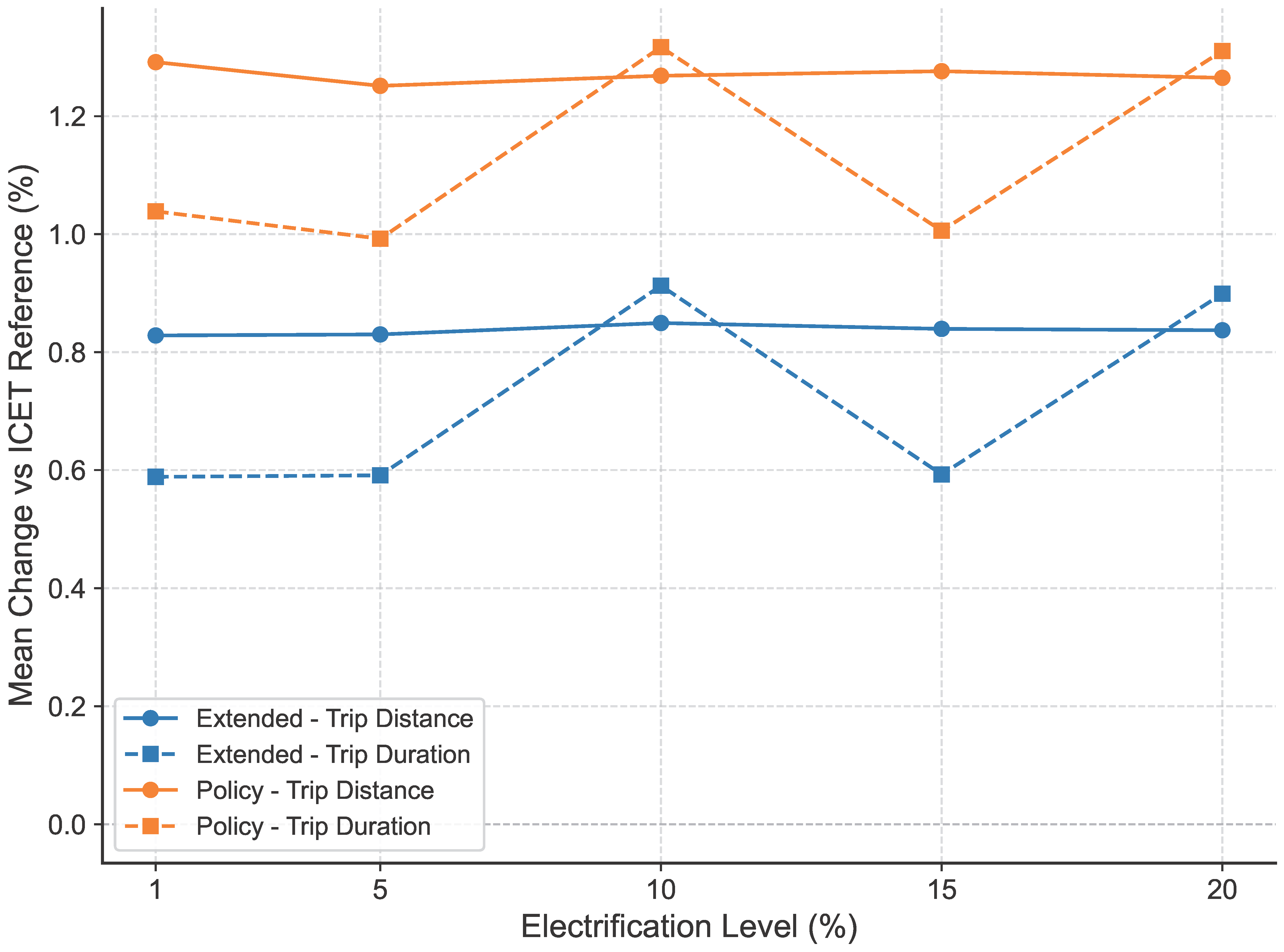
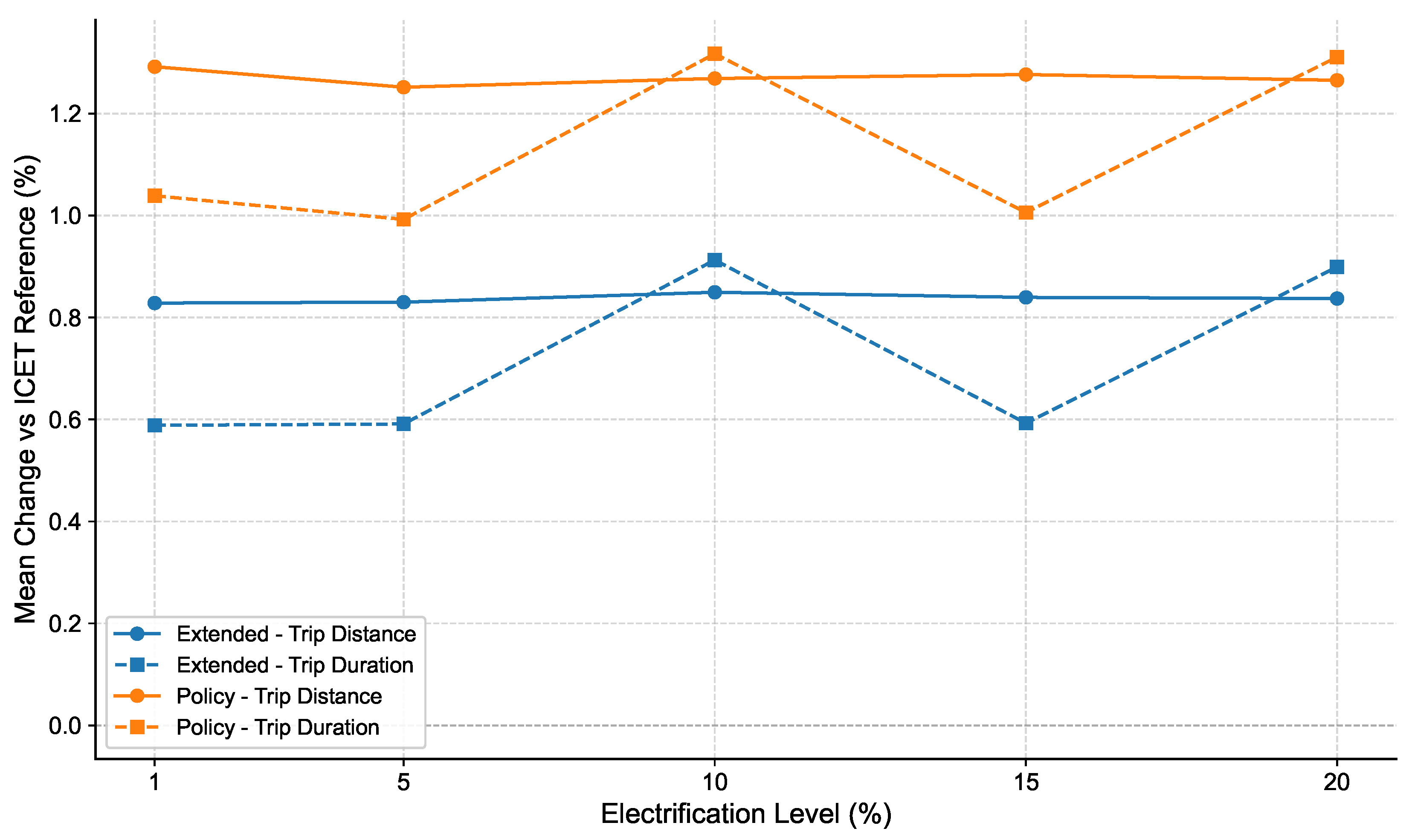
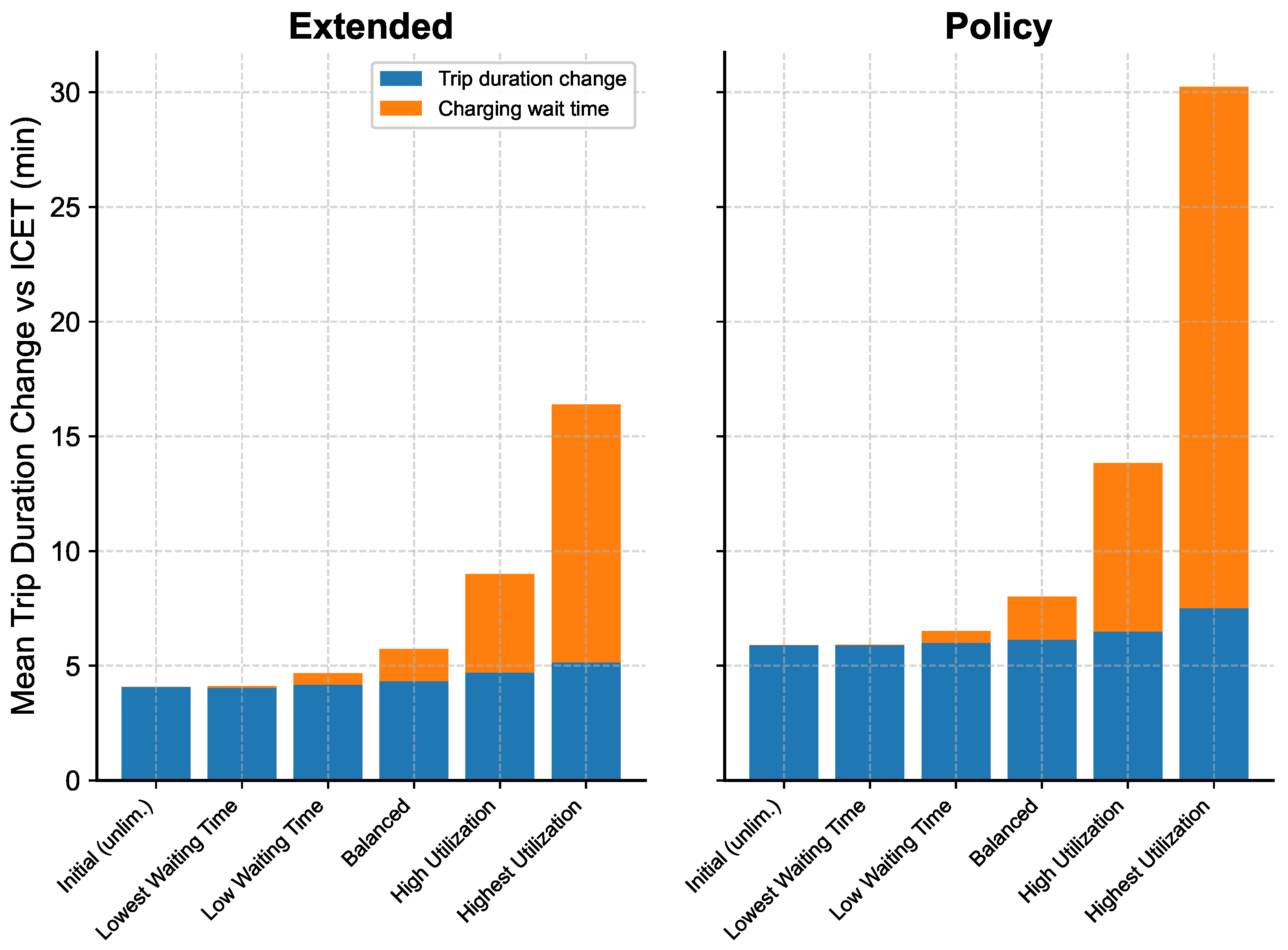
From the logistics operator perspective, it is essential that fleet electrification does not cause major disruptions to daily operations through increased trip durations or distances resulting from detours or waiting times at public charging infrastructure. To quantify this impact, we compared the BET simulation results with a reference case representing an ICET scenario without recharging requirements, as described in
Section 2.1.3. Our results reveal a structural increase in trip duration and distance that is independent of the number of HPC points at charging locations. The relevant factor is rather the density of charging locations, as the extended charging infrastructure network consistently yields lower increases compared to the policy network. In addition to detours, waiting at public charging infrastructure is a potential driver of increased trip durations. To assess waiting times within the optimized charging networks more realistically, we used MATSim replanning, which enables agents to alter their routes based on observed infrastructure usage as described in
Section 2.3. We consider this approach to yield more realistic waiting time estimates than single-iteration results, as it is reasonable to assume that logistics operators will adjust route planning and use technologies such as reservation systems to avoid congested charging locations while accepting minor detours. Our results show that the improved demand distribution across available charging locations significantly reduces waiting times. Alternatively, the number of HPC points can be reduced while maintaining moderate waiting times, resulting in increased utilization rates and consequently lower charging costs for the logistics operator, as discussed above. Ref. [
15] developed an algorithm for route optimization from a single-BET perspective, determining the time loss per trip due to recharging requirements as a function of battery capacity and charging power for an idealized charging network offering unlimited charging points every 50 km along the major German road network. For trips with a length of 650 to 700 km, they determine additional driving times between zero and ten minutes for BETs with a battery capacity of 600 kWh and an average charging power of 720 kW. These results align with our findings, which show average increases of approximately 4 to 5 min for trips with an average distance of 480 km, depending on the density of the charging infrastructure network.
Overall, our results demonstrate that the interests of CPOs and logistics operators are not entirely opposing but exhibit notable overlaps, as both stakeholders benefit from moderately high utilization rates. This interdependence, however, makes identifying the most beneficial charging infrastructure configuration more challenging, since the current optimization objectives of TCU and UWTI do not fully capture the underlying cost structures. Future work should therefore replace these objectives with comprehensive cost models that holistically represent the economic perspectives of both CPOs and logistics operators, enabling the identification of infrastructure configurations that are jointly optimal from a financial standpoint. Such models should also account for future uncertainties associated with the electrification of road freight transport, including technology-related and market risks [
31].
4.4. Limitations
The estimates of charging infrastructure requirements are highly dependent on the underlying freight transport data. Our MATSim scenario uses goods flow data for Germany provided by the Federal Ministry of Transport for the year 2010, scaled to represent the year 2020 [
7]. This scaling may lead to an underestimation of current traffic volumes. Future work should update the scenario to reflect current or projected freight transport volumes.
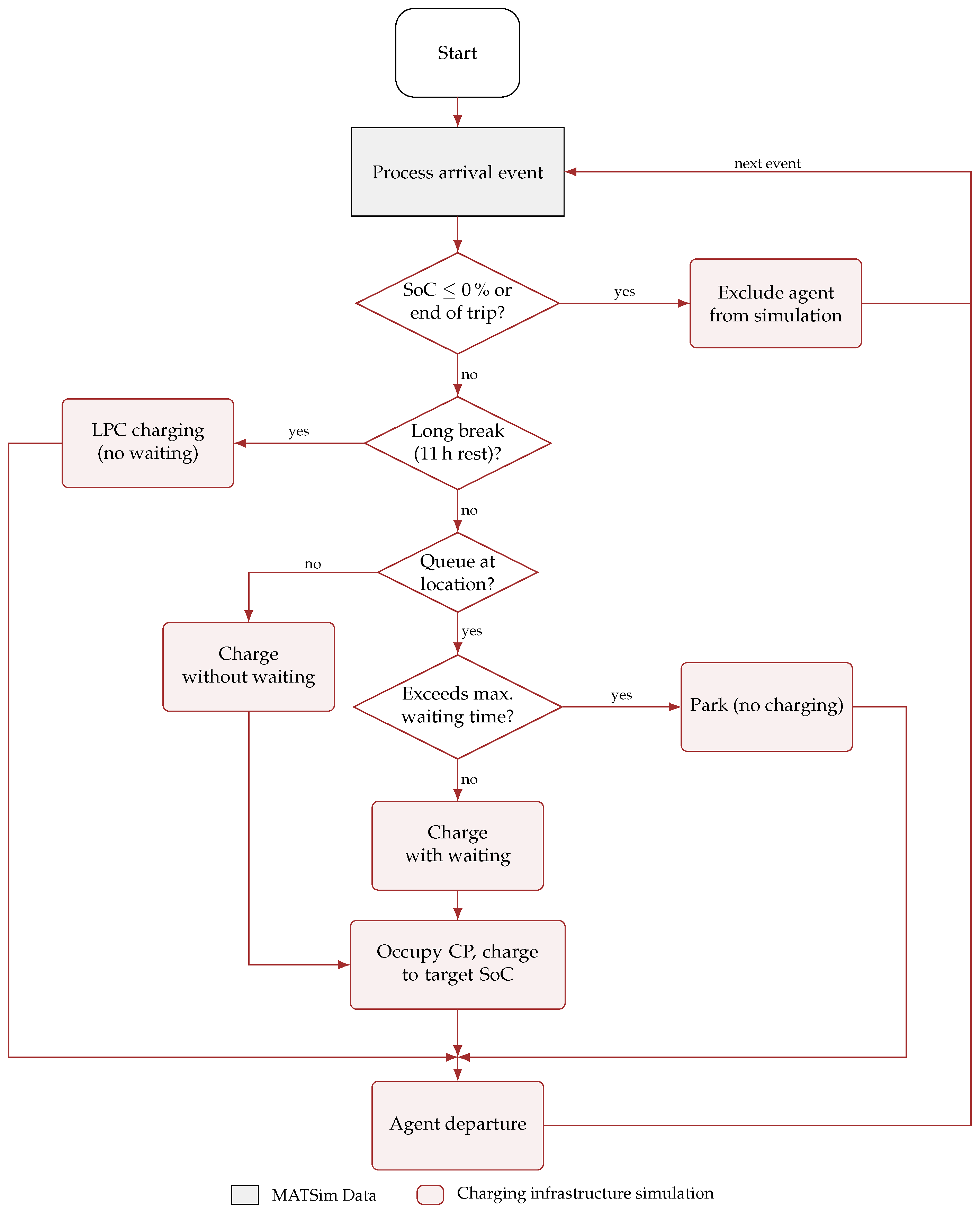
Furthermore, the MATSim model only includes trips that start or end within German borders, thereby excluding transit traffic. Consequently, the charging demand generated by trucks passing through Germany without an origin or destination inside the country is not captured, potentially leading to an underestimation of the required charging infrastructure. In addition, we model the charging demand for a four-day period from Monday to Thursday, excluding Friday, weekends, and seasonal variations in goods flow. These temporal limitations can affect the estimated utilization of charging infrastructure and waiting times, as charging demand varies over the course of a week and throughout the year. We also assume that driving breaks always last 45 min or 11 h, respectively. In everyday operations, logistics operators make use of various exemptions that allow drivers to adopt slightly different break patterns, potentially affecting charging duration and required charging power [
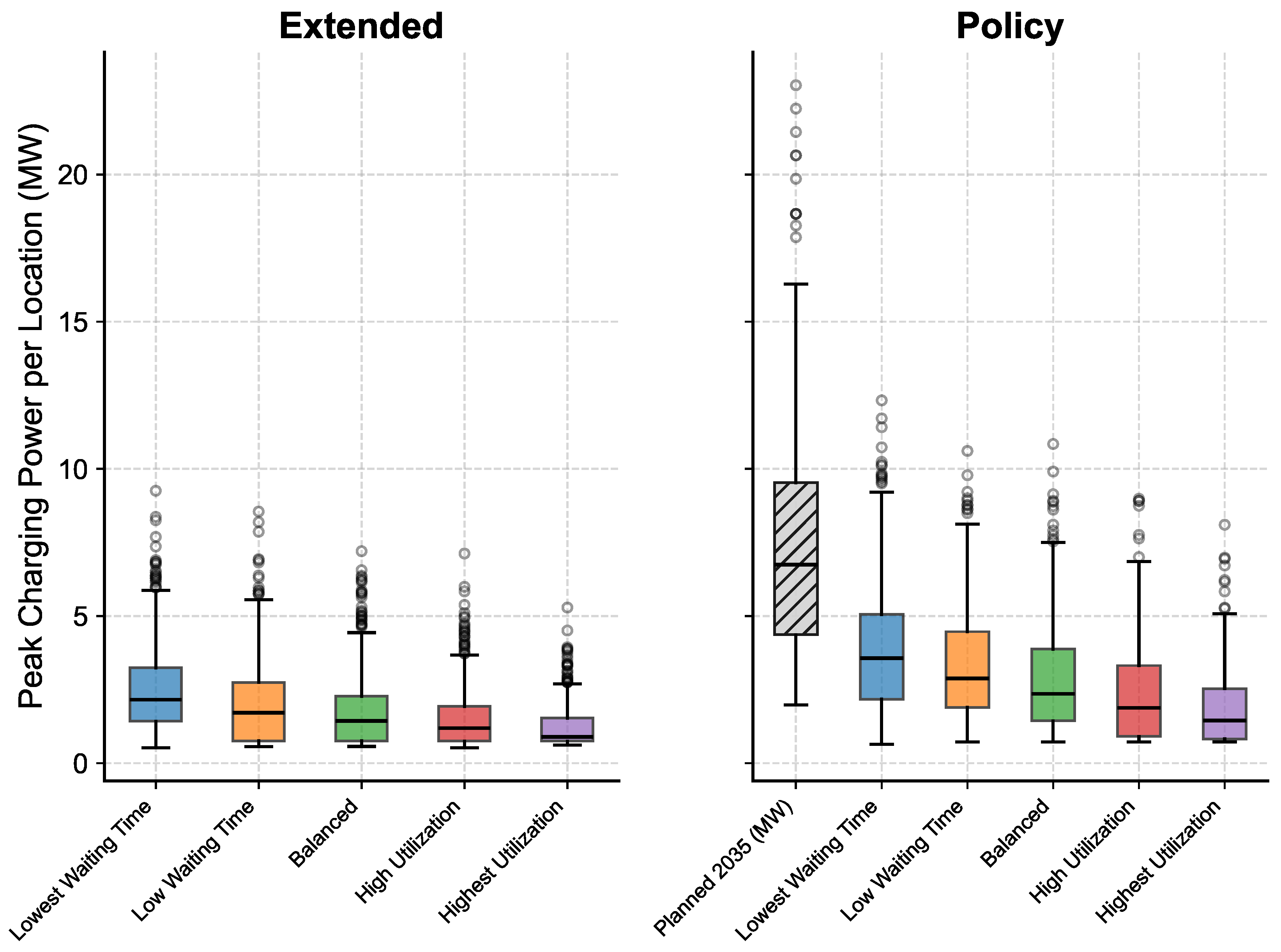
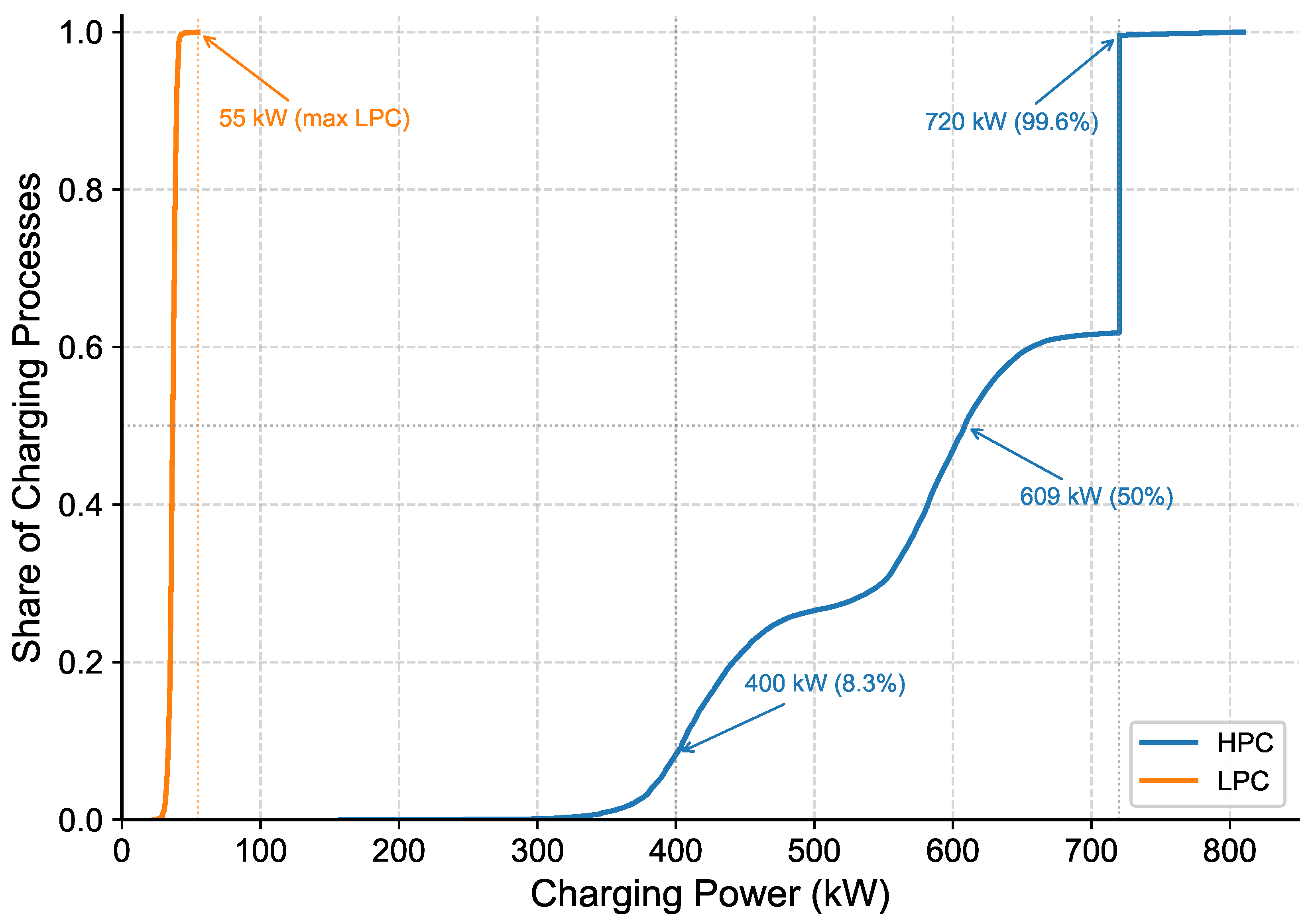
19]. Moreover, we make simplified assumptions regarding technical parameters of vehicles and charging infrastructure. We assume a uniform vehicle with a battery capacity of 600 kWh and an energy consumption of 1.2 kWh/km which ignores that a real-world vehicle fleet will contain vehicles with different battery sizes and energy consumption, potentially influencing charging demand. Additionally, we assume a linear charging curve, whereas real-world charging profiles are non-linear. This simplification affects the maximum charging power required to maintain the assumed charging durations and can lead to an underestimation of the total power demand at charging locations. The key technical assumptions affect the results in different ways. A smaller assumed battery capacity would increase the number of intermediate en-route charging stops and thus the HPC demand, whereas a larger capacity would shift charging toward fewer stops and toward depot or overnight charging. Since we assume that drivers may not move the vehicle during the mandatory break, a charging point stays occupied for the full break duration even when charging finishes earlier, so that the number of charging points is governed by this occupancy rather than by the charging power. Under this assumption, the linear charging curve mainly affects the estimated peak power and grid connection sizing rather than the number of points. If vehicles were instead allowed to free the charging point once charging is complete, higher charging powers and the correspondingly shorter charging times would reduce the number of required charging points, as each point could then serve more vehicles per day, similar to a conventional diesel refueling station. Shorter effective break durations, for instance when breaks are split, would reduce the energy transferred per stop and therefore increase either the number of stops or the required charging power. These assumptions primarily influence the absolute magnitude of the estimated requirements, whereas the qualitative trade-off between the stakeholder perspectives and the relative comparison between the charging network scenarios remain robust. Moreover, the policy charging network in our study corresponds to the planned fast-charging network for trucks. Our simulations and analyses are based on the location list which can be found in [
23]. Meanwhile, an updated location list was published which is available in [
22]. This list contains minor changes including the substitution of seven locations. The total number of locations remains the same as well as the total planned grid connection. On the methodological side, the parameters of the optimization algorithm, such as the population size, the crossover and mutation rates, and the number of generations, were not themselves optimized, and no formal sensitivity analysis of these parameters was carried out, while the adaptive convergence criterion limits their influence on the resulting Pareto front, a systematic tuning and sensitivity analysis could further improve the convergence behavior and is left for future work. Beyond the aspects discussed above, the scope of this study is deliberately bounded. It focuses explicitly on BETs and does not consider alternative electrification technologies such as electric road systems or hydrogen fuel cells, which are investigated in [
33,
34,
35]. The impact of charging infrastructure on the electrical grid, as examined in [
36,
37], is also beyond the scope of this work.