1. Introduction
The rapid growth of electric single-person vehicles, particularly electric scooters, has significantly transformed urban mobility in recent years. These vehicles have been widely adopted as flexible and space-efficient alternatives to traditional modes of transport, particularly in urban areas facing congestion and limited parking availability [
1,
2]. Initially, this development was largely driven by shared rental services. However, in recent years, there has been a noticeable shift towards privately owned electric scooters, altering both usage patterns and regulatory challenges.
A growing body of research has examined shared micromobility systems, especially rental e-scooters, with a focus on usage patterns, modal shift, and environmental impacts [
3,
4]. In contrast, considerably less attention has been paid to privately owned electric scooters and their implications for transport systems, user behaviour, and safety. Studies indicate that usage patterns, safety outcomes, and regulatory challenges may differ significantly between shared and privately owned vehicles, yet empirical evidence on private ownership remains limited [
5,
6].
The shift towards private ownership raises several important questions. Compared to shared systems, privately owned vehicles are used under different conditions, are subject to less operational control, and depend more heavily on individual users’ knowledge and compliance. As a result, there is limited understanding of how privately owned electric scooters are used, who uses them, and how they affect safety outcomes, regulatory compliance, and market development. In particular, there is a lack of research on users’ awareness of traffic regulations, their interaction with infrastructure, and the role of market actors such as retailers in shaping consumer choices.
This study aims to address these gaps by analysing the transition from shared to privately owned electric single-person vehicles in Sweden. Drawing on a combination of market analysis, user surveys, stakeholder interviews, and accident data from Sweden’s national accident database (Strada) [
7], the study provides a comprehensive assessment of market trends, user behaviour, safety implications, and regulatory challenges.
The contribution of this study is threefold. First, it provides new empirical insights into a rapidly growing but under-researched segment of micromobility—privately owned electric scooters. Second, it combines multiple data sources to offer a more comprehensive understanding of usage patterns and safety outcomes. Third, it links empirical findings to policy-relevant insights, highlighting implications for regulation, consumer information, and transport policy.
As private ownership increases, concerns have emerged regarding road safety, pedestrian interactions, and long-term sustainability. Previous research has highlighted increasing accident risks associated with micromobility and the importance of regulatory clarity and user awareness [
6,
8]. The transition from rental to private ownership introduces new challenges that require clearer communication, improved consumer awareness, and better coordination between authorities, retailers, and users.
This article builds on a study commissioned by the Swedish government and published by Transport Analysis (Trafikanalys) in 2024 [
9]. While the original report provides a comprehensive policy-oriented analysis, the present article offers a more focused and academically structured examination of the findings. The remainder of the paper is structured as follows.
Section 2 describes the methodology.
Section 3 outlines market and usage trends.
Section 4 discusses the effects of a changing market.
Section 5 examines legal ambiguities.
Section 6 presents policy recommendations, and
Section 7 concludes.
2. Methodology
This study addresses questions related to the provision, use, effects, challenges, and opportunities associated with the increasing private use of electric single-person vehicles. To answer these questions, a mixed-methods approach was applied, combining market analysis, user surveys, stakeholder interviews, a literature review, and accident data analysis.
2.1. Market Analysis
A structured mapping and analysis of online stores and selected physical retailers was conducted to examine the range of vehicles available on the private market, as well as the type of product and usage information provided to consumers. The selection of retailers was based on market relevance and visibility in Sweden. This mapping was complemented by semi-structured interviews with retailers, focusing on product characteristics, consumer demand, and information practices. The interview data were analysed thematically.
2.2. User Surveys
Private usage patterns were analysed through two web-based surveys targeting households and individual users of electric single-person vehicles.
The first survey included over 300 respondents and focused on the most frequently used vehicle within the household, as well as usage patterns of the primary user. Respondents were recruited through online distribution channels, and participation was voluntary. The sample is not statistically representative of the Swedish population but reflects a broad range of users.
The second survey targeted members of Facebook interest groups related to electric scooters and included over 100 respondents. This survey focused on individual usage behaviour and attitudes. Due to the recruitment method, the sample may overrepresent more engaged or experienced users, which is considered in the interpretation of the results.
Basic demographic information (e.g., age and gender) was collected in both surveys to allow for comparisons across user groups.
The questionnaire items were designed to reflect the main themes of the study, including vehicle ownership, purchase channels, information-seeking behaviour, regulatory awareness, usage patterns, substituted modes of transport, and safety-related experiences. The household survey focused on the most frequently used electric single-person vehicle in the household, while the individual survey focused on the respondent’s own use and behaviour. The questionnaire materials are provided to support transparency regarding the survey design.
As the surveys were exploratory and descriptive rather than based on psychometric scales, no formal reliability analysis such as Cronbach’s alpha was applicable. Instead, robustness was strengthened through questionnaire review, consistency checks between related survey items, and triangulation with retailer interviews, market mapping, municipal information, and accident data. The survey findings should therefore be interpreted as indicative patterns rather than statistically representative estimates of the Swedish population.
2.3. Shared Micromobility and Municipal Perspectives
To describe the shared e-scooter market, a web survey was sent to the 31 municipalities that had shared e-scooter services in 2024. The survey included questions regarding the introduction of services, applicable regulations, and municipal experiences. A total of 22 municipalities responded.
In addition, information was collected from micromobility companies through interviews, email responses, and one field visit. These inputs were used to complement the municipal data and provide insights into operational and regulatory conditions.
2.4. Stakeholder Interviews
Stakeholder perspectives were gathered through interviews with representatives from relevant authorities, insurance companies, and retailers. The interviews were semi-structured and focused on regulatory challenges, safety issues, and market developments. The interview material was analysed qualitatively to identify recurring themes and patterns.
2.5. Accident Data Analysis
Accident data were obtained from Strada, Sweden’s national accident database. The analysis focused on reported accidents involving electric scooters over multiple years to identify trends in accident frequency and characteristics. The data were filtered to include relevant cases involving electric scooters, and descriptive analysis was conducted to examine patterns related to user characteristics, accident types, and temporal trends.
2.6. Data Triangulation and Limitations
To strengthen the robustness of the analysis, findings from different data sources were triangulated. Survey results, stakeholder interviews, market analysis, and accident data were compared to identify consistent patterns as well as discrepancies.
For example, survey findings regarding limited regulatory awareness were compared with retailer interviews and the market analysis of product information, while findings concerning young users and vehicle performance were interpreted in relation to accident patterns in Strada. The purpose of the triangulation was not to establish direct causal relationships between data sources, but to assess whether different types of material pointed towards similar regulatory, behavioural, or safety-related issues.
The study has several limitations. The survey samples are not statistically representative and may be subject to selection bias, particularly in the case of self-selected online respondents. The Facebook-based individual survey may overrepresent more engaged or experienced users, while the household survey provides a broader but still non-representative picture. In addition, certain data, such as the total number of privately owned vehicles, are not precisely known. The findings should therefore not be interpreted as population-level estimates, but as empirically grounded indications of patterns in ownership, use, regulatory awareness, and safety-related challenges. These limitations are considered in the interpretation of the results.
3. Market and Usage Trends
This section presents key findings on the development and usage of electric single-person vehicles in Sweden. Based on survey data, stakeholder interviews, and market analysis, we describe what types of vehicles are available, how they are used, and by whom.
Three findings are particularly important for the subsequent discussion. First, privately owned electric scooters dominate the private market for electric single-person vehicles. Second, many users have limited knowledge of vehicle classification, insurance requirements, and applicable traffic rules. Third, young users represent an important user group, while some vehicles used by minors appear to exceed the legal requirements for bicycle classification.
3.1. Types of Electrically Powered Single-Person Vehicles
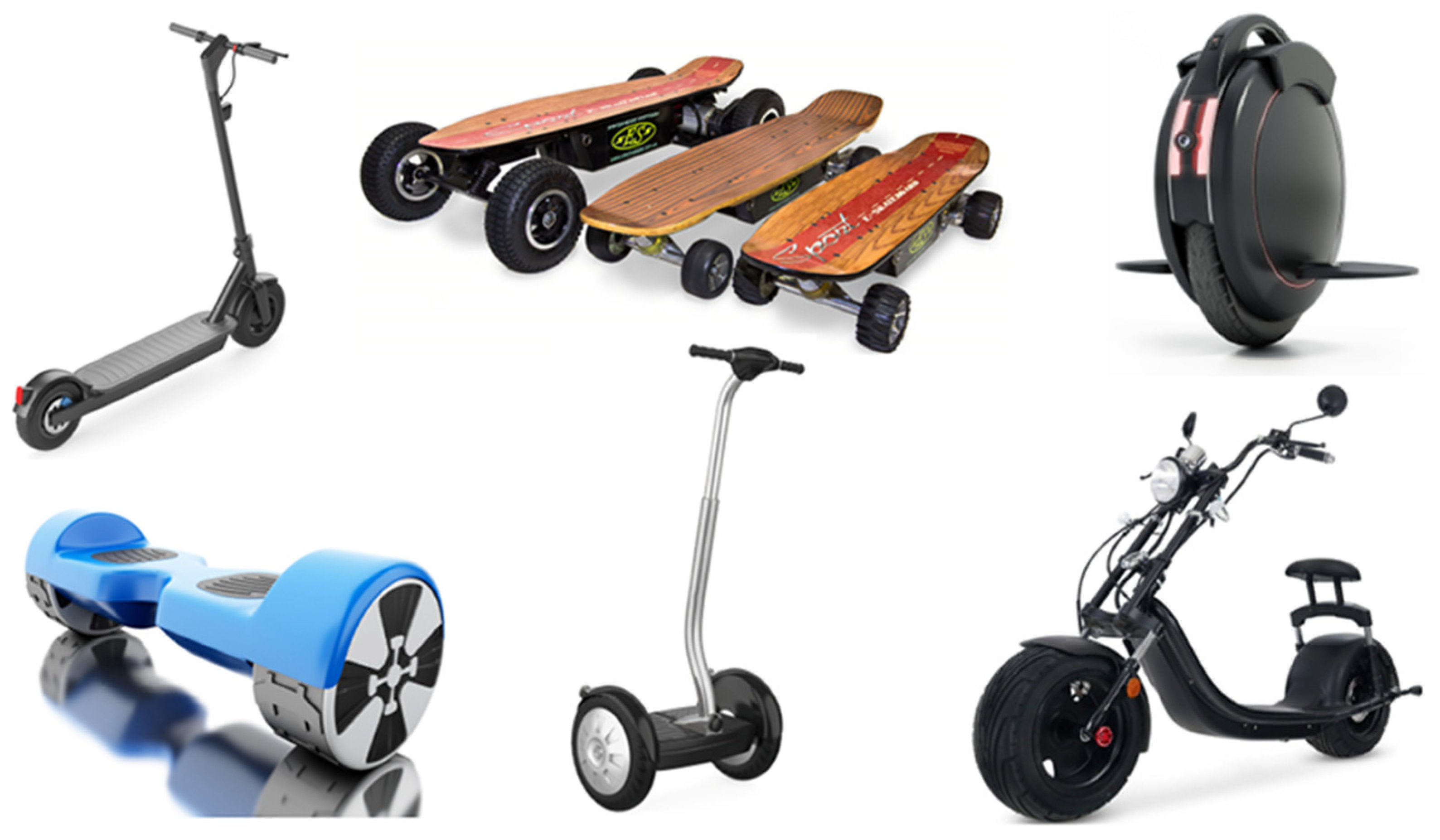
Electrically powered single-person vehicles are a collective term for a group of vehicles that have become increasingly common in traffic in recent years. The most common type is the electric scooter, also known as an e-scooter or e-kickbike. Other variants include moped-like fat gliders and fat scooters, as well as various types of self-balancing electric boards such as e-skateboards, Segways, hoverboards, and airwheels (unicycles). Examples of these vehicle types are shown in
Figure 1. These vehicles are all battery-powered and generally small compared to other means of transport, often classified under the term “micromobility.” The development of new models is rapid, with an increasing variety of vehicles entering the market. Even though retailers report significant growth in sales in recent years, the exact number of privately owned electric scooters in Sweden is unknown, as they are not subject to vehicle registration.
In Sweden, electrically powered single-person vehicles are legally defined under the Road Traffic Definitions Act (2001:559). According to this law, an electrically powered single-person vehicle covered by our analysis may be classified as a bicycle, moped, or motorcycle, but it can also fall under the category of other vehicles.
These vehicles do not have a separate legal definition; instead, existing vehicle categories have been gradually adjusted to incorporate electric single-person vehicles into legislation.
For an electric scooter to be classified as a bicycle in Sweden, it must be designed for a maximum speed of 20 km/h and have an electric motor with a continuous rated power of no more than 250 watts [
10]. If an electric scooter meets the criteria for a bicycle, the following regulations apply:
The electric scooter must be operated in the same manner as other bicycles.
It must have brakes and a bell.
When used in the dark, it must be equipped with front and rear lights as well as reflectors.
Riders under the age of 15 must wear a helmet.
Passengers are not allowed on the electric scooter.
It is not permitted to ride an electric scooter on sidewalks or pedestrian paths.
On 23 December 2023, amendments were made to the Traffic Damage Act (1975:1410) to clarify regulations for electrically powered single-person vehicles, such as electric scooters. The changes state that an electric vehicle without pedals or crank mechanisms is always considered a motor vehicle if it:
Is designed for a speed exceeding 20 km/h, or
Is designed for a speed exceeding 14 km/h and has a net weight over 25 kg.
This means that vehicles meeting these criteria must have mandatory traffic insurance, which the owner is responsible for securing. The driver must also carry proof of insurance while operating the vehicle. Examples of affected vehicles include electric scooters and self-balancing vehicles [
10].
In Sweden, vehicles that exceed 20 km/h or have a continuous rated power of more than 250 watts are no longer classified as bicycles and are therefore subject to different regulations. When it comes to electric scooters, the most relevant legal framework is Regulation (EU) No 168/2013 of the European Parliament and of the Council on the approval and market surveillance of two- or three-wheel vehicles and quadricycles [
11]. However, according to the Swedish Transport Agency, an electric scooter can never be type-approved under this regulation, partly because the regulation excludes all vehicles not equipped with a seat from its scope of application. As a result, such vehicles may only be operated within enclosed areas and not on public roads [
10].
This lack of clarity creates confusion for consumers, who often struggle to determine what type of vehicle they have purchased, how it should be operated, which regulations apply, and how it should be insured.
3.2. Market Analysis Highlights Unclear Vehicle Specifications
The market analysis shows that few retailers provide detailed information about the vehicles they sell. The most comprehensive information is typically found on electronics stores’ websites and specialized online retailers. Well-known brands tend to have more complete specifications, while lesser-known brands often lack basic details such as maximum speed or motor power. Information on motor power also varies significantly between brands and retailers. It is rare to find the continuous rated power listed, even though this is the measure used to define a bicycle under the Swedish Road Traffic Definitions Act (2001:559). Instead, terms like power, motor power, or maximum power are commonly used.
When it comes to vehicle classification, it is rarely clear how the vehicle is defined according to the law. In some cases, retailers use their own terms, such as “Light Electric Vehicle,” which is not found in official legislation. This lack of clarity is problematic, as the vehicle’s legal classification determines where and how it may be used and what rules apply. Retailers are obligated to inform customers about vehicle classification and usage, in line with the requirements of the Swedish Marketing Act (2008:486).
3.3. The Web: The Most Common Channel for Purchase and Information
According to both of our web surveys, more than half of all respondents conducted online searches before purchasing their electric single-person vehicle. Around 40 percent visited online stores prior to making their purchase. Far fewer—just under one-quarter of respondents in the household survey and one-fifth in the individual survey—visited physical stores. More than half of the vehicles were purchased from an online retailer, according to both surveys. Significantly fewer respondents stated that they bought their vehicle in a physical store, with 32 percent of respondents in the household survey and 23 percent in the individual survey indicating this.
According to the retailers we spoke with, the most common consumer questions concern the performance of electric single-person vehicles, such as range, power, speed, and charging time, as well as overall value for money. Questions about accessories like helmets or locks are rare. Our web surveys of households and individuals align well with the retailers’ descriptions of what consumers look for in product features. The survey results also show that information about range, motor power, durability, and speed are the characteristics consumers most frequently seek out. There was less interest in understanding the laws and regulations governing electric scooters. Just over half of the respondents in the household survey and slightly less than half of the respondents in the individual survey actively sought information about applicable laws and regulations before making their purchase. Many users were unsure about the legal usage of their vehicles. An analysis based on our classification of vehicles according to the Road Traffic Definitions Act shows that only a relatively small proportion of users have a correct understanding of how their vehicle may be operated. Also, few have taken note of the recent changes in the Traffic Damage Act. In addition, many respondents express uncertainty about insurance requirements and what coverage applies to their electric single-person vehicle.
This finding suggests that the shift towards private ownership increases the importance of individual user knowledge, since privately owned vehicles are generally associated with fewer built-in operational restrictions and less standardized user information than shared e-scooter services.
3.4. Electric Scooters Dominate Private Ownership
The results from the household survey show that a clear majority (75 percent) of the households included in the study, all of which own some type of electric single-person vehicle, own an electric scooter. Nearly one-fifth of these households (17 percent) own two or more electric scooters. All respondents in the individual survey own at least one electric scooter, with half of them owning two or more. Very few individuals own any other type of electric single-person vehicle besides an electric scooter.
In the household survey, the majority of vehicles have a maximum speed of 20 to 25 km per hour, accounting for 70 percent. In the individual survey, this share is only 33 percent. Almost half (46 percent) of individual survey respondents report that their vehicle has a top speed of over 25 km per hour but no more than 45 km per hour, and one-fifth state that they own vehicles capable of exceeding 45 km per hour. Regarding the power of the electric single-person vehicles, the survey results show that relatively few respondents in both surveys report that their vehicles are limited to 250 watts. About one-quarter (26 percent) of the vehicles in the household survey have a power rating between 0 and 250 watts. In the household survey, one in three respondents does not know the power of their vehicle.
According to our household survey, one-quarter of the users of privately owned electric single-person vehicles are under 18 years of age, and one in five users is under 15. The largest user group among those under 18 consists of children aged 11 to 14, making up 16 percent of all users. More than half of the vehicles used by this age group correspond to either moped class II or moped class I under the Road Traffic Definitions Act. This means they are using vehicles they are not legally permitted to operate, as riding a class II moped requires being at least 15 years old and holding a driving certificate, and operating a class I moped requires an AM driver’s license.
This indicates that young users are not only an important user group, but also a group for whom regulatory awareness and vehicle classification are particularly relevant. The combination of young age and access to vehicles with moped-like performance creates a specific safety and compliance challenge.
3.5. Usage Patterns and User Behaviour
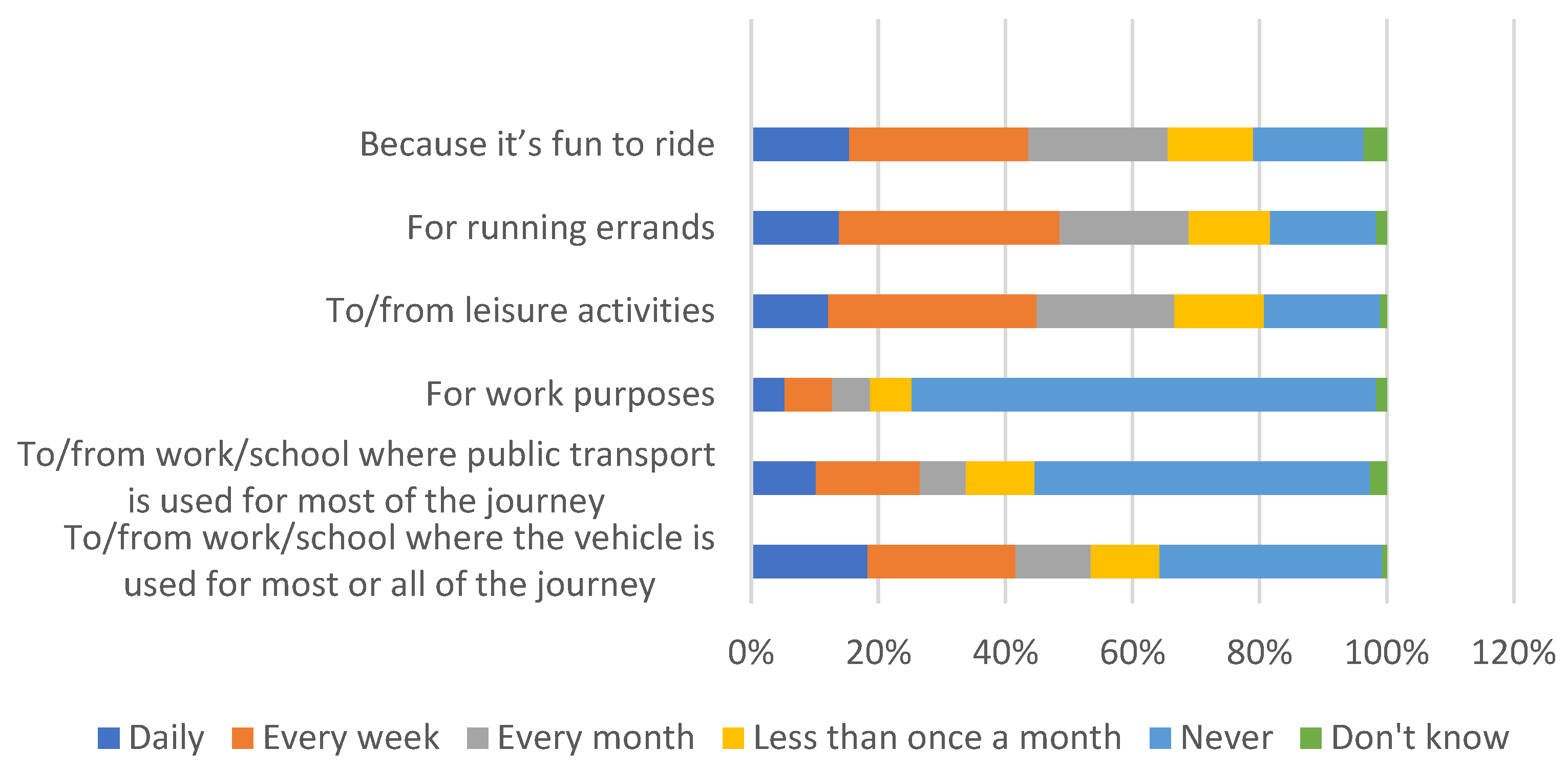
The use of electric single-person vehicles is strongly seasonal. Usage increases during the spring, peaks in the summer, declines in the autumn, and remains relatively low during the winter. When asking respondents in the household survey about the types of trips their vehicle is primarily used for and how often, trips for running errands emerged as the most common type of use. However, trips to and from leisure activities or using the vehicle simply for fun were almost equally common. Eighteen percent stated that they use the vehicle for daily commuting to and from school or work, where the vehicle is used for most or all of the distance. The least common use is for work-related travel (see
Figure 2).
If we take a closer look at younger users under the age of 18, we find that more than half (56 percent) use the vehicles daily or weekly simply because they find it fun to ride. Nearly half use the vehicles for running errands (47 percent) or traveling to and from leisure activities (45 percent). Almost one-third, 30 percent, commute to school daily or weekly, using the vehicle for most or all of the distance. As previously reported, 16 percent of electric single-person vehicle users in the household survey are between 11 and 14 years old. Among all respondents under 18, it is this age group (11–14) that uses the vehicles the most.
The majority of trips made with electric single-person vehicles are between 1 and 5 km round trip. In the household survey, trips between 1 and 3 km are the most common. This distance is the most frequent for all types of trips, except for commuting to and from work or school where public transport is used for most of the journey.
According to both of our web surveys, men tend to make longer and more frequent trips than women. Men also use the vehicles more often for recreational purposes. There are no significant differences in trip length when breaking down the results by age or income groups. Respondents in the household survey who use fat scooters make longer trips compared to those using other types of electric single-person vehicles. Users of Air Wheels, e-skateboards, or fat scooters travel less frequently than the large group of electric scooter users. Additionally, the group with the lowest household income tends to use electric scooters slightly more frequently than other income groups for all types of trips.
These gender differences are relevant when interpreting the accident data, since higher exposure through more frequent and longer trips may partly contribute to the higher share of injured men in electric scooter accidents. However, the available data do not allow conclusions regarding the relative importance of exposure, riding behaviour, or other factors.
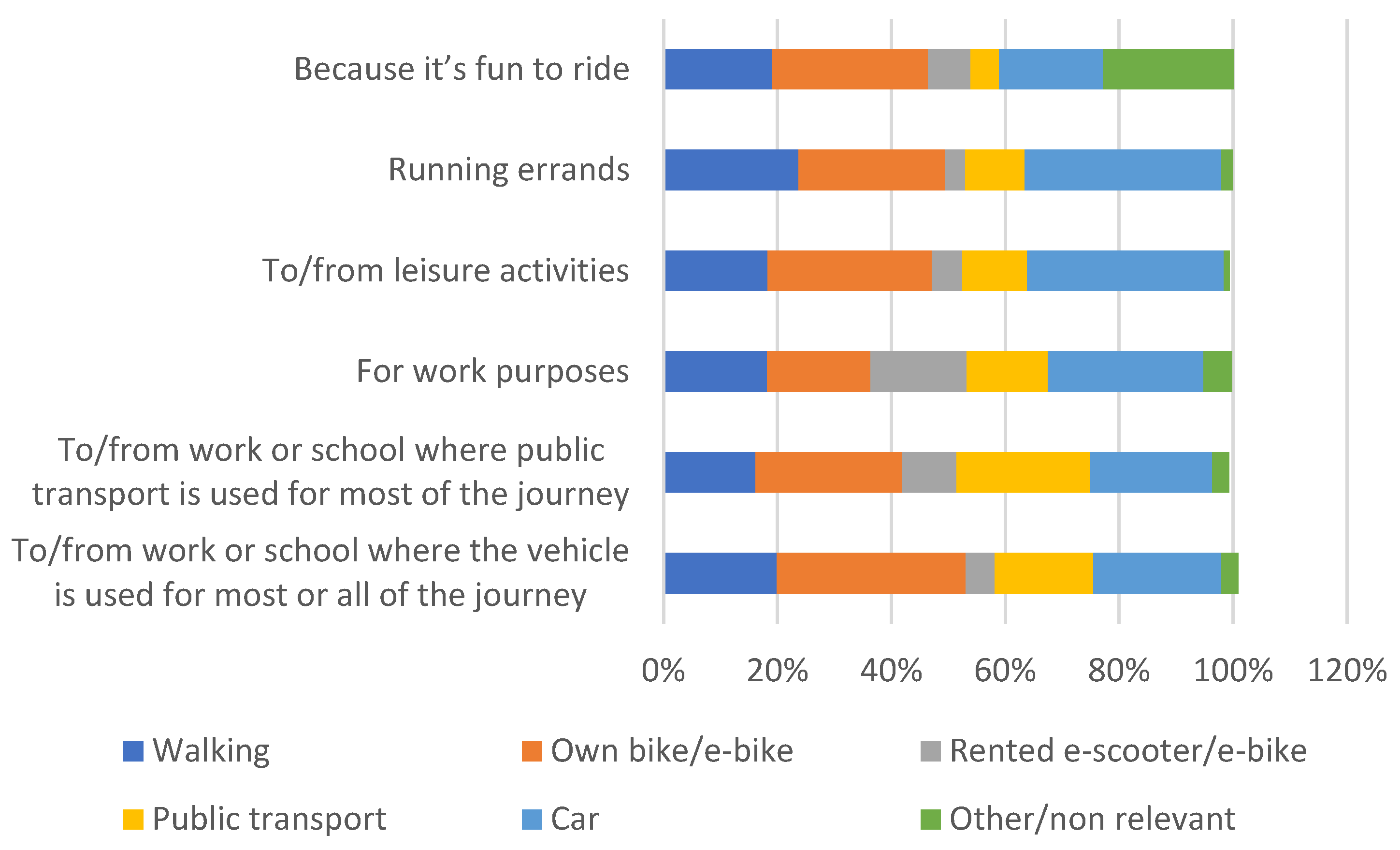
In response to our question about which modes of transport are being replaced by electric single-person vehicles, the household survey shows that cars, walking, and bicycles are most commonly replaced. Cars are primarily replaced for trips related to running errands and traveling to and from leisure activities, where 35 percent of such trips are now made using an electric single-person vehicle (see
Figure 3). In the individual survey, respondents reported replacing car use in more than half of their trips for leisure activities, errands, and work-related travel.
This suggests that privately owned electric scooters may have mixed transport effects: they can replace some car trips, but they also substitute active modes such as walking and cycling. The overall societal impact therefore depends not only on the number of trips made by electric scooter, but also on which modes of transport are replaced.
3.6. Shared Electric Scooters—From Rapid Expansion to Sustainable Operation
The introduction of electric scooters in Sweden began in 2018 in Stockholm and quickly spread to other Swedish cities during late 2018 and early 2019. In the following years, the number of micromobility companies and shared electric scooters grew rapidly. By 2020, ten micromobility companies were operating in major cities such as Stockholm, Gothenburg, Malmö, Uppsala, Lund, Helsingborg, and Västerås. During these early years, companies focused on rapid expansion to capture market share in a fast-growing sector, financed by venture capital and business models that prioritized expected future value over short-term profitability.
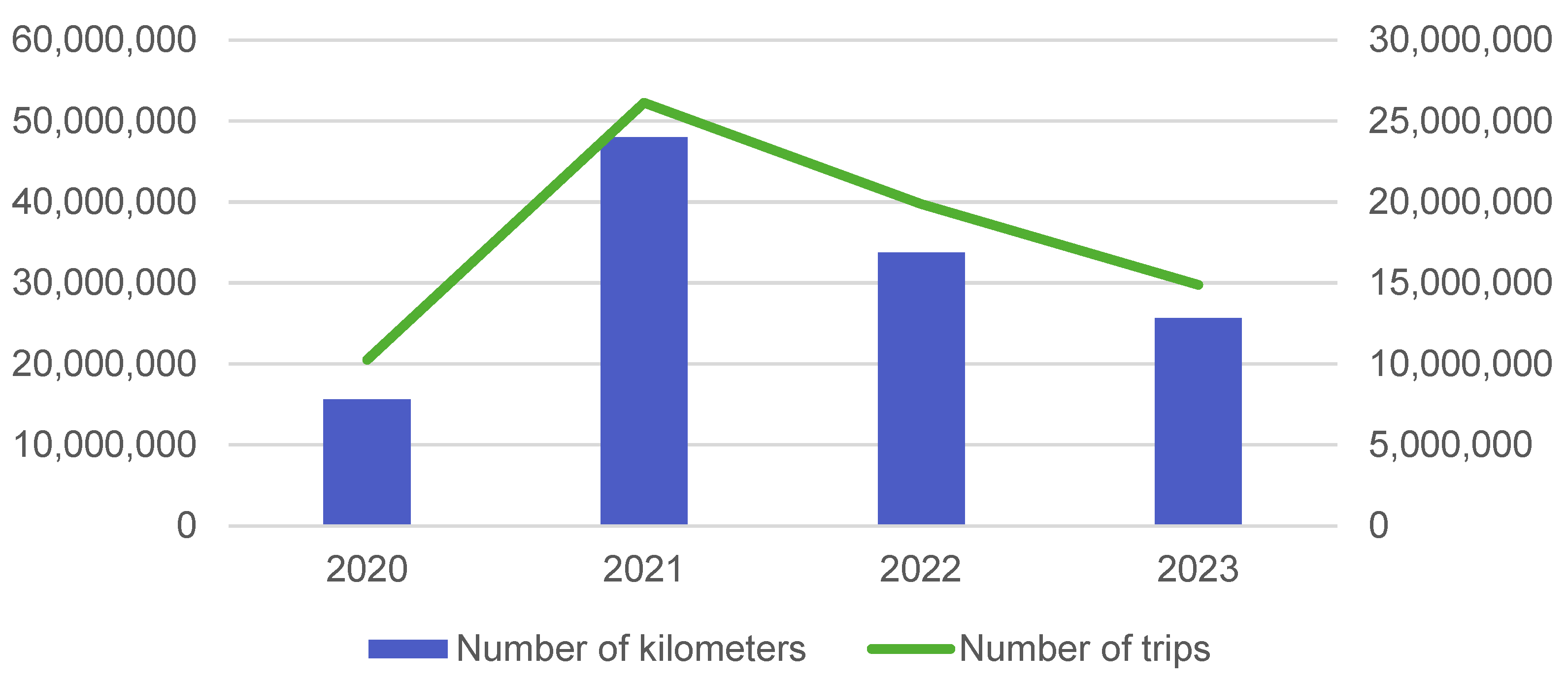
This rapid growth, however, was met with significant public resistance. Shared electric scooters were frequently parked carelessly, blocking sidewalks and public spaces, and in some cases were even vandalized or thrown into waterways. In response to these challenges, both national and municipal regulatory changes were introduced. Combined with a general economic downturn, several micromobility companies exited the Swedish market in 2022 and 2023. The number of rented e-scooters decreased from approximately 45,000 in 2021 to around 30,000 in 2024 (see
Figure 4). According to interviews, media reports, and Transport Analysis’ municipal survey, many municipalities have observed improvements in order and compliance, particularly in parking behaviour. Several municipalities have even expressed a desire to maintain the current number of shared electric scooters.
4. Effects of a Changing Market
The rapid growth of privately owned electric single-person vehicles has resulted in a wide range of societal impacts. This chapter summarizes the main consequences related to accessibility, public health, climate, interaction in public spaces, and accident trends, based on our own empirical data and findings from previous research.
4.1. Accessibility
The main advantage of electric scooters is that they increase accessibility for users. Those who choose to travel by private electric scooter do so because it is considered the most attractive mode of transport in the given situation. In making this choice, travellers consider factors such as the purpose of the trip, travel time, cost, comfort, time of day, and parking availability. Research shows that users of private electric scooters generally travel longer distances and use them more frequently for commuting to work, and less for errands and leisure activities, compared to rental users. One possible explanation for the longer travel distances is precisely that private electric scooters are more often used for commuting. As mentioned, several factors influence the choice of travel mode. Many studies focus on the perceived advantages of shared electric scooters, with users highlighting speed, flexibility, and the fun aspect of riding [
5]. However, the factors influencing why people choose to travel by privately owned electric scooters are less explored [
3].
4.2. Public Health Effects
Several studies have shown that the public health impacts of increased use of electric scooters are difficult to quantify. On one hand, greater mobility and accessibility can contribute to improved well-being and a richer social life. Many users also report using electric scooters simply for fun, which may substitute more sedentary behaviors and offer some physical and mental benefits. However, research also indicates that electric scooter trips often replace more active modes of transport, such as walking and cycling, rather than car travel. Our own household survey confirms that electric scooters frequently replace active travel modes, especially when including public transportation, which often involves walking [
9]. This substitution effect may be most significant among young users—the largest user group—who are also at the highest risk of accidents. A Norwegian study has shown that young people aged 13 to 22 may lose approximately two minutes of moderate physical activity per day with frequent electric scooter use. While this may seem minor for the average population, it can represent a significant reduction for individuals who are otherwise physically inactive [
12]. Another growing concern is the increase in fires linked to electric scooters and other battery-powered vehicles. Between 2018 and 2023, there were 128 reported fires involving electric scooters and 73 involving hoverboards in Sweden, most of which occurred during charging. This has led some workplaces to implement special regulations for charging electric scooters and e-bikes, raising concerns that such restrictions may discourage commuting by these modes [
13]. In conclusion, the use of electric single-person vehicles brings both positive and negative public health effects. Further research is needed to fully understand and quantify these combined impacts.
4.3. Environmental Impact and Climate Potential
The climate benefits of electric scooters have been questioned, mainly due to short vehicle lifespans, emissions from fleet management for shared scooters, and the fact that only a small share of trips replace car travel [
14]. Recent studies show that the life-cycle climate impact of privately owned e-scooters has not decreased between 2020 and 2024, while shared e-scooters have reduced their climate impact through longer lifespans and swappable batteries. Despite this, private e-scooters still have a lower climate impact than shared ones, as shared micromobility requires additional resources for maintenance, battery replacement, charging, and vehicle relocation [
1].
Access to e-scooters may reduce the need for car ownership. For example, a study from Oslo found that 5 percent of shared e-scooter users had given up their car, and 14 percent said it reduced their need for an additional car. Although we have not studied this effect for private e-scooters, our survey data suggest that a relatively large number of trips replace car journeys. Private e-scooters also tend to replace car and bike trips more than walking trips and are generally used for longer distances compared to shared e-scooters [
5].
Combined with their lower life-cycle climate impact, this suggests that private e-scooters may have greater potential to reduce carbon emissions than shared e-scooters. However, the overall climate effect depends on many factors, including whether this potential translates into actual reductions [
5]. Furthermore, the car trips replaced are often short and represent only a small share of total car travel in Sweden [
15].
Shared e-scooters also create problems with parking and littering, including vehicles ending up in waterways. These vehicles contain metals, plastics, and hazardous lithium-ion batteries.
Such environmental issues are likely less common with private e-scooters, as owners are more likely to care for their vehicles. However, theft could lead to similar problems, as privately owned scooters are difficult to secure and are attractive targets for theft.
4.4. Interaction and Congestion
The use of electric scooters presents challenges not only in terms of accident risk for the rider but also regarding interactions with other road users. Pedestrians, especially those with mobility or visual impairments, may face difficulties with accessibility. Studies show that motorists and pedestrians feel less safe and more frustrated when interacting with cyclists and e-scooter riders, with women and older individuals reporting higher levels of discomfort. A common issue is riders suddenly appearing from behind pedestrians, creating a sense of insecurity. Low awareness of traffic rules for e-scooter users likely adds to this tension [
16].
Norwegian studies indicate that non-users in Oslo perceive poor parking behaviour and increased obstruction from e-scooters [
5,
16]. However, those who use e-scooters themselves tend to be more tolerant [
17]. Public transport representatives express concern about private e-scooters onboard, fearing congestion and safety risks for passengers. While Swedish operators like SJ (Swedish national rail operator), SL (Stockholm Public Transport), and Västtrafik (Public transport operator in western Sweden) currently allow private e-scooters with certain restrictions, they have seen few problems so far. Still, if the use of private electric single-person vehicles continues to grow without regulation, these negative impacts are likely to increase.
4.5. Accident Trends
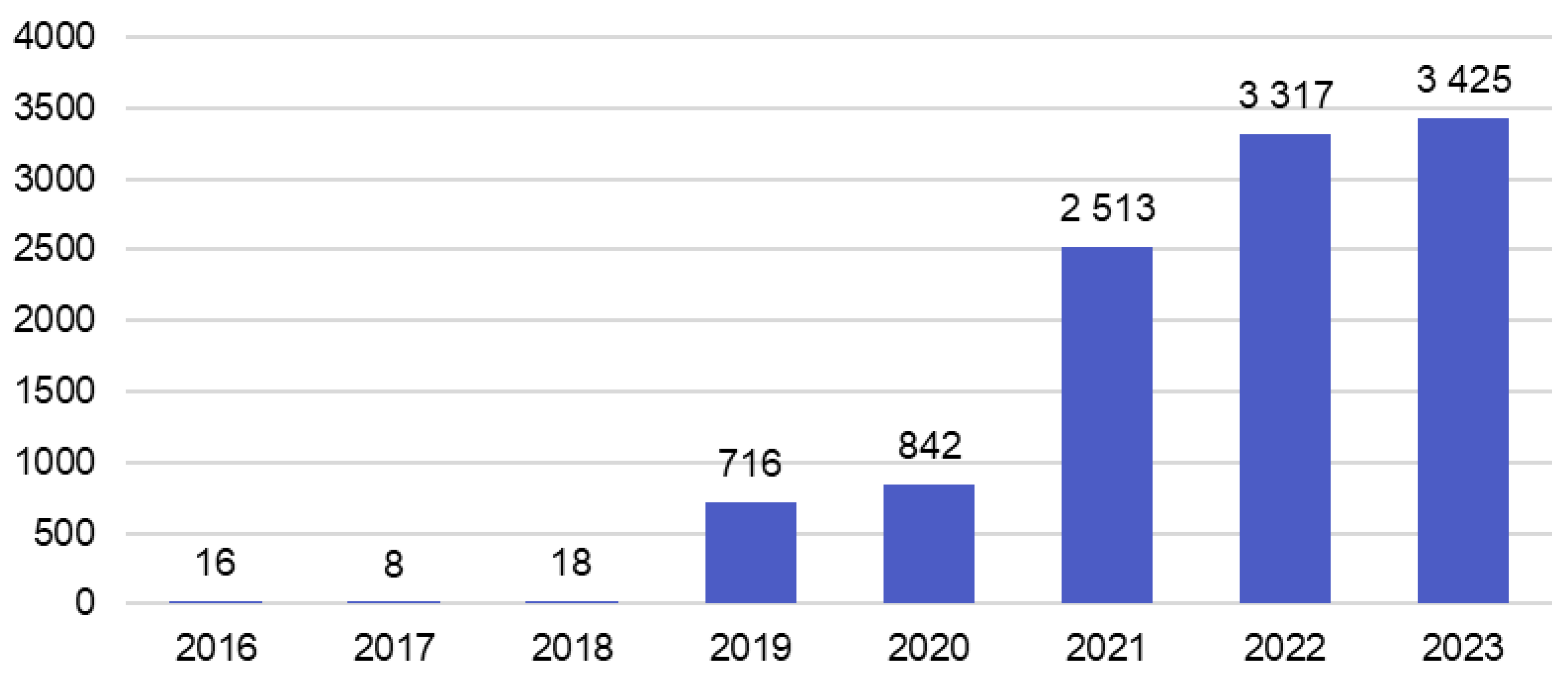
Accident data from Sweden’s national accident database, Strada, indicate a sharp rise in electric scooter-related incidents (see
Figure 5), particularly among younger users. The data reveal that a significant proportion of injuries involve privately owned scooters. Common accident causes include lack of protective gear, poor road conditions, and limited awareness of traffic rules. Among the most common injury patterns are head trauma, fractures, and abrasions, often due to high-speed collisions or loss of control [
18].
The most commonly cited causes of accidents are issues related to the road surface, misjudgements while riding, or limited visibility. A previous Strada study conducted by the Swedish Transport Agency shows that deficiencies in infrastructure, as well as maintenance and operations—particularly in single-vehicle accidents—are common contributing factors. These include curb edges and other design elements, as well as uneven or slippery surfaces [
18]. The share of young people involved in electric scooter accidents has increased between 2018 and 2023. In 2019, 9 percent of those injured in electric scooter accidents were under 18 years old; by 2023, this figure had risen to 25 percent [
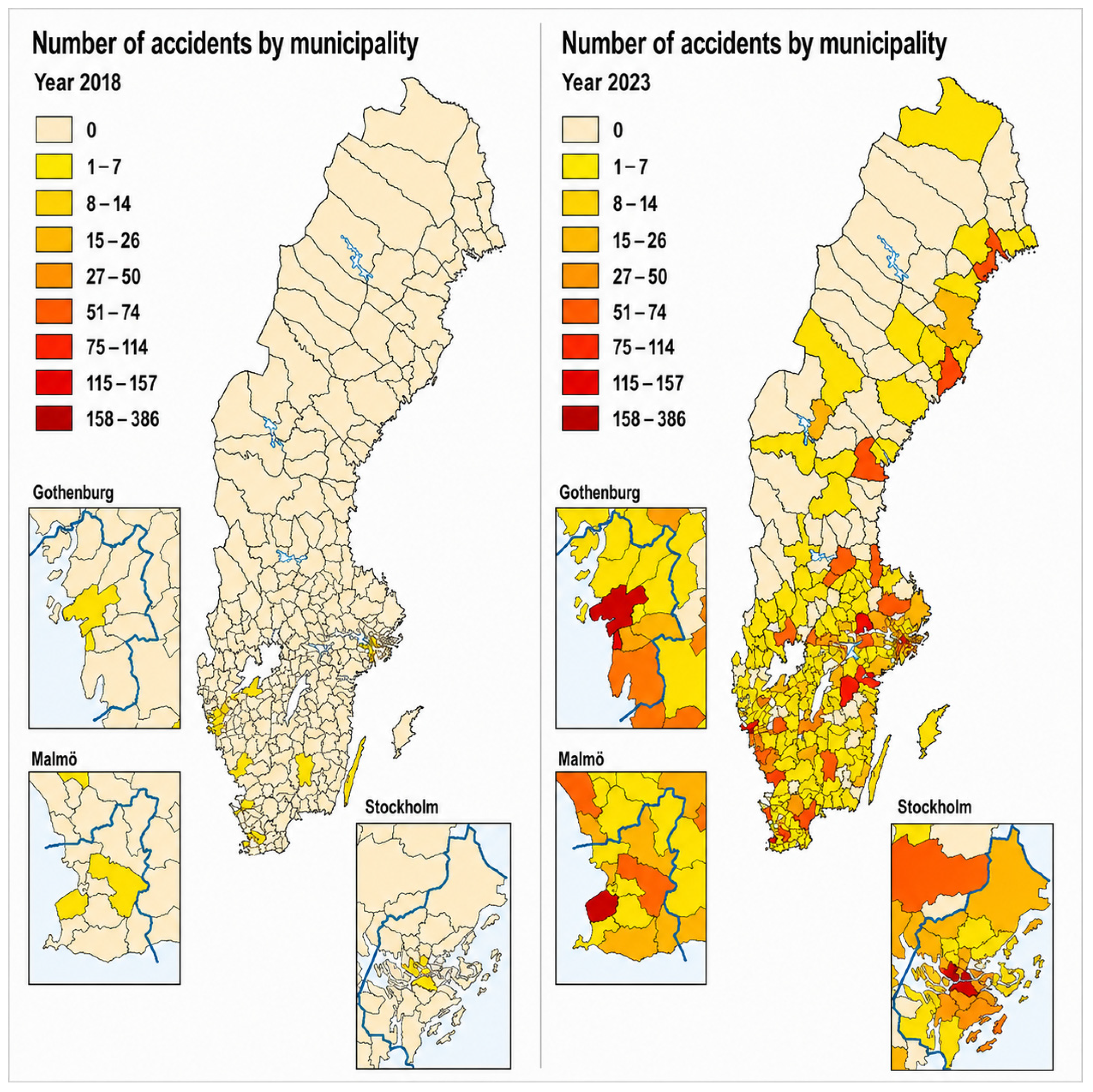
18]. More men than women have been injured in electric scooter accidents during the period 2016–2023, and this trend is consistent across all age groups. This is linked to the fact that more men than women use electric scooters. The majority of accidents occur on pedestrian and bicycle paths, although a significant number also happen on roads used by cars. Single-vehicle accidents have dominated the statistics in 2022 and 2023 [
14]. The sharp increase in the number of accidents is most likely due to the growing use of both privately owned and rented electric scooters. We can also observe that these accidents have become more widespread across the country (see
Figure 6) [
19].
In Strada, it is rarely possible to distinguish between accidents involving privately owned or rented electric scooters. To estimate the share of accidents with privately owned scooters, we analysed statistics from municipalities with and without rental services in 2023. The results indicate that at least 37 percent of accidents occurred in municipalities without rental services, suggesting a significant portion involved privately owned vehicles. This share is likely even higher, as privately owned scooters are also used in municipalities with rental services. Additionally, there were notable differences in the age distribution of those injured. In municipalities without rental services, 26 percent of injured riders were between 7 and 14 years old, compared to 13 percent in rental municipalities, while the share of injured riders aged 20–34 was 42 percent in rental municipalities and 28 percent elsewhere. A possible explanation is that privately owned vehicles lack the age restrictions imposed by rental services, though the exact extent to which rental scooters contribute to accidents remains uncertain [
19].
Taken together, the findings suggest that the increase in accidents may be related not only to increased use, but also to factors such as vehicle performance, young users, infrastructure conditions, and limited regulatory awareness. The available data do not allow these factors to be separated analytically, but the combined findings indicate that they should be considered together in future safety policy discussions.
5. Legal Ambiguities
Our analysis shows that the legislation regarding electric single-person vehicles is complex, making it unclear and difficult to interpret—even for authorities. This complexity arises from rapid technological development and the fact that these vehicles do not fit neatly into existing legal categories. As a result, varying interpretations of the law have spread in society, creating confusion about what regulations actually apply.
5.1. Retailers Face Difficulties in Informing Consumers
Several retailers we interviewed expressed a desire to inform their customers about current regulations, and they are also legally required to do so under Swedish marketing law. However, they experience the guidance from authorities, particularly the Swedish Transport Agency, as unclear and difficult to interpret. Retailers call for more active and clearer communication from authorities, as well as simpler legislation better adapted to market realities. Many retailers feel pressured to sell more powerful vehicles to remain competitive, as consumers demand vehicles capable of handling tasks such as riding uphill—often requiring higher power output than allowed under current bicycle classification rules. Retailers also emphasize the need for predictable and clear regulatory frameworks for technical performance and vehicle classification.
5.2. Lack of Awareness Among Buyers and Users
The absence of clear information from both authorities and retailers means that users and parents buying vehicles for their underage children lack the knowledge they are legally responsible for having. This results in low awareness of the risks buyers expose their children, themselves, and others to. We have, for example, identified households owning scooters with performance levels corresponding to mopeds, where the primary user is under 15 years old. Allowing a child to operate such a vehicle without proper authorization could result in fines for “permitting unauthorized driving”. Respondents to our surveys expressed frustration with unclear rules—some view the regulations as too restrictive, while others are annoyed by reckless riders who create problems for responsible users.
5.3. Challenges for Law Enforcement
Police officers face difficulties when attempting to verify what type of vehicle has been used in suspected traffic offenses. Determining whether a vehicle is classified as a bicycle, moped, or other vehicle is often unclear. According to the Machinery Directive, power output should be clearly displayed on the vehicle. However, definitions in Swedish traffic law refer to net power or continuous rated power, both of which are difficult to measure in practice. The police therefore often rely on manufacturer markings. While some vehicles are seized and tested using dynamometers, these are not suitable for electric scooters due to their small wheels. Police officers we spoke with noted that measuring the vehicle’s speed, either through laser speed checks or test rides, is often the easiest way to assess classification. In some regions, drones are used to monitor and act against illegally modified vehicles. However, the current definition of a bicycle is perceived as confusing, and not all police officers have the opportunity to familiarize themselves with the complex rules. This creates a risk of inconsistent enforcement across the country. Generally, enforcement against electric single-person vehicles depends on available time, resources, and the situation at hand—meaning those who ride calmly and responsibly are less likely to face penalties for violations.
5.4. Clearer Rules for Shared E-Scooters
In contrast, the market for shared electric scooters is far more straightforward, as these vehicles are clearly classified as bicycles and fall outside the legal grey zone affecting privately owned vehicles. Additionally, shared scooter operators provide clear information on how their vehicles may be used, both on their websites and in their apps.
6. Policy Recommendations
To ensure the safe and sustainable integration of electric single-person vehicles into Sweden’s transport system, this study identifies a set of policy measures grounded in the empirical findings and supported by existing research on micromobility safety and regulation. The recommendations are directly derived from the empirical findings presented in
Section 3,
Section 4 and
Section 5, particularly regarding user behaviour, regulatory awareness, and accident trends.
Based on the findings, an important short-term priority is to improve regulatory clarity and user information, particularly regarding vehicle classification and insurance requirements. More extensive measures, such as possible registration requirements, may need further evaluation following the implementation of the new insurance regulation.
6.1. Harmonized and Clear Public Information
The findings indicate that many users have limited awareness of applicable regulations, including legal classifications and insurance requirements. This lack of knowledge increases the risk of unintentional misuse and unsafe behaviour. Similar challenges have been identified in previous studies, which highlight the importance of clear and accessible information in improving compliance and safety outcomes [
5,
6].
Authorities should therefore collaborate to provide unified and accessible information about how electric single-person vehicles may be used and what legal requirements apply. The information should target both retailers and users, with a focus on increasing awareness of insurance obligations, legal definitions, and risks associated with misuse. Key actors include the Swedish Transport Agency, the Swedish Prosecution Authority, the Swedish Police Authority, and the Swedish Consumer Agency.
6.2. Evaluation of the New Insurance Requirement
The recent amendment to the Traffic Damage Act introduces mandatory insurance for certain types of electric single-person vehicles. The findings of this study suggest that awareness of this requirement is currently limited, raising concerns about compliance and enforcement.
There is therefore a need for systematic monitoring of how the regulation is implemented and understood by users. Previous research on micromobility regulation suggests that unclear or poorly communicated rules may reduce compliance and undermine policy effectiveness [
1]. It should therefore be evaluated whether vehicles requiring insurance should also be subject to registration in the future, in order to improve traceability and enforcement.
6.3. Clarification of Legal Definitions
The study identifies significant ambiguity in how electric single-person vehicles are classified under current regulations. This creates challenges not only for users but also for retailers and enforcement authorities.
Similar issues have been documented in other countries, where unclear definitions have led to inconsistent enforcement and user confusion [
8]. There is therefore a need to clarify and potentially simplify legal definitions and classifications in order to create a more predictable and transparent regulatory framework.
6.4. Continued Monitoring and Knowledge Development
Given the rapid development of the market, continued monitoring of vehicle types, usage patterns, and safety outcomes is essential. The study shows that both technology and user behaviour are evolving, which may have implications for safety and regulation.
Previous research emphasises the importance of ongoing data collection and evaluation in emerging mobility markets [
1]. Continued mapping of vehicle performance, user behaviour, and accident trends is therefore necessary to support evidence-based policymaking. Coordination between relevant authorities, such as the Swedish Transport Agency, Trafikanalys, and the Swedish Agency for Growth Policy Analysis, is crucial to ensure a knowledge-based and proportionate regulatory development.
7. Conclusions
Privately owned electric scooters have become an increasingly common means of short-distance transport in Sweden, offering flexible mobility and improved accessibility. However, the findings of this study show that rapid market growth and technological development have outpaced existing legislation, resulting in regulatory ambiguities, low levels of user awareness, and increased safety risks, particularly among younger users.
The results indicate that privately owned electric scooters differ from shared systems in several important respects, including usage patterns, regulatory compliance, and exposure to risk. In particular, the absence of operational controls and structured user information places greater responsibility on individual users, while also increasing the importance of clear and accessible regulatory frameworks.
This study highlights the need for clearer regulations and harmonized public information to ensure that users understand how their vehicles may be operated, what legal requirements apply, and what risks are associated with their use. Improved communication from authorities and retailers is essential to support safe and lawful usage.
While electric scooters offer clear mobility benefits, their integration into the transport system requires continued monitoring and coordination between national and local actors. The findings suggest that future policy development should focus not only on regulatory clarity, but also on improving user knowledge and adapting governance frameworks to a rapidly evolving micromobility market.