3.1. Development Path of Automotive AI Models, In-Vehicle Computing Power Evolution and Domestic Chip Development Opportunities
The in-depth integration of automotive technology and AI is the core driving force for promoting the large-scale implementation of autonomous driving and reconstructing the smart mobility ecosystem. Different from technological exploration in general AI scenarios, the development of AI models in automotive scenarios must be based on the goal of engineering implementation, with solving actual driving needs, improving user experience, and achieving commercialization and industrialization as the core orientation so as to avoid disconnection between technology and the market. Combining industry development trends and technological iteration trends, the development of AI models in automotive scenarios should follow the three-step path of perceptual intelligence, cognitive intelligence, general intelligence, synchronously support the upgrading of in-vehicle computing power and the evolution of architecture. On this basis, this study further focuses on China’s industrial strategic layout and explores the development opportunities of domestic core automotive chips so as to provide targeted industrial development references [
17]. The following will elaborate on the development path of AI models, the current situation, and future trends of in-vehicle computing power, and put forward targeted suggestions based on actual needs.
- (1)
Development Path of AI Models in Automotive Scenarios
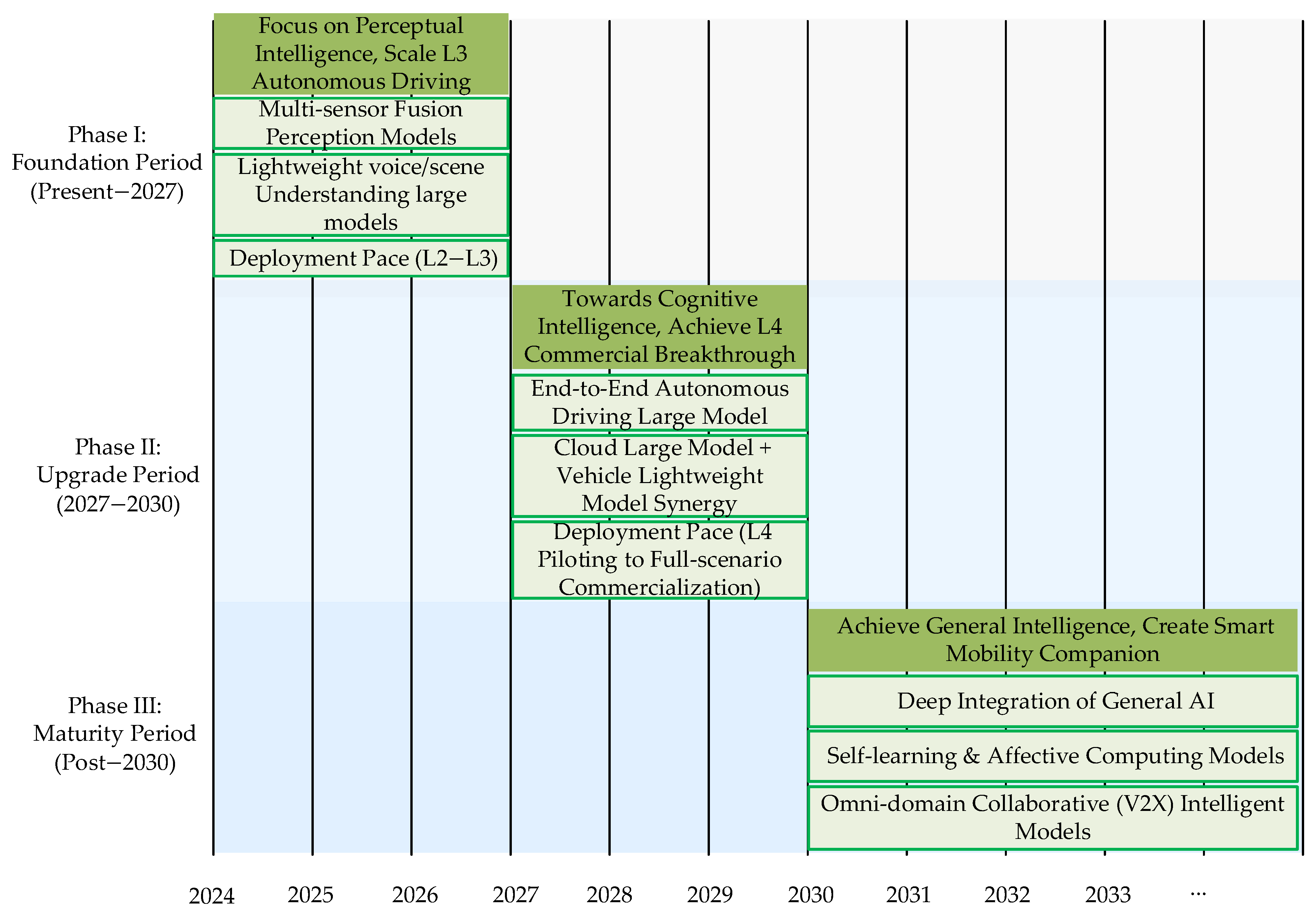
The iteration of AI models in automotive scenarios is essentially a process of gradually realizing that machines are replacing humans in completing driving tasks. The development rhythm of AI is deeply bound to the evolution of autonomous driving levels (L2–L5). Each stage is guided by clear engineering implementation goals, focusing on core technological breakthroughs while considering user needs and market acceptance, and it is promoted step by step in three specific stages. The classification and core features of vehicle driving automation levels are shown in
Table 2 [
18].
The first phase (from now to 2027) focuses on perceptual intelligence to achieve large-scale implementation of L3-level autonomous driving. This stage is the foundation-laying period for AI models in automotive scenarios. The core goal is to break through the bottlenecks of perception accuracy and real-time performance, complete the technical verification and commercialization of L3-level autonomous driving, and, at the same time, empower intelligent cockpits relying on large AI models to improve user interaction experience. Currently, the application of automotive AI models is mainly concentrated in the perception layer and the basic interaction layer. The core task is to achieve accurate identification and real-time perception of driving environment elements through multi-sensor fusion, while supporting the stable operation of L2+ level assisted driving functions. In terms of technical implementation, this stage needs to focus on solving the robustness problem of perception models and improving the accuracy of environmental recognition; meanwhile, with the help of the scenario understanding ability of large AI models, empower functions such as voice interaction and cockpit scenario-based services, and break the interaction barriers of traditional cockpits.
The second phase (2027–2030) moves towards cognitive intelligence, achieving a breakthrough in the commercialization of L4-level autonomous driving. This phase is an upgrade period for AI models in automotive scenarios, with the core goal of transitioning from perception to cognition. Relying on end-to-end large models, it will achieve a breakthrough in the commercialization of L4-level autonomous driving, enabling vehicles to have reasoning and decision-making capabilities in complex scenarios and truly understand the driving environment and user intentions. Compared with the perceptual intelligence of the first phase, cognitive intelligence requires AI models not only to see the driving environment but also to analyze scene logic, judge potential risks, and decide the optimal driving plan. The core technological breakthrough in this phase is the end-to-end autonomous driving large model, which abandons the traditional modular design approach. It directly outputs vehicle control commands through a single neural network, realizing the integration from perception to decision-making and control, and greatly improving the adaptability and decision-making efficiency in complex scenarios. At the same time, AI models will achieve improved generalization capabilities across scenarios, gradually covering full-scenario driving tasks; the collaboration between intelligent cockpits and autonomous driving will also be further deepened. Relevant studies have shown that the integration of a Large Language Model (LLM) can significantly improve the reasoning and decision-making capabilities of the model [
19].
The third phase (after 2030) realizes general intelligence and creates an intelligent travel partner. This phase is a mature stage for AI models in automotive scenarios, with the core goal of achieving general intelligence, making vehicles intelligent partners with autonomous learning, emotional interaction, and multi-scenario adaptation capabilities, completely liberating human drivers, and realizing the popularization of full-scenario unmanned driving. At this time, AI models will have autonomous learning capabilities, which can continuously optimize model performance through daily driving data; at the same time, emotional interaction capabilities will become a core competitive advantage, and the model can provide personalized emotional care and services by analyzing user status. In addition, AI models will break through the limitations of a single vehicle, realize the global collaboration of vehicles, roads, people, and clouds, and become a core node in the intelligent transportation ecosystem. The technical focus of this phase is the in-depth integration of Artificial General Intelligence (AGI) with automotive scenarios, with core breakthroughs in autonomous learning algorithms, emotional computing models, and global collaborative intelligent models, ultimately realizing the autonomous collaboration of human-vehicle-environment [
20].
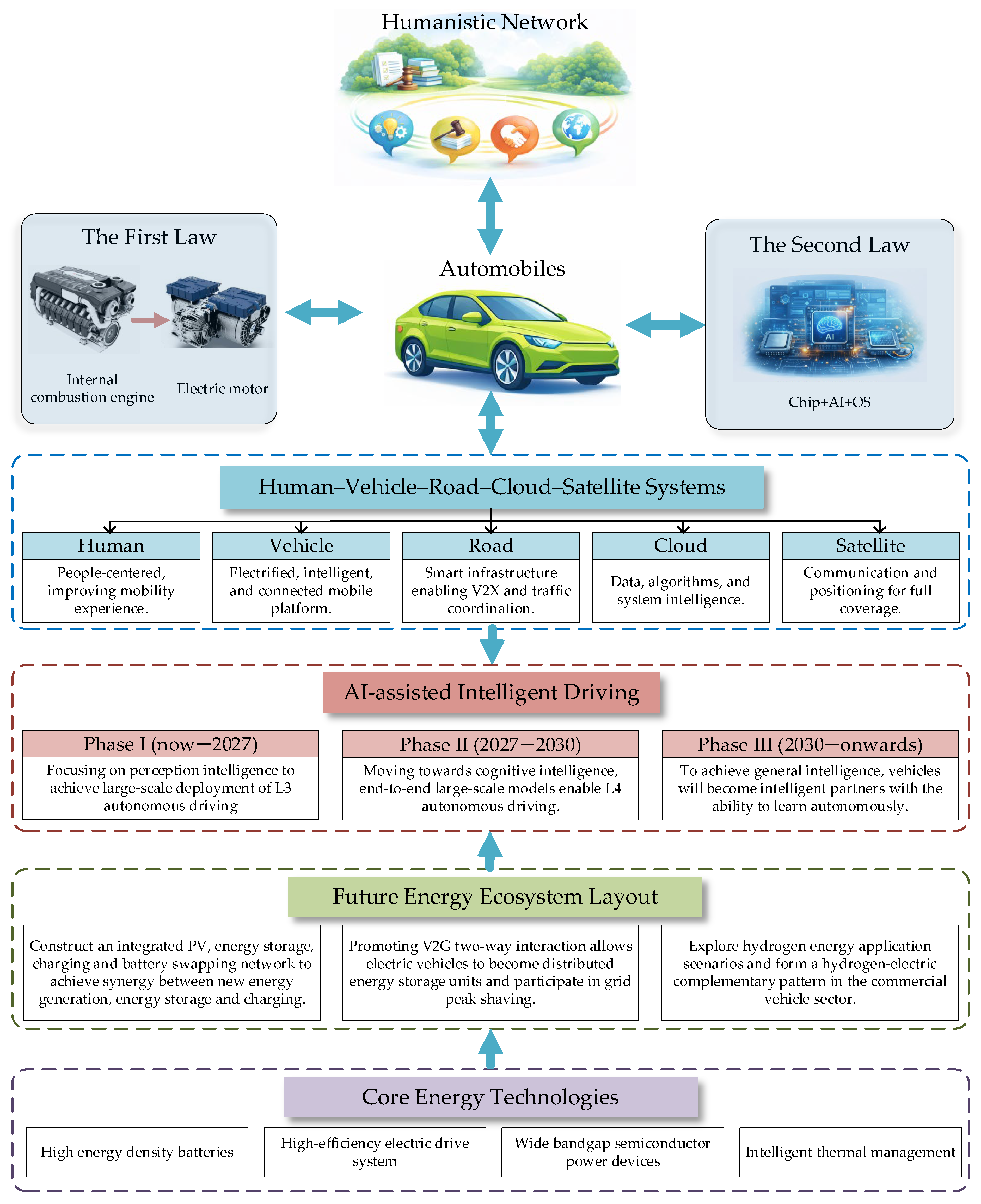
Figure 10 clearly presents the development path of AI models, and combines the core goals, key technologies, and computing power requirements.
- (2)
Current Situation and Development Trends of Vehicle-Side Computing Power
The implementation and iteration of AI models in automotive scenarios are inseparable from the support of vehicle-side computing power. As AI models evolve from perceptual intelligence to cognitive intelligence and general intelligence, the demand for vehicle-side computing power shows exponential growth. At the same time, the computing power architecture and collaboration model are also undergoing changes, gradually evolving from distributed to centralized, and from a single vehicle-side to end-cloud collaboration, providing a guarantee for the engineering implementation of AI models.
Currently, the development of in-vehicle computing power is in a critical stage of transitioning from meeting basic perception needs to supporting high-level cognitive needs. Its core feature is that computing power requirements are deeply tied to autonomous driving levels, and the computing power architecture is dominated by domain controllers.
In terms of computing power requirements, each upgrade in the autonomous driving level leads to an approximate order-of-magnitude increase in computing power demand: L2-level assisted driving requires about 10 Tera Operations Per Second (TOPS); L5 level and future super intelligent entities will have a computing power demand exceeding 1000 TOPS, reaching the level of thousands of TOPS. Among them, TOPS is the core indicator for measuring the performance of in-vehicle computing power [
21].
In terms of computing power architecture, the current mainstream is the distributed domain controller architecture, which divides the entire vehicle into multiple independent domains, such as power, cockpit, and autonomous driving. This architecture has low development difficulty and controllable costs, but it has drawbacks such as an inability to share computing power resources, low coordination efficiency among domains, and high hardware–software coupling, making it difficult to meet the needs of high-level autonomous driving and multi-model collaboration.
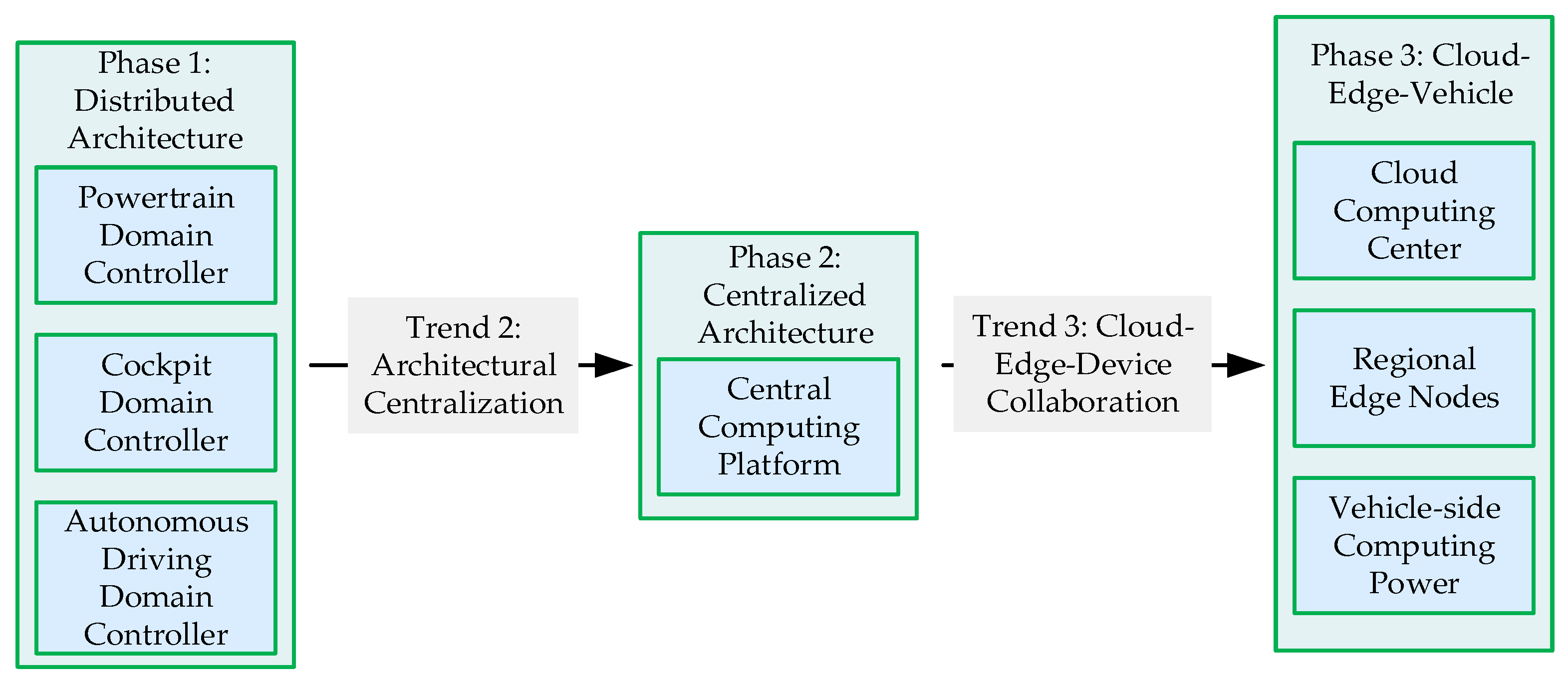
Combined with the development path of AI models and the needs of engineering implementation, the future in-vehicle computing power will present four core trends: exponential growth of computing power, centralized evolution of architecture, an end-cloud collaborative model, and breakthroughs in chip localization. The trend is demonstrated in
Figure 11.
Trend 1: The demand for computing power continues to grow exponentially, and the energy efficiency ratio becomes the core competitiveness. With the improvement of model complexity and the surge in sensor data volume, the demand for in-vehicle computing power will continue to break through. L5 level requires 1000+ TOPS, and future super-intelligent organisms will require thousands of TOPS. At the same time, the vehicle environment has strict restrictions on power consumption, so the energy efficiency ratio will become the core competitiveness. To quantify the operational efficiency of an on-board computing platform, the AI energy efficiency ratio
ηAI is defined as follows:
where
ϕcomp represents the nominal computing power of the system (in TOPS), and
Ptotal denotes the total power consumption of the processor under full-load conditions (in watts). Under limited power budgets, heterogeneous computing architectures (integrating CPUs, GPUs, and NPUs) can significantly enhance
ηAI. This optimization is essential to provide stable and sustainable support for high-level autonomous driving functions while maintaining the vehicle’s overall energy economy.
Trend 2: The computing power architecture evolves from distributed to centralized [
22]. In the future, it will evolve towards a central computing platform, which will uniformly handle all tasks, such as autonomous driving, intelligent cockpit, and body control, through one platform, realizing the sharing and efficient scheduling of computing power resources. The central computing platform will promote the decoupling of software and hardware, adopt a layered architecture, realize hardware replaceability and software upgradability, and support the rapid OTA iteration of AI models, which is the core direction of the era of software-defined automobiles.
Trend 3: Edge computing and cloud collaboration deepen, building a cloud-edge-end integrated computing power system. In the future, in-vehicle computing power will be deeply coordinated with cloud and edge computing power: the vehicle end (edge end) is responsible for processing perception, decision-making and control tasks with high real-time requirements; the cloud is responsible for processing high-complexity non-real-time tasks such as model training and big data analysis; edge nodes (such as roadside equipment) supplement the vehicle-end computing power to improve safety and generalization ability. This collaborative model can balance computing power costs and real-time requirements and support the continuous optimization of models, which is an important support for the evolution of AI towards general intelligence.
- (3)
Development Opportunities for Domestic Chips
Considering the development path of AI models in automotive scenarios and the evolution trend of on-vehicle computing power, focusing on the goals of engineering implementation and industrialization development, we should seize the historic opportunity of domestic chips, promote the collaborative breakthrough of technology and industry, and realize the closed-loop development of AI models, computing power architecture, and chips.
China’s new energy vehicles have achieved overtaking on a curve. As the core support for the implementation of AI models, the independent and controllable nature of on-vehicle computing power chips has become the key to the high-quality development of the automotive industry [
23]. If chips cannot achieve synchronous breakthroughs, this will restrict the implementation of AI models and autonomous driving technologies and affect the industrial competitiveness of China’s new energy vehicles. Therefore, domestic chips must seize this historic opportunity, develop synchronously with the new energy vehicle industry, and achieve independent control of core technologies. Combined with the development trend of on-vehicle computing power, it is recommended to focus on three development directions.
Firstly, focus on automotive-grade AI chips, benchmark against international advanced levels, and break through core technical bottlenecks. Automotive-grade AI chips are the core of on-vehicle computing power, directly determining the operational performance and real-time nature of AI models. Currently, domestic automotive-grade AI chips have been mass-produced and implemented in advanced manufacturing processes. However, the high-end market still relies on international manufacturers, and there are still shortcomings in key links such as EDA tools, IP cores, and functional safety certification. In the future, it is necessary to increase R&D investment, break through core technologies such as heterogeneous computing architecture, low-power design, and functional safety, benchmark against international advanced levels, and achieve independent control of high-end chips at L4–L5 levels. At the same time, it is necessary to combine the needs of domestic automakers to develop customized chips, improve adaptability with vehicle architectures, and reduce application costs.
Secondly, make efforts in power semiconductors, focusing on breaking through third-generation wide-bandgap semiconductor power devices. Power semiconductors are the core components of on-vehicle computing power chips, power batteries, and motor control, directly affecting vehicle energy consumption, range, and computing power stability. Third-generation wide-bandgap semiconductors (such as SiC, GaN) have the advantages of high temperature resistance, high voltage resistance, low power consumption, and high efficiency, which can significantly improve the energy efficiency ratio of on-vehicle computing power chips and are the core development direction in the future. Currently, this technology is still in its developing stage, and domestic enterprises still have gaps in materials, manufacturing, and other links. It is necessary to increase R&D investment, break through core technologies, achieve large-scale mass production, and support industrial upgrading and development [
24].
Thirdly, lay out intelligent sensor chips to improve the perception end and guarantee computing power support. Intelligent sensors are the eyes of AI models, and their data accuracy directly determines the perception and decision-making accuracy of the models. With the popularization of multi-sensor fusion technology, higher requirements have been put forward for the accuracy, power consumption, and integration of intelligent sensor chips. In the future, it will be necessary to focus on the research and development of intelligent sensor chips and breakthrough technologies, such as high-precision perception, low-power integration, and multi-modal fusion while at the same time promoting the collaborative design of sensor chips and automotive-grade AI chips to achieve integration of perception-computing power-decision-making.
3.2. A Nationally Aligned Technical Pathway for the Coordinated Development of Human–Vehicle–Road–Cloud–Satellite Systems
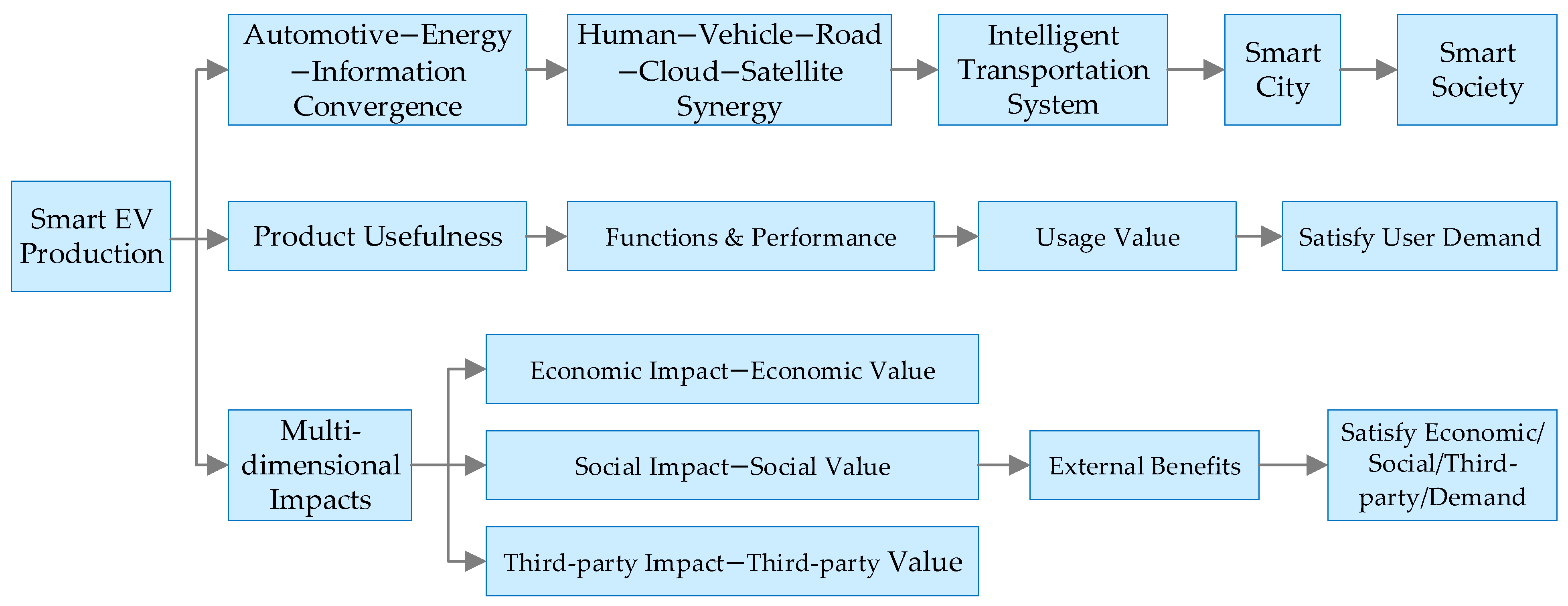
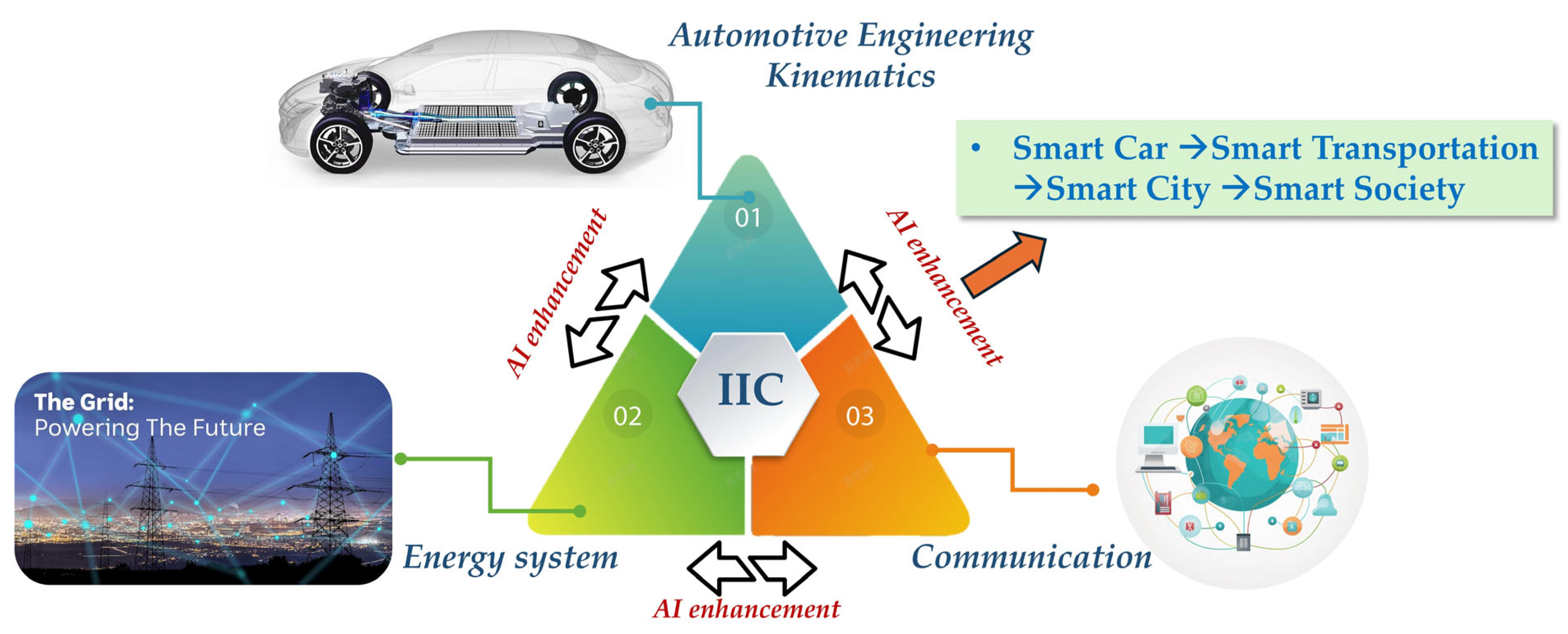
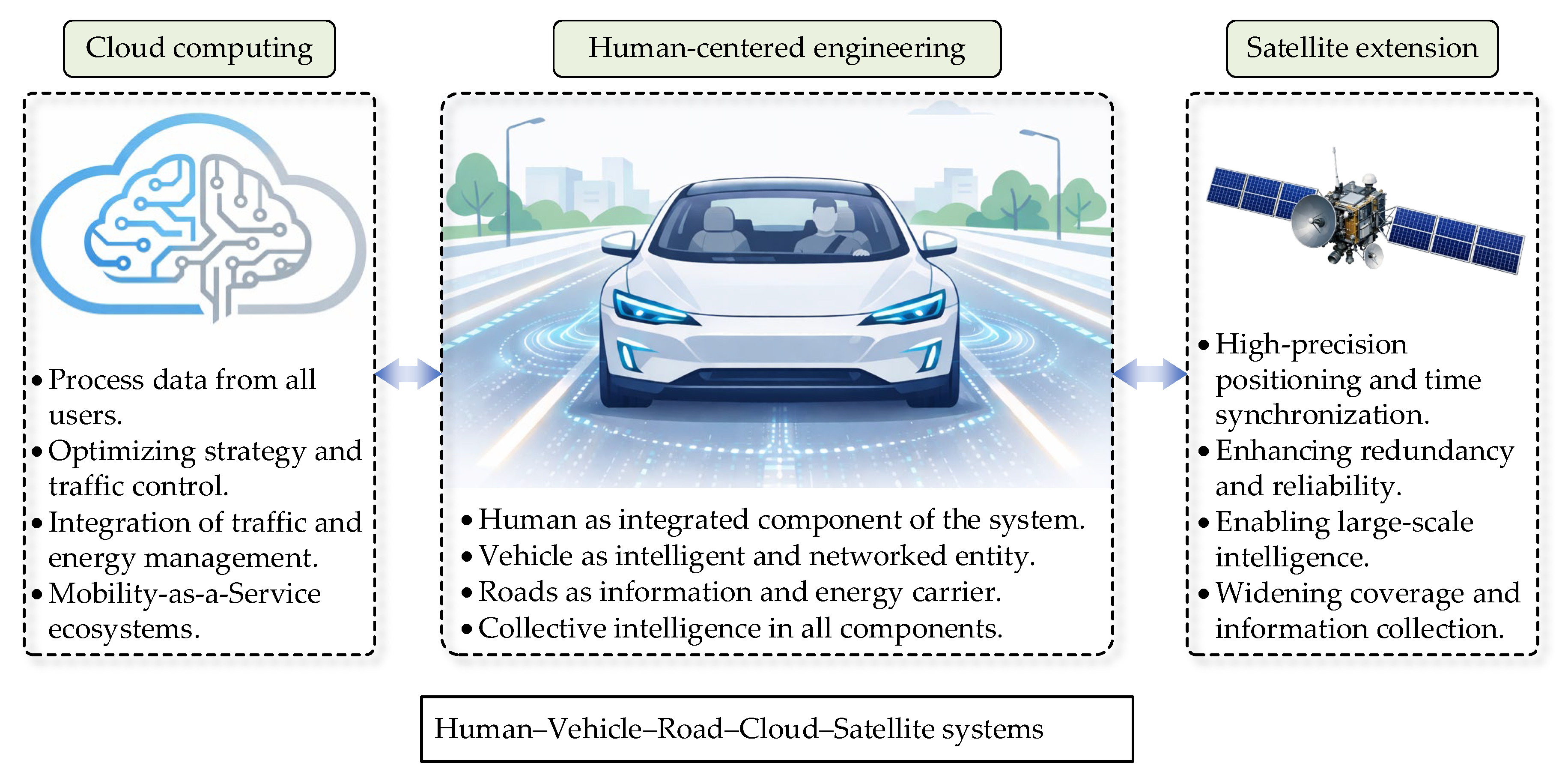
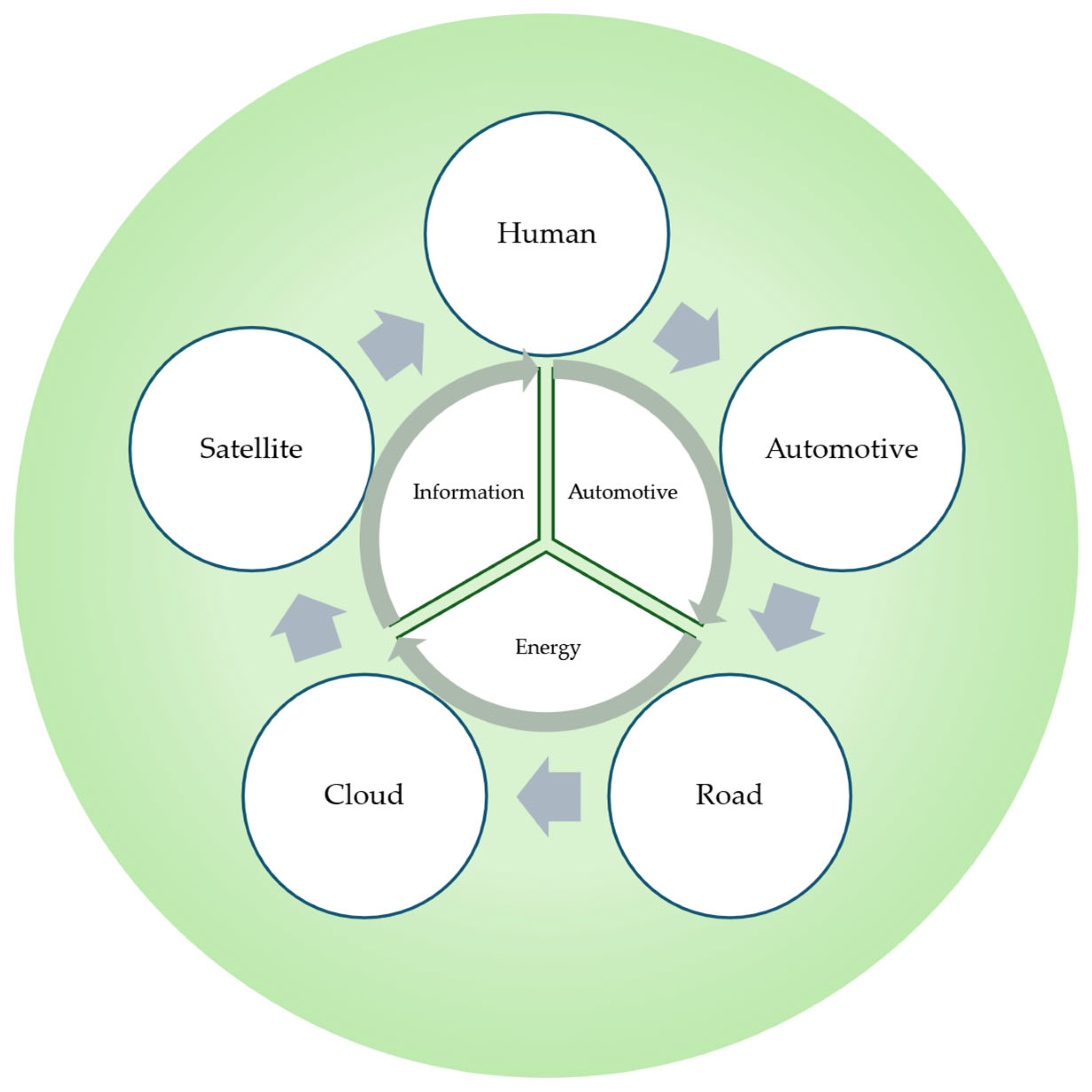
The automobile as a super-intelligent lifeform represents the future form of intelligent electric vehicles under the 4N4F framework. In this section, the Human–Vehicle–Road–Cloud–Satellite system is further discussed as a practical engineering pathway for realizing this vision, with the vehicle serving as the core mobile carrier. The transition of automotive engineering into an intelligent, connected, and system-oriented discipline requires a coherent technical pathway that aligns engineering design with industrial development objectives. In this context, the coordinated development of HVRCS systems provides a scalable engineering route for next-generation mobility systems. Rather than treating humans, vehicles, infrastructure, digital platforms, and spatial communication systems as isolated subsystems, this pathway emphasizes their deep coupling and co-evolution under unified architectural principles and governance frameworks. An illustration of the technical pathway is shown in
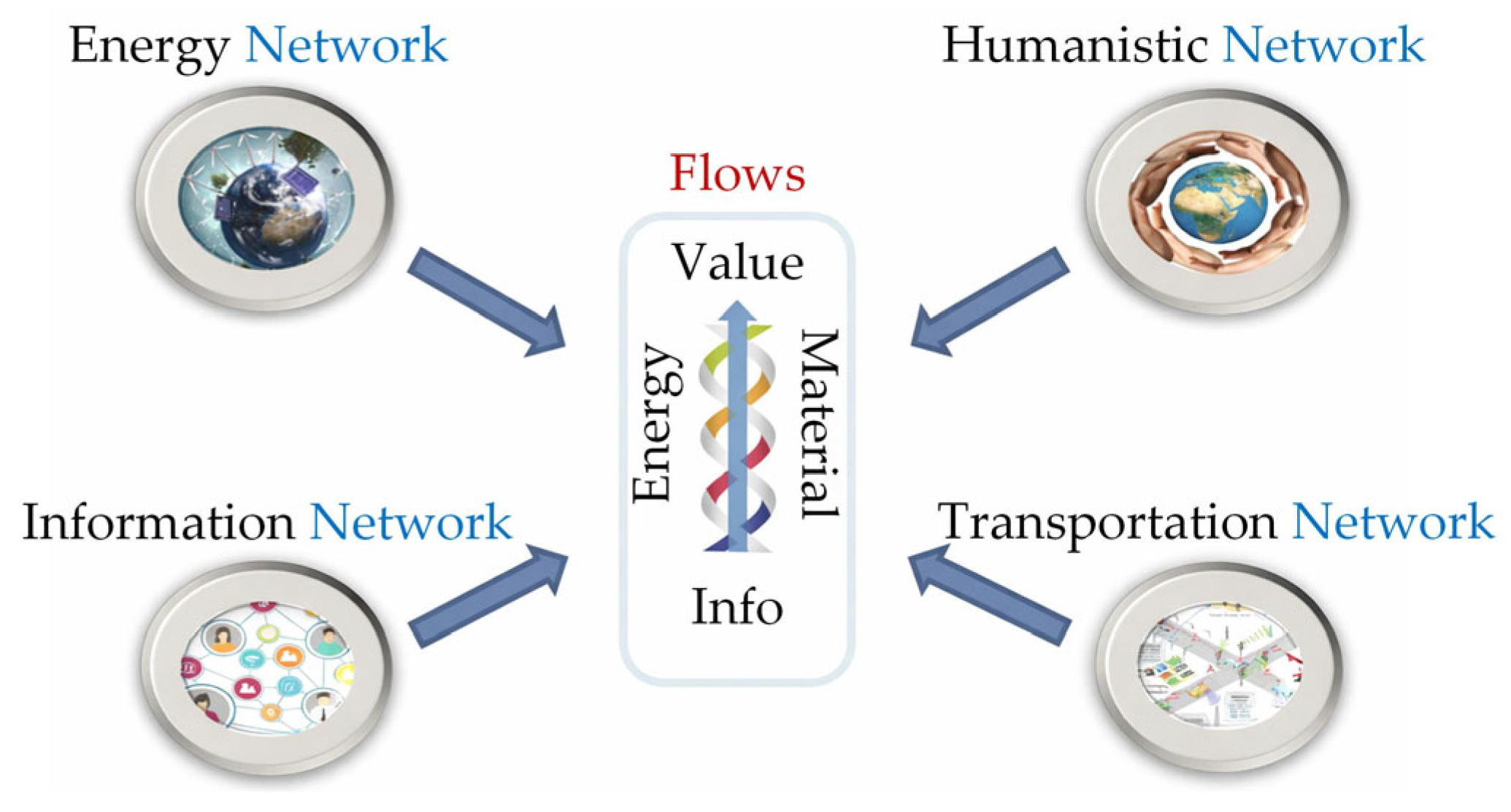
Figure 12. In fact, the integration is mainly reflected in two aspects: first, the deep integration of automobiles, energy, and information, making intelligent electric vehicles the core carrier; second, the full interconnection of human, vehicle, road, cloud, and satellite, promoting the industry to gradually evolve from intelligent electric vehicles to intelligent transportation and smart cities, and ultimately building a smart society, as shown in
Figure 13.
The core of this technical path is the human-centered engineering concept. The industrial strategy pays more and more attention to the safety, user experience and social value of intelligent transportation systems, thus reshaping the design goals of automotive engineering [
25]. Human beings are no longer external users who interact with vehicles but are an inherent component of the travel system. Their behavior, preferences and cognitive limitations must be systematically modeled and incorporated into engineering design [
26]. This requires the transformation of traditional human–computer interaction into human–computer system integration. The process of perception, decision-making and control needs to be jointly optimized between human and machine subjects. By embedding human intention identification, behavior prediction and trust perception control mechanisms into vehicles and platforms, the HVRCS system ensures that technological intelligence is consistent with travel needs and social expectations in the real world.
In this mode, vehicles operate not only as transportation tools but also as intelligent network entities that connect the human world with the physical and information domains.
Table 3 summarizes representative electric vehicle brands and models, together with their assisted-driving level, sensor configuration, and onboard computing power. As the table shows, mainstream electric vehicles are increasingly equipped with multiple cameras, radars, LiDAR sensors, and high-performance computing platforms. This reflects the rapid convergence of electrification, intelligence, and connectivity in modern vehicle design.
With this integration, vehicles are no longer independent mechanical products; instead, they are becoming mobile nodes in a distributed cyber–physical system. From a technical perspective, a vehicle simultaneously serves as an edge computing unit, a sensing platform, and an energy node. Its onboard perception and decision-making capabilities enable real-time responsiveness to dynamic driving environments, while standardized communication interfaces allow the vehicle to exchange data, status, and intentions with roads, cloud platforms, and other vehicles. This architectural transformation shifts intelligence away from being confined to a single vehicle and distributes it across the broader system. As a result, the overall transportation network gains improved scalability, redundancy, and cost-effectiveness. Therefore, vehicle performance and safety increasingly depend not only on isolated onboard functions but also on the shared intelligence enabled by interconnected sensing, computation, and communication infrastructures.
Based on the structural expansion and direction of the project, road infrastructure is the key to the gradual evolution from passive traffic carriers to intelligent collaborative system components. Investment in intelligent transportation infrastructure is a strategic solution-oriented approach, which recognizes that vehicle intelligence is not enough to ensure safety and efficiency in complex traffic environments [
27,
28]. By applying sensing, communication and dynamic wireless charging technology in road infrastructure, the HVRCS system provides collaborative perception and traffic-based coordinated energy control at the traffic system level [
29]. Intelligent roads provide real-time information on traffic conditions, environmental factors and infrastructure status, enhance vehicle perception, and reduce uncertainty in extreme situations such as traffic jams, bad weather and mixed traffic flow. Road intelligence is a distributed security layer, which enhances the reliability of the whole system and promotes the gradual transition of the system to automation.
These theoretical benefits are increasingly validated in practice. Baidu’s Apollo Go service, operating fully driverless in Wuhan since 2022 across a V2X-equipped road network, provides one of the most extensive real-world datasets for HVRCS co-evolution [
30]. In parallel, China’s Xiong’an intelligent road pilot has deployed roadside sensing units on over 100 km of infrastructure, enabling cooperative perception between vehicles and roads and reporting measurable reductions in collision risk at monitored intersections [
31].
As the central analysis and coordination hub in the HVRCS technology path, the cloud platform emphasizes digital infrastructure and data-driven governance. In addition, the cloud platform can collect massive data from vehicles, roads and users. This will achieve continuous learning, algorithm iteration and system-level optimization, which cannot be achieved at the level of a single vehicle or infrastructure. Cloud-based insights can realize fleet coordination, traffic flow optimization, predictive maintenance, etc., so that the travel system can change from passive response to active attack. To achieve this proactive management mathematically, the cloud platform acts as a centralized solver that continuously minimizes a global system cost function,
J. For a collaborative network of
N vehicles, this objective function dynamically balances individual travel time,
Ti, and energy consumption,
Ei.
where
αi and
βi are adaptive weighting factors for time and energy efficiency, and
Cinfra represents the operational state and cost of the infrastructure. Moreover, because these variables are now mathematically coupled, the cloud platform can integrate the transportation system with energy management, urban planning and public services, thus building an integrated Mobility-as-a-Service ecosystem. Thanks to cloud-edge collaboration, real-time decision-making can be localized, and long-term intelligence can be improved through centralized analysis and global optimization.
The satellite system can expand the coverage and time span of the HVRCS framework, providing key capabilities for national and cross-regional applications. High-precision positioning, time synchronization and satellite communication are important to ensure continuous service in areas where the ground network is difficult or cannot cover an entire area. At the industrial level, satellite integration is conducive to regional balanced development, infrastructure resilience and strategic security. The light satellite system helps to maintain redundancy and reliability technically so as to achieve consistent positioning and communication across multiple environments [
32]. Through satellite data that works seamlessly with ground vehicles, roads and cloud systems, the HVRCS architecture provides the coverage and coordination capabilities necessary for large-scale intelligent traffic deployment.
The collaborative development of HVRCS systems is not purely based on the consideration of technological progress but is oriented by industrial applications. As an experimental environment, these intelligent interconnected vehicle demonstration areas can verify and improve the technical structure, standards and governance mechanism. These areas help to gradually integrate new technologies into practical application scenarios while controlling safety, supervision and social risks. In this regard, standardization has become one of the key driving factors, which can achieve interoperability between heterogeneous systems and stakeholders, and promote industrial cooperation and ecosystem development. The combination of open standards and modular architecture enables automobile manufacturers, information and communication technology providers, transportation operators and energy companies to carry out cooperative innovation within a common framework.
From the perspective of system engineering, the HVRCS technology path realizes the integration of the four networks of transportation network, information network, energy network and human network, as well as the corresponding material, information, energy and value flow. The information flow generated by vehicles and infrastructure provides information for cloud-based intelligent systems, thus optimizing the traffic and energy flow of the whole system. Energy flows support vehicle electrification and infrastructure operation, while value flows give rise to new business models and services. These flows are tightly coupled and dynamically regulated, resulting in emerging system behaviors, which cannot be fully understood or controlled by traditional vehicle-centered engineering methods. Therefore, in the case of strong cross-domain coupling and nonlinear interaction, new engineering paradigms are needed to manage the stability, security and performance of the management system.
In the end, the unified design of the HVRCS system is the result of the integration of the human world, the information world and the physical world. Therefore, automobile engineering has become the intersection of these fields, coordinating technological innovation with social values and national development goals. By matching the engineering design with the national industrial direction, the development path of HVRCS technology constitutes the cornerstone of automotive engineering a system that emphasizes collaboration rather than isolation and systems rather than components and is human-oriented rather than being based purely technical performance. This paradigm not only releases the transformation potential of intelligent travel but also sets a new set of rules for the conception, evaluation and management of future automobile systems.
3.3. Toward the Energy Revolution: Key Technologies for Mobility Electrification and Future Energy Ecosystem Frameworks
Under the “4N4F” framework, the energy network is a key component connecting transportation, information and industrial systems. From this perspective, the progress of the automobile industry does not occur in isolation but is synchronized with the broader energy transformation, which is redefining the way energy is produced, converted and used. The future energy system is developing towards decarbonization and electrification, and electric vehicles must evolve accordingly.
The energy transition also imposes new requirements on mobility electrification, including low-carbon operation, high energy conversion efficiency, flexibility in energy interaction, and compatibility with renewable energy sources. To meet these requirements, vehicle level energy storage and energy conversion technologies must be developed in a coordinated manner. Therefore, this section reviews four key technology directions: high-energy-density batteries, high-efficiency electric drive systems, wide-bandgap power electronics, and intelligent thermal management. Recent studies on V2G integration and automotive battery systems further indicate that large-scale mobility electrification requires coordinated development of vehicle-side technologies, charging infrastructure, grid flexibility, and lifecycle battery management.
At the same time, the electrification of transportation is also constantly reshaping the energy system. Renewable energy-based photovoltaic generation, stationary energy storage, charging facilities, and power-exchange infrastructure should be designed together with vehicle side charging and energy interfaces to improve system efficiency and scalability. In emerging power systems, V2G technology enables electric vehicles to act as distributed energy storage resources and supports the flexibility of the power grid [
33]. In addition, low-carbon fuels such as hydrogen, ammonia and methanol have further broadened the choice of transportation to connect with future energy ecosystems, especially in the field of commercial and heavy-duty transportation.
- (1)
Key Technology Directions for Mobility Electrification
From a system perspective, the decarbonization benefit of EV deployment mainly depends on two factors: the efficiency of vehicles converting electrical energy into power, and the flexibility of electric vehicles interacting with the power grid. These requirements go beyond traditional vehicle performance indicators and place more emphasis on grid compatibility, full-life cycle sustainability and all-weather operation stability.
Therefore, this section focuses on four vehicle side technology directions that support transportation electrification and the energy transition: high energy density batteries, high-efficiency electric drive systems, wide-bandgap power electronic devices, and intelligent thermal management. These technologies together determine the range and efficiency of the vehicle, as well as the feasibility of large-scale high-power charging and two-way energy interaction.
- (a)
High-Energy-Density Batteries: Solid-State Batteries
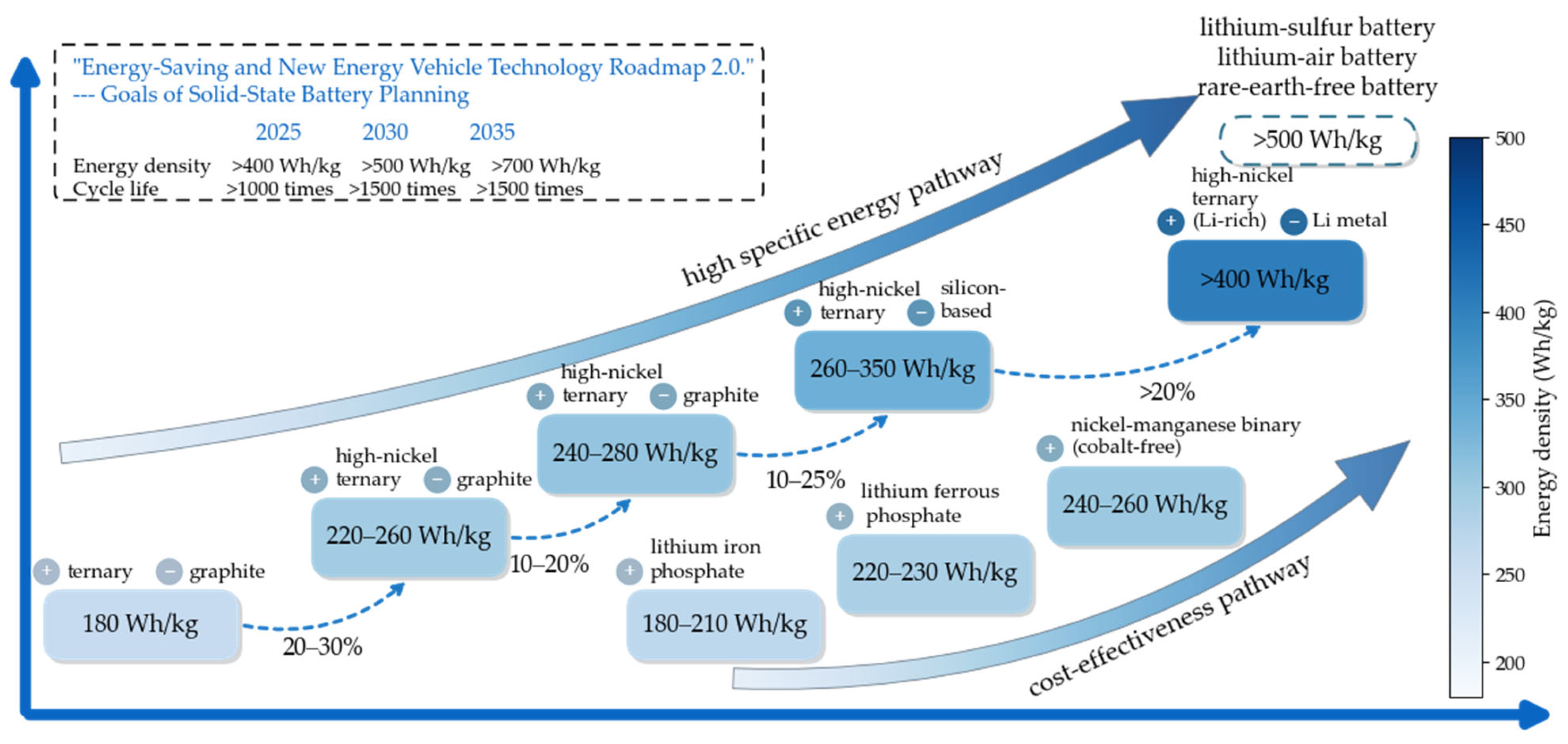
Battery technology remains a primary determinant of EV range, cost, safety, and lifecycle sustainability. As shown in
Figure 14, the roadmap for power battery development sets increasingly aggressive targets for next-generation systems, with solid-state battery planning indicating gravimetric energy density goals of >400 Wh/kg by 2025, >500 Wh/kg by 2030, and >700 Wh/kg by 2035, together with cycle-life expectations of >1000–1500 cycles. Such targets imply that incremental improvements to conventional liquid-electrolyte lithium-ion batteries [
34] may become insufficient, and that achieving both ultra-high specific energy and long cycle life will require breakthroughs in cell chemistry, materials integration, and manufacturing maturity.
In this context, all-solid-state batteries (ASSBs), particularly those coupled with lithium-metal anodes, are widely regarded as a promising pathway to improving energy density while improving safety by removing flammable liquid electrolytes. However, ASSBs are not yet automotive-ready, and their practical deployment is constrained by several engineering bottlenecks. Some studies indicate key barriers include limited ionic conductivity in some solid electrolytes, insufficient solid–solid interfacial contact, and high interfacial resistance caused by chemical and electrochemical incompatibility between electrodes and solid electrolytes. These interface-related limitations can severely limit rate capability and cycling stability, making interfacial stability and resistance among the most critical challenges to be addressed to translate solid-state lithium-metal batteries into EV-grade products [
35]. From a commercialization perspective, solid-state batteries are still moving from pilot-scale validation toward automotive-scale deployment, and their large-scale adoption depends on scalable manufacturing, stable solid–solid interfaces, and effective lithium-dendrite suppression. In addition to cell chemistry, recent reviews on automotive battery management systems emphasize that future battery development also depends on advanced BMS functions, including accurate state estimation, safety monitoring, thermal management, and lifecycle optimization. Therefore, high-energy-density batteries should be developed together with intelligent BMS technologies to ensure safety, reliability, and long-term performance in EV applications [
36].
- (b)
High Efficiency Electric Drive Systems
The electric drive system, which consists of the traction motor, inverter, and mechanical transmission, directly affects the energy consumption, drive performance and system efficiency of the vehicle. In the process of continuous energy revolution and transformation into large-scale electrification, the next-generation electric drive system must achieve high load cycle efficiency and high power density at the same time to reduce on-board energy loss and extend the range. Integrated electric axle designs combine the motor, inverter, and gearbox into a compact unit, reducing packaging volume and parasitic losses. However, this integration also introduces new challenges in thermal management and electromagnetic interference.
At the component level, permanent magnet synchronous motors (PMSMs) still dominate because of their high torque density and high efficiency. In addition, induction motors and switched reluctance motors have attracted increasing attention because of their robustness and cost advantages. Specifically, reducing loss and optimizing control strategies are important to maximize mechanical efficiency and power-to-weight ratio. In power electronics, the improvement of topology and semiconductor devices (especially wide-bandgap devices) is important to reduce inverter loss and improve operating efficiency. Recent research indicates that high drive-cycle efficiency and high power density are difficult to achieve through isolated optimization of the motor, inverter, or controller alone [
37]. Instead, coordinated design is required because motor loss, inverter switching loss, cooling capability, and control strategy are strongly coupled under real driving cycles. For example, a higher inverter switching frequency can improve the current-control bandwidth and reduce torque ripple, but it may also increase switching loss and thermal stress unless WBG devices and cooling structures are designed accordingly.
- (c)
Third-Generation Wide-Bandgap Power Devices: Enabling High-Efficiency Conversion and Bidirectionality
Third-generation WBG power semiconductor materials, such as SiC and GaN, have become important candidates for next-generation EV power electronics. Compared with silicon devices, SiC and GaN offer higher breakdown electric field, faster switching capability, and better high-temperature operation. These properties allow traction inverters and onboard power converters to operate at higher switching frequencies with lower power dissipation, which can reduce the size of passive components and cooling systems. Recent reviews show that WBG-based EV traction drives can improve power density and thermal performance compared with conventional Si-based systems [
38].
Despite these benefits, the use of SiC and GaN in real applications still involves trade-offs among reliability, cost, and overall system design. SiC devices are therefore widely applied in high-voltage traction inverters, whereas GaN devices are mainly used in medium-power converters such as onboard chargers and DC–DC modules. The rapid switching behavior of WBG devices introduces challenges for EMI control, insulation reliability, and thermal management. These challenges should be mitigated by further optimizing device, packaging, and cooling solutions. Therefore, the practical benefits of WBG devices depend not only on the semiconductor material itself but also on packaging parasitics, gate-driver design, EMI control, thermal management, and reliability-oriented system optimization.
- (d)
Intelligent Thermal Management: A System-Level Lever for All-Climate Global Performance
Thermal management has become another system-level challenge for EVs. In general, temperature can influence battery resistance, power capability, the degradation rate, and the safety margin. The energy cost of cabin conditioning should also be considered, especially in cold or hot climates, where heating, ventilation, and air conditioning (HVAC) systems can materially reduce driving range. As EV powertrains move toward greater integration and higher power density, thermal coupling among the battery, inverter/motor, and cabin becomes stronger, making isolated component-level cooling increasingly insufficient [
39].
Therefore, intelligent thermal management is shifting from passive temperature regulation to integrated architecture and predictive control. For example, by coordinating heat pumps, waste heat recovery and shared cooling loops, energy consumption can be reduced while ensuring the temperature safety of parts and passengers. From this perspective, thermal management should be optimized at the vehicle level to balance efficiency, range, fast charging capacity, durability and reliability under different working conditions.
- (2)
Vehicle–Energy-Grid-Integrated Energy Ecosystem Based on Low-Carbon Energy
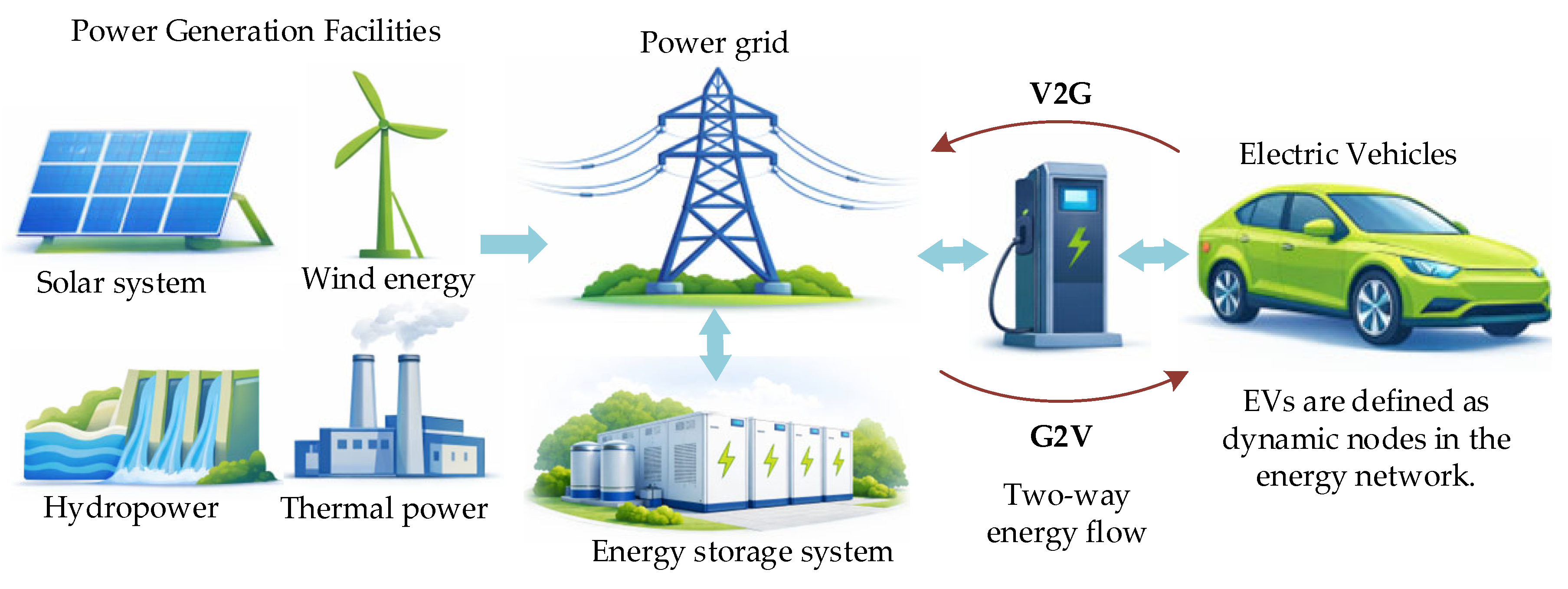
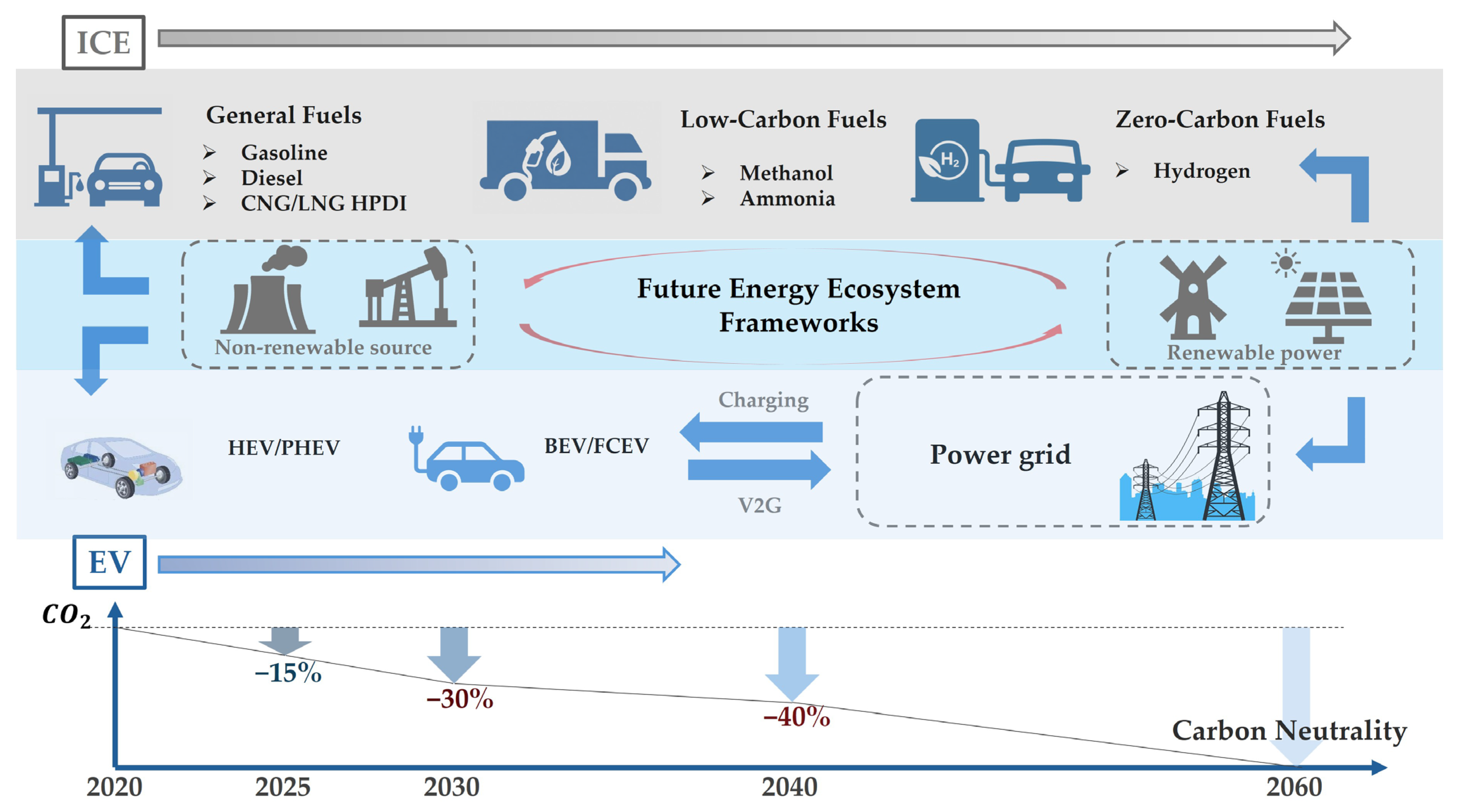
Low-carbon mobility ecosystems must develop in parallel with transportation electrification and energy decarbonization. As internal combustion engine vehicles gradually transition to EVs and low-carbon solutions, energy consumption is shifting from fossil fuels to renewable electricity and low-carbon fuels. This shift tightly links the transportation with the power grid and renewable energy systems, creating an integrated ecosystem of vehicle–energy-grid, as shown in
Figure 15.
- (a)
Comparison and Development Trends of Hybrid Power Technology
Among hybrid technology routes, Hybrid Electric Vehicle (HEV) technology is mature and requires no charging, but its batteries are too small, and it relies on petroleum, classifying it as an energy-saving vehicle rather than a new energy vehicle. A Plug-in Hybrid Electric Vehicle (PHEV) can be powered by either gasoline or electric power and has a long range, but its batteries are relatively small, and the experience of driving with a low battery is poor. A Range Extender Electric Vehicle (REEV) offers a driving experience close to pure electric and has a simple structure, but its high-speed energy efficiency is low. None of these three types strike a balance between the pure electric experience, all-scenario efficiency, and the convenience of refueling.
In the next three to five years, hybrid technology will show a clear convergence trend: the role of HEV will weaken, PHEV will evolve towards range extension, REEV will upgrade towards high efficiency, and finally evolve towards the technical route of high range, high efficiency, and high voltage. Advanced hybrid power systems for the future should possess the following seven characteristics, as shown in
Table 4, making hybrid technology a strategic route with independent value, running parallel to pure electric systems.
- (b)
An Integrated Ecosystem of Electric Vehicles and Renewable Energy
In the integrated ecosystem, pure electric vehicles and fuel cell electric vehicles are not only travel tools but also channels for energy flow. In order to meet the challenges of renewable energy and the rapid growth of demand for high-power charging, it is important to integrate photovoltaic energy storage and charging/power exchange infrastructure into the future ecosystem. By deploying on-site renewable energy, fixed energy storage and charging facilities, a new ecosystem can be built: the new energy flow will replace the traditional carbon cycle path, support local energy balance and load adjustment, improve the effective use of low-carbon electricity, and relieve the pressure on the distribution grid.
At the system level, the wide application of V2G technology enables the power grid to actively participate in peak cutting, frequency regulation and renewable energy balance using electric vehicles [
3]. This two-way interaction enables the transportation sector to contribute flexible capacity to system-level operation while creating additional economic value for car owners and fleet operators. Overall, the integration of renewable energy generation, energy storage, charging infrastructure and V2G has great economic and ecological potential and is expected to achieve carbon neutrality by 2060.
To quantitatively assess the low-carbon potential of different energy pathways within this integrated ecosystem, a life cycle greenhouse gas (GHG) emission analysis is conducted for typical transportation energy carriers, including fossil fuels, low-carbon fuels, zero-carbon fuels, and electric powertrains. The well-to-wheel (WTW) emission methodology is adopted to ensure a consistent comparison across all the pathways.
For all fuel and electricity pathways, the total WTW emission
CO2,WTW is calculated as follows:
where
CO2,WTT is the emissions from fuel/electricity production and transportation (Well-to-Tank) and
CO2,TTW is the emissions from vehicle end-use (Tank-to-Wheel).
For battery electric vehicles, the WTW emission
CO2,WTW,EV is directly linked to the grid carbon intensity and vehicle energy consumption:
where
EFgrid denotes the grid carbon emission factor (g
CO2eq/kWh) and
EC donates the real-world vehicle energy consumption (kWh/100 km).
The emission results in
Table 5 align with the carbon reduction trajectory outlined in
Figure 15. By 2025, a shift to natural gas and early electrification can achieve a 15% reduction in transportation emissions compared to 2020 levels. By 2030, the widespread adoption of EVs (supported by a decarbonizing grid) and green methanol can deliver a 30% reduction. By 2040, the integration of green ammonia, green hydrogen, and high-renewable-power EVs will drive a 40% reduction, laying the foundation for full carbon neutrality by 2060.
- (3)
An Example of Hydrogen-based Commercial Mobility as a Complementary Pathway
Although battery-powered travel is considered the preferred option to meet future transportation needs, some companies are exploring hydrogen-based supplements. These solutions provide low-carbon solutions for specific user groups by providing long range, high utilization and short hydrogen filling time. At present, original equipment manufacturers can choose two power system schemes: one is based on fuel cells, which is more efficient and has greater potential but needs to further reduce vehicle-level cost; the other is based on hydrogen internal combustion engines, which uses a mature engine platform. Although it is less efficient, its investment cost and vehicle-level cost are lower, which can better adapt to specific needs.
In addition to power systems, hydrogen can also act as a cross-field energy carrier, connecting renewable energy generation, long-term energy storage and carbon management. Recent research on integrated hydrogen energy storage and carbon capture and utilization technology of microgrids shows that by coordinating multi-energy scheduling, surplus renewable electricity can be absorbed, energy transfer across time scales can be achieved, and energy costs and carbon emissions can be reduced [
42]. This example illustrates how hydrogen commercial transportation forms a low-carbon industrial cycle, connecting renewable energy supply, hydrogen production, vehicle deployment and fleet demand so as to supplement the battery electric charging ecosystem within a unified vehicle-energy-grid framework.





 ,
,