
Vision and Multimodal Perception for Autonomous Driving: Deep Learning Architectures, Tasks, and Sensor Fusion



Abstract
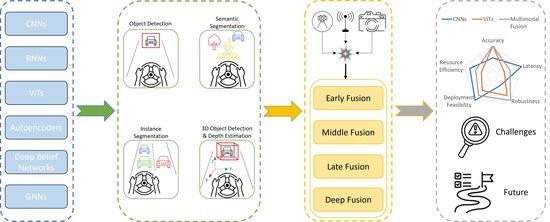
1. Introduction
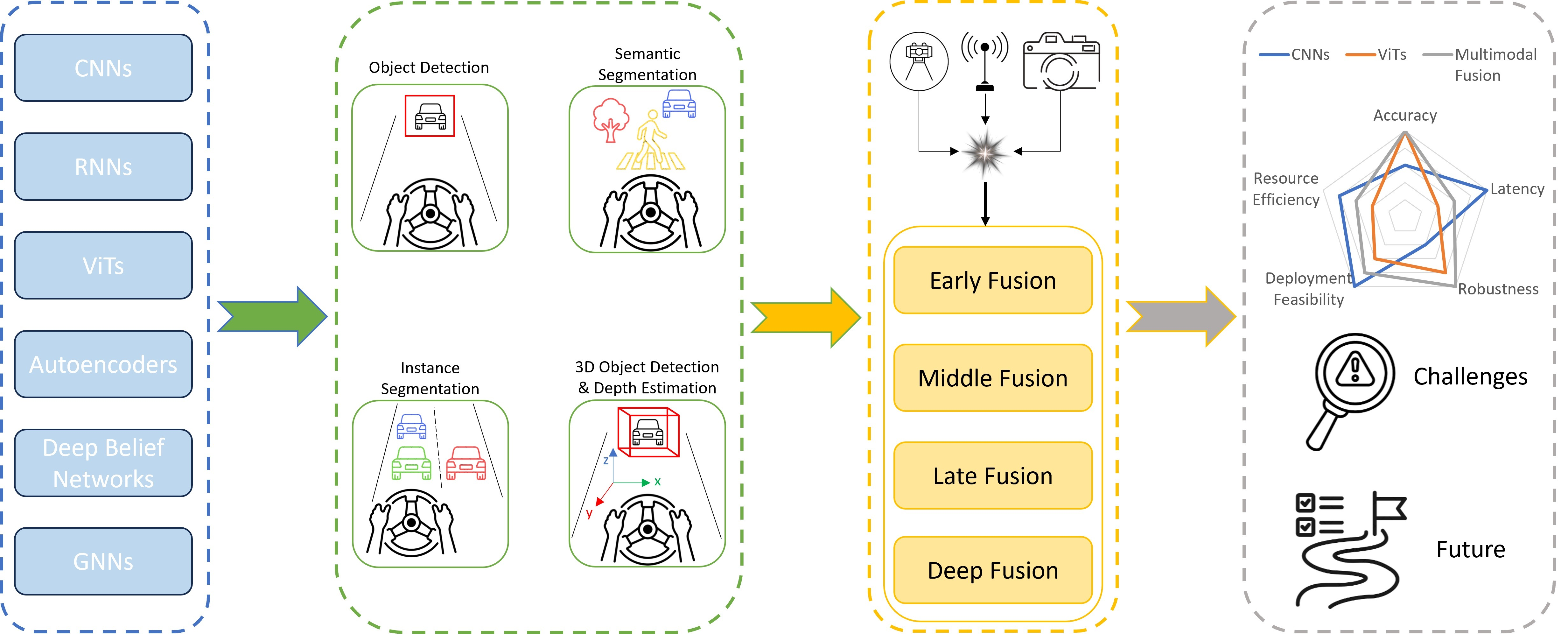
1.1. Scope of the Review
1.2. Novelty and Contribution
- Provide a structured and comprehensive evaluation of the most promising modern technologies. Unlike earlier reviews that focus on traditional CNN-based fusion, this work provides a comprehensive evaluation of State-of-the-Art technologies, such as Vision Transformers (ViTs).
- Provide a comparative analysis, including 2D vs. 3D perception, single-sensor vs. multimodal fusion, and classic vs. Transformer-based models, in order to highlight their respective strengths and limitations.
- Identify key challenges and outline promising future directions, so that this work can serve not only as a review of the state-of-the-art but also as a roadmap for future research.
1.3. Related Work
1.4. Structure of the Paper
2. Materials and Methods
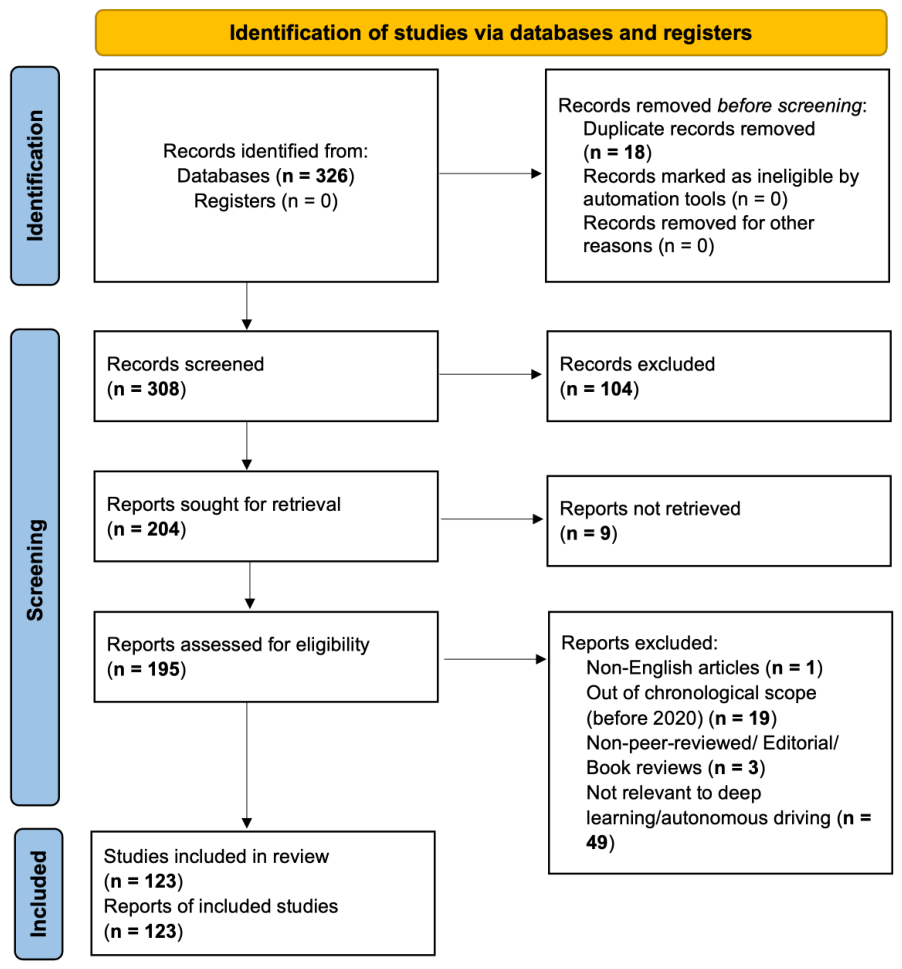
Methodological Approach
3. Background
3.1. Autonomous Driving
3.2. Foundational Deep Learning Architectures for Perception
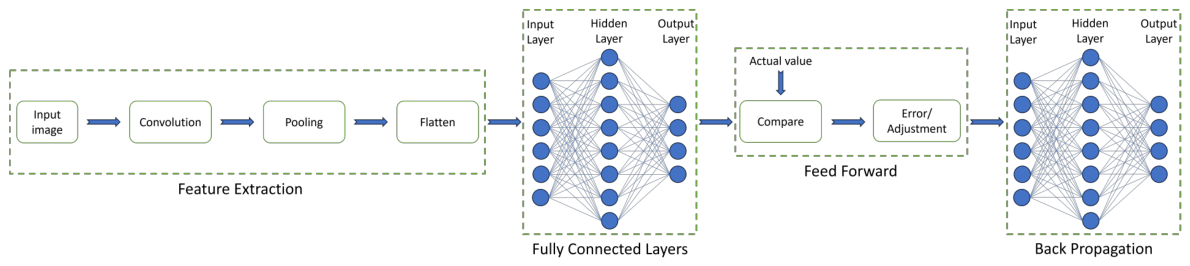
3.2.1. Convolutional Neural Networks
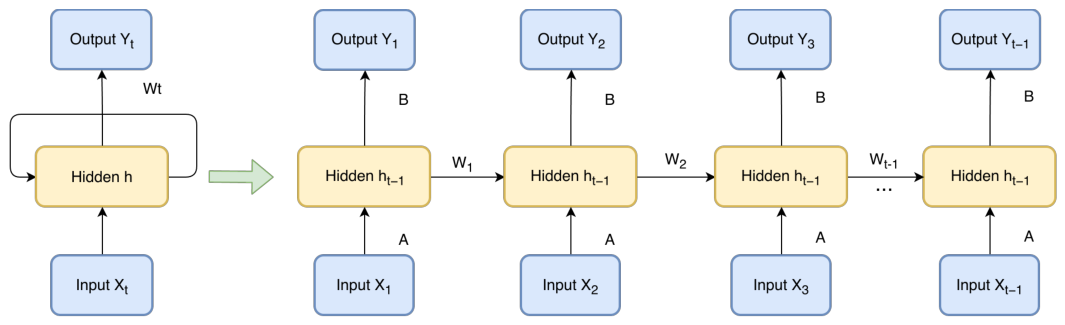
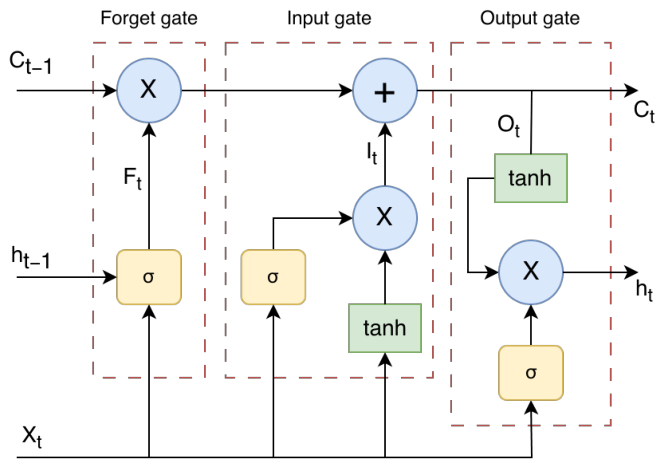
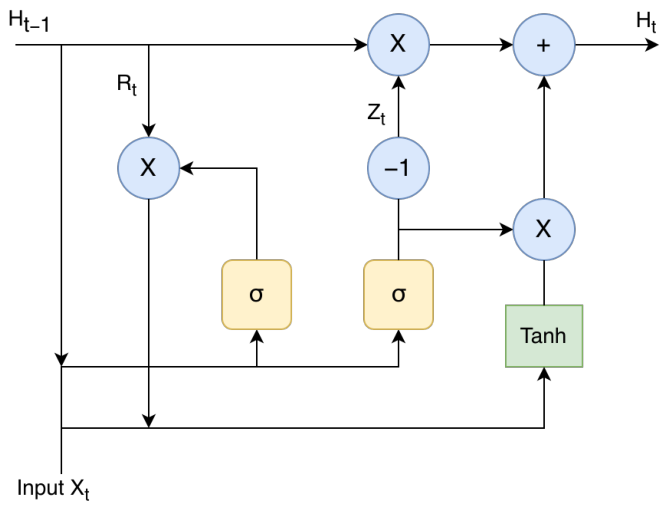
3.2.2. Recurrent Neural Networks
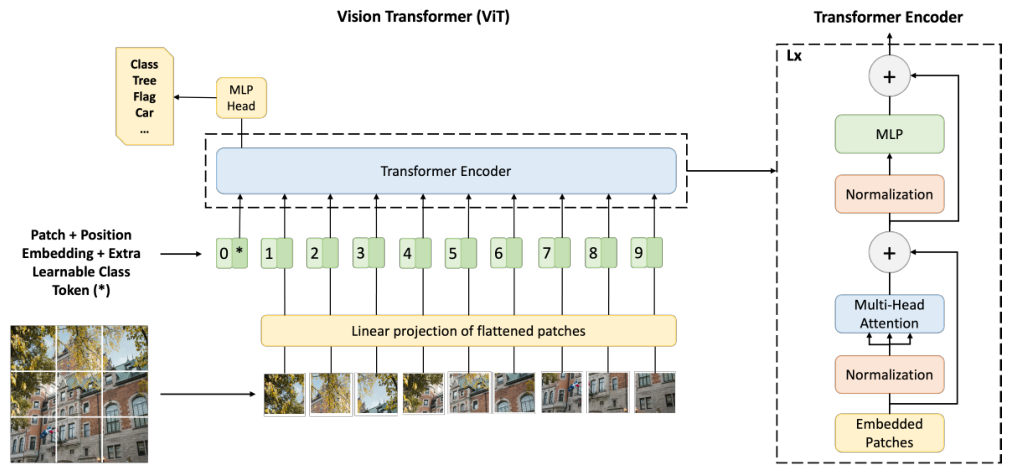
3.2.3. Transformers
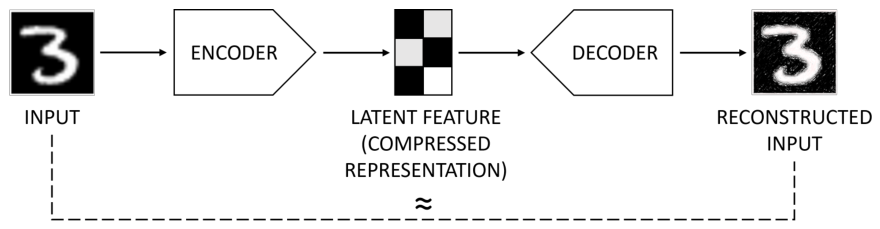
3.2.4. Autoencoders
3.2.5. Graph Neural Networks
4. Perception and Scene Understanding
4.1. Object Detection and Classification
4.2. Semantic Segmentation
4.3. Instance Segmentation
4.4. 3D Perception and Depth Estimation
4.4.1. Camera-Based Approaches
4.4.2. LiDAR-Based Approaches
4.4.3. Transformer-Based Approaches
5. Multimodal Sensor Fusion in Autonomous Vehicles
5.1. Overview
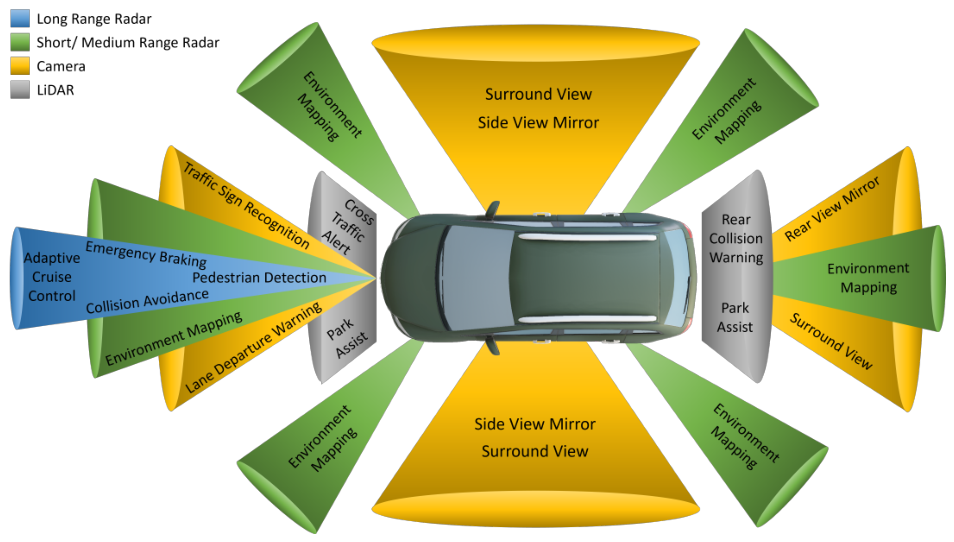
5.2. Sensors in Autonomous Vehicles
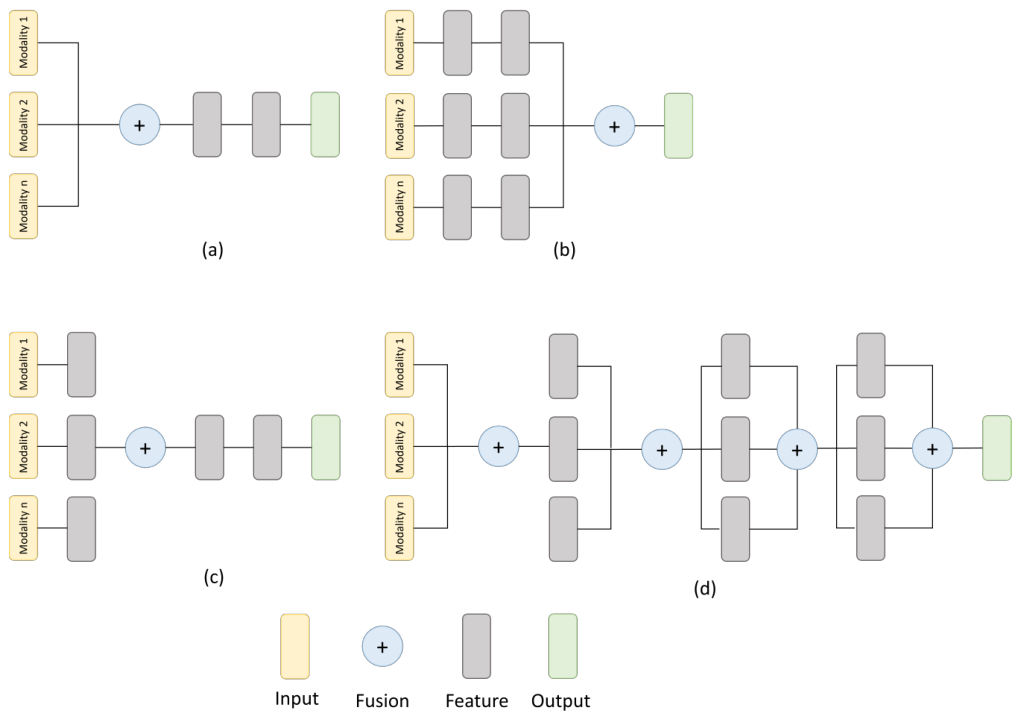
5.3. Multimodal Sensor Fusion Design Methodologies
5.4. Applications of Multimodal Sensor Fusion
5.4.1. Object Detection and Tracking
5.4.2. Scene Segmentation
5.4.3. Transformer-Based Multimodal Fusion 3D Object Detection
6. Challenges and Limitations in Perception for Autonomous Driving
6.1. Perception-Specific Challenges
6.2. Fusion-Related Challenges
6.3. Open Problems and Benchmarking Gaps
7. Discussion and Future Directions
7.1. Comparative Analysis
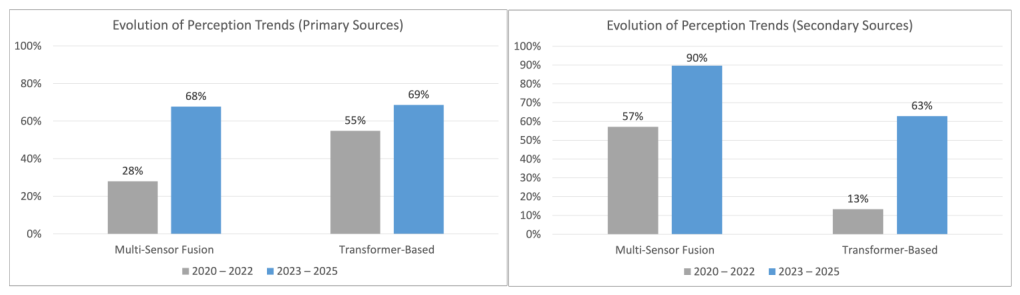
7.1.1. Quantitative Meta-Analysis
7.1.2. Critical Technical Synthesis and Trade-Off Analysis
7.2. Future Research Directions
7.2.1. Operational Stability and Reliability
7.2.2. System Scalability
7.2.3. Long-Term Evolution
8. Conclusions
Author Contributions
Funding
Institutional Review Board Statement
Informed Consent Statement
Data Availability Statement
Conflicts of Interest
Abbreviations
| AI | Artificial Intelligence |
| ARM | Advanced RISC Machines |
| BEV | Bird’s-Eye View |
| CNN | Convolutional Neural Network |
| DETR | Detection Transformer |
| DFE | Depth-Aware Feature Enhancement |
| DTR | Depth-Aware Transformer |
| FMCW | Frequency Modulated Continuous Wave |
| FPGA | Field-Programmable Gate Array |
| GAN | Generative Adversarial Network |
| GAT | Graph Attention Network |
| GCN | Graph Convolutional Network |
| GNN | Graph Neural Network |
| GNSS | Global Navigation Satellite System |
| GPU | Graphics Processing Unit |
| GRN | Graph Recurrent Network |
| GRU | Gated Recurrent Unit |
| GSTCN | Graph-based Spatio-Temporal Convolutional Network |
| LiDAR | Light Detection and Ranging |
| LSTM | Long Short-Term Memory |
| R-CNN | Region-Based Convolutional Neural Network |
| RGB | Red-Green-Blue |
| RNN | Recurrent Neural Network |
| RoI | Region of Interest |
| SAE | Society of Automotive Engineers (SAE International) |
| V2I | Vehicle-to-Infrastructure |
| V2P | Vehicle-to-Pedestrian |
| V2V | Vehicle-to-Vehicle |
| V2X | Vehicle-to-Everything |
| VAE | Variational Autoencoder |
| ViT | Vision Transformer |
References
- Levy, F.; Murnane, R.J. The New Division of Labor: How Computers Are Creating the Next Job Market; Princeton University Press: Princeton, NJ, USA, 2004. [Google Scholar] [CrossRef]
- Bathla, G.; Bhadane, K.; Singh, R.K.; Kumar, R.; Aluvalu, R.; Krishnamurthi, R.; Kumar, A.; Thakur, R.N.; Basheer, S. Autonomous Vehicles and Intelligent Automation: Applications, Challenges, and Opportunities. Mob. Inf. Syst. 2022, 2022, 7632892. [Google Scholar] [CrossRef]
- Zablocki, É.; Ben-Younes, H.; Pérez, P.; Cord, M. Explainability of deep vision-based autonomous driving systems: Review and challenges. Int. J. Comput. Vis. 2022, 130, 2425–2452. [Google Scholar] [CrossRef]
- Cui, C.; Ma, Y.; Cao, X.; Ye, W.; Zhou, Y.; Liang, K.; Chen, J.; Lu, J.; Yang, Z.; Liao, K.D.; et al. A Survey on Multimodal Large Language Models for Autonomous Driving. In Proceedings of the 2024 IEEE/CVF Winter Conference on Applications of Computer Vision Workshops (WACVW), Waikoloa, HI, USA, 1–6 January 2024; pp. 958–979. [Google Scholar] [CrossRef]
- Fourati, S.; Jaafar, W.; Baccar, N.; Alfattani, S. XLM for Autonomous Driving Systems: A Comprehensive Review. arXiv 2024, arXiv:2409.10484. [Google Scholar] [CrossRef]
- Fayyad, J.; Jaradat, M.A.; Gruyer, D.; Najjaran, H. Deep Learning Sensor Fusion for Autonomous Vehicle Perception and Localization: A Review. Sensors 2020, 20, 4220. [Google Scholar] [CrossRef]
- Xiang, C.; Feng, C.; Xie, X.; Shi, B.; Lu, H.; Lv, Y.; Yang, M.; Niu, Z. Multi-Sensor Fusion and Cooperative Perception for Autonomous Driving: A Review. IEEE Intell. Transp. Syst. Mag. 2023, 15, 36–58. [Google Scholar] [CrossRef]
- Huang, K.; Shi, B.; Li, X.; Li, X.; Huang, S.; Li, Y. Multi-modal Sensor Fusion for Auto Driving Perception: A Survey. arXiv 2024, arXiv:2202.02703. [Google Scholar]
- Charroud, A.; El Moutaouakil, K.; Palade, V.; Yahyaouy, A.; Onyekpe, U.; Eyo, E.U. Localization and Mapping for Self-Driving Vehicles: A Survey. Machines 2024, 12, 118. [Google Scholar] [CrossRef]
- Wang, X.; Maleki, M.A.; Azhar, M.W.; Trancoso, P. Moving Forward: A Review of Autonomous Driving Software and Hardware Systems. arXiv 2024, arXiv:2411.10291. [Google Scholar] [CrossRef]
- Sadaf, M.; Iqbal, Z.; Javed, A.R.; Saba, I.; Krichen, M.; Majeed, S.; Raza, A. Connected and Automated Vehicles: Infrastructure, Applications, Security, Critical Challenges, and Future Aspects. Technologies 2023, 11, 117. [Google Scholar] [CrossRef]
- Narisetty, V.S.C.P.; Maddineni, T. Revolutionizing Mobility: The Latest Advancements in Autonomous Vehicle Technology. arXiv 2024, arXiv:2412.20688. [Google Scholar] [CrossRef]
- Feng, D.; Haase-Schütz, C.; Rosenbaum, L.; Hertlein, H.; Gläser, C.; Timm, F.; Wiesbeck, W.; Dietmayer, K. Deep Multi-Modal Object Detection and Semantic Segmentation for Autonomous Driving: Datasets, Methods, and Challenges. IEEE Trans. Intell. Transp. Syst. 2021, 22, 1341–1360. [Google Scholar] [CrossRef]
- Huang, Y.; Chen, Y. Autonomous Driving with Deep Learning: A Survey of State-of-Art Technologies. arXiv 2020, arXiv:2006.06091. [Google Scholar]
- Pravallika, A.; Hashmi, M.F.; Gupta, A. Deep Learning Frontiers in 3D Object Detection: A Comprehensive Review for Autonomous Driving. IEEE Access 2024, 12, 173936–173980. [Google Scholar] [CrossRef]
- Fernandes, D.; Silva, A.; Névoa, R.; Simões, C.; Gonzalez, D.; Guevara, M.; Novais, P.; Monteiro, J.; Melo-Pinto, P. Point-cloud based 3D object detection and classification methods for self-driving applications: A survey and taxonomy. Inf. Fusion 2021, 68, 161–191. [Google Scholar] [CrossRef]
- Koutini, K.; Eghbal-zadeh, H.; Widmer, G. Receptive Field Regularization Techniques for Audio Classification and Tagging with Deep Convolutional Neural Networks. IEEE/ACM Trans. Audio Speech Lang. Process. 2021, 29, 1987–2000. [Google Scholar] [CrossRef]
- Bruton, J.; Wang, H. Translated Skip Connections—Expanding the Receptive Fields of Fully Convolutional Neural Networks. In Proceedings of the 2022 IEEE International Conference on Image Processing (ICIP), Bordeaux, France, 16–19 October 2022; IEEE: New York, NY, USA, 2022; pp. 631–635. [Google Scholar] [CrossRef]
- Ott, J.; Linstead, E.; LaHaye, N.; Baldi, P. Learning in the machine: To share or not to share? Neural Netw. 2020, 126, 235–249. [Google Scholar] [CrossRef] [PubMed]
- Biscione, V.; Bowers, J.S. Convolutional Neural Networks Are Not Invariant to Translation, but They Can Learn to Be. J. Mach. Learn. Res. 2021, 22, 1–28. [Google Scholar]
- Audinys, R.; Šlikas, Ž.; Radkevičius, J.; Šutas, M.; Ostreika, A. Deep Reinforcement Learning for a Self-Driving Vehicle Operating Solely on Visual Information. Electronics 2025, 14, 825. [Google Scholar] [CrossRef]
- Gupta, A.; Anpalagan, A.; Guan, L.; Khwaja, A.S. Deep learning for object detection and scene perception in self-driving cars: Survey, challenges, and open issues. Array 2021, 10, 100057. [Google Scholar] [CrossRef]
- Khanum, A.; Lee, C.Y.; Yang, C.S. Involvement of Deep Learning for Vision Sensor-Based Autonomous Driving Control: A Review. IEEE Sens. J. 2023, 23, 15321–15341. [Google Scholar] [CrossRef]
- Ni, J.; Chen, Y.; Chen, Y.; Zhu, J.; Ali, D.; Cao, W. A Survey on Theories and Applications for Self-Driving Cars Based on Deep Learning Methods. Appl. Sci. 2020, 10, 2749. [Google Scholar] [CrossRef]
- Bharilya, V.; Kumar, N. Machine learning for autonomous vehicle’s trajectory prediction: A comprehensive survey, challenges, and future research directions. Veh. Commun. 2024, 46, 100733. [Google Scholar] [CrossRef]
- Mienye, I.D.; Swart, T.G.; Obaido, G. Recurrent Neural Networks: A Comprehensive Review of Architectures, Variants, and Applications. Information 2024, 15, 517. [Google Scholar] [CrossRef]
- Cholakov, R.; Kolev, T. Transformers predicting the future. Applying attention in next-frame and time series forecasting. arXiv 2021, arXiv:2108.08224. [Google Scholar] [CrossRef]
- Topal, M.O.; Bas, A.; van Heerden, I. Exploring Transformers in Natural Language Generation: GPT, BERT, and XLNet. arXiv 2021, arXiv:2102.08036. [Google Scholar] [CrossRef]
- Wang, Y.; Deng, Y.; Zheng, Y.; Chattopadhyay, P.; Wang, L. Vision Transformers for Image Classification: A Comparative Survey. Technologies 2025, 13, 32. [Google Scholar] [CrossRef]
- Aggarwal, C.C. Attention Mechanisms and Transformers. In Machine Learning for Text; Springer: Berlin/Heidelberg, Germany, 2022; pp. 369–391. [Google Scholar]
- Lai-Dang, Q.V. A Survey of Vision Transformers in Autonomous Driving: Current Trends and Future Directions. arXiv 2024, arXiv:2403.07542. [Google Scholar] [CrossRef]
- Sengar, S.S.; Hasan, A.B.; Kumar, S.; Carroll, F. Generative artificial intelligence: A systematic review and applications. Multimed. Tools Appl. 2025, 84, 23661–23700. [Google Scholar] [CrossRef]
- Dosovitskiy, A.; Beyer, L.; Kolesnikov, A.; Weissenborn, D.; Zhai, X.; Unterthiner, T.; Dehghani, M.; Minderer, M.; Heigold, G.; Gelly, S.; et al. An Image is Worth 16x16 Words: Transformers for Image Recognition at Scale. arXiv 2021, arXiv:2010.11929. [Google Scholar] [CrossRef]
- Bavirisetti, D.P.; Martinsen, H.R.; Kiss, G.H.; Lindseth, F. A Multi-Task Vision Transformer for Segmentation and Monocular Depth Estimation for Autonomous Vehicles. IEEE Open J. Intell. Transp. Syst. 2023, 4, 909–928. [Google Scholar] [CrossRef]
- Guo, S.; Wang, S.; Yang, Z.; Wang, L.; Zhang, H.; Guo, P.; Gao, Y.; Guo, J. A Review of Deep Learning-Based Visual Multi-Object Tracking Algorithms for Autonomous Driving. Appl. Sci. 2022, 12, 10741. [Google Scholar] [CrossRef]
- Chen, L.; Sima, C.; Li, Y.; Zheng, Z.; Xu, J.; Geng, X.; Li, H.; He, C.; Shi, J.; Qiao, Y.; et al. PersFormer: 3D Lane Detection via Perspective Transformer and the OpenLane Benchmark. In Proceedings of the Computer Vision—ECCV 2022; Avidan, S., Brostow, G., Cissé, M., Farinella, G.M., Hassner, T., Eds.; Springer Nature: Cham, Switzerland, 2022; pp. 550–567. [Google Scholar]
- Bai, Y.; Chen, Z.; Fu, Z.; Peng, L.; Liang, P.; Cheng, E. CurveFormer: 3D Lane Detection by Curve Propagation with Curve Queries and Attention. In Proceedings of the 2023 IEEE International Conference on Robotics and Automation (ICRA), London, UK, 29 May–2 June 2023; pp. 7062–7068. [Google Scholar] [CrossRef]
- Li, Z.; Wang, W.; Xie, E.; Yu, Z.; Anandkumar, A.; Alvarez, J.M.; Luo, P.; Lu, T. Panoptic SegFormer: Delving Deeper into Panoptic Segmentation with Transformers. In Proceedings of the 2022 IEEE/CVF Conference on Computer Vision and Pattern Recognition (CVPR), New Orleans, LA, USA, 19–20 June 2022; pp. 1270–1279. [Google Scholar] [CrossRef]
- Liu, Y.; Yuan, T.; Wang, Y.; Wang, Y.; Zhao, H. VectorMapNet: End-to-end Vectorized HD Map Learning. In Proceedings of the 40th International Conference on Machine Learning, Honolulu, HI, USA, 23–29 July 2023; Volume 202, pp. 22352–22369. [Google Scholar]
- Yang, C.; Chen, Y.; Tian, H.; Tao, C.; Zhu, X.; Zhang, Z.; Huang, G.; Li, H.; Qiao, Y.; Lu, L.; et al. BEVFormer v2: Adapting Modern Image Backbones to Bird’s-Eye-View Recognition via Perspective Supervision. In Proceedings of the 2023 IEEE/CVF Conference on Computer Vision and Pattern Recognition (CVPR), Vancouver, BC, Canada, 17–24 June 2023; pp. 17830–17839. [Google Scholar] [CrossRef]
- Zeng, F.; Dong, B.; Zhang, Y.; Wang, T.; Zhang, X.; Wei, Y. MOTR: End-to-End Multiple-Object Tracking with Transformer. In Proceedings of the Computer Vision–ECCV 2022; Avidan, S., Brostow, G., Cissé, M., Farinella, G.M., Hassner, T., Eds.; Springer Nature: Cham, Switzerland, 2022; pp. 659–675. [Google Scholar]
- Wang, Z.; Guo, J.; Hu, Z.; Zhang, H.; Zhang, J.; Pu, J. Lane Transformer: A High-Efficiency Trajectory Prediction Model. IEEE Open J. Intell. Transp. Syst. 2023, 4, 2–13. [Google Scholar] [CrossRef]
- Chitta, K.; Prakash, A.; Jaeger, B.; Yu, Z.; Renz, K.; Geiger, A. TransFuser: Imitation with Transformer-Based Sensor Fusion for Autonomous Driving. IEEE Trans. Pattern Anal. Mach. Intell. 2023, 45, 12878–12895. [Google Scholar] [CrossRef]
- Bank, D.; Koenigstein, N.; Giryes, R. Autoencoders. arXiv 2021, arXiv:2003.05991. [Google Scholar]
- Michelucci, U. An Introduction to Autoencoders. arXiv 2022, arXiv:2201.03898. [Google Scholar] [CrossRef]
- Khemani, B.; Patil, S.; Kotecha, K.; Tanwar, S. A review of graph neural networks: Concepts, architectures, techniques, challenges, datasets, applications, and future directions. J. Big Data 2024, 11, 18. [Google Scholar] [CrossRef]
- Carrasco Limeros, S.; Majchrowska, S.; Johnander, J.; Petersson, C.; Fernández Llorca, D. Towards explainable motion prediction using heterogeneous graph representations. Transp. Res. Part C Emerg. Technol. 2023, 157, 104405. [Google Scholar] [CrossRef]
- Krzywda, M.; Łukasik, S.; Gandomi, A.H. Graph Neural Networks in Computer Vision—Architectures, Datasets and Common Approaches. In Proceedings of the 2022 International Joint Conference on Neural Networks (IJCNN), Padua, Italy, 18–23 July 2022; pp. 1–10. [Google Scholar] [CrossRef]
- Meyer, E.; Brenner, M.; Zhang, B.; Schickert, M.; Musani, B.; Althoff, M. Geometric Deep Learning for Autonomous Driving: Unlocking the Power of Graph Neural Networks with CommonRoad-Geometric. In Proceedings of the 2023 IEEE Intelligent Vehicles Symposium (IV), Anchorage, AK, USA, 4–7 June 2023; pp. 1–8. [Google Scholar] [CrossRef]
- Huang, R.; Zhuo, G.; Xiong, L.; Lu, S.; Tian, W. A Review of Deep Learning-Based Vehicle Motion Prediction for Autonomous Driving. Sustainability 2023, 15, 14716. [Google Scholar] [CrossRef]
- Wang, L.; Huang, Y. A Survey of 3D Point Cloud and Deep Learning-Based Approaches for Scene Understanding in Autonomous Driving. IEEE Intell. Transp. Syst. Mag. 2022, 14, 135–154. [Google Scholar] [CrossRef]
- Rahmani, S.; Baghbani, A.; Bouguila, N.; Patterson, Z. Graph Neural Networks for Intelligent Transportation Systems: A Survey. IEEE Trans. Intell. Transp. Syst. 2023, 24, 8846–8885. [Google Scholar] [CrossRef]
- Shi, W.; Rajkumar, R.R. Point-GNN: Graph Neural Network for 3D Object Detection in a Point Cloud. In Proceedings of the 2020 IEEE/CVF Conference on Computer Vision and Pattern Recognition (CVPR), Seattle, WA, USA, 13–19 June 2020; pp. 1708–1716. [Google Scholar]
- Sheng, Z.; Xu, Y.; Xue, S.; Li, D. Graph-Based Spatial-Temporal Convolutional Network for Vehicle Trajectory Prediction in Autonomous Driving. IEEE Trans. Intell. Transp. Syst. 2022, 23, 17654–17665. [Google Scholar] [CrossRef]
- Klimke, M.; Volz, B.; Buchholz, M. Cooperative Behavior Planning for Automated Driving Using Graph Neural Networks. In Proceedings of the 2022 IEEE Intelligent Vehicles Symposium (IV), Aachen, Germany, 5–9 June 2022; IEEE: New York, NY, USA, 2022; pp. 167–174. [Google Scholar] [CrossRef]
- Wang, Y.; Mao, Q.; Zhu, H.; Deng, J.; Zhang, Y.; Ji, J.; Li, H.; Zhang, Y. Multi-modal 3d object detection in autonomous driving: A survey. Int. J. Comput. Vis. 2023, 131, 2122–2152. [Google Scholar] [CrossRef]
- Liang, L.; Ma, H.; Zhao, L.; Xie, X.; Hua, C.; Zhang, M.; Zhang, Y. Vehicle Detection Algorithms for Autonomous Driving: A Review. Sensors 2024, 24, 3088. [Google Scholar] [CrossRef]
- Karangwa, J.; Liu, J.; Zeng, Z. Vehicle Detection for Autonomous Driving: A Review of Algorithms and Datasets. IEEE Trans. Intell. Transp. Syst. 2023, 24, 11568–11594. [Google Scholar] [CrossRef]
- Guo, Z.; Huang, Y.; Hu, X.; Wei, H.; Zhao, B. A Survey on Deep Learning Based Approaches for Scene Understanding in Autonomous Driving. Electronics 2021, 10, 471. [Google Scholar] [CrossRef]
- Zheng, S.; Lu, J.; Zhao, H.; Zhu, X.; Luo, Z.; Wang, Y.; Fu, Y.; Feng, J.; Xiang, T.; Torr, P.H.; et al. Rethinking Semantic Segmentation From a Sequence-to-Sequence Perspective with Transformers. In Proceedings of the IEEE/CVF Conference on Computer Vision and Pattern Recognition (CVPR), Nashville, TN, USA, 20–25 June 2021; pp. 6881–6890. [Google Scholar]
- Xie, E.; Wang, W.; Yu, Z.; Anandkumar, A.; Alvarez, J.M.; Luo, P. SegFormer: Simple and Efficient Design for Semantic Segmentation with Transformers. In Proceedings of the Advances in Neural Information Processing Systems; Ranzato, M., Beygelzimer, A., Dauphin, Y., Liang, P., Vaughan, J.W., Eds.; Curran Associates, Inc.: Red Hook, NY, USA, 2021; Volume 34, pp. 12077–12090. [Google Scholar]
- Wan, Q.; Huang, Z.; Lu, J.; Yu, G.; Zhang, L. Seaformer: Squeeze-enhanced axial transformer for mobile semantic segmentation. In Proceedings of the Eleventh International Conference on Learning Representations, Kigali, Rwanda, 1–5 May 2023. [Google Scholar]
- Liu, X.; Li, J.; Ma, J.; Sun, H.; Xu, Z.; Zhang, T.; Yu, H. Deep transfer learning for intelligent vehicle perception: A survey. Green. Energy Intell. Transp. 2023, 2, 100125. [Google Scholar] [CrossRef]
- Wang, Y.; Wang, S.; Li, Y.; Liu, M. A Comprehensive Review of 3D Object Detection in Autonomous Driving: Technological Advances and Future Directions. arXiv 2024, arXiv:2408.16530. [Google Scholar] [CrossRef]
- Mao, J.; Shi, S.; Wang, X.; Li, H. 3D Object Detection for Autonomous Driving: A Comprehensive Survey. Int. J. Comput. Vis. 2023, 131, 1909–1963. [Google Scholar] [CrossRef]
- Qian, R.; Lai, X.; Li, X. 3D Object Detection for Autonomous Driving: A Survey. Pattern Recognit. 2022, 130, 108796. [Google Scholar] [CrossRef]
- Fawole, O.A.; Rawat, D.B. Recent Advances in 3D Object Detection for Self-Driving Vehicles: A Survey. AI 2024, 5, 1255–1285. [Google Scholar] [CrossRef]
- Vora, S.; Lang, A.H.; Helou, B.; Beijbom, O. PointPainting: Sequential Fusion for 3D Object Detection. In Proceedings of the 2020 IEEE/CVF Conference on Computer Vision and Pattern Recognition (CVPR), Seattle, WA, USA, 13–19 June 2020; pp. 4603–4611. [Google Scholar] [CrossRef]
- Nagiub, A.S.; Fayez, M.; Khaled, H.; Ghoniemy, S. 3D Object Detection for Autonomous Driving: A Comprehensive Review. In Proceedings of the 2024 6th International Conference on Computing and Informatics (ICCI), Cairo, Egypt, 6–7 March 2024; pp. 1–11. [Google Scholar] [CrossRef]
- Aung, N.H.H.; Sangwongngam, P.; Jintamethasawat, R.; Shah, S.; Wuttisittikulkij, L. A Review of LiDAR-Based 3D Object Detection via Deep Learning Approaches Towards Robust Connected and Autonomous Vehicles. IEEE Trans. Intell. Veh. 2025, 10, 526–547. [Google Scholar] [CrossRef]
- Pan, X.; Xia, Z.; Song, S.; Li, L.E.; Huang, G. 3D Object Detection with Pointformer. In Proceedings of the 2021 IEEE/CVF Conference on Computer Vision and Pattern Recognition (CVPR), Nashville, TN, USA, 20–25 June 2021; pp. 7459–7468. [Google Scholar] [CrossRef]
- Huang, Y.; Zheng, W.; Zhang, Y.; Zhou, J.; Lu, J. Tri-Perspective View for Vision-Based 3D Semantic Occupancy Prediction. In Proceedings of the 2023 IEEE/CVF Conference on Computer Vision and Pattern Recognition (CVPR), Vancouver, BC, Canada, 17–24 June 2023; pp. 9223–9232. [Google Scholar] [CrossRef]
- Sun, P.; Tan, M.; Wang, W.; Liu, C.; Xia, F.; Leng, Z.; Anguelov, D. SWFormer: Sparse Window Transformer for 3D Object Detection in Point Clouds. In Proceedings of the Computer Vision—ECCV 2022; Avidan, S., Brostow, G., Cissé, M., Farinella, G.M., Hassner, T., Eds.; Springer Nature: Cham, Switzerland, 2022; pp. 426–442. [Google Scholar]
- Shenga, H.; Cai, S.; Liu, Y.; Deng, B.; Huang, J.; Hua, X.S.; Zhao, M.J. Improving 3D Object Detection with Channel-wise Transformer. In Proceedings of the 2021 IEEE/CVF International Conference on Computer Vision (ICCV), Montreal, QC, Canada, 10–17 October 2021; pp. 2723–2732. [Google Scholar] [CrossRef]
- Huang, K.; Wu, T.; Su, H.; Hsu, W.H. MonoDTR: Monocular 3D Object Detection with Depth-Aware Transformer. In Proceedings of the 2022 IEEE/CVF Conference on Computer Vision and Pattern Recognition (CVPR), New Orleans, LA, USA, 19–20 June 2022; pp. 4002–4011. [Google Scholar] [CrossRef]
- Wang, Y.; Guizilini, V.C.; Zhang, T.; Wang, Y.; Zhao, H.; Solomon, J. Detr3d: 3d object detection from multi-view images via 3d-to-2d queries. In Proceedings of the 5th Conference on Robot Learning, PMLR, London, UK, 8–11 December 2022; pp. 180–191. [Google Scholar]
- Tang, Y.; He, H.; Wang, Y.; Mao, Z.; Wang, H. Multi-modality 3D object detection in autonomous driving: A review. Neurocomputing 2023, 553, 126587. [Google Scholar] [CrossRef]
- Wang, X.; Li, K.; Chehri, A. Multi-Sensor Fusion Technology for 3D Object Detection in Autonomous Driving: A Review. IEEE Trans. Intell. Transp. Syst. 2024, 25, 1148–1165. [Google Scholar] [CrossRef]
- Tian, D.; Li, J.; Lei, J. Multi-sensor information fusion in Internet of Vehicles based on deep learning: A review. Neurocomputing 2025, 614, 128886. [Google Scholar] [CrossRef]
- Yeong, D.J.; Velasco-Hernandez, G.; Barry, J.; Walsh, J. Sensor and Sensor Fusion Technology in Autonomous Vehicles: A Review. Sensors 2021, 21, 2140. [Google Scholar] [CrossRef]
- Alaba, S.Y.; Gurbuz, A.C.; Ball, J.E. Emerging Trends in Autonomous Vehicle Perception: Multimodal Fusion for 3D Object Detection. World Electr. Veh. J. 2024, 15, 20. [Google Scholar] [CrossRef]
- Yang, B.; Li, J.; Zeng, T. A Review of Environmental Perception Technology Based on Multi-Sensor Information Fusion in Autonomous Driving. World Electr. Veh. J. 2025, 16, 20. [Google Scholar] [CrossRef]
- Jiao, T.; Guo, C.; Feng, X.; Chen, Y.; Song, J. A Comprehensive Survey on Deep Learning Multi-Modal Fusion: Methods, Technologies and Applications. Comput. Mater. Contin. 2024, 80, 1–35. [Google Scholar] [CrossRef]
- Qian, H.; Wang, M.; Zhu, M.; Wang, H. A Review of Multi-Sensor Fusion in Autonomous Driving. Sensors 2025, 25, 6033. [Google Scholar] [CrossRef] [PubMed]
- Wei, C.; Qin, Z.; Zhang, Z.; Wu, G.; Barth, M.J. Integrating Multi-Modal Sensors: A Review of Fusion Techniques for Intelligent Vehicles. In Proceedings of the 2025 IEEE Intelligent Vehicles Symposium (IV), Cluj-Napoca, Romania, 22–25 June 2025; pp. 1817–1824. [Google Scholar] [CrossRef]
- Malawade, A.V.; Mortlock, T.; Al Faruque, M.A. HydraFusion: Context-Aware Selective Sensor Fusion for Robust and Efficient Autonomous Vehicle Perception. In Proceedings of the 2022 ACM/IEEE 13th International Conference on Cyber-Physical Systems (ICCPS), Milano, Italy, 4–6 May 2022; pp. 68–79. [Google Scholar] [CrossRef]
- Bi, J.; Wei, H.; Zhang, G.; Yang, K.; Song, Z. DyFusion: Cross-Attention 3D Object Detection with Dynamic Fusion. IEEE Lat. Am. Trans. 2024, 22, 106–112. [Google Scholar] [CrossRef]
- Shao, Z.; Wang, H.; Cai, Y.; Chen, L.; Li, Y. UA-Fusion: Uncertainty-Aware Multimodal Data Fusion Framework for 3-D Object Detection of Autonomous Vehicles. IEEE Trans. Instrum. Meas. 2025, 74, 1–16. [Google Scholar] [CrossRef]
- Hayes, S.; Sharma, S.; Eising, C. Velocity driven vision: Asynchronous sensor fusion birds eye view models for autonomous vehicles. IET Conf. Proc. 2024, 2024, 23–30. [Google Scholar] [CrossRef]
- Yang, C.; Huan, S.; Wu, L.; Weng, Q.; Xiong, W. Fusion of Millimeter-Wave Radar and Camera Vision for Pedestrian Tracking. In Proceedings of the 2023 5th International Conference on Communications, Information System and Computer Engineering (CISCE), Guangzhou, China, 14–16 April 2023; pp. 317–321. [Google Scholar] [CrossRef]
- Deng, J.; Zhu, B.; Chu, X.; Wang, L.; Lu, Z.; Hu, Z. Robust Target Detection, Position Deducing and Tracking Based on Radar Camera Fusion in Transportation Scenarios. In Proceedings of the 2022 IEEE 95th Vehicular Technology Conference: (VTC2022-Spring), Helsinki, Finland, 19–22 June 2022; pp. 1–6. [Google Scholar] [CrossRef]
- Cheng, L.; Sengupta, A.; Cao, S. Deep Learning-Based Robust Multi-Object Tracking via Fusion of mmWave Radar and Camera Sensors. IEEE Trans. Intell. Transp. Syst. 2024, 25, 17218–17233. [Google Scholar] [CrossRef]
- Wang, L.; Zhang, X.; Qin, W.; Li, X.; Gao, J.; Yang, L.; Li, Z.; Li, J.; Zhu, L.; Wang, H.; et al. CAMO-MOT: Combined Appearance-Motion Optimization for 3D Multi-Object Tracking with Camera-LiDAR Fusion. IEEE Trans. Intell. Transp. Syst. 2023, 24, 11981–11996. [Google Scholar] [CrossRef]
- Li, Y.; Yu, A.W.; Meng, T.; Caine, B.; Ngiam, J.; Peng, D.; Shen, J.; Wu, B.; Lu, Y.; Zhou, D.; et al. DeepFusion: Lidar-Camera Deep Fusion for Multi-Modal 3D Object Detection. arXiv 2022, arXiv:2203.08195. [Google Scholar]
- Zhang, X.; Yin, X.; Gao, X.; Qiu, T.; Wang, L.; Yu, G.; Wang, Y.; Zhang, G.; Li, J. Adaptive Entropy Multi-Modal Fusion for Nighttime Lane Segmentation. IEEE Trans. Intell. Veh. 2024, 9, 6990–7002. [Google Scholar] [CrossRef]
- Ye, H.; Mei, J.; Hu, Y. M2F2-Net: Multi-Modal Feature Fusion for Unstructured Off-Road Freespace Detection. In Proceedings of the 2023 IEEE Intelligent Vehicles Symposium (IV), Anchorage, AK, USA, 4–7 June 2023; pp. 1–7. [Google Scholar] [CrossRef]
- Duraisamy, P.; Natarajan, S. Multi-Sensor Fusion Based Off-Road Drivable Region Detection and Its ROS Implementation. In Proceedings of the 2023 International Conference on Wireless Communications Signal Processing and Networking (WiSPNET), Chennai, India, 29–31 March 2023; pp. 1–5. [Google Scholar] [CrossRef]
- Feng, Y.; Li, X.; Ni, P.; Liu, X.; Jiang, T. Multisensor Fusion Network for Unstructured Scene Segmentation with Surface Normal Incorporated. IEEE Sens. J. 2024, 24, 13589–13603. [Google Scholar] [CrossRef]
- Ming, Z.; Stephany Berrio, J.; Shan, M.; Worrall, S. OccFusion: Multi-Sensor Fusion Framework for 3D Semantic Occupancy Prediction. IEEE Trans. Intell. Veh. 2025, 10, 3421–3433. [Google Scholar] [CrossRef]
- Wang, Y.; Chen, X.; Cao, L.; Huang, W.; Sun, F.; Wang, Y. Multimodal Token Fusion for Vision Transformers. arXiv 2022, arXiv:2204.08721. [Google Scholar] [CrossRef]
- Bai, X.; Hu, Z.; Zhu, X.; Huang, Q.; Chen, Y.; Fu, H.; Tai, C.L. TransFusion: Robust LiDAR-Camera Fusion for 3D Object Detection with Transformers. arXiv 2022, arXiv:2203.11496. [Google Scholar]
- Li, Y.; Chen, Y.; Qi, X.; Li, Z.; Sun, J.; Jia, J. Unifying Voxel-based Representation with Transformer for 3D Object Detection. arXiv 2022, arXiv:2206.00630. [Google Scholar] [CrossRef]
- Liu, Z.; Tang, H.; Amini, A.; Yang, X.; Mao, H.; Rus, D.L.; Han, S. BEVFusion: Multi-Task Multi-Sensor Fusion with Unified Bird’s-Eye View Representation. In Proceedings of the 2023 IEEE International Conference on Robotics and Automation (ICRA), London, UK, 29 May–2 June 2023; pp. 2774–2781. [Google Scholar] [CrossRef]
- Zhang, C.; Zhang, C.; Guo, Y.; Chen, L.; Happold, M. MotionTrack: End-to-End Transformer-based Multi-Object Tracing with LiDAR-Camera Fusion. arXiv 2023, arXiv:2306.17000. [Google Scholar]
- Wang, Y.; Ye, T.; Cao, L.; Huang, W.; Sun, F.; He, F.; Tao, D. Bridged Transformer for Vision and Point Cloud 3D Object Detection. arXiv 2022, arXiv:2210.01391. [Google Scholar] [CrossRef]
- Shi, H.; Wang, X.; Zhao, J.; Hua, X. A Cross-Modal Attention-Driven Multi-Sensor Fusion Method for Semantic Segmentation of Point Clouds. Sensors 2025, 25, 2474. [Google Scholar] [CrossRef]
- Luo, Y.; Sun, A.; Hong, J. Autonomous Driving Decision-Making Method Based on Spatial-Temporal Fusion Trajectory Prediction. Appl. Sci. 2024, 14, 11913. [Google Scholar] [CrossRef]
- Han, X.; Luo, J.; Wei, X.; Wang, Y. Online Calibration Method of LiDAR and Camera Based on Fusion of Multi-Scale Cost Volume. Information 2025, 16, 223. [Google Scholar] [CrossRef]
- Zhu, M.; Gong, Y.; Tian, C.; Zhu, Z. A Systematic Survey of Transformer-Based 3D Object Detection for Autonomous Driving: Methods, Challenges and Trends. Drones 2024, 8, 412. [Google Scholar] [CrossRef]
- Dong, X.; Cappuccio, M.L. Applications of computer vision in autonomous vehicles: Methods, challenges and future directions. arXiv 2023, arXiv:2311.09093. [Google Scholar]
- Zhang, Y.; Carballo, A.; Yang, H.; Takeda, K. Perception and sensing for autonomous vehicles under adverse weather conditions: A survey. ISPRS J. Photogramm. Remote Sens. 2023, 196, 146–177. [Google Scholar] [CrossRef]
- Alaba, S.Y.; Ball, J.E. Deep Learning-Based Image 3-D Object Detection for Autonomous Driving: Review. IEEE Sens. J. 2023, 23, 3378–3394. [Google Scholar] [CrossRef]
- Wang, L.; Zhang, X.; Song, Z.; Bi, J.; Zhang, G.; Wei, H.; Tang, L.; Yang, L.; Li, J.; Jia, C.; et al. Multi-Modal 3D Object Detection in Autonomous Driving: A Survey and Taxonomy. IEEE Trans. Intell. Veh. 2023, 8, 3781–3798. [Google Scholar] [CrossRef]
- Chen, C.; Wang, B.; Lu, C.X.; Trigoni, N.; Markham, A. Deep Learning for Visual Localization and Mapping: A Survey. IEEE Trans. Neural Netw. Learn. Syst. 2024, 35, 17000–17020. [Google Scholar] [CrossRef]
- Tampuu, A.; Matiisen, T.; Semikin, M.; Fishman, D.; Muhammad, N. A Survey of End-to-End Driving: Architectures and Training Methods. IEEE Trans. Neural Netw. Learn. Syst. 2022, 33, 1364–1384. [Google Scholar] [CrossRef]
- Chen, L.; Wu, P.; Chitta, K.; Jaeger, B.; Geiger, A.; Li, H. End-to-End Autonomous Driving: Challenges and Frontiers. IEEE Trans. Pattern Anal. Mach. Intell. 2024, 46, 10164–10183. [Google Scholar] [CrossRef] [PubMed]
- Ly, A.O.; Akhloufi, M. Learning to Drive by Imitation: An Overview of Deep Behavior Cloning Methods. IEEE Trans. Intell. Veh. 2021, 6, 195–209. [Google Scholar] [CrossRef]
- Wang, T.; Zhu, X.; Pang, J.; Lin, D. FCOS3D: Fully Convolutional One-Stage Monocular 3D Object Detection. In Proceedings of the 2021 IEEE/CVF International Conference on Computer Vision Workshops (ICCVW), Montreal, BC, Canada, 11–17 October 2021; pp. 913–922. [Google Scholar] [CrossRef]
- Li, Z.; Wang, W.; Li, H.; Xie, E.; Sima, C.; Lu, T.; Qiao, Y.; Dai, J. BEVFormer: Learning Bird’s-Eye-View Representation from Multi-camera Images via Spatiotemporal Transformers. In Proceedings of the Computer Vision—ECCV 2022; Avidan, S., Brostow, G., Cissé, M., Farinella, G.M., Hassner, T., Eds.; Springer Nature: Cham, Switzerland, 2022; pp. 1–18. [Google Scholar]
- Singh, A. Transformer-Based Sensor Fusion for Autonomous Driving: A Survey. In Proceedings of the 2023 IEEE/CVF International Conference on Computer Vision Workshops (ICCVW), Paris, France, 2–6 October 2023; pp. 3304–3309. [Google Scholar] [CrossRef]
- Sonko, S.; Etukudoh, E.A.; Ibekwe, K.I.; Ilojianya, V.I.; Daudu, C.D. A comprehensive review of embedded systems in autonomous vehicles: Trends, challenges, and future directions. World J. Adv. Res. Rev. 2024, 21, 2009–2020. [Google Scholar] [CrossRef]
- Damaj, I.W.; Yousafzai, J.K.; Mouftah, H.T. Future Trends in Connected and Autonomous Vehicles: Enabling Communications and Processing Technologies. IEEE Access 2022, 10, 42334–42345. [Google Scholar] [CrossRef]
- Adnan Yusuf, S.; Khan, A.; Souissi, R. Vehicle-to-everything (V2X) in the autonomous vehicles domain—A technical review of communication, sensor, and AI technologies for road user safety. Transp. Res. Interdiscip. Perspect. 2024, 23, 100980. [Google Scholar] [CrossRef]




| Study | Year | Deep Learning Focus | Sensor Type | State-of-the-Art |
|---|---|---|---|---|
| Fayyad et al. [6] | 2020 | CNN Fusion | Camera/LiDAR/ | No |
| Radar | ||||
| Xiang et al. [7] | 2023 | CNN Fusion | Camera/LiDAR | Limited |
| Huang et al. [8] | 2024 | CNN Fusion | Camera/LiDAR | Limited |
| This study | 2026 | Transformer/ | Camera/LiDAR/ | Yes |
| Hybrid Fusion | Radar |
| Criteria | Details |
|---|---|
| Sources | IEEE Xplore, Clarivate, Scopus, Springer Nature, ScienceDirect, |
| MDPI, arXiv, Google Scholar | |
| Keywords | Deep Learning, Autonomous Driving, Perception |
| Search Strings | Deep Learning in Autonomous Driving, |
| Multimodal sensor fusion in Autonomous driving |
| Inclusion Criteria | Exclusion Criteria |
|---|---|
| Articles published in peer-reviewed | Editorial pieces, prefaces, |
| journals, conference proceedings and | summaries, book reviews and other |
| articles published in reputed journals | non-peer-reviewed materials |
| Studies focusing on deep learning-based | Articles not relevant to the targeted area of |
| autonomous driving technologies | deep learning-based autonomous driving |
| Publications in the English language | Non-English articles |
| Articles published between 2020 and 2025 |
| Evaluation Metric | CNNs | RNNs | ViTs |
|---|---|---|---|
| Accuracy | High | Medium | Superior |
| Latency | Lowest | Medium/High | Highest |
| Temporal Modeling | Low | High | Medium/High |
| Deployment Maturity | High | Medium | Medium |
| Explainability | Medium | Low | Low |
| Fusion Strategy | Point of Integration | Key Advantage | Core Limitation |
|---|---|---|---|
| Early | Input stage | Integration of | High computational |
| diverse data types | demands | ||
| Richer and more | Potential confusion | ||
| expressive fused data | or redundancy | ||
| Middle | After initial | Leverages different | Possible omission |
| feature | perspectives | of subtle details | |
| extraction | Detailed feature | Difficulty in | |
| representations | optimization | ||
| Deep | During | Compensates for | Dimensionality |
| feature | missing features | explosion | |
| extraction | in one modality | Performance | |
| degradation risk | |||
| Late | Output stage | High anti-interference | Significant |
| Reducing dependency | information loss | ||
| on specific data types | Potential redundancy | ||
| or inconsistencies |
| Approach | Strengths | Limitations | mAP |
|---|---|---|---|
| Cost effective and | Lack of direct | 0.22–0.54 | |
| 2D perception | widely available | depth estimation. | [57] |
| camera sensors. | Restricted to | 0.23–0.34 | |
| Highly advanced | identifying objects | applied on | |
| models. | within a 2D | 3D perception | |
| image plane. | [118] | ||
| Higher accuracy and | Costly sensors. | ||
| reliability for scene | Computationally | ||
| understanding. | expensive. | 0.40–0.62 | |
| 3D perception | Identify and locate objects in | Data formats lack | [109] |
| three-dimensional space | a consistent and | ||
| with depth information. | organized structure. |
| Approach | Strengths | Limitations | mAP |
|---|---|---|---|
| Classic | Mature and varied field. | Cannot stand as a | |
| Approaches | Can achieve high accuracy | standalone framework | |
| (CNNs) | (e.g., Faster R-CNN). | in the modern | 0.36–0.58 |
| Can achieve high | ecosystem of | [119] | |
| computational speed | autonomous driving. | ||
| and inference time | |||
| (e.g., YOLO). | |||
| Transformer- | Operate in a direct, | Less deployment-mature, | |
| Based | end-to-end manner. | often higher computational | 0.40–0.62 |
| Techniques | Highly adaptable. | and training demands, | [109] |
| Promising in | broader real-world | ||
| multimodal fusion. | validation still needed. |
| Approach | Strengths | Limitations | mAP |
|---|---|---|---|
| Limited reliability and robustness. | |||
| Reduced system | Vulnerable to inherent | ||
| Single-Sensor | complexity. | limitations of the specific sensor. | |
| Approaches | Relatively easy | Reduced performance in diverse | 0.40–0.62 |
| to implement. | environmental conditions. | [109] | |
| Insufficient for real-world driving. | |||
| High accuracy. | Complexity of fusion | ||
| Sensor Complementarity. | algorithms. | ||
| Multimodal | High reliability and | Need for more | 0.66–0.73 |
| Sensor Fusion | redundancy. | sophisticated designs. | [109] |
| High detection and | Efficiency and maintainability. | ||
| tracking precision. | limitations. |
Disclaimer/Publisher’s Note: The statements, opinions and data contained in all publications are solely those of the individual author(s) and contributor(s) and not of MDPI and/or the editor(s). MDPI and/or the editor(s) disclaim responsibility for any injury to people or property resulting from any ideas, methods, instructions or products referred to in the content. |
© 2026 by the authors. Published by MDPI on behalf of the World Electric Vehicle Association. Licensee MDPI, Basel, Switzerland. This article is an open access article distributed under the terms and conditions of the Creative Commons Attribution (CC BY) license.
Share and Cite
Nikolaidis, S.; Koukaras, P. Vision and Multimodal Perception for Autonomous Driving: Deep Learning Architectures, Tasks, and Sensor Fusion. World Electr. Veh. J. 2026, 17, 277. https://doi.org/10.3390/wevj17060277
Nikolaidis S, Koukaras P. Vision and Multimodal Perception for Autonomous Driving: Deep Learning Architectures, Tasks, and Sensor Fusion. World Electric Vehicle Journal. 2026; 17(6):277. https://doi.org/10.3390/wevj17060277
Chicago/Turabian StyleNikolaidis, Savvas, and Paraskevas Koukaras. 2026. "Vision and Multimodal Perception for Autonomous Driving: Deep Learning Architectures, Tasks, and Sensor Fusion" World Electric Vehicle Journal 17, no. 6: 277. https://doi.org/10.3390/wevj17060277
APA StyleNikolaidis, S., & Koukaras, P. (2026). Vision and Multimodal Perception for Autonomous Driving: Deep Learning Architectures, Tasks, and Sensor Fusion. World Electric Vehicle Journal, 17(6), 277. https://doi.org/10.3390/wevj17060277