Article

A Validated Physics-Based Powertrain Model for an Electric Motorcycle in Sub-Saharan Africa

by
Heath Adams
1,
Stefan Botha
1 and
Marthinus Johannes Booysen
1,2,3,*
1
Department of Electrical & Electronic Engineering, Stellenbosch University, Stellenbosch 7600, South Africa
2
Department of Industrial Engineering, Stellenbosch University, Stellenbosch 7600, South Africa
3
Department of Computing and Technology, Uganda Christian University, Mukono P.O. Box 4, Uganda
*
Author to whom correspondence should be addressed.
World Electr. Veh. J. 2026, 17(2), 90; https://doi.org/10.3390/wevj17020090
Submission received: 21 January 2026 / Revised: 5 February 2026 / Accepted: 6 February 2026 / Published: 10 February 2026
(This article belongs to the Section Propulsion Systems and Components)

Abstract

Reliable prediction of energy consumption for electric motorcycles in sub-Saharan Africa requires models that reflect local riding conditions and measured component behaviour. This paper presents a validated, physics-based simulator for the Roam Air electric motorcycle that combines longitudinal dynamics with empirically derived motor and inverter efficiency maps obtained from dynamometer testing. The model ingests measured drive cycles and elevation-derived gradients to compute tractive effort and battery power flow and is validated against six real-world city and highway trips in Nairobi. The simulator reproduces temporal battery-power profiles with strong correlations between 0.87 and 0.91 and predicts energy per distance with small positive bias, achieving errors between 0.4% and 11.3%, where the measured energy consumption per distance ranges between 30.2 and 51.7 Wh/km. A sensitivity analysis quantifies the influence of key design parameters, and a scenario analysis assesses the impact of representative African driving conditions, including terrain, posture, payload, and surface type. The resulting framework is compact, transparent, and potentially adaptable to a wide range of electric two-wheelers, supporting design optimisation and electrification planning in the region.

1. Introduction

Transport accounts for about 24% of global CO2 emissions [1]. Although sub-Saharan Africa (SSA) contributed only 2.3% of global emissions in 2018, transport in the region accounted for 12% of that total and continues to grow rapidly, with an 84% increase between 2010 and 2016 driven by population growth and urbanisation [2]. Motorcycles are central to mobility and livelihoods in SSA: registrations rose from 5 million in 2010 to 27 million in 2022, and approximately 80% are used for transport or delivery services [3].
Electrifying motorcycles offers a pathway to lower operating costs and reduce urban pollution. With Kenya’s relatively low-carbon grid, electric motorcycles emit approximately 7.8 gCO2/km, compared with 50.5 gCO2/km for internal combustion engine (ICE) motorcycles [4]. Even on South Africa’s more carbon-intensive grid, emissions around 22.46 gCO2/km are achievable [4,5]. Electric motorcycles also eliminate tailpipe particulate emissions, improving air quality relative to ICE motorcycles, which emit an estimated 4.5 mg/km [4].
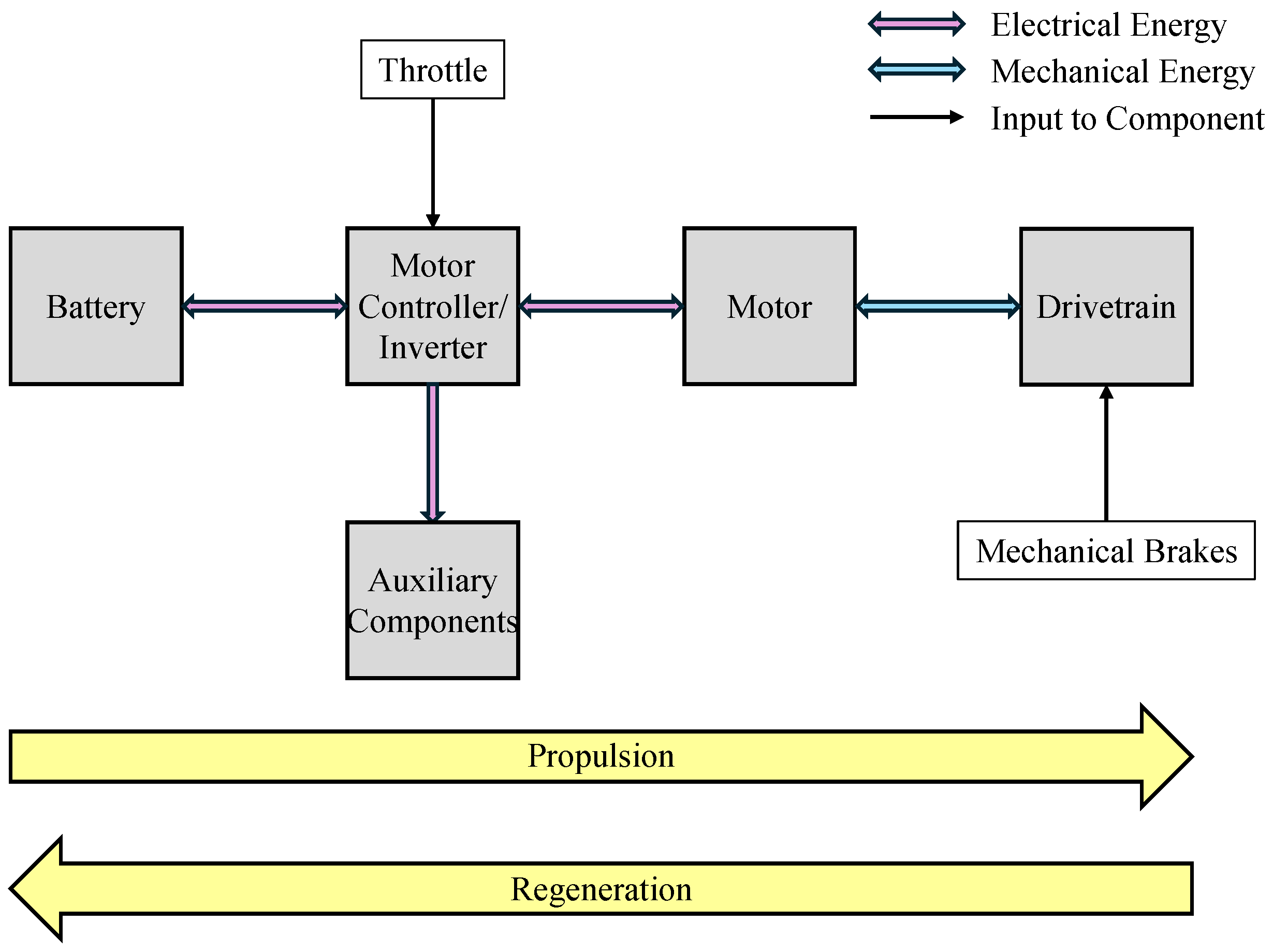
An electric motorcycle comprises a battery, inverter, motor, drivetrain (typically a chain and sprocket system), and auxiliary components, with bidirectional energy flow enabled through regenerative braking (as shown in Figure 1). Inverters incur conduction and switching losses that depend on device current, voltage, and power factor [6]. Motors incur copper, core, and mechanical losses that vary with operating region [7]. Drivetrain losses arise from chain-drive behaviour, which depends on transmission speed, load, and lateral sprocket alignment [8]. Regenerative braking converts an electric vehicle’s kinetic energy into electrical energy which is charged to the battery. Generally, the intensity of regenerative braking depends on the battery’s State of Charge (SoC), ambient temperature, and charging rate, as well as the power, speed, and torque of the electric motor [9].
Planning for vehicle electrification in SSA requires models that reflect local operating conditions. Simulations enable rapid design assessment and reduce prototyping effort, while supporting tasks such as energy minimisation, range prediction, and charging-infrastructure siting [6]. Roam has donated two Roam Air motorcycles to Stellenbosch University for research, enabling direct characterisation under real-world African conditions. This work develops and validates a physics-based simulator that predicts energy consumption from measured drive cycles and elevation data and evaluates sensitivity to key design parameters and riding conditions relevant to SSA.
Goal and Objectives: The goal was to model energy flow between the drive wheel and battery terminals for the Roam Air and to validate the model against real-world trips. The objectives were to
1.
Characterise motor and inverter efficiencies from dynamometer tests to form empirical efficiency maps;
2.
Develop a validated physics-based simulator for measured drive cycles;
3.
Quantify sensitivity to modelled design parameters;
4.
Assess the impact of representative drive-cycle conditions.
Motivation and Scope: SSA’s operating environments differ from those in high-income regions due to mixed road surfaces, varied terrain, and diverse rider behaviours [2]. Existing tools, such as ADVISOR and VTB, rely on detailed component sub-models or proprietary efficiency maps [10], limiting their applicability in this context. A tailored simulator that ingests measured SSA ride data is therefore required. While the present model targets the Roam Air platform, the approach can potentially generalise to other electric motorcycles given sufficient parameter availability. Battery electrochemistry and thermal effects on the powertrain’s components are beyond the scope of this work and are part of future work. Behavioural scenarios are considered at a high level owing to limited rider-profile data.

2. Related Work

2.1. Electric Minibus Taxi Models

Energy-based models: Abraham et al. developed an electric minibus taxi (eMBT) model using a pipeline in SUMO (Simulation of Urban Mobility) that inferred 1 Hz mobility from sparse tracking data and estimated propulsion energy from kinetic and potential changes, aerodynamic and radial drag, and rolling resistance [2,11,12]. That approach was sensitive to assumptions about the inferred mobility and the underlying road network. Subsequent refinements incorporated elevation data, removed artificial stops, tuned speed limits and driver parameters, and aligned vehicle parameters with improved sources [2].
Force-based models: Hull et al. applied a force-balance model driven by measured 1 Hz mobility for 62 trips, estimating the tractive force required to reproduce observed velocity traces and accounting for aerodynamic drag, rolling resistance, and gradient forces. Identified limitations included omission of rotary inertia and radial drag, as well as an error in the tractive-force formulation highlighted in later work [12].
Final eMBT energy estimates, after synthesising the modelling lines, converge to approximately 0.49–0.52 kWh/km depending on input data [12]. These eMBT models use measured tracking data as their inputs, in which data processing techniques are required to counter GPS error. This aspect of the eMBT models, as well as the longitudinal dynamic force equations, are applicable to this work.

2.2. Electric Two-Wheeler Models

Kumar et al. incrementally developed a powertrain model to select a motor and battery for a retrofitted electric two-wheeler. The vehicle’s longitudinal dynamics model was described, where only flat-road riding was considered. The motor was selected based off the calculated peak power of the Indian drive cycle. A Gaussian Process Regression-based model was applied to determine the motor’s efficiency for different torque–speed combinations. Kumar et al. then mathematically modelled the battery current and used the results of the Indian drive cycle to ultimately design the battery [13].
Yuniarto et al. presented a backward-facing model for an electric scooter which incorporated force-based longitudinal dynamics, assumed a constant-efficiency powertrain, and included a simplified battery model. The model was validated against dynamometer and road test data, demonstrating energy per distance errors of −8.63% and −4.7% respectively [14].
Lakshmanan et al. modelled scooter-scale dynamics using a force-based approach and validated energy per distance within 5.4% against a comparable electric scooter [15,16].

2.3. Simplified EV Powertrain Model

The simplified EV powertrain (SEVP) framework couples longitudinal vehicle dynamics with reduced-order inverter and motor loss models, computing battery power as the sum of mechanical output, motor and inverter losses, and auxiliary loads [6]. The SEVP model was validated against dynamometer test data ( θ = 0 ) and demonstrated energy per distance errors within 4.5% for a passenger vehicle, performing comparably to ADVISOR and FASTSim.

3. Methodology

3.1. Selection of Modelling Approach

Trade-offs in model development include: (1) the number of assumptions versus model setup time and (2) the model’s detail versus model run time [10]. Experimental look-up maps require less computations whilst accurately representing the modelled component.
Force-based models are more popular in Section 2 and have demonstrated good accuracies through validation. Furthermore, the studies by [6,15] show that incorporating operating-point-dependent component efficiencies improves accuracy relative to purely mechanical models.
Therefore, a compact force-based simulator was pursued, using measured mobility, elevation-derived grade, and empirically derived inverter and motor efficiency maps for the Roam Air in Nairobi, Kenya.

3.2. Data Inputs and Pre-Processing

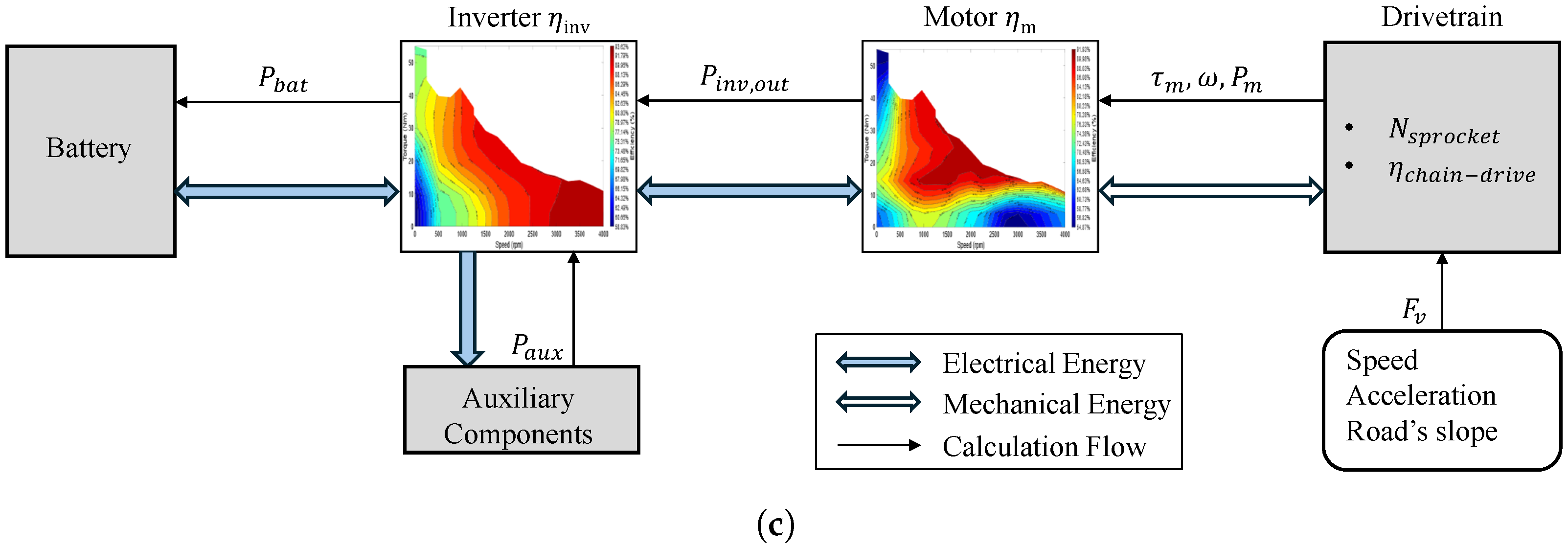
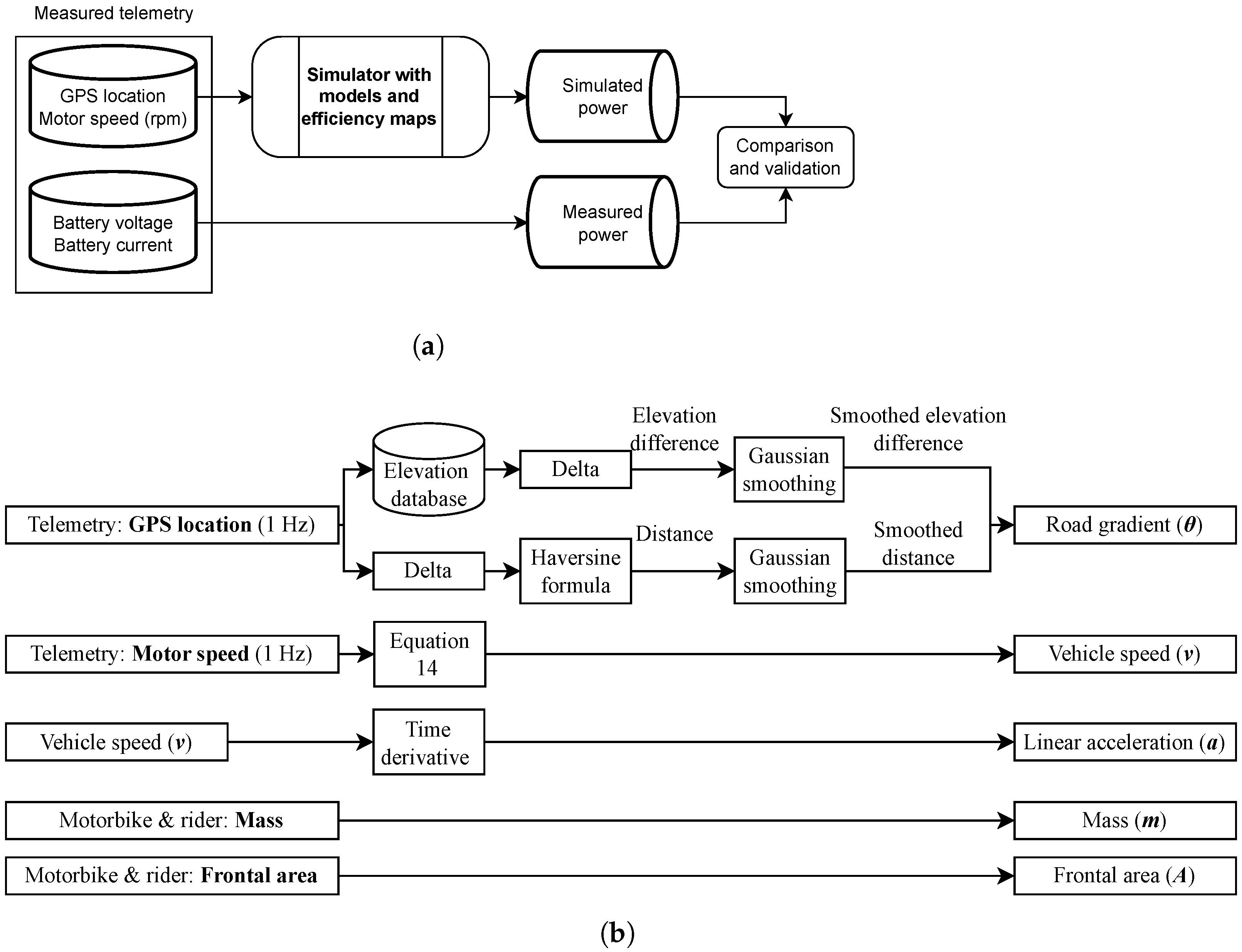
The developed simulator predicts the Roam Air’s energy consumption using time-stamped GPS coordinates and motor speed and is validated against the motorcycle’s measured energy consumption (as shown in Figure 2). The distance between each GPS coordinate is computed using the Haversine formula, which is used in conjunction with the ALOS World 3D 30 m 3.1 elevation dataset to estimate the road’s gradient. This is an approximation since the elevation dataset contains errors and the GPS data jitters occasionally. Data are down-sampled to 1 Hz and Gaussian smoothing is subsequently applied to speed, per-second distance, and elevation differences. Outlier slope angles are identified as any slope angle exceeding the maximum possible slope range of [−19°; 19°] [17] and are handled by forcing them to zero when no change in consecutive GPS coordinates occurs.

3.3. Vehicle Dynamics and Power Flow

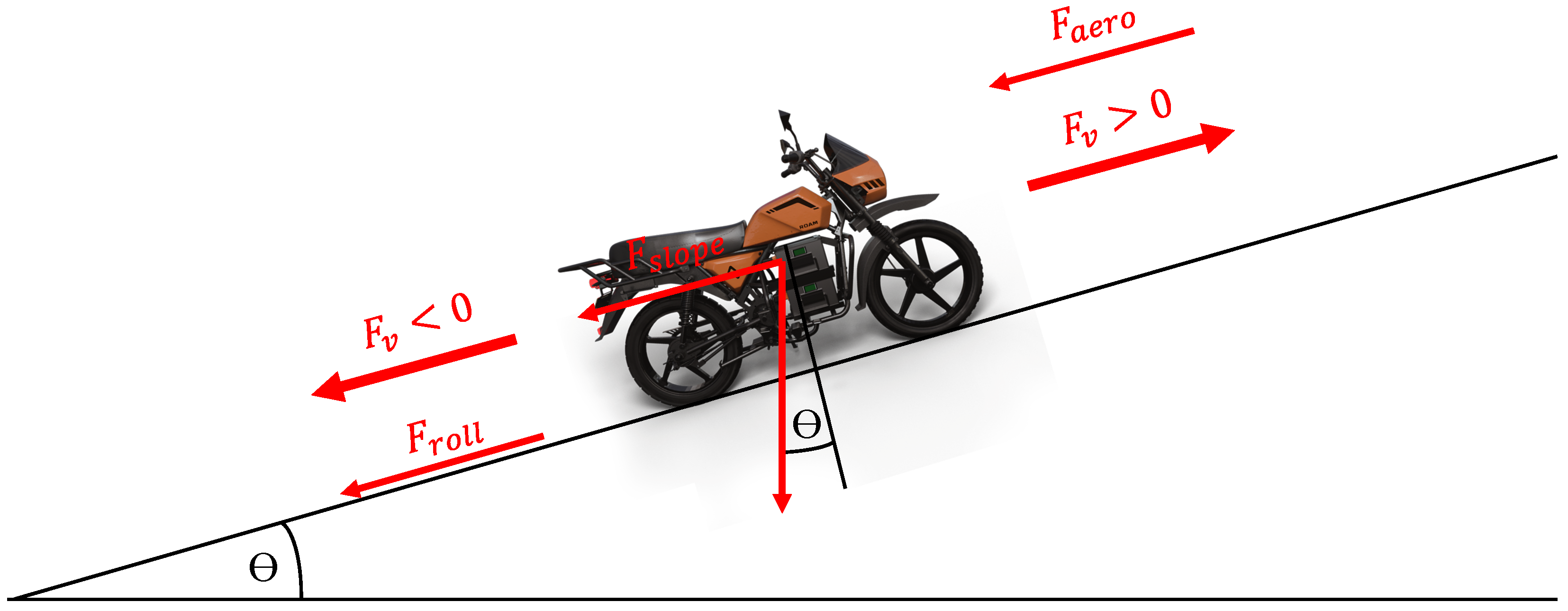
Let m be total mass, v speed, a acceleration, θ road slope, ρ air density, A frontal area, C d drag coefficient and C r r rolling resistance coefficient. Tractive force is given by (as visualised in Figure 3)
F v [ n ] = F slope [ n ] + F aero [ n ] + F roll [ n ] + F acc [ n ] ,
where
F slope [ n ] = m g sin ( θ [ n ] ) ,
F aero [ n ] = 1 2 ρ C d A ( v [ n ] ) 2 ,
F roll [ n ] = m g C r r cos ( θ [ n ] ) ,
F acc [ n ] = m ( v [ n ] v [ n 1 ] ) / ( Δ t ) .
Wheel torque is given by
τ w = F v r w
Motor torque and speed follow from the final-drive ratio N sprocket and efficiency η chain-drive where
τ m = τ w N sprocket η chain-drive ,
ω = v r w N sprocket .
Motor mechanical power is given by
P m = τ m ω .
Power losses follow from empirical motor and inverter efficiency maps η m and η inv :
P m , loss = ( 1 η m ) | P m | η m ,
P inv , out = P m + P m , loss ,
P inv , loss = ( 1 η inv ) | P inv , out | η inv ,
P bat = P inv , out + P inv , loss + P aux .
Net energy per distance (Wh/km) is the integral of P bat over trip distance. Regeneration is treated through the same flow when F v < 0 , with the added influence of mechanical braking.

3.4. Speed and Grade

Vehicle speed is calculated from motor speed, ω ( rpm ) , using
v = π r w 30 N sprocket ω ( rpm ) .
The road’s gradient is determined from elevation difference ( h [ n ] h [ n 1 ] ) and path length ( x [ n ] x [ n 1 ] ) by
θ [ n ] = arctan h [ n ] h [ n 1 ] x [ n ] x [ n 1 ] .

3.5. Model Parameters

Table 1 lists the fixed parameters used in the simulator. When direct measurements were unavailable, values were selected based on manufacturer communication, calibration studies, and the literature, as indicated.
Drag Coefficient Tuning: A subset of driving cycle data (where acceleration and grade approximate zero) was selected. The acceleration and grade variables in the simulator were forced to zero, and the drag coefficient was subsequently tuned (within the specified range) to obtain the smallest RMSE between the simulated and measured power values.
Wheel Radius Tuning: Two wheel circumference values for a different drive wheel were obtained through: (i) measurement without a payload and (ii) tuning from the measured value (with a payload) to align display speed and GPS speed. The ratio of the tuned and measured circumference values was applied to the specified Roam Air wheel radius. The reduced RMSE between the calculated vehicle speed and recorded display speed values validated the approach.

3.6. Mechanical Brakes Modelling

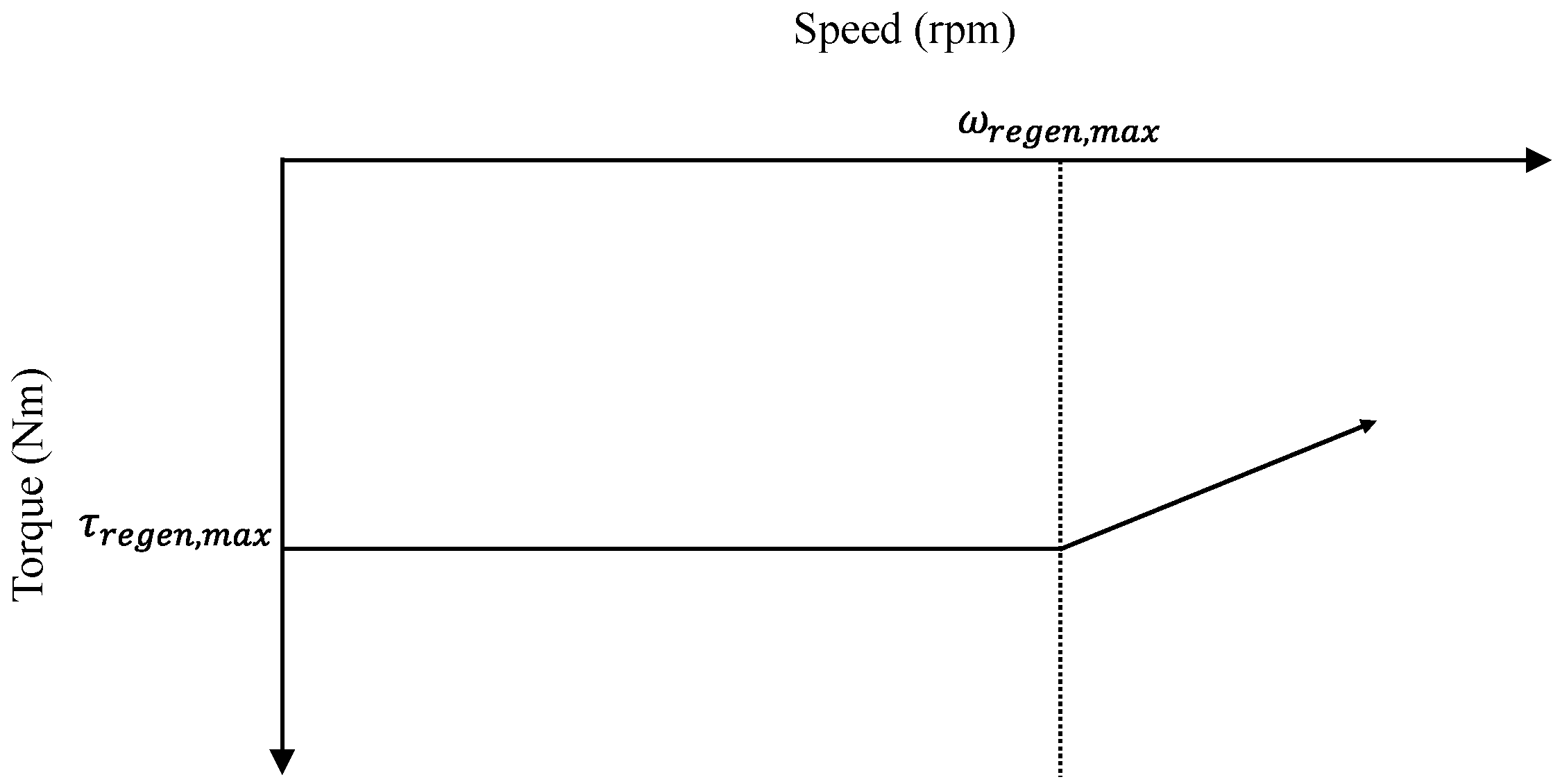
For the Roam Air, the motor’s regenerative braking torque limit is demonstrated in Figure 4, where mechanical brakes manage the additional braking torque outside this limit. The speed threshold ( ω regen , max ) was determined by the minimum speed value at which the peak negative DC bus current was measured. Subsequently, the maximum torque limit ( τ regen , max ) was set to the motor’s maximum torque at ω regen , max . The experimental efficiency maps for propulsion were used inversely to determine the motor and inverter power losses during regeneration. This implementation assumed optimal battery parameters throughout the motorcycle’s trip.

3.7. Component Characterisation

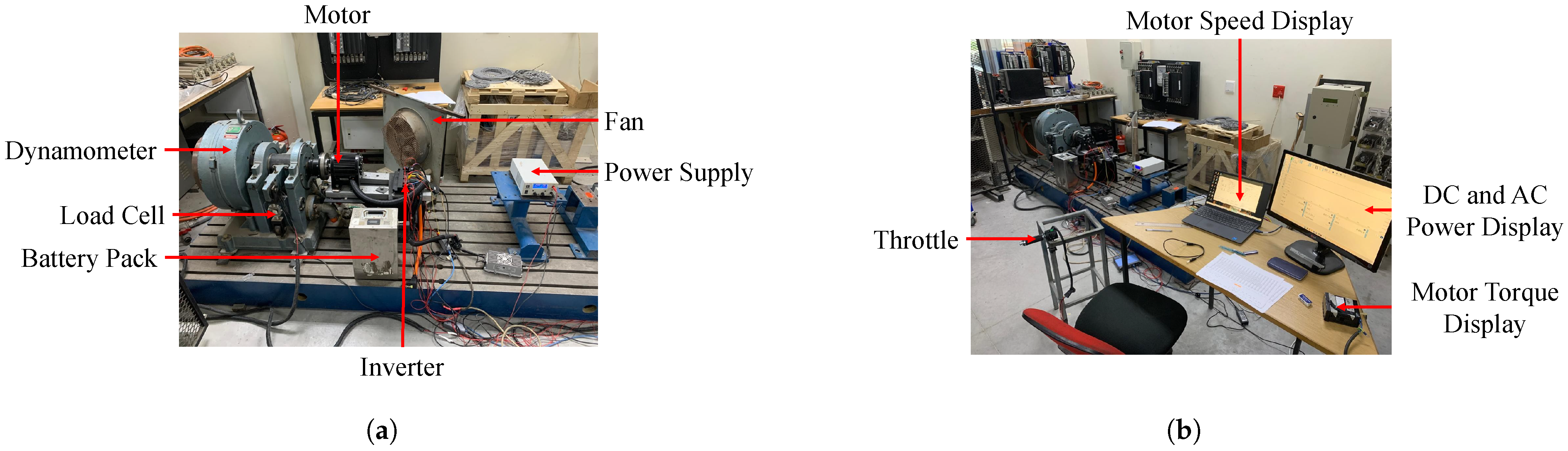
Motor and inverter efficiency maps were produced on an eddy current dynamometer over a grid of 5 Nm by 250 rpm up to 55 Nm and 4000 rpm. Figure 5 shows the experimental setup used to perform the characterisation tests.
The dynamometer allowed torques to be set, which were measured by the load cell. The throttle enabled speed modulation, which was measured by the motor’s internal sensor and displayed through the motor controller’s software. DC battery voltage and current, AC line-to-line voltage, and AC phase current were measured and recorded on PicoScope 7. A phase-angle correction was applied to obtain power factor from line-to-line voltage and phase current. Efficiencies were calculated as output to input ratios and lightly smoothed.

4. Results

This section reports the measured motor and inverter efficiency maps, evaluates the simulator against six real trips, and then uses the simulator to analyse motorbike energy efficiency for different (i) component parameters and (ii) riding conditions.

4.1. Motor and Inverter Efficiency Maps

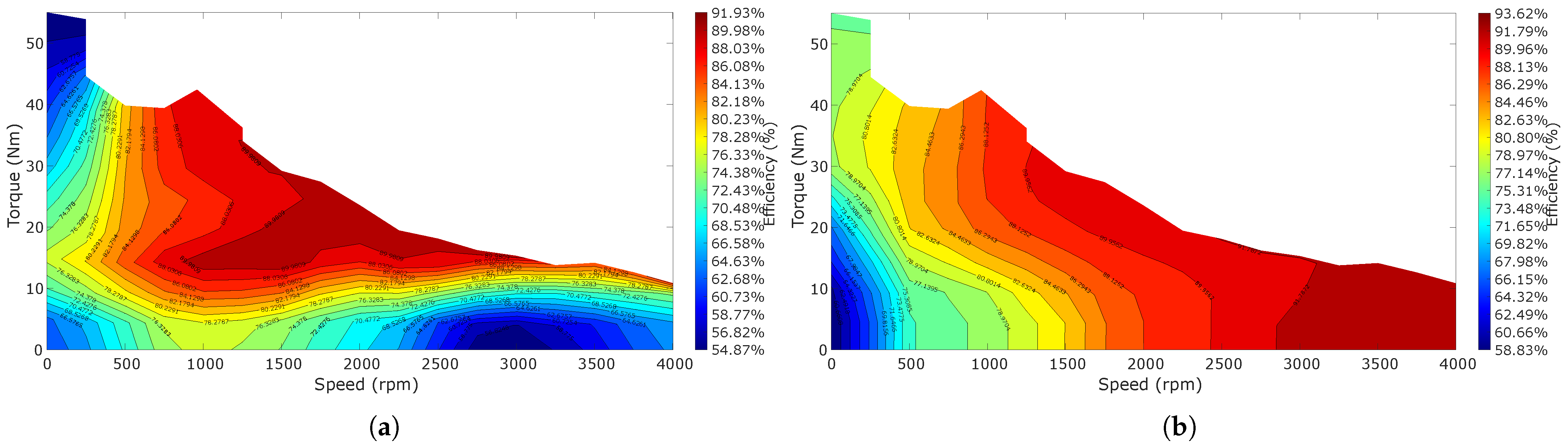
The efficiency maps in Figure 6 were generated from dynamometer test data. Unmeasured low-torque/low-speed points (0–5 Nm, 0–250 rpm) were assumed equal to the nearest measured points. Gaussian smoothing (Table 2) was increased in 0.1 sigma steps until smooth, concentric regions emerged (kernel sizes from Equation (16)).
Kernel size = 6 σ + 1 .
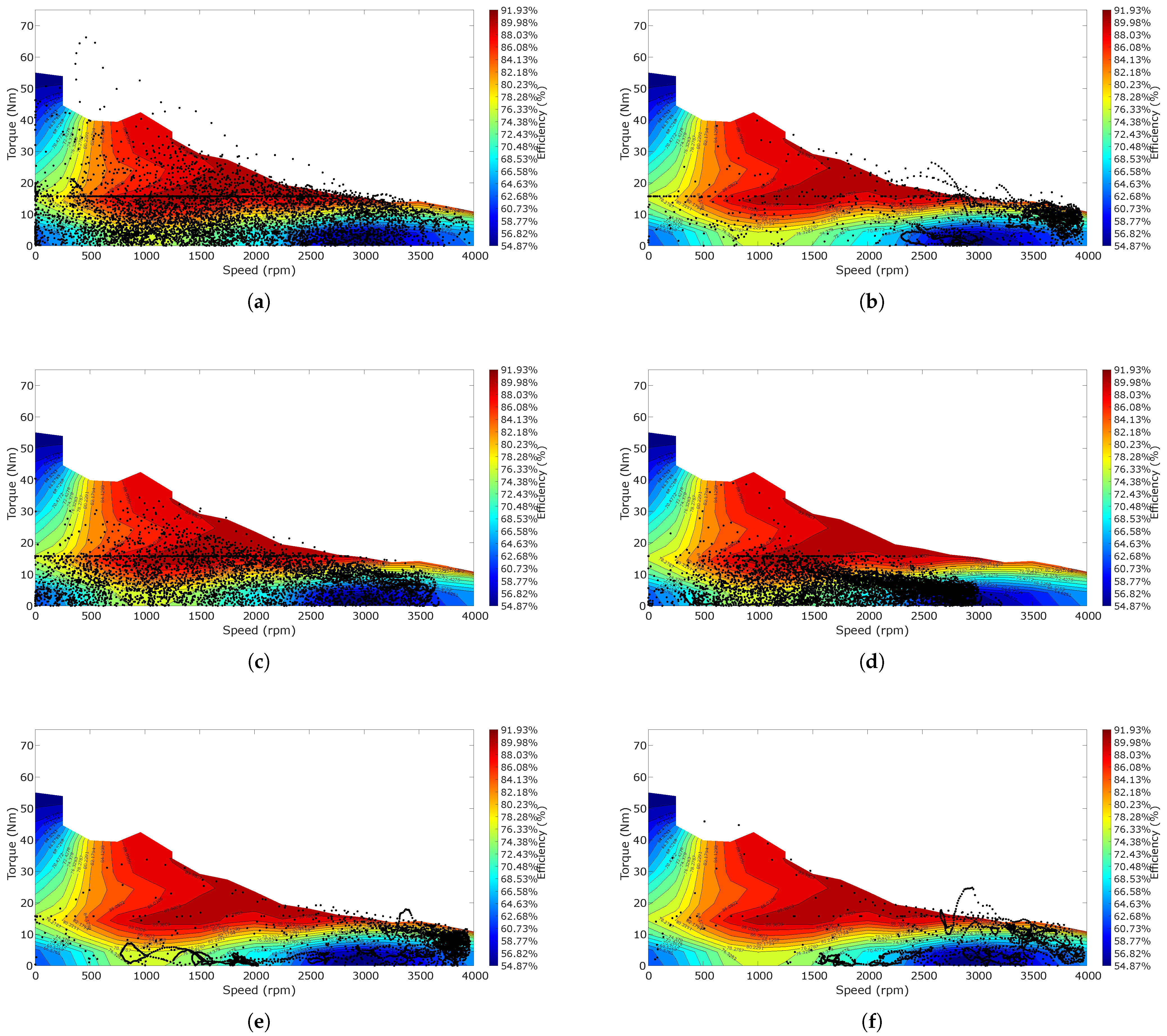
Some efficiency points are missing at the boundaries because of the battery-limited system setup, which can be resolved by testing with a constant voltage supply. This approach does limit the overall range of the efficiency map, but identical batteries were used on the measured trips. Figure 7 shows the operating point profiles of each trip, where undefined points are assigned the efficiency value of their nearest neighbour.

4.2. Simulator Validation

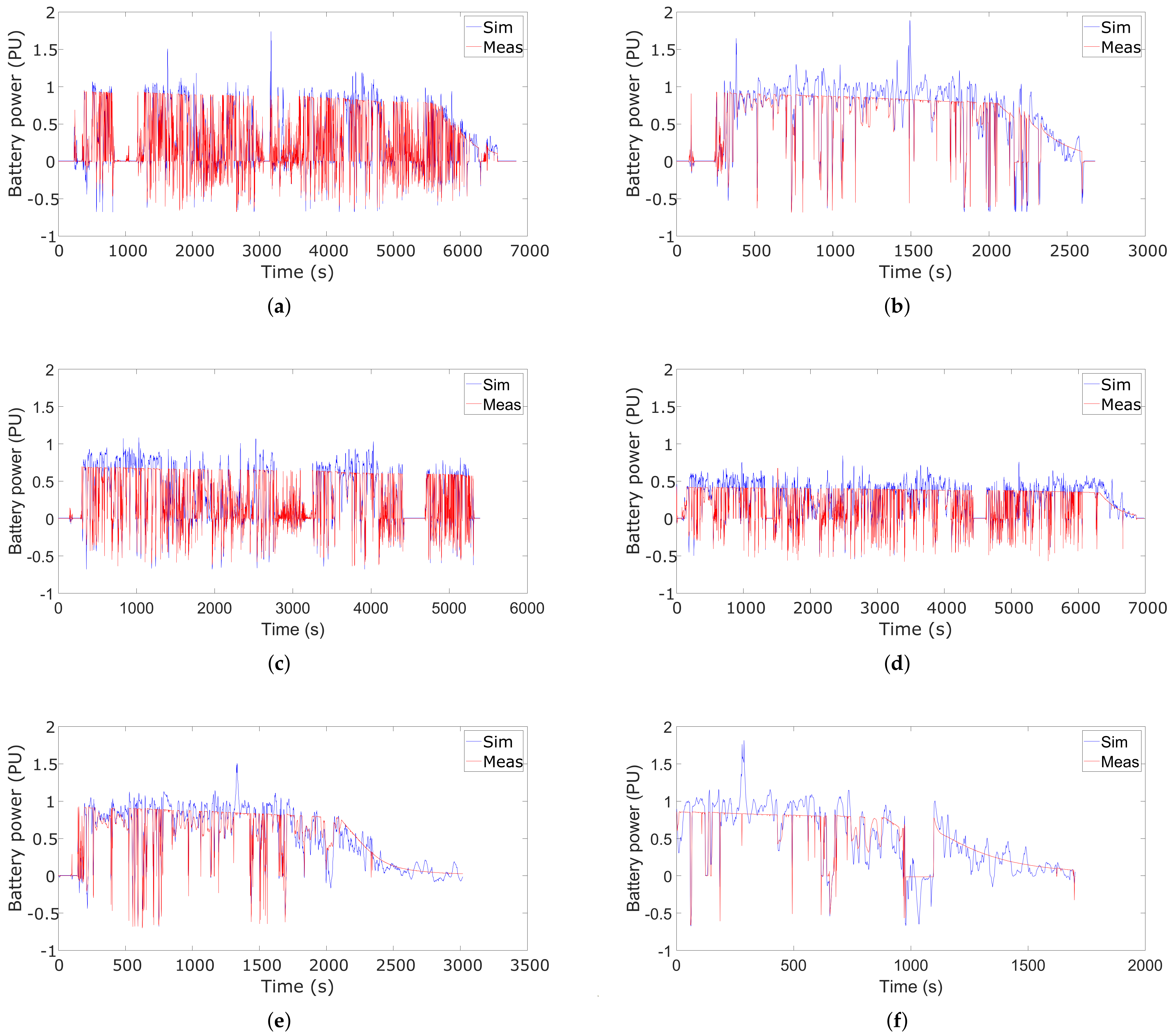
The movement data from six measured trips taken in and around Nairobi were simulated. Figure 8 shows the simulated and measured battery power profiles of each trip, and Table 3 and Table 4 show the validation results.
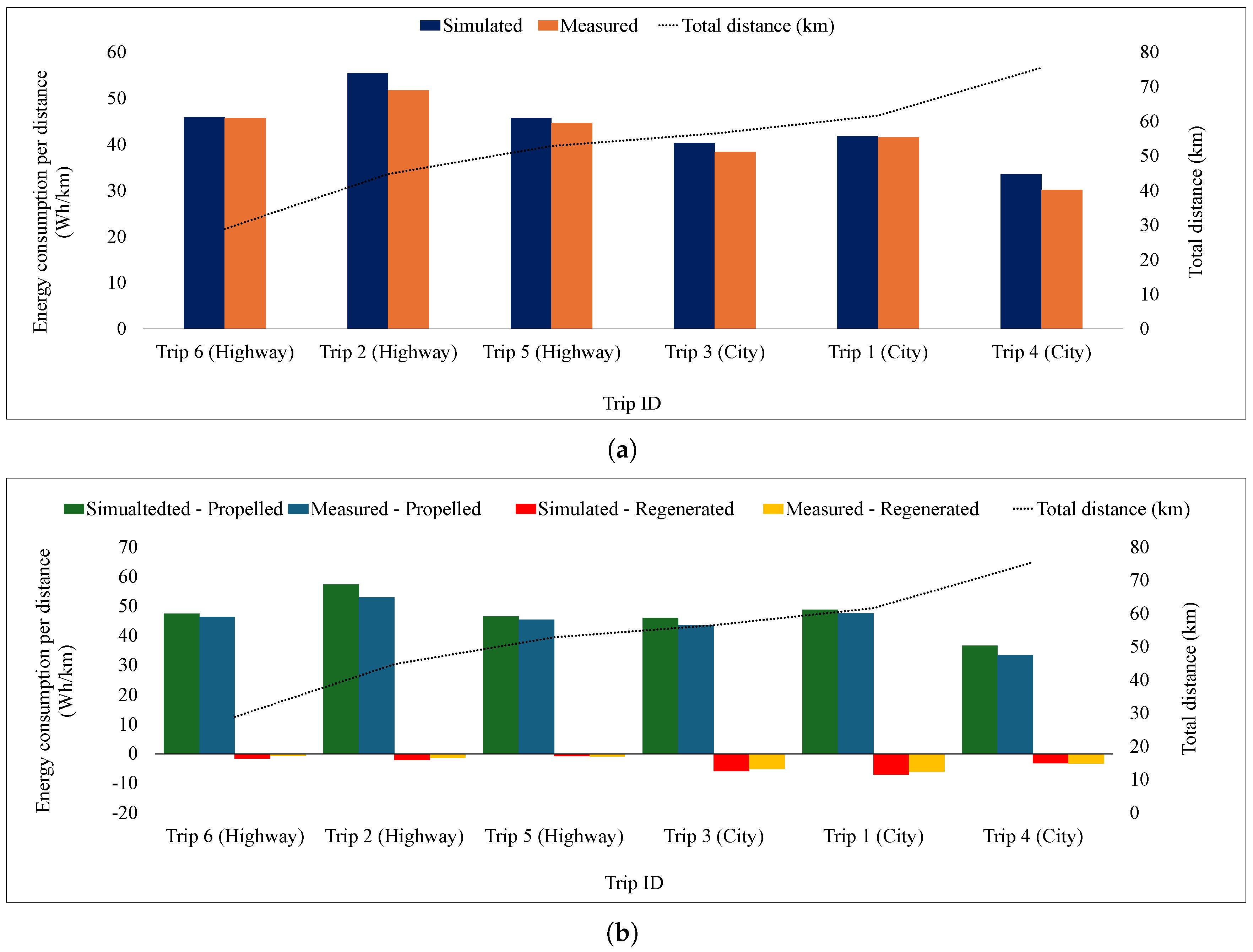
Energy-per-distance outcomes are visualised in Figure 9; the model slightly overestimates propulsion magnitudes and closely approximates regeneration magnitudes.

Discussion of Results

Strong correlations ( r = 0.87 0.91 ) indicate that the temporal dynamics are captured. The larger RMSE than MAE suggests the presence of error spikes. The NRMSE indicates that the maximum average error across the trips is 12.51% of the measured power range. The energy per distance results exhibits a moderate maximum error of 11.3%, which is slightly higher than other applicable models found in [6,15], demonstrating maximum errors of 4.5% and 5.4% respectively. However, ref. [6] does not model road slope since validation is against dynamometer test data, and ref. [15] is superficially validated by comparing its results to another similar vehicle’s measured results.
Since vehicle mobility was measured and the simulation parameters were reasonably determined, slope angle estimation is likely the principal source of bias. The ALOS World 3D 30 m 3.1 dataset performs well according to an elevation validation study ([20]); however, that study was located in Armenia and elevation dataset accuracy is region-specific [20]. Therefore, further investigations into elevation data may improve the simulator’s results.

4.3. Experimental Analyses

4.3.1. Component Parameter Sensitivity

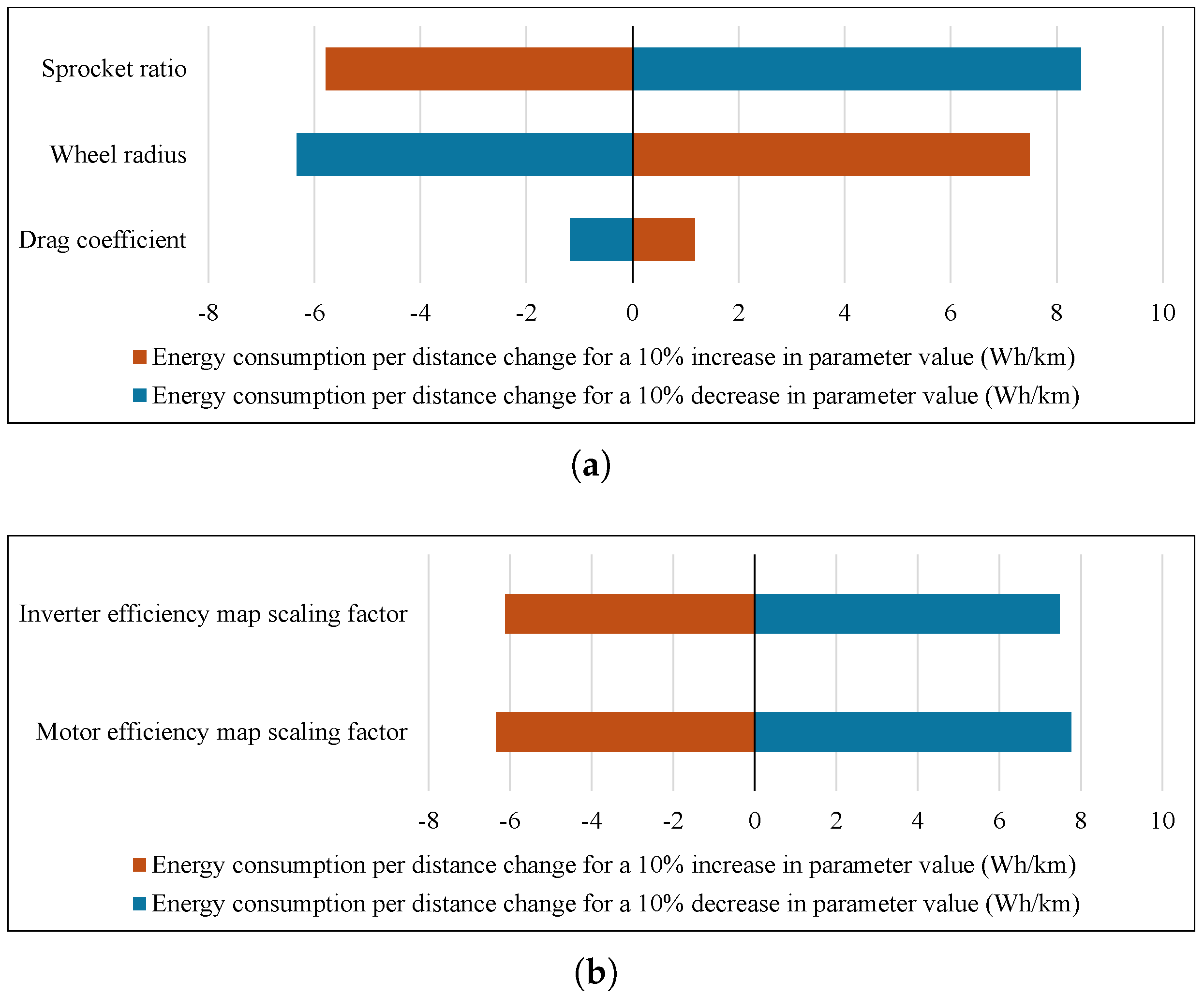
Trip 1 was used for the component parameter sensitivity analysis, with ± 10 % one-at-a-time perturbations. Inputs for the component sensitivities are listed in Table 5.
The results are shown in Figure 10 and Table 6. The results show that energy per distance is inversely related to sprocket ratio, with a higher ratio decreasing consumption and increasing efficiency, and a lower ratio increasing consumption and decreasing efficiency.
Meanwhile, an increase in wheel radius results in a consumption increase (efficiency decrease), compared with a consumption decrease (efficiency increase) for an equivalent reduction in wheel radius.
An increase in drag coefficient results in an expected consumption increase, while a decrease results in a consumption reduction.
The increase in inverter efficiency by 10% results in a reduced consumption (efficiency increase of 13%), while a 10% decrease results in an increased consumption (efficiency decrease of 12%).
The 10% increase in motor efficiency results in a reduced consumption (efficiency increase of 13%), while a 10% decrease results in an increased consumption (efficiency decrease of 13%).

4.3.2. Impact of Different Riding Conditions

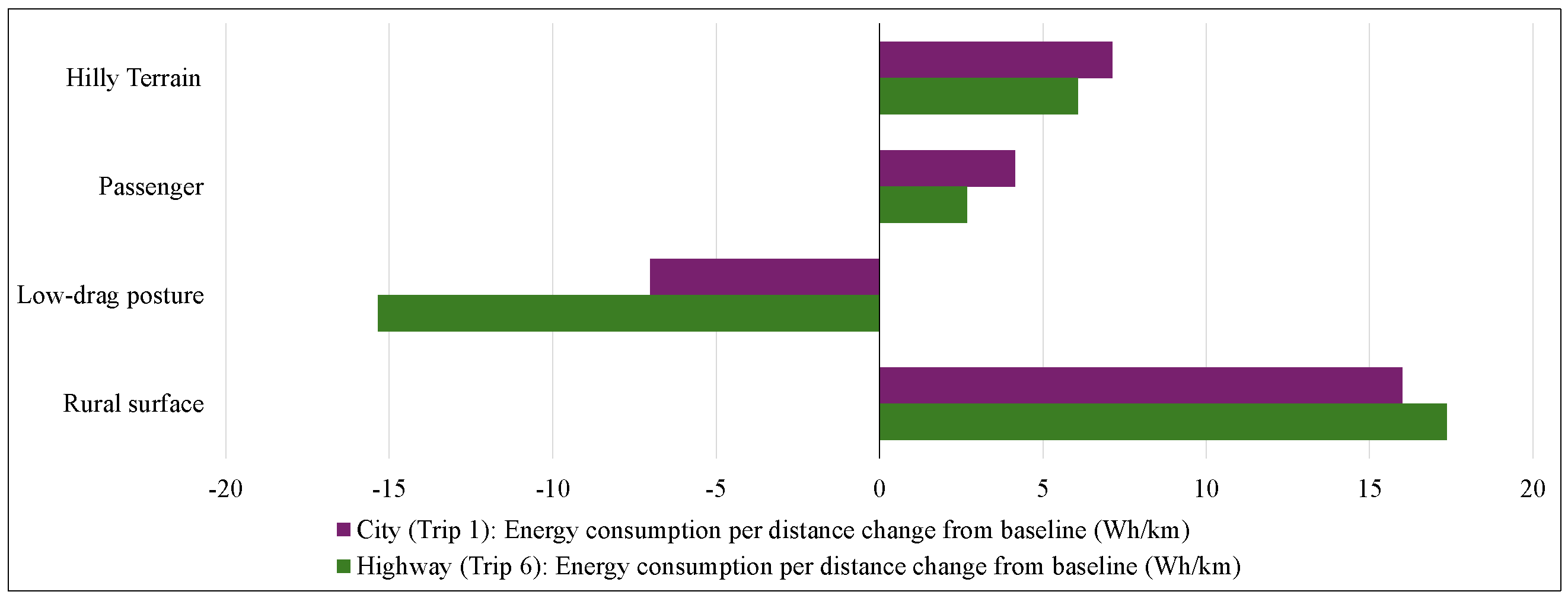
The baseline driving conditions for city (Trip 1) and highway (Trip 6) are given in Table 5, along with the updated values for each assessment. To assess the impact of driving conditions on energy consumption, the slope, payload, rider posture, surface, and constant-speed scenarios were varied. The results are shown in Figure 11 and Figure 12 and Table 6.
Downhill and low-drag posture markedly reduce energy consumption due to regeneration and reduced aerodynamic load, respectively; the low-drag posture effect is much larger on highways where drag dominates. In the city environment, low-drag posture decreases consumption by 7.022 Wh/km (increasing efficiency by 7.259 km/kWh or 25%). In the highway environment, low-drag posture decreases consumption by 15.335 Wh/km (increasing efficiency by 12.085 km/kWh or 53%).
Hilly terrain, rural rolling resistance, and passenger mass increase energy use; the passenger impact is stronger in city operation due to frequent accelerations.
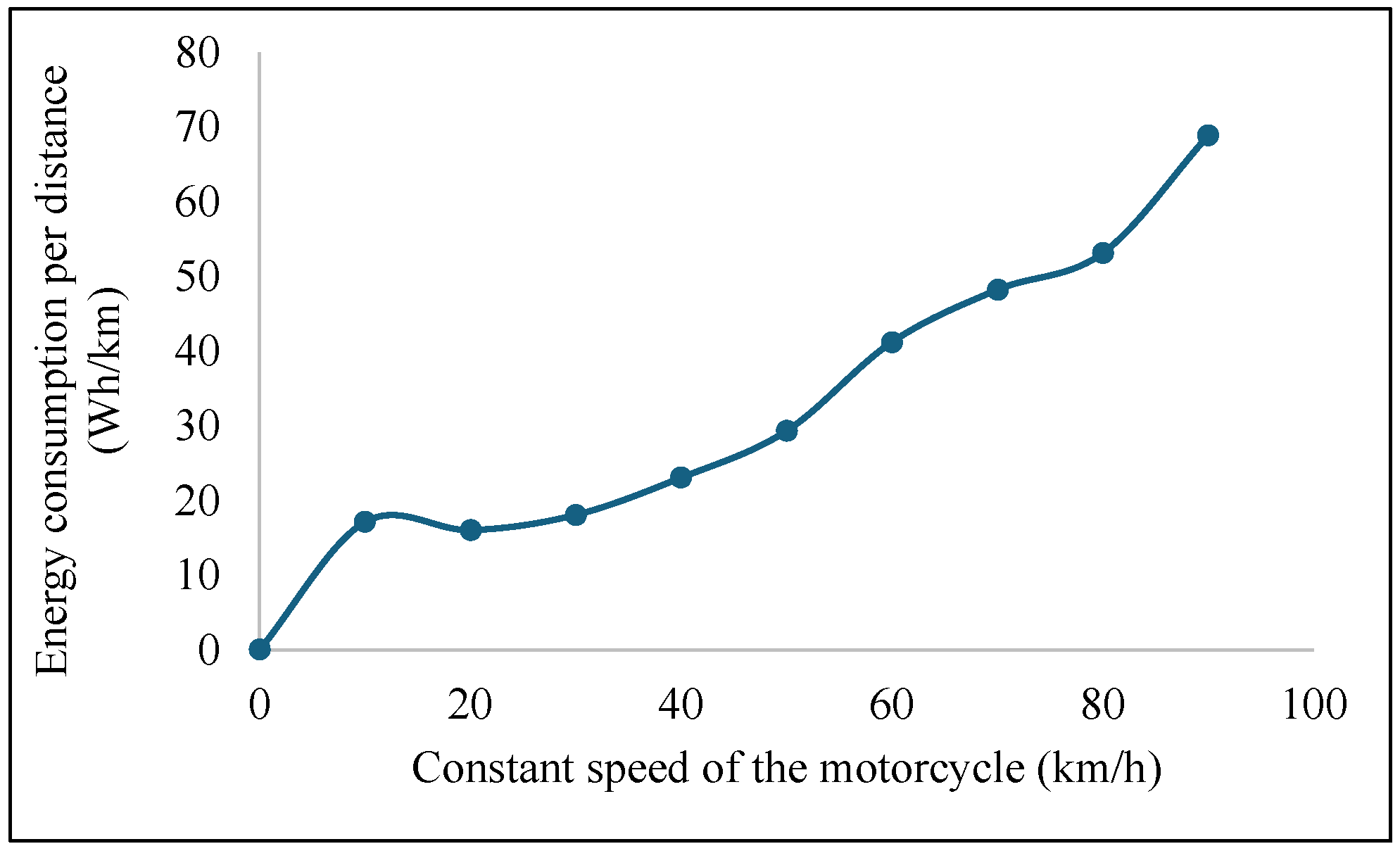
Constant-speed sweeps (Figure 12) show rising energy with speed (due to drag and mechanical power); a slight dip from 10–20 km/h is consistent with low-efficiency regions in the motor and inverter efficiency maps. Between 10 and 20 km/h, the operating point changes from (472.4 rpm; 1.5 Nm) to (944.8 rpm; 1.7 Nm), which corresponds to motor and inverter efficiency increases of 7.8% and 4.4% respectively.

5. Conclusions

This paper presented a compact, physics-based simulator for predicting the energy consumption of the Roam Air electric motorcycle under real operating conditions in sub-Saharan Africa. The model integrated measured drive cycles, elevation-derived gradients, and empirically characterised motor and inverter efficiency maps obtained from dynamometer testing. Validation against six real-world city and highway trips in Nairobi showed strong temporal agreement between simulated and measured battery power, with correlations between 0.87 and 0.91 and energy-per-distance errors between 0.4% and 11.3%. The simulator consistently exhibited a small positive bias, which is favourable for planning tasks.
Using the validated framework, a sensitivity analysis quantified the influence of key component parameters on efficiency. Sprocket ratio, wheel radius, drag coefficient, and motor and inverter efficiency maps all showed predictable impacts on energy consumption, highlighting the parameters that should receive priority during design optimisation. An assessment of representative driving conditions demonstrated the substantial effects of road gradient, rider mass, posture, and surface type. City operation is particularly sensitive to payload and terrain, while highway consumption is dominated by aerodynamic effects.
The model provides a transparent and computationally light tool tailored for the varied conditions of African two-wheeler operation. Future work will focus on improving elevation estimation and extending the simulator to include battery thermal and electrochemical models. The framework can potentially be adapted to other electric two-wheelers where measured component data are available, supporting planning, design, and policy decisions for sustainable transport in the region. Future work will include in-depth battery modelling to estimate total energy consumed from charging.

Author Contributions

Conceptualization, M.J.B.; methodology, H.A., S.B. and M.J.B.; software, H.A.; validation, S.B. and M.J.B.; formal analysis, H.A., S.B. and M.J.B.; investigation, H.A., S.B. and M.J.B.; resources, S.B. and M.J.B.; data curation, H.A.; writing—original draft preparation, H.A.; writing—review and editing, S.B. and M.J.B.; visualization, H.A. and M.J.B.; supervision, S.B. and M.J.B.; project administration, M.J.B.; funding acquisition, M.J.B. All authors have read and agreed to the published version of the manuscript.

Funding

This research received financial support from the Western Cape Government Motorised Transport (WC GMT), contract number S009285, and Catalytic Finance through the Subnational Climate Fund, contract number S010624.

Data Availability Statement

The data presented in this study are available on request from the corresponding author.

Acknowledgments

Acknowledgement and appreciation are extended to Roam for providing their motorcycle and data, and to colleagues in the Electric Mobility Lab at Stellenbosch University for their experimental support.

Conflicts of Interest

The authors declare no conflicts of interest.

References

  1. Yeh, S.; Gil, J.; Kyle, P.; Kishimoto, P.; Cazzola, P.; Craglia, M.; Edelenbosch, O.; Fragkos, P.; Fulton, L.; Liao, Y.; et al. Improving future travel demand projections: A pathway with an open science interdisciplinary approach. Prog. Energy 2022, 4, 043002. [Google Scholar] [CrossRef]
  2. Giliomee, J.H.; Hull, C.; Collett, K.A.; McCulloch, M.D.; Booysen, M.J. Simulating mobility to plan for electric minibus taxis in Sub-Saharan Africa’s paratransit. Transp. Res. Part D Transp. Environ. 2023, 118, 103728. [Google Scholar] [CrossRef]
  3. FIA Foundation. The Wheels of Change: Safe and Sustainable Motorcycles in Sub-Saharan Africa; Technical Report; FIA Foundation for the Automobile and Society: London, UK, 2022. [Google Scholar]
  4. Stratford, H.; Booysen, M.J. The Environmental and Grid Impact of Boda Boda Electrification in Nairobi, Kenya. World Electr. Veh. J. 2025, 16, 427. [Google Scholar] [CrossRef]
  5. Ashby, M.F. Materials and Sustainable Development, 2nd ed.; Elsevier: Oxford, UK, 2023. [Google Scholar]
  6. Davis, K. Simplified Electric Vehicle Powertrain Modelling. Ph.D. Thesis, University College Cork, Cork, Ireland, 2020. [Google Scholar]
  7. Chapman, S.J. Electric Machinery Fundamentals, 5th ed.; McGraw-Hill: New York, NY, USA, 2011. [Google Scholar]
  8. Zhang, S.P.; Tak, T.O. Efficiency estimation of roller chain power transmission system. Appl. Sci. 2020, 10, 7729. [Google Scholar] [CrossRef]
  9. Szumska, E.M. Regenerative Braking Systems in Electric Vehicles: A Comprehensive Review of Design, Control Strategies, and Efficiency Challenges. Energies 2025, 18, 2422. [Google Scholar] [CrossRef]
  10. Gao, D.W.; Mi, C.; Emadi, A. Modeling and simulation of electric and hybrid vehicles. Proc. IEEE 2007, 95, 729–745. [Google Scholar] [CrossRef]
  11. Kurczveil, T.; López, P.Á.; Schnieder, E. Implementation of an Energy Model and a Charging Infrastructure in SUMO. In Proceedings of the Simulation of Urban MObility User Conference, Berlin, Germany, 15–17 May 2013; Springer: Berlin/Heidelberg, Germany, 2013; pp. 33–43. [Google Scholar]
  12. Abraham, C.J.; Rix, A.; Booysen, M.J. Aligned simulation models for simulating Africa’s electric minibus taxis. World Electr. Veh. J. 2023, 14, 230. [Google Scholar] [CrossRef]
  13. Kumar, N.A.; M, N.; Joseph, A.S. Retrofitting of Conventional Two-wheelers to Electric Two-Wheelers. In Proceedings of the 2021 13th IEEE PES Asia Pacific Power & Energy Engineering Conference (APPEEC), Trivandrum, India, 21–23 November 2021; pp. 1–8. [Google Scholar] [CrossRef]
  14. Yuniarto, M.N.; Wiratno, S.E.; Nugraha, Y.U.; Sidharta, I.; Nasruddin, A. Modeling, simulation, and validation of an electric scooter energy consumption model: A case study of indonesian electric scooter. IEEE Access 2022, 10, 48510–48522. [Google Scholar] [CrossRef]
  15. Lakshmanan, P.; Abhishek, A.; Verma, B.K.; Ram, S.K. Performance Assessment of Two-Wheeler Electric Vehicle Batteries Using Multi-Mode Drive Cycles. World Electr. Veh. J. 2024, 15, 145. [Google Scholar] [CrossRef]
  16. Saxena, S.; Gopal, A.; Phadke, A. Electrical consumption of two-, three-and four-wheel light-duty electric vehicles in India. Appl. Energy 2014, 115, 582–590. [Google Scholar] [CrossRef]
  17. GuinnessWorld Records. Steepest Street (Road). 2026. Available online: https://www.guinnessworldrecords.com/world-records/62907-steepest-street-road (accessed on 19 January 2026).
  18. Karanja, J.W.; Saoke, C.; Kiroe, A. Analysis of Induced Wind Speed along Embu-Nairobi Highway, Nairobi, Kenya. IOSR J. Environ. Sci. Toxicol. Food Technol. 2023, 17, 12–20. [Google Scholar]
  19. Chen, W.; Xiao, H.; Wang, Q.; Zhao, L.; Zhu, M. Integrated Vehicle Dynamics and Control; John Wiley & Sons: Hoboken, NJ, USA, 2016. [Google Scholar]
  20. Hnila, P. Quality assessment of digital elevation models in a treeless high-mountainous landscape: A case study from Mount Aragats, Armenia. Magazén 2021, 2, 71–102. [Google Scholar] [CrossRef]
Figure 1. Block diagram of an electric motorcycle powertrain.
Wevj 17 00090 g001
Figure 2. Simulation setup. (a) High-level simulator overview: inputs and outputs. (b) Pipeline for estimating road slope. (c) Energy flows and calculation flows. The efficiency maps are indicative in this figure and shown in detail in Figure 6.
Wevj 17 00090 g002aWevj 17 00090 g002b
Figure 3. Free-body diagram of the motorcycle showing external forces and tractive effort.
Wevj 17 00090 g003
Figure 4. Simple representation of the regenerative braking torque limit.
Wevj 17 00090 g004
Figure 5. Experimental setup to measure motor and inverter efficiency maps. (a) shows the dynamometer and (b) shows the data-capturing setup.
Wevj 17 00090 g005
Figure 6. Efficiency maps from dynamometer tests. (a) Motor; (b) inverter.
Wevj 17 00090 g006
Figure 7. Distribution of operating points on the motor efficiency map for each trip. (a) Trip 1 (city); (b) Trip 2 (highway); (c) Trip 3 (city); (d) Trip 4 (city); (e) Trip 5 (highway); (f) Trip 6 (highway).
Wevj 17 00090 g007
Figure 8. Simulated (blue) vs. measured (red) battery power (full trips). Note: the labels on the axes have been normalised to protect the commercial confidentiality of the industry partner. (a) Trip 1 (city); (b) Trip 2 (highway); (c) Trip 3 (city); (d) Trip 4 (city); (e) Trip 5 (highway); (f) Trip 6 (highway).
Wevj 17 00090 g008
Figure 9. Net energy, and propulsion and regeneration components per distance (simulated vs. measured). (a) Net energy per trip. (b) Propulsive vs. regenerative energy.
Wevj 17 00090 g009
Figure 10. Parameter sensitivity: (a) sprocket ratio, wheel radius, C d ; (b) inverter and motor efficiency scales (Trip 1).
Wevj 17 00090 g010
Figure 11. Impact of driving conditions on energy per distance: change from baseline.
Wevj 17 00090 g011
Figure 12. Energy per distance at constant speed (baseline settings).
Wevj 17 00090 g012
Table 1. Fixed parameters used in the simulator.
ParameterValueSource/Notes
Frontal areaA0.773 m2Measured (ImageJ Version 1.54p)
Drag coefficient C d 0.50.5–0.9 (manufacturer), tuned
Gross vehicle massm234–369 kgFrom trips’ metadata
Chain-drive efficiency η chain-drive 0.931 [8]
Sprocket ratio N sprocket 56 / 11 Manufacturer
Wheel radius r w 0.2859 mManufacturer, tuned
Air density ρ 0.9896 kg/m3 [18]
Rolling resistance coefficient C r r 0.01 [19], good asphalt
Auxiliary power P aux 35 WManufacturer
Table 2. Parameters for Gaussian smoothing.
Variable/MapSigma (Samples)Kernel Size (Samples)
Vehicle speed17
Per-second distance425
Elevation difference1061
Motor efficiency map0.7 6 × 6
Inverter efficiency map0.1 2 × 2
Table 3. Similarity metrics for battery power profiles.
TripScenarioMAE [W]RMSE [W]NRMSErp
1City585.2948.20.10170.90520
2Highway756.61104.50.11850.91050
3City605.2896.90.11670.90740
4City500.3683.60.09480.87300
5Highway663.0930.40.09930.90970
6Highway811.11095.30.12530.89640
Table 4. Trip summary and energy per distance (simulated vs. measured).
TripScenarioDuration
[hh:mm:ss]
Distance
[km]
Avg Spd
[km/h]
Simulated
[Wh/km]
Measured
[Wh/km]
Err
[%]
1City1:55:1961.732.641.841.50.7
2Highway0:44:5744.860.555.451.77.2
3City1:30:3556.537.240.338.44.9
4City1:57:1175.539.133.630.211.3
5Highway0:50:3752.962.145.744.62.5
6Highway0:28:3028.962.845.945.70.4
Table 5. Simulation parameter values and conditions used for the sensitivity analysis.
ParameterLowBaselineHigh
Sprocket ratio4.5825.091 (56/11)5.6
Wheel radius [m]0.25730.28590.3144
Drag coefficient C d 0.450.500.55
Efficiency map scalingLowBaselineHigh
Inverter map scale0.81820.9091 (1/1.1)1.0000
Motor map scale0.81820.9091 (1/1.1)1.0000
Driving conditions BaselineChange
Hilly terrain (up and down) θ = 0°±5°
Passenger m rider = 85 kg160 kg
Low drag posture C d A = 0.3865 m2 0.1824 m2
Rural/gravel terrain C rr = 0.01 0.03
Table 6. Impact of parameter variation, efficiency map scaling, and driving conditions on energy consumption and efficiency relative to baseline.
Δ Cons.
[Wh/km]
Δ Eff.
[Wh/km]
Δ Cons.
[Wh/km]
Δ Eff.
[km/kWh] (%)
ParameterLowHigh
Sprocket ratio+8.458−4.02 (−17%)−5.782+3.834 (+16%)
Wheel radius [m]−6.338+4.268 (+18%)+7.492−3.631 (−15%)
Drag coefficient C d −1.179+0.693 (+3%)+1.176−0.653 (−3%)
Efficiency map scalingLowHigh
Inverter map scale+7.474−2.254 (−12%)−6.115+2.368 (+13%)
Motor map scale+7.763−2.33 (−13%)−6.341+2.467 (+13%)
Driving conditionsCity (Trip 1)Highway (Trip 6)
Hilly terrain (up and down)+7.126−4.881 (−17%)+6.068−2.742 (−12%)
Passenger+4.141−3.054 (−11%)+2.681−1.299 (−6%)
Low drag posture−7.022+7.259 (+25%)−15.335+12.085 (+53%)
Rural/gravel terrain+15.992−9.042 (−31%)+17.350−6.401 (−28%)
Disclaimer/Publisher’s Note: The statements, opinions and data contained in all publications are solely those of the individual author(s) and contributor(s) and not of MDPI and/or the editor(s). MDPI and/or the editor(s) disclaim responsibility for any injury to people or property resulting from any ideas, methods, instructions or products referred to in the content.