Article

AI-Assisted Multi-Physics Evaluation of Mission Profile-Based Traction Inverter Design for Sustainability


Volvo Cars, PVD, Volvo Jakobs v 17, 418 78 Gothenburg, Sweden
*
Author to whom correspondence should be addressed.
World Electr. Veh. J. 2026, 17(1), 43; https://doi.org/10.3390/wevj17010043
Submission received: 31 October 2025 / Revised: 24 December 2025 / Accepted: 28 December 2025 / Published: 14 January 2026

Abstract

As the global transition toward carbon neutrality accelerates, the sustainability of power electronics has received growing attention from both academia and industry. Nevertheless, standardized methodologies for evaluating the sustainability of power electronic systems—particularly traction inverters—remain limited, largely due to the absence of comprehensive databases and unified assessment frameworks. Leveraging industrial extensive design experience, this paper presents an enhanced methodology for sustainability evaluation of traction inverters. The proposed framework combines advanced component-level modelling with multi-physics-based analysis to more accurately quantify the environmental impacts associated with different power semiconductor technologies. A Random Forest (RF)-based algorithm is employed for junction temperature (TJ) estimation, offering reliable thermal data crucial for sustainability assessment. Experimental validation on a prototype automotive inverter confirms the accuracy and robustness of the RF-based TJ estimation approach, ensuring realistic thermal–environmental coupling within the evaluation workflow. From a thermal perspective, the sizing of power electronics key components (PEKCs) is performed with high precision, enabling a more accurate estimation of power electronics-related material (PERM) usage. Combined with a preliminary CO2-equivalent (CO2e) emissions database, this allows sustainability assessment to be integrated directly into the design stage of the traction inverter. The effectiveness of the proposed approach is demonstrated through a comparative evaluation of three representative inverter topologies.

1. Introduction

The global energy crisis is becoming increasingly severe, highlighting the urgent need for sustainable transportation solutions [1]. In this context, electric vehicles (EVs) offer significant advantages over conventional internal combustion engine vehicles, primarily by reducing dependence on fossil fuels and minimizing carbon dioxide (CO2) emissions. As a critical component of EV powertrains, the traction inverter plays a fundamental role in converting direct current (DC) energy from the battery into alternating current (AC) energy required by the electric machine. The advancement of high-voltage power electronics technology, which is one of core technologies for EV traction inverters, has facilitated extensive research on various traction inverter topologies over the past decade, with a focus on improving efficiency, reliability, and performance [2,3,4].
However, the deployment of advanced power electronics technologies also raises sustainability concerns [5,6,7], largely attributable to the materials used in their manufacture, referring to PERM. A typical power electronics system incorporates multiple components, each contributing to its overall environmental footprint. The power semiconductor, as the primary functional unit, is composed of semiconductor materials, copper, aluminum, and ceramics [8,9]. The DC-link capacitor stabilizes the voltage and reduces current ripple to ensure reliable inverter operation [10]. In addition, copper busbars—particularly laminated DC busbars—provide the critical electrical interface between the DC-link capacitor and the power semiconductor [11,12,13]. The production of these components inevitably results in greenhouse gas (GHG) emissions, including CO2, highlighting the importance of systematic sustainability assessment. Moreover, end-of-life treatment and the growing volume of E-waste [14] introduce further environmental challenges that must be addressed.
Recent research on power electronics sustainability has primarily focused on two areas: improving converter performance [15,16], and promoting the recycling or reuse of PERM [6,7,17]. Current optimization efforts mainly aim to enhance specific converter attributes—such as efficiency and reliability—to achieve higher performance without increasing the consumption of PERM. In addition, [17] integrates “R-design strategies” and circular economy principles into the development of power semiconductor devices in pursuit of net-zero carbon goals, while Refs. [6,7] investigate recycling pathways for PERM. However, strategies for reducing PERM consumption at the design stage, particularly through the appropriate sizing of PEKCs, have received limited attention in existing literature.
Based on a thermal perspective, this paper presents a systematic traction-inverter design methodology that integrates a multi-physics power electronics framework with artificial intelligence (AI) for sizing PEKCs. Instead of estimating only the mean TJ using AI [18,19,20], the proposed RF-based approach computes T J while capturing thermal transients induced by both switching-frequency events and the AC fundamental frequency. This method replaces the computationally intensive portions of full finite-element simulations, requiring only thermal-network extraction, thereby reducing computational effort and dependency on hardware resources. On the other hand, the proposed approach integrates the concept of carbon footprint—grounded in the ecological footprint framework established by Rees and Wackernagel at the University of British Columbia in 1990—to quantify the CO2e associated with PEKC selection during inverter design. The mission profile of the traction inverter determines the thermal loading of each PEKC, which directly influences material usage and thus the resulting CO2e. As summarized in [21], power semiconductors and their cooling systems, DC-link capacitors, and busbars constitute the major PEKCs that dominate traction-inverter cost and volume, and therefore account for the largest share of PERM consumption. For this reason, these three components are the primary focus of the present study.
Using this methodology, different traction inverter architectures—including multiphase topologies [22,23,24] and flying-capacitor-based configurations [25,26,27]—are evaluated. By quantifying and comparing their respective carbon footprints, this study offers insights into the environmental implications of various power electronics technologies and supports the development of more sustainable traction inverter solutions. These findings contribute to a deeper understanding of sustainability within power electronics and support future innovation toward environmentally responsible EV powertrain design.
The remainder of this paper is organized as follows. Section 2 presents the proposed PEKC design methodology, including analysis examples and experimental validation illustrating the mission-profile impact on CO2e. Section 3 reports CO2e assessment results for three representative inverter topologies, highlighting their influence on traction inverter sustainability. Section 4 concludes the paper and discusses potential directions for future research.

2. Proposed Design Methodology

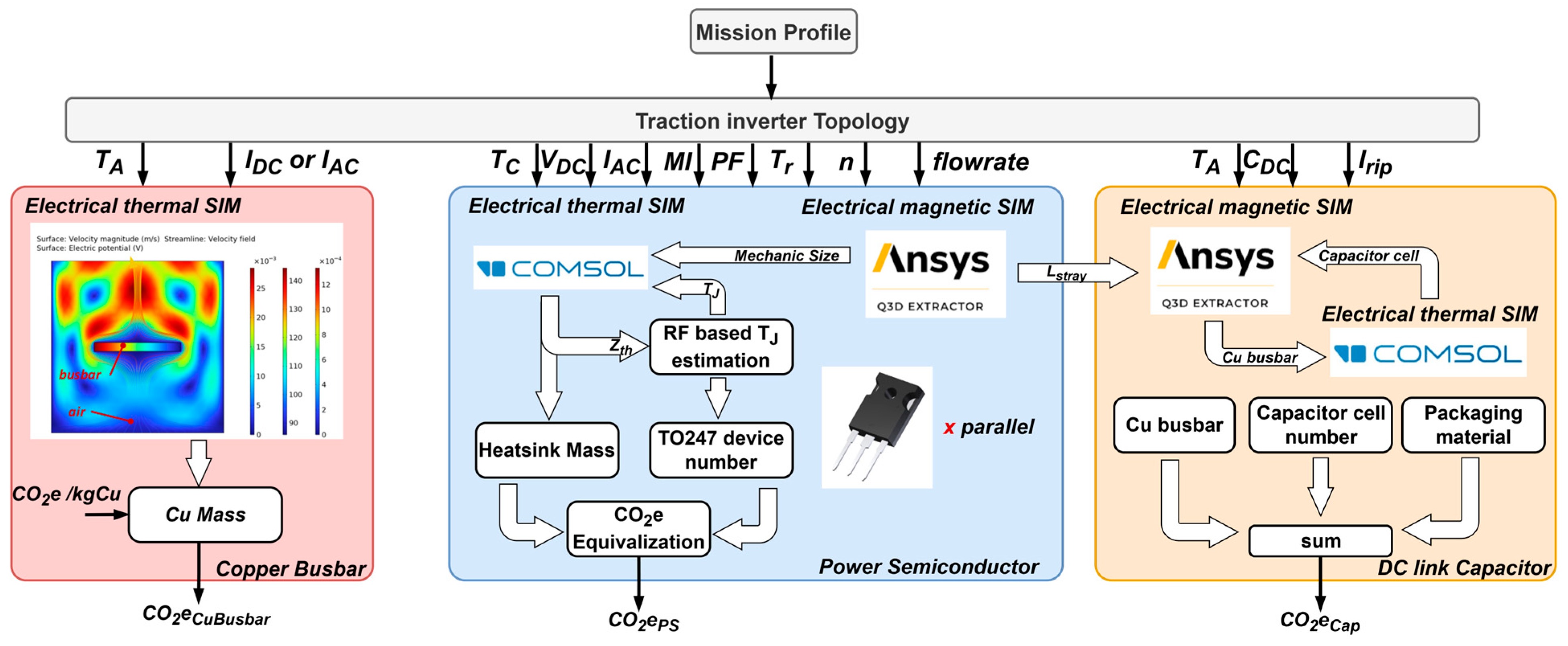
Figure 1 presents the proposed methodology for traction inverter CO2e (CO2einverter) evaluation including copper busbar CO2e (CO2eBusbar), power semiconductor CO2e (CO2ePS) and Capacitor CO2e (CO2eCap). For a given inverter topology and mission profile, the required electrical and thermal specifications of the individual PEKC are generated as shown in Figure 1.
For copper busbars, the ambient temperature TA extracted from the mission profile, together with the RMS value of traction inverter AC output current ( I A C ) and the DC-link current ( I D C ), serves as a key design input for both AC and DC busbar analysis. Electrical–thermal-fluid simulation in COMSOL 6.2 is performed to determine the minimum busbar volume that satisfies the thermal limits listed in Table 1. By multiplying the resulting copper volume by the material density and its CO2e-per-kg value, the CO2eBusbar is obtained.
A similar workflow is applied to power semiconductor and the DC-link capacitor. In this case, the evaluation processes of these two components are interdependent due to the influence of stray inductance ( L s t r a y ). Iterative simulations between Ansys Q3D and COMSOL 6.2 (similar electrical thermal simulation as busbar) are performed to determine the required capacitor cell number, internal busbar layout, and packaging material volume in accordance with the thermal constraints listed in Table 1 and key parameters that are derived based on mission profile and topology include TA, capacitance CDC-based DC-link voltage ripple VDCrip, and equivalent series resistance (ESR) based on DC-link ripple current Irip. Using the CO2e-per-kg data of the relevant materials, the CO2eCap is then calculated.
Unlike busbars [28] and DC-link capacitors [29,30,31], whose electrical characteristics exhibit a relatively linear dependence on temperature, the TJ of power semiconductor devices shows pronounced nonlinear behaviour. TJ is strongly influenced by six inverter-operating parameters—including machine speed (n), torque (Tr), power factor (PF), modulation index (MI), DC-link voltage (VDC), and switching frequency (fsw)—as well as the thermal impedance network of the power module [32,33,34]. To address this nonlinearity and reduce the computational effort required by physics-based thermal models, an RF-based approach is employed [35,36]—RF-based TJ estimation (Figure 1). A TO-247 discrete package is adopted in this study to avoid bias toward any proprietary module design and to demonstrate the generality of the methodology. Multiple TO-247 devices may be paralleled to emulate high-power module operation. Apart from VDC, n, Tr, MI, PF, IAC, coolant temperature TC and flowrate are also critical information that can be extracted from mission profile. Lstray analysis with Ansys Q3D launch a limitation mechanic size for COMSOL 6.2 simulation. Using the proposed multi-physics simulation framework combined with the AI-based TJ estimation, the heatsink size, which is dominated by thermal impedance from junction to coolant (Zth), and the required number of TO-247 devices are determined, enabling computation of CO2ePS. More details will be presented in Section 2.3.
The following subsections provide mission profile-dependent CO2e evaluation results for copper busbars, power semiconductor, and DC-link capacitors, illustrating the critical role of the mission profile in sustainability assessment considering three-phase two-level traction inverter topology.

2.1. Copper Busbars

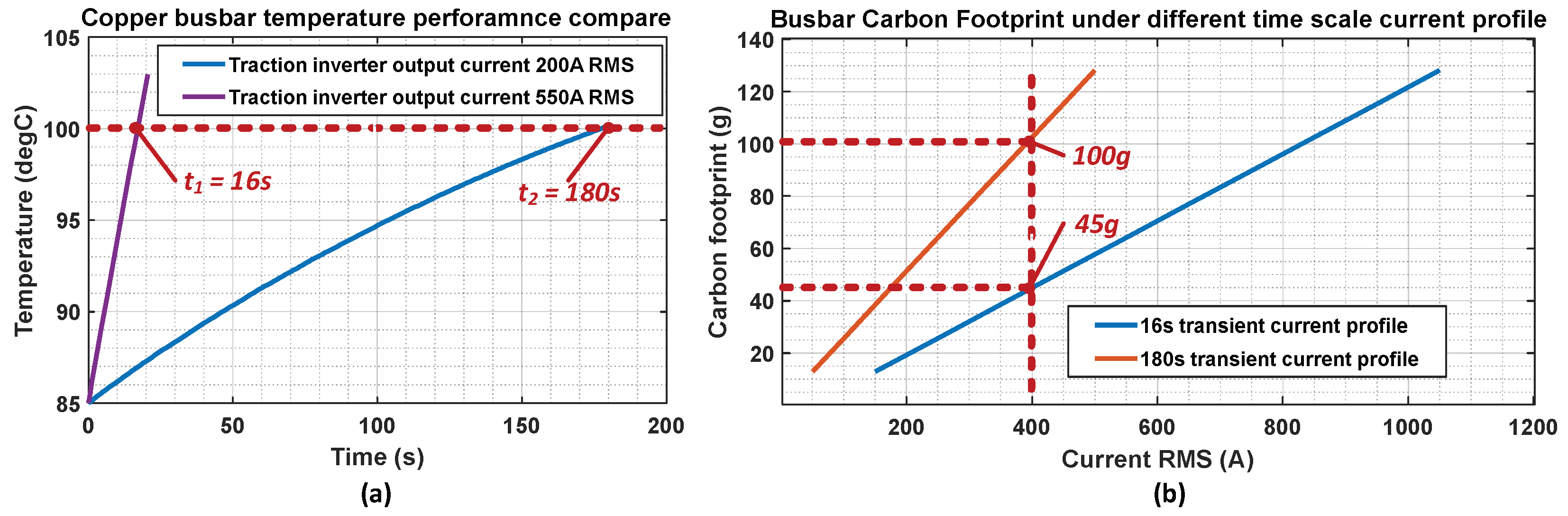
As shown in Figure 1, an electro–thermal–fluid simulation is carried out in COMSOL 6.2 by incorporating natural convection heat transfer in air, including the effect of gravity. The thermal boundary condition is set to an ambient temperature of T A = 85   d e g C , and laminar flow is selected for the fluid model. Figure 2a illustrates the copper busbar thermal performance under two different IACs—550 Arms and 200 Arms at TA of 85 degC. Under identical thermal constraints, increasing IAC to 550 Arms causes the busbar temperature to reach 100 degC within only 16 s. For a mission profile requiring 550 Arms over 16 s, the copper busbar volume must be increased (assuming an unchanged cooling condition) to maintain the temperature within allowable limits, highlighting the strong impact of the mission profile on busbar sizing. Figure 2b presents the corresponding CO2eBusbar under two mission profiles: 16 s/400 Arms and 180 s/400 Arms. Sustaining 400 Arms for 180 s results in a CO2eBusbar of 100 g by using a preliminary CO2e-per-kg value of 1.6 kg-per-kg copper. In contrast, when the duration is reduced to 16 s, CO2eBusbar drops to 45 g. These results underscore that the mission profile is a critical design input and must be considered when assessing the sustainability of traction inverter components.

2.2. DC-Link Capacitor

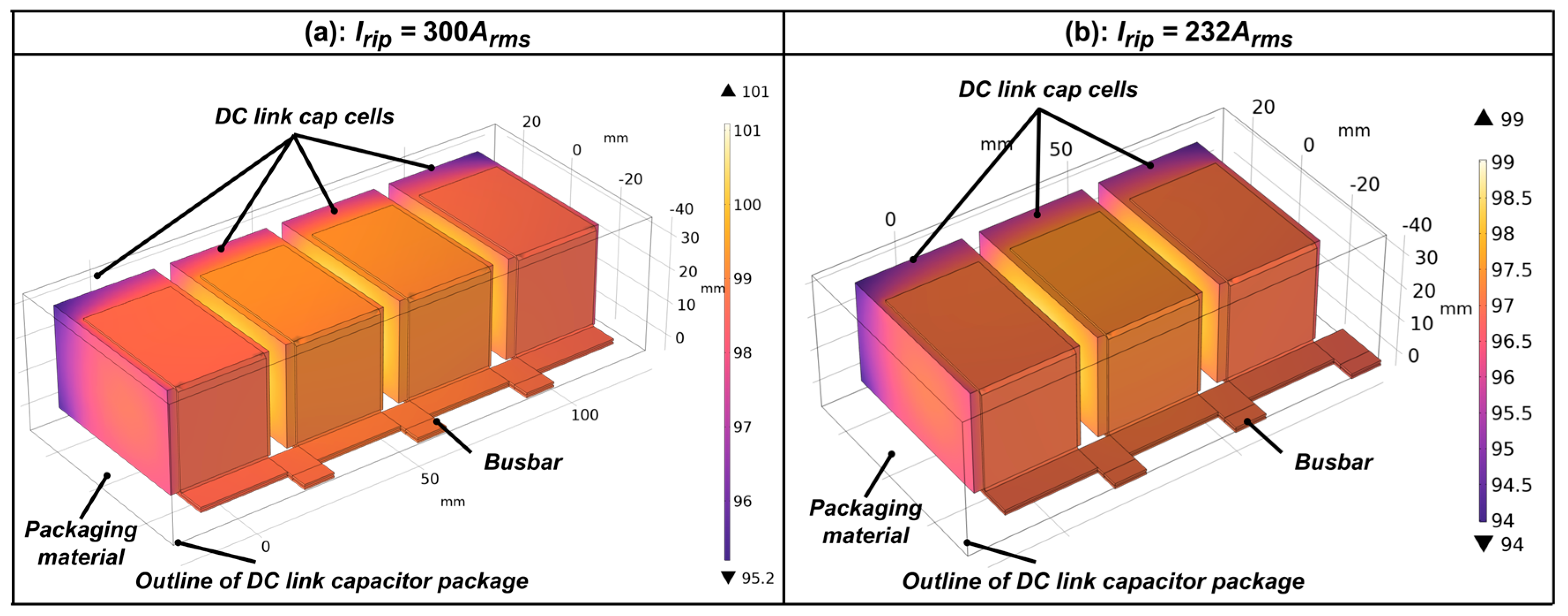
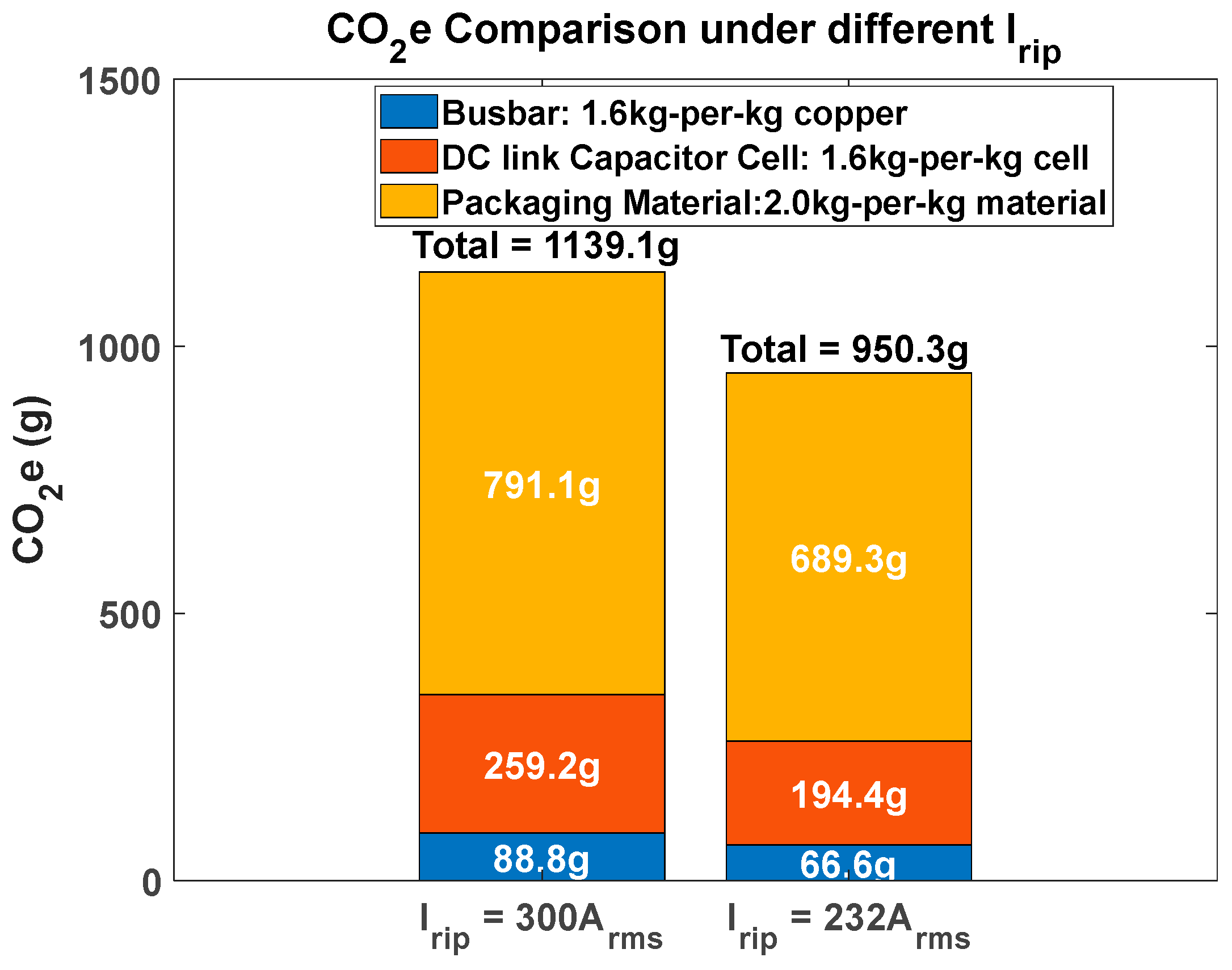
Two ripple-current conditions are considered in this evaluation: Irip = 300 Arms and Irip = 232 Arms, both at an TA of 85 degC. Simulation in COMSOL 6.2 adopts the same setting as copper busbar. During the analysis, the internal busbar configuration, the number of DC-link capacitor cells, and the overall capacitor module size are adjusted to satisfy the thermal limits specified in Table 1. In addition, the total stray inductance contributed by the DC-link capacitor is constrained to remain below a certain limitation, for instance 15 nH, in accordance with the reverse-bias safe operating area (RBSOA) requirements of the selected power semiconductor devices. The thermal simulation results for the two ripple-current levels are shown in Figure 3. To ensure that the maximum internal temperature of the DC-link capacitor remains below 100 degC, a higher Irip necessitates the use of additional capacitor cells, thereby increasing the total capacitor volume. Considering the three primary material contributors—copper busbar, film-based capacitor cells, and packaging material (e.g., resin)—the corresponding CO2e results are summarized in Figure 4, using preliminary CO2e-per-kg values for each component. It can be observed that a higher Irip leads to an increased CO2eCap, with the packaging materials contributing the largest share of the total emissions.

2.3. Power Semiconductor

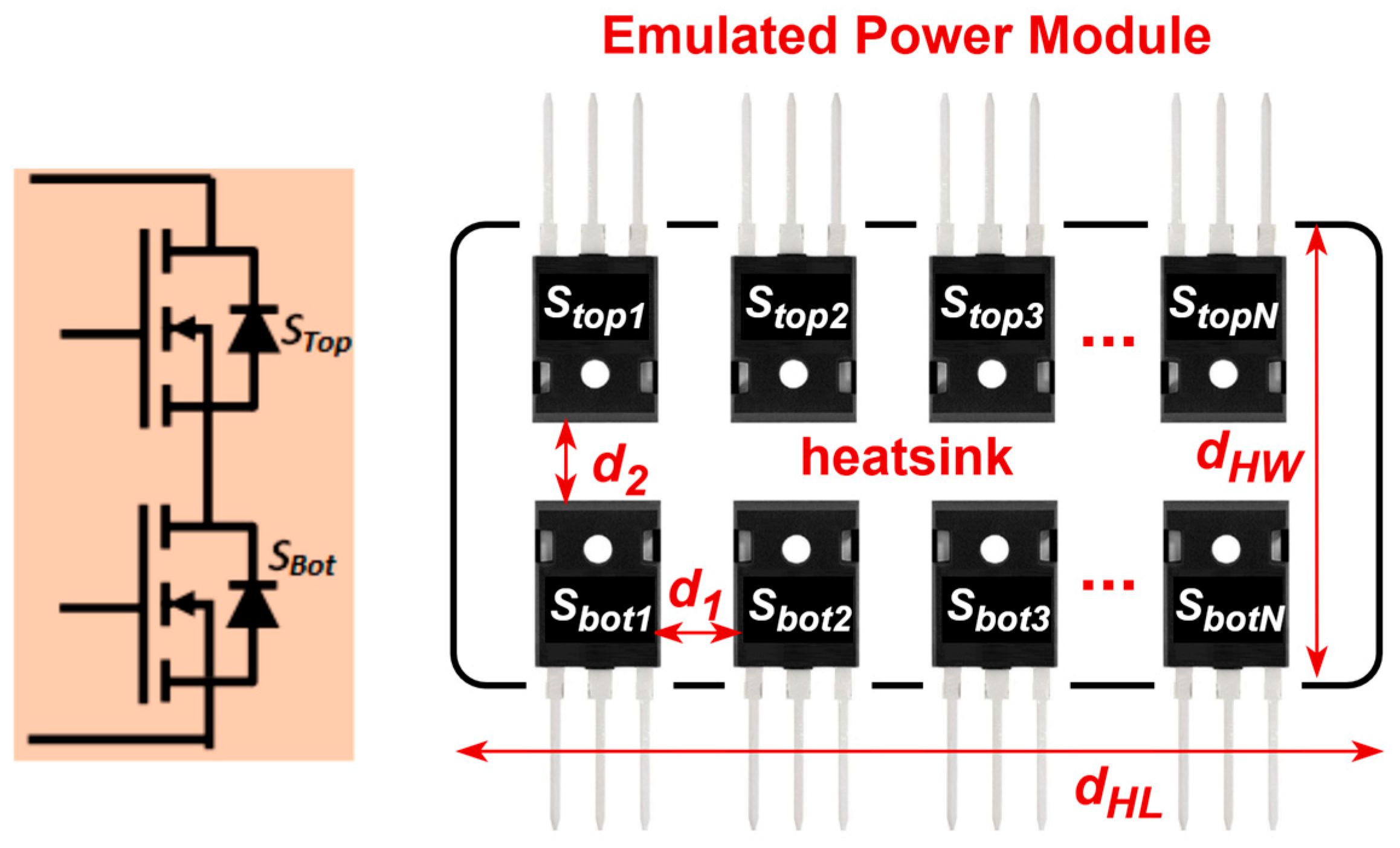
A power semiconductor package typically includes multiple materials such as copper, ceramic substrates, solder or sintered layers, and silicone gel [17]. As no public CO2e database exists for these materials, this study simplifies the assessment by estimating only the number of TO-247 devices, using it as a representative indicator of the total CO2e contribution from all internal packaging materials. Figure 5 illustrates the proposed method for incorporating TO-247 devices into the sustainability evaluation framework. L s t r a y extracted from Ansys Q3D imposes design constraints on d H L , d H W , d 1 , and d 2 . Iterative analysis is then performed between COMSOL 6.2 (thermal-fluid transient simulation for Zth extraction) and the RF-based TJ estimation to determine both the required heatsink mass by obtaining proper d H L , d H W , d 1 , and d 2 [37] and the number of TO-247 devices.
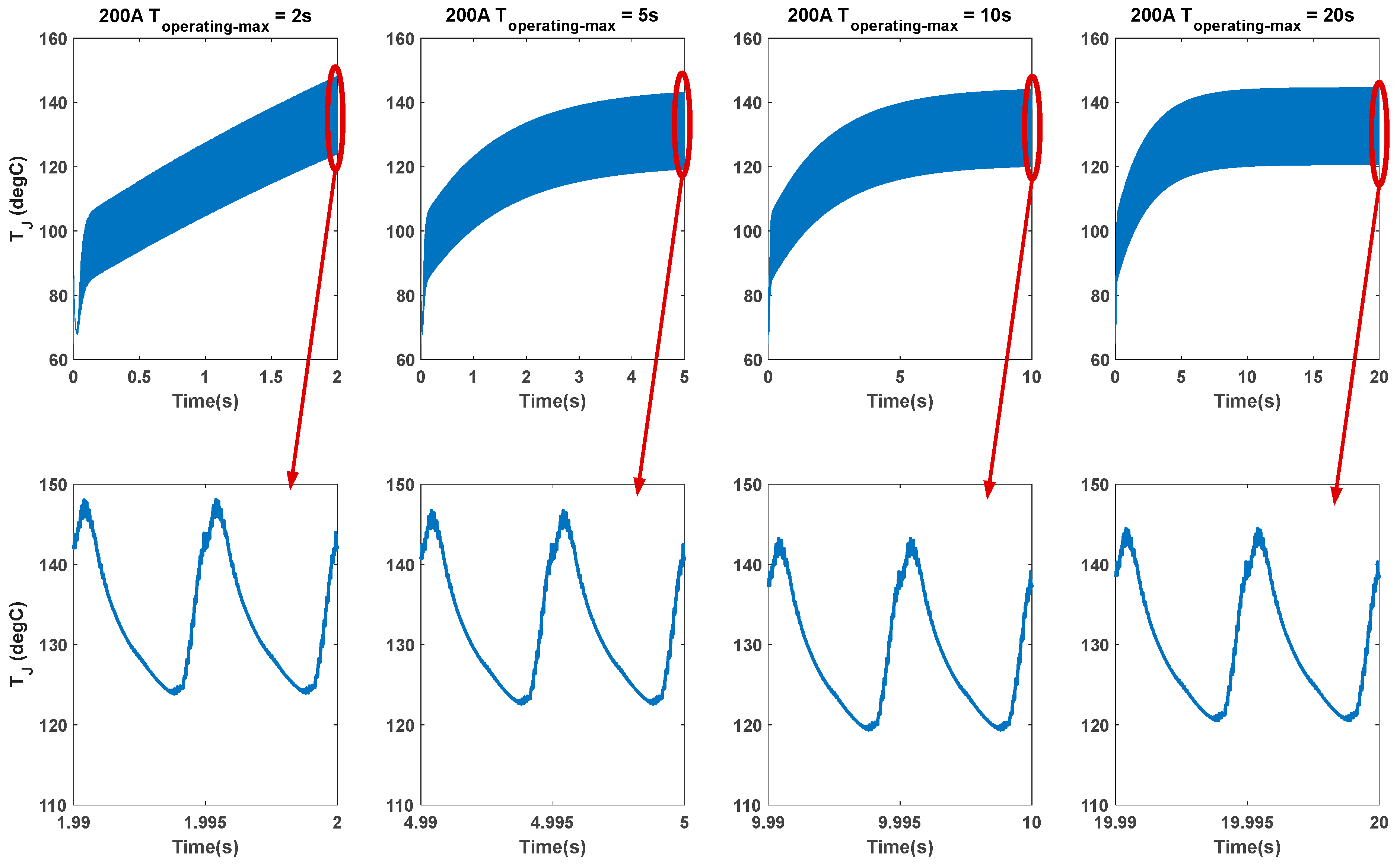
Based on the mission profiles in Table 2, the heatsink size is adjusted according to the maximum operating duration ( T operating_max , 2–20 s) to balance thermal resistance, thermal capacitance, and L stray . Two SiC MOSFETs (E3M0016120K) are connected in parallel, with TJ limits specified in Table 1. Smaller heatsinks exhibit lower thermal capacitance, causing a faster rise in TJ and making them unsuitable for longer T operating_max . For example, at IAC = 200 Arms and T operating_max = 2   s in Figure 6, a compact heatsink with smaller spacing d 1 is used, reducing thermal capacitance but increasing thermal coupling among parallel devices, which accelerates TJ rise. For T operating_max = 5 s , the original thermal management is insufficient to maintain TJ < 150 degC. Increasing the spacing to d 1 = 15 mm enhances thermal capacitance, slows the TJ rise, mitigates thermal coupling, and reduces the effective thermal resistance. For T operating_max = 2 s and 5 s, TJ remains in the transient regime and does not reach steady state. When T operating_max is extended to 10 s and 20 s, TJ begins to approach steady state as indicated by Figure 6, as the operating duration exceeds the system’s thermal time constant, determined by the interaction of thermal capacitance and resistance. Remaining in the transient regime necessitates a larger heatsink to manage the thermal load, which adversely affects cost efficiency and power density.
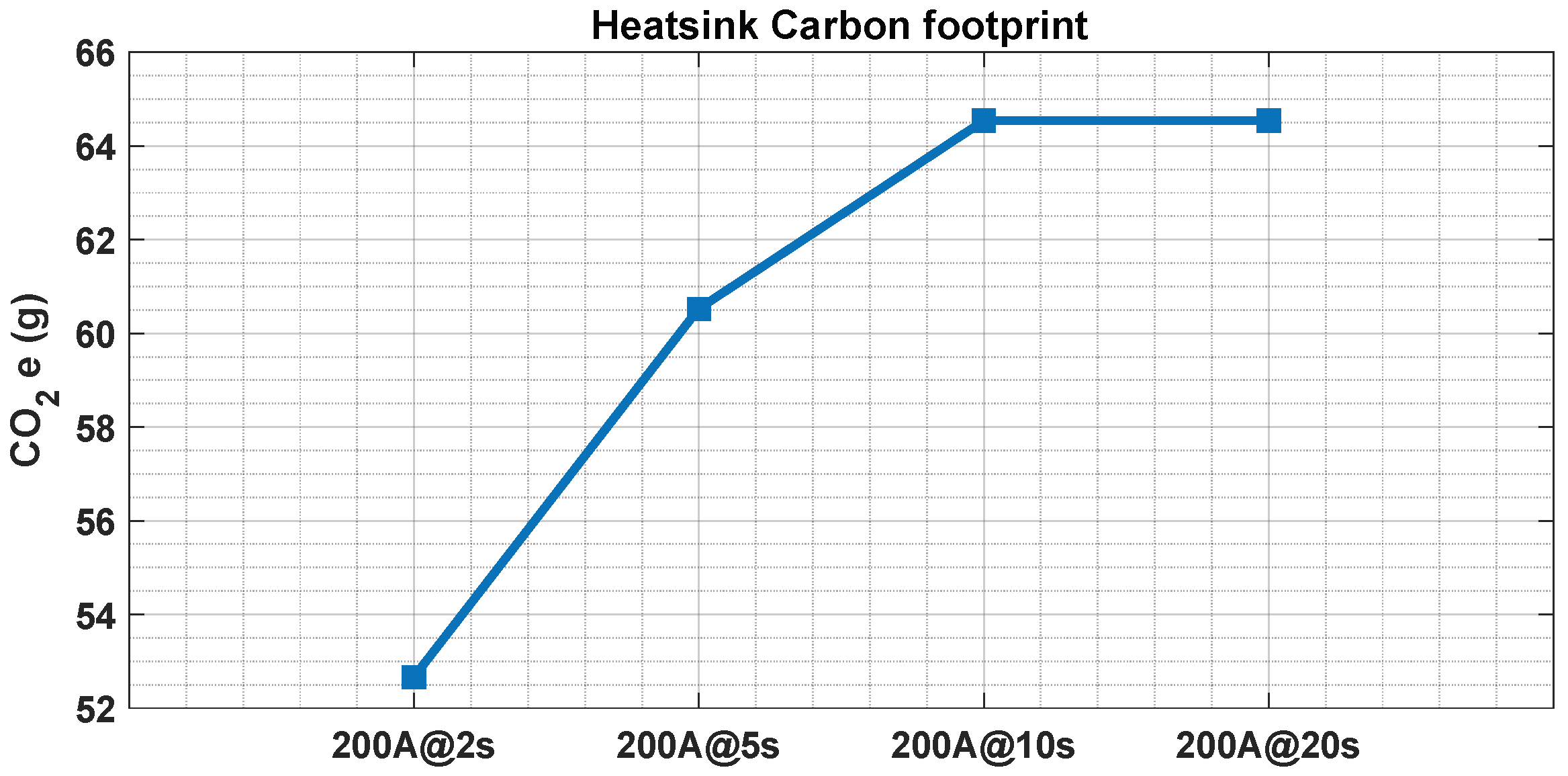
Since the number of parallel-connected devices is constant across the mission profiles in Table 2, the CO2e contribution from the power semiconductors remains unchanged. However, the heatsink’s CO2e varies, as shown in Figure 7. As T operating_max increases, CO2e of heatsink rises. At T operating_max = 20 s, heatsink CO2e saturates, which means that a trade-off between cost, power density, and thermal design is required. Increasing the spacing d 1 between parallel devices reduces thermal coupling but also increases CO2e due to the additional copper material needed.

2.4. AI-Assisted Power Semiconductor TJ Calculation

In practical engineering design, mission profiles are usually far more complex than the simplified cases in Table 2. Table 3 provides a representative example that includes acceleration and regenerative braking with varying speed n and torque Tr. Running such detailed profiles entirely in software environments (e.g., PLECS or Simulink) is computationally demanding and becomes increasingly time-consuming for long-duration or multi-scenario studies.
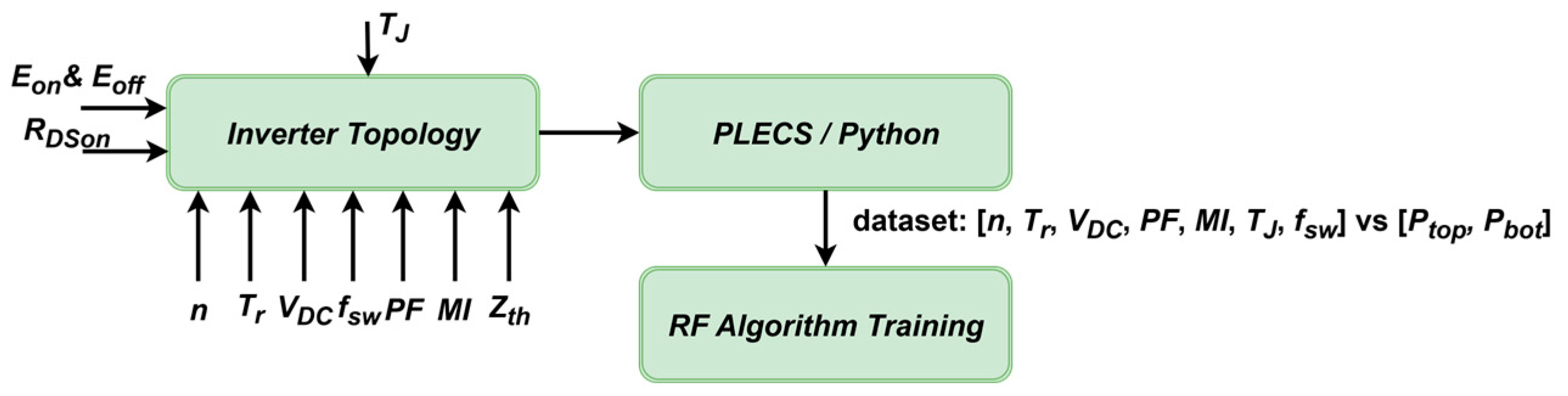
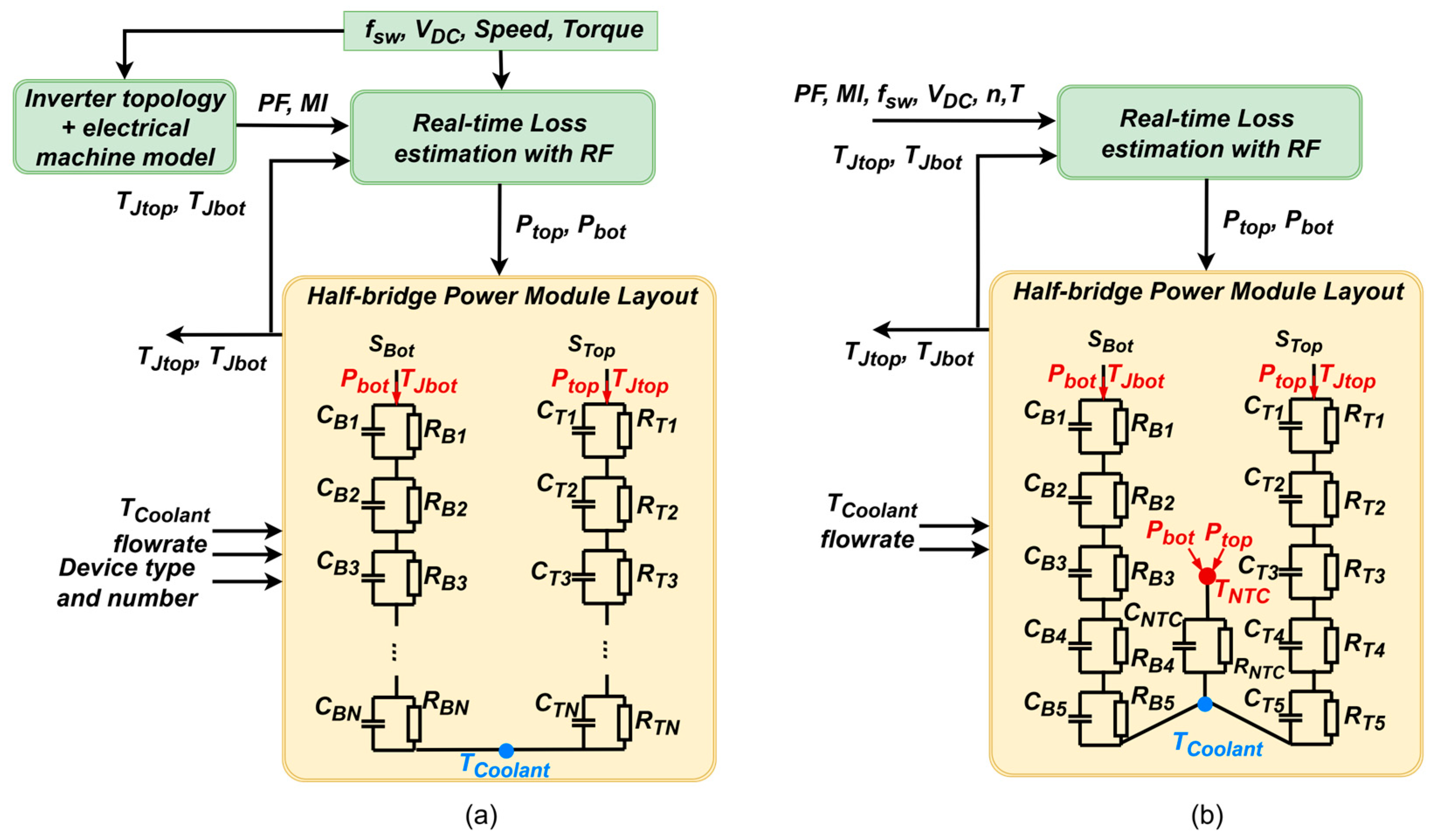
Based on the discrete power semiconductor devices illustrated in Figure 5, an RF-based TJ estimation methodology is proposed, as shown in Figure 8a, to accelerate the TJ calculation process. [n, Tr, VDC, fsw, PF, MI] is generated considering mission profile and inverter topologies are provided as inputs for the RF model to estimate the real-time power losses of power semiconductors, together with Zth for both the top and bottom switches (STop and SBot), as illustrated in Figure 5. Depending on the coolant flowrate, coolant temperature TC, and the selected discrete device, the Zth—including (RT1RTN, CT1CTN) for STop and (RB1RBN, CB1CBN) for SBot—are adjusted accordingly to represent different thermal boundary conditions. By using estimated [Ptop, Pbot], [TJtop, TJbot] is generated with Zth.
For a selected discrete power semiconductor, the switching loss data (Eon and Eoff) and conduction loss data (RDSON) can be obtained either from the datasheet or through double-pulse testing. Following the procedure illustrated in Figure 9, RF can then be trained. For a given mission profile and selected semiconductor device, both fsw and Zth can be decided for the first step. The parameters n, Tr, VDC, PF, and MI can be varied within the rated design range to generate multiple datasets—[n, Tr, VDC, fsw, PF, MI, TJ] vs. [Ptop, Pbot]—without going through the entire mission profile. These datasets can be automatically produced using PLECS simulations or mathematical models of different inverter topologies implemented in Python (version 3.14.2). By fixing fsw at 10 kHz and Zth of the selected power semiconductor, other parameters are sampled based on the following discrete points: VDC varies from 50 V to 1000 V with a step size of 50 V; n ranges from 0 to 10,000 rpm with a step size of 100 rpm; Tr varies from 0 p.u. to 1 p.u. with an increment of 0.1 p.u. PF and MI are generated from n, Tr, and VDC using mission profile and topology. The TJ varies from 0 degC to 200 degC with a step size of 25 degC. This parameter discretization strategy effectively reduces the training workload for the RF model, while maintaining sufficient data diversity to ensure robust TJ calculation across varying operating conditions.

2.5. Experimental Validation

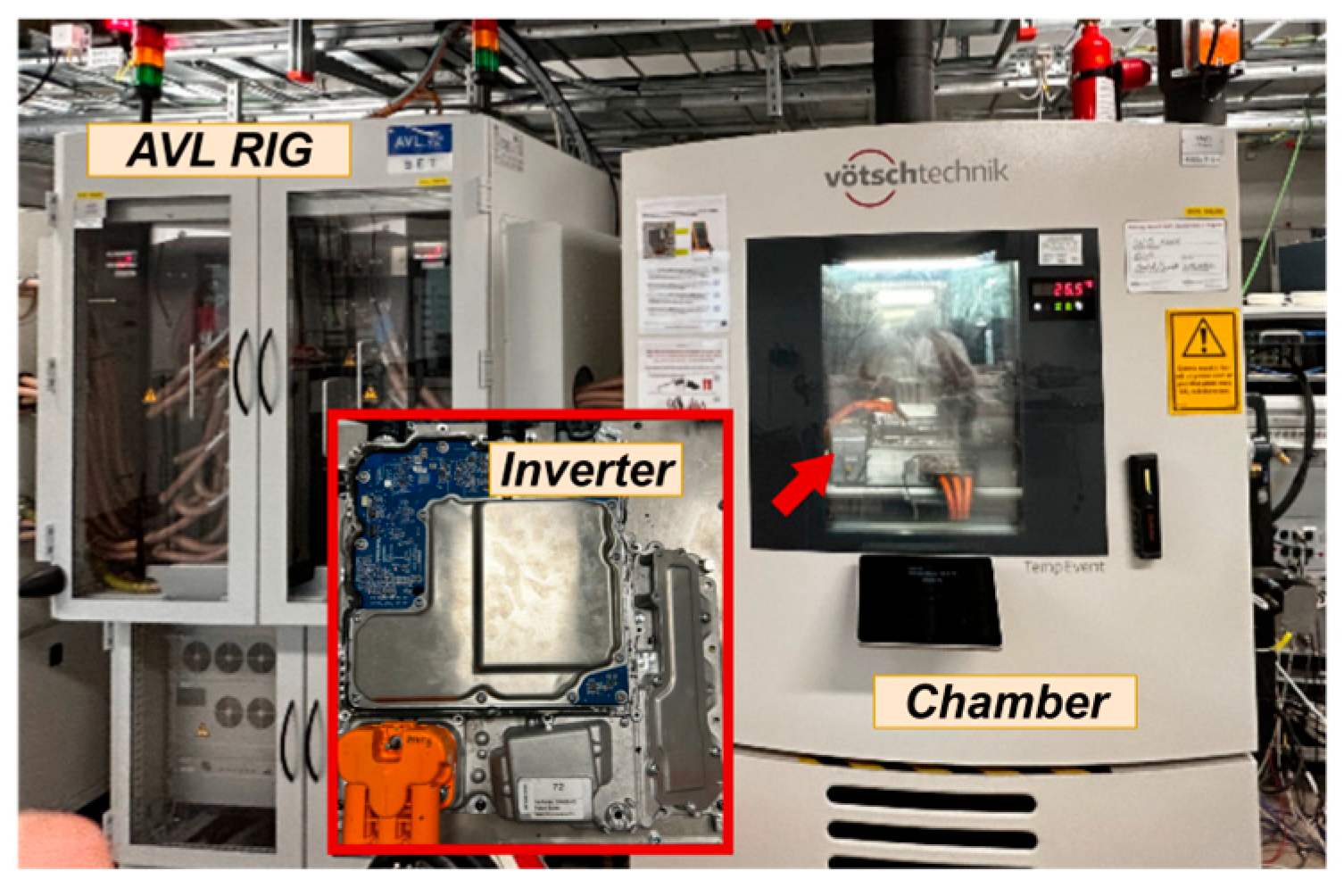
The accuracy of the proposed RF-based TJ calculation approach was experimentally validated under the mission profile specified in Table 3 and Table 4Test Profile. The experimental setup and measurement platform are depicted in Figure 10, including a three-phase two-level SiC-based inverter, electrical machine emulator and environmental chamber, with corresponding system capability detailed in Table 4Test Platform. To enable real-time TJ estimation, the RF is deployed to predict the output vector yo = [Ptop, Pbot]T using the input vector uin = [n, T, VDC, fsw, PF, MI, TJ] as shown in Figure 8b. The RF model selected here consists of 20 decision trees (T = 20), each with a maximum depth of D = 5. The input dimension Din and outputs dimension Dout is 7 and 2, respectively, considering uin and yo. Each decision tree recursively partitions the input space based on learned thresholds of selected features. A non-leaf node stores a feature index, a threshold value, and two child pointers, while each leaf node stores the output vector corresponding to Dout.
Total nodes of RF can be derived as follows:
N t o t a l = T 2 D + 1 1 = 1260
Leaves per tree can be calculated as follows:
N l e a v e s = T 2 D = 640
Total parameter number is derived as follows:
N p a r a R F = N t o t a l + D o u t N l e a v e s = 2540
The total memory footprint is 9.92 kB in float32 format, which is non-trivial to manage in resource-constrained embedded controllers. Considering a typical traction inverter micro controller unit, such as the Infineon AURIX™ TC3xx series operating at a clock frequency of 300 MHz, which results in floating-point multiply–accumulate (MAC) computational time TMAC = 5/300 MHz, the estimated computation time for one time inference is as follows:
T R F T D + T T M A C = 2 u s
The RF model achieves a single-inference latency of 2 µs, meeting the real-time requirements of power electronic controllers, which typically operate with millisecond-level control cycles (e.g., fₛw = 10 kHz). Real-time Loss estimation with RF (Figure 8b) outputs, [Ptop, Pbot], serve as inputs for the subsequent real-time TJ calculation for one half bridge using the proposed structure depicted in Figure 8b. The TJ of the SiC devices ([TJtop, TJbot]) are derived based on [Ptop, Pbot]. The top-switch Foster thermal network, consisting of RT1RT5 and CT1CT5, is extracted through testing using a T3ster system or via simulation [38], while the bottom-switch network (RB1RB5 and CB1CB5) is obtained via a similar method. The NTC temperature (TNTC) inside the power module is also estimated to provide a reference for validating the proposed method, since direct measurement of the SiC TJ is not feasible after inverter assembly. Furthermore, the foster network parameters are affected by coolant flowrate and TC, as discussed in [39]. A virtual thermal network is constructed to estimate TNTC as shown in Figure 8b. Based on transient FEM simulations, the thermal impedance from the NTC to coolant is defined as ZNTC(t) = (TNTC(t) − C(t))/(Ptop + Pbot), assuming simultaneous heating from both top and bottom switches. This assumption is justified by the sensor’s location near the lateral midpoint between the two switches. By fitting the impedance response [40], the corresponding thermal resistance RNTC and capacitance CNTC are extracted.
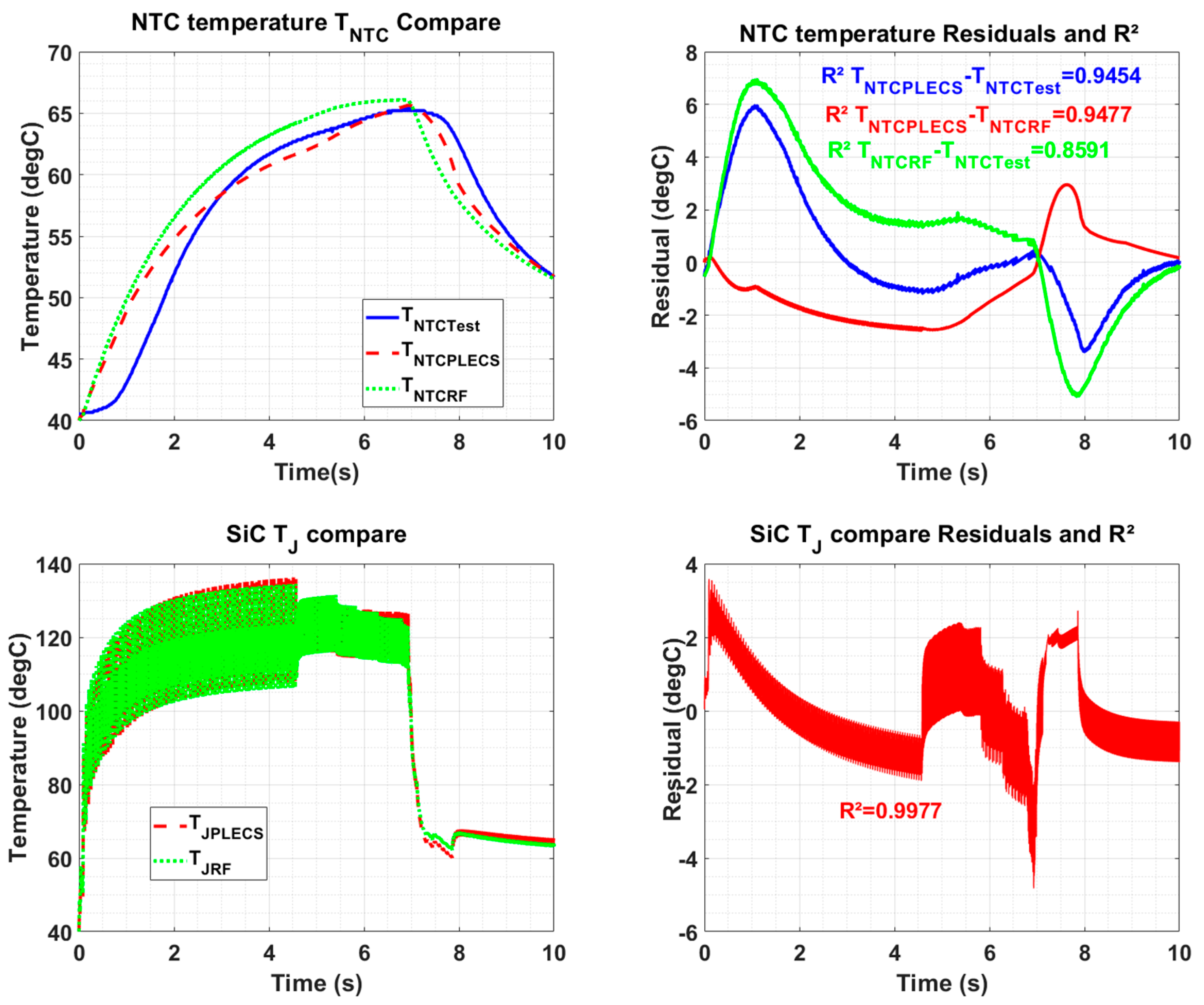
The validation results are presented in Figure 11, together with the corresponding residuals and R2 values. Since direct measurement of SiC TJ is not feasible once the power module is integrated into the inverter, only TNTC can be experimentally measured. Therefore, the first step is to compare the measured TNTC with the TNTC obtained from the PLECS simulation. The strong agreement between TNTCTest and TNTCPLECS reflected by an R2 of 0.9454, confirms that the simulated TJ (TJPLECS) accurately represents the actual thermal behaviour during testing. The TNTC estimated by the proposed RF-based method (“TNTCRF”) also aligns closely with both TNTCTest and TNTCPLECS, achieving R2 values of 0.8591 and 0.9477, respectively. In addition, TJ estimated by the RF (TJRF) demonstrates excellent accuracy, with less than 5 degC deviation from TJPLECS and an R2 of 0.9977, indicating an equivalent error level relative to the tested TJ. These results collectively verify the feasibility and reliability of the proposed method for accurate TJ estimation under real operating conditions.

3. Analysis Examples

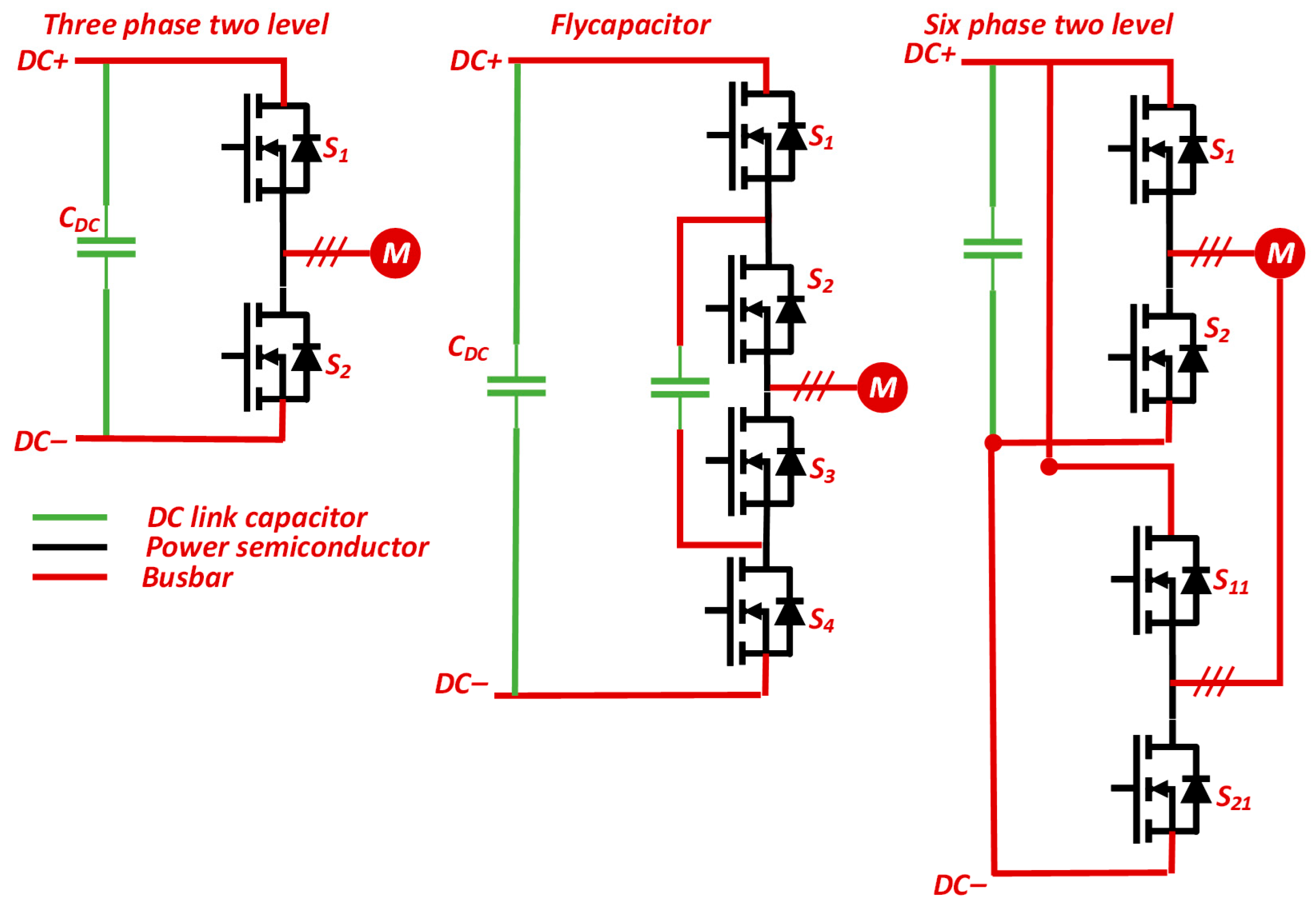
The design methodology described in Section 2 is applied to assess the CO2e impact of three traction inverter topologies, as shown in Figure 12: the conventional three-phase two-level inverter, the flying-capacitor inverter, and the six-phase two-level inverter. In the schematic, red traces indicate internal busbar connections, green traces represent DC-link capacitor components, and black blocks denote power semiconductor. The mission profile used for the sizing and CO2e evaluation is provided in Table 3 and Table 4 (Test Profile). Power semiconductor CO2e estimation follows the procedure outlined in Figure 8a.
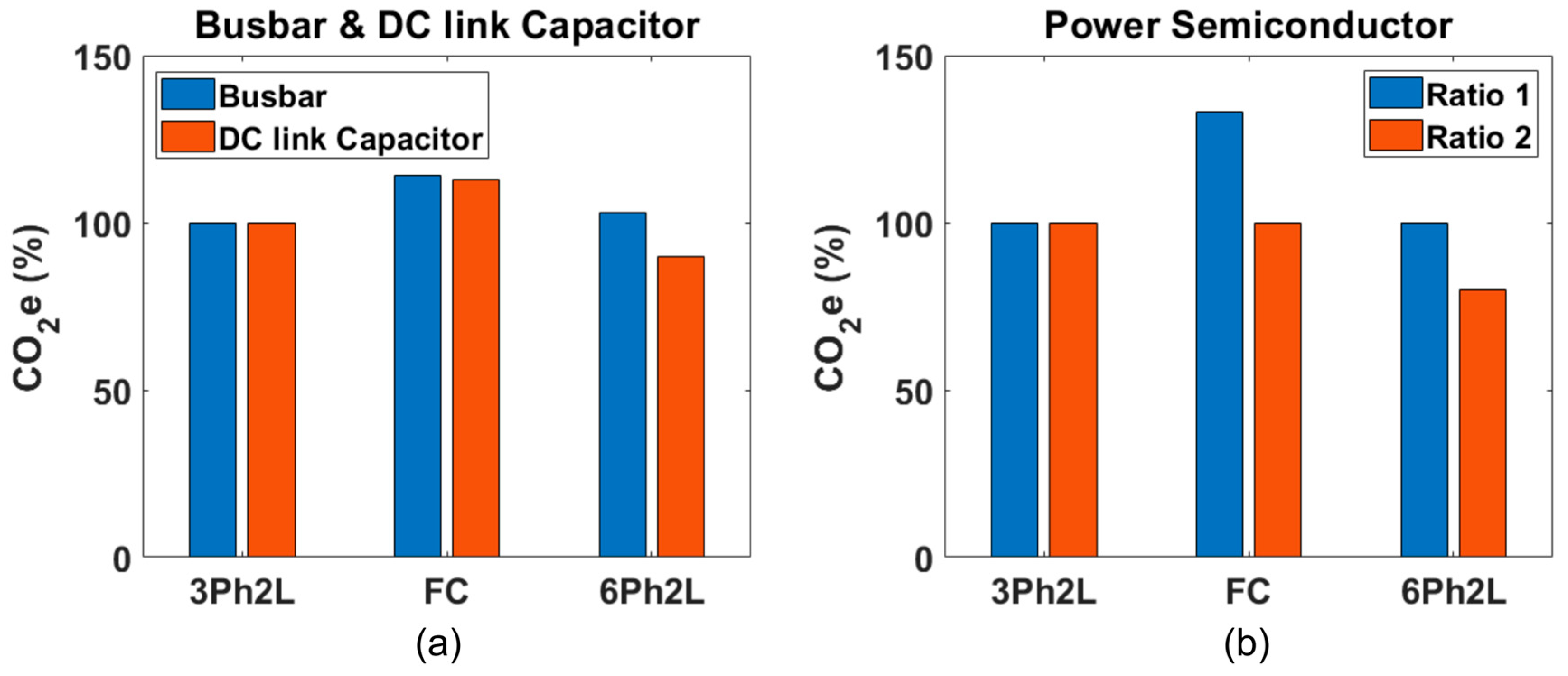
Following the procedure in Figure 1, the CO2e of busbars for the three inverter topologies was estimated. The flying-capacitor and six-phase two-level topologies were normalized against the conventional three-phase two-level inverter, which is set as the 100% reference, by using CO2eBusbar—flying capacitor/CO2eBusbar—three-phase two-level, CO2eBusbar—six-phase two-level/CO2eBusbar—three-phase two-level, respectively. DC-link capacitor follows the same approach. Figure 13a shows that the flying-capacitor inverter shows the highest CO2e for both components due to the additional flying capacitors required. The six-phase topology exhibits a slightly higher busbar CO2e but achieves the lowest DC-link capacitor CO2e among the three configurations.
Figure 13b presents the CO2e associated with power semiconductor under two estimation scenarios, due to the lack of publicly available CO2e data for power module manufacturing. The assessment is based on the energy consumption of SiC die fabrication, with the device types summarized in Table 5. Manufacturing a 1.2 kV die typically requires ~1.5–2× the energy of a 650 V die, while a 125 A die requires ~1.6–2.5× the energy of a 67 A die. Accordingly, Ratio 1 assumes scaling factors of 1.5 (voltage) and 1.6 (current), whereas Ratio 2 assumes 2.0 and 2.5.
Taking Ratio 1 as an example, since the current ratings of the SiC devices are nearly identical, the voltage rating dominates the energy consumption for die fabrication. The energy for the flying-capacitor topology is estimated as 1.5 × (number of SiC devices in flying-capacitor topology) ÷ (number of SiC devices in three-phase two-level). A similar approach is applied to the six-phase two-level topology, focusing on the impact of current rating. based on Figure 13b, under Ratio 1, the flying-capacitor inverter exhibits the highest semiconductor-related CO2e, while the three-phase and six-phase inverters show similar levels. Under Ratio 2, the six-phase topology achieves the lowest CO2e, whereas the three-phase and flying-capacitor inverters yield comparable, higher CO2e values.

4. Conclusions

This paper presents an AI-assisted, multi-physics-based methodology for evaluating the sustainability of traction inverters by focusing on PEKCs, including power semiconductor, busbars, and DC-link capacitors. The mission profile is incorporated as a critical design input—together with the selected inverter topology—due to its strong impact on PEKC thermal loading and, consequently, on CO2e performance. To enhance computational efficiency, an RF–based TJ estimator is introduced to accurately predict TJ under a wide range of operating conditions. The RF model effectively captures the nonlinear interactions between electrical variables, thermal dynamics, and mission-profile variations, enabling substantial acceleration of the thermal evaluation process. Experimental validation shows that the proposed RF-based estimator achieves an accuracy within ±5 degC compared to reference measurements, confirming its suitability for sustainability-oriented power electronics design workflows.
A key challenge identified during the analysis is the absence of a unified CO2e database for power electronics materials, particularly for power semiconductors, which combine copper, ceramics, solders, encapsulants, and semiconductor materials. Establishing such a database will require coordinated efforts between industry and academia to ensure transparency and consistency in sustainability assessments. The thermal-driven design methodology proposed in this work also lays the foundation for integrating additional perspectives into future multi-objective sustainability evaluations, including thermo-mechanical fatigue, reliability, lifetime, and manufacture, as well as cost, and can also be extended to other traction inverter topologies, such as T type neutral clamp and I type neutral clamp. These extensions will further enhance the comprehensiveness and practical relevance of sustainability assessment frameworks for next-generation traction inverters.

Author Contributions

Conceptualization/methodology/validation/writing, C.Z.; review and editing/project administration, R.N. All authors have read and agreed to the published version of the manuscript.

Funding

This research received no external funding.

Data Availability Statement

The original contributions presented in this study are included in the article. Further inquiries can be directed to the corresponding author.

Conflicts of Interest

Authors Chi Zhang and Riccardo Negri are employed by the company Volvo Cars. The authors declare that the research was conducted in the absence of any commercial or financial relationships that could be construed as potential conflicts of interest.

References

  1. Diao, X.; Jiang, L.; Gao, T.; Zhang, L.; Zhang, J.; Wang, L.; Wu, Q. Research on Electric Vehicle Charging Safety Warning Based on A-LSTM Algorithm. IEEE Access 2023, 11, 55081–55093. [Google Scholar] [CrossRef]
  2. Reimers, L.; Dorn-Gomba, C.M.; Emadi, A. Automotive Traction Inverters: Current Status and Future Trends. IEEE Trans. Veh. Technol. 2019, 68, 3337–3350. [Google Scholar] [CrossRef]
  3. Kwak, J.; Castellazzi, A. Parametric Co-design of Machine-Inverter using Wide Band Gap and Three-level ANPC Inverter for 800V Traction System. In Proceedings of the 2023 11th International Conference on Power Electronics and ECCE Asia (ICPE 2023—ECCE Asia), Jeju Island, Republic of Korea, 22–25 May 2023. [Google Scholar]
  4. Satpathy, S.; Das Bhattacharya, P.P.; Veliadis, V. Design Considerations of a GaN-based Three-Level Traction Inverter for Electric Vehicles. In Proceedings of the 2022 IEEE 9th Workshop on Wide Bandgap Power Devices & Applications (WiPDA), Redondo Beach, CA, USA, 7–9 November 2022. [Google Scholar]
  5. Sangwongwanich, A.; Stroe, D.-I.; Mi, C.; Blaabjerg, F. Sustainability of Power Electronics and Batteries: A Circular Economy Approach. IEEE Power Electron. Mag. 2024, 11, 39–46. [Google Scholar] [CrossRef]
  6. Fang, L.; Turkbay Romano, T.; Rio, M.; Mélot, J.; Crébier, J.-C. Enhancing Sustainability in Power Electronics through Regulations and Standards: A Literature Review. Sustainability 2024, 16, 1042. [Google Scholar] [CrossRef]
  7. Blaabjerg, F. FEPPCON XII: Empowering Sustainable Power Electronics. IEEE Power Electron. Mag. 2024, 11, 39–44. [Google Scholar] [CrossRef]
  8. Chen, J.; Tian, T.; Gu, C.; Zeng, H.; Hou, F.; Zhang, G.; Fan, J. Review of Inorganic Nonmetallic Materials in Power Electronics Packaging Application. IEEE Trans. Power Electron. 2025, 40, 10509–10530. [Google Scholar] [CrossRef]
  9. Zhang, Z.; Zhou, W.; Yuan, X.; Arjmand, E.; Xie, L. EMI Mitigation for SiC Power Module with Chip-on-Ceramic Heatsink Packaging. IEEE Trans. Power Electron. 2025, 40, 10324–10329. [Google Scholar] [CrossRef]
  10. Baburajan, S.; Wang, H.; Mandrile, F.; Yao, B.; Wang, Q.; Kumar, D.; Blaabjerg, F. Design of Common DC-Link Capacitor in Multiple-Drive System Based on Reduced DC-Link Current Harmonics Modulation. IEEE Trans. Power Electron. 2022, 37, 9703–9717. [Google Scholar] [CrossRef]
  11. Yuan, Z.; Peng, H.; Deshpande, A.; Narayanasamy, B.; Emon, A.I.; Luo, F.; Chen, C. Design and Evaluation of Laminated Busbar for Three-Level T-Type NPC Power Electronics Building Block With Enhanced Dynamic Current Sharing. IEEE J. Emerg. Sel. Top. Power Electron. 2020, 8, 395–406. [Google Scholar] [CrossRef]
  12. Liang, Z.; Hu, S.; Wang, M.; He, X. DC-Link Busbar Network Design and Evaluation Method for the Large-Capacity Power Electronic Converter. IEEE J. Emerg. Sel. Top. Power Electron. 2021, 9, 4137–4145. [Google Scholar] [CrossRef]
  13. Wang, Z.; Wu, Y.; Mahmud, M.H.; Yuan, Z.; Zhao, Y.; Mantooth, H.A. Busbar Design and Optimization for Voltage Overshoot Mitigation of a Silicon Carbide High-Power Three-Phase T-Type Inverter. IEEE Trans. Power Electron. 2021, 36, 204–214. [Google Scholar] [CrossRef]
  14. Routray, S.K. Electronic Waste, Power Electronics, and Environmental Sustainability. IEEE Power Electron. Mag. 2025, 12, 41–47. [Google Scholar] [CrossRef]
  15. Voldoire, A. Sustainability Indicators Integration into the Optimal Design Methodology of Power Electronic Converters. In Proceedings of the 2024 IEEE Design Methodologies Conference (DMC), Grenoble, France, 18–20 November 2024; pp. 1–6. [Google Scholar]
  16. O’Donnell, S.; Egan, L.; Calmels, A.; Wheeler, P. Hybrid Power Drive Solution for Increased Sustainability in Aircraft Actuation Systems. In Proceedings of the 2022 IEEE Conference on Technologies for Sustainability (SusTech), Corona, CA, USA, 21–23 April 2022; pp. 161–164. [Google Scholar]
  17. Cheng, J.; Liu, S.; Feng, H.; Ran, L. Sustainability of Power Devices: A Perspective on Design for Recycling. In Proceedings of the 2025 IEEE Workshop on Wide Bandgap Power Devices and Applications in Asia (WiPDA Asia), Beijing, China, 15–17 August 2025. [Google Scholar]
  18. Miao, J.; Yin, Q.; Wang, H.; Liu, Y.; Li, H.; Duan, S. IGBT Junction Temperature Estimation Based on Machine Learning Method. In Proceedings of the 2020 IEEE 9th International Power Electronics and Motion Control Conference (IPEMC2020-ECCE Asia), Nanjing, China, 29 November–2 December 2020; pp. 1–5. [Google Scholar]
  19. Martin, G.E.; Verbrugge, B.; Hasan, M.M.; El Baghdadi, M.; Romano, C.; Hegazy, O. Artificial Intelligence-Driven Thermal Management in Electric Vehicle Traction Inverters: Cooling System Optimization and Real-Time Temperature Prediction. IEEE Access 2025, 13, 167632–167648. [Google Scholar] [CrossRef]
  20. Xu, Z.; Wang, H.; Ge, X.; Zhang, Y.; Xie, D.; Yao, B.; Zhang, L.; Wang, Y.; Feng, X. Junction Temperature Monitoring of Power Devices Using Convolutional Neural Networks. IEEE Trans. Ind. Appl. 2025, 61, 6632–6643. [Google Scholar] [CrossRef]
  21. Taha, W.; Juarez-Leon, F.; Hefny, M.; Jinesh, A.; Poulton, M.; Bilgin, B.; Emadi, A. Holistic Design and Development of a 100-kW SiC-Based Six-Phase Traction Inverter for an Electric Vehicle Application. IEEE Trans. Transp. Electrif. 2024, 10, 4616–4627. [Google Scholar] [CrossRef]
  22. Xie, T.; Hu, Z.; Zhang, W.; Chen, H. Fault Diagnosis for Multi-Phase Inverters: A Telescoping Modulus Approach With Convolutional Neural Networks. IEEE Trans. Circuits Syst. II Express Briefs 2024, 71, 4371–4375. [Google Scholar] [CrossRef]
  23. Lu, H.; Li, J.; Qu, R.; Ye, D.; Lu, Y. Fault-Tolerant Predictive Control of Six-Phase PMSM Drives Based on Pulsewidth Modulation. IEEE Trans. Ind. Electron. 2019, 66, 4992–5003. [Google Scholar] [CrossRef]
  24. Talebi, D.; Gardner, M.C.; Sankarraman, S.V.; Daniar, A.; Toliyat, H.A. Electromagnetic Design Characterization of a Dual Rotor Axial Flux Motor for Electric Aircraft. In Proceedings of the 2021 IEEE International Electric Machines & Drives Conference (IEMDC), Hartford, CT, USA, 17–20 May 2021. [Google Scholar]
  25. To, D.D.; Lee, D.-C. Hybrid PWM Technique and Capacitor Voltage Balancing Control for Four-Level Asymmetrical Flying Capacitor Inverter. IEEE Access 2025, 13, 31401–31410. [Google Scholar] [CrossRef]
  26. Ye, Z.; Lei, Y.; Liao, Z.; Pilawa-Podgurski, R.C.N. Investigation of Capacitor Voltage Balancing in Practical Implementations of Flying Capacitor Multilevel Converters. IEEE Trans. Power Electron. 2022, 37, 2921–2935. [Google Scholar] [CrossRef]
  27. Lin, X.; Burgos, R.; Dong, D. Improved Variable Switching Frequency Control for Capacitor Voltage Ripple Regulation in Multilevel Flying Capacitor Converter. IEEE Trans. Power Electron. 2023, 38, 5700–5705. [Google Scholar] [CrossRef]
  28. Smirnova, L.; Juntunen, R.; Murashko, K.; Musikka, T.; Pyrhönen, J. Thermal Analysis of the Laminated Busbar System of a Multilevel Converter. IEEE Trans. Power Electron. 2016, 31, 1479–1488. [Google Scholar] [CrossRef]
  29. Liang, G.; Rodriguez, E.; Farivar, G.G.; Pou, J. Ripple Current Reduction in DC-Link Capacitor for a Single-Phase Two-Stage Inverter. IEEE Trans. Power Electron. 2025, 40, 4080–4089. [Google Scholar] [CrossRef]
  30. Tong, H.; Ke, Y.; Yao, W.; Li, W. DC-Link Capacitor Current Stress Minimization Strategy for Paralleled Three-Phase Voltage-Source Converters With Interleaving. IEEE Trans. Power Electron. 2024, 39, 5320–5338. [Google Scholar] [CrossRef]
  31. Safayet, A.; Islam, M.; Sebastian, T. Comprehensive Analysis for DC-Link Capacitor Sizing for a Three-Phase Current-Controlled Voltage-Source Inverter. IEEE Trans. Ind. Appl. 2022, 58, 4248–4260. [Google Scholar] [CrossRef]
  32. Xu, D.; Lu, H.; Huang, L.; Azuma, S.; Kimata, M.; Uchida, R. Power loss and junction temperature analysis of power semiconductor devices. IEEE Trans. Ind. Appl. 2002, 38, 1426–1431. [Google Scholar] [CrossRef]
  33. Yang, L.; Li, Y.; Li, Z.; Wang, P.; Xu, S.; Gou, R. A Simplified Analytical Calculation Model of Average Power Loss for Modular Multilevel Converter. IEEE Trans. Ind. Electron. 2019, 66, 2313–2322. [Google Scholar] [CrossRef]
  34. Bieber, L.; Wang, L.; Jatskevich, J. Numerically Efficient and Accurate Analytical Converter Semiconductor Loss Calculation for Hybrid and Modular Multilevel Converters in VSC-HVDC Applications. IEEE Open Access J. Power Energy 2024, 11, 493–507. [Google Scholar] [CrossRef]
  35. Wang, P.; Xu, K.; Ding, Z.; Du, Y.; Liu, W.; Sun, B.; Zhu, Z.; Tang, H. An Online Electricity Market Price Forecasting Method Via Random Forest. IEEE Trans. Ind. Appl. 2022, 58, 7013–7021. [Google Scholar] [CrossRef]
  36. Silva, J.L.D.S.; Paula, M.V.D.; Barros, J.D.S.G.; Barros, T.A.D.S. Anomaly Detection Workflow Using Random Forest Regressor in Large-Scale Photovoltaic Power Plants. IEEE Access 2025, 13, 54168–54176. [Google Scholar] [CrossRef]
  37. Zhang, C.; Negri, R.; Härsjö, J. Virtual Multi-Physics Package Design for All-GaN Active Neutral Point Clamped (ANPC)Traction Inverter. In Proceedings of the 2024 Energy Conversion Congress & Expo Europe (ECCE Europe), Darmstadt, Germany, 20–24 October 2024. [Google Scholar]
  38. Yang, X.; Xu, S.; Heng, K.; Wu, X. Distributed Thermal Modeling for Power Devices and Modules With Equivalent Heat Flow Path Extraction. IEEE J. Emerg. Sel. Top. Power Electron. 2023, 11, 5863–5876. [Google Scholar] [CrossRef]
  39. Zhang, C.; Negri, R. Analysis of Coolant Transients Impact on SiC Power Module in Traction Inverter. In Proceedings of the PCIM Conference 2025; International Exhibition and Conference for Power Electronics, Intelligent Motion, Renewable Energy and Energy Management, Nürnberg, Germany, 6–8 May 2025. [Google Scholar]
  40. AN2015-10; Infineon Application Note. Transient Thermal Measurements and Thermal Equivalent Circuit Models. Infineon Technologies AG: Neubiberg, Germany, 2015.
Figure 1. Proposed design methodology: traction inverter considering busbar, power semiconductor and DC-link Capacitor.
Wevj 17 00043 g001
Figure 2. (a) Busbar temperature rises, with two IACs: 550 Arms and 200 Arms. (b) CO2eBusbar with 16 s and 180 s with 400 Arms IAC.
Wevj 17 00043 g002
Figure 3. Thermal simulation under different Irips. (a) Irip = 300 Arms. (b) Irip = 232 Arms.
Wevj 17 00043 g003
Figure 4. CO2eCap under different Irips: Irip = 300 Arms and Irip = 232 Arms.
Wevj 17 00043 g004
Figure 5. Analysis approach by using parallel TO247 to emulate high current power module.
Wevj 17 00043 g005
Figure 6. TJs of SiC (TJSiC) with four mission profiles in Table 2 with 10 L/min and 65 degC coolant.
Wevj 17 00043 g006
Figure 7. Power module Heatsink CO2e under four different mission profiles listed in Table 2.
Wevj 17 00043 g007
Figure 8. (a) Proposed RF-based TJ estimation method architecture. (b) Experimental validation diagram based on proposed method shown in (a).
Wevj 17 00043 g008
Figure 9. Training data generation process for the selected RF algorithm.
Wevj 17 00043 g009
Figure 10. Experimental validation hardware platform for proposed AI-assisted TJ estimation.
Wevj 17 00043 g010
Figure 11. Experimental validation results for RF-based TJ estimation by using Table 3 test profile.
Wevj 17 00043 g011
Figure 12. Three traction inverter topologies—three-phase two-level, fly capacitor, and multiphase—6 phase.
Wevj 17 00043 g012
Figure 13. CO2e comparison regarding (a) Busbar and DC-link capacitor (b) power semiconductor considering three-phase two-level (3Ph2L), fly capacitor (FC), and six-phase two-level (6Ph2L).
Wevj 17 00043 g013
Table 1. Thermal limitations for Busbar, Power Semiconductor and DC-link Capacitor.
ComponentMaximum Allowed Temperature (degC)
Busbar100
Power Semiconductor TJ150
DC-link capacitor temperature100
Table 2. Evaluation details for four mission profiles—VDC = 800 V.
Operating PointsParalleld1 (mm)d2 (mm)Heatsink W × L (mm)
IAC = 200 Arms Toperating_max = 2 s252067 × 92
IAC = 200 Arms Toperating_max = 5 s2152077 × 92
IAC = 200 Arms Toperating_max = 10 s2202082 × 92
IAC = 200 Arms Toperating_max = 20 s2202082 × 92
Table 3. One typical mission profile of traction inverter design.
Time (s)Torque (p.u.)Speed (RPM)Time (s)Torque (p.u.)Speed (RPM)
0.050.36696.910.547353
0.080.65886.930.437322
0.090.67136.990.267226
0.100.6707.120.067191
0.120.67757.190.007170
0.170.671037.24−0.047148
4.580.6750447.31−0.117107
5.410.6759617.44−0.197031
5.820.6363767.49−0.197012
6.280.5868087.86−0.336727
6.80.55726110−0.334773
Table 4. Hardware test platform and test condition.
Test PlatformTest Profile
ParameterValueParameterValue
VDC0.5–1 kVVDC690 V
fsw2–15 kHzfsw10 kHz
TC25–85 degCTC40 degC
flowrate1–15 L/minflowrate6 L/min
Torque−500–500 NMTA35 degC
Speed0–20 k RPM
Power500 kW max
Table 5. Power semiconductor voltage and current rating for three topologies.
Three-Phase Two-LevelFlying Capacitor Six-Phase Two-Level
Device Part NumberE3M0016120KC3M0015065KE3M0032120K
Device Voltage1.2 kV650 V1.2 kV
Device Current (25 degC)125 A120 A67 A
Disclaimer/Publisher’s Note: The statements, opinions and data contained in all publications are solely those of the individual author(s) and contributor(s) and not of MDPI and/or the editor(s). MDPI and/or the editor(s) disclaim responsibility for any injury to people or property resulting from any ideas, methods, instructions or products referred to in the content.