Review

IoT Applications and Challenges in Global Healthcare Systems: A Comprehensive Review

by
Fadele Ayotunde Alaba
1,*,
Alvaro Rocha
2,*,
Hakeem Adewale Sulaimon
1 and
Owamoyo Najeem
1
1
Department of Computer Science, Federal University of Education, Zaria 1041, Kaduna State, Nigeria
2
Lisboa School of Economics and Management, University of Lisbon, Rua Miguel Lupi, 1249-078 Lisboa, Portugal
*
Authors to whom correspondence should be addressed.
Future Internet 2025, 17(12), 549; https://doi.org/10.3390/fi17120549
Submission received: 16 September 2025 / Revised: 2 November 2025 / Accepted: 4 November 2025 / Published: 29 November 2025

Abstract

The Internet of Things (IoT) has influenced the healthcare industry by enabling real-time monitoring, data-driven decision-making, and automation of medical activities. IoT in healthcare comprises a network of interconnected medical devices, sensors, and software systems that gather, analyse, and transmit patient data, enhancing the efficiency, accuracy, and accessibility of healthcare services. Despite its benefits, the deployment and impact of IoT in healthcare vary between countries due to differences in healthcare infrastructure, regulatory frameworks, and technical advancements. This review highlights how IoT technologies underpin the efficiency of EHR and HIE systems by enabling continuous data flow, interoperability, and real-time patient care. It also addresses the problems involved with IoT adoption, including data privacy concerns, interoperability issues, high implementation costs, and cybersecurity dangers. Additionally, the paper examines future trends in IoT healthcare, including 5G integration, AI-enhanced healthcare analytics, blockchain-based security solutions, and the creation of energy-efficient IoT medical equipment. Through an analysis of worldwide trends and obstacles, this research offers suggestions for policies, methods, and best practices to close the digital healthcare gap and make sure that healthcare solutions powered by the IoT are available, safe, and effective everywhere.

1. Introduction

1.1. Overview of IoT in Healthcare

The IoT has significantly transformed the healthcare sector by enabling real-time monitoring, data-driven decision-making, and automation of medical processes. IoT in healthcare involves a network of connected medical devices, sensors, and software systems that collect, analyses, and transmit patient data, improving the efficiency, accuracy, and accessibility of healthcare services [1]. IoT is utilised in various aspects of healthcare, including remote patient monitoring, smart hospitals, telemedicine and E-health, and AI-integrated healthcare systems. However, the implementation and impact of IoT in healthcare vary across nations due to differences in healthcare infrastructure, regulatory and ethical concerns, and technological advancements [2]. Understanding these global variations is crucial for identifying best practices in IoT-based healthcare delivery, evaluating challenges and policy gaps, and providing actionable insights for improving healthcare accessibility, efficiency, and patient outcomes [3].
The use of IoT technology in hospitals can enhance patient information availability and accessibility, thereby reducing workflow and eliminating information technology (IT) records. However, challenges include a lack of technological advancement, a lack of motivation, the complexity of software, hardware, and network technologies, privacy and security concerns, and a lack of clear approaches [4]. Additionally, there is a lack of understanding of EHR usage in clinical practice, limited cross-site learning on existing systems, limited accessibility of patient information, and a lack of patient-related medical information. Universal access to electronic medical records also poses significant challenges for a secure e-healthcare system. Health Information Technology (HIT) adoption is growing globally, but many countries still lack a seamless HIE. IoT solutions can help improve this exchange system, but barriers such as access, low resources, and a lack of IT solutions persist [5]. In many low- and middle-income countries, such as Iraq and Malaysia, the healthcare sector needs to adopt new technologies like IoT, Cloud Computing, and sensing technology to address HIE problems. IoT can support caregivers and managers by notifying them when patients transition across care settings or making patient health information available for other caregivers. Addressing communication and information gaps during HIE is crucial for meeting healthcare demand for quality services [6].

1.2. Motivation for IoT Adoption

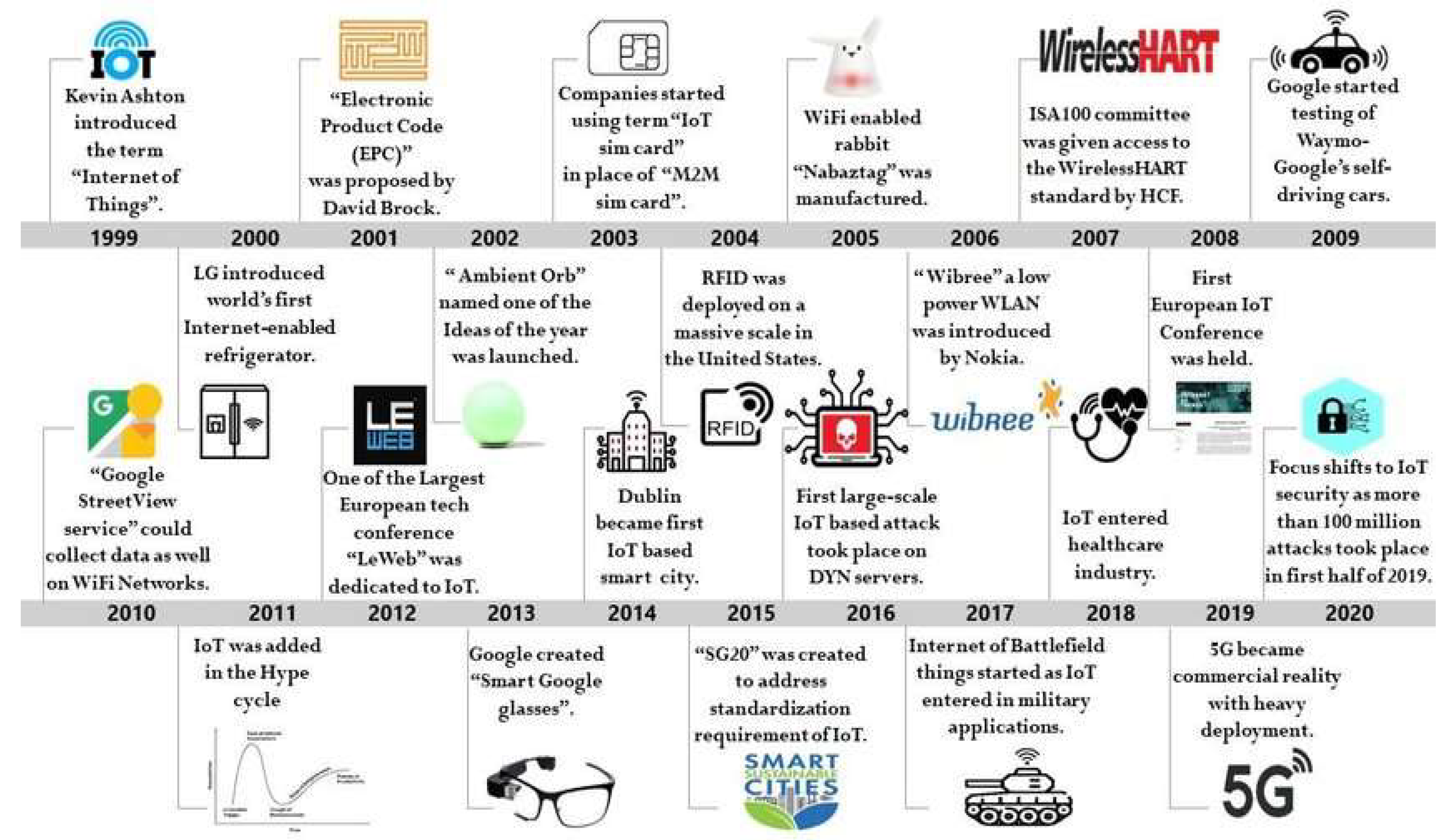
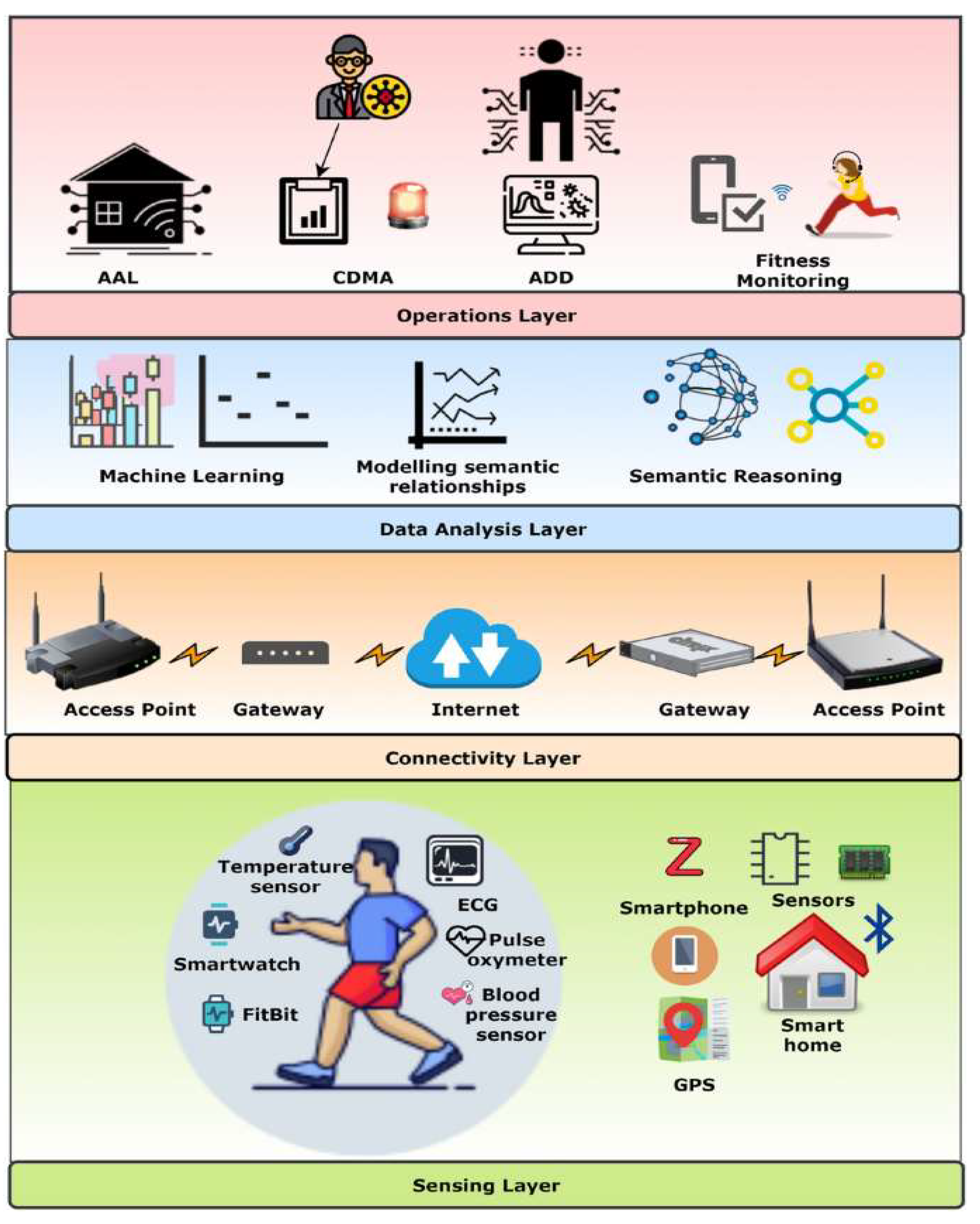
IoT is an innovative technology for connecting the world through all kinds of smart devices or objects that can collect and share any type of information anywhere, anytime, using any media in grounded environments. It is a seamless way to make our lives smart and safer with a unique identification for each object in the IoT network [7]. In healthcare systems, IoT is mainly used to access health information faster. IoT refers to the interconnection of physical devices through the internet, enabling real-time data exchange and automated decision-making in healthcare systems. It can be a grid of computers that can deliver software and data by using the Internet. As illustrated in Figure 1, Cisco defines the IoT as a revolution of the Internet of Everything (IoE), encompassing people, processes, data, and things [8]. Healthcare organisations are increasingly utilising HIE to exchange data and improve services for patients. However, HIE faces challenges such as a lack of visibility, access to information, and data standards. IoT technology can help improve healthcare access, reduce medical errors, and optimise processes. However, many hospitals lack the resources to implement IoT technology, and many health organisations in low- and middle-income countries struggle to receive financial incentives for adopting new technologies.

1.3. Research Objectives and Scope

The study aims to address these issues by utilising IoT in HIE to overcome identified problems and concerns in the healthcare sector. By utilising IoT, organisations can improve patient care, streamline workflow, and enhance hospital reconstruction. However, low- and middle-income countries often lack the resources to implement IoT technology, highlighting the need for optimal resource utilisation and technological advancements in healthcare [9]. This review aims to analyse the adoption and implementation of IoT in the healthcare sector across different nations, compare the impact of IoT-based healthcare solutions in high-income, middle-income, and low-income countries, identify key challenges and barriers to IoT adoption in global healthcare systems, and assess the effectiveness of IoT applications in improving patient care, reducing medical errors, and optimising healthcare costs. The study will provide a comprehensive understanding of how IoT is transforming healthcare globally, policy recommendations to bridge the digital health divide across nations, and insights for healthcare providers, policymakers, and researchers on leveraging IoT for improved health outcomes.
Figure 1. An Overview of the IoT Revolution [7].
Futureinternet 17 00549 g001
HIE is a process of electronically sharing patient-level information among healthcare providers, aiming to enhance the quality and safety. However, there are challenges such as resistance to information sharing and a lack of uniform infrastructure. In the US, there are two types of HIE: public and private, with each facing different concerns such as patient consent, clinical staff acceptance, time burdens, vulnerable information accessibility, and trust in HIE partners [10]. In China and the Netherlands, the implementation of IoT technology is necessary to improve the efficiency and sustainability of the health system. However, there is limited research on involving new health IT to work closely and innovatively between healthcare organisations [11].
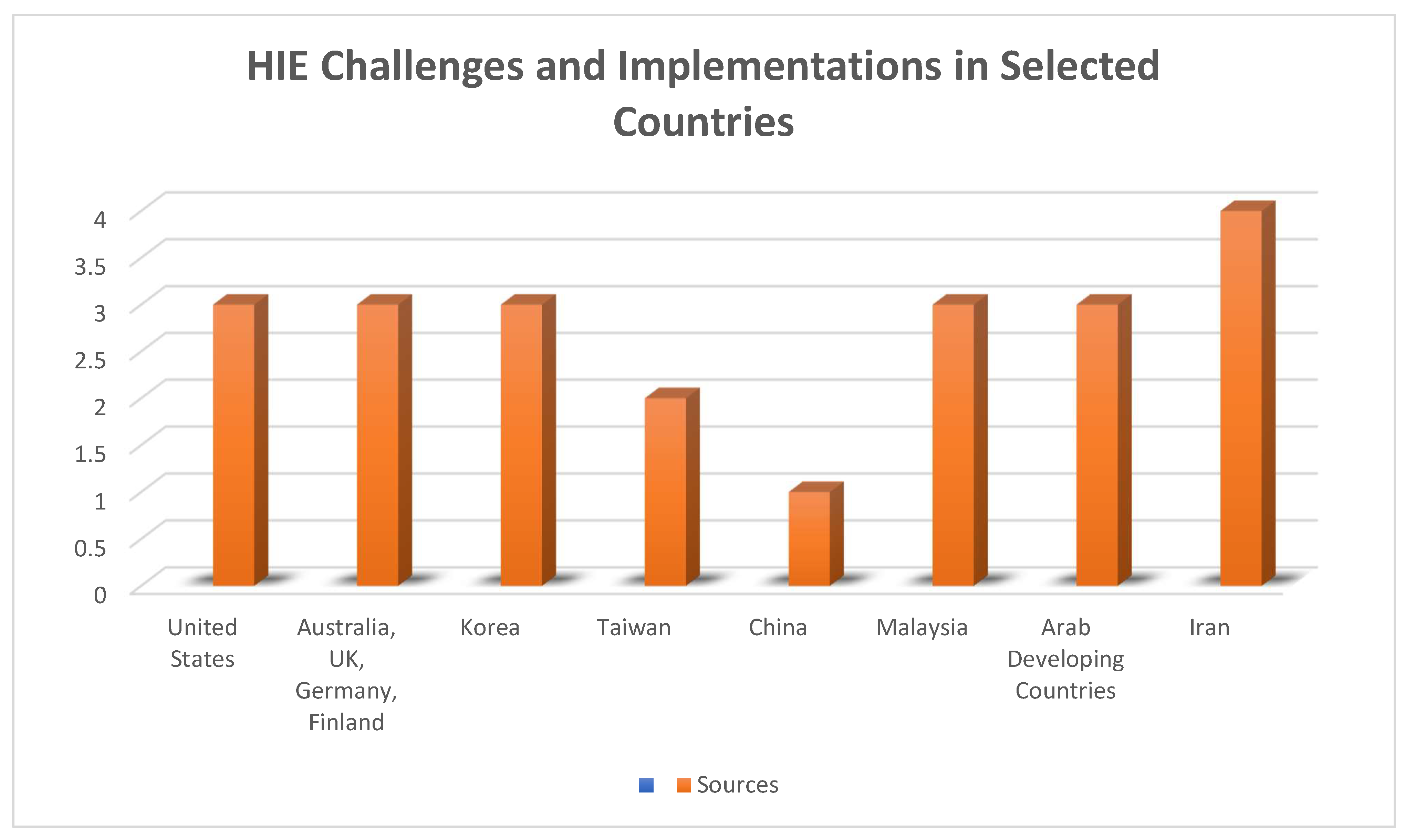
Furthermore, in New York, query-based HIE systems have been implemented, but they have limited settings and face barriers such as age, cost of medication, patient knowledge, cultural and linguistic barriers, and communication between physicians and patients [12]. In South Korea, HIE is not widely adopted and is limited in accessibility for patient health information. Finland widely uses electronic health records (EHRs), but there are concerns about workload. In Norway, extensive communication and information exchange are needed among healthcare workers across organisations to facilitate smooth transitions. In Ontario, Canada, and Germany, communication and information sharing with GPs are not working correctly due to restrictions on the effective coordination of care [2]. Therefore, semantic interoperability between clinical information systems is required for seamless data exchange. HIE initiatives face a variety of challenges across different countries, influenced by unique healthcare infrastructures, policies, and technological advancements [13]. Table 1 and Figure 2 summarise the problems and difficulties encountered in HIE implementations in various nations, along with recent literature sources.
According to Table 1 and Figure 2, the global health information system encounters medical errors owing to inadequate access to medical information. Conversely, IoT is an innovative technology that facilitates the integration of many gadgets with robust internet connectivity to provide real-time health status descriptions for physician assessments. IoT technology improves HIE by enabling real-time access to medical data. Wearable devices, sensors, and wireless networks connected to cloud computing allow physicians to monitor patients remotely [1]. Access to medical information via real-time monitoring enables participants to discuss patient conditions and make informed decisions. Healthcare systems must create a cooperative platform to enhance collaboration, efficiency, and quality. Notwithstanding obstacles and apprehensions in multiple nations, there is an increased need to use IoT technology in HIE. Integrating technology advancements and enhancing hospital capacities might elevate clinicians’ readiness and incentive to utilise health IoT via mobile devices, hence augmenting the overall efficacy of HIE [25].
Recent work [7,40,41] underscores the difficulties in executing HIE in low- and middle-income nations. Principal obstacles are insufficient infrastructure, the absence of standardised data systems, and restricted technical proficiency. Notwithstanding advancements in HIE within particular care environments, obstacles remain in interoperability and compatibility across other organisations and care settings. The discourse encompasses the policy framework and future of data interoperability, emphasising the need for varied national rules and standards. These studies highlight the complex hurdles in the worldwide implementation of successful HIE systems, shaped by technical, organisational, and policy-related issues. Thus, this paper is motivated by the increasing global integration of IoT in healthcare. This review seeks to clarify how adoption varies across nations with different levels of infrastructure, regulatory preparedness, and economic capacity. While challenges such as universal access to EHRs, secure health information exchange, and data privacy remain critical, the broader motivation of this paper is to analyse these issues within a comparative global framework. In doing so, the study highlights opportunities, policy gaps, and best practices that can guide healthcare stakeholders toward effective IoT adoption and sustainable digital health transformation

2. Deficiencies of IoT Usage in Health in Some Countries

The Iraqi health system has been severely impacted by war and sanctions, leading to a lack of progress and budgetary constraints. The Ministry of Health (MOH) has been working to improve access to and quality of primary healthcare services, collaborating with USAID to manage patient information records for those facing chronic diseases [42]. However, these systems have not been fully implemented due to user resistance, limited resources, and poor internet resources and staff training. This study aimed to investigate the main antecedents that hinder the utilisation of IoT in the Iraqi healthcare sector. Interviews were conducted with 26 Iraqi health information system decision-makers to promote HIE within hospitals. The interviews revealed that some Iraqi hospitals still use paper-based health information systems, due to user distrust and data loss. Barriers to using Iraqi HIE include a lack of patient health information sharing, difficulty in obtaining prior treatments, patient understanding, more patient visitors, and a lack of physicians. Physicians also faced difficulties in their decisions due to poor patient health information and difficulties in understanding prior treatment when patients visited different physicians. Most physicians use social media to share information about cases among multi-specialist doctors, but this takes more time to describe and upload results. They suggested using the HIE to share patient IDs among them to monitor the patient’s health status in real time and anywhere. In the emergency department, the interviewees noted difficulties in accessing and knowing health status upon admission, making it difficult to carry out new tests and make diagnoses. The heads of emergency departments also expressed concerns about the missing HIE, making it difficult to control and monitor health workers.
In Malaysia, there are three types of hospitals: public, private, and educational, each with its own business health information system [43]. Both countries have EHR exchange between hospitals, which poses a business problem in sharing information between the branches of each hospital. The importance of having an HIE System for healthcare providers is highlighted to make it easier to access health information for decision-making, especially for chronic diseases. The HIE systems used in both Iraqi and Malaysian healthcare sectors are basic technologies, with most not using cloud computing, RFID, or IoT as new technologies. Health information storage is local and not connected with any central patient database. The IT department indicated readiness to utilise new technology, while most devices have connected to the Internet and new technologies. The most commonly used technologies for exchanging health information among hospitals are CD, USB memory, and email. In Iraq, there is a barrier to Internet connection compared to Malaysia, with financial cost being a significant factor. However, IoT technology can improve the current healthcare information exchange system from standard data management perspectives. The use of IoT technology in health sectors was found to be influenced by several environmental factors, such as cost-effectiveness, workflow fit, cooperation, and training. Physicians also have concerns about the reliability of information records and medical errors. In conclusion, the Iraqi healthcare system faces challenges in utilising IoT technology due to various factors, including user resistance, limited resources, and concerns about data security and privacy. By addressing these challenges and implementing IoT services, the Iraqi healthcare system can work towards improving the overall health system and improving patient outcomes.
The responses were combined in Table 2. From the result, it can be concluded that the majority of the respondents agreed on these factors and that they have a remarkable impact on current utilisation of IoT services in HIE.

3. Related Literature Review

This section reviews various research on the utilisation of IoT services in healthcare, focusing on the role of IoT in HIE. The literature review reveals a lack of studies on IoT utilisation in healthcare and no specialist framework for this topic. The study uses a systematic analysis of various databases, including SCOPUS, SCIENCE DIRECT, IEEE Xplore, WorldCat, Web of Science, PubMed, Biomed, and ACM Digital Library, to identify the limitations and success factors of IoT in HIE among hospitals. The research identifies empirical studies, review articles, discussions, challenges, reports, and book chapters related to IoT services for healthcare.
Key categories include review articles, surveys, and overview articles, which summarise existing research and trends in IoT healthcare applications. Subtopics include addressing issues, developing innovative solutions, evaluating effectiveness, and applying industry-specific implementations. Designing and implementing IoT frameworks in healthcare involves implementing and utilising practical applications, monitoring performance, classifying and structuring approaches, authorisation systems, adoption, security and privacy, heterogeneous hardware and software, performance analysis, and improvement [44]. Challenges in IoT healthcare include classifications, smart healthcare apps, requirements, background, benefits, difficulties, security issues, and effectiveness. Real-world IoT healthcare implementations include demonstrated IoT-supported use cases, diagnostic sensors and monitoring, and future opportunities. The diagram provides a structured approach to categorising research on IoT in healthcare, highlighting key issues such as security, effectiveness, and future development opportunities. It serves as a valuable reference for researchers in this field [45].
Furthermore, numerous case studies [46,47,48,49,50] have shown the pros and cons of the IoT, which has led to its widespread adoption in healthcare. IoT-based remote patient monitoring increased medication adherence by 40% and decreased hospital readmissions by 25% in the US. The IoT-enabled smart beds and automated medication dispensers at Germany’s Charité-Universitätsmedisin Berlin increased efficiency in patient care by 30%. Hotspot control in India was 15% quicker due to the National Digital Health Mission’s usage of IoT-enabled contact tracking and remote diagnostics to monitor virus transmission patterns in real time [30]. The World Health Organisation (WHO) performed a worldwide survey in 2023 and discovered that 72% of hospitals used IoT for real-time patient monitoring [50]. The survey also revealed that 25% of hospitals saw a decrease in hospital readmission rates as a result of IoT, 68% were worried about cybersecurity, 55% saw an increase in operational efficiency as a result of IoT automation, and 42% said that healthcare professionals were resistant to using IoT [25]. Continuous IoT monitoring devices reduced post-operative recovery time by 35% compared to conventional follow-up treatments, according to a clinical experiment conducted in the UK in 2022. In order to have a better understanding of how the IoT is changing healthcare in various nations, it is helpful to compare IoT applications in areas like remote patient monitoring in the US, smart hospital automation in Germany, COVID-19 hotspot management in India, and wearable health devices in the UK [51].

4. Methodology

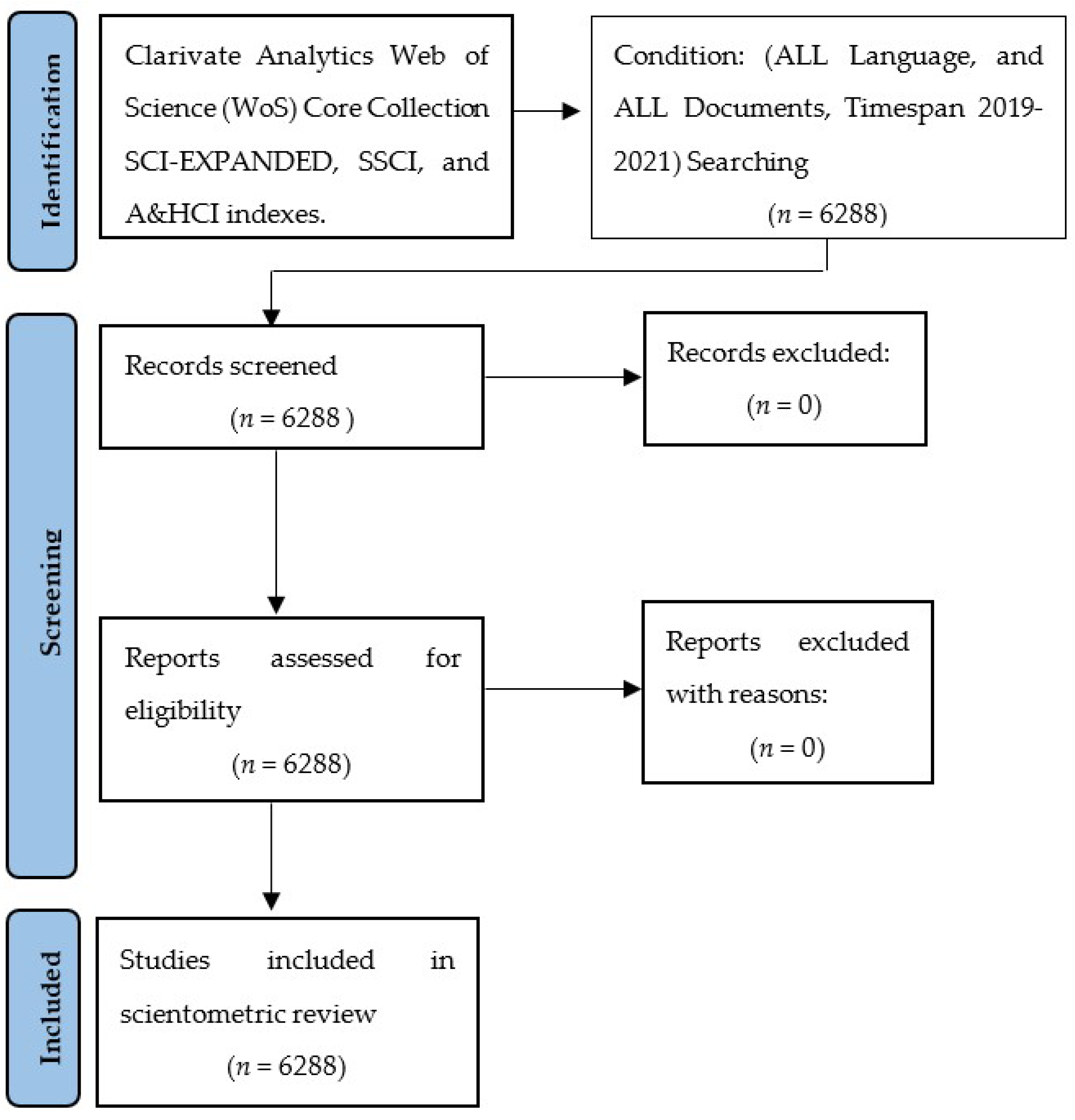
This research performs a comprehensive literature review and comparative analysis to investigate the utilisation of IoT in healthcare across different nations. The study takes a qualitative approach, analysing peer-reviewed literature, industry reports, and case studies to discover regional variations, difficulties, and best practices in IoT adoption. Data gathering included performing a thorough search of databases such as PubMed, IEEE Xplore, Science Direct, and Google Scholar for relevant papers from 2019 to 2021 using keywords related to IoT in healthcare. Inclusion criteria included studies on IoT implementation, comparable adoption rates, and empirical research on advantages and challenges, while eliminating irrelevant papers and out-of-date research. A comparative analysis methodology assesses IoT adoption in industrialised and low- and middle-income countries, taking into account elements such as technical infrastructure, regulatory support, security concerns, and healthcare efficiency. Inclusion criteria included peer-reviewed journal articles, systematic reviews, and conference papers published between 2019 and 2021 focusing on IoT applications in healthcare. Exclusion criteria involved non-English papers, studies unrelated to health-sector IoT implementation, and reports lacking empirical evidence, as illustrated in Figure 3.
Figure 3 presents the PRISMA flow diagram illustrating the identification, screening, eligibility, and inclusion process for studies reviewed in the paper titled “IoT Applications and Challenges in Global Healthcare Systems: A Comprehensive Review.” The flow diagram summarises the systematic review process following PRISMA guidelines and shows how the final set of articles was selected based on inclusion and exclusion criteria.

5. An Overview of HIE

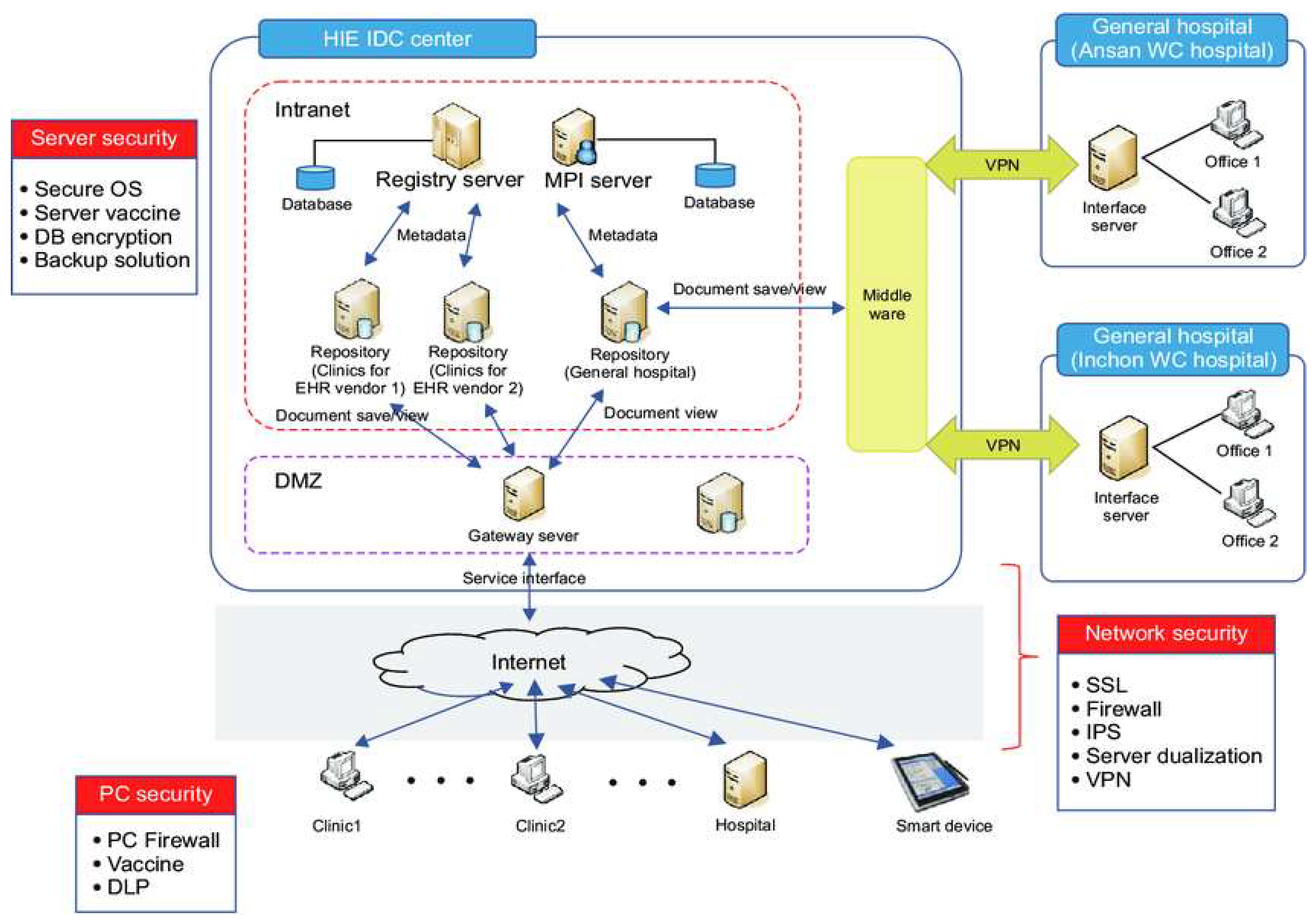
The HIE is a process that electronically shares health-related information among healthcare organisations, providers, and stakeholders. It plays a crucial role in modern healthcare by improving care coordination, enhancing clinical decision-making, and reducing medical errors. HIE systems can be categorised into three main types: directed exchange, query-based exchange, and consumer-mediated exchange [51]. Benefits of HIE include improved care coordination, enhanced patient safety, cost reduction, better public health monitoring, and increased patient engagement. However, the adoption of HIE faces challenges such as data privacy and security concerns, interoperability issues, financial and infrastructure barriers, and resistance to change from healthcare providers, as provided in Figure 4.
The HIE system architecture enables secure data sharing between healthcare institutions, including general hospitals, clinics, and smart devices. The HIE IDC Centre is the core infrastructure that manages EHR (EHR) data exchange between different healthcare providers. It includes key components such as an Intranet, Registry Server, MPI Server, Repositories, DMS, Gateway Server, and Service Interface. General hospitals (Ansan WC Hospital and Incheon WC Hospital) connect to the HIE IDC centre through VPN for secure communication [51]. Each hospital has an interface server that enables data exchange with multiple offices. Middleware facilitates interoperability between different hospital systems and the HIE infrastructure. Clinics and hospitals connect to the HIE system through the Internet, and smart devices are integrated into the system, allowing healthcare professionals and patients to access health data remotely. The system implements multi-layered security measures to protect sensitive health information. Server security uses a secure OS, server vaccine, database encryption, backup solution, PC firewall, vaccine software, Data Loss Prevention (DLP), Secure Sockets Layer (SSL), firewall, Intrusion Prevention System (IPS), server dualisation, and VPN [53]. Patient data is stored in repositories for different EHR vendors and general hospitals. Hospitals and clinics query the Registry Server to locate patient records, while the MPI Server ensures patient identity across different healthcare systems. Data is retrieved and sent securely through the gateway server and service interface in the DMS, and hospitals access the data via VPN. Clinics and smart devices connect via the internet, with additional security measures in place [54].
As illustrated in Table 3 and Figure 5, different countries have adopted HIE systems with varying levels of success. Challenges include patient consent, interoperability issues, lack of standardisation, data security concerns, and clinician resistance. To improve the effectiveness of HIE, future efforts should focus on strengthening interoperability standards, enhancing cybersecurity measures, increasing government support, promoting healthcare provider engagement, and encouraging patient participation.
Furthermore, HIE has grown in importance in both intra- and inter-system healthcare, with intra-system sharing becoming more prevalent in hospitals. However, inter-system information exchange is slower than intra-system interaction, with hospitals in the United States exchanging 4.6 kinds of information and only 2.7 types via inter-system exchange [1]. More than seven in ten people are concerned about privacy and security problems, with some concealing information from healthcare professionals. HIE has been linked to improved healthcare performance, notably in hospitals, by lowering readmissions, ICU and ED admissions, repeated imaging, therapeutic medical procedures, and overall care expenditures. HIE is characterised in a variety of ways, including public/private and regional HIE [2]. It refers to electronic or digital data interchange, as well as the information infrastructure, systems, or technological platforms that hold, move, or exchange data. HIE is essential for identifying and treating health conditions, and it may contain information regarding symptoms or therapies. HIE has been emphasised in several health organisations as a means of delivering healthcare services that are compatible with people’s existing lifestyles [73]. For example, the Swedish National HIE platform might be utilised to enhance clinical research in the future. China has set an ambitious target of completing the creation of a national interoperable HIE system by the end of 2020. In the parts that follow, we will address the challenges and the present system [74].

5.1. Models and Frameworks for Information Exchange in the Health Sector

Various HIE models and frameworks have been developed to support seamless information exchange while addressing security, privacy, and standardisation concerns. Centralised models store patient data in a central repository, while federated models allow healthcare organisations to retain control over their data while enabling interoperability through a standardised framework. Hybrid models combine elements of both centralised and federated models, while consumer-mediated models allow patients to have direct control over their health information [51]. HIE frameworks include the Nationwide Health Information Network (NHIN) Framework, Health Level Seven (HL7) Framework, European Interoperability Framework for eHealth, Direct Project, and OpenHIE. Challenges persist in HIE, including data security and privacy, interoperability issues, adoption barriers, and infrastructure limitations. Future advancements in AI, blockchain technology, and cloud-based solutions are expected to enhance the security, efficiency, and scalability of HIE models [75].
While EHRs and HIE systems form the backbone of digital health, IoT technologies serve as their enablers. Integrating IoT sensors and connected devices into HIT infrastructure facilitates seamless data collection, real-time monitoring, and automated record updates, thereby enhancing interoperability and clinical decision-making [40]. Reference [76] examined how health record system design affects functional coverage and ease of use to increase family doctors’ perceived performance benefits in Canadian private medical practices. They observed that system availability and simplicity of use had higher potential. Reference [77] presented a pan-Canadian assessment approach to assess user views of interoperable EHRs (iEHRs) and health information sharing. Using iEHRs allows safe access to patient data across healthcare systems, improving treatment quality and productivity. Reference [11] proposed an analytical framework to analyse how a province achieves nationwide interoperability by integrating Population Health Information Platforms (PHIPs) developed by healthcare authorities at different levels with the health information system (HIS) implemented by healthcare institutions. They observed that HIE may boost public healthcare provider data sharing. The lack of technical improvement for most hospitals, time delay in building standards-compliant HIS to communicate with the public health information system, and overlap of responsibilities across regions impede its growth.
Reference [41] presented a framework to access several Swedish EHR systems, solving the national HIE. They discovered that connecting patients/citizens, healthcare providers, clinical work, and clinical researchers in academia and industry may streamline work and improve health. Reference [78] examined Epic’s Care Everywhere to enhance emergency department (ED) care by assessing electronic HIE to enable faster clinician viewing of outside information. Faster access to approved outside organisations’ information mediates the association between HIE and enhanced care procedures and lower ED use. Reference [7] presented a framework for electronic medical records exchange in Malaysia, emphasising privacy, security, and flexible access for healthcare providers. They also suggested addressing the standardisation of technological elements for healthcare providers’ health information sharing. Reference [79] presents a technological framework to share Taiwan’s National HIE (NHI), which gives patients a lot of medical care choices. Due to 15 doctor appointments per individual per year and duplicate laboratory tests and prescriptions, medical resources may be abused. By 2014, 321 hospitals offered inter-institution EMR sharing services, with only minor hospitals with less than 100 beds not participating.
Furthermore, ref. [10] note that several variables cause unexpected hospital readmissions, and various models have been established. They note that predictive models seldom include health informatics exchange data, which may offer real-time warnings to doctors at the point of treatment. Inter-connected hospitals should use real-time notifications and streaming workflow to prevent high-risk patients from receiving care in an inpatient setting and help providers plan a safe transition for these patients outside the hospital. Reference [80] suggests an institutional paradigm for HIE adoption in small clinics, focusing on government, peers, patients, affiliates, and IT providers. They observed that greater social contact links create information exchange relationships, which drive healthcare provider–patient communication. For sharing patient-generated information and EHR between patients and healthcare providers, ref. [1] suggested leveraging smartphones or wireless medical equipment to upload data to a “patient-generated health information repository.” Cloud computing storage is suggested; however, security and information transmission and exchange must be included.
Reference [54] established a methodology to embrace and utilise HIE to enhance workflow, cooperation, and cost savings. They interviewed physician practices and health centre stakeholders and concluded that HIE might enhance care coordination and patient outcomes. Health IT utilisation, data ownership, connections, and experiences were obstacles. Taiwanese doctors’ intentions to adopt an EMR exchange system were explained by [54]’s Total Perception of Benefit (TPB) acceptance model. They observed that attitude, subjective norm, perceived behaviour control, institutional trust, and perceived risk greatly affect doctors’ EMR exchange system intentions. These characteristics are predicted by perceived utility, convenience of use, compatibility, interpersonal and governmental influence, conducive circumstances, self-efficacy, situational normalcy, and institutional trust. The study’s concentration on doctors’ behaviour prevented it from applying to other groups. Promoting health IT-enabled institutional processes may help healthcare EMR interoperability. Thus, a summary of the HIE frameworks and models is provided in Table 4.

5.2. Challenges in HIE Adoption

The adoption of HIE systems is hindered by a variety of challenges that can be categorised into technical, financial, organisational, legal, regulatory, and infrastructure issues [87].
  • Technical Challenges are significant, particularly concerning interoperability. Different healthcare systems utilise diverse data formats and standards, such as HL7, FHIR, and DICOM, which complicates seamless data exchange. The absence of universally accepted protocols leads to compatibility issues among EHRs (EHRs). Additionally, data security and privacy concerns are paramount, as protecting patient information from cyber threats and unauthorised access is critical. Compliance with regulations like HIPAA in the USA and GDPR in Europe necessitates stringent data protection measures. Furthermore, data quality and accuracy are often compromised due to inconsistent or incomplete patient records, which can adversely affect diagnosis and treatment outcomes [88].
  • Financial and Organisational Challenges also play a crucial role in HIE adoption. The high costs associated with the implementation and maintenance of HIE systems can be prohibitive, especially for small and rural healthcare providers. Resistance to change among healthcare professionals, who may prefer traditional record-keeping methods, further complicates the transition to electronic systems. Additionally, the lack of immediate financial or operational incentives for healthcare organisations to participate in HIE networks can deter adoption, particularly in regions without strong government support [89].
  • Legal and Regulatory Challenges present another layer of complexity. The varying regulations governing health data exchange across different countries and regions make it difficult to create a unified HIE system. Compliance with laws such as HIPAA and GDPR complicates cross-border health information sharing. Moreover, the debate over data ownership—whether it belongs to healthcare providers, insurance companies, or patients, adds to the challenges, as does the variability in patient consent mechanisms for data sharing [75].
  • Infrastructure and Access Challenges are particularly pronounced in low- and middle-income countries and rural areas, where limited IT infrastructure can impede HIE implementation. The costs associated with upgrading legacy systems to modern HIE-compatible platforms can be prohibitive. Additionally, large-scale HIE systems may face issues related to scalability, data processing speeds, and system performance, which are critical for real-time healthcare scenarios [90].
To overcome these challenges, future directions may include adopting blockchain technology for secure data exchange, utilising AI and machine learning for improved data accuracy, expanding government incentives to encourage HIE adoption, and enhancing patient engagement through consumer-mediated HIE models. Thus, while HIE has the potential to enhance healthcare efficiency and patient outcomes, addressing the multifaceted challenges of technical, financial, regulatory, and infrastructure barriers is essential for successful implementation. Leveraging emerging technologies and policy support can facilitate the acceleration of HIE adoption, ultimately improving healthcare delivery [91].

6. An Overview of IoT

As an emerging transformative technology, the IoT allows commonplace items to link, converse, and exchange data over the web. Thanks to developments in 5G networks, cloud computing, and AI, it has become more popular in recent years, enabling automation and real-time communication. By enhancing production, efficiency, and decision-making, the IoT is influencing the digital revolution of several sectors [92]. On the other hand, questions of preparedness, data privacy, and security arise. Application, Perception (Device), Network, Edge Computing/Processing, Cloud/Data Management, and so on are the main layers that make up an IoT system’s architecture. Sensors and actuators, protocols for connection, computers at the edge, AI, machine learning, and security frameworks are essential parts of the IoT [93].
Smart medical gadgets, remote diagnostics, and real-time patient monitoring are just a few examples of how the IoT has changed healthcare. Smart cities, smart traffic management, smart street lighting, smart farming, transportation and logistics, smart parking, wearable health gadgets, remote patient monitoring and smart hospitals are just a few examples [94]. There are a number of obstacles that must be overcome before the IoT can be widely used. These include difficulties with privacy and security, standards and interoperability, infrastructure and scalability, energy usage and battery life, return on investment (ROI) and cost, and IoT trends to come. Threats to data breaches, ransomware, hacking, and other assaults are at the heart of security and privacy concerns. Differences in the communication protocols used by various manufacturers lead to incompatibilities and problems with interoperability and standardisation in the IoT. Concerns about cost, ROI, energy usage, data overload, and overloaded networks all contribute to infrastructure and scalability issues [95].
One emerging trend in IoT is the combination of AI with the IoT to improve the IoT in real time via analytics, automation, and decision-making. Among the IoT applications enabled by AI are smart assistants, fraud detectors, and predictive maintenance. Critical applications like healthcare and autonomous cars may benefit from real-time reactions made possible by edge computing in the IoT, which analyses data closer to the source, decreasing latency and bandwidth utilisation [96]. With its distributed ledger and immutable data storage, blockchain technology improves the security of the IoT. It also makes smart contracts and supply chain management more transparent. The IoT is poised to benefit greatly from 5G and its ability to provide ultra-fast, low-latency connection. Fifth-generation network expansion improves IoT by facilitating ultra-fast, low-latency communication; this paves the way for linked driverless cars, remote surgery, and real-time streaming [97].
Finally, the IoT is facilitating smart decision-making, automation, and real-time data interchange, which is transforming industries. On the other hand, problems with scalability, interoperability, and security must be resolved [98]. The IoT will be even more efficient and dependable in the future because to developments like 5G connection, AI-driven analytics, edge computing, and blockchain security. The IoT is already having a significant impact on the digital world, and it is only going to become bigger as technology advances [99].
Understanding how people analyse data flow is necessary in order to comprehend the fundamental idea behind the IoT, which is to exchange knowledge and build on findings. In IoT, the levels that make up the pyramid are data, information, knowledge, and wisdom [40]. A high level of quality may be achieved by the collection of large quantities of individual data, and the more data that is collected, the more information and understanding that individuals can acquire [100]. Through the use of a secure services layer (SSL) that is linked to a central command and control server located in the cloud, the IoT makes it possible for a network of devices to intercept, exchange, and analyse crucial data. For the purpose of sharing medical data, the internet is absolutely necessary, and the notion of the IoT represents the existence of linked things that are accessible to anyone, anywhere, at any time, via any medium or network [101].

6.1. IoT Application in Healthcare

By facilitating remote diagnostics, smart medical equipment, predictive analytics, and real-time patient monitoring, the IoT is transforming healthcare. In an effort to improve healthcare delivery, decrease hospitalisations, and increase patient outcomes, countries throughout the globe are investing in IoT technologies [102]. Infrastructure, regulatory regulations, economic position, and technical preparedness are some of the elements that cause a considerable regional disparity in the adoption of the IoT among healthcare providers. Smart hospitals, telemedicine, virtual healthcare, AI-powered diagnostics, medical supply chain management, and remote patient monitoring (RPM) are some of the most important IoT uses in healthcare today [103]. Improvements in AI-driven diagnostics, smart hospitals, and remote patient monitoring (RPM) have put the United States at the forefront of healthcare IoT deployment. The use of telemedicine systems such as Teladoc Health and wearable devices such as Fitbit, Apple Watch, and Google Fit are examples of implementations. IBM Watson Health also contributes with its AI-powered diagnostic capabilities [77].
IoT solutions for older people, AI diagnostics, and the National Health Service (NHS) Smart Hospitals are all underway in the United Kingdom. High implementation costs, cybersecurity risks, and worries over data privacy are some of the obstacles [104]. With the use of AI-powered diagnostics and telemedicine expansion platforms like TeleClinic, Germany is able to take advantage of IoT in a number of areas, including telemedicine, robotic surgery, and smart hospitals [105]. Chinese healthcare companies have put a lot of money into 5G-enabled IoT solutions, smart wearables, and AI-powered diagnostics. Fifth-generation smart hospitals, wearable health tech, radiography driven by AI, and data privacy concerns are some of the implementations. With the help of IoT-enabled mHealth apps like Apollo TeleHealth, which provide remote consultations via IoT-powered mobile apps, telemedicine, AI-driven diagnostics, and mobile health applications are seeing fast adoption in India [106]. Healthcare predictive analytics, robotic-assisted surgeries, and the care of older people are all areas where the IoT is being used in Japan. Robotic care helpers such as Paro Robot, real-time health monitoring gadgets for older people, and AI-driven imagery powered by Fujifilm’s algorithms based on the IoT are all examples of implementations [107]. New IoT technologies face hurdles such as high adoption costs and governmental clearance. Thus, variables including infrastructure, regulatory regulations, economic condition, and technical maturity cause substantial cross-national variation in the healthcare industry’s adoption of the IoT. But nations like the US, UK, Germany, China, India, and Japan are showing signs of success in incorporating IoT solutions in their healthcare systems, thus the worldwide trend towards IoT is likely to keep going [107].

6.2. Comparative Analysis of IoT Healthcare Applications

Table 5 provides a summary of IoT adoption in healthcare across various countries, highlighting major applications, key implementations, and challenges.

6.3. HIoT Applications and Devices Features

With the help of the HIoT, which links sensors, smart devices, and healthcare systems, automation, data-driven decisions, and real-time monitoring are becoming possible, transforming the medical industry. Thanks to developments in AI, cloud computing, big data analytics, and 5G, HIoT is becoming an essential part of contemporary healthcare [85]. Medical research and clinical trials, smart hospitals, AI-powered diagnostics, smart prescription management, assisted living for older people, and RPM are some of the key uses of the HIoT. Efficiency, safety of patients, and clinical results are all improved by these applications. There are a number of important characteristics of HIoT devices that make them useful and practical in healthcare [89]. Heart rate, oxygen levels, and blood sugar are just a few of the critical indications that HIoT devices constantly monitor and transmit data about in real time. Data is sent to cloud platforms using connectivity and communication protocols including Wi-Fi, Bluetooth, SigBee, and LPWAN. In order to use AI-driven analytics to identify early signs and patterns of illness, it is essential that HIoT devices include AI and ML [108].
Data is protected via end-to-end encryption, blockchain, and multi-factor authentication (MFA) in cloud computing and edge processing. Doctors and carers may view patient data in real time from anywhere with internet connection and management [109]. Wearable electrocardiogram (ECG) monitors that charge from the sun and use wireless energy harvesting are examples of devices that optimise battery life and energy efficiency by employing low-power sensors and processors [110]. To ensure smooth integration, HIoT devices must be standardised and interoperable according to healthcare interoperability standards such as HL7 and FHIR. Integration with medical equipment that is IoT-enabled allows smart EHR systems to centralise data management [40]. But there are a lot of obstacles to the widespread use of HIoT, such as concerns about data privacy and compliance, difficulties with interoperability, constraints in terms of both infrastructure and finances, and potential developments in the field [111]. Data privacy and compliance concerns include stringent data encryption and access control procedures, while cybersecurity risks include vulnerability to hackers, ransomware, and data breaches. Problems with interoperability arise from HIoT devices’ conflicting communication protocols, while issues with infrastructure and cost arise from the need to spend heavily in cloud computing and an AI integration [112].
The future of healthcare IoT is bright, with developments such as 5G-enabled IoT healthcare bringing faster connectivity for real-time health monitoring, AI-driven predictive analytics allowing for early disease detection, blockchain in healthcare IoT bolstering security and data integrity, and IoT devices based on nanotechnology enabling advanced diagnostics [6]. Finally, healthcare delivery, remote monitoring, and hospital automation are just a few areas that HIoT is totally changing. But, in order for it to be widely used, it will have to overcome obstacles including cybersecurity threats, problems with interoperability, and compliance with regulations. The future of HIoT depends on resolving these issues [113].
IoT or smart technology devices, including HIoT, are being used by healthcare apps more and more to enhance the performance of their services. These gadgets with their specialised sensors have great collection accuracy but also suffer from low mobility, great expense, and usability. Among the numerous characteristics of HIoT devices are wearability, extended working times, stability, little user involvement, and data interim storage systems [114]. Wearable technologies guarantee precise health data collecting by gathering vital signals of the human body, thereby enabling consumers to feel more comfortable. They fit for long-term usage as they also need great strength and capacity. Typically, even in demanding surroundings, HIoT devices can gather data and their operation is very independent, needing only electricity to start. They can also store acquired data in advance and precisely transfer it across other network access devices, thanks to data interim storage systems [113]. Furthermore, the role of emerging technologies in future IoT-driven Healthcare 4.0 technologies is provided in Figure 6.

6.4. IoT Process Implementation

Recently, the IoT has been widely studied in healthcare, with a large number of studies conducted on IoT seeking a solution to overcome many of the difficulties that face the healthcare sector from the patient perspective. Reference [116] proposed a smart technology to assess healthcare staff and healthcare professionals in the monitoring of patient status in-depth after using smart technology. As mentioned, most companies have been designing sensing devices and smart devices in order to monitor health patient and diagnose them in primary healthcare. But still, there is not real solution adopted in healthcare, which still lacks the use of smart technology in hospitals and large healthcare providers, even though this technology has solutions for many issues in health systems and can deliver a better health services for their patients [54].
This study examines IoT studies on health information sharing in smart hospitals and among healthcare professionals. Among the suggested frameworks is the four-tiered smart-health framework, which handles data connections, storage and management, analytics, and presentation. These frameworks emphasise rising technologies including sensing, cloud computing, IoT, and big data analytics. With the goal of facilitating communication between disparate devices, ref. [117] offers an IoT procedure that connects the real and virtual realms. They propose four layers: Sensing, Network, Service, and Interfaces. IoT processes should be extensible, scalable, and interoperable across heterogeneous devices and business models. K-Healthcare, proposed by [98], employs smartphone sensors to collect and communicate patient health data. According to their model, there are four levels: sensor, network, Internet, and services. Using a multi-layer architecture consisting of a perception layer, a network layer, a support layer, a cloud service layer, and an application layer, ref. [118] outlines a procedure for implementing AI in smart hospitals. Reference [119] proposes a technique for IoT-based cloud computing to supply hospital administration and health of residents file management services utilising mobile terminals. The method has five layers: perception, network, support, cloud service, and application [1].
Few studies [120,121] have examined how hospitals utilise IoT to share health data. Reference [41] presented security context, security protocol, user authentication in m-health context, and offline user access for mobile e-health apps. The IoT architecture and protocol proposed by [122] for ambient assisted living and e-health comprises services for monitoring older people and those with disabilities, emergency services, and remote monitoring. Reference [123] developed a hybrid cloud architecture that optimises data storage, querying, and retrieval using Document and Object-oriented techniques. Reference [124] suggested a wearable sensor-based remote health monitoring system for data gathering, transmission, and cloud storage and analysis. The web middleware platform EcoHealth (Ecosystem of Health Care Devices) by [125] connects patients and clinicians using body sensors. Reference [126] presented the IoT architecture based on a broken leg accident, focussing on interoperability, constrained latency and dependability, privacy, and authentication. WBAN, W/LAN, and the Internet comprise the communication system protocol stack [11]. Table 6 provides the summary the IoT systems, models, and frameworks in healthcare.

6.5. Scenario of IoT in Healthcare

HIoT is a rapidly growing field that plays a crucial role in personalised medicine, chronic disease management, emergency response, and hospital asset tracking. The rapid adoption of 5G, AI, blockchain, and edge computing is accelerating the integration of IoT into healthcare [1]. Key trends in the current IoT healthcare scenario include RPM, AI-powered IoT solutions, telemedicine and virtual healthcare, and smart hospitals and automation. Governments and organisations worldwide are investing in IoT healthcare solutions, with the European Union’s GDPR regulating the use of patient data in IoT healthcare applications and the US FDA’s digital health innovation action plan ensuring IoT medical devices meet safety standards [127]. China’s AI-driven smart hospitals leverage IoT for real-time patient monitoring. The global healthcare IoT market is expected to reach $260 billion by 2027, with over 60% of hospitals in the US using IoT for patient monitoring and hospital automation. 5G-enabled IoT healthcare applications are growing, with faster real-time data transmission and low latency. IoT in healthcare is used in various applications, from patient monitoring to hospital automation [5].
RPM allows doctors and healthcare providers to monitor patients in real time using IoT-enabled devices, such as wearable ECG monitors, smart insulin pumps, and remote blood pressure monitors. Telemedicine and Virtual Consultations facilitate remote diagnosis and virtual healthcare, increasing access to healthcare, reduced wait times, and improved convenience [128]. Smart Hospitals and IoT-Enabled Infrastructure help automate hospital operations, ensuring better resource management and patient safety. Applications include smart beds, AI-based asset tracking, automated inventory management, and assisted living for elderly individuals [72]. AI-Integrated IoT for diagnostics helps analyse medical images, detect diseases, and assist doctors, leading to faster diagnosis, reduced human error, and personalised treatment recommendations. However, IoT in healthcare faces several challenges, including cybersecurity and data privacy risks, interoperability and integration issues, high implementation costs, and regulatory and compliance challenges [106]. To address these challenges, it is essential to adopt low-cost IoT solutions and government incentives for IoT adoption.
The future of IoT in healthcare is promising, with emerging technologies like 5G, AI, blockchain, and nanotechnology driving innovation. 5G will enable faster real-time monitoring and improved remote surgeries using IoT, while AI and ML will enhance predictive analytics, automated diagnostics, and personalised medicine [129]. Blockchain technology will ensure tamper-proof patient records and enhanced data security, while wearable and implantable IoT devices will enable real-time health monitoring. Hence, IoT in healthcare is a game-changing innovation for patient care, diagnostics, and hospital management by enabling real-time monitoring, smart hospitals, and AI-powered insights. However, challenges such as data security, interoperability, and high costs must be addressed to ensure widespread adoption [113,130].

6.6. Open Issues on in IoT Healthcare

The integration of IoT devices in healthcare presents significant cybersecurity and privacy concerns, primarily due to the vast amounts of sensitive patient data generated, making these devices attractive targets for cyberattacks [131]. Key challenges include data breaches that expose confidential health records, frequent ransomware attacks disrupting healthcare services, and inadequate encryption in many IoT medical devices. Potential solutions involve implementing blockchain for secure patient record management, enhancing multi-factor authentication and end-to-end encryption, and utilising AI-driven intrusion detection systems for real-time threat detection [132].
a.
Interoperability and standardisation issues further complicate the deployment of IoT in healthcare, as devices from various manufacturers often utilise incompatible communication protocols. This leads to data silos and challenges in compliance with diverse regulatory frameworks. Solutions include adopting global standards such as FHIR and HL7, developing middleware for seamless integration, and encouraging the use of open-source IoT platforms [1].
b.
High implementation costs pose another barrier, with significant investments needed for infrastructure, AI, and cybersecurity. The expense of smart hospital systems and maintenance, coupled with limited funding in low- and middle-income nations, exacerbates the issue. Solutions could involve government funding and incentives for IoT healthcare deployment, promoting open-source solutions, and employing AI-driven predictive maintenance to lower operational costs [74].
c.
Power consumption and scalability issues arise from the continuous power requirements of IoT devices, particularly in remote areas with poor infrastructure. Solutions include developing low-power devices, adopting edge computing to alleviate network load, and utilising solar-powered or energy-harvesting devices for remote healthcare applications [106].
d.
Lastly, ethical and security issues in IoT-based healthcare regarding data ownership, informed consent, and AI decision-making in healthcare necessitate clear regulations [133]. The integration of IoT in healthcare has various advantages, including real-time patient monitoring, better clinical decision-making, and increased operational efficiency. However, the widespread implementation raises ethical and security concerns that must be addressed to ensure responsible and equitable use of technology in healthcare. Data ownership, AI bias, and the possible exploitation of patient information are all significant ethical concerns. Data ownership is a critical problem in IoT-enabled healthcare since IoT devices gather, analyse, and send massive volumes of medical data without explicitly giving patients a choice over its use. This creates possible ethical and legal issues, as well as implicit permission in many IoT healthcare systems [105]. Addressing this dilemma requires informed consent systems, clear data-sharing policies, and regulatory frameworks that prioritise patient autonomy. AI bias in AI-powered healthcare applications may worsen inequities, resulting in misdiagnoses, inequitable treatment recommendations, and decreased confidence in healthcare AI systems. To reduce these dangers, it is critical to create fair, transparent, and continually monitored AI models that go through rigorous bias detection and correction procedures [134]. Another important ethical challenge in healthcare that relies on the IoT is the possible abuse of patient data. Unauthorised access or unethical data sharing methods may lead to patient analysis, discrimination, and exploitation. Insurance firms may utilise IoT-generated patient data to change rates or refuse coverage based on health risk assessments, prompting worries about data privacy and fairness. Implementing tight data governance standards, encryption mechanisms, and regulatory supervision may assist in avoiding unauthorised data exploitation and protect patient confidentiality [135].
The integration of IoT technologies in healthcare presents significant ethical, legal, and social implications, primarily revolving around data ownership, informed consent, and algorithmic bias. Key concerns include determining ownership and monetization of patient-generated data from wearable devices, necessitating transparent governance and explicit consent protocols. Continuous and often invisible data collection in IoT environments highlights the need for dynamic consent systems that align with regulations like GDPR and HIPAA. The rise of AI introduces additional complexities, as biased algorithms can exacerbate health inequities. Legally, cross-border data flow challenges compliance and jurisdiction. Furthermore, the digital divide raises significant social concerns, as marginalised communities may lack access to advanced healthcare technologies. A comprehensive ethical framework is essential for the responsible implementation of IoT in healthcare, ensuring privacy, fairness, and equitable access [68]. Thus, to ensure the ethical deployment of IoT in healthcare, an integrated approach is necessary, including strengthened data governance, AI fairness, and more regulatory supervision. By proactively addressing these ethical and security challenges, healthcare stakeholders may promote responsible IoT adoption, protect patient rights, and increase public confidence in technology-driven healthcare systems.

7. Future Directions

Notwithstanding the obstacles, the IoT in healthcare is positioned for swift advancement. Numerous nascent technologies will influence the future of IoT-driven medical solutions.
a.
The incorporation of 5G technology is a game-changer since it provides ultra-low latency and high bandwidth, which in turn allows for seamless connection for wearable devices, real-time remote operations, and immediate patient monitoring. This innovation will transform the delivery of healthcare, especially in emergency scenarios.
b.
AI and machine learning are poised to revolutionise IoT healthcare applications. AI-driven IoT solutions will improve diagnoses, automate hospital functions, and provide predictive analytics. Potential future uses may include AI-enhanced wearables capable of predicting health hazards, personalised medication customised by IoT health data, and robotic operations supervised in real-time through IoT.
c.
In addition, by processing data closer to the source, edge and fog computing will reduce latency and improve efficiency, addressing the constraints of conventional IoT systems. This transition will facilitate expedited emergency responses, reduce data congestion on cloud networks, and improve security by locally maintaining critical patient information.
d.
Blockchain technology is expected to enhance IoT security by creating immutable health records. This may enable decentralised health records, automated healthcare payments via smart contracts, and enhanced medication tracking.
e.
The advancement of wearable and implantable IoT devices is significant, with technologies like smart tattoos, biochips, brain–computer interfaces, and smart contact lenses that perpetually monitor vital indicators.
f.
Ultimately, IoT technologies are anticipated to be crucial in pandemic response and crisis management, including applications such as automated temperature inspections and AI-driven epidemiological models for epidemic tracking.

8. Conclusions

The study emphasises various important uses of the IoT in healthcare, such as RPM, automated and smart hospitals, telemedicine, virtual healthcare, diagnostics powered by AI, smart medication management, care for the elderly, assisted living, and HIE. Patient monitoring, data-driven decision-making, operational efficiency, and illness management are being transformed by the IoT. RPM, AI-integrated diagnostics, and smart hospital automation improve healthcare worldwide. Low- and middle-income countries have financial, infrastructural, and regulatory barriers to IoT adoption, unlike high-income ones. Despite these obstacles, IoT in healthcare has the potential to improve patient outcomes, reduce costs, and expedite operations. Cybersecurity, interoperability, ethics, and cost must be addressed to integrate IoT in healthcare. Strategic planning is needed to responsibly and fairly implement IoT technology in healthcare systems globally.
Healthcare stakeholders should prioritise core improvements to promote IoT adoption in the near term. This includes improving cybersecurity and data privacy through stronger encryption and compliance with regulations, standardising data interoperability with global health data exchange standards, and encouraging government and institutional investments through public–private partnerships. Promoting affordable and scalable IoT solutions and regulatory and ethical frameworks will also address data ownership and AI biases. Long-term IoT healthcare integration plans will revolutionise global ecosystems with personalised medication, AI-driven diagnostics, and predictive healthcare models. Focus areas include 5G and edge computing for real-time monitoring, AI and predictive analytics for preventive healthcare, and blockchain for secure health data management. With the rise of wearable and implantable IoT devices, continuous health monitoring and public health surveillance, and automated response systems can improve global health crisis management. Governments, technology innovators, healthcare providers, and regulatory agencies must collaborate to realize IoT’s full potential in healthcare. IoT can transform healthcare by prioritising ethics and technology, closing access gaps, and enhancing global health. IoT should be viewed not merely as an independent innovation but as an integrative platform that strengthens existing Health Information Technologies through connectivity, automation, and real-time analytics. Finally, this study demonstrates that IoT adoption in healthcare enhances operational efficiency, reduces patient risks, and improves data-driven decision-making. However, challenges related to interoperability, cost, and data privacy persist. Future studies should explore AI–IoT–Blockchain integration frameworks and cost-effective adoption models for low- and middle-income countries.

Author Contributions

F.A.A. conceptualized and designed the entire study, formulated the research problem, and developed the methodological framework. He was primarily responsible for writing the original draft of the manuscript, integrating the literature review, data interpretation, and the overall logical structure of the paper. His contribution ensured the coherence and academic rigor of the study. A.R. served as the supervising author and contributed to the critical review, proofreading, and final editing of the manuscript. He ensured that the content met academic publishing standards and provided constructive feedback on clarity, structure, and alignment with journal requirements. His oversight improved the quality and precision of the final version. H.A.S. was responsible for developing the Introduction section of the paper. He contributed to contextualizing the study, identifying the research gap, and aligning the background discussion with relevant theoretical and empirical frameworks. His input strengthened the foundation and relevance of the research. O.N. developed the Conclusions section, synthesizing key findings, articulating the practical implications, and suggesting directions for future research. His contribution ensured that the study’s outcomes were clearly summarized and aligned with the objectives stated at the beginning of the paper. All authors have read and agreed to the published version of the manuscript.

Funding

This research received no external funding.

Data Availability Statement

The original contributions presented in this study are included in the article. Further inquiries can be directed to the corresponding authors.

Conflicts of Interest

The authors declare no conflict of interest.

References

  1. Darem, A.; Alhashmi, A.A.; Jemal, H.A. Cybersecurity Threats and Countermeasures of the Smart Home Ecosystem. IJCSNS Int. J. Comput. Sci. Netw. Secur. 2022, 22, 303. [Google Scholar] [CrossRef]
  2. Toghuj, W.; Turab, N. A Survey on Security Threats in the Internet of Medical Things (IoMT). J. Theor. Appl. Inf. Technol. 2022, 100, 3361–3371. [Google Scholar]
  3. Healthcare, A.I.; Awan, K.A.; Din, I.U.; Almogren, A.; Khattak, H.A.; Rodrigues, J.J.P.C. EdgeTrust: A Lightweight Data-Centric Trust Management. Electronics 2023, 12, 140. [Google Scholar]
  4. Mishra, N.; Pandya, S. Internet of Things Applications, Security Challenges, Attacks, Intrusion Detection, and Future Visions: A Systematic Review. IEEE Access 2021, 9, 59353–59377. [Google Scholar] [CrossRef]
  5. Chakkaravarthy, S.S.; Sangeetha, D.; Cruz, M.V.; Vaidehi, V.; Raman, B. Design of Intrusion Detection Honeypot Using Social Leopard Algorithm to Detect IoT Ransomware Attacks. IEEE Access 2020, 8, 169944–169956. [Google Scholar] [CrossRef]
  6. Zhang, Q.; Jin, T.; Cai, J.; Xu, L.; He, T.; Wang, T.; Tian, Y.; Li, L.; Peng, Y.; Lee, C. Wearable Triboelectric Sensors Enabled Gait Analysis and Waist Motion Capture for IoT-Based Smart Healthcare Applications. Adv. Sci. 2022, 9, 2103694. [Google Scholar] [CrossRef] [PubMed]
  7. Patil, V.K.; Pawar, V.R.; Kulkarni, S.P.; Mehta, T.A.; Khare, N.R. Real Time Emotion Recognition with AD8232 ECG Sensor for Classwise Performance Evaluation of Machine Learning Methods. Int. J. Eng. Trans. C Asp. 2023, 36, 1040–1047. [Google Scholar] [CrossRef]
  8. Maghrabi, L.A.; Shabanah, S.; Althaqafi, T.; Alsalman, D.; Algarni, S.; Al-Ghamdi, A.A.-M.; Ragab, M. Enhancing Cybersecurity in the Internet of Things Environment Using Bald Eagle Search Optimization With Hybrid Deep Learning. IEEE Access 2024, 12, 8337–8345. [Google Scholar] [CrossRef]
  9. Al Janabi, S.M.; Kurnaz, S. A new localization mechanism in IoT using grasshopper optimization algorithm and DVHOP algorithm. Wirel. Networks 2023, 30, 5465–5485. [Google Scholar] [CrossRef]
  10. Sun, Z.; An, G.; Yang, Y.; Liu, Y. Optimized machine learning enabled intrusion detection 2 system for internet of medical things. Franklin Open 2024, 6, 100056. [Google Scholar] [CrossRef]
  11. Li, X.; Liu, S.; Kumari, S.; Chen, C.M. PSAP-WSN: A Provably Secure Authentication Protocol for 5G-Based Wireless Sensor Networks. C.-Comput. Model. Eng. Sci. 2023, 135, 711–732. [Google Scholar] [CrossRef]
  12. Deif, D.S.; Gadallah, Y. An Ant Colony Optimization Approach for the Deployment of Reliable Wireless Sensor Networks. IEEE Access 2017, 5, 10744–10756. [Google Scholar] [CrossRef]
  13. Santos, L.; Gonçalves, R.; Rabadão, C.; Martins, J. A flow-based intrusion detection framework for Internet of Things networks. Cluster Comput. 2023, 26, 37–57. [Google Scholar] [CrossRef]
  14. Sun, B.; Gui, C.; Song, Y.; Chen, H. A novel network coding and multi-path routing approach for wireless sensor networks. Wirel. Pers. Commun. 2014, 77, 87–99. [Google Scholar] [CrossRef]
  15. D’Agostino, M.J.; Elias, N.M. Gender Equity Commission Priorities: An Archival Study and Prospects for the Future. State Local Gov. Rev. 2022, 54, 102–119. [Google Scholar] [CrossRef]
  16. Savage, N. Better medicine through machine learning. Commun. ACM 2012, 55, 17–19. [Google Scholar] [CrossRef]
  17. Abdullahi, M.; Baashar, Y.; Alhussian, H.; Alwadain, A.; Aziz, N.; Capretz, L.F.; Abdulkadir, S.J. Detecting Cybersecurity Attacks in Internet of Things Using Artificial Intelligence Methods: A Systematic Literature Review. Electronics 2022, 11, 198. [Google Scholar] [CrossRef]
  18. Sood; Sharma, R. Blockchain-empowered IoT for smart healthcare. Inf. Process. Healthc. 2024, 21, 100243. [Google Scholar]
  19. Zaman, U.; Imran Mehmood, F.; Iqbal, N.; Kim, J.; Ibrahim, M. Towards Secure and Intelligent Internet of Health Things: A Survey of Enabling Technologies and Applications. Electronics 2022, 11, 1893. [Google Scholar] [CrossRef]
  20. Man, M.M.K.; Yang, L.R. The Future Prospect of Digital Marketing in the Malaysian Context. Int. Bus. Res. 2021, 15, 72. [Google Scholar] [CrossRef]
  21. Martin, S.N.; Kang, D.Y. Rethinking approaches to research: The importance of considering contextually mitigating factors in promoting equitable practices in science education research. Cult. Stud. Sci. Educ. 2020, 15, 569–582. [Google Scholar] [CrossRef]
  22. Forster, E.; Taylor, I. Asking the fox to guard the chicken coop: In defense of minimalism in the ethics of war and peace. J. Int. Polit. Theory 2022, 18, 91–109. [Google Scholar] [CrossRef]
  23. Bouvain, P.; Baumann, C.; Lundmark, E. Corporate social responsibility in financial services. Int. J. Bank Mark. 2022, 31, 420–439. [Google Scholar] [CrossRef]
  24. Nugroho, S.D.P.; Rahayu, M.; Hapsari, R.D.V. The impacts of social media influencer’s credibility attributes on gen Z purchase intention with brand image as mediation. Int. J. Res. Bus. Soc. Sci. 2022, 11, 18–32. [Google Scholar] [CrossRef]
  25. Shan, X. A BIM-based visualization and warning system for fire rescue. Adv. Eng. Inform. 2018, 37, 42–53. [Google Scholar] [CrossRef]
  26. Cheng, J.C.; Lee, N.Y.; Chi, C.; Chen, Y.H. Blockchain and smart contract for digital certificate. In Proceedings of the 2018 IEEE International Conference on Applied System Invention (ICASI), Chiba, Japan, 13–17 April 2018; pp. 1046–1051. [Google Scholar] [CrossRef]
  27. Chen, J.H.; Ha, N.T.T.; Tai, H.W.; Chang, C.A. The willingness to adopt the internet of things (IoT) conception in Taiwan’s construction industry. J. Civ. Eng. Manag. 2020, 26, 534–550. [Google Scholar] [CrossRef]
  28. Zhang, N. How does CSR of food company affect customer loyalty in the context of COVID-19: A moderated mediation model. Int. J. Corp. Soc. Responsib. 2022, 7, 1. [Google Scholar] [CrossRef]
  29. Khan, S.A.R.; Yu, Z.; Sarwat, S.; Godil, D.I.; Amin, S.; Shujaat, S. The role of blockchain technology in circular economy practices to improve organisational performance. Int. J. Logist. Res. Appl. 2022, 25, 605–622. [Google Scholar] [CrossRef]
  30. Gamil, Y.; Abdullah, M.A.; Rahman, I.A.; Asad, M.M. Internet of things in construction industry revolution 4.0: Recent trends and challenges in the Malaysian context. J. Eng. Des. Technol. 2020, 18, 1091–1102. [Google Scholar] [CrossRef]
  31. Adeyemi, I.A.; Rahman, M.S.A.; Adeyemi, A. Maintenance Analytics for Building Decision-Making: A Literature Review. J. Inf. Syst. Technol. Manag. 2022, 7, 127–138. [Google Scholar] [CrossRef]
  32. Sidek, N.; Ali, N.; Alkawsi, G. An Integrated Success Model of Internet of Things (IoT)-Based Services in Facilities Management for Public Sector. Sensors 2022, 22, 3207. [Google Scholar] [CrossRef]
  33. Lee, K.L.; Romzi, P.N.; Hanaysha, J.R.; Alzoubi, H.M.; Alshurideh, M. Investigating the impact of benefits and challenges of IOT adoption on supply chain performance and organizational performance: An empirical study in Malaysia. Uncertain Supply Chain Manag. 2022, 10, 537–550. [Google Scholar] [CrossRef]
  34. Balgasem, S.S.; Zakaria, L.Q. A Hybrid Method Of Rule-Based Approach And Statistical Measures For Recognizing Narrators Name In Hadith. In Proceedings of the 2017 6th International Conference on Electrical Engineering and Informatics (ICEEI), Langkawi, Malaysia, 25–27 November 2017; pp. 2–6. [Google Scholar]
  35. Aljobaly, O.; Banawi, A. Evaluation of the Saudi Construction Industry for Adoption of Building Information Modelling; Springer International Publishing: Berlin/Heidelberg, Germany, 2020; Volume 965. [Google Scholar] [CrossRef]
  36. Ismail, E.D.; Said, S.Y.; Jalil, M.K.A.; Ismail, N.A.A. Benefits and Challenges of Heritage Building Information Modelling Application in Malaysia. Environ. Proc. J. 2021, 6, 179–184. [Google Scholar] [CrossRef]
  37. Karji, A.; Woldesenbet, A.; Khanzadi, M.; Tafazzoli, M. Assessment of Social Sustainability Indicators in Mass Housing Construction: A Case Study of Mehr Housing Project. Sustain. Cities Soc. 2019, 50, 101697. [Google Scholar] [CrossRef]
  38. Dana, L.P.; Salamzadeh, A.; Mortazavi, S.; Hadizadeh, M. Investigating the Impact of International Markets and New Digital Technologies on Business Innovation in Emerging Markets. Sustainability 2022, 14, 983. [Google Scholar] [CrossRef]
  39. Mokhtarzadeh, N.G.; Mahdiraji, H.A.; Jafarpanah, I.; Cao, D. Examining the Influence of Environmental Turbulence on Firm Innovation Performance in Emerging Markets: Using an Environment-Strategy-Performance Framework. Int. J. Innov. Manag. 2022, 26, 2250028. [Google Scholar] [CrossRef]
  40. Zhang, Z.; Wen, F.; Sun, Z.; Guo, X.; He, T.; Lee, C. Artificial Intelligence-Enabled Sensing Technologies in the 5G/Internet of Things Era: From Virtual Reality/Augmented Reality to the Digital Twin. Adv. Intell. Syst. 2022, 4, 2100228. [Google Scholar] [CrossRef]
  41. Iyer, V.R.; Babu, K.; Guruswamy, V.R. Cyber Security Frameworks through the Lens of Foreign Direct Investment (FDI): A Systematic Literature Review. Int. J. Intell. Syst. Appl. Eng. 2024, 12, 279–291. [Google Scholar]
  42. Meri, A.; Hasan, M.; Danaee, M.; Jaber, M.; Jarrar, M.; Safei, N.; Dauwed, M.; Abd, S.K.; Al-Bsheish, M. Modelling the utilization of cloud health information systems in the Iraqi public healthcare sector. Telemat. Inform. 2019, 36, 132–146. [Google Scholar] [CrossRef]
  43. Shah, S.; Khan, M.; Almogren, A. Erratum: Security Measurement in Industrial IoT with Cloud Computing Perspective: Taxonomy, Issues, and Future Directions. Sci. Program. 2020, 2020, 25. [Google Scholar] [CrossRef]
  44. Li, J.; Lyu, L.; Liu, X.; Zhang, X.; Lyu, X. FLEAM: A Federated Learning Empowered Architecture to Mitigate DDoS in Industrial IoT. IEEE Trans. Ind. Inform. 2022, 18, 4059–4068. [Google Scholar] [CrossRef]
  45. Azrour, M.; Mabrouki, J.; Guezzaz, A.; Kanwal, A. Internet of Things Security: Challenges and Key Issues. Secur. Commun. Networks 2021, 2021, 5533843. [Google Scholar] [CrossRef]
  46. Saraswathi, P.; Rao, P.M. Intelligent Transport System using IoT-V2X: Communication Technologies, Security Issues, Challenges and Countermeasures. IoT 2022, 4, 1–19. [Google Scholar]
  47. Fadele, A.A.; Othman, M.; Hashem, I.A.T.; Alotaibi, F. Internet of Things Security: A Survey. J. Netw. Comput. Appl. 2017, 88, 10–28. [Google Scholar] [CrossRef]
  48. Alaba, F.A.; Amina, M.; Ibrahim, U.; Sulaimon, H.A.; Aliyu, A.Z. Exploring the Role of the Internet of Things (IoT) on Economic Growth in Nigeria: Challenges and Opportunities. Eng. Technol. Trends 2024, 2, 40–56. [Google Scholar] [CrossRef]
  49. Alaba, F.A.; Sulaimon, H.A.; Marisa, M.I.; Najeem, O. Smart Contracts Security Application and Challenges: A Review. Cloud Comput. Data Sci. 2023, 5, 15–41. [Google Scholar] [CrossRef]
  50. Fadele, A.A.; Othman, M.; Hashem, I.A.T.; Yaqoob, I.; Imran, M.; Shoaib, M. A novel countermeasure technique for reactive jamming attack in Internet of Things. Multimed. Tools Appl. 2018, 23, 23–41. [Google Scholar] [CrossRef]
  51. Assimakopoulos, F.; Vassilakis, C.; Margaris, D.; Kotis, K.; Spiliotopoulos, D. The Implementation of “Smart” Technologies in the Agricultural Sector: A Review. Information 2024, 15, 466. [Google Scholar] [CrossRef]
  52. Developing a Common Health Information Exchange Platform to Implement a Nationwide Health Information Network in South Korea. Healthc. Inform. Res. 2015, 21, 21–29. [CrossRef] [PubMed]
  53. Azgar, A.; Rana, S.; Hossain, S.; Ferdous, M.J. Testing Challenges for Mobile Applications: An evaluation and comparative analysis of different testing approaches. Int. J. Res. Innov. Appl. Sci. 2022, 7, 7–13. [Google Scholar] [CrossRef]
  54. Sharmin, F.; Sultan, M.T.; Badulescu, D.; Badulescu, A.; Borma, A.; Li, B. Sustainable destination marketing ecosystem through smartphone-based social media: The consumers’ acceptance perspective. Sustainability 2021, 13, 2308. [Google Scholar] [CrossRef]
  55. Amini, M.; Javid, N.J. A Multi-Perspective Framework Established on Diffusion of Innovation (DOI) Theory and Technology, Organization and Environment (TOE) Framework Toward Supply Chain Management System Based on Cloud Computing Technology for Small and Medium Enterprises. Int. J. Inf. Technol. Innov. Adopt. 2023, 11, 1217–1234. [Google Scholar]
  56. Jlassi, W.; Haddad, R.; Bouallegue, R.; Shubair, R. A Novel Dynamic Authentication Method for Sybil Attack Detection and Prevention in Wireless Sensor Networks. Lect. Notes Netw. Syst. 2021, 225, 531–541. [Google Scholar] [CrossRef]
  57. Saini, S.; Panjwani, D.; Saxena, N. Mobile Mental Health Apps: Alternative Intervention or Intrusion? In Proceedings of the 2022 19th Annual International Conference on Privacy, Security & Trust (PST), Fredericton, NB, Canada, 22–24 August 2022. [Google Scholar]
  58. Kürtünlüoğlu, P.; Akdik, B.; Karaarslan, E. Security of Virtual Reality Authentication Methods in Metaverse: An Overview. arXiv 2022, arXiv:2209.06447. [Google Scholar] [CrossRef]
  59. Steffen, S.; Bichsel, B.; Vechev, M. Zapper: Smart Contracts with Data and Identity Privacy. In Proceedings of the CCS’22: 2022 ACM SIGSAC Conference on Computer and Communications Security, Los Angeles, CA, USA, 7–11 November 2022. [Google Scholar] [CrossRef]
  60. Levacher, J.; Spinath, F.M.; Becker, N.; Hahn, E. How did the beginnings of the global COVID-19 pandemic affect mental well-being? PLoS ONE 2023, 18, e0279753. [Google Scholar] [CrossRef]
  61. Yusuf, S.; Musa, M.A.; Diugwu, I.; Adindu, C.; Afeez, B. A Systematic Literature Review Approach on the Role of Digitalization in Construction Infrastructure and Sustainable City Development in Developing Countries. ZEMCH Int. Conf. 2021, 2, 1075–1093. [Google Scholar]
  62. Wetzel, P.; Hofmann, E. Supply chain finance, financial constraints and corporate performance: An explorative network analysis and future research agenda. Int. J. Prod. Econ. 2019, 216, 364–383. [Google Scholar] [CrossRef]
  63. Öztürk, C.; Yildizbaşi, A. Barriers to implementation of blockchain into supply chain management using an integrated multi-criteria decision-making method: A numerical example. Soft Comput. 2020, 24, 14771–14789. [Google Scholar] [CrossRef]
  64. Ji, Y.; Wang, W.; Zheng, M.; Chen, S. Real Time Building Evacuation Modeling with an Improved Cellular Automata Method and Corresponding IoT System Implementation. Buildings 2022, 12, 718. [Google Scholar] [CrossRef]
  65. Vargas, V.B.; De Oliveira Gomes, J.; Fernandes, P.C.; Vallejos, R.V.; De Carvalho, J.V. Influential Factors for Hospital Management Maturity Models in a post-COVID-19 scenario—Systematic Literature Review. J. Inf. Syst. Eng. Manag. 2023, 8, 19556. [Google Scholar] [CrossRef]
  66. Adetiba, A.; Msindo, E. Chiefs and Rural Health Services in South-Western Nigeria, c. 1920–c. 1950s. Soc. Hist. Med. 2022, 35, 589–611. [Google Scholar] [CrossRef]
  67. Apruzzese, G.; Pajola, L.; Conti, M. The Cross-evaluation of Machine Learning-based Network Intrusion Detection Systems. IEEE Trans. Netw. Serv. Manag. 2022, 19, 5152–5169. [Google Scholar] [CrossRef]
  68. Younas, M.I.; Iqbal, M.J.; Aziz, A.; Sodhro, A.H. Toward QoS Monitoring in IoT Edge Devices Driven Healthcare—A Systematic Literature Review. Sensors 2023, 23, 8885. [Google Scholar] [CrossRef]
  69. Georgescu, T.M.; Iancu, B.; Zurini, M. Named-entity-recognition-based automated system for diagnosing cybersecurity situations in IoT networks. Sensors 2019, 19, 3380. [Google Scholar] [CrossRef] [PubMed]
  70. Dada, E.G.; Oyewola, D.O.; Yakubu, J.H.; Fadele, A.A. Predicting protein secondary structure based on ensemble Neural Network. ITEGAM-J. Eng. Technol. Ind. Appl. 2021, 7, 49–56. [Google Scholar] [CrossRef]
  71. Stute, M.; Sardesai, S.; Parlings, M.; Senna, P.P.; Fornasiero, R.; Balech, S. Technology Scouting to Accelerate Innovation in Supply Chain. In Next Generation Supply Chains: A Roadmap for Research and Innovation; Springer: Berlin/Heidelberg, Germany, 2021. [Google Scholar] [CrossRef]
  72. Arora, N.; Mishra, M.R.; Goswami, V.; Chakraborty, J.; Barik, L.; Patra, S.S. Blockchain-based Qinsurancechain: Role of Smart Contracts in Fast and Secure Healthcare Insurance Claim. In Proceedings of the 2022 3rd International Conference on Electronics and Sustainable Communication Systems (ICESC), Coimbatore, India, 17–19 August 2022; pp. 635–641. [Google Scholar] [CrossRef]
  73. Hu, T.; Liu, X.; Chen, T.; Zhang, X.; Huang, X. Transaction-based classification and detection approach for Ethereum smart contract. Inf. Process. Manag. 2021, 58, 2–19. [Google Scholar] [CrossRef]
  74. Wang, J.; Paschalidis, I.C. Botnet Detection Based on Anomaly and Community Detection. IEEE Trans. Control. Netw. Syst. 2017, 4, 392–404. [Google Scholar] [CrossRef]
  75. Pérez-Díez, I.; Pérez-Moraga, R.; López-Cerdán, A.; Salinas-Serrano, J.M.; de la Iglesia-Vayá, M. De-identifying Spanish medical texts—Named entity recognition applied to radiology reports. J. Biomed. Semantics 2021, 12, 6. [Google Scholar] [CrossRef]
  76. Eldin, H.G.; Abdulrazek, M.; Abdelshafi, M.; Sahlol, A.T. Med-Flair: Medical named entity recognition for diseases and medications based on Flair embedding. Procedia Comput. Sci. 2021, 189, 67–75. [Google Scholar] [CrossRef]
  77. Radanliev, P.; De Roure, D.; Page, K.; Van Kleek, M.; Santos, O.; Maddox, L.; Burnap, P.; Anthi, E.; Maple, C. Design of a Dynamic and Self-Adapting System, Supported with Artificial Intelligence, Machine Learning and Real-Time Intelligence for Predictive Cyber Risk Analytics in Extreme Environments—Cyber Risk in the Colonisation of Mars. SSRN Electron. J. 2021, 2, 219–230. [Google Scholar] [CrossRef]
  78. Maghrabi, L.A. Automated Network Intrusion Detection for Internet of Things: Security Enhancements. IEEE Access 2024, 12, 30839–30851. [Google Scholar] [CrossRef]
  79. Al-sarray, N.H.S. Detection of DDoS attacks in SDN with Siberian Tiger Optimization algorithm and deep learning. Res. Sq. 2024, 4, 1–31. [Google Scholar]
  80. Singh, A.; Kaur, P.; Singh, G. Ad Hoc Networks SecureFlow: Knowledge and data-driven ensemble for intrusion detection and dynamic rule configuration in software-defined IoT environment. Ad Hoc Netw. 2024, 156, 103404. [Google Scholar] [CrossRef]
  81. Khan, A.A.; Wagan, A.A.; Laghari, A.A.; Gilal, A.R.; Aziz, I.A.; Talpur, B.A. BIoMT: A State-of-the-Art Consortium Serverless Network Architecture for Healthcare System Using Blockchain Smart Contracts. IEEE Access 2022, 10, 78887–78898. [Google Scholar] [CrossRef]
  82. Umer, S.; Afzal, M.; Hussain, M.; Latif, K.; Ahmad, H.F. Autonomous mapping of HL7 RIM and relational database schema. Inf. Syst. Front. 2012, 14, 5–18. [Google Scholar] [CrossRef]
  83. Juyal, S.; Sharma, S.; Harbola, A.; Shukla, A.S. Privacy and Security of IoT-based Skin Monitoring System using Blockchain Approach. In Proceedings of the CONECCT 2020—6th IEEE International Conference on Electronics, Computing and Communication Technologies, Bangalore, India, 2–4 July 2020. [Google Scholar] [CrossRef]
  84. Kloda, L.A.; Boruff, J.T.; Cavalcante, A.S. A comparison of patient, intervention, comparison, outcome (PICO) to a new, alternative clinical question framework for search skills, search results, and self-efficacy: A randomized controlled trial. J. Med. Libr. Assoc. 2020, 108, 185–194. [Google Scholar] [CrossRef] [PubMed]
  85. Sengupta, J.; Ruj, S.; Bit, S.D. A Comprehensive Survey on Attacks, Security Issues and Blockchain Solutions for IoT and IIoT. J. Netw. Comput. Appl. 2020, 149, 102–115. [Google Scholar] [CrossRef]
  86. Kalita, B.C.; Kalita, B. Comprehensive Analysis On Effectiveness Of Inventory Management Practices On The Performance Of Wholesale Drug Dealers. J. Posit. Sch. Psychol. 2022, 6, 8750–8762. [Google Scholar]
  87. Al Rawajbeh, M.; Alzyadat, W.; Kaabneh, K.; Afaneh, S.; Alrwashdeh, D.F.; Albayaydah, H.S.; AlHadid, S.H. A new model for security analysis of network anomalies for IoT devices. Int. J. Data Netw. Sci. 2023, 7, 1241–1248. [Google Scholar] [CrossRef]
  88. Alimova, I.; Tutubalina, E. Multiple features for clinical relation extraction: A machine learning approach. J. Biomed. Inform. 2020, 103, 103382. [Google Scholar] [CrossRef]
  89. Li, H.; Odeyemi, Y.E.M.B.; Weister, T.J.; Liu, C.; Chalmers, S.J.; Lal, A.M.; Song, X.; Gajic, O.; Kashyap, R.M. Rule-Based Cohort Definitions for Acute Respiratory Distress Syndrome: A Computable Phenotyping Strategy Based on the Berlin Definition. Crit. Care Explor. 2021, 3, e0451. [Google Scholar] [CrossRef]
  90. Jonnagaddala, J.; Chen, A.; Batongbacal, S.; Nekkantti, C. The OpenDeID corpus for patient de-identification. Sci. Rep. 2021, 11, 19973. [Google Scholar] [CrossRef] [PubMed]
  91. Muheidat, F.; Patel, D.; Tammisetty, S.; Tawalbeh, L.A.; Tawalbeh, M. Emerging Concepts Using Blockchain and Big Data. Procedia Comput. Sci. 2021, 198, 15–22. [Google Scholar] [CrossRef]
  92. De-Lima-Santos, M.-F.; Mesquita, L.; Peixoto, J.G.d.M.; Camargo, I. Digital News Business Models in the Age of Industry 4.0 Digital Brazilian News Players Find in Technology New Ways to Bring Revenue and Competitive Advantage. Digit. Journal. 2022, 12, 1304–1328. [Google Scholar] [CrossRef]
  93. Kor, M.; Yitmen, I.; Alizadehsalehi, S. An investigation for integration of deep learning and digital twins towards Construction 4.0. Smart Sustain. Built Environ. 2022, 12, 461–487. [Google Scholar] [CrossRef]
  94. Pise, A.A.; Almuzaini, K.K.; Ahanger, T.A.; Farouk, A.; Pant, K.; Pareek, P.K.; Nuagah, S.J. Enabling Artificial Intelligence of Things (AIoT) Healthcare Architectures and Listing Security Issues. Comput. Intell. Neurosci. 2022, 2022, 1–14. [Google Scholar] [CrossRef]
  95. Ritwatthanavanich, N.; Benjawan, K.; Pavapanunkul, S. Performance of the innovation-passion model for post COVID-19 entrepreneurs. Utopía Prax. Latinoam. 2021, 26, 123–136. [Google Scholar]
  96. Kadambala, D.K.; Subramanian, N.; Tiwari, M.K.; Abdulrahman, M.; Liu, C. Closed loop supply chain networks: Designs for energy and time value efficiency. Int. J. Prod. Econ. 2017, 183, 382–393. [Google Scholar] [CrossRef]
  97. Madanian, S.; Chinbat, T.; Subasinghage, M.; Airehrour, D.; Hassandoust, F.; Yongchareon, S. Health IoT Threats: Survey of Risks and Vulnerabilities. Future Internet 2024, 16, 389. [Google Scholar] [CrossRef]
  98. Gong, S.; Lee, C. BLOCIS: Blockchain-based cyber threat intelligence sharing framework for sybil-resistance. Electronics 2020, 9, 521. [Google Scholar] [CrossRef]
  99. Kalsoom, N.; Ahmad, I.; Alroobaea, R.; Raza, M.A.; Khalid, S.; Ahmed, Z.; Ali, I. Architecture for Resource Allocation in the Internet of Vehicles for Cooperating Driving System. J. Adv. Transp. 2021, 2021, 1–11. [Google Scholar] [CrossRef]
  100. Rey, V.; Sánchez, P.M.S.; Celdrán, A.H.; Bovet, G. Federated learning for malware detection in IoT devices. Comput. Netw. 2022, 204, 20–35. [Google Scholar] [CrossRef]
  101. Bilal, M. A Review of Internet of Things Architecture, Technologies and Analysis Smartphone-based Attacks Against 3D printers. arXiv 2017, arXiv:1708.04560. [Google Scholar] [CrossRef]
  102. Jutila, M. An Adaptive Edge Router Enabling Internet of Things. IEEE Internet Things J. 2016, 3, 1061–1069. [Google Scholar] [CrossRef]
  103. Odonkor, B.; Kaggwa, S.; Uwaoma, P.U.; Hassan, A.O.; Farayola, O.A. The impact of AI on accounting practices: A review: Exploring how artificial intelligence is transforming traditional accounting methods and financial reporting. World J. Adv. Res. Rev. 2024, 21, 172–188. [Google Scholar] [CrossRef]
  104. Gill, M.S.; Fay, A. Utilisation of semantic technologies for the realisation of data-driven process improvements in the maintenance, repair and overhaul of aircraft components. CEAS Aeronaut. J. 2024, 15, 459–480. [Google Scholar] [CrossRef]
  105. Dave, T.; Athaluri, S.A.; Singh, S. ChatGPT in medicine: An overview of its applications, advantages, limitations, future prospects, and ethical considerations. Front. Artif. Intell. 2023, 6, 1169595. [Google Scholar] [CrossRef] [PubMed]
  106. Heyat BBin Adhikari, D.; Akhtar, F.; Parveen, S.; Zeeshan, H.M.; Ullah, H.; Chen, Y.; Wang, L.; Sawan, M. Intelligent Internet of Medical Things for Depression: Current Advancements, Challenges, and Trends. Int. J. Intell. Syst. 2025, 2025, 6801530. [Google Scholar] [CrossRef]
  107. Wang, C.; Liu, S.; Yang, H.; Guo, J.; Wu, Y.; Liu, J. Ethical Considerations of Using ChatGPT in Health Care. J. Med. Internet Res. 2023, 25, e48009. [Google Scholar] [CrossRef]
  108. Ravikumar, J.; Kumar, P.R. Machine learning model for clinical named entity recognition. Int. J. Electr. Comput. Eng. 2021, 11, 1689–1696. [Google Scholar] [CrossRef]
  109. Boikanyo, K.; Zungeru, A.M.; Sigweni, B.; Yahya, A.; Lebekwe, C. Remote patient monitoring systems: Applications, architecture, and challenges. Sci. Afr. 2023, 20, e01638. [Google Scholar] [CrossRef]
  110. Mrabet, H.; Belguith, S.; Alhomoud, A.; Jemai, A. A Survey of IoT Security Based on a Layered. Sensors 2020, 20, 3625. [Google Scholar] [CrossRef]
  111. Khader, R.; Eleyan, D. Survey of DoS/DDoS attacks in IoT. Sustain. Eng. Innov. 2021, 3, 23–28. [Google Scholar] [CrossRef]
  112. Dai, D.; Li, R.; Tang, J.; Davanian, A.; Yin, H. Parallel space traveling: A security analysis of app-level virtualization in android. In Proceedings of the SACMAT’20: The 25th ACM Symposium on Access Control Models and Technologies, Barcelona, Spain, 10–12 June 2020; pp. 25–32. [Google Scholar] [CrossRef]
  113. Chatziamanetoglou, D.; Rantos, K. Cyber Threat Intelligence on Blockchain: A Systematic Literature Review. Computers 2024, 13, 60. [Google Scholar] [CrossRef]
  114. Álvarez, A.P.; Ordieres-Meré, J.; Loreiro, Á.P.; de Marcos, L. Opportunities in airport pavement management: Integration of BIM, the IoT and DLT. J. Air Transp. Manag. 2021, 90, 101941. [Google Scholar] [CrossRef]
  115. Krishnamoorthy, S.; Dua, A.; Gupta, S. Role of emerging technologies in future IoT-driven Healthcare 4.0 technologies: A survey, current challenges and future directions. J. Ambient. Intell. Human Comput. 2023, 14, 361–407. [Google Scholar] [CrossRef]
  116. Adibi, S.; Rajabifard, A.; Shojaei, D.; Wickramasinghe, N. Enhancing Healthcare through Sensor-Enabled Digital Twins in Smart Environments: A Comprehensive Analysis. Sensors 2024, 24, 2793. [Google Scholar] [CrossRef]
  117. Hmidah, N.A.; Haron, N.A.; Alias, A.H.; Law, T.H.; Altohami, A.B.A.; Effendi, R.A.A.R.A. The Role of the Interface and Interface Management in the Optimization of BIM Multi-Model Applications: A Review. Sustainability 2022, 14, 1869. [Google Scholar] [CrossRef]
  118. Galchynsky, L.; Graivoronskyi, M.; Dmytrenko, O. Evaluation of Machine Learning Methods to Detect DoS/DDoS Attacks on IoT. CEUR Workshop Proc. 2021, 3241, 225–236. [Google Scholar]
  119. Riad, A.B.M.K.; Islam, M.S.; Shahriar, H.; Zhang, C.; Valero, M.; Sneha, S.; Ahamed, S. Plugin-Based Tool for Teaching Secure Mobile Application Development. Inf. Syst. Educ. J. 2021, 19, 25–34. [Google Scholar]
  120. Karahoca, A.; Karahoca, D.; Aksöz, M. Examining intention to adopt to internet of things in healthcare technology products. Kybernetes 2018, 47, 742–770. [Google Scholar] [CrossRef]
  121. Gonzalez-Amarillo, C.; Cardenas-Garcia, C.; Mendoza-Moreno, M.; Ramirez-Gonzalez, G.; Corrales, J.C. Blockchain-iot sensor (Biots): A solution to iot-ecosystems security issues. Sensors 2021, 21, 4388. [Google Scholar] [CrossRef]
  122. De Cicco, L.; Mascolo, S.; Palmisano, V.; Ribezzo, G. Reducing the network bandwidth requirements for 360 ∘ immersive video streaming. Internet Technol. Lett. 2019, 2, e118. [Google Scholar] [CrossRef]
  123. Marques, I.C.P.; Ferreira, J.J.M. Digital transformation in the area of health: Systematic review of 45 years of evolution. Health Technol. 2020, 10, 575–586. [Google Scholar] [CrossRef]
  124. Sokkalingam, S.; Ramakrishnan, R. An intelligent intrusion detection system for distributed denial of service attacks: A support vector machine with hybrid optimization algorithm based approach. Concurr. Comput. Pract. Exp. 2022, 34, e7334. [Google Scholar] [CrossRef]
  125. Islam, U.; Al-Atawi, A.; Alwageed, H.S.; Ahsan, M.; Awwad, F.A.; Abonazel, M.R. Real-Time Detection Schemes for Memory DoS (M-DoS) Attacks on Cloud Computing Applications. IEEE Access 2023, 11, 74641–74656. [Google Scholar] [CrossRef]
  126. Sharma, A.; Goyal, T.; Pilli, E.S.; Mazumdar, A.P.; Govil, M.C.; Joshi, R.C. A Secure Hybrid Cloud Enabled architecture for Internet of Things. In Proceedings of the 2015 IEEE 2nd World Forum on Internet of Things (WF-IoT), Milan, Italy, 14–16 December 2015; pp. 274–279. [Google Scholar] [CrossRef]
  127. Safarov, F.; Basak, M.; Nasimov, R.; Abdusalomov, A.; Cho, Y.I. Explainable Lightweight Block Attention Module Framework for Network-Based IoT Attack Detection. Future Internet 2023, 15, 297. [Google Scholar] [CrossRef]
  128. Khan, F.; Rehman, A.U.; Yahya, A.; Jan, M.A.; Chuma, J.; Tan, Z.; Hussain, K. A quality of service-aware secured communication scheme for internet of things-based networks. Sensors 2019, 19, 4321. [Google Scholar] [CrossRef]
  129. Obaidat, M.A.; Rawashdeh, M.; Alja’afreh, M.; Abouali, M.; Thakur, K.; Karime, A. Exploring IoT and Blockchain: A Comprehensive Survey on Security, Integration Strategies, Applications and Future Research Directions. Big Data Cogn. Comput. 2024, 8, 174. [Google Scholar] [CrossRef]
  130. Zimba, A. A Bayesian Attack-Network Modeling Approach to Mitigating Malware-Based Banking Cyberattacks. Int. J. Comput. Netw. Inf. Secur. 2022, 14, 25–39. [Google Scholar] [CrossRef]
  131. Bukhowah, R.; Aljughaiman, A.; Rahman, M.M.H. Detection of DoS Attacks for IoT in Information-Centric Networks Using Machine Learning: Opportunities, Challenges, and Future Research Directions. Electronics 2024, 13, 1031. [Google Scholar] [CrossRef]
  132. Bures, M.; Blazek, P.; Nema, J.; Schvach, H. Factors Impacting Resilience of Internet of Things Systems in Critical Infrastructure. IEEE Access 2022, 21, 2–6. [Google Scholar] [CrossRef]
  133. Abdel-Basset, M.; Gamal, A.; Manogaran, G.; Son, L.H.; Long, H.V. A novel group decision making model based on neutrosophic sets for heart disease diagnosis. Multimed. Tools Appl. 2020, 79, 9977–10002. [Google Scholar] [CrossRef]
  134. Yin, L.; Luo, X.; Zhu, C.; Wang, L.; Xu, Z.; Lu, H. ConnSpoiler: Disrupting C&C Communication of IoT-Based Botnet through Fast Detection of Anomalous Domain Queries. IEEE Trans. Ind. Inform. 2020, 16, 1373–1384. [Google Scholar] [CrossRef]
  135. Fawzy, D.; Moussa, S.M.; Badr, N.L. The Internet of Things and Architectures of Big Data Analytics: Challenges of Intersection at Different Domains. IEEE Access 2022, 10, 4969–4992. [Google Scholar] [CrossRef]
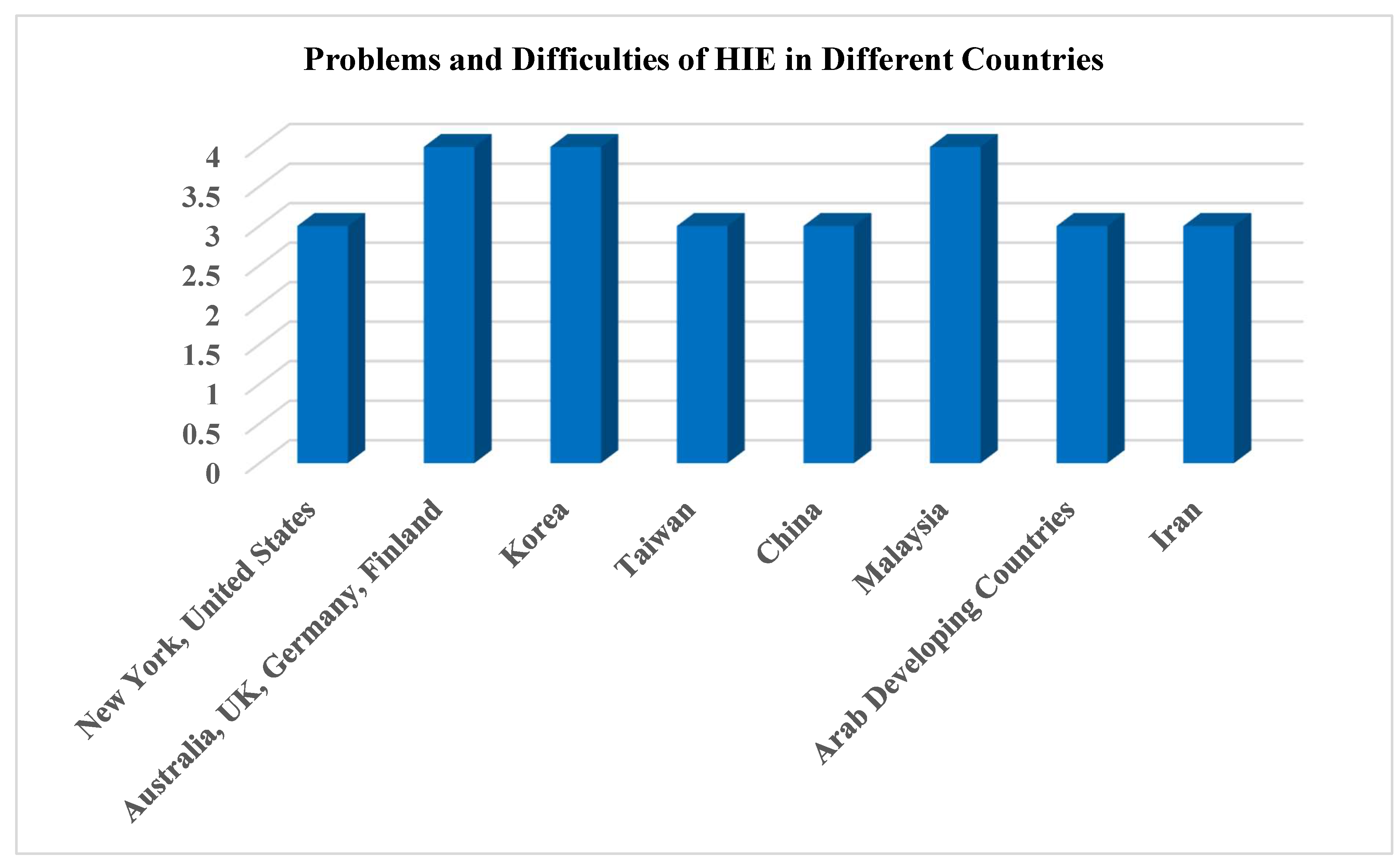
Figure 2. Problems and Difficulties of HIE in Different Countries.
Futureinternet 17 00549 g002
Figure 3. PRISMA Framework.
Futureinternet 17 00549 g003
Figure 4. An Overview of HIE [52].
Futureinternet 17 00549 g004
Figure 5. HIE Challenges and Implementations in Selected Countries.
Futureinternet 17 00549 g005
Figure 6. An Overview of HIoT Applications and Devices Features [115].
Futureinternet 17 00549 g006
Table 1. Illustration of the Problems and Difficulties of HIE in Different Countries.
Case StudySourcesLimitation Overview
New York, United States[14,15,16]Challenges include patient consent issues, lack of information exchange between primary and secondary healthcare providers, disrupted workflows, user-unfriendly systems, difficulty in finding qualified staff, and low engagement with HIE technologies.
Australia, UK, Germany, Finland[17,18,19,20]Difficulties in obtaining historical patient information, varying information needs among providers, and inconsistent access to HIE systems across organisations.
Korea[21,22,23,24]Challenges include integrating diverse healthcare systems and ensuring data privacy and security.
Taiwan[25,26,27]Issues with standardising data formats and achieving interoperability among different healthcare providers.
China[19,28,29]Barriers include regional disparities in healthcare IT infrastructure and concerns over data sharing policies.
Malaysia[30,31,32,33]Limitations involve insufficient funding for HIE initiatives and a lack of trained IT personnel in healthcare.
Arab Low- and Middle-Income Countries[34,35,36]Obstacles encompass cultural resistance to data sharing and limited technological infrastructure.
Iran[37,38,39]Challenges include bureaucratic hurdles, a lack of standardised protocols, and concerns over data security.
Table 2. Agreements on the extracted variables.
No. of
Participants
Intention to UseTrustWorkflowCost
Effectiveness
Security&PrivacyTrainingUbiquitous
Connectivity
CompatibilityNetwork
Capacity
AccessibilityUsefulnessCooperation
1
2
3
4
5
6
7
8
9
10
11
12
13
14
15
16
17
18
19
20
21
22
23
24
25
26
27
28
29
(Note: ✗ means not available, and ✓ means available).
Table 3. An overview of HIE Challenges and Implementations in Selected Countries.
Country/RegionChallenges in HIE ImplementationSources
United StatesPatient consent, interoperability issues, lack of standardisation, data security concerns, and clinician resistance.[55,56,57]
Australia, UK, Germany, FinlandLack of historical patient information, inconsistent data access, and different provider needs.[58,59,60]
KoreaAdoption challenges due to financial constraints and low engagement from healthcare professionals.[61,62,63]
TaiwanDifficulty in integrating existing hospital systems and ensuring patient data privacy.[64,65]
ChinaRegulatory and privacy concerns, along with a fragmented healthcare system.[66]
MalaysiaLimited infrastructure, data security risks, and low adoption by smaller clinics.[67,68,69]
Arab Low- and Middle-Income CountriesLack of resources, low digital literacy, and weak regulatory frameworks.[47,48,70]
IranChallenges in policy implementation, interoperability, and resistance from healthcare providers.[10,71,72]
Table 4. HIE Frameworks and Models.
SourceContextStudy inSystem/Model NameKind of Technology Used
[51]Regional HIE (HIE)USACentralised HIE ModelCentralised database, interoperability standards (HL7, FHIR)
[81]Federated HIEUSAFederated (Decentralised) HIE ModelSecure access mechanisms, point-to-point data sharing
[82]National Interoperability for Healthcare SystemsUSAHybrid HIE ModelA combination of a centralised repository and decentralised access
[83]Patient-Controlled HIEUSAConsumer-Mediated Exchange ModelPersonal Health Records (PHR), Mobile and Web-based portals
[84]Nationwide Health Information Network (NHIN)USANHIN FrameworkInternet-based exchange, security protocols, HL7
[85]Healthcare Interoperability StandardsGlobalHL7 Fast Healthcare Interoperability Resources (FHIR)API-based exchange, JSON/XML data formats
[86]Cross-Border Health Data ExchangeEUEuropean Interoperability Framework for eHealthSemantic, organisational, and legal interoperability standards
[6]Secure Direct Messaging for Small Healthcare ProvidersUSAThe Direct ProjectEncrypted email-based communication, XDR/XDM protocols
[13]HIE Implementation in Low-Resource SettingsGlobalOpenHIE FrameworkOpen-source health information architecture, HL7, OpenMRS integration
[85]Blockchain for Health Data ExchangeGlobalBlockchain-based HIEDistributed ledger, smart contracts, encryption
Table 5. IoT Healthcare Adoption by Country.
CountryMajor IoT ApplicationsNotable ImplementationsKey Challenges
USARPM, AI diagnostics, Smart hospitalsFitbit, Teladoc, IBM Watson HealthData privacy (HIPAA), cybersecurity, cost
UKNHS Smart Hospitals, IoT elderly careNHS Digital, Withings, Telemedicine platformsData interoperability, budget constraints
GermanyTelemedicine, robotic surgery, AI imagingSiemens Healthineers, TeleClinic, Asset trackingGDPR compliance, high infrastructure costs
China5G smart hospitals, AI-powered diagnosticsPeking University Hospital, Xiaomi wearables, Alibaba ET Healthcare BrainData privacy, rural access
IndiamHealth, AI-driven diagnostics, rural healthcareApollo TeleHealth, Niramai, Ayu DevicesInfrastructure gaps, affordability, regulation
JapanRobotic-assisted surgeries, elderly careParo Robot, Fujifilm AI imaging, Smart health trackingHigh costs, regulatory approvals
Table 6. IoT Systems, Models, and Frameworks in Healthcare.
SourceContextSystem, Model, or Framework NamePurpose
WHOGlobal eHealth strategyGlobal Digital Health Strategy FrameworkGuides IoT adoption for healthcare delivery in developing nations
National Institute of Standards and Technology (NIST)CybersecurityNIST Cybersecurity Framework for IoTEnhances security and risk management in IoT healthcare networks
European Union GDPRData PrivacyGDPR Compliance Framework for IoTRegulates data privacy and protection for HIoT applications
IBM Watson HealthAI-powered IoTWatson Health AI IoT PlatformProvides AI-driven analytics for disease prediction and personalised treatment
Google Cloud HealthcareCloud-based IoTGoogle Cloud IoT Healthcare APIEnables secure storage and analysis of real-time patient data
Microsoft Asure IoTCloud Healthcare SolutionsAsure IoT for HealthcareSupports remote patient monitoring, predictive analytics, and smart hospitals
Philips HealthSuiteConnected HealthPhilips HealthSuite IoT PlatformIntegrates IoT devices for chronic disease management
Apple HealthKitWearable IoTApple HealthKit IoT FrameworkSynchronises health data from IoT-enabled devices like smartwatches
FitbitFitness and Chronic Disease MonitoringFitbit IoT EcosystemTracks real-time health metrics such as heart rate and oxygen levels
GE HealthcareMedical ImagingGE Edison AI IoT PlatformEnhances diagnostics using IoT-connected imaging devices
Siemens HealthineersSmart HospitalsSiemens Smart Hospital IoT FrameworkEnables automation and predictive maintenance in hospitals
MedtronicRemote Patient MonitoringMedtronic CareLink IoT SystemProvides real-time monitoring of pacemakers and other implanted devices
Teladoc HealthTelemedicine IoTTeladoc Virtual Care IoT NetworkConnects patients and doctors via IoT-driven remote consultations
Alibaba CloudAI and Big Data in HealthcareAlibaba ET Healthcare BrainUses AI and IoT for real-time disease diagnostics and hospital automation
Samsung Digital HealthIoT WearablesSamsung S Health IoT FrameworkTracks health parameters through smart IoT devices
Blockchain in HealthcareData SecurityBlockchain IoT Healthcare FrameworkEnhances security and transparency of medical data across IoT systems
Disclaimer/Publisher’s Note: The statements, opinions and data contained in all publications are solely those of the individual author(s) and contributor(s) and not of MDPI and/or the editor(s). MDPI and/or the editor(s) disclaim responsibility for any injury to people or property resulting from any ideas, methods, instructions or products referred to in the content.