
The Mutability of Yeast Prions
Institute of Molecular Biology, Academia Sinica, Taipei 115, Taiwan
Viruses 2022, 14(11), 2337; https://doi.org/10.3390/v14112337
Submission received: 1 August 2022
/
Revised: 10 October 2022
/
Accepted: 23 October 2022
/
Published: 25 October 2022
(This article belongs to the Special Issue Prions and Prion-Like Phenomena: Appearance, Inheritance and Importance)
Abstract
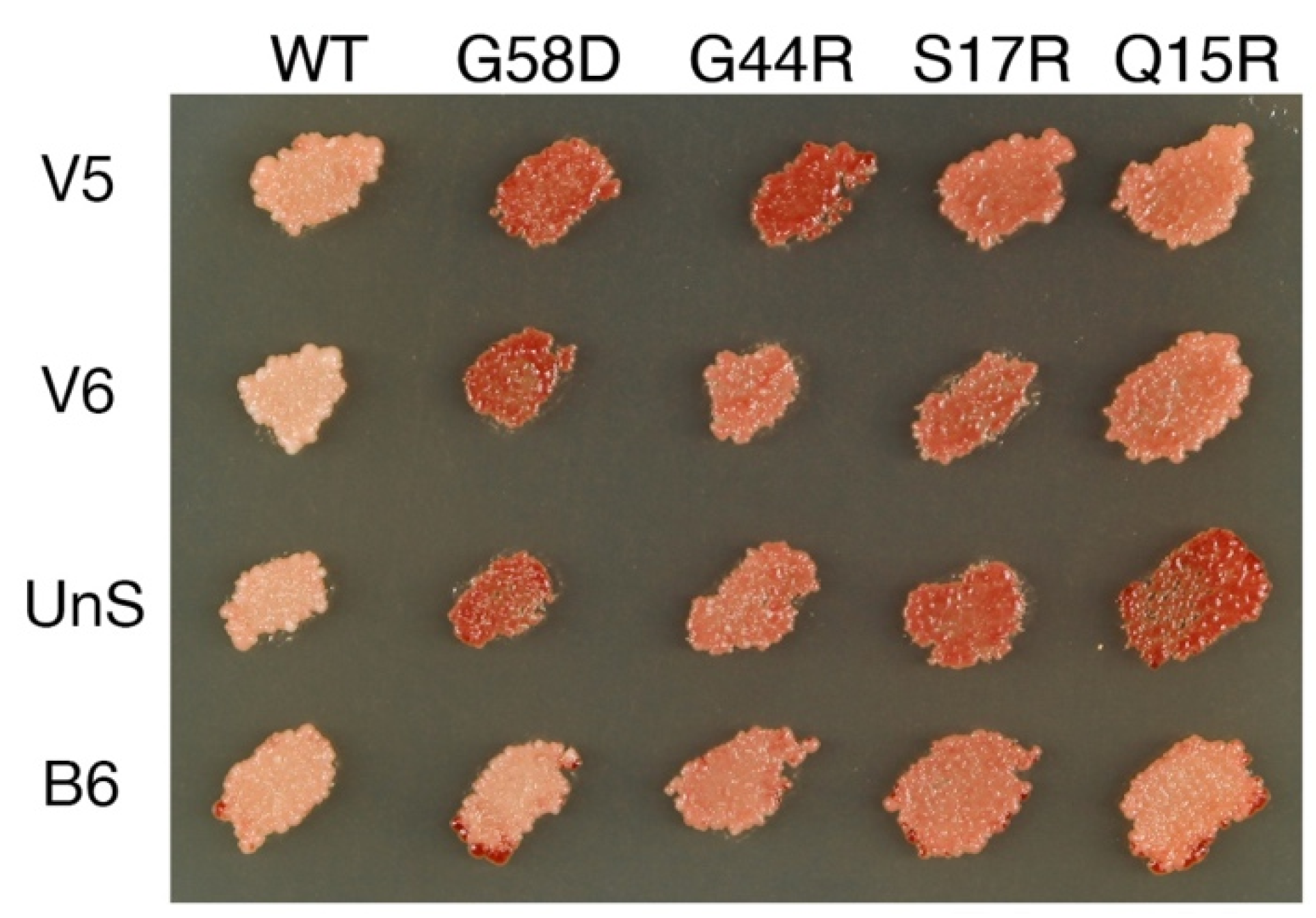
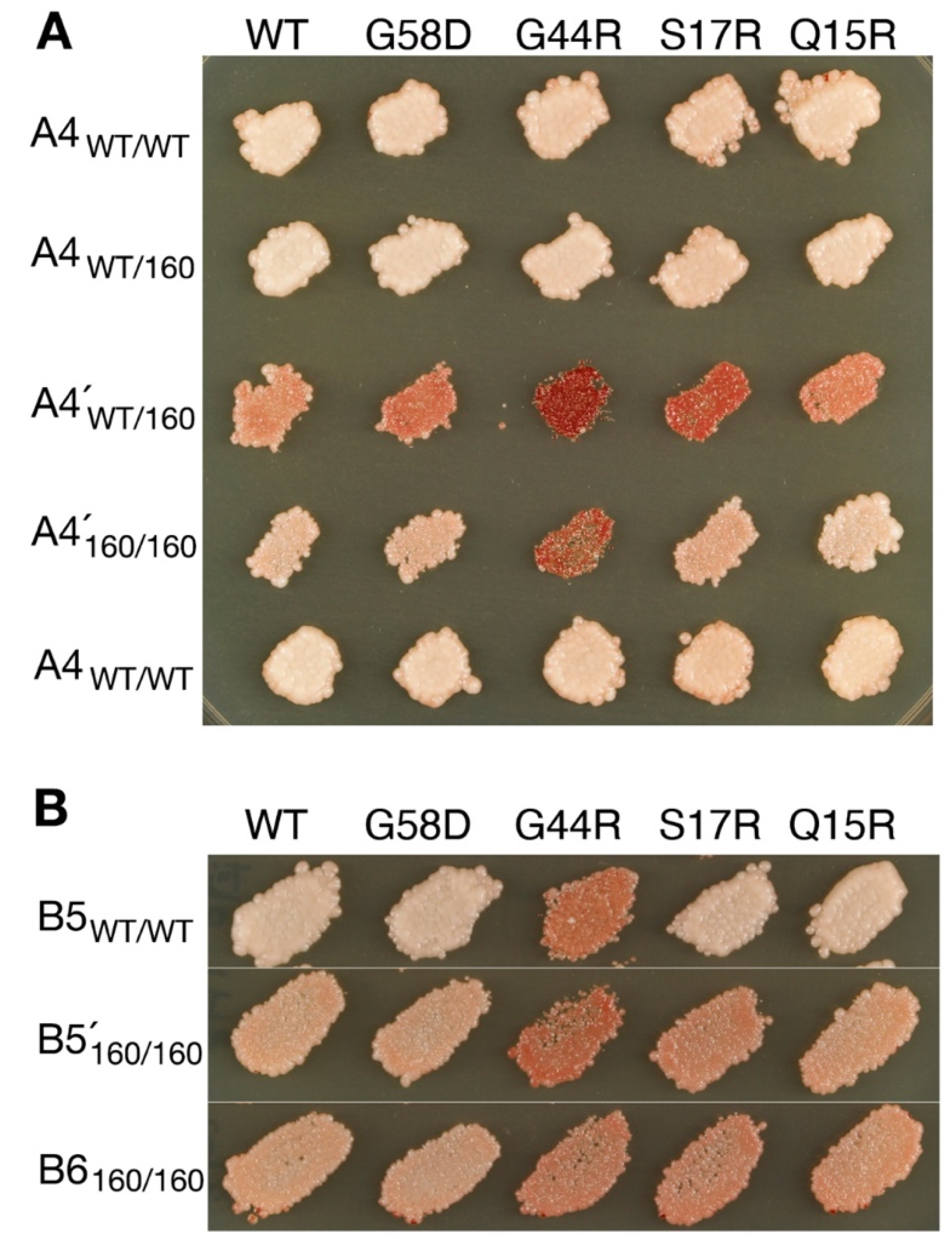
Prions replicate by a self-templating mechanism. Infidelity in the process can lead to the emergence of new infectious structures, referred to as variants or strains. The question of whether prions are prone to mis-templating is not completely answered. Our previous experiments with 23 variants of the yeast [PSI+] prion do not support broad mutability. However, it became clear recently that the heat shock protein Hsp104 can restrict [PSI+] strain variation. This raises the possibility that many transmutable variants of the prion may have been mistaken as faithful-propagating simply because the mutant structure was too sturdy or too frail to take root in the wild-type cell. Here, I alter the strength of Hsp104 in yeast, overexpressing wild-type Hsp104 or expressing the hypo-active Hsp104T160M mutant, and check if the new environments enable the variants to mutate. Two variants hitherto thought of as faithful-propagating are discovered to generate different structures, which are stabilized with the hypo-active chaperone. In contrast, most transmutable variants discovered in cells overexpressing Hsp104 have been correctly identified as such previously in wild-type cells without the overexpression. The majority of transmutable variants only mis-template the structure of VH, VK, or VL, which are the most frequently observed variants and do not spontaneously mutate. There are four additional variants that never give rise to different structures in all cell conditions tested. Therefore, quite a few [PSI+] variants are faithful-propagating, and even the transmutable ones do not freely evolve but can only change to limited structural types.
Keywords:
prion strain; mutability; [PSI]; SUP35; Hsp104; amyloid; chaperone; yeast
Share and Cite
MDPI and ACS Style
King, C.-Y. The Mutability of Yeast Prions. Viruses 2022, 14, 2337. https://doi.org/10.3390/v14112337
AMA Style
King C-Y. The Mutability of Yeast Prions. Viruses. 2022; 14(11):2337. https://doi.org/10.3390/v14112337
Chicago/Turabian StyleKing, Chih-Yen. 2022. "The Mutability of Yeast Prions" Viruses 14, no. 11: 2337. https://doi.org/10.3390/v14112337
APA StyleKing, C.-Y. (2022). The Mutability of Yeast Prions. Viruses, 14(11), 2337. https://doi.org/10.3390/v14112337
Note that from the first issue of 2016, this journal uses article numbers instead of page numbers. See further details here.